Cutter Joseph Gerczak Conducts Patrol to Increase Maritime Presence in Pacific

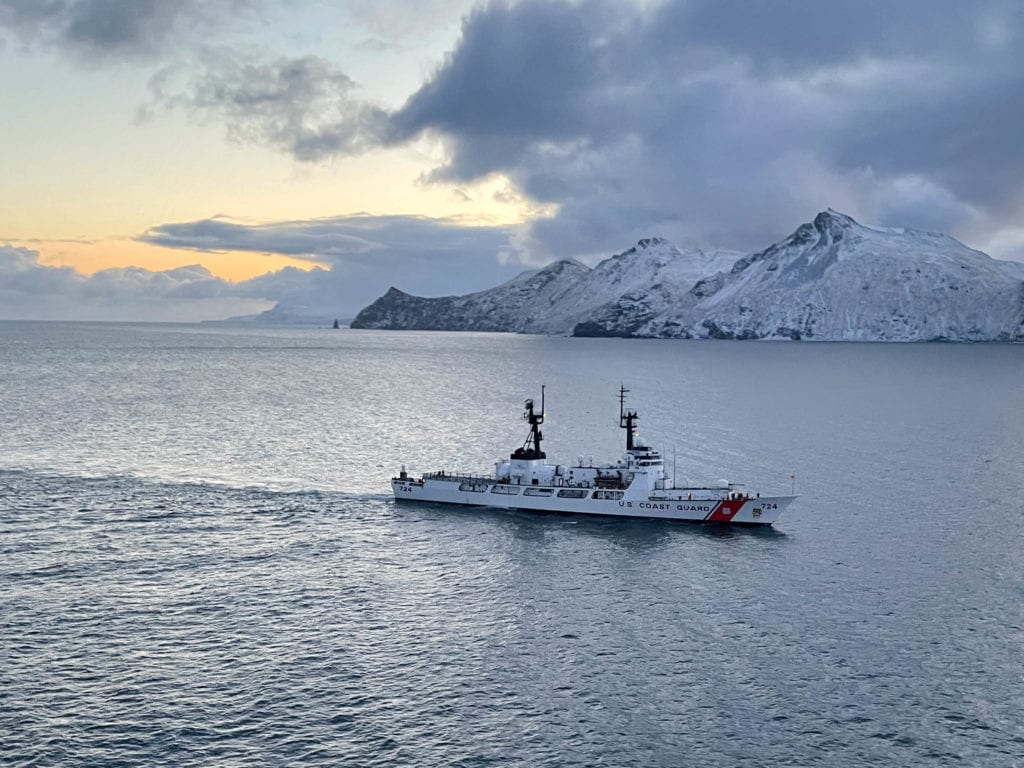
The Coast Guard Cutter Joseph Gerczak (WPC 1126) has completed the first stage of its expeditionary patrol in the Pacific to counter illegal fishing. U.S. Coast Guard

HONOLULU — The Coast Guard Cutter Joseph Gerczak (WPC 1126) conducted a port call in Honolulu after completing the first stage of its expeditionary patrol in the Pacific to curtail illegal fishing and strengthen maritime law enforcement self-sufficiency with Kiribati partners, the Coast Guard 14th District said in a Jan. 12 release.  

The crew of the Joseph Gerczak traveled from Dec. 28, 2020, to Jan. 3, 2021, from Hawaii to Kiribati, covering a distance of approximately 2,400 miles.   

“We’re working to increase awareness of unlawful fishing operations in remote territories of the United States, the Pacific, and the Republic of Kiribati’s exclusive economic zones,” said Lt. James Provost, commanding officer of the Joseph Gerczak. “Over the course of our patrol we queried one Chinese fishing vessel while enforcing Kiribati’s sovereignty.” 

As part of Operation Blue Pacific Task Force, the crew of the Joseph Gerczak deployed in support of strategic national security goals of stability and security throughout the Indo-Pacific.  

The crew of the Joseph Gerczak used intelligence-driven enforcement actions, counter predatory and irresponsible maritime behavior, and expanded multilateral fisheries enforcement cooperation. 

Illegal, unreported, and unregulated fishing results in tens of billions of dollars in lost revenue to legal fishers every year. IUU operates without legal constraints, avoids overhead licensing costs, and often falsifies their documentation creating an unfair advantage.  

The Coast Guard combats illegal fishing and other maritime threats across the Pacific to protect the United States and Pacific Island Countries resource security and sovereignty. Combating illegal fishing is part of promoting maritime governance and a rules-based international order that is essential to a free and open Oceania.  

Oceania covers an area of 3.3 million square miles and has a population of approximately 40 million diverse people.  

“Effective maritime domain awareness requires unprecedented information sharing,” said Cmdr. Jason Brand, chief of enforcement, Coast Guard District 14. “We are eager to collaborate with Kiribati on initiatives of common interest.” 

Fast Response Cutters, such as the Joseph Gerczak, are outfitted with new and advanced command, communications, control, computers, intelligence, and surveillance systems and boast greater range and endurance compared to their forerunner, the 30-year old 110-foot Island-class patrol boats. Like their predecessors, the FRCs are designed as multi-mission platforms ranging from maritime law enforcement to search and rescue. 


USS William P. Lawrence Returns from Drug-Busting Deployment

Arleigh Burke-class guided-missile destroyer USS William P. Lawrence (DDG 110) departs San Diego Bay in this 2016 photo. U.S. Navy / Mass Communication Specialist 3rd Class Chelsea Troy Milburn

SAN DIEGO — Arleigh Burke-class guided-missile destroyer USS William P. Lawrence (DDG 110) returned to Joint Base Pearl Harbor, Jan. 11, following a deployment to the U.S. 4th Fleet area of operations, the U.S. Third Fleet Public Affairs said in a release. 

William P. Lawrence, along with Helicopter Maritime Strike Squadron (HSM) 37 Detachment 7, deployed in September to conduct U.S. Southern Command and Joint Interagency Task Force South’s enhanced counter-narcotics operations missions in the Caribbean Sea and Eastern Pacific Ocean. 
 
“I am overcome with pride when I reflect on the accomplishments of the crew while we were deployed,” said Cmdr. Dawn Allen, the commanding officer of William P. Lawrence. “The crew executed a broad spectrum of missions over the past few months with unsurpassed professionalism.” 
 
Along with their embarked U.S. Coast Guard Law Enforcement Detachment 101, William P. Lawrence disrupted approximately 2,921 kilograms of cocaine which has an estimated street value of 204 million dollars. In addition, William P. Lawrence was instrumental in providing hurricane assistance and disaster relief in Honduras, collecting and delivering more than 25,600 pounds of supplies, conducting 19 rescues and two medical evacuations in support of U.S. Southern Command’s Hurricane Iota relief efforts in Central America. 
 
Additionally, William P. Lawrence participated in two passing exercises with the Brazilian training ship BNS Brazil (U 27), an air defense joint exercise with Colombian Air Force Kfir fighter jets and performed freedom of navigation operations off the coast of Venezuela. 
 
William P. Lawrence partnered with U.S. Navy and international warships, the U.S. Coast Guard, the Drug Enforcement Administration, FBI, and Immigration and Customs Enforcement, as well as other allied partners and international agencies, all of which are playing a role in counter-narcotics operations in the area. 


U.S. Merchant Marine Academy Superintendent Receives Third Star

Capt. Charles McDermott, center, gives a tour of the Naval Coordination and Guidance for Shipping (NCAGS) facilities in Bahrain to then -Rear Adm. Jack Buono, Superintendent of the U.S. Merchant Marine Academy, in this 2013 photo. Buono has now been promoted to vice admiral. U.S. Navy / Mass Communication Specialist 3rd Class Dawson Roth

WASHINGTON – Now-former Secretary of Transportation Elaine L. Chao promoted U.S. Merchant Marine Academy (USMMA) Superintendent Rear Adm. Jack Buono to vice admiral in the U.S. Maritime Service (USMS) at a small ceremony Jan. 11 in the Department of Transportation headquarters, Washington, D.C., the Maritime Administration said in a release.  

“Vice Admiral Buono deserves this third star – he’s been a great leader, especially during COVID-19, and has put USMMA at Kings Point on a solid foundation to develop our country’s future maritime leaders,” Chao said on the same day she resigned from her post. 

Buono will continue to lead at USMMA, where he has been stationed since joining the academy in November 2018. The promotion makes Buono the first USMMA graduate to serve in this position at this rank.  

Prior to his appointment as superintendent, Buono had nearly 40 years of maritime experience in the private sector. He retired from his last private sector employer in 2016. 

“This well-deserved promotion is an indication of the trust and confidence we have in Vice Adm. Buono’s leadership in the critical role of preparing our Nation’s next generation of leaders – afloat and ashore,” said former Maritime Administrator Mark H. Buzby, who has also just resigned. “His steady hand on the wheel continues to steer Kings Point fair.” 

Buono is a Master Mariner and a 1978 graduate of the academy. During his tenure as superintendent, he has been responsible for implementing the academy’s strategic plan, which includes updating institutional culture, governance, communications, infrastructure, academics and athletics. More recently, Buono has guided the Regiment of Midshipmen and the academy community through the global health crisis while maintaining a strong focus on accomplishing the mission of the academy. His inspirational leadership has rallied the entire academy family – students, faculty, staff, parents, and alumni. 

“I am truly humbled and honored by this promotion, and I look forward to continuing to develop the future of this national treasure we call USMMA,” Buono said. “We will continue to press forward with our mission, developing leaders of exemplary character committed to serving the national security, marine transportation and economic needs of this great nation.” 

Other recent and significant accomplishments at USMMA under the guidance of Buono include the first semi-virtual graduation ceremony for the Class of 2020, the pivot to distance learning during the COVID-19 public health emergency, maintaining at-sea training experience for midshipmen aboard U.S. Flag merchant ships and two state maritime academy training vessels, and the milestone achievement of sending the Regiment of Midshipmen home for the recent holiday break COVID-free. 


BAE Systems to Support U.S. AV-8B Harrier II Fleet to 2029

Aviation Boatswain’s Mate (Handling) 2nd Class Jarrel Bullock launches an AV-8B II Harrier off the flight deck of the amphibious assault ship USS Wasp (LHD 1) in this 2013 photo. U.S. Navy / Mass Communication Specialist Seaman Michael T. Forbes II

LONDON — BAE Systems and Vertex Aerospace have signed a nine-year agreement to enhance availability of the U.S. Marine Corps’ AV-8B Harrier II fleet, the company said in a Jan. 12 release.  

The U.S. Department of the Navy awarded Vertex Aerospace LLC the $123 million contracted maintenance, modification, aircrew and related services (CMMARS) task order in July 2020 to provide aircraft maintenance and contractor logistics support services for the U.S. Marine Corps’ AV-8B Harrier fleet.   

Vertex Aerospace selected BAE Systems as a subcontractor for the new logistics support contract, which will ensure increased efficiency of maintenance operations for the Harrier fleet using predictive maintenance techniques and smart stock optimization tools. Together, BAE Systems and Vertex Aerospace will support the crucial training and combat operations conducted from U.S. Navy’s aircraft carriers, amphibious assault ships, and forward operating bases.  

This contract builds on BAE Systems’ existing role in maintaining the AV-8B Harrier’s reaction control system and providing engineering and technical support. Engineers from BAE Systems will work alongside Vertex and the U.S. Marine Corps at stations in Cherry Point, North Carolina; Yuma, Arizona; and Madison, Mississippi. They will be supported by a specialist team in the U.K. with a proven pedigree of delivering maintenance and support contracts for the Royal Air Force.  

“The Harrier is one of the most iconic military aircraft ever created, with its British designed short take-off and vertical landing technology,” said Tom Fillingham, senior vice president – U.S. Programs, BAE Systems Air. “Our expertise with the aircraft goes back 40 years and this new contract with Vertex Aerospace ensures we can continue to apply our expertise to support the U.S. Marine Corps in their crucial operations.”  

Dave Nagy, director of flight solutions, BAE Systems Inc. Intelligence & Security, said, “We’re proud to support our customer’s mission through the AV-8B Harrier program. We are ensuring these aircraft maintain availability until the F-35 replaces the AV-8B. Working together with Vertex as a trusted partner on various U.S. Marine Corps programs, we are demonstrating our capabilities in aircraft modernization, countermeasure system upgrades, and integration activities.”   

“Extending our partnership with BAE Systems to support our U.S. Marine Corps’ important AV-8B pilot training mission just made sense,” said John “Ed” Boyington, CEO and president, Vertex Aerospace. With a combined 100 plus years of aerospace and defense experience, we understand the challenges warfighters face and remain keenly committed to improving aircraft readiness while maximizing efficiencies.” 


HII Completes Assembly Building for Navy’s Orca XLUUV Hulls

Hampton Mayor Donnie Tuck, Virginia Governor Ralph Northam and HII Executive Vice President and President, HII Technical Solutions, Andy Green break ground on HII’s Unmanned Systems Center of Excellence in this September, 2020 photo. The first phase of the center is now complete with the construction of the first of two planned buildings. Huntington Ingalls Industries

NEWPORT NEWS, Va. — Huntington Ingalls Industries has completed the first phase of its Unmanned Systems Center of Excellence with the construction of a 22,000-square-foot facility, the company said in a Jan. 11 release. 

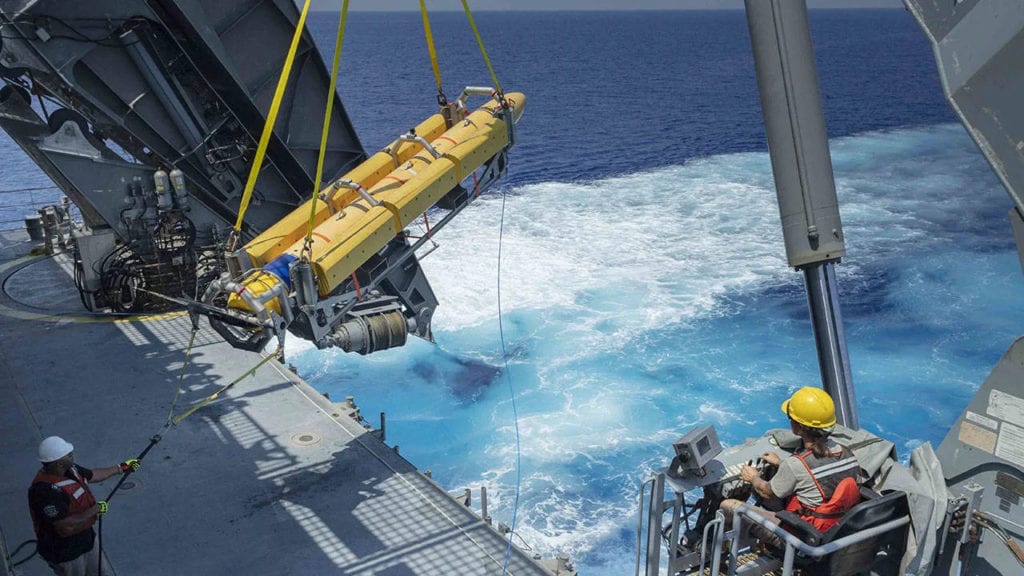
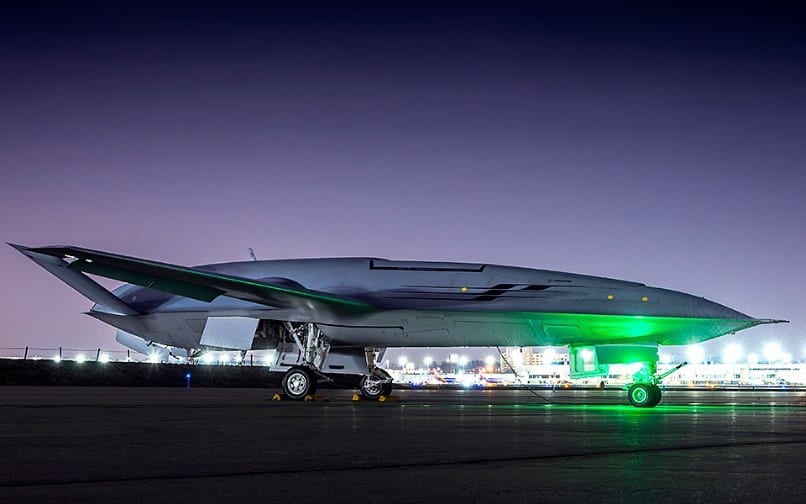
The first of two planned buildings on the 20-acre campus in Hampton, Virginia will be used to assemble hull structures for Boeing’s Orca Extra Large Unmanned Undersea Vehicle (XLUUV) program for the U.S. Navy. 

“We are thrilled to reach this critical milestone with the development of our Center of Excellence campus,” said Andy Green, executive vice president of HII and president of HII’s Technical Solutions division. “Opening this initial facility immediately expands our unmanned systems capability and helps support the increasing needs of our customers who defend our national security.” 

Construction began in September 2020, following a ground-breaking event with special guests, including Gov. Ralph Northam and other state and local government officials. 

Structural development of the main facility, a 135,000-square-foot building, is scheduled to be complete by the end of 2021. The purpose-built, state-of-the-art facility will be used for unmanned systems prototyping, production and testing. 

“HII has made significant investments in the unmanned systems industry during the last year, including this Center of Excellence,” said Duane Fotheringham, president of Technical Solutions’ Unmanned Systems business group. “This facility solidifies HII’s commitment to advancing development of unmanned systems for our current and future customers.” 

HII partnered with the Virginia Economic Development Partnership, the city of Hampton and the Hampton Roads Alliance to secure the project. More than 250 high-quality jobs will be created to support unmanned systems design and production at the facility. Employees began working in the first building on Dec. 28, 2020. 


Coast Guard Captures Alleged Murderer; Transfers Custody to U.S. Marshals

The crew of the Coast Guard Cutter Heriberto Hernandez interdicts a makeshift boat with three Dominican Republic nationals in the Mona Passage Jan. 5, 2021. One of the men was a fugitive with a standing warrant for an alleged murder who was transferred to the custody of U.S. Marshals agents in Mayaguez, Puerto Rico Jan. 7. U.S. Coast Guard photo

SAN JUAN, Puerto Rico – The crew of the Coast Guard Cutter Heriberto Hernandez transferred custody of a man wanted for an alleged murder to the U.S. Marshals Jan. 7 in Mayaguez, Puerto Rico, following the interdiction of a makeshift vessel in Mona Passage waters near Puerto Rico. 

Gustavo Guerrero-Reyes, 37, was arrested on an outstanding Puerto Rico state warrant, following his apprehension while traveling aboard a makeshift boat with two other men, whom all claimed to be Dominican Republic Nationals.  

The interdiction is the result of ongoing Caribbean Border Interagency Group multiagency efforts in their common goal of securing the borders of Puerto Rico against illegal threats. 

“This case was complex and the crew of the cutter Heriberto Hernandez did an outstanding job interdicting this voyage and working with our partners from U.S. Customs and Border Protection (CBP) and the U.S. Marshals, which led to the apprehension of a wanted fugitive with a standing warrant for murder,” said Cmdr. Beau Powers, Sector San Juan chief of response. “This case is a testament to the professionalism of all interdicting agencies in securing and defending the United States’ southeastern border.” 

Coast Guard watchstanders in Sector San Juan received a call Jan. 5 from a CBP Air and Marine Operations (AMO) agent, who reported the crew of an AMO maritime patrol aircraft detected a suspect vessel approximately 37 nautical miles north of Desecheo Island, Puerto Rico. Coast Guard watchstanders diverted the cutter Heriberto Hernandez to assess the situation.  

Once on scene, the cutter’s over the horizon small boat launched and approached the suspect vessel. The Coast Guard boat crew identified the 22-foot white colored makeshift vessel was of wooden construction, unseaworthy, and had no markings or indication of nationality.  The passengers onboard were also unable to provide a registration for the vessel. 

The crew of the Heriberto Hernandez embarked the three men for safety of life at sea concerns and conducted biometrics processing, which revealed one of the men wanted in connection to a murder allegedly committed in March 2020. 

The cutter Heriberto Hernandez rendezvoused with a Dominican Republic navy patrol boat Jan. 6 just off the Dominican Republic and transferred the two other passengers of the makeshift vessel for their return to the Dominican Republic. 

Cutter Heriberto Hernandez is a 154-foot fast response cutter homeported in Miami and San Juan, Puerto Rico. 


CNO Releases Navigation Plan 2021

Chief of Naval Operations Adm. Mike Gilday, shown here at the Naval Postgraduate School in December, has released his Navigation Plan to the fleet. U.S. Navy / Javier Chagoya

WASHINGTON — Chief of Naval Operations (CNO) Adm. Mike Gilday announced the release of his Navigation Plan to the fleet during virtual remarks at the Surface Navy Association Symposium Jan. 11. 
 
“America is a maritime nation — our security and stability depend on the seas,” Gilday said. “The U.S. Navy is America’s away team, and alongside our allies and partners, we defend freedom, preserve economic prosperity, and keep the seas open and free. Today, we are engaged in a long-term competition. China and Russia are rapidly modernizing their militaries to challenge the international order that has benefited so many for so long. To defend our nation and interests around the globe, we must be prepared to flawlessly execute our Navy’s timeless roles of sea control and power projection. Joining with the Marine Corps and Coast Guard, we will generate decisive integrated all-domain naval power. There is no time to waste; our actions in this decade will set the maritime balance of power for the rest of the century.” 

This Navigation Plan nests under the recently-released Tri-Service Maritime Strategy and outlines how the U.S. Navy will grow its naval power to control the seas and project power across all domains, both now and in the future. It builds off the progress made under FRAGO and lays out what must be done this decade to deliver the naval power America needs to compete and win. This will be done by focusing on four key areas: 

  • SailorsDevelop a Seasoned Team of Naval Warriors 
    Objective: A dominant naval force that can outthink and outfight any adversary. Our Sailors will remain the best trained and educated force in the world. We will cultivate a culture of warfighting excellence rooted in our core values. 
  • Readiness: Deliver a More Ready Fleet 
    Objective: A Navy that is manned, trained, and equipped to deploy forward and win in day-to-day competition, in crisis, and in conflict. We will consistently deliver maintenance on-time and in full, refurbish our critical readiness infrastructure, master all-domain fleet operations, and exercise with like-minded navies to enhance our collective strength. 
  • Capabilities: Delivering a More Lethal, Better-Connected Fleet 
    Objective: A Navy capable of projecting synchronized lethal and non-lethal effects across all domains. We will deploy the Naval Operational Architecture by the middle of this decade; an array of counter-C5ISRT capabilities; weapons of increasing range and speed; and a directed-energy system capable of defeating anti-ship cruise missiles. 
  • CapacityDeliver a Larger, Hybrid Fleet 
    Objective: A larger, hybrid fleet of manned and unmanned platforms — under, on, and above the sea — that meets the strategic and operational demands of our force. We will deliver the Columbia-class program on time; incorporate unmanned systems into the fleet; expand our undersea advantage, and field the platforms necessary for Distributed Maritime Operations. 

“For 245 years, in both calm and rough waters, our Navy has stood the watch to protect the homeland, preserve freedom of the seas, and defend our way of life,” Gilday said. “The decisions and investments we make this decade will set the maritime balance of power for the rest of this century. We can accept nothing less than success. I am counting on you to take in all lines and get us where we need to go — and to do so at a flank bell.” 

To read CNO’s Navigation Plan in its entirety, click here

To download a one-page infographic, click here


Lockheed Martin Delivers HELIOS Laser Weapon System to Navy for Testing

An artist’s rendering of Lockheed Martin’s HELIOS system. Lockheed Martin.

MOORESTOWN, N.J. — This year, the U.S. Navy will field the first acquisition program to deploy the High Energy Laser with Integrated Optical-dazzler and Surveillance, or HELIOS, a laser weapon system with high-energy fiber lasers for permanent fielding by the U.S. Department of Defense.

HELIOS will initially be integrated on a West Coast-based Flight IIA Arleigh Burke-class guided missile destroyer with the Aegis Combat System, but can be adapted to other types of ships and combat systems, says Lockheed Martin, which was awarded the HELIOS contract in 2018.

HELIOS is the first increment of the Surface Navy Laser Weapon System. The initial system features a laser of around 60 kilowatts to counter fast inshore attack craft or unmanned aircraft.

Increment two will boost the laser power to around 300 kilowatts, company business development analyst Kris Biggs said Jan. 13 in a presentation at the Surface Navy Association’s virtual annual conference, although he noted specifications haven’t been released to industry. Increment three will build off HELIOS “with an expected focus on even higher energy laser levels,” Biggs said.

Lockheed Martin completed the Critical Design Review and Navy Factory Qualification Test milestones for the system in 2020.  


Raytheon to Deliver New Submarine Communications System

The Los Angeles-Class fast-attack submarine USS Cheyenne (SSN 773) and its crew arrive at Joint Base Pearl Harbor-Hickam, after completing their latest deployment, April 26, 2019. Raytheon Intelligence & Space has been awarded a $90 million contractor for Submarine High-Data Rate antenna systems. U.S. Navy / Mass Communication Specialist 1st Class Daniel Hinton

ARLINGTON, Va. — Raytheon Intelligence & Space, a Raytheon Technologies business, was awarded a $90 million contract by the U.S. Navy for 23 Submarine High-Data Rate antenna systems, the company said in a Jan. 11 release. Contracted in 2020, the work is expected to be completed on the new antennas by January 2024. 

The SubHDR system is used to provide submarines with high-capacity communications. The system vastly improves a submarine’s mission capability and the quality of life for sailors by affording them high-data rate communications with the world outside of the sub without sacrificing the submarine’s stealth. 

“Connecting people securely is essential to the success of any operation,” said Denis Donohue, vice president, Communications and Airspace Modernization Systems for Raytheon Intelligence & Space.

“The SubHDR system provides secure connectivity for submarines that supports mission-critical information delivery to the right people at the right time.” 

SubHDR links submariners to the Global Broadcast Service, the Milstar satellite constellation and the Defense Satellite Communications System, via a unique mast antenna that connects them to the above-sea world.  

The SubHDR System gives submarines high-data rate, multi-band SATCOM capability. Operating via military satellites, SubHDR enables underwater forces to be full participants in coordinated fleet battle group and joint task force network centric operations. The mast-mounted SATCOM system transmits secure wideband multimedia, secure and non-secure internet access, voice and data traffic, imagery and video teleconferencing. 


On First Voyage, USCGC Stone Crew Interdicts Narcotics in Caribbean

The crew on the USCGC Stone (WMSL 758) prepare to launch one of the ship’s small boats in the Caribbean Sea on Jan. 6, 2021. The Stone sent a boarding team on the boat to intercept a vessel suspected of engaging in illegal activity. U.S. Coast Guard / Petty Officer 3rd Class John Hightower

PORTSMOUTH, Va. — While in transit to conduct joint operations off the coast of Guyana as part of Operation Southern Cross, USCGC Stone (WMSL 758) encountered and interdicted a suspected narcotic trafficking vessel south of the Dominican Republic Jan. 7, the Coast Guard Atlantic Area said in a Jan. 11 release.   
   
Having stopped the illicit activity, Stone handed off the case to the USCGC Raymond Evans (WPC 1110), a fast response cutter from Key West, Florida, and continued its patrol south.  
   
Early on Jan. 7, acting on information from a maritime patrol aircraft, the Stone crew approached the vessel of interest and exercised U.S. Coast Guard authorities to stop their transit and interdict illicit maritime trade.  
   
The USCGC Raymond Evans arrived on the scene shortly after. A Coast Guard boarding team from the Raymond Evans conducted a law enforcement boarding, testing packages found aboard the vessel, revealing bales of cocaine estimated at 2,148.5 pounds (970 kilograms) total.  
 
Stone’s crew remained on scene during the search of the vessel to assist if need. Following the boarding, the Raymond Evans crew took possession of the contraband and detained the four suspected narcotics trafficking vessel members. They are working with the U.S. Coast Guard 7th District and Department of Justice on the next steps.  

“I’m very proud of the crew for completing this evolution safely and making an immediate impact on our first patrol,” said Capt. Adam Morrison, commanding officer of USCGC Stone (WMSL 758). “This case illustrates that Stone is a competent partner, and our crew is ready for the front-lines. We look forward to our upcoming engagements, first with Guyana.” 
   
Vice Adm. Steven Poulin, commander of U.S. Coast Guard Atlantic Area, said USCGC Stone “is a highly-capable multipurpose platform and ready to conduct missions to save lives, support lawful activities on the high seas, and highlight and build Coast Guard partnerships with other nations.

“I am not surprised that Stone interdicted drug smugglers – it is what the captain, crew, and every U.S. Coast Guard member is prepared to do every day underway.  Stone’s crew is exhibiting the highest professional competence, reinforcing that Stone is well-suited to help our partners in the South Atlantic expose and address illicit activities in the maritime domain. These transnational criminal activities – be it illegal fishing or the trafficking of people, drugs, money, etc.  – challenge global security, and only together can we combat these threats.” 

“Our teammates aboard USCGC Stone are helping keep our shared neighborhood, the Western Hemisphere, safe, successfully stopping illicit narcotics smuggling, while continuing their equally important mission to counter predatory and irresponsible IUU fishing, a growing threat to our partner nations’ sovereignty and our collective regional security,” said Rear Adm. Andrew J. Tiongson, director of operations, U.S. Southern Command. 

Operation Southern Cross is a multi-month deployment to the South Atlantic countering illegal, unregulated, and unreported fishing while strengthening relationships for maritime sovereignty and security throughout the region.