L3Harris to Design Long-Endurance Autonomous Surface Ship Concept for DARPA
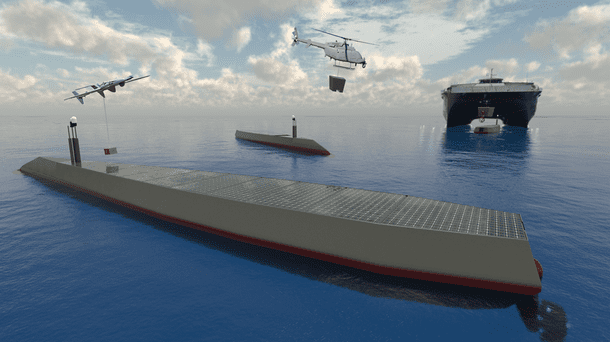
L3Harris was chosen for phase one of the two-phase No Manning Required Ship (NOMARS) program. The L3Harris design concept will streamline NOMARS’ construction, logistics, operations and maintenance life-cycle. L3Harris
MELBOURNE, Fla.— L3Harris Technologies has been selected to design an autonomous surface ship concept for the U.S. Defense Advanced Research Projects Agency (DARPA) to demonstrate the reliability and feasibility of an unmanned ship performing lengthy missions, the company said in a March 2 release.
L3Harris was chosen for phase one of the two-phase No Manning Required Ship (NOMARS) program. The L3Harris design concept will streamline NOMARS’ construction, logistics, operations and maintenance life cycle. The company teamed with VARD Marine to validate the concept and design of the architecture and hull, mechanical and electrical systems.
The L3Harris design features an advanced operating system that can make decisions and determine actions on its own, without direct human interaction. This concept optimizes autonomous surface ship operations to support the U.S. Navy’s future missions.
“L3Harris continues to pioneer innovative autonomous solutions that offer fully automated and integrated ship control and preventative maintenance systems to the U.S. Navy and its allies,” said Sean Stackley, president, Integrated Mission Systems, L3Harris. “The NOMARS program selection reinforces our commitment to deliver highly reliable and affordable autonomous solutions that transform the way the U.S. Navy conducts its future missions.”
L3Harris is a world leader in unmanned surface vehicle (USV) systems, with over 125 USVs and optionally manned vehicles delivered. The company’s USVs are actively serving U.S and international navies, universities, research institutions and commercial businesses.
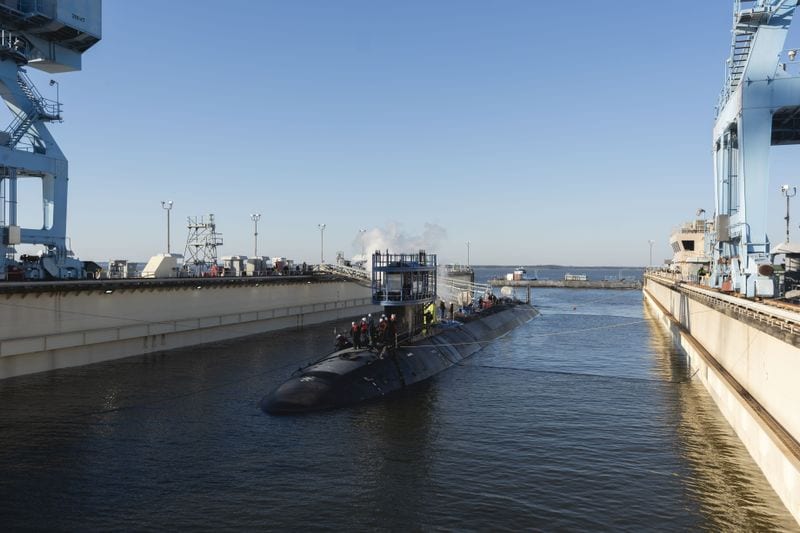
Newport News Shipbuilding division recently reached a significant construction milestone by successfully launching the Virginia-class submarine Montana (SSN 794). The ship was christened on Sept. 12, 2020, and is scheduled to be delivered to the U.S. Navy in late 2021. HII / Matt Hildreth
NEWPORT NEWS, Va. — Huntington Ingalls Industries launched the Virginia-class submarine Montana (SSN 794) into the James River at the company’s Newport News Shipbuilding division on March 3, the company announced in a release.
The 7,800-ton submarine, which had been in a floating dry dock since being transferred from a construction facility in October, was submerged and moved by tugboats to the shipyard’s submarine pier, for final outfitting, testing and crew certification.
“For our shipbuilders, launching Montana signifies five years of hard work, commitment and dedicated service,” said Jason Ward, Newport News’ vice president of Virginia-class submarine construction. “We look forward to executing our waterborne test program and working toward sea trials and delivering the submarine to the Navy later this year.”
Through the teaming agreement with General Dynamics Electric Boat, approximately 10,000 shipbuilders, as well as suppliers from all 50 states, have participated in Montana’s construction since the work began in 2015. Montana is approximately 92% complete and scheduled to be delivered to the U.S. Navy in late 2021.
Virginia-class submarines, a class of nuclear-powered fast attack submarines, are built for a broad spectrum of open ocean and littoral missions to replace the Navy’s Los Angeles-class submarines as they are retired. Virginia-class submarines incorporate dozens of new technologies and innovations that increase firepower, maneuverability and stealth and significantly enhance their warfighting capabilities. These submarines are capable of supporting multiple mission areas and can operate at submerged speeds of more than 25 knots for months at a time.
U.S., Canadian Coast Guards, RCAF Rescue 31 Fishermen from Sinking Vessel
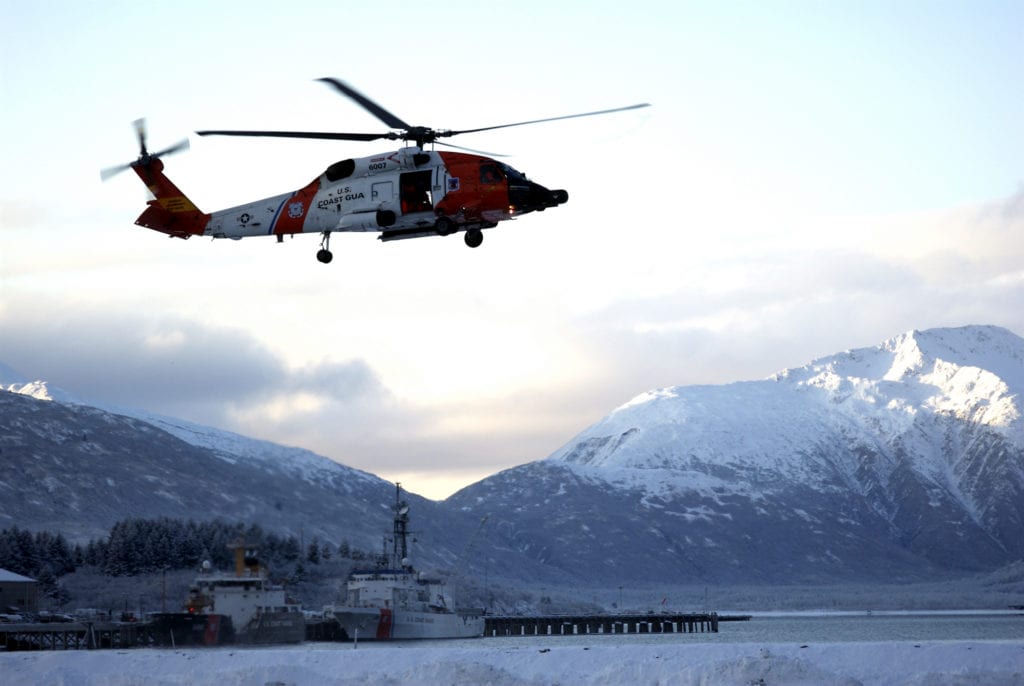
An MH-60 Jayhawk helicopter, shown here in a 2008 photo. A similar helicopter aided in the rescue of a disabled Canadian fishing vessel on March 2. Coast Guard / Petty Officer Richard Brahm
BOSTON — The U.S. and Canadian Coast Guards and Royal Canadian Air Force rescued 31 fishermen from a disabled, Canadian fishing vessel over 130 miles south of Halifax, Nova Scotia, during the night of March 2.
At 7:05 p.m., March 2, the Rescue Coordination Center in Halifax notified watchstanders at the Coast Guard First District Command Center that the 143-foot vessel, Atlantic Destiny, was disabled with a fire on board, and was taking on water.
A U.S. Coast Guard Air Station Cape Cod HC-144 Ocean Sentry fixed-wing crew, and two MH-60 Jayhawk helicopter crews launched and arrived on scene.
A Royal Canadian Air Force CH-149 helicopter crew from 14 Wing Greenwood, in Nova Scotia, Canada, hoisted six crewmembers from the vessel, and dropped off two search and rescue technicians to assist in dewatering the vessel.
The U.S. Coast Guard Jayhawk crews hoisted another 21 fishermen between the two helicopters. All hoisted crewmembers were taken to Yarmouth, Nova Scotia, where they were transferred for any medical treatment.
The remaining four crewmembers and two SAR technicians ceased dewatering efforts and were transferred to the Canadian Coast Guard Ship Cape Roger.
The vessel owner is coordinating any salvage efforts.
The weather on scene was 35 mph winds and 15-foot seas.
Coast Guard Transfers 3 Smugglers, Over $5.6M in Seized Cocaine to Federal Agents
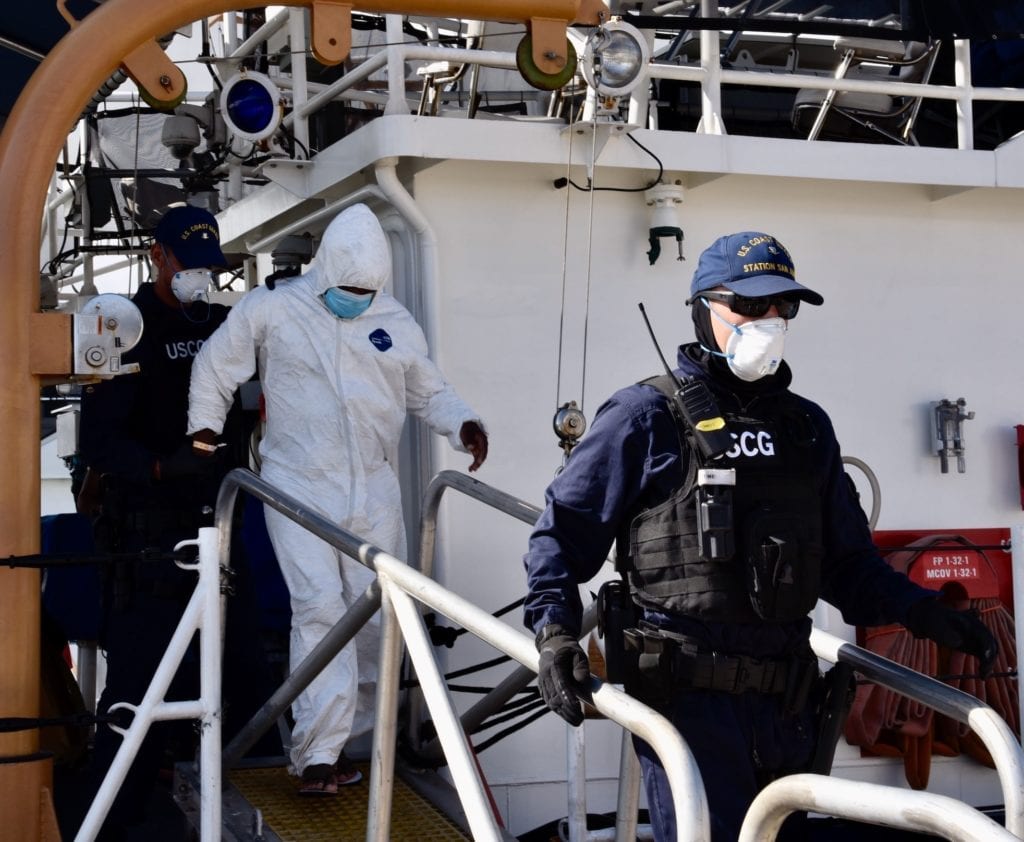
Coast Guard Cutter Heriberto Hernandez crew members offload over 200 kilograms of cocaine, valued at over $5.6 million, and transfer three suspected smugglers, one Venezuelan and two Dominicans to federal agents from the Caribbean Corridor Strike Force March 2, 2021 at Coast Guard Base San Juan. U.S. Coast Guard
SAN JUAN, Puerto Rico – The Coast Guard Cutter Heriberto Hernandez transferred custody of three suspected smugglers and $5.6 million in seized cocaine to federal agents at Coast Guard Base on San Juan March 2, following the interdiction of a drug smuggling vessel in the Caribbean Sea off St. Croix, U.S. Virgin Islands, the Coast Guard 7th District said in a March 3 release.
The suspected smugglers are three males, one Venezuelan and two Dominican Republic nationals, who now face criminal charges by Department of Justice prosecution partners in the U.S. Attorney’s Office for the District of Puerto Rico.
The interdiction resulted from multi-agency efforts in support of U.S. Southern Command’s enhanced counter-narcotics operations in the Western Hemisphere, the Organized Crime Drug Enforcement Task Force (OCDETF) and High Intensity Drug Trafficking Area (HIDTA) programs, and the Caribbean Corridor Strike Force (CCSF).
“This interdiction was the result of great teamwork from beginning to end with our interagency partners.” said Lt. Peter Kelly, Coast Guard Cutter Richard Dixon commanding officer. “I am extremely proud of the execution of the Richard Dixon crew in what was not an easy mission, and we are pleased to have kept such a large amount of cocaine from reaching U.S. streets.”
The bust occurred during the afternoon of Feb. 23, 2021, after the aircrew of a Customs and Border Protection Caribbean Air and Marine Branch maritime patrol aircraft detected a suspicious go-fast vessel in international waters southeast of St. Croix, U.S. Virgin Islands.
The Coast Guard Cutter Richard Dixon diverted to interdict the go-fast vessel with the assistance of the cutter’s small boat. Following the interdiction, the Cutter Richard Dixon’s boarding team located and seized over 200 kilograms of cocaine.
The crew of the cutter Richard Dixon embarked the three men and seized contraband from the go-fast vessel, and later transferred them aboard the Coast Guard Cutter Heriberto Hernandez for transport and offload in San Juan, Puerto Rico, where CCSF federal agents received custody. Cutters Richard Dixon and Heriberto Hernandez are 154-foot fast response cutters homeported in San Juan, Puerto Rico.
MARMC, Blue Water, USS Gerald R. Ford Partner for UAS Exercise
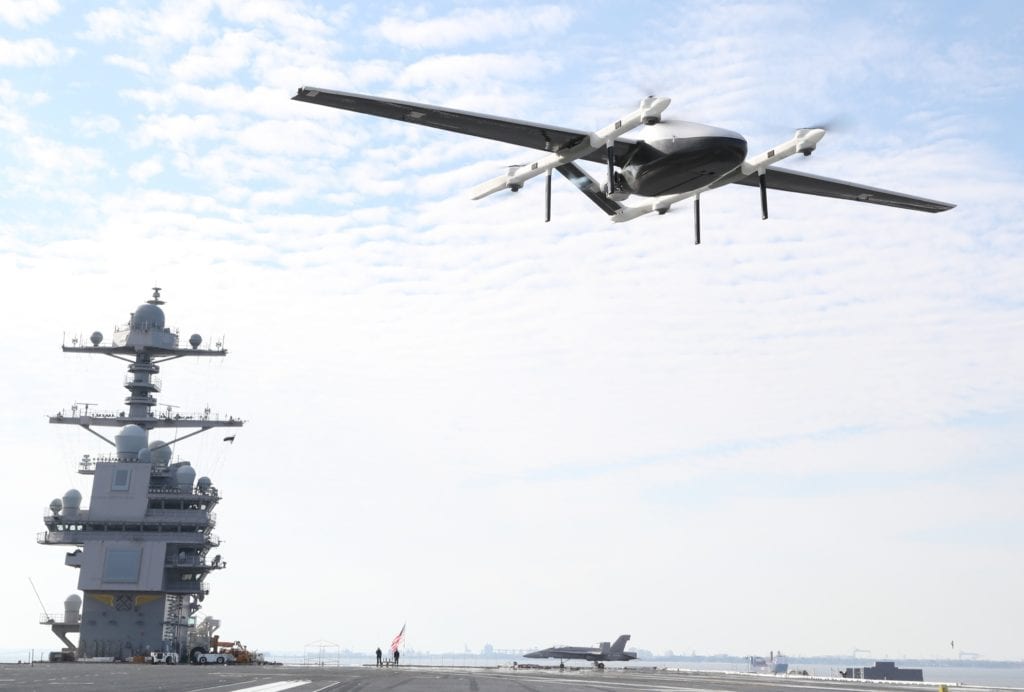
A logistics Unmanned Air System (UAS) prototype, called Blue Water UAS, approaches to deliver cargo on USS Gerald R. Ford’s (CVN 78) flight deck during supply demonstration Feb. 21, 2021. The test was successfully conducted by transporting light-weight logistical equipment from one part of Naval Station Norfolk aboard Ford while the aircraft carrier was in port. U.S. Navy / Chief Mass Communication Specialist RJ Stratchko
NORFOLK, Va. — Mid-Atlantic Regional Maintenance Center (MARMC) hosted the Blue Water Unmanned Aerial System (UAS) Skyways team for an exercise that could impact the way the Navy handles transporting parts for repairs needed aboard forward deployed ships, Chris Wyatt, MARMC public affairs specialist, said in a March 2 release.
MARMC, in collaboration with the USS Gerald R. Ford (CVN 78) Beach Detachment and the Blue Water team, tested the abilities of a Maritime Logistics UAS to deliver a part to the ship from MARMC Headquarters.
“The UAS departed the MARMC parking lot with a simulated package pickup and took the part needed for repair over to the Ford,” said MARMC Logistics Department Head, Cmdr. Kevin Borkert. “For this evolution MARMC handed the part to the UAS crew and they placed it in the cargo bay along the underside of the UAS.”
In October 2020, the US Navy acquired a commercial unmanned vehicle developed by Skyways of Austin, Texas, to further develop and demonstrate long-range naval ship-to-ship and ship-to-shore cargo transport. Navy engineers and test pilots continue to organically enhance the system with developments like folding wings for better handling and ship storage and consider alternative air vehicle designs with advanced propulsion systems to provide greater range and payload performance, optical and infrared collision avoidance and landing systems, and navigation systems not only dependent on GPS.
“Our motto is ‘We Fix Ships’ and we feel like they chose the right place to show this innovation in action,” said MARMC Commanding Officer Capt. Tim Barney. “I want MARMC to be a part of any program that uses advancements in technology, which could potentially save time, money and reduce the Navy’s carbon footprint, while helping to keep the fleet mission ready.”
Moving forward, if MARMC is chosen as a pivot point in the procurement process for parts needed for repairs, it could potentially have a large and lasting impact on how business is done.
MARMC provides surface ship maintenance, management and oversight of private sector maintenance and fleet technical assistance to ships in the Mid-Atlantic region of the United States and provides support to the fifth and sixth Fleet Area of Responsibilities. They are also responsible for the floating dry-dock Dynamic (AFDL-6).
NOAA Begins Transition Exclusively to Electronic Navigation Charts
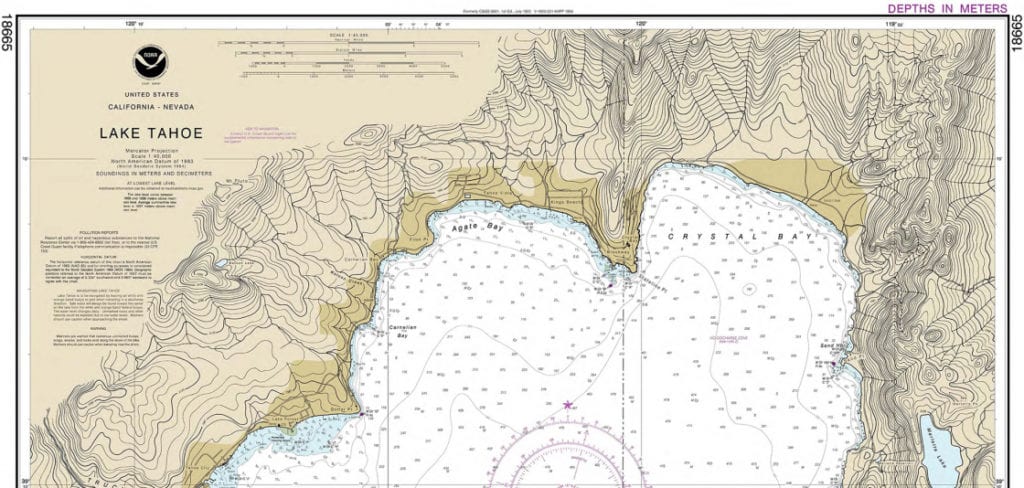
A paper chart of Lake Tahoe, the first paper chart to be entirely replaced with electronic navigational charts. NOAA
WASHINGTON — NOAA will begin to implement its sunset plan for paper nautical charts this month, starting with the current paper chart 18665 of Lake Tahoe, the agency announced in a Feb. 26 release. After August, NOAA’s electronic navigational chart will be the only NOAA nautical chart of the area.
This is the first traditional paper chart to be fully supplanted by an electronic chart as part of NOAA’s Office of Coast Survey Raster Sunset Plan, which includes a new process to notify mariners of the transition of individual paper charts to electronic charts. These charts are easier to update and maintain, keeping mariners safer with up-to-date information on marine hazards.
As part of the sunset plan, released in 2019, mariners will be officially notified of this chart’s cancellation in the U.S. Coast Guard Local Notice to Mariners. A note in the lower left corner of the chart will state that it is the last paper edition and it will be canceled six months later on August 26.
NOAA will continue to announce the cancellation of additional paper charts as the sunset plan progresses, initially based on volume of sales or downloads, and in regions with improved NOAA electronic navigational chart coverage. Cancellation of all traditional paper and associated raster chart products will be completed by January 2025.
NOAA announced the start of a five-year process to end traditional paper nautical chart production in late 2019 via a Federal Register Notice. While NOAA is sunsetting its traditional nautical chart products, it is undertaking a major effort to improve the data consistency and provide larger scale coverage within its electronic navigational chart product suite.
Over the next four years, NOAA will work to ease the transition to electronic products by providing access to paper chart products based on electronic data. The online NOAA Custom Chart tool enables users to create their own paper and PDF charts from the latest NOAA ENC data.
Boeing Loyal Wingman Uncrewed Aircraft Completes First Flight
Boeing Australia and the Royal Australian Air Force have successfully completed the first test flight of the Loyal Wingman uncrewed aircraft. Boeing
AUSTRALIA — Boeing Australia and the Royal Australian Air Force (RAAF) have successfully completed the first test flight of the Loyal Wingman uncrewed aircraft, the company said in a March 1 release.
The flight of the first military aircraft to be designed and manufactured in Australia in more than 50 years flew under the supervision of a Boeing test pilot monitoring the aircraft from a ground control station at the Woomera Range Complex.
“The Loyal Wingman’s first flight is a major step in this long-term, significant project for the Air Force and Boeing Australia, and we’re thrilled to be a part of the successful test,” said Air Vice-Marshal Cath Roberts, RAAF head of Air Force Capability. “The Loyal Wingman project is a pathfinder for the integration of autonomous systems and artificial intelligence to create smart human-machine teams.
“Through this project we are learning how to integrate these new capabilities to complement and extend air combat and other missions,” she said.
Following a series of taxi tests validating ground handling, navigation and control, and pilot interface, the aircraft completed a successful takeoff under its own power before flying a pre-determined route at different speeds and altitudes to verify flight functionality and demonstrate the performance of the Airpower Teaming System design.
“Boeing and Australia are pioneering fully integrated combat operations by crewed and uncrewed aircraft,” said Boeing Defense, Space & Security President and CEO Leanne Caret. “We’re honored to be opening this part of aviation’s future with the Royal Australian Air Force, and we look forward to showing others how they also could benefit from our loyal wingman capabilities.”
With support from more than 35 Australian industry teams and leveraging Boeing’s innovative processes, including model-based engineering techniques, such as a digital twin to digitally flight-test missions, the team was able to manufacture the aircraft from design to flight in three years.
This first Loyal Wingman aircraft is serving as the foundation for the Boeing Airpower Teaming System being developed for various global defense customers. The aircraft will fly alongside other platforms, using artificial intelligence to team with existing crewed and uncrewed assets to complement mission capabilities.
Additional Loyal Wingman aircraft are currently under development, with plans for teaming flights scheduled for later this year.
Fairbanks Morse Delivers Four Common Rail Technology Engines for ESB 6
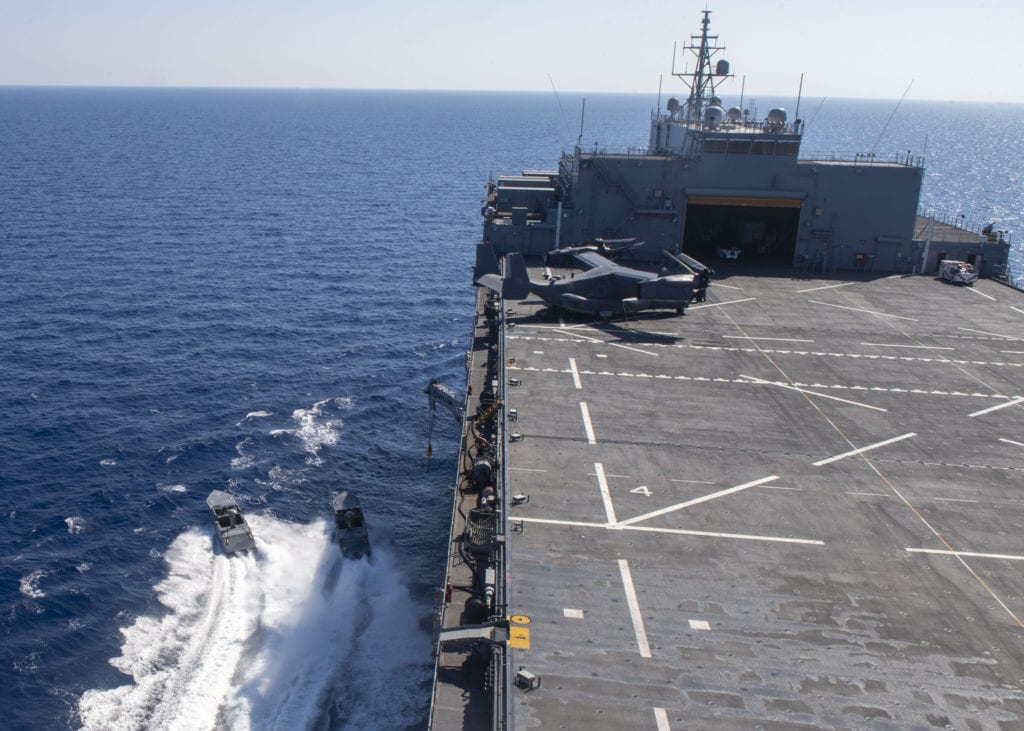
Fairbanks Morse recently delivered four engines to General Dynamics NASSCO for use on the future expeditionary sea base ship USS John L. Canley (ESB 6). Show in this 2020 photo is ESB USS Hershel “Woody” Williams (ESB 4). U.S. Navy/ Mass Communication Specialist Seaman Apprentice Conner Foy
BELOIT, Wis. — Fairbanks Morse, a portfolio company of Arcline Investment Management, recently delivered four FM 6L48/60CR engines to General Dynamics NASSCO in San Diego for Military Sealift Command on the future expeditionary sea base ship USS John L. Canley (ESB 6).
The ship is the sixth in the U.S. Navy’s Military Sealift Command Expeditionary Transfer Dock (ESD)/Expeditionary Sea Base (ESB) program and is designed to serve as a mobile sea base that provides access to critical infrastructure for the deployment of forces and supplies.
“We are proud to once again deliver American-made power and propulsion systems that support critical operations for the U.S. Navy’s global missions,” said George Whittier, Fairbanks Morse’s CEO. “Our common rail technology solution is one of the most fuel-efficient and reliable maritime power solutions available and will generate significant cost savings for the U.S. Navy over the operational lifetime of the engines.”
The four FM 6L48/60CR engines are rated at 6,480 kW and will deliver a total of 25,920 kW of installed power. The engines use common rail technology to deliver high fuel efficiency throughout the ships’ operational conditions. Common rail technology uses a high-pressure header, high-pressure pumps, electronically controlled fuel delivery, electronic governing system and an advanced control system to deliver precise amounts of fuel throughout all engine operations. This results in improved performance increased fuel efficiency and lower emissions.
ESB class ships are used for a wide range of military operations and may support multiple operational phases. Among these are Airborne Mine Counter Measures (AMCM), counter-piracy operations, maritime security operations, humanitarian aid and disaster relief missions, and U.S. Marine Corps crisis response.
ESB 6 honors Marine Corp Sergeant Major (retired) John L. Canley, a Medal of Honor Recipient for his actions serving during the Battle of Hue City in Vietnam Jan. 31 – Feb. 6, 1968. The Medal of Honor is the nation’s highest military honor.
General Dynamics NASSCO started construction on ESB 6 in June 2020 and is also contracted to build ESB 7. Fairbanks Morse will begin construction on engines for ESB 7 later this year.
Fairbanks Morse has served the U.S. Navy for more than 70 years, providing high-quality engines for marine propulsion and ship service systems. Today, Fairbanks Morse engines are installed on approximately 80% of U.S. Navy ships with a medium speed application.
Ingalls Shipbuilding Awarded Life-Cycle Engineering Contract on Navy’s LPD 17 Program
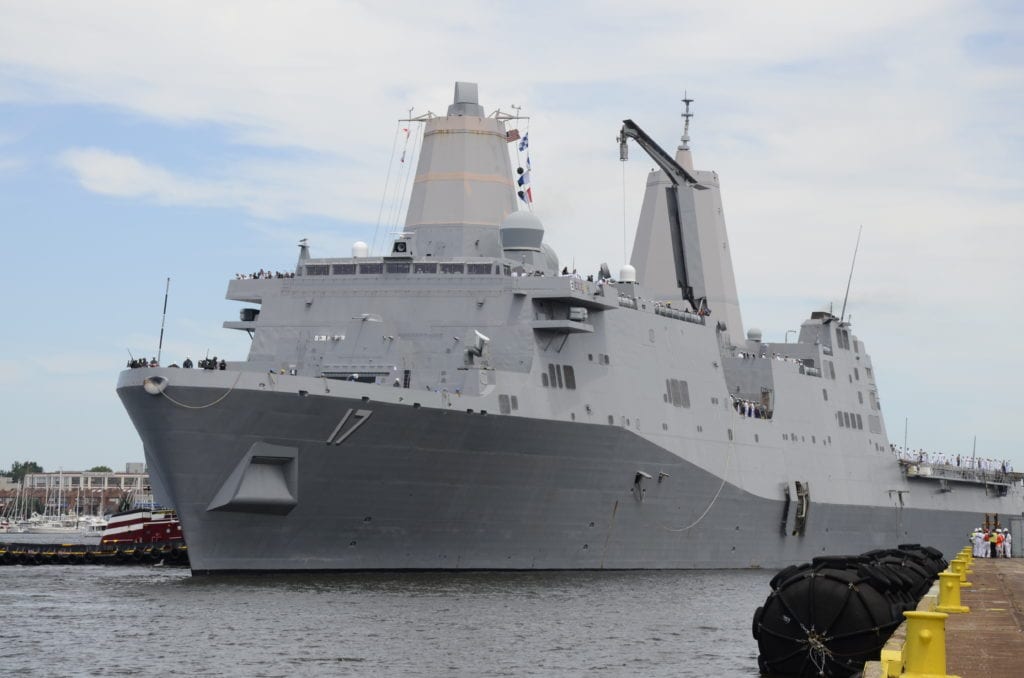
USS San Antonio (LPD 17) approaches its assigned berthing space in Baltimore, Maryland, in this 2012 photo. Ingalls Shipbuilding has been awarded a contract for life-cycle engineering and support services for the San Antonio class of amphibious transport docks. U.S. Navy / Joseph P. Cirone
PASCAGOULA, Miss. — Huntington Ingalls Industries’ Ingalls Shipbuilding division has been awarded a cost-plus-fixed-fee contract for life-cycle engineering and support services on the U.S. Navy’s San Antonio (LPD 17) class of amphibious transport docks, the company said in a Feb. 26 release. This follow-on contract consists of a base contract valued at $36.9 million with a cumulative value of $213.9 million if all options are exercised.
“This contract enables Ingalls to continue providing LPD support and services that are critical to the sustainment of the Navy’s amphibious fleet,” said Ingalls Shipbuilding President Brian Cuccias. “Our talented workforce has the knowledge and experience required to perform this important work, and we are committed to ensuring these state-of-the-art warships serve our nation well into the future.”
Services provided in this contract include engineering change management; systems engineering and integration; supply chain management; training for new LPD 17-class shipboard systems; and the execution of industrial post-delivery availabilities.
“We appreciate the Navy’s continued investment in our experienced team and their reliance on the support we provide,” said David King, Ingalls’ LPD 17 life-cycle program manager. “This contract builds on our strong partnership with the Navy in the construction and post-delivery management of Navy ships. We look forward to supporting these ships as they evolve to meet the changing threat environment.”
San Antonio-class ships are 684 feet long and 105 feet wide and displace approximately 25,000 tons. Their principal mission is to deploy the combat and support elements of Marine expeditionary units and brigades. The ships can carry up to 800 troops and have the capability of transporting and debarking landing craft air cushion or conventional landing craft, augmented by helicopters or vertical take-off and landing aircraft such as the MV-22. These ships will support amphibious assault, special operations or expeditionary warfare missions through the first half of the 21st century.
SECDEF Announces More Flag Officer Nominations
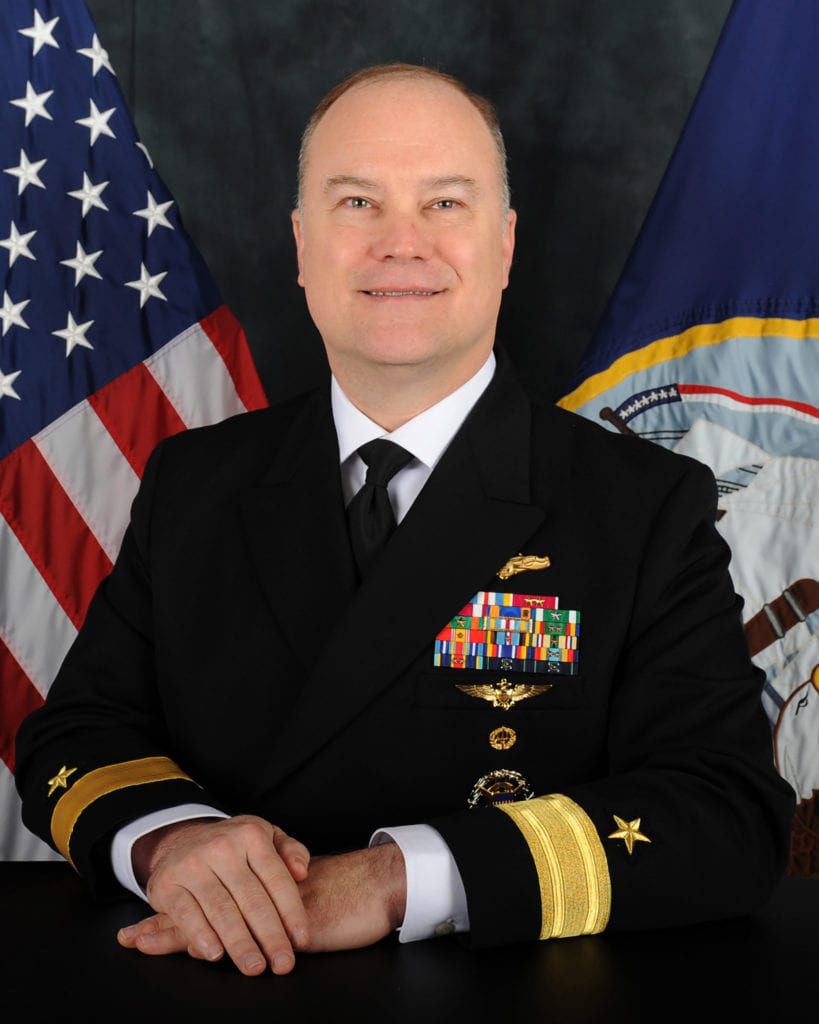
Rear Adm. (lower half) William E. Chase III has been nominated for appointment to the rank of rear admiral, one of several flag officer nominations announced Feb. 26.
ARLINGTON, Va. — Secretary of Defense Lloyd J. Austin III announced Feb. 26 that the president has made the following nominations:
Rear Adm. (lower half) William E. Chase III has been nominated for appointment to the rank of rear admiral. Chase is currently serving as senior military advisor for cyber policy to the under secretary of defense for policy; and the deputy principal cyber advisor to the secretary of defense, Washington, D.C.
Rear Adm. (lower half) Christopher C. French has been nominated for appointment to the rank of rear admiral. French is currently serving as legal counsel to the chairman of the Joint Chiefs of Staff, Washington, D.C.
Rear Adm. (lower half) William C. Greene has been nominated for appointment to the rank of rear admiral. Greene is currently serving as fleet maintenance officer, U.S. Atlantic Fleet, Norfolk, Virginia.
Rear Adm. (lower half) Joseph D. Noble Jr., has been nominated for appointment to the rank of rear admiral. Noble is currently serving as commander, Naval Supply Systems Command Weapons Systems Support, Philadelphia.
Rear Adm. (lower half) John A. Okon has been nominated for appointment to the rank of rear admiral. Okon is currently serving as commander, Naval Meteorology and Oceanography Command, Stennis Space Center, Mississippi.
Rear Adm. (lower half) Scott W. Pappano has been nominated for appointment to the rank of rear admiral. Pappano is currently serving as program executive office, Columbia, Washington, D.C.
Rear Adm. (lower half) Dean A. VanderLey has been nominated for appointment to the rank of rear admiral. VanderLey is currently serving as commander, Naval Facilities Engineering Systems Command Atlantic with additional duties as fleet civil engineer (N01CE), U.S. Atlantic Fleet, Norfolk, Virginia.
Capt. Kristin Acquavella has been nominated for appointment to the rank of rear admiral (lower half). Acquavella is currently serving as director, plans and policies, N415, Office of the Chief of Naval Operations, Washington, D.C.
Capt. Maria L. Aguayo has been nominated for appointment to the rank of rear admiral (lower half). Aguayo is currently serving as chief of staff, Naval Facilities Engineering Systems Command, Washington, D.C.
Capt. Joseph B. Hornbuckle has been nominated for appointment to the rank of rear admiral (lower half). Hornbuckle is currently serving as chief of staff, Naval Air Warfare Center Aircraft Division, Patuxent River, Maryland.
Capt. Ronald J. Piret has been nominated for appointment to the rank of rear admiral (lower half). Piret is currently serving as chief of staff, Naval Meteorology and Oceanography Command, John C. Stennis Space Center, Hancock County, Mississippi.
Capt. Anthony E. Rossi has been nominated for appointment to the rank of rear admiral (lower half). Rossi is currently serving as major program manager, Mission Integration and Special Programs Office, PMA 298, Patuxent River, Maryland.
Capt. Stuart C. Satterwhite has been nominated for appointment to the rank of rear admiral (lower half). Satterwhite is currently serving as deputy director, enterprise support, Office of the Chief of Naval Personnel, Washington, D.C.
Capt. Ralph R. Smith III has been nominated for appointment to the rank of rear admiral (lower half). Smith is currently serving as director, Maritime Operations Center, U.S. Tenth Fleet/U.S. Fleet Cyber Command, Fort Meade, Maryland.