NMSV Achieves Milestone with Steel-Cutting Ceremony

An artist’s rendering of the National Security Multi-Mission Vessel (NSMV). MARAD

PHILADELPHIA — The U.S. Department of Transportation’s Maritime Administration (MARAD) launched a new era in maritime education with the Dec. 15 cutting of steel for the new National Security Multi-Mission Vessel (NSMV) at Philly Shipyard Inc., MARAD said in a release.

This is the initial major construction milestone for the first purpose-built, state-of-the-art training vessel for America’s state maritime academies. In addition to providing world-class training for America’s future mariners, the NSMV will be available to support humanitarian assistance and disaster relief missions. 

A video of the steel cutting can be found here. 

“This new state-of-the-art modern school training ship will be a tremendous addition to the U. S. Flag fleet, be available to respond to disaster relief efforts, and support about 1,200 jobs in Philly Shipyard,” said U.S. Secretary of Transportation Elaine L. Chao. 

Construction of the NSMV will help recapitalize our nation’s maritime training fleet, strengthen America’s industrial base and directly support more than 1,200 shipyard jobs in Philadelphia, Pennsylvania.  

“For more than a decade, MARAD has been working to make the NSMV a reality for America’s state maritime academy cadets who deserve state-of-the-art training ships,” added MARAD Administrator Mark H. Buzby. “Thanks to the strong bipartisan support that the NSMV has received in Congress and the leadership of secretary Chao, this program will further advance excellence in American maritime education and reignite the jobs engine that is America’s shipyards.”  

In May 2019, MARAD awarded TOTE Services LLC, a company involved in ship management, marine operations and vessel services, a contract to be the vessel construction manager for the NSMV program. This contract is an innovative approach to federal shipbuilding where the government benefits from commercial best practices for ship design and construction.  

In April 2020, TOTE Services awarded Philly Shipyard, the sole operating subsidiary of Philly Shipyard ASA, a contract to construct up to five NSMVs.  

“TOTE Services is proud to have been awarded a contract by MARAD to be the vessel construction manager for this new, state-of-the-art training ship that will help provide qualified officers to support the domestic maritime industry,” said TOTE Services President Jeff Dixon. “Each of us at TOTE Services is thrilled to be part of this historic investment in the U.S. maritime industry, and are working closely with MARAD and Philly Shipyard to advance this new class of vessel built by union labor in a U.S. shipyard with U.S.-made steel and U.S.-made engines.” 

Steinar Nerbovik, Philly Shipyard president and CEO, said, “This is a tremendous honor and recognition of our history of building high-quality ships over the last 17 years.  This project begins a new chapter in our history, a new customer and the first in series, which is a challenge we are eager to meet.  I am confident that our workforce will deliver ships that the state academy cadets will be proud to sail for many years to come.” 

The NSMV program is an important investment in the U.S. shipbuilding industry, which supports nearly 400,000 American jobs. As part of the contract, Philly Shipyard will be working with domestic mills to supply steel for the vessels and U.S. manufacturers to provide key ship equipment. 

The NSMV will feature numerous instructional spaces, a full training bridge, and have space for up to 600 cadets to train in a first-rate maritime academic environment at sea. State maritime academies graduate more than half of all new officers each year — the merchant mariners who help keep cargoes and our economy moving. Many also support U.S. national security by crewing military sealift vessels. 

In addition to being a state-of-the-art training and educational platform, the NSMV is a highly-functional national asset designed to fulfill numerous roles. Each ship will feature modern hospital facilities, a helicopter pad, and the ability to accommodate up to 1,000 people in times of humanitarian need. Adding to the NSMV’s capability, it will provide needed roll-on/roll-off and container storage capacity for use during disaster relief missions. 

TOTE Services has ordered the first two NSMVs and the president’s budget request for Fiscal Year 2021 includes sufficient funding for TOTE Services to order the third ship. Construction of the first two NSMVs will replace training ships at SUNY Maritime Academy and Massachusetts Maritime Academy, which are both more than 50 years old.  


USS Gabrielle Giffords Interdicts More Than $100 Million in Drugs

The Independence-variant littoral combat ship USS Gabrielle Giffords (LCS 10) conducts routine operations in the South China Sea, June 16, 2020. U.S. Navy / Mass Communication Specialist 2nd Class Brenton Poyser

AT SEA — The Independence-class littoral combat ship USS Gabrielle Giffords (LCS 10) with embarked U.S. Coast Guard (USCG) Law Enforcement Detachment (LEDET) 407 seized an estimated 2,810 kilograms of suspected cocaine, Dec. 5, the U.S. Naval Forces Southern Command/U.S. 4th Fleet Public Affairs Office said in a Dec. 11 release. 

While on routine patrol, Gabrielle Giffords was diverted to intercept a low-profile vessel (LPV). Gabrielle Giffords deployed one of her helicopters, assigned to the “Wildcards” of Helicopter Sea Combat Squadron (HSC) 23, to provide over watch and ensure compliance while the embarked LEDET and small boats were deployed to achieve positive control and begin boarding of the LPV. 

Gabrielle Giffords and the embarked LEDET searched the vessel and recovered approximately 134 bales, for an estimated 2,810 kilograms of suspected cocaine worth over an estimated wholesale value of $106 million. Three suspected drug traffickers were also detained. 

“Interdiction evolutions, no matter how often you conduct them, are different every time,” said Chief Boatswains Mate Daniel Pike, of Gabrielle Giffords. “Our team is dedicated to exemplifying the qualities of safe, professional mariners during these operations from start to finish.” 

Gabrielle Giffords is deployed to the U.S. 4th Fleet area of operations to support Joint Interagency Task Force South’s mission, which includes counter illicit drug trafficking in the Caribbean and Eastern Pacific. 


Future LCS USS Cooperstown Completes Acceptance Trials

The future USS Coopertown (LCS 23). Lockheed Martin

MARINETTE, Wis., Dec. 14, 2020 — Littoral Combat Ship (LCS 23), the future USS Cooperstown, completed acceptance trials in Lake Michigan, Lockheed Martin said in a Dec. 14 release. Trials included a full-power run, maneuverability testing, and surface and air detect-to-engage demonstrations of the ship’s combat system. Major systems and features were demonstrated, including aviation support, small boat launch handling and recovery and machinery control and automation.  

Now that trials are complete, the ship will undergo final outfitting and fine-tuning before delivery to the U.S. Navy next year. LCS 23 is the 12th Freedom-variant LCS designed and built by the Lockheed Martin-led industry team. 

“LCS 23, like other Freedom-variant Littoral Combat Ships, delivers unique flexibility and capability to the U.S. Navy,” said Joe DePietro, Lockheed Martin vice president and general manager, Small Combatants and Ship Systems. “Freedom-variant LCS are inherently capable, and they offer 40% reconfigurable hull space to evolve to future U.S. Navy missions. During acceptance trials, LCS 23 proved its maneuverability, automation and core combat capability.”  

Unique among combat ships, the focused-mission LCS is designed to support mine countermeasures, anti-submarine and surface warfare missions and is easily adapted to serve future and evolving missions. The Freedom-variant LCS is: 

  • Flexible — Forty percent of the hull is easily reconfigurable, able to integrate Longbow Hellfire Missiles, 30 mm guns, and manned and unmanned vehicles designed to meet today’s and tomorrow’s missions. 
  • Lethal — LCS is standard equipped with Rolling Airframe Missiles (RAM) and a Mark 110 gun, capable of firing 220 rounds per minute. 
  • Powerful — LCS has gas turbines, diesel engines and water jets that together generate 114,000 horsepower making LCS capable of speeds in excess of 40 knots. 
  • Automated — LCS has the most efficient staffing of any combat ship. 

“I would like to commend the entire Freedom Team on the successful acceptance trials of LCS 23,” said Jan Allman, CEO of Fincantieri Marinette Marine. “I’m continuously proud of the dedication and perseverance shown by the entire team to provide our customer, the U.S. Navy, with the most agile, capable warship.” 


Cutter Legare Returns Home after Interdicting over 7,000 Pounds of Drugs

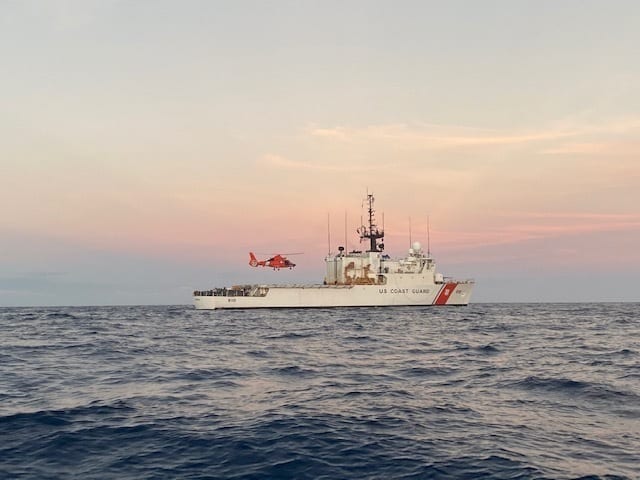
The Coast Guard Cutter Legare (WMEC 912) crew transferred 19 suspected smugglers to federal agents at Port Everglades, Ft. Lauderdale, Florida, Dec. 7, 2020. The Legare crew patrolled the Eastern Pacific Ocean in support of an enhanced counter-narcotics operations in the Western Hemisphere to disrupt the flow of drugs in support of Presidential National Security Objectives. U.S. Coast Guard / Chief Petty Officer Charly Tautfest

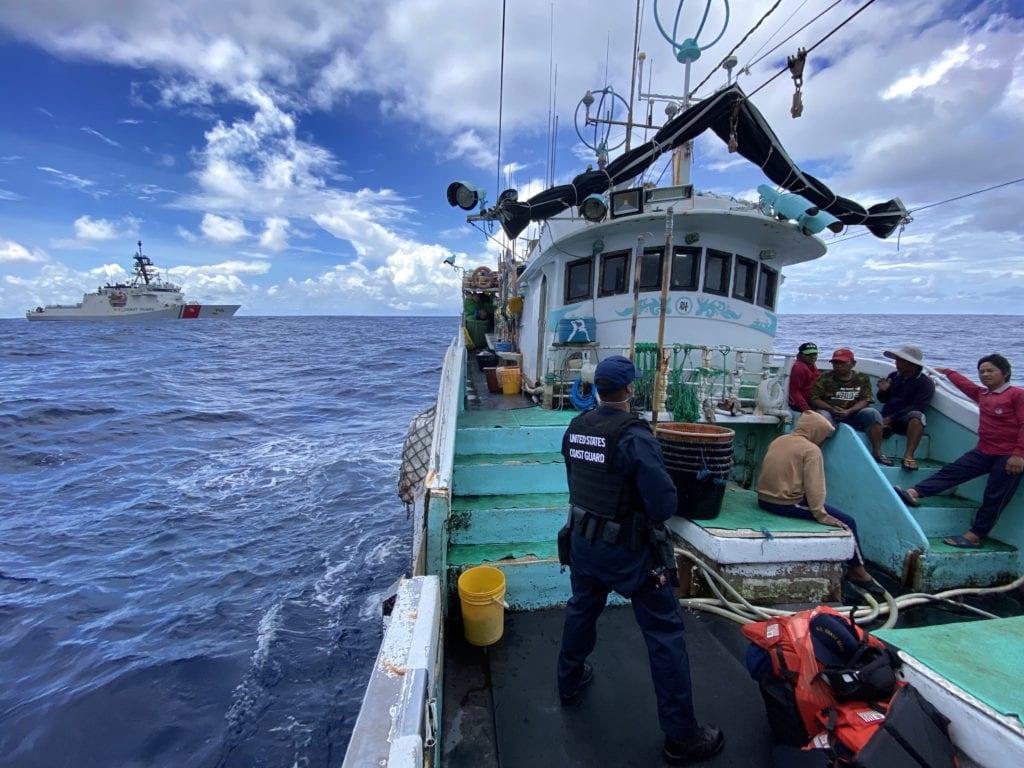
PORTSMOUTH, Va. — The crew of the Coast Guard Cutter Legare returned to their homeport in Portsmouth, after an eight-week counter narcotic patrol in the Eastern Pacific Ocean, Dec. 11, the Coast Guard 5th District said in a release. 
 
The Legare interdicted over 7,000 pounds of contraband, with an estimated street value in excess of $20 million and patrolled over 10,000 nautical miles throughout the Eastern Pacific, working in conjunction with U.S. Customs and Border Protection, the Drug Enforcement Administration, U.S. Navy, and other partner assets to combat transnational smuggling organizations operating in the maritime environment. 

The Legare embarked an aircrew from Helicopter Interdiction Tactical Squadron, homeported in Jacksonville, Florida, which specializes in airborne interdiction tactics. Additionally, the crew sailed with a law enforcement detachment specializing in maritime law enforcement and surface use of force tactics. 

Along with 4th Fleet assets, the Legare participated in an international naval and amphibious exercises off the coast of Manta, Ecuador. Unitas, or “Unity” in Latin, is the longest running annual international military exercise. The Legare crew demonstrated the Coast Guard’s multi-faceted capabilities during maritime interdiction, search and rescue, and live fire gunnery exercise events in addition to participating in atypical Coast Guard events such as anti-submarine and surface warfare operations. 

“Similar to our previous patrol, the COVID-19 pandemic has continued to challenge our methodology and tactics, despite this, the crew always rises to the challenge ensuring protective equipment and decontamination procedures are strictly followed allowing the Legare to complete and excel in all missions,” said Cmdr. Malcolm Belt, commanding officer of the Legare. “Despite all of the restrictions COVID-19 has brought upon us, the men and women of the Legare prepared for and performed magnificently during the Unitas exercise, an opportunity for the United States to strengthen alliances with other nations and enhance our capabilities across international borders. I am continually amazed by the families and friends shore side who support the crew serving onboard the Legare, their resolve, strength, and compassion allow the crew to focus on the mission while deployed; we would not be where we are today without their constant and unwavering support.” 
 
The Legare is a multi-mission 270-foot medium-endurance cutter. Missions include search and rescue, maritime law enforcement, marine environmental protection, homeland security, and national defense operations. 


Coast Guard Cutter Tampa Returns Home Following 57-day Caribbean Patrol

Fireman Lukas Kuehne, a crewmember aboard the Coast Guard Cutter Tampa, helps move drugs during a contraband transfer aboard the cutter. The cutter crew conducted a 57-day counter-drug and migrant interdiction operations patrol. U.S. Coast Guard

PORTSMOUTH, Va. – The crew of the Coast Guard Cutter Tampa returned to their homeport in Portsmouth on Dec. 12, after a 57-day counter-drug and migrant interdiction operations patrol, the Coast Guard 5th District said in a release.  

Patrolling known drug trafficking areas throughout the Caribbean and working with partner agencies and maritime patrol aircraft, the Tampa crew interdicted a vessel carrying approximately 170 pounds of cocaine worth $1.95 million.  

Additionally, in a joint operation with various law enforcement agency partners, the Tampa assisted the Coast Guard Cutter Richard Dixon, homeported in San Juan, Puerto Rico, with the interdiction of two fishing vessels, with 26 alleged smugglers, suspected of engaging in drug trafficking.  

The Tampa’s efforts to combat drug smuggling in the Caribbean was part of Operation Unified Resolve, a larger effort to increase regional stability and undermine the influence of transnational criminal organizations who routinely attempt to smuggle drugs throughout the region.  

“I am exceptionally proud of everything our crew accomplished during this challenging patrol,” said Capt. Michael Cilenti, commanding officer of the Tampa. “Through my entire Coast Guard career, this has been one of the most dynamic patrols I have experienced, and I appreciate the resiliency and adaptability of our crew immensely. Additionally, Tampa’s exceptional commitment to readiness and individual accountability allowed us to sail healthy, on time, and ready to execute our assigned missions. Of course, Tampa’s operational success would not have been possible without the continuous support and encouragement from our friends and families. Their constant support allowed us to operate through the holiday season, focus on mission excellence and continue to serve our country. We could not be more grateful.”  

The Tampa crew also conducted migrant interdiction operations mission off the coast of Haiti as part of Operation Southeast Watch. The Tampa frequently patrolled Haitian waters, providing a law enforcement presence and deterrent to potential migrants and embarked an MH-65 Dolphin helicopter aircrew from Coast Guard Air Station Borinquen, Puerto Rico, which was used as an additional asset to patrol Haitian waters for potential migrant vessels. 


Navy Accepts Delivery of Future USS Mobile (LCS 26)

The future USS Mobile (LCS 26). The U.S. Navy has accepted delivery of the ship, the fifth ship to bear the name. Office of U.S. Rep. Bradley Byrne

MOBILE, Ala. – The Navy accepted delivery of the future USS Mobile (LCS 26) during a ceremony at Austal USA on Dec. 9, the service said in a Dec. 11 release. 

Mobile is the 23rd littoral combat ship (LCS) and the 13th of the Independence variant to join the fleet. Delivery marks the official transfer of the ship from the shipbuilder, Austal USA, to the Navy. It is the final milestone prior to commissioning, which is planned for spring 2021. 

“This is a day of celebration for both the Navy and our country with the delivery of the future USS Mobile,” said LCS program manager Capt. Mike Taylor. “This ship, and her crew, are foundational to our nation’s security.” 

Four additional Independence-variant ships – Savannah (LCS 28), Canberra (LCS 30), Santa Barbara (LCS 32), and Augusta (LCS 34) – are in various stages of construction at Austal USA, and two more are awaiting the start of construction following LCS 34. 

The future USS Mobile is the fifth ship named in honor of the port city on Alabama’s Gulf Coast. The first Mobile was a side-wheel steamer that operated as a Confederate government-operated blockade runner. It was captured by U.S. forces at New Orleans in April 1862, commissioned as Tennessee and later renamed Mobile. The second Mobile was a passenger liner operated by Hamburg Amerika Lines between Germany and the United States until the outbreak of World War I. It was taken over by the Allied Maritime Council and assigned to the United States after the Armistice and commissioned March 1919. The third Mobile (CL 63), a cruiser, was commissioned March 24, 1943. It participated in numerous campaigns in the Pacific Theater during World War II and received 11 battle stars for her service by the time she was decommissioned May 1947. The fourth Mobile (LKA 115) was an amphibious cargo ship that served from September 1969 until decommissioning in February 1994. 

The LCS is a fast, agile, mission-focused platform designed to operate in near-shore environments, while capable of open-ocean tasking and winning against 21st-century coastal threats such as submarines, mines, and swarming small craft. The LCS is capable of supporting forward presence, maritime security, sea control and deterrence. 

The LCS class consists of the Independence variant, built by Austal USA, and the Freedom variant, being built at Fincantieri Marinette Marine Corp. in Marinette, Wisconsin. 

The future USS Mobile is the fourth LCS of both variants delivered to the Navy in 2020. St. Louis (LCS 19) was delivered on Feb. 6, Kansas City (LCS 22) was delivered on Feb. 12, and Oakland (LCS 24) was delivered on June 26. Five more — Minneapolis-St. Paul (LCS 21), Cooperstown (LCS 23), Marinette (LCS 25), Savannah (LCS 28), and Canberra (LCS 30) — are planned for delivery in 2021. 


HII Authenticates Keel of Virginia-Class Attack Submarine Massachusetts

The initials of Virginia-class submarine Massachusetts (SSN 798) sponsor Sheryl Sandberg were displayed at the ship’s keel authentication ceremony. Sandberg (center left) delivered pre-recorded remarks during the event, which marks the ceremonial start of construction. Present was Newport News Shipbuilding President Jennifer Boykin (left); Cmdr. Erik Lundberg, commanding officer of the pre-commissioning unit (center) and welder Ronnie Payne. Huntington Ingalls Industries / Ashley Cowan

NEWPORT NEWS, Va. — Huntington Ingalls Industries’ Newport News Shipbuilding division hosted a keel authentication ceremony Dec. 11 for Virginia-class attack submarine Massachusetts (SSN 798), the company said in a release. Due to the COVID-19 pandemic, the event was held virtually, without an audience. 

“This construction milestone is typically a small ceremony with shipbuilders and the submarine’s crew in attendance,” said Jennifer Boykin, president of Newport News Shipbuilding. “Given the current COVID-19 environment and the precautions it requires, today’s event is smaller than usual in scope, but not in importance.” 

“Today’s event is a significant milestone in the life of the boat because it is the official construction kickoff, but it also marks the beginning of an important partnership between our shipbuilders who will build this mighty war vessel and the sailors who will bring her to life,” Boykin added. 

Sheryl Sandberg, chief operating officer of Facebook, is the ship’s sponsor. In a pre-recorded video message, Sandberg etched her initials onto a metal plate, signifying the keel of SSN 798 as being “truly and fairly laid.” 

Ronnie Payne, a master shipbuilder who has worked on every Virginia-class submarine built at Newport News, then traced Sandberg’s initials with a welding torch at the company’s Supplemental Module Outfitting Facility. The metal plate will remain affixed to the ship throughout its life. 

“This year has been difficult for so many, and I am extra grateful for moments like this one when we can celebrate such an important milestone together,” Sandberg said. “I have a deep respect for the shipbuilders who will bring this vessel to life. I am so grateful for the opportunity to build a lifelong bond with this boat and its crew in my role as the sponsor.” 

Massachusetts is the 25th Virginia-class fast attack submarine being built under the teaming agreement with General Dynamics Electric Boat. Construction began in March 2017 and is approximately 50% complete. The boat is scheduled for delivery to the Navy in 2023.  

“One of the privileges in establishing a command from the very beginning is developing a relationship with the boat’s namesake state — a relationship inherited from our forebears and one that will last the life of the ship and beyond,” said Cmdr. Erik Lundberg, commanding officer of the pre-commissioning unit. “Our mission is clear — deliver the most advanced, most capable warship to the Navy and our nation with an equally advanced and capable crew to bring her to life. The crew of Massachusetts stands ready.”   


US Navy, Raytheon Conduct First Tomahawk Block V Tests

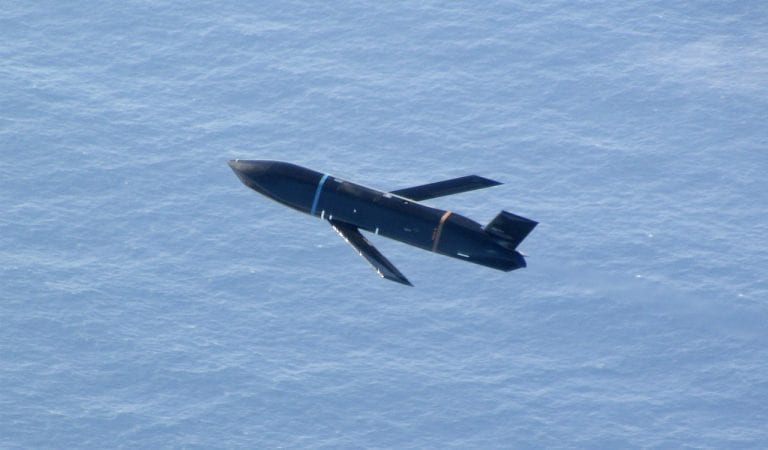
A successful flight test of the Tomahawk Block V. Raytheon Missiles & Defense

TUCSON, Ariz.— The U.S. Navy and Raytheon Missiles & Defense, a Raytheon Technologies business, successfully completed two flight tests with the franchise’s newest cruise missile variant, the Tomahawk Block V, the company said in a Dec.10 release.

During the tests, the Arleigh Burke-class guided-missile destroyer USS Chafee (DDG 90) launched two Block V missiles, impacting targets at ranges on both San Nicolas Island and Naval Air Weapons Station China Lake in California.  

Tomahawk is a highly accurate, GPS-enabled missile that can fly into heavily defended airspace and conduct precise strikes on high-value targets with minimal collateral damage. The advanced Tomahawk Block V includes improved navigation and communications.  

“These tests keep the Navy on schedule to introduce Block V into the fleet next year,” said Kim Ernzen, vice president of Naval Power at Raytheon Missiles & Defense. “Our modernization and recertification efforts will also extend the missile’s service life by 15 years.”  

During the tests, the missiles were redirected mid-flight to different targets using their new advanced communications architecture systems.  

“The Block V capabilities reinforce Tomahawk’s unequivocal role as the Navy’s long-range strike weapon far into the future,” said Capt. John Red, the Navy’s Tomahawk Weapons System program manager. “These tests are tremendous milestones for our teams that have been working on these improvements for several years.” 

Additional Block V enhancements, such as a maritime strike capability (Block Va) and a programmable warhead for an expanded land attack capability (Block Vb), are in development for future deliveries. Block Va will strike moving targets at sea, while Block Vb will defeat a more diverse range of land targets. 


Marine Corps Begins Fielding Amphibious Combat Vehicle 

An Amphibious Combat Vehicle. U.S. Marine Corps / Lance Cpl. Andrew Cortez

Marine Corps Base Quantico, Va.—The Marine Corps’ new Amphibious Combat Vehicle has achieved two new major milestones, the Program Executive Office – Land Systems said in a Dec. 10 release.  

On Nov. 13, the Marine Corps’ Capabilities Development Directorate approved the Initial Operational Capability (IOC) of the ACV. Marines with 1st Marine Division aboard Marine Corps Base Camp Pendleton, California, were the first to receive the vehicle.  

The Program Manager Advanced Amphibious Assault program office at Program Executive Officer (PEO) Land Systems manages the system.  

“We’re providing Marines with a modern, armored personnel carrier that offers tremendous capability with respect to survivability,” said Col. Kirk Mullins, program manager for Advanced Amphibious Assault at PEO Land Systems. “The ACV gives the Marine Corps a capable platform operational across the full-range of military operations.”  

Then, on Dec. 8, Assistant Secretary of the Navy (Research, Development and Acquisition) James Geurts approved the vehicle for Full-Rate Production (FRP). This means the Marine Corps can build and field higher quantities of the ACV at a sustained rate over the next several years.  

The ACV is a next-generation, eight-wheeled vehicle designed to move Marines from ship to shore. The vehicle will be the primary means of tactical mobility for the Marine infantry battalion at sea and ashore, replacing the Corps’ aging Assault Amphibious Vehicle.  

The ACV provides organic, direct fire support to dismounted infantry. The vehicle’s ability to leverage waterways to carry Marines and equipment make it well-suited for various operating environments, including Expeditionary Advanced Base Operations. It is net-ready, secure, interoperable, operationally effective and built for future growth. In the future, the Corps intends to develop, procure and field three additional variants that specialize in command and control, recovery operations and increased firepower.  

“The fielding of the ACV is significant because we’re replacing the AAV, which has been effective for decades but was fielded in 1972,” Mullins said. “We’re providing Marines with a modern, more capable combat vehicle that is more adaptable to today’s battlefield.”  

Col. David G. Bardorf, the director of Ground Combat Element Division at the Marine Corps’ Capabilities Development Directorate, said the ACV has progressed significantly since its initial requirements discussions in 2014. Combat Development and Integration was responsible for developing the requirements set that would be needed to replace the older platform.  

“Reaching IOC is a testament to those involved in this program and the constant communication between the stakeholders: requirements, program managers, and [the vendor],” said Bardorf. “In the end, the Marine Corps is receiving an upgrade in capability ahead of schedule. We look forward to the program moving forward towards Full Operational Capability [FOC].” 

Mullins said the vehicle is projected to reach FOC in fiscal year 2028.  

In 2019, PEO Land Systems oversaw extensive testing involving the ACV that confirmed the vehicle’s ability to not only take on challenging surf, but also complete a long swim from ship to shore. The testing also indicated that the ACV has greater survivability and mobility than the AAV.  

In 2020, Marine Corps Operational Test and Evaluation Activity performed independent operational testing involving the ACV’s achieved suitability, effectiveness and survivability. Results from the assessments, as well as feedback from Marines trained to employ the vehicle, came back positive. 

Mullins believes the ACV achieving IOC and FRP is a significant achievement for the Marine Corps, as Marines will receive an innovative vehicle that further supports their missions in various combat environments for years to come.  

“As program manager, I’ve spent a lot of time speaking with Marines who have trained with this vehicle in a variety of test environments,” said Mullins. “The feedback we’ve consistently received has been overwhelmingly positive. Marines seem to really love the vehicle.” 


U.S. Navy Adds Two Tech Bridges to Network

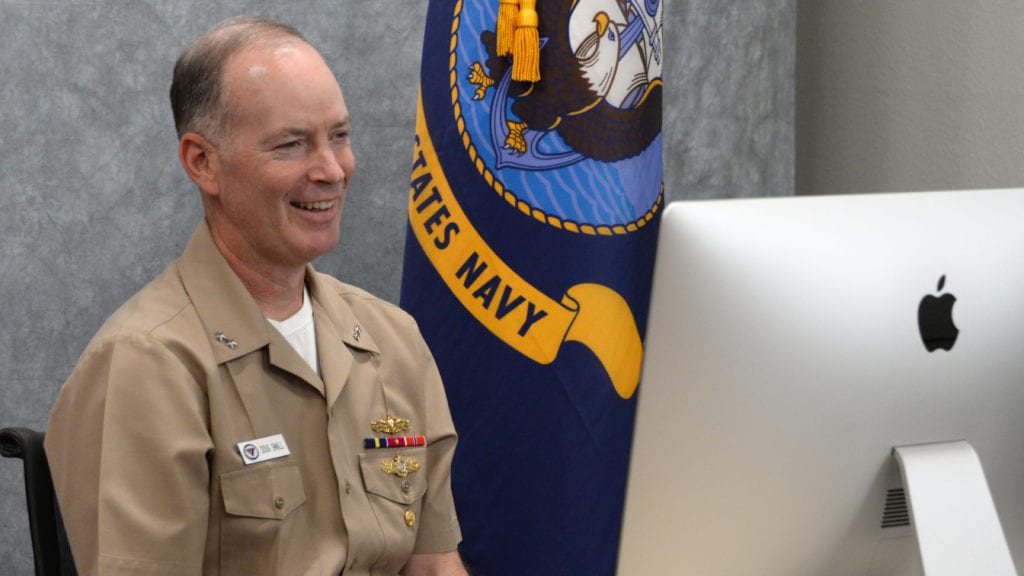
The Navy’s assistant secretary for research, development and acquisition announced two new Tech Bridges, in Panama City, Florida, and Honolulu.

WASHINGTON — James “Hondo” Geurts, assistant secretary of the Navy for Research, Development, and Acquisition, announced the stand up of two additional Tech Bridges, one in Panama City, Florida, and one in Honolulu, Hawaii, on Dec. 9, his public affairs office said in a release. 

“Today’s Tech Bridge additions are a symbol of the Department of Navy’s momentum to rapidly deliver capabilities into the hands of our Sailors and Marines,” said Geurts. “There is nothing more exciting than seeing the speed and transition of technology that dramatically accelerates capability, and improved development processes – this allows our Navy and Marine Corps to provide the U.S. with the ability to adopt and scale its asymmetric advantage. I look forward to seeing these Tech Bridges serving as a ‘front door’ for emerging tech to work more seamlessly with the Navy.” 

The newest Tech Bridges offer direct access for companies and the fleet to test and evaluate emerging technologies purposed for undersea and space-going missions. The focus areas for the Gulf Coast Tech Bridge, located in Panama City, Florida, includes coastal sciences and technology, assured maritime access and operational meteorology and oceanography. The focus areas for the Hawaii Tech Bridge, in Honolulu, entail efforts to adopt technology advances for command and control, communications, cybersecurity, intelligence, space systems and resilient infrastructure. 

“The Naval Surface Warfare Center Panama City Division, the U.S. Naval Research Lab in Stennis, Mississippi, and the Naval Meteorology and Oceanography Command partnered together to establish the Gulf Coast Tech Bridge, which spans a unique, vibrant region across four states,” said Holly Gardner, Director of the Gulf Coast Tech Bridge. “Our region is focused on the future, growing coastal science and unmanned vehicle development, hosting industry events and expanding strategic partnerships.” 

The Hawaii Tech Bridge represents a collaboration with the Naval Undersea Warfare Center Keyport Detachment Pacific, the Hawaii Technology Development Corporation, and the University of Hawaii’s Office of Innovation and Commercialization. Future teaming is anticipated with the U.S. Indo-Pacific Command; Commander, United States Pacific Fleet; and Joint Base Pearl Harbor-Hickam. 

“In our logo, you will see the Hawaiian canoe (wa’a),” said Neal Miyake, dual-hatted as the Business Deputy at Naval Information Warfare Center Pacific and the Director of the Hawaii Tech Bridge. “This symbolizes that everyone has to work together in unity (lokahi) to achieve success. Like our Tech Bridge collaborators, each paddler may have a different role but they are all united by a common goal.” 

Tech Bridges are part of an initiative birthed from the Navy Agility cell, called NavalX, with support from the Office of Naval Research and the Navy’s System Commands and Warfare Centers. Since September 2019, Tech Bridges stood up across the country to shorten innovation timelines, improve the U.S. Navy’s relationships with emerging tech companies, and advance the U.S. Navy’s ability to bring technology solutions to the fleet. As of today, the Tech Bridges network exists in 15 locations — stretching from London (U.K.) to Honolulu — and works with the U.S. Navy’s Warfare Centers to align requirements and bring value to Sailors and Marines. 

More specifically, Tech Bridges collaborate and partner with startups, academia, corporations, small businesses, nonprofits, and private capital to match capability problems with technology solutions. Additionally, Tech Bridges serve within the growing ecosystem of the U.S. Department of Defense’s innovation groups — Defense Innovation Unit (DIU), National Security Innovation Network (NSIN), U.S. Army Futures Command, AFWERX, SOFWERX — that bolsters NavalX’s overarching ability to connect people, companies, and technology solutions. 

“The new Tech Bridge locations bring in a deeper connection to the fleet, rapid prototyping mechanisms, test ranges, and access to talented students and entrepreneurs in Hawaii and the Gulf Coast Region,” said Whitney Tallarico, NavalX Tech Bridge Director. “We have seen this network mobilize during times of national crisis and are excited to watch them strengthen and serve our country during times of peace and otherwise, in the future.”