Cutter Harriet Lane Returns Home following Interdiction of $40M Worth of Drugs
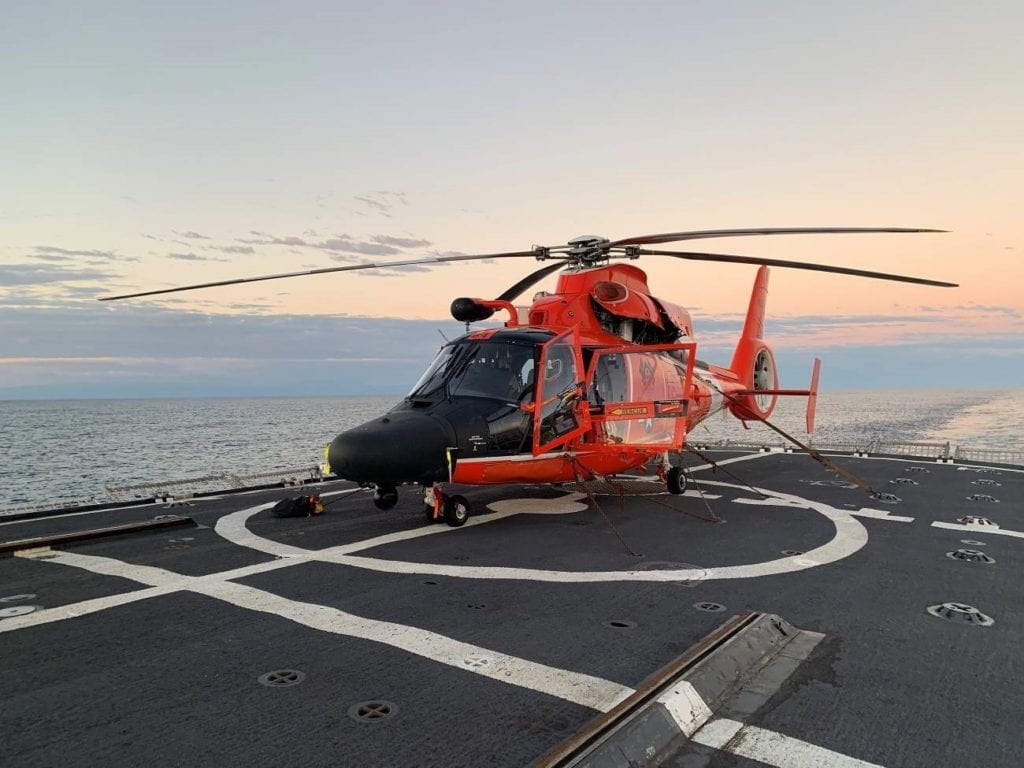
An MH-65 Dolphin Helicopter rests on the deck of the Coast Guard Cutter Harriet Lane during their 71-day patrol. The Coast Guard Cutter Harriet Lane is home-ported in Portsmouth, Virginia. U.S. Coast Guard

PORTSMOUTH, Va. – The Coast Guard Cutter Harriet Lane returned to its homeport in Portsmouth, Virginia, after a 71-day counter-drug patrol Feb. 12, the Coast Guard 5th District said in a Feb. 18 release.  

In support of the Coast Guard’s 11th District and Joint Interagency Task Force South, the Harriet Lane crew worked throughout the duration of the patrol in conjunction with a deployed aviation detachment from the Helicopter Interdiction Tactical Squadron (HITRON) based in Jacksonville, Fla. HITRON specializes in the execution of airborne use of force for the purpose of disabling non-compliant vessels suspected of illicit drug smuggling.  

Harriet Lane joined forces with the Colombian navy to conduct joint maritime operations in the Caribbean, focusing on interoperability, communications, and counter-narcotics efforts. Upon crossing into the Pacific via the Panama Canal, the Harriet Lane crew and her embarked aviation detachment interdicted two non-compliant vessels suspected of illicit drug smuggling.

These interdictions included the seizure of 980 kilograms of cocaine and 1,600 pounds of marijuana, an estimated street value of $40 million. Harriet Lane also detained seven suspected drug smugglers associated with the interdictions. Between operational tasking, the cutter crew completed aviation, damage control, seamanship and navigation training to maintain operational readiness and prepare for future multi-mission deployments. 

“I could not be more proud of the crew of Harriet Lane for their perseverance and operational success amid the continued pandemic,” said Cmdr. Dorothy Hernaez, commanding officer of the Harriet Lane. “The crew flawlessly executed COVID-19 mitigation protocols leading up to and during the deployment to remain healthy and operationally ready throughout. The success we had during this deployment would not have been possible without the continued support of our families and friends, who we are looking forward to seeing again upon our return to port.”  

Prior to returning home, Harriet Lane stopped in Port Everglades, Florida, to transfer 17 suspected drug smugglers and $206 million of illicit drugs to partner agencies for prosecution. In addition to the interdictions by Harriet Lane, people and drug evidence transferred in this evolution came from interdictions in the eastern Pacific and Caribbean by Coast Guard Cutters Bertholf, Munro, and Mohawk, as well as the USS William P. Lawrence with Coast Guard Law Enforcement Detachment Team 101 and USS Comstock with Coast Guard Law Enforcement Detachment Team 403.  

Harriet Lane is a 270-foot medium endurance cutter responsible for a variety of Coast Guard missions, including search and rescue, enforcement of laws and treaties, maritime defense, and protection of the marine environment. 
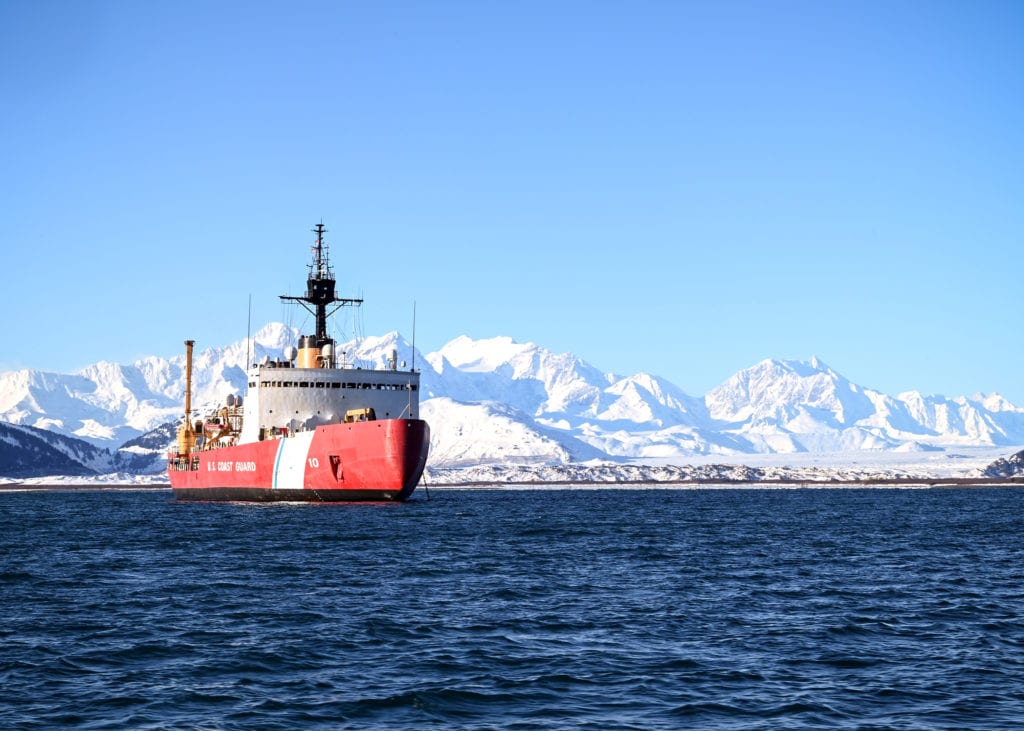


Heavy icebreaker Polar Star Completes Months-Long Arctic Deployment

The Seattle-based Coast Guard Cutter Polar Star (WAGB 10) sits at anchor in Taylor Bay, Alaska, Feb. 10, ahead of its scheduled logistics stop in Juneau, Alaska, near the end of its months-long Arctic deployment and return to its Seattle homeport. U.S. Coast Guard photo by Petty Officer 1st Class Cindy Oldham

SEATTLE — The Coast Guard Cutter Polar Star (WAGB 10) returned to its homeport in Seattle Feb. 20 following a months-long Arctic deployment to defend the nation’s maritime sovereignty and security throughout the region, develop future Arctic Sailors, and gather high-latitude scientific data, the Coast Guard Pacific Area said in a release. 

The 45-year-old heavy icebreaker’s crew spent a majority of the patrol operating in the Bering and Chukchi Seas. Notably, on Dec. 25 the crew traversed a historic winter latitude when they navigated through dense sea ice to patrol beyond 72 degrees latitude, farther north than any U.S. surface asset ever traversed in the winter. 

Additionally, in mid-January, the Polar Star crew and a Russian Border Guard aircraft crew patrolled a portion of the 1,700-mile international maritime boundary line. The joint effort supported mutual agreements to prepare for a potential natural or manmade maritime disaster and reduce any impacts it might have. 

Capt. Bill Woityra, the Polar Star’s commanding officer, said he is incredibly proud of Polar Star’s crew for their hard work and perseverance through the long and arduous mission. 

“Spending a majority of the patrol navigating dense, constantly shifting sea ice, consistently below-zero temperatures and day-long darkness, the crew’s resilience was unyielding,” said Woityra. “With their tremendous effort and positive attitudes, we accomplished everything we set out to do, and more.” 

Throughout the patrol, the crew continued progress toward developing future icebreaker leadership by honing ice navigation proficiency and regional familiarity. The crew also hosted scientists and researchers aboard to better understand Arctic operational capabilities and lessen the void of winter data available from the world’s most northern oceans. 

Woityra said the United States and the Coast Guard are fiercely committed to defending national interests in the Arctic and, looking to the future, the U.S. must continue to invest in the infrastructure and platforms that will enable year-round Arctic operations, and continue to pursue technologies that will mitigate operational risks and enable mission performance in such a challenging environment. 

In April 2019, the Coast Guard released the Arctic Strategic Outlook, which reaffirms the service’s commitment to American leadership in the region through partnership, unity of effort, and continuous innovation. 

The Coast Guard has been the sole provider of the nation’s polar icebreaking capability since 1965 and is seeking to increase its icebreaking fleet with up to six new polar security cutters (PSCs) to ensure continued national presence and access to the Polar Regions. 

The Coast Guard awarded VT Halter Marine Inc. of Pascagoula, Mississippi, a contract for the design and construction of the Coast Guard’s lead polar security cutter, which will also be homeported in Seattle. The contract also includes options for the construction of two additional PSCs. 


AeroVironment Completes Acquisition of Arcturus UAV

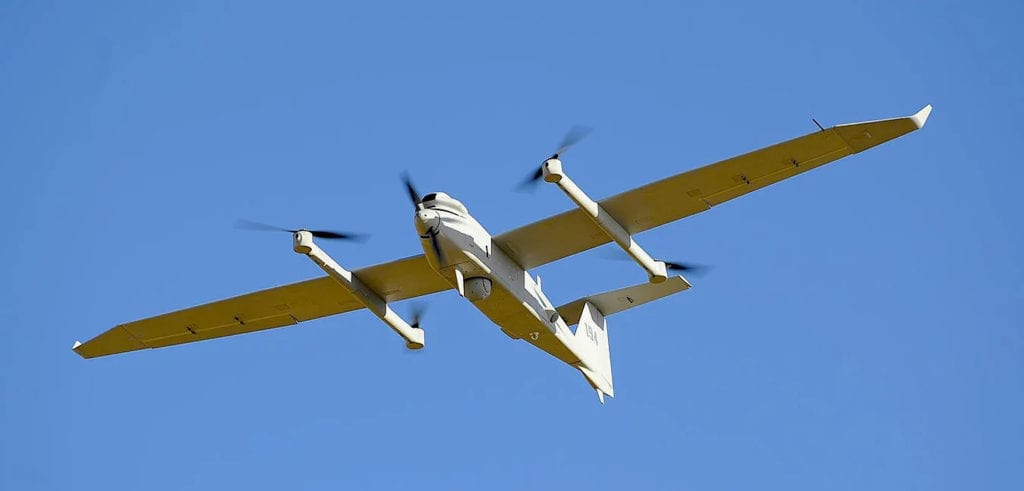
Arcturus UAV’s Jump 20 VTOL drone. Arcturus UAV

SIMI VALLEY, Calif. — AeroVironment Inc. has completed its acquisition of Arcturus UAV Inc., a designer and manufacturer of high-performance unmanned aircraft systems (UAS). The approximately $405 million transaction was previously announced in a press release on Jan. 13.

The United States Special Operations Command (USSOCOM) selected Arcturus UAV as one of six companies qualified for the potential $975 million indefinite-delivery/indefinite-quantity MEUAS IV [Medium-Endurance UAS IV] contract in June 2020. The contract enables awardees to compete for site-specific task orders and provide USSOCOM with unmanned aircraft systems services and support for intelligence, surveillance and reconnaissance (ISR) operations.

Arcturus UAV employs its vertical takeoff and landing Jump 20 UAS in support of USSOCOM operations, minimizing the logistical footprint of UAS operations while delivering multi-payload, multi-mission capabilities. Arcturus UAV is also one of four awardees selected for funded development and demonstrations supporting the U.S. Army’s FTUAS [Future Tactical UAS] program, a potential billion-dollar, next-generation UAS program. 

“Like AeroVironment, the Arcturus UAV team is laser-focused on supporting its customers around the world with the most reliable and effective products and services for their missions,” said Wahid Nawabi, president and CEO of AeroVironment. “As we welcome the Arcturus UAV team to AeroVironment, we commit to maintaining or exceeding the high level of service our existing and new customers experience. The Jump 20 and T-20 platforms, combined with associated ISR services, represent a significant expansion to AeroVironment’s portfolio of intelligent, multi-domain robotic systems that will enhance long-term shareholder value and help our customers around the world proceed with certainty.” 

AeroVironment completed the acquisition of Arcturus UAV on Feb. 19, resulting in Arcturus UAV becoming a wholly owned subsidiary operating under the AeroVironment brand. 


MDSU 2 Hosts Ice Dive Training for Arctic Training

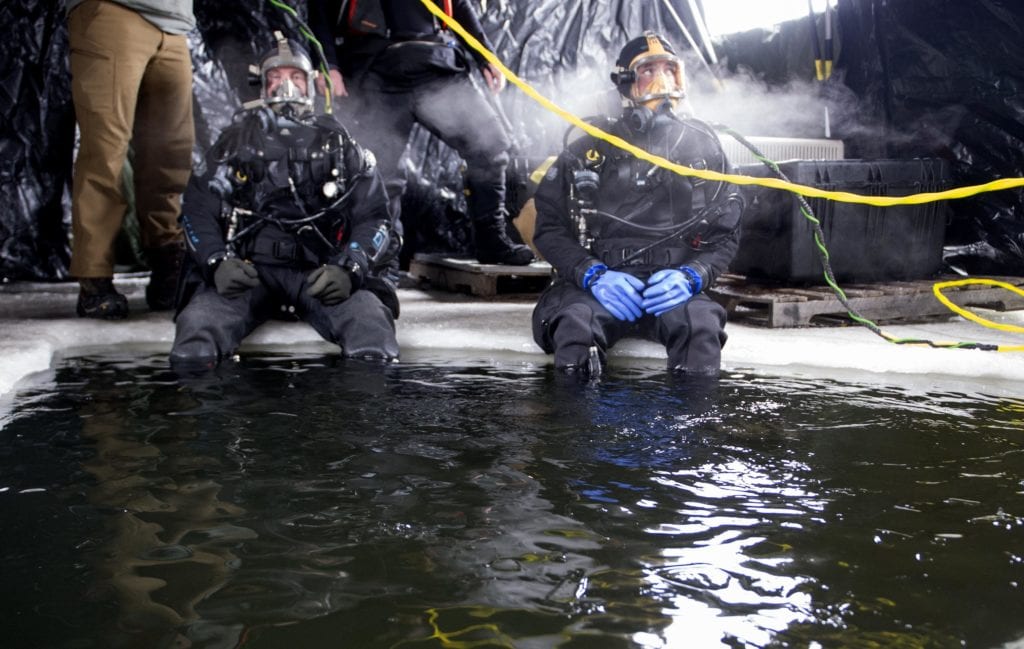
Navy divers assigned to Mobile Diving and Salvage Unit (MDSU) 2 prepare to enter the water during ice dive training at Camp Ripley in Little Falls, Minnesota. The training hosted by MDSU 2, is in its third iteration and has become more relevant, showcasing how Navy divers are assisting in building a more capable arctic naval force. U.S. Navy / Chief Mass Communication Specialist Jeff Atherton

VIRGINIA BEACH, Va. – Mobile Diving and Salvage Unit (MDSU) 2, headquartered at Joint Expeditionary Base Little Creek-Fort Story, hosted the third iteration of ice dive training for Navy divers and explosive ordnance disposal (EOD) technicians at Camp Ripley in Little Falls, Minnesota, in February, the group said in a Feb. 16 release. 
 
The course, run by qualified Navy divers and civilian instructors, teaches the fundamentals of operating on and diving under the ice. 

Ice diving is unique and it can be hazardous without the proper training. Dry suit familiarization dives must be completed prior to diving under the ice, and scuba cold-water set-up training and familiarization must also take place prior to the operation.

Familiarization and training on all aspects must be conducted prior to operating in an Arctic environment, which is why civilian instructors are used who have a wealth of experience operating in these cold environments. The courses hosted by Dive Rescue International are introductory and provides the tools necessary for Navy divers to execute ice diving operations in an Arctic environment. The extensive logistical considerations, medical considerations, emergency evacuation procedures, and topside personnel considerations are also taken into account prior to execution. 

Camp Ripley is an outstanding site to conduct ice and cold weather dive training. The site allows Navy divers to train in a subzero temperature and arduous conditions at training ranges that provide bodies of water similar to operating in the Arctic environment. The Army National Guard has been a tremendous help in supporting with base facilities and logistical support making it an ideal location to train in the Arctic environment now and in the future. 

In the course, the divers are responsible for dive setup, which includes building tents, heating the tents and cutting holes in the ice before diving. 

While the Arctic environment is not outside of the skill set of Navy divers, it is a significant difference from the comparatively warmer waters of Virginia Beach and the significantly warmer waters of Key West, Florida, where many divers are accustomed to training. 

With the recent release of the Department of the Navy’s strategic blueprint for the Arctic, this annual training event has become even more relevant, showcasing how Navy divers are assisting in building a more capable arctic naval force. 

MDSU 2 is part of Explosive Ordnance Disposal Group (EODGRU) 2, which oversees all East Coast explosive ordnance disposal and a mobile diving and salvage unit which are capable of providing skilled, capable, and combat-ready deployable forces around the globe to support a range of operations.

Article by Chief Petty Officer Jeff Atherton, Explosive Ordnance Disposal Group Two


15th MEU Supports Operation Inherent Resolve from Makin Island ARG

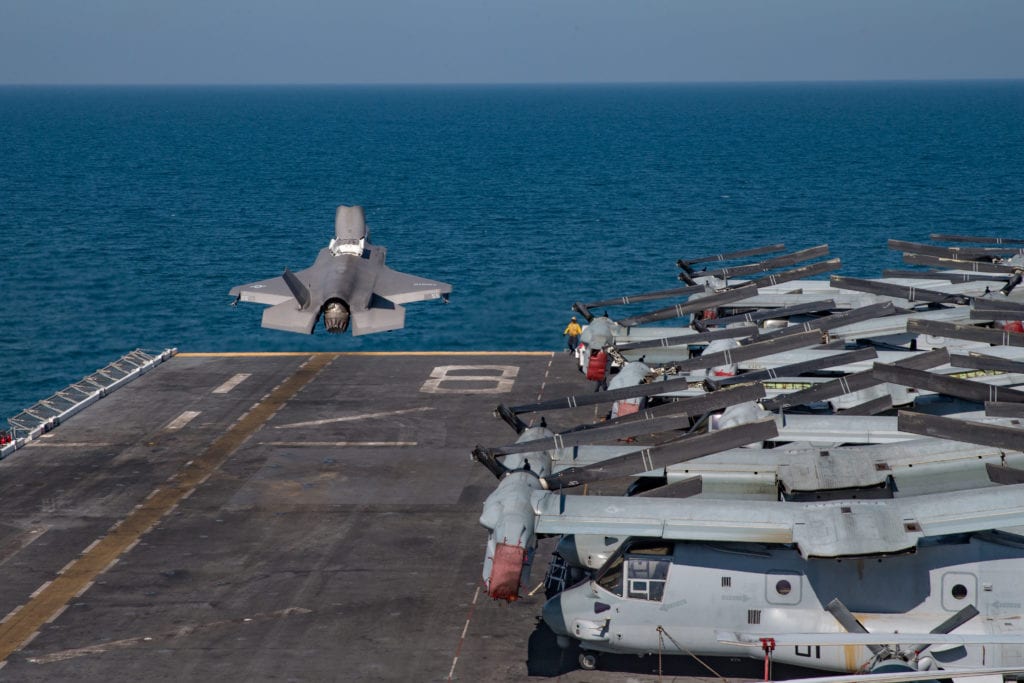
A Marine Corps F35B Lightning II assigned to Marine Medium Tiltrotor Squadron 164 (Reinforced), 15th Marine Expeditionary Unit (MEU), launches from the flight deck of the amphibious assault ship USS Makin Island (LHD 8) during flight operations in support of Operation Inherent Resolve, Feb. 13. U.S. Marine Corps / Sgt. Sarah Stegall

PERSIAN GULF — The Makin Island Amphibious Ready Group (ARG) and the 15th Marine Expeditionary Unit (MEU) began air operations in support of Operation Inherent Resolve (OIR), Feb. 13, the 15th MEU Public Affairs said in a Feb. 16 release. 

Close air support operations and defensive counter air support operations were carried out by Marine Medium Tiltrotor Squadron (VMM) 164 (Reinforced), the aviation combat element of the 15th MEU, as part of broader U.S. Central Command counterterrorism operations in the region. 
 
U.S. Marine Corps F-35B Lightning II aircraft departed from the amphibious assault ship USS Makin Island (LHD 8), flagship of the Makin Island Amphibious Ready Group, to execute the long-range strike. 
 
“Long range F-35B Lightning II strike operations demonstrate the ARG/MEU’s ability to project air power well beyond the shore,” said U.S. Marine Corps Col. Christopher J. Bronzi, the 15th MEU commanding officer. “We look forward to exercising the capabilities in our arsenal while in theater and remain ready to deliver those capabilities at any time if called upon.” 
 
The Makin Island ARG transited through the Strait of Hormuz and into the Arabian Gulf on Feb. 8. The Makin Island ARG and 15th MEU’s presence in the U.S. 5th Fleet area of operations demonstrates the U.S. and its regional partners’ commitment to the free flow of commerce, regional maritime security and freedom of navigation. 
 
“This mission is a strong example of the value a deployed naval expeditionary force brings to combatant commanders and joint partners in the region,” said U.S. Navy Capt. Stewart Bateshansky, Makin Island ARG commodore. “The MEU’s ability to source combat sorties from the Makin Island, while simultaneously supporting training and operations, is a testament to the flexibility and responsiveness of our Navy and Marine Corps team.” 
 
The Makin Island ARG and embarked 15th MEU provide the combatant commander with a responsive, flexible and forward-deployed asset capable of maritime power projection, contingency operations and crisis response, shaping the operational environment to protect the United States and allied interests in any threat environment. 
 
“We are proud and excited to be able to support missions in areas of the world where we are most needed,” said U.S. Marine Corps Lt. Col. Christopher Kelly, VMM-164 (Rein.) executive officer. “Conducting a long range strike mission with fifth generation F-35B fighters from amphibious assault ships demonstrates the versatility this platform brings to the joint force.” 
 
The U.S. 5th Fleet AOO encompasses about 2.5 million square miles of water and includes the Persian Gulf, Gulf of Oman, Red Sea and parts of the Indian Ocean. The expanse is comprised of 20 countries and includes three critical choke points at the Strait of Hormuz, the Suez Canal and the Strait of Bab al Mandeb at the southern tip of Yemen.  


Cubic to Deliver P5 Combat Training System for the F-35

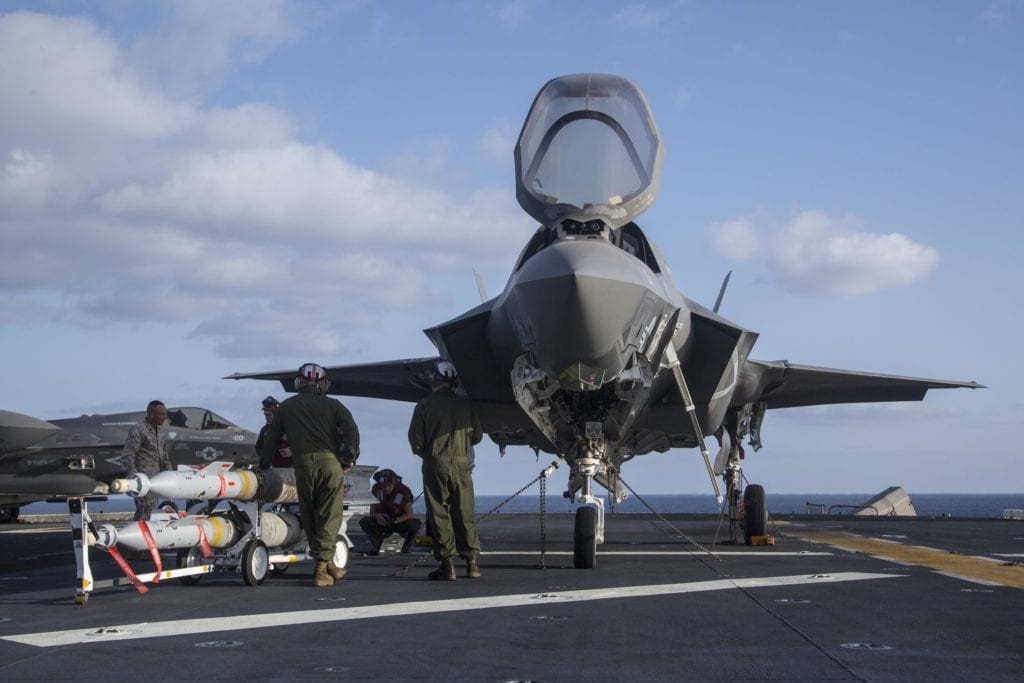
U.S. Marines with Marine Fighter Attack Squadron 211, 13th Marine Expeditionary Unit (MEU), guide ordnance toward an F-35B Lightning II aboard the Wasp-class amphibious assault ship USS Essex (LHD 2), Sept. 22, 2018. Cubic Mission and Performance Solutions will provide two more production lots of the P5 Combat Training System for the F-35. U.S. Marine Corps / Cpl. Francisco J. Diaz Jr.

SAN DIEGO —Cubic Mission and Performance Solutions (CMPS) business division was awarded a contract worth $32 million from Lockheed Martin for two more production lots of the P5 Combat Training System (P5CTS) for the F-35 Lightning II, Cubic announced in a Feb. 19 release.

Under the contract, Cubic will deliver over 150 training subsystems for Lockheed Martin’s F-35 Air Combat Maneuvering Instrumentation (ACMI) system. This new order increases the total number of F-35 P5 on contract to over 1,150 and ensures fielding of F-35 P5 out to 2025. 

Unlike traditional P5 podded solutions for fourth-generation fighter aircraft, the F-35 P5 is an internal subsystem configuration that relays time, space and position information between participating aircraft and range ground stations during training sorties.  

“Our advanced and interoperable P5CTS is used on more than 30 ranges worldwide and continues to set the standard for joint, multiservice and coalition training,” said Mike Knowles, president of Cubic Mission and Performance Solutions. “Training for today’s advanced threats to air combat operations requires adaptable, high-fidelity training tools. Cubic’s P5CTS provides secure and scalable instrumentation solutions that enable integrated fourth- and fifth-generation training for our U.S. forces, allies and partners.” 

The worldwide P5 infrastructure includes the integration of P5 pods and internal subsystems, ground stations and software, and is an investment shared by 17 countries.  A recent upgrade to this training infrastructure is the integration of decryptors in the P5 ground stations to enable F-35 live monitoring at training ranges. 

Cubic and its principal subcontractor, Leonardo DRS, will continue to produce and maintain the F-35 P5 internal subsystem. The Leonardo DRS Airborne and Intelligence Systems business division is responsible for the design and production of the airborne P5CTS Internal Subsystem. 


State Dept. Approves Possible Sale of RAM Block 2 Missiles for Egyptian Navy

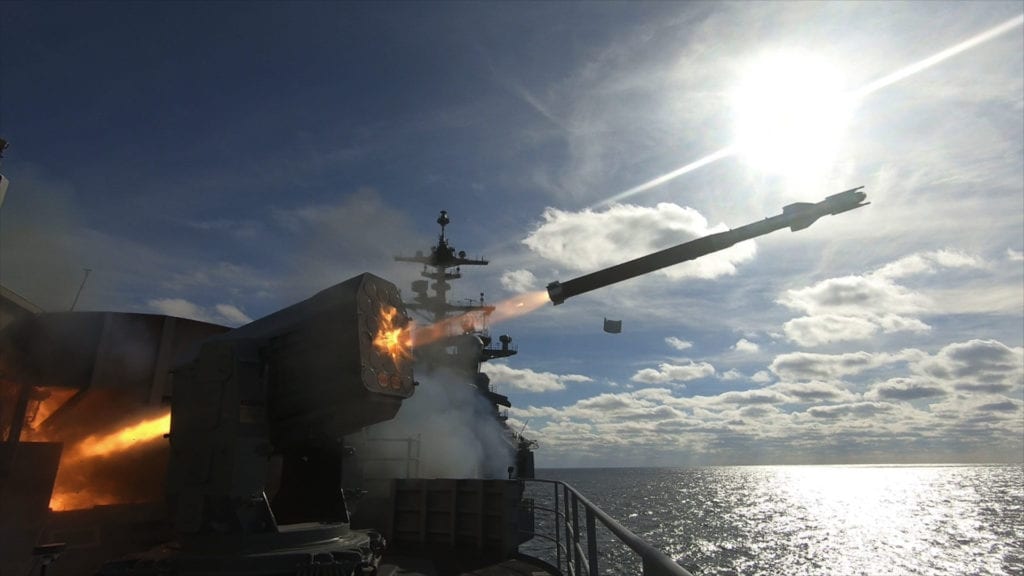
The Nimitz-class aircraft carrier USS Abraham Lincoln (CVN 72) launches a Rolling Airframe Missile (RAM) during combat system ship qualification trials in this 2018 photo. U.S. Navy photo

WASHINGTON—The U.S. State Department has approved a possible Foreign Military Sale to the government of Egypt of Rolling Airframe Missile (RAM) Block 2 tactical missiles and related equipment for an estimated cost of $197 million, the Defense Security Cooperation Agency (DSCA) said in a Feb. 16 release.

Egypt has requested to buy up to 168 RIM‑116C RAM Block 2 missiles, according to the release. “Also included in the possible sale are RAM Guided Missile Round Pack Tri-Pack shipping and storage containers; operator manuals and technical documentation; U.S. government and contractor engineering, technical and logistics support services; and other related elements of logistical and program support.”  

The proposed sale will support the Egyptian navy’s fast missile craft to provide “significantly enhanced area defense capabilities over Egypt’s coastal areas and approaches to the Suez Canal. Egypt will have no difficulty absorbing this equipment into its armed forces since Egypt already operates previously procured RAM Block 1A missiles,” the release said. 

The principal contractor will be Raytheon Missiles & Defense, Tucson, Arizona.   


KBR to Reinforce the US Navy’s Counter-Unmanned Air Systems

1st Lt. Taylor Barefoot, a low altitude air defense officer with Marine Medium Tiltrotor Squadron 163 (Reinforced), 11th Marine Expeditionary Unit, programs a counter-unmanned aircraft system on a Light Marine Air Defense Integrated System (LMADIS) during a predeployment training exercise at Marine Corps Air Ground Combat Center Twentynine Palms, Calif., Nov. 13, 2018. U.S. Marine Corps / Lance Cpl. Dalton S. Swanbeck

HOUSTON — KBR has been awarded a $92.6 million contract to perform engineering, integration and sustainment services on counter unmanned air systems (C-UAS) for the Combat Integration & Identification Systems unit within the U.S. Naval Air Warfare Center Aircraft Division (NAWCAD), the company said in a Feb. 16 release. 

This cost-plus-fixed-fee, indefinite-delivery/indefinite-quantity contract is a new opportunity for KBR to help the U.S. military with ground-based air defense. 

KBR will provide its expertise to various Navy identification and data link systems, which include the Negation of Improvised Non-State Joint Aerial-Threats (NINJA) system; Counter-Remote Control Model Aircraft Integrated Air Defense Network (CORIAN) system; SkyTracker UAS detection and tracking suite; Light Marine Air Defense Integrated System (LMADIS); Marine Air Defense Integrated System (MADIS); and ANDURIL artificial intelligence platforms. 

The Department of Defense uses these C-UAS systems to strengthen homeland security and address potential threats in the U.S. and abroad. The systems can scan the skies for enemy aircraft and take appropriate action to deny airspace access. 

KBR’s specific tasks will include the integration and installation of systems; the characterization of system and subsystem components; development of training curriculum and materials, as well as delivery of formal training programs; supply system management and material control; testing and repair of C-UAS; and laboratory maintenance and quality assurance. The company will perform the five-year contract primarily at Webster Outlying Field in St. Inigoes, Maryland.  

KBR’s services supporting NAWCAD will also benefit programs sponsored by the Naval Air Systems Command; Naval Sea Systems Command; Naval Inventory Control Point – Mechanicsburg; U.S. Coast Guard; commercial and Foreign Military Sales customers; and other DoD and government entities. 

 “Our work through this new win will have wide-reaching impacts within the DoD and international allied community,” said Byron Bright, KBR Government Solutions president. “We are excited to join NAWCAD as it advances C-UAS technology and, ultimately, strengthens national security and protects our armed forces around the globe.” 


Astronics Awarded Boeing Contracts to Support Navy’s MQ-25 Unmanned Tanker

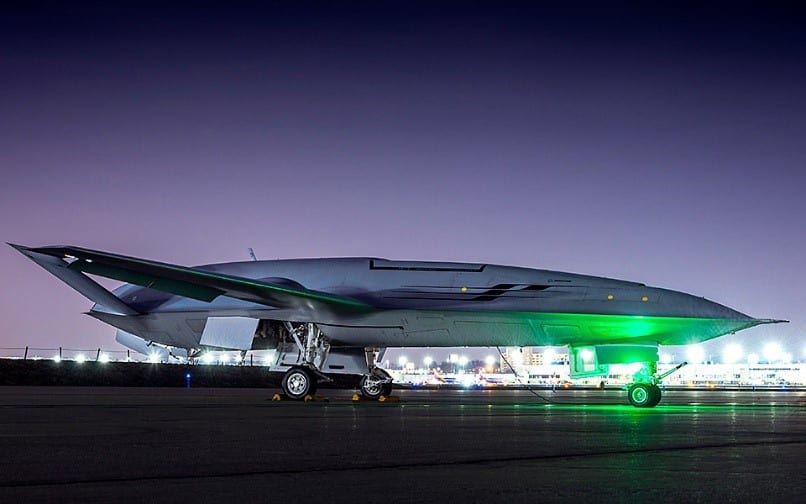
The MQ-25 unmanned aerial refueling tanker. Boeing

EAST AURORA, N.Y. — Astronics Corp. has been awarded contracts by Boeing to supply CorePower aircraft power distribution units and custom-engineered exterior lighting for the MQ-25 unmanned aerial refueling program, Astronics said in a Feb. 17 release. 

“Our CorePower Electronic Circuit Breaker Unit (ECBU) technology is ideally suited for use in unmanned aircraft. This COTS [commercial off the shelf] power distribution technology will support the success of the MQ-25 program by providing intelligent control and visibility of the on-board power systems,” said Pete Gundermann, president and CEO of Astronics. “Additionally, we are proud to bring our exterior lighting expertise for military programs to Boeing on this project.” 

The CorePower system replaces pilot-operated, thermal mechanical breaker systems with intelligently controlled, solid-state switches to provide safe, reliable performance remotely. The system planned for the MQ-25 incorporates the use of Astronics’ latest generation ECBU products to create an evenly distributed system at a fraction of the wire weight and increased reliability compared with traditional systems. 

Astronics is also currently working with Boeing to design custom lighting for the MQ-25 that to provide for safe operations for flight deck personnel and aid in the aerial refueling process. 

The MQ-25 is the U.S. Navy’s first operational carrier-based unmanned aircraft and is designed to provide a much-needed refueling capability. The contract supports Boeing’s engineering and manufacturing development program. 

“The MQ-25 program is vital because it will help the U.S. Navy to extend the range of the carrier air wing and Boeing and our industry team is all-in on delivering this capability,” said Dave Bujold, Boeing’s MQ-25 program director. “The work we’re doing is also foundational for the future of Boeing — where we’re building autonomous systems from seabed to space.” 


Navy Awards Collins Aerospace $64 Million Contract for Warship Sonar Domes

The Naval Programs group within Aerostructures at Collins Aerospace has supplied more than 25 composite keel domes and 360 rubber bow windows for U.S. Navy surface ships. Collins Aerospace

JACKSONVILLE, Fla. — The Naval Surface Warfare Center in Crane, Indiana, has awarded Collins Aerospace Systems, a unit of Raytheon Technologies, a seven-year, $64 million indefinite delivery, indefinite quantity contract to provide sonar domes for surface combat ships for the U.S. Navy and allied forces, the company said in a Feb. 16 release. 
 
The agreement, which builds upon a previous five-year production contract, includes shipping, installation, engineering support, field services, inspection and repairs. Work will be produced by the Naval Programs (Engineered Polymer Products) group of the Aerostructures business unit at Collins Aerospace. 
 
Sonar domes, located on the hulls of warships, protect critical electronic equipment used for detection, navigation and ranging. The domes permit acoustic energy to pass through with minimal sound transmission interference. 
 
The contract includes domes made of a proprietary advanced composite material developed by Collins Aerospace that provides optimal structural and acoustic performance to the ship’s sonar system. This allows for enhanced detection and classification of underwater targets. These composite keel domes replaced traditional rubber domes on U.S. and Allied Navy frigates in 1997 because they require less maintenance and are expected to last more than 30 years even under the most extreme operating conditions. 
 
“Our sailors are putting their lives on the line, and they need the most advanced solutions available to keep them safe. We’ve spent more than 25 years refining our sonar systems technologies and materials to do just that,” said Marc Duvall, president of Aerostructures at Collins Aerospace. “We’re honored to serve the men and women of the Navy and provide the technology they need to see deep into the seas they protect.” 
 
To date, Naval Programs has supplied over 25 composite bow domes for U.S. Navy Virginia-class submarines, as well as more than 25 composite keel domes and 360 rubber bow windows for U.S. Navy surface ships.