Oshkosh Defense Receives $911 Million Order for JLTVs
Marines assigned to 3rd Battalion 8th Marine Division maneuver a Joint Light Tactical Vehicle (JLTV) in the upper vehicle stowage area aboard the Wasp-class amphibious assault ship USS Kearsarge (LHD 3). U.S. Navy / Mass Communication Specialist 3rd Class Jacob Vermeulen
OSHKOSH, Wis. — Oshkosh Defense LLC, an Oshkosh Corp. company, announced in a Dec. 1 release that the U.S. Army Contracting Command, Detroit Arsenal has placed an order for 2,738 Joint Light Tactical Vehicles (JLTVs), 1,001 companion trailers, and associated kits. The Oshkosh Defense JLTVs will be supplied to the U.S. Army, U.S. Navy, U.S. Marine Corps, and U.S. Air Force along with a select group of NATO and non-NATO allies. This is the second largest order of Oshkosh Defense JLTVs, with a contract value of $911 million.
The Oshkosh Defense JLTV is designed for the future battlefield with reconfiguration capabilities to meet the demands of the Warfighter’s evolving mission requirements. It offers the world’s only light tactical vehicle with the protection, off road mobility, network capability and firepower options to maneuver with combat formations.
“The men and women of Oshkosh Defense take great pride in what they do,” said George Mansfield, vice president and general manager of Joint Programs for Oshkosh Defense. “Designing, building, and delivering the world’s most capable light tactical vehicle, the Oshkosh JLTV, is one of our greatest accomplishments. And we plan to continue building the Oshkosh JLTV for many years to come.”
As part of this order, 59 vehicles will be delivered to NATO and non-NATO allies – including Lithuania, North Macedonia, and Brazil.
Adm. Aquilino Nominated to Head U.S. Indo-Pacific Command
U.S. Pacific Fleet Commander, Adm. John C. Aquilino, has been assigned as commander of U.S. Indo-Pacific Command, based in Pearl Harbor, Hawaii. U.S. Navy / Mass Communication Specialist 3rd Class Wade Costin
ARLINGTON, Va. — Acting Secretary of Defense Christopher C. Miller has announced that President Donald Trump has nominated Adm. John C. Aquilino for reappointment to the rank of admiral, and assignment as commander, U.S. Indo-Pacific Command, Pearl Harbor, Hawaii, according to a Dec. 3 Defense Department release.
Aquilino is currently serving as commander, U.S. Pacific Fleet, whose headquarters also is located at Pearl Harbor, Hawaii. If confirmed by the Senate, he would succeed Adm. Phil Davidson as commander of the nation’s largest regional combatant command.
Below is Aquilino’s official biography from the Navy website:
Adm. John Aquilino is a native to Huntington, New York. He graduated from the United States Naval Academy in 1984, earning a Bachelor of Science in Physics. He subsequently entered flight training and earned his wings in August 1986.
Operationally, he has served in numerous fighter squadrons flying the F-14A/B Tomcat and the F/A-18 C/E/F Hornet. His fleet assignments include the Ghost Riders of Fighter Squadron (VF) 142 and the Black Aces of VF-41. He commanded the World Famous Red Rippers of VF-11, Carrier Air Wing 2 and Carrier Strike Group (CSG) 2. He has made several extended deployments in support of Operation Deny Flight, Deliberate Force, Southern Watch, Noble Eagle, Enduring Freedom and Iraqi Freedom.
Ashore, Aquilino’s assignments include duties as an adversary instructor pilot flying the A-4, F-5 and F-16N aircraft for the Challengers of VF-43; operations officer of Strike Weapons and Tactics School, Atlantic; flag aide to the vice chief of naval operations; special assistant for Weapons Systems and Advanced Development in the Office of the Legislative Affairs for the Secretary of Defense; director of Air Wing Readiness and Training, for Commander, Naval Air Forces, Atlantic Fleet; and executive assistant to the commander, U.S. Fleet Forces Command.
His flag assignments include director of Strategy and Policy (J5), U.S. Joint Forces Command; deputy director, Joint Force Coordinator (J31), the Joint Staff; commander, CSG-2, director of Maritime Operations, U.S. Pacific Fleet (N04); deputy chief of naval operations for Operations, Plans and Strategy (N3/N5) and most recently, as commander, U.S. Naval Forces Central Command, U.S. 5th Fleet, Combined Maritime Forces.
Aquilino graduated from the Navy Fighter Weapons School (TOPGUN), the Joint Forces Staff College and completed Harvard Kennedy School’s Executive Education Program in National and International Security.
Aquilino assumed duties as commander, U.S.Pacific Fleet, May 17, 2018. He is the 36th commander since the fleet’s Pearl Harbor headquarters was established in February 1941.
He is entitled to wear the Distinguished Service Medal, Defense Superior Service Medal, Legion of Merit, Bronze Star Medal, Air Medal, as well as several other personal unit and campaign awards. He has accumulated more than 5,100 mishap free flight hours and over 1,150 carrier-arrested landings.
State Dept. Approves Possible Sale of Mk54 Lightweight Torpedoes to Brazil
WASHINGTON — The State Department has made a determination approving a possible Foreign Military Sale to the government of Brazil of Mk54 Lightweight Torpedoes and related equipment for an estimated cost of $70 million, the Defense Security Cooperation Agency (DCSA) said in a Dec. 1 release.
The government of Brazil has asked to buy 22 Mk54 conversion kits to convert Mk46 Mod 5 A torpedoes to Mk54 Mod 0 lightweight torpedoes. Also included are torpedo containers, Recoverable Exercise Torpedoes containers, fleet exercise sections and fuel tanks, air launch accessories for rotary wing aircraft, torpedo spare parts, propellant, lanyard start assembly suspensions bands, thermal batteries, training, publications, support and test equipment. The agreement also would include U.S. government and contractor engineering, technical, and logistics support services, and other related elements of logistics and program support.
Brazil intends to use Mk54 torpedoes on its Sikorsky S-70B “Seahawk” aircraft and surface ships.
First Marine Corps F-35C Squadron Achieves Initial Operational Capability
Marine Fighter Attack Squadron (VMFA) 314 declares their initial operational capability (IOC) for the F-35C Lightning II, having met the standards set forth by Headquarters Marine Corps. U.S. Marine Corps / Lance Cpl. Juan Anaya
MARINE CORPS AIR STATION MIRAMAR, Calif. — In a time characterized by rapidly evolving tactics and modernized equipment, the Marine Corps has taken the next step in maintaining air superiority as Marine Fighter Attack Squadron (VMFA) 314 declares its initial operational capability (IOC) for the F-35C Lightning II, 1st Lt. Charles Allen, a spokesman for the 3rd Marine Aircraft Wing (MAW), said in a Dec. 1 release.
Initial operational capability declaration marks a significant accomplishment for 3rd Marine Aircraft Wing (MAW), enabling VMFA-314 to deploy the F-35C onto aircraft carriers where they will be able to support combat operations anywhere in the world.
“The F-35 is an expeditionary platform that extends the reach of our Marines and machines,and increases our ability to support joint and allied partners at a moment’s notice,” said Maj. Gen. Christopher Mahoney, 3rd MAW commanding general. “By effectively employing the F-35, MAGTF [Marine Air-Ground Task Force] commanders have the potential to dominate our adversaries in a joint battlespace, in the air and out at sea.”
Having the most advanced stealth fighters in the world is only the beginning. A strategic and tactical understanding of how to operate and properly maintain the F-35 and its advanced capabilities is essential to its employment in an increasingly non-permissive maritime domain.
To receive this qualification, squadrons must meet the Headquarters Marine Corps standards, which define the minimum number of trained Marines, mission ready aircraft and trained pilots needed in order for a squadron to become IOC complete.
“Our maintenance department was critical to the success of IOC. In addition to accepting and inspecting the multiple aircraft that arrived throughout the year, the Marines maintained a high level of aircraft readiness,” said Lt. Col. Duncan French, VMFA-314 executive officer. “Those mission capable aircraft allowed the pilots to train in the appropriate missions required of IOC, as well as contributed towards the readiness metrics of IOC.”
The F-35’s ability to combine advanced stealth capabilities, integrated avionics and the most powerful sensor package the Department of Defense has ever seen allows it to operate in contested areas and gives the Marine Corps an unparalleled ability to maintain air superiority in dynamic, unpredictable and competitive environments.
French continued, “VMFA-314’s declaration of IOC is a significant milestone not only for 3rd MAW but also the Marine Corps. VMFA-314 is the first F-35C squadron in the Marine Corps. The F-35C’s unique capabilities, compared to the F-35B and legacy aircraft, provide the Marine Corps with a complementary increase in combat projection and the ability to operate from the U.S. Navy’s aircraft carriers.”
As tactics and equipment used in the current battlespace continuously change, 3rd MAW commander’s willingness to develop their understanding of emerging technologies and to utilize them empowers the Marine Air Combat Element with the flexibility to solve dynamic problems that Marines will face in the future.
“This achievement ultimately would not have been possible without the hard work and dedication of the Marines, Sailors, and civilian contractors assigned to VMFA-314,” said Lt. Col. Brendan Walsh, VMFA-314 commanding officer. “The successful transition of the Black Knights to the F-35C culminating in this IOC declaration is a testament to the squadron’s distinguished legacy of pioneering new aircraft.”
The capability to employ the F-35 alongside 3rd MAW’s other capabilities further enables support of fleet Marines and joint and allied partners preserves 3rd MAW’s ability to dominate the battlespace for the MAGTF and joint commanders.
Kaney Receives Navy SBIR Award to Develop Sonobuoy Power Amplifier
ROCKFORD, Ill. — The U.S. Navy has selected Kaney Inc. for the Small Business Innovative Research (SBIR) program to apply advanced power amplifier technologies to the next block upgrade of AN-SSQ/125 sonobuoys, the company said in a Dec. 1 release.
Under this effort, Kaney teams in Rockford, Ill and Dayton, Ohio, will develop a low-distortion Class D power amplifier using high-efficiency, high-power density, wide-bandgap semiconductors. Microprocessor-based distortion reduction algorithms and specialized output filtering will be used to meet distortion requirements. Amplifier design upgrades are required to support a wide range of input voltages, high-bandwidth, high-power, low-distortion and lower volume than the legacy power amplifier. The SSQ-125 sonobuoys are used by the U.S. Navy for anti-submarine warfare operations. The SSQ-125 is air launchable from fixed or rotary-wing aircraft. It is also easily deployable from the deck of a surface vessel.
“Our team has unparalleled experience in advanced technology and manufacturing critical military and aerospace products that will be leveraged for this new product development,” said Jeffrey J. Kaney Sr., chief executive officer of Kaney Inc.
Guam’s Second Fast Response Cutter Arrives in Apra Harbor
The crew of the Coast Guard Cutter Oliver Henry (WPC 1140) arrives at the cutter’s new homeport in Santa Rita, Guam, Nov. 30, 2020. The Oliver Henry is the second of three scheduled Fast Response Cutters (FRC) to be stationed in Guam. U.S. Coast Guard / Petty Officer 3rd Class Katherine Hays
SANTA RITA, Guam — The Coast Guard Cutter Oliver Henry (WPC 1140) arrived at its new homeport in Santa Rita, Guam on Monday, following a 10,620 nautical mile journey from Florida, the Coast Guard 14th District said in a Nov. 30 release.
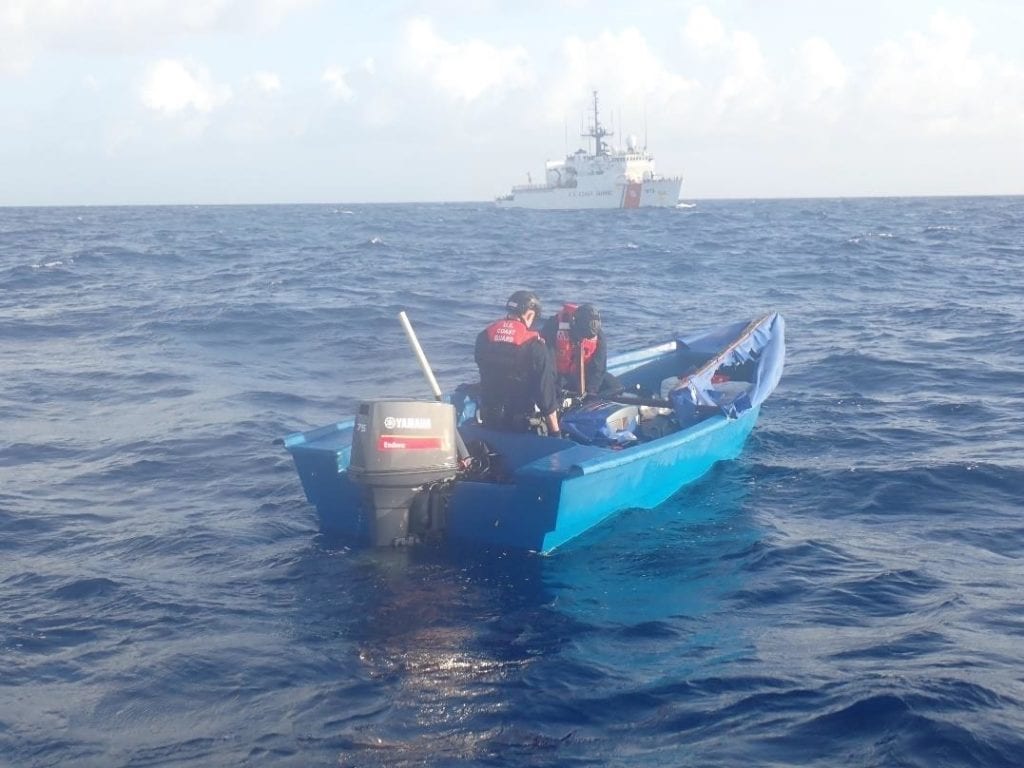
During the voyage to its new homeport the crew of the Oliver Henry participated in drug interdiction operations in the Eastern Pacific while also assisting in a search for an overdue fishing vessel off Saipan.
“I am extremely proud of the crew, who did an exceptional job preparing and sailing the cutter nearly 11,000 nautical miles from Key West, Florida, to Santa Rita, Guam, during the global COVID-19 pandemic,” said Lt. John Hamel, the Oliver Henry’s commanding officer. “Not only did we deliver the highly capable Fast Response Cutter to our new operational area in the Western Pacific but we also conducted operations while transiting the Eastern Pacific, seizing a cocaine shipment worth $26.7 million in support of the United States Southern Command’s Operation Martillo.”
The Oliver Henry is the second of three scheduled fast response cutters (FRCs) to be stationed in Guam. The FRCs are replacing the 30-year old 110-foot Island Class Patrol Boats and are equipped with advanced command, control, communications, computers, intelligence, surveillance, and reconnaissance systems and boast greater range and endurance.
Like the Island-class patrol boats before them the FRC’s are designed as multi-mission platforms ranging from maritime law enforcement to search and rescue. The new cutters represent the Coast Guard’s commitment to modernizing service assets to address the increasingly complex global Maritime Transportation System.
“Oliver Henry will significantly increase the capabilities of the Coast Guard throughout the region,” said Capt. Christopher Chase, commander, Coast Guard Sector Guam. “I am excited to welcome the crew of the Oliver Henry home and look forward to them conducting operations with our partners in the near future.”
The cutter is named after Oliver T. Henry Jr., an African American Coast Guardsman who enlisted in 1940 and was the first to break the color barrier of a then-segregated Service. During World War II, Henry served under Lt. Cmdr. Carlton Skinner, who later became the first civilian governor of Guam and played a critical role in developing the Organic Act in 1950. Henry blazed a trail for minorities in the U.S. military as he climbed from enlisted ranks while serving on 10 different Coast Guard cutters, finally retiring as a chief warrant officer in 1966.
Each FRC has a standard 24-person crew. This will bring over 70 new Coast Guard members to Guam, along with a projected 100 family members. In addition to the crews of the three ships additional Coast Guard support members and their families will also be in Guam.
Raytheon Intelligence & Space to Deliver and Repair Sub Communications System
Raytheon Intelligence & Space has been awarded a $70 million contract to provide test, inspection, evaluation and restoration of Submarine High-Data Rate mast components. LSIS Richard Cordell
ARLINGTON, Va. — Raytheon Intelligence & Space, a Raytheon Technologies business, was awarded a multi-year $70 million indefinite-delivery/indefinite-quantity contract by the Naval Undersea Warfare Center to provide for test, inspection, evaluation and restoration of Submarine High-Data Rate mast components, the company said in a Dec. 1 release. In addition, RI&S will fabricate spare SubHDR Mast components under the contract.
“The SubHDR system was created to support protected high-data rate communications for submarines,” said Denis Donohue, vice president, Communications and Airspace Modernization Systems for Raytheon Intelligence & Space. “SubHDR mast is a protected, secure and survivable system to support all communications needs, from day-to-day messaging to ensuring the commander-in-chief can stay connected with his commanders.”
SubHDR links submariners to the Global Broadcast Service, the Milstar satellite constellation and the Defense Satellite Communication System, via a unique mast antenna that connects them to the above-sea world. The system vastly improves a submarine’s mission capability and the quality of life for submariners by affording them high-data rate communications with the world outside of the sub.
The SubHDR System gives submarines high-data rate, multi-band satcom capability. Operating via military satellites, SubHDR enables underwater forces to be full participants in coordinated fleet battle group and joint task force network centric operations. The mast-mounted satcom system transmits secure wideband multimedia, secure and non-secure internet access, voice and data traffic, imagery and video teleconferencing.
According to the U.S. Navy’s Submarine Communication Program Office, “SubHDR makes optimal use of high efficiency, small antenna, multi-band technology and state-of-the-art packaging to provide bandwidth without sacrificing submarine stealth.”
The SubHDR contract will repair and deliver sustainment spares for active fleet submarines for the next five years.
USCGC Seneca Returns to Homeport after Conducting Joint Maritime Operations
Coast Guard Cutter Seneca, shown here in a 2007 photo, has returned to its Portsmouth homeport after a 57-day counter-drug and humanitarian assistance patrol. U.S. Coast Guard
PORTSMOUTH, Va. — The Coast Guard Cutter Seneca returned to its homeport in Portsmouth, Virginia, after a 57-day patrol conducting counter-drug and humanitarian assistance operations in the Caribbean Sea and Atlantic Ocean, Nov. 20, the Coast Guard 5th District said in a Nov. 30 release.
The Seneca crew deployed with an embarked MH-65 Dolphin helicopter from Coast Guard Helicopter Interdiction Tactical Squadron in Jacksonville, Florida. The embarked helicopter provided the cutter with aerial use of force capabilities to supplement onboard law enforcement teams.
Upon their arrival in the Pacific, Seneca crewmembers conducted joint maritime operations with the Colombian Naval vessel A.R.C. Punta Ardita. The joint operation focused on interoperability, communications, and counter-narcotics efforts.
Surface and air crews seized more than 2,750 kilograms of cocaine and 1,235 pounds of marijuana, for an estimated street value of over $124 million. Three vessels were interdicted and a fourth disrupted through joint efforts with U.S. Customs and Border Protection and the U.S. Navy. These efforts resulted in the detainment of nine suspected narcotics traffickers.
“I continue to be impressed with what the crew of Seneca can accomplish,” said Cmdr. Matthew Rooney, commanding officer of the Seneca. “Operating in a pandemic environment is a challenge and the crew rose to it. We accomplished a lot in a short time. Counter-narcotics interdictions, international cooperation, hurricane assistance, and refueling at sea. This patrol encompassed many of our core missions and improved our proficiency. The crew can return home with their head held high with pride.”
Additionally, Seneca crewmembers completed three underway replenishments with the Chilean Navy Oiler Almirante Montt. The process brings two ships in close proximity to each other while at sea to transfer fuel and supplies. The Almirante Montt crew provided logistical services in a COVID-19 free and contactless environment, extending Seneca’s time on patrol.
After transiting from the Eastern Pacific to the Caribbean, the Seneca crew was tasked to provide humanitarian assistance and disaster response in the wake of Hurricane Eta on the Mosquito Coast of Honduras. The embarked helicopter crew also assisted in conducting multiple missions, which included medical evacuation, critical infrastructure reconnaissance, and identifying stranded populations and individuals in need.
The Seneca is a 270-foot medium-endurance cutter homeported in Portsmouth and routinely deploys in support of counter-drug, migrant interdiction, fisheries, search and rescue, and homeland security missions.
Coast Guard Completes 30-Day Test of Unmanned Surface Vehicles off Hawaii
A Coast Guard prototype unmanned surface vehicle performs a test off Oahu, Hawaii, Oct. 7, 2020. The focus of the test was to explore how current and emerging technologies might be used to enhance maritime domain awareness in remote regions. U.S. Coast Guard / Coast Guard Research and Development Center
HONOLULU — The Coast Guard completed a 30-day demonstration and evaluation of unmanned surface vehicles (USVs) off Oahu, early November, the Coast Guard 14th District said in a Nov. 25 release
The focus of the test was to explore how current and emerging technologies might be used to enhance maritime domain awareness in remote regions. The test also showed ways USVs with assorted sensor capabilities might support the Coast Guard’s many missions around the globe ranging from search and rescue, to law enforcement.
“It’s clear that autonomous technology is a growing industry, and has great potential to enhance Coast Guard operations,” said Cmdr. Blair Sweigart, the demonstration’s director from the Coast Guard Research and Development Center. “Combined with artificial intelligence algorithms, unmanned systems could be a game changer.”
During the test the Coast Guard examined USVs from Saildrone and Spatial Integrated Systems to understand their capabilities and effectiveness. The USVs participated in a variety of operational simulations to detect and alert the Coast Guard to both legitimate and nefarious behavior.
As outlined in the Coast Guard’s Strategic Plan 2018-2022, one of the service’s main goals is to “evaluate emerging technologies, such as unmanned platforms, artificial intelligence, machine learning, network protocols, information storage, and human-machine collaboration for possible use in mission execution.”
These tests represent a commitment to those goals, allowing the Coast Guard to identify how USVs could be used to support search and rescue operations, improve Marine Environmental response, enhance Port Security, aid in the fight against illegal maritime smuggling, and identify vessels engaged in illegal, unreported, and unregulated fishing.
“The demonstration helped us understand what these technologies currently are, and are not, capable of,” said Sweigart. “These vessels proved to be very effective across a variety of mission areas. The results of this study will help shape how the Coast Guard, and our partners, incorporate USVs into our future operations.”
With their long endurance, USVs can provide persistent domain awareness in remote regions of the U.S. Exclusive Economic Zone. By conducting the demonstrations off Hawaii, the teams gained a firsthand understanding of how these assets could help protect the islands, and the critical resources and habitats throughout Oceania.
Many of the Coast Guard’s missions require close coordination with federal, state, local, and international partners and during the tests the Coast Guard worked closely with NOAA, DHS partners, the Navy, and agencies from several partner nations who face similar issues to protect the global maritime and fishing industries.
Lockheed Martin Awards CAE Contract for MAD-XR for U.S. Navy MH-60Rs
MH60R Seahawks on the dock landing ship USS Oak Hill (LSD 51). U.S. Navy / Mass Communication Specialist 3rd Class Taylor A. Elberg
MONTREAL — CAE has been awarded a subcontract by Lockheed Martin to supply the CAE Magnetic Anomaly Detection-Extended Role (MAD-XR) system for United States Navy MH-60R Seahawk helicopters, CAE said in a Nov. 18 release.
CAE MAD-XR is a highly sensitive magnetometer designed to sense changes in the earth’s magnetic field and is used as a sensor to detect submarines. Lockheed Martin Rotary and Mission Systems is the lead systems integrator for the U.S. Navy’s MH-60R “Romeo” helicopter, the Navy’s primary anti-submarine and anti-surface warfare helicopter.
Under terms of a Phase 1 contract from the U.S. Navy, Lockheed Martin has responsibility to integrate the CAE MAD-XR into the MH-60R helicopter. CAE will provide the MAD-XR system and support Lockheed Martin with non-recurring engineering and integration services. Initially, a total of six MH-60R helicopters will be integrated with the CAE MAD-XR during Phase 1.
“Over the past several years we have conducted several trials with the U.S. Navy to confirm the capabilities of the MAD-XR system on the MH-60R helicopter,” said Thomas M. Kane, director, Naval Helicopter Programs, Lockheed Martin. “Adding this to the MH-60R’s sensor suite will further advance the capabilities of the world’s most advanced anti-submarine warfare helicopter.”
The CAE MAD-XR is significantly more compact than previous MAD systems with reduced size, weight, and power requirements. This allows the CAE MAD-XR to be extended to smaller platforms such as unmanned aerial systems, helicopters and small fixed-wing aircraft.
“The integration of our MAD-XR system on the U.S. Navy’s MH-60R helicopter is testament to its powerful magnetic detection abilities,” said Daniel Gelston, group president, Defence & Security, CAE. “The MAD-XR system can provide defense forces with enhanced capabilities for operational missions such as submarine detection and search and rescue.”