Davie Polar Icebreaker Program Confirms GE as Strategic Partner
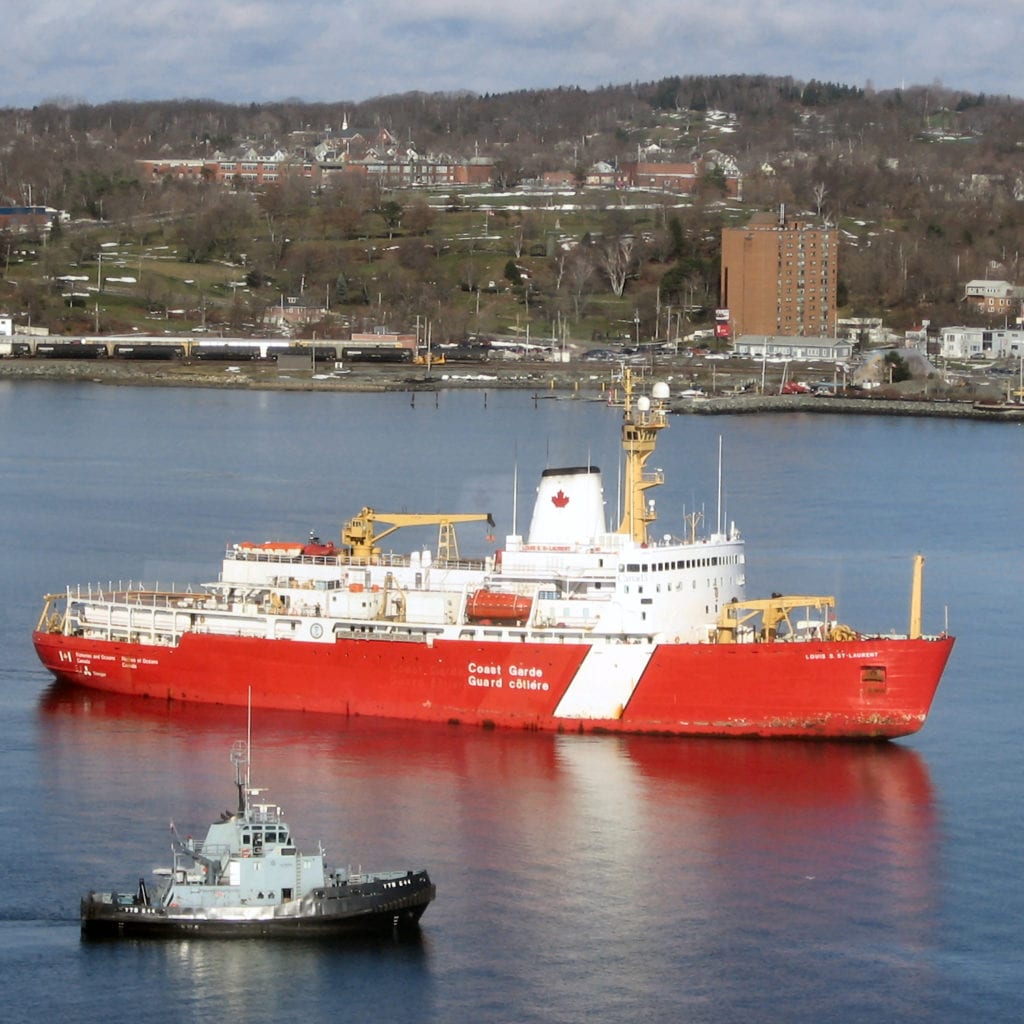
CCGS Louis S. St-Laurent, one of Canada’s aging polar icebreakers, shown here transiting Halifax Harbor. Wikipedia / Verne Equinox

LEVIS, QUEBEC — Davie, Canada’s premier builder of polar and ice-capable ships, welcomed GE as a strategic partner in its polar icebreaker program, the flagship of Canada’s National Icebreaker Centre, Davie said in a Feb. 2 release. 

Launched in August 2020, the NIC is a center of excellence for polar technologies and Arctic expertise. It reflects Davie’s role as Canada’s icebreaking partner and builder of the new icebreaker fleet, under the National Shipbuilding Strategy. This will create thousands of good jobs, a vibrant world-class maritime cluster in Québec and drive exports of Canadian innovation. 

Canada’s current polar icebreakers are very old. CCGS Louis S. St-Laurent is deep into its sixth decade and CCGS Terry Fox is fast approaching 40 years in service. A new polar class will enable Canada to maintain a continuous Arctic presence benefiting all Canadians, including the northern communities, enabling ice-choked trade, supporting Arctic sovereignty and protecting the polar environment. 

GE’s Power Conversion business offer a full spectrum of best-in-class integrated electrical propulsion and power systems, including its Seajet podded propulsion units. The ice-class range of Seajet – a technology jointly developed with AETC Sapphire – is available for Polar Class notation, with a power range of 7.5 MW to 15 MW. In the Seajet system the electric motor is housed in the hull mounted pod and directly connected to the propeller, freeing up cargo and operational space in the ship. Maneuverability and efficiency are greatly improved, and total fuel consumption and exhaust emissions are reduced. Customizable for different ship types, with simplified installation, Seajet pods can enhance performance in an array of commercial, offshore marine, and ice breaking ships.  

Davie is Canada’s only mega-yard with 50% of total capacity, able to build up to eight large, complex ships simultaneously. The 150-meter polar will be easily accommodated in Davie’s 351-meter Champlain Dry Dock. An integrated build schedule would ensure polar would complement other Davie programs such as the six program icebreakers it is set to build under the NSS. In fact, it would facilitate a steep learning curve and economies of scale to significantly benefit both programs by mitigating cost, schedule and performance risks. 

Moreover, a recent analysis conducted for Davie by Deloitte, drawing on ISED and StatCan numbers, concluded that building polar icebreakers at Davie will generate up to 2,500 well-paid jobs, engage over 1,300 suppliers (with 900 plus in Québec) and contribute up to $2.5 billion to the Canadian economy. 

“We welcome GE to our polar program,” said James Davies, president and CEO of Davie Shipbuilding. “Their leading-edge propulsion system combined with decades of icebreaker experience and electric and power system capabilities are unsurpassed. Their inclusion also greatly strengthens Canada’s National Icebreaker Centre. Together, we can ensure the polar is stimulating the post-pandemic economy and protecting Canada’s Arctic interests into the far future.” 

Philippe Piron, president and CEO of GE Power Conversion, said, “GE are ready to begin work with Davie Shipbuilding to deliver Canada’s new generation of polar class ships. GE and Davie skills are complementary. GE are prepared to deliver the robust systems and equipment that are essential for the powerful polar class ships that Davie will build for Canada. We are excited to have the opportunity to strengthen Canada’s National Icebreaker Centre under Davie’s leadership, and we look forward to engaging broadly with Canada’s marine industry.” 

GE joins Vard and Serco as partner in Davie’s polar program. Davie expects to soon announce steel, critical systems and other service partners. 


Coast Guard, Navy offload more than $211M worth of cocaine, marijuana in San Diego

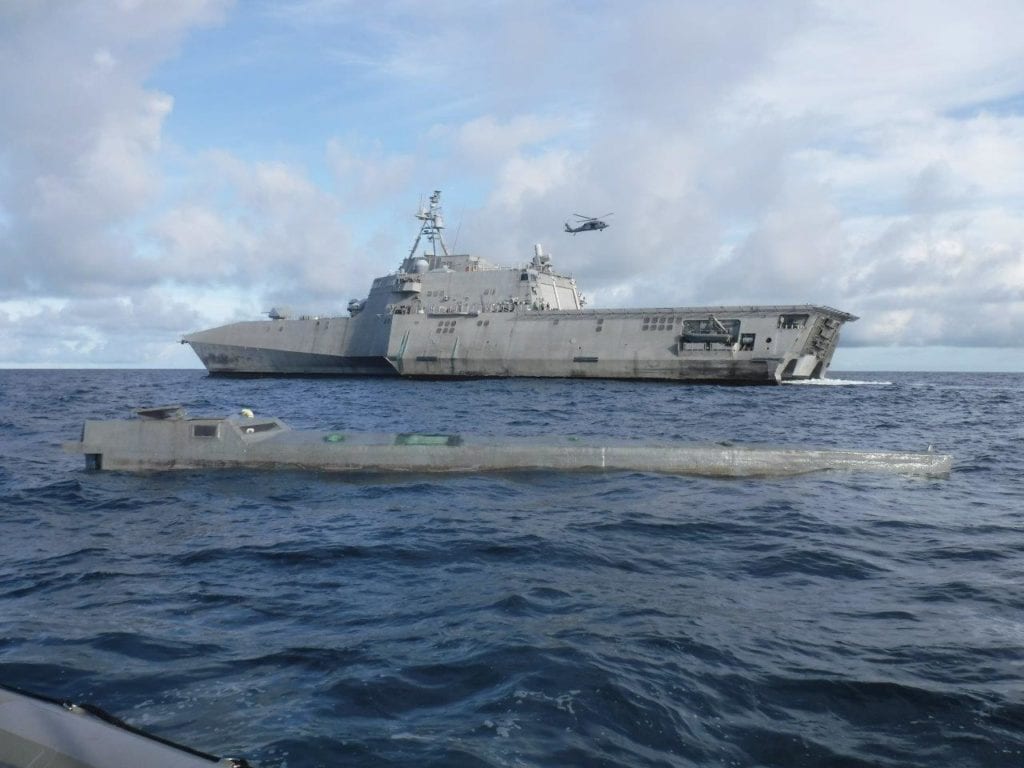
The Independence-variant littoral combat ship USS Gabrielle Giffords (LCS 10) with embarked U.S. Coast Guard Law Enforcement Detachment (LEDET) 407 conducts enhanced counter-narcotics operations, Dec. 5, 2020. Gabrielle Giffords is deployed to the U.S. 4th Fleet area of operations to support Joint Interagency Task Force South’s mission, which includes counter illicit drug trafficking in the Caribbean and Eastern Pacific. U.S. Navy photo.

SAN DIEGO – Coast Guard and Navy personnel offloaded approximately 11,400 pounds of cocaine and 9,000 pounds of marijuana Feb. 1, amounting to more than $211 million from seizures in international waters of the Eastern Pacific Ocean.

The offload is the result of interdictions made by Coast Guard Law Enforcement Detachment 407 (LEDET) personnel, who operated aboard the USS Gabrielle Giffords, and three separate Coast Guard cutter crews between October and December.

“When you are covering a drug-smuggling transit zone the size of the continental United States, every ship makes a huge difference,” said Lt. Jonathan Dietrich.  “The seamless integration between our Law Enforcement Detachment and the crew of the USS Gabrielle Giffords was a major reason why we were successful in interdicting such a large amount of drugs and prevent them from reaching our streets.”

The total amount of drugs offloaded included the following unit and Coast Guard ships:

  • LEDET 407 was responsible for five cases seizing 10,570 pounds of cocaine and 4,100 pounds of marijuana
  • The Seneca (WMEC-906) was responsible for one case seizing 350 pounds of cocaine
  • The Legare (WMEC-912) was responsible for one case seizing 53 pounds of cocaine and 3,400 pounds of marijuana
  • The Spencer (WMEC-905) was responsible for one case seizing 420 pounds of cocaine and 1,450 pounds of marijuana 

“The impressive results of the USS Gabrielle Giffords deployment and drug offload represent more than just a local victory of keeping drugs off our streets,” said Rear Admiral Brian Penoyer. “The Coast Guard and the Navy have worked together for years to keep our waters and shores safe from a number of maritime threats, and we are honored to continue that tradition as we look toward the future.”

The Coast Guard narcotics interdiction efforts are aimed at thwarting transnational criminal organizations, which are fueled by drug trafficking money. Operations like these attack supply networks in Central and South America. The offload highlights the joint impacts that a Coast Guard unit along with the Navy can have, when working together.

On April 1, U.S. Southern Command increased counter-narcotics operations in the Western Hemisphere to disrupt the flow of drugs. Numerous U.S. agencies from the Departments of Defense, Justice, and Homeland Security cooperated in the effort to combat transnational organized crime. The Coast Guard, Navy, Customs and Border Protection, FBI, Drug Enforcement Administration, and Immigration and Customs Enforcement, along with allied and international partner agencies, play a role in counter-drug operations.

The fight against drug cartels in the Eastern Pacific Ocean and the Caribbean Sea requires unity of effort in all phases from detection, monitoring and interdictions, to criminal prosecutions for these interdictions by United States Attorney’s Offices from the Middle District of Florida, the Southern District of Florida, and the Southern District of California. The law enforcement phase of counter-smuggling operations in the Eastern Pacific Ocean is conducted under the authority of the 11th Coast Guard District, headquartered in Alameda. The interdictions, including the actual boardings, are led and conducted by members of the U.S. Coast Guard.

LEDET 407 is part of Tactical Law Enforcement Team-South based in Miami. The Seneca is a 270-foot medium endurance cutter homeported in Boston. The Legare is a 270-foot medium endurance cutter homeported in Portsmouth, Virginia. The Spencer is a 270-foot medium endurance cutter homeported in Boston.


BAE Systems to Sustain Air Traffic Control Systems Under $65.7M Navy Contract

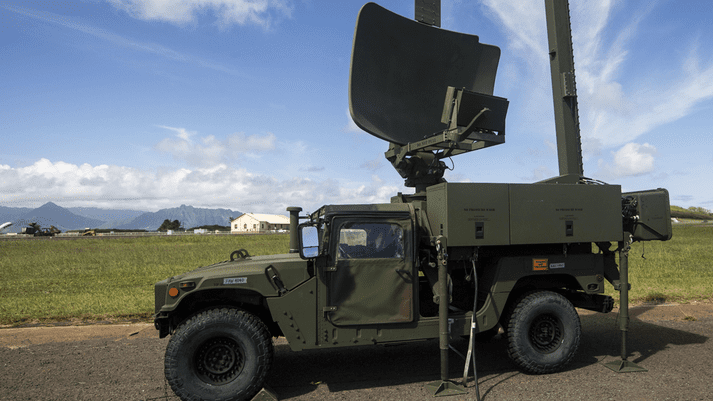
Under the new contract, BAE Systems will provide sustainment and engineering services for air traffic control platforms, similar to the expeditionary ATC radar shown here being carried by a Marine Corps Humvee. U.S. Marine Corps

MCLEAN, Virginia – The U.S. Navy selected BAE Systems for a five-year $65.7 million single-award indefinite delivery, indefinite quantity contract for air traffic control (ATC) platform sustainment and engineering services, the company said in a Feb. 1 release.

BAE Systems will continue to use its engineering, technical, and operational expertise to develop, produce, equip, test, evaluate, sustain, and update key expeditionary ATC aviation systems for the Naval Air Warfare Center Aircraft Division’s Webster Outlying Field.

“With this win, BAE Systems will provide expeditionary forces with the capability to quickly establish an airfield with the radar and communications systems to safely recover and launch aircraft,” said Lisa Hand, vice president and general manager of BAE Systems’ Integrated Defense Solutions business. “We serve as the automation expert and technical coordinator, responsible for development and improvement of real-time ATC computer systems. Our radar technicians deploy around the world to support the warfighter; their work is resulting in quicker turnover to the end user, improved hardware reliability, and more accurate installation and precision in the field.”

This new contract continues BAE Systems’ more than a decade of supporting critical work on key systems, including the Standard Terminal Automation Replacement System (STARS); Air Traffic Navigation, Integration, and Coordination System (ATNAVICS); Airfield Mobile Tactical Air Navigation System (AMTAC); and ATNAVICS Data Link System (ADLS). Under the contract, the company will develop and maintain operational software and supporting test beds, field change programs, and supplies for ATC systems. These systems are integral ATC tools that enhance platform flight safety, especially when end users are operating in new or rough terrain airfields with no existing military base.


Coast Guard Cutter Spencer Returns After $10M Cocaine, Marijuana Bust

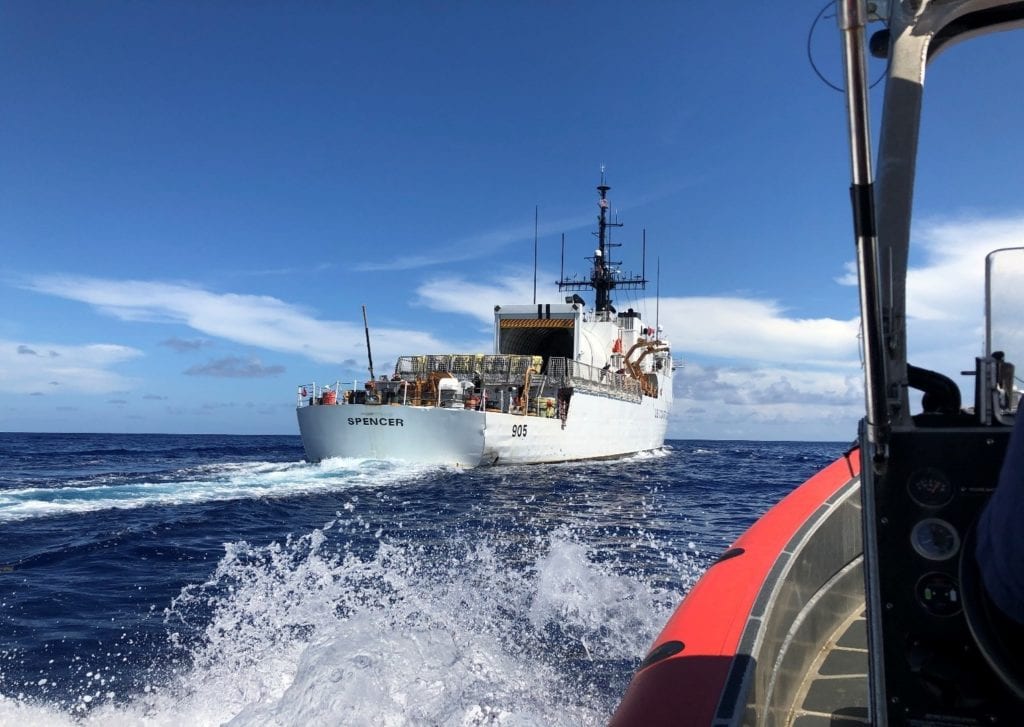
U.S. Coast Guard Cutter Spencer (WMEC 905) underway on patrol in the Eastern Pacific, January 2021. The crew covered over 11,000 miles seizing over $10 million of drugs and assisted in disrupting transnational crime organizations. U.S. Coast Guard

BOSTON — The Coast Guard Cutter Spencer (WMEC 905) crew returned home to Boston, Massachusetts, Jan. 28, after a 59-day patrol, the Coast Guard 1st District said in a release. 

The crew’s seizure of 440 pounds of cocaine and 1,500 pounds of marijuana is valued at over $10 million and assisted in disrupting transnational crime organizations. 

“After conducting operations in the Eastern Pacific, our crew is looking forward to returning home,” said Cmdr. Thomas Rodzewicz, commanding officer. “We provided effective mission critical assets in multiple cases and were able to stop illicit drugs from landing on U.S. shores. As a crew, we came together to enjoy the holidays in a meaningful and memorable way while carrying out our duties. I am extremely proud of the crew’s performance during this challenging patrol.” 

The Coast Guard’s Helicopter Interdiction Tactical Squadron, an advanced aerial interdiction unit, joined the Spencer crew to conduct the counter drug operations. These crews served in support of U.S. operations in partnership with other law enforcement agencies and fellow armed services dedicated to preserving the national security of the United States. 

Since departing Boston in December, The Spencer crew covered over 11,000 miles and made two transits through the Panama Canal. 

Coast Guard Cutter Spencer is a 270-foot medium endurance cutter with a crew of 100 members. 


HMS Queen Elizabeth Assumes Role as Royal Navy’s New Fleet Flagship

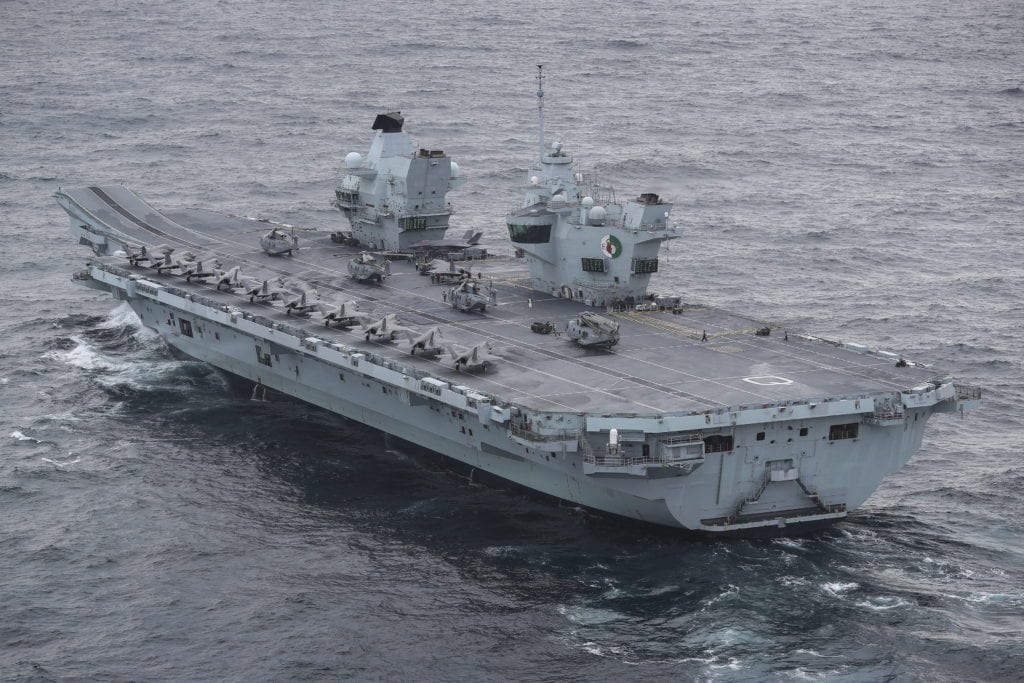
The full U.K. Carrier Strike Group assembled for the first time during Group Exercise 2020 on Oct. 4. Aircraft carrier HMS Queen Elizabeth leads a flotilla of destroyers and frigates from the U.K., U.S. and the Netherlands, together with two Royal Fleet Auxiliaries. It is the most powerful task force assembled by any European Navy in almost 20 years. Royal Navy

LONDON — HMS Queen Elizabeth assumed the role of fleet flagship as the Royal Navy moves closer to deploying the world’s most technologically advanced carrier strike group, the U.K. Ministry of Defence said in a Jan. 29 release. 

Fleet Commander Vice-Admiral Jerry Kyd was received on the aircraft carrier to mark the transfer of the role from HMS Albion, while Royal Navy ships and shore establishments were informed by a signal at 1330. 

The First Sea Lord, Admiral Tony Radakin, said: “The position of fleet flagship is a symbol of HMS Queen Elizabeth’s importance to the nation, not just in restoring our carrier strike capability, but as a rolling statement of British commitment to global security, prosperity and trade. 

“It’s right that we bestow such a historic title now. In the coming months HMS Queen Elizabeth will lead the most ambitious Royal Navy deployment in decades,” Radakin said. She will be a focal point as we look forward to an extraordinary year.” 

It was announced last week that the United Kingdom’s new flagship and Lightning Force of F-35B stealth strike fighters will also be complemented by a detachment of the fifth-generation aircraft from the U.S. Marine Corps, and a U.S. Navy destroyer during her first operational strike group deployment. 

HMS Queen Elizabeth and her strike group will spend time developing collective war-fighting skills when NATO navies gather for exercise Strike Warrior off Scotland during the spring, before departing for the Mediterranean. 

“It is a fantastic privilege for Queen Elizabeth to be made the fleet flagship as we prepare to sail at the heart of U.K.’s very high readiness Carrier Strike Group,” said Capt. Angus Essenhigh, commanding officer of the Queen Elizabeth. “We look forward to doing the nation proud as we deploy on operations for the first time.” 

Last year, Prime Minister Boris Johnson confirmed that HMS Queen Elizabeth will be at the center of a carrier strike group deployment to the Mediterranean, the Indian Ocean and East Asia. She will embark F-35B from 617 Squadron (the “Dambusters”), Royal Navy Merlin helicopters, and be escorted and supported by Royal Navy Type 45 destroyers, Type 23 frigates and support ships of the Royal Fleet Auxiliary.  

Assault ship HMS Albion had been flagship since March 2018, deploying to the Indo-Pacific for 10 months; to the Baltic for major multi-national exercises; and latterly to the Mediterranean leading NATO security patrols and experimental warfare trials. Her sister ship, HMS Bulwark, previously led the Fleet for four years. 

“While it is with some sadness that we hand over the responsibility to HMS Queen Elizabeth, we are proud to be part of the transfer which marks a new era for the Royal Navy and the nation,” said Capt. Simon Kelly, commanding officer of HMS Albion. 


Coast Guard Transfers 2 Suspected Smugglers, $8.5M in Seized Cocaine

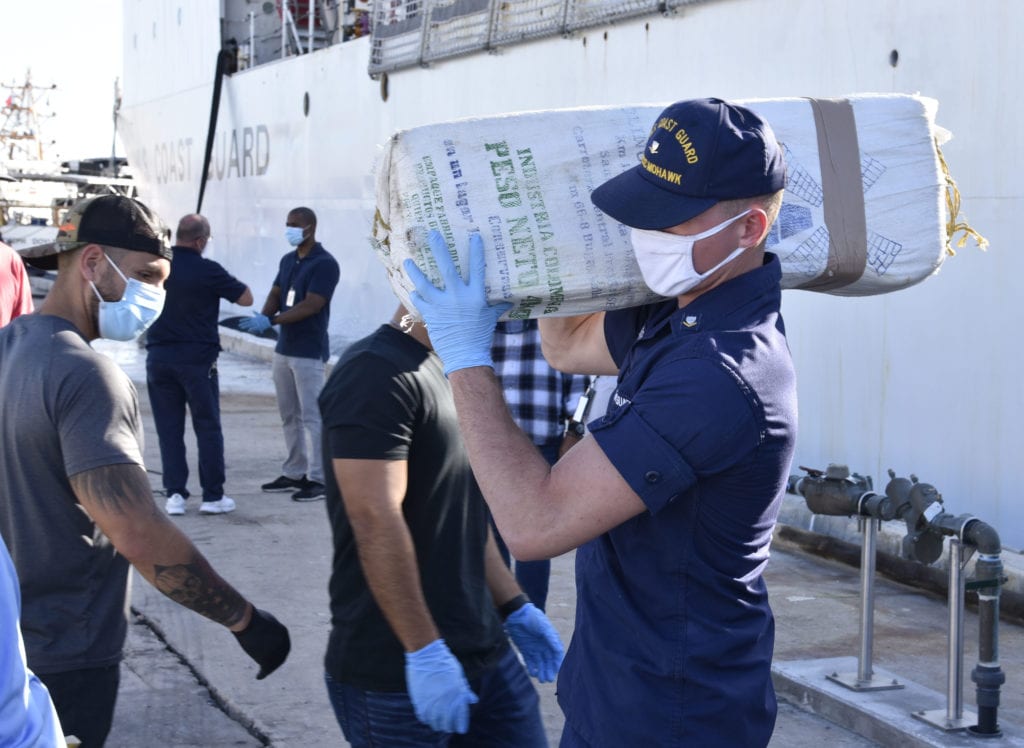
Coast Guard offloads 302 kilograms of cocaine valued at $8.5 million, and transfers custody of two suspected smugglers to Caribbean Corridor Strike Force federal agents in San Juan, Puerto Rico Jan. 28, 2021, following the interdiction of a go-fast vessel in the Caribbean Sea. U.S. Coast Guard

SAN JUAN, Puerto Rico — The Coast Guard Cutters Mohawk and Charles David Jr. transferred custody of two suspected smugglers and $8.5 million in seized cocaine to federal agents at Coast Guard Base San Juan Jan. 28, following the interdiction of a drug smuggling go-fast vessel in the Caribbean Sea, the Coast Guard 7th District said in a Jan. 29 release. 

The interdiction was the result of multi-agency efforts in support of U.S. Southern Command’s enhanced counter-narcotics operations in the Western Hemisphere, the Organized Crime Drug Enforcement Task Force (OCDETF) and High Intensity Drug Trafficking Area (HIDTA) programs, and the Caribbean Corridor Strike Force (CCSF). The United States Attorney’s Office for the District of Puerto Rico is leading the prosecution for this case. 

“This successful interdiction is a reflection of the seamless teamwork and the unwavering resolve between the Coast Guard, our federal law enforcement and Department of Defense partners to protect the nation’s southernmost maritime border against narcotrafficking threats,” said Cmdr. James L. Jarnac, Coast Guard Cutter Mohawk commanding officer.  “The strength of our joint collaboration and partnerships is key to a safer Caribbean Region and disrupting transnational criminal organization activities through the interdiction of drug smuggling vessel’s in the maritime domain.” 

The bust occurred during the afternoon of Jan. 24, 2021, after the aircrew of a maritime patrol aircraft detected a suspicious 25-foot go-fast vessel, approximately 200 nautical miles south of the Dominican Republic. 

The Coast Guard Cutter Mohawk diverted in response to the sighting and interdicted the go-fast vessel with the assistance of the cutter’s small boat. Following the interdiction, the Coast Guard Mohawk’s boarding team located and recovered nine bales of suspected contraband, which weighed approximately 302 kilograms (666 pounds) and tested positive for cocaine. 

The crew of the cutter Mohawk embarked the seized contraband and the two men from the go-fast vessel, who both claimed to be Dominican Republic nationals. The Coast Guard Cutter Charles David Jr. later embarked the two suspected smugglers and a representative sample of the contraband that were disembarked in San Juan, Puerto Rico, where Caribbean Corridor Strike Force federal law enforcement agents received custody. 

Cutter Charles David Jr. is a 154-foot fast response cutter, while the Cutter Mohawk is a 270-foot medium-endurance cutter, both homeported in Key West, Florida.  


General Dynamics Receives $43.2M Contract for Columbia/Dreadnought-Class SSBN Fire Control Systems

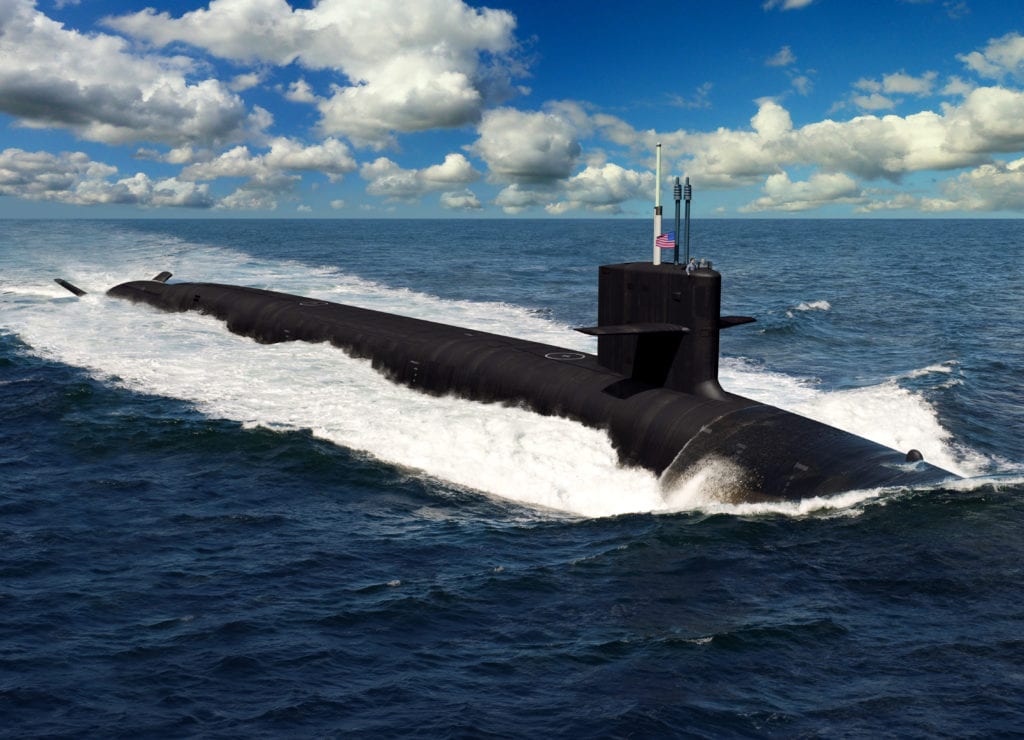
An artist’s rendering of the future Columbia-class ballistic missile submarines. The 12 submarines of the Columbia class are a shipbuilding priority and will replace the Ohio-class submarines reaching maximum extended service life. U.S. Navy

PITTSFIELD, Mass. – The U.S. Navy recently awarded a contract modification to General Dynamics Mission Systems that includes a broad scope of work for the Columbia and Dreadnought ballistic-missile submarine class to support development, production, and installation requirements.

This $43.2 million award is comprised of development, production, installation, and deployed-systems support exclusively for the Columbia/Dreadnaught (CLB/UKD) class of U.S. and U.K. submarine strategic weapons systems and subsystems and coincides with one of the largest manufacturing floor expansions at the Pittsfield, Massachusetts facility.  
 
General Dynamics Mission Systems’ Maritime and Strategic Systems line of business will deliver fire control systems for the U.S. Navy’s first Columbia class submarine (US01) and the first U.S. Columbia class training facility (Kings Bay Trident Training Facility, KB-TTF) as well as installation support and pre-deployment planning for both U.S. and U.K. sites. This contract also includes CLB/UKD design completion scope and continuation of design activities for the first planned refresh of the CLB/UKD fire control system, as well as design support for CLB/UKD planning at the KB-TTF and procurement of the infrastructure material to support the new Trident Training Facility labs. The majority of the work in support of this contract will take place in Pittsfield. 
 
“In November, we celebrated with our Navy partner, 65 years of outstanding support to our nation’s strategic deterrent mission,” said Laura Hooks, vice president of General Dynamics Mission Systems’ Strategic Systems business. “We are entering the next era of development and production for the Navy’s fire control system on the newest fleet of submarines that will extend this deterrent capability for another 65 years.”  


U.S. Coast Guard, Russian Border Guard Patrolled Maritime Boundary Line

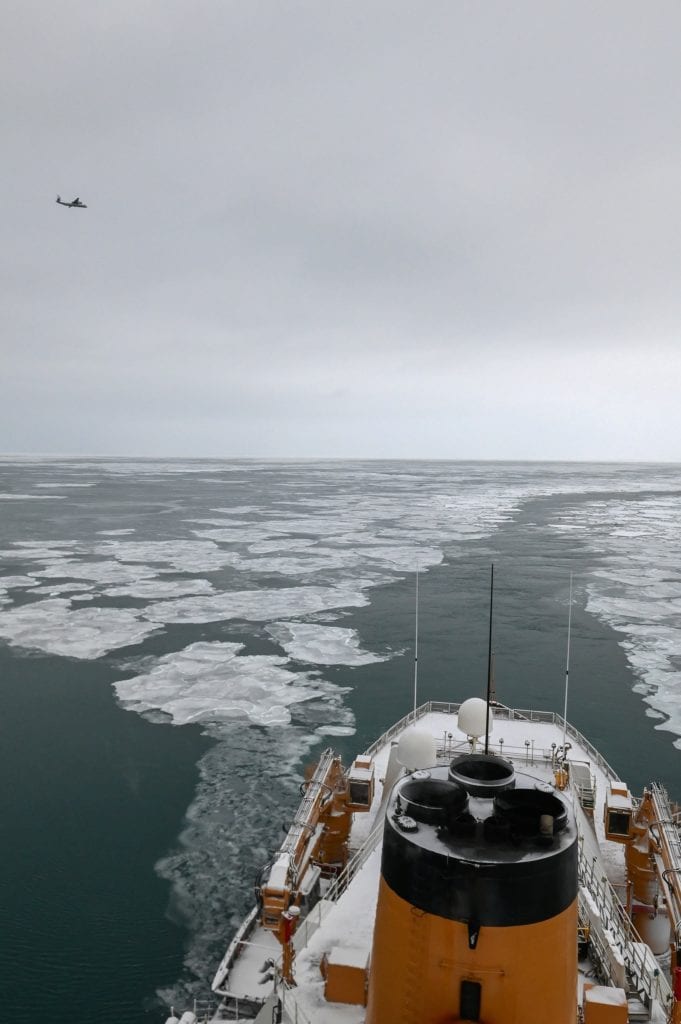
Coast Guard Cutter Polar Star crew and a Russian aircraft crew patrolled the Bering Sea maritime boundary line between Russia and the United States in mid-January. The 45-year-old heavy icebreaker is underway for a months-long patrol to support national security objectives throughout Alaskan waters and into the Arctic, including along the Maritime Boundary Line between the United States and Russia. U.S. Coast Guard / Petty Officer 1st Class Cynthia Oldham

JUNEAU, Alaska – The Coast Guard Cutter Polar Star crew and a Russian aircraft crew patrolled the Bering Sea maritime boundary line between Russia and the United States in mid-January, the Coast Guard 17th District said in a Jan. 27 release.  

Following routine coordinated communications between the Russian Border Guard Directorate for the Eastern Arctic District and the Coast Guard Seventeenth District in Juneau, Alaska, the cutter Polar Star crew and a Russian Border Guard AN-26 aircraft crew patrolled a portion of the 1,700-mile maritime boundary line to support mutual agreements. The agreements consist of combined operations including search and rescue missions, contingency operations, routine communications exercises, and operations to counter illegal, unreported, and unregulated fishing.  

The purpose of combined operations and communications exercises are to enforce rules and regulations and protect the sovereign rights and economies of both countries. The routine coordination maintains a strong working relationship and improves joint response capabilities for pollution, law enforcement, and search and rescue cases along our shared maritime border.  

A working relationship at the operational level between the Coast Guard and Russian Border Guard remains critical to ensuring stability in the region. The partnership protects shared interests in fish stocks, safety of life at sea, coordinates environmental responses, and counters illicit activity on the high seas. 

In July 2020, Coast Guard Cutter Munro conducted a similar communications exercise with the Russian Border Guard Vessel Kamchatka in the Bering Strait. 

The Russian Border Guard’s effective enforcement of the maritime boundary line, and direct communication with their fishing industry, significantly reduces foreign fishing vessel incursions of the U.S. exclusive economic zone. 

Since 2018, the Coast Guard has detected only one Russian fishing vessel incursion along the maritime boundary line. The Russian Border Guard immediately conducted an investigation of the incident and issued fines for that incursion. 

“The United States Coast Guard works diligently to maintain a unique cooperative relationship with the Russian Border Guard in an effort to enhance the protection of shared interests in and around the Arctic region. The coordinated communications exercises on the high seas these past weeks with Polar Star demonstrate a recognition of the importance of that relationship,” said Capt. Jason Brennell, chief of enforcement for the Coast Guard’s 17th District. 


MBDA and Rheinmetall Win Contract for Naval High-Energy Laser System

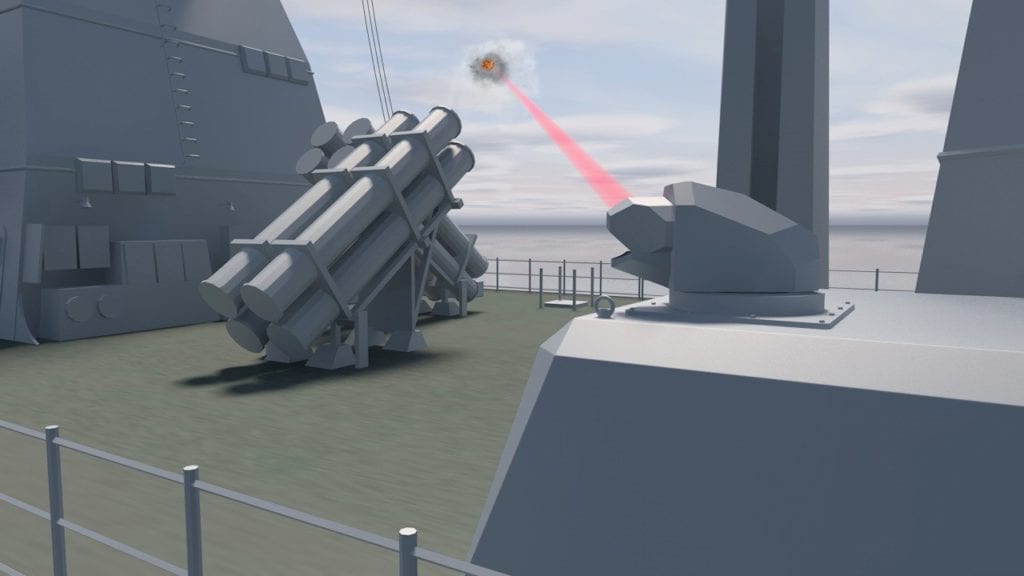
An artist’s conception of a laser weapon. MBDA

SCHROBENHAUSEN/ DUSSELDORF, Germany – Germany’s Federal Office for Bundeswehr Equipment, Information Technology and In-Service Support (BAAINBw) has awarded ARGE consortium — consisting of MBDA Deutschland GmbH and Rheinmetall Waffe Munition GmbH — a contract to fabricate, integrate and support testing of a laser weapon demonstrator in the maritime environment, MBDA said in a Jan. 28 release. The order value is in the low double-digit million euro range. 

Work will be shared out on a roughly equal basis. MBDA Deutschland is responsible for tracking, the operator’s console and linking the laser weapon demonstrator to the command-and-control system. Rheinmetall is in charge of the laser weapon station, the beam guiding system, cooling, and integration of the laser weapon system into the project container of the laser source demonstrator. 
 
The demonstrator is to be fabricated, tested and integrated by the end of the 2021. Trials onboard the German Navy frigate F124 Sachsen are to take place in 2022. 
 
“The contract is an important step on the path to an operational high-energy laser system, said Doris Laarmann, head of laser business development at MBDA Deutschland. “Our two companies will apply their respective strengths to make this project a success on behalf of the German navy. Once it’s installed, the demonstrator will also be used to test important aspects such as the interaction and function of the sensor suite, combat management system and effector as well as rules of engagement.”   
 
Alexander Graf, head of Rheinmetall Waffe Munition’s laser weapons program, and Dr. Markus Jung, who leads the company’s laser weapon development effort, agreed, saying the contract marks a systematic extension of the functional prototype laser weapon successfully tested in recent years, with the experience gained now dovetailing into one of the most ambitious projects in the field of laser weapon development in Europe.
 
A breakthrough development in the history of defense technology, lasers engage targets at the speed of light, operating with great precision and producing very little collateral damage. A demonstrator system featuring these capabilities will soon be put to the test under highly realistic operating conditions onboard a German frigate. 


Leonardo DRS Awarded Navy Contract for Technical Insertion of Surface Fleet Combat Management Systems

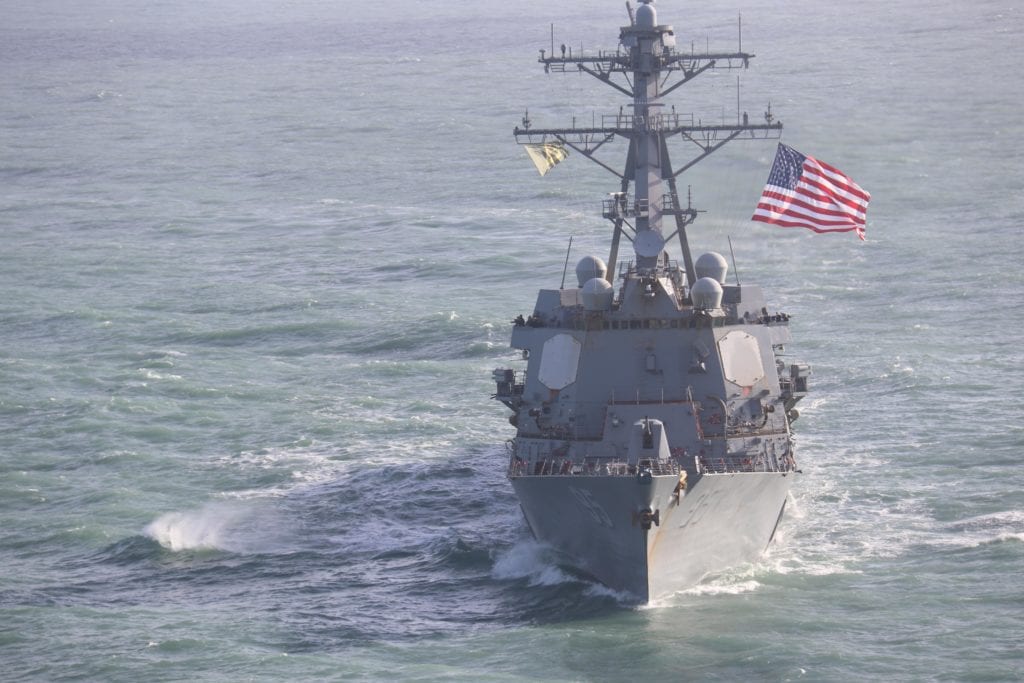
The Arleigh Burke-class guided missile destroyer USS James E. Williams (DDG 95) transits the Caribbean Sea, Jan. 16, 2021. Leonardo DRS has received a Navy contract to supply system hardware and life cycle support for Aegis and Ship Self-Defense Combat Management Systems, equipped on the Arleigh Burke class destroyers and other surface combatants. U.S. Navy / AW2 Timothy Hopkins

ARLINGTON, Va. — Leonardo DRS Inc. has received a contract from the U.S. Navy to supply critical system hardware and full life-cycle support for Aegis and Ship Self-Defense System Combat Management Systems, the company announced in a Jan. 27 release.

The cost-plus-fixed-fee and firm-fixed-price, indefinite-delivery/indefinite-quantity multiple award contract was awarded in December 2020 and is worth up to $211.5 million. 

Under the contract Leonardo DRS will provide sustainment of Technical Insertion (TI)-16 Combat Systems Processing, Network, Storage and Display Hardware fielded across the surface ship fleet. Included in the contract is the sustainment, manufacture, assembly, and testing of TI-16 hardware, spares; engineering services, procurement, and installation of ordinance alteration kits and related products. 

Leonardo DRS is the prime contractor for the surface navy, producing consoles, displays and peripherals (CDP) and the Common Processing System (CPS) TI-16 for the Navy’s surface combatants.   

“We are excited about this award and proud to provide full life-cycle combat system hardware support to ensure fleet readiness remains high,” said Tracy Howard, senior vice president and general manager of the Leonardo DRS Naval Electronics business. “Additionally, our extensive experience will bring increased capability to the Fleet as the Integrated Combat System is fielded over the next 5 years in support of these future U.S. Navy requirements,” he said. 

Work will be done at the Leonardo DRS Laurel Technologies facilities in Johnstown, Pennsylvania and Chesapeake, Virginia.