HII’s Ingalls Shipbuilding Hosts “Signing Day” Celebrating Shipbuilder Academy Graduates 
From HII, May 1, 2026 
 

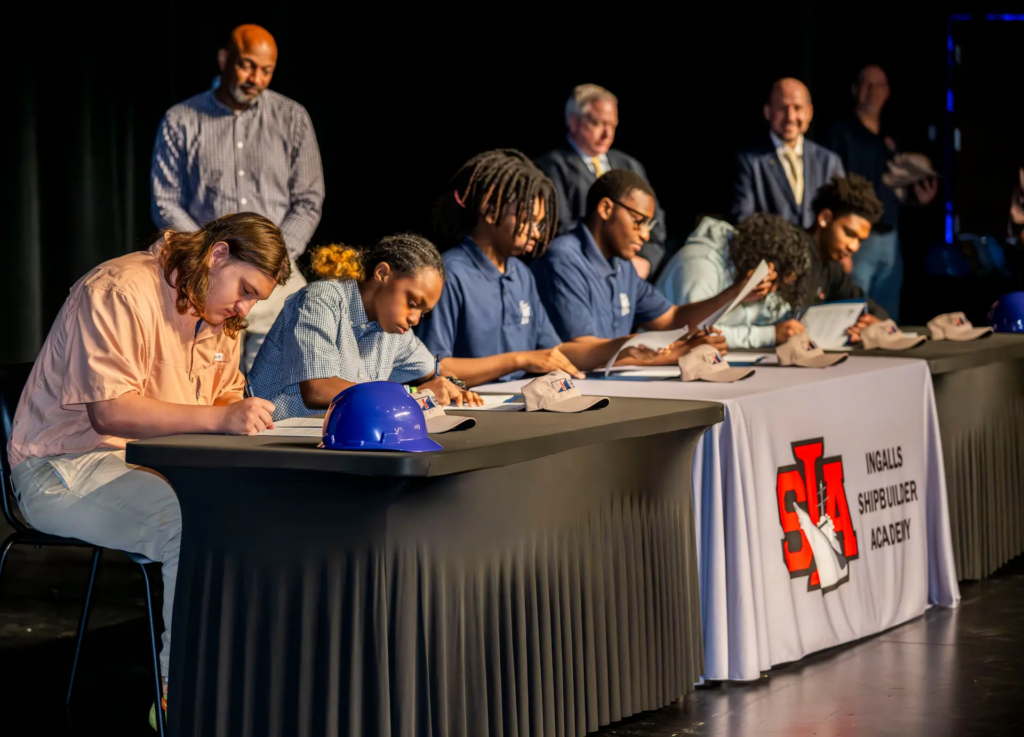
PASCAGOULA, Miss., May 01, 2026 (GLOBE NEWSWIRE) — HII’s (NYSE: HII) Ingalls Shipbuilding division hosted its annual “Signing Day” today, recognizing 49 high school seniors from across the Gulf Coast who have completed the Ingalls Shipbuilder Academy (ISA) and accepted contingent employment offers with the company. Modeled after traditional athletic signings, the ceremony celebrates students as they formally commit to launching their careers in shipbuilding. 

“Through the Ingalls Shipbuilder Academy, we are developing the next generation of skilled shipbuilders,” said Brian Blanchette, Ingalls Shipbuilding president. “Today we celebrate their first step toward meaningful, rewarding careers being part of something much bigger than themselves. By choosing technical training while still in high school, these students have shown the hard work, commitment, and craftsmanship needed to build the mission-ready ships our country depends on. We are proud of their achievements and honored to welcome them to the Ingalls team.” 

During the event, held at Pascagoula High School’s Performing Arts Center, each graduating ISA student signed a contingent offer of employment identifying the craft they will enter upon graduation. Career paths include welding, painting, pipefitting, joining and electrical work. Through hands-on instruction, mentorship and classroom learning, ISA prepares students with the foundational skills needed to excel in the shipbuilding industry. Since the program’s launch in 2016, more than 500 students have graduated and transitioned toward skilled careers at Ingalls. 

“These students have spent the last year putting real tools in their hands and learning how work gets done in a shipyard,” said Preston Bosarge, project manager for the Ingalls Shipbuilding Maritime Training Academy. “They’ve learned to think like a shipbuilder, learning problem-solving, paying attention to detail and taking pride in every task. Those habits will serve them well as they step onto the deckplates and begin building our nation’s fleet.” 

The success of the ISA program comes from the partnerships Ingalls has with 13 different high schools along the Gulf Coast including Biloxi, Gulfport, West Harrison, Long Beach, Pass Christian, Pascagoula, Gautier, Moss Point, East Central, Vancleave, St. Martin, Ocean Springs and Alma Bryant. 

The shipbuilder academy is a cornerstone of Ingalls’ long-term workforce development strategy. By investing in education and workforce development, Ingalls reaffirms its commitment to building both ships and careers in the Gulf Coast region. 


AUSTAL USA Signs the Future of Shipbuilding at Apprentice Signing Day 

From Austal USA, May 1, 2026 

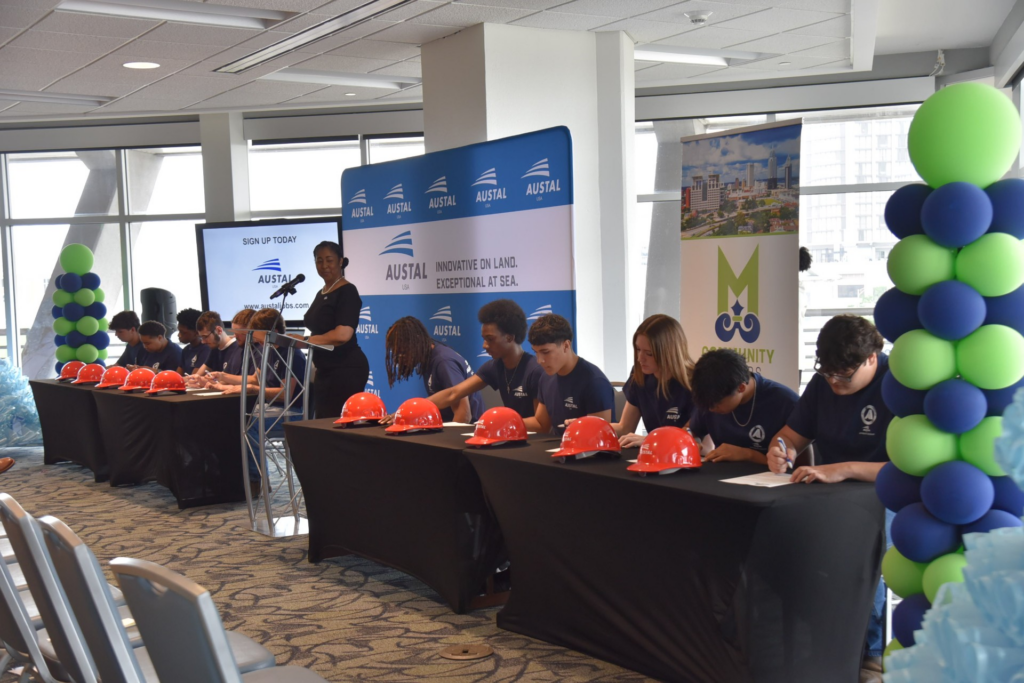
MOBILE, Ala. – Austal USA celebrated the next generation of skilled trades professionals today during its Apprentice Signing Day, welcoming almost 50 high school students who have officially committed to begin careers in shipbuilding through the company’s workforce development program. 

Held at the National Maritime Museum of the Gulf, the event brought together students, families, educators, and community leaders to recognize participants from career technical education (CTE) programs across Mobile and Baldwin counties. 

“This is an exciting moment not just for these students, but for our entire community,” said Mayor Spiro Cheriogotis. “When Mobilians can move straight from high school into meaningful, high-demand careers here at home, it creates real opportunity for them and strengthens Mobile’s future. This apprenticeship program at Austal shows what can happen when our schools and employers work together to create real opportunities for the next generation.” 

Designed to mirror the excitement of collegiate signing days, the ceremony honored students entering high-demand trades including welding, ship fitting, pipe welding, and pipe fitting—career paths that offer immediate opportunities for hands-on work, competitive pay, and long-term advancement. 

“Apprentice Signing Day is one of the most exciting milestones for our team because it represents the future of Austal USA and the strength of our workforce,” said Gene Miller, interim president of Austal USA. “These students are making a smart decision to pursue a career in the shipbuilding trade, and we are proud to invest in their success through training, mentorship, and meaningful career opportunities right here in our community.” 

Austal USA’s apprenticeship program provides a direct pathway from high school into the workforce, allowing students to earn while they learn, gain industry-recognized skills, and build stable, rewarding careers without taking on student debt. 

As demand for skilled workers continues to grow across manufacturing and maritime industries, Austal USA remains committed to partnering with local schools and CTE programs to build awareness and expand opportunities for students considering their future career paths. 

High school students and families interested in exploring apprenticeship opportunities with Austal USA are encouraged to connect with their school’s career and technical education counselors or visit Austal USA’s careers page on apprenticeships to learn more about upcoming application periods, program requirements, and available trade pathways. 


AUSTAL USA Christens Future USNS Solomon Atkinson 

From Austal USA, May 2, 2026  

MOBILE, Ala. – Austal USA christened the future USNS Solomon Atkinson (T-ATS 12) today at its Mobile, Alabama shipyard, marking a significant milestone in the construction of the U.S. Navy’s newest Towing, Salvage, and Rescue Ship. 

 The ship’s sponsor, Joann Atkinson, widow of Solomon Atkinson, and their daughters Michele Gunyah and Maria Hayward, performed the time-honored christening tradition by breaking a ceremonial bottle across the bow, formally naming the vessel. Among the dignitaries attending the ceremony were Captain Thomas Cunningham III, USN, Chief of Staff, Military Sealift Command; The Honorable Daniel Marsden, Sr., Acting Mayor, Metlakatla Indian Community; Rear Admiral Walter H. Allman III, USN, Commander, Naval Special Warfare; The Honorable Brendan Rogers, Assistant Secretary of the Navy for Energy, Installations, and Environment; and Gene Miller, Austal USA Interim President. 

Named in honor of Chief Warrant Officer 4 Solomon Atkinson, a pioneering Navy SEAL, plankowner of the SEAL teams, and one of the service’s most decorated Alaska Native sailors from the Metlakatla Indian Community, the ship recognizes a legacy of service, leadership, and dedication to the nation. The Atkinson family’s role as sponsors reflects a lasting bond between the ship, its crew, and the namesake’s enduring legacy. In honoring her father’s life and service, Maria Hayward has shared the Tsimshian value he lived by: “akadi lip a’algyaga sm’ooygit,” meaning “a chief never speaks for himself”—a principle that guided his leadership and continues to inspire. 

 “This christening marks an important milestone for T-ATS 12 and the dedicated workforce who brought this ship to life,” said Gene Miller, interim president of Austal USA. “It is an honor to take part in this ceremony alongside the Atkinson family as we recognize Solomon Atkinson’s legacy of service. We are proud to support the Navy with a platform that will serve critical missions around the world and look forward to delivering this ship to the fleet.” 

 Solomon Atkinson is the second of three T-ATS ships being constructed at Austal USA and is the second ship in its class launched from the company’s Mobile ship manufacturing facility—highlighting the strength, efficiency, and momentum of Austal USA’s growing steel shipbuilding program. 

 The Navajo-class Towing, Salvage, and Rescue Ships are designed to provide ocean-going towing, salvage, and rescue capabilities to support fleet operations. This multi-mission vessel will be capable of towing U.S. Navy ships and feature approximately 6,000 square feet of deck space to support a wide range of embarked systems and mission sets. The platform combines the capabilities of the retiring Rescue and Salvage Ship (T-ARS 50) and Fleet Ocean Tug (T-ATF 166) classes, while enabling future rapid capability initiatives through modular payloads, hotel services, and flexible interfaces. The T-ATS platform will support missions including towing, salvage, rescue, oil spill response, humanitarian assistance, and wide-area search and surveillance. 


Texas Returns from Deployment 

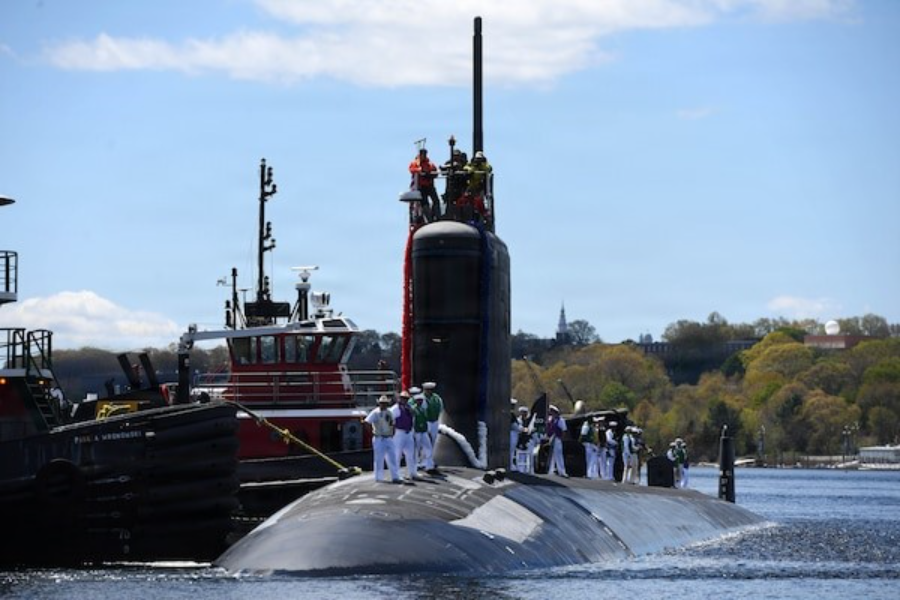
The Virginia-class nuclear-powered fast-attack submarine USS Texas (SSN 775) returns to Naval Submarine Base New London in Groton, Conn., May 1, 2026, following a six-month deployment to the U.S. Southern Command area of responsibility. Texas and crew operate under Submarine Squadron (SUBRON) 12 whose primary mission is to provide fast-attack submarines that are ready, prepared, and committed to meet the unique challenges of undersea combat and deployed operations in unforgiving environments across the globe. (U.S. Navy photo by Chief Mass Communication Specialist Darren M. Moore) 

From Chief Petty Officer Darren Moore, May 4, 2026 

GROTON, Conn. – The Virginia-class fast-attack submarine USS Texas (SSN 775), under the command of Cmdr. Andrew S. McGovern, returned to Naval Submarine Base New London Friday, May 1, completing a six-month deployment to U.S. Southern Command area of responsibility. 

Capt. Philip Castellano, commander of Submarine Squadron (SUBRON) 12, under which Texas operates, welcomed them home and praised their efforts while deployed. 

“Texas and her crew did an outstanding job throughout their deployment,” Castellano said. “They continued the Navy submarine force’s tradition of excellence while performing their mission to perfection. Our submarine force is critical to deterring aggression and maintaining freedom of the seas, and Texas’ efforts exemplified this to its core. Welcome home Texas and crew and thank you for a job well done” 

McGovern praised his crew and their devotion to the mission. 

“In a time of heightened tensions our team remained resilient, focused and ready,” McGovern said. “Our Sailors performed at the highest level for six months and I could not be prouder of everything we achieved while executing our mission.” 

McGovern also credited the crew’s family and friends for taking care of the homefront. 

“The support our loved ones provided while we were away was critical to our sustained success,” McGovern said. “Knowing they were home cheering for us inspired us to continue accomplishing our mission at peak form.” 

Texas steamed more than 21,200 nautical miles and made port calls to Port Canaveral, Florida. 

Thirty-four personnel earned their submarine warfare devices – commonly referred to as “dolphins”. Five Sailors welcomed new babies. 

Seaman Bronson McIntosh, a member of the Royal Australian Navy serving aboard Texas, and his spouse, Jessica McIntosh, were honored with the ceremonial first kiss on the pier. 

Chief Machinist’s Mate (Nuclear) Derrick Altenberger was awarded the ceremonial first hug with his spouse, Kayla Altenberger. 

Texas was commissioned in 2006 as the fourth U.S. Navy ship to be named for the Lone Star State. The first two were battleships, commissioned in 1895 and 1914, respectively. The third was a Virginia-class guided-missile cruiser in service from 1977 through 1993. The submarine is 377 feet long and has a 34-foot beam, as well as a crew of more than 130 Navy personnel. 

The Virginia-class of nuclear-powered fast attack submarines are designed for a broad spectrum of open-ocean and littoral missions. Fast-attack submarines are multi-mission platforms enabling five of the six Navy maritime strategy core capabilities – sea control, power projection, forward presence, maritime security and deterrence. They are designed to excel in anti-submarine warfare, anti-ship warfare, strike warfare, special operations, intelligence, surveillance and reconnaissance, irregular warfare and mine warfare. Fast-attack submarines project power ashore with special operations forces and Tomahawk cruise missiles in the prevention or response to regional crises.


Textron Systems to Provide Tsunami USVs to SOUTHCOM And U.S. Navy 4th Fleet

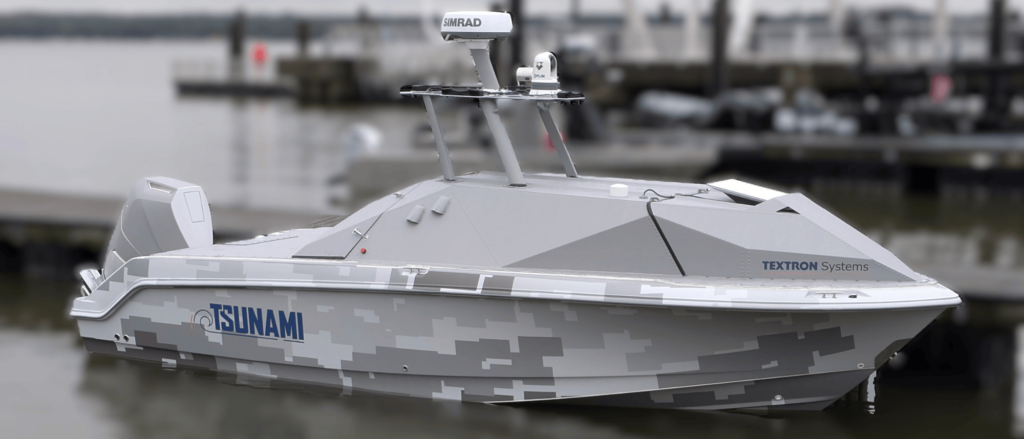
Textron Systems’ Tsunami uncrewed surface vessel. Photo credit: Textron Systems

Textron Systems Corp. announced today a contract award from the Defense Innovation Unit (DIU) to produce and deliver multiple Tsunami uncrewed surface vessels (USVs), which will be used to support the U.S. Navy Fleet Experimentation (FLEX) exercise in Key West, Florida and provide three months of joint operations with U.S. Southern Command and the U.S. Navy 4th Fleet.

Under the contract, Textron Systems will provide long-dwell Tsunami interceptor USVs and Field Service Representatives to the FLEX exercise, demonstrating cooperative intelligence, surveillance reconnaissance and targeting with its Aerosonde 4.7 vertical takeoff and landing UAS from a littoral combat ship. The exercise will also demonstrate manned-unmanned surface warfare with Invariant Corporation’s Surface-to-Air Kinetic Engagement, or STAKE, system.

The Tsunami family of autonomous maritime surface vessels are designed to meet the needs of the U.S. Navy and its allies for a readily available, versatile portfolio of multi-mission uncrewed assets to team effectively across the fleet. Using Brunswick Corp.’s reliable, high-performance vessels, Textron Systems developed the Tsunami family of products with its trusted Common Unmanned Surface Vehicle autonomy control system, leveraging mature commercial technologies to deliver increased capacity and immediate scale.

“The Tsunami family of vehicles leverage Textron Systems’ decades of expertise in autonomous systems innovation, coupled with the speed and scalability of Brunswick Corporation’s established and globally sustainable production line of vessels,” said Ryan Schaffernocker, senior vice president of Air, Land and Sea Systems. “This award establishes a partnership foundation for Tsunami USV government-owned, contractor-operated and contractor-owned, contractor-operated services, allowing for rapid deployment with a lower cost of ownership for the Navy.”

Textron Systems is the originator of the CUSV, the mine countermeasure USV for the U.S. Navy Unmanned Influence Sweep System program of record. Most recently, Textron Systems introduced the Multi Mission USV, the fifth generation of its CUSV craft, designed to expand the Navy’s capacity for advanced mission capabilities. 


Northrop Grumman Delivers 70th E-2D Advanced Hawkeye to US Navy

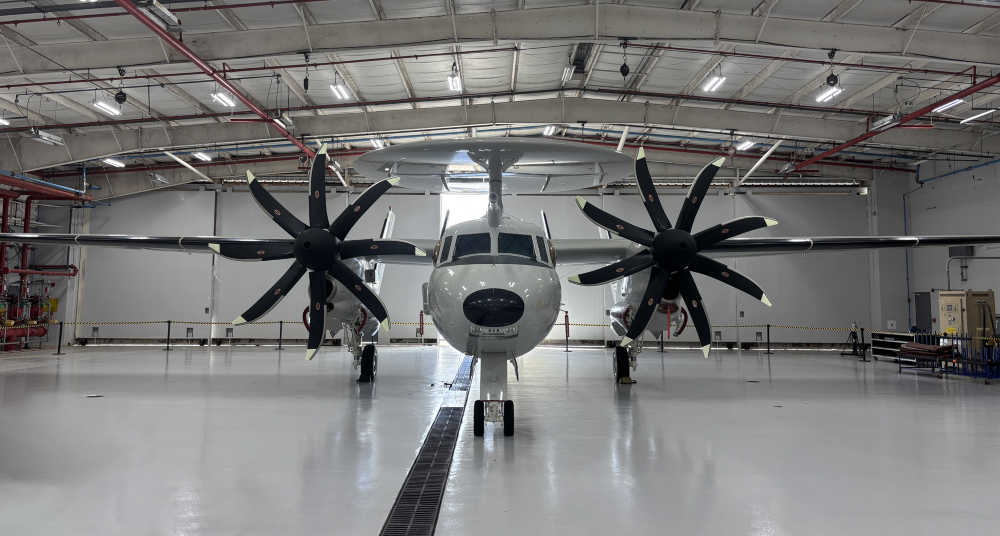
The E-2D Advanced Hawkeye delivers advanced airborne early warning and battle management to ensure air superiority. Photo Credit: Northrop Grumman

Northrop Grumman said it has delivered the 70th E-2D Advanced Hawkeye to the U.S. Navy, demonstrating steady production momentum and continued collaboration with the Navy and industry partners. 

  • Northrop Grumman has produced a total of 82 E-2D Advanced Hawkeyes for the U.S. Navy and Japan Air Self-Defense Force to date. 
  • The company continuously modernizes the E-2D to meet evolving mission requirements driven by lessons learned from today’s operations.
  • The system is purpose-built for airborne early warning and battle management, capabilities that are deliberately enhanced to maintain air superiority now and decades to come.

Janice Zilch, vice president and program manager, E-2D Advanced Hawkeye, Northrop Grumman, said, “E-2D deliveries demonstrate our commitment to quality and performance with speed and scale, supporting those who operate and maintain this platform. We’re seeing the Advanced Hawkeye’s exceptional performance in today’s operational environments, and we’re actively planning its future advancements.”

From remote, austere locations to the most advanced airfields, the E-2D Advanced Hawkeye provides exceptional airborne early warning and battle management capabilities that enhance joint and coalition operations and ensure air superiority. E-2D is a versatile airborne command node that connects joint and allied forces into a unified network. Equipped with an advanced 360-degree radar and powerful mission, data and communications systems, it delivers real-time data and communications to dominate across domains and missions.


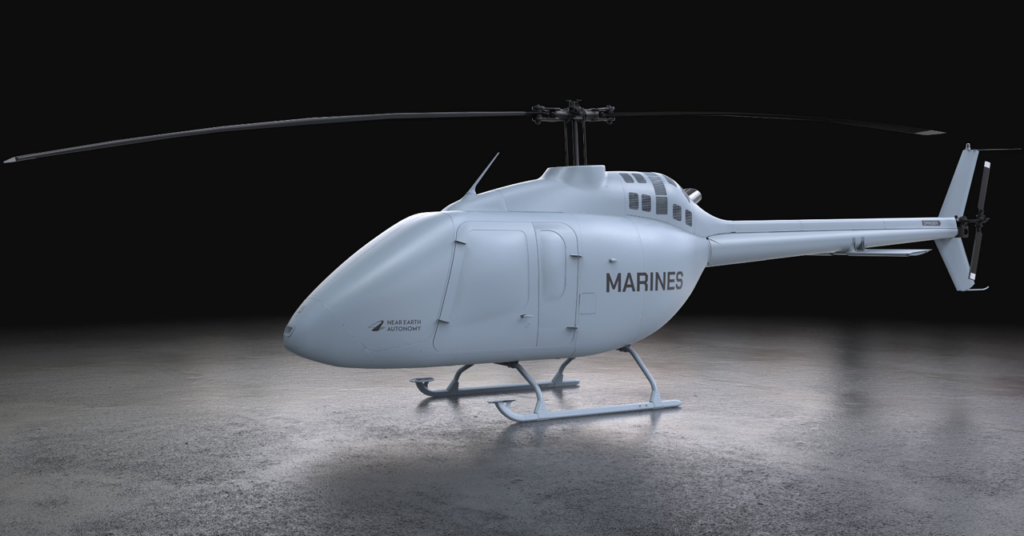
Bell to Provide Bell 505 Airframe for U.S. Marine Corps’ MARV-EL Program

Bell Textron will provide its Bell 505 airframe for the U.S. Marine Corps’ MARV-EL uncrewed logistics aircraft program. Photo credit: Bell Textron

Bell Textron Inc., a Textron Inc. company, announced it was selected by Near Earth Autonomy (Near Earth) as a partner on the prototyping of an autonomous Bell 505 for the U.S. Marine Corps’ Aerial Resupply Vehicle – Expeditionary Logistics (MARV-EL) Increment 2 program.

The goal of the program is to prototype an uncrewed logistics aircraft ready for tactical-edge resupply in contested environments and serve as a middle-weight uncrewed logistics asset. 

“This platform will be a step forward in transforming the U.S. Marine Corps’ autonomous operations and how our warfighters navigate on the battlefield,” said Jason Hurst, Bell SVP, Engineering. “We’re leveraging our decades of experience with the U.S. Armed Forces and innovative product development applying it to the versatile Bell 505 for this program.”

The awarded contract will deliver an autonomous aerial logistics capability that exceeds MARV-EL performance threshold requirements and accommodates a wide range of payloads and standard containers. Bell will provide engineering support to the Near Earth team on modifications to the Bell 505 for autonomy integration and enhanced cargo handling. 

“Bell looks forward to continuing to build upon our relationship and prior autonomy development with Near Earth in support of the MARV-EL program,” added Hurst.  

In 2024, Bell revealed its Aircraft Laboratory for Future Autonomy (ALFA) platform – a step forward in its autonomous flight efforts. Bell and Near Earth collaborated to integrate an advanced perception system for flight demonstrations on the ALFA aircraft, working towards fully autonomous flight capability. 


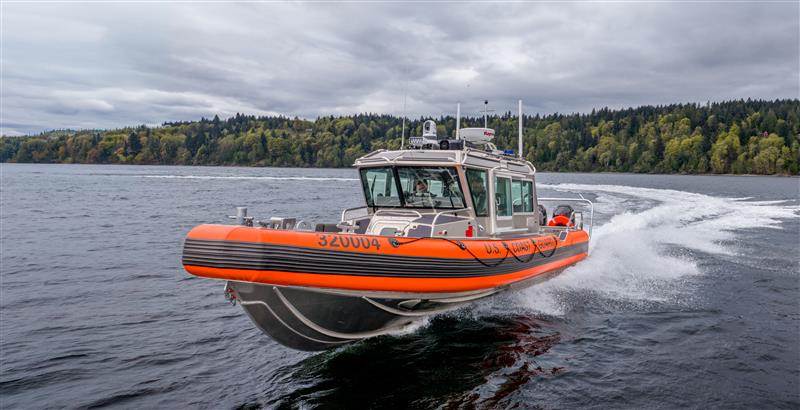
SAFE Boats International Delivers Response Boat–Small Demonstrator to U.S. Coast Guard

SAFE Boats International delivered its Response Boat-Small demonstration to the U.S. Coast guard. Photo credit: SAFE Boats International

SAFE Boats International, a U.S. manufacturer of high-performance aluminum vessels, announced the successful delivery of its Response Boat–Small (RB-S) demonstrator unit to the U.S. Coast Guard in Charleston, South Carolina. The delivery marks a key milestone in the Coast Guard’s evaluation of next-generation capabilities for one of its most critical and widely deployed operational platforms.

Purpose-built to meet the evolving demands of Coast Guard missions, including search and rescue, law enforcement, and maritime security, the SAFE Boats RB-S Demonstrator reflects a rapid, agile development approach rooted in real-world operator experience and advanced marine engineering.

Measuring 32 feet by 4.5 inches long with an 8-foot, 6-inch beam, the vessel delivers a cruising speed of 28 knots and a top speed of 49 knots, powered by twin 300hp V10 Mercury Verado outboard engines. Designed for performance, durability, and crew survivability, the platform integrates a range of advanced features that distinguish SAFE Boats as a leader in next-generation patrol craft.

“The delivery of this RB-S demonstrator underscores SAFE Boats’ ability to move quickly, listen closely, and deliver a highly capable platform built around the realities of Coast Guard operations,” said Rob Goley, Chief Revenue & Customer Officer at SAFE Boats International. “Our employee-owners, many of whom are veterans and former operators, bring firsthand experience to every stage of design and construction. That perspective ensures we are not just building boats but delivering mission-ready tools that prioritize crew safety, comfort, and operational effectiveness.”

The SAFE Boats RB-S demonstrator features a full foam collar system constructed from closed-cell polyethylene foam encapsulated in a durable polyurethane membrane, eliminating the need for inflation, reducing maintenance, and enhancing long-term reliability. Beyond durability, the collar plays a critical role in vessel stability, performance, and crew safety in dynamic maritime environments.

Additional performance innovations include enhanced performance fins for increased lift and superior cornering, as well as a stepped transom hull design that allows engines to be mounted higher reducing drag and increasing speed and fuel efficiency. A proprietary “speed shoe” integrated into the keel further enhances hydrodynamic efficiency.

SAFE Boats’ aluminum hull is engineered with air- and watertight integrity and undergoes pressure testing to prevent water intrusion. A self-bailing deck and concave lifting strakes contribute to improved handling and seaworthiness in challenging conditions.

Crew safety and comfort are central to the vessel’s design. The onboard AC system allows simultaneous operation of heating and air conditioning, enabling independent control of temperature, airflow, and defogging, critical for maintaining visibility and reducing fatigue in all weather conditions. Shock-mitigating SHOXS seating further enhances crew endurance during high-speed operations.

The vessel also features modular MOLLE panel systems for mission-configurable storage, overhead-mounted visibility windows for enhanced situational awareness, and the Intelligent Marine Assistance System by Hefring Marine, an advanced technology platform that improves operational safety, efficiency and survivability through real-time data and guidance.

“This platform is the result of thoughtful design and disciplined execution by more than 300 employee-owners committed to building boats that perform when it matters most,” Goley added. “From hull design to onboard systems, every detail reflects our focus on protecting the crew and enhancing mission capability.” The RB-S Demonstrator program brings together multiple industry partners to support the Coast Guard’s evaluation of future vessel designs. SAFE Boats’ delivery highlights its continued leadership in advanced patrol craft programs and its longstanding partnership with the Coast Guard.


USNS Robert E. Peary Enables 4th Fleet Combat Readiness with 154-Day Deployment

From LaShawn Sykes – USN Military Sealift Command, April 30, 2026

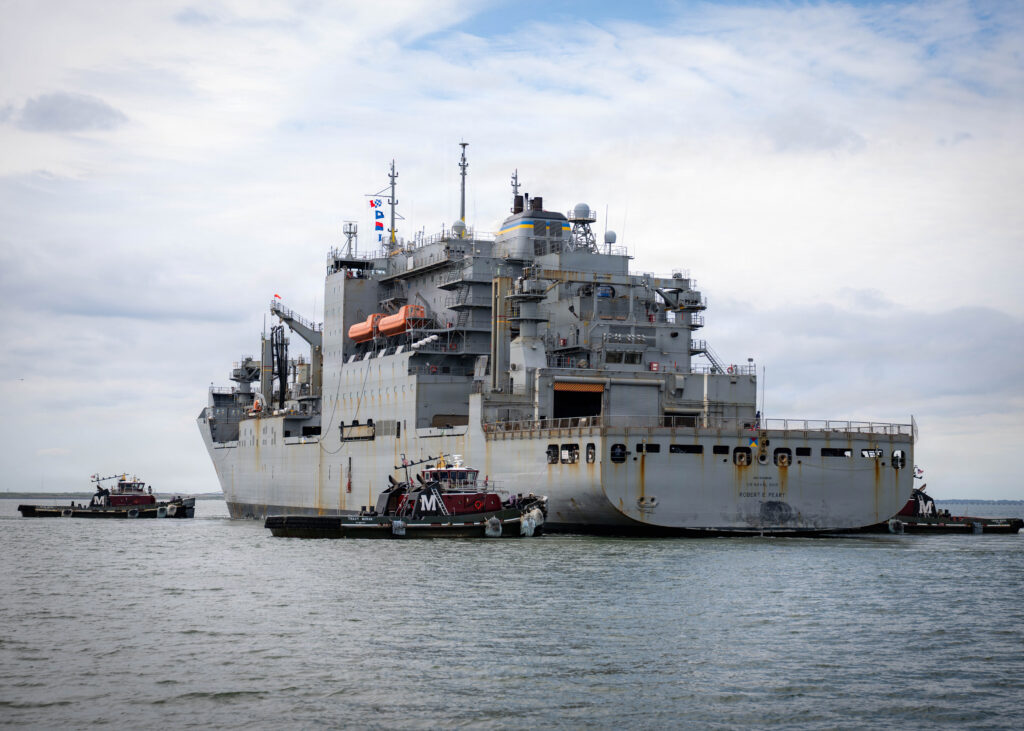
The U.S. Navy’s Lewis and Clark-class dry cargo ship USNS Robert E. Peary (T-AKE-5) returns to homeport at Naval Station Norfolk, April 29, 2026. Photo credit: U.S. Navy | Brett Dodge

NORFOLK, Virginia (April 29, 2026) – USNS Robert E. Peary (T-AKE 5) and the ship’s 105 civil service mariners (CIVMARS) returned to Naval Station Norfolk, concluding 154-day deployment, April 29.

Operating in the U.S. 4th Fleet area of responsibility, the Peary supported Operation Southern Spear (OSS) — a counter-narcotics mission to dismantle Designated Terrorist Organizations and counter illicit maritime activity that threatens the security and stability of the Western Hemisphere — by supplying 17 Navy vessels, including the Gerald R. Ford Carrier Strike Group, USS Iwo Jima Amphibious Ready Group, and USS Lake Erie.

The Peary served as the vital supply line for the U.S. Navy’s global projection. Operating as a floating superstore, it provided fuel, ammunition and stores at sea, allowing Navy warships to stay on station indefinitely and eliminating the need to return to port for logistics.

As the sole dry cargo and ammunition vessel, Peary executed 64 at-sea replenishments, transferring 19,488,042 gallons of fuel, performing 16 CONSOLS (consolidation of cargo at sea), 13 VERTREPS (vertical replenishments at sea), and handling 12,899 pallets. “Peary’s efforts were instrumental in expanding the Navy’s operational reach, thus, increasing the sustainability of our Navy warships operating in 4th Fleet,” said Capt. James A. (Jamie) Murdock, commodore of Military Sealift Command (MSC) – Atlantic in Norfolk, Va.

“This was a highly successful five-month deployment,” said Capt. Dale P. Cramer, shipmaster of USNS Robert E. Peary. “The ability to sustain warfighting ships – given the high op tempo of the Caribbean Sea and global events – was truly magnificent. I am so incredibly proud of the entire Peary crew, who demonstrated what it means to be a professional civilian mariner, delivering excellence under intense, real-world conditions to keep our Navy fighting.”

It is the enduring tradition of MSC CIVMARS to face risks wherever necessary to provide logistical support to the Navy’s fleet,” Murdock said. “Thank you to Capt. Cramer and his crew for looking out for one another and bringing the Peary home safe and mission ready.”

In addition to Peary’s participation, several other MSC ships provided replenishment and logistic services to U.S. Navy warfighting ships in the Caribbean, including the fleet replenishment oiler USNS Kanawha (T-AO 196), the fast combat support vessel USNS Supply (T-AOE 6), and tanker Overseas Mykonos.

The Peary has been operational since 2008. It is a 210-meter vessel among 14 MSC dry cargo and ammunition vessels that provide virtually everything Navy ships need to accomplish their missions at sea.

MSC operates roughly 140 civilian-crewed ships that provide global logistics, replenishment at sea, specialized mission support, and combat cargo prepositioning for the U.S. Navy.


HII’s Ingalls Shipbuilding is Awarded Frigate Lead Yard Support Contract

From HII

PASCAGOULA, Miss., April 28, 2026 (GLOBE NEWSWIRE) — HII (NYSE: HII) announced today that the U.S. Navy awarded its Ingalls Shipbuilding division a $283 million contract to perform FF(X) class frigate lead yard support activities for the new frigate class. The contract allows Ingalls Shipbuilding to procure long lead time material, execute design work and begin pre-construction activities for the first ship. 

“We are proud of our past performance in engineering, design and production of warships that meet U.S. military standards, a performance that gave the Navy confidence to select the national security cutter as the basis for the next small surface combatant and to choose Ingalls as the program’s lead yard,” said Brian Blanchette, Ingalls Shipbuilding president. “We are excited to partner with the Navy to bring these preproduction steps under contract to accelerate delivery of the frigates that our warfighters need.” 

Under this contract, Ingalls Shipbuilding will begin cutting and shaping raw material to support future phases of work on the main structure foundation and the overall construction sequencing plan of the first frigate. This new approach will enable a smooth transition from design to production at Ingalls Shipbuilding and eventually across the industrial base. 

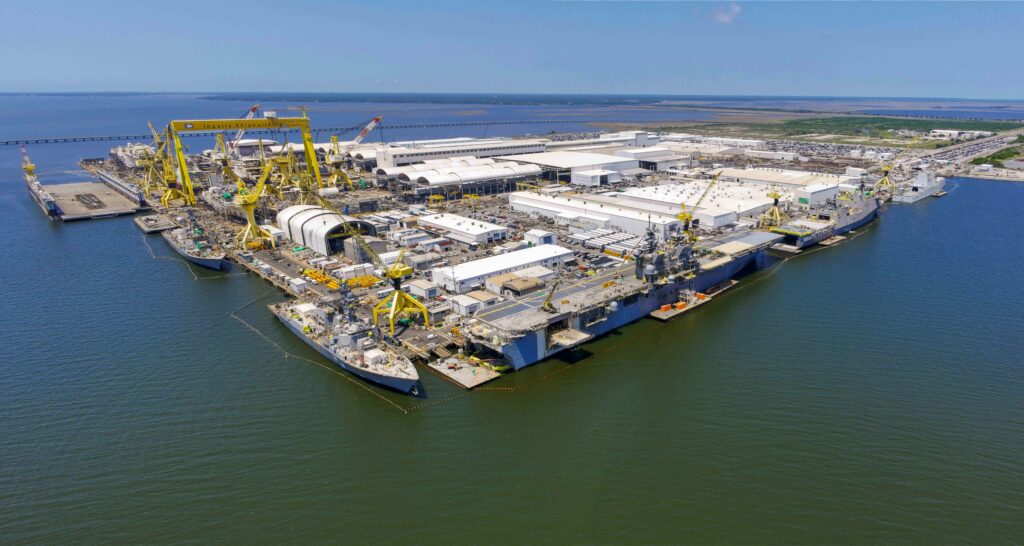
In December 2025, the U.S. Navy selected Ingalls Shipbuilding to design and build the future FF(X), leveraging the stable and proven design of the Legend-class national security cutter (NSC). Ingalls previously delivered 10 NSCs to the U.S. Coast Guard and will use the same proven build sequence for the FF(X) program. The new frigates will be constructed alongside production lines that currently support DDG 51 Flight III destroyers, LHA assault ships, LPD Flight II amphibious transport docks, and modernization activities for the Zumwalt-class guided missile destroyers. 

To meet urgent Navy demand and support construction of next-generation platforms, Ingalls Shipbuilding has invested more than $1 billion in modernizing its infrastructure, facilities, and toolsets. HII as a whole is actively working to expand U.S. shipbuilding capacity by, among other things, increasing the number of distributed shipbuilding partners, collaborating with international manufacturers, and evaluating the addition of another U.S. shipyard. 

The Navy’s new class of smaller combatant ships, the FF(X), is a critical component of the Navy’s fleet of the future. The FF(X) will be a smaller, more agile surface combatant designed to complement the fleet’s larger, multi-mission warships and enhance operational flexibility around the globe.