Austal USA Successfully Completes Sea Trials on USNS Point Loma  

MOBILE, Ala. – Austal USA and the Navy’s Expeditionary Fast Transport (EPF) program team successfully completed acceptance trials on the future USNS Point Loma (EPF 15) May 21. Completion of acceptance trials means the ship is now ready for delivery to the Navy.   

“I am excited for the hard-working Austal USA shipbuilding team who are responsible for the successful achievement of these trials,” commented Austal USA Vice President of Surface Ship Programs Dave Growden. “With the help of our EPF program suppliers, Navy partners, and the Port of Mobile representatives involved in these trials, Point Loma is headed toward her final milestone, delivery.” 

These trials involved the execution of intense comprehensive tests by the Austal USA-led industry team which demonstrated to the Navy the successful operation of the ship’s major systems and equipment while underway. Point Loma is slated for delivery in June and will be the second EPF Flight II vessel Austal USA has delivered to the Navy, following USNS Cody which was delivered to the Navy in January 2024. EPF Flight II vessels feature enhanced naval medicine afloat capabilities and will provide critical combat care in austere and contested operating environments.   

Austal USA has delivered fourteen EPFs and has two more EPFs, both Flight II vessels, under construction, including EPF 15.  


Saildrone, Meta Complete Unmanned, Autonomous Deep-Water Route Survey

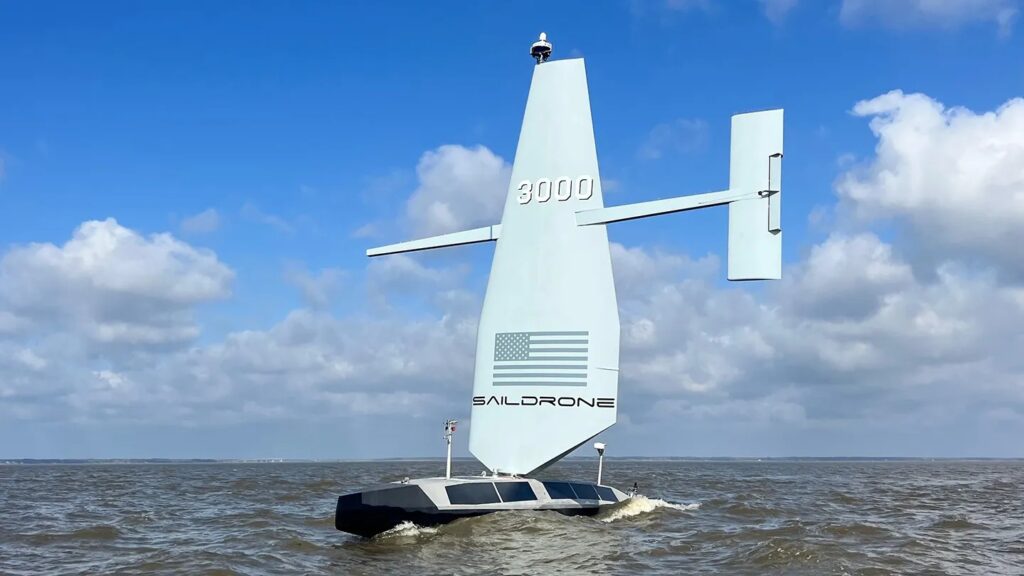
Saildrone Surveyor SD-3000 is Saildrone’s first production Surveyor-class USV. 

The 26-day mission demonstrated that Saildrone can deliver deep-water mapping accuracy comparable to traditional vessels while reducing HSE risk and cost. 

From Saildrone 

ALAMEDA, Calif.– In a first-of-its-kind demonstration mission, Saildrone, in partnership with Meta, successfully completed a deep-water cable route survey in the North Atlantic using the Saildrone Surveyor, a 20-meter uncrewed surface vehicle (USV). This innovative project represents a major milestone in the evolution of ocean survey technology, proving that autonomous platforms can deliver data quality and performance on par with traditional crewed survey vessels — while dramatically reducing risk and cost. 

During the 26-day survey conducted in June and July 2024, the Saildrone Surveyor mapped more than 4,500 km of seabed, including complex topographies and challenging conditions, without a port call or outside assistance. Operating under sail and motor-sail modes and equipped with a Kongsberg EM304 MKII multibeam sonar, the Surveyor achieved swath coverage of up to 10 km in water depths of up to 5,500 meters. 

The demonstration focused on collecting bathymetric data along the established Anjana cable route and the recently surveyed Aurora route to directly compare the Saildrone Surveyor’s performance against traditional crewed survey vessels. Key operational metrics — route fidelity, line keeping, data transmission, and depth accuracy — met or exceeded expectations across the board. 

“This mission demonstrated that autonomous ocean mapping is not just possible — it’s here, and it’s incredibly effective,” said Andy Palmer-Felgate, subsea cable engineer at Meta. “Saildrone delivered data that matched legacy surveys with exceptional accuracy, all while operating remotely and with minimal environmental impact. As capacity needs increase, Meta continues to invest in cutting-edge infrastructure technologies—and our subsea cable strategy work is critical to these efforts. Ocean mapping plays an important role, and the implications for subsea cable route surveys are profound.” 

Using the Saildrone Mission Portal and real-time, high-bandwidth satellite connectivity, Saildrone hydrographic surveyors and pilots monitored vehicle performance and dynamically re-tasked it to investigate features of interest — such as seamounts and canyons — critical for route optimization. Previously limited to crewed vessels, this capability opens the door to more agile, responsive, and distributed survey operations. 

A critical focus of the mission was minimizing Health, Safety, and Environmental (HSE) risks associated with offshore operations, demonstrating significant benefits to the quality of life for hydrographic surveyors, cable route engineers, and client representatives who can now perform their work remotely from shore-based offices or home offices, reducing time away from family and minimizing the physical and mental strain associated with offshore deployments. Furthermore, the mission avoided an estimated 243 tons of CO₂ emissions — over 50 times less than a conventional vessel — highlighting the sustainability advantages of uncrewed systems. 

“This is a turning point for deep-ocean survey,” said Brian Connon, VP Ocean Mapping at Saildrone. “The Surveyor’s performance on this mission proves that we can deliver high-resolution, deep-water bathymetry with a fraction of the fuel, cost, and risk. As our fleet expands, we envision a global network of Surveyor USVs supporting offshore industries with safe, efficient, and scalable data solutions.” 

This demonstration paves the way for broader adoption of USVs in subsea telecom, offshore energy, and national hydrographic programs. Future developments will focus on expanding operational range, improving weather resilience, and integrating new technologies like AI-based navigation and expendable bathythermographs. 


Michael Duffey Assumes Role as New Acquisition, Sustainment Chief

June 5, 2025 | By Army Maj. Wes Shinego, DoD News  

Michael P. Duffey was sworn in today as undersecretary of defense for acquisition and sustainment following a swift Senate confirmation that places him in charge of the Defense Department’s vast procurement, sustainment and industrial base enterprise. 

After Duffey received Senate confirmation yesterday, Deputy Defense Secretary Steve Feinberg administered the oath of office during a brief Pentagon ceremony.  

Duffey now oversees more than $300 billion in annual procurements and policies related to contracting, logistics, installations, energy resilience and the nuclear enterprise. He also leads an acquisition workforce of roughly 190,000 civilian and military professionals.   

In a statement released after the ceremony, Defense Secretary Pete Hegseth called Duffey “a proven reformer who knows how to translate strategy into the tools our forces need in the field.”  

Although Duffey limited today’s remarks to thanking family and colleagues, he outlined his priorities during a March 27, 2025, Senate Armed Services Committee hearing.   

“America’s ability to protect our interests requires a military force structure with the capability and capacity to deter and, if necessary, to defeat our adversaries,” Duffey told lawmakers.   

He also emphasized the need to modernize “how the department integrates requirements, budgeting and acquisition processes — aligning incentives to deliver results.”  

Duffey said future wars may hinge as much on industrial production as battlefield performance.   

“Future conflicts will be won on the factory floor as much as on the field of battle,” he said, warning that the side able to replace lost equipment fastest will hold the upper hand.   

He said the United States must “outpace our adversaries in our ability to supply the joint force with decisive advantage while building an industrial base agile enough to replenish those forces as needed.”  

Among his first tasks, Duffey plans to better align service requirements with congressional resources, expand rapid-fielding pathways for emerging technologies and apply data-driven metrics to keep programs on budget and schedule.   

He also pledged a comprehensive review of the Cybersecurity Maturity Model Certification 2.0 framework, aiming to balance security needs with regulatory burdens — particularly for small businesses.  

Duffey brings two decades of experience in the Pentagon and White House. Inside the department, he served as the deputy chief of staff to the defense secretary and chief of staff to the undersecretary for research and engineering, among other senior positions. Outside the building, he guided national security budgets as associate director at the Office of Management and Budget, giving him what colleagues describe as “a 360-degree view” of the policy-to-production pipeline.  

A native of Wisconsin, Duffey is a graduate of the University of Wisconsin–Madison and holds executive certificates from the Massachusetts Institute of Technology and the Wharton School at the University of Pennsylvania.  

In the weeks ahead, Duffey plans to tour depots, shipyards and suppliers to assess production bottlenecks and meet with service acquisition executives to discuss modernization priorities.  

He will also chair the Nuclear Weapons Council, linking strategic-deterrent recapitalization to its broader acquisition agenda.   

“Our charge,” he told senators, “is to convert American ingenuity into ready combat power at a pace that preserves the nation’s decisive edge.” 


UTIC Advances Workforce Development with Sonar Technology Training

From The Undersea Technology Innovation Consortium, June 4, 2025 

MIDDLETOWN, R.I. – Over 100 Undersea Technology Innovation Consortium (UTIC) member company employees recently completed a successful sonar training course through a partnership with the University of Rhode Island (URI). The partnership, aimed at strengthening the defense technology workforce, allowed UTIC members to take the Principles of Sonar, Underwater Sound, and Undersea Systems Course for non-credit during the Spring 2025 semester. Several URI graduate students also completed the course for credit.  The course was offered virtually and in person. 

“Access to targeted education and technical training is essential in a field where the pace of technology change is increasing,” said UTIC Chief Executive Officer Molly Donohue Magee. “Our mission is to enable member organizations with the tools, knowledge, and resources to stay competitive and advance their technology.” 

Led by Dr. John Short—a nationally recognized expert in sonar and undersea systems—the program provided valuable insights and knowledge transfer to both emerging professionals and longtime engineers. Dr. Short emphasized the importance of initiatives like this in sharing and advancing expertise across generations. 

“This course represents more than just professional development—it’s an investment in the future of our industry,” said Dr. Short. “Continued education gives industry professionals the opportunity to apply what they’ve learned to their own work and to build on existing and emerging innovations. With a focus on both practical application and fundamental principles, this course provided students with technical skills, hands-on experience, and an understand of lessons learned.” 

Principles of Sonar, Underwater Sound, and Undersea Systems is a graduate-level course that introduces the core concepts of sonar technology, underwater acoustics, and undersea system engineering. Students explore active and passive sonar design, acoustic modeling, and ocean environment fundamentals. Emphasis is placed on practical applications, including performance estimation, system tradeoffs, and the value of in-water testing. The course will be offered again in the Spring 2026 semester.  


Marine Corps Receives Final MQ-9A Reaper, Concluding Rapid Delivery Effort 

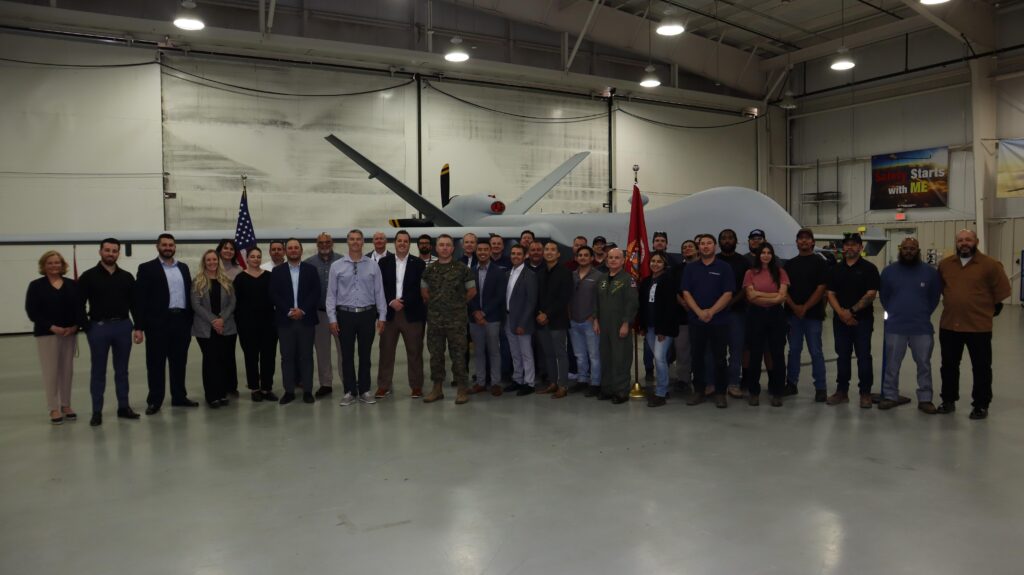
The Marine Corps received its final MQ-9A Reaper Block 5 Extended Range (ER) Uncrewed Aircraft System (UAS) from General Atomics Aeronautical Systems, Inc. (GA-ASI) Gray Butte flight operations facility in California in June 2025. (Photo courtesy of GA-ASI) 

From Naval Air Systems Command, June 5, 2925 

NAS PATUXENT RIVER, Md. — The U.S. Marine Corps received its final MQ-9A Reaper Block 5 Extended Range (ER) Uncrewed Aircraft System (UAS) from General Atomics Aeronautical Systems, Inc. (GA-ASI) Gray Butte flight operations facility in California in June 2025, marking the successful completion of a three-year acquisition campaign. 

With 18 MQ-9As field to date, and now two more on the way, this final delivery represents a major milestone for Marine Corps aviation and reflects the effective collaboration between industry partners and the U.S. Air Force. 

“This program has been a model of how to do things right,” said Capt. Dennis Monagle, program manager for Multi-Mission Tactical UAS (PMA-266), whose office managed the acquisition effort. “We leveraged a strong relationship with industry and the Air Force to move quickly, stay on schedule, and deliver advanced capability to the fleet with minimal friction. It’s been a very smooth process, proof that when the right teams align, we can move at the speed the Marines need.” 

The program team continues to integrate advanced capabilities onto the platform with the upgraded MQ-9A with the SkyTower II airborne network extension pod on track to achieve Initial Operational Capability (IOC) later this year. The system will expand the Corps’ long-range mission in support of Force Design 2030 priorities and distributed maritime operations. 

The MQ-9A is a multi-role, medium-altitude, long-endurance UAS designed to support a variety of missions including ISR and maritime domain awareness. The Marine Corps’ adaptation of the system represents a leap in expeditionary capability, enabling operations across contested and distributed environments. 

PMA-266 oversees the MQ-9 Marine Air-Ground Task Force UAS, Expeditionary Family of Systems and is also responsible for emerging group 4 an 5 vertical lift platforms. 


DLA Fuels Maritime Superiority With $5 Billion Contract

June 5, 2025 | By Cindy Pray, Defense Logistics Agency Land and Maritime Public Affairs  

The Defense Logistics Agency Maritime Mechanicsburg, located in Pennsylvania, recently awarded a $5 billion contract to six small businesses, expediting support for Virginia-class submarines and active surface ships, in a move that will significantly enhance the nation’s maritime advantage.  

The Maritime Acquisition Advancement Contract is designed to accelerate DLA’s procurement of integrated weapons systems equipment and services. The awardees will play a vital role in providing essential resources for the Navy’s latest class of advanced capability nuclear-powered fast-attack submarines.    

With five one-year options, each valued at $1 billion, the MAAC could potentially reach a total of $10 billion.   

At an April 8, 2025, hearing before the Senate Armed Services Committee, Navy leaders emphasized that strengthening supply chain capacity is crucial to achieving the goal of building two Virginia-class submarines per year. The submarines will replace the aging Los Angeles-class fleet.  

“This contract supports a mission that’s a top priority at the highest level,” said Elizabeth Allen, DLA Maritime Mechanicsburg’s deputy director, underscoring Defense Secretary Pete Hegseth’s emphasis on the Virginia-class program.  

The MAAC, a yearlong endeavor, culminated in a competitive acquisition process that yielded nine offers. Contracting Officer Brian Stevens said it will propel DLA’s support for the Navy into the future and highlighted its alignment with the Defense Department’s guiding principle of “speed over process.”  

“We created this vehicle to do more with less — we can do larger contracts faster, which coincides perfectly with the Virginia-class initiative,” Stevens said. “I’m very proud of the work we’ve done.”  

Allen further explained that the multi-award structure was essential to handle the sheer volume and requirements.  

“There are significantly long lead times the Navy faces … this contracting vehicle streamlines and reduces our end of the administrative lead time,” she noted, adding that “it leverages innovative methods to get items into contract quickly.”  

Timothy McCloskey, acquisition director for DLA Maritime Mechanicsburg, explained the contract’s widespread impact is broad in scope.  

“It’s not just a benefit for DLA here in Mechanicsburg; it’s a benefit for any other buying activity that wants to use it,” he said.  

Nestled within Naval Support Activity Mechanicsburg, Pennsylvania, DLA Maritime Mechanicsburg is responsible for procuring depot-level repairable assets, directly supporting Naval Supply Systems Command’s surface, submarine and aircraft carrier operations. The detachment falls under Columbus, Ohio-based DLA Land and Maritime, which manages the supply chains for thousands of land-based and sea-based weapons systems.  

Allen said the team has already engaged with other DLA detachments and naval shipyards and is planning roadshows to reach other commands that may want to utilize the contract vehicle. She stressed the MAAC’s inherent flexibility and responsiveness to the dynamic needs of the Navy and its warfighters.  

“It’s one team, one fight,” she said. “We’re working together with the Navy — they’re excited about this contract vehicle, and we’re engaged with industry. They’re seeing the benefits. They know the need, they know the criticality of the items and they’re ready to go.”  


Caine Calls on Industry: ‘Focus on Fighting the Next War, Not Fighting the Last War’ 

June 4, 2025 | By C. Todd Lopez, D0D News 

The joint force alone can’t defend against the threats the United States faces today; it’s going to need help from the community of innovators responsible for driving America’s efforts on artificial intelligence, said Air Force Gen. Dan Caine, chairman of the Joint Chiefs of Staff, during the AI+ Expo in Washington today.  

“We cannot do this alone. We have to do this … together. And frankly, my friends, the joint force needs your help,” he said.  

Right now, Caine said, the U.S. is dealing with an array of threats on the global stage, including the growth and increased activity of China’s military, events in the Middle East, the war between Russia and Ukraine, North Korea’s pursuit of nuclear weapons and counterterrorism activities.  

He added that the country is facing an “axis of aligned powers” that have differing views from those of the U.S.  

“Our adversaries are working together, sharing technologies and intelligence at unprecedented levels — decreasing the time required for them to field advanced technologies,” he said, noting the U.S. must produce its technology faster while working with private industry.  

The general also acknowledged that working with the government can be a challenge for the private sector, and the federal government must make it easier for them to bring technology to the warfighter.  

“Together, we’ve got to be focused on fighting the next war, not fighting the last war,” he said. “We need entrepreneurs, both in the private sector and in government.”  

Caine said the joint force must continue to evolve to meet the needs of the president, the defense secretary and the nation, and noted that there are a handful of things it will need to do so.  

“We’ve got to be properly armed,” he said. “We owe it to our nation’s warfighters to have the right combat capability with the right capacity, at the time that commanders in the field are contemplating plans and activities — not at the point of crisis or conflict.”  

Accomplishing that, he said, means bringing in the right technology, including weapons, capabilities and decision-making tools. It also means having an acquisition process that allows the department to get those things.  

“We’ve got to do some work on the requirements process, and I acknowledge that there are times, oftentimes, that the [U.S. government] needs to be better buyers,” he said. “I know this from my time in the private sector, where I tried to sell things to the government when I was an entrepreneur — it’s hard; it’s not easy.” 

Secondly, Caine said, the Defense Department must be globally integrated. Combatant commands, geographical and functional commands and military services must be connected with other agencies, allies and partners.  

The department must also integrate with technology innovators, he said. “[We must] scale that capability in order to meet the challenges that we need to. We’re doing awesome, but we can do more.”  

Finally, Caine said, the military must be ready for what comes next.  

“We’ve got to be clear-eyed that the joint force of the future needs to be organized, trained, equipped and rehearsed to be able to go not when we might want to, but to be able to go when we need to,” he said. “Our systems need to be built for the war of the future, not the war of the past — and this means using technology and innovation at the tactical edge.”  

Caine called on the private sector for assistance. “Your nation needs you with a sense of urgency,” he told industry partners.   

“We need your creative, innovative, patriotic and diabolical minds, 24/7, 365,” he said. “Peace in our nation will not be won by the legacy systems that we’ve had or the legacy thinking. It will be determined by the entrepreneurs and innovators and leaders, both in government and out of government, that create overwhelming strength.”  

Innovations in AI, cyber, autonomy, space, energy, advanced manufacturing, data and computing power are what the chairman outlined as the most needed.  

“We need your help with this,” he said. “I need you inspired to help us. You’ve got the agility, the boldness, the culture and spirit to do these big things, and we welcome your ideas.” 


Cooper Nominated for 4th Star, Command of U.S. Central Command

From the Department of Defense, June 4, 2025 

ARLINGTON, Va. — Secretary of Defense Pete Hegseth announced that the President has nominated Navy Vice Adm. Charles B. Cooper II for appointment to the grade of admiral, with assignment as commander, U.S. Central Command, MacDill Air Force Base, Florida. Cooper is currently serving as deputy commander, U.S. Central Command, MacDill Air Force Base, Florida. 

Below is Cooper’s official biography from the Navy’s website: 

“Vice Adm. Brad Cooper is the son of a career Army Officer. He is a 1989 graduate of the U.S. Naval Academy, and earned a master’s degree in Strategic Intelligence from the National Intelligence University. He studied international relations at Harvard and Tufts Universities. Cooper is a graduate of the U.S. Army Command and General Staff College. 

A career Surface Warfare Officer, he has deployed on ships to every combatant command theater of operation and served a tour on the ground in Afghanistan. He most recently served for nearly three years in Bahrain as commander, U.S. Naval Forces Central Command, FIFTH Fleet and Combined Maritime Forces. Other command tours include service as commander, Naval Surface Force Atlantic; commander, Expeditionary Strike Group 7 in Okinawa, Japan; and, commander, U.S. Naval Forces Korea. His ship commands include USS Russell (DDG 59) and USS Gettysburg (CG 64). 

Ashore, he served as the Navy Chief of Legislative Affairs and Director, Surface Warfare Officer assignments (Pers-41). He has also served in a variety of executive and military assistant roles in the White House, the Office of the Secretary of Defense, U.S. Africa Command and U.S. Pacific Fleet headquarters. 

Cooper is a recipient of the Admiral Elmo Zumwalt Award for Visionary Leadership. 

He is particularly proud of the thousands of extraordinary men and women with whom he has served at sea and ashore all around the world. His amazing Sailors on USS Gettysburg earned the Battenberg Cup as the best ship, submarine or aircraft carrier in the Navy’s Atlantic Fleet.” 


Honeywell Selected by L3Harris Technologies to Support Development of NGJ-LB

From Honeywell, June 3, 2025 

PHOENIX, June 3, 2025 – Honeywell (NASDAQ: HON) has been selected by L3Harris Technologies to support its development of custom tactical jamming pods designed to modernize the U.S. Navy’s airborne electronic attack capability. The contract win comes on the heels of Honeywell’s acquisition of CAES Systems Holdings, LLC, completed in September 2024. 

The U.S. Navy awarded L3 Technologies Inc., Communication Systems-West a $587.4 million contract for the engineering and manufacturing development of the Next Generation Jammer Low Band system. Honeywell’s portion of the work will take place at its Lansdale, Pennsylvania facility. 

“Honeywell’s world-class manufacturing facilities and specialized capabilities enable us to provide reliable solutions for some of today’s most critical missions,” said Brad Westphal, Honeywell Aerospace Technologies president of Electromagnetic Defensive Solutions. “As we work together to bring the latest technologies to our Armed Forces, we look forward to continuing to be a trusted partner of L3Harris and the Navy.” 

“Honeywell’s Lansdale site has a proven history of developing, producing, and delivering reliable electronic warfare technology,” said Clayton McClain, Honeywell Aerospace Technologies general manager, Mission Systems division. “We’re proud to support the Navy and L3Harris as they remain on the forefront of advanced technology to stay ahead of adversaries.” 

The Next Generation Jammer Low Band system is part of a larger system that will augment and ultimately replace the legacy ALQ-99 Tactical Jamming System on the EA-18G Growler aircraft. Using the latest software and active electronically scanned array technologies, the Next Generation Jammer will provide enhanced airborne electronic attack capabilities to disrupt, deny, and degrade enemy air defense and ground communication systems. This latest increment will counter a larger capacity of adversary systems in the low-frequency electromagnetic spectrum. 

Honeywell is a premier supplier of advanced electronic systems that enable customers to fully utilize the electromagnetic spectrum by combining decades of experience with electronic warfare systems and advanced technology. Learn more about Honeywell’s electronic warfare capabilities here.  


Latest Polar Icebreaker USCGC Storis Departs on First Voyage 

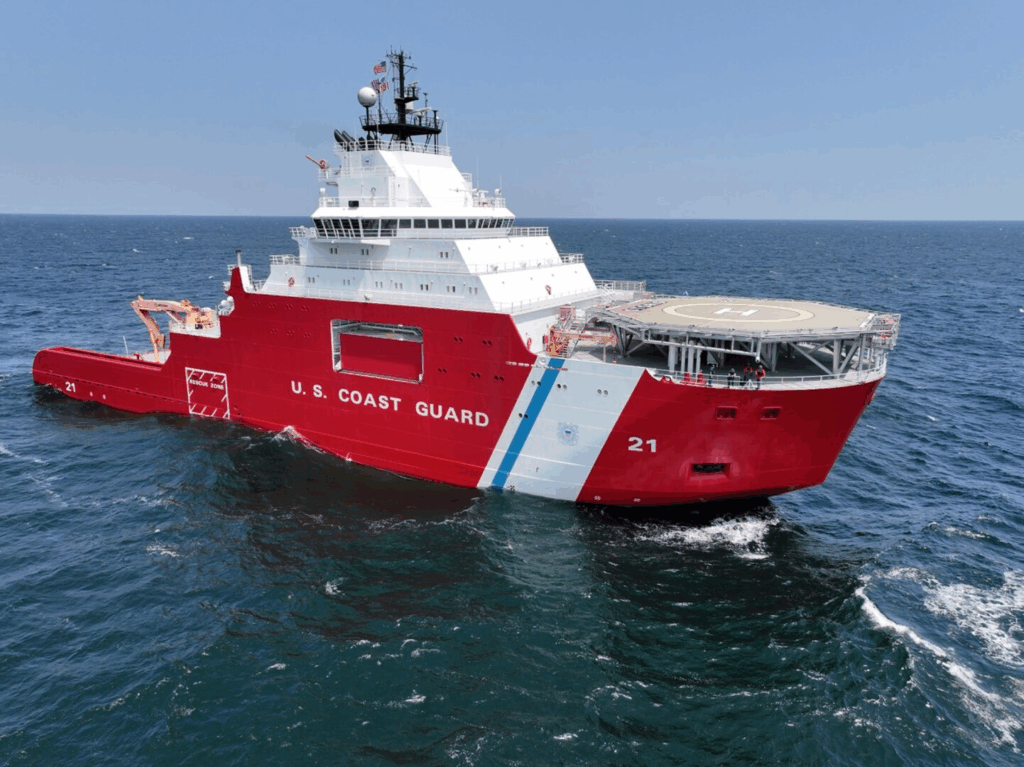
PASCAGOULA, Miss. – The U.S. Coast Guard Cutter Storis is shown here underway, June 3, 2025. The Storis is the Coast Guard’s first new polar icebreaker acquisition in 25 years and will expand U.S. operational presence in the Artic Ocean. Photos courtesy of Edison Chouest Offshore.

From U.S. Coast Guard Headquarters, June 4, 2025 

PASCAGOULA, Mississippi – The U.S. Coast Guard Cutter Storis (WAGB 21), the Coast Guard’s first polar icebreaker acquired in more than 25 years, departed on its initial voyage to safeguard U.S. sovereign interests in the Arctic and conduct Coast Guard missions.  

Storis’ departure marks an early milestone in the service’s transformation through Force Design 2028 (FD2028), which includes reforming Coast Guard acquisitions to rapidly deploy capabilities to execute the Coast Guard’s missions. 

The motor vessel Aiviq, acquired Dec. 20, 2024, from an Edison Chouest Offshore subsidiary, was renamed Storis following modifications to enhance communications and self-defense capabilities. The vessel will expand U.S. operational presence in the Arctic and support Coast Guard missions while the service awaits the delivery of the Polar Security Cutter (PSC) class. The Coast Guard will continue evaluating the cutter’s condition and requirements to achieve full operational capability. 

Storis is commanded by Captain Keith M. Ropella who currently serves as chief of cutter forces at Coast Guard Headquarters in Washington D.C., and previously commanded Coast Guard Cutter Polar Star (WAGB 10), from July 2022 to July 2024. 

The vessel is manned with a hybrid crew consisting of military cuttermen and civilian mariners. This is the second vessel in Coast Guard history to bear the name Storis. The original Storis, known as the “Galloping Ghost of the Alaskan Coast,” had a storied history conducting 64 years of icebreaking operations in Alaska and the Arctic before being decommissioned in 2007. 

Storis will be commissioned this August in Juneau, Alaska, which will eventually be the vessel’s permanent homeport. Until the necessary shore infrastructure improvements are completed in Juneau, Storis will be temporarily berthed in Seattle, Washington, with the Service’s two other polar icebreakers. 

The acquisition was made possible through the Don Young Coast Guard Authorization Act of 2022 and fiscal year 2024 appropriations. It does not affect the ongoing procurement of PSCs and is not part of the PSC program of record. 

The Coast Guard operates the United States’ fleet of icebreakers to assure access to the polar regions to protect U.S. sovereignty. To fulfill this mission and meet operational needs in the polar regions, the Coast Guard requires a fleet of eight to nine polar icebreakers. In support of the President’s intent to acquire at least 40 new icebreakers, the Coast Guard is working to replace, modernize and grow its aging fleet of icebreakers, which currently includes three polar icebreakers, 21 domestic icebreakers and 16 ice-capable buoy tenders. As the United States’ third polar icebreaker, Storis will provide near-term operational presence and support national security as a bridging strategy until the full complement of PSCs is delivered. 

Announced by Secretary of Homeland Security Kristi Noem on May 21, FD 2028 is a blueprint to transform the Coast Guard into a stronger, more ready and capable fighting force. This initiative will include campaigns focused on people, organization, contracting and acquisition, and technology. You can read more about FD 2028 here: Force Design 2028