Heritage Experts: Increased Shipbuilding Critical for National Security  

May 2, 2025  


WASHINGTON — The Heritage Foundation today released the following statement from leading defense and economic experts praising congressional efforts to increase domestic shipbuilding capacity while calling for additional reforms to restore maritime strength.   


Heritage Senior Research Fellow for Naval Warfare and Advanced Technology Brent Sadler, Acting Director of the Hermann Center for the Federal Budget Richard Stern, and Policy Analyst for Economic Policy Miles Pollard responded the reintroduction of the Shipbuilding and Harbor Infrastructure for Prosperity and Security (SHIPS) for America Act:  


“The revised SHIPS for America Act is a strong down payment towards revitalizing America’s maritime capacity and holding entities of concern, like China, accountable for their non-market actions. We encourage Congress to go further in refining the legislation which would help revitalize our port cities, grow our industrial workforce, and strengthen the strategically important shipping and shipbuilding sectors of our economy.  


“Done well, the legislation would strengthen our maritime industry over time and thereby make it less reliant on Jones Act protections and subsidies. This requires nurturing an innovation-based American comparative advantage rather than an artificial advantage using tax credits, energy export limitations, and insurance gimmicks.   


“Given that many maritime sectors abroad operate in a non-profit tax environment, we would encourage replacing all federal taxation of this industry with a distributed profits tax that encourages capital investment by removing duplicative layers of taxation from investments to grow our domestic shipping and shipbuilding. Additionally, to build out and maintain the domestic capacity, we propose creating a grant formula to expand shipyards and pay for retained capacity.  


“In total, The Heritage Foundation finds this legislation commendable and looks forward to it rejuvenating our maritime industry.”  


Heritage previously praised the SHIPS for America Act as ‘step in the right direction.’ In March, Heritage released an extensive report analyzing the benefits of necessary shipbuilding reforms to combat and deter American adversaries, especially China.  


Secretary of Defense Pete Hegseth has identified the revitalization of the U.S. Navy as critical to the United States’ national security strategy.  


ZeroEyes Government Solutions and Picogrid  Announce Coastal Alert System for Waterside Security

From ZE Government Solutions, May 1 2025 

EL SEGUNDO, California/PHILADELPHIA, Pennsylvania – May 1, 2025 – ZeroEyes Government Solutions (ZEGS) and Picogrid announced the ZeroEyes Coastal Alert System (Z-CAS), an integrated waterside security solution that protects U.S. military bases and critical infrastructure from maritime threats. 

Z-CAS fuses ZeroEyes’ AI-powered threat detection with Picogrid’s advanced base defense capability to deliver real-time detection and tracking of vessels, unauthorized personnel, and firearms in coastal environments. The system has already undergone successful testing with both Air Force and Navy users. 

ZeroEyes Government Solutions, a wholly owned subsidiary of A.I.-based gun detection leader ZeroEyes, provides real-time threat analytics for defense and national security applications. Picogrid delivers the core infrastructure for Z-CAS, including the Legion software platform for sensor interoperability and the Lander and Helios hardware nodes for rapid deployment and sustained operations in austere environments. 

With over 280 DoD installations located near water, Z-CAS directly addresses the urgent demand for autonomous, low-overhead coastal defense—especially as unmanned surface vessels and maritime threats increase. Unlike traditional security approaches, Z-CAS operates with minimal operator burden while enhancing situational awareness and response time. 

“Z-CAS combines proven technology from both companies into a field-ready system that improves security of critical infrastructure without adding operator burden,” said Dustin Kisling, Executive Vice President at ZEGS. 

“Picogrid systems are already deployed globally to secure military sites,” said Martin Slosarik, Co-Founder and Head of Growth at Picogrid. “Integrating ZeroEyes’ AI into our existing architecture gives commanders new tools to defend critical infrastructure—without sacrificing the speed, mobility, or interoperability they demand.” 

Z-CAS offers a scalable, cost-effective solution for safeguarding personnel and high-value assets at ports, forward bases, special events, and mobile deployments. 


Virginia-Class SSN Team Awarded $12 Billion Contract Modification for Two Submarines

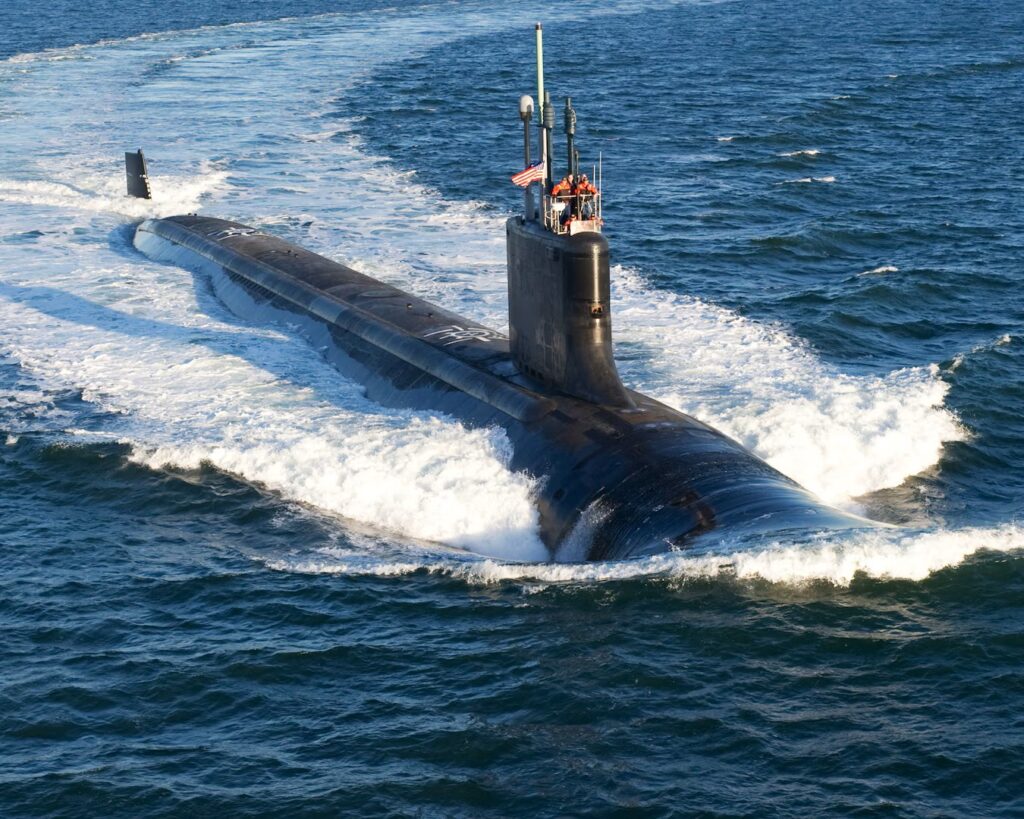
GROTON, Conn., and NEWPORT NEWS, Va.– General Dynamics Electric Boat, a business unit of General Dynamics, announced today it has been awarded a total of $12.4 billion in contract modifications for construction of two fiscal year 2024 Virginia-class Block V attack submarines (SSNs), the 11th and 12th of the block.  

Electric Boat is teamed with HII, whose Newport News Shipbuilding division is teamed to build the Virgina class. 

“Additionally, the award funds investments to improve productivity at the shipyards and workforce support as detailed in the Department of Defense contract award announcement (https://www.defense.gov/News/Contracts/Contract/Article/4170827/). This contract includes options which, if exercised, would bring the cumulative value to $17.2 billion,” the April 30 General Dynamics release said.  

“Over the past two years, we successfully worked with the Navy, Congress and the administration to secure funds that enable us to increase wages for the nuclear-powered vessel workforce and allow for significant additional investments in capacity, shipyard processes and systems,” said Mark Rayha, president of General Dynamics Electric Boat. “This contract modification validates the unique and important role submarines and submarine shipbuilders play in our national defense.” 

“We appreciate the teamwork that resulted in these critical national security assets being put under contract,” said Jason Ward, NNS vice president of submarine construction, in an April 30 release from HII. “We understand the advantage Virginia-class submarines bring to the sailors who operate them, and our shipbuilders are working with diligence to deliver them to the fleet.” 

Virginia-class submarines are designed from the keel up for the full range of 21st-century mission requirements, including anti-submarine and surface ship warfare and special operations support. General Dynamics Electric Boat is the prime contractor and lead design yard for the Virginia-class submarine series and constructs them in a teaming arrangement with HII’s Newport News Shipbuilding in Virginia. 

NNS and GDEB have built and delivered 24 Virginia-class submarines to date. 


SECNAV Phelan Visits Shipyards in South Korea 

From SECNAV Public Affairs, April 30, 2025 

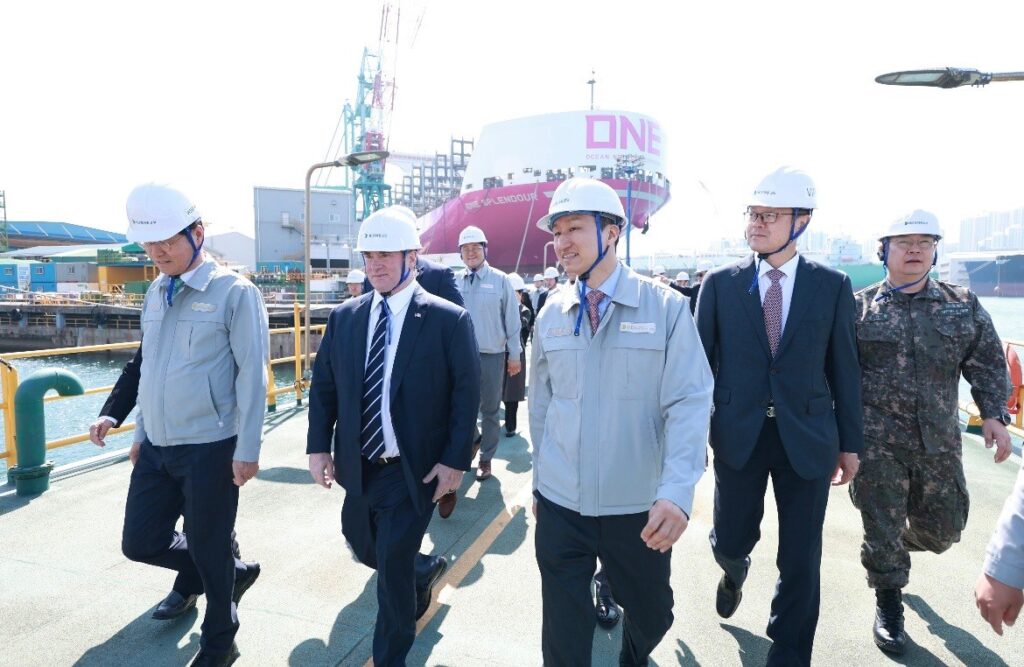
REPUBLIC OF KOREA – Secretary of the Navy John Phelan visited shipyards at Hanwha Ocean Shipbuilding and HD Hyundai Heavy Industries during a scheduled visit to the Indo-Pacific area of operations, April 30.  

Secretary Phelan’s visit included meetings with industry leaders and underscored the importance of the Indo-Pacific region and the Republic of Korea’s expertise in vessel maintenance, repair and overhaul that is crucial to enhancing naval operational capabilities.  

“Working with leading shipyards like Hanwha Ocean Shipbuilding and HD Hyundai Heavy Industries is essential to ensuring deployed U.S. ships and systems remain fully operational in the Indo-Pacific,” said Secretary Phelan. “Leveraging the expertise of these highly capable shipyards enables timely maintenance and repairs for our vessels to operate at peak performance. This level of large-scale repair and maintenance capability strengthens our combat readiness, sustains forward deployed operational presence, and reinforces regional stability.”  

Hanwha Ocean Shipyard successfully completed the repair of the Lewis and Clark-class dry cargo ship, USNS Wally Schirra (T-AKE 8), marking the first Military Sealift Command ship repair conducted in the Republic of Korea. Additionally, the USNS Yukon (T-AO 202), a Henry J. Kaiser-class underway replenishment oiler, is currently undergoing maintenance at the shipyard. Meanwhile, HD Hyundai Heavy Industries recently signed a Memorandum of Understanding with Huntington Ingalls Industries to explore collaborative opportunities in both commercial and defense shipbuilding. These developments highlight their capability to support U.S. naval operations in theater, reducing downtime and costs while increasing operational readiness in the Indo-Pacific region.   

“The relationship between the U.S. Navy and the Republic of Korea’s maritime industrial base goes far beyond ship maintenance; it is a cornerstone of our shared commitment to a free and open Indo-Pacific and strengthens the overall bond between our nations,” said Secretary Phelan. “It fosters innovation, enhances national defense and drives economic prosperity for all. Our united efforts are a powerful reflection of the deep trust and ironclad commitment to the enduring alliance between the United States and the Republic of Korea.”  

Secretary Phelan’s first visit to the Indo-Pacific region highlighted his top priorities including Naval shipbuilding in support of President Trump’s Executive Order on restoring America’s maritime dominance.  


Coast Guard to Begin Full Production Activities for PSC Hull 1, LRIP for WCC

From U.S. Coast Guard Headquarters, May 1, 2025 

WASHINGTON — The Department of Homeland Security approved full production of the first U.S. Coast Guard Polar Security Cutter (PSC), April 30, 2025. The Service also received approval for low-rate initial production of the the Waterways Commerce Cutter (WCC). This is a significant milestone for the Nation, as it brings the Coast Guard closer to renewing and enhancing operational capabilities in both the American heartland and the polar regions. 

Approval for full production enables the Coast Guard and U.S. Navy integrated program office to maintain production momentum, and for the shipbuilder to accelerate hiring to deliver this critical asset as quickly as possible to support national security initiatives. The PSC is the first heavy polar icebreaker to be built in the U.S. in nearly five decades. The Coast Guard is the sole federal agency responsible for icebreaking. Accordingly, the Service must replace, modernize, and grow its fleet of icebreakers to assure U.S. access and sovereignty in the polar regions. The U.S. Coast Guard is committed to working with the Administration and Congress to fulfill the President’s direction on icebreaker acquisition. 

The production decision for the WCC program entails the first eight hulls of the River Buoy Tender (WLR) and Inland Construction Tender (WLIC) – WCC variants that are being acquired under a single contract, due to significant design and systems commonality. The Coast Guard plans to acquire 16 WLRs and 11 WLICs to recapitalize the Service’s aging and increasingly obsolescent inland tender fleet, which supports the Nation’s Marine Transportation System, facilitating the safe movement of over $5.4 trillion in annual commerce and 30 million jobs. Deliveries of both the lead WLR and WLIC are planned to occur in fiscal year 2027. A third WCC variant, the inland buoy tender, will be acquired under a separate contract. 

For over 234 years, the American people have relied on the special authorities and unique capabilities of the Coast Guard to assure the safety, security and stability of America’s maritime zones and borders and to foster responsible maritime governance around the world. The PSC and WCC programs demonstrate the breadth of these commitments, and the enduring need for the Coast Guard to deliver vital services the Nation. 


Coast Guard Cutter Liberty, Final Island-Class Cutter, Decommissioned After Over 35 Years of Service 

From U.S. Coast Guard 17th District, April 30, 2025 

ANCHORAGE, Alaska — The Coast Guard decommissioned Coast Guard Cutter Liberty (WPB 1334) during a ceremony in Valdez, Tuesday.  

“This decommissioning marks the end of an era for the Coast Guard,” said Cmdr. Jordan Bogosian, a former Commanding Officer of Liberty and the ceremony’s presiding official. “I am proud of Coast Guard Cutter Liberty and her faithful service to our nation for more than three decades.”  

Commissioned on December 19, 1989, Liberty was the 34th Island-Class cutter to join the fleet and the final Island-Class cutter to be decommissioned from Coast Guard service.  

Liberty is a 110-foot, Island-Class patrol boat, a multi-mission platform that conducted operations to support search and rescue response, marine environmental protection, and national defense.  

The Coast Guard is replacing the aging Island-Class patrol boats with Sentinel-Class Fast Response Cutters (FRCs) which feature enhanced capability to meet service needs. There are currently four FRC’s homeported in Alaska, with two more scheduled for delivery in the near future.  

“It has been a profound honor to serve as the final commanding officer of USCGC Liberty,” said Lt. D. Toler Alexander, Commanding Officer of Liberty. “I am incredibly proud of this crew and all they have accomplished. LIBERTY leaves behind a legacy of over 35 years of exceptional service to the people of the United States and the great state of Alaska. I would like to extend my heartfelt gratitude to the communities of Valdez – and Auke Bay before it – for their unwavering support and for being such welcoming homeports to the cutter and her crew.” 


Navy Awards Contract Modification for Two Additional Virginia-Class Submarines

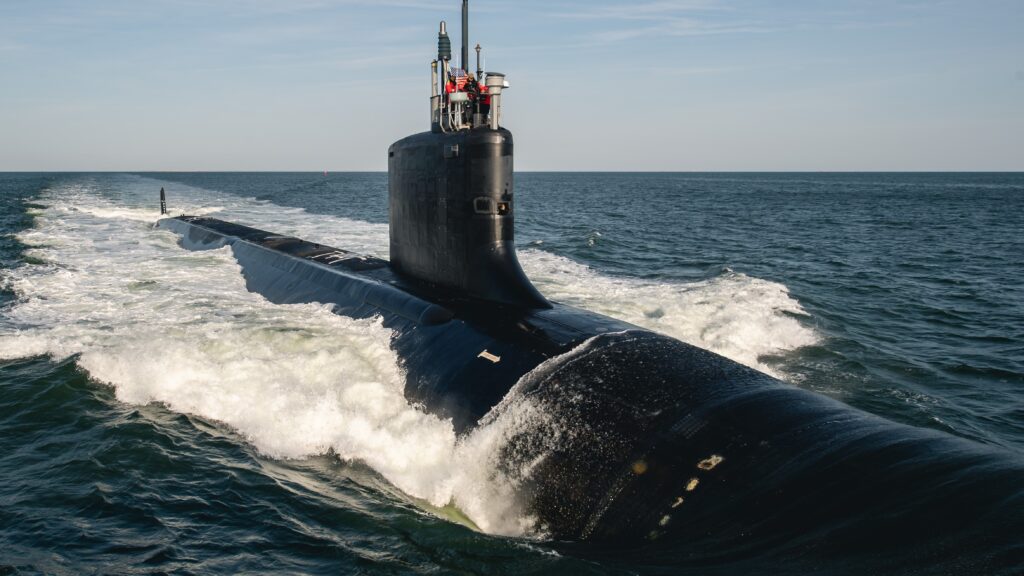
A Virginia-class submarine. Photo credit: U.S. Navy

WASHINGTON – Naval Sea Systems Command has awarded a two-ship contract modification on the existing Virginia-class submarine Block V contract to General Dynamics Electric Boat for the construction of two fiscal year 2024 Virginia-class submarines.

The award signals the Navy’s commitment to maintaining its warfighting advantage in the undersea domain and continues the Virginia-class’s teaming arrangement between prime contractor General Dynamics Electric Boat in Groton, Connecticut, and the major subcontractor Huntington Ingalls Shipbuilding, Newport News (HII-NNS) in Newport News, Virginia. To date, the Navy has taken delivery of 24 Virginia-class submarines, with an additional 16 now under contract.

“We recently renegotiated the planned contract to deliver this critical capability, and appropriately share risk between the Navy and industry,” said Secretary of the Navy John C. Phelan. “We will be looking at all future contracts with a similar lens to ensure the appropriate level of risk sharing and value to the American taxpayer.”

Contract modifications were also awarded to both Electric Boat and HII-NNS to increase workforce support and investment across nuclear shipbuilding programs.

“By investing in the nuclear shipbuilding workforce — which is a national strategic asset — we are working with our industry partners to deliver on this most critical future requirement,” said Dr. Brett Seidle, acting assistant secretary of the Navy for Research, Development & Acquisition.

“The contract award is the result of a highly coordinated contracting effort across the nuclear shipbuilding enterprise, to promote stability at critical suppliers as the submarine industrial base ramps up to meet a historic increase in demand for submarine production,” said Program Executive Officer, Attack Submarines, Rear Adm. Jon Rucker. “We are continuing to work closely with the shipbuilders to improve construction schedules to support the Navy’s need for a larger more lethal force.”

“We appreciate the teamwork that resulted in these critical national security assets being put under contract,” said Jason Ward, NNS vice president of submarine construction. “We understand the advantage Virginia-class submarines bring to the sailors who operate them, and our shipbuilders are working with diligence to deliver them to the fleet.”


Airbus, Shield AI Partner to Integrate Autonomy on Unmanned Aerial Logistics Connector

From Airbus U.S. Space & Defense and Shield AI 

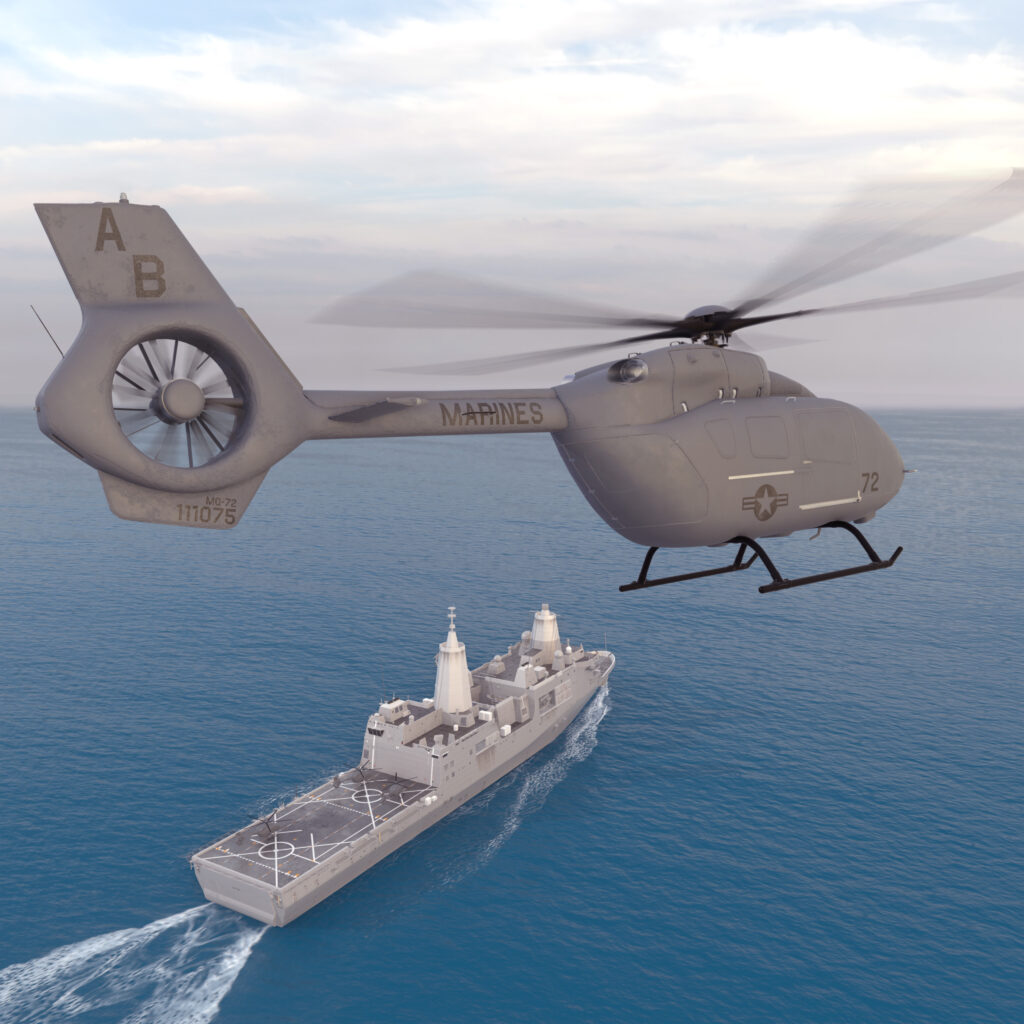
WASHINGTON (April 30, 2025) — Airbus U.S. Space & Defense and Shield AI announced a teaming agreement to integrate Shield AI’s Hivemind autonomy software on the Airbus MQ-72C Logistics Connector, an unmanned variant of the UH-72 Lakota. The collaboration will expand the platform’s mission capabilities through autonomy-enabled operations across a wide range of logistics and operational scenarios—including those under the U.S. Marine Corps’ Aerial Logistics Connector (ALC) program. 

Under the agreement, Airbus U.S. Space & Defense and Shield AI will test Hivemind autonomy in collaboration with Airbus’ Helionix, advancing the future autonomous mission capabilities of the Marine Corps. The level of autonomy will be scaled during future test activities and demonstrations, ultimately leading to unmanned operations in contested logistics environments. 

“The Lakota is a proven multi-mission platform that is ready to support unmanned operations in austere environments,” said Robert Geckle, Chairman and CEO of Airbus U.S. Space & Defense. “Pairing our aircraft with next-generation autonomy software opens new mission possibilities for the warfighter and allied forces worldwide.”

The effort will continue to evolve missionization over the next several years, ultimately enabling more advanced levels of autonomous flight across the Marine Corps and broader Joint Force. 

“Airbus is a world-class partner with a strong track record of delivering reliable systems for the warfighter,” said Ryan Tseng, CEO of Shield AI. “The Lakota has been a mainstay of military aviation for years—a widely-fielded, trusted platform used across a range of missions. Integrating Hivemind onto this aircraft shows how autonomy can rapidly enhance proven systems to meet the demands of today’s missions, and it’s a key step toward fully autonomous, uncrewed logistics operations that are scalable, resilient, and built for the future fight.” 

The Airbus U.S. team is entering the second year of the Aerial Logistics Connector Middle Tier of Acquisition (MTA) Rapid Prototyping Program, which aims to provide the service with aircraft prototypes to demonstrate capabilities to the warfighter through a series of operational demonstrations and experiments. 

The Aerial Logistics Connector effort is one of several efforts across the Department of Defense to deliver logistical support in distributed environments during peer or near peer conflicts. 


NDIA, Navy TPP Team to Grow Next-Gen Shipyard Talent

From the National Defense Industrial Association, April 29, 2025 

ARLINGTON, Va. – The National Defense Industrial Association (NDIA) is expanding its partnership with the U.S. Navy’s Talent Pipeline Program (TPP) to enhance talent acquisition, training, and retention across the U.S. Navy defense industrial base (DIB). According to NDIA’s Vital Signs 2025 report, critical components of the U.S. DIB, particularly skilled trade positions, have significantly declined over recent decades. The TPP is actively reversing this trend by training, coaching, encouraging, and recognizing small and medium-sized companies to improve their Talent Acquisition and Retention systems of recruiting, training, and retaining productive and engaged workers crucial to maintaining naval supremacy. 

Following a successful pilot collaboration with NDIA’s Delaware Valley Chapter, NDIA and TPP aim to broaden their engagement with Chapters across the country. The Chapters will play a critical role in expanding the reach and impact of the program. 

“This partnership is vital to rebuilding our defense industrial base,” said NDIA President and CEO David Norquist. “By connecting our member companies with the Navy’s Talent Pipeline Program, we’re helping secure the skilled workforce needed for shipbuilding and strengthening both our industry and national security.” 

Inspired by the shared mission, Joe Barto, program leader of the U.S. Navy Talent Pipeline Program, said he’s honored to have NDIA on the TPP team, adding: “Partnerships with national facilitators like NDIA are vital to the Talent Pipeline Program’s national rollout. Their support validates the Navy’s investment in small and medium-sized manufacturers—the backbone of American industry and the majority of NDIA’s membership. By joining the movement alongside more than 450 employers, NDIA is helping ensure companies have the talent they need to build high-performing teams.” 

The Talent Pipeline Program directly addresses the U.S. Navy’s growing manufacturing production requirements by ensuring a steady pipeline of skilled talent to deliver and sustain Columbia and Virginia-class submarines, aircraft carriers, surface combatants, and vessels currently in service. This expanded initiative will reinforce U.S. naval capabilities and fortify national security in an increasingly complex global environment. 

Learn more about the Talent Pipeline Program at https://dibtalentpipeline.com/ and take the TPP Realistic Program Preview at https://youtu.be/qH6Cuffyo2o 

Read NDIA’s “Vital Signs 2025” here: https://www.ndia.org/policy/publications/vital-signs 


Acting CNO Strengthens Relations With Industrial Base at Manufacturing Summit

Acting Chief of Naval Operations Adm. James Kilby tours training centers during the Accelerated Training in Defense Manufacturing (ATDM) Summit at the Institute for Advanced Learning and Research (IALR), Danville, Virginia, April 29, 2025. (U.S. Navy photo by MC1 Vanessa White) 

From the Navy Office of Information, April 30, 2025 

Acting Chief of Naval Operations Adm. Jim Kilby attended the Accelerated Training in Defense Manufacturing (ATDM) Summit at the Institute for Advanced Learning and Research (IALR) in Danville, Virginia, April 29. 

The visit demonstrates the Navy’s commitment to strengthen integration with the industrial base to maintain and modernize shipbuilding and develop and field new capabilities. 

Kilby delivered the keynote address at the summit and stressed the importance of partnering with industry and harnessing innovation in the maritime industrial base to deliver and support a lethal naval force.   

“I can assure you that ATDM is contributing to a national movement that is making America stronger, safer, and more secure,” said Kilby. “The work you’re doing matters to our military, our economy, and the future of this country.” 

Kilby discussed key shipbuilding and maintenance initiatives, including fielding new capabilities such as additive manufacturing. 

“In our shipyards, in our manufacturing plants, and in our support organizations, we are reducing maintenance delays, and we are moving faster,” said Kilby. “Every time we 3D-print a part that would otherwise take 40 weeks to procure, we are putting more capability back into the field. That is real, measurable readiness.” 

While at the institute, Kilby also met with industry leaders from Austal USA and toured the National Training Center and the Center for Manufacturing Advancement to review initiatives that include industrial automation, robotics, artificial intelligence and digital technologies. 

ATDM was established under the direction of the Navy’s Maritime Industrial Base Program to train the future workforce and operationalize an innovation hub for advanced manufacturing.