Coast Guard Cutter Vigilant Crew Back Home After 55-Day Counter-Drug Patrol

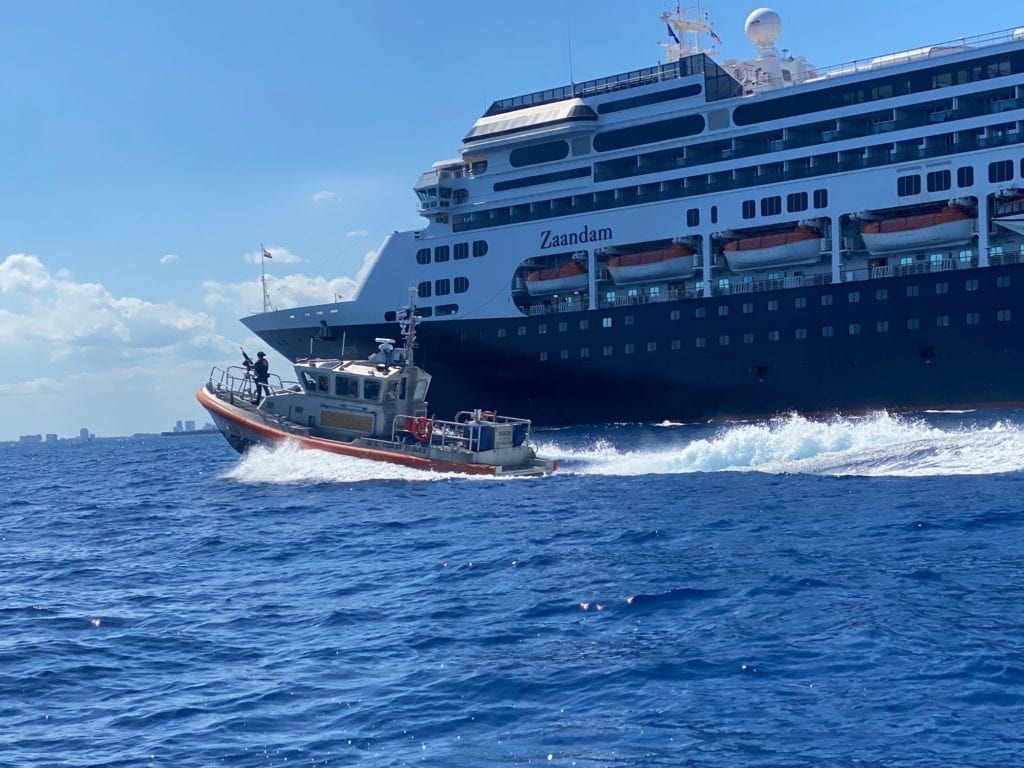
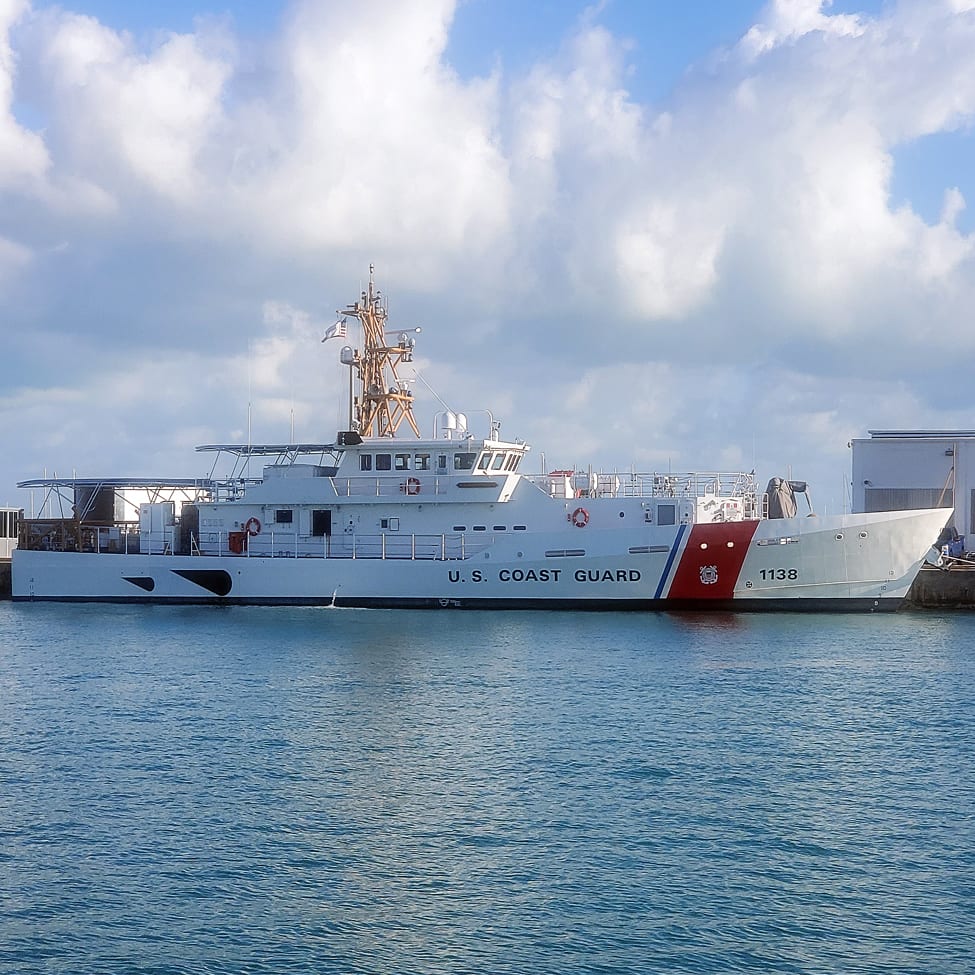
The Vigilant crew prepares to moor in Golfito, Costa Rica, while on their 55-day counter-drug patrol in January. U.S. Coast Guard

CAPE CANAVERAL, Fla. — The crew of the Coast Guard Cutter Vigilant returned home here on Feb. 16 after a 55-day counter-drug patrol in the eastern Pacific Ocean, the Coast Guard 7th District said in a release. 

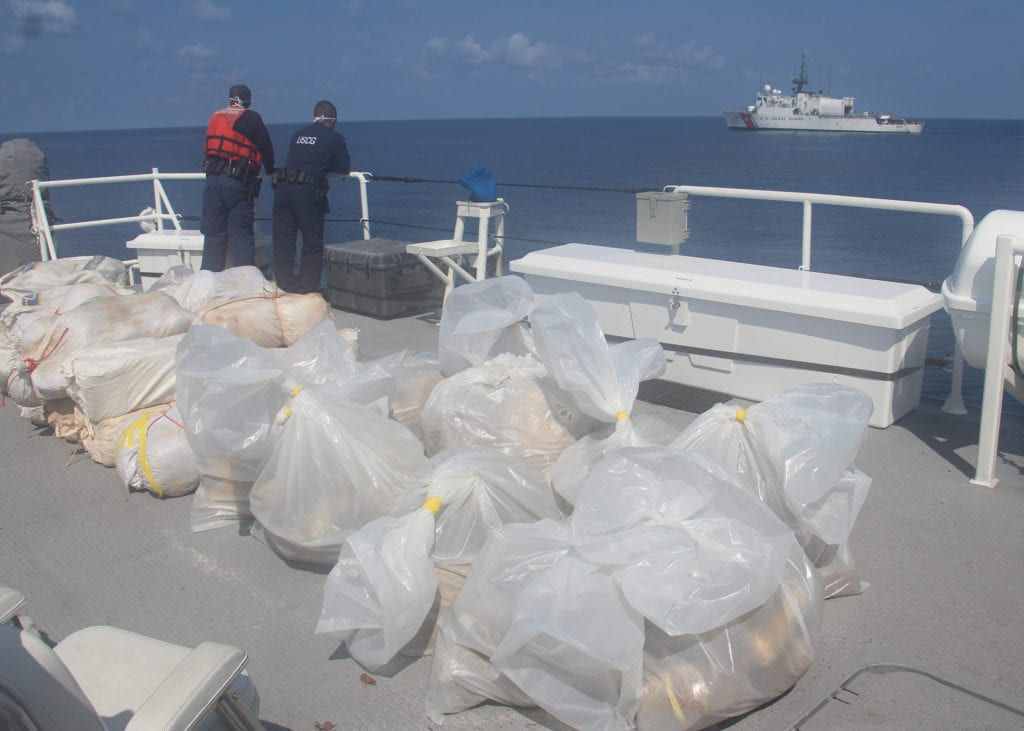
The Vigilant crew’s efforts during their patrol led to the seizure of 2,155 kilograms of cocaine, 30 pounds of marijuana and one pound of amphetamine, together valued at $81.7 million, and the detention of 11 suspected traffickers. 

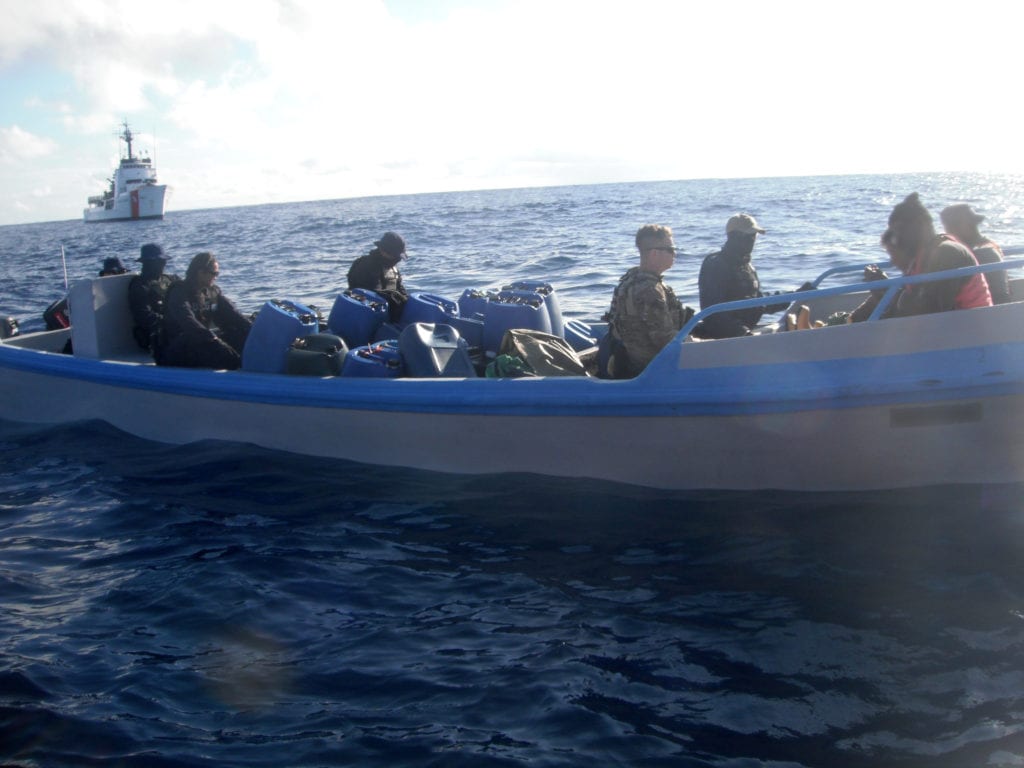
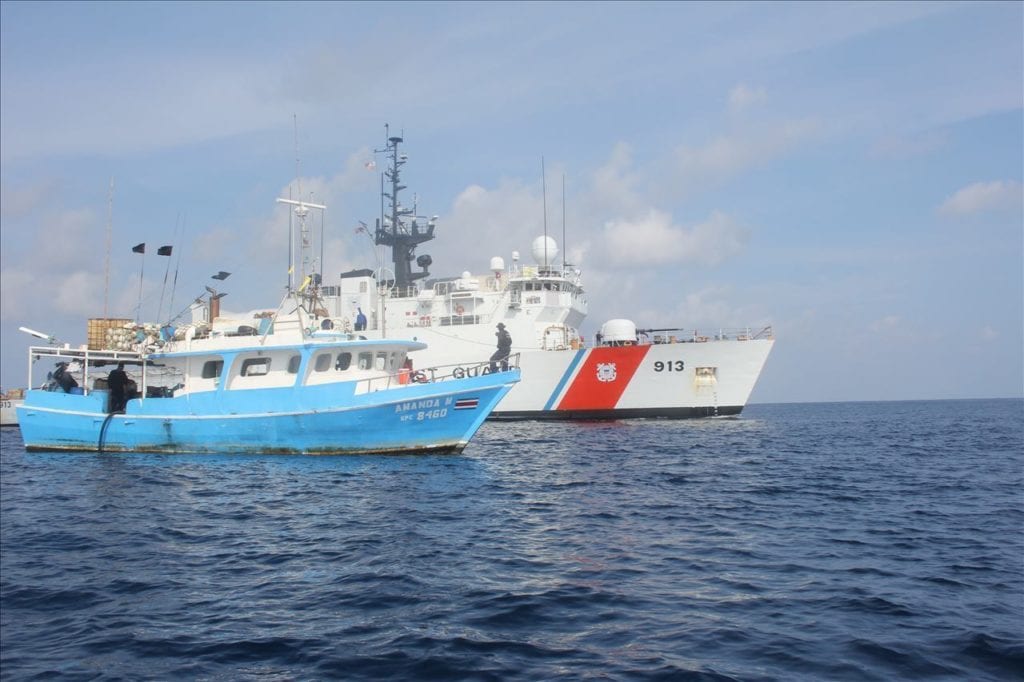
While on patrol, the Vigilant crew interdicted three suspected drug smuggling vessels with two of the interdictions both occurring within a 24-hour span. The first interdiction occurred when the crew intercepted a 45-foot low profile vessel smuggling 810 kilograms of cocaine. The Vigilant crew resumed their patrol after the four suspected smugglers aboard were detained and evidence to facilitate prosecution was collected. 

Eight hours later, the crew interdicted a second vessel, a 35-foot panga, on which Vigilant’s boarding team seized 355 kilograms of cocaine, 30 pounds of marijuana, and one pound of amphetamine, and detained four suspected smugglers. 

While in the Pacific, the Vigilant crew worked with several U.S. and partner nation assets, including a Military Sealift Command ship and three Coast Guard cutters. In Panama, the crew conducted a professional exchange and training with officials from Panamanian law enforcement and military agencies to promote regional stability and security, economic prosperity and resiliency through collaboration. 

The Vigilant also hosted Panama’s Tactical Unit of Drug Operations and the National Aeronaval Service to share the Coast Guard’s process for collecting and preserving evidence to support the prosecution of smuggling cases. During a brief stop in Ecuador, the crew liaised with the Ecuadorian navy and local government officials to coordinate a short-fused custodial transfer of an Ecuadorian national suspected of drug smuggling. 

The Vigilant is a multimission 210-foot medium-endurance cutter whose missions include illegal drug and migrant interdiction and search and rescue. The cutter patrols throughout the Caribbean basin, Atlantic seaboard and periodically the eastern Pacific Ocean.


Cutter Tampa Returns Home After Interdicting $154 Million in Drugs

The Coast Guard Cutter Tampa on patrol in the eastern Pacific Ocean last August. The Tampa’s crew interdicted four vessels with more than 9,200 pounds of cocaine, worth an estimated $154 million. U.S. Coast Guard/Petty Officer 2nd Class Lisa Ferdinando

PORTSMOUTH, Va. — The crew of the U.S. Coast Guard cutter Tampa returned Feb. 16 to their homeport in Portsmouth, Virginia, after an 80-day counter-drug patrol in the eastern Pacific Ocean, the Coast Guard’s 5th District said in a release.  

The Tampa’s crew interdicted four vessels with more than 9,200 pounds of cocaine, worth an estimated $154 million. The crew also detained 12 suspected drug smugglers, boarded three additional vessels and responded to one search-and-rescue case. 

The cutter began the patrol by embarking an armed helicopter crew from the Coast Guard’s Helicopter Interdiction Tactical Squadron (HITRON) in Mayport, Florida. Working together they were able to increase the Coast Guard’s ability to detect and stop vessels suspected of drug smuggling. 

Prior to entering the primary patrol area, the crew of the Tampa conducted a training engagement with the Guatemalan navy in Puerto Santo Tomás de Castilla as part of Operation Crested Eagle. The Tampa’s crew provided law-enforcement training, tours of the ship, and engineering technical support for Guatemalan vessels. 

The crew is looking forward to spending time with friends and family during a well-deserved stand-down period. They will then prepare for the biennial Tailored Ship’s Training Availability, a several-week program designed to train the crew and assess the readiness of the cutter through a variety of drills. 

“I am humbled and very proud of what our crew has accomplished during this patrol,” said Cmdr. Michael Cilenti, commanding officer of the Tampa. 

“Just keeping our 36-year-old ship operating is a full-time job, and our crew not only did that, but safely and professionally executed our counter-drug mission. Saving lives by keeping drugs off our streets and helping eliminate drug cartels’ destabilizing influence of our Central and South American neighbors is something we all care very deeply about.”


2021 Coast Guard Budget Seeks Second Polar Security Cutter

U.S. Coast Guard heavy icebreaker Polar Star sits on blocks in a Vallejo, California, dry dock undergoing maintenance. The sea service’s proposed 2021 budget seeks $15 million for a multiyear service-life extension for the Polar Star while it awaits new polar security cutters. The budget also seeks to fully fund the second PSC. U.S. Coast Guard/Petty Officer 1st Class Matthew S. Masaschi

ARLINGTON, Va. — The U.S. Coast Guard plans to fully fund the second polar security cutter (PSC) and the third offshore patrol cutter (OPC), according to the proposed fiscal year 2021 U.S. Department of Homeland Security budget. 

The Coast Guard overall is seeking $12.3 billion for fiscal 2021, $77 million more than the $12.2 billion in the enacted 2020 budget. 

The 2021 budget requests $555 million to fully fund the second PSC. The Coast Guard plans to procure a total of six polar security cutters to support growing national security interests and to replace the service’s only operating heavy icebreaker, the Polar Star. The first PSC is being built by VT Halter Marine in Pascagoula, Mississippi. The budget also requests $15 million for a multiyear service-life extension for the Polar Star.  

A U.S. Coast Guard HH-60 Jayhawk helicopter lands on board HMS Queen Elizabeth off the East Coast of the United States. The 2021 budget also provides $65 million to modernize the HH-65D helicopter fleet to HH-65Es. U.K. Royal Navy

The $546 million to construct the third OPC also provides for long-lead materials for a fourth. The 25 OPPCs planned will replace the service’s medium-endurance cutters. Eastern Shipbuilding Group in Panama City, Florida, is building the first OPC with options for three more, down from eight more because of the damage to the company’s yard from a hurricane. A competition will be opened for construction of more OPCs. 

The Coast Guard plans a gap in procurement of the Sentinel-class fast-response cutters (FRCs), with 37 delivered so far of a planned purchase of 58 FRCs. However, the service is proposing $15 million in 2021 for program support and sustainment of the Sentinel class. The FRCs are replacing Island-class patrol boats. 

The sea service is planning no purchases of new aircraft in 2021 but wants to allocate $78 million to missionize the C-27J aircraft fleet into HC-27Js and continue retrofit of the HC-144A aircraft fleet with the Minotaur mission system into HC-144B versions.  

The budget also provides $65 million to modernize the HH-65D helicopter fleet to HH-65Es and to extend the service life of MH-60T helicopters so that they can serve into the mid-2030s, enabling the Coast Guard to align its helicopter requirements with the Defense Department’s Future Vertical Lift program. 

The 2021 budget also proposes $35.5 million to manage retirements of old assets, including the decommissioning of two Secretary-class high-endurance cutters, two Island-class patrol boats and eight Marine Protector-class patrol boats. 


Coast Guard Offloads $338 Million of Cocaine in San Diego

Coast Guardsmen gather together before preparing bails of cocaine to be offloaded from the Coast Guard Cutter Munro in San Diego on Feb. 10. U.S. Coast Guard/Petty Officer 3rd Class Alex Gray\

SAN DIEGO — The crew of the U.S. Coast Guard Cutter Munro offloaded nearly 20,000 pounds of cocaine Feb. 10 seized from known drug-transit zones of the eastern Pacific Ocean worth about $338 million, according to the Coast Guard’s 11th District. 

Eight interdictions were made between mid-November and mid-January by the joint efforts of the following four separate Coast Guard cutter crews: 

  • Thetis was responsible for two cases, seizing 6,830 pounds. 
  • Resolute was responsible for one case, seizing 1,951 pounds. 
  • Tampa was responsible for two cases, seizing 4,270 pounds. 
  • Munro was responsible for three cases, seizing 6,680 pounds. 

Numerous U.S. agencies from the Departments of Defense, Justice and Homeland Security cooperated in the effort to combat transnational organized crime. The Coast Guard, U.S. Navy, U.S. Customs and Border Protection, FBI, Drug Enforcement Administration, Immigration and Customs Enforcement and the Panama Express Strike Force, along with allied and international partner agencies, play a role in counter-drug operations. 


The fight against drug cartels in the eastern Pacific requires unity of effort in all phases from detection, monitoring and interdictions, to criminal prosecutions of these cases by U.S. Attorneys in districts within Florida and Texas. 

“By disrupting the profits of these cartels, we are reducing their effectiveness and helping our partner nations maintain their stability,” said Rear Adm. Peter Gautier, the 11th District’s commander. “These efforts also provide invaluable information to us that we can then use to stop these drugs further up the supply chain before they begin these dangerous routes at sea.” 

These interdictions were in support of Campaign Martillo, a regional initiative targeting illicit trafficking that threatens security and prosperity at the national, regional, and international levels. The law enforcement phase of counter-smuggling operations in the eastern Pacific is conducted under the authority of the 11th Coast Guard District, headquartered in Alameda. The interdictions, including the actual boardings, are led and conducted by members of the Coast Guard.


Lockheed Delivers First Block 8.1 Upgrade HC-130J to Coast Guard

A Coast Guard Hercules takes off from Air Station Barbers Point, Hawaii. U.S. Coast Guard/Petty Officer 3rd Class Matthew West

ELIZABETH CITY, N.C. — Lockheed Martin representatives joined U.S. Coast Guard leaders and crew members for a ceremony on Jan. 31 at the Coast Guard Aviation Logistics Center in Elizabeth City, North Carolina, to mark the completion of operational testing of the first Coast Guard HC-130J extended-range transport outfitted with the Block 8.1 upgrade, the company said. 

This upgrade was installed on a previously delivered HC-130J at Lockheed’s facility in Greenville, South Carolina. The aircraft recently completed initial operational testing and will be placed into service. Lockheed is contracted to deliver a minimum of six Block 8.1 upgrade kits to the Coast Guard. 

The upgrade adds new and advanced capabilities: 

  • A new flight-management system that complies with CNS/ATM mandates and includes vertical navigation with coupled auto throttle 
  • Civil GPS 
  • Ground power modes 
  • Updated Identification Friend or Foe 
  • CNS/ATM Data Link 
  • Enhanced intercommunication system 
  • Enhanced approach and landing systems 
  • Expanded diagnostics 
  • Improved PA system 
  • Additional covert lighting 
  • IAMSAR compliant search pattern programming 

“The U.S. Coast Guard has relied on its Hercules fleet for more than 60 years to support complicated missions that ensure our nation’s safety and security,” said Peter London, director of tactical airlift programs for Lockheed’s air mobility and maritime missions business line. 

“The advanced features and purpose-built design enhancements found in the Block 8.1 upgrade ensure that Coast Guard crews will rely on the HC-130J for mission support for many more decades to come.” 

In addition to the Block 8.1 upgrade, the Coast Guard is also integrating Minotaur mission system architecture into its fixed-wing aircraft. Missionization includes post-production modification of new C-130J aircraft to incorporate the specialized equipment necessary to carry out Coast Guard missions. 

The Coast Guard’s HC-130J Super Hercules long-range surveillance aircraft provides heavy air transport and long-range maritime patrol capability. Each aircraft can serve as an on-scene command-and-control platform or as a surveillance platform with the means to detect, classify and identify objects and share that information with operational forces. 

The Coast Guard is acquiring a fleet of 22 new, fully missionized HC-130J aircraft to replace its older HC-130Hs.


Coast Guard, U.K. Royal Navy Ships Seize $46.2 Million in Cocaine in the Caribbean

Crew members of the Coast Guard Cutter Bear offload 3,086 pounds of cocaine on Feb. 4 in San Juan, Puerto Rico. The drugs were seized following two separate interdictions in the Caribbean by the Coast Guard and the U.K. Royal Navy on Jan. 24 and Jan. 30, which resulted in the detention of nine smugglers.

SAN JUAN, Puerto Rico — The U.S. Coast Guard, U.K. Royal Navy and U.S. law enforcement partners seized 3,086 pounds of cocaine and detained nine suspected drug smugglers following two separate interdictions in the Caribbean on Jan. 24 and Jan. 30, according to the Coast Guard 7th District. 

The seized drug shipments are estimated to have a wholesale value of more than $46.2 million. 

The interdiction was a result of an international, multiagency law-enforcement effort in support of Operation Unified Resolve, Operation Caribbean Guard, Campaign Martillo (a joint, interagency, 20-nation collaborative counter narcotic effort) and the Caribbean Corridor Strike Force (CCSF) and will be prosecuted by the U.S. Federal District Court for the District of Puerto Rico. 

“These efforts, underpinned by our unwavering resolve to stop drug smuggling vessels at sea, greatly contribute to safeguarding our citizens in Puerto Rico and the U.S. Virgin Islands and protecting our shared interests of a safer and more secure Caribbean,” said Rear Adm. Eric C. Jones, commander of the 7th District. 

“These interdictions highlight the importance of working with our international partners as we combat drug trafficking,” said W. Stephen Muldrow, U.S. attorney for the District of Puerto Rico. “These large drug seizures make our community safer by keeping the narcotics out of our neighborhoods. We commend all of our partner agencies for their steadfast efforts.” 

“These operations reiterate the significance of intelligence and resource sharing among agencies,” said A.J. Collazo, the U.S. Drug Enforcement Administration Caribbean Division special agent in charge. “We will continue to aggressively target and disrupt drug-trafficking organizations operating in the Caribbean.” 

In the first interdiction, the Royal Navy’s RFA Mounts Bay, while on patrol with a U.S. Coast Guard law enforcement detachment (LEDET) and a Coast Guard helicopter interdiction tactical squadron (HITRON) armed helicopter onboard, detected two suspicious go-fast vessels, about 74 nautical miles south of St. Croix, U.S. Virgin Islands. 

The RFA Mounts Bay launched the Coast Guard MH-65 helicopter and the ship’s pursuit vessel with the Coast Guard LEDET to interdict both suspect vessels.  

The Coast Guard LEDET boarding team, with the assistance of RFA Mounts Bay crew members, boarded both suspect vessels, apprehending the seven men and seizing 42 bales of suspected contraband. 

In the second interdiction, a maritime patrol aircraft detected a northbound target of interest, southeast of Isla Beata, Dominican Republic. The Coast Guard Cutter Bear along with a helicopter responded to interdict the go-fast vessel. The Bear’s over-the-horizon cutter boat and embarked helicopter arrived on scene and stopped the go-fast. The Bear’s boarding team detained the two men aboard the go-fast after discovering 13 bales of suspected contraband. 

The Bear delivered the seized contraband and detainees from both cases to U.S. Customs and Border Protection (CBP) officers, Immigrations and Customs Enforcement (ICE)-HSI, and DEA special agents in San Juan, Puerto Rico, on Feb. 4. 

Between October 2019 and December 2019, the Coast Guard and Caribbean Border Interagency Group authorities have seized 12,060 kilograms of cocaine and 407 pounds of marijuana during law-enforcement operations surrounding Puerto Rico and the U.S. Virgin Islands. The wholesale value for these seizures is more than $314 million. 

Cutter Bear is a 270-foot medium-endurance cutter homeported in Portsmouth, Virginia. The RFA Mounts Bay is a Bay-class auxiliary landing ship dock belonging to the Royal Fleet Auxiliary, which provides logistical support to the Royal Navy.


Coast Guard Interdicts 69 Illegal Migrants

The Cutter Richard Dixon interdicted 37 illegal migrants near Desecheo Island, Puerto Rico, on Jan. 29. The interdiction was one of three during the week. U.S. Coast Guard

SAN JUAN, Puerto Rico — The U.S. Coast Guard Cutter Valiant repatriated 44 of 69 Dominican migrants to a Dominican navy vessel on Feb. 3, following the interdiction of three separate illegal migrant voyages near Puerto Rico and the Dominican Republic, the Coast Guard 7th District said in a release. 

Five of the interdicted migrants will remain in Puerto Rico to face possible federal prosecution on charges of attempting to illegally re-enter the United States. 

The interdictions were a result of ongoing efforts in support of Operation Unified Resolve, Operation Caribbean Guard and the Caribbean Border Interagency Group (CBIG).  

“These makeshift vessels were extremely overloaded and had been at sea for several days,” said Lt. Matthew Monahan, the Coast Guard Cutter Richard Dixon’s commanding officer. 

“Those aboard had no food or water left and were likely abandoned by the individual promising them passage to Puerto Rico once the vessel ran out of fuel. These survivors were lucky to be located in time to receive aid from Coast Guard personnel, but this is frequently not the case. This is just another example of why this type of journey is exceptionally hazardous and should not be attempted under any circumstances.”   

The first interdiction took place Jan. 28 after a U.S. Customs and Border Protection (CBP) Air and Marine Operations marine patrol aircraft crew sighted a 22-foot migrant boat disabled and adrift, about 45 nautical miles northwest of Aguadilla, Puerto Rico. The Richard Dixon interdicted the illegal voyage and embarked all 13 migrants, 11 men and two women.  

The second interdiction took place Jan. 29, after a CBP DHC-8 marine patrol aircraft crew sighted a 30-foot migrant boat disabled and adrift, about 12 nautical miles southwest of Desecheo Island, Puerto Rico. The Richard Dixon interdicted the illegal voyage and embarked all 37 migrants, 32 adult males and five females, including a 17-year-old minor.  

The third interdiction took place Jan. 30, after the crew of a Coast Guard HC-144 Ocean Sentry marine patrol aircraft sighted a 30-foot migrant boat disabled and adrift, about 37 nautical miles south of Isla Saona, Dominican Republic. The Valiant interdicted the illegal voyage as a Dominican navy vessel also responded to the scene. Once on scene, the crew of the Dominican vessel embarked the migrants for their return to the Dominican Republic. 

Once aboard a Coast Guard cutter, all migrants receive food, water, shelter and basic medical attention. 

The crew of the cutter Valiant transferred the five migrants awaiting federal prosecution to Ramey Sector Border Patrol agents in Mayaguez, Puerto Rico. 

The Richard Dixon is a 154-foot fast-response cutter homeported in San Juan, Puerto Rico, while the Valiant is a 210-foot medium-endurance cutter homeported in Mayport, Florida.


Cutter Seneca returns from Migrant Interdiction, Counter-Narcotics Patrol

U.S. Coast Guard Cutter Seneca returns to homeport in Boston. U.S Coast Guard

BOSTON — U.S. Coast Guard Cutter Seneca returned home to Boston on Jan. 28 after a 57-day deployment to the Caribbean Sea, the Coast Guard 1st District said. 

During the patrol, Seneca rescued 187 Haitian Migrants, conducted countless hours of training exercises with Coast Guard Air Stations Jacksonville and Clearwater and spent several weeks as a law enforcement presence in the southern Caribbean aided by Helicopter Interdiction Tactical Squadron Jacksonville. 

In late December, the Seneca crew intercepted an overloaded Haitian sail freighter. Coordinating a joint response with the Turks and Cacaos Royal Police, the two agencies rescued all 187 Haitian nationals from the vessel. 

“I am exceptionally proud of this crew and their success and achievements,” said Cmdr. John Christensen, commanding officer of the Seneca. 

“Over the course of the last two months, they persevered through the challenges of conducting operations at sea, put aside their personal sacrifices, particularly throughout the holiday season, and displayed an unwavering commitment to serving the United States and our partner nations throughout the Caribbean Sea.” 

Coast Guard Cutter Seneca is a 270-foot medium-endurance cutter with a crew of 100. Seneca missions include counter-narcotics, migrant interdiction, search and rescue and living marine resource operations from the Gulf of Maine to the Pacific Ocean. The cutter was commissioned in 1987.


Coast Guard, Scripps Institution of Oceanography Open Technology Center

Port of San Diego Commissioner Marshall Merrifield (from left), Rep. Mike Levin (D-Calif.), Coast Guard Deputy Commandant for Mission Support Vice Adm. Michael F. McAllister, Rep. John Garamendi (D-Calif.), University of California San Diego Chancellor Pradeep Khosla and Rep. Scott Peters (D-Calif.) take part in a ceremony at Scripps Institution of Oceanography on Jan. 24. U.S. Coast Guard/Petty Officer 1st Class Patrick Kelley

SAN DIEGO — The U.S. Coast Guard and Scripps Institution of Oceanography at the University of California San Diego launched the Blue Technology Center of Expertise on the Scripps Oceanography campus with a ribbon-cutting ceremony and expo on Jan. 24, the Coast Guard 11th District said in a release. 

Rep. John Garamendi (D-Calif.); Rep. Scott Peters (D-Calif.); Rep. Mike Levin (D-Calif.); UCSD Chancellor Pradeep Khosla; Port of San Diego Commissioner Marshall Merrifield; and Coast Guard Deputy Commandant for Mission Support Vice Adm. Michael F. McAllister spoke at the event to celebrate the partnership between Scripps Institution of Oceanography and the Coast Guard.  

A Coast Guard Sector San Diego color guard presents the colors durning a ribbon-cutting ceremony at Scripps Institution of Oceanography at the University of California San Diego on Jan. 24. U.S. Coast Guard/Petty Officer 1st Class Patrick Kelley

“The Blue Technology Center of Expertise will better connect the Coast Guard with the tremendous government, academic and industry innovation ecosystem in the San Diego area,” McAllister said. “It will create a unique pipeline for the rapid identification and implementation of new maritime technologies into critical Coast Guard operations around the globe.” 

Blue technology is any technology, system or platform designed for use above, on or below the surface of the ocean that can support or facilitate Coast Guard maritime domain awareness, search and rescue, emergency response, maritime law enforcement, marine inspections and investigations. The Coast Guard was authorized to establish the Blue Technology COE by the 2018 Save Our Seas Act. 


A COE is a group of people from different disciplines who work together to increase performance and efficiency in certain areas. The Blue Technology COE will enable sharing of information between the Coast Guard and the private sector, other federal agencies, academia and nonprofit organizations. 

Scripps Institution of Oceanography is a leading center for marine research and education, with an emphasis on innovation dating back to World War II. The institution is home to significant programs such as the Coastal Data Information Program, an extensive network for monitoring waves and beaches along the U.S. coastlines, and HF-Radar Network, a near real-time ocean surface current measurement network of shore-based radar systems.


Coast Guard’s Only Heavy Icebreaker Arrives in Antarctica

The crew of the U.S. Coast Guard Cutter Polar Star (WAGB-10) poses for a group photo Jan. 2, 2020, about 10 miles north of McMurdo Station, Antarctica. U.S. Coast Guard / Senior Chief Petty Officer NyxoLyno Cangemi
The crew of the U.S. Coast Guard Cutter Polar Star (WAGB-10) poses for a group photo Jan. 2, 2020, about 10 miles north of McMurdo Station, Antarctica. U.S. Coast Guard photograph by Senior Chief Petty Officer NyxoLyno Cangemi

MCMURDO STATION, Antarctica — The 159
crewmembers of the U.S. Coast Guard Cutter Polar Star (WAGB 10) arrived Jan. 22
at McMurdo Station, following a 58-day transit from the United States, the Coast
Guard Pacific Area said in a Jan. 22 release. The cutter departed its homeport
of Seattle on Nov. 26.

This year marks the Polar Star’s 23rd
journey to Antarctica in support of Operation Deep Freeze, an annual joint
military service mission to resupply the United States Antarctic stations, in
support of the National Science Foundation, the lead agency for the United
States Antarctic Program.

The 399-foot, 13,000-ton Polar Star
arrived after creating a 23-mile channel through the ice to McMurdo Sound, which
will enable the offload of over 19.5 million pounds of dry cargo and 7.6
million gallons of fuel from three logistic vessels. Together these three ships
carry enough fuel and critical supplies to sustain NSF operations throughout
the year until Polar Star returns in 2021.

Each year, the Polar Star crew creates a
navigable channel through seasonal and multi-year ice, sometimes as much as 21 feet
thick, to allow refuel and resupply ships to reach McMurdo Station.

“I am immensely proud of all the hard work
and dedication the men and women of the Polar Star demonstrate each and every
day,” said Greg Stanclik, commanding officer of the Polar Star. “Maintaining
and operating a 44-year-old ship in the harshest of environments takes months
of planning and preparation; long workdays; and missed holidays, birthdays and
anniversaries with loved ones. The Polar Star crew truly embodies the ethos of
the Antarctic explorers who came before us — courage, sacrifice and devotion.”

Commissioned in 1976, the Polar Star is the
United States’ only operational heavy icebreaker. Reserved for Operation Deep
Freeze each year, the ship spends the winter breaking ice near Antarctica, and
when the mission is complete, returns to dry dock in order to conduct critical
maintenance and repairs in preparation for the next Operation Deep Freeze
mission.

If a catastrophic event, such as getting
stuck in the ice, were to happen to the Coast Guard Cutter Healy (WAGB 20) in
the Arctic or to the Polar Star near Antarctica, the U.S. Coast Guard is left
without a self-rescue capability.

By contrast, Russia currently operates
more than 50 icebreakers several of which are nuclear powered.

The Coast Guard has been the sole
provider of the nation’s polar icebreaking capability since 1965 and is seeking
to increase its icebreaking fleet with six new polar security cutters to ensure
continued national presence and access to the Polar Regions.

In April, the Coast Guard awarded VT
Halter Marine Inc. of Pascagoula, Mississippi, a contract for the design and
construction of the Coast Guard’s lead polar security cutter, which will be
homeported in Seattle. The contract also includes options for the construction
of two additional PSCs.

“Replacing the Coast Guard’s
icebreaker fleet is paramount,” said Vice Adm. Linda Fagan, commander of
the Coast Guard’s Pacific Area. “Our ability to clear a channel and allow
for the resupply of the United States’ Antarctic stations is essential for
continued national presence and influence on the continent.”