Coast Guard Offloads Nearly $65M in Illicit Narcotics Interdicted in Western Caribbean Sea 
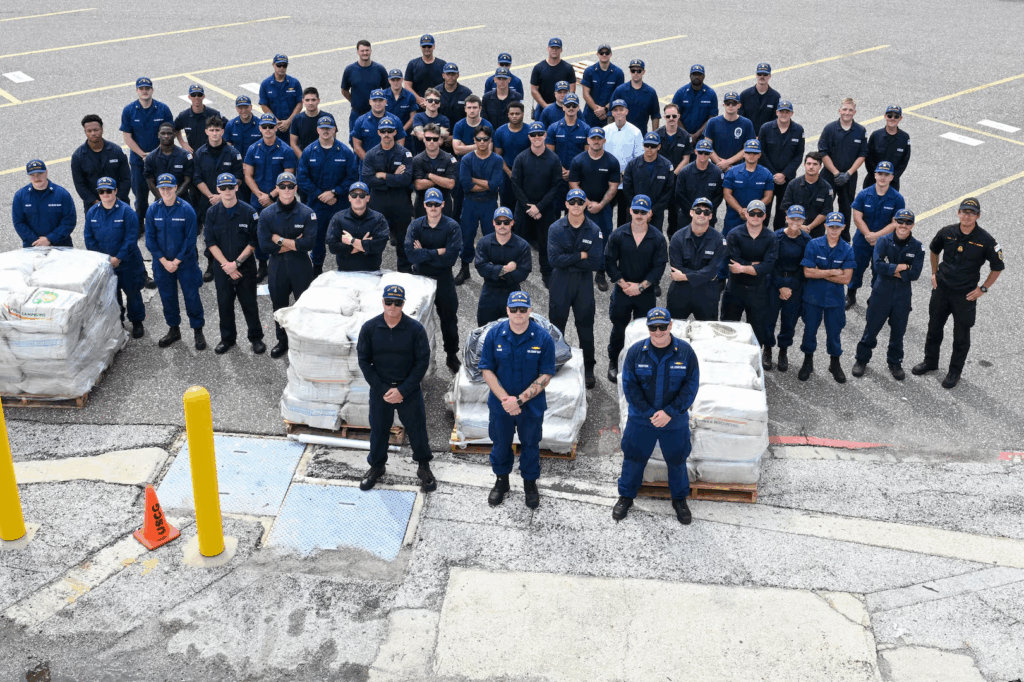
The crew of Coast Guard Cutter Diligence (WMEC 616) poses for a group photo during a drug offload at Coast Guard Sector St. Petersburg, Florida, Sept. 22, 2025. Diligence’s crew offloaded nearly $65 million in illicit narcotics interdicted in the Western Caribbean Sea. (U.S. Coast Guard photo by Petty Officer 1st Class Riley Perkofski)

From U.S. Coast Guard Southeast District, Sept. 24, 2025 

ST. PETERSBURG, Fla.  —  The crew of Coast Guard Cutter Diligence (WMEC 616) offloaded approximately 8,700 pounds of cocaine worth an estimated $64.5 million, Monday, at Coast Guard Sector St. Petersburg.  

Diligence deployed in support of Joint Interagency Task Force – South to the Coast Guard District Southeast area of responsibility, where crew members interdicted more than 10,000 pounds of illicit narcotics. 

“I am remarkably proud of the crew and appreciative of the efforts of JIATF-S and Coast Guard District Southeast,” said Cmdr. Colin McKee, commanding officer Diligence. “This joint effort helped us prevent more than four tons of illegal drugs from entering the United States. While this offload marks another milestone in our efforts to counter narco-terrorism, the Coast Guard remains relentless in our operations to control, secure, and defend U.S. borders and maritime approaches.”   

The seized contraband was a result of two interdictions in international waters of the Caribbean Sea.    

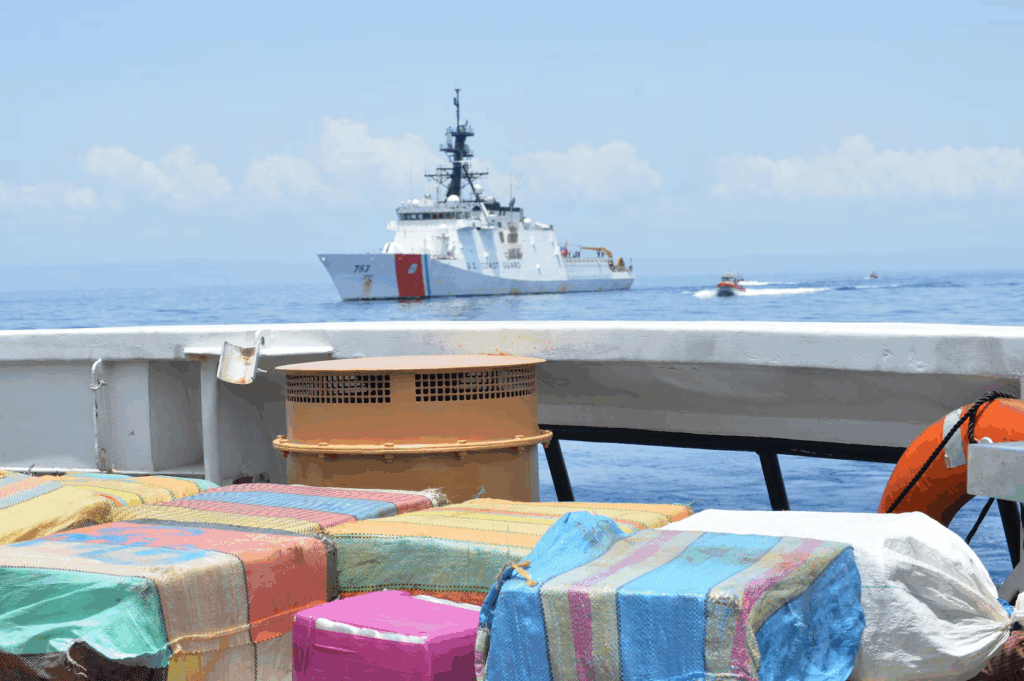
On Aug. 7, Diligence’s crew detected and boarded a suspicious go-fast vessel approximately 136 miles southwest of Negril, Jamaica. Diligence’s boarding team interdicted the vessel, seizing 1,500 pounds of marijuana. The contraband was transferred to and offloaded by Coast Guard Cutter Hamilton (WMSL 753), as part of the largest quantity of drugs offloaded in Coast Guard history, in Port Everglades, on Aug. 25.       

On Sep. 6, a maritime patrol craft spotted a suspicious go-fast vessel approximately 240 miles north of Panama. Diligence’s boarding team interdicted the vessel, seizing more than 8,700 pounds of cocaine. The cocaine was offloaded by Diligence’s crew and transferred to case agents in St. Petersburg, Monday.  

The following assets and crews were involved with the interdiction operations:   

Detecting and interdicting narco-terrorism on the high seas involves significant interagency and international coordination because 80% of U.S.-bound drugs are interdicted on the high seas. U.S. Southern Command’s JIATF-S, based in Key West, conducts the detection and monitoring of aerial and maritime transit of illegal drugs. Once interdiction becomes imminent, the law enforcement phase of the operation begins, and control of the operation shifts to the U.S. Coast Guard throughout the interdiction and apprehension. Interdictions in the Caribbean Sea are performed by members of the U.S. Coast Guard under the authority and control of Coast Guard District Southeast, headquartered in Miami.    

The Coast Guard continues increased operations to interdict, seize and disrupt transshipments of cocaine and other bulk illicit drugs by sea. These drugs fuel and enable foreign terrorist organizations and transnational criminal organizations to produce and traffic illegal fentanyl, threatening the United States.     

Diligence is a 210-foot, Reliance-class medium-endurance cutter. The cutter’s primary missions are counter-drug and alien interdiction operations, enforcement of federal fishery laws, and search and rescue in support of U.S. Coast Guard operations throughout the Western Hemisphere. The cutter falls under the command of U.S. Coast Guard Atlantic Area, based in Portsmouth, Virginia.      


Coast Guard to Invest $350M in Robotics, Autonomous Systems 

From Headquarters, U.S. Coast Guard, Sept. 24, 2025 

WASHINGTON— The Coast Guard announced Wednesday it will invest nearly $350 million to expand robotics and autonomous systems, strengthening mission execution and operational capabilities. 

The funding, provided under the One Big Beautiful Bill Act (OBBBA), includes $11 million in fiscal year 2025 for immediate upgrades to critical autonomous systems. 

Initial investments include: 

  • $4.8 million to procure 16 VideoRay Defender remotely operated vehicles (ROVs) to replace Deployable Specialized Forces’ aging fleet. 

  • $2 million to procure six Qinetiq Squad Packable Utility Robot (SPUR) and 12 mini-SPUR robots to replace outdated unmanned ground vehicles (UGVs) at Strike Teams. 

  • $4.3 million to purchase 125 SkyDio X10D short-range unmanned aircraft systems (SR-UAS). 

These investments are the first in a series of robotics and autonomous systems projects the Coast Guard will pursue using OBBBA funding. The technologies will meet immediate mission needs, improve personnel safety and strengthen the Coast Guard’s capabilities to control, secure, and defend U.S. borders and maritime approaches. 

“These unmanned systems provide increased domain awareness, mitigating risk and enhancing mission success as the Coast Guard continues to operate in hazardous environments,” said Anthony Antognoli, the Coast Guard’s first RAS program executive officer. “The Coast Guard’s mission demands agility, awareness and adaptability. Robotics and autonomous systems deliver all three, enabling us to respond faster, operate smarter and extend our reach where it matters most. We are not waiting for the future to arrive. We are delivering it to the fleet today.” 

The Coast Guard’s Deployable Specialized Forces will use the new ROVs for waterfront and pier inspections, hull assessments, subsurface infrastructure surveys, disaster response and search and rescue missions. Their use will reduce reliance on Coast Guard divers, improving efficiency and safety. 

Coast Guard Strike Teams, which respond to hazardous materials spills, major marine casualties, groundings, natural disasters, chemical, biological, radiological or nuclear (CBRN) incidents and national special security events, will use the new UGVs to access and sample air in confined spaces aboard commercial vessels. 

The SR-UAS will support operations including infrastructure inspections, environmental observation, pollution response, post-storm surveys, ice surveys and communications. 

The Program Executive Office for Robotics and Autonomous Systems is part of the Coast Guard’s Force Design 2028 plan, which aims to fully integrate capabilities across the service. Focused on four campaigns – people, organization, contracting and acquisition and technology – Force Design 2028 is an accelerated effort to establish a blueprint for change and transform the Coast Guard into a more agile, capable, and responsive force. 


Coast Guard Prepares for Aircraft Fleet Expansions with Awards for Engines, Radar 

A rescue swimmer from U.S. Coast Guard Air Station Astoria dangles below an MH-60 Jayhawk helicopter as it hovers above Elliott Bay near Seattle, Washington, Aug. 1, 2023. The demonstration was part of the Parade of Ships for the annual Seafair festival. (U.S. Coast Guard photo by Petty Officer 2nd Class Steve Strohmaier) 

Release From Headquarters, U.S. Coast Guard

WASHINGTON — The Coast Guard recently completed contract actions aimed at accelerating delivery of new MH-60 medium-range recovery helicopters and HC-130J long-range surveillance aircraft and expanding mission capabilities of the expanded aviation fleet. 

On Sept. 8, the Coast Guard placed a $14.3 million order for delivery of 13 General Electric T700 engines for its MH-60 helicopter fleet. On Sept. 18, the Service contracted with L3 Harris Technologies Inc. for delivery of three AN/APY-11 multi-mode radar systems, valued at $13.9 million, to be installed on future HC-130Js during the Minotaur missionization process. 

Both orders were made possible due to investments in the Coast Guard fleet made by the One Big Beautiful Bill Act (OBBBA). 

The T700 engines are among the long lead-time components needed to grow the Coast Guard’s MH-60 fleet and expedite transition of several air stations from the MH-65E to the MH-60. The MH-60’s range, speed, payload and avionics and sensors suite make it a capable platform for all 11 Coast Guard missions. The aircraft’s ability to locate, identify and track surface targets day or night makes it a valuable search and rescue and law enforcement asset. Transition of air stations is necessary to sustain rotary wing capability as the MH-65E continues to face supportability issues driven by a diminishing supply base for an out-of-production aircraft. 

The AN/APY-11 radar system was chosen as the optimal multi-mode radar to enhance operational effectiveness as part of the Minotaur Mission System Suite. The Minotaur Mission System enables the collection and correlation of sensor and track data, which is used to conduct drug and alien interdictions, search and rescue, and other statutory missions. 

The Coast Guard’s long-range surveillance fleet is a proven asset vital to control, secure and defend the U.S. border and maritime approaches, facilitate commerce vital to economic prosperity, and respond to crises and contingencies. The Coast Guard HC-130J fleet is the Department of Homeland Security’s airlift asset and can provide critical support to DHS partners in response to national events as well as logistical support during routine operations. 

The OBBBA includes more than $3.3 billion to expand the Coast Guard’s HC-130J and MH-60 fleets. Nearly $2.3 billion is for the production and fielding of new MH-60 aircraft and delivery of multiple simulators. Approximately $1.1 billion is for production and missionization of six additional HC-130J aircraft, along with associated spare parts and the service’s first HC-130J simulator 


Coast Guard Awards Contract to support Mariner Credentialing Program Modernization 

WASHINGTON — The U.S. Coast Guard awarded a blanket purchase agreement Sept. 12 to Stealth Solutions Inc. to modernize the service’s Mariner Credentialing Program (MCP) information technology system and support revitalization of the maritime workforce and industry.  

The MCP is essential to vetting and denying criminals access to critical maritime infrastructure and supporting the Marine Transportation System (MTS). The National Maritime Center (NMC) processed nearly 75,000 credential requests and 66,000 medical certificate applications in 2024. These actions underscore the Coast Guard’s unwavering commitment to facilitating commerce through operations to control, secure, and defend ports, waterways, and shipping in the physical and cyber domains, and to restore U.S. maritime dominance. 

The blanket purchase agreement, with a total potential value of $49.6 million and a five-year period of performance, will include comprehensive efforts to update and streamline the merchant mariner credentialing process and other mariner credentialing requirements.  

Concurrent with the award, the Coast Guard issued a $3.8 million order for development of the first release of NAVITA™, a modernized system for issuing merchant mariner credentials and medical certificates to U.S. merchant mariners. This new system will replace the current labor-intensive manual process with a modern, user-friendly automated system, making the application process faster and more efficient. Mariners will benefit from on-line applications, mariner profiles, and self-service features supporting the timely issuance of mariner credentials. 

“The Navita™ system represents a transformative leap forward in supporting America’s maritime industry, providing our merchant mariners—who are vital to our nation’s economy and security—with a streamlined process to receive their credentials with speed and focus,” said Rear Adm. Wayne Arguin, Assistant Commandant for Prevention Policy. By improving our service delivery, we are advancing the effort to Restore American Maritime Dominance and supporting the flow of commerce vital to economic prosperity and strategic mobility through our Marine Transportation System.” 

These efforts are supported in part by the historic investments made through the One Big Beautiful Bill Act. Modernization of the MCP aligns with Force Design 2028, the Coast Guard’s strategic plan to leverage advanced technology, modernize operations to improve service delivery, and transform into a more agile, capable and responsive force.  

For media inquiries contact [email protected].   

About the U.S. Coast Guard   

With more than 95,000 miles of shoreline, 25,000 miles of navigable rivers and 4.5 million square miles of U.S. exclusive economic zone, the U.S. Coast Guard defends the Nation, protects the marine transportation system, regulates and safeguards ports and waterways, leads the Nation in drug interdiction and secures the maritime border. As a member of the joint force, a law enforcement organization, a regulatory agency and a member of the U.S. intelligence community, the Coast Guard employs a unique mix of authorities to ensure the safety and integrity of the maritime domain to protect the economic and national security of the nation. The more than 55,000 members of the Coast Guard operate a multi-mission, interoperable fleet of more than 250 cutters, 200 fixed and rotary-wing aircraft, 1,600 boats and its own dedicated cyber command to protect critical maritime infrastructure.   

More information about the U.S. Coast Guard can be found at www.uscg.mil. Follow @USCG on X and Instagram, like us on Facebook, subscribe on YouTube and follow LinkedIn – connect with us.  

-USCG- 


Coast Guard Cutter Alert Returns to Florida Following 58-Day Patrol 

Illicit contraband sits on the deck of the Coast Guard Cutter Alert (WMEC 630) during transfers with Coast Guard Cutter Hamilton (WMSL 753), off the coast of Haiti, Aug. 11, 2025. During their patrol, Alert’s crew conducted 10 transfers of contraband and detainees in under two weeks. (U.S. Coast Guard photo by Ensign Nicholas Reeser)

From U.S. Coast Guard Atlantic Area, Sept. 19, 2025 

CAPE CANAVERAL, Fla. – The crew of the Coast Guard Cutter Alert (WMEC 630) returned to their home port in Cape Canaveral, Friday, following a 58-day Windward Passage patrol.   

Alert’s crew deployed to the Coast Guard Southeast District area of responsibility. While in transit to the Windward Passage, the crew responded to an activated emergency position indicating radio beacon in the vicinity of the Old Bahama Channel and came to the aid of U.S. fishing vessel Calico Jack. The vessel experienced a major engine causality. Alert’s crew escorted the Calico Jack to Great Inagua, Bahamas, where they were able to make repairs.    

While operating in the Windward Passage, the crew carried out transits of the Canal de la Tortue, Haiti, maintaining a continuous presence in support of Operation Vigilant Sentry to protect the safety of life at sea while preventing unlawful maritime entry to the United States and its territories.  

“The integrity of our maritime borders is vital to national security,” said Cmdr. Mario Gil, commanding officer of Alert. “I am proud of our crew’s leadership, professionalism and teamwork throughout this demanding patrol. Their dedicated commitment to deterrence of illegal maritime migration saved lives from dangerous ventures at sea while safeguarding our nation’s borders.”   

While in support of Operation Pacific Viper, Alert’s crew conducted 10 transfers of illicit contraband and detainees in under two weeks. These transfers were carried out with Coast Guard cutters Mohawk, Spencer, Vigilant, Diligence, Joseph Tezanos, as well as the USS Minneapolis Saint Paul and the Royal Netherlands Navy Holland-class offshore patrol vessel HNLMS Friesland (P842). The transfer involved the movement of over 12 tons of contraband via small boat operations. These transfers culminated in the largest ship-to-ship drug transfer in Coast Guard history with Coast Guard Cutter Hamilton (WMSL 753) prior to their drug offload in Port Everglades.   

In addition, Alert hosted the Turks and Caicos Islands Minister of Public Safety, members of the TCI Police and the TCI Regiment for tours while on a port call. Alert’s crew assisted members from the TCI Department of Disaster Management & Emergencies with a beach cleanup where they removed trash and unwanted materials that had washed up during Tropical Storm Erin.    

Alert is a 210-foot medium-endurance cutter homeported in Cape Canaveral under U.S. Coast Guard Atlantic Area Command.  The cutter’s primary missions are counter-narcotics operations, migrant interdictions, living marine resources protection and search and rescue in support of U.S. Coast Guard operations throughout the western hemisphere.   

To learn more about the OVS mission, watch these videos:     

Watch Coast Guard drug interdiction in action here: How the Coast Guard Seizes 45,000 lbs of Cocaine at Sea – YouTube   

$2.2 Billion Seized in Drug Interdictions   

The Southeast District is responsible for Coast Guard activities throughout a 1.7 million square mile area including Puerto Rico, the U.S. Virgin Islands, Florida, Georgia, South Carolina, as well as 34 foreign nations and territories.   


U.S. Coast Guard Awards Contract for Reconstruction of Pier 1 at Coast Guard Yard 

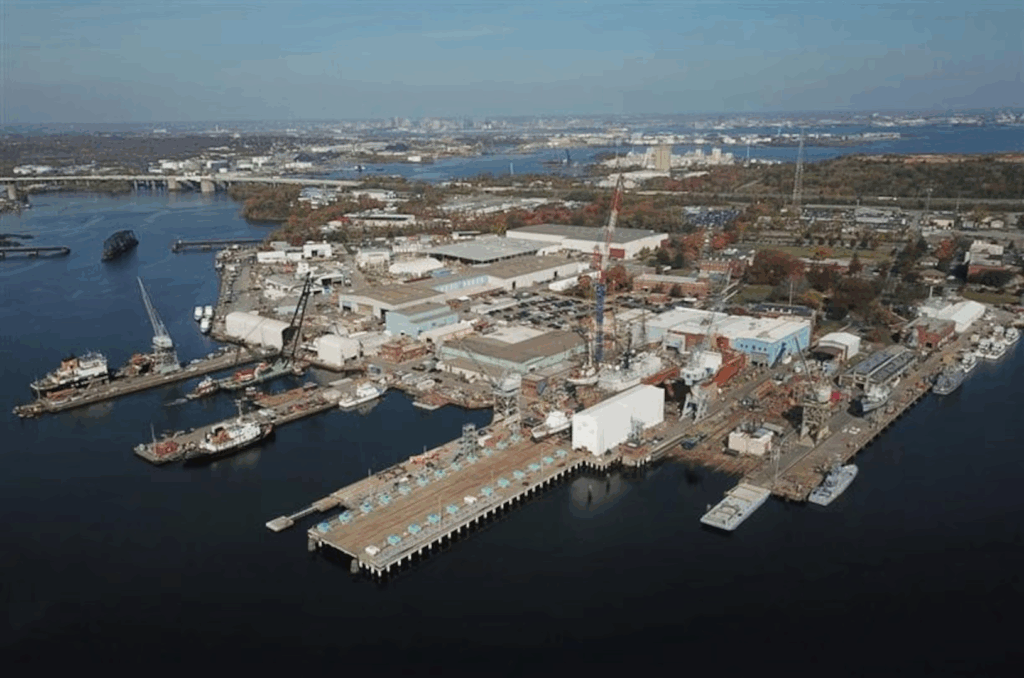
Aerial view of Coast Guard Yard in Baltimore. The Coast Guard awarded a contract for the reconstruction of Pier 1 (first from the left) on Sept. 9, 2025, to support future depot-level maintenance of the offshore patrol cutter class. (U.S. Coast Guard photo) 

From U.S. Coast Guard Headquarters, Sept. 17, 2025 

WASHINGTON — The Coast Guard awarded a contract valued at nearly $11 million to Ocean Construction Services Inc. on Sept. 9 for comprehensive modifications to Pier 1 at the Coast Guard Yard in Baltimore, Maryland. 

The scope of work includes lengthening of the pier, construction of new fenders and robust fender boards, removal of deteriorating timber curbs that line the current pier, installation of upgraded shore ties and pier electrical capacity, and strengthening the existing pier’s horizontal load-bearing strength to support the future Coast Guard cutter fleet. 

“For more than a century, the Coast Guard Yard has provided critical maintenance and repair services to the Coast Guard’s surface fleet, and this contract will deliver the improvements necessary to continue that long record of success, including the future sustainment of the Offshore Patrol Cutter class,” said Rear Adm. Michael E. Campbell, director of systems integration and chief acquisition officer of the Coast Guard. “Additionally, this work lays the groundwork for future improvements at the Coast Guard Yard – supported through the truly historic investments of the One Big Beautiful Bill Act – to fully transform the facility to meet the needs of the Coast Guard’s modern surface fleet.” 

The Coast Guard Yard is the service’s only organic shipbuilding and repair facility. It is the Coast Guard’s largest, most modern industrial plant. The Coast Guard Yard is responsible for construction, repairs and renovation of vessels and various aids to navigation, and for the manufacturing of miscellaneous Coast Guard equipment. 

Reconstruction of Pier 1 is critical to maintain the Coast Guard’s organic capabilities to perform depot-level maintenance for the fleet and to prepare for post-delivery activities as new cutters are delivered. The work awarded is a critical enabler of the larger Coast Guard Yard modernization initiative, which will leverage the historic investments made available under the One Big Beautiful Bill Act to support future sustainment and maintenance of the Coast Guard fleet. The Coast Guard Yard modernization project will be the largest infrastructure project in Coast Guard Yard’s history, and Pier 1 improvements will ensure continuity of operations at the Yard while future construction work proceeds. 

Reconstruction of Pier 1 is expected to be substantially completed in 2027. 

As part of the Force Design 2028 initiative, the Coast Guard established the new Program Executive Office (PEO) Shore under the Systems Integration Directorate to implement a fully integrated, systems-based approach to asset lifecycle management. The PEO provides comprehensive oversight, planning and execution of shore infrastructure and facilities projects through the capabilities of the Shore Infrastructure Logistics Center, the Facilities Design and Construction Center and six civil engineering units that provide program management and execution capabilities at the regional level. Civil Engineering Unit Cleveland serves all Coast Guard entities in the Great Lakes and Mid-Atlantic regions, which include over 132 facilities, 368 aid to navigation towers and lighthouses, 4,970 small aid to navigation structures and over 8 million square feet of buildings valued at over $3.9 billion. 


Coast Guard Seizes 75,000 Pounds of Cocaine Through Operation Pacific Viper

U.S. Coast Guard crews conduct counter-drug operations in the Eastern Pacific Ocean as part of Operation Pacific Viper. The operation highlights the Coast Guard’s commitment to disrupting transnational criminal organizations and preventing the flow of illicit drugs into the United States. (U.S. Coast Guard photo)

From U.S. Coast Guard Pacific Area, Sept. 18, 2025 

WASHINGTON — The U.S. Coast Guard announced Thursday it has seized more than 75,000 pounds of cocaine in the Eastern Pacific Ocean since launching Operation Pacific Viper in early August, averaging over 1,800 pounds interdicted daily. 

These drug seizures, and the apprehension of 59 individuals suspected of narco-trafficking, were the result of more than 20 interdictions since Aug. 8. 

Through Operation Pacific Viper, the Coast Guard is accelerating counter-drug operations in the Eastern Pacific Ocean, where significant transport of illicit narcotics continues from South America. In coordination with international and interagency partners, the Coast Guard is surging additional assets—cutters, aircraft and tactical teams—to interdict, seize and disrupt transshipments of cocaine and other bulk illicit drugs. Operation Pacific Viper continues the Coast Guard’s efforts to protect the Homeland, counter narco-terrorism and disrupt Foreign Terrorist Organizations and Transnational Criminal Organizations and cartels seeking to produce and traffic illicit drugs into the United States.   

“The Coast Guard’s maritime fighting force is relentless in our ongoing operations to counter narco-terrorism,” said Rear Adm. Jeffrey Novak, deputy commander Pacific Area. “Our latest milestone through Operation Pacific Viper – over 75,000 pounds of cocaine seized – underscores our commitment to dismantling Foreign Terrorist Organizations and Transnational Criminal Organizations engaged in narco-trafficking. The Coast Guard is bringing every authority and every capability at our disposal to disrupt cartels and criminal organizations, stop the flow of deadly drugs into the U.S., and secure U.S. borders and maritime approaches. While we continue our crucial work to defend America, I could not be prouder of the men and women of the Coast Guard in celebrating this milestone.” 

Detecting and interdicting narco-terrorism on the high seas involves significant interagency and international coordination. U.S. Southern Command’s Joint Interagency Task Force-South, based in Key West, Florida, detects and monitors both aerial and maritime transit of illegal drugs. Once interdiction becomes imminent, the law enforcement phase of the operation begins, and control of the operation shifts to the U.S. Coast Guard throughout the interdiction and apprehension. Interdictions in the Eastern Pacific Ocean are performed by members of the U.S. Coast Guard under the authority and control of the Coast Guard’s Southwest District, headquartered in Alameda, California. 

The Coast Guard is the United States’ lead federal agency for maritime drug interdiction. We are part of the Department of Homeland Security team protecting our nation and are at all times a military service and part of the joint force defending it. 


Coast Guard Cutter Spencer returns home to Portsmouth, Virginia after 83-day maritime border security patrol in the Caribbean Sea, Windward Passage 

Coast Guard Cutter Spencer (WMEC 905) conducts flight operations with an Air Station Elizabeth City MH-60 Jayhawk helicopter aircrew while underway in Chesapeake Bay, June 26, 2025. These operations enhance mission readiness between surface and aviation assets. (U.S. Coast Guard photo by Petty Officer 1st Class Richard Stewart)

From U.S. Coast Guard Atlantic Area, Sept. 18, 2025 

PORTSMOUTH, Va. — The crew of Coast Guard Cutter Spencer (WMEC 905) returned to their home port in Portsmouth, Wednesday, concluding an 83-day maritime border security patrol in the Caribbean Sea and Windward Passage. 

Spencer’s crew deployed in support of Operation Vigilant Sentry while underway in the Coast Guard Southeast District area of responsibility. Crew members worked with interagency and international partners, conducting maritime safety and security operations to deter unlawful migration and protect America’s maritime borders. 

While on patrol, Spencer watchstanders detected a dangerously overloaded and unlit vessel at night off the coast of Haiti. Spencer’s crew launched the cutter’s small boat to assess the situation. Recognizing an immediate risk to life, the boarding team provided life jackets and began transferring people to the cutter, safely embarking 191 aliens aboard Spencer. Crew members provided medical screening, food, water and shelter while conducting accountability procedures. All aliens were later repatriated to Haiti in accordance with U.S. law and policy. 
 
“Spencer’s efforts over the last 83 days ensured the security of our nation’s Southeastern border and maritime approaches,” said Cmdr. Justin Strock, commanding officer of Spencer. “This crew, in coordination with our federal and international partners, reinforced the Coast Guard’s ability to prevent and deter illegal migration by sea. I am proud of this crew for their determination, dedication and teamwork throughout our patrol.” 

OVS is the Department of Homeland Security-led operation comprised of federal, state and local partners responsible for preventing and responding to maritime migration. OVS, previously known as Homeland Security Task Force – Southeast, was established in 2003 and is comprised of more than 50 federal, state and local agencies.   

Spencer is a 270-foot, Famous-class medium-endurance cutter homeported in Portsmouth. Its missions include search and rescue, maritime law enforcement, marine environmental protection and homeland security operations. The cutter falls under the command of U.S. Coast Guard Atlantic Area, which is based in Portsmouth. 


Coast Guard Awards $68M Contract for New HC-130J Hangars in Hawaii

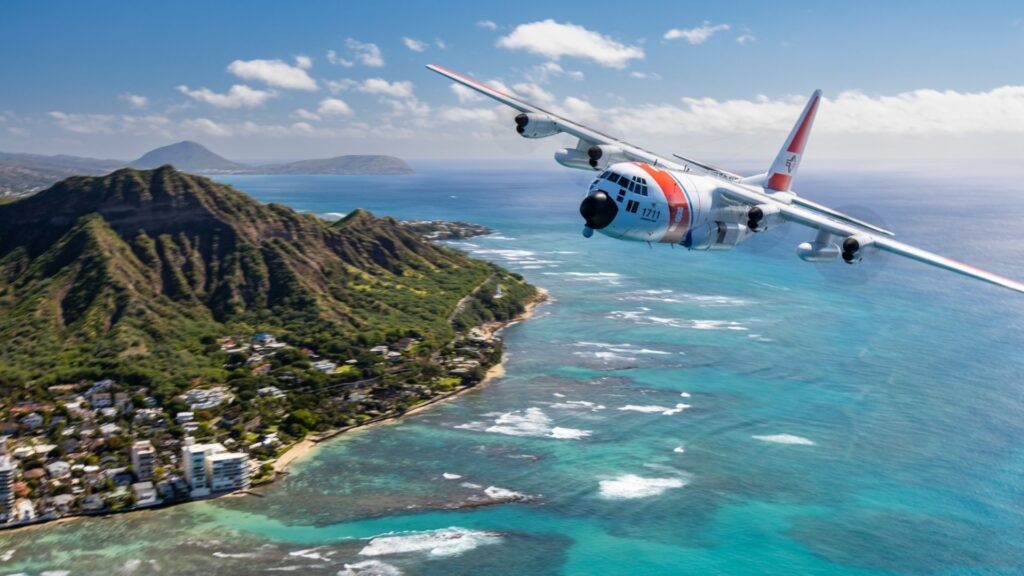
Coast Guard Air Station Barbers Point aircrews conduct flight formations in the soon to be retired HC-130H Hercules airplane. The HC-130H model is being replaced by the HC-130J model. (U.S. Coast Guard photo by Lt. Cmdr. Scott Handlin) 

Release From Coast Guard Headquarters

WASHINGTON —The U.S. Coast Guard awarded a contract to the Whiting-Turner Contracting Co. for the design and construction of two new membrane tension hangars and associated facilities at Air Station Barbers Point, Hawaii. The award totaling $68.857 million, will support HC-130J Super Hercules aircraft operations and enhance mission readiness in the Oceania District. 

The contract includes the construction of two fully enclosed hangars to provide weather-protected facilities for repairing, servicing, and sheltering HC-130J aircraft assigned to the air station. Additional facilities will include an aviation materials office, aircraft maintenance shops, office space for air station personnel, a locker room, and load cages near the hangars. 

Currently, Air Station Barbers Point’s hangar facility can only partially enclose one HC-130J aircraft, leaving the station’s four aircraft exposed to the corrosive saltwater environment. The new hangars will provide long-term protection, improve maintenance capabilities, and support critical heavy air transport missions and long-range maritime surveillance patrols across the 12.2-million-square-mile Oceania District. 

Construction is scheduled to begin in 2026 and is expected to be completed by early 2028. 

The Facilities Design & Construction Center (FDCC), a field command under the Coast Guard Program Executive Office (PEO) Shore, is responsible for planning, designing, and executing major shore facility construction and recapitalization projects. As part of the Coast Guard’s Force Design 2028 initiative, the FDCC and the Shore Infrastructure Logistics Center were incorporated into the new PEO Shore domain, which applies a systems-based approach to asset lifecycle management. 

The HC-130J Super Hercules represents the Coast Guard’s premier long-range surveillance aircraft and carries out many Coast Guard missions, including search and rescue, drug and alien interdiction, cargo and personnel transport, and maritime stewardship, as well as providing critical support to Department of Homeland Security partners.  


Coast Guard’s Helicopter Interdiction Tactical Squadron Completes 1,000th Interdiction 

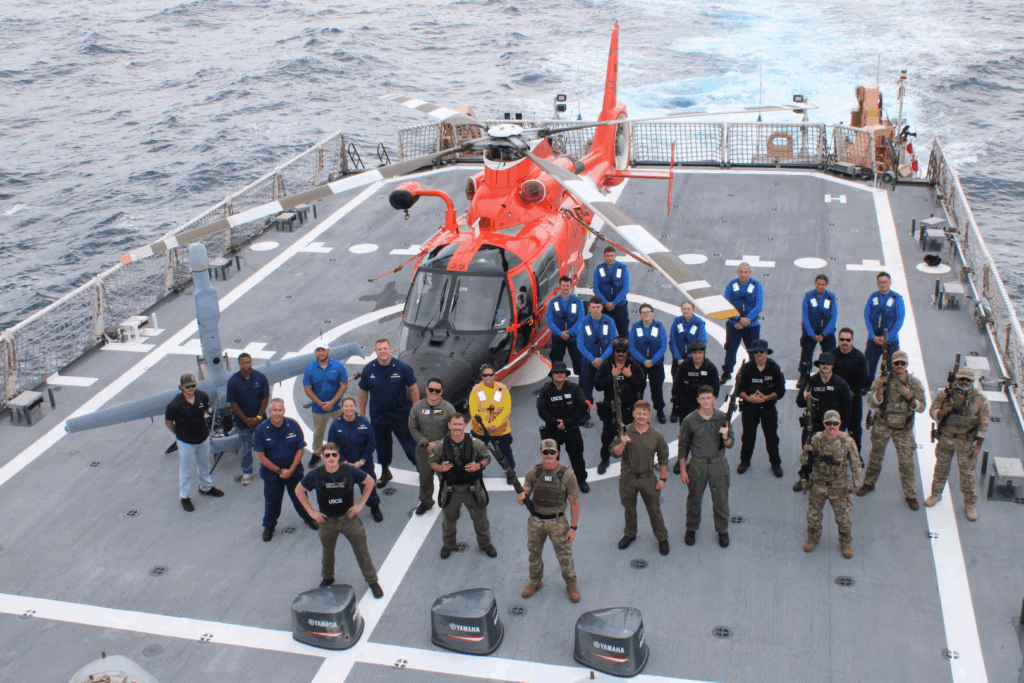
Coast Guard crews from the Coast Guard Helicopter Interdiction Tactical Squadron, Coast Guard Tactical Law Enforcement Team – South, Coast Guard Cutter Midgett (WMSL 757) helicopter tie-down members and unmanned aerial vehicle personnel pose for a group photo aboard Midgett from behind three bullet-damaged outboard engine cowlings while underway in the Eastern Pacific Ocean, Aug. 28, 2025. On Aug. 25, HITRON used airborne use of force to stop the non-compliant vessel, marking the unit’s 1,000th drug interdiction since the unit’s inception in 1999, which resulted in Midgett crew members seizing approximately 3,606 pounds of suspected cocaine worth an estimated $46 million and apprehending six suspected narco-traffickers. (U.S. Coast Guard photo)

From U.S. Coast Guard Headquarters, Sept. 10, 2025 

JACKSONVILLE, Fla. — The U.S. Coast Guard’s Helicopter Interdiction Tactical Squadron (HITRON) achieved a significant milestone in its counter-drug mission, completing its 1,000th interdiction of suspected narco-trafficking vessels Aug. 25.    

Since October 1, 2024, HITRON has interdicted $3.3 billion in illicit narcotics destined for the United States via maritime routes, a three-fold increase over its historic annual average of $1 billion.  

“HITRON embodies the Coast Guard’s spirit of innovation and adaptability,” said Vice Adm. Nathan Moore, commander, U.S. Coast Guard Atlantic Area. “From its humble beginnings as a prototype program, it has evolved into a vital force in our counter-narcotics efforts. This milestone is a powerful reminder of the strategic value of this specialized unit in addressing the evolving complex maritime security challenges.”  

On Aug. 25, a HITRON aviation detachment deployed aboard Coast Guard Cutter Midgett (WMSL 757) observed a suspected narco-trafficking vessel approximately 372 nautical miles southwest of Acapulco, Mexico in the early evening. The helicopter directed the vessel to heave to over the radio and with warning shots. When the vessel failed to comply, the crew used precision rifle fire from the helicopter to disable the vessel’s engine, in accordance with airborne use of force policy. A Coast Guard law enforcement boarding team from Midgett seized more than 3,600 pounds of suspected cocaine that was found aboard and jettisoned in the waters around the vessel, estimated to have a street value of $49 million.   

HITRON is based in Jacksonville, Florida and a component of U.S. Coast Guard Atlantic Area Command. It was founded in 1999 as a classified prototype program to test the ability of Coast Guard aircraft to employ precision fire to disable narcotics smuggling vessels. With impressive early results, this team grew from the initial ten personnel to its current size of over 200 Active Duty, Reservists, and civilian members, including an exchange pilot from the United Kingdom’s Royal Navy. Since its founding, HITRON has interdicted $33.2 billion in illicit drugs during operations in the Eastern Pacific Ocean and Caribbean Sea, and over the past 26 years has averaged one interdiction every nine days.  

Through Operation Pacific Viper, the Coast Guard is accelerating counter-drug operations in the Eastern Pacific Ocean, where significant transport of illicit narcotics continues from South America. In coordination with international and interagency partners, the Coast Guard is surging additional assets—cutters, aircraft and tactical teams—to interdict, seize and disrupt transshipments of cocaine and other bulk illicit drugs. These operations continue the Coast Guard’s efforts to protect the Homeland, project maritime law enforcement presence and disrupt transnational criminal organizations and cartels seeking to produce and traffic illicit drugs into the United States.    

Visit GoCoastGuard.com to learn about active duty and reserve, officer and enlisted opportunities in the U.S. Coast Guard. Information on how to apply to the U.S. Coast Guard Academy can be found here.