Coast Guard Awards $68M Contract for New HC-130J Hangars in Hawaii
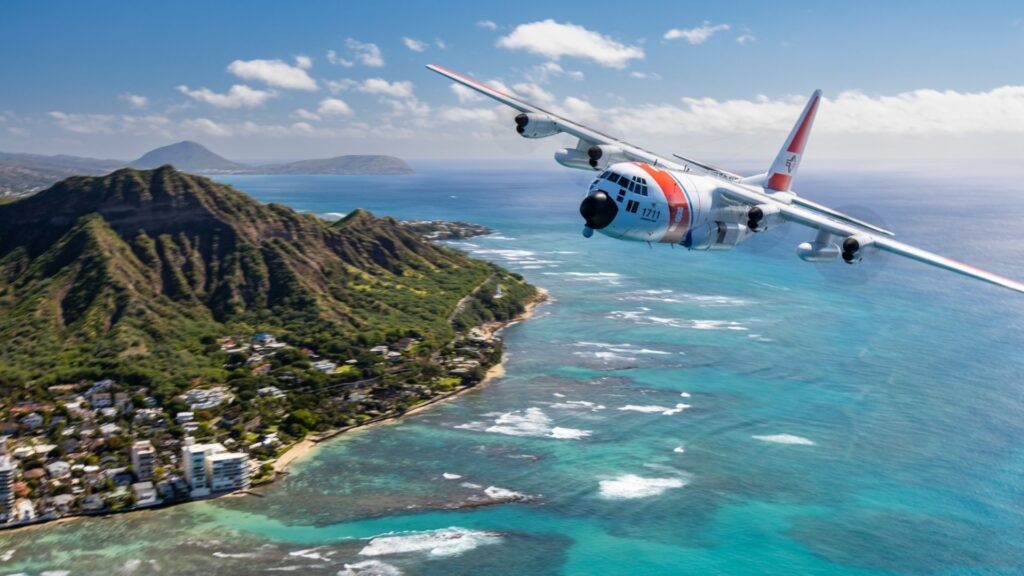
Coast Guard Air Station Barbers Point aircrews conduct flight formations in the soon to be retired HC-130H Hercules airplane. The HC-130H model is being replaced by the HC-130J model. (U.S. Coast Guard photo by Lt. Cmdr. Scott Handlin)
WASHINGTON —The U.S. Coast Guard awarded a contract to the Whiting-Turner Contracting Co. for the design and construction of two new membrane tension hangars and associated facilities at Air Station Barbers Point, Hawaii. The award totaling $68.857 million, will support HC-130J Super Hercules aircraft operations and enhance mission readiness in the Oceania District.
The contract includes the construction of two fully enclosed hangars to provide weather-protected facilities for repairing, servicing, and sheltering HC-130J aircraft assigned to the air station. Additional facilities will include an aviation materials office, aircraft maintenance shops, office space for air station personnel, a locker room, and load cages near the hangars.
Currently, Air Station Barbers Point’s hangar facility can only partially enclose one HC-130J aircraft, leaving the station’s four aircraft exposed to the corrosive saltwater environment. The new hangars will provide long-term protection, improve maintenance capabilities, and support critical heavy air transport missions and long-range maritime surveillance patrols across the 12.2-million-square-mile Oceania District.
Construction is scheduled to begin in 2026 and is expected to be completed by early 2028.
The Facilities Design & Construction Center (FDCC), a field command under the Coast Guard Program Executive Office (PEO) Shore, is responsible for planning, designing, and executing major shore facility construction and recapitalization projects. As part of the Coast Guard’s Force Design 2028 initiative, the FDCC and the Shore Infrastructure Logistics Center were incorporated into the new PEO Shore domain, which applies a systems-based approach to asset lifecycle management.
The HC-130J Super Hercules represents the Coast Guard’s premier long-range surveillance aircraft and carries out many Coast Guard missions, including search and rescue, drug and alien interdiction, cargo and personnel transport, and maritime stewardship, as well as providing critical support to Department of Homeland Security partners.
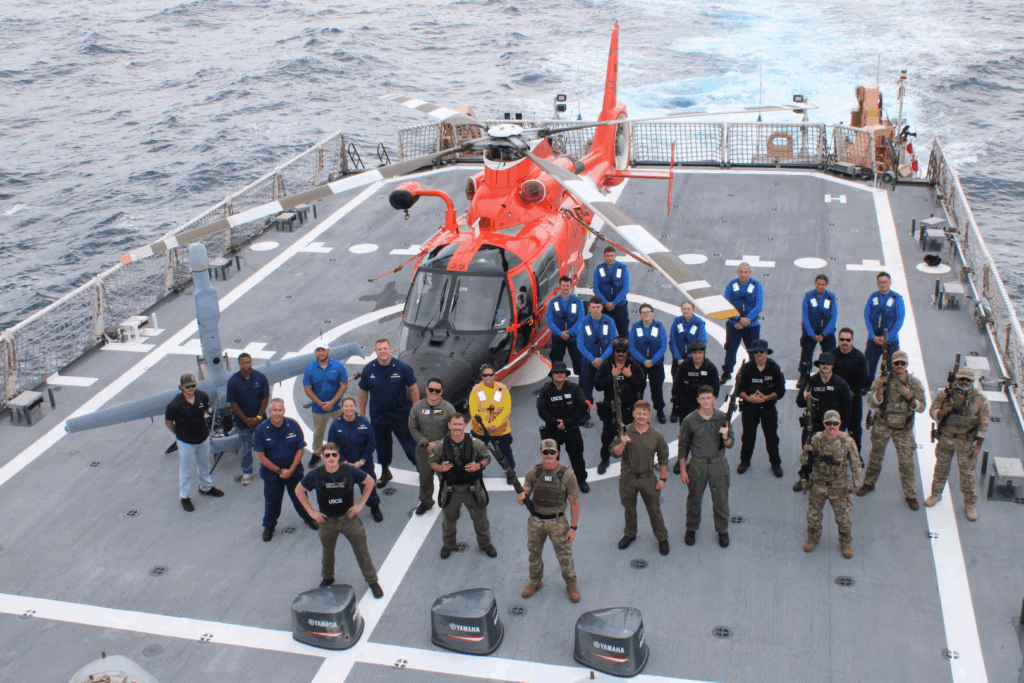
Coast Guard crews from the Coast Guard Helicopter Interdiction Tactical Squadron, Coast Guard Tactical Law Enforcement Team – South, Coast Guard Cutter Midgett (WMSL 757) helicopter tie-down members and unmanned aerial vehicle personnel pose for a group photo aboard Midgett from behind three bullet-damaged outboard engine cowlings while underway in the Eastern Pacific Ocean, Aug. 28, 2025. On Aug. 25, HITRON used airborne use of force to stop the non-compliant vessel, marking the unit’s 1,000th drug interdiction since the unit’s inception in 1999, which resulted in Midgett crew members seizing approximately 3,606 pounds of suspected cocaine worth an estimated $46 million and apprehending six suspected narco-traffickers. (U.S. Coast Guard photo)
From U.S. Coast Guard Headquarters, Sept. 10, 2025
JACKSONVILLE, Fla. — The U.S. Coast Guard’s Helicopter Interdiction Tactical Squadron (HITRON) achieved a significant milestone in its counter-drug mission, completing its 1,000th interdiction of suspected narco-trafficking vessels Aug. 25.
Since October 1, 2024, HITRON has interdicted $3.3 billion in illicit narcotics destined for the United States via maritime routes, a three-fold increase over its historic annual average of $1 billion.
“HITRON embodies the Coast Guard’s spirit of innovation and adaptability,” said Vice Adm. Nathan Moore, commander, U.S. Coast Guard Atlantic Area. “From its humble beginnings as a prototype program, it has evolved into a vital force in our counter-narcotics efforts. This milestone is a powerful reminder of the strategic value of this specialized unit in addressing the evolving complex maritime security challenges.”
On Aug. 25, a HITRON aviation detachment deployed aboard Coast Guard Cutter Midgett (WMSL 757) observed a suspected narco-trafficking vessel approximately 372 nautical miles southwest of Acapulco, Mexico in the early evening. The helicopter directed the vessel to heave to over the radio and with warning shots. When the vessel failed to comply, the crew used precision rifle fire from the helicopter to disable the vessel’s engine, in accordance with airborne use of force policy. A Coast Guard law enforcement boarding team from Midgett seized more than 3,600 pounds of suspected cocaine that was found aboard and jettisoned in the waters around the vessel, estimated to have a street value of $49 million.
HITRON is based in Jacksonville, Florida and a component of U.S. Coast Guard Atlantic Area Command. It was founded in 1999 as a classified prototype program to test the ability of Coast Guard aircraft to employ precision fire to disable narcotics smuggling vessels. With impressive early results, this team grew from the initial ten personnel to its current size of over 200 Active Duty, Reservists, and civilian members, including an exchange pilot from the United Kingdom’s Royal Navy. Since its founding, HITRON has interdicted $33.2 billion in illicit drugs during operations in the Eastern Pacific Ocean and Caribbean Sea, and over the past 26 years has averaged one interdiction every nine days.
Through Operation Pacific Viper, the Coast Guard is accelerating counter-drug operations in the Eastern Pacific Ocean, where significant transport of illicit narcotics continues from South America. In coordination with international and interagency partners, the Coast Guard is surging additional assets—cutters, aircraft and tactical teams—to interdict, seize and disrupt transshipments of cocaine and other bulk illicit drugs. These operations continue the Coast Guard’s efforts to protect the Homeland, project maritime law enforcement presence and disrupt transnational criminal organizations and cartels seeking to produce and traffic illicit drugs into the United States.
Visit GoCoastGuard.com to learn about active duty and reserve, officer and enlisted opportunities in the U.S. Coast Guard. Information on how to apply to the U.S. Coast Guard Academy can be found here.
Coast Guard Exercises Contract Option for 10 Additional Fast Response Cutters
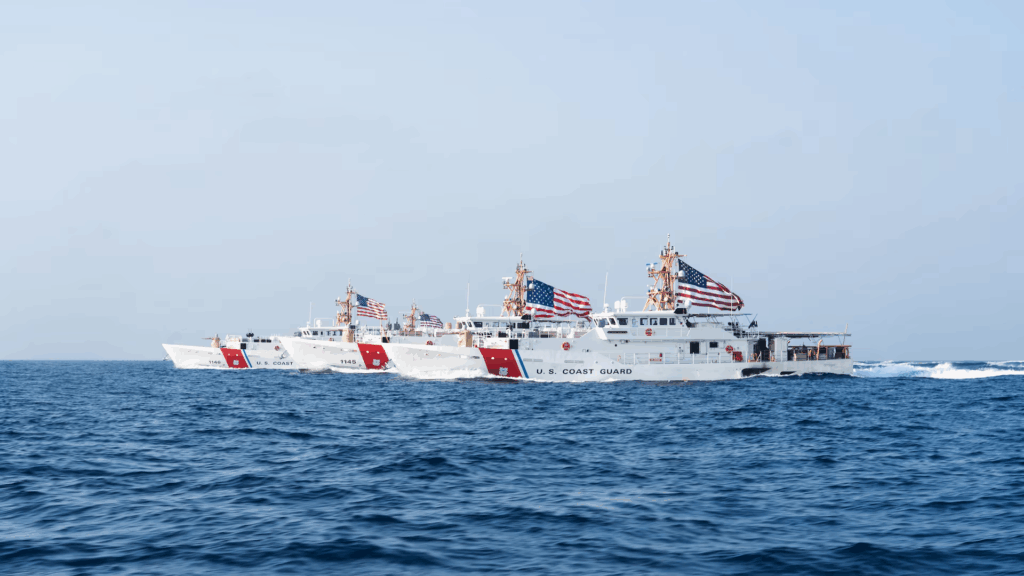
STRAIT OF HORMUZ (Aug. 22, 2022) From the left, U.S. Coast Guard fast response cutters USCGC Glen Harris (WPC 1144), USCGC John Scheuerman (WPC 1146), USCGC Emlen Tunnell (WPC 1145) and USCGC Clarence Sutphin Jr. (WPC 1147) transit the Strait of Hormuz, Aug. 22. The cutters are deployed to the U.S. 5th Fleet area of operations to help ensure maritime security and stability in the Middle East region. (U.S. Army photo by Spc. Noah Martin)
From U.S. Coast Guard Headquarters, Sept. 10, 2025
WASHINGTON — The U.S. Coast Guard has exercised a contract option with Bollinger Shipyards of Lockport, Louisiana, to fund initial construction on 10 additional Fast Response Cutters (FRCs), Tuesday. The $507 million option supports ongoing efforts to modernize the fleet and expand the Coast Guard’s global maritime mission.
The action made possible by the passage of Public Law 119-21, known as the One Big Beautiful Bill Act, increases the total number of FRCs ordered under the current agreement from 67 to 77. Supported by historic investments, this legislation provides nearly $25 billion – the largest single funding commitment in Coast Guard history – including $1 billion dollars for additional FRCs. The first FRC funded through this option is expected to be delivered in fiscal year 2028.
“As the first Coast Guard contracting action to execute over $100 million in reconciliation funds and the first reconciliation-funded action executed by a cutter program, this is a historic accomplishment for the Service,” said Rear Adm. Mike Campbell, the Coast Guard’s Director of Systems Integration and Chief Acquisition Officer. “Since its introduction to the fleet in 2012 as the successor to the 110-foot Island class patrol boat, the Fast Response Cutter has consistently proven its capabilities, adaptability and effectiveness in a wide range of maritime environments and Coast Guard missions.”
Sentinel-class FRCs are critical assets in the Coast Guard’s mission to control, secure and defend the U.S. border and maritime approaches. To date, 59 of these cutters are in service, replacing the aging fleet of 1980s-era Island-class 110-foot patrol boats. The Sentinel-class FRCs feature advanced command, control, communications, computers, intelligence, surveillance and reconnaissance equipment; over-the-horizon cutter boat deployment to reach vessels of interest; and improved habitability and seakeeping. Expanding the FRC fleet continues the Coast Guard’s modernization through Force Design 2028, an initiative introduced by Secretary of Homeland Security Kristi Noem to transform the Coast Guard into a more agile, capable and responsive fighting force.
The FRC fleet will complement the capabilities of the service’s national security cutters (NSCs), offshore patrol cutters (OPCs) and polar security cutters (PSCs) as an essential element of the Nation’s layered maritime security strategy.
HII Unveils AI-Enabled ROMULUS Family of USVs Powered by Odyssey to Strengthen the Fleet
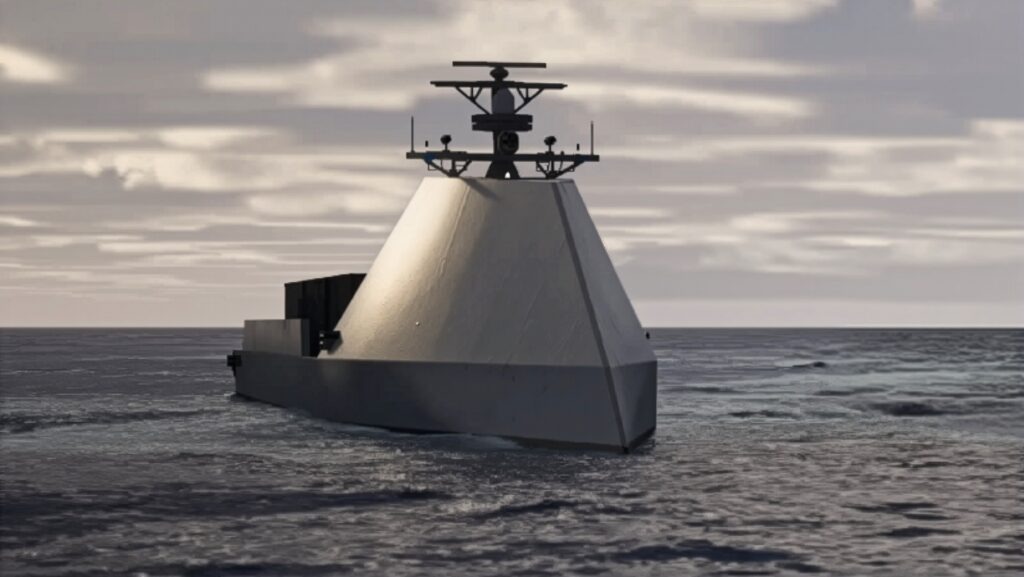
NEWPORT NEWS, Va., Sept. 09, 2025 (GLOBE NEWSWIRE) — HII (NYSE: HII), America’s largest military shipbuilder and a global leader in autonomous maritime systems, today introduced ROMULUS, a modular, AI-enabled family of unmanned surface vessels (USVs) powered by HII’s Odyssey Autonomous Control System (ACS) software suite.
ROMULUS 190, the flagship of the ROMULUS family, is currently under construction. Built on a commercial-standard hull, it is engineered for rapid, repeatable production and immediate mission readiness. Designed for speeds exceeding 25 knots, the 190-foot vessel is capable of a minimum range of 2,500 nautical miles (nmi) carrying 4 x 40 foot ISO intermodal containers on the payload deck. ROMULUS 190 is being developed in partnership with Breaux Brothers, Beier Integrated Systems, and Incat Crowther.
ROMULUS is designed to meet the current and emerging requirements of the U.S. Navy, U.S. Marine Corps, joint forces, and allies. It delivers high-endurance, sustained open-ocean autonomy with a focus on lethality, cost efficiency, and scalability.
“The future fight demands speed, agility, and resilience, all embedded in the Odyssey-powered ROMULUS family,” said Chris Kastner, HII president and CEO. “By matching world-class shipbuilding with decades of unmanned systems expertise, we are delivering a mission-ready, swarm USV capability built for the next generation of operations.”
Odyssey: Proven, Open, and Evolving Odyssey ACS software suite has demonstrated performance on more than 35 USV platforms with over 6,000 operational hours in U.S. Navy, U.S. Marine Corps, U.S. Coast Guard, and international allied programs. Odyssey’s intuitive interface and enhanced, customizable features generate the required mission behaviors for greater lethality and survivability with simplified control of unmanned swarms across domains, making it a force multiplier for the modern fleet.
The software suite’s open-access, government-aligned architecture enables rapid integration of new sensors, payloads, and third-party autonomy technologies. It allows industry, government, and academia to test and refine capabilities, ensuring ROMULUS evolves in step with emerging naval concepts of operations.
ROMULUS integrates technologies from Shield AI, Applied Intuition, and C3 AI with HII’s Odyssey for enhanced autonomy, object classification, and lifecycle sustainment.
Multi-Mission, Multi-Domain Flexibility ROMULUS’s reconfigurable design supports teaming across surface, subsurface, and air domains for missions including counter-unmanned air systems (C-UAS), intelligence, surveillance and reconnaissance (ISR), strike operations, and the launch and recover of unmanned undersea vehicles (UUV) and unmanned aerial vehicles (UAV).
Enhanced-Domain Advantage with HII’s REMUS UUV Paired with HII’s proven REMUS UUVs, ROMULUS significantly extends undersea reach, closing anti-submarine warfare sensing gaps and keeping manned platforms at a safer standoff distance. REMUS’s decades-long track record in mine counter-measures (MCM) missions accelerates clearance operations and reduces fleet risk. Together, ROMULUS and REMUS deliver a scalable dual-domain solution across surface and subsurface missions.
Reinforcing HII’s Leadership With ROMULUS, HII reinforces its position as the global leader in durable, autonomous unmanned systems. Developed with support from HII’s Dark Sea Labs Advanced Technology Group, ROMULUS takes its place alongside the proven REMUS UUV line, of which more than 700 have been delivered to over 30 nations and more than 90% are still operational after more than two decades. Together, ROMULUS and REMUS, powered by HII’s Odyssey autonomy, form a dual-domain family of unmanned platforms that expands operational reach, maximizes mission flexibility, and ensures dependable performance across the full maritime spectrum.
Key ROMULUS Capabilities:
Modular, Open Architecture: Built on open standards, including Unmanned Maritime Autonomy Architecture (UMAA), Robot Operating System (ROS), and Data Distribution Service (DDS), Odyssey ensures compatibility with U.S. Navy autonomy requirements and control stations now and into the future. Odyssey’s modular architecture also allows for rapid reconfiguration and integration with modular payloads, new sensors and systems.
Multi-Agent Autonomy: Odyssey enables control of either individual assets or swarms, a key capability for enabling the future fight. Odyssey’s mission library delivers high-level autonomy with ease in executing rapid single-agent tasks or complex, multi-agent scenarios in coordination with crewed and unmanned platforms. Secure data management enables instant analytics or detailed post-mission review, while its modular design supports seamless integration of customer or third-party sensors, payloads, algorithms, and interfaces.
Intelligent Operations: Autonomous health monitoring, sensor fusion, and perception deliver intuitive mission planning, real-time situational awareness, and diagnostics. Navigation is compliant with the International Regulations for Preventing Collisions at Sea (COLREGS), ensuring operational reliability in all conditions.
Fleet Integration: Designed to align with future fleet Concepts of Operations (CONOPS), supporting unmanned and optionally manned missions and integrated operations with aircraft carrier strike groups and surface action groups.
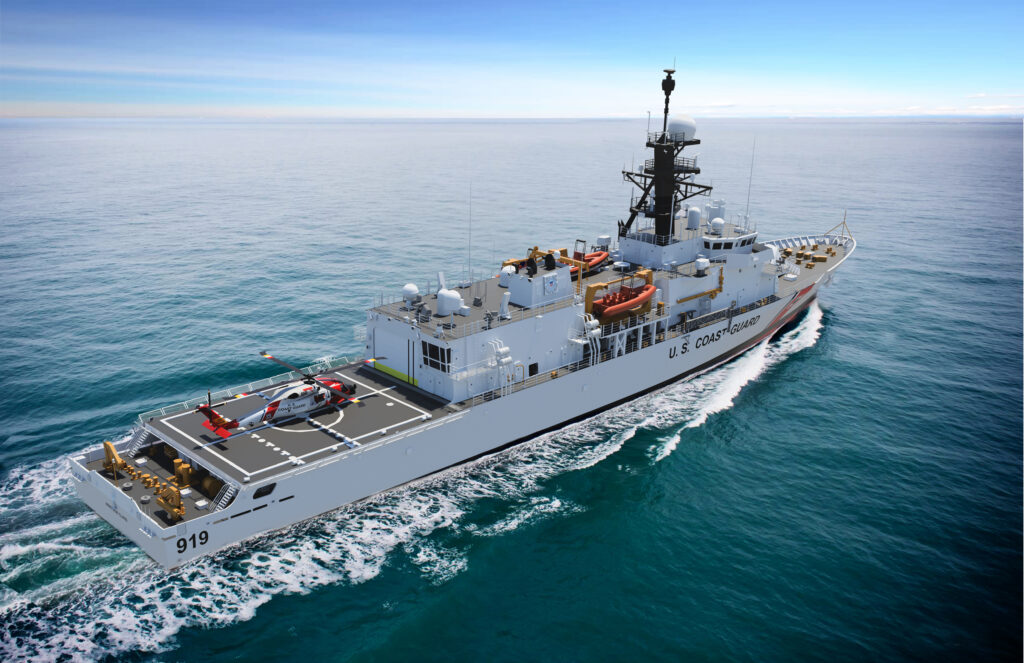
Mobile, Ala. – The U.S. Coast Guard exercised options worth $314 million to Austal USA for the Offshore Patrol Cutter (OPC) program. The contract options provide Austal USA approval to order long lead time materials (LLTM) for another 3 OPCs, Austal USA’s 4th, 5th, and 6th cutters. Funds have also been provided for logistic supply items for two OPCs. The original contract was awarded to Austal USA in June 2022 included detail design and construction for up to 11 OPCs with a potential value of $3.3 billion. To date, 2 of 11 OPCs in the contract have been awarded to Austal USA.
“We are pleased to receive these contract options for long lead-time materials in support of the U.S. Coast Guard’s OPC program,” commented Austal USA President Michelle Kruger. “These early awards speak to the strong partnership that has developed between the Coast Guard and Austal USA teams. We look forward to continuing to strengthen our partnership and deliver these much-needed cutters.”
Work on Austal USA’s first OPC, Pickering (WMSMS 919), is well underway with the keel laying planned for December. Construction began on Icarus (WMSMS 920) in early August.
The 360-foot OPC will support the national security strategy for maintaining the nation’s economic, social, environmental and military security mission areas. The OPC will typically conduct its primary missions beyond 12 nautical miles from shore and will be employed anywhere the national interests require the Coast Guard’s unique blend of authorities and capabilities. OPC will provide the majority of the Coast Guard’s offshore presence conducting a variety of missions including law enforcement, drug and migrant interdiction, and search and rescue.
With a range of 10,200 nautical miles at 14 knots and a 60-day endurance period, each OPC will be capable of deploying independently or as part of task groups, serving as a mobile command and control platform for surge operations such as hurricane response, mass migration incidents and other events. The cutters will also support Arctic objectives by helping regulate and protect emerging commerce and energy exploration in Alaska.
U.S. Coast Guard Responds to 2 Chinese Research Vessels in Arctic
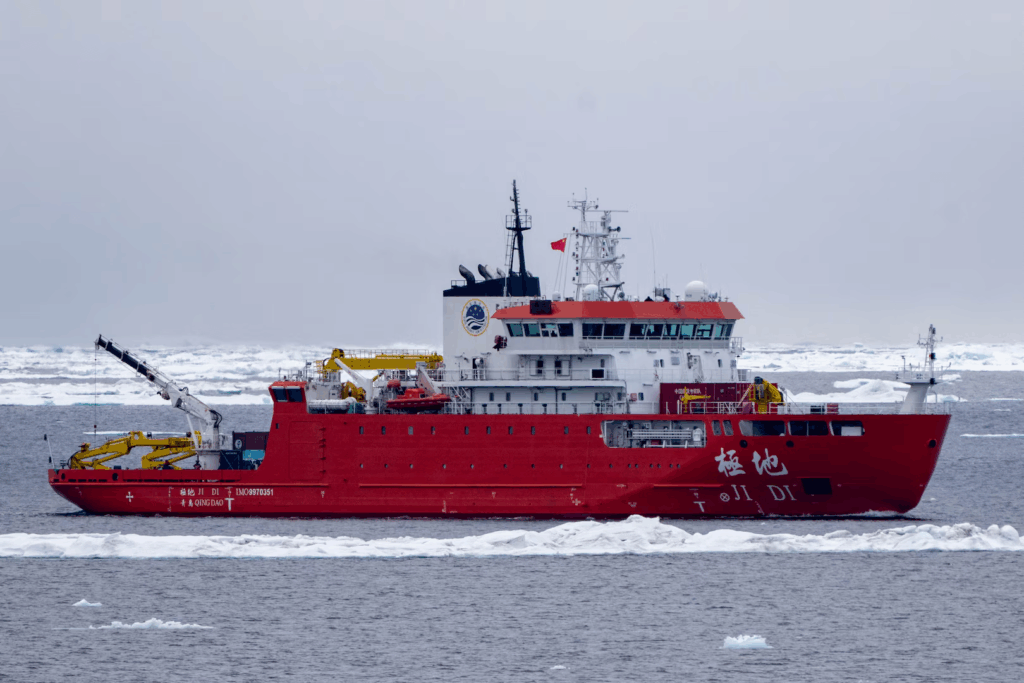
The China-flagged research vessel JIDI operates approximately 265 miles northwest of Utqiagvik, Alaska, September 2, 2025. The Coast Guard Arctic District deployed USCGC Healy (WAGB-20) to monitor and query the vessel. (U.S. Coast Guard Courtesy Photo)
From U.S. Coast Guard Arctic District, Sept. 3, 2025
JUNEAU, Alaska — The U.S. Coast Guard responded to two Chinese research ships operating offshore Alaska between Sunday and Tuesday.
On Tuesday, the Coast Guard responded to the Chinese-flagged research vessel JIDI operating approximately 265 miles northwest of Utqiagvik, Alaska.
On Sunday, August 31, the Coast Guard responded to the Liberia-flagged Chinese research ship, Zhong Shan Da Xue Ji Di approximately 230 miles north of Utqiagvik.
Both vessels were operating over the delineated U.S. Extended Continental Shelf and are two of five similar Chinese vessels that have recently been operating in the region.
For both instances, the Coast Guard Arctic District deployed USCGC Healy (WAGB-20) to monitor and query the vessels.
An HC-130J Hercules fixed wing aircraft from Air Station Kodiak was also deployed Sunday to provide aerial support.
On Saturday, Coast Guard Cutters Waesche (WMSL 751) and Healy (WAGB 20) conducted a joint patrol in the Arctic Ocean before responding to the Chinese research vessels. TheArctic is a growing zone of strategic global competition. The Coast Guard is the only U.S. surface presence in the Arctic and works in conjunction with U.S. Northern Command and Alaskan Command to constantly monitor foreign vessels operating in and near U.S. waters in support of U.S. homeland defense and security operations.
In August, the Coast Guard commissioned the Cutter Storis (WAGB 21) in Juneau. Storis is currently operating in the Bering Sea and Arctic to secure U.S. national security interest in this strategically vital region.
“This operation highlights the value of our ice-capable fleet,” said Rear Adm. Bob Little, commander, U.S. Coast Guard Arctic District. “The U.S. Coast Guard is controlling, securing, and defending the northern U.S. border and maritime approaches in the Arctic to protect U.S. sovereignty, and Healy’s operations demonstrate the critical need for more Coast Guard icebreakers to achieve that.”
The Healy and the HC-130J aircraft were operating under Coast Guard Arctic District’s Operation Frontier Sentinel, which is designed to counter adversary activity in U.S. waters. The Coast Guard continues to monitor ongoing Chinese activity in the region.
U.S. Coast Guard Upgrades Base Charleston to Support Major Cutters
From U.S. Coast Guard Headquarters, Sept. 2, 2025
WASHINGTON — The Coast Guard’s Facilities Design and Construction Center completed a contract modification with The Whiting-Turner Contracting Company Aug. 25 to remove up to 100 submerged concrete piles under the old Pier November at Base Charleston in North Charleston, South Carolina.
The modification, with a potential value of approximately $14.8 million, includes work that is necessary to complete construction of new, modernized piers to provide support and logistics for up to five major cutters homeported at the base. This contract action was supported by funding in the recently enacted One Big Beautiful Bill Act that included nearly $5 billion to address the Coast Guard’s most pressing shore infrastructure needs. Construction is expected to be substantially completed in 2026.
“Thanks to the leadership and support of the President, the Secretary of Homeland Security and Congress, the One Big Beautiful Bill Act provides more than $24 billion to invest in the Coast Guard fleet and our inventory of shore facilities and infrastructure,” said Rear Adm. Chad L. Jacoby, deputy commandant for systems. “We are moving out to make the most of this historic investment, beginning with this contract modification to address previously unidentified obstacles and keep construction of Pier November at Base Charleston on schedule. The CG-SHORE and contracting teams took prompt action to get this effort underway quickly and ensure the project is completed on time with minimal impact to operations. They are setting a strong example for future efforts that will be supported with reconciliation funding.”
Coast Guard seizes 40,000 pounds of cocaine through Operation Pacific Viper, averages over 1,600 pounds interdicted per day
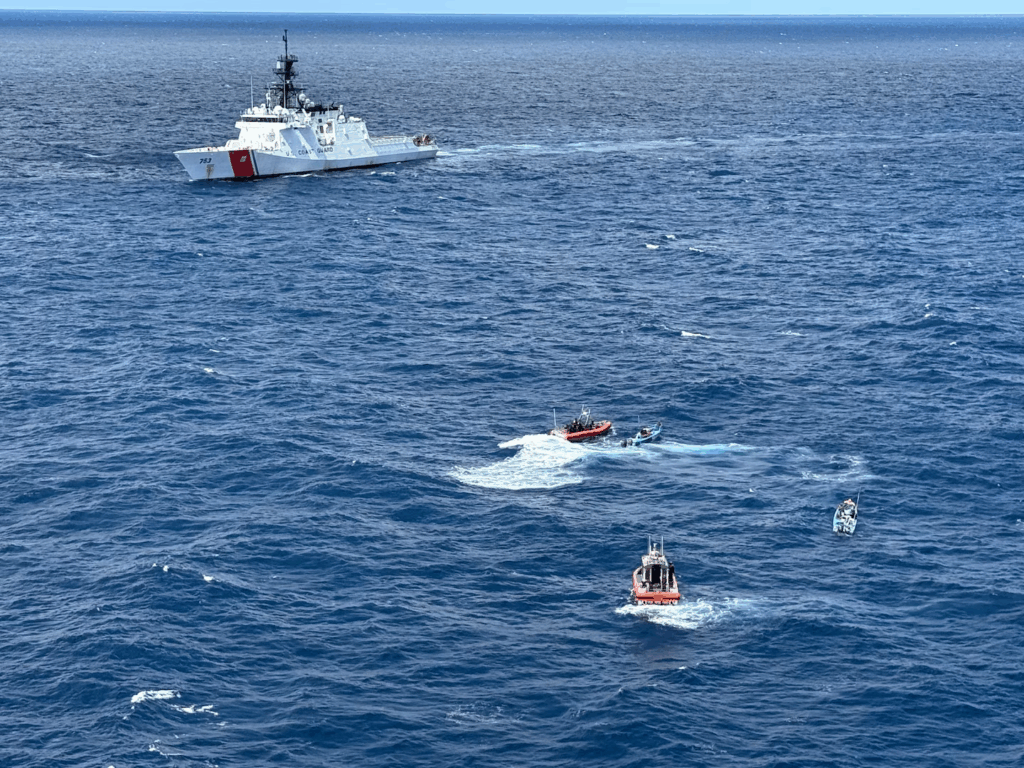
U.S. Coast Guard Cutter Hamilton (WMSL 753) boarding team interdicting two go-fast vessels suspected of drug smuggling approximately 115 miles southeast of the Galapagos Islands, Ecuador, June 26, 2025. The vessels were initially detected by a maritime patrol aircraft, and Hamilton’s embarked Helicopter Interdiction Tactical Squadron (HITRON) aircrew provided airborne tactical support, resulting in the seizure of more than 4,475 pounds of cocaine. (U.S. Coast Guard photo)
From U.S Coast Guard Southeast District, Sept. 4, 2025
WASHINGTON — The U.S. Coast Guard announced Thursday it has seized more than 40,000 pounds of cocaine in the Eastern Pacific Ocean since launching Operation Pacific Viper in early August, averaging over 1,600 pounds interdicted daily.
These drug seizures, and the apprehension of 36 suspected drug smugglers, were the result of 14 interdictions since Aug. 8.
Through Operation Pacific Viper, the Coast Guard is accelerating counter-drug operations in the Eastern Pacific Ocean, where significant transport of illicit narcotics continues from South America. In coordination with international and interagency partners, the Coast Guard is surging additional assets—cutters, aircraft and tactical teams—to interdict, seize and disrupt transshipments of cocaine and other bulk illicit drugs. These operations continue the Coast Guard’s efforts to protect the Homeland, project maritime law enforcement presence and disrupt transnational criminal organizations and cartels seeking to produce and traffic illicit drugs into the United States.
“The U.S. Coast Guard brings unique authorities and unmatched capabilities as the world’s leader in maritime counter-drug operations,” said Rear Adm. Douglas Schofield, acting deputy commandant for operations. “Our maritime fighting force is accelerating counter-drug operations in the Eastern Pacific Ocean. We are leveraging our full range of capabilities to disrupt transnational criminal organizations and cartels and prevent the scourge of illicit drugs from reaching our communities. The men and women of the Coast Guard will not relent in our efforts to control, secure and defend U.S. borders and maritime approaches—where defense of America begins.”
Reflecting the early success of Operation Pacific Viper, Coast Guard Cutter Hamilton recently offloaded 76,140 pounds of illicit drugs, including 61,740 of cocaine and 14,400 of marijuana, in Port Everglades, Florida. This historic milestone was the largest offload in Coast Guard history, resulting from 19 interdictions in international waters of the Eastern Pacific Ocean and Caribbean Sea.
Detecting and interdicting drug traffickers on the high seas involves significant interagency and international coordination. U.S. Southern Command’s Joint Interagency Task Force-South, based in Key West, Florida, detects and monitors both aerial and maritime transit of illegal drugs. Once interdiction becomes imminent, the law enforcement phase of the operation begins, and control of the operation shifts to the U.S. Coast Guard throughout the interdiction and apprehension. Interdictions in the Eastern Pacific Ocean are performed by members of the U.S. Coast Guard under the authority and control of the Coast Guard’s Southwest District, headquartered in Alameda, California.
The Coast Guard is the United States’ lead federal agency for maritime drug interdiction. We are part of the Department of Homeland Security team protecting our nation and are at all times a military service and part of the joint force defending it.
For more information about the Coast Guard, visit www.uscg.mil.
Coast Guard Cutter Vigilant Returns Home After Seizing 3,100 Pounds in Drugs
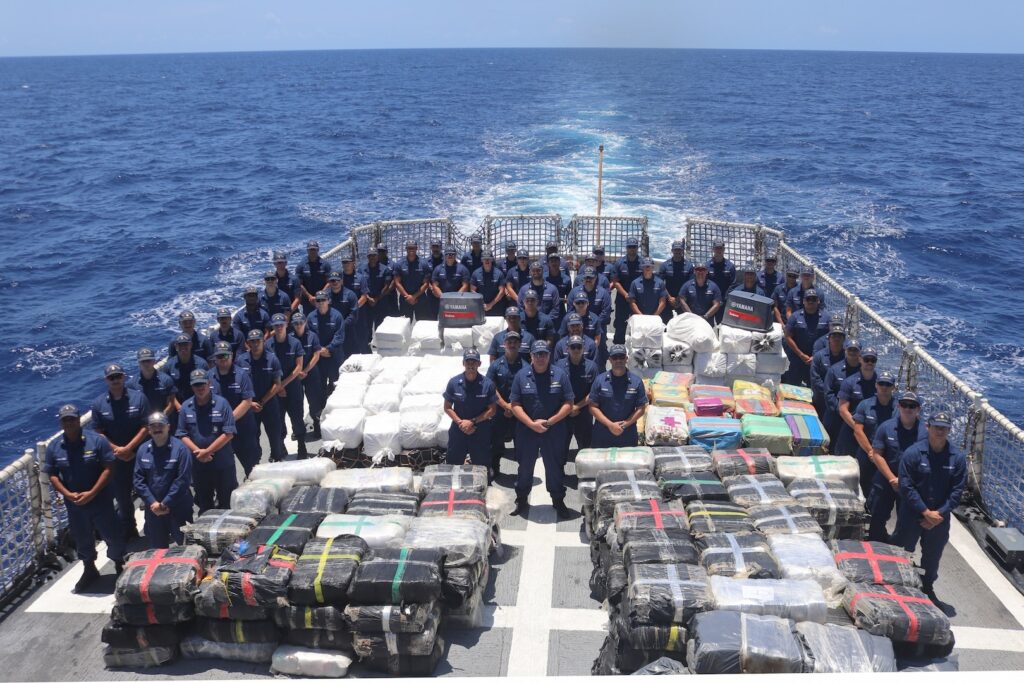
The crew of Coast Guard Cutter Vigilant (WMEC 617) poses for a photo with contraband seized or transferred aboard the cutter during a deployment in the Caribbean Sea, Aug. 16, 2025. Vigilant’s crew conducted a two-month, maritime border security patrol in the Windward Passage and Caribbean Sea to protect America’s maritime borders and prevent illicit drug smuggling in the region. (U.S. Coast Guard photo)
CAPE CANAVERAL, Fla. — The crew of Coast Guard Cutter Vigilant (WMEC 617) returned home to Cape Canaveral, Aug. 19, following a 59-day patrol in the Caribbean Sea and Windward Passage.
During the patrol, Vigilant’s crew interdicted 3,100 pounds of illicit drugs in the Caribbean Sea while underway in the Coast Guard Southeast District’s area of operations. Vigilant’s crew deployed in support of the Joint Interagency Task Force – South (JIATF-S) mission of detecting and monitoring illegal drug shipments in the maritime domain for subsequent interdiction and apprehension.
On July 25, a maritime patrol aircraft notified Coast Guard Cutter Vigilant’s crew of a suspicious go-fast vessel approximately 180 miles south of the Dominican Republic. Vigilant’s boarding team interdicted the vessel, seizing more than 1,410 pounds of cocaine and 80 poundsof marijuana.
On Aug 15, a maritime patrol aircraft notified Coast Guard Cutter Vigilant’s crew of a suspicious go-fast vessel approximately 35 miles southwest of Haiti. Vigilant’s boarding team interdicted the vessel, seizing more than 1,615 pounds of marijuana.
Vigilant’s crew initially deployed in support of Operation Vigilant Sentry (OVS) while on patrol in the Windward Passage, working alongside other Coast Guard assets to deter illegal alien migration along the coast of Haiti.
Crew members executed maritime intelligence, surveillance and reconnaissance operations while maintaining a continuous presence in the region. This mission is essential to deterring unsafe and unlawful migration ventures bound for the United States.
“I am incredibly proud of this crew’s dedication, performance and resilience during a challenging 59-day patrol in support of Coast Guard and national objectives to secure our maritime borders and safeguard lives at sea,” said Cmdr. Steven Welch, commanding officer of Vigilant. “Working closely with our Department of Defense and law enforcement partners, as well as multiple partner nations, we seized or disrupted over 3,100 pounds of illegal narcotics bound for the United States. Additionally, we safeguarded lives at sea by preventing dangerous and illegal migration attempts across the open ocean in unseaworthy vessels. We look forward to returning home to our families and friends and beginning the arduous process to prepare Vigilant and her crew for the next deployment.”
Detecting and interdicting illicit drug traffickers on the high seas involves significant interagency and international coordination because 80% of drugs are interdicted on the high seas. U.S. Southern Command’s Joint Interagency Task Force – South based in Key West conducts the detection and monitoring of aerial and maritime transit of illegal drugs. Once interdiction becomes imminent, the law enforcement phase of the operation begins, and control of the operation shifts to the U.S. Coast Guard throughout the interdiction and apprehension.
OVS is a Department of Homeland Security-led operation comprised of federal, state and local partners responsible for preventing and responding to maritime migration. OVS, previously known as Homeland Security Task Force – Southeast, was established in 2003 and is comprised of more than 50 federal, state, and local agencies.
Vigilant is a 210-foot, Reliance-class medium endurance cutter. The cutter’s primary missions are search and rescue, counter-drug operations, alien interdiction and enforcement of federal fishery laws.
Vigilant is an asset that falls under the command of U.S. Coast Guard Atlantic Area. Based in Portsmouth, Virginia, Atlantic Area oversees all Coast Guard operations east of the Rocky Mountains to the Arabian Gulf.
For information on how to join the U.S. Coast Guard, visit GoCoastGuard.com to learn about active duty, reserve, officer and enlisted opportunities. Information on how to apply to the U.S. Coast Guard Academy can be found here.
Coast Guard Cutter Mohawk returns home to Key West, Florida after 75-day maritime border security patrol
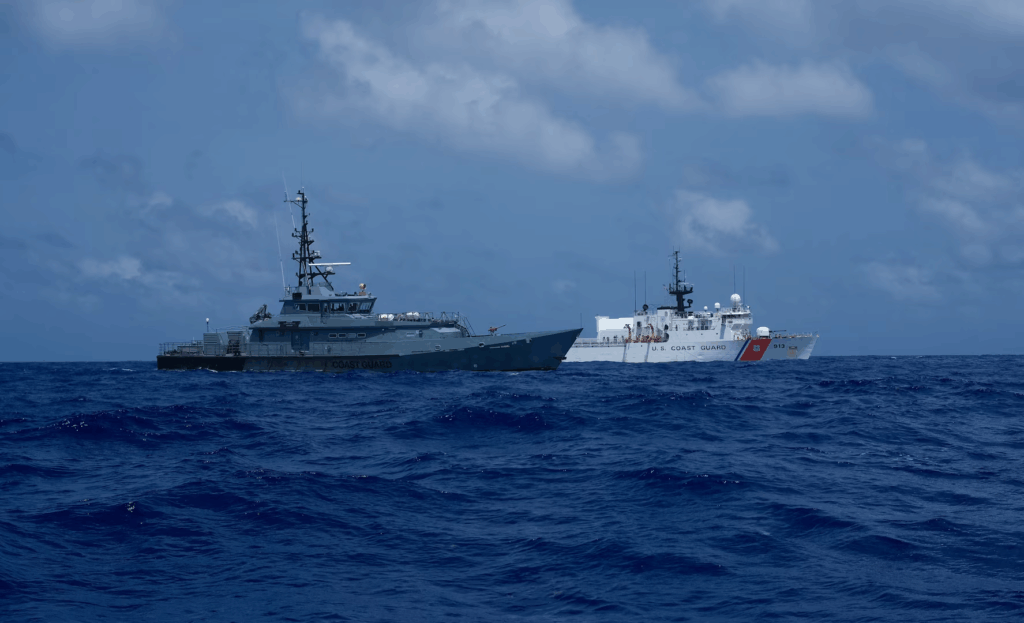
Jamaica Defence Force Coast Guard patrol vessel HMJS George William Gordon and U.S. Coast Guard Cutter Mohawk (WMEC 913) conduct an at-sea transfer of contraband and suspected drug smugglers in the Caribbean Sea, Aug. 23, 2025. Mohawk’s crew conducted a 75-day maritime border security patrol in the Caribbean Sea, Florida Straits and Caribbean Sea. (U.S. Coast Guard photo by Ensign Andrew Ferderer)
From U.S. Coast Guard Atlantic Area, Aug. 29, 2025
KEY WEST, Fla. — The crew of Coast Guard Cutter Mohawk (WMEC 913) returned to their home port in Key West, Friday, following a 75-day maritime border security patrol in the Windward Passage, Florida Straits and Caribbean Sea.
During the patrol, Mohawk’s crew deployed to the Coast Guard Southeast District (CGD-SE) area of responsibility, where crews conducted multi-mission operations with joint service, international, and interagency partners to protect America’s maritime borders from illegal drug trafficking and prevent unlawful alien migration in the region.
Mohawk’s crew initially deployed in support of Operation Vigilant Sentry (OVS) while on patrol in the Windward Passage to deter illegal alien migration along the coast of Haiti.
On Aug. 16, Mohawk’s crew assisted the Jamaica Defence Force by interdicting and transferring a vessel with five Haitians aboard who were attempting to illegally enter Jamaica.
The crew also patrolled the Caribbean Sea in support of the Joint Interagency Task Force – South (JIATF-S) mission of detecting and monitoring illegal drug shipments in the maritime domain for subsequent interdiction and apprehension.
On Aug. 21, a U.S. Navy aircrew identified a suspicious vessel in the Caribbean Sea, and a U.S. Coast Guard aircrew assisted in tracking the go-fast vessel with three suspected drug smugglers aboard. Once Mohawk was vectored in, crew members launched the cutter’s primary interceptor boat, the service’s newest 26-foot, Mk-V over-the-horizon cutter boat, for a 113-nautical-mile pursuit and later coordination with Jamaica Defence Force personnel, who interdicted the vessel in Jamaican waters.
In total, while working with the Jamaica Defence Force during four maritime law enforcement cases, Mohawk’s crew interdicted or assisted in the interdiction or transfer of 13 suspected smugglers, two suspect vessels and seized marijuana to Jamaican authorities for prosecution in Jamaica.
In addition, Mohawk worked alongside Department of Defense and Department of Homeland Security partners, contributing to the disposition of 21 drug smugglers, 2,425 pounds of cocaine, and 4,300 pounds of marijuana with an estimated street value of nearly $23 million.
Throughout the deployment, Mohawk engaged in joint patrols and at-sea transfers with a variety of Coast Guard assets, including Coast Guard Cutter Spencer (WMEC 905), Coast Guard Cutter Vigorous (WMEC 627) and Coast Guard Cutter Alert (WMEC 630).
Reinforcing interagency cooperation, Mohawk partnered with the crews of the USS Cole (DDG-67) and USS Jason Dunham (DDG-109), who provided maritime patrol aircraft support and facilitated a critical transfer of contraband and detainees. These operations support U.S. national objectives and a commitment to a coordinated, multi-faceted approach to deter illicit trafficking and bolster regional security.
Collaborating with U.S. Customs and Border Protection, Mohawk’s crew also provided offshore presence to support Coast Guard Sector Miami alongside additional Coast Guard air and surface assets to help prevent illegal immigration and drug smuggling, while augmenting search and rescue capability off the coast of Florida.
“Mohawk’s recent operations demonstrate our unwavering commitment to safeguarding our nation’s maritime approaches,” said Cmdr. Taylor Kellogg, commanding officer of Mohawk. “Our efforts over the last 75 days have served as a deterrent to criminal organizations seeking to exploit our waterways and reinforce our dedication to a safe and secure maritime environment. I’m proud of our crew for their selfless service, teamwork and devotion to duty.”
CGG-SE is responsible for Coast Guard activities throughout a 1.7 million square mile area including Puerto Rico, the U.S. Virgin Islands, Florida, Georgia, South Carolina, as well as 34 foreign nations and territories. Interdictions are performed by members of the U.S. Coast Guard under the authority and control of CGD-SE, which is headquartered in Miami.
OVS is a Department of Homeland Security-led operation comprised of federal, state and local partners responsible for preventing and responding to maritime migration. OVS, previously known as Homeland Security Task Force – Southeast, was established in 2003 and is comprised of more than 50 federal, state and local agencies.
JIATF-S, in conjunction with partner nations, works to target, detect and monitor illicit drug trafficking within the joint operating area. The organization facilitates the interdiction and apprehension of illicit traffickers to dismantle transnational criminal organizations while reducing the flow of drugs to the public. Once interdiction becomes imminent, the law enforcement phase of the operation begins, and control of the operation shifts to the U.S. Coast Guard throughout the interdiction and apprehension.
Mohawk is a 270-foot, Famous-class medium endurance cutter. The cutter’s primary missions are counter-drug and alien interdiction operations, enforcement of federal fishery laws and search and rescue in support of U.S. Coast Guard operations throughout the Western Hemisphere. The cutter falls under the command of U.S. Coast Guard Atlantic Area, which is based in Portsmouth, Virginia.
For more information on how to join the U.S. Coast Guard, visit GoCoastGuard.com to learn about active duty, reserve, officer and enlisted opportunities. Information on how to apply to the U.S. Coast Guard Academy can be found here.