Coast Guard Offloads More than $74M in Illicit Drugs Interdicted in Eastern Pacific
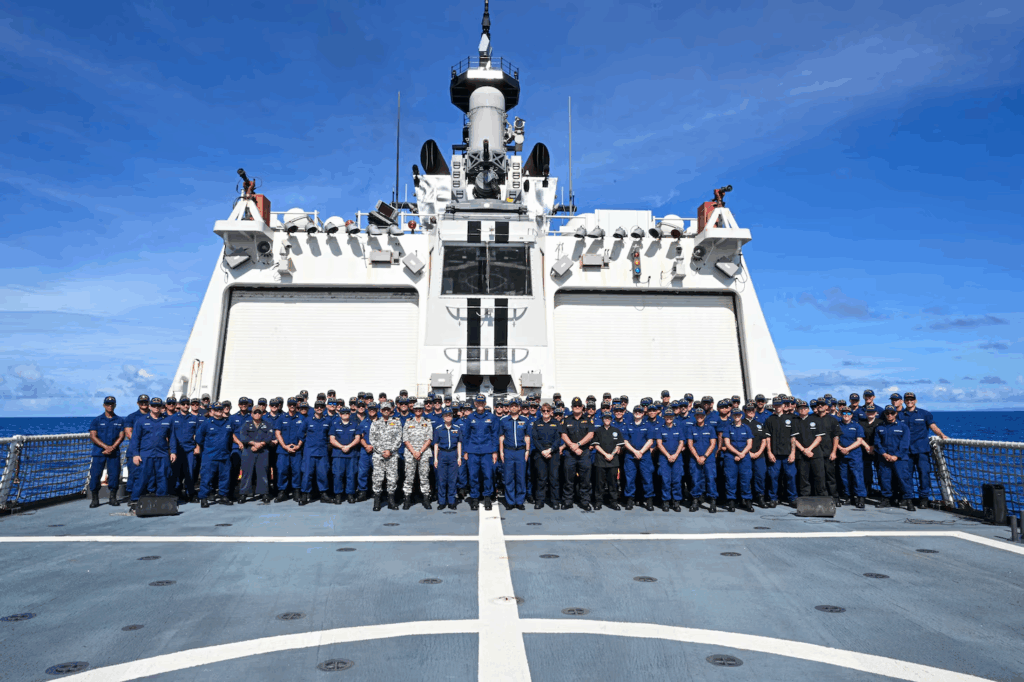
The crew of the Coast Guard Cutter Tahoma standing at parade rest on the flight deck at Port Everglades, Florida, July 29, 2025. The seized contraband was the result of an interdiction on June 24, 2025, approximately 120 miles northwest of Ecuador. (U.S. Coast Guard photo by Petty Officer 3rd Class Nicholas Strasburg)
From U.S. Coast Guard Southeast District, July 29, 2025
MIAMI – U.S. Coast Guard Cutter Tahoma’s crew offloaded approximately 9,970 pounds of cocaine worth $73.7 million, Tuesday, at Port Everglades.
The seized contraband was the result of an interdiction on June 24, 2025, approximately 120 miles northwest of Ecuador by the crew of the Tahoma.
“I couldn’t be more impressed with the determination and teamwork displayed by this crew. They executed this interdiction with precision and professionalism,” said Cmdr. Nolan Cuevas, commanding officer of the Cutter Tahoma. “Behind every successful deployment is a dedicated team of logistics and support personnel. Their tireless efforts ensured we had the resources and maintenance support to operate. Our collective actions reaffirm the Coast Guard’s unwavering commitment to protecting our nation’s borders and the safety of our citizens.”
The following assets and crews were involved in the interdiction operations:
U.S. Coast Guard Cutter Tahoma (WMEC 908)
U.S. Coast Guard Pacific Area Tactical Law Enforcement Team
U.S. Coast Guard Maritime Safety & Security Team Houston
Detecting and interdicting illicit drug traffickers on the high seas involves significant coordination. Joint Interagency Task Force-South conducts the detection and monitoring of aerial and maritime transit of illegal drugs. Once an interdiction becomes imminent, the law enforcement phase of the operation begins, and control of the operation shifts to the U.S. Coast Guard for the interdiction and apprehension phases. Interdictions in the Eastern Pacific Ocean are performed by members of the U.S. Coast Guard under the authority and control of the Southwest Coast Guard District, headquartered in Alameda, California.
Cydome Unveils Cyber‑Incident Reporting Tool as the U.S. Maritime Sector Faces Law Enforcement
A new tool provides immediate compliance support as maritime operators become federally required to report cyber incidents under U.S. law
From Cydome, July 28, 2025
Tel Aviv, July 28, 2025 – With Federal maritime cybersecurity reporting rules that entered enforcement on July 16, U.S.-bound maritime operators are now federally required to report cyber incidents, marking a turning point for shipowners, operators, and offshore stakeholders. In response, Cydome, a leading provider of class‑endorsed maritime cybersecurity solutions, has launched a free reporting tool to simplify compliance. By simply registering, operators take an immediate first step toward meeting the Coast Guard’s cyber‑reporting expectations.
Cydome data shows that roughly every three days, a shipping company faces a cyber threat, yet many still struggle to operationalise existing guidance. The new U.S. regulation, applying to vessels, facilities, terminals, and outer continental shelf (OCS) facilities, mandates not only incident reporting, but also cybersecurity staffing, procedures, and governance. Incident reporting is just one pillar of the revamped Federal Law.
Many of the incidents now deemed reportable are everyday glitches, such as GPS spoofing or jamming, short VSAT dropouts, partial software updates that require a system restart, or an unauthorized USB stick being plugged into a bridge computer; a sustained loss or degradation of communications (e.g., satellite, VHF, or navigation‑data links), or a series of mistyped passwords that lock an account, can also trigger a mandatory report. Taken together, these otherwise routine events can generate dozens of mandatory reports during a single voyage. Non‑compliance is costly: the Coast Guard may impose substantial civil fines, suspend a vessel’s certificate, detain the ship in port, or issue Captain of the Port orders that require anchorage, tug escort, or a full halt to cargo operations until the vulnerability is remedied.
Cydome’s digital platform provides a step-by-step incident workflow, complete with built-in U.S. Coast Guard templates that are pre-filled and auto-routed for seamless submission. The tool enables internal escalation, from IT to CISO to senior management, as well as formal reporting to regulators, helping companies stay compliant efficiently, automatically, and securely. It is built to accommodate both large organizations with dedicated IT or cyber teams and companies with more limited in-house capabilities. It is designed for the operational realities of multi-class fleets, where vessels may fall under different standards and reporting chains.
“This tool puts operators back in control,” said Nir Ayalon, CEO and Founder of Cydome. “We designed it to be simple enough for maritime companies, yet powerful enough to deliver a full audit trail for inspectors. With enforcement now real, the sector needs a no-obstacle solution, and we’re proud to deliver exactly that.”
While the U.S. Coast Guard has been tasked to begin enforcing the new cyber-reporting legislation, Cydome turns the cyber-incident ensuring process into a few clicks. The platform mirrors the Coast Guard’s forms, auto-fills every required field, timestamps supporting evidence, and routes each report from shipboard IT through the CISO and senior management directly to the National Response Center (NRC). In moments, crews can file an inspector‑ready record for navigation, propulsion, ballast, and other critical IT or OT systems, long before an audit team arrives.
With U.S. enforcement already underway, compliance urgency is high. At the same time, the EU’s NIS2 directive has taken effect and will soon be actively enforced. Cydome’s class‑endorsed, independent platform gives European operators the same streamlined reporting workflow, automated escalation paths, and regulator‑ready templates that U.S. users already rely on. By design, the tool adapts seamlessly to multiple regulators, classification societies, and standards, giving mixed fleets a single, simple route to full compliance on both sides of the Atlantic.
“Policy alone won’t keep ships safe; crews need a clear, repeatable way to act,” said Dr. Gary Kessler, former cyber official at the U.S. Coast Guard and a leading voice in maritime cybersecurity. “By translating every Coast Guard requirement into a straightforward process, Cydome delivers that clarity, and because the solution is class‑endorsed, the same disciplined approach works across multi-class fleets and the new European rules as well.”
About Cydome Cydome is a class-certified cybersecurity pioneer, purpose-built for maritime and critical infrastructure. Trusted by all major classification societies for its independence, Cydome’s ISO-certified platform secures IT, OT, and onboard communications, automates vulnerability management, and simplifies compliance with US Coast Guard, NIS2, and global regulations. With seamless onboard deployment and centralized control, Cydome empowers operators to detect, respond to, and protect against cyber threats, ensuring vessels remain secure and compliant.
Bollinger to Lead Partnership with Allies to Deliver U.S. Coast Guard’s Arctic Security Cutter
Partnership comprises world’s premier icebreaker shipbuilders: Bollinger Shipyards, Rauma Shipyards, Seaspan Shipyards and Aker Arctic
Plan delivers fastest schedule, lowest risk, cost certainty, and a full transition to American shipyards
MPI design exceeds all requirements and is production ready, allowing for delivery of the first vessel within 36 months of award.
From Bollinger Shipyards, July 29, 2025
July 29, 2025 — Lockport, La. — Bollinger Shipyards (Bollinger), Rauma Shipyards (Rauma), Seaspan Shipyards (Seaspan) and Aker Arctic (Aker) today announced the formation of a strategic partnership to deliver the lowest-risk, fastest delivery solution of best-in-class Arctic Security Cutters (ASC) to the U.S. Coast Guard. This strategic partnership represents a deliberate effort to strengthen the U.S. industrial base, expand America’s shipbuilding capacity, and equip American workers with the skills to lead in a new era of strategic competition through the transfer of knowledge, technology, and design expertise needed to build the next generation of icebreakers right here in the United States.
Together, the four companies represent the world’s premier icebreaker shipbuilding companies. Bollinger is the largest privately-owned shipbuilder in the United States, is currently building the first heavy icebreaker in the United States in 50 years and has built and delivered nearly 200 high-performance vessels to the U.S. Coast Guard in a 40-year period. Rauma is Finland’s legendary ice-class shipyard. Seaspan Shipyards is the Canadian subsidiary of U.S. based Washington Companies and the leading icebreaker design and build shipyard currently delivering on the largest order book of ice capable vessels in the world. Aker Arctic, is a respected authority in icebreaking technology and design, having developed the majority of icebreaker designs currently in operation today.
Fastest Path to Delivery
The strategic partnership leverages the trilateral ICE Pact framework between the United States, Canada and Finland to answer President Trump’s call to rapidly grow a modernized U.S. icebreaking fleet, with delivery of the first vessel within 36 months of award, and ensures the ASC program is anchored in American shipbuilding and transitions quickly to full U.S. production, consistent with President Trump’s ‘America First’ priority.
“In line with President Trump’s directive to grow and modernize America’s icebreaking fleet, Bollinger is proud to lead this partnership with a focus on speed, quality, certainty and results,” said Ben Bordelon, President and CEO of Bollinger Shipyards. “Speculative designs can derail programs, delay delivery and devastate shipyards. The Seaspan-Aker MPI design is the most mature, construction-ready design available, and we’re bringing proven capability, hard-earned lessons, and unmatched U.S. capacity to get it built. With Bollinger’s access to more than 4,000 skilled workers and over 30 facilities across the country, no one is better positioned to move fast and deliver the Arctic Security Cutter.”
Finnish Industrial Strength for Arctic Operations
This strategic collaboration presents a unique opportunity to apply our proven capabilities in support of the U.S. Coast Guard’s Arctic mission,” said Mika Nieminen, President and CEO of Rauma Shipyards. “We are fully prepared to begin construction immediately, leveraging a mature design and deep experience in building technically complex vessels for operation in severe winter conditions. With a fully operational production line and world-class facilities, we bring reliability and results—not projections. Beyond construction, Rauma provides added value through crew training, bridge simulator programs, and ice trials to support successful commissioning and elevate the technological and operational capabilities. Together with our partners, we offer a clear and executable path to strengthening America’s presence in the Arctic.”
Purpose-Built Design. Mission-Ready Capability.
The Seaspan-Aker Multi-Purpose Icebreaker (MPI) design is the optimal design to meet U.S. Coast Guard requirements as it exceeds all ASC requirements and supports all eleven statutory missions. With the ability to break four feet of ice, travel 12,000 nautical miles, and operate for over 60 days, the design is purpose-built to support the evolving mission needs of the U.S. Coast Guard in the harshest conditions. Additionally, its shared multi-mission design with the Canadian Coast Guard fleet will create the largest class of icebreaking capability in the world, optimizing interoperability and maintenance support.
“We are proud to collaborate with Bollinger, Rauma and Aker Arctic to share our expertise in icebreaker design and engineering with the United States — a historically and close partner with Canada in securing the Arctic,” said John McCarthy, CEO of Seaspan Shipyards. “Together, we’ve assembled the world’s foremost experts in icebreaking construction to deliver a low-risk, mission-ready solution that fully meets the U.S. Coast Guard’s requirements. Together, through the ICE Pact, we’re strengthening Arctic security and advancing the long-term capabilities of our nations’ shipbuilding industries.”
Notably, all other proposed designs will require significant investment and corresponding ramp-up time creating a large risk for schedule, cost and delivery delay.
“We are proud to be part of this collaboration in the development of the USCG’s Arctic Security Cutter icebreakers,” said Mika Hovilainen, CEO Aker Arctic Technology Inc. “This partnership highlights our commitment to advancing maritime security and innovation in the Arctic region. The vessel we are offering has been developed for the Canadian Coast Guard and includes specialized capabilities that are essential for fulfilling the Coast Guard’s missions. Together, we will leverage our expertise to build state-of-the-art icebreakers that meet the highest standards of mission capability and reliability.”
The trilateral U.S.-Canada-Finland shipbuilding partnership is a direct embodiment of the ICE PACT initiative, reinforcing the commitment of all three nations to enhance Arctic security and shipbuilding expertise. This team stands uniquely aligned with national priorities to restore American maritime strength, not just through capability, but through speed and proven performance.
U.S. Coast Guard responds to Chinese Research Vessel off Alaska
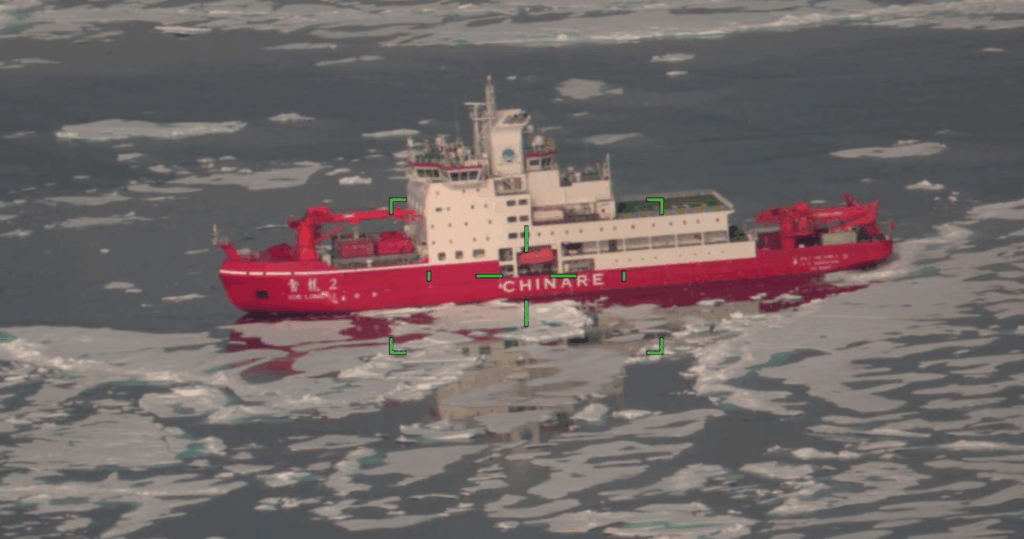
A Coast Guard C-130J Hercules aircrew from Coast Guard Air Station Kodiak detects and responds to the China-flagged research ship Xue Long 2 on the U.S. Extended Continental Shelf (ECS) in the U.S. Arctic, approximately 290 NM north of Utqiagvik, Alaska, July 25, 2025. The C-130J aircraft was operating under Coast Guard Arctic District’s Operation Frontier Sentinel, which is designed to meet presence with presence in response to adversary activity in or near Alaskan waters. (U.S. Coast Guard photo courtesy of Air Station Kodiak)
From U.S. Coast Guard Arctic District, July 26, 2025
JUNEAU, Alaska — The U.S. Coast Guard detected and responded to the China-flagged research ship Xue Long 2 on the U.S. Extended Continental Shelf (ECS) in the U.S. Arctic, approximately 290 NM north of Utqiagvik, Alaska, Friday.
A Coast Guard C-130J Hercules fixed wing aircraft from Air Station Kodiak responded to the Xue Long 2, an icebreaker operated by the Polar Research Institute of China and 130 NM inside the ECS boundary.
The U.S. has exclusive rights to conserve and manage the living and non-living resources of its ECS.
“The U.S. Coast Guard, alongside partners and other agencies, vigilantly monitors and responds to foreign government vessel activity in and near U.S. waters to secure territorial integrity and defend sovereign interests against malign state activity,” said Rear Adm. Bob Little, Commander of the U.S. Coast Guard Arctic District.
The C-130J aircraft was operating under Coast Guard Arctic District’s Operation Frontier Sentinel, which is designed to meet presence with presence in response to adversary activity in or near Alaskan waters.
Newly Modified Coast Guard Cutter Storis Prepares for Arctic Duty
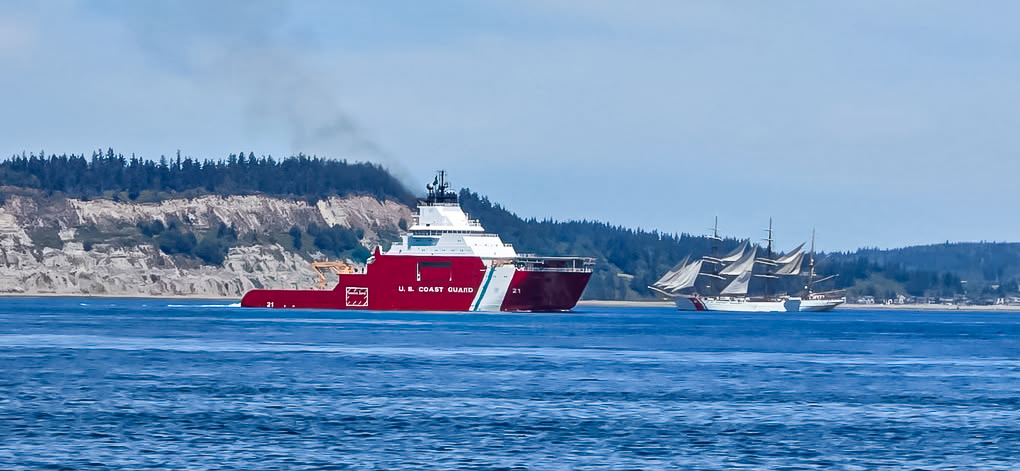
The U.S. Coast Guard Cutter Storis (WAGB 21) transits the Puget Sound near Whidbey Island and crosses paths with the Coast Guard Cutter Eagle (WIX 327), July 11, 2025. The arrival of Storis marks a milestone in the Coast Guard’s Force Design 2028 initiative and broader Arctic strategy. Photo credit: U.S. Coast Guard
The U.S. Coast Guard’s newly acquired icebreaker Storis recently arrived in Seattle to prepare for its first Arctic patrol, after a six-week voyage from Bollinger Shipyards in Mississippi.
The Coast Guard bought the M/V Aiviq (now the Storis) late last November in a $125 million deal with Offshore Surface Vessels LLC. Aiviq is a 360-foot U.S.-built vessel that has supported oil exploration in the Chukchi Sea off the coast of Alaska in the Arctic Ocean and has deployed twice to the Antarctic, according to the service.
Aiviq was built in 2012 and acquired by the Coast Guard in December 2024, making Storis 13 years old as of 2025. It’s the youngest of the icebreaking fleet; before Storis, the Coast Guard had only two active-duty icebreakers, the 26-year-old medium Arctic icebreaker Healy and the 49-year-old heavy Antarctic icebreaker, Polar Star.
The Storis (WAGB-21) is a Polar Class 3 icebreaker meant for Arctic ice patrols. Polar Class 3 denotes an icebreaker that can break about 2.5 meters (approximately 8 feet) of ice. Storis has four Caterpillar C280-12 engines producing 4,060 kilowatts each and propulsion is provided by two ducted controllable-pitch propellers and three bow thrusters and two stern thrusters. Speed is 15 knots (28 km/h; 17 mph) in the open ocean and five knots (9.3 km/h; 5.8 mph) when breaking one meter (3.2 feet) of ice. Crew size is approximately 60 officers and the crew that will be assigned in the summer of 2025.
“Storis departed Pascagoula, Mississippi on June 4 [2025] and transited the Panama Canal June 12 enroute to its future homeport of Juneau. Storis will be commissioned into service in August in Juneau,” said Lieutenant Commander Steve Roth, chief of media relations at the Coast Guard.
Seapower also asked what kinds of modifications were made to Storis.
“Prior to CGC Storis departing Mississippi, the Coast Guard installed StarShield and Coast Guard network connectivity for communications and crew safety,” Roth said. “The service also added standard Coast Guard self-defense capabilities, including a modular armory, ammunition storage, four .50 caliber machine gun mounts, and pyrotechnic lockers. Storis has not been fitted with a Mark 38 [25mm autocannon].”
StarShield is SpaceX’s military-centric satellite program that uses the Starlink satellite constellation network for secure high-bandwidth data and communications transmissions for the government, national security and the military.
Storis will hold a commissioning ceremony in Juneau in August, where it will transition to active status before conducting an Arctic District presence patrol.
“Following that patrol, the Coast Guard will conduct further assessments of the ship to define its capability, develop operational requirements, develop program management planning (including cost, schedule, performance), and look to modify the ship to bolster the U.S. Coast Guard’s capability in the Arctic as required,” Roth said.
USCGC Munro Returns to California Following 121-Day Bering Sea Patrol
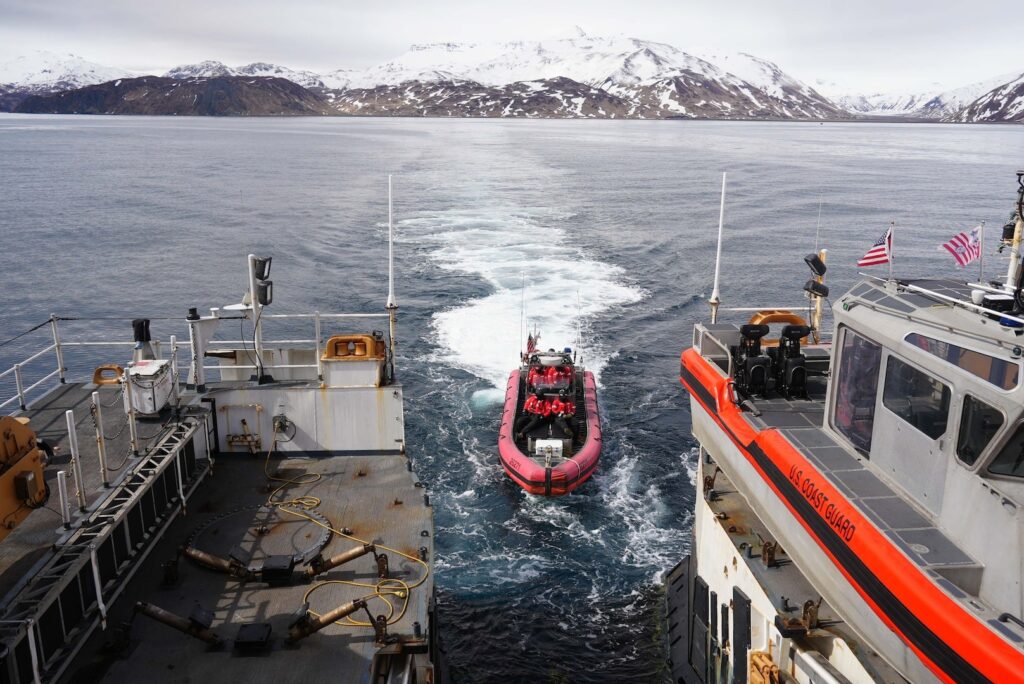
The U.S. Coast Guard Cutter Munro’s (WMSL 755) 26-foot over-the-horizon cutter boat returns to the fantail notch after conducting a boarding of a commercial fishing vessel in Dutch Harbor, Alaska May 2, 2025. Munro conducted a total of 32 boardings in the Bering Sea to preserve fisheries resources and ensure each vessel’s safety, survival, and communications gear complied with federal regulations. (U.S. Coast Guard photo by Lt. j.g. Samika Lewis)
ALAMEDA, Calif. — The crew of the U.S. Coast Guard Cutter Munro (WMSL 755) returned to their Alameda home port Wednesday following a 20,000-nautical-mile, 121-day deployment patrolling the Bering Sea.
Munro departed Alameda mid-March and operated throughout the Bering Sea during a months-long Alaska Patrol in support of the Coast Guard’s Arctic District.
The crew provided U.S. maritime presence in the region while patrolling along the maritime boundary line between the United States and Russia, supporting U.S. strategic interests in the North Pacific Ocean by promoting maritime governance and enforcing domestic fishery regulations.
Munro conducted 32 boardings of commercial fishing vessels to ensure compliance with U.S. law, preserve the integrity of U.S. fish stocks, encourage sustainable fishing practices, and maintain a level playing field within the U.S. exclusive economic zone. Exemplifying interagency coordination, Munro hosted a National Oceanic and Atmospheric Administration law enforcement officer aboard, enhancing enforcement efforts to protect the $6 billion Alaskan fishery.
Munro also served as the primary search and rescue (SAR) asset in the Bering Sea. During the patrol, the crew conducted more than 100 flight evolutions with three separate aircraft, qualifying eight pilots and increasing SAR readiness in the region. Most notably, Munro collaborated with Forward Operating Station Cold Bay, Alaska, to respond to a long-range SAR case.
During the operation, Munro served as a “lily pad,” refueling the Coast Guard helicopter at sea and maximizing its on-scene search time in the vicinity of Nunivak Island, more than 300 nautical miles from Cold Bay, for two people reportedly in the water from an overturned skiff.
The Coast Guard’s efforts to secure Arctic waterways aim to ensure American security, prosperity and freedom in the face of evolving Arctic security challenges and risks.
“Munro is happy to be home after a long and successful patrol,” said Munro’s commanding officer, Capt. Jim O’Mara. “Our job in the Bering Sea was to keep U.S. mariners safe, protect the economic integrity of the U.S. exclusive economic zone, and uphold the border control and territorial integrity of the U.S. Arctic. I can proudly say that we accomplished that mission on all fronts. We’re excited to return home to our friends and families after four months of hard work.”
Enhancing international collaborations, Munro hosted two Royal Canadian Navy exchange officers aboard for the four-month patrol. While aboard, the officers sharpened their seamanship skills, earning certifications as underway officer of the deck after an intensive qualification process that allowed them to lead the bridge team and navigate the cutter.
Commissioned in 2017, Munro is a Legend-class national security cutter named for Signalman First Class Douglas A. Munro, the only Coast Guardsman awarded the Medal of Honor for his heroic actions in 1942, sacrificing himself in the defense, rescue and evacuation of a U.S. Marine battalion from Point Cruz at Guadalcanal in the Solomon Islands.
Coast Guard Base Alameda is the home port for four national security cutters which are 418-feet long, 54-feet wide and have a 4,600-long-ton displacement. They have a top speed of 28 knots, a range of 12,000 nautical miles and can hold a crew of up to 170. Munro routinely conducts operations throughout the Pacific, where the cutter’s combination of range, speed and ability to operate in extreme weather conditions provides the mission flexibility necessary to conduct vital strategic missions.
U.S. Coast Guard Conducts Bilateral Maritime Law Enforcement Operations With Republic of Marshall Islands
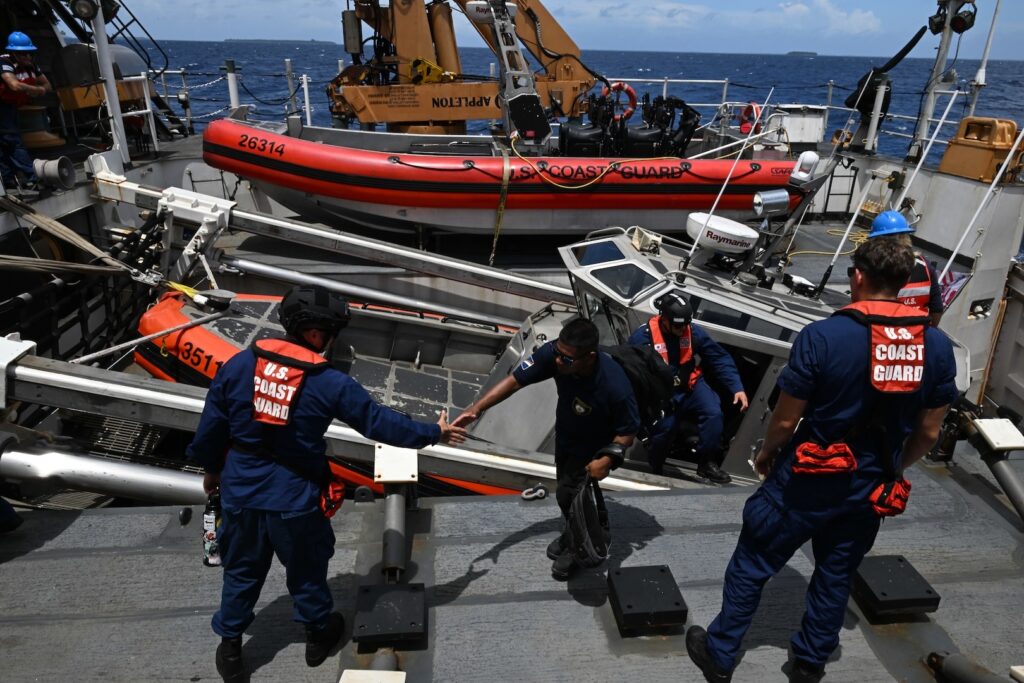
Crew members from the Legend-class U.S. Coast Guard Cutter Stratton (WMSL 752) bring Republic of the Marshall Islands (RMI) Sea Patrol Able Seaman aboard Stratton for bilateral maritime law enforcement operations in RMI waters, July 9, 2025. The U.S. Coast Guard and the RMI have long cooperated to enhance maritime security and sovereignty in the Pacific with a focus on bilateral maritime law enforcement operations that help combat maritime trafficking and safeguard fisheries for both countries. (U.S. Coast Guard photo by Petty Officer 2nd Class Kate Kilroy)
MAJURO, Republic of the Marshall Islands — The crew of national security cutter USCGC Stratton (WMSL 752) conducted at-sea boardings with the Republic of the Marshall Islands (RMI) Sea Patrol within RMI’s exclusive economic zone from July 9 to 13.
Stratton’s crew embarked three law enforcement officers from the RMI Sea Patrol, who provided a combined presence and conducted two successful maritime law enforcement boardings of commercial fishing vessels operating in the RMI EEZ. While no violations were initially reported from the boarding, potential issues with the catch emerged later and constituted further inspection from RMI.
Stratton’s shared patrol with the RMI officers emphasized collaborative efforts in maritime safety, security, and stewardship to maximize the protection of natural resources. The U.S. Coast Guard and RMI have long cooperated to enhance maritime security and sovereignty, focusing on bilateral maritime law enforcement that combats maritime trafficking and safeguards fisheries for both countries.
“It has been an honor to host members of the Sea Patrol and conduct bilateral maritime law enforcement boardings alongside our partners from the Republic of the Marshall Islands,” said Capt. Brian Krautler, the Stratton’s commanding officer. “We focused on boardings to deter, detect, and suppress illicit transnational maritime activity, specifically maritime drug trafficking, fisheries offenses, and illegal migration. Our combined operations and shared efforts enforce laws and preserve the local way of life, deepening our partnership. Standing together, we improve regional maritime governance and build a resilient future for both our nations.”
Bilateral maritime law enforcement agreements enable Pacific nations to protect their sovereignty and help ensure the safety and security of mariners and vessels of all nations conducting legal maritime operations within the nation’s EEZ. Through these agreements, the host nation makes determinations regarding targeting vessels for law enforcement boardings within its EEZ, identifies violations, and determines penalties and follow-on actions.
Stratton conducted these boardings in support of Operation Blue Pacific, the U.S. Coast Guard’s campaign throughout Oceania to maintain unrestricted, lawful access to the maritime domain for all nations, enhance maritime governance, and improve regional prosperity.
Commissioned in 2012, Stratton is one of ten Legend-class national security cutters and one of four homeported in Alameda, California. National security cutters are 418-feet long, 54-feet wide, and have a 4,600 long-ton displacement. They have a top speed of 28 knots, a range of 12,000 nautical miles, and sail with a crew of up to 170. These crews routinely conduct operations throughout the Pacific, where their combination of range, speed, and ability to operate in extreme weather provides the mission flexibility necessary to conduct vital strategic missions.
The namesake of U.S. Coast Guard Cutter Stratton is Capt. Dorothy Stratton, the first female commissioned officer in the Coast Guard. Capt. Stratton led the service’s all-female reserve force during World War II, commanding more than 10,000 personnel. The ship’s motto is “We Can’t Afford Not To.”
Coast Guard Academy Think Tank Puts Polar Issues Front and Center
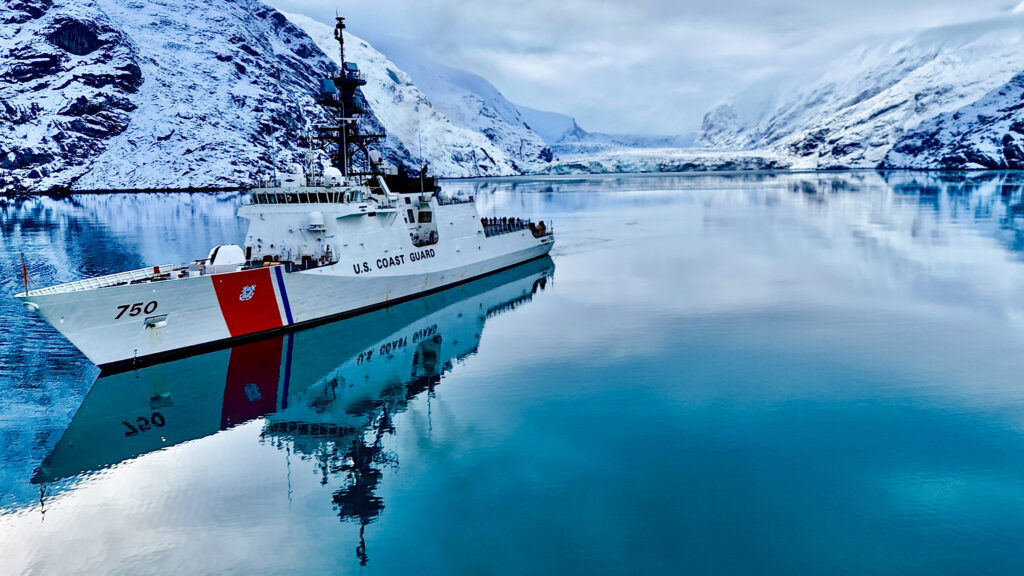
Coast Guard Cutter Bertholf (WMSL 750) transits through Glacier Bay, Alaska, Oct. 24, 2024. During the patrol, Bertholf’s crew operated as far north as the Arctic Circle, patrolling along the maritime boundary line between the United States and Russia and supporting U.S. strategic interests in the North Pacific Ocean. Photo credit: U.S. Coast Guard | Troy Spence
The Arctic is a hot topic these days. As sea ice melts, many questions surface: How should Arctic nations manage more shipping traffic while preserving the delicate environment? Can countries maintain a history of regional cooperation in this increasingly contested space?
As these and other concerns come to the fore, there’s one entity keeping all things polar on the front burner: the Center for Arctic Study and Policy, or CASP.
This tiny U.S. Coast Guard Academy office — with an annual operating budget of just $150,000 and two salaried positions — plays an outsized role in promoting knowledge of the north and south polar regions, a growing area of human interest as the environment rapidly changes.
The Arctic polar region is primarily ocean, surrounded on its edges by the eight member states of the Arctic Council: Canada; the Kingdom of Denmark, which includes Greenland and the Faroe Islands; Finland; Iceland; Norway; the Russian Federation; Sweden; and the United States, where Alaska includes a 1.5-million-square-mile exclusive economic zone in its surrounding waters.
Council decisions are achieved in agreement with six “permanent participants” that represent Aleut, Arctic Athabaskan, Gwich’in, Inuit, Saami and Russian Indigenous people, who have inhabited the Artic for millennia. About 10% of the 4 million Arctic residents are native peoples, according to the “Arctic Review,” an online publication covering polar issues.
There is a long history of international cooperation regarding Arctic scientific research and discovery and access to the region’s abundant fisheries, oil and gas assets, minerals, tourist sites and other resources. But rapid changes to the area’s physical, economic, geopolitical and technological characteristics have altered the future of polar affairs. As a result, many nations, including the United States, have intensified their focus on the region.
The U.S. Coast Guard, part of the Department of Homeland Security, underscored the region’s strategic importance in its 2023 Arctic Strategic Outlook Implementation Plan: “Global geopolitical trends combined with changes to the Arctic’s physical environment are increasing the region’s economic opportunities and strategic importance while hastening the impacts and risks to U.S. Arctic residents, commercial activity, and U.S. national security.”
In the middle of the action is CASP, the U.S. Coast Guard’s only scholarly center and internal think tank. It focuses only on the polar regions — mostly the Arctic but also Antarctica.
Widening Interest, Changing Arctic
Tony Russell, CASP’s executive director since 2022, said his personal interest in the Arctic started in 2007. He was serving as an active-duty officer in the Coast Guard and completing a master’s degree at the Marine Corps University. The Arctic, Russell thought, would be a unique thesis topic.
“That was when folks were just beginning to understand how access — physical access — was increasing via the sea ice reducing [and asking] what does that mean?” said Russell, who retired from the Coast Guard as a captain in 2020. Global attention to the region also coalesced around a 2008 U.S. Geological Survey report predicting the Arctic Circle had massive stores of undiscovered oil and gas reserves.
Then, as now, the drastic environmental changes were hard to ignore: According to the National Snow and Ice Data Center, scientists have observed a consistent decline in Arctic sea ice cover in nearly 50 years of continuous satellite monitoring — a rate of decline of more than 2% per decade. In 2025, sea ice cover is at its lowest level since recording began in 1979.
The Arctic in the past four decades has warmed three times faster than the worldwide average, according to “Arctic Climate Change Update 2024: Key Trends and Impacts — Summary for Policymakers,” a report by the Arctic Council’s Arctic Monitoring and Assessment Programme.
The evolving situation sparked new areas of concern, collaboration and potential conflict among nation-states, residents, the scientific community and industry players.
The area’s residents, land, waterways and wildlife face new threats from erosion, flooding, wildfires and greater human activity. The Arctic is at risk from more air crashes, vessel collisions and groundings. It’s also exposed to threats to subsea cables, unsafe shipping through the Russian maritime Arctic and friction from regional military exercises (involving the U.S. and its allies but also Russia and China).
“That all speaks to rising interest for U.S. national security,” Russell said.
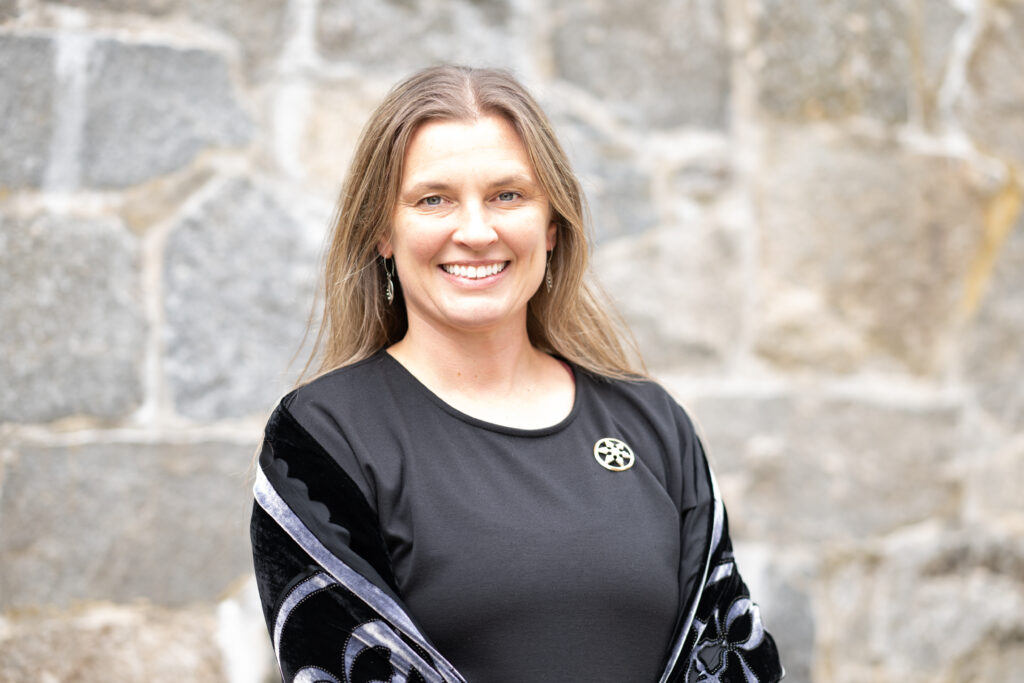
Dr. Abbie Tingstad poses for a photo at the U.S. Coast Guard Academy, Sept. 25, 2024. Tingstad is a renowned Arctic analyst, a trusted voice on the challenges posed by the changing environment in the region and also the first Visiting Research Professor at the Center for Arctic Study and Policy (CASP) at the U.S. Coast Guard Academy. Photo credit: U.S. Coast Guard | Petty Officer 2nd Class Janessa-Reyanna Warschkow
Renewing the Center’s Mission
Although CASP was founded in 2014, Russell’s tenure began as the Coast Guard Academy was relaunching and revitalizing the center, complete with new offices at the academy’s New London, Connecticut, headquarters. The center is now housed within the academy’s Office of Scholarship, Research and Innovation. Its renewed mission is focused on educating cadets, conducting research and analysis, and broadening partnerships.
At the reborn CASP, a federally funded rotating research professor position was first filled in 2023 by Arctic analyst Abbie H. Tingstad, who holds a Ph.D. and the title of visiting arctic research professor. Tingstad’s predecessors, Drs. Rebecca Pincus and Barry Zellen, were funded by Coast Guard Academy alumni donations.
In addition to overseeing a two-year research agenda, Tingstad is a sought-after expert on Arctic affairs and widely published author of Arctic peer-reviewed research, policy papers and presentations, and media commentaries. Her work has touched on topics such as the role of icebreakers in diplomacy and the effects of a poleward shift in fish stocks in the Northern Bering Sea.
Tingstad also directs CASP’s participation in international policy development for the Arctic. “For example,” Tingstad said, “we are part of a multinational network of research and educational institutions that are shaping the conversation about all the facets of Arctic security and what that means, and how it’s changing, and what it implies for governance and cooperation in the Arctic region.”
CASP is also educating the next generation of Coast Guard officers. It accepts some 18 to 20 cadets every other semester into its polar studies course, focused on U.S. and international strategies and policies in the region. In addition to studying Arctic history and policy, cadets attend expert lectures involving academia, the military, business, Indigenous communities and political spheres.
They also benefit from CASP’s reorganization, which “allowed us to increase our access to all of the academic disciplines at the academy,” Russell said. That’s important because “the challenges that the Arctic faces are definitely multidisciplinary,” he said, involving infrastructure, science, policy, business and more. “All of those things factor into what’s going on in the Arctic region.”
Each year, CASP encourages six to eight cadets to delve deeper into polar issues as Arctic scholars. Russell highlighted two cadets, among others, making important contributions to Arctic policy.
Elise Beauchemin, an Arctic scholar studying marine environmental science, completed CASP-sponsored internships last year with the University of Alaska Anchorage and at CASP. She worked with the Coast Guard Research and Development Center, the Massachusetts Institute of Technology’s Lincoln Labs, and the Navy’s Undersea Warfare Development Center. She also completed a course supporting Tingstad’s research. Beauchemin was accepted into the prestigious Fulbright U.S. Student Program and recognized by DHS Secretary Kristi Noem at the Coast Guard Academy commencement in May.
And, after completing the Arctic studies course, Emelia Campbell was one of three team members invited to partner with the Coast Guard’s Maritime Law Enforcement Fisheries Division to research implementation options for the Central Arctic Ocean Fisheries Agreement. This 10-party pact bans commercial fishing in the central Arctic Ocean for 16 years while scientists study the ecological impact. With CASP, Campbell participated in the Fridtjof Nansen Institute’s Arctic Security Conference in Oslo, Norway. In January 2025, she presented research findings at the Arctic Frontiers conference in Tromsø, Norway, and later briefed Coast Guard executives.
CASP has also sponsored cadets to attend and present at industry conferences, such as the Navy League’s Sea-Air-Space, American Society of Naval Engineers symposia and International Marine Design Conference.
The center supports summer internships for roughly eight cadets each year. “We have two cadets right now on an exchange with the Icelandic Coast Guard,” Russell said, where they’re “getting some great exposure” working with another Arctic nation partner.
Other cadets have interned at the Marine Exchange of Alaska, a nonprofit focused on preventing maritime disasters; the Arctic Domain Awareness Center, a DHS research center at the University of Alaska Anchorage; and the Defense Department’s Ted Stevens Center for Arctic Security Studies.
Promoting International Partnerships
In addition to maintaining a spirit of cooperation, CASP’s ongoing outreach and engagement with most Arctic nations and dozens of U.S. and international organizations — through cadet exchanges, tabletop exercises, policy and research development, and other areas — is yielding Arctic insights for potential action by U.S. and allied militaries, policymakers, industry groups and affected populations.
For the Coast Guard decision-makers, Russell said, CASP “helps flatten the learning curve and it helps maintain consistency and quality of information we’re using for those decisions.” And for external partners who need or want to share information with the Coast Guard, “we know who the subject matter experts are within the service that do that.”
Through its extensive partner network, CASP can foster international dialogue on issues such as illegal fishing, homeland defense, Arctic-capable shipping design, transportation safety, biodiversity preservation, ecosystem management and emergency preparedness.
For instance, CASP helps nations better prepare for Arctic emergencies, which now occur with relative frequency. That includes this year’s Bering Air Flight 445 that crashed on the sea ice on the way to Nome, Alaska, killing 10 people on board; and the 2023 grounding of a 206-person cruise ship stranded for days on Greenland’s remote East Coast.
A recent CASP-hosted tabletop exercise convened emergency response and aviation representatives from four nations and several U.S. military and federal organizations to wargame crises in remote areas of the Arctic. The exercise revealed potential gaps in training, infrastructure, communication and hardware. CASP also moderated a panel discussion on cruise ship search and rescue with the Association of Arctic Expedition Cruise Operators and maritime rescue organizations.
“At the end of the day,” Russell said, “the process is as important as the answer, and we strive to provide the kind of analytical research and defendable background knowledge that best informs polar policy choices and answers.”
Erika Fitzpatrick is an award-winning writer living in Washington, D.C. With more than 20 years of experience in public policy journalism and communications, she specializes in covering issues affecting service members, veterans and military families. This article originally appeared in the July-August issue of Seapower.
U.S. Coast Guard completes historic Quad Sail to strengthen Indo-Pacific maritime partnership
Quad partners from the U.S. Coast Guard, Japan Coast Guard, Australian Border Force, Indian Coast Guard and the command and crew of the Legend-class U.S. Coast Guard Cutter Stratton (WMSL 752) take a photo on the flight deck during the first Quad at-sea mission while Stratton patrols the Pacific Ocean, July 1, 2025. (U.S. Coast Guard photo by Petty Officer 2nd Class Kate Kilroy)
From U.S. 7th Fleet, July 20, 2025
SANTA RITA, Guam – The U.S. Coast Guard Cutter Stratton (WMSL 752) arrived in Guam, July 3, after a landmark multinational sail with representatives aboard from the maritime forces from Australia, India, and Japan—collectively known as the Quad.
As four leading maritime nations in the Indo-Pacific, Quad nations are united in our conviction that peace and stability in the maritime domain underpin the security and prosperity of the region. We are committed to a region where all countries are free from coercion and strongly oppose any unilateral actions that seek to change the status quo by force or coercion.
This inaugural event underscored the U.S. Coast Guard’s commitment to fostering a free and open Indo-Pacific and reflected the U.S. Coast Guard’s strategic priority to strengthen partnerships that uphold the rule of law, sovereignty, and regional stability. The Quad Sail enhanced joint operational capabilities, boosted readiness, and promoted a secure Indo-Pacific region with unrestricted, lawful access to maritime domains.
“The Quad Sail signaled a hallmark moment for our respective nations and the Indo-Pacific,” said Capt. Brian Krautler, commanding officer of the Stratton. “Together, we fostered professional exchanges and enhanced maritime domain awareness. We believe in the necessity of a prosperous and secure Indo-Pacific and share concern over the rise of malign behaviors that undercut law and order and erode maritime safety and security. The Stratton team is honored to represent the U.S. Coast Guard in this historic endeavor.”
The U.S. Coast Guard’s mission in the Indo-Pacific relies on close collaboration with allies, enhancing operational flexibility and delivering a wide range of capabilities. National security cutters, such as the Stratton, routinely operate across the Pacific.
Throughout Stratton’s patrol, the crew has engaged with regional partners and participated in joint operations to advance maritime safety and security. Stratton is currently assigned to Destroyer Squadron (DESRON) 15, the Navy’s largest DESRON and the U.S. 7th Fleet’s principal surface force. DESRON 15 regularly assumes tactical control of surface units operating in the area.
Commissioned in 2012, Stratton is one of 10 Legend-class national security cutters; four of the 10 are homeported in Alameda, California. These 418-foot vessels, with a 54-foot beam and 4,600 long-ton displacement, have a top speed of 28 knots, a 12,000-nautical-mile range, and a crew capacity of up to 170. Their versatility, range, speed, and ability to operate in extreme weather provide mission flexibility throughout the Pacific.
7th Fleet is the U.S. Navy’s largest forward-deployed numbered fleet and routinely interacts and operates with allies and partners in preserving a free and open Indo-Pacific region.
U.S. Coast Guard Cutter Resolute Returns Home, Offloads Approximately $93.2 Million Worth of Drugs in St. Petersburg
The crew of USCGC Resolute (WMEC 620) pose for a group photo during a drug offload at Coast Guard Sector St. Petersburg, July 17, 2025. Resolute deployed in support of Joint Interagency Task Force-South (JIATF-South), an interagency and international task force that conducts counter-illicit trafficking and security cooperation operations in the Caribbean Sea and Atlantic and Pacific Oceans. (U.S. Coast Guard photo by Petty Officer 1st Class Riley Perkofski)
ST. PETERSBURG, Fla. – The crew of U.S. Coast Guard Cutter Resolute offloaded nearly 12,600 pounds of cocaine, worth an estimated $93.2 million, in their homeport of St. Petersburg, Thursday, following a 59-day patrol in the Eastern Pacific.
Resolute deployed in support of Joint Interagency Task Force-South (JIATF-South), a U.S. Department of Defense command that leverages the capabilities of U.S. Intelligence and Law Enforcement agencies, Allies and Partner Nations to detect, monitor, and support interdiction of illicit narcotics movements in the air and maritime domains throughout the Western hemisphere. During their patrol, Resolute’s crew worked to detect, deter, and intercept smuggling of illegal narcotics into the United States.
Resolute spent several weeks as the only U.S. Coast Guard cutter in the Eastern Pacific, playing a critical role in maintaining maritime domain awareness and operational coverage across a vast area, spanning over 1,000,000 square miles. Halfway through patrol, Resolute was joined by the cutters Escanaba, Tahoma, and Hamilton, providing broad, coordinated coverage across the major drug-smuggling vectors running from Ecuador towards the United States.
The crew expertly completed a total of six vessel interdictions, including a sailing vessel, one fishing vessel, and four go-fast style speedboats. Although several of the boats were determined to not be carrying illicit contraband at the time of interdiction, they provided excellent opportunities to hone Resolute’s tracking and interception capabilities, often done in coordination with Maritime Patrol Aircraft (MPA) support from the sky. One notable case saw Resolute launching their primary interceptor, an Over-the-Horizon Cutter Boat (OTH), from nearly 70 nautical miles away to successfully intercept a high-speed go-fast vessel transiting south of the Galapagos.
During this time, Resolute’s law enforcement team successfully interdicted a suspicious vessel and seized nearly 5,000 pounds of cocaine concealed within the vessel’s cabin. Less than two weeks later, Resolute coordinated with an MPA and launched their OTH to pursue a go-fast vessel transiting in heavy seas. While in pursuit, the OTH experienced a critical structural failure, rendering the asset inoperable. Resolute was able to safely recover the disabled OTH, launched their second interceptor, and worked with the MPA to force the go-fast to jettison their load of contraband, over 3,700 pounds of cocaine. Less than 24 hours after that pursuit, Resolute interdicted yet another go-fast style vessel carrying over 3,900 pounds of cocaine. Together, these three successful seizures prevented over $93.2 million in illicit narcotics from reaching American streets.
The OTH casualty significantly reduced Resolute’s interdiction capability and required a rapid solution in a logistically challenging area of operations. Demonstrating remarkable interagency cooperation and logistical agility, the crew of Resolute worked with JIATF-S, the Coast Guard’s Surface Forces Logistics Center (SFLC), and U.S. Coast Guard Air Station Elizabeth City, to swiftly coordinate the replacement of the OTH. The replacement boat was airlifted to Panama City, Panama, aboard a U.S. Coast Guard HC-130J Super Hercules aircraft. Demanding precise timing and expert execution, the undertaking powerfully underscored the Coast Guard’s dedication to maintaining a persistent and effective presence in its counter-narcotics mission. With the replacement OTH safely cradled aboard the cutter, Team Resolute was able to resume and successfully complete their patrol in the Eastern Pacific drug smuggling vectors.
“Yet again, the crew impressed me with their ability to achieve significant operational success and protect American interests while fighting every day to maintain a nearly 60-year-old ship in a challenging maritime environment,” said Cmdr. Ian Starr, Resolute’s commanding officer.
Resolute is a 210-foot, Reliance-class medium-endurance cutter. The cutter’s primary missions are counter drug operations, migrant interdiction, and search and rescue in support of U.S. Coast Guard operations throughout the Western Hemisphere. For information on how to join the U.S. Coast Guard, visit GoCoastGuard.com to learn about active duty, reserve, officer, and enlisted opportunities. Information on how to apply to the U.S. Coast Guard Academy can be found here.
These interdictions relate to Organized Crime Drug Enforcement Task Forces’ (OCDETF), Strike Force Initiatives and designated investigations. OCDETF identifies, disrupts, and dismantles the highest-level criminal organizations that threaten the United States using a prosecutor-led, intelligence-driven, multi-agency approach. Additional information about the OCDETF program can be found at https://www.justice.gov/OCDETF.
For information on how to join the U.S. Coast Guard, visit GoCoastGuard.com to learn about active duty, reserve, officer, and enlisted opportunities. Information on how to apply to the U.S. Coast Guard Academy can be found here.