From U.S. Coast Guard Headquarters Public Affairs, July 3, 2025
WASHINGTON — The U.S. Coast Guard announced Thursday the renaming of its operational districts from numerical to geographic designations, a key initiative under Force Design 2028 (FD2028).
This strategic change, directed by Secretary of Homeland Security Kristi Noem on May 21, 2025, aims to indicate more accurately the regions they serve and represent. Renaming operational districts revises a numbered system established during World War II, when the Coast Guard operated as part of the Navy to ensure alignment between the services. In the 80 years since the Coast Guard separated from the Navy, the Service has maintained the numbered districts. However, the Navy stopped using numbered districts over 25 years ago.
Updating operational districts to regional names will more clearly align districts with their areas of responsibility, facilitate collaboration with interagency partners, and ensure the American public and maritime stakeholders can easily find and understand the districts in which they live, recreate and operate. This change is a direct action within FD2028’s organization campaign, which is focused on adapting the Coast Guard’s structure to remain effective and responsive.
The new geographic names, approved by the Department of Homeland Security, are as follows:
District 1: USCG Northeast District District 5: USCG East District District 7: USCG Southeast District District 8: USCG Heartland District District 9: USCG Great Lakes District District 11: USCG Southwest District District 13: USCG Northwest District District 14: USCG Oceania District District 17: USCG Arctic District
“This renaming is more than just a change in labels; it’s a critical step in our journey to become a more agile, capable, and responsive fighting force,” said Acting Commandant Kevin E. Lunday. “Under Force Design 2028, we are driving fundamental changes to speed decision-making, improve strategic alignment, and ultimately best serve the American people for decades to come. This initiative underscores our commitment to ensuring that change is lasting and has an enduring impact on the Service and the Nation.”
This change will not impact operations or change existing geographical district boundaries. To memorialize the updated names for operational districts, the Coast Guard is undertaking the process of formally changing district names in the Code of Federal Regulations. Through this process, the Coast Guard will continue to communicate with stakeholders and provide updated resources and information as appropriate.
For more information, please contact Coast Guard Media Relations at [email protected].
Read more about the Coast Guard’s transformation through FD2028 here: USCG Force Design 2028.
Coast Guard offloads more than $20 million in illicit drugs interdicted in Caribbean Sea
From Coast Guard 7th District, July 2, 2025
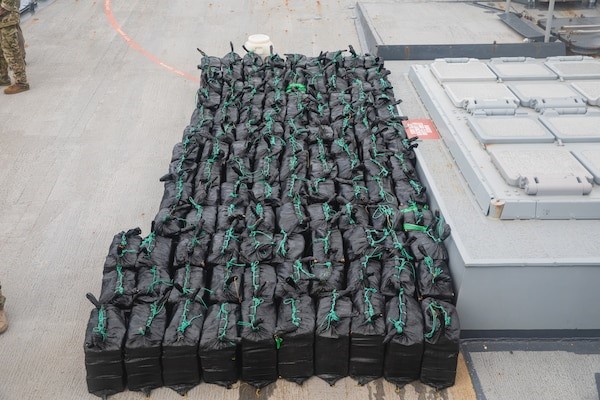
MIAMI – U.S. Coast Guard Cutter Northland’s crew offloaded approximately 2,220 pounds of cocaine and 3,320 pounds of marijuana worth an estimated $20.1 million, Wednesday, at Coast Guard Base Miami Beach.
The seized contraband was the result of four interdictions in the Caribbean Sea by the crews of HMCS William Hall and HNLMS Friesland with embarked Coast Guard law enforcement detachments.
“Stopping harmful and illicit narcotics from reaching our shores and entering our communities is a team effort,” said Cmdr. Brian Gismervik, Coast Guard Cutter Northland’s commanding officer. “In the dynamic maritime environment, it takes the combined efforts of our joint force DoD, DHS, and international partners to combat transnational criminal organizations.”
The following assets and crews were involved in the interdiction operations:
Royal Canadian Navy ship HMCS William Hall
Royal Netherlands Navy ship HNLMS Friesland
U.S. Navy ship USS Cole
U.S. Coast Guard Tactical Law Enforcement Team South, LEDET 404
U.S. Coast Guard Tactical Law Enforcement Team Pacific, LEDET 103
Detecting and interdicting illicit drug traffickers on the high seas involves significant interagency and international coordination. Joint Interagency Task Force-South, in Key West, conducts the detection and monitoring of aerial and maritime transit of illegal drugs. Once an interdiction becomes imminent, the law enforcement phase of the operation begins, and control of the operation shifts to the U.S. Coast Guard for the interdiction and apprehension phases. Interdictions in the Caribbean Sea are performed by members of the U.S. Coast Guard under the authority and control of the Seventh Coast Guard District, headquartered in Miami.
Make a difference on land, at sea or in the air with the Coast Guard. Visit GoCoastGuard.com to learn more about active duty and reserve, officer and enlisted opportunities. Information on how to apply to the U.S. Coast Guard Academy can be found here.
USCGC Vigorous Returns Home After 51-Day Counter-Migration Patrol in Windward Passage
From U.S. Coast Guard Atlantic Area, July 1, 2025
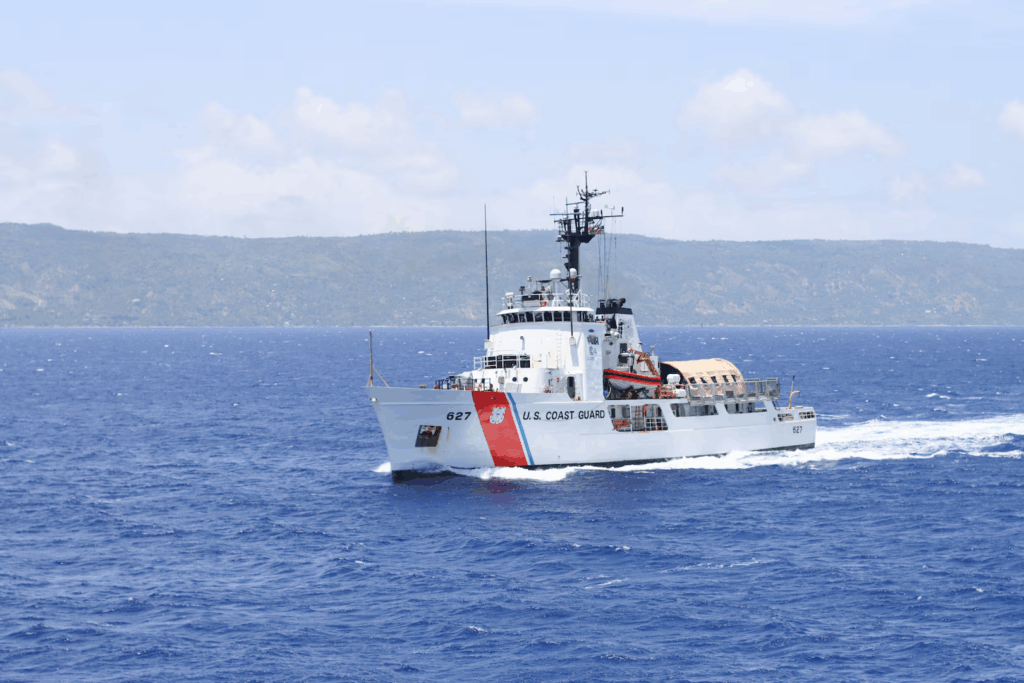
PORTSMOUTH, Va. — The crew of Coast Guard Cutter Vigorous (WMEC 627) returned to their home port in Portsmouth, Tuesday, following a 51-day patrol in the Windward Passage.
Vigorous deployed in support of Operation Vigilant Sentry to advance the primary missions of safety of life at sea and deterrence of illegal alien ventures in known transit zones. Vigorous’ crew conducted maritime safety and security missions while protecting America’s maritime borders from unlawful entry.
Vigorous conducted several consent-based interview boardings in the Canal de la Tortue, Haiti, a key transit zone between Haiti and points north. Vigorous also patrolled for Coast Guard Sector Key West and Sector Miami, which are crucial to deterring illegal activities and maintaining maritime domain awareness. Working with Department of Defense and Department of Homeland Security entities, Vigorous contributed to the disposition of 17 suspected smugglers and nearly 1,400 pounds of cocaine with an estimated street value of $10 million.
Vigorous also honed its tactical proficiency through advanced boat tactics training alongside Coast Guard Cutter Campbell (WMEC 909). The crews conducted pursuit training, enhancing their interoperability and response capabilities in high-speed maneuvering situations. Additionally, they completed a towing exercise, further strengthening their collaborative efforts in maritime assistance and rescue operations.
In a demonstration of international partnership, the Vigorous worked with the Department of State to deliver critical boat supplies to the Haitian Coast Guard, bolstering their capabilities and strengthening maritime security cooperation in the region.
“The crew performed exceptionally well throughout this demanding patrol,” said Cmdr. Charles Bare, commanding officer of Vigorous. “Their dedication and professionalism enabled us to achieve significant operational successes, contributing directly to regional stability and interagency and international partnerships.”
DHS Operation Vigilant Sentry is a DHS-led operation comprised of federal, state and local partners responsible for preventing and responding to maritime migration. OVS, previously known as Homeland Security Task Force – Southeast, was established in 2003 and is comprised of more than 50 federal, state, and local agencies.
Vigorous is a 210-foot, Reliance-class medium-endurance cutter homeported in Portsmouth, Virginia. Its missions include search and rescue, maritime law enforcement, marine environmental protection, and homeland security operations in the Atlantic Ocean. The cutter falls under the command of U.S. Coast Guard Atlantic Area, which is based in Portsmouth, Viginia.
For more information on how to join the U.S. Coast Guard, visit GoCoastGuard.com to learn about active duty, reserve, officer and enlisted opportunities. Information on how to apply to the U.S. Coast Guard Academy can be found here.
Securing the Backbone: The Defense Industrial Base
PHOTO BY: Air Force Staff Sgt. Marco Gomez
By Ryan Caughill, President, Western New York Council, Navy League of the United States.
“You can’t fight tomorrow’s war with yesterday’s plans.”
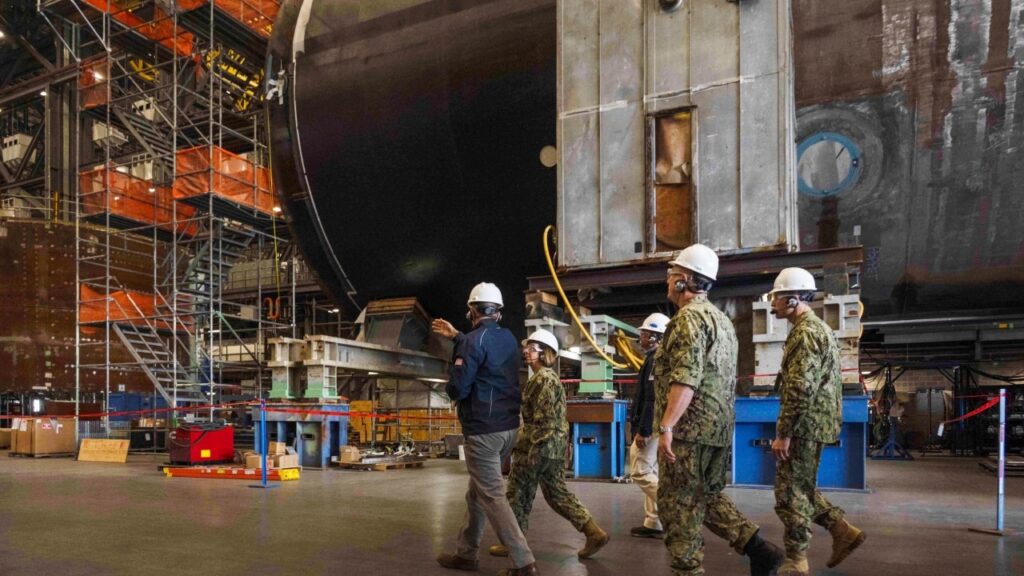
In the summer of 2018, I completed my internship at Moog Inc., one of the United States’ premier defense contractors. My role was in Environmental Health & Safety, but my mission went deeper: I was tasked with modernizing and guiding emergency management planning across an organization that was deeply integrated into the Defense Industrial Base (DIB), and yet, lacked a dedicated emergency management function.
Like my time later at M&T Bank, this experience left a lasting impression. It showed me that even companies at the forefront of defense technology can have blind spots when it comes to continuity, resilience, and crisis preparedness.
[While this article isn’t just about my singular experience, but a holistic and general overview,] that’s what makes the Defense Industrial Base one of the most paradoxical critical infrastructure sectors in America: incredibly advanced, but dangerously lacking.
The Backbone Behind the Uniform The Defense Industrial Base is more than just tanks, missiles, or aircraft. It’s an expansive network of over 100,000 private companies that provide products, services, logistics, and technologies to support the U.S. military.
This includes:
Weapons systems and munitions
Aerospace components and military-grade software
Advanced electronics and cyber capabilities
Research and development institutions
Transportation and supply chain networks
Small manufacturers producing critical, often irreplaceable, parts
Some of these are Fortune 500 giants. Many are small, family-owned machine shops in rural communities. All are vital.
But here’s the problem: there is no unified resilience standard across the DIB. And that’s a problem hiding in plain sight.
The Vulnerabilities No One Wants to Talk About During my time at Moog, I saw firsthand how emergency management often sits outside the core of DIB corporate culture. Not out of apathy, but due to the sheer scale and complexity of operations. Many companies have excellent safety and security programs, but few have comprehensive crisis management systems. Fewer still have trained emergency managers or business continuity professionals guiding cross-functional coordination across cyber, physical, and operational risks. This isn’t to say they don’t exist, I’ve met some, and they do a really great job.
That makes this sector vulnerable in ways most people don’t understand.
The DIB is:
Extremely decentralized: A single failed supplier can halt delivery of critical weapons platforms.
Highly classified: Cyber breaches can compromise national defense secrets, yet many companies, especially smaller ones, lack mature cyber defenses.
Logistically fragile: Long-lead items, global supply chains, and just-in-time manufacturing leave little room for error.
Resource-limited: Many smaller firms simply don’t have the bandwidth or expertise to build robust resilience programs.
Worse yet, we take it for granted that these companies – because of what they do – are already hardened. That’s not always true.
Why This Sector Isn’t Taken Seriously — Until It’s Too Late The Defense Industrial Base occupies an odd place in the national consciousness. We respect the military. We fund the military. But we rarely consider who makes the military work.
The supply chains, R&D labs, fabrication shops, and logistics hubs that build and sustain America’s warfighting capability are not invincible. And yet, the DIB isn’t regularly treated like critical infrastructure in the traditional emergency management sense , even though it underpins our strategic deterrence, military readiness, and wartime surge capacity.
That disconnect has consequences. If a natural disaster, ransomware attack, insider threat, or geopolitical disruption strikes a key node in this ecosystem, the effects won’t be immediate headlines. They’ll show up months or years later when a military platform is delayed or compromised.
In an age of strategic competition with China and resurgent threats in Europe and the Middle East, that delay could mean the difference between deterrence and disaster.
Strengthening the Arsenal of the Republic If we want the DIB to remain viable, competitive, and secure, we must elevate resilience as a strategic imperative, not an afterthought.
At the Federal Level:
The DoD must go beyond cybersecurity compliance and require holistic emergency management, business continuity, and crisis communications programs for Tier 1 and Tier 2 contractors
Congress should fund regional DIB resilience initiatives and technical assistance hubs to help small firms build preparedness capacity
DIB firms must be integrated into DHS-FEMA and CISA exercises, not treated as isolated contractors
In the Private Sector:
Contractors should invest in full-time emergency managers or resilience officers, especially at multi-site operations Continuity of Operations plans (COOP) must be tested regularly and integrated across functions – especially cyber, facilities, HR, and production Leadership should prioritize exercises and scenario planning, particularly for cyber-physical convergence threats
Across the Supply Chain:
Vendors must be mapped and tiered by criticality, with redundancy plans in place for sole-source dependencies. Smaller manufacturers should be given access to resilience toolkits and grant-supported planning assistance.
For the Defense Community:
Collaboration must improve across DoD, DHS, and the intelligence community to identify emerging threats to the DIB Emergency management professionals should be embedded, or a partner, in acquisition planning and supplier vetting The public and political class must recognize that defense readiness includes domestic resilience
Resilience is Readiness The Defense Industrial Base is one of the quietest, but most consequential, sectors in the nation’s infrastructure portfolio. You don’t see it in parades. But it’s there in every missile defense test, every jet engine, every encrypted radio, and every armored vehicle.
If we allow it to weaken, structurally, logistically, or digitally, we erode not just our defense capability, but our credibility.
We cannot afford to wait for crisis to realize that the arsenal of our Republic isn’t just built on innovation or budgets.
It’s built on resilience.
These challenges aren’t theoretical, they’re unfolding in real time. Delays in the F-35 rollout, the Navy’s struggles and eventual cancellation with the Littoral Combat Ship (LCS) program, and schedule slippages in the next-generation aircraft carriers, guided missile frigates, and Columbia-class ballistic missile submarines all point to a sector under immense strain. While these issues stem from a mix of design complexity, funding cycles, and industrial bottlenecks, one thing is clear: the Defense Industrial Base cannot afford additional disruption.
A well-funded, well-placed crisis management function, integrated at both the facility and enterprise level, won’t solve design flaws or procurement hurdles, but it can absorb shock, accelerate recovery, and ensure continuity when disaster strikes. In a sector already grappling with compounding risks, crisis management isn’t a luxury, it’s a strategic buffer against the unpredictable threats of 21st century warfare.
Coast Guard Reports Fewest Boating Fatalities in More Than 50 Years
WASHINGTON — The U.S. Coast Guard released its 2024 Recreational Boating Statistics Report Tuesday.
The report records the fewest boating fatalities since the Service began collecting statistics more than 50 years ago.
Fatalities fell 1.4% to 556 from 564 in 2023, while overall incidents increased by 1.1% from 3,844 to 3.887. Nonfatal injuries increased 2.1% from 2,126 to 2,170. Alcohol continued to be the leading known contributing factor in fatal boating accidents in 2024, accounting for 92 deaths, or 20% of total fatalities.
The fatality rate was 4.8 deaths per 100,000 registered recreational vessels, a 2% decrease from last year’s rate of 4.9 deaths per 100,000. In 1971, when the Safe Boating Act was first passed, the rate was 20.6 deaths per 100,000. Property damage totaled $88 million, and operator inattention, improper lookout, operator inexperience, machinery failure and navigation rules ranked as the top five primary contributing factors in accidents.
“Boating under the influence is not only illegal but it is also dangerous,” said Capt. Robert Compher, inspections and compliance director. ”The effects of alcohol can be magnified when boating in the sun and on a moving vessel. Staying sober protects you and those around you.”
Deaths occurred predominantly on vessels operated by individuals who had not received boating safety instruction, accounting for roughly 70% of fatalities. Open motorboats, personal watercraft and cabin motorboats were the vessel types most involved in reported incidents.
There was an increase in deaths on standup paddleboards. Drowning accounted for three-quarters of deaths, with 87% of victims not wearing life jackets. The Coast Guard reminds boaters to wear serviceable, properly sized and correctly fastened life jackets, and encourages boaters to check the weather and water conditions before getting underway.
The data in the report is based on incidents that resulted in at least one of the following: death, disappearance, injury that required medical treatment beyond first aid, damage to the vessel(s), or other property equal to or greater than $2,000 or a loss of vessel.
“We thank our federal, state and nonprofit partners who strive to make the nation’s waterways safer. We also thank recreational boaters who follow safe boating,” said Compher.
In addition to wearing a life jacket and taking a boating safety course, the Coast Guard recommends all boaters attach the engine cutoff switch, get a free vessel safety check and boat sober.
The full 2024 Recreational Boating Statistics Report is available at USCGBoating.org.
USCGC Stratton Concludes Joint Operations with Japan, Philippine Coast Guards
The Legend-class U.S. Coast Guard Cutter Stratton (WMSL 752) steams alongside the Japan Coast Guard Patrol Vessel Asanagi (PLH-43) and the Philippine Coast Guard vessel BRP Teresa Magbanua (MRRV-9701) during a trilateral search and rescue exercise in Kagoshima, Japan, June 20, 2025.
From U.S. Coast Guard 14th District, June 26, 2025
KAGOSHIMA, Japan – U.S. Coast Guard Cutter Stratton (WMSL 752) departed Kagoshima June 20, following in-port and at-sea engagements with Japan Coast Guard (JCG), Philippine Coast Guard (PCG), and Japan government officials.
This event marks a significant milestone as the first time the trilateral search and rescue exercise with the Philippine Coast Guard, occurred in a region outside the Philippine territorial seas, emphasizing the growing cooperation among the three nations.
While in-port, Stratton leadership met with the Japan Coast Guard commander of the 10th Regional Headquarters, chief of Kagoshima Coast Guard Office, mayor of Kagoshima City, and governor of Kagoshima Prefecture. Stratton crewmembers attended facility tours of Nanatsujima Japan Coast Guard Base, hosted reciprocal cutter tours for PCG and JCG members, and participated in dinner receptions hosted by the participating countries.
Following the in-port engagements, Stratton, JCG vessel Asanagi, and PCG vessel BRP Teresa Magbanua conducted a trilateral search-and-rescue exercise (SAREX) in Kagoshima Bay. The SAREX focused on maximizing the capabilities of each vessel to enhance interoperability, strengthen the relationships among the three Coast Guards, and promote joint operational readiness.
During the exercise, crewmembers participated in crew exchanges to observe operations aboard other cutters. The SAREX consisted of a simulated man overboard, employing Stratton’s ScanEagle unmanned aerial system for search and detection. Additionally, a JCG helicopter deployed a rescue swimmer to recover a live person in the water as part of the exercise.
“This joint operation reinforces the close partnership between the United States, Japan, and Philippines,” said Stratton Commanding Officer Capt. Brian Krautler. “By operating together, we strengthen our collective forces, ensuring readiness against threats to maritime safety and security. We are honored to have participated in these joint operations to promote the safety and security of the Indo-Pacific region.”
The exercise culminated in a joint firefighting exercise, where all vessels worked together to extinguish a simulated fire on a JCG patrol vessel. The conclusion of the successful SAREX demonstrated the ability of the three Coast Guards to collectively respond and effectively operate together in complex maritime emergencies.
Stratton’s crew is scheduled to engage with regional partners and participate in joint operations to support and enhance maritime governance, safety and security throughout their Western Pacific patrol.
Stratton is assigned to Destroyer Squadron (DESRON) 15, the Navy’s largest DESRON and the U.S. 7th Fleet’s principal surface force. DESRON 15 regularly assumes tactical control of the surface units operating in the area.
Commissioned in 2012, Stratton is one of 10 legend-class National Security Cutters and one of four homeported in Alameda, California. National Security Cutters are 418-feet long, 54-feet wide, and have a 4,600 long-ton displacement. They have a top speed of 28 knots, a range of 12,000 nautical miles, and sail with a crew of up to 170. National Security Cutters routinely conduct operations throughout the Pacific, where their unmatched combination of range, speed, and ability to operate in extreme weather provides the mission flexibility necessary to conduct vital strategic missions.
The namesake of U.S. Coast Guard Cutter Stratton is Capt. Dorothy Stratton, the first female commissioned officer in the Coast Guard. Captain Stratton led the service’s all-female reserve force during World War II, commanding more than 10,000 personnel. The ship’s motto is “We Can’t Afford Not To.”
U.S. Coast Guard Cutter Healy Departs Seattle for Months-Long Arctic Deployment
U.S. Coast Guard Cutter Healy (WAGB 20) transits the Puget Sound en route to the Arctic region, June 19, 2025. The Healy will conduct high latitude science and research missions in the Arctic. (U.S. Coast Guard photo by Petty Officer 2nd Class Briana Carter)
From U.S. Coast Guard Pacific Area, June 25, 2025
SEATTLE — The U.S. Coast Guard Cutter Healy (WAGB 20) departed Seattle Thursday, beginning its annual Arctic deployment.
The crew aboard Healy, a 420-foot icebreaker, will support two distinct high-latitude missions to study the formation and movement of sea ice and the pathways followed by Atlantic and Pacific waters in the Arctic, and ocean circulation patterns in the East Siberian and Laptev seas.
The first mission will be a collaboration with the Office of Naval Research (ONR) to deploy and service instruments for its Arctic Mobile Observing System (AMOS). The system advances autonomous, mobile observing methodologies to enable studies of sea ice dynamics and improve understanding of the circulation of water masses in the Arctic. AMOS focuses on developing technologies and approaches for creating a scalable observing system for sustained, persistent presence in the ice-covered Arctic.
In partnership with the U.S. National Science Foundation (NSF), Healy’s second mission will include recovering, servicing, and deploying long-term subsurface mooring arrays and conducting multidisciplinary surveys in support of the Nansen and Amundsen Basins Observational System (NABOS).
Healy last supported AMOS and the NABOS missions in 2023.
“We are eager to return to the Arctic,” said Healy’s Commanding Officer, Capt. Kristen Serumgard. “Healy is uniquely positioned to advance scientific understanding of the Arctic environment, directly supporting security and defense of the nation’s northernmost borders and maritime approaches.”
Serumgard assumed command of Healy earlier this month, having previously served as chief of operational forces at the Coast Guard’s Atlantic Area Command.
Healy is the United States’ largest icebreaker and the Coast Guard’s only icebreaker designed and equipped with scientific instruments to support high-latitude Arctic research. The research enhances domain awareness of how the physical, operational and strategic environments will evolve, informing national strategic foresight on the Arctic and future Coast Guard operations.
In addition to facilitating science and technology operations, Healy conducts a range of Coast Guard missions, such as search and rescue, ship escorts, environmental protection and enforcement of laws and treaties.
U.S. Coast Guard, USS Sampson Conduct Drug Interdiction In Eastern Pacific
PACIFIC OCEAN – Members of a U.S. Coast Guard Law Enforcement Detachment and U.S. Navy Sailors assigned to the Arleigh Burke-class guided-missile destroyer USS Sampson (DDG 102) seized approximately 7,850 pounds of contraband during a visit, board, search and seizure operation, June 22, 2025 (Official U.S. Navy photo).
From U.S. Fleet Forces Command, June 26, 2025
PACIFIC OCEAN – U.S. Coast Guard and U.S. Navy interdicted three suspected drug smugglers and more than 7,850 pounds of cocaine, with an assessed wholesale value of approximately $58.1 million, in the Eastern Pacific on Sunday morning.
At 5:34 p.m., a Navy helicopter aircrew from the Arleigh Burke-class guided-missile destroyer USS Sampson (DDG 102) observed a vessel displaying suspicious behavior. A small boat was launched from the Sampson with a Coast Guard Law Enforcement Detachment (LEDET) 105 crew members aboard.
LEDET 105 crew members discovered three suspected drug smugglers aboard the vessel, all claiming non-U.S. nationality. The packages aboard the vessel tested positive for cocaine. All three individuals aboard were taken into custody aboard the Sampson.
The vessel, determined to be without nationality, was later sunk as a hazard to navigation.
U.S. Northern Command is working together with the Department of Homeland Security to provide military forces and capabilities at the southern border. Sampson is employed under U.S. Northern Command’s maritime homeland defense authorities with a Coast Guard Law Enforcement Detachment embarked to enable maritime interdiction missions to prevent the flow of illegal drugs and other illegal activity.
Coast Guard Cutter Campbell Returns Home After 62-Day Patrol in the Windward Passage
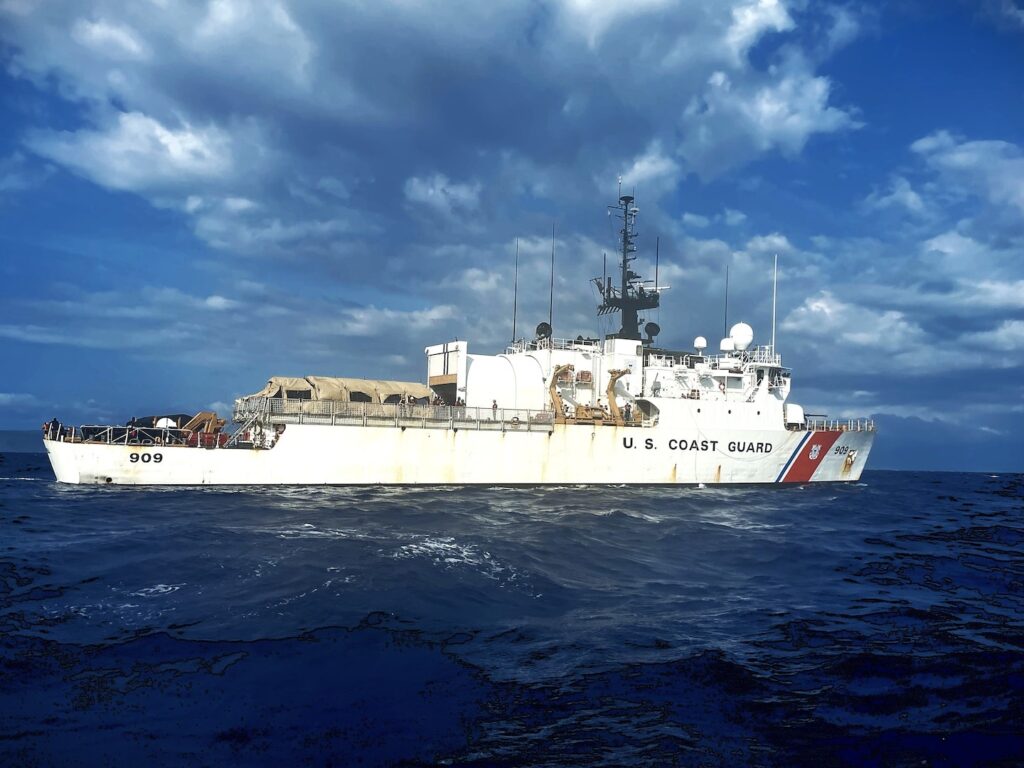
Coast Guard Cutter Campbell (WMEC 909) is underway during a patrol in the Windward Passage, June 5, 2025. Campbell’s crew conducted a two-month patrol to protect the safety of life at sea and deter illegal alien migration in the region. (U.S. Coast Guard photo by Chief Petty Officer Robert Zergman)
From U.S. Coast Guard Atlantic Area, Junne 23, 2025
NEWPORT, R.I. — The crew of Coast Guard Cutter Campbell (WMEC 909) returned to their home port in Newport, Friday, following a 62-day patrol in the Windward Passage.
Campbell deployed in support of Operation Vigilant Sentry to advance the primary missions of safety of life at sea and deterrence of illegal alien ventures in known transit zones. Campbell’s crew conducted maritime safety and security missions while protecting America’s maritime borders from unlawful entry.
While operating in the Seventh Coast Guard District’s area of responsibility, Campbell’s crew worked alongside the Coast Guard Cutters Diligence (WMEC 616), Vigorous (WMEC 627) and Arleigh Burke-class guided missile destroyer USS Gravely (DDG 107) with an embarked Coast Guard law enforcement detachment (LEDET) to support maritime counter-drug operations by maintaining custody of 14 suspected smugglers apprehended in the Caribbean Sea.
Campbell also successfully completed a three-day Aviation Standardization inspection in Miami, Florida which evaluated the crew’s equipment, training and proficiency for conducting shipboard-helicopter operations at sea. These inspections reinforce Coast Guard readiness for interdiction operations, long-range patrols, and search and rescue. Additionally, Campbell partnered with Coast Guard Station Miami and Vigorous for advanced boat tactics training.
“The Campbell and our Department of Homeland Security and Defense partners stood the watch day and night to deter irregular migration while helping the U.S. Coast Guard maintain full operational control of our southeastern maritime border,” said Cmdr. Jonathan Harris, commanding officer of Campbell. “I am very proud of this crew’s teamwork, ingenuity and professionalism throughout this patrol.”
HSTF-SE serves as the Department of Homeland Security lead for operational and tactical planning, command and control, and acts as a standing organization to interdict unlawful maritime migration attempts with federal, state and local partners. HSTF-SE continues to enhance enforcement efforts in support of OVS, which is the 2004 DHS plan to respond to mass maritime migration in the Caribbean Sea and the Florida Straits.
Campbell is a 270-foot, Famous-class medium-endurance cutter. The cutter’s primary missions are counter-drug and alien interdiction operations, enforcement of federal fishery laws, and search and rescue in support of U.S. Coast Guard operations throughout the Western Hemisphere. The cutter falls under the command of U.S. Coast Guard Atlantic Area, which is based in Portsmouth, Virginia.
For more information on how to join the U.S. Coast Guard, visit GoCoastGuard.com to learn about active duty, reserve, officer and enlisted opportunities. Information on how to apply to the U.S. Coast Guard Academy can be found here.
USCGC Stratton Arrives in Kagoshima, Leads Joint Operations with Partner Coast Guards
Japan Coast Guard members wave U.S. and Japanese flags to welcome the arrival of the Legend-class U.S. Coast Guard Cutter Stratton (WMSL 752) to Kagoshima, Japan, June 16, 2025 during a trilateral exercise with U.S. and Philippine Coast Guards. (U.S. Coast Guard photo by Senior Chief Petty Officer Matthew S. Masaschi)
From U.S. Coast Guard Pacific Area, June 20 2025
KAGOSHIMA, Japan – U.S. Coast Guard Cutter Stratton (WMSL 752) arrived in Kagoshima, Japan, June 16 to conduct the first-ever trilateral operations between the U.S. Coast Guard, Japan Coast Guard (JCG) and Philippine Coast Guard (PCG) within Japan’s territorial waters. This engagement builds on Operation SAPPHIRE, the U.S.-Japan Coast Guard bilateral effort aimed at strengthening interoperability to support maritime governance, peace and stability in the Indo-Pacific region.
Stratton led and participated in crew exchanges and ship familiarization tours. The ships held reciprocal tours, highlighting capabilities and assets to improve interoperability and generate combined effects at sea.
“These shoreside engagements in Kagoshima are opportunities to build on the already close working relationship we have with the Japan and Philippine Coast Guards,” said Capt. Brian Krautler, commanding officer of Stratton. “Stratton is scheduled to conduct several trilateral engagements with the JCG and PCG, both during this port call and at sea, to increase interoperability and cooperation with our partners who share our deeply rooted values and respect for the rule of law. Our coast guard services stand shoulder-to-shoulder in strengthening maritime safety and security in the region and serving as the unique instruments bridging national safety and security, and law enforcement.”
At sea, Stratton will conduct joint search and rescue training and exercises with JCG and PCG assets, including the deployment of vessels, boats, helicopter and unmanned system.
During the current Western Pacific patrol, Stratton is scheduled to engage with regional partners and participate in joint operations to support and enhance maritime governance, safety and security.
Commissioned in 2012, Stratton is one of ten legend-class National Security Cutters (NSC) and one of four homeported in Alameda, California. NSCs are 418-feet long, 54-feet wide, and have a 4,600 long-ton displacement. They have a top speed of 28 knots, a range of 12,000 nautical miles, and sail with a crew of up to 170. NSCs routinely conduct operations throughout the Pacific, where their unmatched combination of range, speed, and ability to operate in extreme weather provides the mission flexibility necessary to conduct vital strategic missions.
The namesake of U.S. Coast Guard Cutter Stratton is Capt. Dorothy Stratton, the first female commissioned officer in the Coast Guard. Captain Stratton led the service’s all-female reserve force during World War II, commanding more than 10,000 personnel. The ship’s motto is “We Can’t Afford Not To.”
7th Fleet is the U.S. Navy’s largest forward-deployed numbered fleet and routinely interacts and operates with allies and partners in preserving a free and open Indo-Pacific region.