U.S. Coast Guard Encounters Russian Naval Vessels Near Point Hope, Alaska
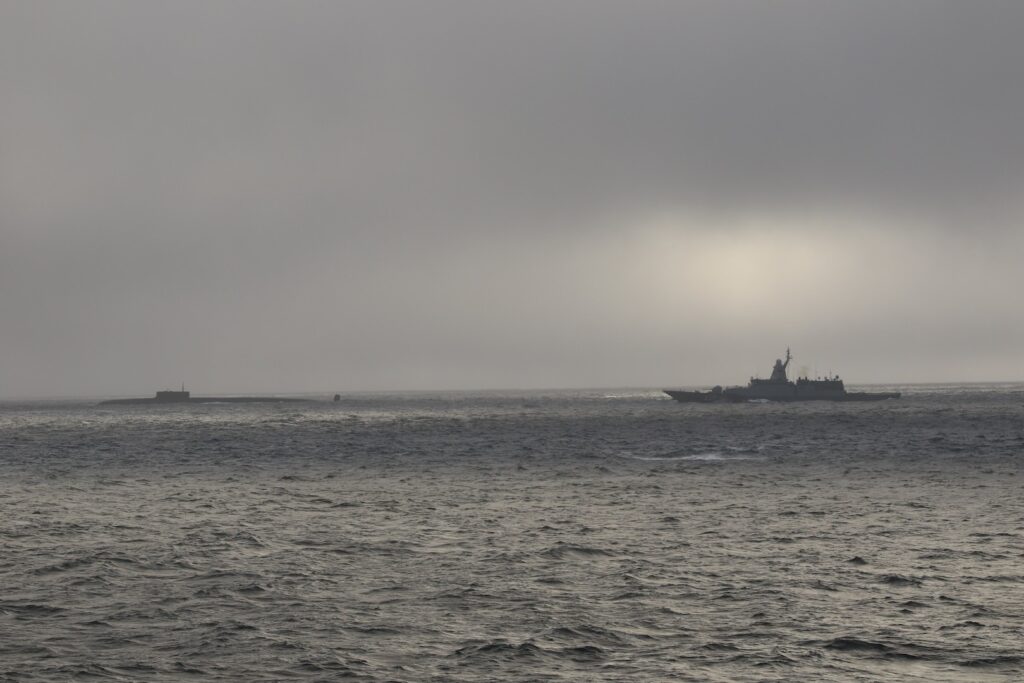
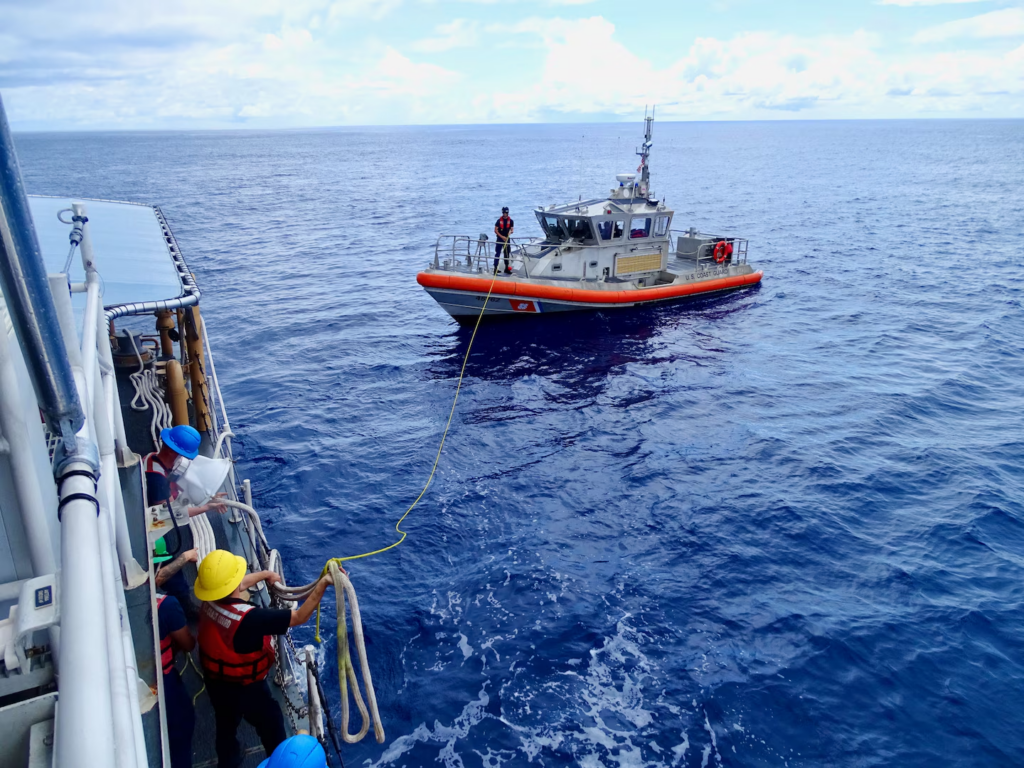
The crew of U.S. Coast Guard Cutter Stratton (WMSL 752) encountered and shadowed four Russian Federation Navy (RFN) vessels 57 miles northwest of Point Hope, Alaska, Sept. 15, 2024. The Russian Surface Action Group consisted of a Severodvinsk-class submarine, a Dolgorukiy-class submarine, a Steregushchiy– class Frigate, and a Seliva-class tug. (U.S. Coast Guard courtesy photo)
U.S. Coast Guard 17th District, Sept. 16, 2024
JUNEAU, Alaska — The U.S. Coast Guard located four Russian Federation Navy (RFN) vessels Sunday, 57 miles northwest of Point Hope, Alaska.
While on a routine patrol in the Chukchi Sea, the crew of U.S. Coast Guard Cutter Stratton (WMSL 752) observed the RFN vessels transiting southeast along the Russian side of the Maritime Boundary Line (MBL).
The crew of the Stratton witnessed the RFN vessels cross the MBL into the U.S. Arctic and moved to observe the vessels. The Russian vessels were assessed to be avoiding sea ice on the Russian side of the MBL and operated in accordance with international rules and customs as they transited approximately 30 miles into the U.S. Exclusive Economic Zone.
“We are actively patrolling our maritime border in the Bering Sea, Bering Strait, and Chukchi Sea, with our largest and most capable cutters and aircraft, to protect U.S. sovereign interests, U.S. fish stocks, and to promote international maritime norms,” said Rear Adm. Megan Dean, Commander of Coast Guard District Seventeen. “Coast Guard Cutter Stratton ensured there were no disruptions to U.S. interests.”
The Russian Surface Action Group consisted of a Severodvinsk-class submarine, Dolgorukiy-class submarine, Steregushchiy– class Frigate, and Seliva-class tug.
The Stratton is patrolling under Operation Frontier Sentinel, an operation designed to meet presence with presence when strategic competitors operate in and around U.S. waters. The Coast Guard’s presence strengthens the international rules-based order and promotes the conduct of operations in a manner that follows international law and norms.
Coast Guard Cutter Stratton is a 418-foot legend class national security cutter homeported in Alameda, Calif.
USCGC Oliver Henry Crew Completes Patrol Under Operation Rematau
U.S. Coast Guard Forces Micronesia Sector Guam
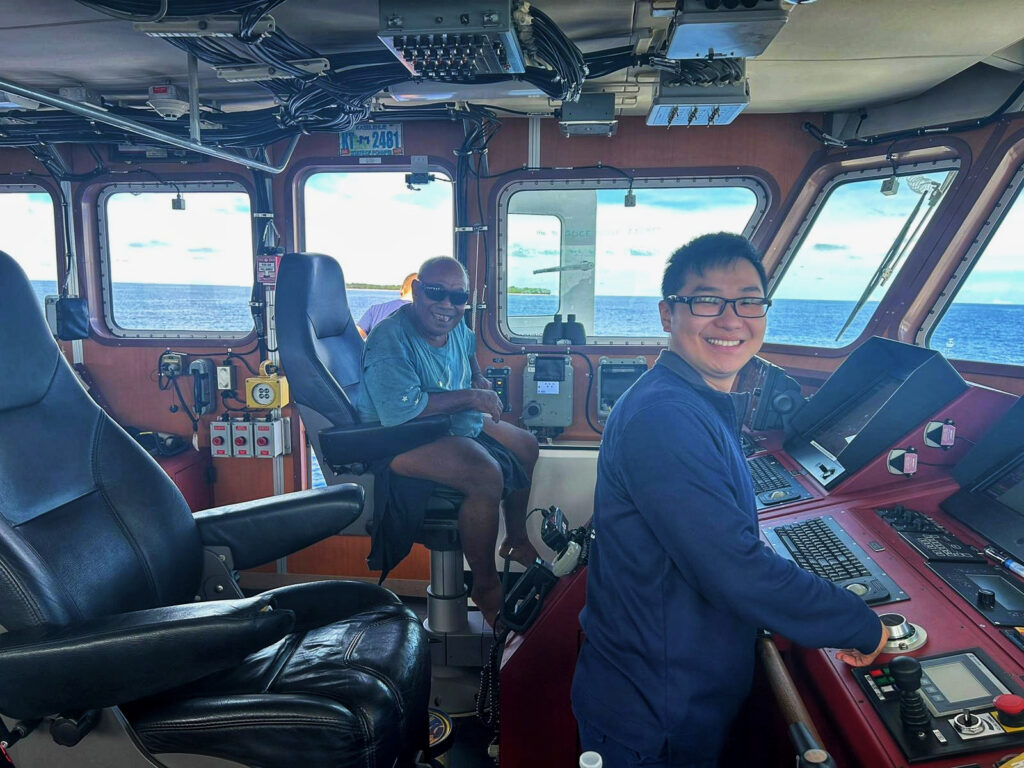
Ensign Matt Go and Chief Robert Etiuweliug, chief of the community on Satawal, take a moment for a photo on the bridge of the USCGC Oliver Henry (WPC 1140), offshore of Satawal, Yap State, Federated States of Micronesia. U.S. Coast Guard | Lt. Ray Cerrato
SANTA RITA, Guam — The USCGC Oliver Henry (WPC 1140) concluded a strategic patrol on Sept. 2, 2024, under Operation Rematau, marking significant achievements in maritime security and regional cooperation in the U.S. and Federated States of Micronesia (FSM) Exclusive Economic Zones.
The crew successfully executed a series of operations that reinforced their readiness and operational capabilities. At the forefront of the patrol’s accomplishments was the rescue of six fishermen whose vessel became disabled near Satawal, FSM. This operation underscored the crew’s readiness, capability to respond effectively to maritime emergencies, and the value of using personal locator beacons.
“The rescue operation was a testament to the skill and preparedness of our crew,” said Lieutenant Ray Cerrato, commanding officer of the Oliver Henry. “Navigating through challenging conditions to ensure the safety of these individuals highlights our commitment to the core values of the Coast Guard. We encourage mariners to take personal locator beacons and keep an eye out for our white hulls and blue lights as we seek to bring them home safely.”
During the patrol, the crew of the USCGC Oliver Henry collaborated diplomatically and operationally with local maritime authorities and other stakeholders in the Federated States of Micronesia and the Commonwealth of the Northern Mariana Islands. These engagements helped reinforce mutual understanding and coordination capabilities, laying a stronger foundation for future joint operations. The mere presence of the USCGC Oliver Henry in critical maritime zones served as a deterrent to potential illicit activities. Regular patrols signal ongoing commitment and surveillance, discouraging illegal activities through visible enforcement presence.
The crew worked to enhance communication and information-sharing systems with regional partners through relationship strengthening. By improving these channels, Oliver Henry helped ensure that real-time data and insights could be shared more effectively, allowing for quicker responses to potential IUU fishing activities. The patrol also allowed the crew to follow up on previous commitments and relief efforts, such as those conducted in Satawal. These follow-ups help maintain strong community relations and ensure continued cooperation, which is vital for addressing broader maritime issues through a united front.
Throughout the patrol, the crew participated in rigorous training exercises, including gunnery exercise drills, where they expended both .50 caliber and 25mm ammunition to ensure proficiency in using and maintaining the weapons systems. These exercises ensure the crew remains at peak readiness.
“This patrol exemplifies the spirit and dedication of the Oliver Henry crew,” said Captain Robert Kistner, commander of U.S. Coast Guard Forces Micronesia/Sector Guam. “Their ability to adapt and overcome challenges while achieving mission objectives reinforces our role as a steadfast protector in the Pacific.”
Coast Guard Offloads More Than $54 million in Illegal Narcotics Interdicted in Caribbean Sea
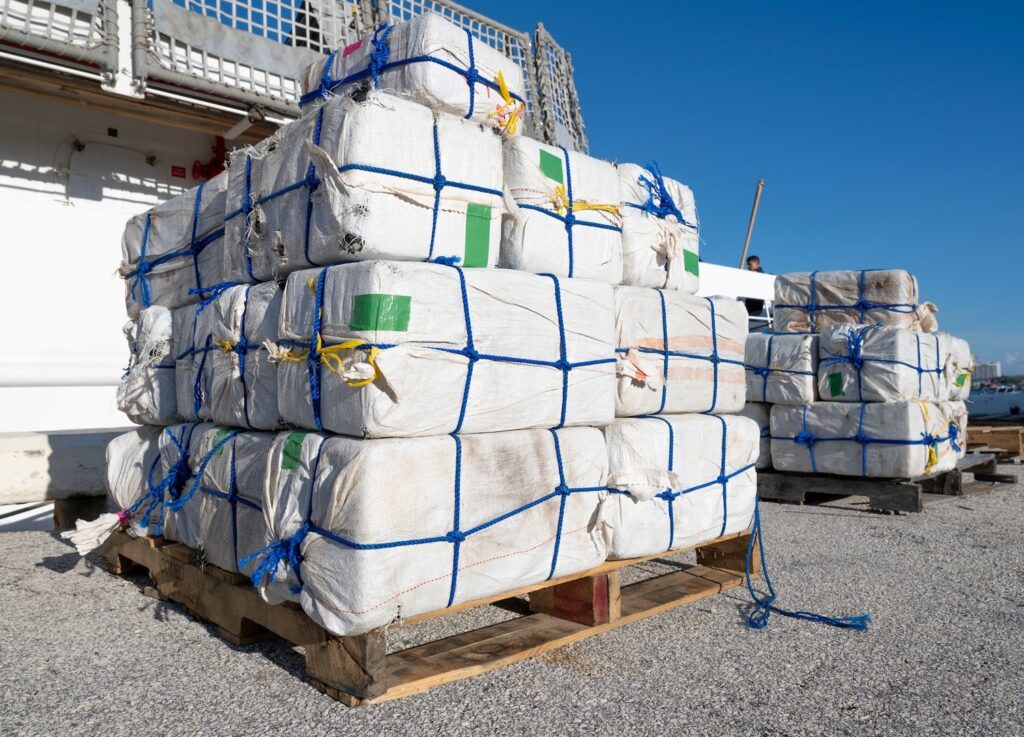
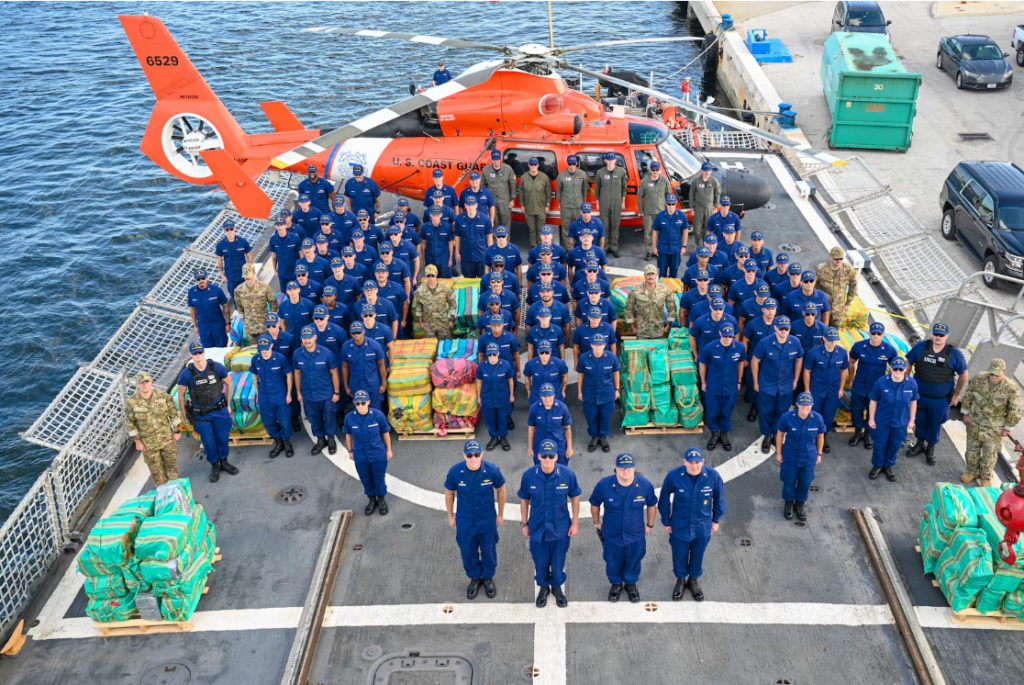
Bales of illegal narcotics, worth an estimated $54 million, are staged for an offload by crew members of U.S. Coast Guard Cutter Diligence (WMEC 616) in Port Everglades, Florida, Sept. 23, 2024. (U.S. Coast Guard photo by Petty Officer 3rd Class Eric Rodriguez)
Sept. 10, 2024
Coast Guard offloads more than $54 million in illegal narcotics interdicted in Caribbean Sea
Coast Guard 7th District, Sept. 10, 2024
MIAMI – The crew of Coast Guard Cutter Diligence offloaded more than 4,125 pounds of cocaine with an assessed street value of approximately $54 million in Port Everglades, Monday.
Coast Guard crews, working alongside interagency and international partners, seized the illegal drugs in the international waters of the Caribbean Sea during three separate interdictions.
The following assets and crews were involved in the interdictions:
Royal Navy ship HMS Trent (P 244)
U.S. Coast Guard Tactical Law Enforcement Team Pacific (PAC-TACLET)
U.S. Coast Guard Cutter Joseph Napier (WPC 1115)
U.S. Customs and Border Protection Air and Marine Operations (CBP-AMO)
Joint Interagency Task Force South (JIATF-South)
Along with the illicit narcotics, 11 suspected smugglers were apprehended and will face prosecution in federal courts by the U.S. Department of Justice.
“I am extremely proud of our crew’s tenacity and professionalism, coupled with outstanding coordination with Coast Guard aircrews, during this complex counter-drug mission,” said Lt. Matthew Carmine, Coast Guard Cutter Joseph Napier commanding officer. “Their steadfast efforts, along with those of foreign allies and partner agencies, continue to prove vital to countering drug trafficking organizations and safeguarding the people of Puerto Rico and the U.S. Virgin Islands.”
Detecting and interdicting illicit drug traffickers on the high seas involves significant interagency and international coordination. The Joint Interagency Task Force South in Key West, Florida conducts the detection and monitoring of aerial and maritime transit of illegal drugs. Once interdiction becomes imminent, the law enforcement phase of the operation begins, and control of the operation shifts to the U.S. Coast Guard throughout the interdiction and apprehension. Interdictions in the Caribbean Sea are performed by members of the U.S. Coast Guard under the authority and control of the Coast Guard’s Seventh District, headquartered in Miami.
These interdictions relate to Organized Crime Drug Enforcement Task Forces’ (OCDETF) Strike Force Initiatives and designated investigations. OCDETF identifies, disrupts, and dismantles the highest-level criminal organizations that threaten the United States using a prosecutor-led, intelligence-driven, multi-agency approach. Additional information about the OCDETF program can be found at https://www.justice.gov/OCDETF.
Visit GoCoastGuard.com to learn about active duty and reserve, officer and enlisted opportunities in the U.S. Coast Guard. Information on how to apply to the U.S. Coast Guard Academy can be found here.
Austal USA Starts Construction of Coast Guard Offshore Patrol Cutter
Representatives of Austal USA and U.S. Coast Guard gathered to celebrate the start of construction on the future USCGC Pickering. (Photo from Austal USA)
From Austal USA, Aug. 29, 2024
MOBILE, Ala. – Austal USA celebrated the start of construction on the first U.S. Coast Guard Heritage-class Offshore Patrol Cutter (OPC) to be built at the company’s Mobile, Ala. ship manufacturing facility today. Pickering (WSMM 919) is the first OPC being built under a contract that includes up to 11 cutters and has a potential value of $3.3 billion.
Austal USA was honored to have Coast Guard Rear Admiral Michael Campbell as a key speaker at today’s event. The OPC program will recapitalize the Coast Guard’s aging medium endurance cutters and provide a capability bridge between the service’s national security cutters, which operate in the open ocean, and the fast response cutters which operate closer to shore.
“Austal USA is excited to begin construction on the first of these high priority cutters for the U.S. Coast Guard,” commented Dave Growden, vice president of new construction programs. “This contract exemplifies the flexibility of our workforce and importance of our steel panel line to Austal USA’s future success. Our multi-talented shipbuilders are well prepared to demonstrate their capability to produce the same high-quality steel ship as they have been producing for our aluminum programs.”
The 360-foot OPC will support the national security strategy for maintaining the nation’s economic, social, environmental and military security mission areas. The OPC will typically conduct its primary missions beyond 12 nautical miles from shore and will be employed anywhere the national interests require the Coast Guard’s unique blend of authorities and capabilities.
OPCs meet the service’s long-term need for cutters capable of deploying independently or as part of task groups to conduct law enforcement, search and rescue, homeland security and defense missions.
OPC will provide the majority of the Coast Guard’s offshore presence conducting a variety of missions including law enforcement, drug and migrant interdiction, and search and rescue. With a range of 10,200 nautical miles at 14 knots and a 60-day endurance period, each OPC will be capable of deploying independently or as part of task groups, serving as a mobile command and control platform for surge operations such as hurricane response, mass migration incidents and other events. The cutters will also support Arctic objectives by helping regulate and protect emerging commerce and energy exploration in Alaska.
Through continual capital investments, over $500 million to date, Austal USA has expanded its capability and capacity to enable concurrent production of aluminum and steel ships. The company recently broke ground on a new assembly building which will provide 192,000 square feet of new covered manufacturing space. The building will consist of three bays, two of which will be sized specifically to erect the OPC.
The crew of Coast Guard Cutter Escanaba poses for a group photo on the cutter’s flight deck during a contraband offload, Aug. 23, 2024, alongside select personnel from Coast Guard Cutters Spencer (WMEC 905), Legare (WMEC 912), Coast Guard Helicopter Interdiction Tactical Squadron, Pacific Area Tactical Law Enforcement Team, and Coast Guard Atlantic Area Command while moored to the pier in Fort Lauderdale, Florida. Escanaba conducted a 46-day counter-drug patrol in the Eastern Pacific Ocean. (U.S. Coast Guard photo by Petty Officer 2nd Class Brandon Hillard)
From U.S. Coast Guard Atlantic Area, Aug. 29, 2024
PORTSMOUTH, Va. — The crew of the Coast Guard Cutter Escanaba (WMEC 907) returned home to Portsmouth, Wednesday, following a 46-day counter-drug patrol in the Eastern Pacific Ocean.
While deployed, crew members supported the Coast Guard Eleventh District, headquartered in Alameda, California, and Joint Interagency Task Force – South, headquartered in Key West, Florida.
During the patrol, Escanaba’s crew disrupted illegal narcotics smuggling, interdicting 3,408 pounds of cocaine and 4,418 pounds of marijuana valued at nearly $50 million during two separate interdictions. The drugs were offloaded in Port Everglades, Florida on Aug. 23. Additional information about Escanaba’s drug offload, including photos and video, can be found here.
Escanaba’s drug seizures contributed directly to furthering Coast Guard objectives to combat transnational criminal organizations and enhance regional stability and security.
While at sea, Escanaba’s crew was assisted by members of Helicopter Interdiction Tactical Squadron (HITRON), based in Jacksonville, Florida and members of Tactical Law Enforcement Team (TACLET) Pacific – Law Enforcement Detachment (LEDET) 107, based in San Diego, California.
HITRON crew members delivered air support for the use of force and enhanced long-range detection capabilities while deployed aboard Escanaba. The TACLET Pacific LEDET supplied skilled boarding personnel critical for mission execution and served as a force multiplier for other law enforcement activities.
“The crew of Escanaba and our shipmates from HITRON and TACLET are to be commended for executing a demanding mission with professionalism and precision,” said Cmdr. Jared Silverman, commanding officer of Escanaba. “In concert with the Coast Guard’s partner agencies and with support from Joint Interagency Task Force – South, the accomplishments of Escanaba serve as a reminder of how vital this mission is.”
Escanaba is a 270-foot, Famous-class medium-endurance cutter homeported in Portsmouth, Virginia. The cutter’s primary duties are counter-narcotics operations, migrant interdiction, living marine resources protection, and search and rescue in support of U.S. Coast Guard operations throughout the Western Hemisphere.
For information on how to join the U.S. Coast Guard, visit GoCoastGuard.com to learn about active duty, reserve, officer, and enlisted opportunities. Information on how to apply to the U.S. Coast Guard Academy can be found here.
Coast Guard Cutter Campbell Returns Home Following 73-day Patrol in Windward Passage
Coast Guard Cutter Campbell is moored to the pier, June 26, 2024, during a port-of-call in Miami, Florida. (U.S. Coast Guard photo by Cmdr. Jonathan R. Harris)
From U.S. Coast Guard Atlantic Area, Aug. 29, 2024
NEWPORT, R.I. — The crew of the Coast Guard Cutter Campbell (WMEC 909) returned to their home port in Newport, Wednesday, following a 73-day migrant interdiction patrol in the Windward Passage.
Campbell deployed in support of Homeland Security Task Force – Southeast (HSTF-SE) and Operation Vigilant Sentry (OVS) while underway in the Seventh Coast Guard District’s area of responsibility. During patrol, Campbell’s crew conducted maritime safety and security missions while working to detect, deter and intercept unsafe and illegal maritime migration ventures bound for the United States.
While deployed, Campbell served in the lead role as commander, task unit for multiple assets operating in the Windward Passage and coordinated the employment of Coast Guard Cutters Venturous (WMEC 625), Isaac Mayo (WPC 1112), Joseph Napier (WPC 1115) and Robert Yered (WPC 1104).
During the patrol, Campbell’s crew cared for and repatriated 11 Haitian migrants. In addition, the combined presence of U.S. Coast Guard assets in the Windward Passage supported the interdiction and deterrence of 643 migrants throughout Campbell’s deployment.
“I am continuously impressed by the professionalism and work ethic demonstrated by the many other U.S. Coast Guard crews on cutters and aircraft that are constantly operating in the Windward Passage,” said Cmdr. Jonathan Harris, commanding officer of Campbell. “Teamwork is one of our greatest strengths on Campbell, and that was a key factor in preventing unsafe migrant ventures on board overcrowded vessels in these waters.”
To ensure operational readiness for this mission, the crew of Campbell trained extensively while underway with Coast Guard Air Station Clearwater and Coast Guard Air Station Cape Cod. Campbell conducted bow hoisting, flight deck hoisting, helicopter launches and landings. These exercises were aimed at preparing for medical emergencies and improving response times when working with aviation assets.
HSTF-SE serves as the Department of Homeland Security lead for operational and tactical planning, command and control, and acts as a standing organization to interdict unlawful maritime migration attempts with federal, state and local partners. HSTF-SE continues to enhance enforcement efforts in support of OVS, which is the 2004 DHS plan to respond to mass maritime migration in the Caribbean Sea and the Florida Straits.
Campbell is a 270-foot, Famous-class medium endurance cutter. The cutter’s primary missions are counter-narcotics operations, migrant interdiction, living marine resources protection, and search and rescue in support of U.S. Coast Guard operations throughout the Western Hemisphere.
For more information on how to join the U.S. Coast Guard, visit GoCoastGuard.com to learn about active duty, reserve, officer, and enlisted opportunities. Information on how to apply to the U.S. Coast Guard Academy can be found here.
Coast Guard Heavy Icebreaker Returns to Seattle Following Antarctic Deployment
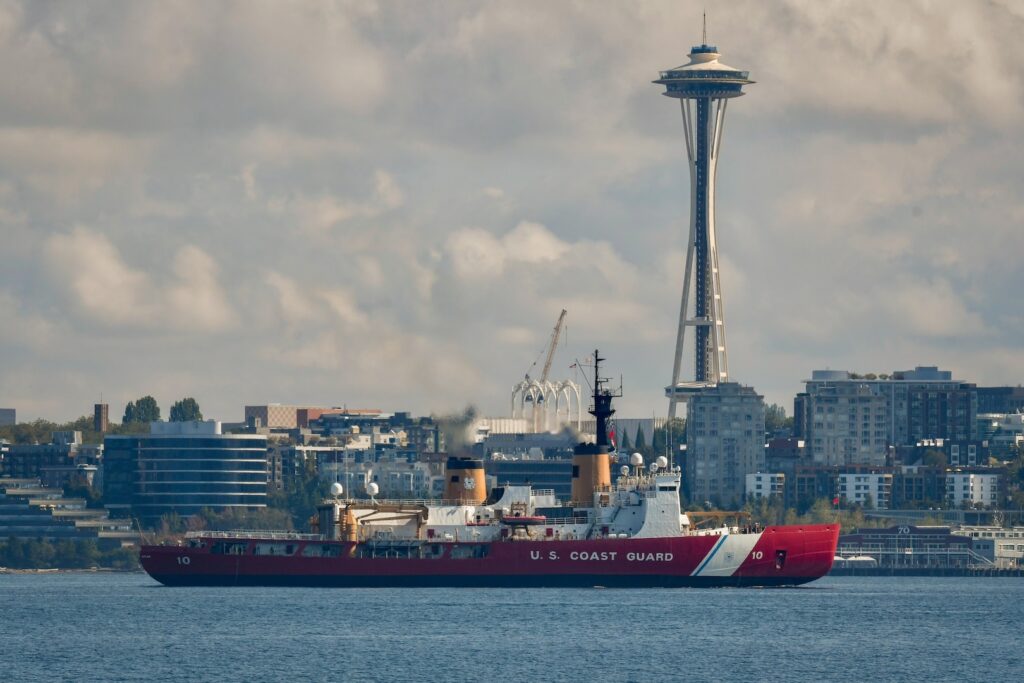
U.S. Coast Guard Cutter Polar Star (WAGB 10) transits Elliott Bay near the Seattle waterfront as the cutter approaches its homeport of Coast Guard Base Seattle, Aug. 25, 2024. At a length of 399-feet, the Polar Star is one of the largest cutters in the Coast Guard’s fleet. (U.S. Coast Guard photo by Capt. Holly Harrison)
From U.S. Coast Guard Pacific Area, Aug. 28, 2024
SEATTLE — The U.S. Coast Guard Cutter Polar Star (WAGB 10) and crew returned to Seattle, Sunday, after 285 days away from the cutter’s home port.
Following a 138-day deployment to Antarctica supporting Operation Deep Freeze 2024, the Polar Star reported directly to Mare Island Dry Dock (MIDD) LLC. in Vallejo, California, to commence the fourth phase of a five-year Service Life Extension Project (SLEP).
The work completed at MIDD is part of the in-service vessel sustainment program with the goal of recapitalizing targeted systems, including propulsion, communication, and machinery control systems, as well as effecting significant maintenance to extend the cutter’s service life.
Polar Star’s SLEP work is completed in phases to coordinate operational commitments such as the cutter’s annual Antarctic deployment. Phase four began on April 1, 2024, targeting three systems:
Boiler support systems were recapitalized, including the electrical control station that operates them.
The heating, ventilation and air conditioning (HVAC) system was refurbished through the overhaul of ventilation trunks, fans and heaters that supply the cutter’s berthing areas.
The flooding alarm system was redesigned, providing the ability to monitor machinery spaces for flooding from bow to stern.
Additional work not typically completed every dry dock included removing and installing the starboard propulsion shaft, servicing and inspecting both anchor windlasses, inspecting and repairing anchor chains and ground tackle, cleaning and inspecting all main propulsion motors and generators, installation of an isolation valve to prevent seawater intrusion into the sanitary system, and overhauling the fuel oil purifier.
Phase four of Polar Star’s SLEP took place over approximately 140 days and represented a total investment of $16.8 million. By replacing outdated and maintenance-intensive equipment, the Coast Guard will mitigate lost mission days caused by system failures and unplanned repairs. The contracted SLEP work items and recurring maintenance is taking place within a five-year, annually phased production schedule running from 2021 through 2025.
The Coast Guard is investing in a new fleet of polar security cutters (PSC) that will sustain the service’s capabilities to meet mission needs in both the Arctic and Antarctic regions. The SLEP allows Polar Star to continue providing access to the Polar regions until the PSCs are operational and assume the high latitude missions. Polar security cutters will enable the U.S. to maintain defense readiness in the Polar regions; enforce treaties and other laws needed to safeguard both industry and the environment; provide ports, waterways and coastal security; and provide logistical support – including vessel escort – to facilitate the movement of goods and personnel necessary to support scientific research, commerce, national security activities and maritime safety.
“Completing a dry dock availability is a positive milestone, and despite challenges due to being away from home port, our crew’s energy and resilience inspires me every day,” said Capt. Jeff Rasnake, Polar Star’s commanding officer. “The amount of time and effort put into Polar Star and its mission is truly remarkable. The dedication and teamwork displayed across all stakeholders exemplifies the Coast Guard’s flexibility and commitment to ensuring the continued success of Operation Deep Freeze as well as strengthened partnerships among nations invested in the Antarctic latitudes. I look forward to observing how this crew will continue to grow as a team and to discovering what we can accomplish together.”
Along with the rigorous maintenance schedule, Polar Star held a change of command ceremony on July 8, 2024, in Vallejo, where Rasnake relieved Capt. Keith Ropella as the cutter’s commanding officer. Rasnake served as the deputy director for financial management procurement services modernization and previously served as Polar Star’s executive officer. Ropella transferred to the office of cutter forces where he will oversee the management of the operational requirements for the cutter fleet and develop solutions for emerging challenges facing the afloat community.
Polar Star is the Coast Guard’s only active heavy polar icebreaker and is the United States’ only asset capable of providing year-round access to both polar regions.
Commissioned in 1976, the cutter is 399 feet, weighing 13,500 tons with a 34-foot draft. Despite reaching nearly 50 years of age, Polar Star remains the world’s most powerful non-nuclear icebreaker with the ability to produce up to 75,000 horsepower. Polar Star’s SLEP is important to the survival of the Antarctic mission and crucial to the well-being and success of Polar Star and crew during these long missions.
USCGC Frederick Hatch Wraps up a Successful Patrol in the Blue Pacific
The crew of the USCGC Frederick Hatch (WPC 1143) conduct training with Station Apra Harbor in Apra Harbor on Aug. 8, 2024. The towing exercise with a Station Apra Harbor 45-foot Response Boat-Medium crew enhanced inter-unit coordination and operational proficiency. (U.S. Coast Guard photo)
From U.S. Coast Guard Forces Micronesia/Sector Guam, Aug. 26, 2024
SANTA RITA, Guam — The crew of the USCGC Frederick Hatch (WPC 1143) successfully concluded a productive patrol period from July 22 to Aug. 12, 2024, under the ongoing Operation Rematau, showcasing the U.S. Coast Guard’s dedication to maritime safety, security, and stewardship in the Blue Pacific.
This patrol saw the crew cover over 1,252 nautical miles and engage in various operations, from maritime law enforcement boardings to community outreach and crucial training.
During this patrol, the Frederick Hatch team boarded two foreign-flagged fishing vessels in the Western and Central Pacific Fisheries Commission (WCPFC) operational area on the high seas, with no violations reported, ensuring the safety and security of the region’s maritime activities.
“Our mission underscores the vital role we play in ensuring safe and lawful maritime activities in the Pacific,” said Lt. Niki Kirchner-Hope, commanding officer of USCGC Frederick Hatch. “The successful execution of these boardings reflects our crew’s high level of professionalism and dedication to the mission.”
The cutter’s crew participated in significant community relations events in Tinian, Northern Mariana Islands, including the March-On for the 80th anniversary of the Battle of Tinian. They also engaged in a local festival and were invited back for more in October, continuing to foster strong relationships with the local community and enhancing regional presence.
The Frederick Hatch crew, which experienced a substantial turnover this transfer season, with over 55 percent of members swapping out, benefited from extensive training during the patrol. They completed multiple training programs, including Marine Emergency Drills, Damage Control Training Team exercises, and small boat training.
“Training and mentoring our new crew members are key to our success and long-term effectiveness,” said Petty Officer 1st Class Joseph Mendiola of the engineering team. “Routinely operating thousands of miles from homeport makes this training even more crucial. It’s what makes sure our team is ready to handle anything that comes our way with confidence and skill, really boosting our mission readiness and impact out here in the Pacific.”
Key accomplishments of the patrol include completing anchor training in Agat Bay, successful law enforcement and tactical training, and vital inter-agency collaborations. The cutter crew participated in a towing exercise with a Station Apra Harbor 45-foot Response Boat-Medium crew, enhancing inter-unit coordination and operational proficiency.
The patrol also saw personnel achievements, including one crewmember advancing to E-5 and several others achieving new qualifications. These underscore the team’s commitment to ongoing professional development and mission readiness. They will now focus on post-patrol debriefings to refine communication and operational procedures, further enhancing their capabilities for future missions.
“On behalf of the entire team aboard Hatch, I want to extend our gratitude to the personnel from USCGC Myrtle Hazard, Station Apra Harbor, the Forces Micronesia Sector Guam Sector Boarding Team, and the Base Guam MAT/WAT. Your support throughout this patrol, from filling critical TDY assignments to assisting with complex training and law enforcement evolutions, has been invaluable in ensuring Hatch’s success and the well-being and readiness of our crew. Thank you for being so dedicated to others and for standing the watch with us in this demanding environment,” said Lt. Kirchner-Hope
Coast Guard Cutter Harriet Lane Returns Home Following 68-day Operation Blue Pacific Patrol in Oceania
The crew of U.S. Coast Guard Cutter Harriet Lane (WMEC 903), a 270-foot medium endurance cutter homeported in Honolulu, Hawaii, poses for a photo following the Royal Tongan Navy’s International Fleet Review in Nuku’alofa, Tonga, July 4, 2024. The U.S. Coast Guard participated in the review to celebrate King Tupou VI’s 65th birthday and the 50th anniversary of the Tongan Navy. (U.S. Coast Guard photo, courtesy Cutter Harriet Lane)
From Coast Guard District 14 External Affairs, Aug. 26, 2024
HONOLULU – The crew of Coast Guard Cutter Harriet Lane (WMEC 903) returned to Honolulu Friday following a 68-day patrol in support of Coast Guard District Fourteen’s Operation Blue Pacific in Oceania.
The Harriet Lane crew departed Joint Base Pearl Harbor-Hickam in June and traveled more than 13,400 nautical miles spanning from the Hawaiian Islands to Tonga. Patrolling in support of Operation Blue Pacific, the cutter’s crew worked alongside Pacific Island Countries to forge and advance relationships with like-minded allies and partners who share a common vision for maritime governance.
The crew’s efforts included enhancing maritime domain awareness, combatting illegal fishing activities across Oceania, and participating in exercises to bolster partner capacity and interoperability. Leveraging bilateral maritime law enforcement agreements with Tuvalu, Tonga, Samoa and the Cook Islands, the Harriet Lane crew conducted six boardings alongside Pacific Island partners in their respective exclusive economic zones (EEZs). Additionally, Harriet Lane law enforcement teams conducted four fishery boardings on the high seas in concert with the Western and Central Pacific Fisheries Commission.
During Harriet Lane’s patrol, the crew made port calls in Tonga, American Samoa, Samoa, the Cook Islands and French Polynesia. While offshore Niue, the Harriet Lane crew hosted key leaders for a maritime roundtable discussion, offered local high students a tour of the cutter, and sent personnel ashore to assist with community service endeavors.
“This patrol was another resounding success for the crew of Harriet Lane and reinforces the Coast Guard’s commitment to delivering as a trusted partner across Oceania,” said Cmdr. Nicole Tesoniero, commanding officer, Cutter Harriet Lane. “This patrol took us to the far reaches of the South Pacific that most crew could have never dreamed of seeing and they continue to serve as model ambassadors for our unique mission set. In the final days of our patrol, Harriet Lane answered the call to render aid to a local fisherman in need of medical assistance nearly 500 miles from Oahu. While every aspect of this mission is incredibly rewarding, the knowledge that we were able to assist a member of the local community in a moment of need truly resonated with the crew. I am proud of their tremendous commitment to operational success and look forward to watching Harriet Lane’s impact continue to grow.”
Commissioned in 1984, Cutter Harriet Lane is a 270-foot medium endurance cutter homeported in Honolulu to support Coast Guard missions in the Pacific region. The service’s medium endurance cutter fleet supports a variety of Coast Guard missions including search and rescue, law enforcement, maritime defense, and protection of the marine environment.
Coast Guard Offloads Nearly $50 Million in Illegal Narcotics Interdicted in Eastern Pacific Ocean
The crew of Coast Guard Cutter Escanaba pose with more than 3,400 pounds of cocaine and 4,410 pounds of marijuana with a combined assessed street value of approximately $50 million in Port Everglades, Florida, Aug. 23, 2024. (U.S. Coast Guard photo by Petty Officer 3rd Class Eric Rodriguez)
From the U.S. Coast Guard 7th District, Aug. 23, 2024
MIAMI – The crew of Coast Guard Cutter Escanaba (WMEC 907) offloaded more than 3,400 pounds of cocaine and 4,410 pounds of marijuana with a combined assessed street value of approximately $50 million in Port Everglades, Friday, Aug. 23.
The Escanaba crew embarked a Coast Guard Helicopter Interdiction Tactical Squadron aircrew, and Law Enforcement Detachment 107 from Coast Guard Tactical Law Enforcement Team Pacific. They worked alongside interagency and international partners to interdict illicit narcotics in the international waters off South America in the Eastern Pacific Ocean.
Coast Guard crews often deploy to the U.S. Southern Command joint operating area, which includes the Caribbean Sea and the Eastern Pacific Ocean, to conduct counter drug missions under Joint Interagency Task Force-South. Deployments for cutters assigned to the Coast Guard Atlantic Area Command include Panama Canal transits to deny transnational criminal organizations access to maritime trafficking routes in the Eastern Pacific Ocean.
“The Coast Guard’s presence in the Eastern Pacific is vital to our mission of disrupting the flow of illicit narcotics and safeguarding our nation’s security. The crew of the Coast Guard Cutter Escanaba, through their unwavering professionalism and dedication, has once again demonstrated the critical role our people play in these complex operations,” said Vice Adm. Nathan Moore, commander, Coast Guard Atlantic Area. “By maintaining a strong presence in this region, we continue to protect our communities and uphold the highest standards of service. Coast Guard Cutter Escanaba’s success is a direct reflection of our commitment to mission excellence and the core values that guide us.”
The following assets and crews were involved in the interdictions:
Law Enforcement Detachment (LEDET) 107 from Coast Guard Tactical Law Enforcement Team – Pacific (PAC TACLET)
Joint Interagency Task Force South (JIATF-South)
Eleventh Coast Guard District
“The counter narcotics mission continues to be a vital mission of the Coast Guard,” said Cmdr. Jared Silverman, commanding officer of Coast Guard Cutter Escanaba. “The crew of Escanaba, alongside our shipmates from HITRON and TACLET, executed the mission in outstanding fashion and ensured that the spirit of operational excellence lives on.”
Seven suspected smugglers were transferred to federal custody and face prosecution by the U.S. Department of Justice.
Detecting and interdicting illicit drug traffickers on the high seas involves significant interagency and international coordination. The Joint Interagency Task Force-South based in Key West, Florida conducts the detection and monitoring of aerial and maritime transit of illegal drugs. Once interdiction becomes imminent, the law enforcement phase of the operation begins, and control of the operation shifts to the U.S. Coast Guard throughout the interdiction and apprehension. Interdictions in the Eastern Pacific Ocean are performed by members of the U.S. Coast Guard under the authority and control of the Coast Guard’s Eleventh District, headquartered in Alameda, California.
These interdictions relate to Organized Crime Drug Enforcement Task Forces’ Strike Force Initiatives and designated investigations. OCDETF identifies, disrupts, and dismantles the highest-level criminal organizations that threaten the United States using a prosecutor-led, intelligence-driven, multi-agency approach. Additional information about the OCDETF program can be found at https://www.justice.gov/OCDETF.
The Coast Guard is the United States’ lead federal maritime law enforcement agency with authority to enforce national and international laws on the high seas and waters within U.S. jurisdiction. Coast Guard HITRON aircrews are uniquely qualified to conduct airborne use of force for non-compliant vessels, enhancing the Coast Guard’s ability to react to maritime security threats and to better secure our maritime borders since the program’s inception in 1999. For 25 years, HITRON crews have forward deployed aboard Coast Guard cutters and U.S. Navy or foreign allied warships to conduct drug interdiction operations.
Coast Guard Cutter Escanaba is a 270-foot Famous-class medium endurance cutter with a crew of 100 homeported in Portsmouth, Virginia.