Coast Guard Maritime Safety and Security Team (MSST) Seattle 91101 to Conduct Waterborne Missions in Homer, Alaska
HOMER, Alaska — The Coast Guard is scheduled to conduct waterborne operations in the Homer vicinity over the summer as Sector Western Alaska and U.S. Arctic augments its capabilities with small boat teams from Maritime Safety and Security Team Seattle (MSST) 91101.
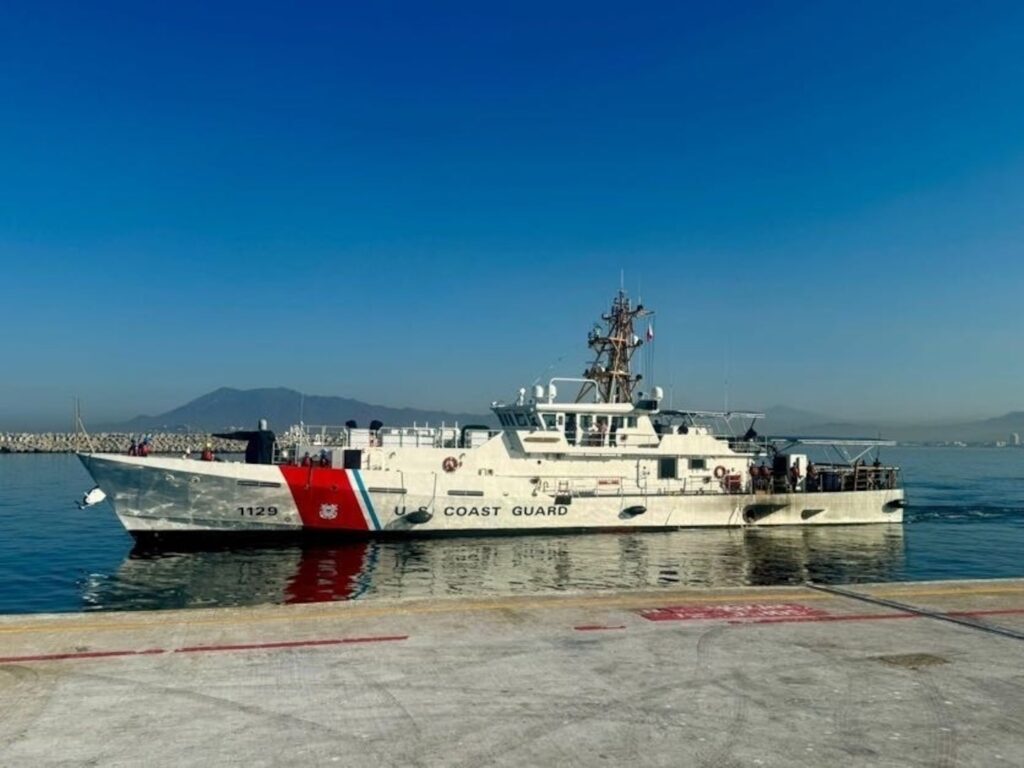
MSST 91101, utilizing two 29-foot response boat crews, will patrol harbors, fishing grounds, and trafficked waterways including areas with significant traffic convergence to enforce living marine resources (LMR) regulations on domestic, commercial, recreational, and charter fishing vessels.
“For the next few months, our teams will be conducting operations around Homer in support of various missions, including search and rescue, recreational and commercial vessel safety, and protection of Alaska’s living marine resources,” said Lt. Karl Gunther, Sector Western Alaska and U.S. Arctic enforcement chief. “Teams will maintain a regular presence on the water and conduct routine boardings at sea to inspect a vessel’s catch, gear, and other items to ensure regulatory compliance as well as safety.”
Mariners are advised to research the federally mandated safety and fishery requirements for their vessels prior to conducting operations in Kachemak Bay and to prepare for the highly likely occurrence that a Coast Guard boarding team inspects their vessel for compliance.
Coast Guard boarding teams have the authority to (at any time) go aboard any vessel operating under the jurisdiction of the United States, and address inquiries to those on board, examine the ship’s documents and papers, and examine, inspect, and search the vessel as outlined in 14 USC 522.
U.S. Coast Guard encounters People’s Republic of China military naval presence in Bering Sea
U.S. Coast Guard 17th District, July 10, 2024
JUNEAU, AK –The U.S. Coast Guard encountered multiple People’s Republic of China military ships in the Bering Sea, Saturday and Sunday.
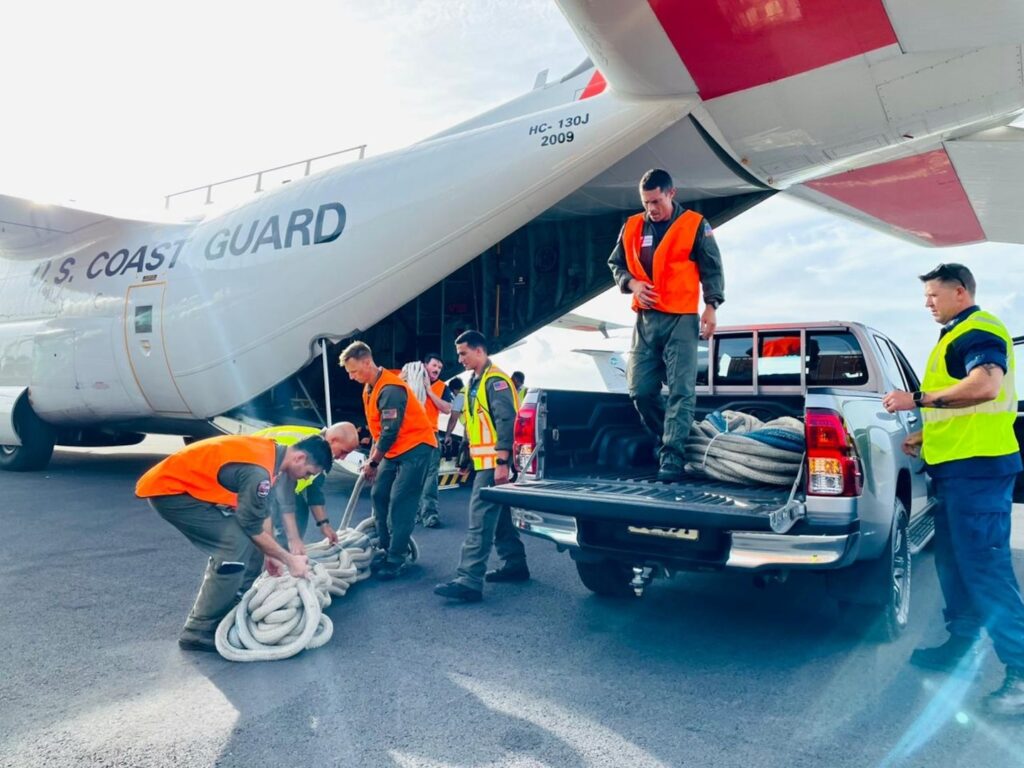
The crew of U.S. Coast Guard Cutter Kimball (WMSL 756) detected three vessels approximately 124 miles north of the Amchitka Pass in the Aleutian Islands, and an HC-130J aircrew from U.S. Coast Guard Air Station Kodiak detected an additional vessel approximately 84 miles north of the Amukta Pass.
All four of the People’s Republic of China vessels were transiting in international waters but still inside the U.S. Exclusive Economic Zone, which extends 200 nautical miles from the U.S. shoreline.
“The Chinese naval presence operated in accordance with international rules and norms,” said Rear Adm. Megan Dean, Seventeenth Coast Guard District commander. “We met presence with presence to ensure there were no disruptions to U.S. interests in the maritime environment around Alaska.”
The Chinese vessels responded to U.S. Coast Guard radio communication and their stated purpose was “freedom of navigation operations.” Coast Guard cutter Kimball continued to monitor all ships until they transited south of the Aleutian Islands into the North Pacific Ocean. The Kimball continues to monitor activities in the U.S. Exclusive Economic Zone to ensure the safety of U.S. vessels and international commerce in the area.
The Coast Guard, in coordination with U.S. Northern Command, was fully aware of and tracked the Chinese naval presence. In September of 2021 and 2022, Coast Guard cutters deployed in the Bering Sea also encountered Chinese surface action groups.
The Kimball patrolled under Operation Frontier Sentinel, a Coast Guard operation designed to meet presence with presence when strategic competitors operate in and around U.S. waters. The U.S Coast Guard’s presence strengthens the international rules-based order and promotes the conduct of operations in a manner that follows international norms.
Coast Guard Cutter Kimball is a 418-foot Legend-class national security cutter homeported in Honolulu, Hawaii.
Shield AI’s V-BAT Tapped for $198M Coast Guard Contract
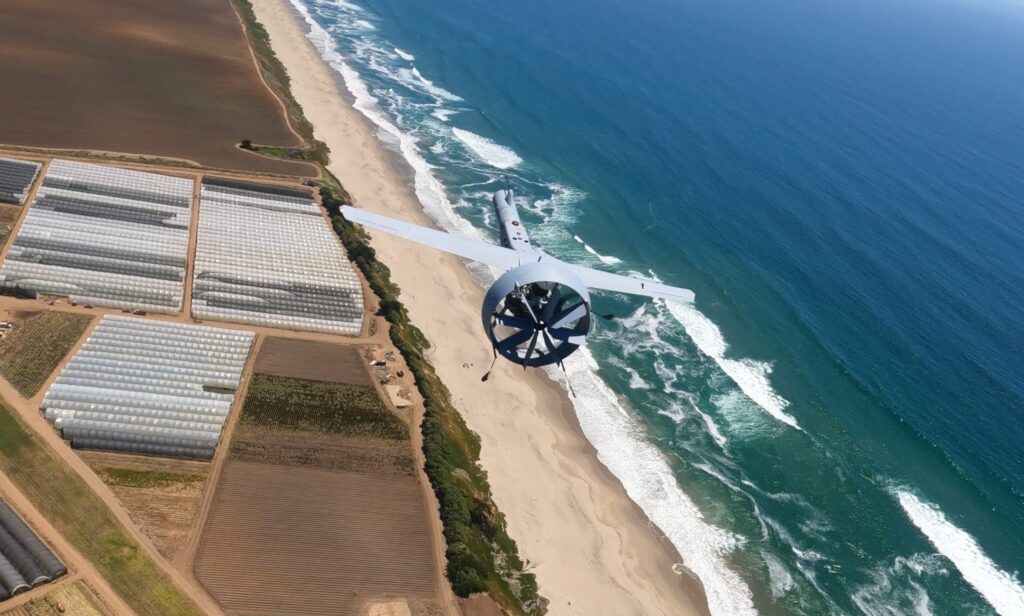
WASHINGTON (July 1, 2024) – Shield AI, the defense technology company building the world’s best AI pilot, announced today that the U.S. Coast Guard has awarded the company a $198,106,876 indefinite-delivery, indefinite-quantity firm fixed-price contract to provide Contractor Owned Contractor Operated (COCO) Intelligence, Surveillance, and Reconnaissance (ISR) services. This service will be implemented using the V-BAT unmanned aircraft system (UAS).
“We’re excited to support the U.S. Coast Guard with their ISR operations. All maritime vessels will become drone carriers as maritime forces move to deploy distributed, affordable, intelligent drones. V-BAT’s selection by the U.S. Coast Guard is indicative of a broader market movement where increasingly customers are recognizing they can accomplish the vast majority of their mission sets with affordable drones rather than exquisite, expensive crewed or uncrewed aircraft,” said Brandon Tseng, Shield AI’s President, Co-founder, and former Navy SEAL.
The V-BAT series aircraft is the only operationally deployed single-engine ducted fan vertical takeoff and land (VTOL) UAS that can launch and recover from a hover and fly on wing in horizontal flight. With more than five years of persistent operational experience at sea, U.S. and international customers view the V-BAT as a flexible platform capable of performing Group 2 to Group 5 UAS missions and beyond.
Coast Guard Commissions First Pacific Northwest-Based Fast Response Cutter
Coast Guard Cutter David Duren (WPC 1156) transits near the Cape Disappointment Lighthouse as it enters the Columbia River near Astoria, Ore., for the first time on May 20, 2024. (U.S. Coast Guard photo by Petty Officer 2nd Class Steven Strohmaier)
From U.S. Coast Guard 13th District, June 28, 2024
ASTORIA, Ore. — The Coast Guard commissioned its 56th Fast Response Cutter and first one to be stationed in the Pacific Northwest during a ceremony held in Astoria, Ore., Thursday.
Coast Guard Cutter David Duren (WPC-1156) is the first of three planned Fast Response Cutter’s (FRC) to be homeported in Astoria.
The ceremony was presided by Vice Adm. Andrew Tiongson, Pacific Area Commander. Members from the Duren family were also on hand, including the cutter’s sponsor, Dawn Duren.
The namesake for the cutter, Master Chief Petty Officer David Duren, enlisted in the Coast Guard in 1965 and retired in 1993. During his career, Duren became a heavy weather coxswain and graduated from the Coast Guard’s National Motor Lifeboat School in 1969, qualifying as Coast Guard surfman No. 100.
During his tenure, Duren received two Coast Guard Medals for exceptional heroism and the Douglas Munro Inspirational Leadership Award. He deployed on search and rescue cases more than any other officer-in-charge at the time and during one year, he participated in 250 cases. Personnel under his command received a total of 24 medals and awards.
The crew of the David Duren will primarily serve in the Pacific Ocean, Puget Sound, Strait of Juan de Fuca, and the Columbia River. The Sentinel-class FRC is designed for multiple missions, including search and rescue; fishery patrols; ports, waterways, and coastal security; drug and migrant interdiction; and national defense.
The Coast Guard has ordered a total of 65 FRCs to replace the 1980s-era Island-class 110-foot patrol boats. The FRCs feature advanced command, control, communications, computers, intelligence, surveillance and reconnaissance equipment; over-the-horizon cutter boat deployment to reach vessels of interest; and improved habitability and seakeeping.
The commissioning ceremony is one of the most important traditional milestones in the life of a cutter, as it represents the readiness of the cutter to conduct Coast Guard operations and marks her entry into active service.
USCGC Cutter Alert transfers from Astoria, Oregon, arrives at new home port in Cape Canaveral, Florida
Caption: The crew of Coast Guard Cutter Alert departs Astoria, Oregon, on the Columbia River May 10, 2024. Alert is a 210-foot Medium Endurance Cutter. (U.S. Coast Guard photo by Petty Officer 1st Class Travis Magee)
CAPE CANAVERAL, Fla. — U.S. Coast Guard Cutter Alert (WMEC 630) and its crew arrived at their new home port of Cape Canaveral, June 10, 2024. Alert began the eastward journey in May after concluding 30 years of service while homeported in Astoria, Oregon, along the Pacific Northwest’s Columbia River.
Over the course of the 30-day, 6,000 nautical mile transit, Alert crossed the equator, transited the Panama Canal, and responded to search and rescue cases. Marking a new era, Alert rendered honors to the U.S. Coast Guard Cutter David Duren (FRC 1156), a fast response cutter transiting northbound to Astoria in order to relieve Alert’s watch in the Pacific Northwest.
Alert is now assigned to U.S. Coast Guard Atlantic Area, headquartered in Portsmouth, Virginia, and is taking the place of U.S. Coast Guard Cutter Confidence (WMEC 619) in Cape Canaveral after the Confidence was placed in commission, special status in early May. Confidence’s former crew will now crew Alert.
The replacement of Confidence and re-homeporting of Alert represent the Coast Guard’s continued efforts to adapt to growing service demands and workforce shortages, helping ensure the Coast Guard’s ability to prioritize lifesaving missions, national security, and protection of the Maritime Transportation System with no degradation to these critical services.
“This is not the first time Alert has shifted home port, said Cmdr. Lee Crusius, commanding officer of Alert. “Prior to her time in Astoria, Alert was homeported on the East Coast in Cape May, New Jersey. In many senses, Alert is returning to her home where she will continue to perform the vital missions demanded of the Coast Guard cutter fleet by our partner nations and the American people.”
Alert, commissioned in 1969, was the final 210-foot, Reliance-class medium endurance cutter built. Alert performs a variety of missions including search and rescue, law enforcement, maritime defense, and protection of the marine environment.
More information about the U.S. Coast Guard’s AY24 Force Alignment Initiative can be found here.
U.S. Coast Guard Cutter Healy Departs Seattle for Arctic Deployment
The Coast Guard Cutter Healy (WAGB 20) begins its departure from Coast Guard Base Seattle for their annual Arctic deployment, June 12, 2024. The Healy will conduct high latitude science and research missions in the Arctic. (U.S. Coast Guard photo by Petty Officer 3rd Class Annika Hirschler)
From U.S. Coast Guard Pacific Area, June 13, 2024
SEATTLE — U.S. Coast Guard Cutter Healy (WAGB 20) departed Seattle Wednesday, beginning their months-long Arctic deployment.
The crew will support scientists conducting three distinct science missions during Healy’s 2024 Arctic deployment.
The first mission is supporting the Arctic Observing Network, funded by the U.S. National Science Foundation (NSF). During this mission, the cutter will service subsurface moorings in the Beaufort Sea, north of Alaska, and conduct a broad-scale survey of the boundary current system from the Bering Strait to the western Canadian Arctic. This program has been ongoing for more than two decades to improve understanding of the Pacific Arctic ecosystem in a changing climate. Ancillary programs include measurements of harmful algae blooms and a variety of biogeochemical parameters.
For the second mission, Healy will embark 20 early career polar scientists and their mentors on a Polar Chief Scientist Training Cruise sponsored by the NSF and University-National Oceanographic Laboratory System to conduct multidisciplinary research. During a transit of the Northwest Passage, these early career scientists will conduct mapping to fill critical bathymetric gaps and scientific sampling across various disciplines, in addition to developing skills in shipboard leadership, coordination, and execution.
The final mission of the deployment will support the Global Ocean Ship-Based Hydrographic Investigations Program (GO-SHIP), where they aim to make the first ever single ship, single season, high-resolution transect of hydrographic observations across the Arctic basin. This global effort builds on data from as far back as the 1990s to collect repeat oceanographic data from a series of ocean basin transects around the world. The high-resolution surface-to-bottom multidisciplinary observations the team collects during this mission will be compared to earlier partial datasets to better understand the Arctic environment.
“We are excited to support three significant missions in the northern high latitudes,” said Healy’s Commanding Officer Capt. Michele Schallip. “Two of these missions are part of long-standing data collection projects, aimed at enhancing our understanding of a changing Arctic. The third mission is dedicated to inspiring future principal investigators who will continue this important work. At a time when scientific interest in the Arctic Ocean Basin is intensifying, Healy substantially enhances the American Arctic research capability. Healy’s crew have been unwavering in their efforts during our in-port maintenance period, ensuring the cutter is ready to meet the demands of these missions.”
Healy is the United States’ largest and most technologically advanced polar icebreaker and the Coast Guard’s only icebreaker designed and equipped with scientific instrumentation by the NSF to support Arctic research. The platform is ideally specialized for scientific missions, providing access to the most remote reaches of the Arctic Ocean. Healy is designed to break 4.5 feet of ice continuously at three knots and can operate in temperatures as low as -50 degrees Fahrenheit.
U.S. Coast Guard Completes Operation Tui Moana in Pacific Region
U.S. Coast Guard 14th District, June 12, 2024
HONOLULU – The U.S. Coast Guard has completed Tui Moana, a two-week operation to safeguard the invaluable marine resources of Pacific Island nations and the Western Central Pacific Ocean, Jun. 12, 2024. –
Operation Tui Moana is part of Operation Blue Pacific, an overarching multi-mission Coast Guard endeavor promoting security, safety, sovereignty, and economic prosperity in the Pacific while strengthening relationships between partner nations.
The wide-ranging operation was conducted alongside the Pacific Quadrilateral Defense Coordinating Group (Pacific QUAD), in support of the Pacific Islands Forum Fisheries Agency (FFA) and its members.
The FFA coordinated Tui Moana to detect and deter illegal fishing activities and tackle non-compliance with international fisheries across the nine participating Pacific Island countries. The operation reinforces the conservation work of the Western and Central Pacific Fisheries Commission (WCPFC).
“The Coast Guard put into action the recent maritime law enforcement bilateral agreement with Samoa,.” said U.S. Chargé d’Affaires at U.S. Embassy Apia, Samoa, Noriko Horiuchi. “Conducting air surveillance of their exclusive economic zone from May 20-24, with two riders from Samoa ’s Ministry of Agriculture and Fisheries and Police Maritime Division onboard the aircraft.”
The joint efforts for Operation Tui Moana covered over 2.45 million square miles, with the U.S. Coast Guard contributing:
• 306, 960 nautical miles flown
• 968 total minutes on multiple scenes
• 23 vessels surveyed
• 335,760 nautical miles total searchable area
While engaged in the region, the Coast Guard conducted aerial flights to capture imagery of fishing vessels potentially operating illegally within the Samoan and Tongan exclusive economic zones, and in the high seas pocket nearby.
“Operation Tui Moana reflects the Foreign Fishery Agency’s mission to prevent overfishing in the Pacific Ocean and help our neighbors protect their natural resources,” added Horiuchi.
Located in Honolulu, U.S. Coast Guard District Fourteen covers more than 14 million square miles of land and sea, conducting operations over the Hawaiian Islands, American Samoa, Saipan, Guam, Singapore and Japan.
U.S. Coast Guard Cutters Return Home After Successful Central American Deployment
U.S. Coast Guard 11 District, June 10, 2024
SAN PEDRO, Calif. — U.S. Coast Guard cutters Forrest Rednour and Blackfin have returned to their homeports after a 49-day deployment in Central America, where they played a crucial role in multiple operations.
During this period, both cutters demonstrated outstanding readiness and operational capability, significantly contributing to international cooperation, search and rescue missions, and efforts to combat criminal activities. This deployment was part of a broader strategy to enhance regional security and strengthen partnerships. Throughout the mission, Forrest Rednour covered over 8,200 miles and logged 800 operational hours, while Blackfin covered over 8,300 miles and also logged 800 operational hours.
“The amount of effort and commitment from both crews during this 49-day deployment was remarkable,” said Rear Adm. Andrew Sugimoto, commander, Coast Guard District 11. “Their readiness and professional exchanges provided an invaluable experience to our partner nations and crews. The enthusiasm to lead multiple engagements with several international maritime organizations helped strengthen ties and fortify continued collaboration between all.”
Key Achievements:
Search and Rescue Exercises (SAREX):
Manzanillo, Mexico: Blackfin led a successful SAR operation, including helicopter rescue exercises with the Mexican Navy.
Puerto Quetzal, Guatemala: Hosted tours and conducted SAR exercises with the Guatemalan Navy, building stronger maritime partnerships.
La Union, El Salvador: Rednour led a SAR exercise and joint operations with the Salvadoran Navy, marking the first U.S. vessel visit to this port in two years.
Partnership and Training:
Amapala, Honduras: Engaged in discussions and training on maritime law enforcement and security with the Honduran Navy and Merchant Marine.
Golfito, Costa Rica: Shared knowledge on maritime governance with the Costa Rican Coast Guard, enhancing mutual understanding.
Rodman, Panama: Provided damage control and medical evacuation training to Panamanian forces, marking the first U.S.-Panama Coast Guard engagement in over two years.
PASSEX with ARM PALENQUE: Forrest Rednour and Blackfin conducted a passage exercise (PASSEX) with the Mexican Navy’s ARM PALENQUE. This included formation steaming, code exercises, and a crew exchange to enhance mutual operational understanding and cooperation.
“This patrol was truly an amazing experience and a testament to the incredible devotion to duty that the crews of the Forrest Rednour and Blackfin have,” said Lt. Kevin Ng, commanding officer of Coast Guard Cutter Forrest Rednour. “Both crews adapted and overcame several challenges leading up to and during the patrol, but never took their eyes off the main objective. As a result, the Coast Guard was able to strengthen the valuable relationships that the United States has with our international partners throughout Central America and unify our efforts to address critical maritime security initiatives in the Eastern Pacific. Thank you to crews on a job well done, District 11 and Sector Los Angeles/Long Beach for the coordination, and the families and friends of the crew for all of the support; the success of this historic patrol could not have been accomplished without them all.”
“I could not be prouder of both crews for the incredible amount of hard work they have dedicated to making this historic patrol possible. The success of this Surface Action Group is a testament to the Coast Guard’s ability to overcome dynamic challenges in the completion of unprecedented mission sets. It also signifies the Coast Guard’s steadfast commitment to advancing our vital maritime partnerships in the Eastern Pacific. The international relationships formed and strengthened during this deployment have set the groundwork for future engagements which I look forward to watching,” said Lt. j.g. James Morrison, commanding officer of Coast Guard Cutter Blackfin.
Commissioned in 2000, the USCGC Blackfin is one of the Coast Guard’s Marine Protector-class patrol boats homeported in Santa Barbara, California. Marine Protector-class patrol boats are 87 feet long and 19.5 feet wide and have a 100 long-ton displacement. They have a top speed of 25 knots and a range of 900 nautical miles. They can hold a crew of up to 10. The Blackfin is equipped with advanced electronics and navigation systems for multi-mission operations, including search and rescue, law enforcement, and homeland security. The Blackfin shares the name of the USS Blackfin (SS-322), a submarine that participated in World War II and the Korean War.
Senators Blast Coast Guard Chief for Sexual Assault Response
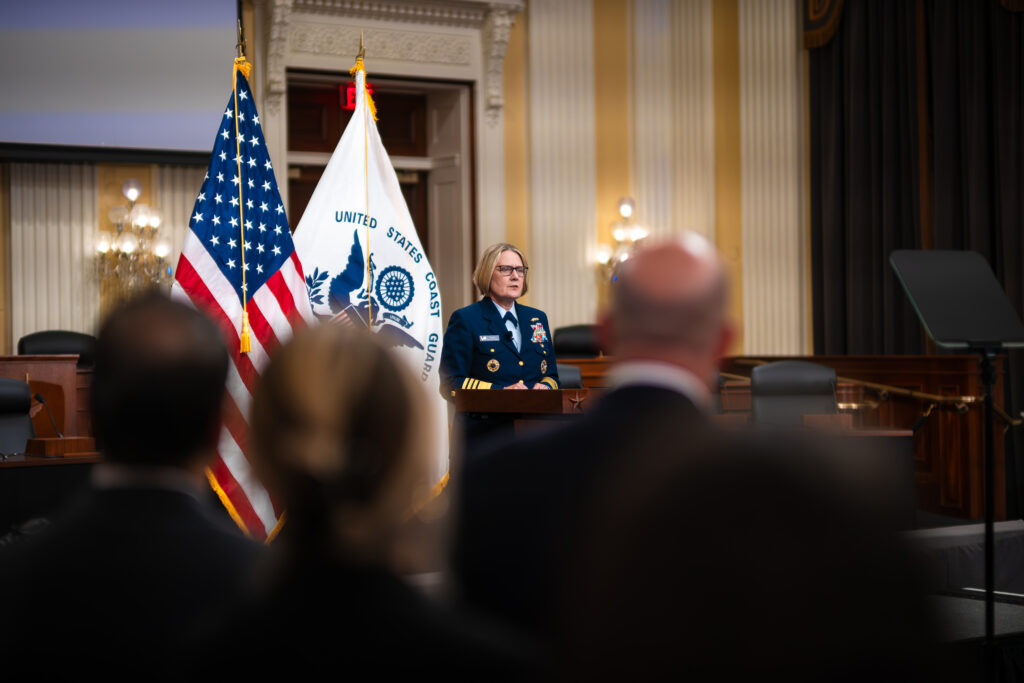
Adm. Linda L. Fagan, commandant of the Coast Guard, speaks to guests during the 2024 State of the Coast Guard Address in Washington, D.C., March 20. U.S. Coast Guard | Petty Officer 1st Class Brandon Giles
Coast Guard Commandant Admiral Linda L. Fagan endured withering criticism of the service’s treatment of sexual harassment issues at the Coast Guard Academy on June 11, as Senators from both sides of the aisle said the Coast Guard has not been forthcoming with its investigations or in helping the Senate panel conduct its own.
The Homeland Security & Government Affairs Committee’s Permanent Subcommittee on Investigations looked into the Coast Guard’s Operation Fouled Anchor investigation into sexual assault at the Coast Guard Academy. During a hearing, members said the Coast Guard buried its own critical report, retaliated against whistleblowers and has been dragging its feet in providing information about the report to the committee.
Sen. Richard Blumenthal (D-Connecticut), the panel’s chair, said Operation Fouled Anchor “was hidden from the public as well as Congress” and decried what he called “a culture of coverup continuance.”
Blumenthal said the Coast Guard attempted to say much of the assault and harassment had occurred in the past, but more than 40 whistleblowers told the committee it is ongoing.
“The question is, what will the Coast Guard do about it now, in the present?” Blumenthal asked. “We are now expecting action.” He also said, “our investigation has shown a deep moral rot inside the Coast Guard.”
Fagan appeared at the hearing as the primary witness, along with Master Chief Heath Jones, the highest-ranking enlisted officer in the Coast Guard
Fagan said the Coast Guard is trying to provide all relevant documents to the committee, is cooperating with an Inspector General review of the Fouled Anchor effort, and is about to contract with an outside, independent investigator with $1.5 million provided by Congress.
The Inspector General (IG) is “looking into Operationa Fouled Anchor, the totality of it, including action or inaction of senior leadership,” Fagan said.
“Sexual assault is “unacceptable. Not in my Coast Guard,” said Fagan, the service’s first female commandant. “It is not who we are.”
She said she has met with victims of assault, and “to the victims, the survivors, I am truly sorry for what you have had to go through.”
She said the failure to provide the Fouled Anchor report to Congress was a mistake that eroded trust but said now the service is being fully responsive to the subcommittee.
“I cannot change the past. But as the commandant today, I reaffirm to our workforce, past and present, that I remain steadfast to making lasting cultural change,” Fagan said.
Sen. Ron Johnson (R-Wisconsin), the ranking member of the panel, complained that the Coast Guard had issued a “data dump” of 1,000 pages of heavily redacted material on Operation Fouled Anchor, which he said was purposefully confusing and hard to follow.
Operation Fouled Anchor
The issue of Operation Fouled Anchor, first uncovered by CNN, burst into the news just days before the hearing, when Shannon Norenberg, the sexual assault response coordinator at the Coast Guard Academy, resigned and post an open letter on Maritime Legal Aid.com in which she wrote, “The Coast Guard lied to me. Worse than that, they used me to lie to victims, used me to silence victims, and used me in a coordinated effort to discourage victims of sexual assault at the Academy from speaking to Congress about their assaults and about the Coast Guard’s investigation of their cases.”
Fagan said Norenberg, who was in the room, “has been an incredible employee for us” and “the allegations she has made will be part of the IG investigation.” She said she had not read Norenberg’s posted statement but would do so.
Norenberg had started working with Operation Fouled Anchor in 2018, her letter says, but it had been ongoing for four years before that and had investigated dozens of sexual assaults reported at the academy.
Part of her work with the operation was to call victims and offer what she called “official expressions of regret,” along with in-person meetings in 2019 with 25 to 30 victims. Norenberg discovered she would not be offering CG-6095s to victims, which is proof offered to the Department of Veterans Affairs that the victim reported an assault while in the military, making it easier for them to obtain VA services to deal with their trauma.
Blumenthal said he was especially outraged by this, calling it “one of the most damning parts of her letter.” He asked Fagan what she would do to provide access to VA services for sexual assault victims.
Fagan replied “I am committed to working with the IG,” and later said, “my priority is supporting victims … I don’t want any victim to not get the support they are entitled to.”
Blumenthal said “the IG report cannot be used as a shield for inaction” or as a reason for not disclosing documents, drawing a small smattering of applause.
Fagan said she did not become aware of the full extent of potential victims uncovered by Operation Fouled Anchor “until we had some of the FOIA requests from CNN.”
She said her predecessor, Admiral Karl Schultz, was commandant of the Coast Guard at the time the decision was made to not reveal the findings of Operation Fouled Anchor but said she did not know if he was involved.
Blumenthal said maybe she didn’t want to know, but Fagan replied, “I am committed to full transparency with regard to the allegations.” She said the service will continue to cooperate with the IG and the third-party investigator “so we can understand what was known, when, and bring clarity to the allegations.”
US Coast Guard Cutter Resolute Returns Home From Caribbean Patrol; Interdicts Four Suspected Smugglers, 3,736 Pounds Of Illicit Drugs
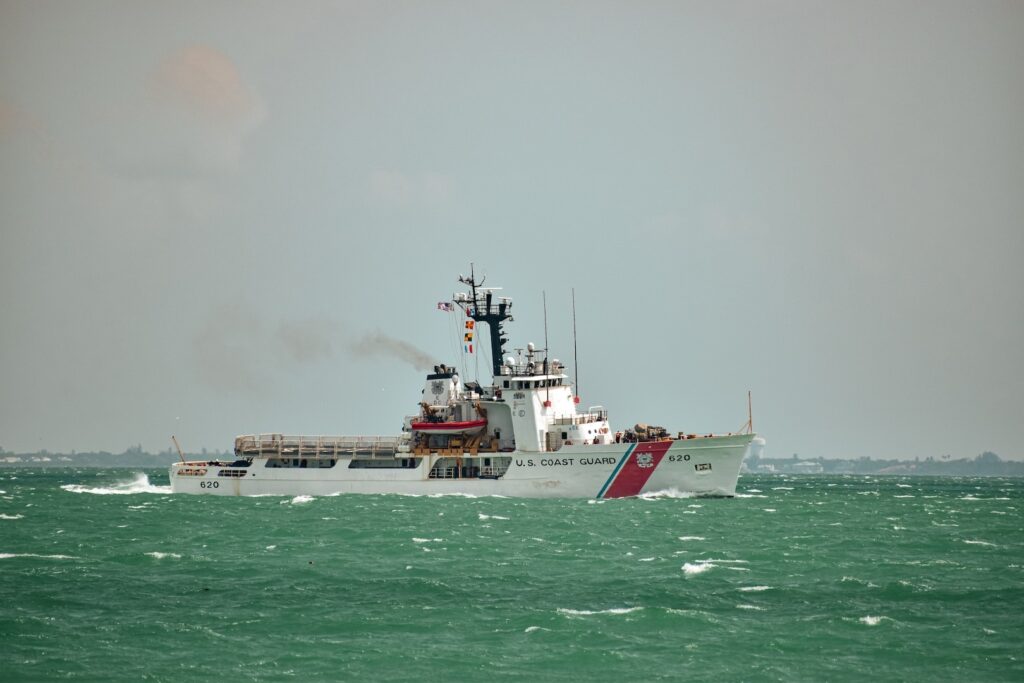
U.S. Coast Guard Cutter Resolute (WMEC 620) transits outbound for sea from homeport, St. Petersburg, Florida, ahead of a migrant interdiction and maritime safety and security patrol in the Caribbean Sea, April 10, 2024. Resolute routinely performs deterrence of illegal maritime migration throughout the Windward Passage, prioritizing the safety of life at sea and protecting the Nation’s southern maritime border. (U.S. Coast Guard photo courtesy of Coast Guard Cutter Resolute)
U.S. Coast Guard Atlantic Area, June 8, 2024
ST. PETERSBURG, Fla. - The crew of U.S. Coast Guard Cutter Resolute (WMEC 620) returned to their homeport in St. Petersburg, Saturday, following a 60-day patrol of the Caribbean, in support of Homeland Security Task Force – Southeast’s Operation Vigilant Sentry and Joint Interagency Task Force-South’s counterdrug mission.
While deployed within the Coast Guard’s Seventh District area of operations, and off the southwest coast of Haiti, the Resolute crew, together with the Coast Guard Cutter Mohawk (WMEC 913), interdicted one go-fast vessel, apprehended four suspected smugglers and seized 3,736 pounds of marijuana worth more than $3.5 million.
In addition to the drug interdiction and deterring illegal maritime migration, the Resolute crew conducted over 24 hours of search and rescue efforts for two missing mariners after the 90-foot Vanuatu-flagged schooner, De Gallant, sank approximately 20 miles north of Great Inagua on May 21, 2024. Resolute refueled Coast Guard helicopters searching for the missing sailors, conducted strategic search patterns, and recovered floating debris from De Gallant life rafts. Together, Coast Guard and Royal Bahamas Defence Force crews covered over 3,700 square miles before suspending the search.
“The officers and crew of Resolute completed this deployment in extraordinary fashion,” said Cmdr. Michael Ross, commanding officer of Resolute. “They answered the call and responded to each case with dignity, compassion and professionalism. The Coast Guard’s overt presence in this region is essential to deter dangerous and life-threatening maritime migration ventures. Our extensive Coast Guard presence in the area significantly decreased the number of migration events preventing loss of life at sea while protecting the homeland.”
Resolute is a 210-foot, Reliance-class medium endurance cutter. The cutter’s primary missions are counter drug operations, migrant interdiction, and search and rescue in support of U.S. Coast Guard operations throughout the Western Hemisphere.