USCGC Mohawk returns home following 46-day Caribbean Sea patrol 
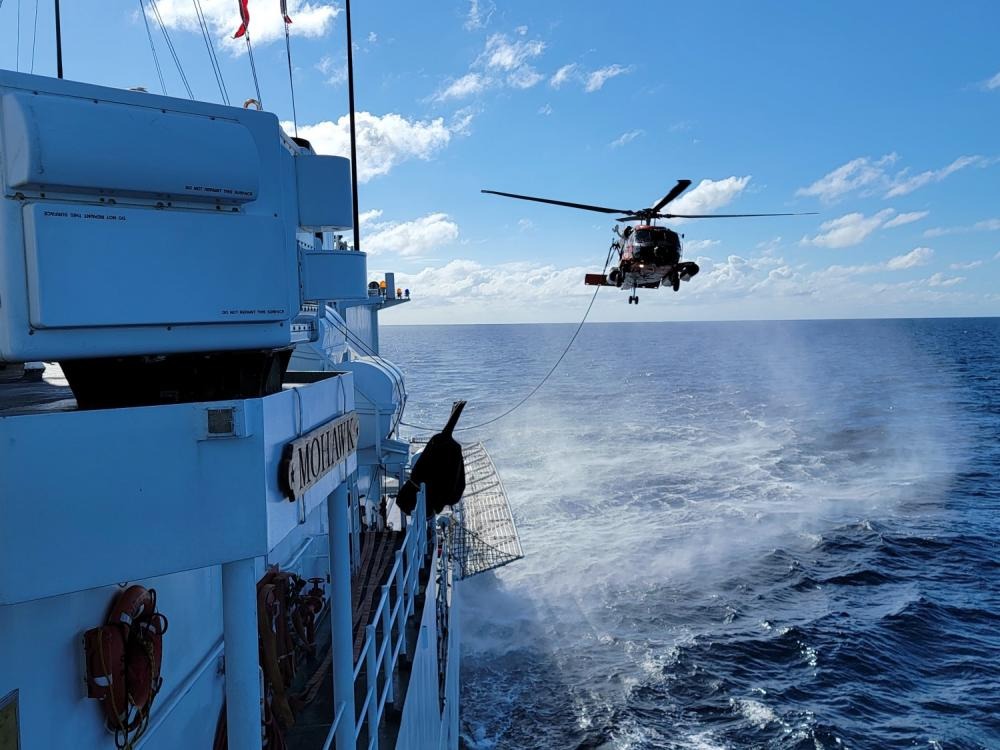
Photo by Petty Officer 3rd Class Kate Kilroy

Release from U.S. Coast Guard Atlantic Area 

******* 

KEY WEST, Fla.— The crew of the USCGC Mohawk (WMEC 913) returned to their home port in Key West, Monday, after a 46-day deployment in the Florida Straits and Caribbean Sea.  

Mohawk patrolled the Florida Straits and Caribbean Sea in support of Homeland Security Task Force—Southeast and Operation Vigilant Sentry in the Coast Guard Seventh District’s area of operations. While underway, Mohawk’s crew conducted counter drug and maritime safety and security missions while working with other Coast Guard cutters and air assets to detect, deter and intercept unsafe and illegal migrant ventures bound for the United States. 

During the patrol, Mohawk’s crew cared for 670 migrants interdicted at sea and rescued personnel from seven different unseaworthy vessels. Notably, Mohawk’s crew assisted with the repatriation of 110 Haitian migrants to Cap-Haitien, Haiti, and 273 Cuban migrants to Matanzas, Cuba.  

Mohawk’s patrol efforts highlight the Coast Guard’s critical mission of maintaining safety at sea and preventing the potential for loss of life by deterring migrants from taking to the sea in dangerously overcrowded vessels while attempting to enter the United States through non-legal channels. 

“It’s never easy being deployed over the holidays, away from family members,” said Cmdr. Andrew Pate, Mohawk’s commanding officer. “I am incredibly proud of the women and men aboard who continue to position Mohawk for success – their role in this historic effort, alongside our state and local partners as well as other Coast Guard units, is nothing short of heroic.”   

Mohawk is a 270-foot, Famous-class medium endurance cutter with a crew of 100. The cutter’s primary missions are counter drug operations, migrant interdiction, enforcement of federal fishery laws and search and rescue in support of U.S. Coast Guard operations throughout the Western Hemisphere. 

For information on how to join the U.S. Coast Guard, visit GoCoastGuard.com to learn about active duty and reserve, officer and enlisted opportunities. Information on how to apply to the U.S. Coast Guard Academy can be found here

For more, follow us on Facebook, Instagram and Twitter


Coast Guard Has No Personnel Retention Problem, But Recruiting Is Another Story

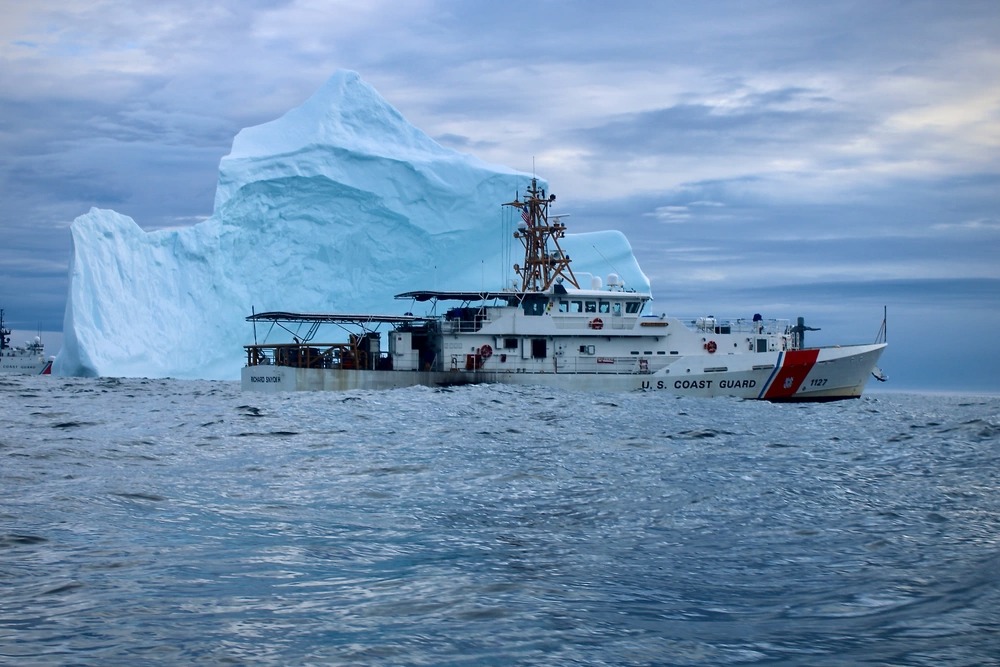
USCGC Richard Snyder (WPC 1127) navigates in the Labrador Sea on Aug. 13, 2021. Snyder worked alongside USCGC Escanaba (WMEC 907), the Royal Canadian Navy’s HMCS Harry Dewolf (AOPV 430), and HMCS Goose Bay (MM 707) in Operation Nanook to enhance collective abilities to respond to safety and security issues in the High North through air and maritime presence activities, maritime domain defense, and security exercises. (U.S. Coast Guard photo by USCGC Richard Snyder)

******* 

ARLINGTON, Va. — Retaining veteran personnel is not a problem for the U.S. Coast Guard says Commandant Adm. Linda Fagan, but recruiting the right people who want to go to sea remains “a challenge.” 

From patrolling the Arctic, conducting counter-narcotics trafficking operations in the Caribbean Basin, helping vulnerable nations across Oceana protect their resources from illegal, unreported and unregulated (IUU) fishing, to joining U.S. Navy ships in freedom of navigation transits through the Taiwan Strait, “We have never been in greater demand around the world,” Fagan said. 

However, the Coast Guard, like the other armed services and employers across the nation, “is facing the challenge of recruiting,” Fagan told attendees at the Surface Navy Association’s annual national symposium Jan. 11. 

New USCG Recruiting Programs

The Coast Guard has several pilot programs to address the recruiting challenge, including one that would allow lateral entry for civilians with key skills, like culinary specialists and certified EMTs, to move more quickly into their chosen service job after basic training. 

The Coast Guard’s first female commandant, Fagan said her number one priority is managing talent to keep a workforce “trained, ready and relevant for the work ahead.” The problem, she said, is getting young people to see the opportunity that service brings. 

“We’re a sea-going service, and having a workforce that’s excited to go to sea on the state-of-the-art ships that we’re building is a priority,” Fagan said. The Coast Guard has set up sea duty readiness council to lead efforts to mitigate the challenges that go along with serving at sea.  

That includes being responsive to the expectations of the generation that the Coast Guard wants to recruit, such as reliable internet service. To that end, the Coast Guard has made antenna upgrades and increased spending on satellite reception and bandwidth. 

“Improved connectivity helps people stay in touch with their friends and family and eliminates some of the arduousness of sea duty,” Fagan said. 

While the Coast Guard has used incentive pay and signing bonuses to encourage old hands to stay and new ones to join, “I don’t think we can buy our way out of this,” Fagan said. “If you get the system right, the structure, the conditions of employment, that bonus becomes just a cherry on top. You’ve already sold them on the work and the values.”  


USCGC Spencer Completes Multinational Maritime Security Patrol off West Africa 

Release from U.S. Coast Guard 

******* 

DAKAR, Senegal — The Famous-class medium-endurance USCGC Spencer (WMEC 905) arrived in Dakar, Senegal for a scheduled port visit following a multinational maritime security patrol, Jan. 17, 2023, U.S. Naval Forces Europe and Africa/U.S. Sixth Fleet said in a Jan. 19 release.

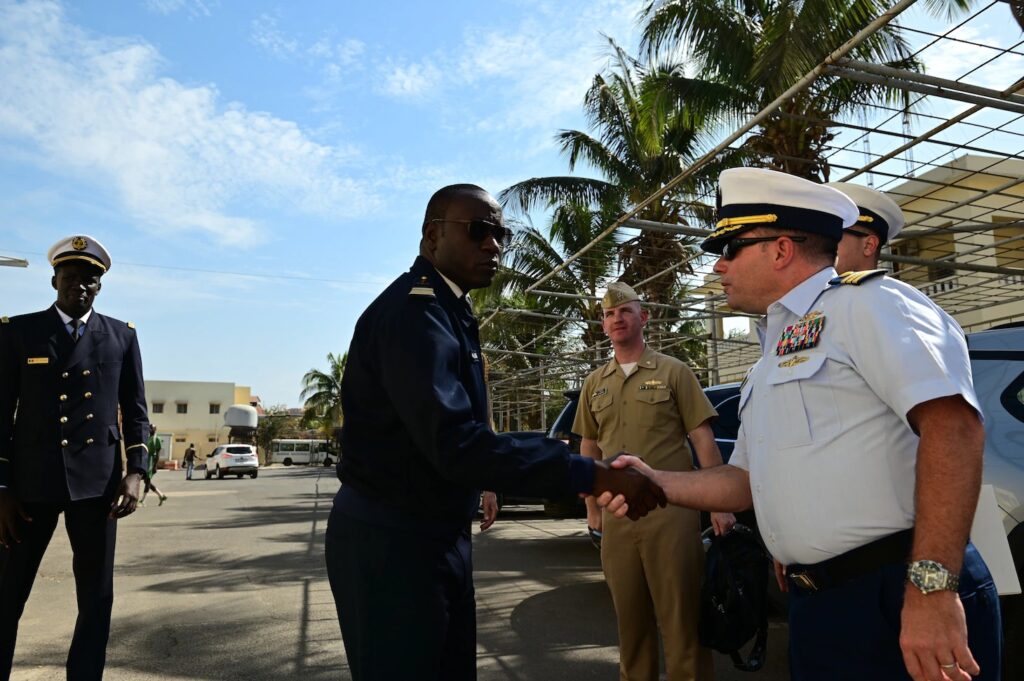
Spencer’s visit to Dakar included meetings with Capt. Karim Mara, Senegalese deputy chief of naval staff, as well as leaders from the Senegalese Navy and the U.S. Office of Security Cooperation. Prior to the port visit, Spencer embarked maritime counterparts from Cabo Verde, Senegal, and The Gambia for a security patrol to identify and deter illegal, unreported, unregulated (IUU) fishing as well as build living marine resource enforcement capacity with African partner nations.

“We were able to build maritime domain awareness with our partners by establishing an offshore law enforcement presence that demonstrated Cabo Verde’s, Senegal’s, and The Gambia’s commitment to maritime security and living marine resource enforcement. We did this by conducting combined maritime law enforcement operations and effectively communicating and coordinating with each country’s Maritime Operations Center,” said Cmdr. Corey Kerns, Spencer’s commanding officer.

This deployment demonstrates NAVAF’s [U.S. Naval Forces Africa’s] and the U.S. Coast Guard’s commitment and longstanding partnership to work with our African partners to counter illicit maritime activity in the Atlantic Ocean. The U.S. Coast Guard regularly integrates and operates within the NAVAF area of operations. The U.S. Coast Guard’s authorities and capabilities provide the Joint Force with unique tools that bridge the cooperation-to-conflict continuum.

Senegal and the United States share a proud history of promoting peace and security in Africa. Later this month, Senegal will participate in the NAVAF-led exercise Obangame Express 2023, the largest annual maritime security exercise in Western Africa. These types of exercises strengthen partnerships and allow countries to work more closely on shared transnational maritime challenges.

“The United States and Senegal enjoy an exceptional security partnership that bolsters our shared efforts to promote peace and security in West Africa, combat illegal, unreported, and unregulated fishing, and protect marine resources,” said Mike Raynor, U.S. Ambassador to Senegal. “The arrival of USCGC Spencer to Dakar reflects that robust partnership.”

The U.S. shares a common interest with African partner nations in ensuring security, safety, and freedom of navigation on the waters surrounding the continent, because these waters are critical for Africa’s prosperity and access to global markets.

U.S. Coast Guard Atlantic Area, headquartered in Portsmouth, Virginia, oversees all Coast Guard operations east of the Rocky Mountains.


Coast Guard, Partners Tracking Russian Vessel off Hawaiian Coast 

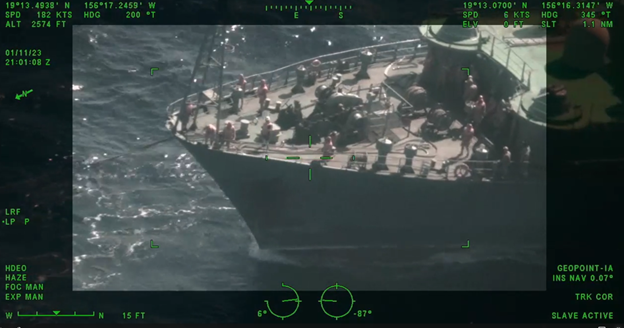
In recent weeks, the U.S. Coast Guard has continued to monitor a Russian vessel, believed to be an intelligence gathering ship, off the coast of the Hawaiian Islands. The Coast Guard continues to coordinate with Department of Defense partners, providing updates to foreign vessel movements and activities and to appropriately meet presence with presence to encourage international maritime norms. Source: dvidshub

Release from U.S. Coast Guard

******* 

HONOLULU — In recent weeks, the U.S. Coast Guard has continued to monitor a Russian vessel, believed to be an intelligence gathering ship, off the coast of the Hawaiian Islands, the Coast Guard 14th District said in a release. 
  
While foreign military vessels may transit freely through the U.S. economic exclusive zone (EEZ), as per customary international laws, foreign-flagged military vessels have often been observed operating and loitering within Coast Guard District Fourteen’s area of response. 
  
The Coast Guard continues to coordinate with Department of Defense partners, providing updates to foreign vessel movements and activities and to appropriately meet presence with presence to encourage international maritime norms.   
  
“The U.S. Coast Guard is currently monitoring the Russian vessel operating in the vicinity of Hawaii,” said Cmdr. Dave Milne, chief of External Affairs. “As part of our daily operations, we track all vessels in the Pacific area through surface and air assets and joint agency capabilities. The Coast Guard operates in accordance with international laws of the sea to ensure all nations can do the same without fear or contest. This is especially critical to secure freedom of movement and navigation throughout the Blue Pacific.” 
  
As a part of the Department of Homeland Security, the Coast Guard is the lead federal agency for at-sea enforcement of U.S. fisheries laws; additionally, the Coast Guard assists in the enforcement of laws on the high seas subject to the jurisdiction of the United States’ exclusive economic zone. Law and treaty enforcement account for approximately 1/3 of the Coast Guard’s annual budget.  


USCGC Decisive Returns Home from Final Patrol 

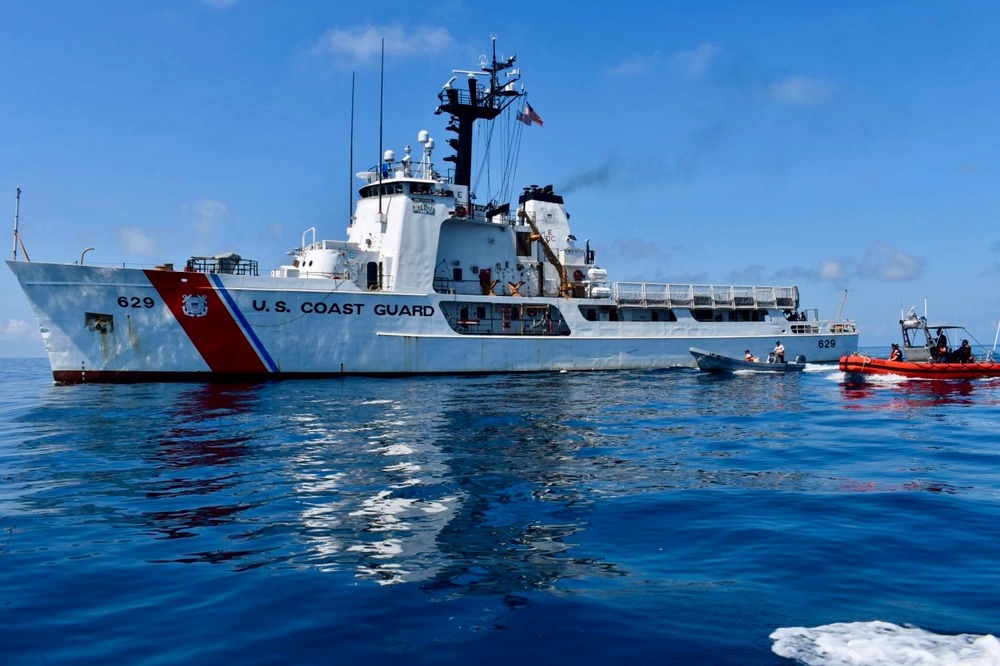
The Reliance-class medium endurance cutter USCGC Decisive (WMEC 629) conduct at sea engagements with the navy of Guatemala in the territorial seas of Guatemala on Oct. 25 – 26, 2021. The U.S. Coast Guard conducts routine deployments in the Southern Command area of responsibility, works alongside partners, builds maritime domain awareness, and shares best practices with partner nation navies and coast guards. (U.S. Coast Guard photo)

Release from U.S. Coast Guard 

*******

PENSACOLA, Fla. — The crew of the USCGC Decisive (WMEC 629) returned to their homeport in Pensacola, Jan. 13, following a 33-day patrol in the Eastern Pacific Ocean, concluding 55 years of service to the Nation, the Coast Guard Atlantic Area said in a Jan. 18 release. 

Decisive patrolled the Eastern Pacific Ocean in the Coast Guard Eleventh District’s area of operations. While underway, the Decisive’s crew supported the Coast Guard’s drug interdiction and search and rescue missions to promote safety of life at sea and deter the flow of illegal narcotics into the United States.   

While deployed, Decisive’s crew collaborated with Coast Guard assets and foreign military aircraft to detect, deter, and interdict illegal narcotics voyages. At one point, Decisive disrupted two vessels suspected of drug trafficking in the same night. Decisive also collaborated with the USCGC Alert (WMEC 630) to safely transfer three suspected smugglers. While aboard Decisive, the detainees received food, water, shelter and medical attention. 

“The crew’s remarkable professionalism, competence and determination were on full display as we met the diverse challenges of operations at sea,” said Cmdr. Aaron Delano-Johnson, commanding officer of Decisive. “Whether it was conducting simultaneous boardings or our skilled engineers conducting voyage repairs in Panama, the crew exceeded expectations at every turn. After a successful, final patrol for Decisive, we are looking forward to returning home to our family and friends on shore.” 

During the patrol, Decisive traveled more than 6,000 miles and traversed through the Panama Canal. By transiting the historic waterway, Decisive’s crew earned their Order of the Ditch certificates, a time-honored nautical tradition recognizing mariners who have crossed the Panama Canal between the Atlantic and Pacific Oceans. 

Decisive is a 210-foot, Reliance-class medium-endurance cutter with a crew of 72. The cutter’s primary missions are counter drug operations, migrant interdiction, and search and rescue in support of U.S. Coast Guard operations throughout the Western Hemisphere. 


USCGC Tahoma Returns Home after 50-day Caribbean Sea Patrol 

Coast Guard, and Customs and Border Protection Air and Marine Operations crews stop a grossly overloaded and unsafe Haitian sail freighter about 50 miles south of Cudjoe Key, Florida, Dec. 12, 2022. The people were repatriated to Haiti on Dec. 20, 2022. U.S. COAST GUARD / Cutter Tahoma’s crew

Release by U.S. Coast Guard 

******* 

NEWPORT, R.I. — The crew of the USCGC Tahoma (WMEC 908) returned to their home port in Newport, Rhode Island, Jan. 16, following a 50-day patrol in the Caribbean Sea, the Coast Guard Atlantic Area said in a release. 

Tahoma patrolled the south Florida Straits in support of Homeland Security Task Force – Southeast and Operation Vigilant Sentry in the Coast Guard Seventh District’s area of operations. While underway, Tahoma’s crew conducted maritime safety and security missions while working with a variety of Coast Guard and U.S. Customs and Border Protection assets, as well as good Samaritan vessels, to detect, deter and intercept unsafe and illegal migrant ventures bound for the United States. 

Throughout the patrol, Tahoma intercepted, cared for and safely transferred more than 650 Cuban and Haitian nationals. Notably, Tahoma worked with partners to stop a highly unstable, overloaded sailboat with 93 Haitian nationals on board, many of whom were held below decks in unsafe and unsanitary conditions. 

Tahoma’s rescues highlight the Coast Guard’s critical maritime law enforcement and lifesaving missions of maintaining safety at sea and preventing the potential for loss of life by deterring migrants from taking to the sea in dangerously overcrowded, unseaworthy vessels in an attempt to enter the United States illegally. 

“I am very proud of Tahoma’s crew for their hard work and dedication, carrying out this demanding mission while being away from family during the holiday season,” said Cmdr. Piero Pecora, Tahoma’s commanding officer. “Their focus and professionalism at all hours of the day and night saved hundreds of lives and reflects the Coast Guard’s unwavering dedication to the safety of life at sea.” 

Tahoma is a 270-foot Famous-class medium-endurance cutter with a crew of 100. The cutter’s primary missions are counter drug operations, migrant interdiction, enforcement of federal fishery laws, and search and rescue in support of U.S. Coast Guard operations throughout the Western Hemisphere. 


Cutter Alex Haley Returns to Kodiak following 7-Month-Long Maintenance Period 

The Coast Guard Alex Haley sits dry docked for repairs and maintenance in Seattle, Washington, Dec. 13, 2022. While in dry dock, the crew and contractors successfully completed more than $6 million worth of repairs. U.S. COAST GUARD

Release from U.S. Coast Guard 

******* 

KODIAK, Alaska — The crew of the Coast Guard Cutter Alex Haley returned to homeport at Coast Guard Base Kodiak, Alaska, on Jan. 12, following an extended seven-month dry dock maintenance period in Seattle, Washington, the Coast Guard 17th District said in a release.  

While in dry dock, the crew and contractors successfully completed more than $6 million worth of repairs.  

The engineering department oversaw 76 work items including major overhauls on the cutter’s controllable pitch propeller system, speed reducers, rudders, and boilers, along with inspections of fuel, sewage, and water tanks. The operations department supervised a renewal of the Alex Haley’s flight deck, navigation systems, and electronics while maintaining critical law enforcement currencies. The deck department expertly completed vast amounts of painting and topside preservation, while ensuring small boat operational readiness.  

When crewmembers were not directly involved in repairs, they took advantage of temporary duty training opportunities to gain technical proficiencies.  

Crew Helps with Other Coast Guard Missions 

Crewmembers were sent to southern California to aid in migrant operations, supported scientific missions in the Arctic, and played a key role in the Rim of the Pacific 2022 Naval Exercise, strengthening our relationships with 33 partner nations.  

The entire crew also attended advanced damage control schools hosted by Naval Base Kitsap in Bremerton, Washington. Crewmembers were taught plugging, patching and dewatering techniques in the classroom then went hands-on, applying their knowledge to simulated flooding in a wet trainer.  

Firefighting tactics were also honed while combating real fires during two scenarios that mimicked plausible casualties on a cutter like the Alex Haley.  

“I am incredibly proud of the crew’s accomplishments during this extended maintenance period,” said Cmdr. Brian Whisler, commanding officer of the Alex Haley. “The crew worked tirelessly to make significant material and aesthetic improvements to the cutter which will have long-term benefits as we continue to prepare for future patrols in the Bering Sea. Seven months is a long time to be away from home and we are thrilled to be reunited with our family, friends, and our Kodiak Community.” 

Following its dry dock period, the Alex Haley will be able to continue operating as the Coast Guard’s primary asset in the Bering Sea with renewed and improved capabilities.  

The Alex Haley is a 52-year-old 282-foot Medium Endurance Cutter that has been homeported in Kodiak since 1999. The crew routinely operates throughout the Bering Sea, the Gulf of Alaska, and the Pacific Ocean. The Alex Haley’s ability to operate in extreme weather conditions provides the mission flexibility necessary to perform search and rescue, fisheries law enforcement, and vessel safety inspections across Alaska. 


Coast Guard, Navy Competition for Ship Availabilities to Increase: USCG Official

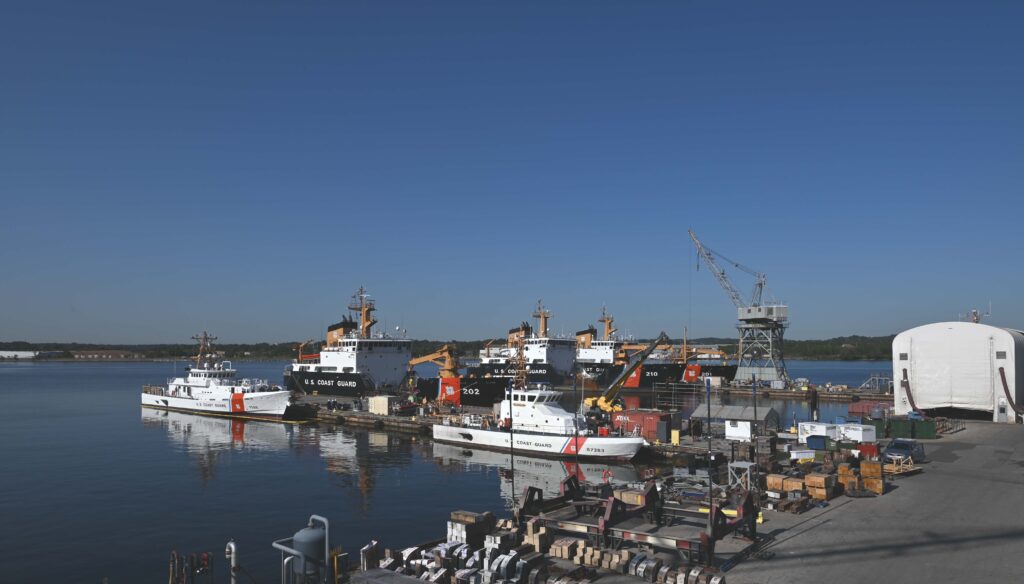
The Coast Guard Yard at Curtiss Bay, Maryland, is the service’s main cutter maintenance facility. U.S. COAST GUARD

ARLINGTON, Va. — The U.S. Coast Guard will be in “closer competition than we ever have before” with the U.S. Navy for dry dock and dockside availabilities for their ships, a Coast Guard official said during a panel on maintenance at the Surface Navy Association Annual Symposium on Jan. 12. 

Bob Thomas, U.S. Coast Guard deputy assistant commandant for engineering and logistics (CG-4D), said that the Coast Guard is competing for resources with both the industry and the Navy as retention and recruiting struggles. persist throughout the military. Along with maintenance areas that the Coast Guard hasn’t historically dealt with, such as cyber, that creates an intensely competitive environment, he said. 

The Coast Guard has seen many of the same recruiting and retention challenges as the other services, Thomas noted. 

“The workforce has almost become a migrant workforce,” he said. “They’ll shift to where the work is, [or] who’s paying the most. […] That drives the cost way up when people are competing for limited resources. You get to pay more for the same thing, or sometimes it’s not available.”

Collaborating to Retain Workforce Numbers

However, he added that the Coast Guard is working closely with the Navy to help mitigate some of these issues, mentioning a number of collaborative efforts that he thinks are “going to pay off huge for the Coast Guard.” 
 
Navy Rear Adm. Scott Brown, deputy commander for logistics, maintenance, and industrial operations, also said that 2022 was “not a great year” in terms of staffing at the public shipyards, stating that they were short by 1,200 personnel, with 37,000 total working in those shipyards. 
 
“A big focus of our efforts is to improve the recruiting and incentives for folks that come into the shipyards,” he said. 
 
Brown said he believes that, in addition to the economy, the state of the shipyards and changing demographics are the primary reasons why the Navy continues to struggle with recruiting and retention. 
 
To offset some of those challenges, the Navy is looking not only to boost pay, but to also offer career development opportunities to sailors. For example, the Navy has introduced a program to help mechanical expert tradespeople, a promotion that keeps them “turning wrenches” while still providing advancement opportunities.


USCGC Hamilton Returns Home after Historic Sixth Feet Deployment

The U.S. Coast Guard Cutter Hamilton (WMSL 753) moors to the pier in North Charleston, South Carolina, Dec. 21. U.S. COAST GUARD / Petty Officer 2nd Class Brandon Hillard

NORTH CHARLESTON, S.C. — The crew of U.S. Coast Guard Cutter Hamilton (WMSL 753) returned to their homeport Dec. 21 in North Charleston following a 94-day deployment in the U.S. Naval Forces Europe – Africa area of operations, the Coast Guard Atlantic Area said in a release.   

Hamilton’s crew operated in support of the U.S. Sixth Fleet and was tasked to defend U.S., allied and partner interests.  

Hamilton began its deployment with a transatlantic voyage to Rota, Spain and met with operational commanders from U.S. Sixth Fleet. After Spain, the cutter transited through the English Channel and Danish Straits, two vitally significant waterways that provide safe passage for 15% of the world’s shipping.  

Immediately upon entering the Baltic Sea region, Hamilton conducted at-sea exchanges with naval, coast guard and border guard forces of multiple Baltic Sea allies and partners, including Sweden, Finland, Estonia, Latvia and Lithuania. Each engagement was oriented to support either traditional Coast Guard missions or in combination with defense readiness exercises used to enhance interoperability between the U.S. and NATO partners.  

As the first U.S. military vessel to visit Turku, Finland in over a decade, Hamilton hosted public tours of the cutter and held a reception for U.S. and Finnish government and military leaders. Guests included the U.S. Ambassador to the Republic of Finland, the deputy chief of the Finnish Border Guard, the state secretary of the Ministry of Interior and the mayor of Turku. The visit also served to reinforce the long-standing partnership between the Finnish Border Guard and the U.S. Coast Guard.   

Additionally, Hamilton is the first U.S. Coast Guard cutter to visit Riga, Latvia in more than 20 years. The crew met with the U.S. ambassador to Latvia and hosted a reception on board Hamilton for members of Latvia’s navy and coast guard to include the Latvian navy’s chief of staff and the commander of the Latvian coast guard. Hamilton also served as a backdrop to Latvia’s 104th Freedom Day celebration alongside NATO forces.   

“It was an honor to grow the relationship between the United States and our Baltic Sea allies and partners during engagements both at sea and in port,” said Capt. Matthew Brown, commanding officer of Hamilton. “By working side by side with our current and future NATO allies, we learned just how much we have in common, and we were left with a stronger appreciation for our shared values. I could not be more proud of this crew’s hard work and sacrifice while serving as the United States’ representatives in the Baltic.”  

Hamilton’s deployment demonstrated the strategic value of conducting meaningful at-sea engagements, subject matter exchanges and port visits with allies and partners in the high northern latitudes and Baltic Sea region. The U.S. maritime services regularly operate with partner nations to cultivate a cohesive force to maintain freedom of the seas, ensure free economic exchange and maintain maritime security.  

“The U.S. Coast Guard is a proud and capable partner of the U.S. Joint Forces serving in the Europe and Africa areas of operations,” said Vice Adm. Kevin E. Lunday, commander of Coast Guard Atlantic Area. “We will continue to build maritime domain awareness and share best practices with our partner nations’ navies and coast guards.”    

Hamilton is a 418-foot, Legend-class national security cutter with a crew of 160. With its robust command, control, communication, computers, intelligence, surveillance and reconnaissance equipment, the NSC is the most technologically advanced ship in the Coast Guard’s fleet. NSCs are a worldwide deployable asset that supports the Department of Homeland Security, Department of Defense and national objectives to include drug interdiction, migrant interdiction, national defense, search and rescue, fisheries enforcement and national intelligence collection.


USCGC Vigorous Returns Home after a 48-day Multi-Mission Patrol

U.S. Coast Guard Cutter Vigorous moored at home port in Virginia Beach, Virginia Dec. 21, 2022. Vigorous is a 210-foot, Reliance-class medium endurance cutter with a crew of 74. U.S. COAST GUARD / Petty Officer 3rd Class Kate Kilroy

VIRGINIA BEACH, Va. — The crew of the U.S. Coast Guard Cutter Vigorous (WMEC 627) returned to their homeport in Virginia Beach Dec. 21, following a 48-day patrol in the Northern Caribbean Sea, the Coast Guard Atlantic Area said in a release. 

In support of the Coast Guard’s Seventh District, Vigorous’ crew conducted maritime safety and security missions as they responded to the historically high migration activity and remained prepared to interdict and disrupt the flow of illegal narcotics in the South Florida Straits and Windward Pass.  

During the patrol, Vigorous traveled more than 8,000 miles and contributed to the safe transfer of more than 500 Cuban nationals. Vigorous worked with numerous Coast Guard assets, U.S. Customs and Border Protection boats and good Samaritan vessels to detect, deter and intercept unsafe and illegal ventures bound for the United States. 

“The Vigorous crew’s remarkable professionalism, competence and determination were on full display as we met the diverse challenges of operations at sea,” said Cmdr. Ryan Waters, commanding officer of Vigorous. “Whether executing days of small boat operations late into the night or rendering assistance to mariners on a disabled vessel, the Vigorous crew exceeded expectations at every turn. After a successful patrol, we look forward to returning home to our family and friends on shore.” 

Vigorous is a 210-foot, Reliance-class medium-endurance with a crew of 74. The cutter’s primary missions are counter-drug operations, migrant interdiction, enforcing federal fishery laws and search and rescue in support of U.S. Coast Guard operations throughout the Western Hemisphere.