HMS Medway, U.S. Coast Guard Law Enforcement Detachment Seize Cocaine in Caribbean
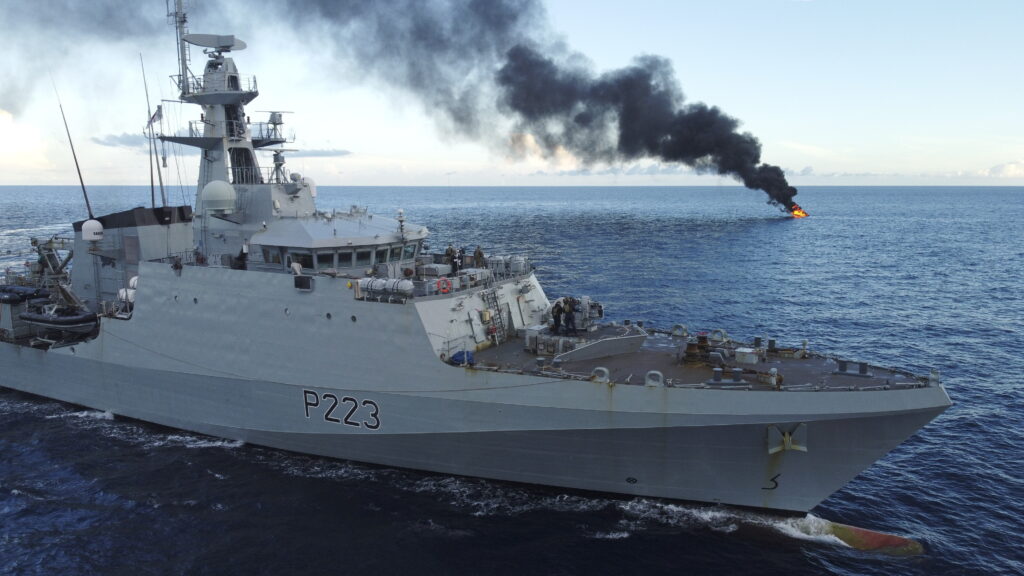
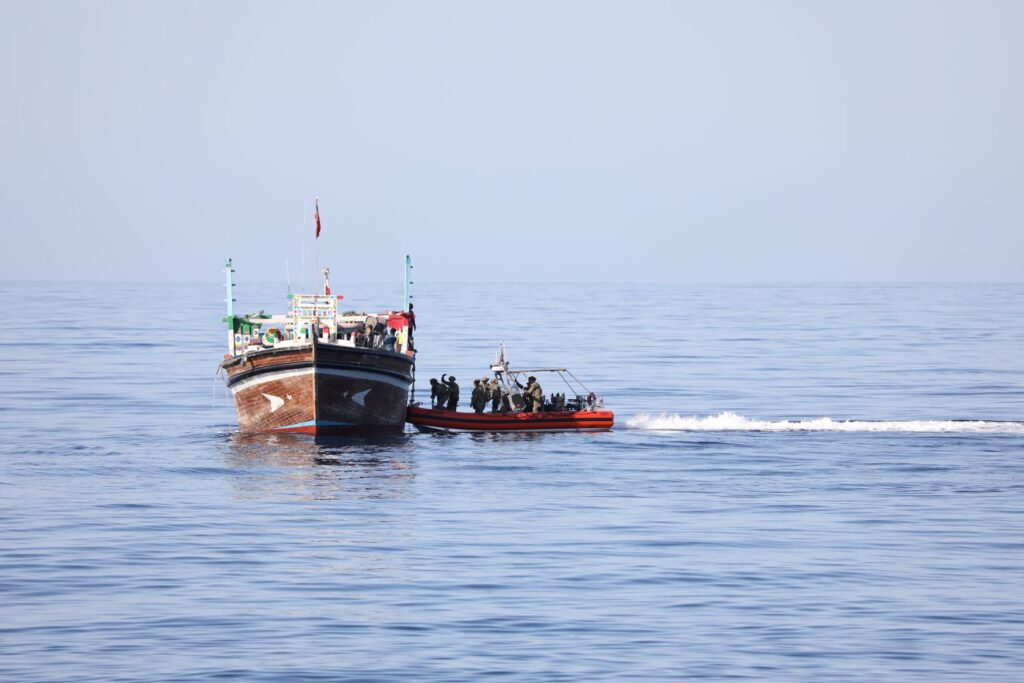
HMS MEDWAY and her embarked U.S. Coast Guard Law Enforcement Detachment team interdicted a vessel carrying over 400kg of cocaine in the Caribbean Sea, Sep. 29, 2022. U.K. ROYAL NAVY
LONDON — A Royal Navy ship and U.S. Coast Guard boarding team seized more than 400 kilograms of cocaine worth around £24m on Britain’s streets from a boat in the Caribbean, the U.K. Ministry Of Defence said in an Oct. 28 release.
Caribbean-based patrol ship HMS Medway and her embarked U.S. Coast Guard Law Enforcement Detachment spotted the vessel near the Dominican Republic with help from a patrol aircraft.
Following a tense chase, the vessel was boarded and the drugs discovered with three crew members detained.
“To secure an interdiction on our first day dedicated to this type of operation in this period has been tremendous,” said Comdr. Chris Hollingworth, commanding officer of Medway. “Everyone involved demonstrated their professionalism during a challenging pursuit. It might be the first, but we’re going to make sure that it won’t be the last, and I speak on behalf of everyone here in saying this has galvanised our determination to succeed.”
The boat contained several large packages which were quickly confirmed as being cocaine prior to being seized and brought aboard the warship.
It is believed the boat had come from South America, a common route taken by smugglers at this time of year.
After an overnight operation to secure the contraband — estimated by the National Crime Agency to be worth around £24m, had those drugs reached the streets of the United Kingdom — and detain the crew, the vessel was sunk by Medway’s gunnery team.
The destruction of the drugs smuggling vessel, which is normal for this type of operation, ensures it is no longer used for illegal activity while also providing valuable gunnery training.
“Although we talk of these boats being commonplace in the Caribbean, that doesn’t in any way diminish the achievement of landing a bust like this,” said a member of the boarding team, U.S. Coast Guard Law Enforcement Detachment 404, who wishes to remain anonymous.
“Together with our partners on board Medway and up in the skies above us, we’re able to smash a hole in the supply chain and disrupt the movement of these harmful drugs before they have the chance to harm people at home and abroad.”
Medway recently helped the people of the Cayman Islands and Turks and Caicos in their recovery efforts following Hurricanes Ian and Fiona.
“It’s a perfect example of Medway’s versatility and demonstrates my team’s ability to shift from Disaster Relief Operations to Counter Illicit Trafficking Operations without missing a beat,” Hollingworth said.
“I’m exceptionally proud of the collective effort of my ship’s company and our colleagues from the U.S. Coast Guard for their proactive attitude and total commitment to the task.”
Coast Guard Establishes New Base in Oregon
Cmdr. Todd Wimmer, the commanding officer of Base Astoria, shakes hands with Rear Adm. Jon Hickey, the Director of Operational Logistics, during an establishment ceremony in Warrenton, Oregon, to formally establish Coast Guard Base Astoria Oct. 26, 2022. U.S. COAST GUARD / Petty Officer 1st Class Travis Magee
ASTORIA, Ore. — The U.S. Coast Guard held an establishment ceremony Oct. 26 in Warrenton, Oregon, to formally establish Coast Guard Base Astoria.
During the ceremony, Cmdr. Todd Wimmer assumed command of the new unit.
Rear Adm. Jon Hickey, the director of Operational Logistics, presided over the ceremony.
Wimmer previously served as chief of facilities at Coast Guard Training Center Petaluma, California, from 2019-2022.
Base Astoria is located in Warrenton and will provide operational logistics support for Coast Guard units across the Thirteenth Coast Guard District’s Oregon and southern Washington regions.
Coast Guard Delivers Upgraded MH-65 Helicopters to Air Station Atlantic City
Coast Guard Air Station Atlantic City received its first upgraded MH-65E Dolphin helicopter Oct. 25. U.S. COAST GUARD
ATLANTIC CITY, N.J. — Coast Guard Air Station Atlantic City received its first upgraded MH-65E Dolphin helicopter Oct. 25 to replace the legacy MH-65D helicopters that serve out of the Coast Guard’s largest MH-65 helicopter unit.
The avionics upgrade to the Echo or “E” configuration will provide enhanced search and rescue capabilities including modern “glass cockpit” technology that increases pilot and aircrew situational awareness.
The Dolphin upgrades also include reliability and capability improvements for the automatic flight control system, enhanced digital weather and surface radar and multifunctional displays with more accurate fuel calculations.
The upgrades comply with the Federal Aviation Administration’s Next Generation Airspace Transportation System requirements, and extends the aircraft service life to the late 2030s.
The transition of Air Station Atlantic City’s 12 MH-65D helicopters to the upgraded “E” configuration is expected to take approximately 10 months.
During the upgrade period, the unit’s 62 pilots and 104 aircrew members will undergo a three-week transition course at the Aviation Training Center in Mobile, Alabama. Aircrew and mechanics will undergo formal training specific to their roles and duties during this course.
“The upgrades and advanced training will enhance the situational awareness of our aircrews and improve mission planning capabilities aboard the Coast Guard’s most prolific rotary-wing asset,” said Cmdr. Christian Polyak, engineering officer at Air Station Atlantic City. “The replacement and inspection of key aircraft components as a part of the upgrade are also expected to extend the aircraft’s service-life and enable us to continue safeguarding and securing our coasts for years to come.”
Air Station Atlantic City Dolphin helicopter crews perform search and rescue, provide aids to navigation support and maritime law enforcement and marine environmental protection to the mid-Atlantic region from Long Island, New York, to the Maryland and Virginia border.
Air Station Atlantic City helicopters and aircrews also provide continuous support for the North American Aerospace Defense Command’s airspace security mission in Washington, D.C., and throughout the country as necessary.
Additionally, the upgrades also include advanced navigation capabilities that will allow pilots to safely maneuver through highly congested, complex air traffic that can be encountered in situations such as disaster response.
The Coast Guard plans to convert all 98 of its Dolphin helicopters to the MH-65E configuration by the end of 2024.
DHS S&T and NOAA Transition Harmonized Waterway Database to Coast Guard
WASHINGTON — The Department of Homeland Security (DHS) Science and Technology Directorate (S&T) is delivering a harmonized geospatial dataset of national waterways to all federal agencies that comprise the U.S. Committee on the Marine Transportation System (CMTS), the directorate said in an Oct. 25 release.
The “Harmonized Waterway” project and the delivered dataset will enable enhanced delivery of critical Marine Safety Information (MSI) to mariners in U.S. waters, as well as improve inter-agency coordination to advance federal waterways management. The Coast Guard will host and maintain this geospatial dataset and make this information available online, at no cost to the public. In addition, waterways managers and planners, industry leaders and researchers will have a new tool to help study and monitor our national waterways.
“The Harmonized Waterway dataset will make it possible for anyone using U.S. waterways — from ships engaged in international trade and commercial fishermen, to recreational boaters — to go online to find the navigational information they need to sail in U.S. waters,” said Dr. Dimitri Kusnezov, DHS undersecretary for Science and Technology.
With the delivery of the database, the Coast Guard will now transition its delivery of MSI from referencing the National Oceanic and Atmospheric Administration (NOAA) paper chart identification name and number to the harmonized waterway name.
“The transition away from paper charts and manual application of MSI to electronic charts allows the Coast Guard to improve our delivery of critical safety information to the mariner and represents a major milestone in our efforts to implement the CMTS Strategic Implementation of e-Navigation,” said Mike Emerson, the Coast Guard’s director of Marine Transportation Systems.
“The Harmonized Waterway project will help immensely as we transition away from traditional paper charts and focus on electronic charts as the primary product for navigation,” said NOAA Adm. Benjamin Evans, director of NOAA Office of Coast Survey. “Working in concert with other agencies helps us do this in an efficient, unified manner.”
“The Harmonized Waterway program is a major leap forward for the U.S. Marine Transportation System and its ability to provide mariners with the best information for navigating our waterways. The success of this project also highlights the importance of our interagency collaboration and partnerships, and the CMTS has been a proud supporter of this project since its inception,” said Helen Brohl, executive director, CMTS.
Another benefit the Harmonized Waterway data affords the maritime community is to deconflict and synchronize names and abbreviations for rivers, bays and landmarks, which can differ between local, state and federal agencies.
“The database is much more agile and can be updated and made available to mariners electronically much more quickly than paper charts,” said David Paquette, S&T Maritime Safety and Security program manager.
The Coast Guard is coordinating the release of its revised Local Notice to Mariner reports with NOAA and anticipates the transition will begin in 2023.
Port of Guam Receives Port Security Grant, Working with U.S. Coast Guard Toward Increased Resiliency
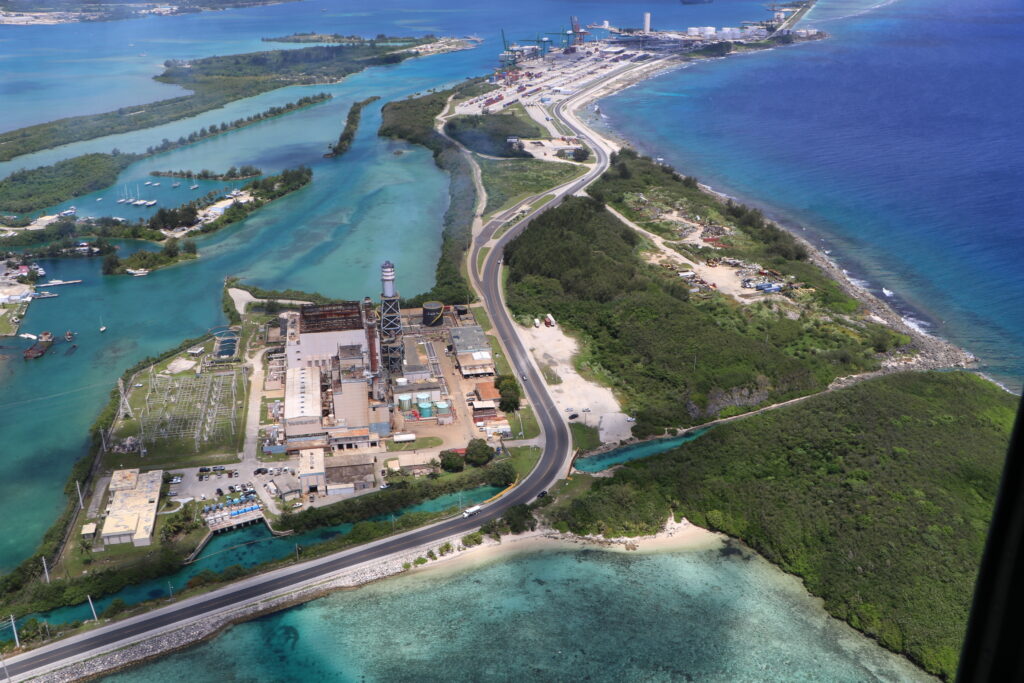
The Port of Guam as seen from the air in June 2021. U.S. COAST GUARD
SANTA RITA, Guam — The Jose D. Leon Guerrero Commercial Port also known as the Port of Guam is among several Western Pacific entities receiving federal grant money through the 2022 Port Security Grant Program (PSGP) to ensure supply chain resiliency within Guam and the Mariana Islands, U.S. Coast Guard Forces Marianas said in a release.
Guam will receive $564,218 from the PSGP. The PSGP is one of four grant programs under the Department of Homeland Security’s Federal Emergency Management Agency that focuses on strengthening the nation’s critical transportation security infrastructure.
The purpose of the PSGP is to provide the necessary funds for not only state partners but local, territorial and private sector partners to enhance security measures and resilience to critical maritime infrastructure and build threat readiness.
The U.S. Department of Transportation’s Maritime Administration also awarded Guam $5.7 million in grants under the America’s Marine Highway Program in early October. The Jose D. Leon Guerrero Commercial Port is Guam’s only deep-water port and receives about 90% of the island’s imports. It offers facilities and services to ships of all registries and is striving to develop into the world-class container terminal port of the Western Pacific Region.
“We’re excited for our partners at the Port of Guam, and these awards are very timely. The region we operate in is referred to as the Blue Pacific Continent, highlighting that the ocean connects hundreds of diverse communities,” said Capt. Nick Simmons, commander of U.S. Coast Guard Forces Micronesia and the Captain of the Port. “The eyes of the world are focused on this region, and it has never been more obvious how vital our ports are to our way of life — our economic security and prosperity.”
The PSGP is vital to maintaining a modernized and secure port supporting the uninterrupted flow of commerce. Regional health, safety, and prosperity inextricably link to the maritime-enabled flow of goods and services, especially realized within the Pacific Islands. This program is one of the ways the U.S. Coast Guard works with private and public sector partners to secure the regional maritime transportation system from disruption, cyber-enabled or otherwise.
“October is cyber security awareness month which can sound vague but requires our attention. We must safeguard our critical infrastructure from all threats, including those in the digital domain. We are adding capacity here in the Sector, including a cyber security expert, capacity crucial to better supporting our regional partners,” said Simmons.
At the end of September, members from U.S. Coast Guard Forces Micronesia/Sector Guam, the Government of Guam and industry partners conducted a successful annual full-scale maritime security training exercise at the port of Guam. This exercise prepares federal, territorial and industry Area Maritime Security Committee partners to respond to security threats affecting Guam’s marine transportation system and surrounding critical infrastructure. The scenarios included:
• Simultaneous cyber incidents at several port facilities. • Coordination of response efforts during an island-wide loss of communications. • Simulated response to suspected terrorist activity. • Changes to the maritime security level. • Establishment of a Unified Command to manage the various response efforts.
“Recently, the Port invited us over to help celebrate their 47th anniversary,” said Simmons. “The main event was a coed team tractor-trailer pull for time. There were seven teams, and the Port Police took the first prize. What heartened me the most was to see our Coast Guard members step in to make a difference when a few teams needed another person. It reflects what we know is true out here, this thing only works if we come together as a team to pull it across the finish line.”
Cutter Alert Returns to Astoria Following 68-DayDrug Interdiction Patrol
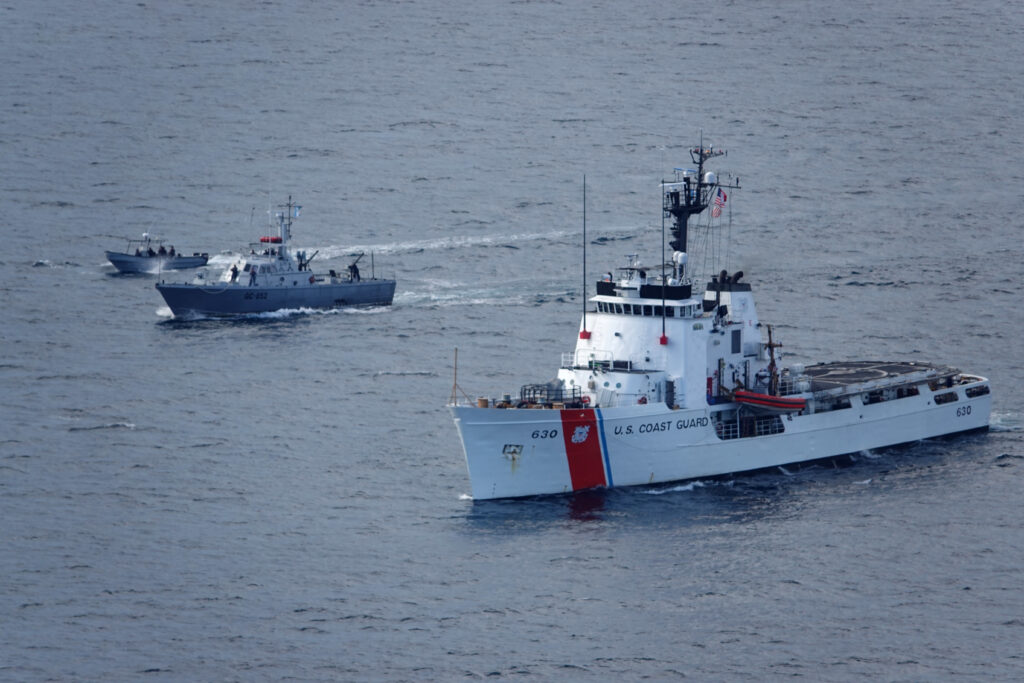
The Coast Guard Cutter Alert (WMEC 630) conducts an engagement coincidental to operations with members of the Guatemalan Navy August 23, 2022, five miles south of Puerto Quetzal, Guatemala. U.S. COAST GUARD
ASTORIA, Ore. — The U.S. Coast Guard Cutter Alert (WMEC 630) crew returned to their homeport Saturday Oct. 8, following a 68-day patrol in the Eastern Pacific Ocean, the Coast Guard Pacific Area said in an Oct. 19 release.
The crew steamed over 13,700 nautical miles ranging from Oregon to Columbia and conducted counter-drug missions, search-and-rescue operations and international law enforcement training engagements.
While in theater, Alert’s crew boarded three Costa Rican fishing vessels and successfully removed 1,440 pounds of marijuana valued at $1.4 million. Furthermore, during the boarding of the fishing vessel Mujer Gitana, Alert’s crew detected and articulated numerous factors of reasonable suspicion allowing Costa Rica to issue a return to port order. Costa Rican Law Enforcement officials searched the vessel and located a hidden compartment under a reversible steel hydraulic door system, a smuggling technique that reportedly has never been seen before on a Costa Rican vessel. The search resulted in the seizure of 729 kilograms of cocaine worth $21.1 million, and the apprehension of seven detainees by one of our top-priority partner nations.
Additionally, the Alert crew led a multinational training engagement with the Guatemalan Navy, conducted three joint boardings with the Costa Rican Coast Guard, and responded to one search and rescue case involving an American fisherman off the coast of Baja California.
The embarked helicopter aircrew flew more than 50 hours over 16 days and searched thousands of miles over the Eastern Pacific Ocean.
The ship also freed two sea turtles that were found entangled in fishing nets left drifting upon the ocean.
“I’m extremely proud of the crew’s dedication, hard work, and sustained high levels of performance over the last two months,” said Cmdr. Matthew R. Kolodica, Alert’s commanding officer. “The Alert and crew truly epitomize the Coast Guard’s motto ‘Semper Paratus’ – ‘Always Ready’ and had a direct positive impact on stemming the flow of illicit narcotics to America, and we helped counter its destabilizing effects in Central and South America. As each day passes, the crew continues to inspire me; I’m truly honored to lead such an outstanding crew.”
Commissioned in 1969, Alert is one of three 210-foot medium-endurance cutters stationed on the West Coast. With a crew of 75, they regularly perform counter-drug, migrant interdiction, search and rescue and fisheries law enforcement missions throughout the Northern and Eastern Pacific Ocean.
Coast Guard Cutter Willow Completes Aids-to-Navigation Mission in Puerto Rico
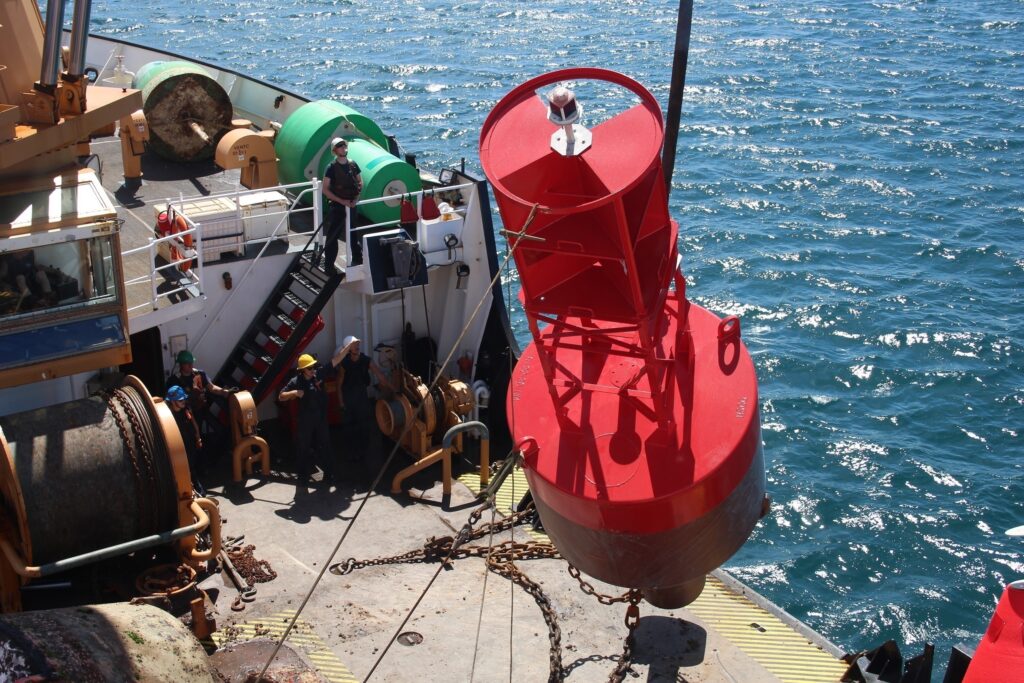
Petty Officer 3rd Class Vincent Wassylenko, Coast Guard Cutter Willow buoy deck supervisor (wearing yellow safety hardhat in photo), prepares to set a relief hull in Mayaguez Bay, Puerto Rico Oct. 9, 2022. U.S. COAST GUARD
SAN JUAN, Puerto Rico — The Coast Guard Cutter Willow completed its scheduled aids to navigation service mission around Puerto Rico port and navigable waterways Oct. 17, the Coast Guard 7th District said in a release.
During the eight-day mission, cutter Willow crewmembers serviced 23 aids to navigation and performed eight buoy hull reliefs around island ports and navigable waters in Arecibo, Culebra, Guanica, Guayanilla, Ponce, San Juan, Tallaboa and Vieques.
After the Coast Guard reopened all the ports in Puerto Rico following Hurricane Fiona, the cutter Willow moved up its itinerary to provide scheduled maintenance around the island and further inspect the status of the aids to navigation in the most affected areas from the hurricane.
“The crew and I were happy to be back in Puerto Rico, our second homeport, servicing aids to navigation to facilitate the movement of commerce into Puerto Rico and supporting safe navigation around the island,” said Cmdr. Erin H. Chlum, cutter Willow commanding officer. “We were especially grateful for the opportunity to work in areas affected by Hurricane Fiona to ensure necessary resources, fuel and supplies can reach the island and people in need.”
Cutter Willow is responsible for the maintenance of 246 aids to navigation throughout the Coast Guard’s 7th District, ranging from South Carolina to the Caribbean, including Puerto Rico and the U.S. Virgin Islands as well as Guantanamo Bay and Haiti.
Coast Guard Cutter Willow is a 225-foot sea-going buoy tender homeported in Charleston, South Carolina.
U.S. Naval Forces in Middle East Interdict $29 Million in Illegal Drugs
Personnel from U.S. Coast Guard fast response cutter USCGC Charles Moulthrope (WPC 1141) interdict a fishing vessel smuggling illicit drugs in the Gulf of Oman, Oct. 12. U.S. COAST GUARD / Information Systems Technician 1st Class Vincent Aguirre
MANAMA, Bahrain — A U.S. Coast Guard fast response cutter seized an estimated $29 million worth of illicit narcotics from a fishing vessel while patrolling the Gulf of Oman, Oct. 12, two weeks after another sizable interdiction, U.S. Naval Forces Central Command Public Affairs said in an Oct. 13 release.
USCGC Charles Moulthrope (WPC 1141) confiscated 2,980 kilograms of opium and 400 kilograms of methamphetamines as the fishing vessel transited international waters. The Coast Guard cutter was operating in support of Combined Task Force 150, which oversees maritime security operations for Combined Maritime Forces in the Arabian Sea, Gulf of Oman and Gulf of Aden.
“A success like this is a team effort. I am proud of each and every member of our crew,” said Lt. Cmdr. Stephen Hills, Charles Moulthrope’s commanding officer. “We remain committed to countering the flow of illegal contraband and promoting security and stability across the region.”
Hills’ crew previously interdicted another fishing vessel Sept. 27 while patrolling the Gulf of Oman, which led to the seizure of $85 million worth of illegal drugs.
Charles Moulthrope arrived in the Middle East in May and operates from the U.S. Navy base in Bahrain where U.S. Naval Forces Central Command, U.S. 5th Fleet and Combined Maritime Forces are headquartered.
USCGC Spencer Returns Home After 57-day Multi-Mission Patrol
PORTSMOUTH, Va. — The crew of the USCGC Spencer (WMEC 905) returned to their homeport in Portsmouth Sept. 25, following a 57-day patrol in the mid-Atlantic Ocean and Caribbean Sea, the Coast Guard Atlantic Area said in an Oct. 13 release.
During the patrol, Spencer’s crew conducted fisheries enforcement, search and rescue, and migrant interdiction operations in support of the Coast Guard’s Fifth and Seventh Districts.
In response to a rise in maritime migration from Cuba, Spencer was surged to the Caribbean to detect, deter and intercept unsafe and illegal ventures to the United States. Spencer’s crew intercepted and cared for 100 migrants across multiple cases.
“Spencer’s crew expertly demonstrated the multi-mission capability of our Coast Guard by quickly adapting to the mission changing from fisheries enforcement to migrant interdiction. I am honored to serve with such a dedicated crew who maintained high morale throughout the patrol despite the changes, and difficult nature of migrant interdiction operations,” said Cmdr. Corey Kerns, commanding officer of Spencer.
Spencer is a 270-foot medium-endurance cutter homeported in Portsmouth with 100 crewmembers. The cutter’s primary missions are counter drug operations, migrant interdiction, enforcing federal fishery laws and search and rescue in support of Coast Guard operations throughout the Western Hemisphere.
U.S., Federated States of Micronesia Sign Expanded Shiprider Agreement
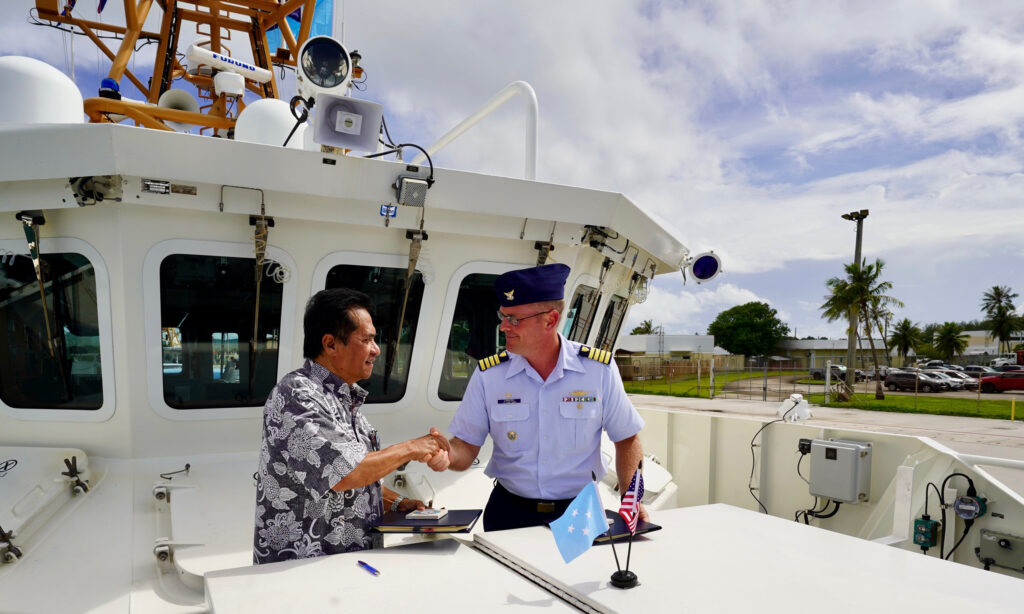
U.S. Coast Guard Forces Micronesia Sector Guam Commander Capt. Nicholas R. Simmons and the Honorable Joses R. Gallen, Secretary of Justice, Federated States of Micronesia, signed an expanded shiprider agreement allowing remote coordination of authorities, the first of its kind aboard the USCGC Myrtle Hazard (WPC 1139) in Guam, on Oct. 13, 2022. U.S. COAST GUARD / Chief Warrant Officer Sara Muir
SANTA RITA, Guam —To overcome complex challenges to maritime enforcement in the Federated States of Micronesia (FSM), a nation with over six hundred islands, representatives of the United States and the FSM signed a remote shiprider agreement on Oct. 13, 2022, during a Joint Committee Meeting hosted by Joint Region Marianas.
Through remote coordination, this agreement, the first of its kind, will enable the U.S. to act on behalf of the country to combat illicit maritime activity when an FSM law enforcement officer is not present. More specifically, the agreement provides a coordinating mechanism and process for U.S. law enforcement personnel to work with the FSM National Police through command centers to receive approval from the FSM to act.
Shiprider agreements allow maritime law enforcement officers to observe, board and search vessels suspected of violating laws or regulations within a designated exclusive economic zone (EEZ) or on the high seas. These law enforcement activities bolster maritime law enforcement operations and maritime domain awareness and provide a mechanism to conduct integrated operations within the Pacific.
“We’re thrilled to cooperate with our Federated States of Micronesia partners on this initiative that will reap benefits for FSM’s economic, environmental and national security in the maritime domain,” said Alissa Bibb, chargé d’affaires at the U.S. Embassy in Kolonia.
The dynamic nature of detecting, deterring and suppressing illegal activity in the Pacific, like fisheries offenses and illicit maritime drug trafficking, requires creative and collaborative solutions. This agreement builds on the enduring partnership and long-standing shiprider agreement between the two nations by providing a new framework to conduct maritime operations and relies on the professionalism and expertise of U.S. and FSM maritime law enforcement officers.
The U.S. Coast Guard regularly exercises 13 bilateral fisheries law enforcement agreements with countries throughout the Pacific islands. These agreements enable U.S. Coast Guard personnel and U. S. Navy vessels with embarked U.S. Coast Guard law enforcement personnel to work with host nations to protect critical regional resources. Shiprider efforts greatly enhance host-nation sovereignty by enabling Pacific Island Nation partners to enforce their laws and regulations using U.S. assets.
The U.S. Coast Guard maintains strong partnerships with the maritime forces in the region through extensive training and subject matter expert exchanges. FSM, also known as the Big Ocean State, has one of the world’s largest EEZs, with waters rich in sea life. FSM consists of four states — Pohnpei, Chuuk, Yap and Kosrae — each with a mix of unique peoples, languages and cultures. FSM is a signatory to a Compact of Free Association with the United States. They are also a Pacific Islands Forum Fisheries Association member and a party to the South Pacific Tuna Treaty.
“This historic agreement significantly strengthens presence and enforcement options to counter illicit maritime activity in the region. It is only made possible by the deep and abiding relationships and respect between the Coast Guard and our FSM partners,” said Capt. Nick Simmons, commander of U.S. Coast Guard Forces Micronesia. “FSM has the 14th largest EEZ in the world and only two patrol boats. Our crews spend ample time within the region but getting a shiprider aboard our vessels can be a real logistical challenge. This agreement dramatically increases the capacity of available resources to act on FSM’s behalf to protect their living marine resources and sovereignty. We appreciate their continued trust and confidence as we work together.”
The USCGC Oliver Henry (WPC 1140) hosted Chargé d’affaires Bibb and her team aboard in Pohnpei in September. They met with several key officials, and members of the cutter’s engineering team conducted a subject matter exchange with the crew of FSS Palikir, the last active Pacific-class patrol boat, on shipboard repairs and assisting with preventative maintenance.
In May, USCGC Myrtle Hazard (WPC 1139) made a contactless crew rest and re-fueling stop in FSM during their expeditionary patrol across Oceania. In December 2021, USCGC Sequoia (WLB 215), working alongside the Navy’s Underwater Construction Team Two (UCT-2), conducted operations to widen the channel at Kapingamarangi Atoll. U.S. Coast Guard Forces Micronesia/Sector Guam also provides search and rescue support to FSM, with several successful cases in the last year, resulting in ten lives saved.
The shiprider program supports regional coordination and aligns with the National Security Strategy, U.S. Indo-Pacific Command efforts, and the U.S. Coast Guard’s Operation Blue Pacific. The bilateral agreements enacted in the Pacific are the bedrock of regional maritime law enforcement partnership. They convey the United States’ ongoing investment in protecting shared resources and interest in maritime safety and security, including fair and reciprocal trade, while standing against a current of aggressive and coercive influence in the region.
The U.S. is devoted to ensuring greater unity and a free and open Indo-Pacific for all nations who observe the rule of law. The U.S. Coast Guard continues to demonstrate our enduring presence in the Pacific and help facilitate increased regional stability, security and resilience for U.S. partners.