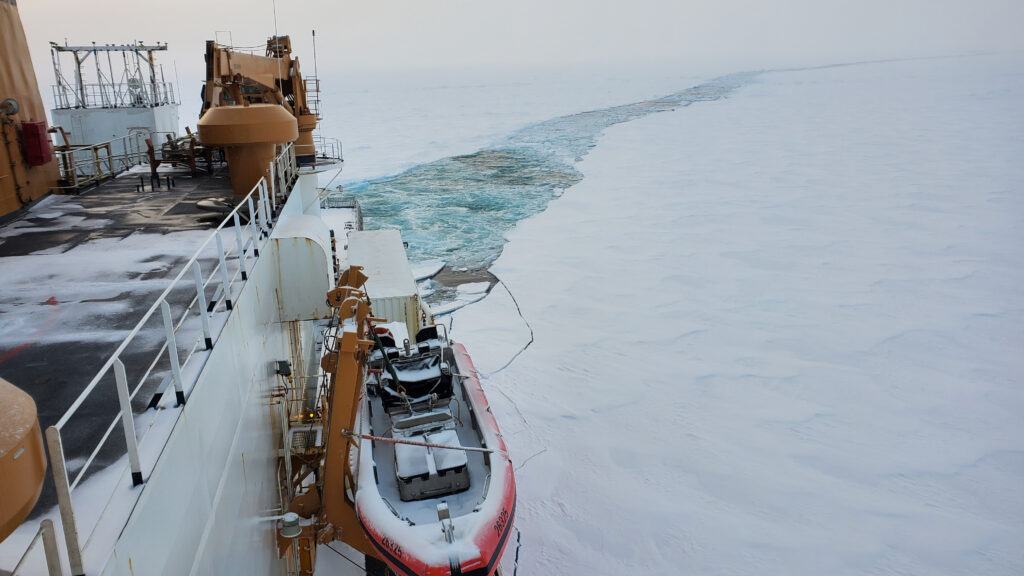
Cutter Vigorous Returns Home after 53-Day Pacific Interdiction Patrol  

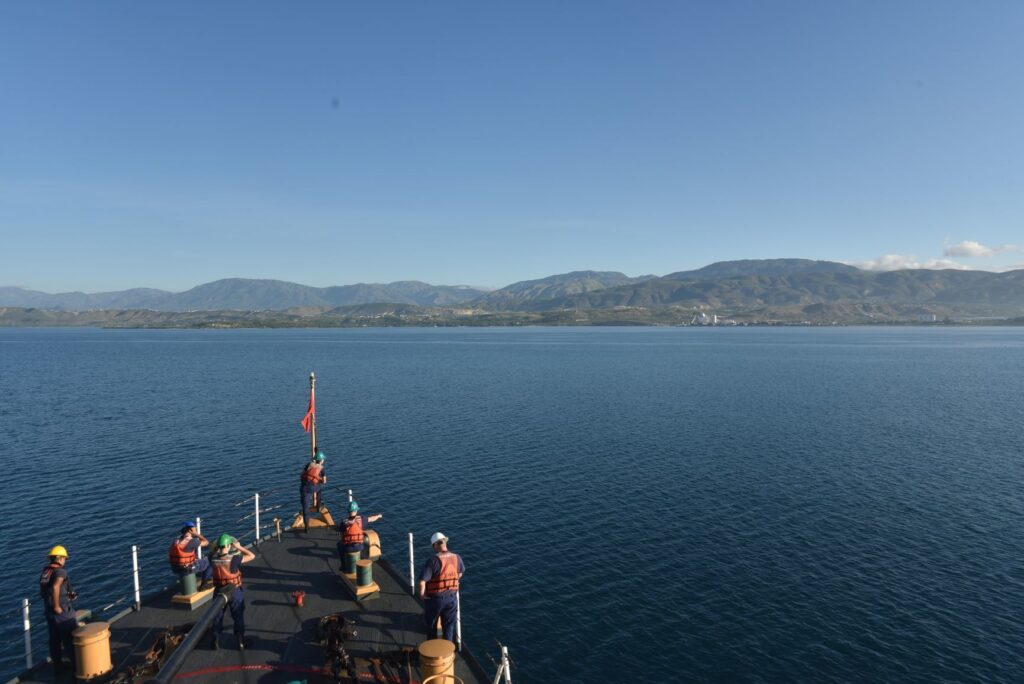
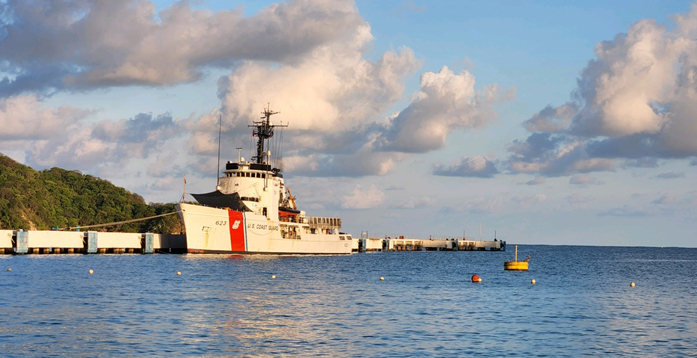
The Coast Guard Cutter Vigorous returned to its Virginia Beach homeport on Sept. 5. U.S. COAST GUARD

PORTSMOUTH, Va. — The USCGC Vigorous (WMEC 627) returned to its home port of Virginia Beach, Sept. 5, following a 53-day patrol in the Eastern Pacific Ocean, the Coast Guard Atlantic Area said in a release. 

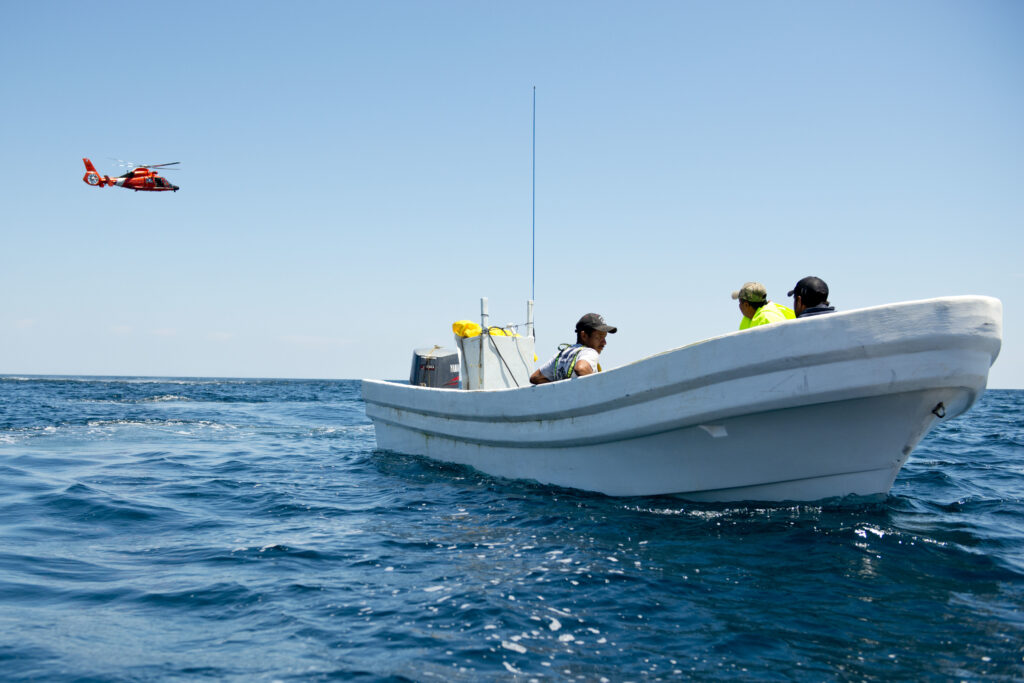
Throughout the patrol, Vigorous operated in support of the Coast Guard’s 11th District and Joint Interagency Task Force-South, aiding in missions to interdict and disrupt the flow of illegal drugs and migrant trafficking while supporting national security and strengthening relationships with regional partners.  

Vigorous seized approximately 1,256 pounds of marijuana worth nearly $2 million that was offloaded in Miami on Aug. 302. In addition, Vigorous’ crew rescued a person in distress more than 100 miles off the coast of Colombia, providing food and mechanical assistance while awaiting a Colombian Navy asset to return the person safely to shore.   

Vigorous also conducted a joint training exercise with the Colombian Navy. The training allowed the Coast Guard and Colombian Navy to exercise interagency communication and compare drug interdiction tactics, techniques, and procedures. 

After completing almost 50 days of counter-narcotics operations, Vigorous responded to a need for more Coast Guard cutter coverage in the Straits of Florida, south of the Florida Keys. Over the course of 24 hours, Vigorous interdicted 31 Cuban migrants before transferring them to a Florida-based cutter.  

“I’m proud of the hard work and professionalism demonstrated by the Vigorous crew,” said Commander Ryan Waters, the cutter’s commanding officer, “that made this challenging patrol successful and memorable.”  

Vigorous is a 210-foot Reliance-class medium endurance cutter homeported in Virginia Beach with a crew of 66. Vigorous’ primary mission areas include homeland security, law enforcement, counterdrug, search and rescue, migrant interdiction, and fisheries enforcement in support of U.S. Coast Guard operations throughout the Western Hemisphere. 


Coast Guard Offloads More than $3 Million in Illegal Narcotics in Miami 

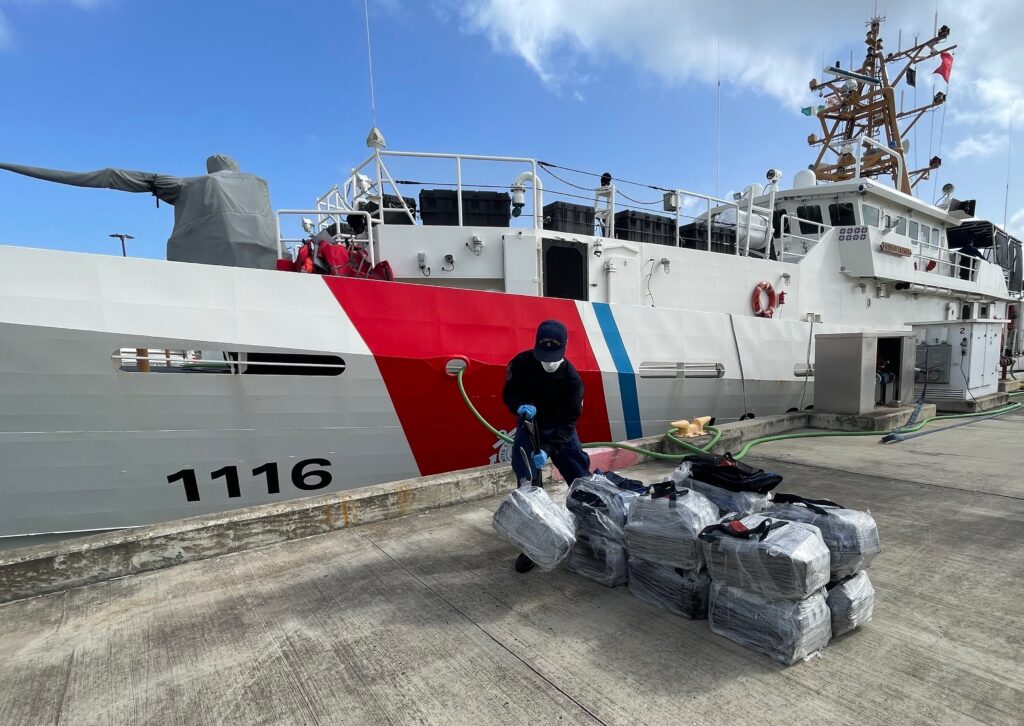
The crew of the U.S. Coast Guard Cutter Vigorous (WMEC 627) offloads approximately 22 pounds of cocaine and 1,256 pounds of marijuana, worth an estimated $3 million, Aug. 30 at Coast Guard Base Miami Beach, Florida. U.S. COAST GUARD / Chief Petty Officer Stephen Lehmann

MIAMI — The crew of the Coast Guard Cutter Vigorous offloaded approximately 22 pounds of cocaine and 1,256 pounds of marijuana, worth an estimated $3 million, on Aug. 30, at Base Miami Beach, the Coast Guard Atlantic Area said Sept. 2. 

The drugs were interdicted in the international waters of the Eastern Pacific Ocean by crews from the cutters Vigorous (WMEC 627) and Legare (WMEC 912).

“Vigorous is glad to have been able to make an important contribution to the Coast Guard’s counterdrug mission,” said Cmdr. Ryan A. Waters, commanding officer of Vigorous. “I’m incredibly proud of the hardworking Vigorous crew’s proficiency teamwork and devotion to duty that enabled the detection, interdiction and boarding of a vessel suspected of drug smuggling.” 

The fight against drug cartels in the Caribbean Sea and Eastern Pacific Ocean, and the transnational criminal organizations they are associated with, requires a unity of effort in all phases, from detection and monitoring to interdiction and apprehension, and on to criminal prosecutions by international partners and U.S. attorneys’ offices in districts across the nation. 

Detecting and interdicting illegal drug traffickers on the high seas involves significant interagency and international coordination. The Joint Interagency Task Force South in Key West, Florida, conducts detection and monitoring of aerial and maritime transit of illegal drugs. Maritime interdiction of illicit maritime activity in the Caribbean Sea is coordinated by the 7th Coast Guard District, headquartered in Miami, Florida, and the 11th Coast Guard District, headquartered in Alameda, California, coordinates interdiction of illicit maritime activity in the Eastern Pacific. 

Cutter Vigorous, a 210-foot Reliance-class medium endurance cutter, was commissioned in May 1969 and is homeported in Virginia Beach, Virginia. The Vigorous generally deploys 185 days a year for patrols lasting 45 to 60 days to a variety of operating areas, extending from the Gulf of Maine to the Caribbean Sea, the Gulf of Mexico and the Eastern Pacific Ocean. The Vigorous’ primary mission areas include homeland security, law enforcement, counterdrug operations, search and rescue, migrant operations, and fisheries enforcement. 


Coast Guard FRC Seizes Illegal Narcotics in Gulf of Oman 

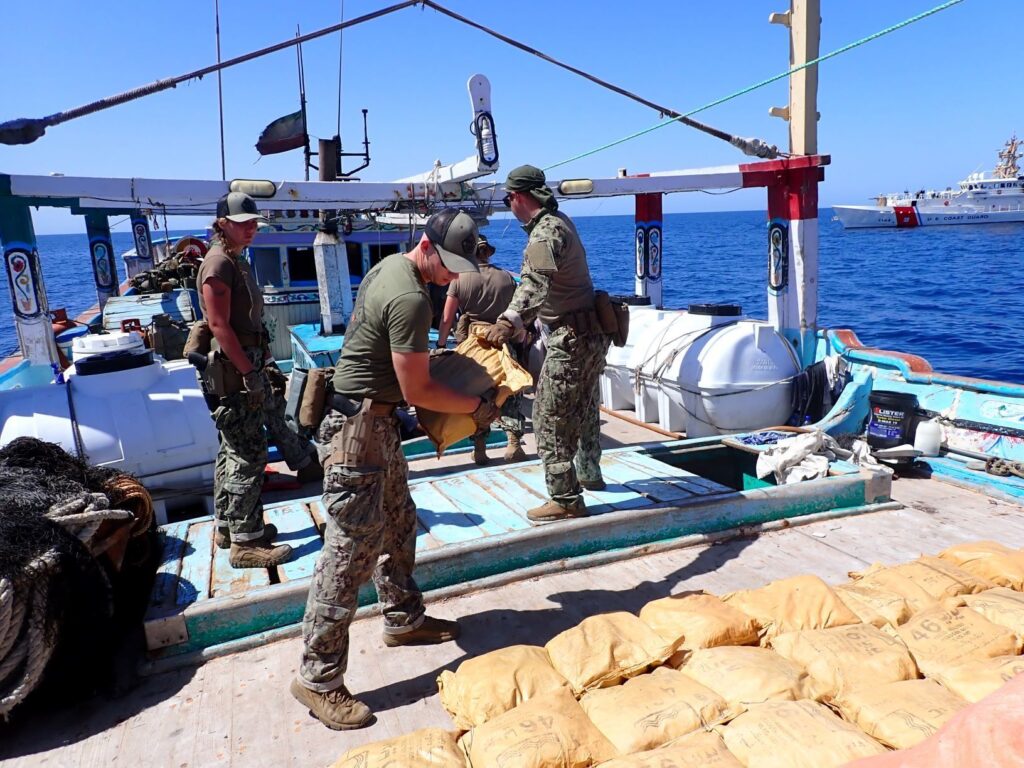
Personnel from U.S. Coast Guard fast response cutter USCGC Glen Harris (WPC 1144) interdict a fishing vessel smuggling illegal narcotics in the Gulf of Oman, Aug. 30. U.S. COAST GUARD

MANAMA, Bahrain — A U.S. Coast Guard fast response cutter interdicted a fishing vessel smuggling illegal drugs worth an estimated U.S. street value of $20 million while patrolling the Gulf of Oman, Aug. 30, NAVCENT Public Affairs said Aug. 31. 

USCGC Glen Harris (WPC 1144) seized 2,980 kilograms of hashish and 320 kilograms of amphetamine tablets during operations in support of Combined Task Force (CTF) 150. 

Led by the Royal Saudi Navy, CTF 150 is one of four task forces under Combined Maritime Forces, the largest multinational naval partnership in the world. CTF 150 conducts maritime security operations in the Gulf of Oman and North Arabian Sea to help ensure the free flow of commerce. 

Glen Harris previously interdicted another fishing vessel May 31 while patrolling the Gulf of Oman. The interdiction led to CTF 150 seizing $11 million worth of heroin. This followed an earlier seizure of heroin, methamphetamine and amphetamine pills worth $17 million in the same body of water, May 15. 

“The results of Glen Harris’s success is a testament to the crew’s professionalism and determination,” said Lt. Cmdr. Reginald Reynolds, commanding officer of Glen Harris. “I’m proud of our team’s commitment to countering illicit activity on the high seas and promoting security and stability across the region.” 

The fast response cutter arrived in the Middle East in January and operates from the U.S. Navy base in Bahrain where Combined Maritime Forces is headquartered with U.S. Naval Forces Central Command and U.S. 5th Fleet. 

Combined Maritime Forces includes 34 member-nations that operate across the Middle East to promote rules-based international order at sea. 


Coast Guard Enforces Safety Zone for Tow of Battleship USS Texas 

Pilot boat crews tow the battleship USS Texas down the Houston Ship Channel near Baytown, Texas, Aug. 31. The USS Texas is moving from the San Jacinto Battleground State Historic Site in La Porte, Texas, to a dry dock in Galveston where it will undergo extensive hull repairs. U.S. COAST GUARD / Petty Officer 1st Class Corinne Zilnicki

HOUSTON — The Coast Guard enforced a safety zone in the Houston Ship Channel and Galveston Ship Channel for the tow of the battleship USS Texas, Aug. 31, the Coast Guard 8th District said in a release. 

The Coast Guard captain of the port, in coordination with the Coast Guard’s law enforcement partners, established a safety zone to ensure the safety of the public and security for all vessels in the channels. 

Crews from Coast Guard Station Houston, Coast Guard Marine Safety & Security Team Houston, Coast Guard Station Galveston, Coast Guard Cutter Hawk, Texas Parks & Wildlife Department, Harris County Sheriff’s Office and the Houston Police Department enforced the safety zone during the tow, which began at approximately 6 a.m. and concluded at 9 p.m. 

Marine safety experts from Coast Guard Sector Houston-Galveston and the Coast Guard’s Salvage Engineering Response Team traveled aboard the battleship to ensure a safe, successful tow. Houston Pilots towed the battleship from the San Jacinto Battleground State Historic Site in La Porte, Texas, down the Houston Ship Channel, then transferred the tow to Galveston-Texas City Pilots, who transported the ship to Gulf Copper & Manufacturing Corporations’ Galveston Shipyard in Galveston. 

While in dry dock, the USS Texas will undergo $35 million in hull repairs. 

“Today’s successful transit of the battleship Texas was a historic, monumental event only possible with planning and partnerships throughout the port community,” said Capt. Jason Smith, captain of the port and commander of Sector Houston-Galveston. “Long before today’s event, the Battleship Texas Foundation and Valkor worked closely with naval architects from Resolve Marine and the Coast Guard’s Salvage Engineering Response Team to ensure a sound transit plan. Coast Guard crews partnered with local pilot associations and various other maritime law enforcement agencies to protect both the battleship and our waterways throughout the transit. As we say in the maritime community for a job well done, Bravo Zulu to all involved.” 


Coast Guard Cutter Midgett Arrives in the Western Pacific  

U.S. Coast Guard Capt. Willie Carmichael, commanding officer of U.S. Coast Guard Cutter Midgett (WMSL 757), salutes members of the Philippine Coast Guard after the cutter moored in Manila, Philippines, Aug. 30. U.S. COAST GUARD / Chief Petty Officer Matt Masaschi

MANILA, Philippines — The U.S. Coast Guard Cutter Midgett (WMSL 757) arrived in Manila Aug. 30 for its first international port call during the crew’s months-long Western Pacific deployment to the region, the Coast Guard Pacific Area said Aug. 31.  
 
Midgett’s crew will conduct professional exchanges and operate with the Philippine Coast Guard as part of an at-sea search-and-rescue exercise while in Manila, building upon the strong partnership between the two nations. 
 
Midgett is operating in support of United States Indo-Pacific Command, which oversees military operations in the region. 
 
Operating under the tactical control of Commander, U.S. 7th Fleet, the cutter’s crew plans to engage in professional and subject matter expert exchanges with regional partners and allies and will patrol and operate as directed during their Western Pacific deployment. 
 
The Coast Guard provides expertise within the mission sets of search and rescue; illegal, unreported and unregulated fishing; maritime environmental response; maritime security; maritime domain awareness; aviation operations; interoperability; and humanitarian assistance and disaster relief. 
 
“Engaging with our Philippine Coast Guard partners is truly an honor,” said U.S. Coast Guard Capt. Willie Carmichael, commanding officer of the Midgett. “Together we will continue to build strong relationships and learn from each other. Our deep-rooted partnership will combine the best of both our Coast Guards and the planned search-and-rescue exercise and professional exchanges are a great opportunity for us keep the Indo-Pacific region open and free.” 
 
Commissioned in 2019, Midgett is one of two Coast Guard legend-class national security cutters homeported in Honolulu. National security cutters are 418 feet long, 54 feet wide and have a 4,600 long-ton displacement. They have a top speed in excess of 28 knots, a range of 12,000 nautical miles, endurance of up to 90 days and can hold a crew of up to 170. 


Coast Guard Offloads $3.1M in Seized Cocaine, Transfers Custody of 8 Smugglers  

The Coast Guard offloaded 330 pounds of seized cocaine and transferred custody of eights suspected smugglers to Caribbean Corridor Strike Force agents in San Juan, Puerto Rico Aug. 24. U.S. COAST GUARD

SAN JUAN, Puerto Rico — The crew of the Coast Guard Cutter Legare and Caribbean Corridor Strike Force agents offloaded 330 pounds of seized cocaine Aug. 24 in San Juan, following the interdiction of a smuggling vessel near Puerto Rico, the Coast Guard 7th District said Aug. 25. 

The eight men apprehended in this case claimed to be Dominican Republic nationals and are facing federal prosecution in Puerto Rico. The seized contraband has an estimated wholesale value of approximately $3.1 million. 

Special Agents supporting the Caribbean Corridor Strike Force are leading the investigation into this case. The apprehended smugglers are facing federal prosecution in Puerto Rico on drug smuggling criminal charges of conspiracy to possess with intent to distribute a controlled substance aboard a vessel subject to the jurisdiction of the United States. The charges carry a minimum sentence of 10 years imprisonment and a maximum sentence of imprisonment for life.  

During the late night hours of Aug. 16, the aircrew of a Customs and Border Protection Air and Marine multi-role enforcement aircraft detected a 25-foot suspect vessel north of Isabela, Puerto Rico. During the interdiction, the smugglers jettisoned multiple bales of suspected contraband into the water. The Coast Guard Cutter Joseph Doyle stopped the suspect vessel, apprehended eight men and recovered five bales of the jettisoned cargo. 

“This interdiction is an example of how successful interagency cooperation can be through the use of our collective resources,” said Lt. Cmdr. Charles Wilson, cutter Joseph Doyle commanding officer. “Customs and Border Protection Caribbean Air Marine Branch and the Coast Guard worked seamlessly to detect and interdict this suspected narcotics trafficking operation before it reached the shores of Puerto Rico.”  

The seized contraband and the apprehended men were transferred to the cutter Legare for their final transport to Puerto Rico.


Naval Station Newport Now Homeport for Two Coast Guard Cutters 

U.S. Coast Guard Cutters Tahoma (WMEC 908) and Campbell (WMEC 909) sit moored at Naval Station Newport, Rhode Island, Aug. 19. Tahoma and Campbell were welcomed to Naval Station Newport during a change of homeport ceremony. U.S. COAST GUARD / Petty Officer 3rd Class Briana Carter

NEWPORT, R.I. — The Coast Guard held a joint change-of-homeport ceremony for USCGC Tahoma (WMEC 908) and USCGC Campbell (WMEC 909) Aug. 19 at Naval Station Newport, Rhode Island.  

The Tahoma and Campbell are 270-foot Famous-class medium-endurance cutters previously based at the Portsmouth Naval Shipyard in Kittery, Maine. The relocation of these two cutters will allow the U.S. Navy to conduct infrastructure upgrades as part of a Shipyard Infrastructure Optimization Program at the Portsmouth Naval Shipyard. 

Adm. Linda L. Fagan, commandant of the U.S. Coast Guard, presided over the ceremony. 

“For these two ships, this is actually a homecoming,” said Fagan. “Nine of the Coast Guard’s 270-foot medium endurance cutters, including the Tahoma and Campbell, were constructed right here in Rhode Island. These cutter’s new berths in Newport will provide a continued pathway for our crews to maintain geographic stability in southeastern New England while they conduct historic missions throughout the globe in support of the Atlantic Area commander.” 

Attendees at today’s ceremony included Rhode Island Senators Jack Reed and Sheldon Whitehouse, Rep. David Cicilline, Newport Mayor Jeanne-Marie Napolitano, Capt. James McIver, commanding officer of Naval Station Newport, and other local officials. 

“We are proud to welcome USCGC Tahoma and USCGC Campbell home to Naval Station Newport,” said McIver. “As fellow members of the United States’ maritime services, we look forward to the return of these units to their original birthplace here in Rhode Island and supporting them as they carry out global missions to meet the needs of our nation and the Joint Force.“ 

Tahoma is the third Coast Guard cutter to bear the name. Campbell is the sixth Coast Guard cutter to bear its name. Tahoma and Campbell are the eighth and ninth cutters, respectively, of 13 Famous-class cutters in service by the Coast Guard. Both cutters were commissioned in 1988 and are under the operational control of Coast Guard Atlantic Area. 


New Coast Guard Cutter Douglas Denman Arrives in Alaska 

The crew of Coast Guard Cutter Douglas Denman arrived at the cutter’s new homeport in Ketchikan, Alaska, Aug. 19. U.S. COAST GUARD

KETCHIKAN, Alaska — The crew of Coast Guard Cutter Douglas Denman arrived in Ketchikan, Alaska on Aug. 19 after a 36-day transit from Key West, Florida, the Coast Guard 17th District said in a release.  

Douglas Denman, the Coast Guard’s 49th fast response cutter, traveled nearly 7,000 miles from the most southeastern city in the U.S. to the most southeastern city in Alaska, transiting through the Caribbean Sea, the Panama Canal and up the west coast of Central America and the U.S. 

Following production of the ship in 2020, the first crewmember arrived in Ketchikan summer of 2021. Since then, the crew has undergone a year of administration and training in preparation to take ownership of the cutter. The engineering department alone attended a total of three months of school in addition to the crew’s seven weeks of familiarity training in Lockport, Louisiana, and seven weeks of post delivery availability phase in Key West.    

“It’s been a long but extremely rewarding journey to get to this point,” said Chief Petty Officer Hayes Printy, the cutter’s engineering chief. “Seeing the crew’s growth throughout the process and being able to make this unit what we want is an experience I will cherish and not forget.”  

The cutter will be commissioned at the end of September and fully operational in its area of responsibility in Southeast Alaska where the missions will include law enforcement, fisheries enforcement, search and rescue and national security.   

The Douglas Denman is scheduled to be permanently homeported in Sitka, Alaska, upon completion of required shore infrastructure improvements. 


Coast Guard to Mark Beginning of Construction of a National Coast Guard Museum 

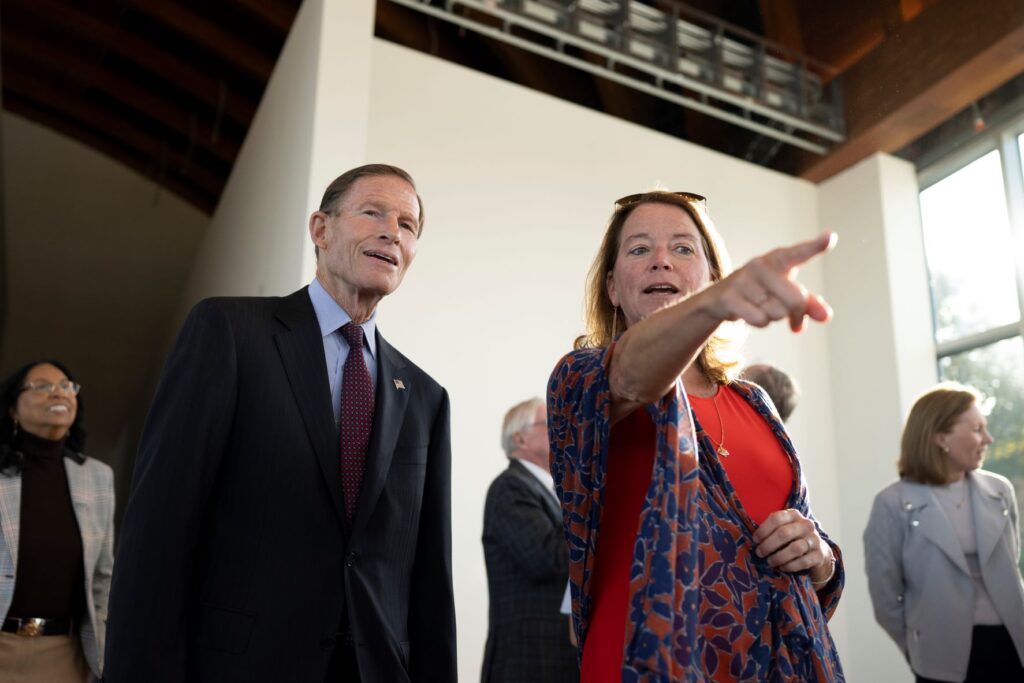
The future home of the National Coast Guard Museum in New London, Connecticut. U.S. COAST GUARD

NEW LONDON, Conn. — The Coast Guard will be hosting a formal ceremony to commemorate the construction of a National Coast Guard Museum in New London, Connecticut, Friday, Aug. 19 at 2:00 p.m., on the City Pier in New London, Connecticut, the Coast Guard Academy said in an Aug. 15 release 

Rep. Rosa DeLauro, D-Connecticut; Rep. Joe Courtney, D-Connecticut, Adm. Linda Fagan, commandant of the Coast Guard; and local government officials will attend the event.  

Principle speakers will give remarks during a formal “keel-laying” ceremony to commemorate the construction of a National Coast Guard Museum that will memorialize over 230 years of service into one central location to honor the legacy and heritage of the world’s greatest Coast Guard. The Coast Guard Band, silent drill team and operational assets will also be part of the event.  

A longstanding tradition in the shipbuilding industry, a “keel-laying” celebrates the laying down of a ship’s keel, marking the start of its construction. Although modern shipbuilding techniques have evolved and the ceremony is now properly called a “keel authentication”, the Coast Guard is drawing from the traditions and nomenclature of old when inaugurating the building of the nation’s first and only National Coast Guard Museum. 


Joint Strike Fighter Lot 15 Ceiling Allows 28 F-35s for Navy, Marine Corps 

An F-35C Lightning II, assigned to the “Black Knights” of Marine Fighter Attack Squadron (VMFA) 314, prepares to launch from the flight deck of the Nimitz-class aircraft carrier USS Abraham Lincoln (CVN 72) while the ship is underway in the Philippine Sea. U.S. NAVY / Mass Communication Specialist 3rd Class Javier Reyes

ARLINGTON, Va. — The Defense Department has increased the ceiling for its contract for Lot 15 Joint Strike Fighters to 129, the department said in an Aug. 12 release.  

The Naval Air Systems Command awarded Lockheed Martin a not-to-exceed $7.63 billion firm-fixed-price, fixed-price incentive (firm target), un-definitized modification to a previously awarded advanced acquisition contract, the Defense Department said in the release. The modification increases the contract ceiling to procure 129 F-35s. 

Of the 129 F-35s, the total includes three F-35Bs and 10 F-35Cs for the U.S. Marine Corps and 10 F-35Cs for the U.S. Navy. The numbers notionally will enable the Navy and Marine Corps each to add one F-35C squadron to its force structure. 

The total also includes 49 F-35As for the U.S. Air Force; 32 F-35As and four F-35Bs for non-U.S. program partners; and 16 F-35As for Foreign Military Sales customers. The contract also includes 69 shipsets of hardware.   

The Navy currently has two F-35C fleet squadrons on strength, while the Marine Corps has one. The Corps also fields five fleet F-35B squadrons. 

Work on the contract is expected to be completed in October 2024.