Bertholf’s Patrol Results in Penalties Against Chinese Taipei-Flagged Vessels 

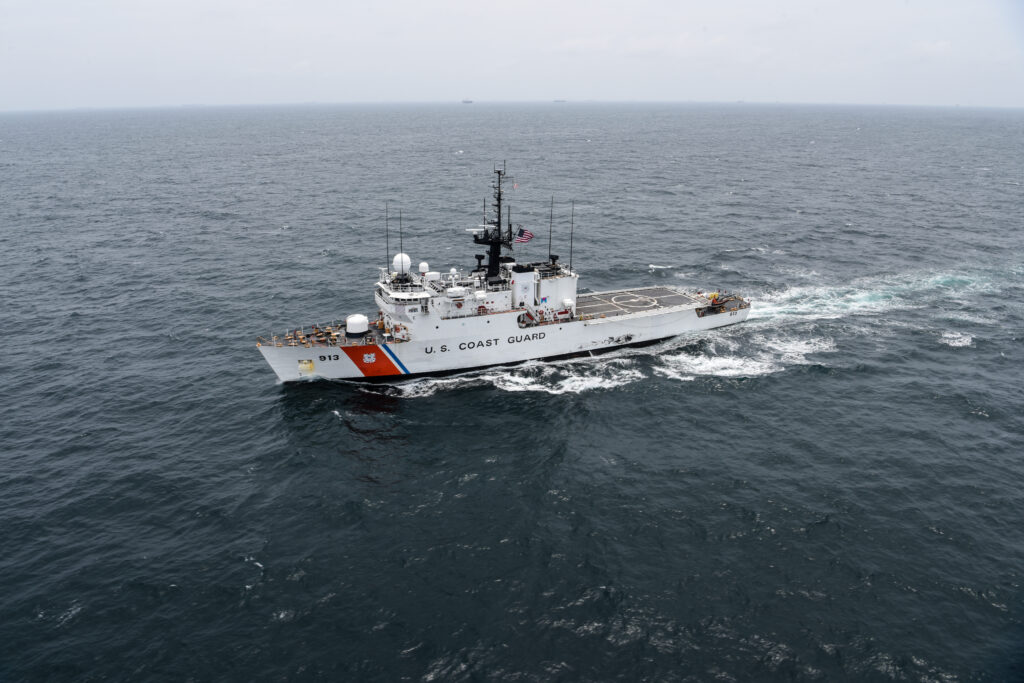
U.S. Coast Guard Cutter Bertholf, homeported in Alameda, California, operates in the Bering Sea, Aug. 24, 2021. U.S. COAST GUARD

JUNEAU, Alaska — A North Pacific Guard illegal, unreported and unregulated fisheries patrol in 2021 by the crew of the Coast Guard Cutter Bertholf recently resulted in The Fisheries Agency of Taiwan issuing penalties against five Chinese Taipei-flagged vessels, the Coast Guard 17th District said July 5. 

The Fisheries Agency of Taiwan announced May 24 that a fine of approximately $203,190 was imposed against the operator of a fishing vessel, and the operator’s license was suspended for one month. The agency imposed a fine of approximately $40,600 against the captain of that vessel, revoked their fishing vessel crew identification, and suspended their certificate of fishing vessel officer for one month. The vessel was listed as a high-risk fishing vessel and is subject to special management measures. 

The agency imposed fines of approximately $1,693 against the vessel operators and $338 against the captains of three other fishing vessels, who were fined for illegal retention of salmon. The agency fined a fifth vessel for improper vessel identification markings. 

The Bertholf crew conducted its North Pacific Guard patrol in late 2021 to support the Western and Central Pacific Fisheries Commission and North Pacific Fisheries Commission. Also aboard and participating were two officers from Canada’s Department of Fisheries and Oceans and one officer from the National Oceanic and Atmospheric Administration Fisheries Office of Law Enforcement. 

During the patrol, the crew boarded 15 fishing vessels and identified 32 potential violations of conservation and management measures under the WCPFC and NPFC. These potential violations were then investigated by Fisheries Agency of Taiwan in accordance with their own domestic laws and regulations. More information about the Bertholf’s patrol is available here.  

“The success of Bertholf’s patrol highlights the value of our ongoing international partnerships in protecting food and economic security of coastal states across the globe,” said Vice Adm. Michael F. McAllister, Coast Guard Pacific Area commander. “The penalties imposed by the Fisheries Agency of Taiwan exemplify the collaborative approach and role of law enforcement in protecting the global food chain.” 

Operation North Pacific Guard is an annual multi-mission effort between the Coast Guard, National Oceanic and Atmospheric Administration, five Pacific Rim countries and three regional fisheries management organizations to include the WCPFC, NPFC, and the North Pacific Anadromous Fishing Commission. The goal is for each nation to work collaboratively to detect and intercept illicit fishing activity. 


Coast Guard Awards Contract for Stage 2 of the Offshore Patrol Cutter Acquisition 

An artist’s rendering of the Offshore Patrol Cutter. EASTERN SHIPBUILDING GROUP

WASHINGTON — The Coast Guard awarded a fixed-price incentive contract to Austal USA of Mobile, Alabama, to produce up to 11 offshore patrol cutters, Coast Guard Headquarters said June 30.

The initial award is valued at $208.26 million and supports detail design and long lead-time material for the fifth OPC, with options for production of up to 11 OPCs in total. The contract has a potential value of up to $3.33 billion if all options are exercised. 

In 2019, the Coast Guard revised the OPC acquisition strategy to mitigate emergent cost and schedule risk by establishing a new, full and open competition for OPCs five and through 15, designated as Stage 2 of the overall program. Informed by industry feedback, the Coast Guard released a request for proposals Jan. 29, 2021, for OPC Stage 2 detail design and production.

The Coast Guard’s requirements for OPC Stage 2 detail design and production were developed to maintain commonality with earlier OPCs in critical areas such as the hull and propulsion systems, but provide flexibility to propose and implement new design elements that benefit lifecycle cost, production and operational efficiency and performance. 

“The offshore patrol cutter is absolutely vital to Coast Guard mission excellence as we recapitalize our legacy medium endurance cutters, some of which are more than 50 years old,” said Adm. Linda Fagan, commandant of the Coast Guard. “The OPCs are the ships our crews need to protect our national security, maritime safety and economic prosperity. I look forward to the new cutters joining our fleet.” 

The 25-ship OPC program of record complements the capabilities of the service’s national security cutters, fast response cutters and polar security cutters as an essential element of the Department of Homeland Security’s layered maritime security strategy. The OPC will meet the service’s long-term need for cutters capable of deploying independently or as part of task groups and is essential to stopping smugglers at sea, interdicting undocumented non-citizens, rescuing mariners, enforcing fisheries laws, responding to disasters and protecting ports. 


Cutter Reliance Returns from a 71-Day Caribbean Sea Patrol 

A response boat crew member steers toward the Coast Guard Cutter Reliance during a 52-day patrol in the Atlantic Ocean, Jan. 13, 2021. U.S. COAST GUARD

PENSACOLA, Fla. — The crew of USCGC Reliance (WMEC 615) returned to homeport in Pensacola June 30, after a 71-day Caribbean Sea patrol, the Coast Guard 8th District said in a release.  

The Reliance crew supported the U.S. Coast Guard 7th District and Joint Interagency Task Force-South throughout their patrol, aiding in missions to interdict the flow of illegal drugs and prevent migrant trafficking throughout the maritime approaches to the United States and Caribbean partners. 

Reliance interdicted multiple unseaworthy vessels trafficking migrants off the coast of Haiti, and ultimately provided safe and humanitarian care for 170 people.  

Additionally, the cutter’s crew worked with, and provided technical assistance to, the Haitian Coast Guard during their seizure of a suspected migrant vessel in the Canal de la Tortue.  

Reliance’s crew further assisted Haitian partners by towing a seized vessel safely to port after it experienced propulsion issues.  

In a separate case, Reliance worked with international and domestic partners while attached to Joint Interagency Task Force-South to interdict a “go-fast” smuggling vessel that was transporting approximately 631 kilograms of suspected illicit drugs with an estimated street value of $26 million.  

The 71-day patrol was also critical in the crew’s efforts to conduct shipboard training, qualifications, and operational readiness.  

Reliance is a 210-foot medium-endurance cutter homeported in Pensacola with a crew of 77. The cutter’s primary missions are counter-drug operations, migrant interdiction, enforcing federal fishery laws, and search and rescue in support of U.S. Coast Guard operations throughout the Western Hemisphere. 


Cutter Diligence Returns Home After 65-day Caribbean Sea Patrol 

The Coast Guard interdicts a migrant vessel on the Caribbean Sea. The overloaded Haitian vessel was interdicted by the Coast Guard Cutters Diligence (WMEC-616) and Confidence (WMEC-619) while engaged in an illegal maritime migration. U.S. Coast Guard / Petty Officer 3rd Class Seth Rentz

PENSACOLA, Fla. — The crew of Coast Guard Cutter Diligence returned to their home port in Pensacola, Florida on Friday after a 65-day Caribbean Sea patrol, the Coast Guard 8th District said in a June 26 release. 

During the patrol, Diligence’s crew conducted migrant interdiction operations in support of Operation Southeast Watch, in an interagency effort to detect and deter vessels engaged in illegal maritime migration.  

Partnering with six other Coast Guard cutters and three Coast Guard aircraft, Diligence interdicted, cared for and repatriated 127 migrants who departed from Haiti and Cuba. Additionally, Diligence’s crew worked with the cutter Confidence to safely escort one overloaded vessel engaged in an illegal migrant venture, ensuring the safety of more than 500 people. 

The Diligence crew also completed the Coast Guard’s biennial shipboard training assessment, Tailored Ships Training Accountability (TSTA), at Naval Station Mayport in Mayport, Florida. TSTA is a three-week training period in which a team of evaluators assess the crew’s mission readiness and ability to respond to shipboard emergencies and execute missions. Diligence achieved a 98% drill average during weapons, command and control, damage control, engineering, navigation and seamanship evaluations. 

“Throughout the deployment, Diligence’s crew exemplified the Coast Guard’s core values of honor, respect and devotion to duty,” said Cmdr. Jared Trusz, Diligence’s commanding officer. “In response to a challenging mission, they supported national security objectives by deterring illegal maritime migration, while ensuring the safety of life at sea. The crew provided humanitarian care for those interdicted and treated all migrants with dignity and respect until we were able to safely return them to Haiti. I cannot thank Diligence’s crew enough for the hard work and sacrifices made during this patrol.” 

Diligence is a 210-foot medium-endurance cutter homeported in Pensacola with 78 crewmembers. The cutter’s primary missions are counter drug operations, migrant interdiction, enforcing federal fishery laws, as well as search and rescue in support of Coast Guard operations throughout the Western Hemisphere. 


Cutter Steadfast Returns Home after 55-day Counter-Narcotics Patrol 

The crew aboard U.S. Coast Guard Cutter Steadfast (WMEC-623) stands in formation on the ship’s flight deck while underway off the coast of Central America Memorial Day, 2022. An embarked MH-65 Dolphin helicopter detachment crew from Air Station Port Angeles hovered overhead for the photo in recognition of the day of remembrance. U.S. Coast Guard / Seaman Brad O’Brien

ASTORIA, Ore. — United States Coast Guard Cutter Steadfast (WMEC-623) returned to homeport in Astoria on Saturday, June 18, following a 55-day counter narcotics deployment to the Eastern Pacific Ocean, the Coast Guard 13th District said in a release. 

The 210-foot medium-endurance cutter and crew covered more than 11,000 miles conducting law enforcement and search-and-rescue operations in international waters off Central America from Mexico to Costa Rica. 

The Steadfast deployed with an MH-65E Dolphin helicopter and aviation crew from Air Station Port Angeles, Washington, and with additional Coast Guard members from the Tactical Law Enforcement Team Pacific, Electronics Support Detachment Detroit, Base Galveston and three Coast Guard Academy cadets. 

The crew of the Steadfast also worked with Mexican law enforcement assets on two occasions, to locate, track, and interdict fast-moving drug smuggling vessels, resulting in the seizure of 2,747 kilograms of cocaine by Mexican authorities, valued at $109 million. 

While transiting south of Mexico, Steadfast’s bridge team sighted a disabled and adrift open-hull vessel with two Mexican adult males waving life jackets. Steadfast approached the vessel to investigate and determine the nature of distress. The imperiled mariners stated that they were fishermen who had been adrift for 23 days after their vessel had been beset by weather. Steadfast embarked both persons, provided meals and medical care, and returned them safely back to Mexico. 

This was the last patrol for Cmdr. Craig Allen Jr., who has served as the Steadfast’s commanding officer since July 2020. A change-of-command ceremony is scheduled to take place on July 22 in front of the Columbia River Maritime Museum. 

Steadfast is a 54-year-old Reliance-class cutter that has been homeported in Astoria since 1994. Previously, Steadfast was homeported in St. Petersburg, Florida, where she earned the nickname “El Tiburon Blanco” (‘the White Shark’), from drug smugglers for her notoriety in counter-narcotics operations in the Florida Straits and Caribbean Sea.  


Coast Guard Cutter Campbell Returns Home after 80-Day Patrol  

Coast Guard Cutter Campbell’s crew member feeding a baby near Anguilla Cay, Bahamas, April 11, 2022. Coast Guard Cutter Charles Sexton crew transferred 67 Haitians to Bahamian authorities after the Cutter Campbell crew rescued them. U.S. COAST GUARD

BOSTON — Coast Guard Cutter Campbell’s crew returned home to Newport, Rhode Island, June 23, following an 80-day, multi-mission patrol in the Caribbean Sea and Atlantic Ocean in support of the Coast Guard 7th District’s Operation Southeast Watch and the U.S. Navy’s Composite Training Unit Exercise, the Coast Guard 1st District said in a release.  

Amidst the largest surge in maritime migration in nearly two decades, Campbell patrolled the Windward Pass and South Florida Straits, tasked with the disruption and interdiction of dangerous and illegal migrant ventures departing from Haiti and Cuba.   

On April 10, within hours of entering the South Florida Straits, Campbell’s crew intercepted a wooden sail freighter with 67 Haitians aboard. The group, which included minors as young as five months, departed the north coast of Haiti nearly a week prior, and ran dangerously short on food, water, baby formula, and other essential supplies. The crew embarked the distressed migrants, providing care and medical attention before transferring the case to the Royal Bahamian Defense Force.    

Throughout April and May, Campbell interdicted five additional migrant vessels that departed from Haiti and Cuba. In one notable case, Campbell interdicted a 50-foot, power-driven vessel carrying 212 Haitians south of Turks and Caicos. In total, Campbell’s crew rescued and cared for 528 Haitians and 21 Cubans during the patrol.   

In June, Campbell shifted focus and joined a U.S. Navy Carrier Strike Group for COMPTUEX, a joint training mission off the North Carolina and Florida coasts. The training exercise, which serves as the Navy’s capstone prior to overseas deployment, included live-fire weapons exercises, formation steaming, and multi-day at-sea combat simulations.  

The Campbell, a 270-foot Cutter with a crew complement of 100, is homeported in Newport, Rhode Island. The crew’s missions include search and rescue operations, counter-drug, migrant interdiction and living marine resources protection. 


Coast Guard Cutter Thetis Returns Home from 77-day Counter-Narcotic Deployment 

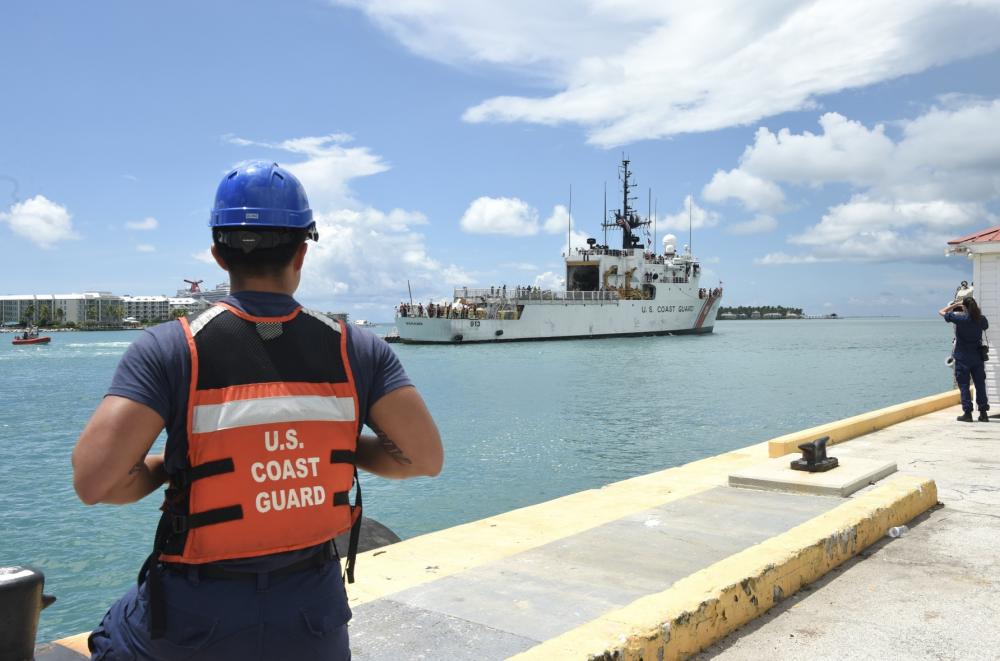
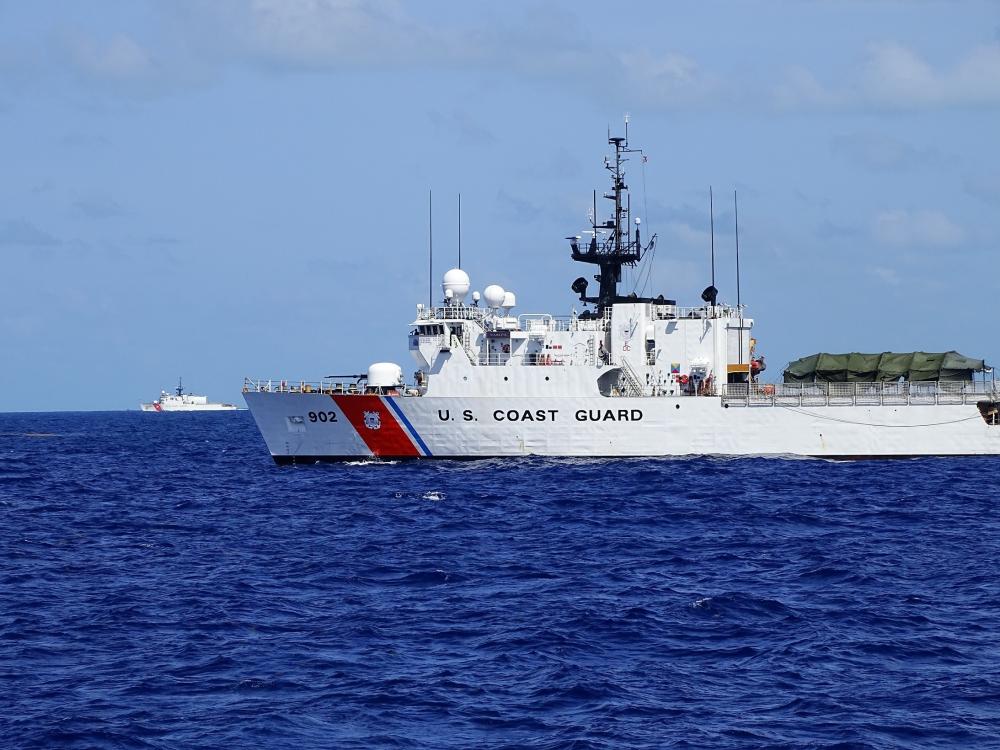
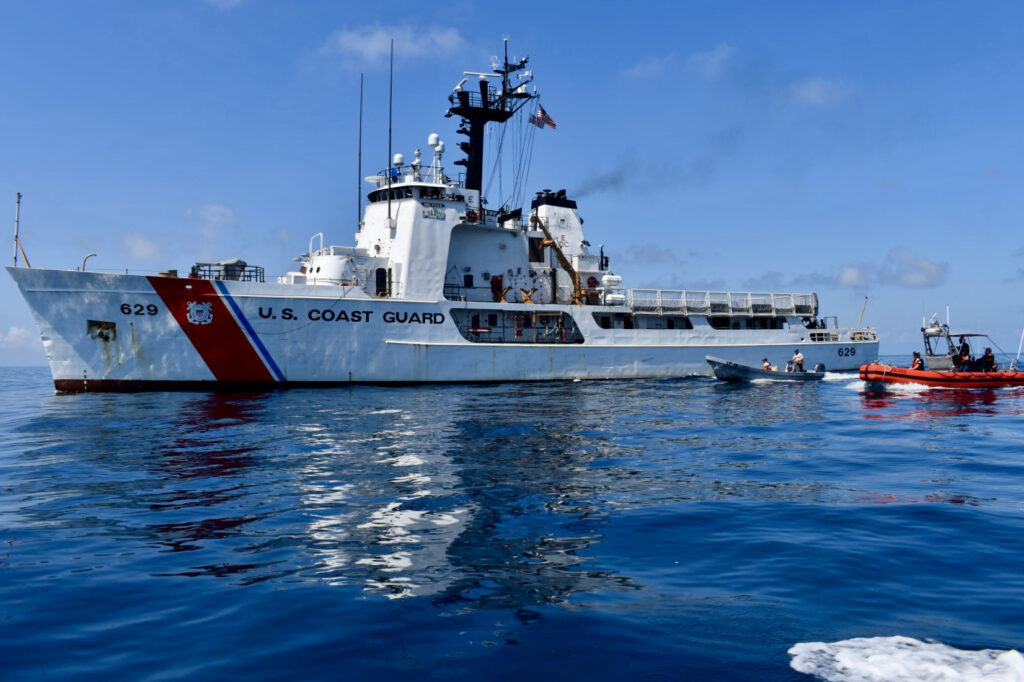
U.S. Coast Guardsmen assigned to the U.S. Coast Guard Cutter Thetis (WMEC 910), boost morale during a 77-day counter-narcotic deployment in the Caribbean sea, June 19. U.S. COAST GUARD

KEY WEST, Fla. — The U.S. Coast Guard Cutter Thetis (WMEC 910) crew returned to homeport in Key West, June 21, after a 77-day counter-narcotics patrol in the Caribbean Sea, the Coast Guard Atlantic Area said in a release.  

The Thetis crew repatriated 88 Haitian migrants to Cap Haitien, Haiti, after they were reported to be on an unseaworthy sailing vessel in the Windward Passage between Cuba and Haiti. 

An embarked U.S. Coast Guard law enforcement detachment disabled a smuggling vessel transporting an estimated 1,323 pounds of cocaine in the Central Caribbean.  

The Thetis’s crew assisted with a search and rescue case of 14 mariners that went into the water after their commercial ship began taking on water in the middle of the Caribbean Sea.  

“While on a counter-narcotics patrol, our crew quickly shifted gears to help locate and provide situational awareness during an unfortunate search and rescue case,” said Cmdr. Justin Nadolny, the commanding officer of the Thetis. “Working alongside our international and commercial partners showcased the can-do spirit of mariners and our universally shared duty of assisting those in distress and ensuring safety of life at sea.”  

The Thetis’s crew strengthened international partnerships while in Cartagena, Colombia, hosting Colombian naval officers aboard to gain a deeper understanding of maritime activity in the region and to develop relationships with international maritime partners operating in Caribbean waters. 

The Thetis, a 270-foot Famous-class cutter homeported in Key West and has a crew of 104. Their primary missions are counter-drug operations, migrant interdiction, the enforcement of federal fisheries laws, and search and rescue in support of U.S. Coast Guard operations throughout the Western Hemisphere.  


Cutter Offloads More than $99M in Illegal Narcotics at Base Miami Beach

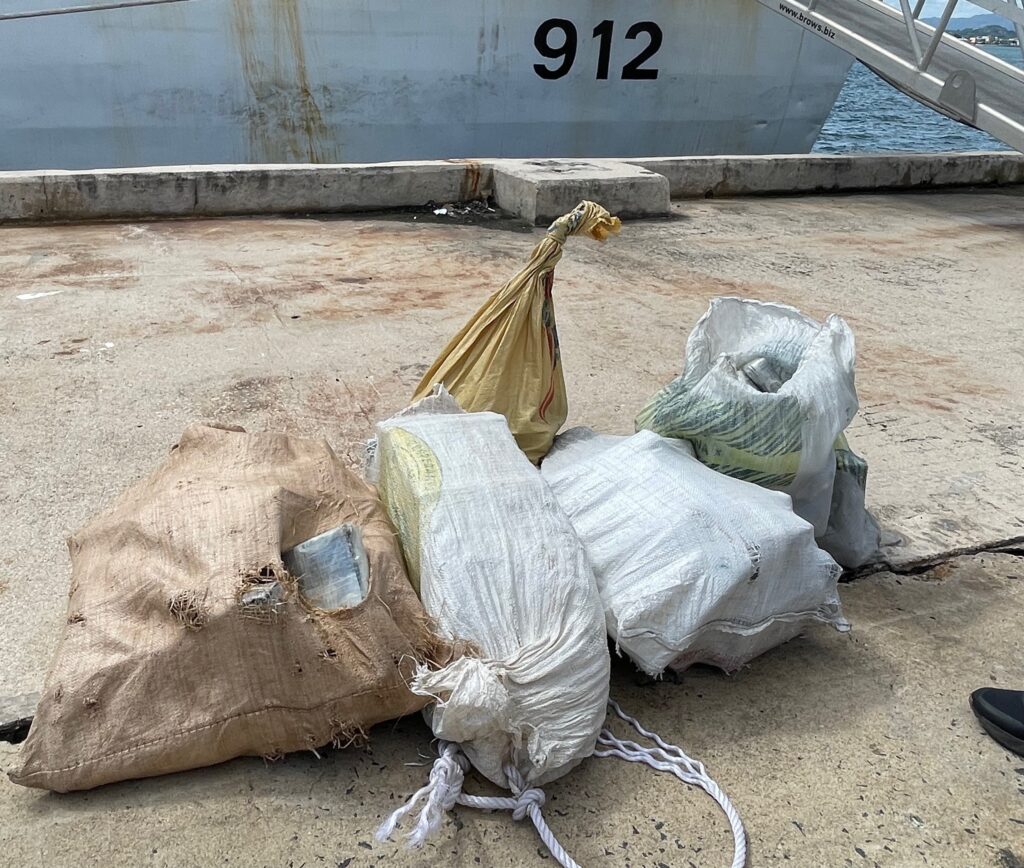
U.S. Coast Guard Cutter Thetis’ (WMEC 910) crew offloads approximately 5,237 pounds of illegal narcotics on June 17 at Coast Guard Base Miami Beach. U.S. COAST GUARD / Petty Officer 3rd Class Vincent Moreno

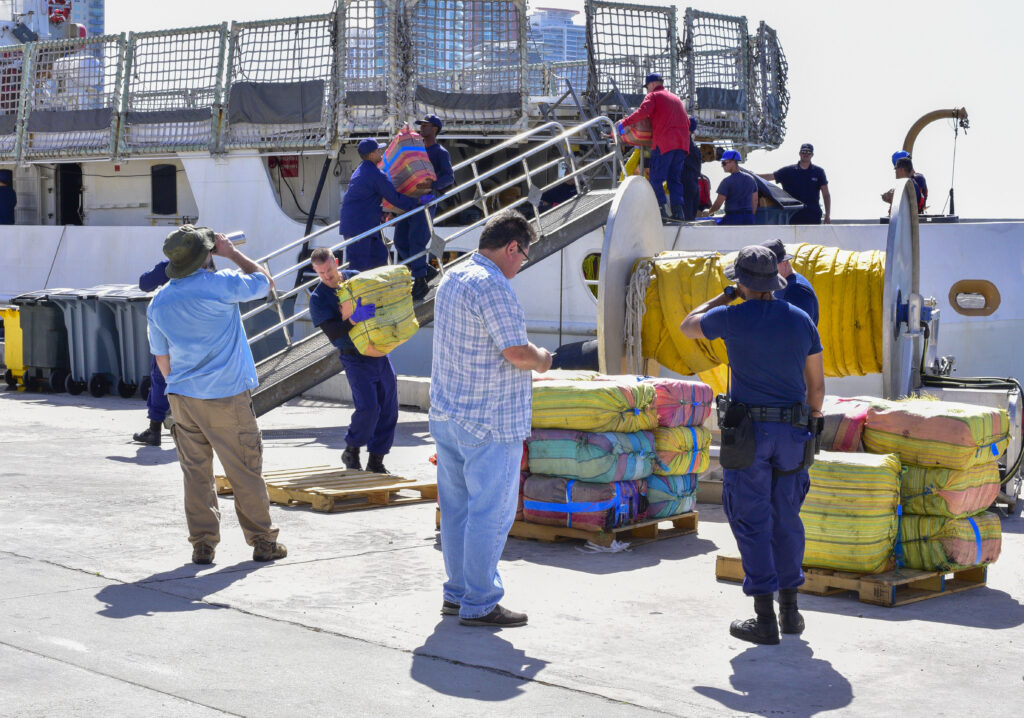
MIAMI — U.S. Coast Guard Cutter Thetis’ crew offloaded more than $99 million in illegal narcotics at Base Miami Beach, June 18, the Coast Guard 7th District said in a release.

Coast Guard and partner agency crews seized approximately 5,237 pounds of cocaine in the Caribbean Sea.

The drugs were interdicted in the international waters of the Caribbean Sea by crews from Coast Guard Cutter Donald Horsley, His Netherlands Majesty’s Ship Friesland and His Netherlands Majesty’s Ship Groningen.

“Interdicting drug traffickers on the open ocean is challenging work and every interdiction is complex and unique,” said Cmdr. Justin Nadolny, commanding officer of Thetis. “This offload is a testament to the teamwork and devotion of every crew assigned to carry out this mission, and it showcases the strength of the valuable international partnerships united to combat transnational organized crime.”

The fight against drug cartels in the Caribbean Sea requires unity of effort in all phases from detection, monitoring and interdictions, to criminal prosecutions by international partners and U.S. Attorneys’ Offices in districts across the nation.

During at-sea interdictions, a suspect vessel is initially detected and monitored by allied, military or law enforcement personnel coordinated by Joint Interagency Task Force-South based in Key West, Florida. The law enforcement phase of operations in the Caribbean Sea is conducted under the authority of the Seventh Coast Guard District, headquartered in Miami. The interdictions, including the actual boardings, are led and conducted by members of the U.S. Coast Guard.

The Thetis, a 270-foot Famous-class medium-endurance cutter, is homeported in Key West and patrols the Caribbean Sea and the Gulf of Mexico, performing counter-drug operations, migrant interdiction operations, search and rescue, and fisheries enforcement.


Coast Guard’s Force in Middle East Supports National Security Mission

Commandant of the U.S. Coast Guard Adm. Linda Fagan speaks to Coast Guardsmen assigned to Patrol Forces Southwest Asia in Bahrain, June 15, as part of her first official visit overseas after assuming her new role as the service’s top officer. U.S. COAST GUARD / Petty Officer 1st Class Brandon Giles

MANAMA, Bahrain — U.S. Coast Guard Patrol Forces Southwest Asia (PATFORSWA) conducted a change of command ceremony on Thursday, June 16 at Manama, Bahrain, as Capt. Eric Helgen relieved Capt. Benjamin Berg.

Presiding over the ceremony was Adm. Linda Fagan, Commandant of the Coast Guard.

“PATFORSWA has a unique area of operations and mission,” Fagan said. “The cutters homeported here are attached to Commander, Task Force 55 to support U.S. Naval Forces Central Command and Combined Maritime Forces strategic objectives. They provide a constant and reliable presence to maintain maritime domain awareness, deter acts of maritime piracy and smuggling, protect critical maritime infrastructure, and ensure the safe flow of goods and materials. There is no other Coast Guard unit that has a stronger link to the joint force in support of the national defense mission.”

Fagan said the cutters have participated in many high-impact operations. “They were on scene for tense boardings of commercial vessels; they navigated interactions with the Iranian Revolutionary Guard Corps Navy; and they conducted extensive interdiction operations.”

Fagan recognized the 110-foot Patrol Boats that served in PATFORSWA. “Adak, Aquidneck, Maui, Monomoy and Wrangell stayed on mission to the very end with operations in the Arabian Gulf and Gulf of Oman.”

One remains, USCGC Baranof, which will be decommissioned soon. “The Baranof is out conducting critical missions as we speak,” Fagan said.

The 110-foot patrol boats are being replaced by the new Fast Response Cutters. “Taking the baton from the 110s, the Fast Response Cutters have proven to be an exceptional platform to project the Coast Guard’s regional expertise to national and coalition forces,” said Fagan.

The four FRCs now in PATFOR SWA are USCGC Charles Moulthrope (WPC 1141), USCGC Robert Goldman (WPC-1142), USCGC Glen Harris (WPC 1144) and USCGC Emlen Tunnell (WPC 1145). Two more FRCs, USCG John Scheuerman (WPC 1146) and USCGC Clarence Sutphin (WPC 1147) arrive in PATFORSWA soon.

While operating with CTF-150, a task force within the Combined Maritime Forces, newly reporting FRCs conducted boardings in the Gulf of Oman that resulted in seizures of  heroine, methamphetamine and hashish with a U.S. street value of 17 million dollars.

PATFORSWA provides shoreside teams to support the cutter crews with antiterrorism/force protection, naval engineering, supply and personnel administration along the way. Training teams also support the Navy and partner nations. The Advanced Interdiction Teams embark on the U.S. warships to conduct boardings and seizures of illicit cargos. Several months ago, AITs aboard USS Tempest and USS Typhoon seized 1,400 AK-47 rifles and 226 thousand rounds of ammunition from a stateless fishing vessel in the North Arabian Sea.

“That illegal arms shipment would have contributed to violence and instability in the region had it reached its destination,” Fagan said.

“Any illegal activity at sea — whether it is drug smuggling, weapons shipments, or illegal, unreported or unregulated fishing — erodes the rule of law and regional stability,” Fagan said. “The United States Coast Guard is the global model for maritime governance, the positive force that protects maritime safety, security and economic prosperity.”

Critical Partnerships

In today’s connected world, maritime governance is a collaborative effort. Fagan said partnerships are critically important.

“PATFORSWA leads the way with international engagement throughout the region. The Maritime Engagement Team supports CENTCOM’s theater campaign plan through participation in multi-lateral, interagency exercises and subject matter expert exchanges with foreign militaries. This year the team engaged with more than 350 people from 16 partner nations, sharing expertise on boarding tactics and small boat operations,” she said.

And the Shoreside team contributed in this area, too. “In addition to supporting the 110s and FRCs, they provided electronics and engineering assistance to the Yemeni Coast Guard, and the Lebanese Armed Forces – Navy, a critical 5th Fleet partner who will soon receive three 87-foot Coastal Patrol Boats.”

Additionally, the Shoreside team deployed 25 people for three weeks of support to Operation Allies Refuge, the DoD and DHS operation to safely vet, protec, and transport more than 7,000 evacuees from Afghanistan to Bahrain.

“They were the first people the non-combat evacuees encountered on the flight line after arriving direct from Kabul,” Fagan said.

Helgen is reporting from the 7th Coast Guard District in Miami where he served as the deputy of the Office of Maritime Enforcement.

“I’m exceptionally honored and deeply humbled to have the opportunity to be part of a team whose members sacrifice a year away from their families to execute such a vital mission in support of the United States,” Helgen said.

“PATFORSWA excelled under Captain Berg’s leadership because this crew trusted him, they responded to his vision and leadership, and they rose to the challenge,” said Fagan.

“It has been my absolute pleasure to serve with the outstanding Coast Guard women and men of Patrol Forces Southwest Asia. The dedication and professionalism was evident in every patrol, repair and forward deployment,” Berg said. “I’m certainly pleased of the operational accomplishments of our cutters, crews and partner nation engagements, but I was more energized each day to observe the crews taking pride knowing their work was bringing stability and rule of law to the region.”


Coast Guard, DHS Partners Establish Joint Coordination Center in Houston 

Leaders from Coast Guard Sector Houston-Galveston, Homeland Security Investigations Houston, U.S. Customs and Border Protection Houston and Transportation Security Administration Houston commemorate the establishment of a Joint Intelligence and Operations Coordination Center June 7. U.S. COAST GUARD / Tim Oberle

HOUSTON — Leaders from Coast Guard Sector Houston-Galveston, Homeland Security Investigations Houston, U.S. Customs and Border Protection Houston and Transportation Security Administration Houston announced June 9 the establishment of a Joint Intelligence and Operations Coordination Center. 

Located within Sector Houston-Galveston, the new multi-agency coordination center will directly support the Southeast Texas and Southwest Louisiana Regional Coordinating Mechanism and be staffed with personnel from the Coast Guard, HSI, CBP and TSA. JIOCC staff will include a full-time counterdrug analyst from the Texas National Guard whose focus will be providing analytical support to DHS components. 

The JIOCC’s primary purpose is to act as a unified control center and coordinate operations between participating agencies to bolster interoperability and deconflict where an agency’s operations may overlap with others. Additionally, the JIOCC will serve as a ready-made event command post in the event of a natural disaster or other emergency, such as a strong hurricane. 

The establishment of the JIOCC is part of DHS efforts to modernize the Maritime Operations Coordination Plan by establishing coordination cells in strategic locations around the country to facilitate intelligence sharing and coordinate operations for an efficient, effective and unified departmental response to threats against the United States in the maritime environment. 

“By bringing together and leveraging each agency’s unique strengths, authorities and capabilities, we are better postured to protect the ports and waterways of Southeast Texas and Southwest Louisiana,” said Coast Guard Capt. Jason Smith, commander, Sector Houston-Galveston and ReCoM executive committee member. “The establishment of this JIOCC illustrates our commitment to enhancing maritime homeland security by improving intelligence and information sharing and increasing operational integration and deconfliction.”