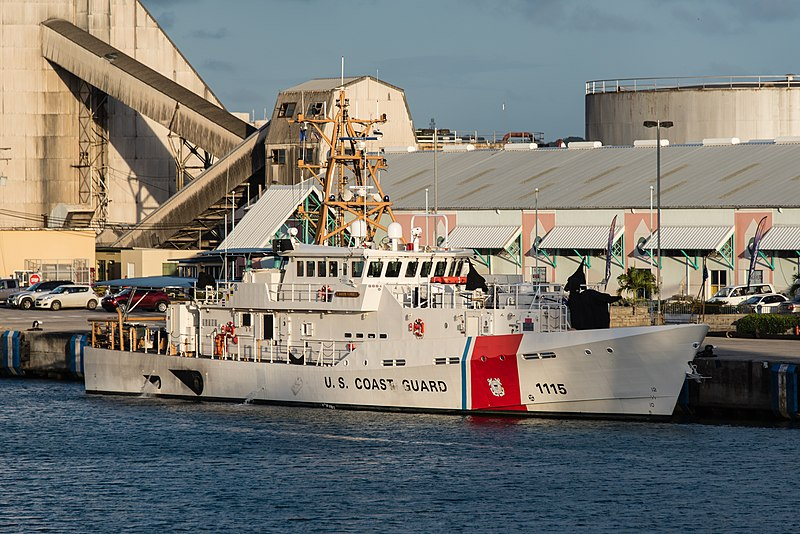
Bollinger Delivers the Future USCGC Pablo Valent 

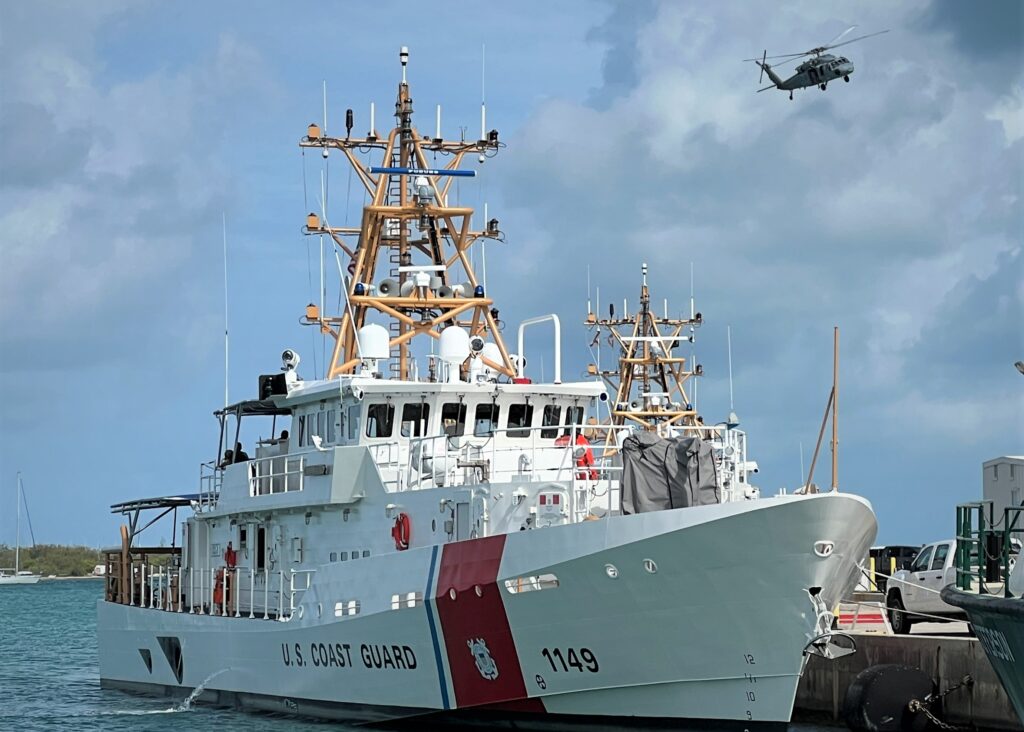
The U.S. Coast Guard Cutter Pablo Valent, delivered to the Coast Guard on March 17. BOLLINGER SHIPYARDS

LOCKPORT, La. — Bollinger Shipyards LLC delivered the U.S. Coast Guard Cutter Pablo Valent to the service in Key West on March 17, the company said in a release.

This is the 174th vessel Bollinger has delivered to the U.S. Coast Guard over a 35-year period and the 48th fast response cutter delivered under the current program. 

“The early delivery of the USCGC Pablo Valent is another win in Bollinger’s nearly four-decade partnership supporting the men and women of the United States Coast Guard,” said Bollinger president and CEO Ben Bordelon. “We are incredibly proud that the FRC platform is a model program for government acquisition and has surpassed all historical quality benchmarks for vessels of this type and complexity. The results are in the detail and the continued early delivery of truly extraordinary Coast Guard cutters that will serve our nation for decades to come.” 

The USCGC Pablo Valent is the first of three FRCs to be homeported in St. Petersburg, Florida. Sector St. Petersburg has become one of the Coast Guard’s largest commands, with an area of responsibility encompassing over 400 nautical miles of coastline along Florida’s west coast and the third largest U.S. port for domestic trade. The sector has responsibility for five primary operational missions: search and rescue; marine safety; maritime law enforcement; ports, waterways and coastal security; and living marine resources. 

This week, President Joe Biden signed the Consolidated Appropriations Act for fiscal 2022, which included $130 million for two additional FRCs, continuing the program beyond its 64-vessel program of record. This is the second time Congress has added FRCs beyond the original 58 vessel program of record. 

Each FRC is named for an enlisted Coast Guard hero who distinguished themselves in the line of duty. The Florida Keys Hurricane of September 1919 was one of the worst in Texas history, heavily damaging the Brazos Life-Saving Station and leveling the Coast Guard Station at nearby Aransas. Seventy-seven-ton schooner Cape Horn had been fishing far out in the Gulf as the storm descended on the schooner and its crew of eight, capsizing the vessel and flooding the hold. The men clung to the flooded hulk as the strong hurricane pushed it toward the Texas coast.

The Brazos Station lookout spotted the Cape Horn and took immediate action. The crew launched the surfboat in some of the worst sea conditions ever experienced in the area. Although the men were skilled surfmen, the boat shipped seas constantly as waves boarded the vessel from the stern. Pablo Valent and the rest of the crew held the boat steady and safely landed with all 15 occupants. For their valiant efforts, Valent and the rest of the Brazos crew received the Silver Life-Saving Medal. Valent went on to have a successful career in the Coast Guard, taking command of the Brazos Station (a.k.a. Port Isabel Coast Guard Station) in 1935, becoming the first Hispanic American in the service to do so. Valent retired after 28 years of service in the Coast Guard. 


Cutter Stratton Returns to Alameda Following 97-Day South Pacific Patrol 

Petty Officer 2nd Class Jose MataAyala, a machinery technician stationed on the Coast Guard Cutter Stratton, observes unqualified crew members as they participate in man-overboard drills off the coast of the Hawaiian Islands, Dec, 31, 2021. U.S. COAST GUARD / Petty Officer 3rd Class David Graham

ALAMEDA, Calif. — The crew of Coast Guard Cutter Stratton (WMSL 752) returned to Alameda, California, March 19 after completing an Operation Blue Pacific Patrol in the south Pacific, the Coast Guard Pacific Area said in a release. 

While underway, Stratton’s crew worked with Pacific partner nations, including Fiji, France, New Zealand, Papua New Guinea, Australia and the United Kingdom on an array of missions and prioritized combating illegal, unreported and unregulated fishing on the high seas or in partner nations’ exclusive economic zones.   

In the effort to combat IUU fishing, Stratton teams boarded 11 vessels during the 20,348-mile patrol and found 21 violations. 

“Our collaboration with our partners and utilization of our shiprider agreements gave us the ability to accomplish our mission of combatting illegal, unreported and unregulated fishing in order to maintain regional stability and protect the fishing industry,” said Capt. Steve Adler, Stratton’s commanding officer. “By bringing aboard shipriders from Fiji, we were able to patrol their exclusive economic zones to better assist them in enforcing their maritime laws.” 

In February, Stratton embarked three shipriders from Fiji with representatives from the Fiji Revenue and Customs Services, the Fiji Ministry of Fisheries and the Republic of Fiji Navy, who led bilateral enforcement efforts for Stratton to patrol their exclusive economic zones. 

There is a shared interest for both Fiji and the United States, as well as other partner nations, to protect fisheries as they provide a renewable source of food and income to the Pacific nations. 

The Stratton crew also used small unmanned aircraft systems to increase the ship’s capabilities and further extend the cutter’s patrol area. 

“Stratton’s capacity for employing cutting-edge technology like sUAS, gives the Coast Guard the upper hand in the fight against IUU fishing,” said Cmdr. Charter Tschirgi, Stratton’s executive officer. “The vast area covered during patrols like these displays the reach the Coast Guard has and the length we will go to assist our partners in the Pacific.” 

While on patrol, Stratton’s crew also participated in multiple joint exercises with partners in the region. These included a formation sailing with the HMS Spey, a tactical maneuvering drill with HMS Spey and USS Sampson, a joint patrol with an Australian Border Force patrol aircraft, fueling-at-sea with New Zealand’s newest replenishment vessel HMNZS Aotearoa, and joint steaming with the French naval vessel FMS Arago and Fijian Patrol vessel Savenaca. 


Bollinger Submits Final Proposal to Build Coast Guard Offshore Patrol Cutter 

Coast Guard Cutter Myrtle Hazard (WPC 1139), built by Bollinger Shipyards, steams through Apra Harbor before arriving at its new homeport in Santa Rita, Guam, in 2020. U.S. NAVY / Mass Communication Specialist 3rd Class MacAdam Kane Weissman

LOCKPORT, La. — Bollinger Shipyards submitted on March 18 its final proposal to the United States Coast Guard to build Stage 2 of the Heritage-class Offshore Patrol Cutter program. If chosen, Bollinger would construct and deliver a total of 11 vessels to the U.S. Coast Guard over the next decade, helping to sustain the Bollinger workforce through 2031.

The proposal submitted by Bollinger states the construction will occur at its facilities in Houma, Louisiana, a shipyard strategically placed within a 100-year hurricane risk reduction system with direct access to the Gulf of Mexico and without drafts or time-zone differences.

In a new study conducted by the Economics & Policy Research Group at Louisiana State University on the economic impact should Bollinger be chosen to build up to 11 ships for the OPC Program, LSU found the project would create more than 2,700 direct and indirect jobs and generate $7.3 billion in economic output for Louisiana.

“The numbers tell a compelling story — the Offshore Patrol Cutter program would be a major game changer for the state of Louisiana and Bollinger is the right shipyard at the right time to build this platform for the U.S. Coast Guard,” said Ben Bordelon, Bollinger president and CEO. “For over 75 years, Bollinger has been proud to be a major job creator and economic contributor in south Louisiana. To be awarded the contract for OPC would allow us to continue that legacy. It is my hope that we’re able to continue our long partnership supporting the brave men and women of the U.S. Coast Guard.”

Bollinger has been actively involved in the U.S. Coast Guard’s OPC acquisition process, including execution of the Stage 1 Preliminary and Contract Design, where the company was included in the final three shipyards, as well as execution of the OPC Stage 2 industry study. In June 2021, Bollinger submitted its initial proposal to build Stage 2 of the OPC program.

Bollinger has delivered Sentinel Class Fast Response Cutter hulls 1139 through 1148 a total of 180 days ahead of the contract schedule, despite the challenges of the COVID-19 global pandemic and sustaining significant damage from a direct hit by Hurricane Ida, a powerful Category 4 storm.


Coast Guard Cutters Conclude Operation Aiga in Oceania 

The crews of the Coast Guard Cutters Juniper and Joseph Gerczak return to Honolulu after completing a 42-day patrol in Oceania in support of Operation Aiga, March 7. U.S. COAST GUARD

HONOLULU — The crews of the Coast Guard Cutters Juniper and Joseph Gerczak returned to Honolulu March 7 after completing a 42-day patrol in Oceania in support of Operation Aiga, the Coast Guard 14th District said March 11.  

Both crews deployed on a combined 14,000-mile patrol to provide maritime support and patrol coverage for Samoa and American Samoa’s exclusive economic zones as well as conducted joint-training operations with the armed forces in French Polynesia. 

Operation Aiga, the Samoan word for family, is designed to integrate Coast Guard capabilities and operations with Pacific Island County partners to effectively and efficiently protect shared international interests, combat illegal, unreported and unregulated fishing and strengthen maritime governance in Oceania.  

“The Coast Guard remains committed to combating IUU fishing as fish stocks remain a critical component to maritime sovereignty and resource security for many nations, especially those in the Pacific,” said Cmdr. Jeff Bryant, chief of enforcement for Coast Guard District Fourteen. “The Juniper and Joseph Gerczak were able to establish stability for our partners on the high seas and while patrolling their EEZs in support of Operation Aiga.” 

While underway, both cutters conducted hoist training with French Dauphin N3 helicopter crews designed to increase interoperability on the high seas. Additionally, both cutter commanding officers met with Rear Adm. Jean-Matthieu Rey, commander of armed forces in French Polynesia, in Tahiti to discuss the importance of regional maritime security partnerships to maintain a free and open Indo-Pacific.  

“We had the privilege to integrate our capabilities and strengthen existing partnerships with the French, while protecting global resources on the high seas and exclusive economic zones of our regional partners,” said Cmdr. Christopher Jasnoch, commanding officer of the Juniper. “I am extremely proud of the crew of Juniper for their hard work preparing for this patrol, resiliency in overcoming the challenges of COVID-19 and their dedication to protecting national interests in Oceania while modeling professional maritime behavior to our partners and competitors.” 

Additionally, the Juniper and Joseph Gerczak crews helped fill an operational presence, conducting security patrols in Samoa’s EEZ throughout the month of February to protect fisheries and other natural resources while Samoa’s Nafanua II patrol boat was down.  

The Joseph Gerczak made an inaugural visit in Pape’ete, Tahiti, marking the first time a Coast Guard fast response cutter conducted vital port calls on the island. 

“Although Coast Guard missions, new cutters, and adventure make serving afloat attractive, the top incentive remains having the opportunity to serve alongside the most talented and humble men and women our country has to offer,” said Lt. Joseph Blinsky, commanding officer of the Joseph Gerczak. “Without the skill and hard work from Joseph Gerczak’s crew, our more than 2,300 NM transit to Tahiti from Honolulu would not have been possible. Coupled with first-class support from District 14, Sector Honolulu, and Juniper, made executing this expeditionary patrol a reality.”  


Cutter Steadfast Returns Home Following Migrant-Interdiction, Counter-Narcotics Patrol 

The Coast Guard Cutter Steadfast crew conducts cutter boat pursuit training with a crew from the Coast Guard Cutter Forrest Rednour on Feb. 8. U.S. COAST GUARD

ASTORIA, Oregon. — The Coast Guard Cutter Steadfast (WMEC 623) and crew returned to the cutter’s homeport in Astoria March 7 after a 48-day patrol of the California coast, the cutter’s crew said in a release. 

The 54-year-old cutter and crew conducted drug and migrant interdiction, living marine resource protection and search and rescue operations along the U.S.-Mexico maritime border. 

The Steadfast crew coordinated with Customs and Border Protection, Coast Guard aircraft and Mexican Navy vessels to interdict three boats suspected of attempting to illegally transport migrants into the United States, resulting in the safe recovery and repatriation of 75 people. 

Additionally, the crew boarded 23 U.S. vessels operating in the area and participated in a multi-asset search operation following a flare sighting. 

“This was a challenging yet successful patrol for the crew of Steadfast, highlighting the important interagency effort required to secure our maritime borders,” said Cmdr. Craig Allen, commanding officer of the Steadfast. “It was rewarding to work alongside our many partners during the patrol, including Customs and Border Protection, U.S. Border Patrol, and both Mexican and U.S. Navy assets.” 

The Steadfast’s permanent crew makeup is 63 enlisted personnel and 12 officers. To aid in this patrol, the permanent party welcomed multiple temporary duty members from across the nation, including: Petty Officer 1st Class Bradley Kwasny and Petty Officer 2nd Class Christian Matranca, both from Maritime Safety and Security Team San Francisco; Petty Officer 2nd Class Aaron Holroyd from Training Center Yorktown,Virginia; and Lt. Ryan Guinee from the Surface Forces Logistic Center – Patrol Boat Product Line in Seattle. 

“We had a top-notch team on this patrol, and I’m especially proud of them for overcoming some difficult equipment casualties that were necessary to keep the 54-year-old cutter mission capable,” Allen said. “The crew achieved noteworthy results due to superb skill and professionalism. We’re also thankful to the men and women at Coast Guard Sector Los Angeles for the excellent support they provided during multiple port visits.” 

Commissioned in 1968, the Steadfast is a 210-foot Reliance-class medium-endurance cutter homeported in Astoria and routinely deploys in support of counter-drug, migrant interdiction, fisheries, and search and rescue and homeland security missions. 


Coast Guard, Partner Agencies Respond to Haitian Migration Venture off Florida Keys 

Coast Guard, Customs and Border Protection and partner agencies crews respond to a suspected Haitian migrant venture, March 6, approximately 200 yards off Ocean Reef, Florida. The vessel grounded Sunday with no injuries reported. U.S. COAST GUARD

MIAMI — U.S. Coast Guard, Customs and Border Protection and partner agencies responded to a grounded Haitian vessel on March 6, approximately 200 yards off Ocean Reef in Key Largo, Florida, the Coast Guard 7th District said March 7.  

Coast Guard, CBP and partner agencies rescued 356 Haitians from the vessel and no injuries were reported. A good Samaritan notified Coast Guard Sector Key West watchstanders March 6, at approximately 1 p.m., of a blue Haitian vessel grounded off Ocean Reef.  

“We worked seamlessly with our state and federal partners to safely remove all the persons from this vessel.” said Capt. Jeffrey Randall, chief of Staff, Coast Guard 7th District. “The Coast Guard and partner agencies are continuously patrolling the Mona Passage, Windward Passage, Caribbean Sea and the approaches to the United States to stop these dangerous and unsafe voyages.” 

“The coordinated and timely response of the U.S. Border Patrol and our federal, state, and local partners potentially saved the lives of these migrants today,” said Walter N. Slosar, chief patrol agent, U.S. Border Patrol, Miami Sector. 


Coast Guard Cutter Midgett Returns Home from 3-Month Alaskan Patrol 

The U.S. Coast Guard Cutter Midgett (WMSL 757) moors at its new homeport at Base Honolulu Aug. 16, 2019. U.S. COAST GUARD / Chief Petty Officer Sherri Eng

KODIAK, Alaska — The crew of Coast Guard Cutter Midgett returned to homeport in Honolulu, Hawaii, Friday after a three-month long Bering Sea patrol, the Coast Guard 14th District said March 4. 

The crew of the Midgett enforced federal laws and regulations in the U.S. Exclusive Economic Zone near Alaska’s Aleutian Islands chain.

They played a strategic role in protecting the nation’s critical marine resources, enforcing fisheries and safety regulations, and were forward positioned to safeguard the U.S. commercial fishing fleet.

The crew of the Midgett also acted as a search and rescue platform while providing support to helicopter crews operating out of Dutch Harbor and Cold Bay, Alaska. This increased operational range for the aircrews and provided them with fuel for high-endurance missions.

The crew also conducted training and emergency response drills.

“Navigating Alaskan waters was extremely exciting and rewarding,” said the Midgett’s commanding officer, Capt. Willie Carmichael. “I’m proud and impressed by my crew’s service and commitment to promote safety and security in Alaskan fisheries that are so vital to the U.S. economy.” 


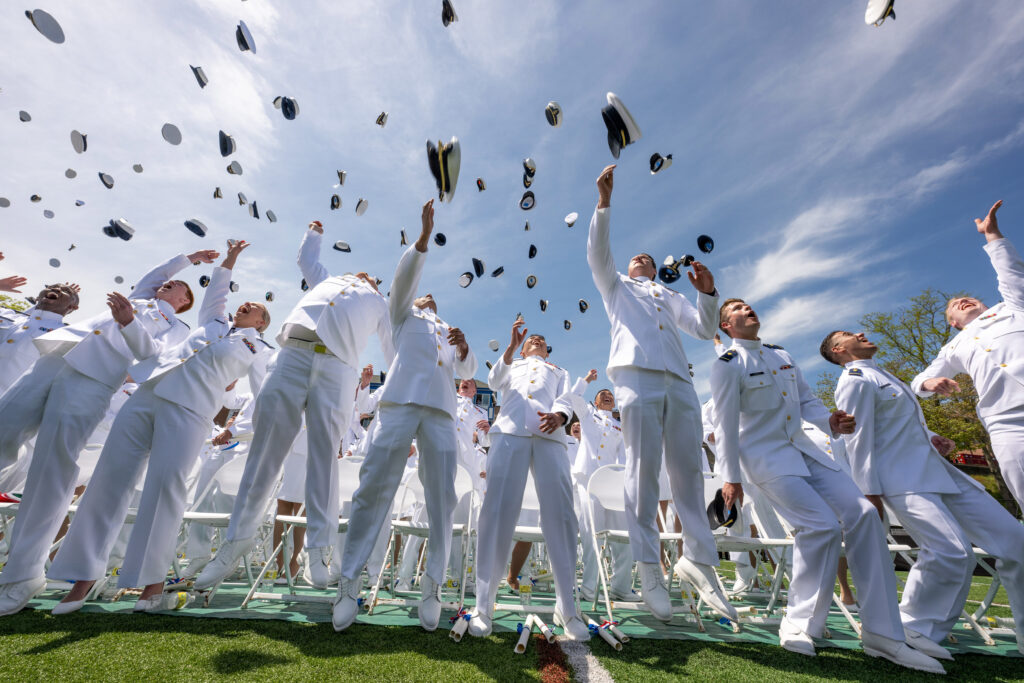
Coast Guard Academy Cadets Prepare to Join the Fleet

Cadets from the Class of 2022 at the U.S. Coast Guard Academy receive their first duty assignments during Billet Night, March 3, 2022. U.S. Coast Guard / Petty Officer 3rd Class Matthew Abban

NEW LONDON, Conn. ­­— Cadets from the Class of 2022 received their first duty assignments during Billet Night at the U.S. Coast Guard Academy, March 3, the Academy said.

One of the most anticipated events of the 200-week cadet program, Billet Night is a night of energy and excitement as the cadets are less than three months away from commencement when they commission as officers in the U.S. Coast Guard on May 18, 2022.

This year’s class is made up of 257 cadets, including nine international cadets. After graduation, more than 200 newly commissioned officers will report to cutters as near as Coast Guard Cutter Eagle homeported near the Academy in New London, Connecticut, to the Coast Guard Cutter Sequoia, homeported nearly 8,000 miles away in Apra Harbor, Guam.

Twenty others will report to flight school in Pensacola, Florida, to begin pilot training before reporting to Coast Guard Air Stations across the country.

Cadets will engage in a variety of Coast Guard operations at their new units upon graduation. Coast Guard units throughout the nation routinely conduct domestic missions as well as joint exercises with partner nations in which the Coast Guard assists fellow coast guards and navies to adapt or expand their maritime security capabilities.

The remaining graduates will report to various shore units, including the first graduates of the Academy’s Cyber Systems program. The newly established Cyber Systems degree provides graduates with the skills and ability to defend cyberspace, enable operations, and protect critical maritime infrastructure.

The Coast Guard protects America’s vast Maritime Transportation System as a ready, relevant, and responsive force engaging in defense operations, maritime law enforcement, search and rescue, marine safety, and environmental protection operations.

“Every day our graduates are leading vital missions across the globe,” said Rear Adm. Bill Kelly, Coast Guard Academy superintendent. “I’m excited that the members of the class of 2022 will soon take their places in the Coast Guard fleet and join our service’s efforts to address the nation’s complex maritime challenges.”

Founded in 1876, the Coast Guard Academy is one of the five U.S. service academies that emphasizes leadership, physical fitness and professional development leading to a guaranteed job upon graduation as a commissioned officer in the U.S. Coast Guard.


Coast Guard Cutter Polar Star Reaches Southernmost Navigable Waters on Earth 

U.S. Coast Guard Cutter Polar Star (WAGB 10) transits away from the ice shelf near the Bay of Whales, Antarctica, Feb. 17. Polar Star navigated to the Southernmost navigable seas and entered uncharted waters, reaching the edge of the ice shelf. U.S. COAST GUARD / Petty Officer 3rd Class Diolanda Caballero

MCMURDO STATION, Antarctica — The U.S. Coast Guard Cutter Polar Star (WAGB 10) reached the southernmost navigable waters on the planet Feb. 17 while underway in the Bay of Whales, Antarctica, the Coast Guard Pacific Area said March 1. 

Polar Star reached a position of 78 degrees, 44 minutes, 1.32 seconds south latitude at 12:55 p.m. New Zealand time, holding a distance of approximately 500 yards from the edge of the Ross Ice Shelf, further south than the current Guinness World Record holder. 

While underway, Polar Star sailed in waters previously charted as part of the ice shelf that are now navigable waters. Today, portions of the Ross Ice Shelf deviate approximately 12 nautical miles from the positions depicted on official charts. 

During Polar Star’s transit to and from the Bay of Whales, Polar Star surveyed 396 nautical miles of the ice shelf for potential future navigational use. 

Crewmembers aboard the cutter are working with the staff at Guinness World Records to officially become the new record holders. 

On Feb. 7, 1997, U.S. Coast Guard Cutter Polar Sea (WAGB 11), Polar Star’s sister ship, reached 78 degrees, 29 minutes south latitude. 

In 1908, Ernest Shackleton gave the Bay of Whales its name during the Nimrod Expedition on the basis of the numerous whales he and his crew sighted. Three years later, Roald Amundsen established a base camp in the bay, from which he set out on his successful endeavor to become the first person to reach the South Pole. Years later, U.S. Navy Rear Adm. Richard E. Byrd established Little America in the Bay of Whales during his first, second, and third Antarctic Expeditions, exploring more than 60% of the Antarctic continent. 

“The crew of Polar Star is proud to follow in the footsteps of legendary Antarctic explorers like Shackleton, Amundsen, and Byrd,” said Capt. William Woityra, commanding officer of Polar Star. “Even today, more than a century later, we carry on that legacy of exploration, reaching new places, and expanding human understanding of our planet.” 


Cutter Diligence Returns to Homeport after 60-Day Eastern Pacific Ocean Patrol 

The crew of the U.S. Coast Guard Cutter Diligence, shown conducting small boat training in the Eastern Pacific Ocean. COAST GUARD / BM3 Cayne Wattigney

PENSACOLA, Fla. — The crew of Coast Guard Cutter Diligence returned to their homeport of Pensacola, Florida, Feb. 20 following a 60-day counter-drug patrol in Eastern Pacific Ocean, the Coast Guard 8th District said Feb. 25. 

Partnering with three other Coast Guard cutters, Diligence interdicted three suspected drug-smuggling vessels resulting in the apprehension of 12 detainees and the interdiction of more than 4,321 pounds of cocaine with a street value of approximately $82 million. 

“Diligence’s crew demonstrated professionalism, resilience and perseverance while conducting complex high-speed boat pursuits in the drug transit zone,” said Cmdr. Jared Trusz, Diligence’s commanding officer. “I am honored to serve with and proud of the crew’s superlative efforts that directly support the United States national security interests.” 

Numerous U.S. agencies from the Departments of Defense, Justice and Homeland Security cooperated in the effort to combat transnational organized crime. The Coast Guard, Navy, Customs and Border Protection, FBI, Drug Enforcement Administration and Immigration and Customs Enforcement, along with allied and international partner agencies, play a role in counter-drug operations. 

The fight against drug cartels in the Eastern Pacific Ocean requires unity of effort in all phases from detection, monitoring and interdictions, to criminal prosecutions by international partners and U.S. Attorneys’ Offices in districts across the nation. The law enforcement phase of counter-smuggling operations in the Eastern Pacific Ocean is conducted under the authority of the Coast Guard 11th District, headquartered in Alameda, California. The interdictions, including the actual boardings, are led and conducted by members of the U.S. Coast Guard.  

The Diligence is a 210-foot medium-endurance cutter homeported in Pensacola with 78 crewmembers. The cutter’s primary missions are counter-drug operations, migrant interdiction, enforcing federal fishery laws and search and rescue in support of Coast Guard operations throughout the Western Hemisphere.