Coast Guard to Commission Fast Response Cutter Pablo Valent
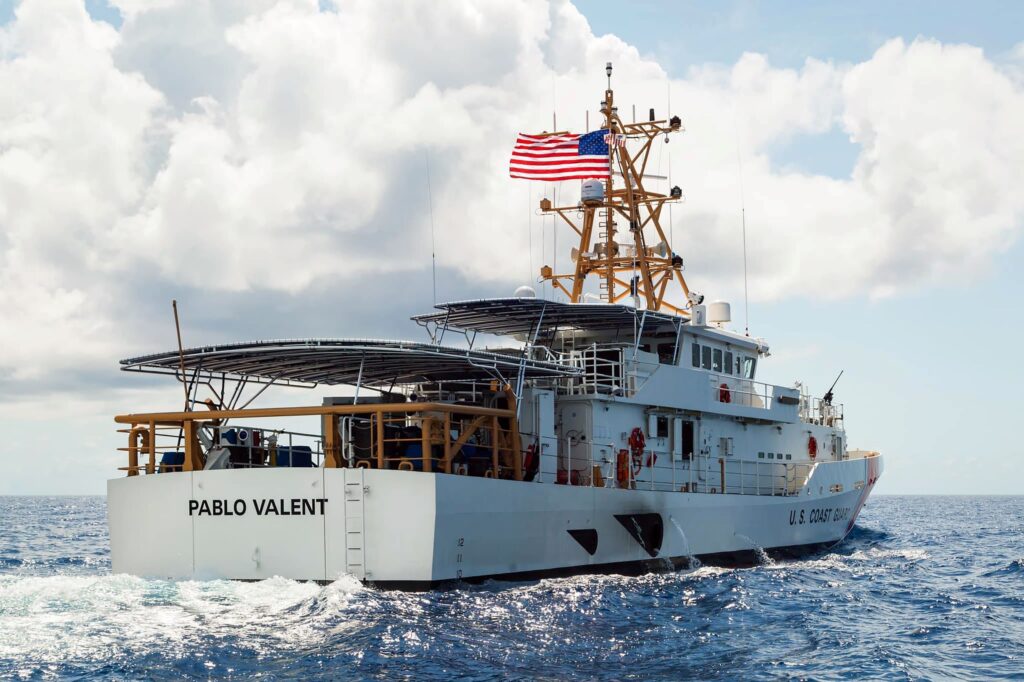
Coast Guard Cutter Pablo Valent, a 154-foot Sentinel-class vessel, is homeported at Coast Guard Sector St. Petersburg, Florida. U.S. COAST GUARD
ST. PETERSBURG, Fla. — The Coast Guard will commission the 48th Sentinel-class fast response cutter Pablo Valent (WPC 1148), into service at Coast Guard Sector St. Petersburg on May 11, the Coast Guard 7th District said May 6.
Rear Adm. Brendan McPherson, commanding officer of the Coast Guard 7th District, will preside over the ceremony. Cecilia Guillot, Valent’s great-niece, is the ship’s sponsor.
The cutter’s namesake Pablo Valent was originally from Corpus Christi, Texas, and joined the United States Life-Saving Service in 1912. In September 1919, Valent helped rescue the crew of the hurricane-damaged schooner Cape Horn off the coast of Texas. For his heroic efforts, Valent received the Silver Lifesaving Medal and the Grand Cross of the American Cross of Honor Society. Valent was one of the first Hispanic Americans to receive these honors.
The Cutter Valent is the 48th FRC and is the first to be homeported in St. Petersburg with missions including search and rescue, maritime law enforcement, coastal security and living marine resources. There are 12 other FRCs in Florida, which operate throughout the Caribbean Sea.
Sector St. Petersburg is one of the Coast Guard’s largest commands, with an area of responsibility encompassing over 400 nautical miles of coastline along Florida’s west coast.
Coast Guard Cutter Cuttyhunk Decommissioned after 34 Years of Service
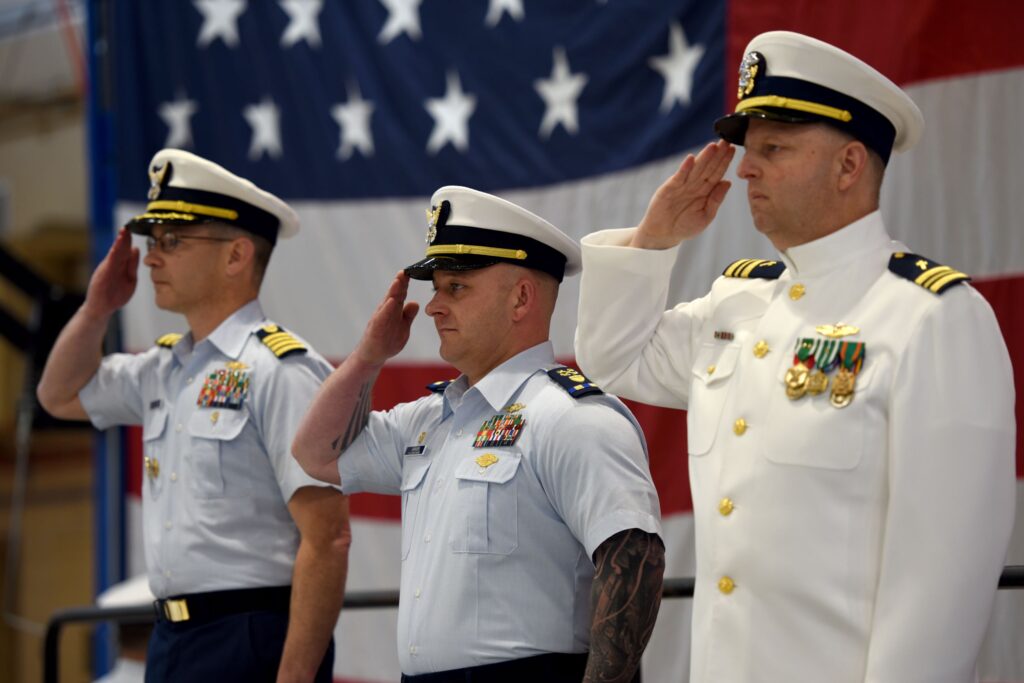
The official party renders solute during a ceremony held to decommission Coast Guard Cutter Cuttyhunk (WPB 1322) from service Thursday, May 5, at Air Station Port Angeles. Captain Mark McDonnell, District 13 Chief of Response, (left) oversaw the ceremony. U.S. COAST GUARD / Petty Officer 3rd Class Michael Clark
PORT ANGELES, Wash. — The Coast Guard decommissioned Coast Guard Cutter Cuttyhunk (WPB 1322) May 5 during a ceremony held at Air Station Port Angeles that was presided over by Capt. Mark McDonnell, 13th Coast Guard District Chief of Response.
Cuttyhunk was one of the Coast Guard’s 37 remaining 110-foot Island-class patrol boats. The fleet of Island-class cutters is being replaced by 154-foot Sentinel-class cutters.
Commissioned in 1988, the Cuttyhunk was the 22nd of 49 110-foot patrol boats built in support of the Coast Guard’s maritime homeland security, migrant and drug interdiction, fisheries enforcement and search and rescue missions. Cuttyhunk was built by Bollinger Shipyards in Lockport, Louisiana, and commissioned on Oct. 5. Cuttyhunk was named after Cuttyhunk Island, the site of the first English settlement in New England, located off the southern coast of Massachusetts.
Over the past 34 years of service, Cuttyhunk’s crew conducted a wide range of operations. The cutter’s crews completed over 1,000 operations ranging from law enforcement boardings to search and rescue responses throughout the Pacific Northwest. Cuttyhunk assisted U.S. Naval Base Kitsap Bangor in several submarine escorts before Coast Guard Maritime Force Protection Unit Bangor was established to ensure the safe transport of Ship Submersible Ballistic Submarines.
Nicknamed “The Pest of the West,” Cuttyhunk assisted in one of the largest maritime drug seizures in the Pacific Northwest, near Cape Flattery, Washington, in December of 1997. More than 3,500 pounds of marijuana, estimated at a street value of $15 million, was recovered from the OK Jedi, a 60-foot sailboat with three people onboard.
“It has been an honor and privilege to serve alongside the final crew of Coast Guard Cutter Cuttyhunk,” said Chief Warrant Officer Daniel Garver, commanding officer. “During my time onboard, there have been many engineering challenges on our aging 110-foot ship, and I have witnessed the resiliency of our crew as they spent time away from families in selfless service to our country. I am grateful for the crew’s dedication which echoes the hard work put forth by our predecessors during the cutter’s 34 years of service.”
Cuttyhunk’s crew is scheduled to transit to Ketchikan, Alaska. There, the crew will spend several weeks preparing to bring Coast Guard Cutter Anacapa (WPB 1335) south to Port Angeles. Anacapa is also a 110-foot Island-class patrol boat, and was previously stationed in Petersburg, Alaska. She will be shifting homeports to Port Angeles to serve the Pacific Northwest. The Anacapa will be arriving after completing an overhaul in Ketchikan.
Coast Guard Sector St. Petersburg Will Receive First 154-Foot Fast Response Cutter
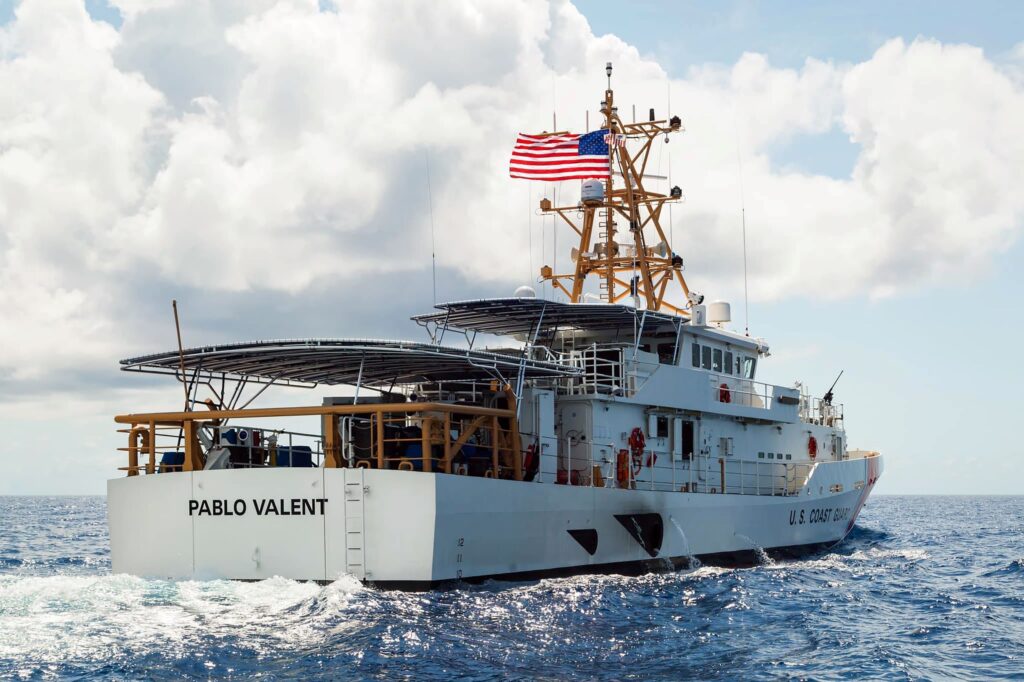
Coast Guard Cutter Pablo Valent, a 154-foot Sentinel-class vessel, is homeported at Coast Guard Sector St. Petersburg, Florida. U.S. COAST GUARD
ST. PETERSBURG, Fla. — Coast Guard Sector St. Petersburg received its first 154-foot fast response cutter on May 1.
Coast Guard Cutter Pablo Valent, a Sentinel-class vessel, will arrive at its new homeport where the crew will begin training to become certified in law enforcement and rescue operations. Pablo Valent is scheduled to be officially commissioned on May 11.
Pablo Valent will operate throughout the Gulf of Mexico and the Florida Keys. There are 12 other FRCs in Florida, which operate throughout the Caribbean Sea.
FRC’s are multi-mission ships designed to conduct drug and migrant interdictions; ports, waterways and coastal security operations; fisheries and environmental protection patrols; national defense missions; and search and rescue.
Each cutter is designed for a crew of 24, has a range of 2,500 miles and is equipped for patrols up to five days. The FRCs are part of the Coast Guard’s overall fleet modernization initiative.
FRCs feature advanced command, control, communications, computers, intelligence, surveillance and reconnaissance equipment as well as over-the-horizon response boat deployment capability and improved habitability for the crew. The ships can reach speeds of 28 knots and are equipped to coordinate operations with partner agencies and long-range Coast Guard assets such as the Coast Guard’s National Security Cutters.
Coast Guard Commissions 47th Sentinel-Class Fast Response Cutter
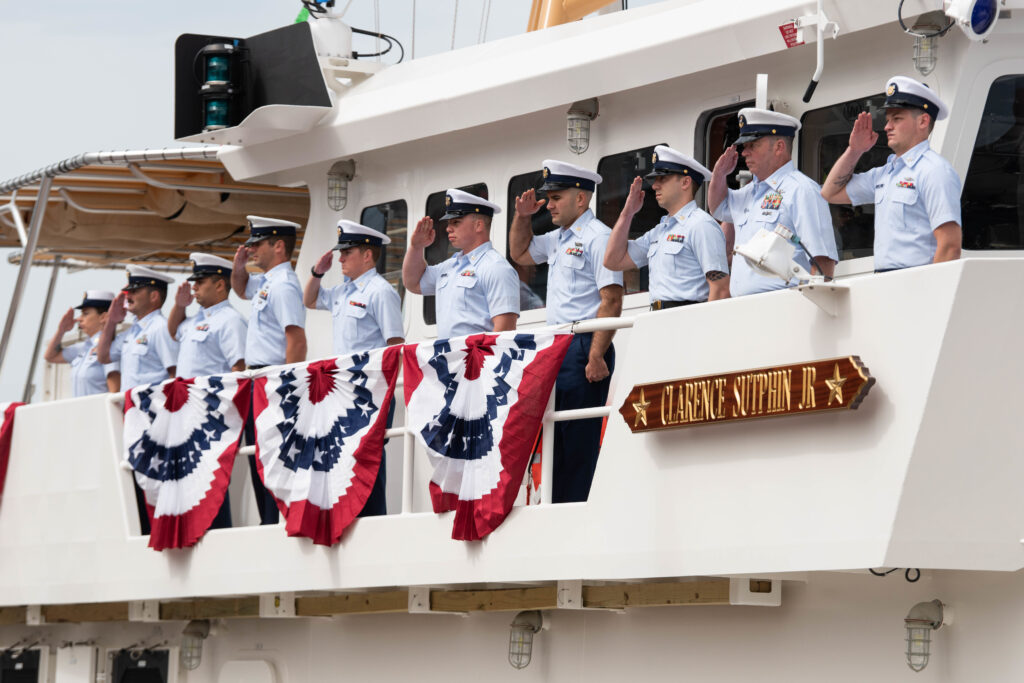
The commissioning crew of the USCGC Clarence Sutphin Jr. (WPC 1147), Patrol Forces Southwest Asia’s sixth 154-foot Sentinel-class cutter, stand at attention as the ship is placed into service at a ceremony held at the Intrepid Sea, Air and Space Museum in New York City, April 21. U.S. COAST GUARD / Petty Officer 3rd Class Ryan Schultz
PORTSMOUTH, Va. — The U.S. Coast Guard commissioned the USCGC Clarence Sutphin Jr. (WPC 1147), Patrol Forces Southwest Asia’s sixth 154-foot Sentinel-class cutter, into service at the Intrepid Sea, Air and Space Museum in New York City on April 21, the Coast Guard Atlantic Area said in a release.
Vice Adm. Steven Poulin, U.S. Coast Guard Atlantic Area commander, presided over the ceremony.
The cutter’s namesake is Boatswain’s Mate 1st Class Clarence Sutphin Jr., a New York native who served in the U.S. Coast Guard from 1941 to 1945. During this time, Sutphin served as landing craft coxswain on board the attack transport USS Leonard Wood (APA 12), a landing craft supporting our troops in North Africa and Sicily.
In November 1941, just weeks before the Japanese attack on Pearl Harbor, 18-year-old Sutphin enlisted in the United States Coast Guard. After enlisting, Sutphin attended boot camp at the Coast Guard Yard near Baltimore. He then received orders to the North Carolina coast to train in amphibious operations and landing craft, also known as Higgins Boats, landing troops in North Africa and Sicily.
When that operation was complete, the boat transited to the Pacific theater. During the Battle of Saipan in 1944, Sutphin helped oversee boat operations, including landing, loading, and salvaging landing craft as the USS Leonard Wood endured the heavy fire. During the conflict, he repeatedly risked his life to save others. He swam a towline to a landing craft stranded on a reef, saved another boat stuck on the beach under enemy fire, and came to the aid of eight Marines who a mortar round had struck. He provided first aid to the survivors and evacuated them to the nearest aid station.
Sutphin stayed aboard the Leonard Wood through May 1945 and participated in its eight primary amphibious operations. Sutphin was awarded the Bronze Star Medal for his “exceptional bravery under fire” during the Battle of Saipan.
The Clarence Sutphin Jr. was officially delivered to the U.S. Coast Guard on Jan. 6 in Key West, Florida. It is the 47th Sentinel-class fast response cutter. While the ship is commissioning in New York City, it will be homeport in Manama, Bahrain, part of U.S. Coast Guard Patrol Forces Southwest Asia.
Coast Guard Offloads $11.7M in Cocaine, Transfers 6 Suspected Smugglers
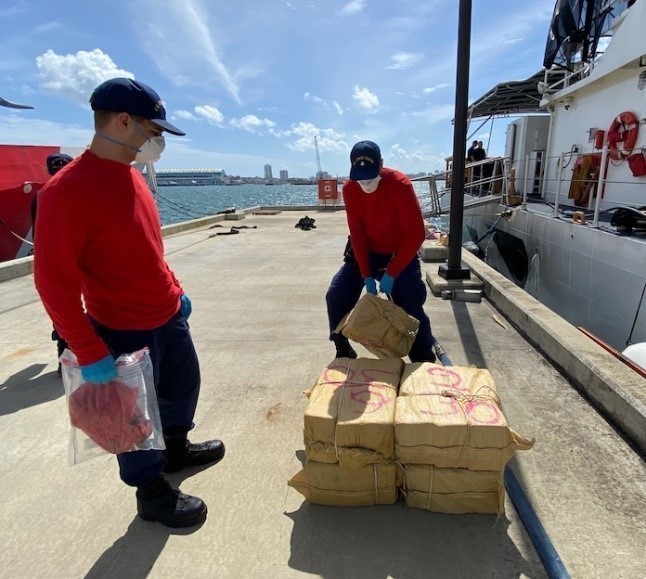
Coast Guard Cutter Heriberto Hernandez crewmembers offload six bales of cocaine, weighing approximately 463 pounds, at Coast Guard Base San Juan April 18, 2022, following the interdiction of a go-fast smuggling vessel near Puerto Rico April 11, 2022. U.S. COAST GUARD
Puerto Rico — Coast Guard Cutters’ Joseph Tezanos and Heriberto Hernandez crews offloaded approximately 1,289 pounds of cocaine and transferred custody of six suspected smugglers at Coast Guard Base San Juan April 18, following two separate vessel interdictions near Puerto Rico, the Coast Guard 7th District said in a release.
These interdictions are the result of multi-agency efforts involving the Caribbean Border Interagency Group and the Caribbean Corridor Strike Force. The seized cocaine has an estimated wholesale value of approximately $11.7 million.
The most recent interdiction occurred during a routine patrol April 11, 2022, after the crew of a Customs and Border Protection multi-role enforcement aircraft sighted a suspect vessel in waters northwest of Aguadilla, Puerto Rico. Coast Guard watchstanders in Sector San Juan diverted the cutter Heriberto Hernandez that arrived on scene and interdicted a 25-foot go-fast vessel. The vessel was carrying four men — Dominican Republic nationals — and six bales of suspected contraband, which tested positive for cocaine. The cutter crew apprehended the suspects and seized the contraband.
During a routine patrol April 6, 2022, the crew of a Customs and Border Protection multi-role enforcement aircraft sighted a suspect vessel north of San Juan, Puerto Rico. Coast Guard watchstanders in Sector San Juan diverted the cutter Joseph Tezanos that arrived on scene and interdicted a 30-foot go-fast vessel. The vessel was carrying three men — Dominican Republic nationals — and eight bales of suspected contraband, which tested positive for cocaine. The cutter crew apprehended the suspects and seized the contraband. One suspected smuggler from this group, who required medical care ashore, was medically evacuated Thursday to a hospital in Puerto Rico.
“Safeguarding the nation’s southernmost maritime border is among our top priorities,” said Capt. Gregory H. Magee, Coast Guard Sector San Juan commander. “You can expect to see many more of these interdictions from the Coast Guard and from our local and federal partners as we work together to stop drug smuggling go-fast vessels from making landfall in the Puerto Rico or the U.S. Virgin Islands.”
Special Agents supporting the Caribbean Corridor Strike Force received custody of the detainees and the seized contraband, and they are leading the investigation into this case. The apprehended smugglers are facing federal prosecution in Puerto Rico on criminal charges of Conspiracy to Import Controlled Substance and Conspiracy to Possess with Intent to Distribute a Controlled Substance Aboard a Vessel Subject to the Jurisdiction of the United States. The charges carry a minimum sentence of 10 years imprisonment and a maximum sentence of imprisonment for life.
Cutters Heriberto Hernandez and Joseph Tezanos are 154-foot fast response cutters homeported in San Juan, Puerto Rico.
Heavy Icebreaker Polar Star Returns to U.S. After 147-Day Antarctic Deployment
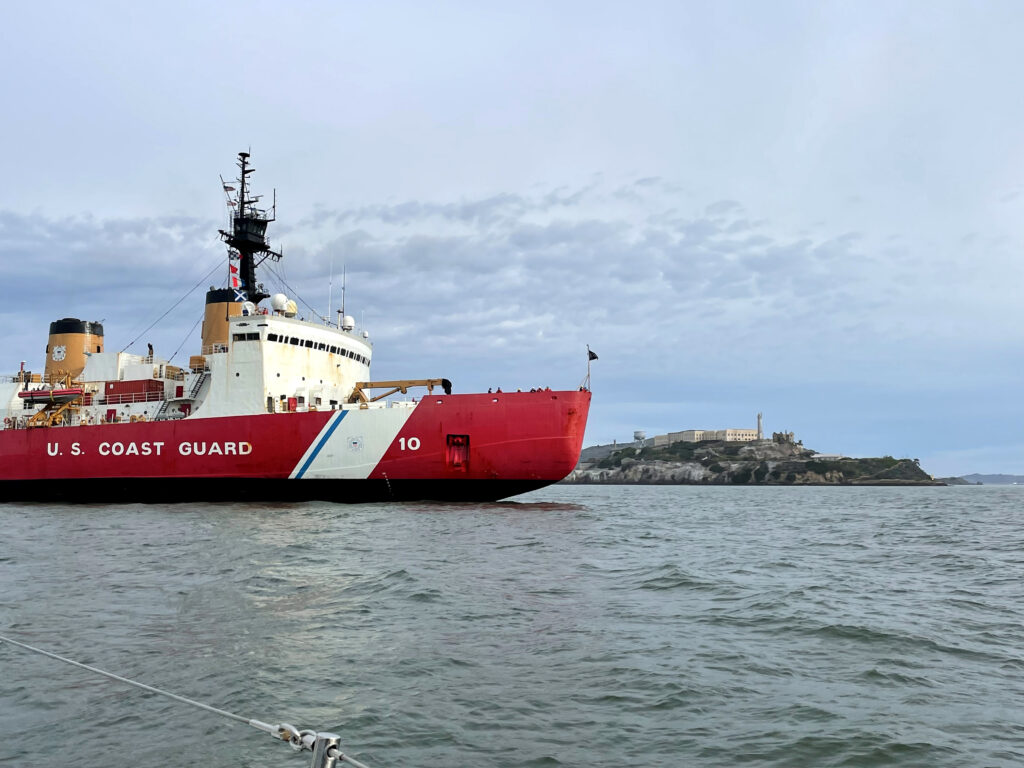
The U.S. Coast Guard Cutter Polar Star (WAGB 10) passes Alcatraz as the cutter transits the San Francisco Bay, April 4. Following its 147-day Antarctic deployment, the cutter will undergo annual maintenance in a Vallejo, California, dry dock. U.S. COAST GUARD / Sachiko Itagaki
ALAMEDA, Calif. — The 140-member crew of U.S. Coast Guard Cutter Polar Star (WAGB 10) returned to the United States and entered dry dock Friday after completing a 147-day deployment in support of the U.S. Antarctic Program and national interests in Antarctica and the Southern Hemisphere, the Coast Guard Pacific Area said April 8.
The Polar Star’s crew departed their Seattle homeport on Nov. 13, 2021, for the cutter’s 25th Operation Deep Freeze deployment and traveled 24,300 nautical miles to Antarctica and back.
This year marks the 66th iteration of Operation Deep Freeze, an annual joint military service mission in support of the National Science Foundation, the lead agency for the United States Antarctic Program. Since 1955, the U.S. Department of Defense and the Coast Guard have provided air and maritime support across and around the Antarctic continent.
The cutter made several international port calls including stops in Wellington and Lyttelton, New Zealand, and Hobart, Tasmania, Australia. Polar Star’s crew hosted the U.S. Ambassador to New Zealand and members of the Royal New Zealand Navy while in New Zealand.
While in Antarctica, Polar Star transited through more than 450 miles of pack ice and broke a 37-mile channel through seven-foot-thick fast ice to McMurdo Station to allow the safe transit and offload of supply vessels Ocean Giant and Maersk Peary.
Polar Star also partnered with the Royal New Zealand Navy to escort the ice-capable logistics ship HMNZS Aotearoa for its first trip to McMurdo Station.
Polar Star transited to the Bay of Whales Feb. 17, setting a record for the furthest south any vessel has navigated, reaching 78 degrees 44 minutes 1.32 seconds south latitude, keeping about 500 yards from the ever-shifting Ross Ice Shelf. The cutter also surveyed 396 nautical miles of the ice shelf for future navigational use.
Polar Star spent a total of 65 days in Antarctica, making it the longest Operation Deep Freeze deployment completed by a Coast Guard polar icebreaker in 18 years.
After completing operations in Antarctica, Polar Star moored in Hobart and hosted Tasmanian Gov. Barbara Baker, and U.S. Consul General Kathleen Lively, along with several other government and military officials that are dedicated to supporting scientific efforts in Antarctica.
“I am so proud of this crew and their accomplishments,” said Capt. William Woityra, commanding officer of the Polar Star. “They overcame constant challenges to complete the mission and set records along the way. They epitomize the values on the Antarctica Service Medal: courage, sacrifice, and devotion. I can think of no better team to lead future expeditions and new icebreakers as the Coast Guard invests in Polar Security Cutters.”
Polar Star did not return to its homeport of Seattle, instead the crew proceeded directly to dry dock in Vallejo, California, to immediately start work on the second phase of a five-year, $75 million Service Life Extension Program. The Coast Guard will replace antiquated technology to ensure the longevity of the nation’s only operational heavy icebreaker while in dry dock this year, supporting the Coast Guard’s enduring commitment to Antarctic operations.
Coast Guard Adm. Linda L. Fagan Nominated to be First Woman to Serve as Commandant
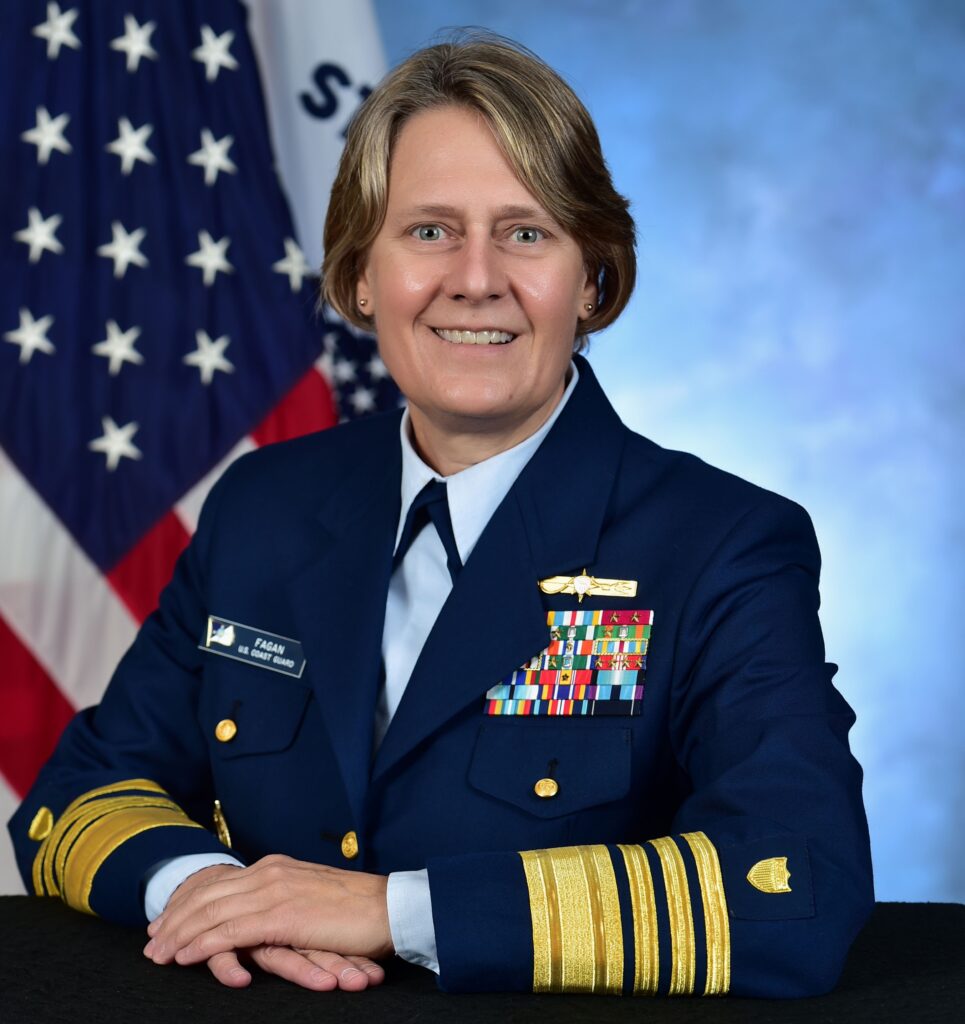
Adm. Linda L. Fagan, nominated to be the 27th Commandant of the U.S. Coast Guard. U.S. COAST GUARD
WASHINGTON, D.C. — President Joe Biden nominated Adm. Linda L. Fagan to serve as the 27th Commandant of the U.S. Coast Guard. Upon confirmation, Adm. Fagan will be the first woman to serve as commandant of the Coast Guard, the service said April 5.
Fagan currently serves as the 32nd vice commandant, having assumed the duties on June 18, 2021. The vice commandant is the vice service chief and chief operating officer, responsible for executing the Commandant’s Strategic Intent, managing internal organizational governance, and serving as the Component Acquisition Executive.
Previously, Fagan served as commander of the Coast Guard Pacific Area overseeing operations from the Rocky Mountains to the waters off the East Coast of Africa. Fagan is the Coast Guard’s first-ever Gold Ancient Trident, as the officer with the longest service record in the Marine Safety field.
Pending confirmation, Fagan is expected to relieve the current commandant of the Coast Guard, Adm. Karl L. Schultz, during a change of command ceremony planned for June 1, 2022, in Washington, D.C. Schultz will retire following the change of command this summer.
“Adm. Fagan is an exceptional senior Coast Guard officer and nominee, possessing the keen intellect, the depth of operational experience, and the well-honed leadership and managerial acumen to serve with distinction as our Service’s 27th commandant,” said Schultz.
Fagan has selected and the president has nominated Vice Adm. Steven D. Poulin as the Coast Guard’s 33rd vice commandant. Poulin currently serves as the commander of the Coast Guard Atlantic Area and is responsible for all Coast Guard missions from the Rocky Mountains to the Persian Gulf.
Pending confirmation, Poulin is expected to relieve Fagan as vice commandant of the Coast Guard during a change of watch ceremony planned for May 24, 2022, in Washington, D.C.
USCGC Harriet Lane Returns Home Following 50-Day Patrol
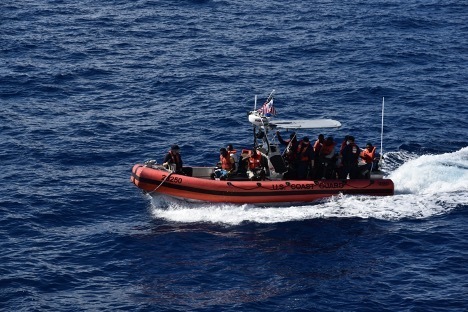
A small-boat crew mall boat transports migrants from their unseaworthy vessel to the Coast Guard Cutter Harriet Lane on the Atlantic Ocean, March 5, 2022. U.S. COAST GUARD / Petty Officer 1st Class Mackenzie Young
PORTSMOUTH, Va. — The crew of USCGC Harriet Lane (WMEC 903) returned to homeport in Portsmouth on April 4 following a 50-day patrol in the North Atlantic Ocean, the Coast Guard Atlantic Area said in a release.
While on patrol, the Harriet Lane crew navigated over 6,559 miles along the southeastern coast of the United States, extending as far south as the northern coast of Cuba and east to the Bahamas, performing migrant interdiction and search and rescue operations in support of the U.S. Coast Guard 7th District.
The Harriet Lane patrolled the Florida Straits to aid with a recent surge in unsafe and illegal migration by sea. The crew interdicted six unseaworthy vessels carrying approximately 467 individuals of Cuban or Haitian origin and cared for more than 520 migrants aboard the cutter during a four-week time span while awaiting logistics for repatriation.
The crew also assisted in two search-and-rescue cases after receiving notification of an individual stranded on Anguilla Cay, Bahamas, and another case where several people were stranded in the water near Cuban territorial waters.
“I remain in awe of this steadfast crew. They answered the call on multiple occasions during our patrol, ensuring safety of life at sea while preventing illegal entry into the United States,” said Cmdr. Ben Goff, commanding officer of Harriet Lane. “This mission can take an emotional toll, but our team stuck together and persevered through every challenge and adversity presented. The crew shifted gears upon return to homeport and met the next challenge of readying Harriet Lane for an important maintenance upgrade cycle with aplomb. We are forever grateful for the outstanding support we receive across the Coast Guard and from our loved ones at home. I’m looking forward to getting our crew well-earned downtime with friends and family.”
Following this patrol, the vessel will undergo a nine-month planned maintenance and upgrade period at the Coast Guard Yard in Baltimore.
The Harriet Lane is a 270-foot medium-endurance cutter responsible for a variety of missions, including search and rescue, drug interdiction, migrant interdiction, other law enforcement and marine environmental protection.
The U.S. Coast Guard national security and medium-endurance vessels homeported on the East Coast operate under the ultimate authority of the U.S. Coast Guard Atlantic Area commander located in Portsmouth, Virginia, overseeing all Coast Guard operations east of the Rocky Mountains to the Persian Gulf.
Cutter Dauntless Offloads More Than $160 Million in Illegal Narcotics
Coast Guard Cutter Dauntless recently seized 8,500 pounds of cocaine off the coast of Miami. U.S. COAST GUARD / Petty Officer 1st Class Ayla Hudson
MIAMI — Coast Guard Cutter Dauntless’ crew offloaded more than $160 million at Coast Guard Base Miami Beach, April 1, before returning to homeport in Pensacola, the Coast Guard 7th District said in a release.
Dauntless’ crew seized approximately 8,500 pounds of cocaine and apprehended 13 suspected drug smugglers with Dominican Republic and Colombian nationalities following a 45-day patrol in the Caribbean Sea.
The Dauntless’ crew worked alongside multiple U.S. Coast Guard assets and international assets, including the HNLMS Friesland of the Royal Netherlands Navy to interdict the illegal drug smuggling ventures.
“The Coast Guard’s strong international partnerships, counter threats in the maritime domain, protect each of our countries from transnational organized crime, and work to stabilize and promote good governance in the region,” said Lt. Paul Puddington, a District Seven duty enforcement officer. “We are thankful for coordinated efforts across the U.S. Coast Guard, the Department of Defense, Customs and Border Protection, as well as our international partners from the Netherlands and throughout Central and South America.”
The fight against drug cartels in the Caribbean Sea requires unity of effort in all phases from detection, monitoring and interdictions, to criminal prosecutions by international partners and U.S. Attorneys’ Offices in districts across the nation.
During at-sea interdictions, a suspect vessel is initially detected and monitored by allied, military or law enforcement personnel coordinated by Joint Interagency Task Force-South based in Key West, Florida. The law enforcement phase of operations in the Caribbean Sea is conducted under the authority of the Seventh Coast Guard District, headquartered in Miami. The interdictions, including the actual boardings, are led and conducted by members of the U.S. Coast Guard.
The Dauntless, a 210-foot Reliance-class medium-endurance cutter, patrols the Caribbean Sea and Eastern Pacific Ocean, performing counter-drug operations, migrant interdiction operations, search and rescue, and fisheries enforcement.
Lockheed Martin Marks Delivery of 500th C-130J Super Hercules
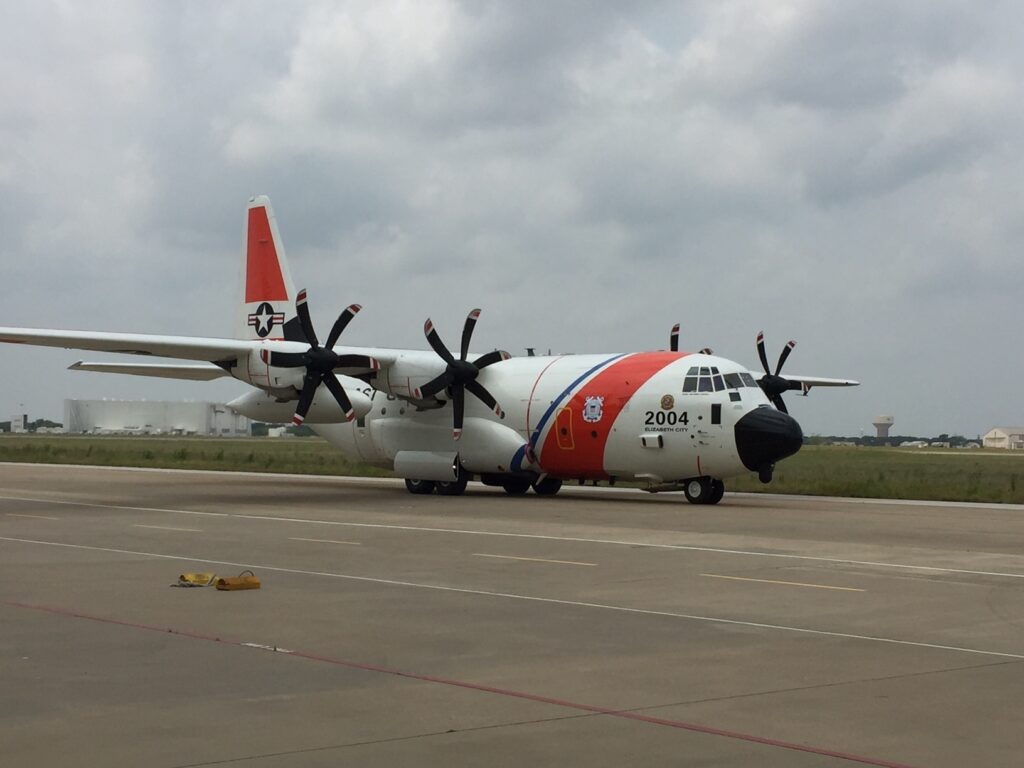
An HC-130J Super Hercules long range surveillance aircraft sits on a runway in Waco, Texas, following its arrival May 11, 2017, to begin installation of the Minotaur Mission System Suite. U.S. Coast Guard
ARLINGTON, Va. — The 500th C-130J Super Hercules aircraft built by Lockheed Martin (Booth 1001) has been delivered to its customer, the company announced March 15.
The aircraft, Lockheed Martin C-130 construction number 5934, is a C-130J-30 version that was delivered to the 130th Airlift Wing, a unit of the West Virginia Air National Guard based at McLaughlin Air National Guard Base in Charleston, West Virginia. The wing is replacing its older C-130 Hercules aircraft with new C-130J-30s.
The C-130J Super Hercules represents a significant advancement in performance, technology and airlift capability over the older C-130 Hercules family of aircraft. The C-130J is equipped with the more powerful Rolls-Royce AE 2100D3 turboprop engines, six-bladed GE-Dowty R391 composite propellers, modern avionics and mission systems. The Super Hercules features dual head-up displays, an integrated defensive suite, automated maintenance fault reporting, and a rear ramp door capable of opening at airspeeds of up to 250 knots. It has greater speed, range lift capacity, climb rate, cruise altitude and short-field performance than the legacy C-130.
The C-130J Super Hercules is the current production model of the legendary C-130 Hercules aircraft. The C-130J first flew in 1996 and entered service in 1999. It is now the airlift aircraft of choice of 26 operators in 22 nations.
The U.S. military services operate the largest C-130J Super Hercules fleet in the world. The U.S. Air Force and Air National Guard collectively operate C-130J, C-130J-30, AC-130J Ghostrider, EC-130J Commando Solo, HC-130J Combat King II, MC-130J Commando II and WC-130J Weatherbird variants. The Marine Corps operates the KC-130J tanker version and a C-130J as part of the Blue Angels Flight Demonstration Team. The Coast Guard operates a version of the HC-130J which is different than the version used by the Air Force for search, rescue and logistics. The U.S. Navy is planning to test a version of the C-130J-30 for the Take Charge and Move Out (TACAMO) strategic communications mission.
These are some of the 17 different mission configurations of the C-130J used worldwide for transport (military and commercial), humanitarian aid delivery, aerial firefighting, natural disaster relief support, medevac, search and rescue, special operations, fire support, weather reconnaissance, atmospheric research and aerial refueling.
The C-130J-30 is a version of the Super Hercules, which has an extended fuselage (15 feet, or 4.6 meters) when compared to the basic C-130J. As such, it can carry 30% more passengers and cargo than the basic C-130J and 50% more container delivery system bundles.
The rugged C-130 family of aircraft has been in serial production longer than any other military aircraft in the U.S. inventory. The first C-130A made its first flight in 1954 and entered service in 1956. Since the first C-130 rolled of the Lockheed Martin production line, more than 2,100 were built before production switched to the C-130J. It is flown out of more than 70 nations and has been certified to support upwards of 100 different mission capabilities in its lifetime.
“No aircraft in history, production or operation matches the C-130 Hercules in terms of its versatility. The C-130J both extends and expands this reputation thanks to increased speed, integration and strength,” said Rob Toth, director of Business Development for Lockheed Martin’s Air Mobility and Maritime Missions line of business.
As a retired U.S. Air Force Special Operations MC-130H navigator, Toth has experience flying and commanding operations with both legacy and C-130J aircraft.
“The legacy Hercs were great aircraft. The C-130J offers a more enhanced flying experience, especially with the advanced situational awareness and added power,” he said. “You the value of those attributes across all mission scenarios, especially with the maritime patrol, search and rescue, special operations and aerial refueling requirements supported by the U.S. Marine Corps and Coast Guard.”
To date, the Navy is the only U.S. government operator to not have a J in its fleet. Currently the Navy flies C-130s for transport and for 20 years (1963-1993) on the TACAMO missions.
Lockheed Martin is honored to have the Super Hercules selected for TACAMO testing — possibly bringing it back to where it all began, Toth said.
“We are working closely with NAVAIR to support an aggressive acquisition strategy that prioritizes both speed of acquisition and affordability to accelerate recapitalization of one of our nation’s most important capabilities — survivable, reliable, and endurable communications between the president and the nation’s nuclear forces,” Toth adds. “We are proud to be at the heart of this effort and confident that the Super Hercules will deliver the critical capability our nation needs.”