Leonardo DRS to Provide Fourth Shipset of Hybrid Electric Drive Technology for Coast Guard OPCs
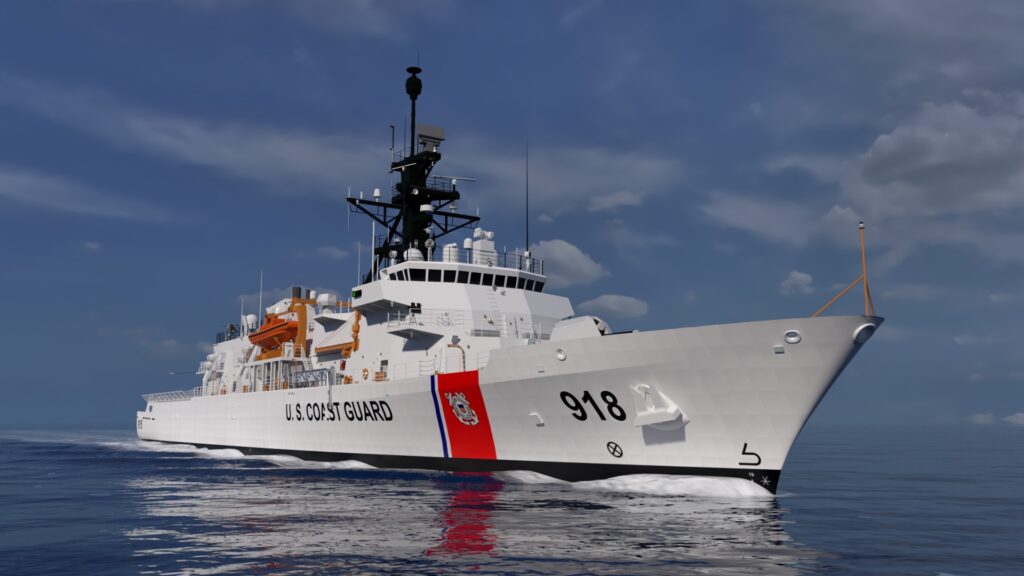
Leonardo DRS will provide the Auxiliary Propulsion System for the Coast Guard’s new fleet of Offshore Patrol Cutters. LEONARDO DRS

ARLINGTON, Va. — Leonardo DRS Inc. has again been awarded a contract by Eastern Shipbuilding Group to provide the Auxiliary Propulsion System for the fourth shipset in the U.S. Coast Guard’s new fleet of Offshore Patrol Cutters, Leonardo DRS said Dec. 6.

This platform is the first combined diesel electric or diesel propulsion system application for the Coast Guard. Eastern Shipbuilding Group is the prime contractor and builder of these next-generation Offshore Patrol Cutters. 

Under the contract, Leonardo DRS will provide its high-performance, permanent magnet motor-based Auxiliary Propulsion System, which has been optimized to meet the Coast Guard’s operational tempo and provides capability for the ship to operate much more efficiently at slower speeds, increases mission duration capability, reduces emissions, and provides emergency take-home capability in the event of a failure of the main propulsion diesel engines. When coupled to the main propulsion gearbox, the system allows the ship to operate quietly and efficiently during loitering operations while providing superior fuel economy for increased on-station operations and capability. 

Maximizing use of the electric drive increases the platform’s green credentials and reduces operational time on the main propulsion engines, providing additional multiple benefits. Because electric motors are virtually maintenance free, life cycle costs over the planned 40-year vessel life are minimized by reducing maintenance hours needed on the engines. Using propulsion diesel engines at slow speeds adds significant wear and tear on the engines and increases the potential for coking/wet stacking. By adding this electric Auxiliary Propulsion System, the Coast Guard can expect to have a built-in advantage of reducing not only fuel and maintenance requirements, but total lifecycle costs and increased safety for the fleet. The main engine overhaul cycle, typically planned at 15 years, can be extended to 25 years.  

“Leonardo DRS is a leading innovator in the naval hybrid electric drive technology arena, and we are proud to be able to provide our advanced technology to the Coast Guard’s fleet of next-generation Cutters,” said Jon Miller, senior vice president and general manager of the Leonardo DRS Naval Power business. “These new propulsion systems will give operational flexibility while significantly increasing cost savings in yearly maintenance and fuel, enabling crews to put more focus on their missions.” 
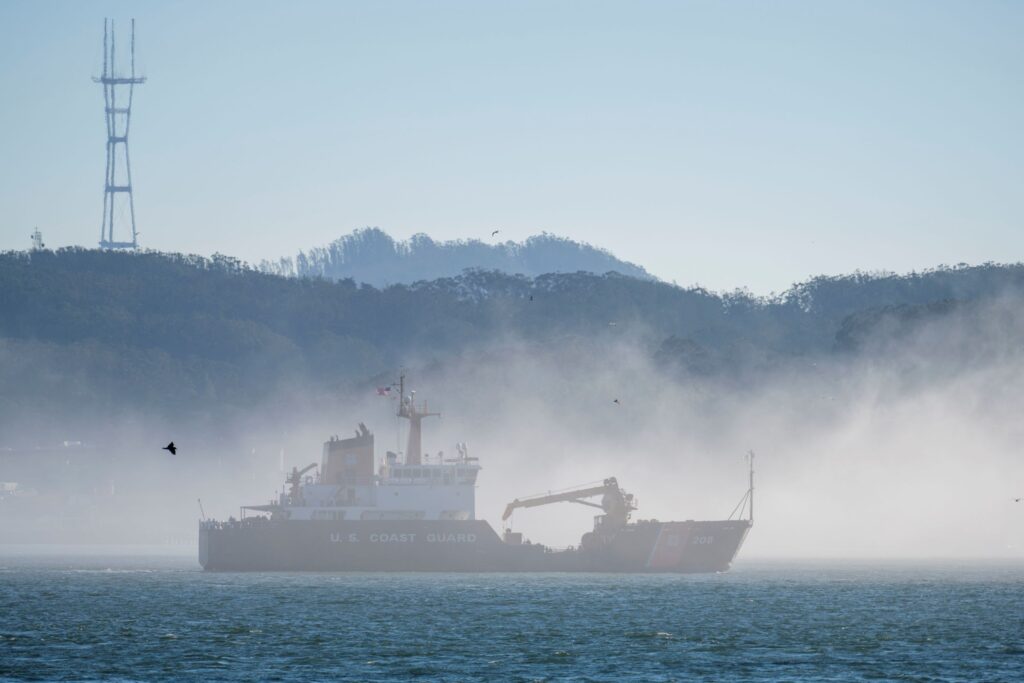


Coast Guard Buoy Tender Departs San Francisco for Major Maintenance Period

The Coast Guard Cutter Aspen (WLB 208) departs the San Francisco Bay Area Nov. 29. The Aspen served the California coastline since Sept. 28, 2001. U.S. COAST GUARD / Petty Officer 3rd Class Taylor Bacon

ALAMEDA, Calif. — The Coast Guard Cutter Aspen (WLB 208) and crew departed the Bay Area Nov. 29 for the last time as a San Francisco-based cutter and are en route to the Coast Guard Yard in Baltimore to undergo major maintenance and overhaul, the Coast Guard 11th District said Nov. 30.   
   
This marks the end of two decades of service along the California Coastline for the Aspen as one of 16 of the nation’s Juniper class sea-going buoy tenders. The 225-foot ship and its 48-person crew have been stationed at Yerba Buena Island since Sept. 28, 2001.  
   
Aspen’s area of responsibility encompassed the coastal areas from the Oregon-California border to San Diego. In addition to its primary buoy tender operations, the cutter also has a long history in search and rescue, drug and migrant interdiction and marine pollution prevention and response missions. Since 2005, the cutter has worked with U.S. partners in Mexico to interdict tens of millions of dollars in illicit narcotics in support of U.S. Southern Command and Joint Interagency Task Force South objectives, most recently interdicting $3.2 million worth of cocaine in 2017.  In 2007, Aspen responded to the Cosco Busan oil spill in San Francisco and the Deepwater Horizon oil spill in the Gulf of Mexico in 2010 to assist in oil spill cleanup efforts.    
   
The crew is slated to travel approximately 6,000 miles over the course of 40 days and pass from the Pacific to the Atlantic by way of the Panama Canal. The Aspen is scheduled to undergo a $20 million, 12-month major maintenance availability (MMA) overhaul.  
   
The MMA is a planned dry dock event at the Coast Guard Yard, the first such major availability in the life of this class of ship. The availability will recapitalize many of the ship’s critical systems, to include complete crane replacement, topside preservation work and technology modernization. The availability is designed to ensure that the cutter can reach its designed 30-year service life. Aspen will be the 11th 225-foot Juniper Class buoy tender to begin the MMA period.  

The Coast Guard Cutter Alder (WLB 216) formerly homeported in Duluth, Minnesota, is slated to be brought back into service in summer of 2022 by the former Aspen crew and re-homeported in San Francisco. The Aspen’s scheduled final destination will be Homer, Alaska, in early 2023.  

“It has been a privilege to serve along California’s rugged, oftentimes austere coastline; the beauty is without parallel, and the Pacific Ocean’s winds, current, fog and constant swells offshore continue to mold us as the stern teachers they are,” said Lt. Cmdr. Paul Ledbetter, the Aspen’s commanding officer. “The U.S. is and always has been a maritime nation, and my crew relishes the challenges of keeping the maritime transportation system up and running in our capacity as a WLB. We look forward to continuing to serve this great country when we return to San Francisco aboard the Coast Guard Cutter Alder next year.” 
   
Coast Guard Aids to Navigation Team San Francisco will be standing by to perform routine maintenance on the Aspen’s buoys throughout the Bay Area. Additionally, the Coast Guard Cutter George Cobb, a 175-foot buoy tender homeported in San Pedro, is slated to maintain all aids to navigation south of San Francisco and the Coast Guard Cutter Elm, a 225-foot buoy tender homeported in Astoria, Oregon, is also slated to assist throughout Northern California in spring 2022. 


USCGC Hamilton Returns Home after 72-day Patrol, Drug Offload

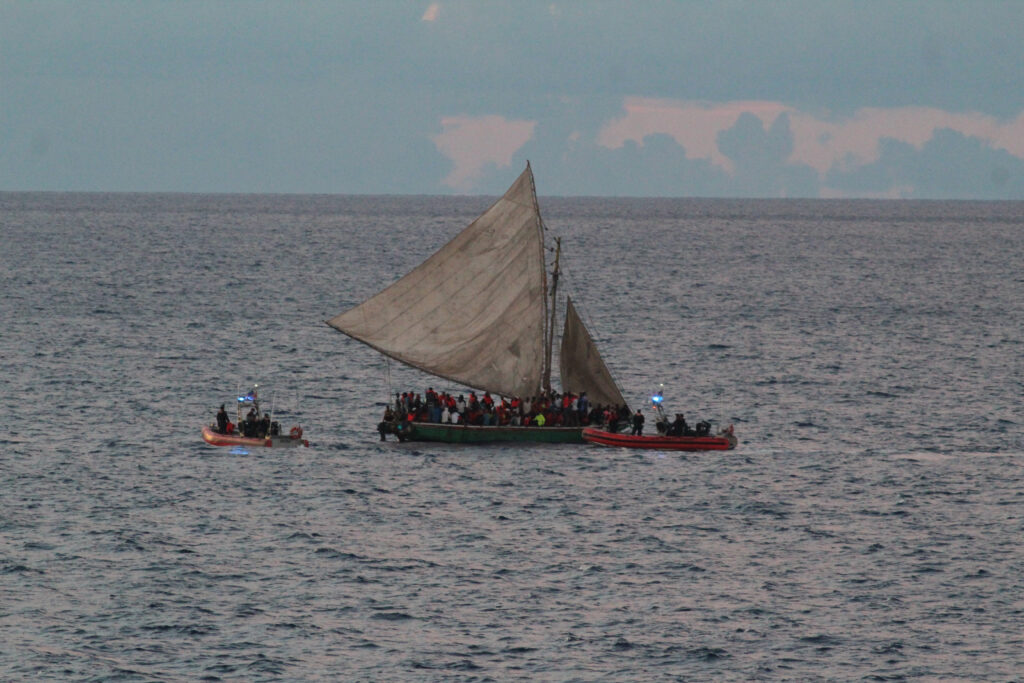
Two Coast Guard Cutter Hamilton(WMSL 753) small boats repatriates Haitian migrants on the Eastern Pacific Ocean, Sept. 18. The Cutter Hamilton repatriated 199 migrants during its 72-day patrol. U.S. COAST GUARD

CHARLESTON, S.C. — The Legend-class national security cutter USCGC Hamilton (WMSL 753) crew returned home Nov. 24 to Charleston after completing a 72-day patrol throughout the Eastern Pacific Ocean, the Coast Guard 7th District said in a release.  

The crew offloaded 26,250 pounds (11,907 kilograms) of cocaine and 3,700 pounds of marijuana worth $504 million Monday at Port Everglades.    

Hamilton’s crew interdicted five drug-laden vessels while patrolling the Eastern Pacific Ocean. Hamilton’s law enforcement team detained all 14 suspects, stopped 199 Haitian migrants, and rescued two people.  

Hamilton’s crew, along with an aviation detachment from the Coast Guard’s Helicopter Interdiction Tactical Squadron, began the deployment in early September anticipating a counter-narcotics patrol in the Eastern Pacific Ocean.  

With changes in the Haitian political climate, Hamilton’s crew transitioned to alien migration interdiction operations in the Windward Pass. Hamilton’s crew focused on dangerous maritime migration voyages, then interdicting 199 Haitian migrants. They also managed tactical control of seven U.S. Coast Guard cutters, which reduced Haitian migration by 93% with no loss of life. 

“We are thrilled to be back in the low country in time for the holidays. The past 72 days have taken us from deterring illegal migration off Haiti to combatting drug trafficking organizations in the Eastern Pacific,” said Capt. Matthew Brown, commanding officer of Hamilton. “Every day brought new challenges but also new opportunities for this crew to come together and solve complex problems. The product of their hard work was the successful deterrence of unsafe migrant ventures from the claw of Haiti and the seizure of nearly 12 tons of illegal drugs destined for North America.”   

Hamilton is one of three 418-foot national security cutters homeported in Charleston under U.S. Coast Guard Atlantic Area Command with two more anticipated by 2025. With its robust command, control, communication, computers, intelligence, surveillance, and reconnaissance equipment, they are the most technologically advanced ship in the U.S. Coast Guard’s fleet. These crews regularly work cooperatively under U.S. Coast Guard Pacific Area, district commanders and combatant commands. 

NSCs are a worldwide deployable asset that supports the Department of Homeland Security, Department of Defense and national objectives through drug interdiction, migrant interdiction, national defense, SAR, fisheries enforcement and national intelligence collection.   

U.S. Coast Guard Atlantic Area command, based in Portsmouth, Virginia, oversees all U.S. Coast Guard operations east of the Rocky Mountains to the Arabian Gulf. Also, they allocate ships to deploy to the Caribbean and Eastern Pacific to combat transnational organized crime and illicit maritime activity. 


Coast Guard Rescues 27 Migrants Stranded on Monito Island, Puerto Rico

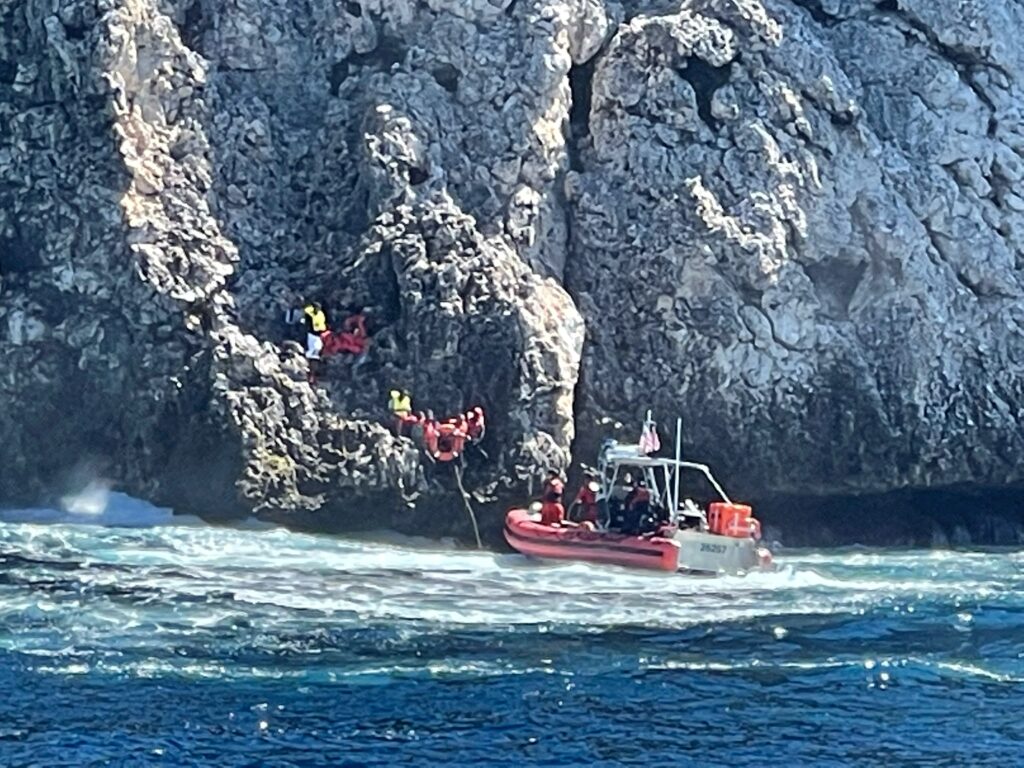
The Coast Guard Cutter Dauntless rescues 27 stranded migrants from Monito Island, Puerto Rico Nov. 27, 2021. The rescued migrants, 25 Haitian and two others of undetermined nationality, reportedly were traveling with 10 other Haitian migrants, who were also rescued by the cutter Dauntless from a disabled migrant vessel near Monito Island Nov. 24, 2021. U.S. COAST GUARD

SAN JUAN, Puerto Rico — The Coast Guard Cutter Dauntless rescued 27 migrants Nov. 27 after the migrants abandoned a disabled vessel Wednesday and ended up stranded on Monito Island, Puerto Rico, the Coast Guard 7th District said in a release. 

The rescued migrants, 25 Haitian and two others of undetermined nationality, reportedly were traveling with 10 other Haitian migrants who were rescued by the Coast Guard Cutter Dauntless Wednesday from a disabled makeshift vessel near Monito Island. 

Coast Guard rescue crews ended the search for possible migrants in the water Friday afternoon, after confirming the migrants who abandoned the disabled vessel had safely reached Monito Island. 

“This case was a very close call, and I commend the efforts of our partner agencies and all Coast Guard units and personnel who helped save 37 lives from a disabled migrant vessel and from the harsh and dangerous environment of Monito Island, preventing what could have been a major loss of life,” said Cmdr. Beau Powers, Sector San Juan chief of response. “To anyone considering taking part in one of these voyages we urge them to not take to the sea, you are putting your life and the life of others at risk. If caught, you are also risking prosecution for migrating illegally to the United States. Migrants, who are interdicted at sea and not prosecuted, will be returned to the country they departed from.” 

During search efforts Thursday, the crew of a Coast Guard MH-60T Jayhawk helicopter from Air Station Borinquen observed there were more than 20 people stranded on Monito Island.  

The crew of the cutter Dauntless combined efforts with a Coast Guard HC-144 Ocean Sentry aircraft, U.S. Border Patrol agents and a Puerto Rico Police Joint Forces of Rapid Action marine unit Friday to deliver food, water and a hand-held radio to the stranded migrants. Shortly thereafter, the crew of the cutter Dauntless established successful radio communications with the migrants on Monito Island who confirmed, along with statements received from survivors of the disabled migrant vessel, that all the passengers from the illegal voyage were accounted for and safe.  

The following morning, the Dauntless crew used the cutter’s Over the Horizon boats to rescue the stranded migrants from Monito Island, while a Coast Guard helicopter flew rescue support on scene. During the rescue, the Coast Guard boat crews recovered several migrants from the water who jumped from the bottom of the cliff, including a pregnant woman. 

Once aboard a Coast Guard cutter, all migrants receive food, water, shelter and basic medical attention. Throughout rescue efforts, Coast Guard crewmembers were equipped with personal protective equipment to minimize potential exposure to any possible case of COVID-19. 

The 27 rescued migrants were transported to Mayaguez, Puerto Rico, where they were received by awaiting Border Patrol Agents and Emergency Medical Service personnel. 

The Coast Guard Cutter Dauntless is a 210-foot medium-endurance cutter homeported in Pensacola, Florida. 


Coast Guard Crews Interdict 4 Smugglers, Seize $12M in Cocaine

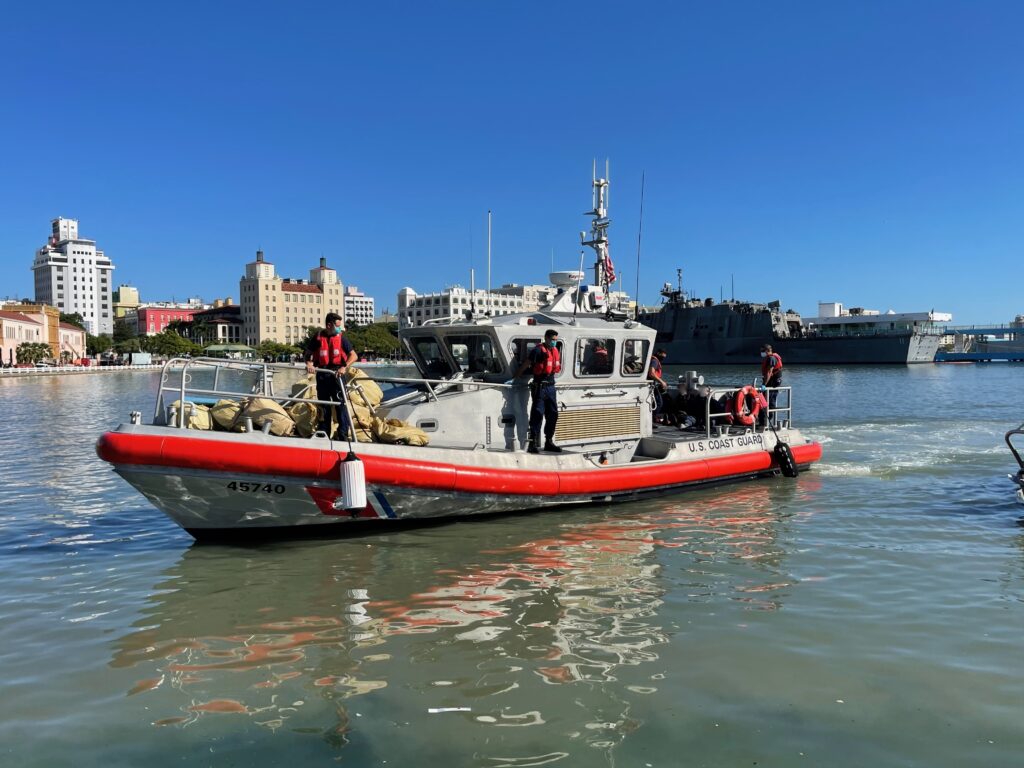
Station San Juan boat crews offloaded approximately 400 kilograms in seized cocaine and transferred custody of four suspected smugglers to federal agents Nov. 24, following the interdiction of a go-fast vessel near Dorado, Puerto Rico. U.S. COAST GUARD / Ricardo Castrodad

SAN JUAN, Puerto Rico — A Station San Juan boat crew offloaded approximately 400 kilograms in seized cocaine and transferred custody of four suspected smugglers to federal agents Nov. 24, following the interdiction of a go-fast vessel near Dorado, Puerto Rico, the Coast Guard 7th District said in a release.  

The apprehended smugglers are Dominican Republic nationals who are facing federal prosecution in Puerto Rico on drug smuggling criminal charges of Conspiracy to Possess with Intent to Distribute a Controlled Substance Aboard a Vessel Subject to the Jurisdiction of the United States. The charges carry a minimum sentence of 10 years imprisonment and a maximum sentence of imprisonment for life. The Transnational Organized Crime Special Assistant U.S. Attorney Jordan Martin from the U.S. Attorney’s Office for the District of Puerto Rico is leading the prosecution for this case. The seized cocaine has an estimated wholesale value of approximately $12 million. 

During a routine patrol of Puerto Rico’s northern coast, the aircrew of a Customs and Border Protection multirole enforcement aircraft detected a suspicious go-fast vessel, approximately 24 nautical miles north of Dorado, Puerto Rico. 

Coast Guard watchstanders at Sector San Juan directed the launch of a Station San Juan 33-foot Special Purpose Craft–Law Enforcement to interdict the suspect vessel. Once on scene and while in pursuit, the Coast Guard crew compelled the go-fast vessel to stop. Following the interdiction, the Coast Guard crew seized 16 bales of cocaine and apprehended the four suspected smugglers. 

“This successful interdiction is a result of the professionalism, close coordination and swift response displayed by the Coast Guard and Customs and Border Protection surface, air, and watchstander crews involved in this case,” said Cmdr. Beau Powers, Sector San Juan chief of response. “These professionals respond and work daily to maximize our interagency capabilities and resources to stop drug smuggling vessels at sea. Together, along with the rest of our local and federal law enforcement partners, we seek to safeguard the nation’s maritime border and protect the people of Puerto Rico from this threat.” 


Icebreaker Returns Home following Northwest Passage Transit, Arctic Research Missions, Circumnavigation of North America

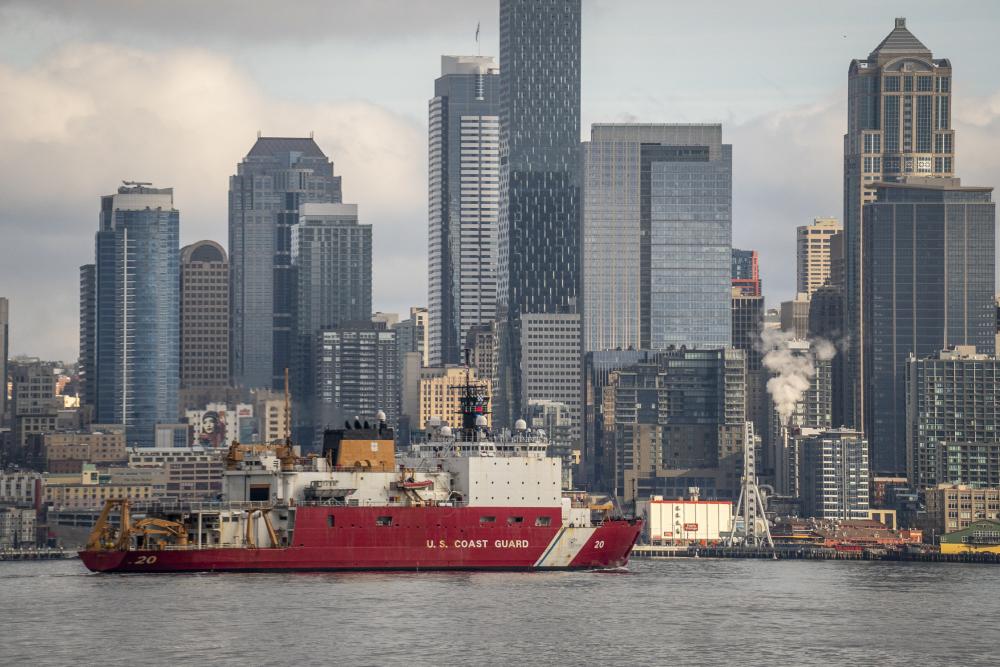
Coast Guard Cutter Healy (WAGB 20) transits Elliott Bay off Seattle Nov. 20 as it returns to its homeport after a 133-day deployment in which the crew circumnavigated North America via the Northwest Passage. The deployment involved both military and scientific operations. JAMES BRADY

SEATTLE — The crew of U.S. Coast Guard Cutter Healy (WAGB 20) returned to their Seattle homeport Saturday following a 22,000-mile, 133-day deployment circumnavigating North America, the Coast Guard Pacific Area said Nov. 20. 
 
The crew aboard Healy, a 420-foot medium icebreaker, provided U.S. surface presence in the Arctic, supported high-latitude oceanographic research missions, participated in an international search-and-rescue exercise and engaged in passing exercises with surface vessels from the U.S. Navy, Canadian navy and Mexican navy. 
 
Healy’s crew hosted members of the international science community and institutions from the U.S., Canada, Norway and Denmark who conducted oceanographic research throughout the Arctic, including the Northwest Passage and within Baffin Bay, to monitor environmental change.  
 
Healy crewmembers also facilitated 430 over-the-side casts of various scientific instruments including a conductivity, temperature and depth array that requires the cutter to station keep as wire lowers and recovers the instrument from below the surface. Additionally, Healy mapped over 20,000-square kilometers of the seafloor, including 12,000-square kilometers of previously unmapped regions, throughout the patrol.  
 
Healy transited north of Canada via the Northwest Passage, where the crew rendezvoused with members of the Canadian Coast Guard and Canadian Rangers for a search-and-rescue exercise. The crew transited south of Mexico via the Panama Canal on their way home. Healy’s deployment supported the Coast Guard’s Arctic strategy while providing critical training opportunities for future icebreaker sailors. 
 
“Healy’s crew demonstrated their tremendous dedication to duty while carrying out the Coast Guard’s Arctic mission, operating in some of the harshest regions in the world,” said Coast Guard Cutter Healy’s Commanding Officer Capt. Kenneth Boda. “They assisted teams of scientists in gathering invaluable data and information throughout the deployment. This research will be shared with laboratories, universities and institutions around the world to support research focused on the changing Arctic environment.” 
 
While transiting down the east coast of the United States and back up the west coast of Mexico, Healy engaged in multiple outreach events including passing exercises, professional exchanges and embarking distinguished visitors to bolster relations with other nations.  
 
Healy deploys annually to the Arctic in support of oceanographic research and Operation Arctic Shield, the Service’s annual operation to execute U.S. Coast Guard missions, enhance maritime domain awareness, strengthen partnerships, and build preparedness, prevention, and response capabilities across the Arctic domain. 
 
Commissioned in 2000, Healy is one of two active polar icebreakers in the Coast Guard’s fleet. Healy is capable of breaking four feet of ice continuously and up to eight feet of ice while backing and ramming. 
 
The U.S. Coast Guard is recapitalizing its polar icebreaker fleet to ensure continued access to the Polar Regions and protect the country’s economic, commercial, environmental, and national security interests.  The Coast Guard and U.S. Navy, through an integrated program office, on April 23, 2019, awarded VT Halter Marine Inc., of Pascagoula, Mississippi, a fixed-price incentive contract for the detail, design and construction of the lead Polar security cutter with contract delivery planned for 2025. 


Coast Guard Icebreaker Polar Star Begins 25th Antarctic Voyage

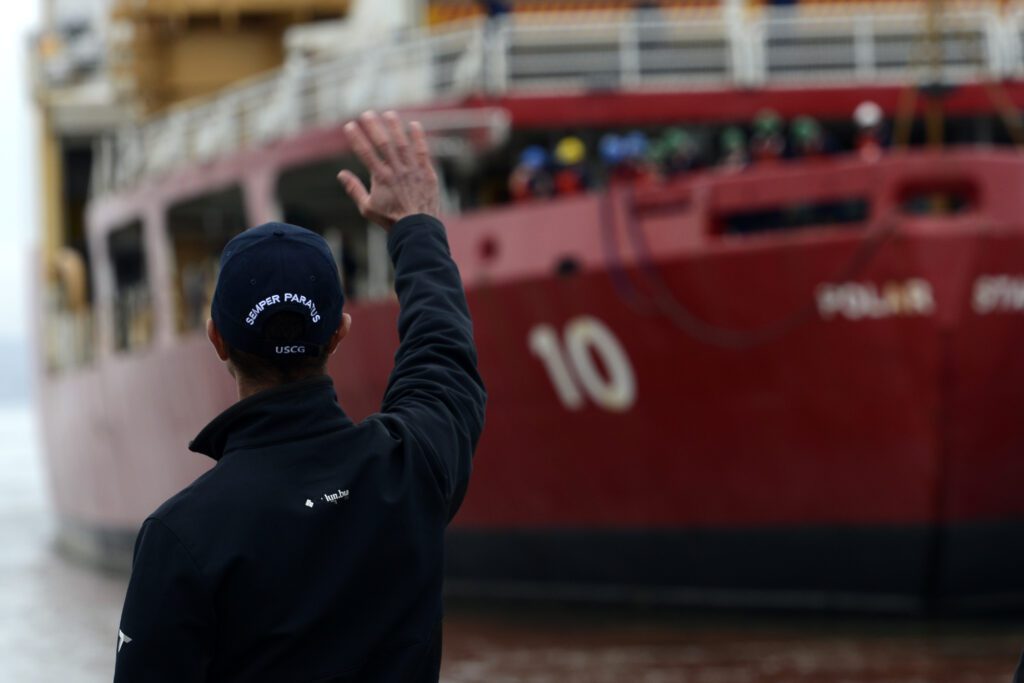
A family member of a Coast Guardsman aboard Cutter Polar Star (WAGB-10) waves as the cutter departs Seattle Saturday, Nov. 13. U.S. COAST GUARD / Petty Officer 3rd Class Michael Clark

SEATTLE — The United States’ only heavy icebreaker departed its homeport in Seattle Nov. 13 with a crew of 159 U.S. Coast Guard men and women and is heading toward Antarctica, the Coast Guard Pacific Area said in a release.   

This year marks Coast Guard Cutter Polar Star’s 25th journey to Antarctica in support of Operation Deep Freeze, an annual joint military mission to resupply the United States Antarctic stations in support of the National Science Foundation, the lead agency for the United States Antarctic Program.  

Each year, the Polar Star crew breaks a navigable channel through ice, sometimes as much as 21 feet thick to allow fuel and supply ships to reach McMurdo Station, which is the largest Antarctic station and the logistics hub of the U.S. Antarctic Program. 

“Maintaining and operating a 45-year-old ship in the harshest environment on the planet makes for arduous duty, but the women and men aboard Polar Star are committed to our important mission,” said Capt. William Woityra, Polar Star’s commanding officer. “The team is excited for this once-in-a-lifetime opportunity to visit a part of the world that most will never get to see.” 

The U.S. Coast Guard is recapitalizing its polar icebreaker fleet to ensure continued access to the Polar regions, project U.S. sovereignty, and to protect the country’s economic, environmental, and national security interests.   

“It’s vitally important that the U.S. maintains its leadership role in Antarctica,” said Vice Adm. Michael F. McAllister, commander Coast Guard Pacific Area. “The Coast Guard has an enduring commitment to the U.S. Antarctic Program through the Deep Freeze mission to provide uninhibited access to the region. We are proud to support a 60-year legacy of peaceful international cooperation for science and preservation of the pristine Antarctic environment and we will continue to ensure adherence to rules-based order into the future.” 

Through Operation Deep Freeze, the U.S. Coast Guard provides direct logistical support to the National Science Foundation and maintains a regional presence that preserves Antarctica as a scientific refuge.   


Coast Guard, Partners Rescue 17 Mariners in 2 Days

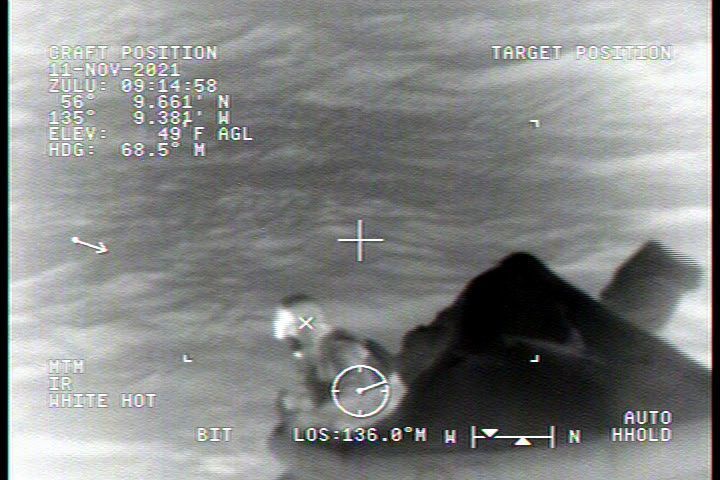
The Coast Guard rescued four people from a raft in the water Npvember 10, 2021, approximately 13 nautical miles west of Cape Ommaney, Alaska. U.S. COAST GUARD / Petty Officer 3rd Class Alexandria Preston

ALAMEDA, Calif. — Over the course of two days, Nov. 11-12, Coast Guard crews, partner agencies and volunteers responding to three maritime emergencies rescued a total of 17 boaters in dire straits off the Alaska, California and Micronesia coasts, the Coast Guard Pacific Area said Nov. 12.   

All three cases highlight the importance of mariners properly equipping and training for survival at sea, as well as the value of government and industry partnerships. 

Off the coast of Federated States of Micronesia, six people survived at sea and were found Thursday on a 24-foot skiff located 40 miles southeast of the Mortlock Islands after an eight-day search involving the U.S. Coast Guard, the U.S. Navy, Federated States of Micronesia first responders, Caroline Islands first responders and local good Samaritans. 

The crew of a good Samaritan vessel, Nord Rubicon, rescued seven fishermen in a life raft 350 miles off the coast of Monterey, California, Wednesday after their 85-foot commercial fishing boat caught fire and became engulfed in flames. Multiple emergency position indicating radio beacon and personal locator beacon alerts immediately notified U.S. Coast Guard crews the vessel was in peril. Coast Guard watchstanders used the Automated Mutual-Assistance Vessel Rescue System to request help from nearby ships. The Nord Rubicon crew, located just 80 miles away, diverted from their course, retrieved the fishermen and took them safely to shore. Video is available here

Wednesday, Coast Guard aircrews in Alaska rescued four fishermen after they abandoned their 53-foot fishing boat sinking 13 miles west of Cape Ommaney, Alaska. The Coast Guard Sector Juneau command duty officer for the rescue, Nicholas Meyer, credits their survival to their proper use of an EPIRB, VHF radio, survival suits, life raft and training. 

“The safeguarding of lives at sea, particularly along our coastal waters and in support of our closest international partners, continues to be our highest priority,” said Vice Adm. Michael F. McAllister, commander Coast Guard Pacific Area. “This week’s impressive rescues demonstrate our resolve to be Semper Paratus — always ready. Thanks to the valuable relationships we’ve built with partner agencies, the valuable contributions of good Samaritans, and the focus these mariners had on ensuring they were ready for emergencies at sea, 17 people are alive today who may not otherwise be. This was a fitting tribute on Veteran’s Day yesterday, knowing the Coast Guard veterans who came before us laid the foundation for the incredible work our men and women do today.” 


Cutter Spencer Returns to Portsmouth After Patrolling the Eastern U.S. Coast

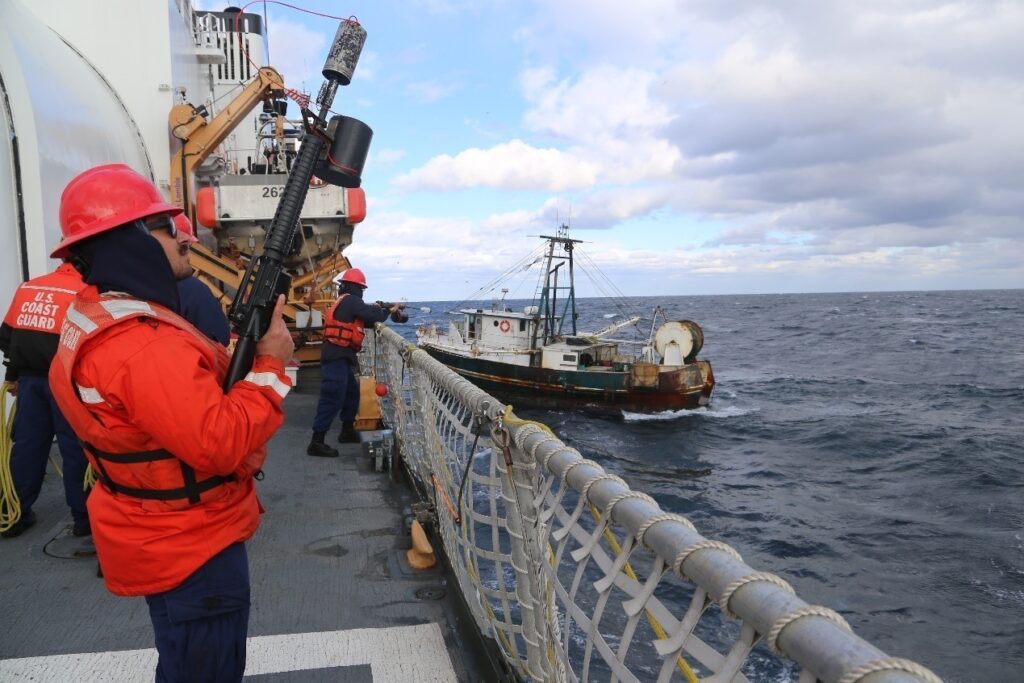
Gunner’s mates aboard Coast Guard Cutter Spencer shoot messenger lines to a disabled fishing vessel 100 miles off the coast of New York to bring the vessel in tow. U.S. COAST GUARD / Chief Petty Officer Katharine Ingham

PORTSMOUTH, Va. — The crew of Coast Guard Cutter Spencer returned home to Portsmouth after a 33-day patrol Nov. 10, the Coast Guard 5th District said in a release. 

During the patrol, the crew conducted operations south of Key West, Florida, in support of efforts to deter illegal immigration and conduct safety of life at sea operations. Shifting gears halfway through the patrol, Spencer’s crew exercised their multi-mission capability in the Northeast to enforce federal commercial fishing regulations in an effort to deter over-fishing and illegal fishing. The crew also assisted in multiple search and rescue cases off the coast of New England, towing one vessel over 100 miles to safety. 

Spencer also completed a routine aviation evaluation that enables the cutter to perform landings and conduct operations with a variety of military aircraft. The training exercise occurred in Miami, supported by an MH-60T Jayhawk helicopter crew from Coast Guard Air Station Clearwater, Florida. 

“Overall, this was a short patrol but we accomplished a lot for the Coast Guard and for our unit,” said Cmdr. Corey Kerns, commanding officer of the Spencer. “This deployment included an excursion south of the Keys to support the fleet of Fast Response Cutters. Our mission then shifted to domestic fisheries, enforcing regulations that promote the longevity of this multi-billion-dollar industry that our nation depends on. In between, we were able to support three search and rescue operations, conduct a lot of training, and get home before Thanksgiving.” 

The Spencer is a 270-foot medium-endurance cutter with a 100-person crew. 


Coast Guard, Partners Complete Cooperative Pacific Surveillance Operation

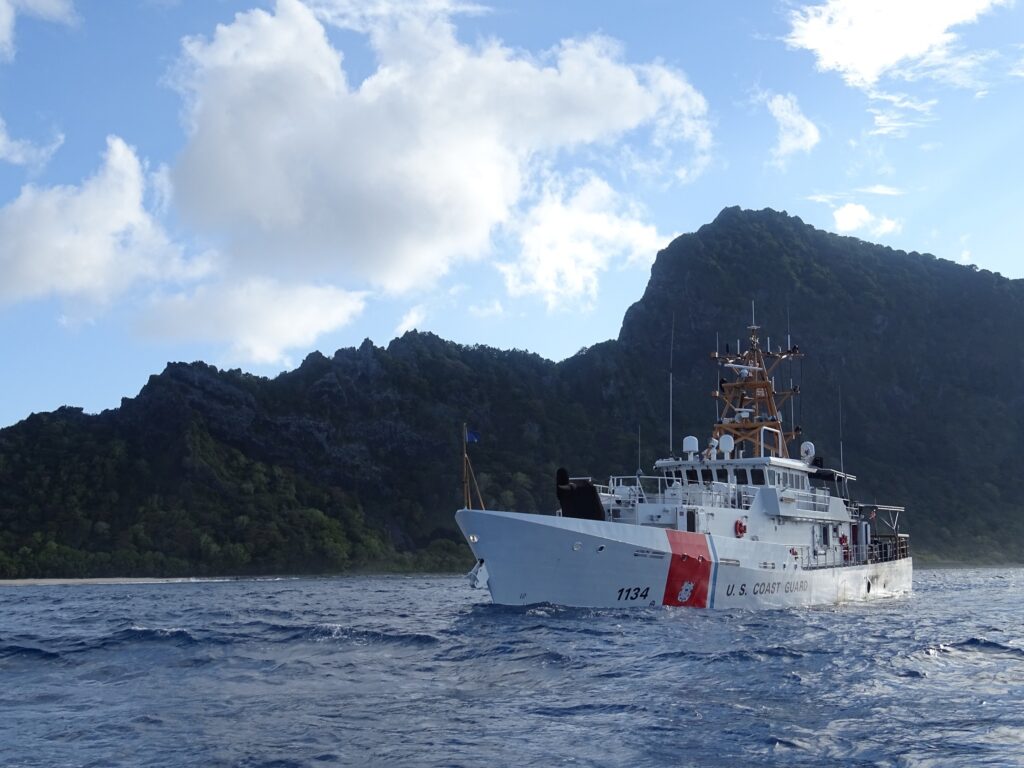
The Coast Guard Cutter William Hart participates in the Pacific Islands Forum Fisheries Agency’s Operation Kurukuru off American Samoa, Oct. 29, 2021. U.S. COAST GUARD

HONOLULU — The Coast Guard and its partners successfully completed the Pacific Islands Forum Fisheries Agency’s (FFA) Operation Kurukuru in the Pacific, Nov. 5, the Coast Guard 14th District said Nov. 9. 
 
Operation Kurukuru is an annual coordinated maritime surveillance operation with the goal of combating illegal, unreported, and unregulated (IUU) fishing. This year the crews of the Coast Guard Cutter William Hart, Coast Guard Cutter Myrtle Hazard and an Air Station Barbers Point HC-130 Hercules participated in the joint endeavor. 
 
“The operation included 15 Guardian Class and Pacific Patrol Boats from Pacific nations operating alongside five Australian Navy, French Navy and United States Coast Guard vessels,” said Allan Rahari, the FFA Director Fisheries Operations. “Seven aircraft from the FFA, quadrilateral and regional partners provided air surveillance, as well as satellite surveillance and use of other emerging technologies.” 
 
This year’s Operation Kurukuru was conducted over the course of 12 days, involving 15 Pacific FFA member nations and Pacific Quadrilateral Defense Coordinating Group (Australia, France, New Zealand, and U.S.) partners while covering over 8,9 million square miles. 
 
During the operation, 300 vessels were remotely sensed by satellites or sighted by ships and aircraft while 78 vessels were boarded either at sea or in port. Of those 300 sightings, the Coast Guard contributed 63. 
 
While the operation was ongoing, the Air Station Barbers Point Hercules aircrew also diverted to Starbuck Island in Kiribati to assist with an ongoing missing persons case. 
 
Kurukuru is a Japanese term meaning round and round relating to the highly migratory nature of targeted species such as tuna which annually travel throughout the Pacific providing an important renewable resource for Pacific Island Countries and Territories (PICT). 
 
IUU undermines PICT efforts to conserve and manage fish stocks, presenting a dire threat to protecting these vital resources for generations to come. 
 
“Combating illegal, unreported, and unregulated fishing really is a team effort out here in the Pacific,” said Lt. j.g. Tyler Peterson, an operations planner at the Coast Guard 14th District. “Because of fish migratory habits, they frequently travel between different countries’ exclusive economic zones, so no one country can protect the fish stocks on their own. This is why joint efforts like Operation Kurukuru are so important. We are able to work with our partners towards our mutual goal of preserving this vital resource.” 
 
Along with participating in large scale operations like Operation Kurukuru, the Coast Guard also works individually with nations to counter IUU through the use of bilateral law enforcement agreements. 
 
Bilateral law enforcement agreements allow partner PICTs to embark their law enforcement officers aboard Coast Guard vessels to enforce laws within their exclusive economic zone. The Coast Guard maintains 11 bilateral ship rider agreements throughout the Pacific, combating not only IUU but also promoting a free and open Indo-Pacific.