Bollinger Submits Proposal for Coast Guard Offshore Patrol Cutters

An early illustration of an Offshore Patrol Cutter (OPC) prototype. U.S. COAST GUARD

LOCKPORT, La. — Bollinger Shipyards, a privately held designer and builder of steel military and commercial vessels, submitted on June 11 its proposal to the United States Coast Guard to build Stage 2 of the Heritage-class Offshore Patrol Cutter (OPC) program, the company said in a release.

If chosen, Bollinger would construct and deliver a total of 11 vessels to the U.S. Coast Guard over the next decade, helping sustain the Bollinger workforce through 2031. The initial OPCs are being built by Eastern Shipbuilding Group, although the program suffered a setback when Eastern’s Florida shipyard was damaged by Hurricane Michael in 2018.

“Bollinger is the right shipyard at the right time to build the Offshore Patrol Cutter program for the U.S. Coast Guard.” said Ben Bordelon, Bollinger president and CEO. “Our long history building for the Coast Guard is unparalleled and has shown time and time again that Bollinger can successfully deliver the highest quality vessels on an aggressive production schedule.” 

Bollinger has been actively involved in every step of the U.S. Coast Guard’s OPC acquisition process, including execution of the Stage 1 Preliminary and Contract Design, where the company was included in the final three shipyards, as well as execution of the OPC Stage 2 industry study. This unique experience ensures Bollinger’s understanding of every detail and aspect of the program. 

Bordelon continued, “Bollinger has the existing capability and capacity using our proven serial production build strategy and an experienced management team and workforce. Our production approach is based on our established and mature processes and tools, which integrate design development, production, and lifecycle considerations. Our unique experience results in a reliable production schedule and cost so that we can deliver high-quality vessels on time and on budget.” 

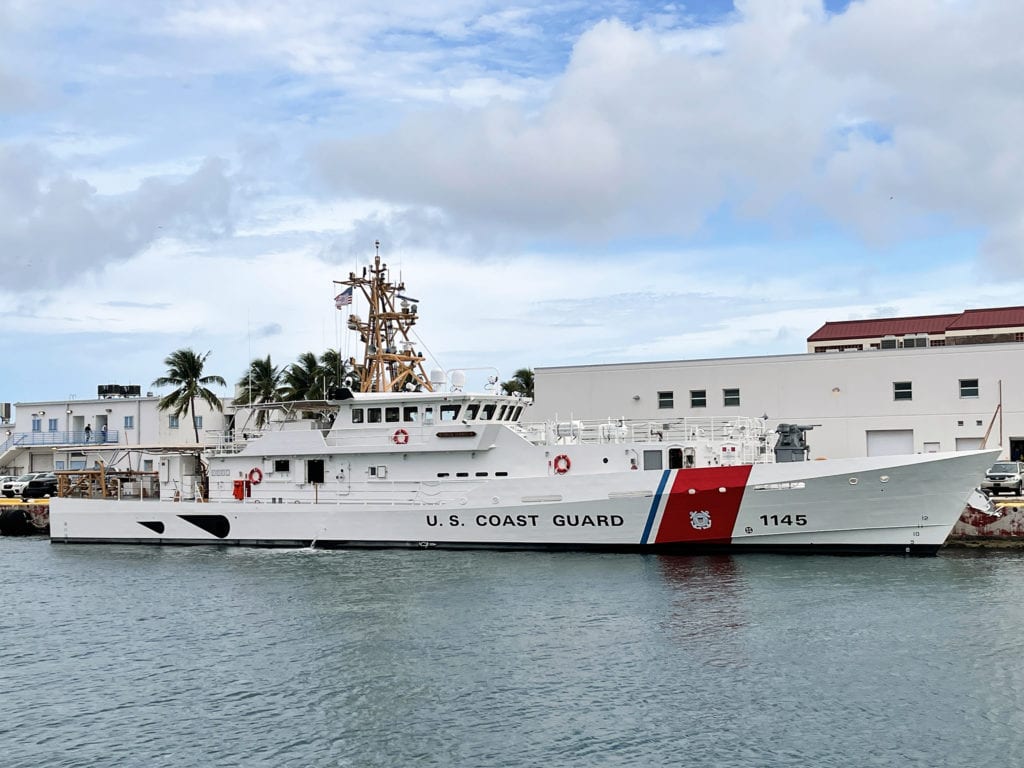
Notably, in its current program for the U.S. Coast Guard, Bollinger has delivered Sentinel-class Fast Response Cutter hulls 1139 through 1144 a total of 127 days ahead of the contract schedule, despite the incredible challenges of the COVID-19 global pandemic and a historic hurricane season in the Gulf of Mexico impacting Louisiana’s coast. 

Bollinger has a long history building for the U.S. Coast Guard, delivering 170 vessels in the last three decades alone. This includes the Island Class (49 delivered), the Marine Protector Class (77 delivered), and now the Sentinel Class (44 of 64 delivered to date). 


Coast Guard Documents Historic Shipwreck for National Register of Historic Places

Coast Guard crews document the historic shipwreck of the Coast Guard Cutter McCulloch off the Coast of California, June 3, 2021. The service’s partnership with National Oceanic and Atmospheric Administration personnel recently resulted in the ship being added to the National Register of Historic Places. U.S. COAST GUARD

ALAMEDA, Calif. — Coast Guard crews recently continued their efforts to document the historic shipwreck of the Coast Guard Cutter McCulloch June 3, after the service’s partnership with National Oceanic and Atmospheric Administration personnel recently resulted in the ship being added to the National Register of Historic Places, the Coast Guard 11th District said in a June 13 release.  

The Coast Guard Cutter Blackfin crew transported members of Regional Dive Locker West and Maritime Safety and Security Team Los Angeles/Long Beach to the wreckage site where remotely operated vehicles (ROVs) were deployed to depths greater than 200 feet.  

Despite the challenging offshore conditions, Coast Guard ROV operators were able to survey the sunken cutter and surrounding area. These dive operations honor the Coast Guard’s heritage and provide valuable training opportunities to enhance mission readiness. 

The Coast Guard Cutter McCulloch, located near Point Conception, was lost in a collision with the passenger steamship SS Governor on June 13, 1917 and remains within waters of the proposed Chumash Heritage National Marine Sanctuary.  

Scott Price and Daniel Koski-Karell, Coast Guard historians, and Robert Schwemmer, a NOAA maritime archaeologist and chief scientist for the mission that led to the McCulloch’s discovery, worked together to draft and submit the National Register of Historic Places nomination.  

“McCulloch had a remarkable career as both a U.S. Revenue Cutter Service vessel and U.S. Coast Guard cutter,” said Koski-Karell. “Its participation in the Spanish-American War’s 1898 Battle of Manila Bay victory is memorialized by the trophy cannon the McCulloch brought to the U.S. that stands today in front of the Coast Guard Academy’s Hamilton Hall.”  

The McCulloch shipwreck was officially listed in the federal government’s National Register of Historic Places on April 22, meeting the criteria to be considered a site of “national significance.” 

“The listing to the National Register of Historic Places, as well as California’s Register of Historical Resources, demonstrates the spirit of cooperation between NOAA and the Coast Guard, enhances public awareness of McCulloch’s important role in America’s history, while honoring its crew,” said Schwemmer, the West Coast regional maritime heritage coordinator for NOAA’s Office of National Marine Sanctuaries. 

In October 2016, a joint NOAA and Coast Guard training mission confirmed the location of the McCulloch’s final resting place. Working off the Channel Islands National Marine Sanctuary’s research vessel Shearwater, the multi-agency science team from NOAA, National Park Service, and Coast Guard Dive Lockers Alameda and San Diego, deployed a ROV to survey and characterize the shipwreck while Eleventh Coast Guard District cutters Halibut and Blacktip provided vessel support. 

“I’m pleased we are making progress to preserve this piece of U.S. and Coast Guard history, as well as honoring the service member lost because of this tragedy,” said Rear Adm. Brian Penoyer, the 11th Coast Guard District commander. “I look forward to our continued partnership with NOAA, because without these relationships and incredible teamwork, discoveries such as these would not be uncovered.”  

Listing the shipwreck site on the National Register of Historic Places provides a wealth of public research information and could unlock incentives to help preserve the shipwreck, including federal tax and grant benefits and easements.   


Cutter Stratton Returns Home Following 105-Day Deployment

Coast Guard Cutter Stratton moored in Kodiak, Alaska, May 15, 2021. Stratton was commissioned in 2010 becoming the third of the Coast Guard’s legend class national security cutters. U.S. COAST GUARD

ALAMEDA, Calif. — The crew of the Coast Guard Cutter Stratton (WMSL 752) returned to their homeport Friday following a combined 105-day deployment to Alaska and their biannual shipboard training off the coast of San Diego, the Coast Guard Pacific Area said in a June 11 release. 

Stratton’s crew, along with an embarked MH-65 helicopter aircrew from Air Station Kodiak, patrolled the Bering Sea up to the Arctic’s ice edge. While deployed, they conducted two search and rescue missions preserving lives and protecting property from peril in the Bering Sea. 

The crews, aided with the support of the ship’s unmanned aircraft system, patrolled the region safeguarding Alaska’s multi-billion-dollar fishing industry by conducting 15 fisheries law enforcement boardings, ensuring compliance with maritime laws and regulations, and protecting the U.S. Exclusive Economic Zone by patrolling the maritime boundary line to prevent the illegal harvesting of U.S. fish stocks. 

In addition to conducting multiple operations while deployed, the crew of the Stratton also collected vital information that will help the Coast Guard shape future deployments, uphold U.S. sovereignty and exercise leadership through effective presence in the Arctic. 

Following their Alaskan patrol, Stratton hosted a change of command ceremony while anchored in the San Francisco Bay. Capt. Stephen Adler relieved Capt. Bob Little as Stratton’s commanding officer during the at-sea ceremony. 

Before returning home, Stratton completed a biannual shipboard training cycle off the coast of San Diego. Over the course of 17 training days, Stratton’s crew demonstrated their knowledge and skills by completing nearly 200 drills in the areas of damage control, navigation, seamanship, naval warfare, communications, medical response, engineering casualties, and force protection. The crew’s efforts resulted in an average drill score of 97%, demonstrating excellence in all warfare areas. 

“I’m extremely proud of this crew and all they have accomplished,” said Adler. “There is a new wave of capabilities designed to match the growing importance of U.S. presence in the Arctic. The crew pressed into this growing mission space with incredible resolve. Harsh Arctic conditions and the ongoing global pandemic regularly tested our mettle, but this crew delivered.”  

Stratton’s crew also relieved the crew of the Coast Guard Cutter Douglas Munro (WHEC 724), the Coast Guard’s last 378-foot high endurance cutter, as they made their final patrol prior to being decommissioned April 24, 2021. 

The Stratton is one of four 418-foot national security cutters homeported in Alameda. National security cutters are capable of extended, worldwide deployment in support of homeland security and defense missions and routinely conduct operations from South America to the Arctic. National security cutter’s combination of range, speed, and ability to operate in extreme weather provides the mission flexibility necessary to conduct vital strategic missions across the globe. 


Coast Guard Establishes Reserve Enlisted Aviation Workforce

Petty Officer 2nd Class Michael El-Hasan, originally from Jacksonville, Florida, is an Aviation Maintenance Technician and has been aboard USCGC Hamilton (WMSL 753) for three months as part of the cutter’s aviation detachment. U.S. COAST GUARD

WASHINGTON — The U.S. Coast Guard has established a Reserve Enlisted Aviation Workforce. 

In a 10 June message released by Rear Adm. Todd C. Wiemers, assistant commandant for Capabilities (CG-7) and assistant commandant for Reserve (CG-R), the Coast Guard formally established the program, which is “designed to create an aviation surge and mobilization capability, retain aviation technical expertise, and develop a career path for aviation personnel in the Reserve Component.” 

Enlisted personnel eligible for the program are those in the three aviation ratings: Avionics Electrical Technician, Aviation Maintenance Technician, and Aviation Survival Technician. 

“The workforce’s primary objective is to develop a ground-based aviation maintenance and aviation life-support equipment maintenance capability,” the message said.  All Reserve Aviation personnel must have earned a Basic 
Aircrew designation and must have separated from Active Duty within the last two years. 


Coast Guard Repatriates 82 Cubans to Cuba

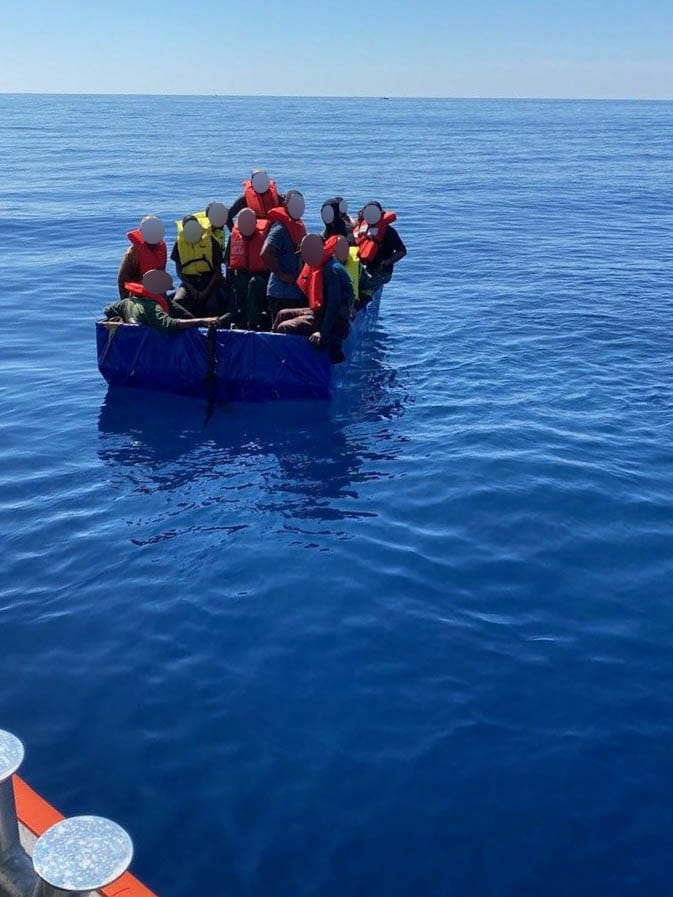
This migrant vessel was interdicted off Key West’s coast June 3, 2021. 82 migrants were repatriated to Cuba June 8, 2021. U.S. COAST GUARD

MIAMI — Coast Guard Cutter Isaac Mayo’s crew repatriated 82 Cubans to Cuba, Tuesday, following eight interdictions south of the Florida Keys, the Coast Guard 7th District said in a June 8 release. 

A Station Islamorada law enforcement team launched at approximately 11 a.m., May 30, after a good Samaritan reported seeing three people on a blue, 16-foot vessel. All three were transferred to the station’s boat and reported in good health. One person was brought to shore for additional screening. 

A Coast Guard Cutter Valiant law enforcement team launched at approximately 3:30 a.m., June 3, and interdicted a blue, 20-foot vessel with 31 people aboard. They were transferred to the cutter and reported in good health.  

A Station Marathon law enforcement team launched at approximately 1:30 p.m., June 3, after a good Samaritan reported seeing a yellow and white 14-foot vessel with three people aboard. All three were transferred to the station’s boat and reported in good health. 

A Coast Guard Cutter Kathleen Moore law enforcement team launched at approximately 4:30 a.m., June 4, and interdicted a vessel with seven people aboard. The people were transferred to the cutter and reported in good health. 

A Coast Guard Cutter Valiant law enforcement team launched at approximately 6:30 a.m., June 4, and interdicted a vessel with 23 people aboard that was taking on water. The people were transferred to the cutter and reported in good health. One person was brought to shore for further investigation. 

A Coast Guard Cutter Valiant law enforcement team launched at approximately 9:30 a.m., June 4, and interdicted a vessel with 10 people aboard. They were transferred to the cutter and reported in good health. 

At approximately the same time June 4, a Station Key West law enforcement team launched for a 15-foot vessel with four people aboard. They were transferred to the station’s boat and reported in good health. 

A Station Marathon law enforcement team launched at approximately 1:30 p.m., June 4, after a good Samaritan reported seeing a white and brown vessel with three people aboard. All three were transferred to the station’s boat and reported in good health. 

“The repatriation of these migrants highlight the unity of effort required with many of our key partners as we work together to intercept these unsafe migration attempts into the United States,” said Lt. Cmdr. Jason Neiman, Coast Guard Seventh District public affairs officer. “These voyages are often on very unseaworthy vessels and the dangers of these trips can be deadly.” 

Since Oct. 1, 2020, Coast Guard crews have interdicted 399 Cubans compared to: 

5,396 Cuban migrants in Fiscal Year 2016 
1,468 Cuban migrants in Fiscal Year 2017 
259 Cuban migrants in Fiscal Year 2018 
313 Cuban migrants in Fiscal Year 2019 
49 Cuban migrants in Fiscal Year 2020 

Once aboard a Coast Guard cutter, all migrants receive food, water, shelter and basic medical attention. Throughout the interdiction, Coast Guard crew members were equipped with personal protective equipment to minimize potential exposure to any possible case of COVID-19. 


USCGC Hamilton Returns to Homeport Following 97-Day Deployment to Europe

The Legend-class national security USCGC Hamilton (WMSL 753) and crew returned to North Charleston, South Carolina. Friday, following a historic 97-day deployment to Europe working with U.S. Navy 6th Fleet, allies and partners. U.S. COAST GUARD / Petty Officer 3rd Class Sydney Phoenix

NORTH CHARLESTON, S.C. — The Legend-class national security USCGC Hamilton (WMSL 753) and crew returned to Charleston, South Carolina, June 4, following a historic 97-day deployment to Europe working with U.S. Navy 6th Fleet, allies and partners, the Coast Guard Atlantic Area said in a release. 

“By operating with 6th Fleet, we expand the Coast Guard’s global reach and advance our Nation’s Tri-Service Maritime Strategy,” said Capt. Timothy Cronin, commanding officer of USCGC Hamilton. “This deployment also reinforced our commitment to freedom of navigation in international waters while building capacity and partnerships with nations that have shared interests and threats in the maritime domain.” 

After departing North Charleston, South Carolina, Feb. 28, the crew of Hamilton stopped in Puerto Rico and then headed toward Rota, Spain, with two Sentinel-class fast response cutters, USCGC Charles Moulthrope (WPC 1141) and USCGC Robert Goldman (WPC 1142) in the trans-Atlantic leg of the fast response cutters’ 9,000-mile voyage to homeport in Bahrain and service at Patrol Forces Southwest Asia. 

After escorting the cutters and departing Spain, Hamilton then visited Italy, Georgia, Ukraine, and Malta. The crew conducted various operational exercises with the maritime components of each country and forces from Turkey, Romania, and Bulgaria. 

“The U.S. Coast Guard’s bilateral engagements with partner services play a critical role in our overall diplomatic engagement with those states,” said Philip T. Reeker, acting assistant secretary for the Bureau of European and Eurasian Affairs at the Department of State. “They complement our on-shore diplomacy in building enduring partnerships that focus on joint approaches to common problems. They also reinforce our global effort to uphold the rules-based international order.” 

Hamilton entered the Mediterranean Sea April 15 and the Black Sea April 27 to support NATO Allies and partners. Hamilton was the first U.S. Coast Guard cutter to visit the Black Sea since 2008. The last U.S. Coast Guard cutter in the Black Sea was USCGC Dallas (WHEC 716), which sailed to the Black Sea twice, once in 2008 and 1995. 

Since leaving the Black Sea on May 14, Hamilton’s crew visited Valletta, Malta, and conducted engagements at sea with the armed forces of Malta. They also made a brief logistics stop in Rota, Spain, on May 23. Hamilton transited out of the Mediterranean Sea, concluding the crew’s recent operations in 6th Fleet’s area of responsibility, May 24. 

“The relationships we build are fundamental for establishing maritime safety and security worldwide,” said Lt. Cmdr. Taylor Kellogg, operations officer of USCGC Hamilton. “Working together with our NATO allies and partners, we advance the rule of law on the sea, ensuring free and open access to the maritime domain.” 

The U.S. Coast Guard, as demonstrated by this deployment, is a welcome presence and critical contributor to maintaining maritime safety, security, and stability in the Black Sea and the Mediterranean. Hard-earned and long-lasting partnerships in the Black Sea and the Mediterranean give the Coast Guard unique access to vital partners. These efforts build unique partnerships thanks to a broad suite of specialized maritime capabilities, competencies, and authorities. The U.S. Coast Guard multi-mission mandate as a law enforcement agency, a regulatory agency, and a military branch makes the Service’s comparative advantage unique and unparalleled. 

“All nations benefit from free and open access to the maritime domain,” said Vice Adm. Steven Poulin, commander U.S. Coast Guard Atlantic Area. “We seek to foster a united, global effort to safeguard this access. Allies and partners are integral to protecting our shared interests, preserving our competitive multilateral advantage, and upholding the rules-based international order. Hamilton’s tremendous efforts strengthen our alliances and partnerships by developing interchangeable capabilities, combined operations, theater security cooperation, and capacity-building measures. Together we defend sovereignty from malign influence and coercion.” 


NGC to Develop C5ISR and Control Systems for USCG Offshore Patrol Cutters

Adm. Charles W. Ray, vice commandant of the Coast Guard, tours the construction of the first offshore patrol cutter at the Eastern Shipbuilding Group shipyard in Panama City, Florida, Thursday, March 14, 2019. The OPCs will complement the capabilities of the Coast Guard’s national security cutters, fast response cutters, and polar security cutters as an essential element of the Department of Homeland Security’s layered security strategy. U.S. COAST GUARD / Petty Officer 2nd Class Loumania Stewart

CHARLOTTESVILLE, Va. — Northrop Grumman Corp. has been awarded a newly expanded role as systems integrator for C5ISR and control systems on the U.S. Coast Guard Offshore Patrol Cutter (OPC), by Eastern Shipbuilding Group (ESG), the prime contractor for the OPC program, the company said in a June 8 release. 

In a newly expanded role as C5ISR systems integrator, Northrop Grumman is responsible for integrating all cyber hardened C5ISR systems, including command and control, communications, navigation and the shipboard computer networking systems. 

“With C5ISR and control system test and integration underway, the ESG-Northrop Grumman team hasn’t missed a beat,” said Todd Leavitt, vice president, maritime systems and integration, Northrop Grumman. “The effort and resiliency shown by our teammates at Eastern Shipbuilding Group has been outstanding.” 

Northrop Grumman’s responsibilities for the OPC platform include the integrated bridge, navigation, command and control, computing network, data distribution, machinery control, and propulsion control systems, cyber/information assurance, testing and integration work. 


Cutter Resolute Returns Home from 41-day Deployment

A Coast Guard Cutter Resolute small boat crew transports two rescued Cuban migrants, about 16 miles south of Key West, Florida, May 27, 2021. During a routine patrol, the Resolute bridge team spotted multiple people in the water and alerted Coast Guard Sector Key West watchstanders. U.S. COAST GUARD

ST. PETERSBURG, Fla. — The USCGC Resolute (WMEC 620) and crew returned home to St. Petersburg Tuesday, after a 41-day Central Caribbean patrol, the Coast Guard 7th District said in a June 2 release. 

The Resolute crew patrolled the coast of Haiti in support of Operation Southeast Watch. The team focused efforts on known transit zones and served as a presence to discourage hazardous migration voyages. 

Watchstanders received an urgent radio call from a cargo vessel on May 13, reporting it collided with a wooden sailboat approximately two miles from Isla de la Tortue. The small boat sank, leaving two people in the water. The Resolute and its small boat crews, along with an Air Station Clearwater MH-60 Jayhawk aircrew forward-deployed in Great Inagua, conducted search patterns. The small boat crew located the men in the water clinging to foam fishing buoys. After a medical check, both survivors were determined to be in good health and were returned safely to port. 

On May 28, the Resolute crew interdicted two Cuban migrants on a makeshift raft, 15 miles south of Key West. 

During the routine patrol, May 27, the bridge team spotted multiple Cuban migrants in the water, about 16 miles south of Key West. The team alerted Coast Guard Sector Key West watchstanders. Response efforts resulted in eight people rescued, and two people recovered deceased. An extensive search operation began for 10 people reportedly still missing. Search and rescue efforts continued for two days before the search suspended. 

On May 27, the Resolute crew interdicted two suspected smugglers and 25 Cuban migrants, 60 miles south of Key West. 

Among multiple events, the Resolute crew completed emergency drills and training. The Damage Control Olympics is a unique and active way to train crewmembers on proper damage control procedures. At the same time, the Navigation Seamanship Olympics achieve the same goal of creating an interactive learning environment but focus on rescue and assistance and small boat operations. These training evolutions enhance technical skills while building camaraderie and ensuring technical proficiencies are maintained. 

The Resolute, a 210-foot Reliance-class cutter with a crew of 72, was commissioned on Dec. 8, 1966.  


Coast Guard Requests $13.1 Billion for Fiscal 2022

U.S. Coast Guard Machinery Technician 3rd Class Carlos Sepulveda, right, heaves a heaving line to Boatswain’s Mate 3rd Class Steven Rojas while conducting distressed boat recovery training in Apra Harbor, Guam. U.S. NAVY / Mass Communication Specialist 2nd Class MacAdam Kane Weissman

ARLINGTON, Va. — The U.S. Coast Guard is requesting $13.1 billion for fiscal 2022, according to the service’s budget documents, just $38 million more than enacted in the 2021 budget. 

The cutter procurement portion of the Coast Guard budget includes $1 billion for cutter construction and long-lead materials. The procurement includes: 

  • $170.0 million for program management for construction of Polar Security Cutter (PSC) hulls #1 and #2 and for long-lead materials for PSC #3
  • $597.0 million for construction of Offshore Patrol Cutter (OPC) #4, detailed design for the re-compete contract for the OPC, and long-lead materials for OPC #5  
  • $67.0 million for the detail and design and construction of the Waterways Commerce Cutter 
  • $87.8 million for sustainment of numerous in-service cutters  
  • $78.0 million for post-delivery activities for National Security Cutters #10 and #11 
  • $20 million for program management of the Fast Response Cutter (FRC) program 
  • $15 million for the multi-year service-life extension of the USCGC Polar Star, the services only operational heavy icebreaker. 

The Coast Guard also requested $221.8 million for aircraft procurement and modification:  

  • $102.8 million to continue life extension of the MH-60T helicopter fleet to serve into the 2030s and initial funding to expand the size of the fleet beyond 48 aircraft (through conversion of ex-Navy H-60 airframes)   
  • $66.5 million for continued missionization of C-27J medium-endurance surveillance aircraft into HC-27J versions 
  • $20.0 million for long-lead materials for HC-130J long-range surveillance aircraft in preparation of the transition of Air Station Barbers Point, Hawaii, from the legacy HC-130H versions 
  • $32 million for modernization and sustainment of the MH-65 helicopters to extend their service life into the 2030s 
  • $0.5 million to continue funding installation of small unmanned aerial system capability into the National Security Cutters. 

The Operations and Maintenance portion of the budget includes $92.5 million, which includes funding for: 

  • Crew and shore side support for the homeporting of the 10th NSC in Charleston, South Carolina 
  • Crews and support for six FRCs for Manama, Bahrain; St. Petersburg, Florida; Ketchikan, Alaska; and Boston, Massachusetts 
  • Crew, support, and facilities for OPCs at San Pedro, California 
  • Crew and support for three HC-130J aircraft at Air Station Barbers Point 
  • Support for a new C-27 long-range command-and-control aircraft in Washington, D.C. 
  • Support for a new air station in Ventura County, California 
  • Support for home-porting a medium-endurance cutter at Joint Expeditionary Base Little Creek, Virginia 
  • Support for the transition of Air Station New Orleans, Louisiana, from the MH-65 to the MH-60T helicopter 
  • Crew and support for the 49th MH-60T helicopter 
  • A third Cyber Protection Team. 

The 2022 budget also plans for retiring five HC-130H aircraft (four at Barbers Pint and one in depot maintenance); decommissioning five 110-foot Island-class patrol boats; and decommissioning five 87-foot Marine Protector-class coastal patrol boats. 

The 10 patrol boats are being replaced by FRCs. 


Coast Guard Repatriates 46 Migrants from 4 Interdictions to Cuba

Coast Guard Cutter Resolute small boat crew rescues eight people from the water approximately 16 miles south of Key West, Florida, May 27,2021. The survivors currently remain aboard a Coast Guard cutter where they will receive food, water and basic medical attention. U.S. COAST GUARD

MIAMI — The Coast Guard Cutter Kathleen Moore crew repatriated 46 Cuban migrants to Cuba, Monday, from four interdictions, the Coast Guard 7th District said in a May 31 release. 

In the first interdiction, the Cutter Kathleen Moore’s crew located a migrant vessel and notified Sector Key West watchstanders, May 21, approximately 45 miles north of Bahia Honda, Cuba.  

In the second interdiction, the Coast Guard Cutter Resolute’s crew spotted and rescued migrants from the water, May 21, approximately 16 miles south of Key West. Cutter Resolute’s crew transferred the migrants to Cutter Kathleen Moore. 

In the third interdiction, a Coast Guard Air Station Miami HC-144 Ocean Sentry aircrew spotted a rustic vessel and notified Sector Key West watchstanders, May 21, approximately 23 miles south of Key West. The Cutter Resolute arrived on scene and embarked the migrants with no medical concerns reported. Cutter Resolute’s crew transferred the migrants to Cutter Kathleen Moore. 

In the fourth interdiction, Coast Guard District Seven watchstanders received a report from a good Samaritan of a rustic vessel, May 21, approximately 69 miles south of the Marquesas. Cutter Kathleen Moore arrived on scene and safely embarked the migrants. 

“The Florida Straits can be very dangerous,” said Capt. Adam Chamie, commander of Sector Key West. “The weather can change quickly. Even if the water is warm, the sea can be unforgiving, particularly in unseaworthy rafts. Please don’t take to the sea.” 

Since Oct. 1, 2020, Coast Guard crews have interdicted 323 Cubans, compared to: 

5,396 Cuban migrants in Fiscal Year 2016 

1,468 Cuban migrants in Fiscal Year 2017 

259 Cuban migrants in Fiscal Year 2018 

313 Cuban migrants in Fiscal Year 2019 

49 Cuban migrants in Fiscal Year 2020.

Once aboard a Coast Guard cutter, all migrants receive food, water, shelter and basic medical attention. Throughout the interdiction, Coast Guard crew members were equipped with personal protective equipment to minimize potential exposure to any possible case of COVID-19.