Aircraft Carrier Suppliers Alarmed at Navy’s Planned Delay of CVN 82

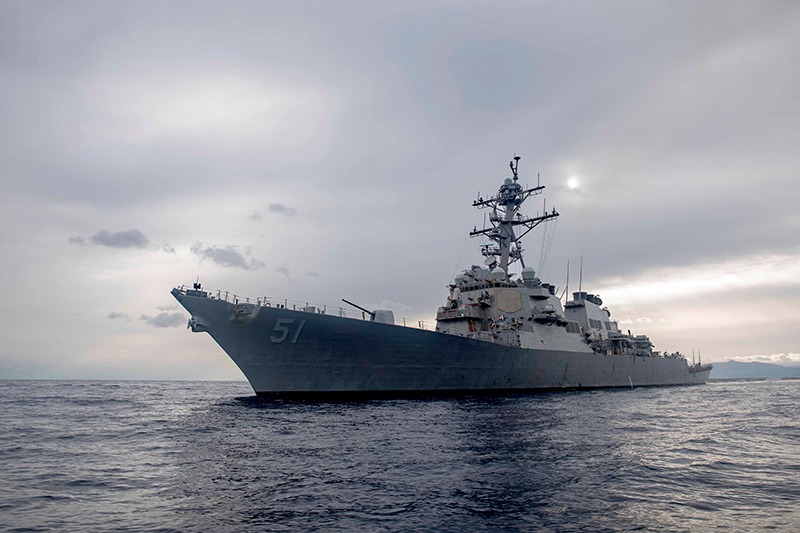
STRAIT OF GIBRALTAR (Jan. 5, 2024) The world’s largest aircraft carrier USS Gerald R. Ford (CVN 78) transits the Strait of Gibraltar, Jan. 5, 2024. (USN photo by MC2 Jacob Mattingly)

By Richard R. Burgess, Senior Editor 

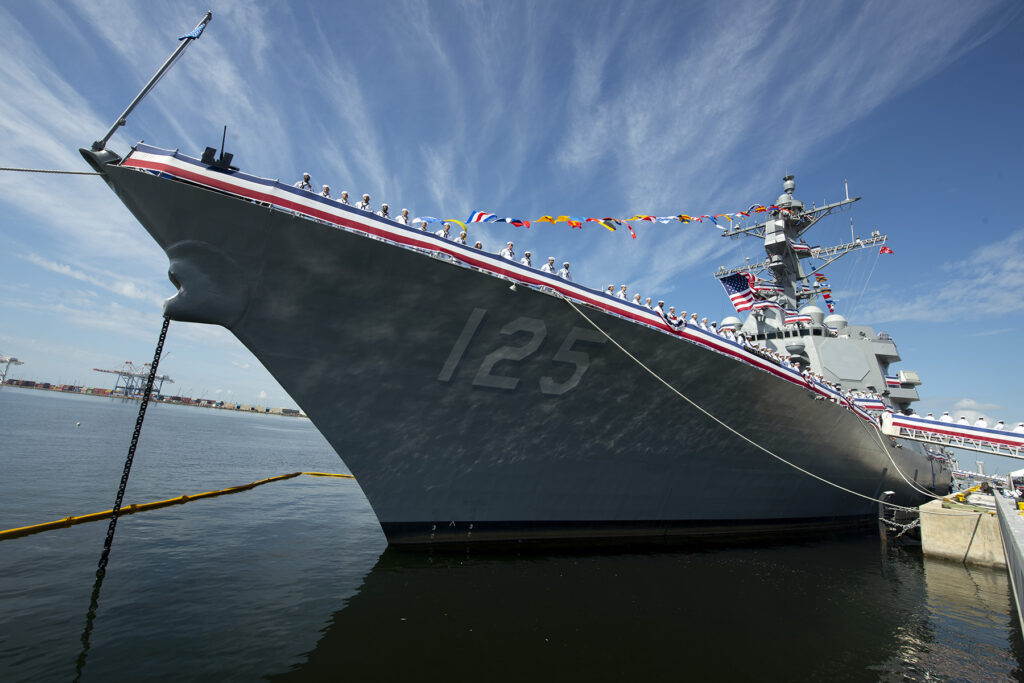
ARLINGTON, Va. — The coalition of suppliers of components, parts, and services for the construction of the U.S. Navy’s aircraft carriers (CVNs) is alarmed at the proposed two-year delay of authorization for CVN 82 — the fifth Gerald R. Ford-class CVN — and the potential disruption to the supplier base for the ships. 

Lisa Dante Papini, chair of the Aircraft Carrier Industrial Base Coalition (ACIBC), which represents more than 2,000 businesses, said she is “extremely concerned” about the proposed delay for CVN 82 from 2028 to 2030, noting that 40% of the suppliers said in a survey that they would be negatively affected by the delay. 

Papini said the delay likely would involve worker layoffs, production lines going cold, and suppliers de-prioritizing military requirements and seeking more work in other sectors. She noted that re-starting cold production lines and hiring or re-hiring workers is a lengthy and expensive process. The skills needed — such as welding — are in high demand in other industries as well, complicating the attraction of new workers.  

“That’s why we’re concerned about going cold,” she said.  

She also explained the need for advance funding for supplying aircraft carrier construction three years in advance of construction start. 

“We’re so far to the left of those delivery dates,” she said. That’s why we ask for advance funding.”    

Papini, like her counterparts in the Amphibious Warfare Industrial Base Coalition and the Submarine Industrial Base Coalition, emphasizes that stability and predictability of shipbuilding helps the supplier base “level-load their work;” recruit, train, and retain their workers; reduce costs, and deliver products on time.  

The ACIBC met with senators and congressmen on March 20 on Capitol Hill to explain its concerns and priorities.


Navy Narrows Fiscal 2025 Aircraft Procurement to Five Types

PHILIPPINE SEA (Jan. 29, 2024) An F-35C Lightning II from the “Warhawks” of Strike Fighter Squadron (VFA) 97 prepares to recover on the flight deck of Nimitz-class aircraft carrier USS Carl Vinson (CVN 70). (U.S. Navy photo by Mass Communication Specialist 2nd Class Isaiah B. Goessl)

By Richard R. Burgess, Senior Editor 

ARLINGTON, Va. — The Department of the Navy is proposing to procure 75 aircraft with $16.2 billion in the fiscal 2025 budget, but those 75 are divided among only five types. 

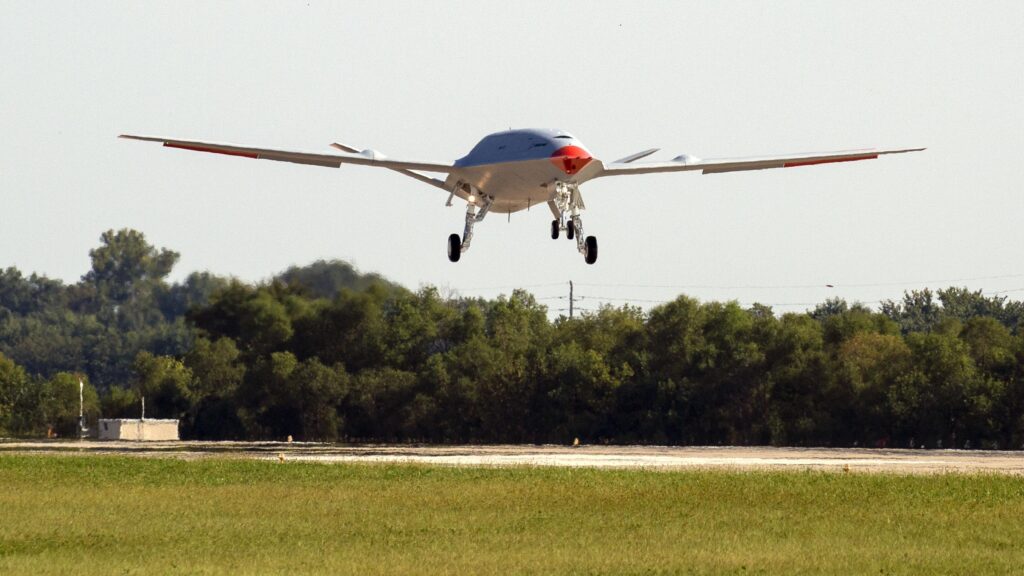
The 2025 budget proposed funding 13 F-35B Lightning II strike fighters for the Marine Corps; 13 F-35C carrier-based variants for the Navy and Marine Corps; 19 CH-53K King Stallion heavy-lift helicopters for the Marine Corps, 27 T-54 multi-engine training aircraft for the Navy, and three MQ-25A Stingray unmanned aerial refueling aircraft for the Navy. 

The budget is noteworthy in that the 2025 procurement funding of such types as the F/A-18E/F Super Hornet strike fighters, EA-18G Growler electronic attack aircraft, E-2D Advanced Hawkeye radar warning aircraft, MH-60R/S helicopters, MV-22B and CMV-22B Osprey transport aircraft, AH-1Z Viper and UH-1Y Venom helicopters, P-8A Poseidon maritime patrol aircraft, MQ-4C Triton and MQ-9A Reaper unmanned surveillance aircraft, and TH-73A Thrasher training helicopters — barring adjustment by the Congress — has been completed, although in some cases deliveries are ongoing. In some cases, the production lines will remain open for some time, building aircraft for foreign customers and which could resume production for the Navy and Marine Corps if needed.  

The only new types on the five-year horizon are a replacement for the T-45 Goshawk training jet and a replacement for the E-6B Mercury strategic communications aircraft, planned to be a version of the C-130J Super Hercules.  

Procurement of the KC-130J Super Hercules tanker/transport for the Marine Corps is being gapped for four years, with one planned for fiscal 2029. The fact that C-130Js are in production for other services and nations means that this gap does not have major implications for the Lockheed Martin production line. 

The 2025 Future Years Defense Plan lists planned Department of the Navy procurement for 2026 through 2029 as 58, 67, 77, and 90 aircraft, respectively. 

Noteworthy is — as of this writing — that the fiscal 2024 defense budget still is mired in the Congress. 


The Correspondent and the Colonel: Pearl Harbor and 9/11 Link Defender and Daughter

Charles Compton at Coastal Air Patrol Base 1 in Atlantic City, New Jersey. Compton family

Charles Compton was like many a Chicago teenager who learned to fly in the late 1930s and impressed a lovely girl or two along the way on airborne dates. One beauty would become his wife.

“It was a lot of fun years. But then it all changed,” Compton said in 2011 when he was promoted to the rank of colonel by the Civil Air Patrol to honor his life of service.

Dec. 7, 1941

“I was out practicing touch and goes, and I landed. Somebody came out and said, “all aircraft are grounded,” he said. No one knew what was coming next.

Sept. 11, 2001

ABC News White House Correspondent Ann Compton started a routine day with a chore made easier by a run of the mill story. She was the pool reporter responsible for doing all the fact gathering for other broadcast news media outlets as President George Bush listened as Florida grade schoolers read for him. As a parent It was a lot of fun to witness. But then it all changed.

Compton watched the President’s face as White House Chief of Staff Andy Card whispered in his ear, “A second plane hit the second tower. America is under attack.”

“The Pearl Harbor moment was immediate,” Compton said. “As we were taking off, the Pentagon was hit.”

For the next 10 hours, the network TV reporter was one of the few on Air Force One as the presidential aircraft and its fighter escorts headed for cross-country protection, soaring above a nation of planes quickly descending and landing as fast as they could, wherever they could. All aircraft were grounded, and no one knew what was coming next.

August 1943

A little plane flew through the mist of a New Jersey morning off New York Harbor and pulled into a tight circle to sweep low, glancing for U-boats ravaging shipping just outside major harbors and along the coast. Charlie Compton was in his own plane, wearing a makeshift Army Air Corps uniform of the Civil Air Patrol. The CAP was organized formally six days before Pearl Harbor. America wasn’t ready to defend itself on the home shores due to limited military planes and pilots.

Right after Pearl Harbor, Compton tried to get into the fight and fly with the Army and Navy but was denied by both for having only one kidney. He eventually found his way to the first coastal patrol base of the Civil Air Patrol in Atlantic City, New Jersey.

The Axis Powers were more than ready. An east coast oceanfront of sunbathers and ship traffic quickly became a kill zone of merchant convoys being attacked within sight of shore. The bodies of merchantman washed ashore as ships carrying vital supplies and war materiel to Europe were sometimes sunk amid the explosions and towering flames of torpedoed tankers.

The Germans called it “the happy time.” But the little yellow planes kept coming.

One of them would be Compton and a fellow pilot hunting for submarines one day, escorting a convoy the next. Through the Army and then Navy, the escorts began to make a difference.

The goal wasn’t necessarily to sink subs but to drive them away, like a border collie does predators of the sheep. And in short order, the sheep were no longer going to the slaughter and the hunter became the harried.

The network of coastal patrol bases stretched from Maine to Mexico.

For some time now the CAP planes had been armed with an assortment of bombs, singly and in pairs.

“In mid-May 1942, senior Army and Navy leaders authorized the arming of CAP coastal patrol aircraft,” according to Frank Blazich Jr., the military history curator at the National Museum of American History. “Depending on capacity, aircraft typically carried one to three 100-pound AN-M30 general purpose demolition bombs; larger aircraft carried either the AN-M57 250-pound demolition bomb, or one 325-pound Mk 17 depth bomb.”

The nascent Battle of the Atlantic wasn’t meant to be won by attrition as much as by harrassing the German subs into diving to avoid being attacked from the air. Every dive to avoid being spotted or attacked meant less time to charge their batteries on the surface.

“We were all out there pretty gung-ho and looking for a fight,” Compton said, but that made the Army weaponers cautious as to when the CAP planes would be armed. “We could tell what kind of day it was going to be if we saw the Army ordnance trailers out there arming the aircraft,” he said.

No bomb loading meant the focus was to be on escort and observation, reporting back to female CAP radio operators.

“And then we would generally fly three-hour missions, by escorting the tankers and the colliers and the cargo ships, up and down the coast … and then hand off to other sections,” he said.

But often there was no one to hand off the overwatch duties to, because the imperiled convoys were making a beeline to Europe. They were on their own, escorted by a handful of navy ships from the U.S., Canada and Great Britain.

“We did fly low enough to give them a wave. And when we saw them off and dipped our wing, and saw them heading east into harm’s way while we were able to go back to our safe haven. We thought a lot about those brave souls, some that didn’t make it,” Compton reflected during his promotion ceremony. 

Even today, his daughter Ann speaks passionately about her father’s feelings of the time.

“That’s a long trek for a merchant ship,” she says, recalling how this part of his service laid heavy on his heart then, and on hers today. “The pain he felt that they were sailing into harm’s way and he could no longer protect them — he took that very hard.”

Blazich wrote that “on July 19, 1942, German Admiral Karl Doenitz, commander of all German U-boats, withdrew his last submarines operating off the East Coast after increasing losses and reduced success against merchant traffic.”

The former national historian of the Civil Air Patrol, Blazich said “the CAP coastal patrol operation ceased on August 31, 1943, in accordance with an Army agreement to transfer all anti-submarine operations to the Navy.” His definitive and painstakingly researched book, “An Honorable Place in American Air Power” (2020 Air University Press, Maxwell AFB Florida) tells the full tale, as does this fact sheet:

The CAP reported the following to the U.S. military regarding the 18 months of coastal patrol operations:

• 57 attacks on enemy submarines

• 82 bombs dropped against submarines

• 173 radio reports of submarine positions

• 17 floating mines reported

• 36 dead bodies reported

• 91 vessels in distress reported

• 363 survivors in distress reported

• 836 irregularities noted

• 1,036 special investigations at sea or along the coast

• 5,684 convoy missions as escorts for Navy ships

• 86,685 total missions flown

• 244,600 total flight hours logged

• Over 24 million total miles flown

• 26 fatalities, 7 serious injuries, 90 aircraft lost.

The cost of freedom was paid for with the blood and sweat of brave civilian volunteers whose limitations for military service were transcended to remarkable service to the country.

Colonel Charles Compton lived on to have a family that included two boys and the reporter girl who would be an eyewitness to the next time the improbable happened, America caught unaware and under siege. His daughter Ann reports his final years, including his 104th in 2020, were marked by birthday tributes by the cadets he cared so much about, and cared for him in turn. His legacy and theirs lives on in the Evanston, Illinois, squadron that bears his name.

A larger family exists today in the 60,000 adult and cadet volunteers of the Civil Air Patrol, whose core missions of emergency services, aerospace education and youth program continue to serve America in “defending the skies of the homeland,” including security exercises with intercepting Air Force and Air Guard jets, drug interdiction maneuvers with homeland security aircraft, along with humanitarian disaster relief and search and rescue missions saving dozens of lives each year with the world’s largest fleet of single-engine airplanes.

Colonel Compton (far left) with sons and daughter Ann Compton at Naval Air Station Glenview, Illinois. Compton family

Sept. 12, 2001

As yet another small plane of the Civil Air Patrol took off from New Jersey, the situation was that all planes were grounded and no one knew what would happen next.

Like so many before, it rose over the New York and New Jersey shores, yet this time it did not swoop low over the coastline or sweep past the harbor and out to the shipping lanes.

Instead of turning back to the harbor of New York City it headed up above Manhattan, the sole civilian plane in the skies of all America, swooping low to begin its circling run through the mist and around smoke rising over the wreckage of the twin towers of the World Trade Center.

New Yorkers below were still in a state of shock. Their only sense of security that remained came from the swift arrival of Navy fighters from the aircraft carriers George Washington and John F. Kennedy the day before. Those F/A-18 Hornets joined Air Force and Air National Guard interceptors in an ongoing aerial combat aircraft patrol. An obvious deterrent to terrorism, but more importantly a visual representation of protection from above.

The little red, white and blue aircraft circling the towers was doing a familiar role in a new way. Beneath its red tail marked USAF AUX and bearing the crest of the Civil Air Patrol, Lt. Col. Jacques Heinrich and his mission crew digitally photo-mapped the wreckage, to show the paths to save and the ways to recover.

The vital images from that CAP colonel were authorized by, and delivered to, President Bush at the White House as Ann Compton continued her journalistic vigil, an echo of the living example father set, protecting the sea lanes and the sea services with no pay or fanfare six decades before.

Jim McClure is a life member of the Navy League of the United States and a frequent contributor to Seapower. This story originally appeared in the February-March issue of Seapower magazine.


Navy Awards Bell Textron Contract for 12 AH-1Z Helicopters for Nigeria

KOREA STRAIT (March 29, 2023) An AH-1Z Viper helicopter takes off from the amphibious assault ship USS Makin Island (LHD 8), March 29, 2023. (U.S. Marine Corps photo by Gunnery Sgt. Chad J. Pulliam) 

By Richard R. Burgess, Senior Editor 

ARLINGTON, Va. — The government of Nigeria is slated to receive 12 AH-1Z Viper helicopter gunships, becoming the third foreign customer for the Viper. 

In a March 12 contract announcement, the Naval Air Systems Command awarded to Bell Textron of Fort Worth, Texas, a $455 million “firm-fixed-price, undefinitized contract for the production and delivery of 12 AH-1Z helicopters for the government of Nigeria, as well as provides associated engineering, program management and logistics support, and non-recurring engineering for obsolescence.” 

Deliveries to the Nigerian government are expected to be complete by July 2028. 

Bell built 189 AH-1Zs for the U.S. Marine Corps and 12 for Bahrain, and is building four for the Czech Republic, along with eight UH-1Y Venom utility helicopters. The Czech Republic also is receiving free of charge six AH-1Zs and two UH-1Ys that formerly were part of the U.S. Marine Corps’ inventory.


Navy 2025 Budget Requests Only 6 Battle Force Ships

NAVAL STATION NORFOLK — The Virginia-class fast-attack submarine USS Washington (SSN 787) prepares to moor pierside during the boat’s homecoming at Naval Station Norfolk, Dec. 15, 2023. (U.S. Navy photo by Mass Communication Specialist 1st Class Cameron Stoner)

By Richard R. Burgess, Senior Editor 

ARLINGTON, Va. — The U.S. Navy’s fiscal 2025 budget request proposes only six battle force ships, which, combined with planned ship retirements, would reduce the size of the battle force from 296 ships to 287 ships. 

The Navy’s proposed $257.6 billion budget — which officials said prioritizes readiness over procurement, would include $32.4 billion for ship construction. Those funds would procure one Block VI Virginia-class attack submarine (SSN), two Flight III Arleigh Burke-class guided-missile destroyers, one Constellation-class guided-missile frigate, one Flight II San Antonio-class amphibious platform dock ship (LPD), and one medium landing ship. 

The proposal for only one Virginia-class SSN, rather than two, was made out of concern for the submarine industrial base, which currently is delivering only 1.3 hulls instead of the desired two SSNs per year. The gap is designed to help realign the investments in the submarine industrial base. Under the Future Years Defense Plan (FYDP), the Navy expects to return to the procurement rate of two SSNs per year in fiscal 2026. Navy Undersecretary Erik Raven, speaking to reporters March 11 at the budget roll-out, said advance procurement for the SSNs is proceeding to “set up the program for long-term success.” 

The ship construction budget also includes continued incremental funding for two aircraft carriers and second Columbia-class ballistic-missile submarine, the refueling and comprehensive overhaul of a Nimitz-class aircraft carrier, the service-life extension of three aircushion landing craft, and the purchase of two used commercial ships for use as sealift ships.  

The procurement of the San Antonio-class LPD would mark a reversal from the 2024 plan to end procurement of the class. Navy Undersecretary Erik Raven, speaking to reporters March 11 at the budget roll-out, said the Navy is intent on growing the large- and medium amphibious warfare ship fleet to a minimum of 31 ships. 

The FYDP features the procurement start in fiscal 2027 of a new class of ship, the light replenishment oiler (T-AOL).  

Raven said the Navy currently has 88 ships under contract, with 66 of those under construction. 

Planned ship retirements include two Ticonderoga-class guided-missile cruisers (Shiloh and Lake Erie); two Independence-class littoral combat ships (Jackson and Montgomery), one Whidbey Iland-class dock landing ship (Germantown); one Montford Point-class expeditionary transfer dock ship (John Glenn) and the four oldest Spearhead-class expeditionary fast transports (Spearhead, Choctaw County, Millinocket, and Fall River). 

Rep. Rob Wittman, R- Virginia, a member of the Seapower subcommittee of the House Armed Services Committee, criticized the ship construction plan as too little. 

“The president is once again proposing to shrink the Navy by reducing the Navy force structure from 296 ships in FY24 to just 287 in FY25. By only building six ships, President Biden is also threatening to devastate our naval fleet and the Hampton Roads industrial base by slowing aircraft carrier construction and failing to meet the two Virginia-class submarines per year cadence required to support the AUKUS security pact,” Wittman said in a March 11 statement. 


Navy Reserve Receives Its First P-8A Poseidon Maritime Patrol Aircraft

TUKWILA, Wash. (March 6, 2024) Cmdr. James Tilden (fifth from left), executive officer of Patrol Squadron 62, presents a dedication plaque to Vice Adm. John B. Mustin (sixth from left), chief of Navy Reserve and commander of Navy Reserve Force, after taking delivery of the first new P-8A Poseidon for the Naval Air Force Reserve during a ceremony at Boeing Military Delivery Facility in Tukwila, Washington, March 6, 2024. (U.S. Navy photo by Mass Communication Specialist 1st Class Harry Andrew D. Gordon)

By Richard R. Burgess, Senior Editor 

ARLINGTON, Va. — The first Boeing P-8A Poseidon maritime patrol aircraft for the Navy Reserve has been delivered to Patrol Squadron 62 (VP-62). 

In March 6 ceremonies at the Boeing Military Delivery Facility in Tukwila, Washington, Vice Adm. John B. Mustin, chief of Navy Reserve and commander of Navy Reserve Force, was on hand for the delivery, where a dedication was presented to him by Cmdr. James Tilden, executive officer of VP-62.  

VP-62, based at Naval Air Station Jacksonville, Florida, is one of two Navy Air Reserve patrol squadrons. It formerly operated the P-3C Orion maritime patrol aircraft. The transition brings the Navy closer to full operational capability with the P-8A. The other reserve VP squadron, VP-69 at Naval Air Station Whidbey Island, Washington, also will be equipped with the P-8A. 


Navy Opens Second Triton UAV Forward Deployment Site

Caption: NAVAL AIR STATION SIGONELLA, Italy (March 2, 2024) – Capt. Ronald H. Rumfelt, Jr., commanding officer, Unmanned Patrol Squadron (VUP) 19 “Big Red” (left), Vice Adm. Daniel “Undra” Cheever, commander, Naval Air Forces (center), and Capt. Aaron Shoemaker, commanding officer, Naval Air Station (NAS) Sigonella (right), participate in a ribbon cutting ceremony to celebrate the inaugural deployment of VUP- 19’s second forward-deployed detachment, and the opening of a new MQ-4C Triton hangar at NAS Sigonella, Italy, March 2, 2024 (U.S. Navy Photo by Mass Communication 2nd Class Jacquelin Frost) 

By Richard R. Burgess, Senior Editor

ARLINGTON, Va. — The Navy squadron that operates the MQ-4C Triton high-altitude, long-endurance unmanned aerial vehicle has opened its second deployment site, with this one located at Naval Air Station (NAS) Sigonella, Sicily. 

During March 2 ceremonies at Sigonella, the commanding officer of Unmanned Patrol Squadron 19 (VUP-19), Capt. Ronald H. Rumfelt Jr., was joined by Vice Adm. Daniel “Undra” Cheever, commander, Naval Air Forces, and Capt. Aaron Shoemaker, commanding officer, of NAS Sigonella in a ribbon cutting for the new hangar on the station that will support the Triton aircraft operating from the station, according to an NAS Sigonella release. 

Home-based at NAS Jacksonville, Florida, Unmanned Patrol Squadron 19 (VUP-19) brought the Triton to its Initial Operational Capability status last summer with the establishment of an orbit at Andersen Air Force Base in Guam. The squadron had maintained two Tritons — equipped with the baseline Integrated Functional Capability (IFC) 3 configuration — on an Early Operational Capability deployment in Guam from May 2020 until March 2023. The Tritons provided MISR&T (maritime intelligence, surveillance, reconnaissance, and tracking) for the U.S. 7th Fleet while developing the concept of operations and the tactics to refine the Triton’s operations. The detachment operated from Guam; Naval Air Facility Misawa, Japan; and Marine Corps Air Station Iwakuni, Japan. 

VUP-19 since has received newer versions in the IFC 4 configuration, which are equipped with a more capable sensor suite that will allow them to replace the Navy’s fleet of EP-3E Orion electronic reconnaissance aircraft.  

From Sigonella, also a rotational site for squadrons of the Navy’s P-8A Poseidon maritime patrol aircraft, the Tritons will provide the U.S. Sixth Fleet with MISR&T support. 


STRATCOM Commander Affirms Need for Sea-Launched Cruise Missile-Nuclear

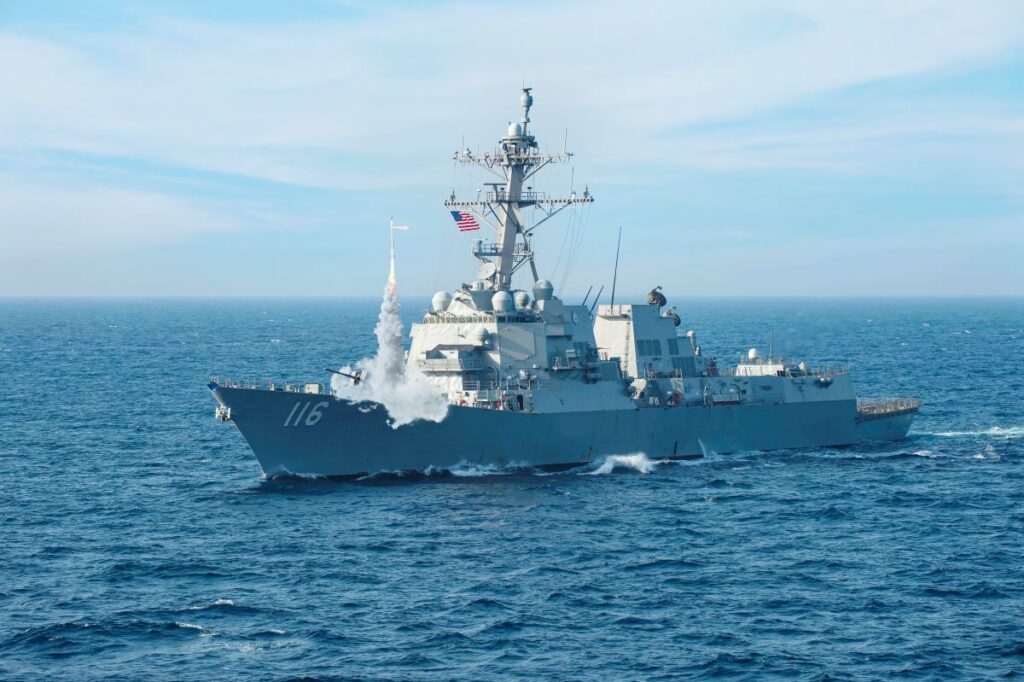
Caption: PACIFIC OCEAN (Nov. 30, 2020) The guided-missile destroyer USS Chafee (DDG 90) launches a Block V Tomahawk, the weapon’s newest variant, during a three-day missile exercise. The Navy is developing a nuclear-tipped sea-launched cruise missile as a future nuclear deterrent. (U.S. Navy photo by Ensign Sean Ianno) 

By Richard R. Burgess, Senior Editor 

ARLINGTON, Va.—The operational commander of the nation’s nuclear arsenal has reiterated to Congress the requirement for a sea-based nuclear-tipped cruise missile.  

Testifying Feb. 29 before the Senate Armed Services Committee, Air force General Anthony J. Cotton, commander, U.S. Strategic Command called for development and deployment of the Sea-Launched Cruise Missile – Nuclear (SLCM-N), a program called for in the 2018 Nuclear Posture Review (NPR). 

Cotton called for continued modernization of the U.S. nuclear deterrent forces, including the SLCM-N. 

“While our legacy systems continue to hold potential adversaries at risk, it is absolutely critical we continue at speed with the modernization of our nuclear triad, including land-based ICBMs [intercontinental ballistic missiles], the B-21 [bomber], the B-52 [bomber], the Columbia-class submarine, the nuclear sea-launched cruise missile, and LRSO [Long-Range Stand-Off weapon],” Cotton said.  

The 2018 NPR called for the United States to “pursue a nuclear-armed SLCM, leveraging existing technologies to help ensure its cost effectiveness. SLCM will provide a needed non-strategic regional presence, an assured response capability. It also will provide an arms-control-compliant response to Russia’s non-compliance with the Intermediate-range Nuclear Forces Treaty, its non-strategic nuclear arsenal, and its other destabilizing behaviors.” 

The Biden administration, with support of Democratic representatives in the Congress, has opposed development of the SLCM-N, citing what they said was the cost of the program, the adequacy of the current nuclear deterrent arsenal, and a risk to nuclear stability.  

Despite the administration’s opposition, Congress authorized $25 million in the 2023 National Defense Authorization Act for research for the SLCM-N. The administration did not request funding for research for the SLCM-N in its fiscal 2024 budget request, but Congress approved establishing the SLCM-N as a program of record. 

The fiscal 2024 NDAA “authorized the Sea-Launched Cruise Missile – Nuclear, or SLCM-N, as part of the program of record with initial operating capability by 2034, said Jill Hruby, National Nuclear Security Administration administrator, speaking Feb. 1 at the 2024 Nuclear Deterrence Summit. “SLCM-N will provide a new low yield at sea nuclear deterrent. NNSA is working closely with the Navy and Office of Secretary of Defense to develop a recommendation for Congress by early March on the details of the SLCM-N program.” 

The Navy used to field a nuclear-armed version of the Tomahawk Land-Attack Missile — the TLAN-N — which was retired about 2010. 


Raven Warns of CR Impact on Navy Department Budget

By Richard R. Burgess, Senior Editor

ARLINGTON, Va. — The Department of the Navy (DON) is facing a reduction of $12 billion of buying power if the Defense Department has to operate through fiscal 2024 under a continuing resolution (CR) and Congress does not pass a supplemental budget, a top DON official said. 

“The misalignment in funding lines results in $26 billion of funding misalignments that we may have in our coffers — but not be able to spend it on the programs that matter,” said Under Secretary of the Navy Erik Raven, speaking Feb. 28 to reporters. “When you add all this up, this is nearly a 10% impact to our topline. This is getting into the territory of the 2013 sequester in terms of fiscal impacts. So, this is a very serious situation.”  

Raven said that if a full-year CR is the case, the DON’s priorities would be readiness first and people second. “[W]hat that means is taking risk and investment programs. And I’m very concerned about our ability not only to execute that strategy unless given really unprecedented flexibilities by Congress, but also the follow-on impacts on industrial base and our modernization plans.” 

Regarding readiness, Raven said that current operations, such as the effort to defend commercial shipping in the Red Sea from Houthi rebels, would take precedence.  

“We need to be able to perform our mission,” he said. “And simply if we don’t have the resources that we need to execute all of our missions, we have to make tough choices. But between the ability to fight tonight and be ready for all the threats versus preparing for the future and modernizing our forces it is a tough decision. But we have to lay our chips somewhere and that’s on the ability to perform our missions today.” 

He listed a few programs that would be severely affected by a year-long CR and lack of a supplemental from Congress: 

  • The overhaul of the attack submarine USS Boise, delayed for seven years and finally slated, would not be executed. 
  • The amphibious assault ship construction program would not be kept on track. 
  • The Virginia-class attack submarine program would face a $2 billion shortfall. 
  • Munition funding would suffer “across the board.” 

  • Construction of three child-development centers — two in Virginia and one in Guam — would be delayed. 
  • Doubling of funds for SM-6 missiles — used in the Red Sea operations — would not be doable. 
  • A $3.4 billion investment in the submarine industrial base — to enable production of submarines at a rate of one Columbia ballistic-missile submarine and two Virginia-class submarines — would have to be delayed. 


SURFACE WARFARE: The Nucleus of American Naval Power

190711-N-PJ626-5159 CORAL SEA (July 11, 2019) U.S. Navy, U.S. Coast Guard, Australian Navy, Canadian Navy and Japan Maritime Self Defense Force ships sail together in formation during Talisman Sabre 2019 . Talisman Sabre 2019 illustrates the closeness of the Australian and U.S. alliance and the strength of the military-to-military relationship. This is the eighth iteration of this exercise. (U.S. Navy photo by Mass Communication Specialist 2nd Class Kaila V. Peters)

By Bryan McGrath

The U.S. Navy is too small for what is asked of it, and what is asked of it is insufficient to meet the nation’s needs. We have too few ships, submarines, aircraft, aircraft carriers, people, sensors, weapons and networks. China’s People’s Liberation Army Navy(PLAN) is growing faster than any navy has since the U.S. buildup to the Second World War, while the U.S. remains committed to efficient peacetime production levels that ignore the reality of this competition. Relative to the threats it faces, American naval power is weaker than at any time since the start of World War II. While the U.S. Navy remains the world’s most powerful seaborne combat force, not even the Soviet navy posed as dangerous a threat as China’s PLAN does today. The nature of that threat presents the prospect of a PLAN so powerful it could dominate the Western Pacific, destroying the legitimacy and effectiveness of America’s network of friends and allies by raising questions about America’s will and capability to support that network. The ability to dominate a region of the world responsible for 65% of global GDP represents a profound threat to U.S. national security and prosperity, and that of like-minded nations globally. A broad-based naval building program is required to meet China’s challenge and all elements of the modern, balanced fleet should expand. This essay focuses on the surface force, comprised of large surface combatants, small surface combatants and amphibious ships. For the purposes of this essay, critical surface platforms are excluded, but they are no less critical as a result. These include logistics ships, special mission ships, ocean-going tugs, sealift ships, tenders and the like. The surface force cannot operate without these other ships, and their importance to a coherent fleet design should not be discerned by their exclusion in this essay.

Navy Mission

The Navy shall be organized, trained and equipped for the peacetime promotion of the national security interests and prosperity of the United States and for prompt and sustained combat incident to operations at sea. It is responsible for the preparation of naval forces necessary for the duties described in the preceding sentence except as otherwise assigned and, in accordance with integrated joint mobilization plans, for the expansion of the peacetime components of the Navy to meet the needs of war. (10 USC Sec. 8062).

Members of the Navy League and readers of Seapower can be forgiven if this mission statement looks unfamiliar, as it has appeared in this form only since the passage of the 2023 National Defense Authorization Act (NDAA) in December 2022. Prior to this, Title 10 did not mention peacetime security interests or the promotion of American prosperity, functions the Navy has conducted since the earliest days of the republic. This disconnect between the Navy’s legal mission and what was routinely demanded of it was stark, and the sole focus on “… prompt and sustained combat incident to operations at sea” led to bureaucratic maneuvering inside the Pentagon by other services and the Office of the Secretary of Defense when Navy officials sought a fleet large enough to carry out both its wartime and peacetime roles. The answer to the additional capacity necessary for operations other than war often was reduced to “that is not your mission.” No more.

Congress is constitutionally obligated to “provide and maintain a Navy” (Art I Sec. 8) and the Navy is legally obligated to protect and promote the nation’s security and prosperity in peace and be prepared to fight and win in war. No element of the modern fleet is as central to these missions as the surface force, and that force must be properly resourced for the things that are asked of it.

Tasks of the Surface Force

The tasks of the surface force are the tasks of the Navy, and while the following list is not doctrine, it represents a solid foundation for discussion.
Conventional deterrence.

To deter aggression against American interests, the U.S. Navy must be able to control the seas and skies where it operates and project power from there. It must also be capable of denying control of the sea to others. A controlled sea is an unnatural condition; the seas are, and ought to be, free. Imposing and maintaining sea control is a function of conflict, and the ability to control the sea in order to project power is the Navy’s primary contribution to conventional deterrence. Lethal, networked, sustainable and forward-deployed surface ships are the linchpin of the nation’s forward-based efforts to promote security and prosperity, and they represent the vanguard of seapower that would turn immediately to Joint wartime operations should deterrence fail. One benefit of a strong deterrence posture is the assurance provided to allies and like-minded friends that the United States is a trusted local partner. Strategic (or nuclear) deterrence is a foundational task of the Navy, but it is the domain of the submarine force.

Crisis response

Crises occur where our interests lie, and those crises are both man-made and natural. Capable, flexible, available surface forces represent the humanity of the American people when disaster strikes or aggression flares. The forces we design and build for the delivery of violence are also forces of charity and relief, and they move from one role to the other without modification.

Naval diplomacy. This historic and critical task includes building partner capacity, assuring allies and friends, asserting U.S. rights and interests (including freedom of navigation), and exercising U.S. authority.

Warfighting. The Navy acts as the predominant maritime portion of the joint force in the waging and winning of war. It exercises sea control and sea denial to project power or to confound adversary power projection.

War termination. The Navy must prevent war, wage war and end war. The termination of war is a pursuit — especially at sea — that differs sufficiently from war-waging as to merit its own task, and it levies different demands upon the fleet architecture. Platforms and capabilities with less value in deterring or waging war can be of significant value in the termination of war. How war is brought to conclusion cannot be an afterthought.

Note that “naval presence” or “forward presence” is not included in this list. This is because forward presence is not a mission, it is a posture, a habit of operating. It unfortunately entered the pantheon of Navy missions in the mid-1970s in a famous essay by then Naval War College President Vice Adm. Stansfield Turner, and Navy leaders have tied themselves in knots ever since attempting to explain why “being there” is a mission, as if being there were an end unto itself. If the Navy could perform its Title 10 mission and associated tasks by surging from home ports when the nation’s interests were threatened, it should be made to do so. If the Navy could perform its Title 10 mission and associated tasks as a coastal and territorial waters defense force (or coast guard) when the nation’s interests were threatened, it should be made to do so. If the Navy could perform its Title 10 mission and associated tasks by occasionally sending forth cruising squadrons to “show the flag” when the nation’s interests were threatened, it should be made to do so. All of these operating postures offer the possibility of a smaller and more economical Navy due to vastly different (from today’s) fleet architectures. None of these alternative postures offer the prospect of mission accomplishment, and that is why forward presence is the preferred posture for the U.S. Navy.

Director, Surface Warfare Division (N96) Office of the Chief of Naval Operations Rear Adm. Fred
Pyle speaks on the significance of the new Next Generation Guided-Missile Destroyer (DD Test
Site (LBTS) during a ribbon cutting ceremony in Philadelphia on March 21, 2023.

Vulnerability of the Surface Force

Surface ships are vulnerable to a variety of enemy threats, including missiles, mines, and torpedoes. Adversary targeting methods and competence have improved, and it grows increasingly harder to “hide” surface ships — especially large surface ships — at sea. It is true that China’s vast buildup increases the vulnerability of the surface force in the Western Pacific, but this is an incomplete understanding of the dynamic.

First, everything on the modern battlefield has become more vulnerable. This does not mean those things are no longer valued. The war in Ukraine has demonstrated both the vulnerability and the value of heavy armor, and the same would be expected to apply to the surface force in the event of its wartime employment. How the fleet is operated influences its vulnerability, and the sea remains a difficult environment for precision targeting, especially against a competent Navy.

Second, vulnerability is a feature of conflict, after the shooting starts. Yet the Navy spends the overwhelming portion of its time not being shot at while it pursues the other functions and tasks derived from its Title 10 mission. The fleet must be capable enough to win in combat and large enough to conduct its global peacetime tasks. There is a tradeoff between the exquisite capabilities needed for the former and the mass/capacity of necessary for the former and the latter. Both must be resourced.
Next, for the United States to conduct its mission of conventional deterrence, it must have powerful, lethal, networked surface forces forward — again, not for the sake of being forward, but to demonstrate both the will and capability to deter. What in wartime contributes to vulnerability is, in peacetime, a vital contributor to deterrence: known, visible power on the horizon. There is no substitute for the certainty of response this force provides to the conventional deterrence posture. A serious threat to the surface force comes not from the Chinese navy but from American political leadership. Insufficient demand for ships caused the shipbuilding industry to shrink to the point where it is challenged to provide the peacetime needs of the Navy when the country needs to produce at a war footing. There is an “if you build it, they will come” aspect to growing the shipbuilding industrial base, and the first step is for political leadership to agree to a substantial naval buildup, one that workers with options can depend on, and that attracts new workers to critical trades. Pointing at the industrial base as the reason we cannot expand our Navy confuses cause and effect.

Needs of the Surface Force
It must grow. As indicated in the previous paragraph, the surface force must grow. The Navy’s 30-year shipbuilding plan should commit to three large surface combatants a year, four small surface combatants a year, and a building rate sufficient to meet and maintain a fleet of 38 amphibious ships. The Navy and Marine Corps should continue to develop the landing ship medium class, but not at the expense of 38 large, capable amphibious ships.

It must be more lethal. There is no excuse for any ship of the surface force to be without offensive missiles capable of targeting other ships, targets ashore, or both. Whether through bolt-on expeditionary launchers or installed and integrated systems, amphibious ships and all littoral combat ships retained in service must become more lethal. By creating additional operational dilemmas for the adversary, each individual ship becomes less vulnerable. Those launchers (and the launchers already fielded) must be filled with increasingly more capable missiles, and more of those missiles must be acquired. Expeditionary reloading of any launching system we field cannot no longer be delayed. It must be more capable. The operational dilemmas posed by a more lethal surface force are increased when that surface force can employ its weapons at their maximum range. To do so, the surface force must have a capable organic intelligence, surveillance, and reconnaissance platform to replace its aging helicopter fleet, one that can find and fix targets hundreds of miles from the ship from which it launched. Finally, we must build on the legacy of excellence in the Aegis Weapon System by moving to the Navy’s Integrated Combat System, or ICS, an approach to command and control that ties individual ships together in a fighting network that provides in-stream battle management, weapons pairing and allocation and response options across the ensemble. It must evolve. We cannot build Arleigh Burke-class destroyers forever and continuing to avoid moving to the next-generation destroyer (DDG(X)) will preclude fielding of advanced weapons the fleet needs today. The Navy must propose, and the Congress ratify, a plan to move from building three Flight III DDG’s a year to three DDG(X)’s a year in the next decade. We must move faster in supplementing the current fleet with unmanned platforms that extend sensor coverage and magazine depth. And we must field a class of single-mission patrol boats built in numbers to employ surface-to-surface missiles in archipelagic seas. We can no longer aim for efficient peacetime production as the standard for acquisition; we must prepare for conflict and accept that there may be inefficiency involved.

Conclusion

This essay is timed for publication coincident to the January 2024 gathering of the Surface Navy Association in Arlington, Virginia, and is designed to encourage conversation and debate there and elsewhere. To this point, there is no evidence the alteration to the Title 10 mission of the Navy has had any impact on Department of Defense resource allocation, at least as can be discerned from the fiscal year 2024 DoD budget submission. It is for those interested in seapower — readers of this journal and members of the Navy League — to demand that our elected officials hold DoD and Navy officials accountable for fully implementing the Navy mission and resourcing accordingly. A strong, capable surface force is central to that mission, and there is considerable work to be done in achieving it.

Bryan McGrath is the Managing Director of The FerryBridge Group LLC defense consultancy. The views expressed in this essay are his.