Q&A: Ashley Johnson, Technical Director, Naval Surface Warfare Center, Indian Head Division
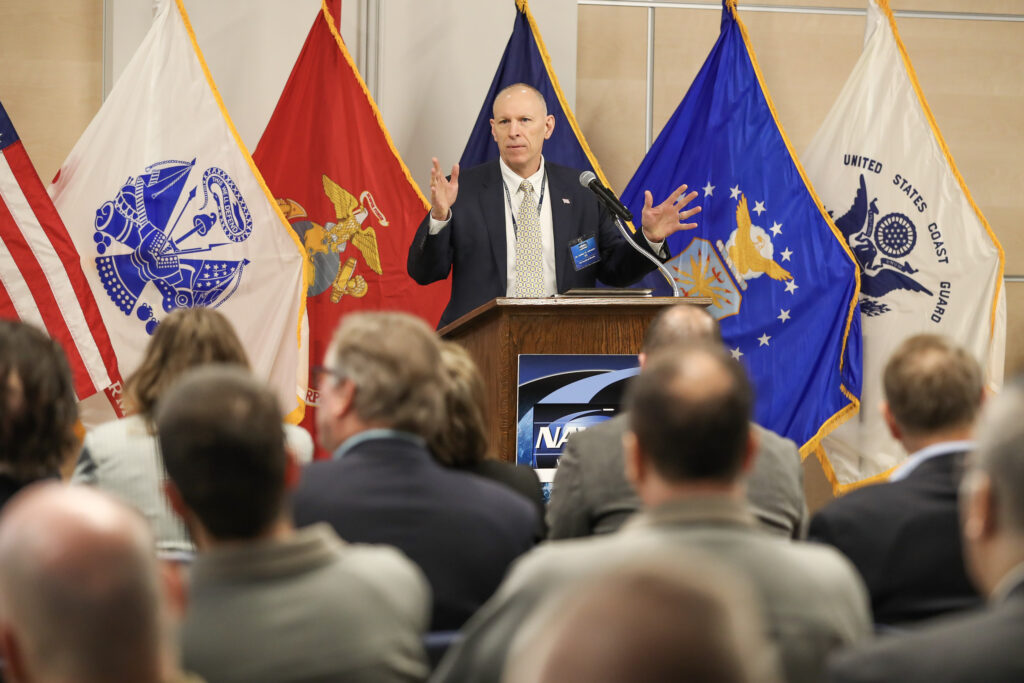
Ashley Johnson, technical director of Naval Surface Warfare Center Indian Head Division, briefs the center’s modernization plan to members of the southern Maryland industrial community. U.S. Navy | Matthew Poynor

The Naval Surface Warfare Center Indian Head Division (NSWC IHD) is a working capital organization that develops and manufactures energetics for the Navy, Marine Corps and other services. The IHD in going through a $1.9 billion upgrade called the Energetics Comprehensive Modernization Plan (ECMP) to improve its capabilities and infrastructure to meet the requirements of the future.

Ashley Johnson, a Senior Executive Service civilian, became the technical director of Naval Surface Warfare Center, Indian Head Division in 2014. He discussed the role of the Navy’s own manufacturer of energetics with Senior Editor Richard R. Burgess. Excerpts follow.

What is the mission of the Indian Head Division?

JOHNSON:  The short answer is full-spectrum energetic materials, from cradle to grave. We do basic research, applied research, advanced technology demonstrations, manufacturing, logistics, engineering and fleet support. In the sense of energetic material systems, most people would immediately equate those two things like warheads, rocket motors, and bombs and so forth but it’s really much more expansive than that because it can involve fuzes and handling equipment associated with the systems — such as the packaging, handling, shipping and transportation.

Now that the wars in Iraq and Afghanistan are over for the United States, and with the growing tensions of Russia and China, how is your work shifting?

JOHNSON:  My previous job was the director of Marine Corps Science & Technology and deputy chief of Naval Research, Office of Naval Research for expeditionary warfare and combating terrorism. Our investment in the GWOT [the Global War on Terrorism] writ large was really about finding the enemy: It was a C4ISR, big data, intel, logistics kind of thing, because the assumption, deservingly so, was that we could defeat our enemy without any issue once we found them.

As a result, for that period of time, not a lot was done in the United States in the development of state-of-the-art and attention to detail on the munitions industrial base, commercial or organic. I say that not accusingly, just saying that as a matter of fact. Unfortunately for us, all of our potential adversaries or adversaries — Russia, China, Iran, and North Korea — did not take that vacation. We had a large comparative advantage in that ammunitions space — range, speed, terminal effects, signatures management, safety to some extent. They recognized they were behind, and they continued to invest in those areas, so, we have lost a fairly large comparative advantage as we focused on the necessities of GWOT. 

We’re approaching something that looks an awful lot like the Cold War as it looked in the ‘70s and ‘80s with the Soviet Union, which had a large capability. The question is clearly not can we find them; the question is, can we defeat them because they have systems that can rival ours. The situation is driving us toward really looking at ourselves in the mirror and saying, what is our state-of-the-art? Is it representative of what we are really capable of or is it representative of what we’re willing to continue to keep using? What is our industrial base and are we capable of manufacturing and providing at the point of use all of the things that we think we need in the context of something like we’re seeing in Ukraine where Russia is coming to grips with that. You can use a tremendous amount of ordnance in these kinds of sustained conflicts. Do you have the industrial base with which to sustain that operation?

I was surprised to learn that Indian Head is not just an RDT&E activity but also a major manufacturing facility.

JOHNSON: Indian Head has been in energetics since 1890. Indian Head was established initially as a proving ground for Navy guns, and it literally was cut out of the woods in southern Maryland for that purpose. After its victory in the Battle of Manilla Bay, the Navy recognized that the only vulnerability in its crushing defeat of the Spanish Navy was the fact that the Spanish Navy used smokeless powder. Although it didn’t really factor much into the outcome, it was recognized as a significant liability.

And so, the Navy wanted to pursue the manufacture or acquisition of [smokeless] powder. A commercial vendor was busy manufacturing propellant for European markets and did not have the capacity to produce it for the U.S. Navy. Very shortly after that, a bill was put through Congress and Indian Head was established as a naval powder factory. The Navy started to make its own propellant at Indian Head over a hundred years ago. Indian Head continues to be the source for a lot of unique munitions.

Of course, that’s changed over the years.  For example, a plant was built at Indian Head solely for manufacture of every pound of the propellant for the Polaris Missile System. It did the same thing for [the] Poseidon missile.

Interesting. Is there anything you’re supplying to Ukraine with its war with Russia?

JOHNSON:  I really cannot comment. I would just say we’re relevant to that theater also and I’ll leave it at that.

Indian Head has been involved at the ground floor of supplying munitions for the Navy for over a hundred years and that’s kind of what we’re just being asked to do again.

Specifically, what are we concerned about right now? Solid rocket motors. The Standard Missile figures prominently in this conversation, as do things like Tomahawk. There used to be 12 manufacturers in the United States for tactical rocket motors and now there are only two commercial vendors: Aerojet Rocketdyne in Arkansas and Northrop Grumman, which is using a Navy facility in Rocket Center, West Virginia. That’s it. The largest capacity left in the United States to produce cast composite rocket motors is Indian Head. We have a very large latent capacity that isn’t really being used yet which is why those partnerships are so exciting. Aerojet has partnered with the Navy, and we are going to make rocket motors here for our Standard missile to augment the commercial supply which is exactly where our mission is. We go into areas where we are needed, or we go into areas where no one can go.
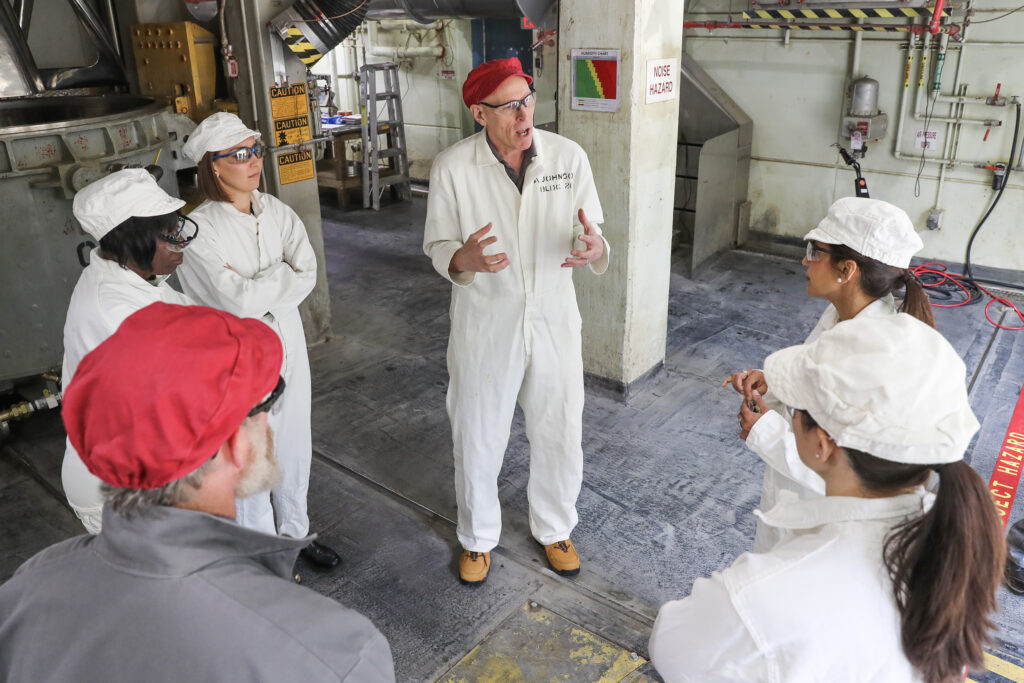
Ashley Johnson speaks with scientists and engineers in one of the Mix, Cast, Cure plants, in front of a 420-gallon vertical mixer at NSWC IHD. U.S. Army | Staff Sergeant Arthur Jones

Indian Head is viewed as part of the organic — government-owned — industrial base. There is no competition with commercial vendors going on right now. All of us in the munitions industrial base recognize it’s an all-hands-on-deck situation. This is the only way that we’re going to meet this need. It’s kind of the way we’ve been doing business for over a hundred years anyway. It’s just for the last 10 or 15, we sort of forgot about it.

Why is the Energetics Comprehensive Modernization Plan (EMCP) needed?

JOHNSON:  We are a very expensive facility. The net replacement value for Indian Head is between $5 [billion] and $6 billion. You’d be hard-pressed to recoup that or duplicate it if I gave you that much money just because of how difficult it is to build facilities like Indian Head. If you have a facility with that kind of unique capacity and capabilities, it takes a lot of money to take care of it.

If you go through a period of time — 10, 15, 20 years — when you use munitions essentially as a bill payer for other requirements, you don’t generate the resources you need to take care of facilities like Indian Head. When you have to exercise it again, you’ve got a “big principal” that you’ve got to pay down. ECMP involves the restoration and sustainment of weight and capacity that the Navy owns. We can do things, but we’re a little out of shape, and so, it’s a readiness issue.

The other part of ECMP is about modernization and increasing capacity. Our commercial partners — Aerojet Rocketdyne and Northrop Grumman — are well over 90% and probably closer to 95% in the utilization rate of whatever capacities they have. There is a need for the industrial base of the United States, commercial as well as organic, to grow to meet the demand signal that we’re seeing for munitions and so forth. Ultimately, we’re getting to 11 times our current capacity to meet the demand signals that we see from all of our customers as well as our commercial partners. That second piece of ECMP really helps build out the capacity to meet the demand.

The third and probably the most interesting, at least for me, element of ECMP is about hybridizing our business and investment model. In the past, we had to operate like a business since we’re a working capital fund activity as opposed to a general funded activity. That creates problems in periods of a bear market because, if I’m asked to recoup all my cost from just my customers, when people aren’t buying things, it becomes hard to amortize the costs. That’s when things don’t get done. That’s when maintenance becomes an issue because you have to start making choices. And so, what we’re doing with ECMP is trying to establish more of an ownership and responsibility at the Navy level off the top so that those things get paid for first and then we enter into more of a time and materials conversation with our customers.

So, it’s the hybridization of the business and investment model of Indian Head so that there is an appropriated line of accounting that gets put into this equation in addition to a working capital.

What are some of the major projects or improvements that are involved?

JOHNSON: Some of the initial stuff is really quite simple: fixing loading docks that have cracks in them; fixing secondary roads that have large potholes that I’d rather not drive nitroglycerine over; general improvements to the roads, lighting or other utilities. We may need a half a million dollars to unlock the latent capacity that’s there. I just can’t get at it because I’ve got these secondary and tertiary issues which are preventing me from using it.

With modernization, we’re talking about very specific improvements like casting and curing [of rocket propellant and warheads]. A major part of being able to make rocket motors is being able to mix the composite propellant. It needs very specialized vertical mixers. We have them in all sizes, but we need more of them. A major project improvement would be a second cast composite plant where we would increase the capacity of a lot of those unit operations, but also, do it in sort of a state-of-the-art. Indian Head’s cast composite plant was built 35 to 40 years ago. You wouldn’t do that now the same way, so we’re going to take advantage of efficiencies in industrial engineering and state-of-the-art equipment to basically double down or triple down on the capacities that we currently have.

So, really, the focus that is most meaningful is our cast composite manufacturing and that addresses modern rocket motors as well as warheads.

By cast composite, you mean mixing the chemicals and then molding them for a rocket motor?

JOHNSON: Yes. The process is very similar to making a cake batter. The very first thing that we do is get all the ingredients, then we put them in a mixer that looks an awful lot like a KitchenAid mixer. It’s obviously a little more involved than that but effectively does the same thing. We blend the ingredients, then once we get them out, we cure the mixture and it hardens in the places we want it [rocket motor or warhead body]. And then it gets assembled into an all-up round. That entire process involves mixing, casting and curing and the transportation of those assets.

What categories of engineers do you need?

JOHNSON: Engineers of just about every flavor, right now primarily mechanical and chemical. Actually, mechanical dominates but we need both. But I need industrial engineers, I need electrical engineers, so just about every type and flavor. I also need the hard scientists, too: physicists and chemists.

We have another mission that has to do with chem/bio which I won’t get into right now, but it’s a big part of what we do, so we have biologists. We have life scientists here as well. We’ve got maybe about a thousand technical people all the way through Ph.D., close to a hundred Ph.D.s here in the hard sciences. But I have a need for program managers, comptrollers and business folks. Now with this huge modernization effort I need guys who actually need to be able to do construction and construction management whether it be contracting or building management.

What is Indian Head’s place in the local economy?

JOHNSON: We’ve got about 2,500 government civilians and about 500 contractors. I might have to add 500 to 700 individuals just in our manufacturing operations alone to meet the demand signal. They’re going to government civilians, contractors, and partners like Aerojet people who are going to be working here side-by-side with our guys. It’s a big shot in the arm or opportunity for the state and for the local communities because we’re just going to get bigger. Indian Head is already, on any given day, the largest employer in the county.

How do you plan to attract extra employees?

JOHNSON: That’s the easy part. It’s not hard to get people excited about being a patriot. It’s not hard to get people excited about coming to do what we at Indian Head. Energetics work is pretty exciting. You make things that go boom and whoosh, and it’s also exciting science. So, attracting talent is easy; it’s the retention of the talent that’s harder. Can you compete for people’s attention in terms of how the environment looks around? Is it a nice place to live? Are there things to do? We’re working with the state and the county on that because where we are located it’s kind of out of the way and that might be for obvious reasons, but it’s still an issue with regard to being able to retain people. We’ve got to try to make that ecosystem around us as inviting as possible.

The other piece is really about people who are drawn to this work like to do stuff and, like over the last 10 or 15 years, you can’t retain talent when people aren’t doing anything. And so, a lot of people have left the market or, if they’ve got into it, they got bored because we really weren’t buying a lot in the area of munitions and/or similar systems, and so, they’ve left. I think the demand signal will take care of that. But it’s important to commit to this, because, after these surges are over, we need to maintain our focus on this area.
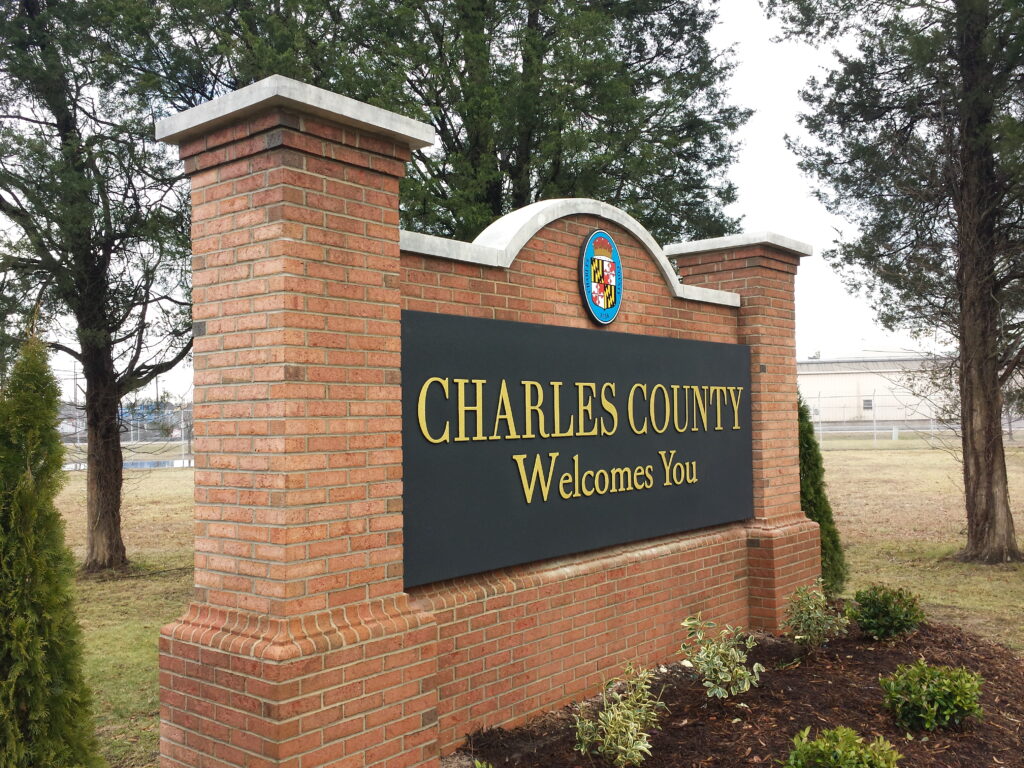


Q&A: Kelly Robertson-Slagle, Director of Development, Charles County, Maryland

The $1.1 billion build-up of the Naval Surface Warfare Center Indian Head Division (NSWC IHD) will affect not just the facility but also the surrounding community. Kelly Robertson-Slagle is the Director of Economic Development for Charles County, Maryland, home of NSWC IHD. She works closely with the NSWC IHD to coordinate county development and support its infrastructure improvements and personnel growth.

How will the Navy’s planned investment at Indian Head affect Charles County’s economy?

ROBERTSON-SLAGLE: First and foremost, there will be new business opportunities for our existing county businesses. By that, I mean the Navy’s $1.1 billion investment will be spread across 500 infrastructure projects over the next 10 years. This investment will open up opportunities for our local businesses to potentially bid on these projects. Having that type of investment here in Charles County will be extremely impactful.

Second, new commercial development and redevelopment opportunities translate into additional commercial tax revenue. Right now, there are about 2,700 people located behind the gate of the base, and manufacturing is on a nine-to-five schedule. Within the next five years, manufacturing on the base will occur 24/7, which means more foot traffic. We expect an increase in commercial enterprises setting up on the western side of Indian Head, attracted by the growing population. We hope to welcome various businesses, from retail stores and restaurants to service providers, to address the current scarcity in these sectors.

Equally important are the new job opportunities and workforce training opportunities that will be created. As the base’s manufacturing facilities upgrade to meet modern “smart arsenal” standards, there will be a substantial need for a knowledgeable, 21st-century “smart workforce.” We are collaborating with NSWC-IHD and various strategic partners, including the Charles County Public School System, the College of Southern Maryland, the Energetics Technology Center and other private energetics industry partners, to develop advanced workforce programs.

These initiatives will train individuals in the specialized skills necessary for operating energetics manufacturing effectively, and we want to ensure that we’re developing the appropriate level of apprenticeships. Our aim is to provide residents with experience at NSWC IHD with full-time employment opportunities locally. We are actively seeking these opportunities and are also focused on sparking interest in younger generations to sustain local workforce engagement. We must be able to expand our workforce pipeline in Charles County.

We’re also engaging with our K-12 system to provide students with opportunities to interact with the base, experience the technology and gain an understanding of the energetics fields. Our goal is that whether they pursue vocational training, higher education or construction-related courses, their experiences will encourage them to return to Indian Head. We hope they know they will have a job to return to with excellent pay, a good quality of life, and a place where they will want to set up shop and raise their families.

What is the estimate of Indian Head’s annual contribution to the county’s economy in terms of dollars?

ROBERTSON-SLAGLE: In FY 2022, the total payroll for Indian Head in Maryland was $346 million, with an additional $44.6 million generated through Maryland-based contracts. Of those dollars (between payroll and Maryland contracts), 68% went to employees or businesses in Charles County.

Beyond their annual tax contributions, the county benefits from NSWC IHD’s presence. Charles County Public Schools and the College of Southern Maryland gain in-kind mentorship opportunities, such as sponsoring science fairs, providing internships, and funding robotics programs and research initiatives. They’ve been fantastic community partners to us for many years, and we don’t see that slowing down at all. If anything, we see that ramping up a bit.

What type of infrastructure do you have to consider with the expansion?

ROBERTSON-SLAGLE: The base borders the town of Indian Head, which is its own municipality (one of three in Charles County). From a county perspective, we continue to work hand-in-hand with the Town of Indian Head to help address infrastructure improvements that must occur with the increase of employees and traffic. One of our monitoring priorities is Maryland Highway 210, from the county line all the way to the base gate. In collaboration with the Town of Indian Head, we are addressing traffic flow, safety, and walkability within the town.

Additionally, broadband infrastructure is always a top priority, not just for the western side and the base but across the entire county. We are particularly proud of a recent project, completed in partnership with the state and the town, which extended high-end fiber optics to the base. This project, which was one of the 500, has enabled the base to implement a closed-loop fiber infrastructure behind the gate.

The base recently signed an MOU [memorandum of understanding] with our local electric co-op, Southern Maryland Electric Cooperative, to take over management and upgrades of the electrical infrastructure behind the gate. The county is certainly committed to supporting those efforts as well.

Kelly Robertson-Slagle, left, speaking during the Charles County Economic Development Department’s 2023 fall meeting. Charles County government

Does Charles County have the workforce it needs, or do you expect a large influx of new residents?

ROBERTSON-SLAGLE: It’s a combination. Historically, Southern Maryland has largely been a bedroom community for federal government employees. Currently, we have slightly more than 5,000 Department of Defense [DoD] civilian employees residing in Charles County. To us, that’s a serious selling point! We already have a very strong DoD civilian workforce here. Regionally, up to 500,000 professionals could potentially be part of this hiring pool. We are robust in this regard. Valid DoD or contractor opportunities at the base could attract federal employees who currently commute outside of Charles County to consider employment closer to home so that they can work and live within the same community.

The base has also been working on what they call “CITE” agreements — public-private partnership agreements where private defense businesses specializing in the development of energetics can partner with the base, bringing a portion of their workforce to enhance the manufacturing capabilities on site.

With these CITE agreements, we also expect to attract an additional workforce. There’s potential for individuals to move to Charles County or the broader Southern Maryland area in pursuit of these job opportunities.

That reminds me of when Naval Air Systems Command (NAVAIR) moved from Arlington, Virginia, to Patuxent River, Maryland, and defense contractors sprang up like mushrooms along Highway 235.

ROBERTSON-SLAGLE: Yes, NAVAIR transformed that whole corridor; they’re still doing fantastic things down there. We expect a similar turnout along [Highway] 210, in what we call our “Western Charles County Technology Corridor.” We are already receiving phone calls from contractors and interested parties who are aware of the business opportunities at the site. They are exploring real estate and potential redevelopment opportunities, preparing for when those contracts are awarded. It’s an extremely exciting time for us.

Why is Charles County such a prime location for defense installations?

ROBERTSON-SLAGLE: Charles County is within a 40-minute drive of several key federal labs and military installations. We also offer easy access to major cities like Baltimore, Richmond, and Washington D.C., which includes proximity to government agencies, customers, and suppliers, and keeps defense and federal contracting firms on the cutting edge. We’re sitting in what I call a “sweet spot.” We developed a map that shows Charles County’s proximity to Joint Base Andrews, Naval Air Systems Command in Pax River, Navy Support Facility Dahlgren [Virginia], and Indian Head, as well as Washington, D.C. Charles County also maintains one of the highest percentages of engineers and doctoral scientists in Maryland and one of the highest percentages of engineers and doctoral scientists in the country.

Upskilling is essential for local companies to stay ahead of the marketplace. Our partnership with the College of Southern Maryland and its cutting-edge upskilling capabilities is invaluable. If a company needs to upskill its workforce to implement new technologies, it can tap into a resource pool like never before to develop custom curricula focused on skill enhancement. Every industry faces challenges with an aging workforce, and upskilling is crucial. With the pace of technology, we can’t be competitive without it.

The College of Southern Maryland, a two-year community college, was formed almost 20 years ago by three individual colleges in Charles, Calvert and St. Mary’s counties. This merger, aided by the three boards of county commissioners in Southern Maryland, was an extremely smart move, creating cutting-edge opportunities, better use of budget and opportunities to grow.

The college’s Velocity Center, located just outside the base gate, partners with NSWC IHD. It provides a space where base officials can conduct training and host various events outside the gate, including machine shops, training classes, STEM events and diverse community activities in collaboration with the base. This setup allows personnel from Indian Head access to share industry best practices without jumping through a thousand hoops [the security protocols] to enter the base. That facility has turned out to be a fantastic asset for us, not just in Charles County but definitely for the base itself.

We also have great partnerships with the University of Maryland College Park, The Higher Education Center and many more. When it comes to the College of Southern Maryland, however, located right here in Charles County, you can’t beat the flexibility and the caliber of programs we can implement together.

On average, lease rates in Charles County offer companies about a 34% savings compared to other areas in the D.C. Metro area. We have affordable utilities, clean energy options and incentives to provide to industries considering Charles County. When we are approached by businesses interested in our county, our team can show them turnkey properties, although they must still navigate the regulatory review process for new construction. We are committed to keeping this inventory active and available for commercial businesses and industries looking to establish themselves here.


Winds Damage Navy TH-73 Training Helicopters at Whiting Field

By Richard Burgess, Senior Editor 

ARLINGTON, Va. — A strong wind that swept through Naval Air Station Whiting Field caused damage more than three dozen new TH-73 Thrasher training helicopters earlier this month, according to a Navy spokesman. 

The following statement was issued by the Commander, Naval Air Training Command (CNATRA):  

“On May 13, at approximately 10:35 a.m. CST, a significant weather event involving high winds up to 71 knots (gusting) caused damage to 41 TH-73 Thrasher helicopters assigned to Training Air Wing (TAW) 5. No injury to personnel occurred during the incident and there has been no reported damage to any TH-57 Sea Ranger or T-6 Texan II aircraft positioned on the flight line. All aircraft were parked aboard Naval Air Station Whiting Field during the incident. The full extent of the resources needed to restore the fleet has not yet been finalized, however, repairs are not expected to exceed a month. No operational impact to the CNATRA mission is expected due to the availability of CNATRA’s fleet of TH-57 Sea Ranger helicopters that remain undamaged.” 

The TH-73A, built by Leonardo’s AgustaWestland Philadelphia Corp., is a military version of the Leonardo TH-119. The TH-73A was procured by the Navy to replace the Bell TH-57 Sea Ranger with the role of training rotary-wing and tilt-rotor pilots for the U.S. Navy, Marine Corps, and Coast Guard. The TH-73A was first delivered to TAW-5 in August 2021 and began training pilots in September 2022.  

The Navy has ordered a total of 130 TH-73As. The Thrasher fleet is expected to complete replacement of the TH-57B/C during fiscal 2025 and serve through 2050, according to the Navy. 


F-35B Crashes in New Mexico En Route Test Assignment

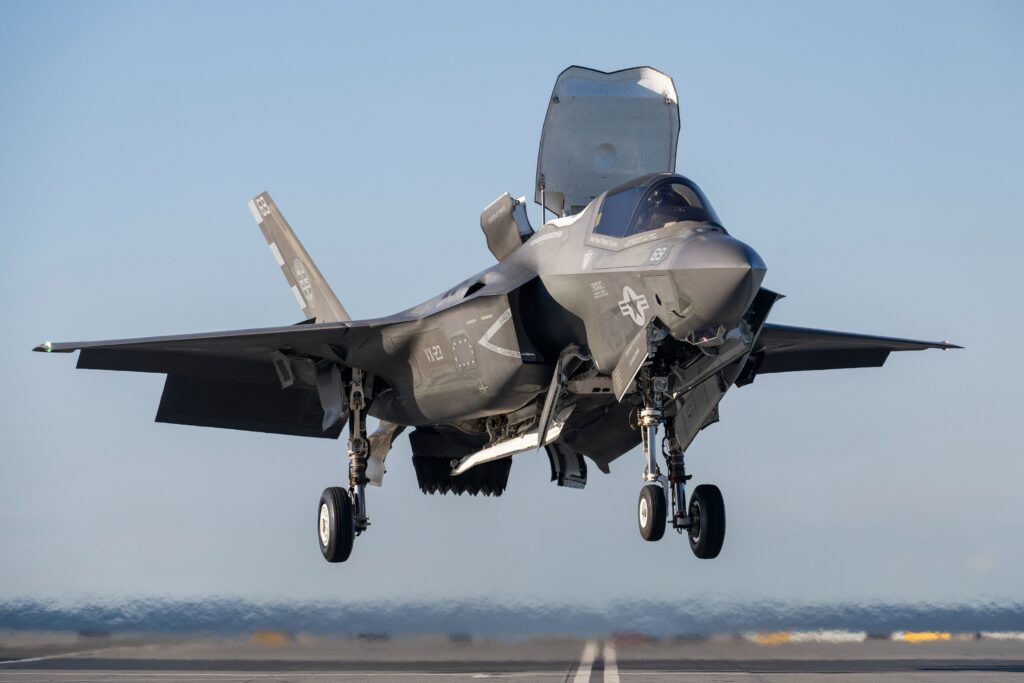
ATLANTIC OCEAN (Oct. 18, 2023) U.S. Marine Corps Maj. Alex Horne, assigned to Air Test and Evaluation Squadron (VX) 23, conducts flight operations from the Royal Navy aircraft carrier HMS Prince of Wales (R09) in the Atlantic Ocean, Oct. 18, 2023. (U.S. Navy photo by Kyra Helwick)

By Richard R. Burgess, Senior Editor 

ARLINGTON, Va. — An F-35B Lightning II strike fighter crashed shortly after takeoff from Kirtland Air Force Base, New Mexico, on May 28. The pilot ejected and was hospitalized with serious injuries. 

The Marine Corps F-35B was en route to deliver to Edwards Air Force Base, California, for assignment to test duties. The aircraft was flying from the Lockheed Martin factory in Fort Worth, Texas, for delivery to Edwards.  

According to press reports, the pilot was an Air Force officer assigned to the Defense Contract Management Agency’s Fort Worth office. 

Marine Operational Test and Evaluation Squadron One, headquartered at Marine Corps Air Station Yuma, Arizona, has a detachment at Edwards Air Force Base for F-35 test and evaluation. 

Rep. Rob Wittman, chairman of the Tactical Air and Land Forces subcommittee of the House Armed Services Committee issued a statement on the mishap: 

“I am incredibly grateful to the first responders who promptly aided the pilot after this crash and relieved to hear the pilot is in stable condition. I am praying for the pilot and their family as they undergo treatment for serious injuries. 

“Any crash of our military aircraft is of utmost concern. While we know that expanding F-35 test capacity is the first step to fundamental F-35 transformation, this incident exacerbates the already urgent need to expand it. That’s why I authored an amendment in this year’s National Defense Authorization Act to increase F-35 test capacity by 50%, ensuring that the U.S. military can accelerate tests associated with our nation’s largest defense acquisition program. 

“This incident will undoubtedly cause a technical setback for F-35 modernization and warrants an extensive and thorough investigation to determine the exact cause of this crash.” 


Navy Orders Two More Constellation Frigates 

By Richard R. Burgess, Senior Editor 

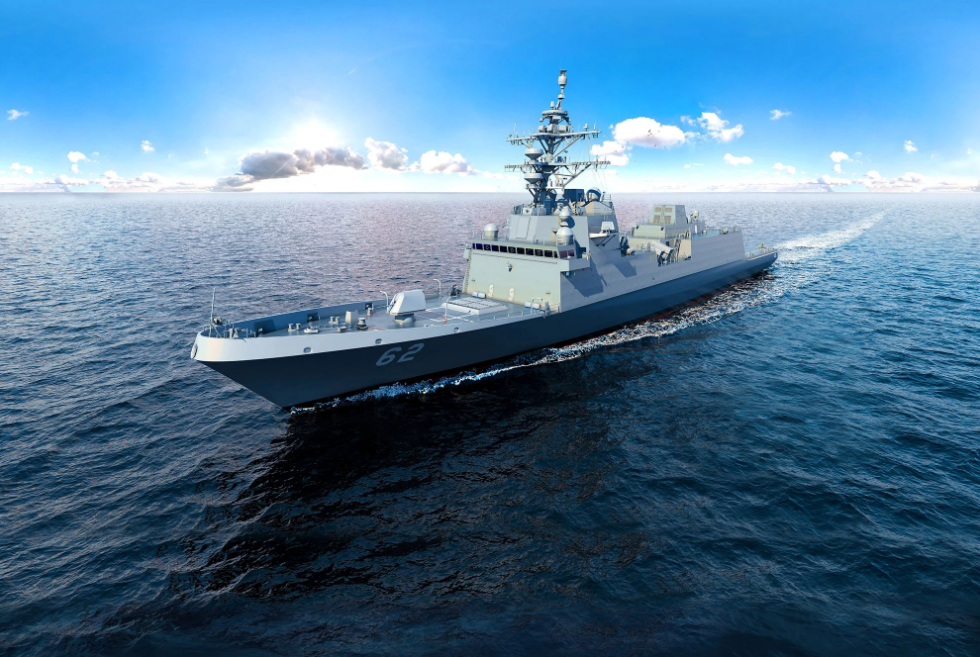
ARLINGTON, Va. — The U.S. Navy has ordered the next two Constellation-class guided-missile frigates (FFGs) from Fincantieri’s Marinette Marine, the Defense Department said. 

The Naval Sea Systems Command awarded Marinette Marine Corp., of Marinette, Wisconsin, a $1.04 billion fixed-price incentive (firm-target) modification to previously awarded contract “to exercise options for detail design and construction of two Constellation-class guided-missile frigates, FFG 66 and FFG 67,” the May 23 contract announcement said.  

The order brings to six the number of Constellation-class FFGs on order. This order is funded by the fiscal 2024 defense budget. The contract allows options for four more frigates. The Navy has a stated requirement for 20 frigates. 

The Navy has selected a name for FFG 66, the future USS Hamilton, as announced May 23 by Secretary of the Navy Carlos Del Toro, in honor of Alexander Hamilton, a hero of the American Revolution and the nation’s first secretary of the Treasury. 


Navy Admiral Selects Three Littoral Combat Ships for 2025 Basing with 5th Fleet

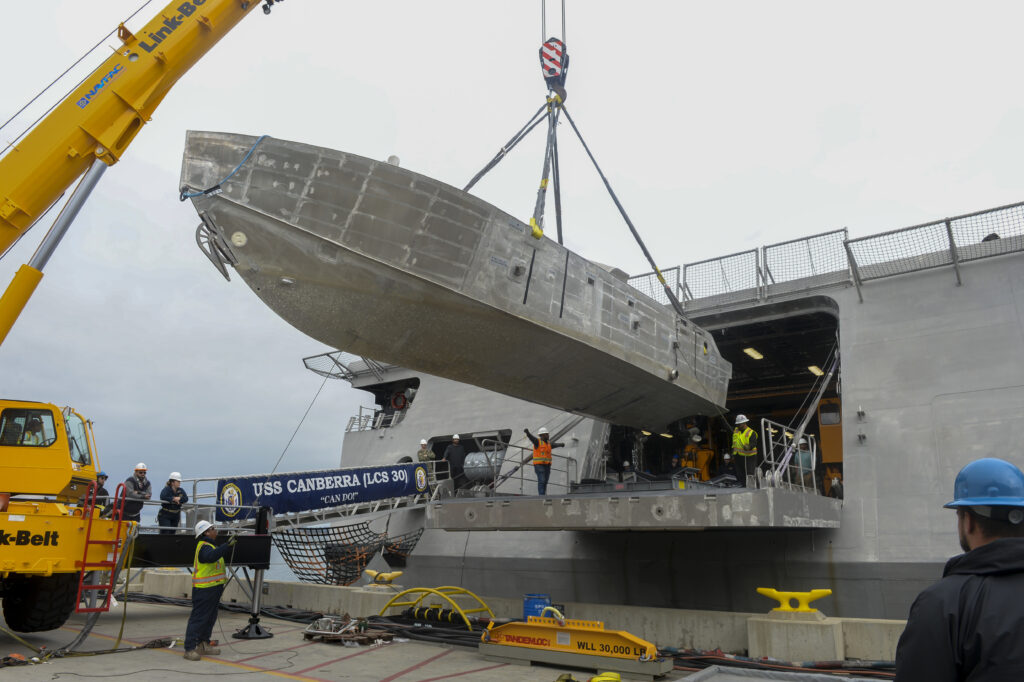
An unmanned surface vehicle is craned aboard the Independence-variant littoral combat ship USS Canberra (LCS 30), as a part of the first embarkation of the Mine Countermeasures (MCM) mission package, April 23. The MCM mission package is an integrated suite of unmanned maritime systems and sensors which locates, identifies, and destroys mines in the littorals while increasing the ship’s standoff distance from the threat area. Littoral Combat Ships are fast, optimally-manned, mission-tailored surface combatants that operate in near-shore and open-ocean environments, winning against 21st-century coastal threats. (U.S. Navy photo by Mass Communication Specialist 1st Class Vance Hand)

By Richard R. Burgess, Senior Editor 

ARLINGTON, Va. — The admiral in charge of U. S. Navy surface forces has named the three Independence-class littoral combat ships (LCS) slated to be forward-deployed to the U.S. 5th Fleet to replace the Avenger-class mine-countermeasures ships (MCMs). 

“MCMs are reaching their end-of-service-lives, and we have to replace them, as great as they are,” said Vice Admiral Brendan McLane, commander, U.S. Naval Surface Forces, speaking May 23 at the International Mine Warfare Technology Symposium in San Diego. “Secretary of the Navy [Carlos] Del Toro has approved the strategic laydown which confirmed the deployment of LCS 2 variants — including [USS] Tulsa [LCS 16], Santa Barbara [LCS 32], and Canberra [LCS 30] — to deploy to Bahrain in 2025, and four more to Sasebo [Japan] in 2027. 

“The platforms will have the MCM mission package and will replace our legacy MCMs,” McLane said. “But even with these mission packages, we’ll have to incorporate them into a team to be able to combat enemy mining operations. Joining the LCS will be a theater expeditionary MCM team {than] will deploy a combination of unmanned systems, divers, and sensors teamed together to defeat enemy mining. We’re already doing some of that teamwork.” 

Two LCS have been deployed to the 5th Fleet area of responsibility so far: Freedom-class LCS USS Sioux City (LCS 11) in 2022 and USS Indianapolis (LCS 17) in 2023, the latter still deployed there. 

“The Sioux City teamed with CTF-52’s MCM expeditionary capability and embarked Helicopter Sea Combat 22 detachment to augment MCM capabilities in 5th Fleet,” McLane said. “Sioux City paved the way for future LCS operations within 5th Fleet and showed what a valuable contributor and teammate the LCS platform can be. The full LCS with mission packages will bring even more capability to the 5th Fleet team.” 

McLane said he is “tremendously excited for the long-term viability of LCS as our enduring mine warfare platform due to their modularity and the ability to quickly design, develop, and deploy new subsystems within the MCM mission package will give the Navy persistent competitive advantage as mine warfare continues to evolve.” 


SECNAV Del Toro Names Two Future Guided-Missile Destroyers (DDG 143) and (DDG 144) 

From SECNAV Public Affairs, May 22, 2024 

Secretary of the Navy Carlos Del Toro announced the names of the Navy’s newest Arleigh Burke-class Guided Missile Destroyers, the future USS Richard J. Danzig (DDG 143) and the future USS Michael G. Mullen (DDG 144) during a U.S. Naval Academy Commencement Week ceremony, May 22. 

DDG 143 honors the Honorable Richard J. Danzig, the 71st Secretary of the Navy, and DDG 144 honors retired Admiral Michael J. Mullen, the former Chairman of the Joint Chiefs of Staff and Chief of Naval Operations. These are the first ships to bear their names. 

“Secretary Danzig and Admiral Mullen were visionary leaders in the mold of the greatest naval leaders that came before. Together they have nearly 100 years of service,” said Secretary Del Toro. “Both Secretary Danzig and Admiral Mullen worked tirelessly to ensure our Sailors and Marines had the resources, technologies, and capabilities to set them up for success. I am proud to honor them with these new DDGs.” 

Born in New York City in 1944, Secretary Danzig received a B.A. degree from Reed College, a J.D. degree from Yale Law School, and Bachelor of Philosophy and Doctor of Philosophy degrees from Oxford University. 

Secretary Danzig served in the Office of the Secretary of Defense from 1977 to 1981, first as a Deputy Assistant Secretary, then as the Principal Deputy Assistant Secretary of Defense for Manpower, Reserve Affairs and Logistics. In these roles, he contributed to the Department’s mobilization and deployment of manpower and material. Secretary Danzig later served as Under Secretary of the Navy from November 1993 to May 1997, before being sworn in as Secretary of the Navy on Nov. 16, 1998.  

Secretary Danzig’s tenure emphasized four themes: ridding the Services of “a conscript mentality” by treating Sailors and Marines as skilled workers and supporting them with new capital investments and personnel systems; achieving better synergy between the Navy and Marine Corps; strengthening the ability of the sea services to influence events ashore; and embracing new technologies to better achieve those goals. Since the end of his tenure, he has served in multiple technology and national security-oriented think tanks, councils, and panels. 

“This is such a wonderful honor. It’s certainly a wonderful and touching thing,” said Secretary Danzig. “What is most important to me is that this provides a connection among all of the Sailors who will be on this ship.” 

Commissioned in 1968, Mullen first deployed aboard the USS Collett (DD 730) for operations off the coast of Vietnam as part of U.S. Seventh Fleet. His command tours include the USS Noxubee (AOG 56), USS Goldsboro (DDG 20), USS Yorktown (CVN 10), Cruiser-Destroyer Group TWO with concurrent duties as commander of the USS George Washington (CVN 73) Aircraft Carrier Battle Group, U.S. Second Fleet with concurrent command of NATO Striking Fleet Atlantic, and U.S. Naval Forces, Europe with concurrent command of Allied Joint Force Command located in Naples, Italy.  Staff and shore tours include service at the Office of the Secretary of Defense, the Bureau of Naval Personnel, and multiple tours in the Office of the Chief of Naval Operations.  

As Chief of Naval Operations, Mullen led the united maritime strategy, oversaw support for the Global War on Terror, and expanded relations with partners and allies.  

As Chairman of the Joint Chiefs of Staff, he focused on Joint/combined combat operations in Afghanistan and Libya as well as a major humanitarian operation in Japan; implemented the repeal of Don’t Ask/Don’t Tell; and stood up U.S. Africa Command and U.S. Cyber Command. 

“This is an honor of a lifetime and one I certainly never expected. It says so much about the Navy that I love, and it represents most of my life at sea,” said Mullen. “So, along with my wife, Deborah, and my family, this is just something that is so very, very special.” 

Arleigh Burke-class destroyers, built around the Aegis Combat System, are the backbone of the U.S. Navy’s surface fleet providing protection to America around the globe. 

“DDG 143 and DDG 144, once built and commissioned, will be the most technologically advanced warships ever built, just as Jack H. Lucas, Carney, Arleigh Burke, and each of their predecessors in the long and storied life of the class,” said Secretary Del Toro. 

They incorporate stealth techniques, allowing these highly capable, multi-mission ships to conduct a variety of operations, from peacetime presence to national security, providing a wide range of warfighting capabilities in multi-threat air, surface and subsurface domains. These elements of sea power enable the Navy to defend American prosperity and prevent future conflict abroad. 


HASC TACAIR Mark-Up Would Assign Newest Super Hornets to Navy Reserve

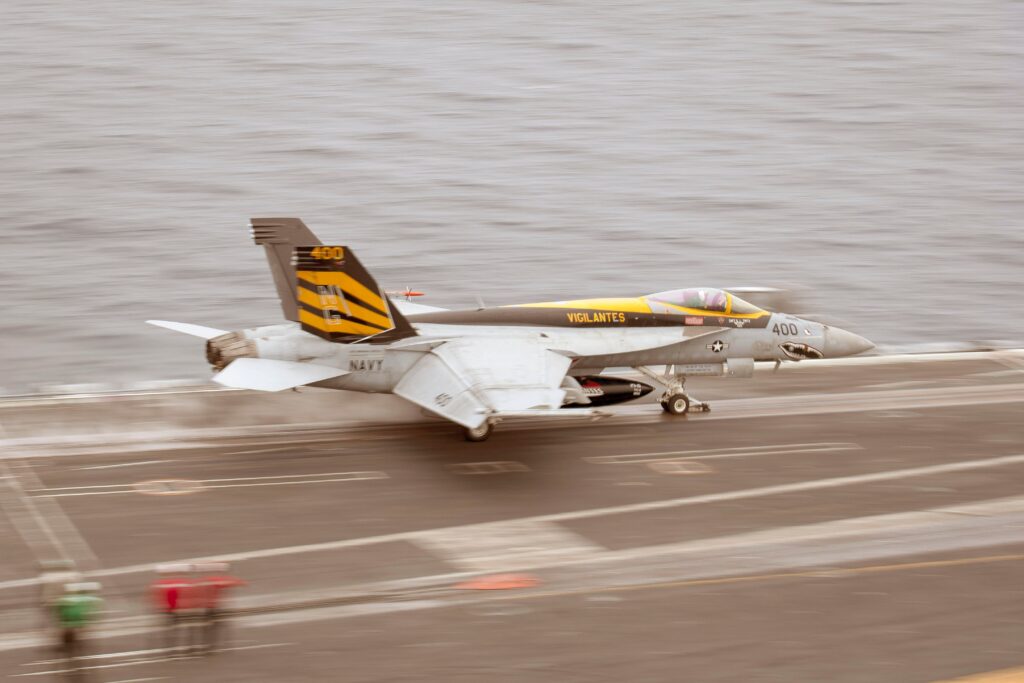
PACIFIC OCEAN (May 19, 2024) An F/A-18E Super Hornet, assigned to Strike Fighter Squadron (VFA) 151, takes off from the flight deck of the Nimitz-class aircraft carrier USS Abraham Lincoln (CVN 72). (U.S. Navy photo by MC1 Kevin J. Steinberg)

By Richard R. Burgess, Senior Editor 

ARLINGTON, Va. — The mark-up of the House Armed Services Committee’s TACAIR and Land Forces subcommittee for the 2025 National Defense Authorization Act would assign the newest F/A-18E/F Super Hornet strike fighters to the Navy Reserve. 

The mark-up would “require the Secretary of the Navy to assign only to the Navy Reserve all F/A-18E/F Super Hornet aircraft procured using funds appropriated for the Navy for fiscal year 2022 or fiscal year 2023,” the text of the mark-up said. 

“The Secretary of the Navy shall ensure that all covered [F/A-18] aircraft are (1) provided only to the Navy Reserve; and (2) used only to recapitalize and maintain,  within the Navy Reserve (A) a deployable tactical strike-fighter capability; and (B) a threat representative adversary support capability that may be used in support of training activities of the Department of Defense,” the document said. 

The Super Hornets would be Block III versions. The only Navy Reserve squadron currently equipped with Super Hornets — Fighter Composite Squadron 12 — operates older versions of the F/A-18E. 

The subcommittee’s mark-up also approved multiyear procurement authority beginning in 2025 for Marine Corps’ CH-53K King Stallion heavy lift helicopters and the T408 engines that power them. 


Navy League Congressional Fly-In Makes Successful In-Person Return to Capitol Hill

Rep. Joe Courtney (D-Connecticut) discusses sea service issues with Navy League National President Christopher Townsend and CEO Mike Stevens during the Congressional Fly-In. James Peterson

Navy League members from councils around the country visited the offices of dozens of lawmakers on Capitol Hill on Wednesday as part of the first in-person Congressional Fly-In held since 2019.

They came to discuss the needs of the sea services with members of the House of Representatives and Senate, and to touch base with lawmakers and staff that represent their council regions during more than 100 meetings.

The messages included calling for funding two Virginia-class submarines in fiscal year 2025 and writing a “SHIPS Act,” modeled on the CHIPS Act that helped restore microchip manufacturing and production capacity in the United States. The Navy League visitors also called for an annual shipbuilding and conversion budget of at least $35 billion.

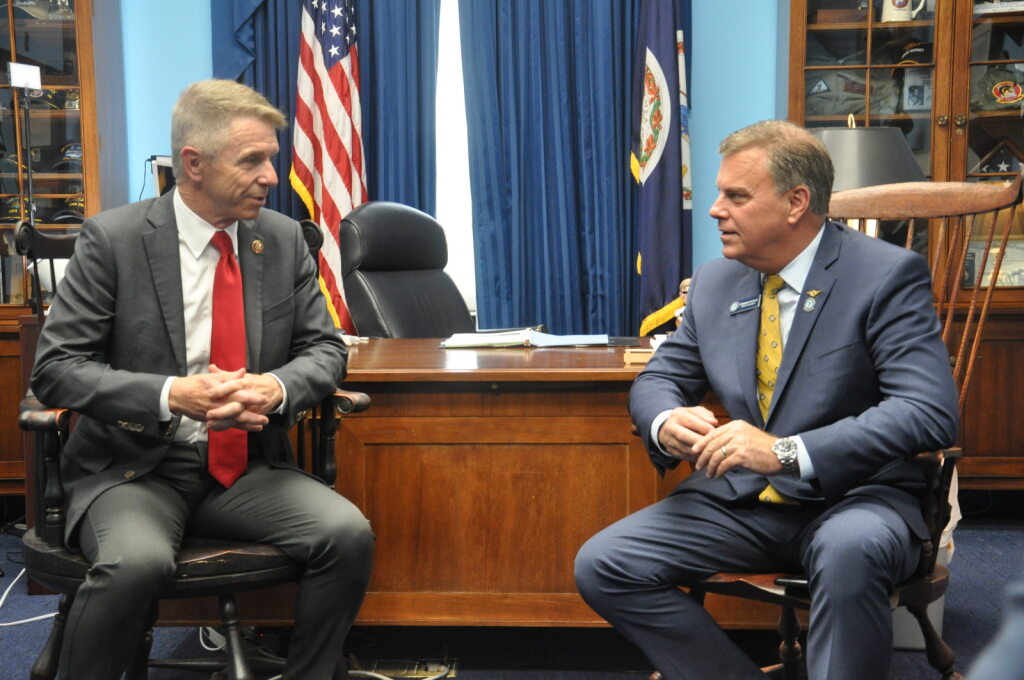
Rep. Rob Wittman (R-Virginia) talks with Christopher Townsend. James Peterson

The council members also discussed the need to fund the sea services’ unfunded priorities, including barracks restoration and modernization for the Marine Corps, icebreakers and new cutters for the Coast Guard and defending the Jones Act for the U.S.-flag Merchant Marine.

They also educated lawmakers and their staffs on the need to create future Sailors, Marines and Mariners by supporting the Sea Cadets, Young Marines and funding for the state Maritime Academies’ student incentive programs.

On the eve of the fly-in, the Navy League notched a major victory for its advocacy work as the House Armed Services Committee voted to include funding for a second Virginia-class submarine in its upcoming National Defense Authorization Act markup.

“We had a great time,” Sinclair Harris, retired rear admiral and national vice president of the Navy League, said at the end of the day. “We had six visits, one with a member of Congress, the rest were staffers, but all of them were very engaged, they all understood the importance of what the Navy League does and supports and educates and advocates for.”

Sara Fuentes, who led a group of council members representing the Southern Region, said, “what makes the Navy League so unique and special is that anyone can get behind our issues because they benefit all Americans. It was a real pleasure to meet with Democrats, to meet with Republicans, all different kinds of offices, inland, coastal, and have them all understand and support our sea services and understand the need to really invest in them.”

Members of the Southern Region meet with Sen. Cindy Hyde-Smith (R-Mississippi), second from left. Sara Fuentes

Scott Maguire, a board member of the Portland-Blueback Council, said his team made eight visits to House and Senate members, and “they were very receptive to what we had to say and seemed supportive, so I’m looking forward to their approvals on what we have suggested.”

Merilyn Wong and William Stephens of the Marin County Council said they visited their local representative and convinced him to become a co-sponsor of the Pay Our Coast Guard Parity Act, which ensures Coast Guardsmen are compensated for their work during government shutdowns.

“Every staff person was very receptive, interested in our presentation, wanted to learn a little bit more about it. We kept telling them about the Center for Maritime Strategy, to take advantage of that, something they didn’t really know, so that was helpful,” said Michele Langford, Pacific Central Region president.

Navy League National President Christopher “Towny” Townsend said “it was a fantastic day. We got to execute one of our primary missions of advocating for our sea services here in person in the halls of Congress.

COVID-19 restrictions put a hold on events like the Congressional Fly-In, but Townsend said it was a good time to come back in person “and spread the Navy League gospel, talk about the needs of the sea services.”


Navy Expands Suicide Intervention and Mental Health Services; Survivors Say More Must Be Done

Boatswain’s Mate Seaman Kalea Howe, assigned to the amphibious assault ship USS Wasp (LHD 1), poses and screams for a photo to personify feelings of anxiety and depression. This photograph was captured using multiple exposure techniques and was later used to accompany a story about depression for suicide prevention month. U.S. Navy | Mass Communication Specialist 1st Class Alora R. Blosch

“The reason I’m writing this is because I feel you are the only person that can make the changes necessary for others to not suffer the same fate I did,” Petty Officer 3rd Class Brandon Caserta wrote to his commanding officer. “If you can successfully take action and make the changes, you will prevent more suicides within the Navy.”

Brandon died by suicide June 25, 2018. That year, he joined a tragic roster of 68 U.S. Navy Sailors on active duty who took their own lives.

Before his death at age 21, the Peoria, Arizona, native wrote letters to his family, friends, supervisor and others that described toxic leadership and a hostile work environment. Stationed at Naval Station Norfolk while attached to Helicopter Sea Combat Squadron 28, he reported being hazed, bullied and sexually assaulted. Brandon felt the Navy had labeled him a failure. He asked for, but was denied, medical attention.

Brandon’s parents, Teri and Patrick Caserta, argue Brandon would be alive today had the military intervened to provide their son with confidential access to mental health services. Their advocacy in the aftermath of Brandon’s death led to passage of the Brandon Act, which the Department of Defense officially launched one year ago this month.

The Brandon Act requires the Navy and all military branches to make it easier for service members to ask for mental health treatment confidentially — for any reason, at any time and in any environment. Supervisors or commanders of service members who invoke the Brandon Act must quickly facilitate evaluations, assuring privacy.

“If you’re on a ship in the middle of nowhere and you need mental health care, it might take a day or two and happen by telemedicine or some other way,” Dr. Lester Martinez-Lopez, the assistant secretary of defense for health affairs, said in a Jan. 22, 2024, DoD News article on the Brandon Act. “But it doesn’t matter where you are. All you need to do is raise your hand and tell your supervisor and they will take care of that as soon as possible.” 

The Brandon Act passed as part of the fiscal 2022 National Defense Authorization Act, signed into law by President Biden Dec. 27, 2021. The DoD implemented the policy May 5, 2023, giving the service branches 90 days to roll it out to all service members, starting with the active-duty components.

Along with the other services, the Navy has since reiterated that suicide prevention is a top priority and communicated about the self-referral process available under the Brandon Act. The Navy is taking other steps to reduce stigma associated with asking for mental health services and promote help-seeking behavior. Efforts include expanding virtual and in-person health, mental health and quality-of-life offerings, particularly those aimed younger enlisted service members, who data show are most at risk of death by suicide.

In 2022, the Navy began moving its Sailor Assistance & Intercept for Life (SAIL) suicide intervention program from an in-person model to a virtual model. The Navy completed the transition to fully virtual SAIL in January 2024. The virtual model is staffed with dedicated remote counselors from the Fleet and Family Support Center (FFSC). The Navy says more Sailors are now using the service, citing in the increased accessibility and privacy of virtual care and assistance. The program is operated by the Commander, Navy Installations Command (CNIC), which oversees 10 Navy regions, 70 bases and more than 43,000 employees.

By the end of 2024, the Navy plans to complete the expansion of FFSC’s virtual clinical counseling program, which will provide Sailors and their families in all 10 Navy regions with remote access to short-term assessments, treatment planning, clinical counseling, and referrals from licensed mental health professionals.

‘More Needs to be Done’

In a phone interview with Seapower magazine, Patrick and Teri Caserta commended Navy and other Pentagon leaders for their willingness to improve access to suicide interventions and other mental health services.

“The (virtual) SAIL program is a step in the right direction,” said Patrick, a 22-year retired U.S. Navy senior chief and naval counselor.

But, he added, “more needs to be done” to end military suicides, including expanding awareness of the Brandon Act and educating commanders that “if you violate the Brandon Act, you’re breaking the law.”
Among the lawmakers overseeing Brandon Act implementation and spearheading related legislation in Congress is Sen. Tim Kaine (D-Virginia), whose state is the home of Naval Station Norfolk, where Petty Officer Caserta died.

“I’ve heard heartbreaking stories from many servicemembers and their families about mental health challenges, the lack of resources, and the stigma associated with asking for help,” Kaine told Seapower in a statement.

Members assigned to U.S. Naval Forces Central Command talk to a Sailor during a mental health awareness event in Bahrain, April 12, 2023. U.S. Army | Specialist Aaron Troutman

OIG Evaluation

Kaine, a member of the Senate Armed Services Committee and chair of its Seapower subcommittee, said he’s committed to expanding service members’ access to mental health care and to preventing military suicides, including assessing the effectiveness of Navy efforts to address this issue.

Pursuant to a directive Kaine and colleagues included in the fiscal 2023 national defense bill, the DoD’s Office of Inspector General in February 2024 launched an evaluation of the Navy’s suicide prevention and response efforts.

A Feb. 27 OIG memo said subjects of the evaluation include the Department of the Navy, Office of the Under Secretary of Defense for Personnel and Readiness and the Defense Health Agency in the National Capital Region. Evaluators plan site visits to Naval Station Norfolk as well as to Naval Base San Diego in California; Naval Base Kitsap in Bremerton, Washington; and Naval Station Pearl Harbor in Hawaii. OIG said it could add other locations to evaluate.

Under Navy policy, commanders must submit a SAIL referral after a Sailor experiences suicide ideation or attempts suicide and is evaluated by a medical treatment facility or emergency department, Cornealius L. Stamps, the SAIL clinical counseling program analyst, said in an email interview with Seapower.

A SAIL case manager must contact the referred Sailor within one day to offer assistance and care services. Sailors who accept services can receive virtual counseling from a remote SAIL or clinical counselor or see an FFSC clinical counselor in person.

SAIL’s move to a virtual model with dedicated case managers has coincided with an increase in Sailors accepting services, Navy-provided data shows. The percentage of Sailors referred to SAIL who accepted services rose from 46.5% in 2020 to 62.67% in 2023. To meet the demand for services, SAIL’s staff of case managers rose 42%, Stamps said.

It’s too early to say if these and other programs are reducing the number of miliary suicides. In all of calendar year 2022, 492 active-duty, National Guard and reserve service members died by suicide, according to the DoD. This was fewer than the 524 service members who died this way in 2021. Most military deaths by suicide occur among enlisted men under age 30.

More recent quarterly data showed no increase or decrease in Navy active-duty service member deaths by suicide, even as these deaths increased in the active Army, Marine Corps and Air Force. Those three services combined saw 19 more active-duty service member deaths by suicide in the first quarter of calendar year 2023, compared to the first quarter of calendar year 2022.

Stamps said the response to virtual SAIL so far is encouraging.

“Sailors have shared positive feedback about SAIL’s virtual services through the program’s anonymous surveys, during conversations with their case managers,” she said, noting, “we’ve also heard similar sentiments echoed by referring leaders.”

Sailors can also request SAIL services by contacting their local FFSC, a chaplain or another available mental health program. And although CNIC doesn’t oversee ship operations, Sailors aboard a ship without counseling services can ask their command to arrange SAIL services by phone.

“It’s well-known that military service is challenging and comes with unique stressors that those in the general public will never face,” Stamps said. “Recognizing that you need help and asking for it is a sign of strength.”

Greater Awareness

In addition to offering virtual SAIL and more remote counseling options, the Navy in July 2023 issued Brandon Act-related guidance and resources in a directive-type memo and fact sheet. The service issued a revised Navy Mental Health Playbook addressing mental health within commands and plans to update and send out additional marketing materials throughout the year. In January 2024, the Navy distributed to all commands the Suicide Related Behavior Response and Postvention Guide, streamlining suicide crisis response guidance and providing step-by-step instructions on the SAIL referral procedures.

Despite these efforts, Patrick and Teri Caserta said too many service members and military families still don’t know about the Brandon Act or how to access mental health services.

They’re working for change through the Brandon Caserta Foundation, making sure all service members and veterans get the help they need, without retaliation. They want new military recruits educated about the Brandon Act before service even begins. They want Brandon’s image on military posters with the message that it’s OK for Sailors and service members to seek care, for any reason. They want mental health counselors embedded at the unit level and for the military to establish a uniform response to this crisis.

Ultimately, they want to continue to share what Brandon’s experienced — to raise awareness about military suicide, empower service members and families and enact policy changes that will end military and veteran deaths by suicide.

“We know that Brandon’s story saves lives,” Teri Caserta said.

Sidebar: Navy Goes Virtual to Boost Sailors’ Access to Quality-of-Life Programming

To boost the quality of life and health of today’s Sailors, the Navy in late January launched a new Virtual Single Sailor Program (VSSP), a platform offering service members and their families worldwide remote access to electronic sports contests, fitness programs and other entertainment and wellness resources.
“Obviously, the modern-day Sailor has changed in the way that they interact with information and each other,” said Lisa Sexauer, who is di­rector of Fleet Readiness for Navy Installations and oversees the Navy’s Morale, Welfare and Recreation programs. “And so being able to reach them with useful information and also virtual dynamic programming — wherever the Navy operates and wherever their mission allows them to access that information — is kind of the brainchild behind it.”

Sailors can log onto the platform to virtually participate in esports, locate community-based recreational events, access workout builders and find vacation discounts and other resources.

“The real effort here is to create some connectedness and for people to build communities of support (and) friendships,” Sexauer told Seapower.

VSSP emerged from an ongoing effort to pilot- and focus-test quali­ty-of life-programs that better meet the “desires and needs” of Sailors, she said, particularly those in the E-1 to E-6 enlisted paygrades.
Along these lines, the Navy said earlier this year it is considering of­fering free highspeed Wi-Fi to all Sailors. This is pending the results of a February-September pilot test of the service at 12 permanent party unaccompanied housing locations at Naval Station Norfolk, NAVMED­CEN Portsmouth and Norfolk Naval Shipyard.

In early March, installation commanders also got the go ahead to implement 24/7 entry to staffed or unstaffed fitness facilities.

“If we require our Sailors to be physically fit and healthy so they can fulfill the Navy mission and deploy at a moment’s notice, then we must provide the facilities and resources for them to do so,” Vice Admiral Scott Gray, commander of Navy Installations Command, announced March 8. “Not only does this make sense, it is the right thing to do for the quality of life of our Sailors and other service members.”