Coast Guard Cutter Mohawk Returns Home After 70-day, Counter-Drug Patrol in the Eastern Pacific Ocean 
From U.S. Coast Guard 7th District, March 24, 2025 

KEY WEST, Fla. — The crew of Coast Guard Cutter Mohawk (WMEC 913) returned to their home port in Key West, March 16, following a 70-day deployment to the Eastern Pacific Ocean.  

Mohawk deployed in support of Joint Interagency Task Force – South (JIATF-S) and Operation Martillo, where crew members conducted counter-drug missions in the Coast Guard Eleventh District’s area of responsibility. While at sea, Mohawk’s crew successfully contributed to protecting their fellow Americans by countering transnational criminal organizations and preventing dangerous and illegal narcotics from reaching the United States. The crew worked side by side with Coast Guard units, embarked law enforcement personnel from the Tactical Law Enforcement Team Pacific (PACTACLET) and the Costa Rican Coast Guard.  

Throughout the deployment, crew members interdicted three suspected drug smuggling vessels and apprehended six suspected drug smugglers. Crew members seized nearly 8,200 pounds of cocaine and 330 pounds of marijuana.  

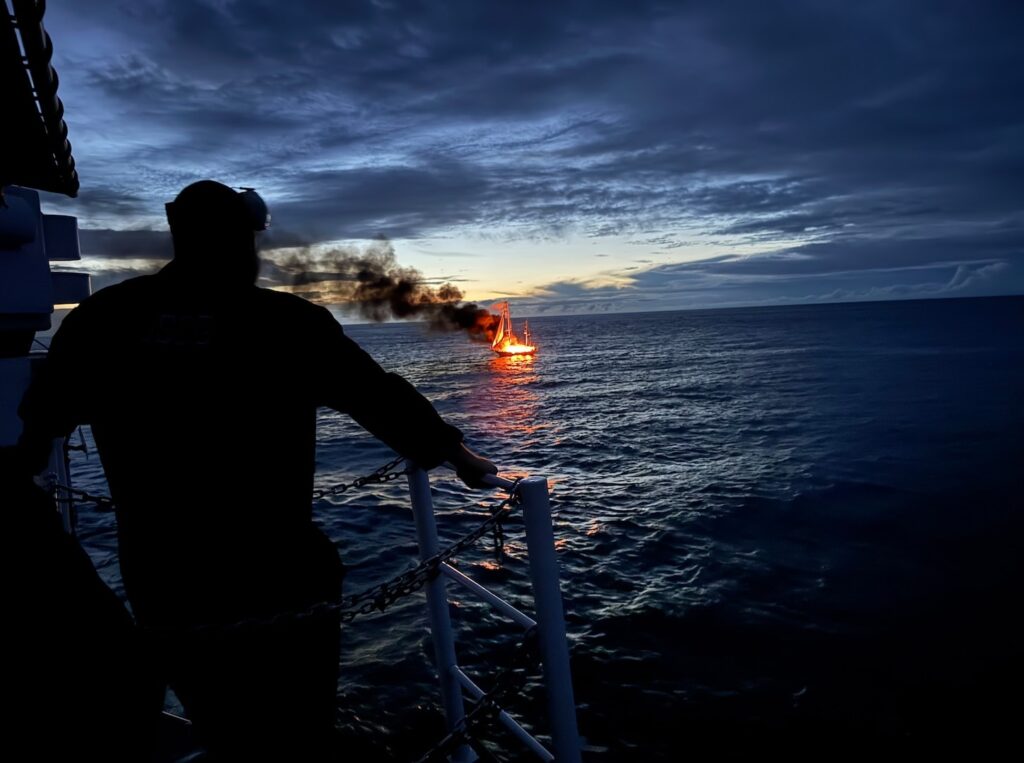
While on patrol, Mohawk’s crew interdicted a sailing vessel suspected of illicit activity. Mohawk’s boarding team embarked the vessel and subsequently located contraband, seizing 637 pounds of cocaine and detained the crew.  

Additionally, the crew of Mohawk coordinated with Coast Guard Cutter James (WMSL 754) and Coast Guard Cutter Stone (WMSL 758) to deter narcotics trafficking in the region. Notably, Mohawk’s crew jointly interdicted a go-fast style vessel with James’ crew off the coast of Colombia, seizing more than 5,900 pounds of cocaine. Coordinating with a maritime patrol aircraft, Mohawk’s pursuit caused the go-fast vessel to jettison bails of cocaine overboard for later recovery. James’ crew proceeded to stop the go-fast vessel and apprehend three suspected narcotics smugglers for future prosecution.  

Mohawk’s crew also had the opportunity to operate with the Costa Rican Coast Guard Grupo de Operaciones Policíale Especiales (GOPES), a Costa Rican special police operations unit. Mohawk identified a fishing vessel suspected of drug smuggling and proceeded to board it. The boarding team discovered 1,600 pounds of cocaine and 330 pounds of marijuana. Following the boarding, the three suspected drug smugglers, fishing vessel and contraband were transferred to GOPES for prosecution in Costa Rica. This joint operation underscores the ongoing U.S. commitment to regional stability and support for partner nation efforts to combat the destabilizing effects caused by transnational criminal organizations.  

During a visit in Golfito, Costa Rica, Mohawk’s crew and embarked PACTACLET personnel exchanged best practices with GOPES and shared law enforcement techniques and other tactics for interdicting illicit drug ventures at sea. Mohawk crew members provided a tour of the cutter as well and exchanged coins and patches with their Costa Rican counterparts. In addition, Mohawk crew members volunteered their free time to clean, complete yard work and undertake preservation projects at Hogar de Ancianos de Golfito, a local retirement home.  

Furthermore, the Mohawk’s crew participated in training evolutions with James’ embarked Helicopter Interdiction Tactical Squadron aviation detachment and MH-65 Dolphin helicopter. This training served to increase competency for shipboard-helicopter operations and bolstered the tactical relationship between deployed units operating together in the Eastern Pacific.  

“I am extremely proud of our accomplishments during this deployment,” said Cmdr. David Ratner, commanding officer of Mohawk. “The Mohawk crew, with the support of embarked law enforcement personnel from the Pacific Tactical Law Enforcement Team, displayed toughness and grit to effectively fight back against destabilizing transnational criminal organizations in the Eastern Pacific and kept nearly 8,200 pounds of cocaine and 330 pounds of marijuana from reaching the United States.”  

Based in San Diego, California, PACTACLET personnel provide counter-narcotic law enforcement capabilities and support the interdiction, apprehension and processing of suspected drug smugglers. PACTACLET members are skilled in law enforcement boarding procedures at sea and are critical for mission execution.  

Launched Jan. 15, 2012, Operation Martillo, Spanish for “Hammer,” is a counter-narcotic campaign support by U.S. Southern Command and led JIATF-S. By leveraging interoperability between numerous domestic and international partnerships, the task force strives to disrupt and dismantle transnational criminal organizations by fighting crime and defunding their illicit ventures.  

Mohawk is a 270-foot, Famous-class medium endurance cutter and was commissioned in 1991. The cutter’s primary missions are counter-drug and migrant interdiction operations, enforcement of federal fishery laws as well as search and rescue in support of Coast Guard operations throughout the Western Hemisphere.   

Mohawk falls under the command of U.S. Coast Guard Atlantic Area, which is based in Portsmouth, Virginia. U.S. Coast Guard Atlantic Area oversees all Coast Guard operations east of the Rocky Mountains to the Arabian Gulf. In addition to surge operations, they also allocate ships to deploy to the Caribbean and Eastern Pacific to combat transnational organized crime and illicit maritime activity.  

For information on how to join the U.S. Coast Guard, visit GoCoastGuard.com to learn about active duty and reserve, officer and enlisted opportunities. Information on how to apply to the U.S. Coast Guard Academy can be found here.    


Nimitz Carrier Strike Group Departs Bremerton for Regularly Scheduled Indo-Pacific Deployment

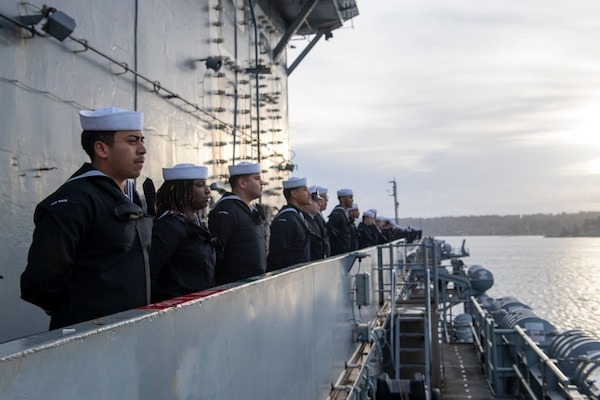
Sailors man the rails on the flight deck of the aircraft carrier USS Nimitz (CVN 68) in the Puget Sound after getting underway for a regularly scheduled Indo-Pacific deployment, March 21, 2025. (U.S. Navy photo by MCSN Japeth Carter) 

From Commander, U.S. 3rd Fleet Public Affairs, March 24, 2025 

The Nimitz Carrier Strike Group (NIMCSG) departed Naval Base Kitsap in Bremerton, Washington, for a regularly scheduled deployment to the Western Pacific, March 21. For five decades, the Nimitz Carrier Strike Group has upheld the U.S. Navy’s commitment to a forward presence while ensuring maritime security, deterring aggression, and protecting the American way of life. Nimitz, in its 50th year of service, continues and celebrates its legacy of strengthening alliances and partnerships, demonstrating the power of teamwork and cooperation in maintaining peace and security. 

The Nimitz Carrier Strike Group (NIMCSG) departed Naval Base Kitsap in Bremerton, Washington, for a regularly scheduled deployment to the Western Pacific, March 21. For five decades, the Nimitz Carrier Strike Group has upheld the U.S. Navy’s commitment to a forward presence while ensuring maritime security, deterring aggression, and protecting the American way of life. Nimitz, in its 50th year of service, continues and celebrates its legacy of strengthening alliances and partnerships, demonstrating the power of teamwork and cooperation in maintaining peace and security. 

The strike group’s deployment will focus on protecting security, freedom, and prosperity for the United States, our allies and partners, and demonstrating the U.S. Navy’s unwavering commitment to a free and open Indo-Pacific. 
 
NIMCSG consists of the Nimitz-class aircraft carrier USS Nimitz (CVN 68), Carrier Air Wing (CVW) 17, and Destroyer Squadron (DESRON) 9.   

The embarked air wing consists of nine squadrons flying F/A-18C/E/F Super Hornets, EA-18G Growler, E-2D Hawkeyes, C-2A Greyhounds, and MH-60R/S Sea Hawks; Squadrons are the “Fighting Redcocks” of Strike Fighter Squadron (VFA) 22, “Mighty Shrikes” of VFA-94, “Kestrels” of VFA-137, “Blue Diamonds” of Strike Fighter Squadron (VFA) 146, “Cougars” of VAQ-139, “Indians” of Helicopter Sea Combat Squadron (HSC) 6, “Bluetails” of Carrier Airborne Early Warning Squadron (VAW) 121, “BattleCats” of Helicopter Maritime Strike Squadron (HSM) 73, and the “Rawhides” of Fleet Logistics Support Squadron (VRC) 40.  

DESRON 9 consists of the Arleigh Burke-class guided-missile destroyers USS Curtis Wilbur (DDG 54), USS Gridley (DDG 101), USS Wayne E. Meyer (DDG 108) and USS Lenah Sutcliffe Higbee (DDG 123).  

An integral part of U.S. Pacific Fleet, U.S. 3rd Fleet operates naval forces in the Indo-Pacific and provides the realistic and relevant training to ensure the readiness necessary to execute the U.S. Navy’s timeless role across the full spectrum of military operations. U.S. 3rd Fleet works together with our allies and partners to advance a shared vision of a free, open, and secure Indo-Pacific in which all nations are secure in their sovereignty and free from coercion. 


Coast Guard Cutter Naushon Decommissioned After Nearly 40 Years of Service

From U.S. Coast Guard 17th District, March 21, 2025 

ANCHORAGE, Alaska — The Coast Guard decommissioned Coast Guard Cutter Naushon (WPB 1311) during a ceremony in Homer, Friday. 

Rear Adm. Megan Dean, the commander of Coast Guard District 17, presided over the ceremony honoring the nearly 40 years of service Naushon and its crews provided to the nation. 

Commissioned on October 3rd, 1986, Naushon was the 11th Island-Class cutter to join the fleet. 

Naushon has been stationed in Homer since 2016 and has since responded to over 50 search-and-rescue cases and completed nearly 900 law enforcement sorties. 

Naushon is a 110-foot, Island-Class patrol boat, a multi-mission platform that conducted operations to support search and rescue response, marine environmental protection, and national defense. 

The Coast Guard is replacing the aging Island-Class patrol boats with Sentinel-Class Fast Response Cutters (FRCs) which feature enhanced capability to meet service needs. There are currently four FRC’s homeported in Alaska, with two more scheduled for delivery in the near future. 

“I’m incredibly proud of the partnerships we’ve built and the positive impact Naushon and its crew have had on the local community and economy,” said Lt. Markham Ross, the commanding officer of Naushon. “I’m honored to have had the opportunity to write the final chapter in Naushon’s storied history, and I’m blessed to have served the people of Alaska with the finest crew and cutter in the fleet.” 


HII’s Ingalls Shipbuilding Celebrates Apprentice School Graduates

From HII 
 

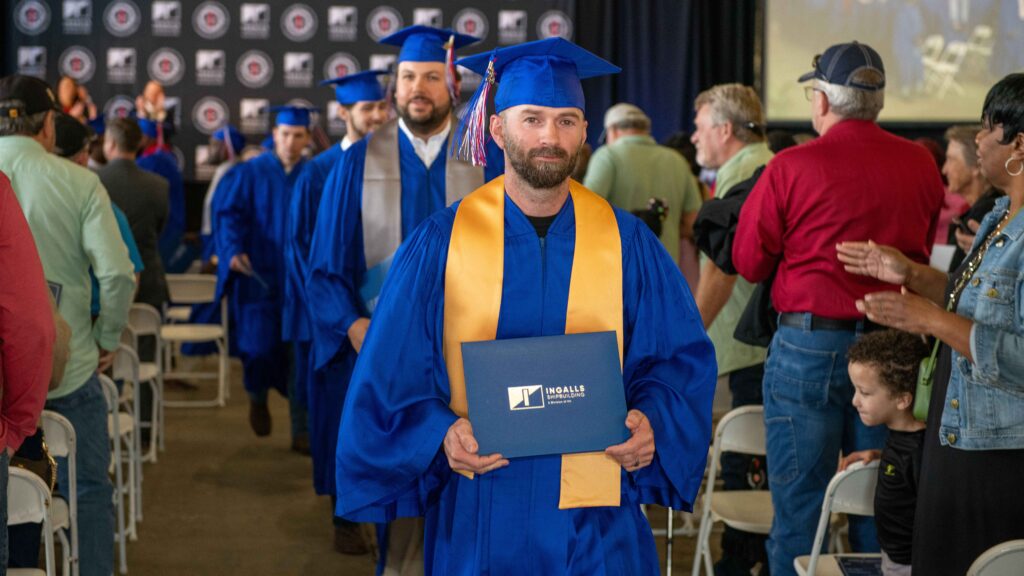
PASCAGOULA, Miss., March 22, 2025 (GLOBE NEWSWIRE) — HII’s (NYSE: HII) Ingalls Shipbuilding division celebrated its newest class of apprentice graduates during a ceremony at the shipyard today. The event recognized the hard work and dedication of the graduates who have completed the three-to four-year program combining classroom instruction with hands-on shipbuilding experience. 

Ingalls Shipbuilding President Brian Blanchette provided remarks at the ceremony and praised the graduates for their commitment and contribution to the company’s shipbuilding legacy. 

“Completing the Ingalls apprentice program is no small feat and it reflects years of dedication, hard work and persistence,” Blanchette said. “The training our apprentices received wasn’t just about mastering skills like welding and fitting — it was about building the foundation for a career that will shape the future of this country and carry forward the legacy of excellence at Ingalls. Congratulations to this year’s apprentice graduates. Your work is strengthening national security, protecting lives and making history.” 

Photo accompanying this release are available at: http://hii.com/news/hiis-ingalls-shipbuilding-celebrates-apprentice-school-graduates/

The Ingalls Shipbuilding apprentice program is a competitive workforce development initiative designed to prepare future shipbuilders through specialized training in one of 15 registered Department of Labor apprentice programs. Since its inception in 1952, the program has produced more than 4,000 graduates who have gone on to support operations at Ingalls Shipbuilding and currently has over 600 students enrolled in the program. 

Among this year’s graduates was Overall Apprentice of the Year Cody Gildea, who has been training as an outside machinist. 

Reflecting on his experience in the program, Gildea shared, “I’ve always enjoyed working with my hands and building things, and so having the opportunity to train as an outside machinist in the main engine area of the ship has been a great fit for me. The apprentice program has allowed me to experience different departments, develop my skills, and take pride in knowing that the work I do will help build the ships that will one day protect our country.” 

Upon entering the program, apprentices earn competitive wages and receive a comprehensive benefits package. This allows them to receive an education, build work ethic, gain experiences, and develop into world-class journeymen of their crafts. 

As the largest manufacturing employer in Mississippi, Ingalls Shipbuilding has designed, built and maintained amphibious ships, destroyers and cutters for the U.S. Navy and U.S. Coast Guard for over 85 years. The Ingalls Apprentice School programs are recognized as the backbone of Ingalls’ well-trained workforce and many graduates have gone on to hold positions from pipe welders to senior executives. 

For more information about Ingalls Shipbuilding’s apprentice school visit hii.com/careers/ingalls-apprentice-school/


USS Spruance Deploys to U.S. Northern Command Area of Responsibility

From U.S. Northern Command Public Affairs, March 22, 2025 

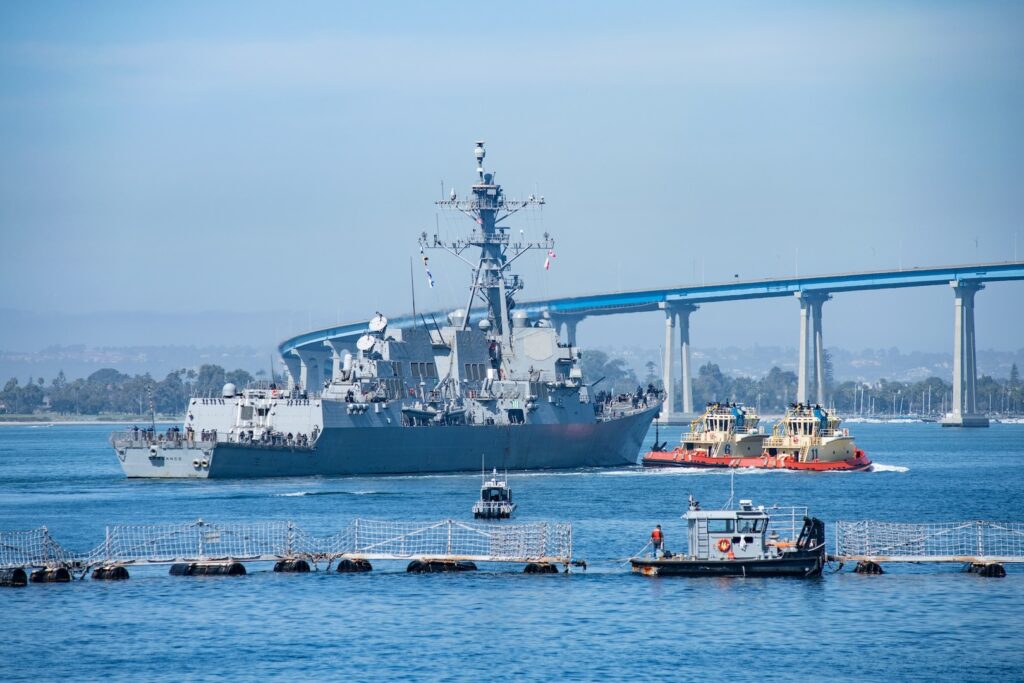
PETERSON SPACE FORCE BASE, Colo. – The Arleigh Burke-class guided-missile destroyer USS Spruance (DDG 111) departed Naval Base San Diego to support U.S. Northern Command (USNORTHCOM) southern border operations in the USNORTHCOM area of responsibility, March 22. 

In support of U.S. Northern Command’s mission to restore territorial integrity at the U.S. southern border, Spruance reinforces the nation’s commitment to border security by enhancing maritime efforts and supporting interagency collaboration. The ship’s operations highlight the Department of Defense and Navy’s dedication to national security priorities, contributing to a coordinated and robust response to combating maritime related terrorism, weapons proliferation, transnational crime, piracy, environmental destruction, and illegal seaborne immigration. 

“USS Spruance’s deployment as part of U.S. Northern Command’s southern border mission brings additional capability and expands the geography of unique military capabilities working with the Department of Homeland Security,” said Gen. Gregory Guillot, Commander, U.S. Northern Command. “With Spruance off the West Coast and USS Gravely in the Gulf of America, our maritime presence contributes to the all-domain, coordinated DOD response to the Presidential Executive Order and demonstrates our resolve to achieve operational control of the border.” 

Spruance will be accompanied by an embedded U.S. Coast Guard Law Enforcement Detachment (LEDET). Founded in 1982, Coast Guard LEDETs carry out a variety of maritime interdiction missions, including counter-piracy, military combat operations, alien migration interdiction, military force protection, counter terrorism, homeland security, and humanitarian response.  

On Dec. 19, 2024, Spruance returned to Naval Base San Diego following a five-month deployment to the U.S. 5th and 7th Fleet areas of operation as part of the Abraham Lincoln Carrier Strike Group (ABECSG). 

The strike group was ordered to the U.S. Central Command area of responsibility to bolster U.S. military force posture in the Middle East, deter regional escalation, degrade Houthi capabilities, defend U.S. forces, and sailed alongside allies and partners to promote security, stability and prosperity. Assigned destroyers of the ABECSG, to include Spruance, were essential to providing a layer of defense to U.S. forces and ensuring the safe passage of commercial vessels and partner nations transiting in international waterways like the Red Sea, Bab el-Mandeb Strait and the Gulf of Aden. 

Spruance brings maritime capabilities to USNORTHCOM AOR in response to Presidential executive orders and a national emergency declaration and clarification of the military’s role in protecting the territorial integrity of the United States. 

USNORTHCOM was named the DoD’s operational lead for the employment of U.S. military forces to carry out President Trump’s southern border Executive Orders. The combatant command continues to fill critical capabilities gaps in support of DHS and CBP. 


CMF’s Combined Task Force 150 and U.S. Coast Guard Integration Key in Recent Drug Seizure

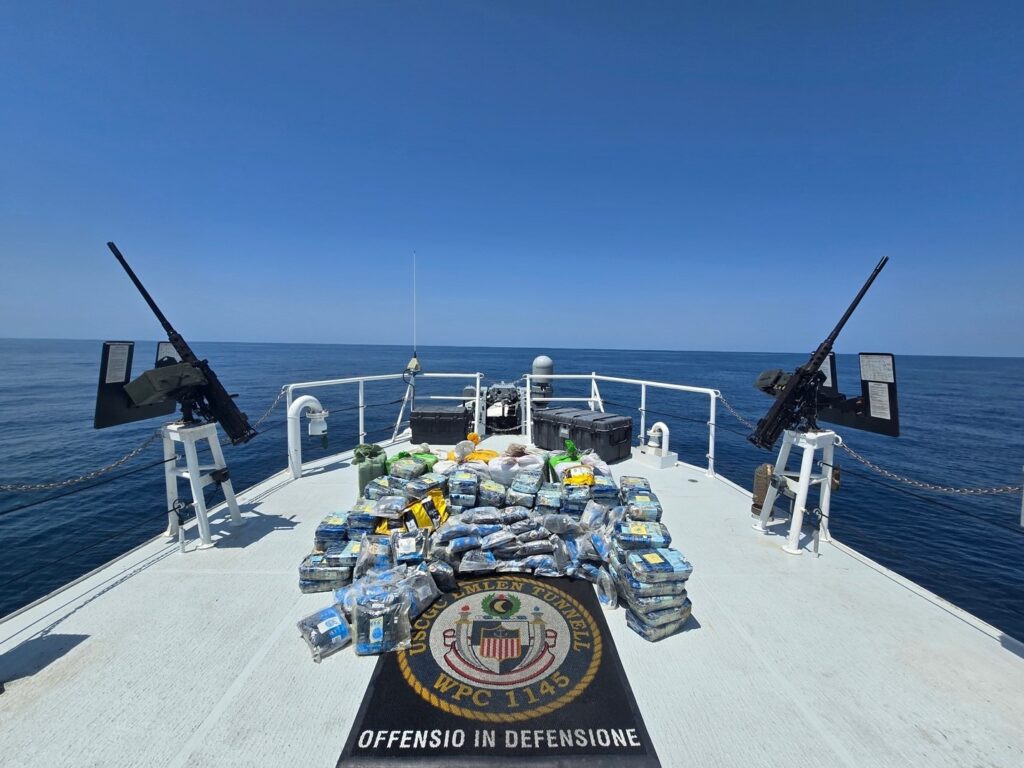
ARABIAN SEA (March 23, 2025) Illegal narcotics seized from a stateless vessel are stacked on the deck of the U.S. Coast Guard Sentinel-class fast response cutter USCGC Emlen Tunnell (WPC 1145) in the Arabian Sea. (Photo by U.S. Coast Guard)

By Commander U.S. Naval Forces Central Command Public Affairs | March 24, 2025 

MANAMA, Bahrain — A U.S. Coast Guard fast-response cutter, working in direct support of New Zealand-led Combined Task Force (CTF) 150 of Combined Maritime Forces (CMF), seized 260 kilograms of illegal narcotics from a vessel in the Arabian Sea, March 19. 

The Sentinel-class fast-response cutter USCGC Emlen Tunnell’s (WPC-1145) boarding team discovered and seized 200kg of methamphetamine and 60kg of heroin from the vessel. After weighing and documenting the haul, the crew properly disposed of the narcotics. 

Royal New Zealand Navy Capt. Dave Barr, CTF 150 deputy commander, said this drug bust is a testament to the tenacity and expert seamanship of the Coastguardsmen on the Emlen Tunnell operating so far off the coast in challenging waters, and the ability to seamlessly integrate with the multinational CTF 150 staff. 

“The waters in this area are full of legitimate fishing and trading vessels so it’s important to get this part right and accurately identify those vessels that are likely to be carrying narcotics,” said Barr. “A big part of our mission is to deter smugglers, so that those legitimate operators can continue to navigate freely to carry out their business.” 

This interdiction is part of ongoing efforts to combat illicit drug trafficking in international waters and demonstrates the CMF’s continued commitment to safeguarding maritime security against malign non-state actors. 

Emlen Tunnell is forward deployed to Bahrain. The fast response cutter is part of a contingent of U.S. Coast Guard ships operating in the region under Patrol Forces Southwest Asia (PATFORSWA). PATFORSWA deploys Coast Guard personnel and ships alongside U.S. and regional naval forces throughout the Middle East. 

CTF 150 is one of five task forces under CMF, the world’s largest international naval partnership. CTF 150’s mission is to deter and disrupt the ability of non-state actors to move weapons, drugs and other illicit substances in the Indian Ocean, the Arabian Sea and the Gulf of Oman. 

Combined Maritime Forces is a 46-nation naval partnership upholding the international rules-based order by promoting security and stability across 3.2 million square miles of water encompassing some of the world’s most important shipping lanes. 


Coast Guard offloads over $517.5 million in illicit drugs interdicted in Eastern Pacific Ocean 

Crew members from USCGC Stone (WMSL-758) stand at parade rest in front of interdicted narcotics at Port Everglades, Florida, Mar. 20, 2025. The Stone’s crew secured the illegal drugs from 14 interdictions in the international waters of the Eastern Pacific. (U.S. Coast Guard photo by Petty Officer 2nd Class James Hague)

From U.S. Coast Guard 7th District, March 20, 2025 

Editor’s Note: Click the desired date for b-roll showing specific cases from Jan. 30,Jan. 31, Feb. 19 & March 10. 

MIAMI – The crew of U.S. Coast Guard Cutter Stone offloaded approximately 45,600 pounds of illicit narcotics worth more than $517.5 million at Port Everglades, Thursday. 

The seized contraband was the result of 14 interdictions in international waters of the Eastern Pacific Ocean, and 35 suspected smugglers were transferred ashore to face federal prosecution in U.S. courts. 

“You heard it said before that the Coast Guard’s national security cutters are game changers in the counter-drug mission, but they still require a crew of men and women willing to serve on or over the sea, and place themselves in harm’s way,” said Capt. Jonathan Carter, commanding officer of Stone. “I’m incredibly proud of our crew’s performance and their efforts to combat narco-terrorism this deployment. In one exceptional case, the crew interdicted four go-fast vessels in 15 minutes, seizing nearly 11,000 pounds of cocaine that will never be mixed with deadly fentanyl to threaten American lives here at home.” 

On Dec. 21, Stone’s embarked aircrew from Coast Guard Helicopter Interdiction Tactical Squadron detected a suspicious vessel in international waters approximately 321 miles west of Ecuador. Stone’s boarding team interdicted the go-fast vessel, apprehended three suspected smugglers and seized over 1,630 pounds of cocaine. 

On Dec. 22, a maritime patrol Dash-8 aircrew detected a suspicious vessel in international waters approximately 180 miles southeast of the Galapagos Islands, Ecuador. Stone’s embarked HITRON aircrew and boarding team interdicted the low-profile go-fast vessel, apprehended three suspected smugglers and seized approximately 12,220 pounds of cocaine. 

On Jan. 9, a maritime patrol Dash-8 aircrew detected a suspicious vessel in international waters approximately 148 miles west of Salinas, Ecuador. Stone’s embarked HITRON aircrew and boarding team interdicted the go-fast vessel, apprehended three suspected smugglers and seized approximately 2,370 pounds of cocaine. 

On Jan. 28, Stone’s embarked unmanned aircraft system (drone) crew detected a suspicious vessel in international waters approximately 459 miles south of Manzanillo, Mexico. Stone’s boarding team interdicted the vessel, apprehended five suspected smugglers and seized approximately 3,885 pounds of cocaine. 

On Jan. 30, Stone’s embarked UAS crew detected a suspicious vessel in international waters approximately 715 miles off Mexico. Stone’s boarding team interdicted the vessel, apprehended two suspected smugglers and seized approximately 3,800 pounds of cocaine. 

On Jan. 31, Stone’s embarked UAS crew detected a suspicious vessel in international waters approximately 630 miles off Mexico. Stone’s embarked HITRON aircrew employed airborne use of force tactics to compel the non-compliant vessel to stop, and the boarding team apprehended three suspected smugglers and seized more than 2,565 pounds of cocaine. 

On Feb. 12, Stone’s embarked UAS crew detected a suspicious vessel in international waters approximately 655 miles south of Mexico. Stone’s embarked HITRON aircrew employed airborne use of force tactics to compel the non-compliant vessel to stop, and the boarding team apprehended three suspected smugglers and seized more than 3,640 pounds of cocaine. 

On Feb. 18, Coast Guard Cutter Mohawk’s crew detected and boarded a sailing vessel approximately 70 miles northwest of Isla Malpelo, Colombia. Mohawk’s boarding team apprehended three suspected smugglers and seized approximately 635 pounds of cocaine. 

On Feb. 19, Stone’s embarked UAS crew detected multiple suspicious vessels approximately 110 miles south of the Galapagos Islands, Ecuador. Stone’s embarked HITRON aircrew employed airborne use of force tactics to compel the non-compliant vessels to stop, and their boarding teams interdicted four go-fast vessels, apprehending eight suspected smugglers and seizing approximately 10,885 pounds of cocaine. 

On Feb. 25, Mohawk’s crew detected and interdicted a suspicious vessel approximately 230 miles south of Costa Rica. Mohawk’s boarding team apprehended three suspected smugglers and seized approximately 1,600 pounds of cocaine and 330 pounds of marijuana. Costa Rican authorities took custody of the fishing vessel, suspects and bulk contraband for prosecution. 

On March 10, Stone’s embarked HITRON aircrew detected a suspicious vessel in international waters approximately 270 miles southeast of the Galapagos Islands, Ecuador. The HITRON aircrew employed airborne use of force tactics to compel the vessel to stop, and Stone’s boarding team interdicted the go-fast vessel, apprehending two suspected smugglers and seizing approximately 3,980 pounds of cocaine. The transfer of custody from this case will occur at a later date. 

“The fight against drug trafficking and transnational criminal organizations doesn’t begin at our U.S. maritime borders,” said Cmdr. David Ratner, commanding officer of Mohawk. “Our efforts to defend Americans at home begins with denying drug traffickers access to maritime routes and disrupting the flow far out at sea where we operate alongside interagency and strategic regional partners like Costa Rica.” 

The following assets and crews were involved in the interdiction operations: 

U.S. Coast Guard Cutter Stone (WMSL 758) 

U.S. Coast Guard Cutter Mohawk (WMEC 913) 

U.S. Coast Guard Helicopter Interdiction Tactical Squadron (HITRON) Jacksonville 

U.S. Coast Guard Tactical Law Enforcement Team-Pacific (PAC-TACLET) 

Joint Interagency Task Force-South (JIATFS) 

Eleventh Coast Guard District 

Detecting and interdicting illicit drug traffickers on the high seas involves significant interagency and international coordination. Joint Interagency Task Force-South, in Key West, conducts the detection and monitoring of aerial and maritime transit of illegal drugs. Once an interdiction becomes imminent, the law enforcement phase of the operation begins, and control of the operation shifts to the U.S. Coast Guard for the interdiction and apprehension phases. Interdictions in the Eastern Pacific Ocean are performed by members of the U.S. Coast Guard under the authority and control of the Eleventh Coast Guard District, headquartered in Alameda, California. 

The Coast Guard continues increased operations to interdict, seize and disrupt transshipments of cocaine and other bulk illicit drugs by sea. These drugs fuel and enable cartels and transnational criminal organizations to produce and traffic illegal fentanyl, threatening the United States. 

Each of these interdictions initiate criminal investigations by federal law enforcement partners. Several were tied to the transnational criminal organizations responsible. Drug evidence from these cases is linked to cartels recently designated as foreign terrorist organizations by the U.S. government, including Sinaloa and Cartel Jalisco Nueva Generaciόn. These interdictions denied those criminal organizations more than half a billion dollars and provide critical evidence for their total elimination. 

USCGC Stone is one of four 418-foot Legend-class national security cutters homeported in Charleston, South Carolina under U.S. Coast Guard Atlantic Area Command. The U.S. Coast Guard Maritime Law Enforcement Academy where Coast Guard boarding officers train to conduct these missions, in Charleston, celebrated its 20th anniversary on March 14. 

For breaking news, follow us on X (formerly Twitter). For additional information, find us on Facebook and follow us on Instagram

Make a difference on land, at sea or in the air with the Coast Guard. Visit GoCoastGuard.com to learn more about active duty and reserve, officer and enlisted opportunities. Information on how to apply to the U.S. Coast Guard Academy can be found here


Keel laid on UK’s new Dreadnought submarine 

From BAE Systems, March 20, 2025 

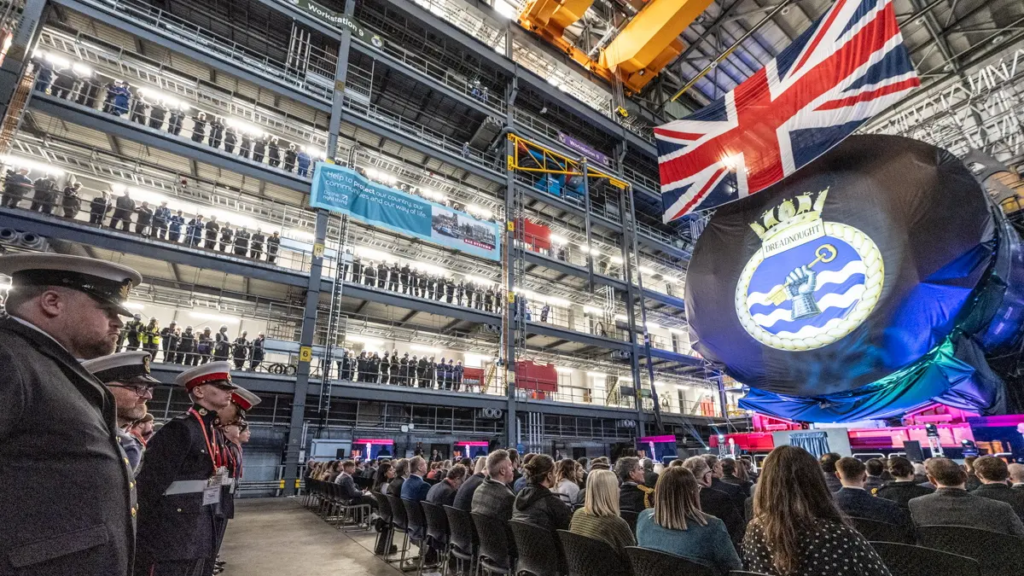
The keel of the first of the UK’s new Dreadnought submarines, the most powerful and technically advanced boats ever designed for the Royal Navy, has been laid at BAE Systems’ Barrow-in-Furness shipyard.  

HMS Dreadnought is the first of four Dreadnought Class ballistic missile submarines, which BAE Systems is designing and building in Cumbria, and will succeed the Vanguard Class of submarines.  

The ceremonial event, attended by UK Prime Minister, Sir Keir Starmer, and Secretary of State for Defence, John Healey, marked a significant milestone in the program to maintain the UK’s Continuous at Sea Deterrent (CASD) and protect national security. 
  
The Dreadnought Class will begin to enter service in the early 2030s. CASD will be maintained throughout the transition from Vanguard to Dreadnought Class.  
 
Steve Timms, Managing Director of BAE Systems’ Submarines business, said: “Laying the keel for the first of class, HMS Dreadnought, is an incredibly proud moment for everyone across the Company, Defence Nuclear Enterprise and Royal Navy. It comes as the boat’s last major unit prepares to make its way into the Devonshire Dock Hall for final integration, demonstrating the progress made across the program to date. 
  
“Our collective role in maintaining Continuous at Sea Deterrence is our most critical responsibility. It’s a truly national endeavour vital to safeguarding our way of life, as well as making a significant contribution to local and national prosperity. I’m proud that thousands of our highly-skilled people are at the heart of today’s achievement.” 

Prime Minister, Keir Starmer said: “It’s an honor to be in Barrow to lay the keel for the next generation of nuclear-armed submarines. These boats will protect our people and Allies from the most extreme threats to our national security and way of life for future generations. 

“Investing in the British defense industry, underpinned by companies like BAE Systems, is at the heart of my government’s commitment to national and economic security as part of our Plan for Change. This investment is supporting good, secure jobs and putting money in the pockets of working people.  
  

“The people of Barrow, and the submarines manufactured here, have been an integral part of our deterrent capability for decades. We will continue to foster that innovation and industrial excellence to protect the UK for the decades to come.” 

Admiral Sir Ben Key, First Sea Lord and Chief of Naval Staff, said: “Since April 1969, Royal Navy submariners have been proud to deliver the Continuous at Sea Deterrent, maintaining at least one nuclear-armed ballistic missile submarine on patrol, ready to respond to the most extreme threats to the UK.   
 

“Whilst the Vanguard Class of submarines continues to deliver CASD today, the Royal Navy is greatly looking forward to operating highly sophisticated and advanced Dreadnought Class submarines. This keel laying ceremony is considered the ‘birth’ of a vessel and I congratulate all those involved across the Alliance for reaching this important milestone in the life of HMS Dreadnought and look forward to bringing this exciting and highly capable submarine into service.” 
 

Dreadnought submarines will be the largest ever operated by the Royal Navy at 153.6 metres long – approximately the length of three Olympic swimming pools. 
  

Technological advances, changing threats and new methods of design and production mean the new boats will represent a significant step change compared to their predecessors. It is one of the largest and most complex engineering projects in the world. 
  

The Dreadnought Alliance, a partnership between BAE Systems, Rolls-Royce and the Ministry of Defence’s Submarine Delivery Agency, manages delivery of the UK’s next nuclear deterrent platform. 
  

As part of the Government’s Nuclear Skills Plan initiative, the Submarines workforce, centred in Barrow, has grown by more than 3,000 since 2023 to 14,700. That growth is set to continue as both the Dreadnought and SSN-AUKUS programs develop. 

The overall Dreadnought programme is expected to support in the region of 30,000 jobs across the UK over the life of the programme.  
 

The Barrow shipyard has undergone more than £1 billion of redevelopment to drive efficiencies and boost capacity to accommodate the build of Dreadnought and ensure the historic shipyard can continue delivering world-class submarines to the Royal Navy for generations to come. 
  

BAE Systems estimates that it will spend in the region of £7.5 billion with 1,500 suppliers in England, Scotland, Wales and Northern Ireland, ensuring the economic impact of the programme is felt right across the UK. 


DOD to Cut $580 Million in Spending 

March 20, 2025 | By Matthew Olay, DoD News  

As part of the Defense Department’s ongoing effort to cut wasteful spending, Defense Secretary Pete Hegseth signed a memo today directing the termination of more than $580 million in programs, contracts and grants. 

The memo, “Continuing Elimination of Wasteful Spending at the Department of Defense,” orders an end to various spending identified by the Department of Government Efficiency that does not match the priorities of President Donald J. Trump or the Defense Department, Hegseth said during prerecorded remarks.  

“In other words, are not a good use of taxpayer dollars; , ultimately, that’s who funds us,” Hegseth said.   

“We owe transparency and making sure we’re using well,” he added.  

The top contract being cut is a software development program for the Defense Civilian Human Resources Management System, which was intended to streamline a significant portion of DOD’s legacy human resources program.  

The program started in 2018 and was supposed to take one year to develop at a cost of $36 million. However, Hegseth said it is now nearly eight years behind schedule and $280 million over budget.  

“So, that’s 780% over budget; we’re not doing that anymore,” he added.  

The Pentagon is also cutting contracts for external consulting services, including $30 million allotted to one company that purchased several unused licenses, Hegseth said. 

In addition to contracts, DOD is also cutting $360 million in grants.   

Included are a $6 million grant to decarbonize emissions from Navy ships, a $5.2 million grant to diversify the Navy and a $9 million university grant for developing “equitable AI and machine learning” models,” Hegseth said.  

“I need lethal machine learning models, not equitable machine learning models,” he added.   

Hegseth said the $580 million of cuts announced in today’s memo brings the total money saved to $800 million since his Feb. 20, 2025, announcement on future DOD cuts.   

He said that the money saved would ensure warfighters have what they need thanks to the cutting of fraud, waste and abuse.  

“[We’re] working hard, we’re working hard with them, we appreciate the work that they’re doing, and we have a lot more coming,” Hegseth said.  

“So, stay tuned … We’re going to keep going for you guys,” he concluded. 


Thales Delivers the World’s 1st Autonomous Mine Hunting System to the Royal Navy 

From Thales, March 14, 2025 

  • Thales has reached a historic milestone by delivering the first end-to-end autonomous maritime mine hunting system to the Royal Navy. This achievement comes under the aegis of the Joint Armament Cooperation Organization (OCCAr) and within the framework of the Franco-British MMCM (Maritime Mine Counter Measures) project. 

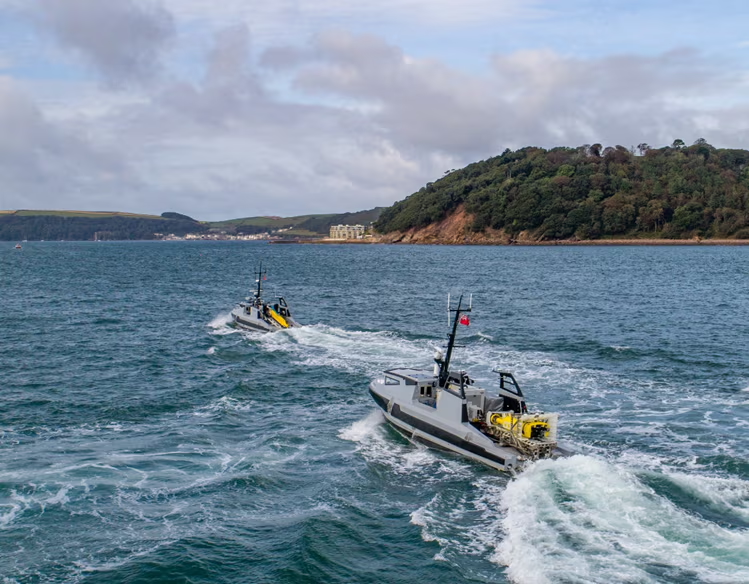
  • This cutting-edge system places the UK and France at the forefront of naval innovation. Utilising cyber-secured autonomous drones equipped with Artificial Intelligence (AI), Thales is revolutionising mine countermeasures operations with unprecedented precision and safety. 

  • Thales relies on 200 skilled jobs, thereby contributing to the dynamism of the British defence industry. 

Marking a technological breakthrough in the conduct of mine countermeasure missions, this system drastically reduces the exposure risk for personnel on board ships while contributing to the safety of maritime routes, the backbone of the global economy. 

The Royal Navy will receive its first four systems over the course of the year. Each system includes several integrated pieces of equipment and subsystems, enabling the accomplishment of highly complex missions: an Unmanned Surface Vehicle (USV), an advanced towed sonar (TSAM) with a cutting-edge multivision sonar (SAMDIS), a Remotely Operated Vehicle (ROV), and a lightweight operations centre (e-POC), all supported by a secure command and control system. 

Thanks to its expertise in sensors, data analysis, and machine learning, Thales has developed a sonar analysis application, Mi-Map, which processes sonar data up to four times faster, allowing even more precise detection and classification of sea floor mines. 

Deployed and operated from a mother ship and coastal bases, the platforms can handle vast volumes of data, enabling operators to expedite the process of identifying and neutralising mines. This innovative system aligns with the British government’s ambitious policy to position the UK as a global leader in autonomous maritime technologies. 

Minister for Defence Procurement and Industry, Rt Hon Maria Eagle MP, said: “This delivery marks a significant milestone in our mine-hunting capabilities and the autonomous technology will keep Britain and our Royal Navy sailors safer by identifiying & removing them from mines. It has also supported hundreds of skilled jobs across UK industry – a clear demonstration that defence is an engine for economic growth.” 

Rebecca Smith, Member of Parliament for South West Devon, attended the ceremony at the Thales Maritime Autonomy Centre in Plymouth, officially marking the delivery of this cutting-edge technology capable of detecting and neutralising the growing threat of naval mines. 

“I welcome today’s announcement by Thales regarding the delivery to the Royal Navy of the world’s first end-to-end autonomous mine hunting system. I am pleased to see that a city with such a prestigious naval history as Plymouth now finds itself at the heart of a future rich in innovations for the Royal Navy. I hope we continue to see new activities develop, resulting in new local jobs in high-tech maritime areas. In the current climate, it is important to ensure strong military and industrial cooperation across Europe, and I am proud to see Plymouth playing a key role in effectively supporting the relationship between the UK and France”, declared Rebecca Smith, MP South West Devon 

Phil Siveter, CEO of Thales in the UK, stated, “We are extremely proud to deliver the world’s first end-to-end autonomous mine hunting system to the Royal Navy. With the introduction of AI and advanced sensor technology, this innovation marks a new era in naval defence and underlines our unwavering commitment to providing cutting-edge solutions that enhance the capabilities of our armed forces. The Royal Navy will now have a powerful tool to protect its national interests and maintain safety at sea.” 

A historic partner of the Royal Navy for over a century, Thales has long contributed to the advanced technologies that equip its sonar and mine hunting systems. The Franco-British MMCM program highlights Thales’s determination to provide world-class capabilities in these areas. Significant investments made by the UK have maintained over 200 skilled jobs, particularly at Thales sites in Somerset and Plymouth, strengthening the entire ecosystem of suppliers and partners.