NAVWAR at WEST 2025: Future of Multi-Domain Warfare Demands Agility, Audacious Innovation 
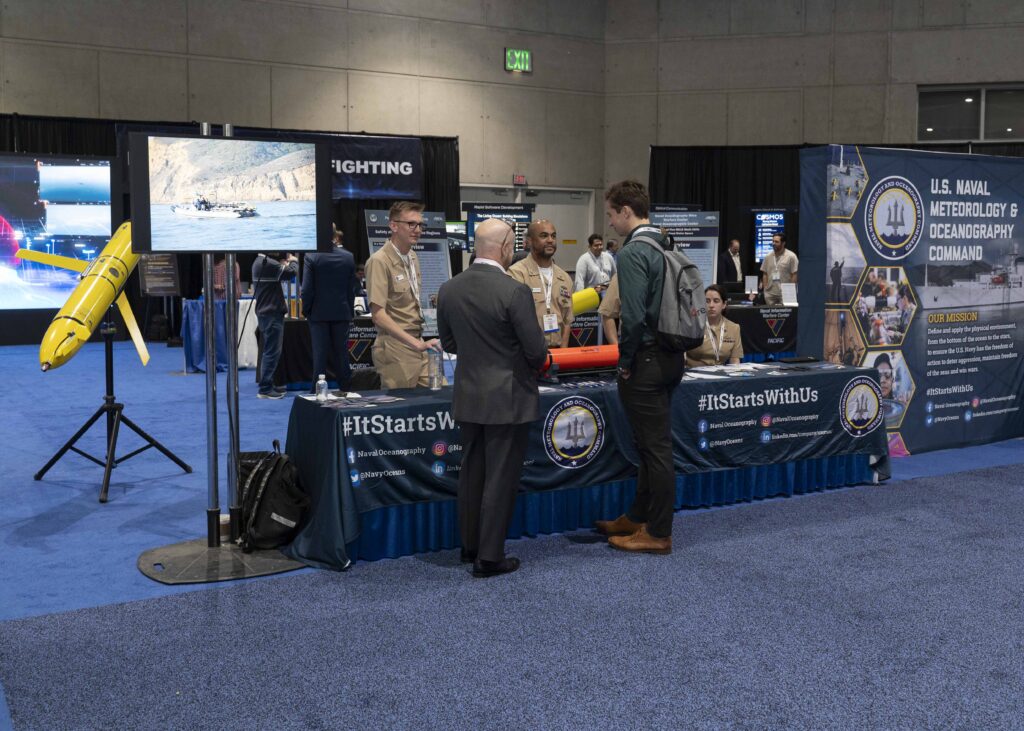
Naval Meteorology and Oceanography Command representatives explain their mission and capabilities to industry partners during WEST Conference 2025. WEST connects military, industry, and academia experts together to find innovative solutions to enhance operational capabilities that overcome complex challenges and evolving threats. (U.S. Navy photo by Ramon Go)

From Lily Chen, Naval Information Warfare Systems Command, Feb. 4, 2025 

SAN DIEGO, Calif. — At the 2025 WEST Conference in San Diego, Naval Information Warfare Systems Command (NAVWAR) reinforced its commitment to driving technological innovation and strengthening the Navy’s operational advantage. Through dynamic discussions, strategic engagements and live demonstrations, NAVWAR emphasized the need to rethink conventional approaches to warfare, as well as the role of artificial intelligence (AI) and machine learning (ML) tools to outpace emerging threats. 

As the premier naval conference and exposition on the West Coast, WEST offered industry and academia experts the valuable opportunity to engage with U.S. Navy, Marine Corps and Coast Guard leaders. Co-sponsored by Armed Forces Communications & Electronics Association (AFCEA) International and the U.S. Naval Institute (USNI), thousands of people attended at the San Diego Convention Center Jan. 28-30 to discuss the landscape of increasingly complex challenges in alignment with the theme: the future is now, are we advancing operational capabilities that pace the threat? 
 
NAVWAR Commander Rear Adm. Seiko Okano, representing the command for the first time at WEST, highlighted her organization’s commitment to supporting the Fleet with next-generation capability. On a panel with other military and industry experts, they discussed how the Department of Defense (DOD) is accelerating software development in support of the Replicator initiative, a DOD-wide effort to fast-track the acquisition of thousands of all-domain attritable autonomous systems. 
 
She highlighted the need for a shift in both culture and the development ecosystem, emphasizing that transformative change is essential for driving progress. “This isn’t a technology problem; this is a culture problem. The faster we figure out how to shift this together, I think we win,” she said. “The Navy has always prided itself on having brilliant technologists at our research labs, but we should also embrace the really fantastic solutions from industry that we can leverage to help us innovate at speed.” 
 
On another panel with systems commanders from the Navy, Marine Corps and Coast Guard on acquisitions, Okano continued to speak about the unique role NAVWAR has in delivering innovative capability to the Fleet. “NAVWAR is at the center of a significant shift in warfare—where traditional domains are blurring, and the fight is increasingly multi-domain and multi-spectral. Our role is to deliver a decisive information advantage, requiring speed, agility and adaptability,” she said. “The challenge is breaking down silos, fostering collaboration and instilling a culture that embraces rapid change to meet the demands of modern conflict.” 
 
During an informational brief about NAVWAR and its needs, John Pope, executive director of NAVWAR, reiterated the importance of rapid and easy adoption of new technologies. “In our world of information warfare, we need to be the ones who are the quickest to respond to what the Fleet needs,” he said. “To achieve that, we’re asking our workforce and our industry and academic partners to embrace our core values of audacious innovation and radical ownership to get after what we need to fix any outdated equipment until we can find modern solutions.” 
 
At the Navy’s Information Warfare pavilion, experts from across the NAVWAR enterprise had a significant presence, interfacing with industry at engagement zones and presenting cutting-edge technology. From Naval Information Warfare Center (NIWC) Pacific; Program Executive Office (PEO) Digital and Enterprise Services (Digital); PEO Manpower, Logistics and Business Solutions (MLB); and PEO Command, Control, Communications, Computers and Intelligence (C4I), NAVWAR’s wide-ranging program offices were represented on the exhibit floor. 
 
The tech demonstrations from NIWC Pacific showcased the latest and greatest from their labs, ranging from cloud development to cryogenic probes to a robot dog designed to assist in ship maintenance. One of the demos featured a Rapid Recreation into Modeling and Simulations (R2MS) tool, spearheaded by the Integrated Fires Team. This platform uses real-world data to create live virtual simulations at rapid speed, an invaluable tool for training and mission planning. “We’re exploring how AI and ML can take R2MS’ capabilities even further,” said Nadil Lopez, project manager for the Integrated Fires team. “There is a lot of untapped potential with this tool in creating complex and realistic environments for the Fleet.” 
 
All of NAVWAR’s PEOs also had significant industry engagement throughout the course of WEST. Through PEO C4I’s annual Engagement Event and the joint PEO Digital/MLB Industry Open house, around 250 individual companies met government representatives and leaders for insightful and collaborative conversations across all three PEOs. NIWC Pacific program managers and technical leads also met with industry through the engagement zones to discuss their needs in an informal one-on-one discussion. 
 
“As underscored by several of the leadership keynotes this year, the rapid pace of both technological and global change demand stronger partnerships across government, industry and academia,” said Michael McMillan, executive director of NIWC Pacific. “WEST 2025 provides NIWC Pacific the opportunity to showcase our latest innovations while forging connections that accelerate the transition of critical technologies from research and prototyping to operational capability. By strengthening collaborations today, we ensure our Navy remains ahead of tomorrow’s threats.” 
 
Efforts from PEO Digital were also acknowledged at the Department of Navy (DON) Information Technology Excellence Awards, held Monday, Jan. 27 prior to WEST. In honor of leading Flank Speed Zero Trust, the DOD’s first zero trust compliance pilot, Darren Turner received the Person of the Year award for his exceptional leadership and dual roles for both DON Chief Information Officer (CIO) and PEO Digital’s technical director office. Zero trust is a network security philosophy that states no one inside or outside the network should be trusted unless their identification has been thoroughly checked. The Navy’s Flank Speed service currently delivers enhanced collaboration, productivity and robust zero trust security to more than half a million users worldwide, completed three years before the DON CIO’s 2027 deadline. 
 
Rodrick Adams, the Marine Corps Logistics Integrated Information Systems (LI2S-MC) security manager at PEO MLB, was also recognized with a Fiscal Year 2024 Copernicus Award from AFCEA International and USNI. This award honors individual contributions to C4I, information systems, cyber operations and information warfare. Adams’ efforts in leading the planning, development and implementation of the Naval Identity Services effort for Global Combat Support System-Marine Corps led to greatly enhanced financial transaction security for its users. 
 
In continuing its commitment to helping the Navy reach new heights in cybersecurity and information warfare capabilities, NAVWAR leverages next-generation tools like AI/ML and industry partnerships to further drive innovation. As the battlefield becomes more complex, their role in the future fight demands a culture shift driven by collaboration, adaptability and agility. 
 
About NAVWAR: 
 
NAVWAR identifies, develops, delivers and sustains information warfighting capabilities and services that enable naval, joint, coalition and other national missions operating in warfighting domains from seabed to space and through cyberspace. NAVWAR consists of more than 11,000 civilian, active duty and reserve professionals located around the world. 
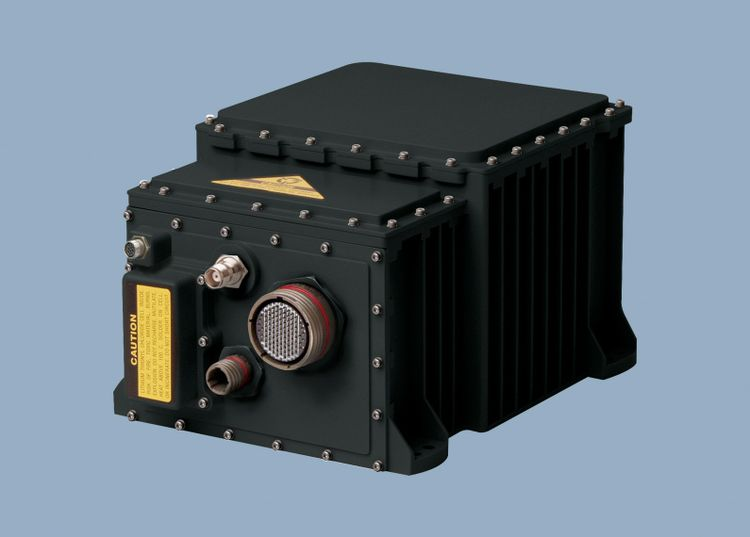


Northrop Grumman Advances Airborne Navigation Capabilities for the US Navy 

Northrop Grumman is implementing the U.S. Navy’s first M-code airborne navigation solution, the M-code capable LN-251 Inertial Navigation System/Global Positioning System (INS/GPS). (Photo Credit: Northrop Grumman) 

From Northrop Grumman, Feb. 4, 2025 

WOODLAND HILLS, Calif. – Feb. 4, 2025 – Northrop Grumman Corporation (NYSE: NOC) is advancing the U.S. Navy’s airborne navigation capabilities with implementation of the LN-251M, the next-generation upgrade of the LN-251 Inertial Navigation System/Global Positioning System (INS/GPS). The LN-251M features M-code – an encrypted, military-specific signal with stronger jam resistance to shield against adversarial threats. 

  • This is the first M-code navigation system for naval aircraft. 

  • M-code technology provides enhanced robustness to counter GPS signal degradation, enabling pilots greater ability to effectively operate in air spaces where GPS has been shut down or spoofed. 

  • LN-251s equipped with Selective Availability Anti-Spoofing Modules GPS may easily upgrade to M-code configuration. 

Expert: 

Ryan Arrington, vice president, navigation and cockpit systems, Northrop Grumman: “The LN-251M is Northrop Grumman’s newest innovation in elevating airborne navigation to the next level. This important enhancement is a critical milestone for delivering advanced positioning, navigation and timing capabilities because it enables pilots to safely operate with a jam-resilient navigation system for naval aircraft.” 

Program Details: 

LN-251s are designed to seamlessly integrate with current aircraft navigation systems and perform cohesively with future software and GPS modernization upgrades. Northrop Grumman began producing the LN-251 INS/GPS in 2003.To date, the company has delivered nearly 5,000 LN-251s and similar LN-270 INS/GPS units. 


Marine Corps Updates F-35 Procurement, Transition Plan

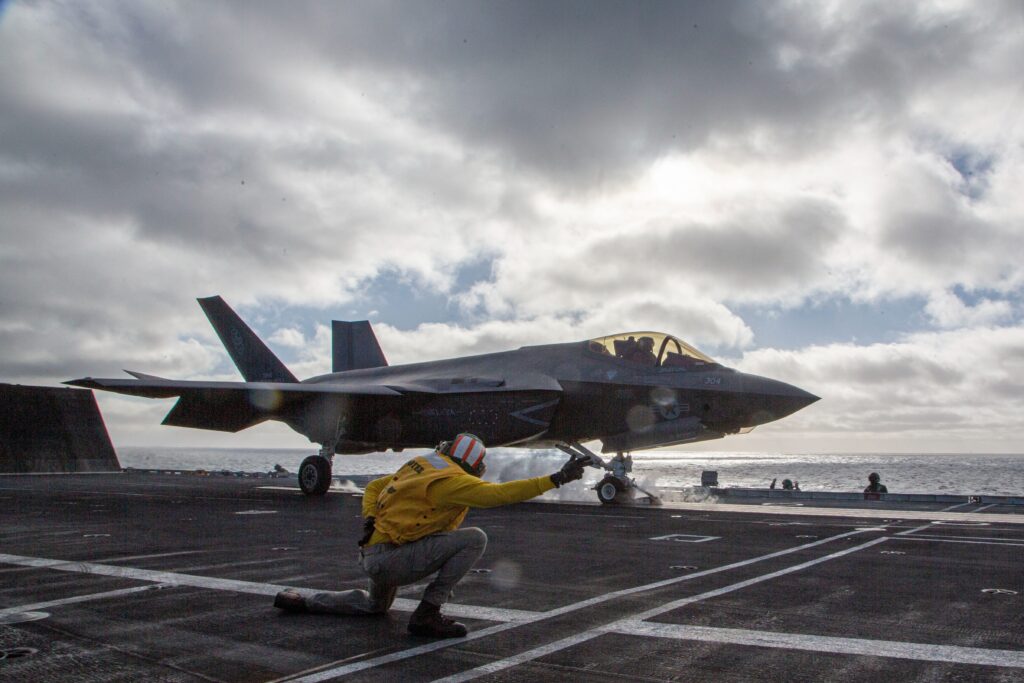
Marine Fighter Attack Squadron (VMFA) 314 launch and recover F-35C as they work to renew their carrier qualifications onboard the USS Abraham Lincoln (CVN 72) (U.S. Marine Corps photo by 1stLt. Charles Allen) 

By Richard R. Burgess, Senior Editor 

ARLINGTON, Va. — The U.S. Marine Corps has adjusted its procurement and transition plan for its F-35 Lightning II strike fighter fleet. While the overall program of record remains at 420 F-35s, the balance between the numbers of short takeoff and vertical landing F-35B and the carrier launch capable F-35C has changed, with the number of F-35Cs increasing  and the number of F-35Bs decreasing. 

According to the 2025 Marine Corps Aviation Plan released Feb. 3, the Corps plans to procure a total 280 F-35Bs and 140 F-35Cs, as compared with the earlier program of record of 353 F-35Bs and 67 F-35Cs. These numbers will allow the Corps to support 12 F-35B fighter-attack (VMFA) squadrons and eight F-35C VMFA squadrons. 

Before, the Corps had planned to support only four F-35C squadrons, VMFAs 314, 311, 251, and 115. With the change in the procurement profile, four other F/A-18 Hornet squadrons also will make the transition to the F-35C: VMFAs 232 and 323 and reserve VMFAs 112 and 134. 

Currently, all but two operational F-35 squadrons are allowed to be equipped with 10 aircraft, with the other two, both based at Marine Corps Air Station Iwakuni, Japan, being allowed 12 aircraft each. Under the new plan, all operational F-35 squadrons will be equipped with 12 aircraft each beginning in 2030. 

The Marine Corps F-35C squadrons will continue to support the TACAIR Integration Plan, in which they deploy as units of Navy carrier airwings. 


USS Lake Erie Returns Home to San Diego 

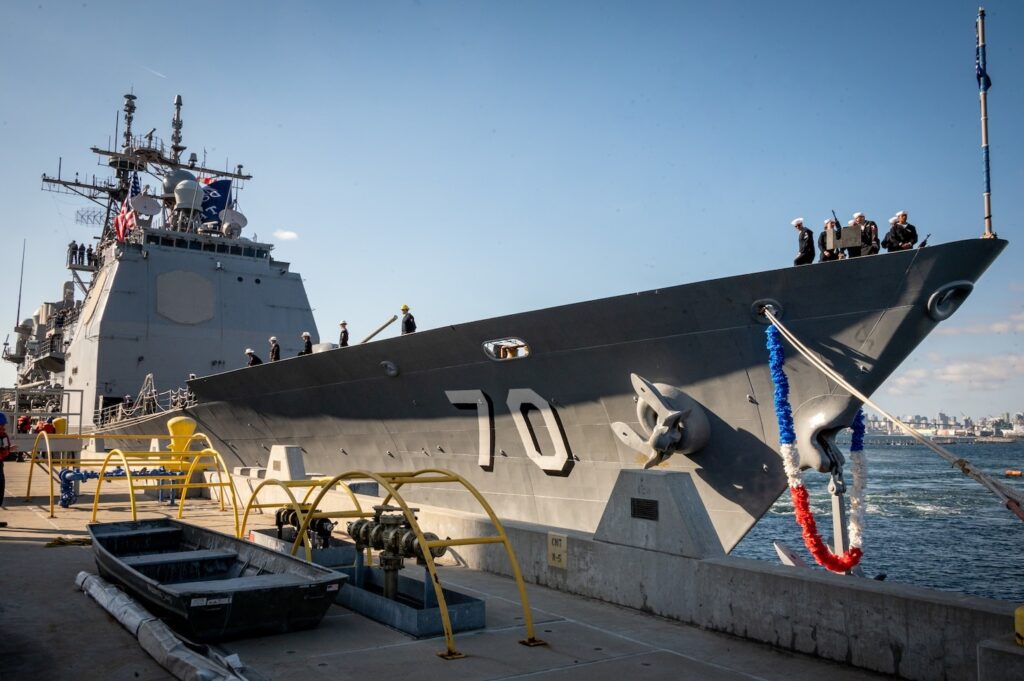
The Ticonderoga-class guided-missile cruiser USS Lake Erie (CG 70) returned to its homeport of Naval Base San Diego, Jan. 30, after completing a seven-month deployment to the U.S. 3rd and 7th Fleet areas of operations. (U.S. Navy photo by MC1 Brandon Roberson) 

From Lt. j.g. Selena Esteban,  Jan. 31, 2025 

The Ticonderoga-class guided-missile cruiser USS Lake Erie (CG 70) returned to its homeport of Naval Base San Diego, Jan. 30, after completing a seven-month deployment to the U.S. 3rd and 7th Fleet areas of operations. 

Lake Erie departed San Diego July 1, 2024, to conduct independent operations in the Indo-Pacific region. 

While deployed to U.S.7th Fleet, Lake Erie conducted operations across multiple warfare areas, deterring aggression, promoting regional stability and security, and protecting free flow of commerce. Lake Erie participated in various multi-national exercises, operating with the Japan Maritime Self-Defense Force, the Royal Canadian Navy, the Philippine Navy, and the Royal Australian Air Force. Throughout deployment, Lake Erie reinforced the U.S. commitment to allies and partners in the Indo-Pacific region, demonstrating the growing strength of regional and international cooperation. 

Lake Erie was led by Commanding Officer Capt. Drew A. Borovies, Executive Officer Cmdr. Raymond T. Ball before turning over duties to Cmdr. Clinton R. Cabe last December, and Command Master Chief Raina Hockenberry. 

“Lake Erie was the can-do cruiser in 7th Fleet. This deployment showed how capable Lake Erie and our Sailors are by responding whenever we were needed. No matter what challenges were thrown Lake Erie’s way, the crew rose to the occasion and achieved success every single time,” said Capt. Drew A. Borovies, commanding officer, Lake Erie. “I am incredibly proud of all the hard work from the team. We came to show how powerful the United Sates Navy is and that is exactly what we did.” 

In the last seven months, Lake Erie sailed over 40,000 nautical miles with embarked Helicopter Maritime Strike Squadron (HSM) 35 Detachment 1 flying a total of 774 hours, together defending and supporting a free and open Indo-Pacific. 

“I am glad that I was able to join this inspiring team,” said Cmdr. Clinton R. Cabe, executive officer, Lake Erie. “Lake Erie truly built up their reputation in the last seven months, completing a wide variety of exercises and always maintaining a high state of readiness. None of this could have been done without the resilience of our Sailors. I am very excited to continue working with this wonderful crew and be a part of future accomplishments.” 

As an integral part of U.S. Pacific Fleet, Commander, U.S. 3rd Fleet operates naval forces in the Indo-Pacific and provides the realistic and relevant training necessary to execute the U.S. Navy’s timeless role across the full spectrum of military operations—from combat missions to humanitarian assistance and disaster relief. U.S. 3rd Fleet works together with our allies and partners to advance freedom of navigation, the rule of law, and other principles that underpin security for the Indo-Pacific region. 


U.S. Navy Awards Contract for Deployment of Future Mine Countermeasures Capabilities

The Mine Countermeasures Unmanned Surface Vehicle. (U.S. Navy photo)

By PEO USC Public Affairs, Feb. 3, 2025 

WASHINGTON – The U.S. Navy has recently awarded a series of contracts, under Program Executive Office, Unmanned and Small Combatants (PEO USC), to facilitate Littoral Combat Ship (LCS) Mine Countermeasures (MCM) Mission Package (MP) deployments.   

The MCM Unmanned Surface Vehicle (USV) is an unmanned, diesel-powered surface craft that can be launched from an LCS, vessel of opportunity, or shore. Its modular flexibility allows integration with multiple payload delivery systems that perform MCM missions, including minesweeping, mine hunting, and mine neutralization. By awarding these contracts, the Navy is ensuring it has the most advanced unmanned systems to effectively conduct mine countermeasure missions in the littorals.   

The Navy awarded the first contract to Bollinger Shipyards for an MCM USV Advanced Material Order (AMO), valued at $7.7 million, which is expected to be completed in September 2025. This contract will procure items needed to improve the MCM USV based on findings from operational testing.   

The Navy also awarded a production contract for the Minehunt Payload Delivery System (MH PDS) to Raytheon Technologies. This contract is valued at $18.3 million to produce five units with deliveries by the end of FY26.   

Additionally, the Navy awarded a production contract for the Minesweep Payload Delivery System (MS PDS) to Textron Systems. This contract is valued at $12.1 million to produce four units, for delivery early in FY27.  

“With the first deliveries of the MCM MP underway and deployments closely following, it is critical to ensure we have the contracts in place to procure and deliver the quantity of mission packages to the Fleet required in today’s changing world,” said Capt. Matthew Lehmann, LCS Mission Modules program manager. “These contract awards ensure our Littoral Combat Ships will continue to receive the modernized MCM equipment needed to conduct their missions, allowing our Sailors to operate safely and stay outside of the minefield.”   

Leveraging the flexibility of the MCM USV, the Minehunt and Minesweep Payload Delivery Systems integrate within the USV, enabling it to perform missions. The MS PDS provides acoustic and magnetic minesweeping capabilities to the MCM Mission Package, while the MH PDS uses the AN/AQS-20 sonar to perform mine hunting missions.   

“These contracts are pivotal to ensure that the Navy’s LCS are equipped with the most advanced and reliable Mine Countermeasures capabilities,” said Rear Adm. Kevin Smith, PEO USC program executive officer. “As we continue to face evolving threats in the littoral environment, these investments not only enhance our operational readiness but also demonstrate our commitment to safeguarding our Sailors and maintaining a competitive edge. By modernizing and expanding our MCM mission packages, we are providing our forces with the tools necessary to maintain access to key maritime regions and keep global shipping lanes safe.”  

A part of the PEO USC portfolio within NAVSEA, the Navy’s LCS Mission Modules program office designs, develops, builds, and delivers the Navy’s unmanned maritime systems; mine warfare systems; special warfare systems; expeditionary warfare systems; small boats/craft; and small surface combatants.  

NAVSEA continues to prioritize stability in procurement profiles and design configurations, make targeted industrial base investments, and increase collaboration with both government and industry partners to optimize schedule, quality, and cost performance.  

For more information on PEO USC, visit:  

https://www.navsea.navy.mil/Media/News/.


HII Begins Fabrication of Amphibious Transport Dock Philadelphia 

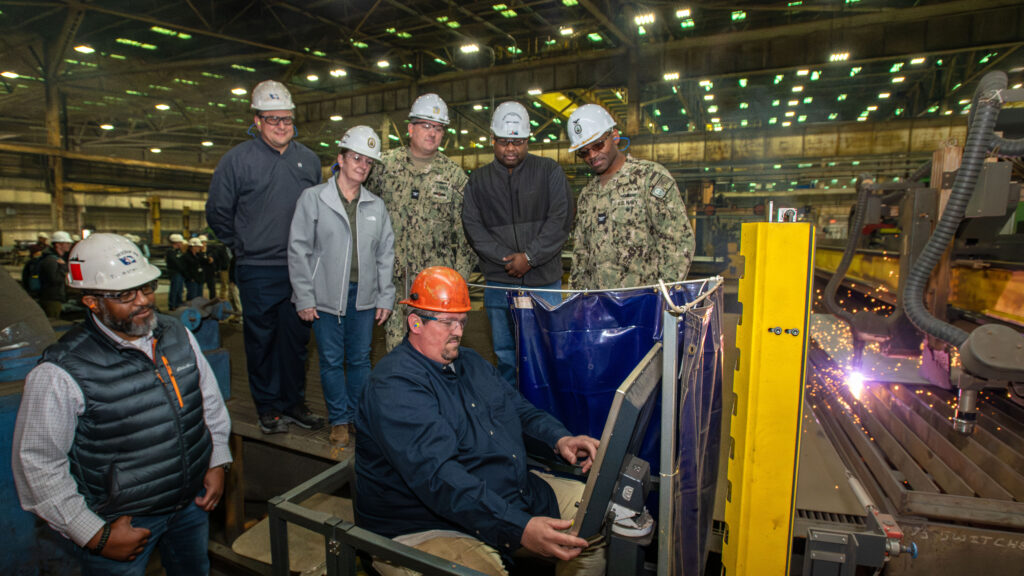
PASCAGOULA, Miss., Jan. 29, 2025 (GLOBE NEWSWIRE) — HII (NYSE: HII) Ingalls Shipbuilding division began fabrication of the U.S. Navy’s newest San Antonio-class amphibious transport dock Philadelphia (LPD 32) Monday. The start of fabrication signifies that the first 100 tons of steel have been cut for the ship. 

“From the earliest planning stages to the first cut of steel, every step of construction so far has been focused on building a capable ship for our Navy and Marine Corps partners,” said Stephen Janowski, Ingalls Shipbuilding amphibious ship program manager. “Our team is committed to continuous improvement and seeing Philadelphia built with the quality craftsmanship needed to support our nation well into the future.” 

Ingalls is the sole provider of LPD 17 San Antonio-class ships and has delivered LPDs 17 through 29 to date. Currently, Ingalls has three Flight II LPDs under construction including Harrisburg (LPD 30), Pittsburgh (LPD 31) and Philadelphia (LPD 32). Additionally, in September 2024, the Navy awarded Ingalls a contract for the construction of three San Antonio Class Amphibious Transport Dock (LPD) ships (LPD 33, LPD 34, and LPD 35). 

LPD Flight II is the next generation amphibious ship to replace the Whidbey Island (LSD 41) and Harpers Ferry (LSD 49) classes of dock landing ships. Amphibious transport docks are a major part of the Navy’s 21st century expeditionary force, deployed with a U.S. Marine Corps Air-Ground Task Force for amphibious and expeditionary crisis response operations that range from deterrence and joint-force enablement to humanitarian assistance and disaster relief. 

Photos accompanying this release are available at: http://hii.com/news/hii-begins-fabrication-of-amphibious-transport-dock-philadelphia-lpd-32/


First of 3 New Coast Guard Cutters Arrives to Homeport in Kodiak, Alaska 

From U.S. Coast Guard 17th District, Jan. 29, 2025 

KODIAK, Alaska — The crew of Coast Guard Cutter John Witherspoon (WPC 1158) arrived at the cutter’s new homeport in Kodiak, Tuesday.  The cutter is scheduled to be commissioned during a ceremony in April.   

The Witherspoon is the first of three Fast Response Cutters (FRCs) scheduled to be homeported at Coast Guard Base Kodiak and is now the fourth FRC currently based in Alaska. While these ships will be homeported in Kodiak, they will operate throughout the 17th Coast Guard District to include the U.S. Arctic, Gulf of Alaska, and Bering Sea.    

The crew of the Witherspoon will carry out integral Coast Guard missions such as maritime law enforcement and security, living marine resources, and search and rescue. They will provide security for Alaskan coastal communities as they continue to utilize the ocean for their livelihoods while preserving Alaska’s living marine resources in conjunction with our partner agencies.    

“The crew is humbled to be associated to a namesake honoring Capt. John G. Witherspoon, a trailblazer who found enjoyment and purpose in leading and mentoring others,” said Lt. Cmdr. Adam Young, commanding officer of the Witherspoon. “It is fitting that the cutter’s first sail was no tall order, stretching more than 7,000 nautical miles from Key West to Kodiak. Throughout the last five months, the crew displayed remarkable teamwork and resilience, a true testament to the core values Capt. Witherspoon epitomized throughout his illustrious career. I couldn’t be prouder of the team we have onboard, and I look forward to experiencing the beauty of Alaska once again.”   

The new FRCs arriving in Alaska are designed to replace the service’s fleet of 110-foot cutters that are projected to be decommissioned this year. The Coast Guard is currently scheduled to have six FRCs operating throughout Alaska by the end of 2025 to reinforce our maritime boundaries and shorten on-scene response times to support search and rescue efforts and better serve the people of Alaska.   

FRCs feature advanced command, control, communications, computers, intelligence, surveillance and reconnaissance equipment as well as over-the-horizon response boat deployment capability and improved habitability for the crew. The ships can reach speeds of 28 knots and are equipped to coordinate operations with partner agencies and long-range Coast Guard assets such as the Coast Guard’s National Security Cutters.  

FRCs are 154-foot multi-mission ships designed to conduct drug and migrant interdictions; ports, waterways and coastal security operations; fisheries and environmental protection patrols; national defense missions; and search and rescue. Each cutter is designed for a crew of 24, has a range of 2,500 miles and is equipped for patrols up to five days. The FRCs are part of the Coast Guard’s overall fleet modernization initiative. 


Coast Guard, Multiple Partner Agencies, Responding to Plane Crash in Potomac River 

From U.S. Coast Guard Headquarters, Jan. 30, 2025 

WASHINGTON — The Coast Guard is coordinating with local, state and federal agencies in response to the aircraft collision which occurred Wednesday evening over the Potomac River in Washington.  

Coast Guard Sector Maryland – National Capital Region command center watchstanders received a report at approximately 8:55 p.m. reporting a helicopter and a commercial passenger aircraft collided in the vicinity of Ronald Reagan Airport.  

Response boat crews from Coast Guard stations Washington, Curtis Bay, Annapolis, St. Inigoes, Oxford and Crisfield have deployed to the incident to conduct searches in coordination with local partners and enforce a safety zone. Cutters Sailfish, Bruckenthal, Kennebec and Frank Drew are enroute to assist. 

An Urgent Marine Information Broadcast was issued regarding the incident and a safety zone has been established, securing all vessel traffic from the Woodrow Willson Bridge heading north along the Potomac River. Mariners are urged to avoid the area.  

Coast Guard pollution crews have mobilized and are pre-staged to respond to any pollution caused by the incident.    

The Coast Guard is working with the Army Corps of Engineers and Navy’s Supervisor of Salvage and Diving to coordinate removing the wreckage and restoring the waterways once able to do so. 


Collins Aerospace Awarded Cooperative Engagement Capability Design Agent Contract

From RTX 

Company to further advance critical warfighting capabilities 

CEDAR RAPIDS, Iowa, Jan. 29, 2025 /PRNewswire/ — Collins Aerospace, an RTX (NYSE: RTX) business, was awarded a follow-on contract with a potential for up to $904 million over five years to continue development of the U.S. Navy’s Cooperative Engagement Capability, a system that integrates sensors across surface, land, and air platforms to enable Integrated Fire Controls. RTX has been the sole provider of the Cooperative Engagement Capability (CEC) since 1985. The new sole source contract follows an existing five-year Design Agent contract. 

The CEC is a critical network for the U.S. Navy that connects multiple platforms and associated sensors together and provides composite tracking to combat and weapons systems. Collins will add new capabilities to the system including increased interoperability, expanded weapon and sensor coordination and integration of new data sources. 

“The Cooperative Engagement Capability is a key enabler to support the Navy’s expanding Distributed Maritime Operations,” said Ryan Bunge, vice president and general manager, C4I & Autonomy Solutions, Collins Aerospace. “The capabilities we’ve been developing for years are time-tested solutions that enable integrated fire controls across the Joint Services.” 

Collins has successfully deployed and maintained CEC on more than 174 U.S. Navy, U.S. Marine Corps and international platforms. 

The contract provides significant opportunity and flexibility to affect the CEC mission through future task orders for engineering activities. 


BAE Systems to upgrade additional Mk 45 Naval Guns for U.S. Navy 

From BAE Systems, Jan. 27, 2025 

Advanced firepower will continue to play a critical role at sea as Sailors face advanced threats 

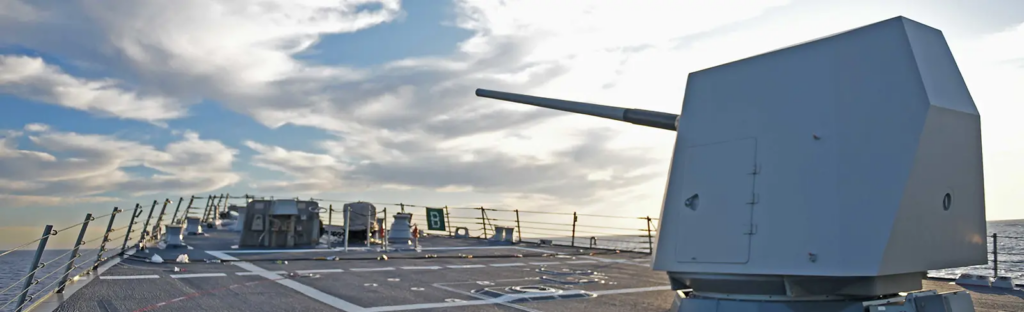
The U.S. Navy has awarded BAE Systems over $70 million to upgrade Mk 45 5-inch naval gun systems and ancillary equipment. On Sept. 30, BAE Systems received a $23.5 million modification to a $47 million contract awarded at the end of July, bringing the total value to over $70 million. Under the contract, BAE Systems will upgrade and overhaul existing systems to the Mk 45 Mod 4 configuration. 

The upgrade to the Mk 45 Mod 4 configuration includes a 62-caliber barrel and a mechanically strengthened gun mount. It also features a fully digital control system that easily integrates targeting and fire control data. Together, these upgrades allow the use of modernized munitions with 50% greater firing energy and prepare for future precision-guided munitions with unprecedented ranges. 

“Events in the Red Sea this year have underscored the importance of firepower aboard U.S. Navy ships,” said Brent Butcher, vice president of Weapon Systems at BAE Systems. “Equipped with the latest configuration of the Mk45 gun system, the men and women in the Navy have the capabilities to protect themselves at sea. We continue our commitment to providing the latest naval gun technology, including advanced munitions, to U.S. Sailors and their allies.” 

Upgrades and overhauls to the Mk 45 are a cost-effective solution to ensure that U.S. Navy Sailors have the modern long-range strike and air defense capability that they require, ensuring peak performance from a deep magazine of advanced 5-inch projectiles that are easily replenished at-sea. By upgrading these platforms, Sailors will receive the latest innovative technology that will support advanced munitions and future mission capabilities at a lower cost than a new gun system. 

Work on the contract will take place at the BAE Systems production facility in Louisville, Kentucky, and will be completed by the end of 2028.