HII Closes on Asset Acquisition to Expand Shipbuilding Capacity
Operations Are Underway at Newport News Shipbuilding Charleston Operations
From HII
GOOSE CREEK, S.C., Jan. 27, 2025 (GLOBE NEWSWIRE) — HII (NYSE: HII) announced today it has closed on its acquisition of an advanced manufacturing facility and assets and begun work at its Newport News Shipbuilding (NNS) — Charleston Operations site in South Carolina.
“HII is committed to going where the labor is to increase shipbuilding capacity and increase throughput for our national security customers,” HII President and CEO Chris Kastner said. “This lets us efficiently add trained talent and state-of-the-art manufacturing capabilities to the urgent job of building ships, making it a unique opportunity to immediately accelerate throughput at Newport News Shipbuilding in support of the Navy and AUKUS.”
HII announced last month its intent to acquire the facility and associated assets. Since then, more than 99% of the legacy workforce have accepted offers to continue to work on site, supporting the construction of nuclear-powered submarine modules and aircraft carrier units for U.S. Navy programs. Working closely with the South Carolina state and regional leadership, HII plans to create hundreds of additional jobs to support the increased demand and growth at the Charleston facility.
In addition to existing trained talent, HII’s acquisition also provides:
Advanced production facilities with state-of-the-art manufacturing equipment, tooling and infrastructure used to fabricate complex metal modules and structures.
Facility location on 45-acres with more than 480,000 square feet of manufacturing space.
Access to barge and rail transportation.
Access in nearby Charleston and surrounding region to rapidly growing shipbuilding ecosystem and capacity to expand a highly skilled maritime trades workforce.
“This is great news for the South Carolina economy. This investment will allow us to expand our manufacturing footprint more aggressively in the shipbuilding industry,” U.S. Sen. Lindsey Graham, R-S.C., said. “If you can drive it, fly it, shoot it or float it, South Carolina makes it.”
“The expansion of our nation’s largest military shipbuilder in South Carolina underscores the pivotal role our state plays in strengthening America’s national security,” U.S. Sen. Tim Scott, R-S.C., said. “The dedicated shipbuilders in the Charleston area are part of a highly skilled workforce that will propel our nation forward. This innovation and modernization in our defense industrial base will create jobs and draw resources to our state’s already robust Navy presence.”
Coast Guard Conducts Alien Expulsion Flight Operations Between California and Texas
U.S. Coast Guard conducts Alien Expulsion Flight Operations in coordination with U.S. Customs and Border Patrol. (U.S. Coast Guard)
From Coast Guard Headquarters Public Affairs, Jan. 25, 2025
SAN DIEGO – Today, the Coast Guard conducted several Alien Expulsion Flight Operations between California and Texas, in coordination with U.S. Customs and Border Protection.
“In accordance with the President’s Executive Orders, the Coast Guard continues to surge assets and leverage its unique capabilities to protect America’s borders, territorial integrity, and sovereignty,” said Adm. Kevin Lunday, the Coast Guard’s Acting Commandant. “Today’s operation exemplifies our coordination with our Department of Homeland Security and Department of Defense teammates, through which we are detecting, deterring, and interdicting aliens, drug smuggling, and other terrorist or hostile activity before it reaches our border.”
The Coast Guard is coordinating the operations of multiple Coast Guard units in support of this operation. Led by the Eleventh Coast Guard District in California, the Service is surging assets and personnel from around the nation to support the Department of Homeland Security-led operation.
The Coast Guard’s current role is to assist with the national transport of aliens to designated locations in Texas and California, where the Department of Defense will transport the aliens internationally.
3d Marine Littoral Regiment Fires the Marine Air Defense Integrated System (MADIS)
From 3d Marine Littoral Regiment, Jan. 25, 2025
POHAKULOA TRAINING AREA, Hawaii – U.S. Marines with 3d Marine Littoral Regiment, 3d Marine Division, conducted a counter unmanned aerial system live-fire training event utilizing the Marine Air Defense Integrated System – a ground-based air defense capability, on January 25, 2025, to commemorate the addition of the MADIS and the months of operational testing and evaluation required to field this new weapon system.
Lt. Col. Matthew E. Sladek, Commanding Officer, 3d Littoral Anti-Air Battalion, stated, “The fielding of the Marine Air Defense Integrated System to the Marines of 3d Littoral Anti-Air Battalion is the culmination of years of tireless work from government and industry teammates across the country. The delivery of the critical capabilities the system provides to 3d Littoral Anti-Air Battalion and by extension 3d Marine Littoral Regiment, makes the stand-in-force more survivable and lethal in the conduct of contested littoral operations against emerging aerial threats. As a career Low Altitude Air Defender Marine, it is truly amazing to have watched the Marine Air Defense Integrated System transition from an idea to a capability and with it, the modernization of Marine Corps short range air defense capabilities. Now the real work begins.”
The MADIS is operated by the Marines of 3d LAAB’s Ground-Based Air Defense Battery. Giving low-altitude air defense Marines the ability to detect, track, identify, and engage various unmanned aerial systems with various missiles, air-to-air launchers, chain guns, machine guns, and simulated munitions – all of which are part of the MADIS weapon system.
The MADIS live-fire event marked the first time this weapon system has been fired on a Hawaiian island since it’s fielding in December, attendees were able ask questions to commanders and subject matter experts about the fielding process and the operational value of the system. Training with the MADIS reinforces the Marine Corps’ threat-informed, concept-based approach to Force Design and modernization, and 3d MLR’s support to allies and partners in the Indo-Pacific region.
Col. John G. Lehane, Commanding Officer, 3d MLR, emphasized the importance of the MADIS capability, stating, “Fielding of MADIS to the 3d Marine Littoral Regiment enhances our collective lethality, and provides remarkable tactical flexibility given them system’s reach, range and mobility. We are really excited to have this capability added to our already robust ability to coordinate air and missile defense actions, as it adds an organic layer to defeat a would-be adversary’s ability to attack our formations.”
The addition of the MADIS – a highly mobile, short-range, surface-to-air defense weapon – provides 3d MLR an enhanced air and missile defense capability. A key component of the Marine Corps’ Force Design initiative, the mobile MADIS weapons system increases 3d MLR’s tactical flexibility by extending the range of the airspace which 3d MLR is able to sense and defend without support from the Joint Force.
3d Marine Littoral Regiment is a dedicated U.S. Marine Corps unit specializing in amphibious and littoral warfare operations. Stationed on Oahu, Hawaii, and deployed throughout the Indo-Pacific region, 3d MLR is committed to promoting regional security and stability through strategic partnerships and collaborative efforts with partner nations and Allies.
Amphibious Coalition Forecasts Benefits of Multi-Ship Amphib Ship Buy
By Richard R. Burgess, Senior Editor
ARLINGTON, Va. — The industry association for suppliers for the builder of U.S. Navy’s amphibious warfare fleet sees immediate benefits this year and the next one for its member companies, the association’s survey said.
In its annual survey of 219 member companies, the Amphibious Warfare Industrial Base Coalition (AWIBC) said that a majority of its member companies affirmed that the Navy’s announcement last year of a multi-ship buy will benefit their companies.
The survey focused on the August 2024 announcement by then-Secretary of the Navy Carlos Del Toro that the Navy would procure four amphibious warfare ships — one America-class amphibious assault ship (LHA) and three Flight II San Antonio-class amphibious transport dock ships (LPDs) in a bundle procurement according to the below schedule:
LPD 33 in FY25
LPD 34 in FY27
LHA 10 in FY27
LPD 35 in FY29
The four ships in the procurement would be built at the HII Ingalls Shipbuilding shipyard in Pascagoula, Mississippi.
“Our survey asked specifically about the impacts this bundle will have on the supplier base,” said Jack Feenick, a spokesman for the AWIBC. “We also included questions about the overall health of the industrial base, touching on key areas like workforce, training, inflation, and supply chain disruptions. Below are some of the key findings from our survey and attached is an infographic that provides some more insight on the data.”
Amphibious Warship Industrial Base Coalition (AWIBC) Survey
(Conducted survey from October – November 2024 from a sample of 219 total suppliers.)
65% of amphibious warship suppliers say that the bundle buy will lead to immediate benefits starting in 2025 or 2026.
82% of suppliers that support both amphibious ships and submarines agree that bundle buys benefit their capability to deliver on orders as well as their overall capacity.
52% say the bundle purchase will strengthen the shipbuilding industrial base to meet the demand of today and tomorrow
46% say the bundle purchase enables the hiring, retention, and training of a workforce
42% say the bundle purchase helps invest in equipment to ensure quality and on-time delivery
Consistent with findings from our survey last year, the top three challenges facing suppliers are:
Inflation
Workforce training and retention
Supply chain disruptions
Currently, only 10% of amphibious warship suppliers are operating at full capacity.
74% of suppliers who say they are sole-source/single-source supplier to the Navy are amphib suppliers.
Suppliers say that multi-ship procurements and earlier AP [advance procurement] funding are most likely factors to drive down material costs, help meet delivery schedules and improve their workforce and facilities.
Forging the Future: Training Center Opens to Train Next Generation of Defense Manufacturers
Jim Hook, an Accelerated Training for Defense Manufacturing (ATDM) instructor, teaches a student how to use a Haas CNC machine at the newly opened National Training Center in Danville, Virginia. This state-of-the-art facility, which opened on January 13, 2025, expands the program’s capacity to train skilled workers for submarine and surface ship manufacturing. (Courtesy photo from ATDM)
From The Maritime Industrial Base Program, Jan. 24, 2025
DANVILLE, Va. — The U.S. Navy strengthened its efforts to revitalize the nation’s shipbuilding capability with the opening of a new training center in Danville, Virginia.
The Accelerated Training in Defense Manufacturing (ATDM) program, launched in 2021, has graduated more than 777 students from 45 states, Guam, Puerto Rico, and Australia. About 25% of participants are veterans, and the program boasts a 90% job placement rate within the defense industrial base. New cohorts begin every eight weeks, offering a fast track to meaningful careers across five trades.
The new National Training Center, a state-of-the-art, 100,000-square-foot facility on the Institute for Advanced Learning and Research (IALR) campus, opened its doors on January 13. On that day, the center welcomed its first cohort of students, marking the beginning of an expanded operation that will train 1,000 students annually, creating a pipeline of skilled workers critical for building and maintaining the nation’s submarines and warships.
“This facility helps address our immediate workforce needs,” said Frederick “Jay” Stefany, the Direct Reporting Program Manager for the Maritime Industrial Base (MIB) Program. “It advances our efforts to restore our industrial base and ensure our industry partners have the skilled workforce they need to build and maintain the Navy’s fleet.”
ATDM’s graduates are essential in addressing the maritime industry’s expanding workforce needs. The Navy’s shipbuilding plans include the construction of Columbia-class and Virginia-class submarines, along with more than 10 different classes of surface ships, including aircraft carriers, destroyers, frigates, amphibious warships, and support vessels. This unprecedented scale of shipbuilding requires a comprehensive strategy to rebuild America’s manufacturing capabilities. The establishment of the National Training Center marks a significant milestone in this endeavor.
A National Imperative
The MIB Program leads the Navy’s workforce development initiatives while advancing shipbuilding and repair capabilities through industrial base development, supply chain resilience, and advanced manufacturing technologies. With the U.S. manufacturing base having shrunk to a third of its size from 30 years ago, the program must overcome major challenges. One of these pressing challenges involves recruiting and training 140,000 new workers over the next decade for submarine production and sustainment, with an additional 110,000 workers needed for surface vessel construction and maintenance.
“The decline in American manufacturing has created a critical skills gap,” said Erica Logan, Workforce Director for the MIB Program. “But we’re not just filling jobs—we’re rebuilding America’s maritime manufacturing capability and offering meaningful careers for the next generation of workers. Every graduate represents another step toward restoring our nation’s industrial strength.”
This workforce development initiative is vital for both new construction and fleet maintenance, underscoring the strategic importance of programs like ATDM in maintaining America’s naval readiness. This national revitalization effort takes shape through individual success stories and community partnerships.
The IALR campus, which hosts the National Training Center, also houses another key MIB Program initiative: the Navy’s Additive Manufacturing Center of Excellence. This co-location creates a hub for maritime manufacturing innovation.
Transforming Lives, Strengthening Communities
Natasha Barnes, part of the inaugural class that began training January 13 in the new facility, represents a growing wave of skilled workers entering the defense manufacturing workforce.
“ATDM has done an excellent job adapting during the transition into the new facility,” said Barnes, a CNC student. “It’s been an uplifting experience to learn in such a clean and well-maintained environment. I am very excited to see what the future holds for the program.”
For Telly Tucker, president of the Institute for Advanced Learning and Research (IALR), the program’s impact goes beyond the classroom.
“This facility is about more than training—it’s about revitalizing southern Virginia,” Tucker said. “It’s creating jobs, fostering economic growth, and building a pipeline of skilled workers who will strengthen our nation’s security.”
To deliver on this promise of regional revitalization and support to national security, the National Training Center provides intensive, hands-on preparation.
Hands-On Training for Real-World Impact
ATDM’s intensive, 16-week accelerated training program provides students with 600 hours of hands-on experience in one of five trades critical to maritime manufacturing: welding, CNC machining, additive manufacturing, quality assurance, and non-destructive testing. Training runs on three shifts, mirroring the 24/7 operations of the defense industry.
“This program isn’t theoretical—it’s practical,” said Christa Reed, ATDM’s Interim Vice-President. “When our students graduate, they’re not just trained—they’re ready to hit the ground running.”
The curriculum, developed in collaboration with industry leaders, ensures students are equipped with the skills and certifications needed to meet the Navy’s rigorous standards. By
simulating real-world manufacturing environments, the program prepares graduates to succeed in high-demand roles. This focused training approach directly enhances America’s maritime security.
A Shared Mission
The opening of the National Training Center represents a milestone in the Navy’s efforts to address workforce challenges and bolster the maritime industrial base. For Stefany, it’s a reminder of how these efforts impact national security.
“Every ship we build, every submarine we launch, is a promise to the American people,” Stefany said. “That promise begins here, with the people we train.”
As the Navy ramps up its fleet expansion, programs like ATDM and the new National Training Center are creating a ripple effect—transforming communities, empowering individuals, and ensuring America’s maritime superiority. The center highlights innovation, collaboration, and resilience, its impact extending beyond Danville to strengthen America’s maritime future.
For more information about ATDM and its programs, visit www.atdm.org.
Kratos Receives $34.8M Contract for Valkyrie Mission System Integration
From Kratos Defense & Security Solutions, Jan. 21, 2025
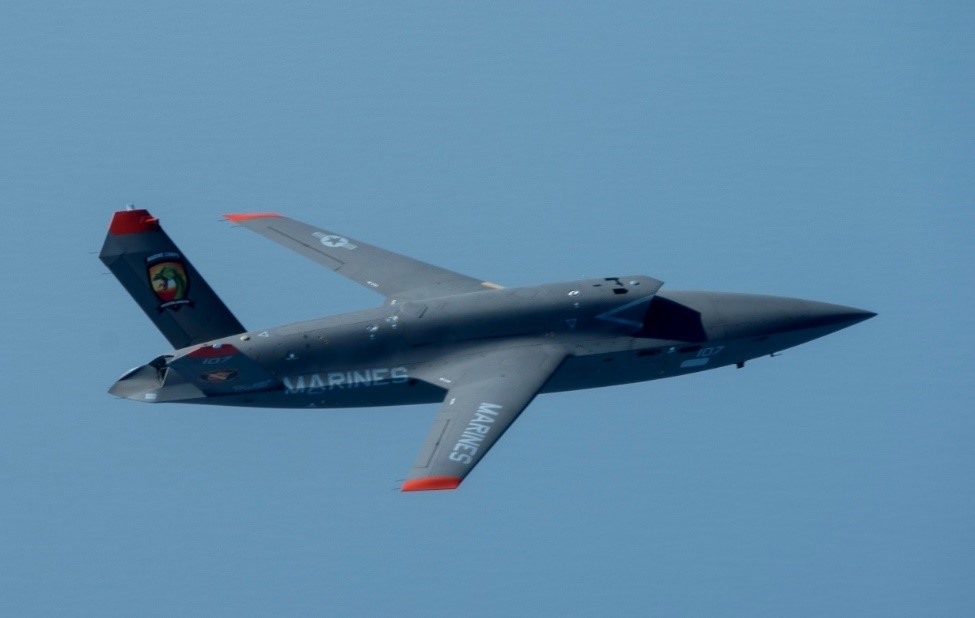
SAN DIEGO, Jan. 21, 2025 (GLOBE NEWSWIRE) – Kratos Defense & Security Solutions, Inc. (Nasdaq: KTOS), a Technology Company in Defense, National Security and Global Markets, announced today a $34,856,449 award modification to a previously awarded cost-plus-fixed-fee contract from the U.S. Marine Corps. The expanded scope is to support the XQ-58A Unmanned Aerial Systems mission systems and subsystems integration for the Marine Air-Ground Task Force Unmanned Aerial System Expeditionary (MUX) Tactical Aircraft (TACAIR).
Since 2022, Kratos and its industry partner, Northrop Grumman, have been working with the U.S. Marine Corps to define operational requirements for the MQ-58 Valkyrie variant. The team recently demonstrated advanced collaborative capabilities during the Penetrating Affordable Autonomous Collaborative Killer Portfolio (PAACK-P) program, which is transitioning to MUX TACAIR in 2025. The modification contract provides the additional non-recurring engineering and material to support the planned spiral developmental efforts, as well as additional flight tests for the continuing capability enhancement of the Valkyrie system.
Work under this contract will be performed in Sacramento, California, Oklahoma City, Oklahoma, China Lake, California and Patuxent River, Maryland.
Col Derek Brannon, Director of the HQ USMC Cunningham Group, said, “The U.S. Marine Corps is at the vanguard of collaborative combat aircraft (CCA) development and intends to field an operational CCA squadron with a tactically relevant aircraft equipped with effective, affordable mission system payloads.”
Steve Fendley, President of Kratos Unmanned Systems Division, said, “The Valkyrie is validating the thesis that uncrewed system development and evaluation can be executed at a fraction of the cost and schedule required for manned military jet aircraft systems. The immediate takeaway is recognizing that uncrewed systems can be teamed in the very near term with existing fielded manned aircraft—reducing risk and increasing effectiveness and life of the manned systems long before replacement or next generation manned systems can be fielded, not to mention afforded. It’s an incredible opportunity.”
The Kratos XQ-58A Valkyrie is a high-performance, runway-independent tactical unmanned aerial vehicle capable of long-range flights at high-subsonic speeds. Combining affordability, survivability, long-range, high-subsonic speeds, maneuverability and ability to carry flexible mission kit configurations and mix of lethal weapons from its internal weapons bay and wing stations, the XQ-58A provides unmatched operational flexibility at an affordable price for multiple DoD customers.
Shield AI V-BAT Selected as Japan Maritime Self-Defense Force’s First Maritime ISR Platform
From Shield AI, Jan. 22, 2025
WASHINGTON (January 22, 2025) – Shield AI, the defense technology company building an AI-powered autonomy software platform and tools for the world, announced today that its V-BAT unmanned aircraft system (UAS) has been selected by the Japan Maritime Self-Defense Force (JMSDF) as the country’s first-ever maritime-based intelligence, surveillance, and reconnaissance (ISR) platform. V-BAT will provide advanced ISR capabilities to JMSDF surface vessels, reinforcing Japan’s defense posture and operational readiness in the Indo-Pacific region.
This milestone deal represents the beginning of a planned multi-year stream of increasing V-BAT orders to support JMSDF operations. Under the agreement, the JMSDF will acquire multiple V-BAT UAS from Shield AI, enhancing the surveillance and intelligence-gathering capabilities of its surface vessels.
“Japan is a vital ally in the Indo-Pacific and critical to regional deterrence efforts, and this partnership strengthens Japan’s ability to respond effectively to crises and ensures they are equipped with a reliable and proven platform for maritime ISR missions,” said Brandon Tseng, Shield AI’s President, Co-founder, and former Navy SEAL. “The JMSDF’s selection of V-BAT reflects their understanding of the future of warfare—where operational success requires blending high-cost assets with intelligent, affordable unmanned systems like V-BAT. Every U.S. and allied maritime vessel should be equipped with V-BAT to provide shipborne ISR capabilities wherever and whenever they are needed, and it’s fantastic to be making that vision a reality with JMSDF.”
The V-BAT is the only single-engine ducted-fan vertical takeoff and landing (VTOL) UAS operationally deployed in multiple regions globally. With its unique ducted fan design and the ability to launch and recover in confined spaces, it is ideally suited for shipborne and austere environments, ensuring flexibility and resilience in complex missions. V-BAT has earned its reputation for reliability, operating with impunity even in GPS- and comms-denied environments. Its proven performance in contested regions like Ukraine, the Black Sea, and the Indo-Pacific demonstrates its ability to withstand advanced electronic warfare threats that have grounded many traditional drones.
Delivering the strategic capabilities of much more expensive aircraft, V-BAT excels in missions ranging from ISR to strategic targeting, search-and-rescue, and maritime interdiction. Its versatility and cutting-edge autonomous features make it a critical asset in modern defense operations.
DOD Orders 1,500 Troops, Additional Assets to Southern Border
Jan. 22, 2025 | By Matthew Olay, DoD News
The Defense Department is sending 1,500 active-duty service members and additional air and intelligence assets to the southern border to augment troops already conducting enforcement operations in that region, Acting Secretary of Defense Robert Salesses announced this afternoon via a statement to the media.
The announcement came roughly 36 hours after President Donald J. Trump issued an executive order directing DOD to address the situation at the border.
“On Monday, to protect the security and safety of United States citizens, President Trump declared that a national emergency exists at the southern border of the United States. The president directed me to take all appropriate action to support the activities of the secretary of homeland security in obtaining complete operational control of the southern border of the United States,” the statement reads.
The Pentagon has since established a task force to oversee the expedited implementation of border-related executive orders; with U.S. Northern Command heading up the effort and being supported by U.S. Transportation Command, the National Guard Bureau, the military services and the Department of Homeland Security.
The 1,500 additional active-duty service members authorized by Salesses will initially be put to work on the placement of physical barriers and other border missions within the next 24 to 48 hours, a senior military official told the media.
The additional active-duty personnel includes 1,000 soldiers, as well as 500 Marines who had previously been on standby in Southern California to potentially help combat the Los Angeles County wildfires that broke out two weeks ago, the senior official said.
With 2,500 active-duty personnel already in the region, the additional 1,500 troops will represent a 60% increase in active-duty forces since Trump was sworn in on Monday, Salesses remarks in his statement.
“We anticipate that overall, on the southwest border, will provide real-time situational awareness of persons, vehicles, vessels and aircraft; and they’ll work with on operator-level maintenance, movement and staging of assets,” the senior military official said.
In addition to the additional active-duty ground personnel, DOD will provide airlift support for flights operated by DHS to implement the deportation of more than 5,000 individuals detained by CBP at the border sectors in San Diego and El Paso, Texas, Salesses’ statement reads.
Transcom is providing two C-130 Hercules and two C-17 Globemaster aircraft to assist in that support, the senior military official said.
Additionally, the official added that there are UH-72 Lakota military helicopters that began flying today in support of CBP.
DOD is also coordinating with the State Department to obtain diplomatic visas and provide host-nation notification for those individuals who are deported, a senior defense official said.
DOD is also providing intelligence analyst support at the border.
“We’re in the process of sourcing those requirements right now,” the senior military official said.
“We also anticipate that there could be some additional airborne intelligence, surveillance and support assets that would move down to the border to increase situational awareness,” the official added.
Regarding DOD’s future activity on the border, the senior defense official said that — while there are no specifics to release at the moment — there will be a number of additional border enforcement missions developing.
“This is going to be a big priority for the department under the acting secretary and the secretary that will be coming on board,” the defense official said.
“In short order, will develop and execute additional missions in cooperation with DHS, federal agencies, and state partners to address the full range of threats outlined by the at our nation’s borders,” Salesses’ statement reads.
“President Trump directed action from on securing our nation’s borders and made clear he expects immediate results. That is exactly what our military is doing under his leadership,” the statement concludes.
SENEDIA Continues to Strengthen Defense Workforce
Real Jobs RI Grant Supports Rhode Island’s $7.6 Billion Defense Industry
From SENEDIA, Jan. 23, 2025
MIDDLETOWN, R.I. – SENEDIA, the alliance for defense tech, talent, and innovation, announced today a $200,000 grant to continue their highly-successful Defense Partnership Program. The program, administered through Real Jobs RI, connects job seekers with direct hire, internship, and training opportunities in the defense sector, which represents more than 34,000 jobs and $7.6 billion in economic output in Rhode Island.
“Real Jobs is critical to our efforts to fortify national security and grow the defense industry, an essential part of the economy in Rhode Island and across the region,” said Molly Donohue Magee, chief executive officer of SENEDIA. “The meaningful skill-building, on-the-job experience, and job search support we foster through this program ensures a strong defense workforce for today and tomorrow.”
Real Jobs RI has supported the Defense Partnership Program since 2016, enabling training and job placements in high-wage, high-growth, high-demand careers in defense, including IT and cybersecurity, engineering/science, supply chain management, technology, and business support. In 2024, the program placed more than 60 applicants into good-paying jobs and facilitated employment support for more than 100 candidates, including resume and interview prep, direct outreach to employers, internship opportunities, and technical certifications.
“Defense is a key part of the Rhode Island economy, and its impact reverberates across many other industries,” said Matthew Weldon, director of the Rhode Island Department of Labor and Training that oversees the Real Jobs RI program. “Connecting Rhode Island companies with talented and skilled workers – from recent high school graduates pursuing rewarding careers to mid-career professionals looking to leverage new skills – is a win for the employer, for the candidate, and for our state.”
The Defense Partnership Program builds on SENEDIA’s broader portfolio of workforce development and industry advocacy. Through the Department of Defense sponsored New England Submarine Shipbuilding Partnership, SENEDIA has facilitated the training of more than 5,100 people for employment opportunities in Rhode Island and has strengthened the talent pipeline across the K-12, higher education, and advanced training levels.
Building a strong workforce pipeline is essential to sustaining and growing the industry. According to SENEDIA’s 2023 Economic Impact Report of the Defense Cluster in New England, defense represents more than 10 percent of the state’s economy and generates $3 billion in labor income for Rhode Island workers. Across the region, the sector accounts for $119.1 billion in economic output, more than 407,000 jobs, and more than $40 billion in income.
General Dynamics Mission Systems To Provide Advanced Electronics In MK 54 Torpedoes For The U.S. Navy
Sailors aboard the Arleigh Burke-class guided-missile destroyer USS Winston S. Churchill (DDG 81) maneuver a Mark-54 torpedo to the flight deck. Photo Credit: U.S. Navy
From General Dynamics Mission Systems, Jan. 21, 2025
FAIRFAX, Va. – General Dynamics Mission Systems announced today that it was awarded a fixed-price-incentive, firm-fixed-price, cost-plus-fixed-fee, and cost-only contract from the U.S. Navy in December for up to $808.6 million to produce MK 54 MOD 1 Lightweight Torpedo Kits and related test equipment, spares, provisioned item orders, engineering support and hardware support for the MK 54 Lightweight Torpedo Program. Work will be performed in Canonsburg, Pennsylvania, and is expected to be completed by December 2032.
“Our Progeny Systems employees have been providing advanced torpedo electronics to the U.S. and allied Navies for 18 years. This contract ensures that our surface ships and aircraft will have the most modern and capable torpedoes in the world for many years to come,” said Laura Hooks, vice president and general manager of Maritime and Strategic Systems at General Dynamics Mission Systems.
Progeny Systems was acquired by General Dynamics Mission Systems in 2022. Headquartered in Manassas, Virginia, Progeny Systems provides a wide spectrum of capabilities and lifecycle support services for U.S. submarines and surface ships.
General Dynamics Mission Systems provides mission-critical solutions for defense, intelligence and cybersecurity customers across all domains. Headquartered in Fairfax, General Dynamics Mission Systems employs approximately 12,000 people worldwide. More information about General Dynamics Mission Systems is available at gdmissionsystems.com.