USS Bulkeley returns home after 5-and-a-half-month patrol 

NAVAL STATION ROTA, Spain (Dec. 20, 2024) The Arleigh Burke-class guided-missile destroyer USS Bulkeley (DDG 84) returned to Naval Station (NAVSTA) Rota, Spain, Dec. 20, 2024, after a five-and-a-half-month patrol in the U.S. 6th Fleet area of operations. (U.S. Navy photo by IC2 Marlin Dominguez)

From U.S. 6th Fleet, Dec. 20, 2024 

NAVAL STATION ROTA, Spain The Arleigh Burke-class guided-missile destroyer USS Bulkeley (DDG 84) returned home Friday after a five and a half month patrol in the U.S. 6th Fleet area of operations. 

Since arriving in Rota and joining the forward deployed Naval Forces Europe (FDNF-E) forces in August 2022, Bulkeley’s crew has completed their third patrol working alongside Allies and partners to ensure security and stability throughout European and African waters. 

The 78th Secretary of the Navy Carlos Del Toro, who was the ship’s first commanding officer, welcomed the ship home. 

“You have all operated with incredible professionalism and lethality in a situation that is not easy to navigate,” said Secretary Del Toro “Thank you all for your selfless service to this Nation and for your sacrifices while on patrol.” 

This patrol saw significant operational milestones, including engaging multiple Iranian ballistic missiles in defense of Israel; assisting in the rescue of 65 people stranded adrift-at-sea; operating with NATO allies, leadership engagements and bilateral operations with the Republic of Cyprus; Carrier Strike Group Operations, and numerous gunshoot qualifications, underway replenishments, flight quarters, and small boat operations. 

“The crew demonstrated an incredible amount of proficiency, teamwork, and resiliency on this highly successful patrol,” said Cmdr. Art Trejo, current commanding officer of Bulkeley. “I could not be more proud of their achievements, positive attitude, and high morale.” 

After 168 days away from home and over 34,000 miles traveled, the ship returned to friends and family just in time for the holidays. 

Commander, U.S. 6th Fleet, headquartered in Naples, Italy, conducts the full spectrum of joint and naval operations, often in concert with Allied and interagency partners to advance U.S. national interests, security and stability in Europe and Africa. 


President Carter’s Funeral Procession in Washington Reflects Navy Roots

Carter’s horse-drawn caisson on its way to the U.S. Capitol. Photo credit: Brett Davis

WASHINGTON — President James Earl “Jimmy” Carter Jr.’s final procession through Washington started Jan. 7 at the U.S. Navy Memorial, where his casket was loaded onto a horse-drawn caisson for transportation to the Capitol where he is lying in state.

The 39th president of the United States had requested the transfer be made at the Navy Memorial as he planned his own funeral. He will lie in state until Thursday, when the state funeral will be held at the Washington National Cathedral.

Carter, who passed away in December at age 100, was the fifth consecutive president with prior Navy service, according to the U.S. Naval History and Heritage Command. He received an appointment to the academy and became a member of the class of 1947, although he completed an accelerated wartime program and graduated in 1946, commissioning as an ensign.

He served first on the USS Wyoming, a battleship that had been converted to a floating laboratory for testing new electronics and gunnery equipment, according to the command.

After two years of surface ship duty, Carter applied for submarine duty and was assigned to the USS Pomfret and later the USS K-1, and in 1952 joined the new program to create nuclear-powered submarines. According to the Naval History and Heritage Command, Carter served with the U.S. Atomic Energy Commission’s Naval Reactors Branch, aiding in the design and development of nuclear propulsion for Navy ships and submarines.

Carter was preparing to become the engineering officer for the nuclear powerplant for the USS Seawolf (SSN 575), one of the first nuclear-powered subs, and helped set up training for the enlisted Sailors who would serve on the boat.

However, his father, James Earl Carter, passed away, and Carter resigned from the Navy to return to Georgia to manage the family peanut farm and, eventually, to launch his political career.

A Navy honor guard marched in the procession for Carter’s lying in state at the Capitol. Photo credit: Brett Davis

His naval roots were never forgotten, and the Seawolf-class USS Jimmy Carter (SSN 23) is named for him, as is an academic hall at the U.S. Naval Academy.

“His legacy and beliefs are imbued in the Sailors that set sail aboard the USS Jimmy Carter and walk the halls of the newly renamed Carter Hall at the United States Naval Academy,” Admiral Lisa Franchetti, the chief of naval operations, said in a statement upon Carter’s death.

“President Carter’s life of service will continue to be an example for us and help us navigate our course. His work is finished, but the U.S. Navy’s work continues. President Carter, we have the watch.”


First MQ-25 Unmanned Air Warfare Center Installed Aboard Bush  

From Naval Air Systems Command, Dec. 23, 2024 

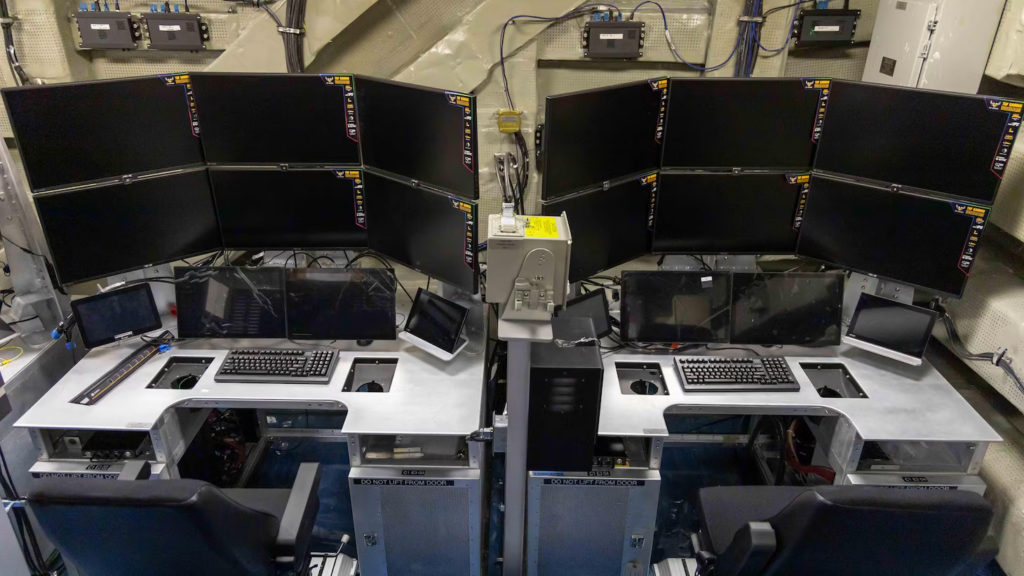
PATUXENT RIVER, Md. – The Navy recently installed the world’s first Unmanned Air Warfare Center (UAWC) aboard USS George H.W. Bush (CVN 77), where Air Vehicle Pilots (AVPs) will control future MQ-25 Stingray airborne operations.  

This major installation was a multi-year effort coordinated across multiple ship availability periods and the ship’s deployment schedule.  

The CVN-based control room, known as the UAWC, includes software and hardware systems that make up the first fully operational and integrated Unmanned Carrier Aviation Mission Control System (UMCS) MD-5E Ground Control Station (GCS). UMCS is the system-of-systems required for the MQ-25 air vehicle command and control and is critical to the unmanned aircraft refueler’s operations.  

“CVN-77’s UAWC lays the foundation for how the U.S. Navy will operate and control unmanned aircraft, and perhaps other unmanned vehicles, with UMCS,” said Unmanned Carrier Aviation Program Office Manager Capt. Daniel Fucito. “These systems will initially support the MQ-25 but also future unmanned systems, such as Collaborative Combat Aircraft, that comprise the Air Wing of the Future.”  

The GCS, developed by the Navy, includes Lockheed Martin’s Skunk Works Multi Domain Combat System (MDCX), the power behind the GCS, along with additional supporting equipment and hardware. The hardware installed in the racks and cockpits is the baseline for the production systems currently being fabricated for installation on CVNs 70, 71 and 76 beginning in fiscal year 2025.   

“The support we received from all the organizations was incredible,” said Gordon Carlon, acting UMCS CVN installation lead. “Our program is accomplishing things on a much faster timeline than any other normal startup program.”  

The program office’s UMCS team worked with multiple program offices, systems commands and shipyards to integrate the UAWC into existing networks and the carrier architecture. The Naval Air Warfare Center Aircraft Division Webster Outlying Field Alteration Installation Team, AirWorks and Lockheed Martin assisted with the coordination and physical installation of the UAWC while Naval Sea Systems Command, Norfolk Naval Shipyard and CVN-77 organized schedules, equipment and logistics.  

Early next year, CVN-77 will lead the first at-sea testing of the UAWC’s operational networks, building on initial network testing with a simulated GCS that took place in January aboard USS Abraham Lincoln (CVN 72).  

“This will be the first time the AVPs from Unmanned Carrier-Launched Multi-Role Squadron (VUQ) 10 will operate the MD-5 from an aircraft carrier. They will use the actual GCS hardware and software aboard CVN-77 to communicate with a simulated air vehicle in the lab in Pax River,” said Joe Nedeau, program office UMCS lead.  

The program office is the lead systems integrator for MQ-25, working closely with its two prime industry partners, Boeing and Lockheed Martin, to integrate seamlessly the MQ-25 into carrier operations, including deck handing, taxiing and launch and recovery.  When operational, MQ-25 will provide an aerial refueling capability to extend the range and flexibility of the carrier air wing.  


SECNAV Names Navy’s DDG 146 After MoH Recipient, Former U.S. Navy Seal, U.S. Senator and Nebraska Governor Robert Kerrey 

From SECNAV Public Affairs, Jan. 4, 2025

WASHINGTON – Today, Secretary of the Navy (SECNAV) Carlos Del Toro named the Navy’s newest Arleigh Burke-class Guided Missile Destroyer, the future USS Robert Kerrey (DDG 146). 

DDG 146 honors former U.S. Senator, Nebraska Governor, and naval officer Joseph Robert Kerrey, who received the Medal of Honor for heroism displayed during the Vietnam War. This will be the first Navy vessel named after Kerrey. 

“One of the great privileges I have as Secretary of the Navy is to name ships, and it is my honor to name the future USS Robert Kerrey (DDG 146),” said Del Toro. “This will be the first Navy vessel named in his honor, and it is most appropriate we do so, for his actions in Vietnam and his continued service to this country well beyond his Naval service.” 

On Jan 3, Del Toro and Kerrey met in NYC to share the news of the naming of the destroyer. Del Toro named DDG 145 at a press conference at the Intrepid Museum prior to the meeting with Kerrey. 

“My sincere thanks to President Biden, Secretary of the Navy Del Toro, and the United States Navy that gave me the opportunity to serve my country for three of the best years of my life,” said Senator Kerrey. “I am very grateful for this recognition.” 

Born in Lincoln, NE in 1943 and entering the Navy in 1966, Kerrey completed Officer Candidate School and Basic Underwater Demolition/SEAL training. He deployed to the Republic of Vietnam as a platoon officer with Delta Platoon, SEAL Team 1 in 1969. On 14 March 1969, he led his team on a mission to capture important Viet Cong political leaders who had set up a base of operations on an island in the bay of Nha Trang. The platoon scaled a 350-foot cliff and were descending from a ledge overlooking the enemy camp when a grenade exploded at Kerrey’s feet, severely injuring his right leg and propelling him backward onto jagged rocks. Immobilized by his multiple wounds, Kerrey nonetheless continued directing his team in securing the enemy camp and finding an extraction site for helicopter evacuation. Kerrey ultimately would lose his lower leg, but his steadfast courage and leadership under fire earned the gratitude of his Nation. 
 
He received the Medal of Honor in 1970, the first Navy SEAL to be so honored. He subsequently served as the 35th Governor of Nebraska (1983-1987) and as a U.S. Senator from Nebraska (1989-2001), as well as a member of the 9/11 Commission. 

Arleigh Burke-class destroyers, built around the Aegis Combat System, are the backbone of the U.S. Navy’s surface fleet providing protection to America around the globe. 

They incorporate stealth techniques, allowing these highly capable, multi-mission ships to conduct a variety of operations, from peacetime presence to national security, providing a wide range of warfighting capabilities in multi-threat air, surface and subsurface domains. These elements of sea power enable the Navy to defend American prosperity and prevent future conflict abroad. 


USS Montana Arrives to New Homeport of Pearl Harbor 

From Lt. J. G. Paul Fletcher, Commander, Submarine Force, U.S. Pacific Fleet Public Affairs, Dec. 27, 2024 

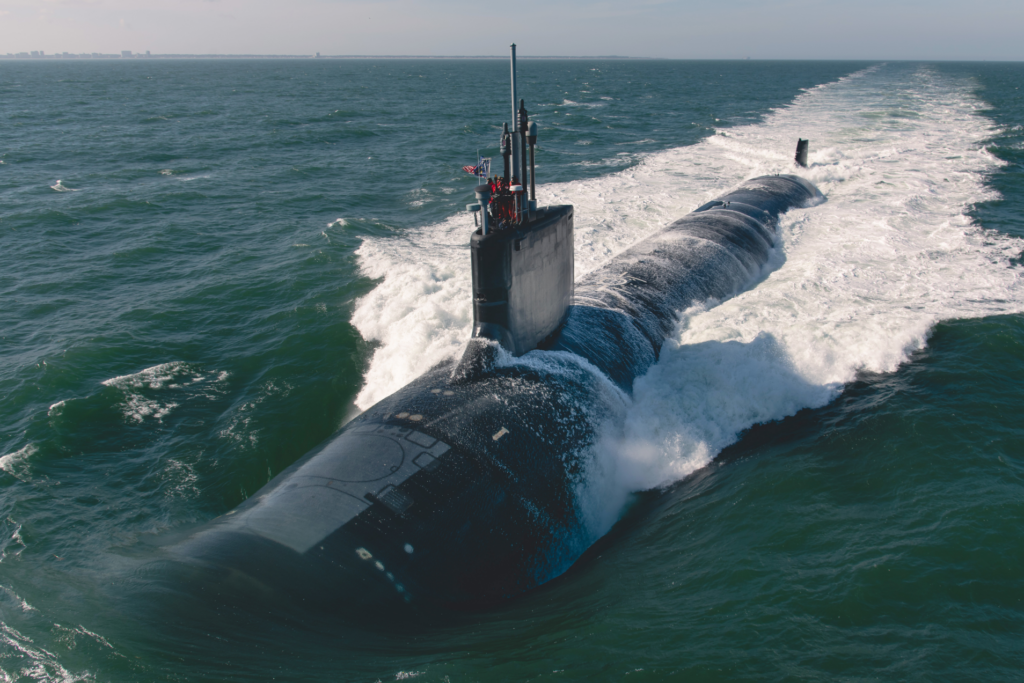
JOINT BASE PEARL HARBOR-HICKAM, Hawaii – The Virginia-class fast-attack submarine USS Montana (SSN 794) arrived at Joint Base Pearl Harbor-Hickam following a change of homeport from Naval Station Norfolk, Virginia, Dec. 23, 2024. 

Montana’s arrival marks the ninth Virginia-class fast-attack submarine homeported at Joint Base Pearl Harbor-Hickam, and the submarine will be assigned to Submarine Squadron 1. 

“We’re all very excited to be here in Pearl Harbor and we appreciate the great welcome,” said Cmdr. John Gilligan, commanding officer of USS Montana. “This crew did extraordinary work in Virginia to get to this significant milestone. It was an honor to go to sea with them. Now that we’re here in the Pacific, we’re ready and eager to get out there doing the work of the Navy.” 

Capt. Aaron Peterson, commander, Submarine Squadron 1, met the Montana pier side upon arrival to welcome the crew to their new home. “On behalf of the Pacific Submarine Force ohana, I enthusiastically welcome the officers and crew of the good ship Montana, with the warmth, culture, and spirit unique to the state of Hawaii,” said Peterson. “I look forward to getting Montana’s crew trained, certified, and out to sea to defend our nation, and our allies and partners from aggression.” 

Before completing its homeport shift from the east coast, Montana completed a post-shakedown availability at Newport News Shipbuilding and was re-delivered to the Navy in November 2024. “Through a great effort by the crew, working with our industry partners, we’ve completed our availability and rejoined the Fleet. We’re ready to execute any task we’re called upon to complete throughout the Indo-Pacific,” said Gilligan. “The crew has been looking forward to executing this change of homeport, reuniting with our families, and bringing the Montana community all together. We’re thrilled to join the team here in Hawaii and stand ready to defend our nation.” 

Commissioned on June 25, 2022, at Naval Station Norfolk, Montana is the second warship to be named after the state, following the armored cruiser USS Montana (ACR 13). The boat is more than 377 feet long and can displace nearly 7,800 tons. Montana has a crew of approximately 140 Sailors and is capable of supporting various missions, including anti-submarine warfare, anti-surface ship warfare, strike warfare, and intelligence, surveillance, and reconnaissance. 

The U.S. Pacific Fleet Submarine Force provides strategic deterrence, anti-submarine warfare, anti-surface warfare, precision land strike, intelligence, surveillance, reconnaissance, and early warning, and special warfare capabilities around the globe. 

For more information, contact [email protected] or visit our website at https://www.csp.navy.mil/. 


PNSY Delivers Texas as Battle-Ready Asset to the Fleet 

By Portsmouth Naval Shipyard Congressional and Public Affairs Office, Dec. 19, 2024 

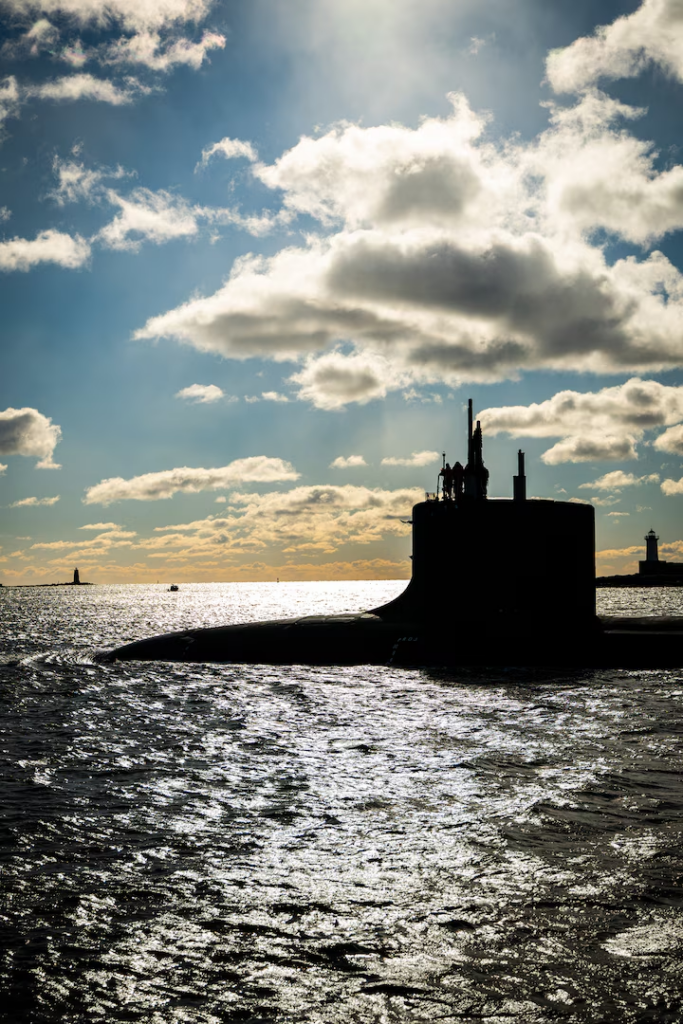
KITTERY, Maine (Dec. 17, 2024)-USS Texas (SSN 775) successfully completed sea trials off the coast of New England this week, marking the successful conclusion of its Depot Modernization Period (DMP) at Portsmouth Naval Shipyard (PNSY). 

The Texas Project Team, encompassing various trade workers, engineers, and material support personnel at PNSY, worked alongside the boat’s crew to get Texas returned to the fleet battle-ready. Getting advanced systems and capabilities into the hands of warfighters at the tip of the spear is the ultimate goal, and PNSY’s highly skilled workforce enabled Texas to get back in the fight. 

PNSY’s success in delivering Texas demonstrates how the nation’s public shipyards are looking beyond traditional workflows to meet the Chief of Naval Operations’ objective of putting more ready players – combat-ready platforms – on the field. “We used an aggressive strategy to have a ‘get real’ date and a ‘get better’ date to return this vital asset back to the fleet,” said Shipyard Commander Capt. Michael Oberdorf. “By moving ‘all ahead flank,’ with urgency and purpose, we were able to pull Texas’ delivery to the left from our agreed ‘get real’ date.”   

Submarine Squadron Two, located at the shipyard, supported Team Texas and all they achieved while in a maintenance environment. “Texas represents a shining example of resilience and readiness, returning to the fight tougher and stronger than ever,” said Commodore, Submarine Squadron Two Capt. Jason Deichler. “The team faced every challenge with determination and delivered outstanding results, ensuring the submarine force remains the world’s most lethal apex predator. Their exceptional teamwork, innovative maintenance practices, and tireless commitment to mission success set a new standard for excellence.” 

“Serving as Commanding Officer of Texas is an honor and a privilege. I have had the opportunity to lead and mentor the finest Sailors in the Navy [and] to work with talented members of the Texas project team,” said Commanding Officer of Texas Cmdr. Chad Ingle. “Kevin Belisle, Texas project superintendent, led an outstanding team at our Navy’s best shipyard. I am incredibly proud of what the officers and crew of Texas have accomplished. The depot modernization period has been challenging for the crew, and the last six months of testing have been extremely tough. The reward for the crew’s hard work is returning a fully repaired and modernized battle-ready submarine to the fleet,” said Ingle. 

Attack submarines are multi-mission platforms enabling five of the six Navy maritime strategy core capabilities – sea control, power projection, forward presence, maritime security, and deterrence. They are designed to excel in anti-submarine warfare, anti-ship warfare, strike warfare, special operations, intelligence, surveillance and reconnaissance, irregular warfare and mine warfare. Attack submarines project power ashore with special operation forces and tomahawk cruise missiles in the prevention or preparation of regional crises. 

A DMP is a maintenance and modernization period in which a Navy submarine is placed in dry dock and undergoes extensive repair and modernization. During a DMP, a submarine receives major overhauls, repairs, structural inspections, and mechanical and electrical system replacements.  

As America’s leader for attack submarine maintenance and modernization, PNSY is enhancing critical warfighting capabilities by safely delivering first-time quality work enabling our undersea warfighters to be battle-ready when called upon. 


US Navy Declares Initial Operational Capability for the Next-Generation Jammer Mid-Band System 

An EA-18G Growler from VAQ-133 launches from USS Abraham Lincoln (CVN 72). (U.S. Navy photo) 

From Naval Air Systems Command, Jan. 6, 2025 

PATUXENT RIVER, Md. — The U.S. Navy declared initial operational capability for the Next Generation Jammer Mid-Band (NGJ-MB) system in December, bringing a quantum leap in capability over legacy systems with drastic increases in power, target flexibility and jamming technique for naval aviation operations worldwide. 

“Next Generation Jammer Mid-Band improves our fleet’s warfighting advantage in the electromagnetic spectrum,” said Rear Adm. John Lemmon, Program Executive Officer for Tactical Aircraft Programs. “This system provides enhanced capabilities to deny, distract and disorient adversaries’ radars, protecting our naval aviators and allowing them to carry out their missions in contested airspace.” 

The fleet got a preview of the jammer’s high-end capabilities during Abraham Lincoln Carrier Strike Group’s five-month deployment this year. Electronic Attack Squadron (VAQ) 133 deployed with the system aboard the USS Abraham Lincoln (CVN 72), marking the first time Next Generation Jammer Mid-Band was used both deployed and in combat.  

IOC signals that the design, testing and production of this capability meet the logistical needs of the carrier air wings and EA-18G Growler squadrons. 

“What an incredible day for the U.S. Navy, our Australian partners, and the Airborne Electronic Attack (AEA) community,” said Capt. David Rueter, Airborne Electronic Attack Systems (PMA-234) program manager. “The achievement of NGJ-MB IOC is a positive reflection on the hard work, innovation and resilience from a dedicated team of government and industry professionals who have developed and fielded this critical capability to the warfighters.” 

The NGJ-MB system, developed by Raytheon, an RTX business, is part of a larger NGJ system that will augment and ultimately replace the legacy ALQ-99 Tactical Jamming System currently used on the EA-18G Growler. NGJ-MB uses the latest digital, software-based and electronically scanned array technologies and provides enhanced AEA capabilities to disrupt, deny, and degrade enemy air defense and ground communication systems. 

“NGJ-MB will boost our fleet’s ability to maintain spectrum dominance. Yielding new capabilities is critical for addressing current and future threats. The era of isolated surface-to-air missile systems, which operate within a non-agile and limited frequency range, is behind us.” stated Lt. Cmdr. Michael Bedwell, EA-18G Naval Flight Officer and NGJ-MB Deputy Integrated Product Team Lead. 

PMA-234 is responsible for acquiring, delivering and sustaining AEA systems, providing combatant commanders with capabilities that enable mission success. 


Future Attack Submarine USS Iowa Delivered to U.S. Navy

From the Navy Office of Information, Dec. 23, 2024 

GROTON, Conn. – The U.S. Navy Submarine Force’s newest attack submarine, the future USS Iowa (SSN 797) was delivered to the Navy on Dec. 22, 2024, marking the 12th battle force ship delivered to the Navy this calendar year. 

SSN 797 is the 24th Virginia-class submarine (VCS) co-produced by General Dynamics Electric Boat (GDEB) and HII-Newport News Shipbuilding through a long-standing teaming agreement and the 13th attack submarine delivered by GDEB. 

The boat’s delivery represents the official transfer of the submarine from the shipbuilder to the Navy. The submarine and crew will now undertake a series of tests and trials before commissioning into active service and providing additional capability to the fleet. 

“The Virginia-class submarine represents a Navy and industry commitment to deliver warfighting excellence to the fleet,” said Capt. Mike Hollenbach, Virginia Class Submarine program manager. “Iowa is the second Virginia-class submarine delivered this year. With each delivery, the Navy continues to strengthen our Nation’s undersea advantage.” 

Virginia-class fast-attack submarines provide the Navy with the capabilities required to maintain the nation’s undersea supremacy well into the 21st century. They have enhanced stealth, sophisticated surveillance capabilities and special warfare enhancements that enable them to meet the Navy’s multi-mission requirements. 

Iowa is the sixth of 10 VCS Block IV configured attack submarines. NAVSEA will continue to put more players on the field—to ensure readiness for sustained high-end joint and combined combat. 

SSN 797 is the fifth U.S. naval vessel, and first submarine, named after the Hawkeye State.  Previous ships named USS Iowa have included the highly decorated USS Iowa (BB 61), commissioned in 1943, which served in World War II and the Korean and Vietnam Wars.  

SSN 797 was christened at GDEB shipyard in Groton, Connecticut, Jun 17, 2023, by the ship’s sponsor, Ms. Christie Vilsack. The submarine’s commissioning ceremony is slated for Apr. 5, 2025 in Groton. 

Recognized as the Force Behind the Fleet, NAVSEA translates warfighter requirements into combat capability, enabling our Nation and our allies to project presence in peace, power in war, and assured access always. 
 
https://www.navy.mil/Resources/Fact-Files/Display-FactFiles/article/2169558/attack-submarines-ssn/ 


SECNAV Names Navy’s DDG 145 for Former Aircraft Carrier

From SECNAV Public Affairs, Jan. 3, 2025 

NEW YORK – Today, Secretary of the Navy Carlos Del Toro named the Navy’s newest Arleigh Burke-class Guided Missile Destroyer, the future USS Intrepid (DDG 145) aboard the former aircraft carrier which shares its namesake as the Intrepid Museum in New York. 
 
DDG 145 honors the skilled, fearless crews of the four previous Navy ships to bear the name. This will be the fifth ship named Intrepid. 
 
“It is deeply meaningful to stand aboard USS Intrepid—the fourth vessel to bear the name, and whose proud legacy continues to inspire and remind so many visitors of the courage, resilience and sacrifice that define the U.S. Navy — and it is with profound respect that we also look to the future of our Navy from these decks,” said Secretary Del Toro. “It is my pleasure to announce that the fifth vessel named Intrepid will be an Arleigh Burke-class guided-missile destroyer, DDG 145, USS Intrepid, in honor of her past namesakes and the courageous service of all our Sailors globally from the South China Sea to the Red Sea.” 
 
The first Intrepid was captured from the Barbary state of Tripoli in December 1803 where she sailed under the name Mastico. In February 1804, she then slipped into Tripoli harbor to set fire to the captured US Navy ship Philadelphia. 
 
The second Intrepid was an experimental steam torpedo ram, operating from 1874 to 1892. 
 
The third Intrepid was a receiving and barracks ship assigned to the Yerba Buena Training Station and Mare Island Naval Yard. 
 
The fourth Intrepid, an aircraft carrier, served from 1943 to 1974. She supported the capture of the Marshall Islands in early 1944. In September, she struck targets in the Palaus and provided close air support to Marines on Peleliu. She helped liberate the Philippines and took part in the Battle of Leyte Gulf in October 1944, where her air wing helped sink or damage three aircraft carriers, four battleships, and a cruiser. She was later hit by multiple kamikazes. She participated in the invasion of Okinawa and attacks on mainland Japan. She was decommissioned in 1947 and recommissioned in 1952, becoming the first carrier to use American-built steam catapults. She supported NATO in the 1950s and 1960s, and recovered several NASA space capsules. Intrepid then joined Seventh Fleet to support combat operations off Vietnam, where she was lauded for her speed in launching aircraft. In 1969, she returned to the North Atlantic, sailing there until decommissioning in 1974. She is preserved as a museum ship in New York City. 
 
“We know this namesake ship will serve our Navy and our nation proudly as the former USS Intrepid did and continues to do, and we couldn’t be more thrilled that it begins its proverbial journey today at the Intrepid Museum,” said Intrepid Museum President Susan Marenoff-Zausner. “For all of its missions, the entire Museum team wishes the ships and its crew safety and success.” 
 
Along with announcing the ship’s name, Secretary Del Toro also announced the sponsor for the future USS Intrepid (DDG 145) as Mrs. Betty Del Toro, who in her role as the ship’s sponsor will represent a lifelong relationship with the ship and crew. 
 
Mrs. Del Toro is not only the wife of Secretary Del Toro but is also a lifelong supporter of the Navy and a steadfast advocate for Sailors and Marines. She served as a military spouse for 22 years, encompassing 17 military moves. She is passionate about matters that involve military families and children. Over the last three years, she has met with hundreds of service members, spouses and dependents. 
 
“I am especially proud to serve as sponsor for a ship whose name embodies American courage and resilience,” said Betty Del Toro. “Having had the honor and opportunity to stand alongside my husband throughout his active duty Navy career and as the 78th Secretary of the Navy, I embrace this new role— one which emphasizes something that is deeply important to me; supporting Navy Sailors and Marines, and their families.” 
 
Arleigh Burke-class destroyers, built around the Aegis Combat System, are the backbone of the U.S. Navy’s surface fleet providing protection to America around the globe. They incorporate stealth techniques, allowing these highly capable, multi-mission ships to conduct a variety of operations, from peacetime presence to national security, providing a wide range of warfighting capabilities in multi-threat air, surface and subsurface domains. These elements of sea power enable the Navy to defend American prosperity and prevent future conflict abroad. 


CENTCOM Forces Strike Multiple Houthi Targets in Yemen

From U.S. Central Command, Dec. 31, 2024

TAMPA, Fla - U.S. Central Command (CENTCOM) forces conducted multiple precision strikes against Iran-backed Houthi targets in Sana’a and coastal locations within Houthi-controlled territory in Yemen, Dec. 30 and 31. 

On Dec. 30 and 31, U.S. Navy ships and aircraft targeted a Houthi command and control facility and advanced conventional weapon (ACW) production and storage facilities that included missiles and uncrewed aerial vehicles (UAV). These facilities were used in Houthi operations, such as attacks against U.S. Navy warships and merchant vessels in the southern Red Sea and Gulf of Aden. In addition, U.S. Navy and U.S. Air Force aircraft destroyed a Houthi coastal radar site and seven cruise missiles and one-way attack UAVs over the Red Sea. 

There were no injuries or damage to U.S. personnel or equipment in either incident. 

The strikes are a part of CENTCOM’s effort to degrade Iran-backed Houthi efforts to threaten regional partners and military and merchant vessels in the region. 

CENTCOM Conducts Airstrikes Against Iran-Backed Houthi Missile Storage and Command/Control Facilities in Yemen 

From U.S. Central Command, Dec. 21, 2024 
 

TAMPA, Fla. – U.S. Central Command (CENTCOM) forces conducted precision airstrikes against a missile storage facility and a command-and-control facility operated by Iran-backed Houthis within Houthi-controlled territory in Sana’a, Yemen, on Dec. 21 Yemen time. 

CENTCOM forces conducted the deliberate strikes to disrupt and degrade Houthi operations, such as attacks against U.S. Navy warships and merchant vessels in the Southern Red Sea, Bab al-Mandeb, and Gulf of Aden. 

During the operation, CENTCOM forces also shot down multiple Houthi one way attack uncrewed aerial vehicles (OWA UAV) and an anti-ship cruise missile (ASCM) over the Red Sea.  

The operation involved U.S. Air Force and U.S. Navy assets, including F/A-18s. 

The strike reflects CENTCOM’s ongoing commitment to protect U.S. and coalition personnel, regional partners, and international shipping.