Cyber Horizon: AI, Sea Power, and a Potential Taiwan Conflict

Anduril’s Sentry uses artificial intelligence to provide highly accurate, persistent autonomous awareness across land, sea and air. Credit: Anduril

In the evolving landscape of 21st-century warfare, the convergence of cyber capabilities, artificial intelligence (AI) and traditional naval operations presents unprecedented challenges and opportunities for the U.S. Navy.

As tensions in the Taiwan Strait escalate, the potential for a cyber conflict between China and the U.S. looms large, with far-reaching implications for global security and economic stability. As Commander Robert “Jake” Bebber argues in his article “Cyber Power is a Key Element of Sea Power” (Proceedings, December 2022), cyber capabilities are now inextricably linked to maritime dominance.

“China has employed cyber-enabled means to shift the balance of global sea power. Its broader neo-mercantilist campaign, spanning more than 60 countries, two-thirds of the world’s population, links land, sea, financial, and digital corridors back to China,” Bebber warned.

This strategy extends to critical maritime infrastructure, with Chinese influence over ports, logistics networks, and global telecommunications posing a significant threat to U.S. naval freedom of navigation and maneuver.

AI has drastically altered naval warfare, placing the U.S. Navy at a critical juncture, according to Paul Scharre in “The Navy at a Crossroads” chapter of the book “AI at War,” published by the Naval Institute Press. Global AI capabilities have expanded dramatically because of the military robotics revolution, which was fueled by exponential gains in data and processing capacity. Due to their superior vision, pattern recognition, prediction and optimization capabilities, artificial intelligence systems serve as a general-purpose enabling technology. Modern AI systems behave similar to computing or electrical power and are capable of performing a wide range of military missions.

AI helps with predictive maintenance in marine applications, which lowers costs and boosts military preparedness. Additionally, it facilitates data analysis and intelligence gathering, improves logistics and streamlines procedures. With more autonomous support vehicles, these advancements boost military decision-making and combat effectiveness. According to Scharre, AI will mostly be used by unmanned combat systems in naval warfare. The technology is revolutionary for naval operations since it can save energy consumption while increasing operational effectiveness.

Lessons from Ukraine

The ongoing conflict in Ukraine has provided unexpected insights into the role of information warfare and cyber operations in modern conflicts. In a fall 2023 Cyber Defense Review article, authors Chris Bronk, Gabriel Collins and Dan Wallach present several key findings that challenge pre-war assumptions and highlight new dimensions of warfare. With respect to cyber operations and infrastructure resilience, they found that contrary to expectations, Russian cyber activities had less strategic influence than anticipated. This challenges assumptions about the centrality of cyber efforts in kinetic warfare. Ukraine’s digital infrastructure has shown remarkable resilience, attributed to better preparation and support from the global IT industry. Private sector companies like Google and Microsoft have played significant roles in Ukraine’s cyber defense.

Regarding cyber tactics, while large-scale cyberattacks were less impactful, the conflict has seen an evolution. Russian activities have largely been confined to “wiper” attacks that delete critical data and ransomware operations. The integration of cyber capabilities with traditional kinetic operations suggests a more nuanced approach to warfare. In addition, the conflict has underscored the pivotal role of unmanned autonomous vehicles in intelligence, surveillance, and reconnaissance operations. Both cheap commercial drones and more sophisticated unmanned aircraft have proven effective, transforming battlefield situational awareness.

Information warfare has emerged as a crucial aspect of the conflict. Ukraine has effectively dominated the narrative for public support through social media platforms, highlighting its importance in modern conflicts. On the other hand, unexpected communication challenges faced by Russian forces, including failures in encrypted communications, led to the use of unsecured methods, which Ukrainian forces exploited. The growing importance of open-source intelligence has also been demonstrated, with online images and videos providing comprehensive views of the war.

These findings suggest that while cyber operations remain important, their effectiveness can be mitigated by well-prepared defenses and resilient systems. The conflict highlights the increasing importance of information warfare, drone technology, and the integration of cyber capabilities with traditional military operations, with significant implications for future conflicts.

With the defense sector at the forefront of this technology transformation, private sector innovation is becoming more and more important in future naval warfare and cyber operations. Private corporations such as Anduril Industries and Accrete are prime examples of how AI and cutting-edge technology are changing military capabilities, especially in the naval sector.

Anduril’s-Lattice AI platform transforms the way threats are viewed, evaluated and fought by combining data from several sensors to deliver real-time battlespace awareness. Its technologies also include AI-driven battle management systems, counter-drone systems and unmanned systems for improved underwater surveillance — all of which are essential for dealing with new aerial threats. With applications ranging from predictive maintenance to optimal logistics and intelligence gathering, these developments are consistent with Paul Scharre’s conclusions regarding AI’s powers in perception, pattern recognition, prediction, and optimization.

In a similar vein, Accrete is using AI to automate decisions. Accrete’s AI agents are well-known for their ability to reason, learn, forecast and make decisions at scale. They also produce knowledge graphs that condense human tacit knowledge and semantically unite complex data. Based in New York and first established as Mindfire in 2017, Accrete provides services to sectors such as supply chain risk management, social media story analysis and IT service management. Accrete’s AI agents are improving decision-making in the public sector, just like Anduril’s technologies are helping revolutionize naval and cyber operations. With significant ramifications for strategy, security, and operational effectiveness, these developments collectively highlight the vital role that private sector technology plays in developing both military and civilian capabilities.

Attendees observe the Anduril Sentry Tower during the NavalX SoCal Tech Bridge’s Electric and Unmanned Logistics Demonstration on Marine Corps Air Station Miramar, San Diego, California, June 23, 2021. Credit: U.S. Marine Corps | Lance Cpl. Krysten Houk

A Future Cyber War

In a future cyber war, there is a hypothetical but potential scenario involving Taiwan.

China might launch a sophisticated cyber-economic assault as an opening move. This strategy would likely aim to disrupt Taiwan’s critical infrastructure, including power grids, banking systems and telecommunications networks. The goal would be to effectively isolate the island and cripple its defenses before any kinetic operations begin.

Drawing from the lessons of the Ukraine conflict, as outlined in “The Ukrainian Information and Cyber War” by Bronk, Collins and Wallach, we can anticipate such an attack would be multifaceted. It might include wiper attacks, ransomware to deny access to essential systems, and targeted disruptions of command-and-control networks. The authors note in Ukraine, contrary to expectations, such attacks had limited strategic impact due to robust defenses and international support. However, China, learning from Russia’s experiences, might employ more sophisticated and overwhelming tactics.

The U.S. response would likely involve a multi-domain approach, leveraging both military assets and partnerships with private sector innovators. The Crowd Strike 2024 Global Threat Report claimed, “We’re seeing the birth of a new kind of warfare, where economic disruption, cyber-attacks and kinetic operations are seamlessly integrated.”

In this scenario, technologies from private sector innovators could prove crucial. Autonomous underwater vehicles could enhance the Navy’s undersea surveillance capabilities, potentially detecting and countering Chinese submarine activities near Taiwan. Counter-drone systems might be vital in defending U.S. ships from swarms of autonomous Chinese drones, a threat highlighted by the extensive use of drones in recent conflicts in Ukraine and the Red Sea. Data-fusion platforms drawing input from multiple sensors could be instrumental in managing the complex, multi-domain nature of such a conflict.

The scenario would likely also involve intense information warfare, as seen in Ukraine. Both sides would attempt to control narratives, influence global opinion and maintain morale. The U.S. and Taiwan might leverage open-source intelligence and social media platforms to counter Chinese propaganda and disinformation campaigns.

This hypothetical Taiwan scenario underscores the evolving nature of modern warfare, where cyber capabilities, AI-driven systems and traditional kinetic operations are increasingly intertwined. It highlights the critical role of private-sector innovation in national defense and the need for robust, resilient systems capable of withstanding and responding to sophisticated, multi-faceted attacks.

The economic implications of a cyber conflict, particularly in a Taiwan scenario, would be profound and far-reaching. In Bebber’s article in U.S. Naval Institute Proceedings from July 2017, “China’s Cyber-Economic Warfare Threatens U.S.,” he mentions three key sectors at risk — the semiconductor industry, undersea cable networks and maritime shipbuilding, sectors critical not only for economic stability but also for maintaining military technological superiority.

The semiconductor industry is particularly vulnerable. Taiwan produces more than 60% of the world’s semiconductors and 90% of advanced chips. A disruption in this supply chain, as noted in “The Ukrainian Information and Cyber War” by Bronk, Collins, and Wallach, could severely impact various industries from smartphones to automobiles and — critically— advanced military systems. For the U.S. Navy, this could mean a significant setback in maintaining its technological edge in areas like AI-driven systems, advanced radar and communications technologies.

Undersea cable networks, through which more than 95% of intercontinental internet traffic travels, represent another critical vulnerability. Cyber-attacks targeting these networks could disrupt global communications, including vital military command and control systems.

The maritime shipbuilding industry, crucial for naval power projection, is also at risk. Cyber-attacks could delay vessel construction, compromise design integrity or introduce vulnerabilities into ships’ systems. This threat is particularly significant given the long lead times and high costs associated with naval shipbuilding programs.

The globalized nature of modern supply chains further exacerbates these vulnerabilities. As seen in the Ukraine conflict, disruptions in one sector can have cascading effects across multiple industries and nations. For naval readiness and national security, this means a cyber-attack on seemingly unrelated sectors could indirectly impact military capabilities. Moreover, the economic warfare aspect of cyber conflicts can include tactics like financial market manipulation, intellectual property theft and strategic acquisition of key technologies and resources. These activities, while not directly targeting military assets, can erode a nation’s economic advantages and, by extension, its ability to sustain long-term military operations.

In summary, the economic dimensions of cyber warfare extend far beyond immediate financial losses, potentially reshaping global economic landscapes and fundamentally altering the balance of military power. Understanding and mitigating these risks is crucial for maintaining both economic stability and national security in the age of cyber conflict. As AI and cyber capabilities continue to evolve, the U.S. Navy faces both enormous challenges and unprecedented opportunities.

Success in future conflicts, particularly in a scenario involving Taiwan, will depend not just on ships, aircraft and submarines, but on the ability to dominate the invisible digital domain that underpins modern naval operations. In his Jan. 27, 2021, address to the Naval War College, Admiral Michael Gilday, the former Chief of Naval Operations, summarized the situation succinctly.

“The navy that masters AI and cyber warfare will control the seas of the 21st century,” he said. “Our mission is to ensure that navy is the United States Navy.”

Moving forward, the U.S. Navy must continue to invest in cutting-edge technologies, foster partnerships with innovative companies and develop adaptive strategies to navigate the interconnected realms of cyber, economic and kinetic warfare.

Joe Greco is the president of the Orange County Council of the Navy League. A professor of global risk management and international finance at California State University, Fullerton, he is a pub­lished author contributing to the study of global markets and the U.S. Navy’s command of the seas. In addition to his leadership role in the Navy League, Dr. Greco is an author and member of the U.S. Naval Institute, the American Sea Power Project and the Sons of the American Legion. This article originally appeared in the December issue of Seapower magazine.
Baltic Convergence: Region Emerges from Backwater to Potential Battleground

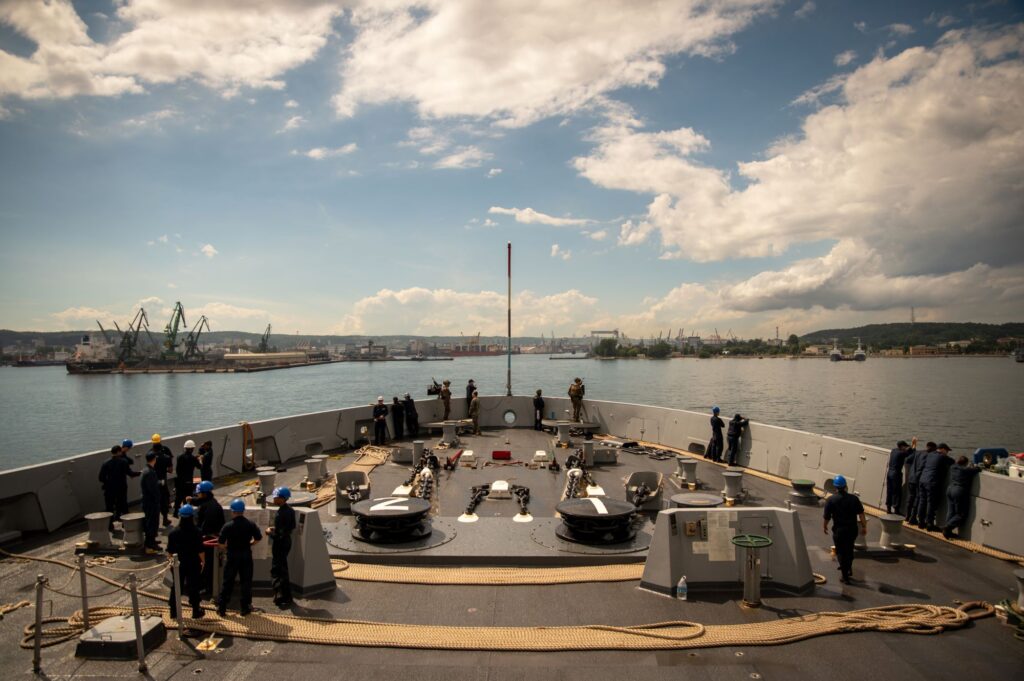
The San Antonio-class amphibious transport dock ship USS New York (LPD 21), enters the port of Gdynia, Poland during the exercise Baltic Operations 24 (BALTOPS), June 18, 2024. Credit: U.S. NAVY | Mass Communication Specialist 2nd Class Jesse Turner

Operators, strategists and policy experts met in Gdynia, Poland, for the 2024 Littoral Op-Tech workshop earlier this year. The symposium, conducted at the Polish Naval Academy on the shore of the Baltic Sea, examined threats, challenges and opportunities in the Baltic Sea, which have been amplified since Russia’s invasion of Ukraine.

While presentations addressed emerging technologies and warfighting capabilities to fight and win in the extreme littoral maritime environment of the Baltic Sea, much of the discussion explored the dynamic geopolitical situation, which is even more relevant due to the juxtaposition of Russia’s aggression in Ukraine and the 75th anniversary of the NATO Alliance. The event was sponsored by Saab AB, MBDA, BAE Systems and EmbeddedArt.

The workshop focused on the convergence of strategy, policy, technology, operations and tactics. First and foremost was the geopolitical significance of Poland and the Baltic Sea.

Like other Baltic countries, Poland has memories of Russian incursions and occupation. Poland shares a land border with Belarus, Ukraine, Slovakia, Czechia, Germany, and the Russian enclave of Kaliningrad (only 90 minutes from Gdynia by road). It also shares a maritime boundary with Denmark and Sweden. The distance between Poland’s naval base at Gdynia and Sweden’s base at Karlskrona is about 200 nautical miles.

“The Littoral OpTech series of workshops are about learning from each other,” said retired Swedish navy Captain Bo Wallander. “While littoral environments and maritime traffic varies, all navies that defend or operate in coastal waters share some similar challenges.”

The war in Ukraine has had a profound impact on Poland and its neighbors. As host, Rear Admiral Tomasz Szubrychat, the academy’s director commandant, commented on the important timing of the event.
“All of the Baltic Sea is part of the EU and NATO, except for Russia,” Szubrychat said. “Each country has its own perspective regarding the complex threats in the Baltic. If we put each nation’s knowledge together, and exchange ideas, we can have a more complete picture of the Baltic maritime security.”

Rear Admiral Wlodzimierz Kulagin, chief of Armaments Branch of the Polish Navy Inspectorate, said having the workshop in Poland while there is a war going on at its eastern border is a statement of solidarity.

The region is a very complex operating environment, Kulagin said. “We have an enormous challenge of detecting threats in all dimensions; many non-state actors; a growing maritime infrastructure; and increased maritime commerce and traffic, and its importance for the Baltic Sea nations, but also the Russian economy.”

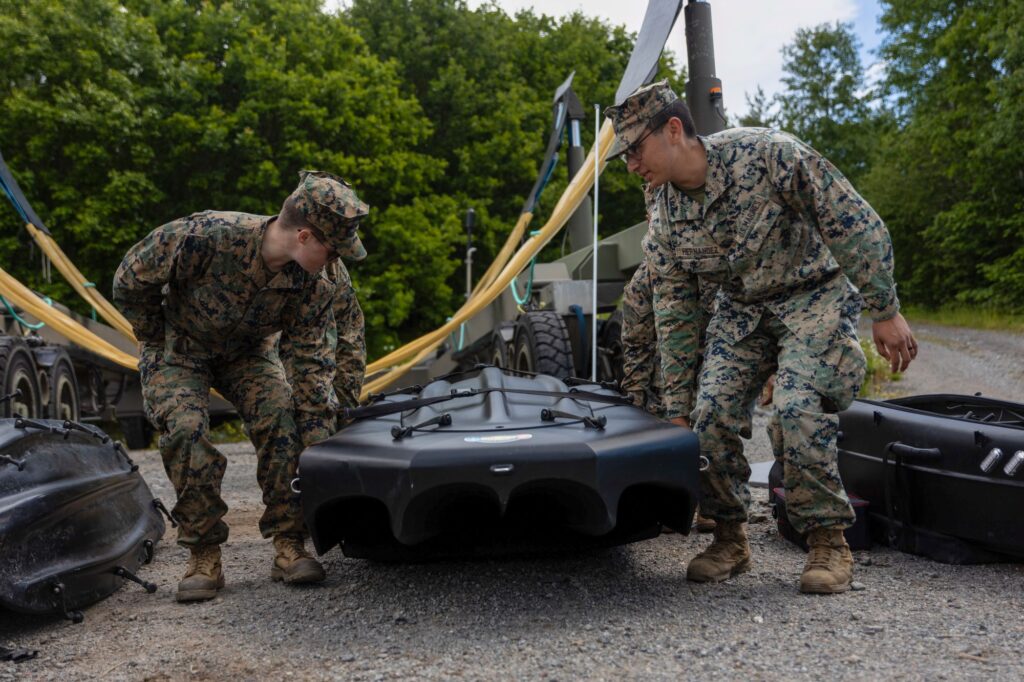
U.S. Marines with Combat Logistics Battalion 8, Combat Logistics Regiment 2, 2nd Marine Logistics Group, prepare to set out a General-Purpose High Speed Unmanned Surface Vehicle known as the “Reckless,” during exercise Baltic Operations 24, (BALTOPS 24) Camp Berga, Sweden, June 12, 2024. The watercraft is manufactured by Hydronalix, a technology company specializing in small surface robotic systems in austere conditions. Credit: U.S. MARINE CORPS | Lance Cpl. Kanoa Thomas

Kulagin spoke of the requirement for employing new technologies. The operational calculus has been adjusted with the entrance of Finland and Sweden into the NATO alliance, and the added value for defense, deterrence and mutual security cooperation in the region, he said. “Enhanced cooperation and exchange of information to build maritime situational awareness is a starting point for each country. The crucial factor remains the same: our military reaction time.”

Kulagin noted Ukraine is not presently a member of any alliance and is fighting alone on the battlefield against a great military power. “But Ukraine as a country is not alone, because we — the countries represented here at this conference — are here.”

Kulagin pointed out that Poland is a logistics portal at the frontline. He also said Poland is participating in NATO task groups, operations and exercises, as well as the Combined Maritime Force (CMF) in the Persian Gulf, “to show our colors,” and demonstrate Poland’s commitment to this vital multi-national effort.

“The NATO strategy concept is about the prosperity and freedom of navigation,” Kulagin said. “And this is this is exactly the reason that we decided to join the combined maritime forces in the Gulf.”

Crucial for Security

After many years of being somewhat of a backwater, the Baltic Sea is now crucial for European and world security.

Professor James Bergeron, the political-military advisor for NATO’s Allied Maritime Command in Northwood, United Kingdom, talked about how NATO is celebrating its 75th anniversary, but is still evolving, and continues to be both stable and “new, fresh and vulnerable.

“We started with 12 nations, when nuclear war was a distinct possibility, almost too distinct,” Bergeron said. “Later, with the fall of the Berlin Wall and the collapse of the Soviet Union, Cold War ended, we shifted to crisis management operations, we focused on everything but Russia. The magic of the institution is that it always feels like two steps away from collapse. We redesign it every five years, but in its essence, it does not change.”

For many years, Bergeron said the NATO maritime battlespace was the Atlantic and Mediterranean; the Black Sea and Baltic Sea were peripheral. “With the accessions of the former Soviet states, and most recently the accession of Finland and Sweden — which has changed the strategic importance of the Baltic — NATO now has to seriously consider the deterrence and defense of its allies and the water space of the Black Sea and Baltic Sea.”

Captain Jon Wessenberg, Finland’s defense attaché to Poland, said his navy has a simple purpose. “We are here to fight and save our country. We have that in our mind all the time. Now that we are a member of the NATO alliance, we are here to fight for our collective countries.”

Wessenberg said the sea lines of communications in the Baltic are critical for Finland. “Ninety percent of our traffic, by volume and value, goes by sea. It is the sea that allows Finland to live and survive. It’s the reason why we have a navy.”

Now, Wessenberg said, the balance of power in the Baltic has changed. In the Cold War, Russia and its Warsaw Pact nations were the dominant factor in the Baltic Sea. It was not the highest priority for NATO. The situation today has changed. Russia stands alone, and is isolated at St. Petersburg and Kaliningrad, with its sea lines of communications threatened by NATO.

“The overall political strategic situation here in Baltic is unfavorable for Russia. They are backed into a corner. And it’s because of Finland and Sweden joining NATO,” Wessenberg said. “For many years we have prepared for a long war alone. Now it’s quite nice to be part of the alliance.”

Brigadier General Patrik Gardensten, deputy commander of the Royal Swedish Navy, voiced a similar sentiment.

“As a nonaligned state for hundreds of years, we have had to rely on building a strong independent defense force to manage threats on our own in our area of operation. Even though our close defense cooperation with Finland always had made us stronger together.”

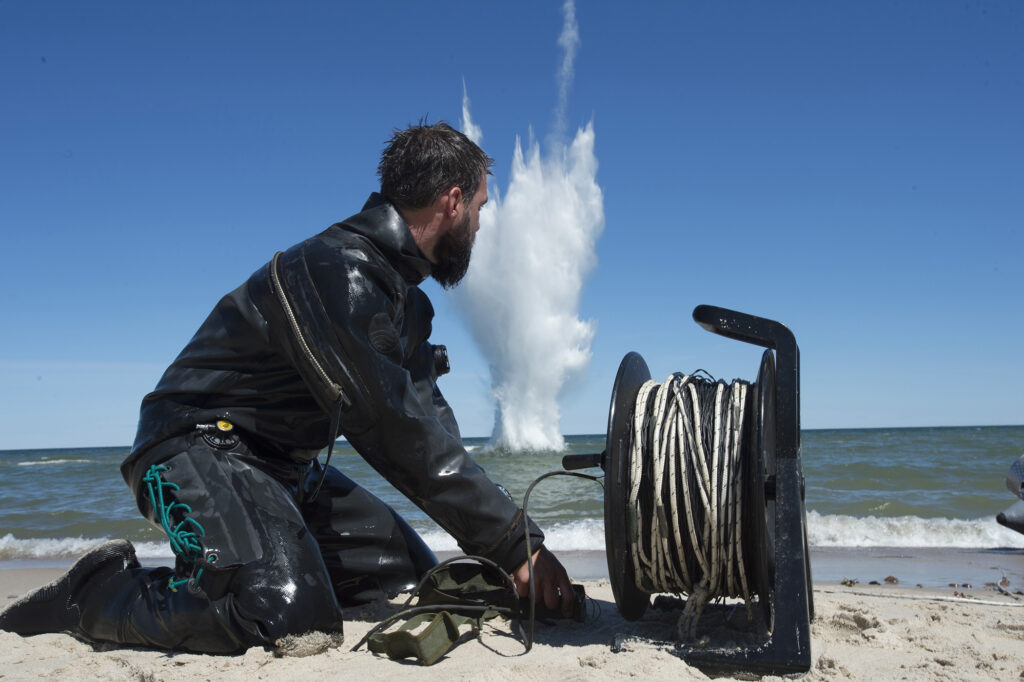
Private Wesley Van Meggelen of the Very Shallow Water Team of the Royal Netherlands Navy Maritime EOD detonates a charge June 10, for a training exercise during exercise Baltic Operations 2015. Credit: U.S. NAVY | Mass Communication Specialist 2nd Class John Callahan

Although Sweden had participated in NATO’s “Partnership for Peace” since 1994, the Russian invasion of Ukraine demonstrated to the country that a real threat to its security was imminent, and the nation applied for full membership in the alliance.

“The threat in this environment, both conventional and hybrid, projected by Russia today and tomorrow must be handled,” Gardensten said.

Technology Challenges

Addressing the technology front, Eric Olsson, a retired Royal Swedish Navy officer representing Embeddedart AB, said unmanned and autonomous systems face challenges in all domains, but he emphasized the increased difficulties of operating unmanned systems underwater.

“We need autonomous vehicles on the surface to be the communication link between subsurface vehicles and the above water networks and be the link to the kinetic effectors to bring effective power into the battle space,” he said.

Olsson foresees the use of artificial intelligence-based decision making to improve the navigation of unmanned underwater vehicles, and to better manage the amount of data and information to transfer between the sensor and operators.

Dr. Roger Berg, the director of technology management at Saab Kockums, is responsible for research and development, university collaboration, technology strategies and product management. He talked about “disruption” and the innovation or business models that have drastically changed the market or market behavior.

“We have seen in Ukraine a lot of these different kinds of disruptions in technology, systems, tactics, and how things behave,” Berg said. “It has changed warfare forever.”

Berg said the vulnerabilities of GPS positioning have been countered by new kinds of precision navigation and timing; inexpensive drones have replaced exquisite sensors and weapons delivery systems; and hand-held devices can now call for fire support in a fraction of the time it used to take to get permission to shoot.

In addition to its status as a frontline warfighting environment, the United States also looks at the Baltic Sea as a realistic laboratory for trying out new technologies and warfighting concepts.

The Department of the Navy has used Small Business Innovation Research funding to have Marines test and evaluate small, low-cost unmanned surface vessels from Green River, Arizona-based Hydronalix, for sensing, mobile gateway buoys to connect underwater sensors with above water networks, and logistics support in austere operating conditions.

Hydronalix CEO Anthony Mulligan discussed how disruptive technologies innovative capabilities don’t have to be exquisite or expensive, and can be integrated into exercises to allow warfighters to try them. Mulligan’s company exemplifies the value of the SBIR program, which invests in small companies to quickly develop and test new technologies and concepts in exercises like BALTOPS, Archipelago Endeavor in Sweden and Freezing Winds in Finland.

Edward Lundquist is a retired U.S. Navy captain who writes about defense, maritime, naval, security, transportation and energy issues. He is a frequent contributor to Seapower. This article originally appeared in the December issue of Seapower.


Navy Seeks to Accelerate Adoption of AI/ML Powered Systems

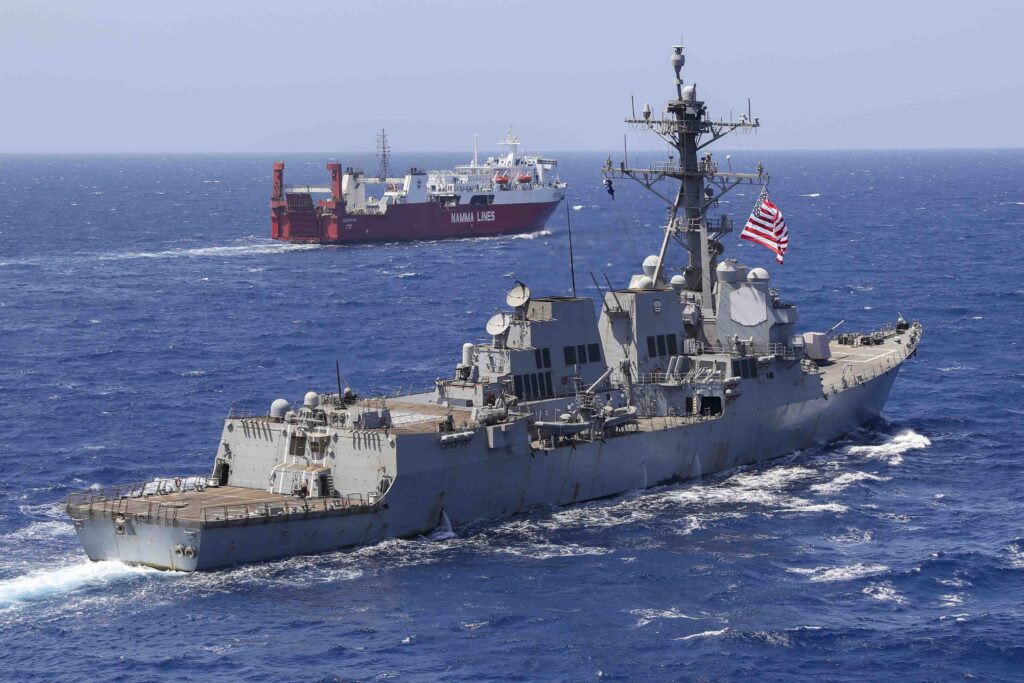
The Arleigh Burke-class guided-missile destroyer USS Truxtun (DDG 103), left, operates in the Red Sea, May 1, 2023, while supporting the Department of State’s efforts to evacuate U.S. citizens and others who have requested departure from Sudan. Credit: U.S. Africa Command

Deterring China and addressing other global security challenges require the U.S. Navy to evolve in key areas, including faster integration of robotics and autonomous capabilities, said Admiral Lisa M. Franchetti, the 33rd chief of naval operations, in the new 2024 Navigation Plan released in September.

“We know that robotic and autonomous systems, augmenting the multi-mission conventional force, will provide opportunities for us to expand the reach, resilience, and lethality of the combined manned-unmanned Navy team,” Franchetti said. “As we build that team for the future, we are working now on concept and requirements analysis for larger robotic systems, as well as the artificial intelligence applications that help us sense and make sense of a complex, information-centric battlespace.”

The plan comes amid a Pentagon push to accelerate artificial intelligence/machine learning (AI/ML) technologies in offensive and defensive applications in the joint force and across the armed services. But advancing Franchetti’s goal — one of seven fleet readiness targets the plan envisions reaching by 2027, when Washington expects China to be on a war footing — won’t be easy in a service that tends to focus on continuity versus change.

“When we think about AI and the Navy, one of the most important things is getting it on the ship,” Bill Rivers, a fellow at the Yorktown Institute and content strategist at Palantir Technologies, told Seapower. “So, it’s software onto hardware onto the ship [and] that requires an accreditation process, which takes time.”

Last year, the Department of Defense announced the Replicator initiative to speed up adoption of commercial technology in the military and national security space, particularly lower-cost unmanned capabilities. Led by the Defense Innovation Unit, a DoD office based in Silicon Valley, Replicator calls for quickly fielding more autonomous systems across multiple domains in part by cutting red tape and encouraging industry-defense partnerships.

In 2023, Navy Secretary Carlos Del Toro stood up the Disruptive Capabilities Office to invest in, adopt and scale cutting-edge hardware and software. Joining that office and reporting to Del Toro and Franchetti are two Navy task forces working on AI/ML: Task Group 59.1, which focuses on developing unmanned capabilities; and Task Force Hopper, focused on AI/ML.

Franchetti said in the Navigation Plan that the Navy already leads the joint force in operationalizing robotic and autonomous systems across numbered fleets and in Navy special warfare, in areas such as sensors and munitions. The Navy in 2024 established an enlisted Robotics Warfare Specialist rating and is growing robotics expertise in the officer corps.

The Navy has also in recent years worked on develop AI/ML capabilities in partnership with the DIU, an office established nearly a decade ago to incubate commercial technology solutions that address national security challenges. Recent DIU-Navy partnerships include Project AMMO, to develop machine learning operations tools to improve underwater threat detection. In 2022, DIU engaged five vendors — Arize AI, Domino Data Lab, Fiddler AI, Latent AI, and Weights & Biases — to develop various components of the capability. 

There is also a collaboration with the Navy’s Project Overmatch to enable unmanned systems to operate in “disconnected, denied, intermittent, and/or limited bandwidth environments.” In January 2024, DIU awarded three vendors — Ditto, Syntiant, and HarperDC — prototype agreements to develop capabilities in areas such as synchronizing and distributing data to improve the operating picture and creating retrainable AI models that improve the effectiveness of unmanned systems.

In addition to Pacific threats and Houthi attacks, Franchetti noted, Russia’s ability to adapt to Ukrainian innovations on the battlefield demonstrated the need for a more agile Navy that can bring additional AI/ML-powered technologies to the fight.

“What’s needed now,” Rivers said, both in the Navy and across the defense enterprise, are “commanders who are willing to lean in, find these opportunities to battle test these capabilities, so that the carriers, the cruisers, boats can communicate back to maritime operations centers” and build out “how they would actually fight with these tools at the edge, on the worst day.”

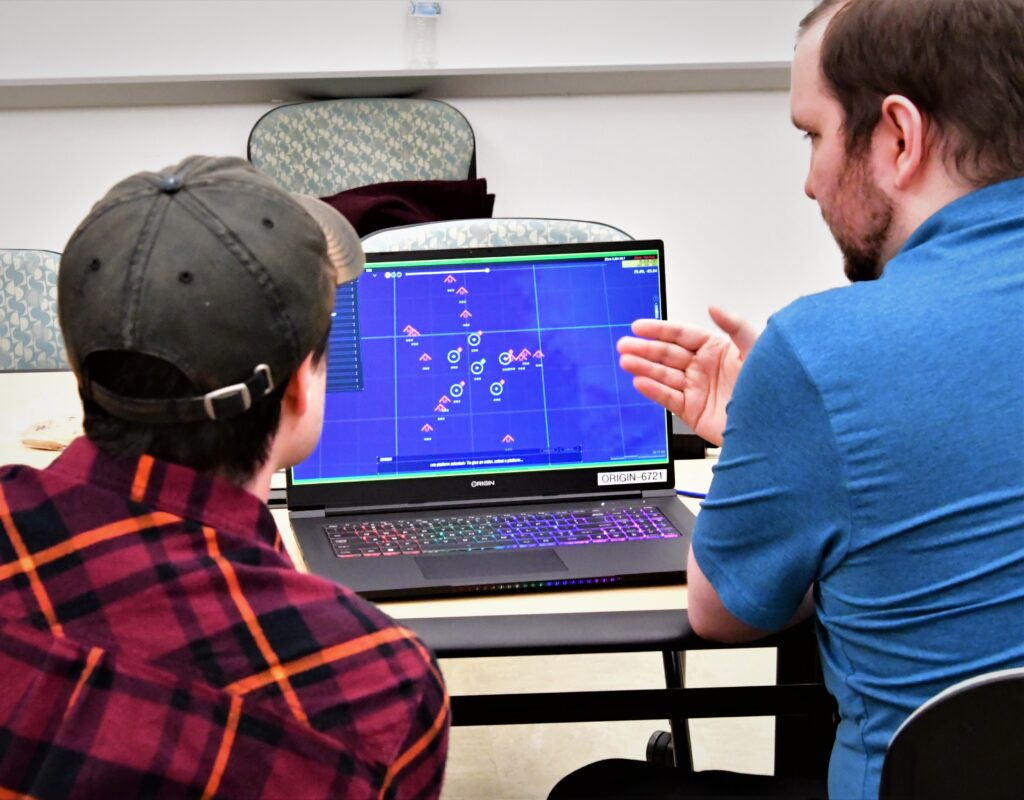
College students used the Joint Cognitive Operational Research Environment software to compete in the
2023 Artificial Intelligence and Machine Learning Innovation Challenge at Dahlgren. The software demonstrated three different scenarios involving a multitude of ships and threat counts to challenge the students’ decision-making. Credit: Naval Surface Warfare Center Dahlgren Division | Morgan Tabor

He said software and AI can also serve a “powerful role” in improving defense manufacturing and maintenance through better use of real-time data. “There is no kill chain without the supply chain,” Rivers said. “It’s not just on DoD or the government to do this, it’s a whole-of-enterprise effort.”

However, compared with all other DoD components, the Navy spends the least on technology produced by new players in the defense field, according to the 2024 NATSEC100 report by the Silicon Valley Defense Group. These are firms that specialize in advanced computing and software, trusted AI and autonomy, space technology, advanced materials, and integrated sensing and cyber capabilities.

The report found the top 100 tech firms with defense experience received just $22 billion in federal funding and only $6 billion in DoD funding. (For context, the 2024 National Defense Authorization Act authorized over $874 billion in defense spending.) “Perhaps even more strikingly,” the report said, “81% of the total amount awarded by the United States government, and 65% of the DoD-awarded funding, went to a single company, SpaceX.”

Lieutenant Artem Sherbinin, chief technology officer for Task Force Hopper, called on industry to help the Navy close the digital technologies gap. In February remarks reported by National Defense magazine, he said a key “opportunity” for the field is the fiscal 2024 NDAA, which authorized around $11 billion in Navy commercial IT spending.

Emerging needs include tools to counteract adversarial unmanned systems, especially in light of reports that the Navy used $1 million missiles to defeat $100,000 Houthi drones threatening Red Sea shipping lanes.

“Do we need to find, or should we find, a more cost-effective way of downing, say, an inexpensive drone? Absolutely,” said Rear Admiral Fred Pyle, director of surface warfare division N96 in the Office of the Chief of Naval Operations, in a May 14 discussion with the Center for Strategic and International Studies. “And we’re working towards that, and we have some solutions that I can’t go into, but we are going to get after finding more cost-effective ways to address those lower-end threats.”

A Sept. 27 memo issued by Defense Secretary Lloyd Austin formalized this imperative, calling for the next phase of Replicator to focus on countering the threat of small uncrewed aerial systems to critical installations and force concentrations.

The Navy is testing directed energy and other types of counter-drone systems and taking other steps to foster partnerships with industry on AI/ML applications.

In March 2024, 600 representatives from government, academia, and industry attended the eighth annual Naval Applications of Machine Learning (NAML) workshop, hosted by the Naval Information Warfare Center. Attendees heard 150 presentations on efforts to use AI/ML in naval operations in a range of ways — from translating bridge-to-bridge audio transcriptions to transforming drone command systems.

But, as Sherbinin explained in an August LinkedIn post, the Navy is apt to take longer than other services to adopt new digital capabilities. That’s in part because much of the Navy budget goes to buying or maintaining super-expensive items such as aircraft carriers, where the “‘digital’ things that we can’t see” — software, AI, data — “become an afterthought,” he said.

And the Navy is steeped in a tradition that can be averse to disruption. “Simply stated,” Sherbinin said, “change is hard in the naval service.”

Justin Fanelli, Department of the Navy Acting chief technology officer and technical director of PEO Digital, gives a speech during the eighth annual Naval Applications of Machine Learning (NAML) workshop, March 12, 2024, in San Diego. Credit: U.S. Navy | Mass Communication Specialist 1st Class Bobby Siens

Erika Fitzpatrick is an award-winning writer living in Washington, D.C. With more than 20 years of experience in public policy journalism and communications, she specializes in covering issues affecting service members, veterans, and military families. This article originally appeared in the December issue of Seapower.


Building Bonds: 35 Years of United Through Reading

Sgt. Nikole Stradley, a radio operator with Service Company, Combat Logistics Battalion 26, 26th Marine Expeditionary Unit, and mother of a 9-month-old reads a book while being videotaped for the United Through Reading Program, Sept. 23. 26th MEU continues to support relief operations in Pakistan and is also serving as the theater reserve force as elements of the MEU conduct training and planned exercises. Credit: U.S. MARINE CORPS | Staff Sgt. Danielle Bolton

Then-Sergeant Nikole Stradley, a radio operator with Service Company, Combat Logistics Battalion 26, 26th Marine Expeditionary Unit, and then the mother of a nine-month-old, reads a book while being videotaped for the United Through Reading Program in 2010.

Holidays can be stinging reminders of the challenges military families face as a result of frequent, extended separation. Deployments, rotations and training assignments cause parents and loved ones to miss both milestones and everyday activities. For nearly 35 years, the United Through Reading program has offered military families a simple way to connect across the miles.

The program offers service members and their families a chance to share personal and present moments. It has helped more than three million service members and their families strengthen their relationships and weather the long stretches of separation simply by sharing a bedtime story.

Although modern technology has improved the ability of many service members to communicate with their families, many Soldiers and Sailors aren t able or allowed to stay in frequent contact. Mission security, remote deployments and high op-tempo limit the amount of time an on-duty Sailor can spend reconnecting. Often, a service member s availability doesn t sync with that of their family, leading to abbreviated calls and rushed voicemails.

The United Through Reading program offers a simple, elegant solution. It provides a means for service members to create video-recorded story sessions. Children can watch these videos on their own schedule, whenever they need to see their loved one and feel their presence.

UTR recording stations are located at military bases, USO locations, ships and other deployment hubs. These stations offer a library of popular books and all necessary recording equipment. The reader simply selects a book and begins reading aloud. UTR also has a downloadable app for service members who can use an internet connection and their own device. The app includes a wide selection of eBooks.

After the recording is finished, the UTR station can mail a physical copy of the book and video to the family or provide digital access to the files. Families can also download the app and access the videos and eBooks. While the child watches the video, their caregiver is encouraged to capture the child s reaction in an e-mail, photo, or video to send back to the service member.

One Dream, Many Benefits

United Through Reading began in 1989 as the passion project of Betty J. Mohlenbrock, a military spouse and former teacher. Mohlenbrock was concerned that military children were especially vulnerable to falling behind in school due to frequent relocations and emotional trauma. She devised UTR as a unique way to accomplish two intertwined goals: supporting and comforting children of deployed parents while encouraging literacy and reading skills.

The program started with a few volunteers recording videos in makeshift settings, but the concept caught on quickly. UTR gained support from military leaders, the USO and educators, eventually blossoming into a global initiative. Today, the program provides books and resources to nearly everywhere U.S. service members are stationed or deployed. Mohlenbrock was awarded the Congressional Medal of Honor Society Community Service Hero Award in recognition of UTR s success and impact.

United Through Reading strives for inclusivity and ease of use. It serves members and veterans of all military branches, regardless of their duty status. It can be used for all types of separation, including deployment, drill weekends and duty nights. While it started as a resource for parents, it s no longer limited to parent-child relationships; readers can record videos for any child in their lives.

As anyone with young children knows, kids often watch their favorite programs over and over (and over) again. Playing a UTR recording on demand and watching it multiple times can reinforce a sense of connection when family members are separated by miles or oceans. Many families observe their children are less anxious and adjust more easily to homecomings because of the familiarity sustained by repeated watching of UTR videos.

UTR also offers a way to answer questions and provide reassurance to you children, who may struggle to understand why a parent or loved one isn t home for long stretches of time. Seeing their faces, hearing their voices and reading along to a familiar story can soothe their fears and help them feel safe.

Psychologists affirm that listening to stories read by a familiar voice helps children feel emotionally supported, especially when they face stressful or frightening situations. Children of all ages even teenagers benefit emotionally and intellectually from being read to out loud.

Establishing a book reading routine can also provide emotional benefits to service members and reduces homesickness. The program provides a way to participate more specifically and deeply in their children s lives from afar. It can help adults create a personal, special connection with young children, tweens and even teenagers as they explore and experience reading a book together.

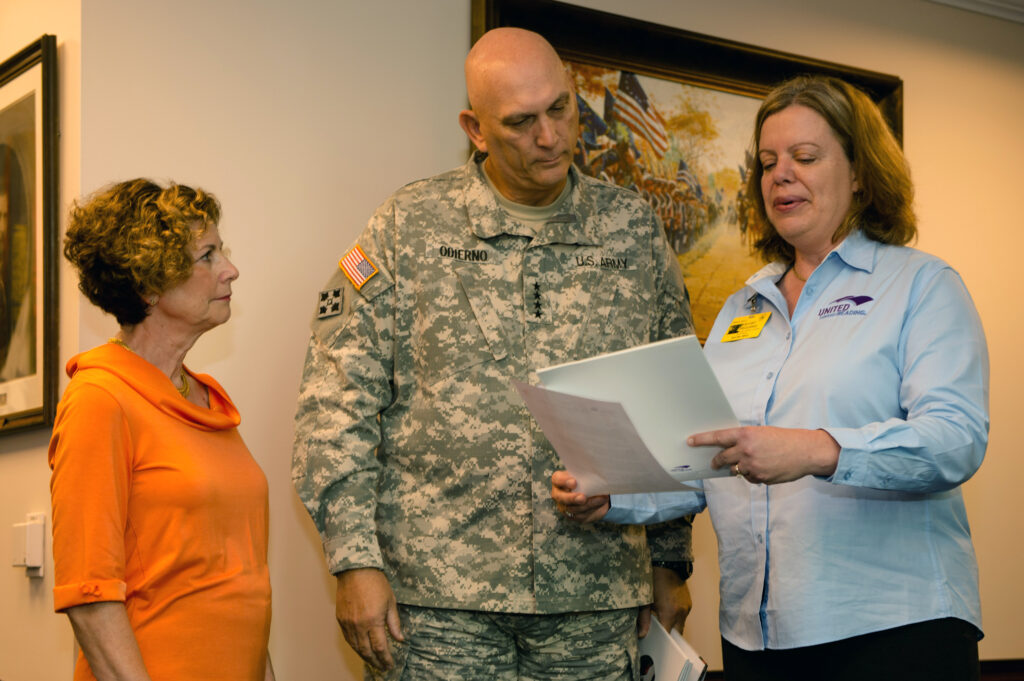
Linda Odierno, then Army Chief of Staff Gen. Raymond T. Odierno and Kara Dallman from the United Through Reading Program discuss the book Otis in 2013 at the Pentagon, Washington D.C. Credit: U.S. ARMY | Sgt. Mikki L. Sprenkle

Turning the Page

In addition to recording videos, UTR promotes numerous initiatives to encourage a lifelong love of reading in military families. These include reading tracking logs, online community support networks and community reading events.

United Through Reading relies on volunteers to keep the program running smoothly. Volunteers can assist at UTR recording stations, guiding service members through the recording process, troubleshooting equipment and recommending books. They can also help manage the follow-up process if a family requests a physical copy of the recording and book.

Communities, schools, and businesses can organize book drives. UTR stations welcome donations of new, high-quality children s books for service member readers and their families.

The organization s Literacy Ambassador Program trains volunteers to speak at schools, libraries and community events to emphasize the value of reading and staying connected through UTR. These ambassadors help raise awareness of the program s benefits and encourage more eligible families to participate.

Although UTR receives grants and corporate support, it operates as a non-profit. Therefore, donations are a critical aspect of its operations. Individuals who wish to help further its mission can host fundraisers, spread the word about the program on social media or collaborate with businesses to secure sponsorships.

Studies show promoting literacy and language development during the first few years of a child s life is an integral part of healthy neural development. Reading aloud to children helps improve their vocabulary, language aptitude and engagement in literary activities. Establishing a reading routine can also provide a source of consistency for children during frequent relocations, which can help them adjust more easily to new learning environments and social communities.

UTR ensures service members stay constantly present and active in their children s lives during deployments, separations and other absences. Parents help their children learn while they connect in positive and meaningful ways while creating permanent reminders of their lived experiences.

Jonny Cain remembers using UTR when her husband, a UH-60 Black Hawk pilot, was deployed on missions with spotty and unreliable phone and internet services. One of their children was especially fond of the video stories, standing as close as possible to the television and whispering back at the end: I love you, Daddy. .

This article appears in the December issue of Seapower. Jamie L. Pfeiffer practiced in Illinois, Oregon and Washington states before retiring from active law practice. She is currently based in Chicago.

To get involved with United Through Reading, visit their website at unitedthroughreading.org.


Northrop Grumman to Deliver US Navy’s E-130J Nuclear Command, Control and Communications Aircraft

The Northrop Grumman-led industry team will deliver the E-130J for the U.S. Navy’s TACAMO mission. (Credit: Northrop Grumman)

MELBOURNE, Fla. – Dec. 18, 2024 – Northrop Grumman Corporation (NYSE: NOC) has been selected as the prime contractor to deliver nuclear command, control and communications (NC3) aircraft for the U.S. Navy’s Take Charge And Move Out (TACAMO) mission. The Northrop Grumman-led industry team will deliver the E-130J to relieve the U.S. Navy’s current E-6B Mercury fleet of the TACAMO mission.​ 

  • Northrop Grumman has invested more than $1 billion in digital engineering and manufacturing capabilities that will assist in rapidly designing, building, testing and sustaining the E-130J. 

  • The company has been a key industry partner with the U.S. Navy as a prime aeronautics manufacturer for decades by serving as the prime contractor on the U.S. Navy’s E-2D Advanced Hawkeye and the MQ-4C Triton as well as providing support for the E-6B Mercury TACAMO fleet. 

  • The effort will incorporate Northrop Grumman’s technology leadership in advanced manufacturing, agile design, digital engineering and weapon system integration expertise to take advantage of Day One readiness across the Northrop Grumman-led industry team​. 

Expert: 

Jane Bishop, vice president and general manager, global surveillance division, Northrop Grumman: “Our performance on Navy programs like the E-2D and E-6B prove we deliver on what we promise, and we will bring this expertise in helping the Navy deliver the E-130J on time and optimized for this strategically important mission.” 

Details: 

The U.S. Navy’s TACAMO mission provides connectivity between the National Command Authority and U.S. nuclear forces. The Navy currently operates a fleet of E-6B Mercury aircraft to provide survivable, reliable and endurable airborne command, control and communications between the National Command Authority and U.S. forces. The E-130J will modernize this critical strategic deterrent mission. 

Northrop Grumman’s E-130J TACAMO industry team of Lockheed Martin Skunk Works ®; Raytheon; Crescent Systems, Inc; and Long Wave Inc. has vast knowledge and expertise in delivering critical command and control and nuclear enterprise capabilities​ to meet the U.S. Navy’s E-130J TACAMO requirement. 


U.S. Navy Completes Final Testing Milestone for Unmanned Surface Vessel Program

The unmanned surface vessel (USV) Ranger steams alongside the USV Mariner as both ships transit the Pacific Ocean during a photo exercise as part of Integrated Battle Problem (IBP) 23.2, Sep. 7, 2023. IBP 23.2 is a Pacific Fleet exercise to test, develop and evaluate the integration of unmanned platforms into fleet operations to create warfighting advantages. (U.S. Navy photo by MC2 Jesse Monford) 

By Program Executive Office Unmanned and Small Combatants (PEO USC) Public Affairs, Dec. 18, 2024 

WASHINGTON — The U.S. Navy recently achieved its final key milestone in the development of Unmanned Surface Vessel (USV) integrated capabilities by successfully completing a continuous 720-hour power demonstration on an engine system for use aboard future USVs. This demonstration is part of a larger USV testing effort to assess the capability and resilience of engine systems to operate autonomously for extended periods. The latest test marked the final system to be evaluated. Engine development and operation is critical for the expansion of unmanned naval operations and for realizing the future vision of a manned-unmanned Hybrid Fleet. 

The 2021 National Defense Authorization Act directed the Navy to complete the 720-hour test milestone before initiating development on large USVs. In the final engine test, Precise Power Systems conducted testing on behalf of Austal USA. Testing took place at Daimler Trucks North America Aftermarket Solutions in Tooele, Utah, from June 19 to September 5. The Navy’s Program Executive Office Unmanned and Small Combatants (PEO USC) and the Unmanned Maritime Systems program office (PMS 406) oversaw the demonstration. 

“This milestone marks a pivotal advancement in our naval strategy, as it enhances our capabilities in unmanned operations,” said Rear. Adm. Kevin Smith, head of PEO USC. “Successfully demonstrating a power system that can sustain autonomous operations for 30 days without maintenance not only bolsters our readiness but also sets the stage for a truly integrated manned-unmanned Fleet, ensuring we remain at the forefront of maritime innovation.” 

During the 720-hour test, no human intervention, corrective, or preventative maintenance was allowed on the equipment. Successfully completing this milestone means the tested model engine, MTU 8V4000M24S, is eligible for future use aboard USV platforms. It indicates that propulsion systems are mature enough to power an unmanned ship for 30 days without requiring maintenance. The team developing the engine will apply lessons learned during the test to enhance future models to increase reliability even more than demonstrated. 

Prior to this test, five teams successfully completed their separate 720-hour testing milestones. The successful teams include: 

  • Bollinger and Carter Machinery on behalf of Caterpillar in Chesapeake, Virginia was the first team to achieve this milestone in December of 2023. They demonstrated sufficient mechanical reliability of the 1550 kw Caterpillar 3512C model engine. 

  • Fincantieri Marinette Marine (FMM) and Carter Machinery on behalf of Caterpillar in Chesapeake, VA demonstrated mechanical durability of the Caterpillar 2300 kW rated 3516 main propulsion diesel, lube oil and fuel system. 

  • Gibbs & Cox and Southwest Research Institute in San Antonio, Texas on behalf of Cummins also validated the reliability of the QSK95 diesel engine paired with an ABB AMG 0560M04 LAE generator. 

  • Huntington Ingalls Incorporated (HII), in partnership with the U.S. Coast Guard, conducted a successful 720-hour demonstration on behalf of MTU of the MTU 20V 4000 M93L, a Main Propulsion Diesel Engine configuration. 

  • L3 Harris, on behalf of Cummins, validated the reliability of the QSK60 diesel engine, a Main Propulsion Diesel Engine configuration, and the QSM11, a Marine Diesel Generator Set in Camden, New Jersey. 

“This milestone is a significant step forward in the continued development of integrated unmanned surface capabilities. The successful execution of these tests highlights our commitment to deliver cutting-edge solutions that can meet the evolving needs of our Fleet,” said Capt. Matthew Lewis, program manager of the Unmanned Maritime Systems program office. 

The Navy’s Unmanned Maritime Systems program office is a part of the Program Executive Office Unmanned and Small Combatants portfolio, which designs, develops, builds, and delivers the Navy’s unmanned maritime systems; mine warfare systems; special warfare systems; expeditionary warfare systems; and small surface combatants. 


USS Beloit (LCS 29) Makes It Home to Mayport 

From U.S. 4th Fleet, Dec.10, 2024 

NAVAL STATION MAYPORT (Dec. 19, 2024) – Freedom-variant littoral combat ship (LCS) USS Beloit (LCS 29) makes it to her homeport in Mayport, Fla., December 19. 

After 15 locks, four Great Lakes, three port visits, and over 2,500 nautical miles traveled, USS Beloit (LCS 29) and her mighty crew at last arrived in the Atlantic Ocean, continuing her transit to its future homeport, Naval Station Mayport, Florida.  
 
The road to make it to the Atlantic Ocean included months of preparation from the crew. In less than two months after moving onboard in August, the crew certified in several mission areas required to safely operate and get underway including: Search and Rescue, Navigation, Damage Control, Communications and Engineering. 
 
“The Beloit Badger crew are some of the best Sailors I have served with. They are resilient, strong, flexible and dedicated, and I am blessed to be their Commanding Officer. Almost everything we have done in the past five months has been ‘high risk’ and ‘first time’, but that’s what makes us so unique,” said Cmdr. LeAndra Kissinger, Beloit’s commanding officer. We work hard, pray hard, and lean on each other as a team. We truly are a family, and when a family wants to accomplish a mission, it’s hard to stop them.” 
 
Each evolution, although involving different departments on the ship, required careful coordination and support from each division and Sailor onboard and was necessary for the crew to be able to set sail from Marinette, Wisconsin, towards the site of its commissioning ceremony in Milwaukee, Wisconsin.  
 
On November 23, the crew took the order to “man the ship and bring her to life.” Amongst thousands of onlookers, the ship made its much anticipated transition from pre-commissioned unit to United States Ship and began her sail around home.  
 
Her commissioning festivities included a crew visit to their namesake town of Beloit, a Chairman’s dinner hosted by the Commandant, and a commissioning ceremony who’s audience was filled with veterans from many significant battles. Along the way, she stopped in Cleveland, Ohio, Quebec City, Quebec and Halifax, Nova Scotia, and Norfolk for refueling, stores replenishment and liberty for the crew.   
 
“This crew has shown tremendous resilience in overcoming the last 4 months. Completing difficult consecutive certifications while learning a new ship and being away from family. This team made it look easy and brought a whole new meaning to the term “Beloit Proud,” said Senior Chief David Chisholm, Beloit’s Senior Enlisted Leader. “Watching them perform under pressure and overcoming every obstacle with grace shows just how awesome our team is and their readiness to face the challenges ahead after some much needed and well-deserved family time. It is an honor to be sailing with them and representing the city of Beloit.” 
 
Capt. James Lawrence said it best, “Don’t give up the ship.” And that’s exactly what this crew did to get us home on time!” said Operation Specialist first class petty officer Ernesto Sanchez, USS Beloit’s Sailor of the Year! 
 
With the last port fading in the rear only a few hundred nautical miles remain before Jacksonville is within view, the crew is eagerly awaiting returning to their families and friends, and ready to take on the next mission that will come their way as the Navy’s newest warship join the fleet!   
 
LCS is a fast, agile, mission-focused platform designed for operation in near-shore environments yet capable of open-ocean operation. It is designed to defeat asymmetric “anti-access” threats and is capable of supporting forward presence, maritime security, sea control, and deterrence.  


Lawmakers Introduce SHIPS Act to Revitalize Shipbuilding, Commercial Maritime Industries

U.S. Merchant Marine Academy graduates throw their covers in celebration during the Merchant Marine Academy Commencement Ceremony in Kings Point, New York, June 22, 2024. Credit: U.S. Marine Corps | Staff Sgt. Kelsey Dornfeld

A bipartisan group of U.S. Senators and Representatives on Dec. 19 introduced introduced the Shipbuilding and Harbor Infrastructure for Prosperity and Security (SHIPS) for America Act, comprehensive legislation to revitalize the United States shipbuilding and commercial maritime industries.

The SHIPS for America Act was introduced by Sens. Mark Kelly (D-Arizona) and Todd Young (R-Indiana) and Reps. John Garamendi (D-California) and Trent Kelly (R-Mississippi). After decades of neglect, the United States has a weakened shipbuilding capacity, a declining commercial shipping fleet dwarfed by China and a diminished ability to supply the U.S. military during wartime, the lawmakers said.

They said the bipartisan proposal would restore American leadership across the oceans by establishing national oversight and consistent funding for U.S. maritime policy, incentivizing domestic shipbuilding, enabling U.S.-flagged vessels to better compete in international commerce, rebuilding the U.S. shipyard industrial base and expanding the mariner and shipyard workforce.

“We’ve always been a maritime nation, but the truth is we’ve lost ground to China, who now dominates international shipping and can build merchant and military ships much more quickly than we can,” said Kelly, a U.S. Navy veteran and the first U.S Merchant Marine Academy graduate to serve in Congress.

“The SHIPS for America Act is the answer to this challenge. By supporting shipbuilding, shipping, and workforce development, it will strengthen supply chains, reduce our reliance on foreign vessels, put Americans to work in good-paying jobs, and support the Navy and Coast Guard’s shipbuilding needs. I’m excited to introduce this comprehensive, fully paid for legislation today alongside my Republican and Democratic colleagues and our partners representing all parts of the industry, and together we’re going to work to get this effort across the finish line.”

“America has been a maritime nation since our founding, and seapower was a significant contributor to our rise to being the most powerful nation on earth. Unfortunately, the bottom line now is America needs more ships. Shipbuilding is a national security priority and a stopgap against foreign threats and coercion. Our bill will revitalize the U.S. maritime industry, grow our shipbuilding capacity, rebuild America’s shipyard industrial base, and support nationwide workforce development in this industry. This legislation is critical to our warfighting capabilities and keeping pace with China,” Young said.

The move drew support from a wide variety of maritime-related groups and is backed by the Navy League of the United States.

“The Navy League applauds the introduction of the SHIPS for America Act, a landmark legislative achievement that will comprehensively meet the needs of the U.S. merchant marine and bolster our shipbuilding industrial base,” said Mike Stevens, CEO of the Navy League.

“In today’s global threat environment, arguably the most perilous since the end of the Cold War, the United States must not only maintain the finest Navy, Marine Corps, and Coast Guard on the seas, but also ensure a robust U.S.-flag merchant marine and a resilient shipbuilding industrial base. These elements are crucial for safeguarding our national and economic security in the event of large-scale military conflict. The SHIPS for America Act addresses these vital considerations and reaffirms that America is, and always will be, a maritime nation.”

The SHIPS for America Act would:

Coordinate U.S. maritime policy by establishing the position of Maritime Security Advisor within the White House, who would lead an interagency Maritime Security Board tasked with making whole-of-government strategic decisions for how to implement a National Maritime Strategy. The bill also establishes a Maritime Security Trust Fund that would reinvest duties and fees paid by the maritime industry into maritime security programs and infrastructure supporting maritime commerce.

Establish a national goal of expanding the U.S.-flag international fleet by 250 ships in 10 years by creating the Strategic Commercial Fleet Program, which would facilitate the development of a fleet of commercially operated, U.S.-flagged, American crewed, and domestically built merchant vessels that can operate competitively in international commerce.

Enhance the competitiveness of U.S.-flagged vessels in international commerce by establishing a Rulemaking Committee on Commercial Maritime Regulations and Standards to cut through the U.S. Coast Guard’s bureaucracy and red tape that limits the international competitiveness of U.S.-flagged vessels, requiring that government-funded cargo move aboard U.S.-flag vessels, and requiring a portion of commercial goods imported from China to move aboard U.S.-flag vessels starting in 2029.

Expand the U.S. shipyard industrial base, for both military and commercial oceangoing vessels, by establishing a 25 percent investment tax credit for shipyard investments, transforming the Title XI Federal Ship Financing Program into a revolving fund, and establishing a Shipbuilding Financial Incentives program to support innovative approaches to domestic ship building and ship repair.

Accelerate U.S. leadership in next-generation ship design, manufacturing processes, and ship energy systems by establishing the U.S. Center for Maritime Innovation, which would create regional hubs across the country.

Make historic investments in maritime workforce by establishing a Maritime and Shipbuilding Recruiting Campaign, allowing mariners to retain their credentials through a newly established Merchant Marine Career Retention Program, investing in long-overdue infrastructure needs for the U.S. Merchant Marine Academy, and supporting State Maritime Academies and Centers for Excellence for Domestic Maritime Workforce Training and Education. The bill also would streamline and modernize the U.S. Coast Guard’s Merchant Mariner Credentialing system.


U.S. Coast Guard Refits Commercial Icebreaker Aiviq for Service as USCG Storis

The tug Aiviq traveling with the mobile drilling unit Kulluk in tow 116 miles southwest of Kodiak City, Alaska, in 2012. Credit: U.S. Coast Guard | Petty Officer 2nd Class Chris Usher

The Coast Guard awarded a contract Nov. 20 to Offshore Service Vessels LLC, of Cut Off, Louisiana, to acquire the motor vessel (M/V) Aiviq, a 360-foot U.S.-built polar class 3-equivalent icebreaker, U.S. Coast Guard Media Relations said in an Dec. 16 email.

“The Coast Guard first presented its research and recommendation to acquire a commercial icebreaker in a 2021 report. This approach was made possible through direction and statutory relief provided in the Don Young Coast Guard Authorization Act of 2022 and funding appropriated in fiscal year 2024,” the email said.

The Coast Guard renamed the Aiviq into Storis, a Scandinavian term meaning “a floating mass of closely crowded icebergs and floes.”

Much about the U.S. Coast Guard’s modifications and conversion of the commercial icebreaker, Aiviq, remains unclear as Coast Guard media did not respond to specific questions from Seapower about its refit, including schedule, cost, armament, crew complement, and material and structural changes.

The Coast Guard did tell Seapower that, “with minimal modifications, this polar icebreaker will be capable of projecting U.S. sovereignty in the Arctic and conducting select Coast Guard missions. The service will evaluate the vessel’s current condition and capability and identify requirements, and what modifications will be necessary, to attain full operational capability. The firm fixed-price contract, with a total value of $125.0 million, also includes provisions for technical data, spares, necessary modifications, certifications, crew training, and operational readiness activities.”

Built in 2012 by North American Shipbuilding Company of Larose, Louisiana, for $200 million, Aiviq was designed for towing and laying anchors for drilling rigs and oil spill response in the Chukchi Sea of Alaska. That makes the Storis 12 years old as of 2024. In comparison, the only other Arctic medium icebreaker, USCGC Healy, was launched Nov. 15, 1997, and commissioned Aug. 21, 2000, and is 24 years old, and the only Antarctic heavy icebreaker, Polar Star, is 48 years old, having been commissioned in 1976. Polar Sea, Polar Star’s sister, is inactive due to an engine malfunction in 2010 and has served as a parts donor to the Polar Star.

The 360-foot (110 meter) Storis has a crew of 28 and accommodations for 64 personnel. Its beam is 80 feet (24.4 meters), depth of 34 feet (10.4 meters) with a draft of 28 feet (8.6 meters). Powered by four Caterpillar C280-12 engines, each producing 4,060 kilowatts, driving two ducted controlled-pitch propellers, the Storis can sail at 15 knots (28 km/h; 17 mph) and five knots (9.3 km/h; 5.8 mph) in one meter (3.3 feet) of ice. Stability comes from three bow thrusters and two stern thrusters.

“The recently acquired polar icebreaker will bridge national presence in the Arctic while the service awaits delivery of the Polar Security Cutters,” said a Coast Guard Media Relations spokesperson. The Coast Guard said the Storis’s homeport is to be determined soon although maritime publications hint at Juneau, Alaska. Current estimate for delivery of the first PSC is 2030.

“The Coast Guard’s initial activities will be focused on readying the vessel for deployment to the Arctic in the summer of 2026,” Coast Guard Media Relations Office said. “A series of phased modifications will then occur between annual Arctic operations to achieve full operational capability.”


VAQ-133 “Wizards” complete historic first Next Generation Jammer Deployment  

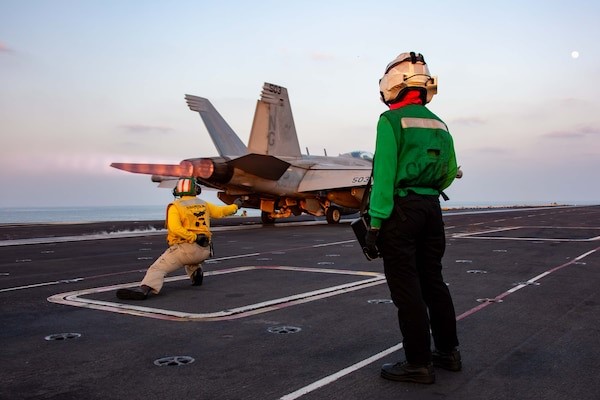
An EA-18G Growler from VAQ-133 launches from USS Abraham Lincoln (CVN 72). (U.S. Navy photo)

From VAQ-133, Dec. 16, 2024 

VAQ-133 returns from a five-month deployment as the first Navy squadron to tactically employ the ALQ-249 Next Generation Jammer. 

WHIDBEY ISLAND, Wash.- Electronic Attack Squadron 133 (VAQ-133), assigned to Carrier Air Wing Nine (CVW) 9, returned from the Abraham Lincoln Carrier Strike Group’s (ABECSG) five-month deployment to the Middle East and Eastern Pacific to Naval Air Station Whidbey Island in time for the holidays, Dec. 14, 2024. 

The 153 Sailors, 18 aircrew, and seven EA-18G Growlers of the “Wizards” of VAQ 133 departed Naval Air Station North Island, San Diego, July 13, 2024. 
 

The Wizard’s deployment marked a historic milestone, as the squadron became the first in the Navy to deploy with the ALQ-249 Next Generation Jammer (NGJ). Throughout their rigorous training and deployment, the Wizards demonstrated the future of Airborne Electronic Attack (AEA) by developing new tactics, achieving the first NGJ arrested landing, and tactically employing the system. 
 
“This deployment showcased the cutting-edge capabilities of the NGJ and reinforced the critical role of the Growler community in modern warfare,” said Cmdr. Erik Dente, commanding officer, VAQ-133. “More importantly, it demonstrated the skill, dedication, and perseverance of every VAQ-133 Sailor and the families, friends, and loved ones who supported them at home. I could not be more proud of the Sailors, aircrew, and support teams who made this deployment an overwhelming success.” 
 
The Wizards began and concluded their deployment in U.S. 7th Fleet, executing key training missions in support of U.S. Indo-Pacific Command and participating in a Multi-Large Deck Exercise (MLDE) with the Italian Navy’s ITS Cavour Carrier Strike Group and conducting operations in the South China Sea to promote a free and open Indo-Pacific. 
 
The strike group was ordered to the U.S. Central Command (CENTCOM) area of responsibility to bolster U.S. military force posture in the Middle East, deter regional escalation, degrade Iranian-backed Houthi capabilities, defend U.S. forces to promote security, stability and prosperity. 
 
While operating in the Middle East, the Wizards played a key role in supporting CENTCOM objectives, participating in dual-carrier operations with the USS Theodore Roosevelt (CVN 71), flying critical combat missions to ensure the safety of deployed U.S. Forces, and aiding in strikes to degrade Iranian-backed Houthi weapons storage capabilities. 
 
“This deployment will go down in history,” said Command Master Chief Frederick Tuiel command master chief, VAQ-133, summing up the deployment. “While it wasn’t filled with port visits, it was defined by impactful combat operations—experiences our Sailors will share for years to come. Bringing everyone home safely makes the accomplishment even sweeter.” 
 
The squadron earned the Commander Electronic Attack Wing Pacific (CVWP) Golden Wrench Award for maintenance excellence demonstrating the Wizard’s dedication to excellence. Wizard maintainers sustained 100% Growler mission-readiness throughout the deployment enabling the successful completion of all assigned missions. 
 
“The dedication of the sailors of VAQ-133 was second to none,” said Dente. “Their hard work kept our Growlers fully mission capable and ensured every mission was a success. Whether from administration, operations, safety, maintenance, intelligence, or food service and support divisions – it took every sailor to build and maintain the combat power required during our operations.” 
 
In addition to operational accomplishments, the deployment included port calls to Guam in August and Kuala Lumpur in November, offering Sailors a chance to recharge and experience diverse cultures while supporting U.S. partner nations. 
 
Returning home before the holidays, VAQ-133 is looking forward to reuniting with their families and friends, reflecting on their achievements and continuing to embody the squadron catch phrase to “Push it up!” 
ABECSG completed more than 11,600 flight hours comprised of 5,500 sorties and over 4.400 fixed-wing aircraft launches and arrestments throughout its five-month deployment. The embarked CVW-9 is next-generation, multiplatform capable that enables advance mobile projection of naval air power and forward operational presence. 
 
CVW 9 consists of nine squadrons flying the F-35C Lightning II, F/A-18E/F Super Hornet, EA-18G Growler, E-2D Hawkeye, C-2A Greyhound, and MH-60R/S Sea Hawk. The squadrons are the “Tophatters” of Strike Fighter Squadron (VFA) 14, the “Black Aces” of VFA 41, the “Vigilantes” of VFA 151, the “Black Knights” of VMFA 314, the “Wallbangers” of Airborne Command and Control Squadron (VAW) 117, the “Wizards” of Electronic Attack Squadron (VAQ) 133, the “Raptors” of Helicopter Maritime Strike Squadron (HSM) 71, the “Chargers” of Helicopter Sea Combat Squadron (HSC) 14, and the “Rawhides” of Fleet Logistics Support Squadron (VRC) 40. 
 
ABECSG consists of the flagship USS Abraham Lincoln (CVN 72), embarked staffs of Carrier Strike Group (CSG) Three and Destroyer Squadron (DESRON) 21, Carrier Air Wing (CVW) Nine, integrated air and missile defense Arleigh Burke-class guided missile destroyer USS Frank E. Petersen Jr. (DDG 121), and DESRON 21’s USS Spruance (DDG 111) and USS Michael Murphy (DDG 112). 
 
Arleigh Burke-class guided-missile destroyers USS O’Kane (DDG 77) and USS Stockdale (DDG 106) remain deployed in the 5th Fleet area of operations supporting global maritime security operations.