USS Wasp Amphibious Ready Group Returning from Deployment
Aircraft assigned to the “Blue Knights” of Marine Medium Tiltrotor Squadron (VMM) 365 (Reinforced) operate with the amphibious assault ship USS Wasp (LHD 1) in the Atlantic Ocean, Nov. 22, 2024. (U.S. Navy photo by MCC Ruben Reed)
From Commander, U.S. Fleet Forces Command
The USS Wasp Amphibious Ready Group, consisting of warships USS Wasp (LHD 1), USS New York (LPD 21), and USS Oak Hill (LSD 51), is scheduled to return to Hampton Roads on Dec. 6 following a seven-month deployment to the U.S. 6th Fleet areas of operations.
Marines assigned to the 24th Marine Expeditionary Unit (Special Operations Capable) previously departed the ARG ships and returned to Camp Lejeune, North Carolina.
While deployed, the Wasp ARG and 24th MEU (SOC) team supported a wide range of interoperability opportunities and exercises across the North Atlantic, Eastern Mediterranean, and Baltic region, increasing combat readiness and crisis response capabilities while strengthening relationships with both Allies and partners.
GA-ASI Awarded Next-Generation HF Modem Contract
From General Atomics Aeronautical Systems, Inc.
SAN DIEGO – Dec. 4, 2024 – General Atomics Aeronautical Systems, Inc. (GA-ASI) was awarded a contract on October 4, 2024, to develop a next generation high-frequency (HF) modem for the U.S. Naval Information Warfare (NAVWAR) Program Executive Office Command, Control, Communications, Computers and Intelligence (PEO C4I). The task order was issued by the Naval Information Warfare Center (NIWC) Pacific.
GA-ASI will develop a cost-efficient, software-defined Generation 2 HF modem that meets U.S. Navy ship, sub, and shore environmental requirements and supports a rapid fielding schedule. GA-ASI will provide waveform and modem development, test and evaluation, as well as onsite technical assistance for the NAVWAR PEO C4I program.
“The Gen2 Modem delivers the security and resilience the U.S. Navy needs for its tactical radio fleet modernization efforts,” said Jeff Hettick, GA-ASI vice president of Agile Mission Systems. “These modems will be the heart of the HF system, providing high-speed, long-range HF communications that meets the Navy’s demanding program of record requirements, which includes beyond-line-of-sight communications in a satellite-denied environment.”
The work will be performed by GA-ASI over a 16-month base development timeline.
Raytheon Completes Delta Design Review for F/A-18E/F Electronic Warfare Prototype
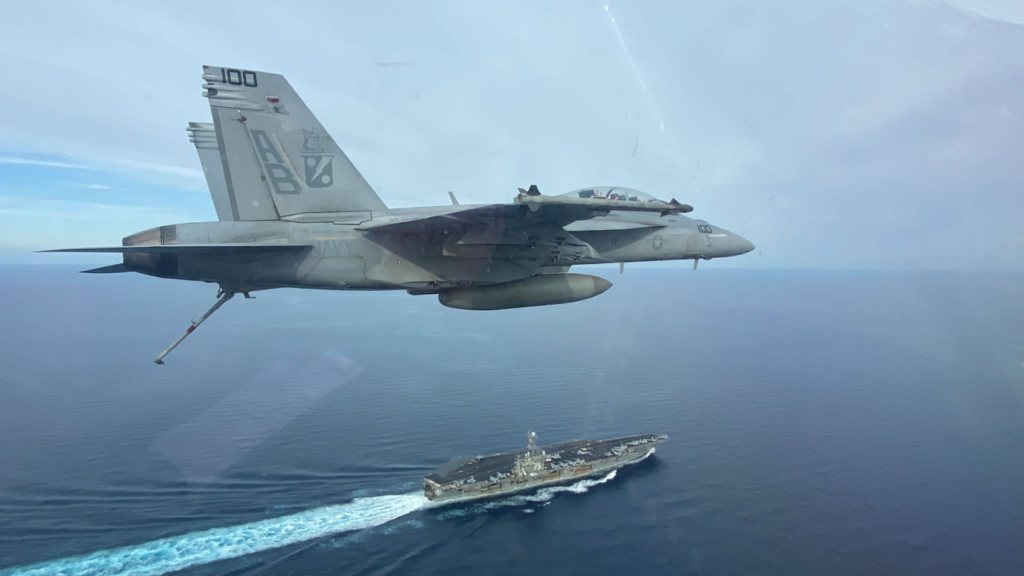
An F/A-18F Super Hornet from the “Red Rippers” of Strike Fighter Squadron (VFA) 11 flies past the Nimitz-class aircraft carrier USS Harry S. Truman (CVN 75) in the Mediterranean Sea, Nov. 27, 2024. (U.S. Navy photo by Lt. Lily Moorhead)
System will integrate 6th generation capabilities into the Navy’s primary strike fighter aircraft
From Raytheon
MCKINNEY, Texas, (December 4, 2024) — Raytheon, an RTX (NYSE: RTX) business, has successfully completed a Delta Design Review of its Advanced Electronic Warfare, or ADVEW, prototype for the U.S. Navy’s F/A-18 E/F Super Hornet. ADVEW is being developed to replace existing electronic warfare components on the aircraft to improve survivability and long-term sustainability.
Executed ahead of schedule, the review assessed the weapons replaceable assemblies, or WRAs, and how each part of the hardware system works together to meet required specifications. The review confirmed that the system can provide critical electronic attack and electronic support measures capabilities.
“This event is a significant milestone that demonstrates our multi-function approach of integrating electronic support and electronic attack to revolutionize modern electronic warfare systems,” said Bryan Rosselli, president of Advanced Products & Solutions at Raytheon. “Our solution provides the needed capabilities to defeat the ever-evolving threats of the world’s most dangerous adversaries now and well into the future.”
Raytheon’s integration of digital and model-based systems engineering tools in the development of ADVEW provides requirements traceability, streamlines system integration, and mitigates risk to enable rapid aircraft integration. The company’s approach leverages common material base and manufacturing processes to efficiently scale, reduce cost, minimize supply chain disruption, and deliver ahead of schedule.
In December of last year, Raytheon was awarded a $80 million contract in a down select to prototype the system for the U.S. Navy. The successful completion of this Delta Design Review marks another milestone of ADVEW development and begins the next phase, which includes government laboratory testing to validate Open Mission Systems compliance and to demonstrate advanced system attributes.
FRCE Marks 150th F-35 Induction
Workers on the Fleet Readiness Center East (FRCE) F-35 Lightning II aircraft modification line confer with the pilot prior to conducting a functional check flight inspection on an F-35B at Marine Corps Air Station Cherry Point. This aircraft is the 150th fifth-generation fighter inducted by the depot.
From Fleet Readiness Center East, Dec. 2, 2024
MARINE CORPS AIR STATION CHERRY POINT, N.C. — Fleet Readiness Center East (FRCE) marked a milestone in its support of the F-35 Lightning II program when the depot recently inducted and completed modifications on its 150th F-35 and returned the aircraft to the Fleet.
FRCE is the lead site for depot-level maintenance on the F-35B Lightning II and has conducted modifications and repair on the Marine Corps’ short takeoff-vertical landing variant of the aircraft since 2013. The depot has also worked with the F-35A (conventional takeoff and landing) and F-35C (carrier) variants.
“The F-35 plays such a crucial role in our national defense,” said FRCE Commanding Officer Capt. Randy Berti. “It is the next-generation strike aircraft weapon systems for the Navy, Air Force, Marines and our allies. It gives our warfighters unprecedented capabilities. We’re extremely proud of the support we provide for this aircraft.
“The F-35 was completely new when the first aircraft was inducted in 2013,” continued Berti. “There were a lot of unknowns. Inducting our 150th F-35 highlights how far we’ve come and how dedicated and innovative our people are. They were constantly breaking new ground and they continue to do that today.”
Dustin Schultz, an aircraft planner and estimator with FRCE’s F-35 team, was one of those trailblazers.
“Everything was brand new in the beginning,” said Schultz. “From engineering support to tooling and logistics, we were starting from scratch. We had one aircraft with six of us working on it. Now we have 130 artisans working on the F-35 alone. That’s a lot of growth.
“We have other aircraft programs that are sundowning,” he continued. “The F-35 is filling that gap now as we move forward.”
According to Ike Rettenmair, FRCE’s F-35 branch head, the depots F-35 workload has grown exponentially over the years and is expected to expand further.
“I was in the hangar as a Harrier mechanic when the first F-35 rolled in,” said Rettenmair. “We’ve grown from that one stall to what will soon be multiple hangars of F-35s. The F-35 plays such a significant role in the U.S. military with more and more continuing to enter the Fleet. The number of F-35s used by international partners is also growing. Our F-35 workload goes hand in hand with all of this.”
As the F-35 program continues to grow at the depot, Rettenmair said FRCE continues to expand and develop key F-35 support elements.
FRCE declared capability on its first F-35 component – meaning FRCE is now a verified source of repair and testing for that item – in 2020. Since then, the depot has declared capability on approximately 76 different components for the Lightning II and continues to stand up capability.
In 2023, FRCE personnel became the first within the Department of Defense to perform the successful assembly of a lift fan clutch for the F-35B Lightning II aircraft outside of the original manufacturer’s facility. Additionally, F-35B vertical lift fan testing and processing facilities are scheduled to come online at FRCE in early 2025.
The depot is also capable of bringing F-35 support to the warfighter when and where it’s needed. FRCE’s F-35 Rapid Response Team, made up of highly skilled, cross-trained aircraft maintenance professionals, can deploy at a moment’s notice to any location, from a Marine Corps Air Station halfway around the globe to a Navy aircraft carrier afloat in the Indo-Pacific region.
FRCE’s F-35 support isn’t limited to aircraft repair and modification or component capabilities. Don Werner, an aircraft planner and estimator with FRCE’s F-35 team, said the lessons learned and the innovation that occurred over the years while expanding FRCE’s F-35 program have also found their way to the warfighter.
“There are so many entities within FRC East working on things you would never even think of,” said Werner. “They create things and come up with ideas that enable us to get aircraft to the warfighter even faster while saving money in the long run. They create things that make the job easier and these go out to the whole Fleet.”
In addition to mechanics, Werner said the team includes quality assurance personnel, parts and logistics experts, planners, engineers and even fabric workers who design and produce heavy-duty protective covers for the aircraft’s tires, intakes and other parts.
“You can see people right here at the depot working on all these things,” said Werner. “They’re designing it, going down to manufacturing and coming up with the tools or equipment our people need because there’s nobody out there that’s going to get it to us in such a timely manner.”
Schultz said the warfighter benefits from the innovative processes and procedures the depot’s F-35 team has come up with over the years.
“We’ve had many modifications that come through here that we were performing for the first time ever,” said Schultz. “The manufacturer would say this mod is going to take 10,000 hours and our artisans and engineers would go look at it and end up saving thousands of hours because they came up with a new way to do the job that nobody else had thought of.”
According to Rettenmair, the success and expansion of the F-35 program at FRCE, lies with the depot’s personnel. He credited their dedication and innovation as instrumental in establishing the reputation of FRCE’s F-35 program.
“We’ve made a name for ourselves as the F-35 facility for depot maintenance,” said Rettenmair. ”It shows the trust and confidence the enterprise has in FRC East to do this work. That trust is a testament to the people working here who’ve earned us this reputation.”
He said everyone at FRCE, no matter what their job, is committed to supporting the Fleet by providing the highest quality, combat ready aircraft and components.
“Every day when we come to work, we know why we’re here,” said Rettenmair. “We deliver product back to the Fleet so the warfighter has what he or she needs to fight and win. The people working here take a lot of pride in that.”
FRCE is North Carolina’s largest maintenance, repair, overhaul and technical services provider, with more than 4,000 civilian, military and contract workers. Its annual revenue exceeds $1 billion. The depot provides service to the fleet while functioning as an integral part of the greater U.S. Navy; Naval Air Systems Command; and Commander, Fleet Readiness Centers.
HII to Acquire South Carolina Advanced Metal Fabricator Assets and Workforce
From HII
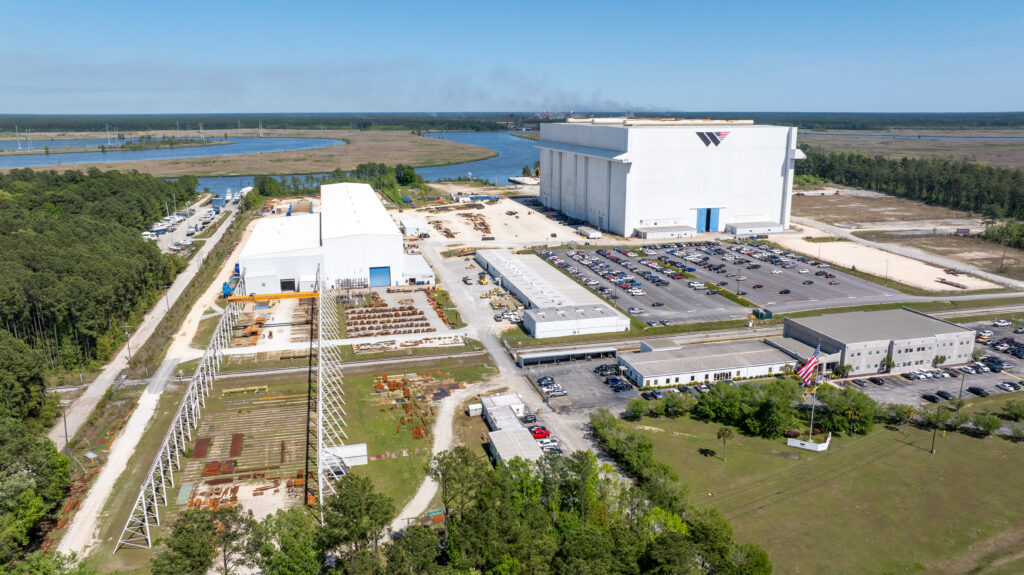
NEWPORT NEWS, Va., Dec. 04, 2024 (GLOBE NEWSWIRE) — HII (NYSE: HII) announced today that it has entered into a definitive agreement to acquire substantially all of the assets of W International SC, LLC and Vivid Empire SC, LLC (collectively “W International”), a South Carolina-based complex metal fabricator specializing in the manufacture of shipbuilding structures, modules and assemblies.
Upon completion of the transaction, the manufacturing facility in Goose Creek, South Carolina, will operate within HII’s Newport News Shipbuilding (NNS) division. The site will support the construction of nuclear-powered submarine and aircraft carrier modules and structures for U.S. Navy programs. Substantially all current employees will be offered positions with HII to continue to work on site.
“HII is committed to increasing build rates for our Navy customer, and this investment in capacity alongside the Navy will help us do that,” HII President and CEO Chris Kastner said. “It lets us efficiently add trained talent and state-of-the-art manufacturing capabilities to the urgent job of building ships, making it a unique opportunity to accelerate throughput at Newport News Shipbuilding in support of the Navy and AUKUS.”
The acquired assets include advanced production facilities with state-of-the-art equipment, tooling and infrastructure used to fabricate complex metal modules and structures, and are located on a leased 45-acre site with more than 480,000 square feet of manufacturing space. The site has barge and rail access, and is strategically located near Charleston, in a region with a rapidly growing shipbuilding ecosystem and highly skilled trades workforce.
The facility in Goose Creek will be known as Newport News Shipbuilding – Charleston Operations, operating within HII’s Newport News Shipbuilding division.
Current NNS Vice President and Chief Transformation Officer Matt Needy will become general manager of the site. NNS is the nation’s designer, builder and refueler of nuclear-powered aircraft carriers and one of only two shipyards capable of designing and building nuclear‐powered submarines.
The transaction is expected to close in the fourth quarter of 2024, subject to the satisfaction of certain closing conditions, including receipt of regulatory approvals and required contractual modifications from our Navy customer and other third parties.
General Atomics Awarded Navy Contract to Advance Long Range Maneuvering Projectile
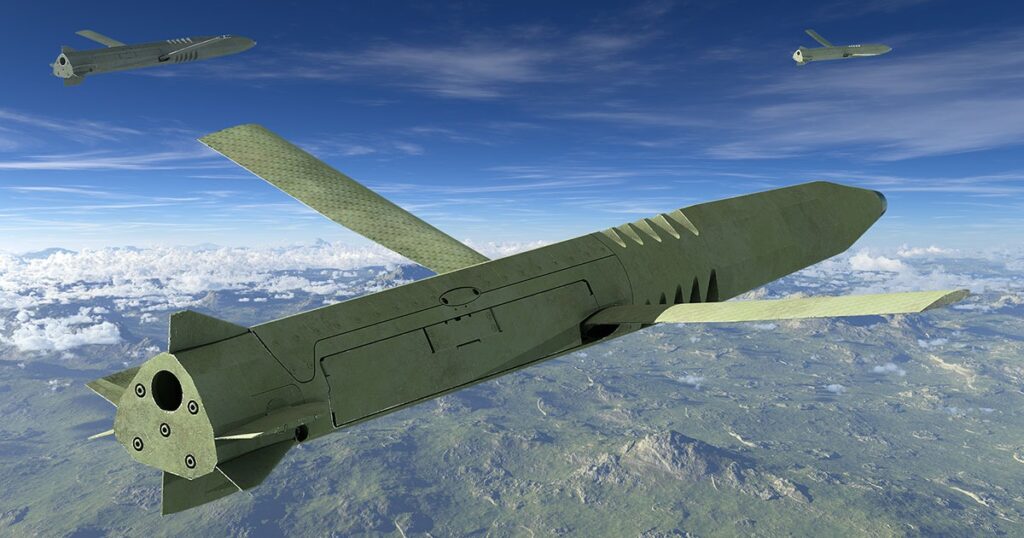
SAN DIEGO – Dec. 2, 2024 – General Atomics Electromagnetic Systems (GA-EMS) announced today that it has been awarded a contract from the U.S. Navy via Advanced Technology International (ATI) for its Long Range Maneuvering Projectile (LRMP) Common Round. GA-EMS received the award under the Naval Surface Technology Innovation Consortium (NSTIC) Other Transaction Authority (OTA) contract vehicle to mature and further demonstrate the company’s LRMP prototype system to perform the Navy’s Common Round offensive strike capabilities at increased range using fielded 155 mm artillery systems.
“The LRMP is truly an innovative design, delivering greater range and maneuverability, precision, and payload flexibility to support a variety of missions, including strike and Intelligence, Surveillance, and Reconnaissance missions,” said Scott Forney, president of GA-EMS. “The LRMP’s capabilities have the potential to deliver lethal effects to defeat static and moving targets at 120 km and beyond. This represents a factor of 4 increase in range from conventional artillery systems beyond what is currently available today.”
The LRMP’s simplified design and unique projectile shape enables very long glide ranges without the need for auxiliary propulsion or rocket assist. It is scalable for use in all existing artillery systems, ensuring compatibility with legacy launchers, autoloaders and handling equipment. With greater maneuverability, accuracy, and payload options, LRMP offers additional cross range benefits to increase the engagement zone without having to reposition the launcher.
“GA-EMS has conducted successful LRMP testing to ensure survivability, performance, and aerodynamics,” said Mike Rucker, head of GA-EMS Weapon Programs. “We are in preparations for upcoming LRMP Common Round glide testing at Dugway Proving Grounds in Utah as part of the first contract task order. Additional milestone testing and follow on tasks will be completed throughout the contract’s five-year period of performance to design, manufacture, assemble and test LRMP rounds for 155 mm artillery systems as well as other platforms.”
CENTCOM Forces Defeat Houthi Attacks on U.S. Navy and U.S.-Flagged Ships in Gulf of Aden
From U.S. Central Command, Dec. 1, 2024
TAMPA, Fla – U.S. Navy destroyers USS Stockdale (DDG 106) and the USS O’Kane (DDG 77) successfully defeated a range of Houthi-launched weapons while transiting the Gulf of Aden, Nov. 30 – Dec. 1. The destroyers were escorting three U.S. owned, operated, flagged merchant vessels and the reckless attacks resulted in no injuries and no damage to any vessels, civilian or U.S. Naval.
The destroyers successfully engaged and defeated three anti-ship ballistic missiles (ASBMs), three one-way attack uncrewed aerial systems (OWA UAS), and one anti-ship cruise missile (ASCM), ensuring the safety of the ships and their personnel, as well as civilian vessels and their crews.
These actions reflect the ongoing commitment of CENTCOM forces to protect U.S. personnel, regional partners, and international shipping, against attacks by Iran-backed Houthis.
Coast Guard Cutter Hamilton Offloads $182.8M In Counternarcotics At Port Everglades
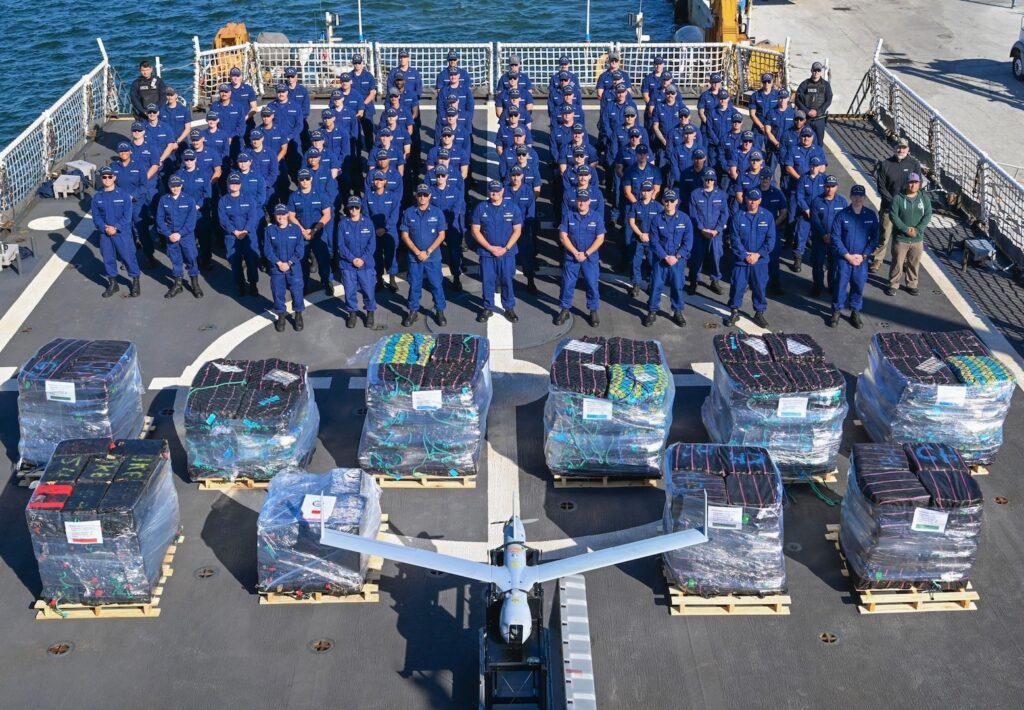
The crew of Coast Guard Cutter Hamilton pose with more than 16,100 pounds of cocaine worth an assessed street value of approximately $182.8 million in Port Everglades, Florida, Dec. 2, 2024. (U.S. Coast Guard photo by Petty Officer 3rd Class Eric Rodriguez)
From Coast Guard 7th District, Dec. 3, 2024
MIAMI – Coast Guard Cutter Hamilton’s crew offloaded more than 16,100 pounds of cocaine worth an assessed street value of approximately $182.8 million in Port Everglades, Monday.
The crew worked alongside interagency and international partners to interdict the illicit narcotics in international waters of the Eastern Pacific Ocean off South and Central America.
Coast Guard crews often deploy to the U.S. Southern Command joint operating area, which includes the Caribbean Sea and the Eastern Pacific Ocean, to conduct counter drug missions in support of Joint Interagency Task Force-South. Deployments for cutters assigned to the Coast Guard Atlantic Area Command include Panama Canal transits to deny transnational criminal organizations access to maritime trafficking routes in the Eastern Pacific Ocean.
“I’m proud of our accomplishments during this three-and-a-half-month deployment,” said Capt. Justin Carter, commanding officer of Coast Guard Cutter Hamilton. “The exceptional crew of Hamilton, with the support of an aircrew from Coast Guard Helicopter Interdiction Squadron, demonstrated the greatest professionalism, seamanship and airmanship while executing this important and challenging mission at sea in service to nation.”
The following assets and crews were involved in the interdictions:
Six suspected smugglers were also transferred to federal custody and face prosecution by the U.S. Department of Justice.
Detecting and interdicting illicit drug traffickers on the high seas involves significant interagency and international coordination. The Joint Interagency Task Force-South based in Key West conducts the detection and monitoring of aerial and maritime transit of illegal drugs. Once interdiction becomes imminent, the law enforcement phase of the operation begins, and control of the operation shifts to the U.S. Coast Guard throughout the interdiction and apprehension. Interdictions in the Eastern Pacific Ocean are performed by members of the U.S. Coast Guard under the authority and control of the Coast Guard’s Eleventh District, headquartered in Alameda, California.
These interdictions relate to Organized Crime Drug Enforcement Task Forces’ Strike Force Initiatives and designated investigations. OCDETF identifies, disrupts, and dismantles the highest-level criminal organizations that threaten the United States using a prosecutor-led, intelligence-driven, multi-agency approach. Additional information about the OCDETF program can be found at https://www.justice.gov/OCDETF.
The Coast Guard is the United States’ lead federal maritime law enforcement agency with authority to enforce national and international laws on the high seas and waters within U.S. jurisdiction. Coast Guard HITRON aircrews are uniquely qualified to conduct airborne use of force for non-compliant vessels, enhancing the Coast Guard’s ability to react to maritime security threats and to better secure our maritime borders since the program’s inception in 1999. For 25 years, HITRON crews have forward deployed aboard Coast Guard cutters and U.S. Navy ships or foreign allied warships to conduct drug interdiction operations.
Hamilton is one of four 418-foot National Security Cutters homeported in Charleston, South Carolina. NSCs are a world-wide deployable asset that supports Department of Homeland Security, Department of Defense, and national objectives through drug interdiction, migrant interdiction, national defense, search and rescue, fisheries enforcement, and national intelligence collection. The ship’s crew of approximately 150 personnel leverage robust sensor, electronic, engineering, weapons systems, pursuit boats and aircraft to complete their missions anywhere.
Visit GoCoastGuard.com to learn about active duty and reserve, officer and enlisted opportunities in the U.S. Coast Guard. Information on how to apply to the U.S. Coast Guard Academy can be found here.
U.S. Navy Selects X-Bow Systems to Modernize and Automate Energetics Industrial Base
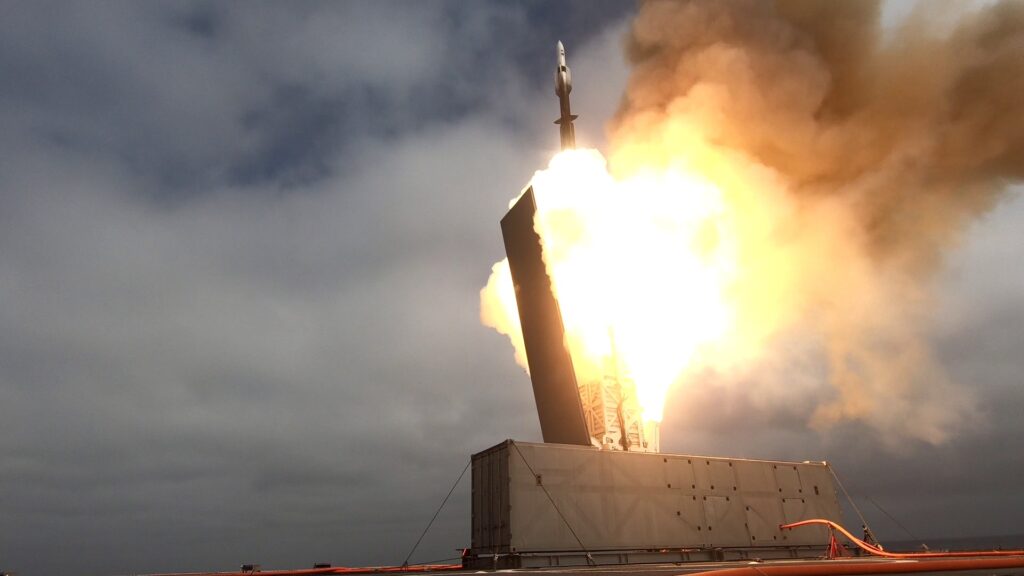
PACIFIC OCEAN (Oct. 24, 2023) The littoral combat ship USS Savannah (LCS 28) launches an SM-6 missile from a containerized launching system at a designated target during a live-fire demonstration in the eastern Pacific Ocean, Oct. 24, 2023. (U.S. Navy photo)
Initial $60 Million Award to Expand Solid Rocket Motor Production Capacity
INDIAN HEAD, MD, Dec. 3, 2024 — X-Bow Systems Inc (X-Bow), a leading non-traditional producer of advanced solid rocket motors (SRMs) and defense technologies, and Naval Surface Warfare Center Indian Head Division (NSWC IHD) today announced five contracts to-date totaling $60 million for phase 1 design, development, and long-lead procurement to advance the readiness and capacity of the energetics industrial base. The contracts have a period of performance of up to two years.
X-Bow is working several OTA efforts as a key partner to NSWC IHD focused on modernizing and automating key facilities and capabilities related to SRM production. As part of the U.S. Navy’s $2.7 billion 15-year modernization plan for NSWC IHD (a piece of the Department of Defense’s national defense strategy), this work will help unlock, expand and modernize the nation’s energetics manufacturing capabilities while strengthening the Organic Industrial Base’s ability to meet solid propellant rocket motor propulsion needs.
Under this initial phase, X-Bow will design, develop, and procure long-lead equipment to modernize and automate several capabilities at Indian Head including inert preparation facilities, propellant casting, automated propellant ingredient feeding, live rocket motor processing, and prototype premixing and curative slurry operations.
“Ensuring our warfighters are prepared for any situation requires a robust organic industrial base,” said Jason Hundley, CEO of X-Bow Systems. “Our work to help modernize NSWC Indian Head will increase production capacity of solid rocket motors and other energetics systems to meet the growing needs of the U.S. military.”
“Partnerships such as ours with X-Bow are vital in helping us reenergize and ultimately bolster the nation’s munitions industrial base,” said Dr. Phillip J. Cole, Energetics Manufacturing Department Head of the Naval Surface Warfare Center Indian Head Division.
X-Bow has assembled a team of industry subject matter experts, each with decades of experience in all areas of SRMs, working to help unlock NSWC IHD’s latent capacity as a world-class facility for energetics processing and manufacture. X-Bow has already successfully completed several milestones, including completion of the design phase for inert preparation facility and automated propellant ingredient feeding facility on time and within budget, earning a reputation as a trusted partner for NSWC IHD.
In addition to its work at NSWC IHD, X-Bow supplies new SRMs in both strategic and tactical sizes to multiple armed services and commercial customers, while also nearing completion of the world’s most affordable production campus for SRMs coming on-line in early 2025.
The United States Navy has awarded X-Bow both the Mk 72 booster and Mk 104 dual-thrust SRM development contracts to further enhance performance and increase capacitance for the service’s Standard Missile program. The Office of the Assistant Secretary of Defense for Industrial Base Policy also selected X-Bow to provide boost propulsion for the Navy-designed hypersonic All Up Round utilized by the Navy’s Conventional Prompt Strike weapon system and the Army’s Long Range Hypersonic Weapon System.
Japan Maritime Self-Defense Force Selects SeaGuardians from GA-ASI
From General Atomics Aeronautical Systems, Inc.
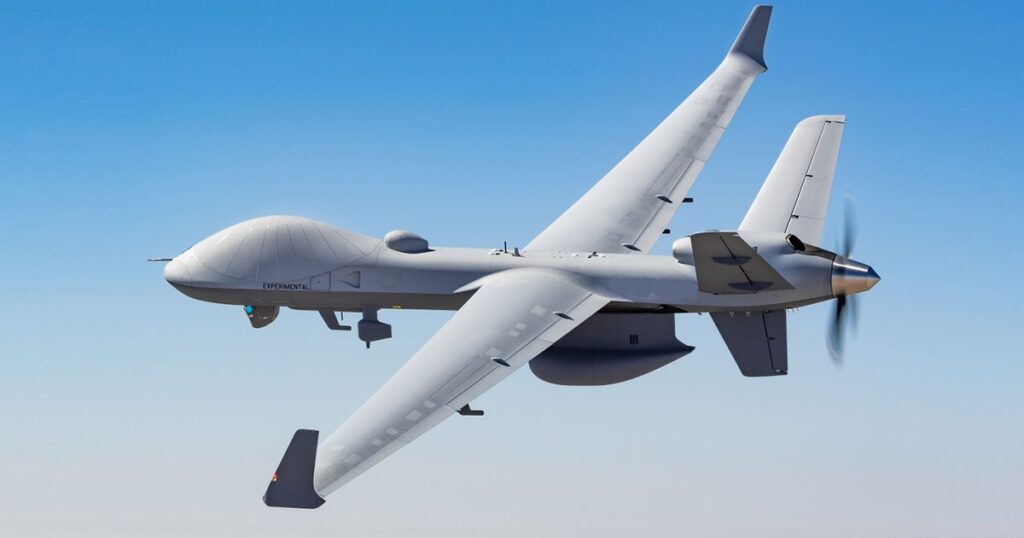
SAN DIEGO – Dec. 3, 2024 – The Japan Maritime Self-Defense Force (JMSDF) has selected the General Atomics Aeronautical Systems, Inc. (GA-ASI) SeaGuardian® Remotely Piloted Aircraft (RPA) systems for its Long Endurance Unmanned Aerial Vehicle program. This follows JMSDF use of SeaGuardian since May 2023 as part of its Medium-Altitude, Long Endurance (MALE) RPA System Trial Operations Project.
SeaGuardian has been used by JMSDF to conduct various tests including whether unmanned aircraft can supplant some of the missions currently accomplished with manned aircraft. SeaGuardian is a MALE RPA system that can fly for 24 hours or more, depending on the configuration.
GA-ASI has strengthened its Maritime Wide Area Surveillance (MWAS) for Japan with Optix+, which gathers information from the SeaGuardian sensors, as well as other data sources, displaying the full picture of surveillance information for its operator. This functionality makes it easy to task and direct its Intelligence, Surveillance and Reconnaissance (ISR) information in real time. GA-ASI’s Optix+ software suite rapidly correlates and exploits collected data into an easily shared common operational picture. Having multi-source correlated data enables automatic detection of anomalous behaviors over waters.
SeaGuardian features two multi-mode maritime surface-search radars with an Inverse Synthetic Aperture Radar (ISAR) imaging mode, an Automatic Identification System (AIS) receiver, and a High-Definition – Full-Motion Video sensor equipped with optical and infrared cameras as well as electronic intelligence receivers. This sensor suite enables real-time detection and identification of surface vessels over thousands of square nautical miles and provides automatic tracking of maritime targets and correlation of AIS transmitters with radar and electronic intelligence tracks.