Ready to Dive: ROV Pioneer Shares Seafaring Stories in New Book
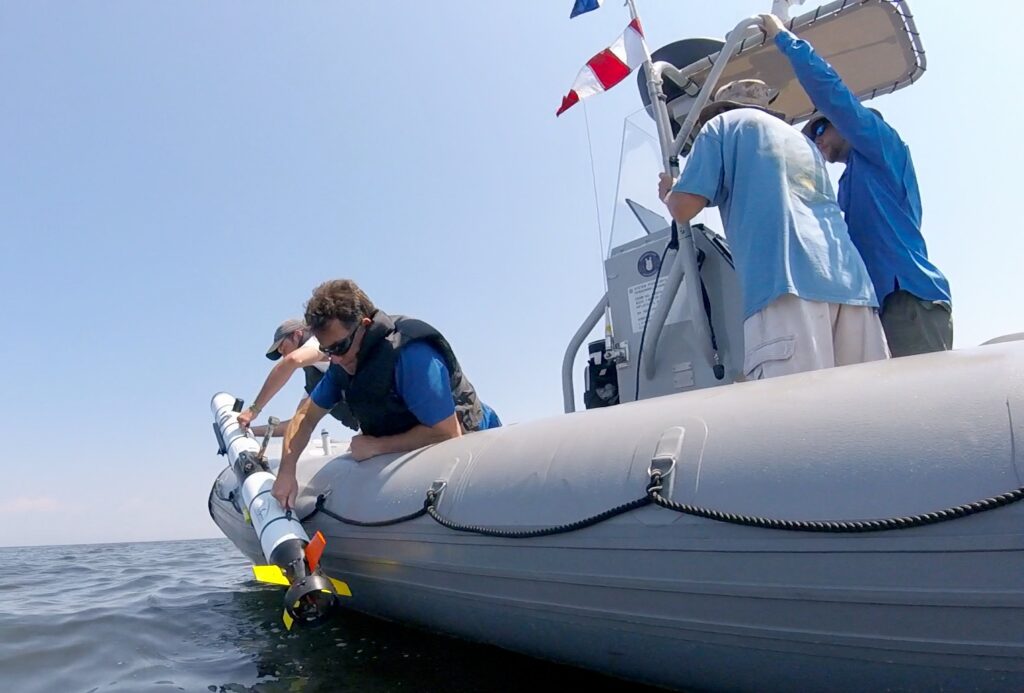
A remotely operated vehicle prepares to go on a dive. Credit: Curt Newport

Curt Newport spent his career as a member of an elite club — as an underwater salvage expert, he has participated in more than 150 undersea operations, ranging from the recovery of astronaut Gus Grissom’s Liberty Bell 7 suborbital spacecraft to salvaging Air India Flight 182, the space shuttle Challenger and even sending images back from the RMS Titanic.

After 47 years as a trailblazer for using robotics for underwater salvage, Newport retired in 2022 and is the author of a new memoir, “Ready to Dive,” about his career, published by Purdue University Press. (He has also been a race car driver and musician, but there is only so much room in the magazine.)
Underwater explorers such as Jacques Cousteau and TV shows such as “Sea Hunt” helped stoke Newport’s early interest in the undersea world. He got a job building ship fenders for $3.50 an hour, then graduated to building and maintaining saturation diving systems before deciding to attend commercial diving school in California.

When he graduated, the company Ocean Systems had purchased a remotely operated vehicle (ROV) named Scorpio One, and Newport was hired to work on that team. He worked on oilfields with ROVs, did submarine cable work for communications companies such as AT&T, “and eventually graduated up into doing deep-ocean search and recovery, mostly for the Navy,” he told Seapower. With that, he was off to the races for a career stretching nearly five decades.

Undersea Technology

Technology has long been used in deep-ocean work, from towed sonar arrays to ROVs, each with their own strengths and weaknesses.

Towed arrays or camera sleds are useful and can provide real-time data but have a sizable turning radius. “The downside of those towed systems is if you’re working in deep water you’re going to have some very long turnaround times. When you get to the end of a search line, you’re going to make a turn, and in deep water, that can take anywhere from nine to 12 hours,” he said.

ROVs are nimbler to deploy and have gotten larger and more capable over the years, being able to dive anywhere from 300 meters down to 7,000 meters (almost 23,000 feet). They have been joined by autonomous underwater vehicles that require no tether.

There are also manned submersibles, which hit the news again last summer when the Titan submersible imploded during a dive to the ruins of the Titanic. Newport has done two dives in the Russian Mir 1 manned submersible, to 4,800 meters (including a dive to a sunken ship) but now it and the Mir 2 have been decommissioned and are displayed in museums.

“Really for the deep work, the advantage of an autonomous vehicle is you don’t have those long turn times. And actually, the quality of the side-scan data is better because you’re not being towed by a ship. It’s a very stable imaging platform,” he said. “The problem is, you can’t see any of the side scan data until you’ve recovered the vehicle and downloaded the data. That’s a disadvantage. And they tend to be kind of complicated.”

In the early days, the crews spent as much time wrestling with the vehicles as they did diving, Newport said.

“When I first started out with the Scorpio One vehicle, we spent most of our time broken down as opposed to diving because they were just complicated vehicles there, it was a new technology and we had a lot of problems with them. And you still have problems with it, but they’ve gotten to be a lot more reliable,” especially with their communication systems and sensors.

“And the imaging systems were nothing like what we have now,” he said. “I mean, the first vehicle I worked with, we didn’t even have a colored camera. We had a black and white. We had one black and white SIT camera, SIT means silicon, silicon intensified target. It’s a low-light camera,” Newport said.
“And you know, nowadays vehicles will have four or five, six cameras. You got cameras all over the place. And we didn’t have that. And the manipulators we had back then were fairly crude. But, you know, for the type of salvage work we were doing, you don’t need a really sophisticated manipulator. In fact, it’s better to not have one.”
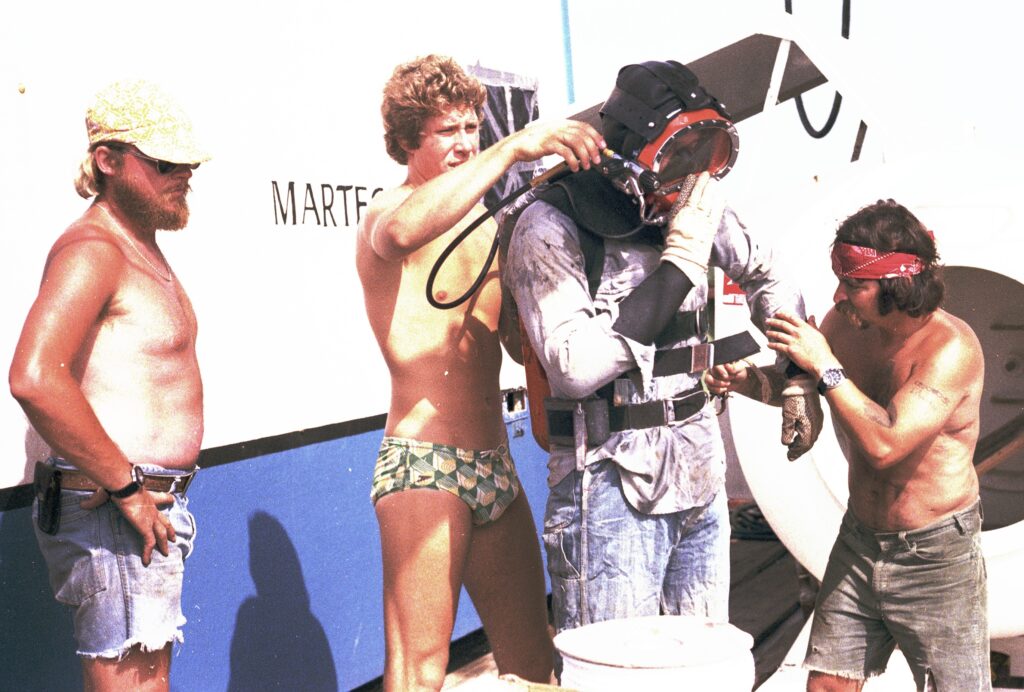
Newport suits up for a dive in 1977. Credit: Curt Newport

Now there are also sophisticated acoustic tracking systems that can operate as deep as 11,000 meters. In a nutshell, the differences between now and when Newport started in the diving business are “reliability and the ability to tell where the heck the vehicle is relative to the ship,” he said.

The Subsea Bounty

There are a great many things at the bottom of the world’s oceans waiting to be recovered or discovered.
It’s “just limitless,” he said. “When you think about human history, how long humans have been using the ocean to go from one place or another, thousands of years, and the things that are lost in deep water are generally well preserved.”

At one wooden shipwreck in 16,000 feet of water, he found silk fabric still intact and gold wrapped in newspaper that was still readable. In the deep ocean environment, “it’s only 36 degrees down there forever, pretty much. There’s no light. There’s no oxygen. So, everything is really well preserved. … Airplanes, ships, whatever, it’s all down there, but it costs money to do that stuff.”

Newport said the most interesting salvage of his career “has got to be Grissom’s Liberty Bell 7 spacecraft.”

That cramped vehicle was launched on July 21, 1961, in the early days of the space race with the Soviet Union. It conducted a short, sub-orbital flight and made Virgil “Gus” Grissom the second American to fly in space, but it started to sink after splashdown and nearly drowned him. It stayed below the waves for nearly four decades until Newport’s team found it in an expedition funded by the Discovery Channel.
“It’s one of those things that no one really expected us to ever be able to find it,” he said. “You know, the thing is only nine feet tall, six feet in diameter, is lost in deep water, about 6,000 feet. And everybody who knew anything about this said, ‘well, it’s lost and gone forever.’”

The salvage team was just starting their work “and it was the first target we dove on. It just came out of the gloom down there, there it was. So that, that was the most amazing ever,” he said.

Now that he’s retired, one thing Newport doesn’t do is spend time on boats.

“Ever since I started in this business, I have very rarely ever got on a boat for recreation. It just seems too much like work,” he said. “If you’re a bus driver, and then [on] your vacation time, you don’t go on a cross-country trip. You stay home. The same thing with boats, with ships, you know. People can go out in little liners and whatever all they want, I’ll just stay here and have my cocktail or something.”

Curt Newport, author of “Ready to Dive.” Credit: Curt Newport

Book Excerpt from ‘Ready to Dive’

On Finding the Wreck of the Challenger

I was in California visiting my brother when Challenger was lost. Like other Americans, I watched with a heavy heart as another American spacecraft was lost at sea. Unlike Liberty Bell 7, this one did not remain intact, and its location would be marked by tangled debris drifting in the Gulf Stream currents. Tons of wreckage peppered the seafloor, much like the Air India jetliner, and once again, it would be up to people like me to help find the one piece of wreckage that provides conclusive proof of the cause of the disaster. The salvage of Challenger was the largest search and recovery operation in history and required the use of a mixture of underwater technologies: side-scan sonars to map the debris field, manned submersibles to identify wreckage, and divers and remote vehicles to recover the evidence.

The task confronting the Navy was overwhelming: Search an area encompassing about 470 square nautical miles and identify all targets as being Challenger or non-Challenger, inspect and categorize the targets, then recover all wreckage that might bear evidence of the disaster. Unfortunately, the location where Challenger went down was heavily traveled by ship and air traffic and drug smugglers, and it had been the repository of a large percentage of NASA’s launch failures. There was a lot of space junk littering the seafloor.

The Navy set up their priorities as follows. First, they simply had to find the smoking gun. While it was strongly suspected that a segment of Challenger’s right-hand booster had failed, NASA had to be sure. In the tons of debris stuck on the bottom, we had to find that one piece. Second, for humanitarian purposes, the Navy had to recover the astronauts’ remains. Based on my Air India experience, I knew there would not be much left to recover. Challenger’s crew compartment had struck the ocean at over 200 miles per hour and broken up into several pieces. Third, we had to find and recover the tracking and data relay satellite located in the shuttle’s cargo bay. If it was not found, the government would have to spend millions of dollars to change satellite communication codes so the Soviets could not find the TDRS and subsequently monitor our military communications.

And finally, we found what everyone wanted to see: a 6,000-pound chunk of steel. On one edge was an opening unlike what we had seen before. It was rounded and melted, not broken and sharp. This was how Challenger had perished.


First Forward-Deployed Virginia-Class Submarine Arrives in Guam 

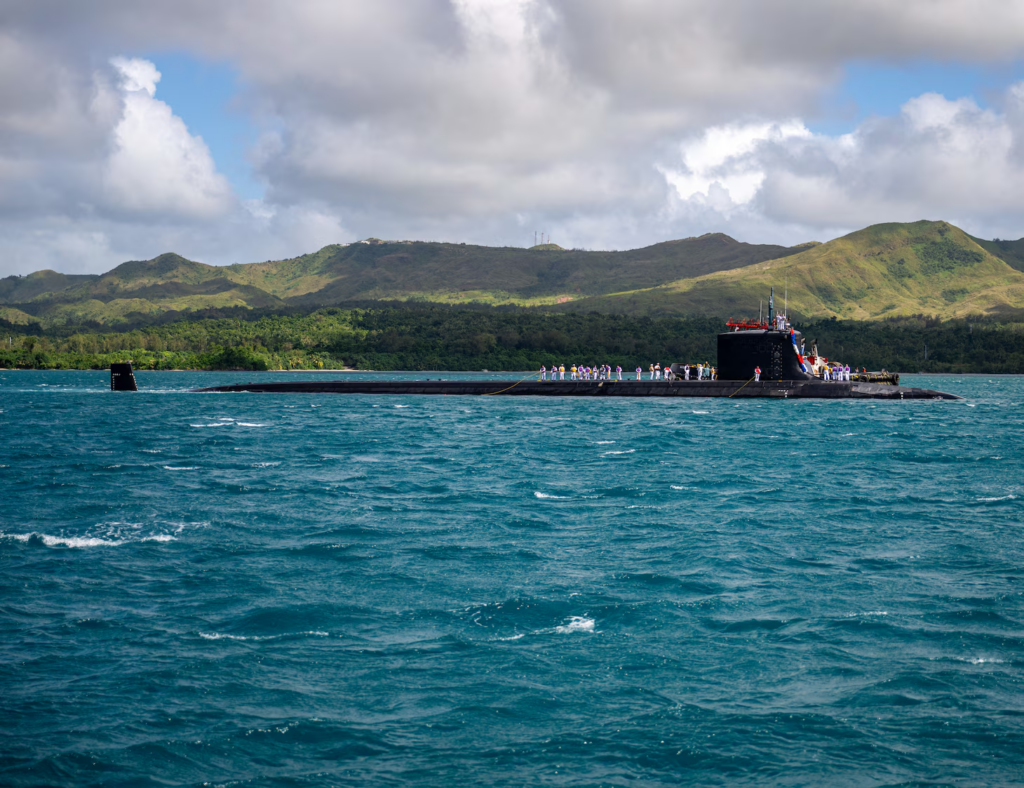
USS Minnesota (SSN 783) arrives at U.S. Naval Base Guam. (MC1 Justin Wolpert) 

From Lt. James Caliva, Nov. 26, 2024 

NAVAL BASE GUAM (Nov. 26, 2024) – The Virginia-class fast-attack submarine USS Minnesota (SSN 783) arrived to its new homeport of Naval Base Guam, Nov. 26, as part of the U.S. Navy’s strategic laydown plan for naval forces in the Indo-Pacific region. 

The Virginia-class fast attack submarine USS Minnesota (SSN 783) arrives at U.S. Naval Base Guam, Nov 26, 2024. Minnesota, the first Virginia-class fast-attack submarine to be forward deployed to Guam, joins four Los Angeles-class fast-attack submarines forward deployed in the Pacific. Regarded as apex predators of the sea, Guam’s fast-attack submarines serve at the tip of the spear, helping to reaffirm the submarine forces’ forward-deployed presence in support of a free and open Indo-Pacific. (U.S. Navy photo by Mass Communication Specialist 1st Class Justin Wolpert) 

 
Minnesota arrives as the first Virginia-class fast-attack submarine to be forward deployed to Guam. 
 
“The entire crew is thrilled to be in Guam,” said Cmdr. Isaac Pelt, commanding officer, USS Minnesota. “Minnesota is composed of exemplary individuals who represent some of our brightest Sailors in the Fleet. They’re eager to get out into the local community and stand ready to contribute to our strategic objectives and maintain warfighting readiness in the Pacific.” 
 
Commissioned Sept. 7, 2013, in Norfolk, Virginia, Minnesota was the 10th Virginia-class submarine commissioned for service. Virginia-class submarines are the Navy’s next-generation attack submarines and are set to replace Los Angeles-class submarines as they retire. Minnesota has a crew of approximately 140 Sailors and is capable of supporting various missions, including anti-submarine warfare, anti-surface ship warfare, strike warfare, and intelligence, surveillance, and reconnaissance. 
 
The security environment in the Indo-Pacific requires that the U.S. Navy station the most capable units forward. This posture allows flexibility for maritime and joint force operations, with forward-deployed units ready to rapidly respond to deter aggression and promote a peaceful and prosperous Indo-Pacific region. 
 

“I would like to personally extend a warm welcome to the Sailors and families of Minnesota,” said Capt. Neil Steinhagen, commander, Submarine Squadron 15. “Guam serves as a strategic outpost in the Western Pacific, playing a vital role in maintaining stability across the region. With its motto, ‘From the North, Power,’ Minnesota embodies the strength and resolve that will make it an exceptional addition to our forward-deployed submarine force. Its presence will enhance our operational capabilities and further strengthen deterrence efforts throughout the Indo-Pacific. We are excited to have Minnesota as part of the team and look forward to the great accomplishments it will achieve while deployed forward.” 
 
Minnesota joins four Los Angeles-class fast-attack submarines forward deployed in the Pacific. Regarded as apex predators of the sea, Guam’s fast-attack submarines serve at the tip of the spear, helping to reaffirm the submarine forces’ forward-deployed presence in support of a free and open Indo-Pacific. 
 
For more information about Commander, Submarine Squadron 15, visit www.csp.navy.mil/css15/ 


Coast Guard Heavy Icebreaker Departs Seattle for Deployment Bound for Antarctica 

U.S. Coast Guard Cutter Polar Star (WAGB 10) transits across Elliott Bay after departing Coast Guard Base Seattle, Washington, Nov. 22, 2024. (U.S. Coast Guard photo by Petty Officer 2nd Class Briana Carter)

From U.S. Coast Guard Pacific Area, Nov. 26, 2024 

SEATTLE – The U.S. Coast Guard Cutter Polar Star (WAGB 10) and crew departed Seattle, Friday, beginning their deployment to Antarctica in support of Operation Deep Freeze.  

Operation Deep Freeze (ODF) is an annual joint military mission to resupply the United States Antarctic stations in support of the National Science Foundation (NSF), the lead agency for the United States Antarctic Program (USAP). This marks the 28th year that the Polar Star has supported ODF.  

Each year, the Polar Star breaks a navigable channel through the ice, allowing fuel and supply ships to reach McMurdo Station, which is the largest Antarctic station and the logistics hub of the USAP.  

“I am thrilled to lead Polar Star back to Antarctica for ODF 25. After months of pre-deployment preparation and working together through various challenges, the cutter and crew are ready to embark on this enduring and critical mission,” said Capt. Jeff Rasnake, Polar Star’s commanding officer. “I couldn’t be prouder of this crew’s tremendous dedication and teamwork. They have met or exceeded all my expectations in the maintenance and training phases and continue to push themselves to build upon those successes as we now shift into the cutter’s operations phase.”   

The U.S. Coast Guard is recapitalizing its polar icebreaker fleet to ensure continued access to the polar regions and to protect the country’s economic, environmental, and national security interests in the high latitudes. Each year, the Polar Star’s crew commits significant time and effort preparing the 48-year-old cutter for the annual deployment in support of ODF. This year the Polar Star completed the fourth of five planned phases of the service life extension project (SLEP).  

The U.S. Coast Guard provides direct logistical support to the NSF and maintains a regional presence that preserves Antarctica as a scientific refuge working under Joint Task Force-Support Forces Antarctica (JTF-SFA). JTF-SFA provides Department of Defense support to the NSF and the USAP through ODF. Every year, a joint and total force team works together to complete a successful ODF season. Active, Guard, Reserve service members from the U.S. Air Force, Army, Coast Guard, and Navy work together to forge a strong JTF-SFA that continues the proud tradition of U.S. military support to the USAP.   


USCGC Munro Returns From Counter-Drug Patrol, $440M Worth of Cocaine Interdicted 

U.S. Coast Guardsmen assist in mooring evolution as the U.S. Coast Guard Cutter Munro (WSML 755) returns home to Alameda, California, Nov. 25, 2024. (U.S. Coast Guard photo by Petty Officer 3rd Class Danish Khan)

From U.S. Coast Guard Pacific Area, Nov. 26, 2024 

ALAMEDA, Calif. — The crew aboard the U.S. Coast Guard Cutter Munro (WMSL 755) returned home to Alameda, Monday following a two-month counter-drug patrol in international waters off the coasts of Central and South America in the Eastern Pacific Ocean.  

The 150-member crew deployed to the region, where they interdicted 11 vessels suspected of narcotics smuggling. The vessel interdictions resulted in the seizure of more than 30,000 pounds of cocaine, worth an estimated $440 million in wholesale value.  

Before returning to Alameda, Munro conducted a bulk offload of the illicit narcotics in San Diego to facilitate the safe destruction of the narcotics in cooperation with federal agents from the Drug Enforcement Administration.   

Munro’s crew conducted more than 50 hours of flight evolutions with an embarked helicopter from the U.S. Coast Guard’s Helicopter Interdiction Tactical Squadron (HITRON). The HITRON helicopter enhanced Munro’s effectiveness by providing airborne use-of-force capabilities in the maritime domain, directly supporting the successful interdiction of six non-compliant vessels during the patrol. Munro’s crew was augmented during the patrol with servicemembers from the Tactical Law Enforcement Team South. These teams are a part of the U.S. Coast Guard’s elite maritime law enforcement units which deploy globally and are primarily focused on conducting high-risk law enforcement operations at sea, including counter-narcotic operations and interdicting drug smugglers.  

Additionally, Munro responded to a search and rescue case 140 miles offshore of Humboldt Bay, ensuring the safety of two Canadian citizens and their sailing vessel through a rescue and assistance mission to restore the operability of the vessel’s steering system and enable its safe transit to port for permanent repairs.   

  “Munro’s crew demonstrated exceptional teamwork and persistence during an extraordinary patrol,” said Capt. James O’Mara, Munro’s commanding officer. “We transited the entirety of the Joint Interagency Task Force South area of operations and brought every capability to bear in order to prevent dangerous narcotics from reaching our shores. These cases happen day, night, and in a variety of weather conditions – it is very dynamic out there. But Munro’s crew constantly adapted, rehearsed our tactics, and stayed laser focused to get the job done. We know that a key ingredient to Munro’s success and resilience is the unwavering support from our families and loved ones back home. Thanks – your support keeps us going.”  

Munro is one of four Legend-class national security cutters (NSC) homeported on Base Alameda. There are currently ten commissioned NSC’s currently operating in the fleet. NSCs feature advanced command, control, communications, computers, cyber, intelligence, surveillance and reconnaissance equipment; aviation support facilities; stern cutter boat launch; and long-endurance station keeping. The 418-foot cutters serve as operational-level headquarters for complex law enforcement, defense and national security missions involving the Coast Guard and multiple partner agencies.  


USS Indianapolis returns from four-fleet deployment 

NAVAL STATION MAYPORT — The Freedom-variant littoral combat ship USS Indianapolis (LCS 17) returned to Naval Station Mayport, Fla. following a deployment to the U.S. 5th Fleet, 6th Fleet, and 2nd Fleet areas of operations, Nov. 26. 

Indianapolis deployed in March 2024 as a dual-crewed command, conducting two exchanges of command between LCS Crew 112 and LCS Crew 118. This final deployment marked LCS Crew 118’s second 5th Fleet deployment in 2024 and the consolidation of the crews into a single command. LCS Crew 118 deployed on May 5, 2024 to the U.S. 5th Fleet operating area to support the U.S. Navy’s mission to promote freedom of navigation and the rules-based international order. 

“What this team of amazing Americans achieved over the course of this deployment will pay dividends in the maintenance planning and tactics development arenas for years to come,” said Cmdr. Matthew Arndt, USS Indianapolis’ Commanding Officer. “As the workhorse of the Arabian Gulf, Indy executed the lower tier missions necessary to maintaining good diplomatic relations in the Middle East which allowed Standard Missile shooters to reposition to deal with bad actors in the Red Sea. I think it’s pretty special that we were able to provide the 5th Fleet commander with more tools and options to aid in the free flow of commerce through a contested waterway.” 

Shortly after arriving at Naval Support Activity Bahrain, LCS crews 118 and 112 merged and integrated a detachment from the “High Rollers” of Helicopter Sea Combat Squadron (HSC) 28 into the crew. Indianapolis and HSC 28 supported operations as part of Task Force 52. The ship also worked with Task Force 59, the Navy’s first unmanned and artificial intelligence development force, to validate crewless technology and mesh networks. Indianapolis also supported other interoperability initiatives and aviation training events with regional partners. 

“This deployment clearly marks a significant chapter in the ship’s history and serves as proof the LCS class is capable of fulfilling operational and strategic goals across all theater of operations, but most of all, this deployment records the mountainous amount of teamwork, dedication and grit from our Sailors and their friends and families who support them – without them none of this would be possible,” said Cmdr. William Green, USS Indianapolis’ Executive Officer. Indianapolis validated the littoral combat ship concept both operationally and through administrative successes. During the final months of an 18-month deployment, Indianapolis completed a Mobility Aviation Reset, two Initial Ship Aviation Team Training events to support HSC 28.7 and HSC 28.9, certified in Explosive Safety and Cyber Security, and demonstrated navigational excellence during a mobility navigation assessment. 

The ship’s deployed maintenance and repair experiences were supported by Forward Deployed Regional Maintenance Center (FDRMC) and included maintenance availabilities in locations throughout the Middle East region, and Rijeka, Croatia. 

“The resilience and flawless performance of this crew during this historic deployment have exemplified the highest standards of naval excellence,” said Command Senior Chief Darrell Shelton, USS Indianapolis’ Senior Enlisted Leader. “Their unwavering dedication and skill ensured mission success and strengthened our maritime capabilities.” 

LCS is a fast, agile, mission-focused platform designed for operation in near-shore environments yet capable of open-ocean operation. It is designed to defeat asymmetric “anti-access” threats and can support forward presence, maritime security, sea control, and deterrence. 

U.S. 5th Fleet area of operations encompasses about 2.5 million square miles of water area and includes the Arabian Gulf, Gulf of Oman, Red Sea, and parts of the Indian Ocean. The expanse comprises 20 countries and includes three critical choke points at the Strait of Hormuz, the Suez Canal and the Strait of Bab al Mandeb at the southern tip of Yemen. 

U.S. Sixth Fleet, headquartered in Naples, Italy, conducts the full spectrum of joint and naval operations, often in concert with allied and interagency partners to advance U.S. national interests, security and stability in Europe and Africa. 

U.S. 2nd Fleet, reestablished in 2018 in response to the changing global security environment, develops and employs maritime forces ready to fight across multiple domains in the Atlantic and Arctic to ensure access, deter aggression, and defend U.S., allied, and partner interests. 


Truman Strike Group Concludes High-North Operations with Strait of Gibraltar Transit 

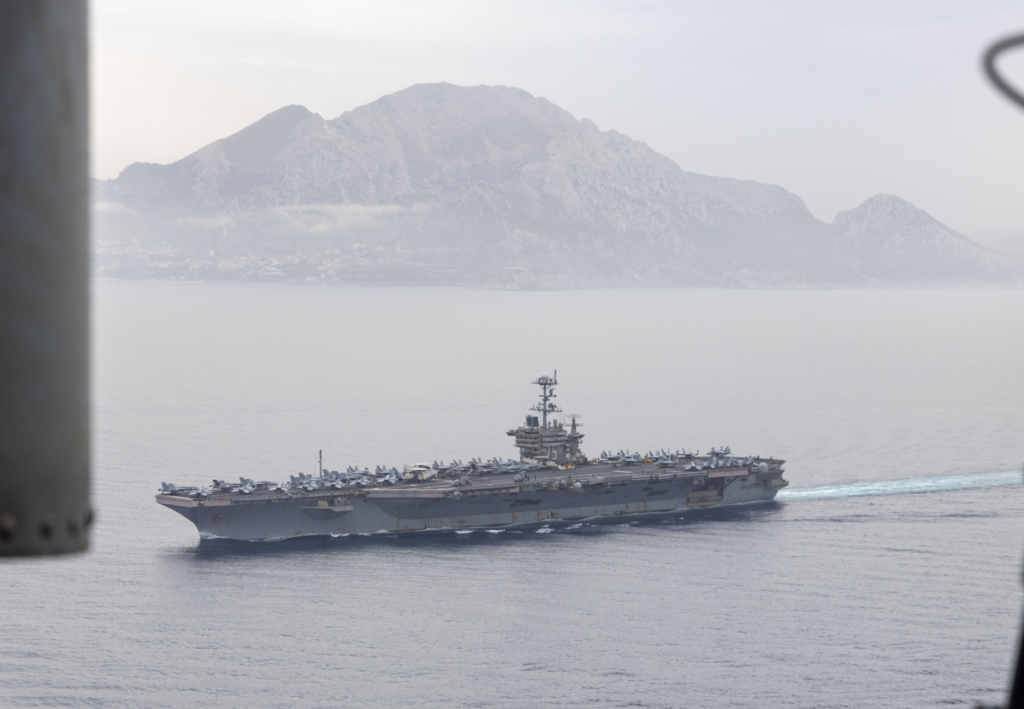
Caption:  USS Harry S. Truman (CVN 75) transits the Strait of Gibraltar. (MC3 Logan McGuire) 

From Story by Lt.Cmdr. Courtney Callaghan, Lt. Brandon Dedmon and Lt. Camila Healey, Nov. 27, 2024 

MEDITERRANEAN SEA – The Harry S. Truman Carrier Strike Group (HSTCSG), including Italian Navy Carlo Bergamini-class frigate Carabiniere (F 593), and the Spanish Navy Álvaro de Bazán-class frigate Méndez Núñez (F-104) transited the Strait of Gibraltar for the Mediterranean Sea, Nov. 25, following over a month of operations with Allies and partners in the North and Norwegian Seas. 

 “Two months into deployment, and the Harry S. Truman Carrier Strike Group has experienced an unprecedented amount of operations with our NATO Allies and partners,” said Rear Adm. Sean Bailey, commander of the HSTCSG. “It is truly impressive to watch the seamless integration of the armed forces of so many countries and multitude of ships and aircraft all operating as a unified fighting force. It is an absolute testament to the strength and versatility of the NATO Alliance.” 
 
HSTCSG arrived in the North Sea on Oct. 15, immediately engaging with Allies and partners, starting with the Portuguese Navy Frigate NRP Francisco De Almeida (F 333) and Royal Norwegian Navy replenishment oiler HNoMS Maud (A-530). Almeida seamlessly integrated into the carrier strike group as an immediate force multiplier, where the ship served as a horizon reference unit for the carrier and conducted Helicopter, Visit, Board, Search, and Seizure (HVBSS) operations. 
 
During that time, Maud provided the needed fuel for the Arleigh Burke-class guided-missile destroyers USS Jason Dunham (DDG 109) and USS Stout (DDG 55) to detach as a surface action group to conduct maritime operations in the Barents Sea, where the ships enhanced domain awareness, deterred adversaries, and practiced campaigning in the Arctic. On the way back, both ships pulled into Tromsø, Norway, for fuel, supplies, and rest and relaxation for the crew. 
 
“It is important that U.S. naval forces demonstrate a calibrated presence in the Arctic by conducting routine operations in the region,” said Cmdr. Desmond Walker, commander officer of Stout. “We must take on all opportunities to enhance our capabilities toward potential campaigns around the world.” 
 
In a display of transatlantic military cooperation and power projection, HSTCSG units conducted dual carrier strike group operations with the United Kingdom Royal Navy’s aircraft carrier HMS Prince of Wales (R09) for the 7-day NATO-led maritime vigilance activity Neptune Strike (NEST) 24.2, Oct. 24-31. The two carrier strike groups transferred operational authorities to NATO to conduct coordinated surface and air operations, including complex air defense, anti-submarine warfare, and maritime strike operations. 
 
Vigilance activity provides an example of the long-standing strategic partnership between the United States and its NATO Allies over the last 80 years. Today, upholding the international, rules-based order is more important than ever. Harry S. Truman participated in the first Neptune Strike vigilance activity, then called Neptune Shield, in Feb. 2022, shortly after Russia’s invasion of Ukraine; marking the first time the United States placed a carrier strike group under NATO’s control since the Cold War. 
 
Before and during NEST, Carrier Air Wing (CVW) 1 squadrons flew a multitude of missions with several countries to include Czech and Swedish Air Force JAS-39 Gripens, Danish F-16 Fighting Falcons, Royal Navy and Royal Norwegian Air Force F-35 Joint Strike Fighters, Finish F/A-18C Hornets. The ability to plan and fly tactical missions with Allies and partners explicitly demonstrates NATO’s combat credibility in the air, expanding the striking range of any carrier strike group. 
 
Following NEST, the strike group disaggregated to conduct port visits across the region. Harry S. Truman and Carabiniere navigated the Oslofjord with the Norwegian Fridtjof Nansen-class frigate Thor Heyerdahl (F 314) to visit Oslo, Norway. At the same time, the Ticonderoga-class guided-missile cruiser USS Gettysburg went to Helsinki, Finland, and Stout went to Gothenburg, Sweden. 
 
While at anchor in Norway, Harry S. Truman, Vice Adm. Jeffrey Anderson, commander of U.S. 6th Fleet, and Chargé d’Affaires a.i. Eric Meyer of the U.S. Embassy to Norway, hosted a 700-person reception featuring Prime Minister Jonas Gahr Støre as the distinguished visitor. Gettysburg and Stout also hosted receptions and office calls with host nation civilian and military leaders. 
 
At the conclusion of their port visit, Harry S. Truman and the Norwegian Fridtjof Nansen-class frigate Roald Amundsen (F 311) headed north into the Norwegian Sea to operate above the Arctic Circle, echoing the 2024 Department of Defense Arctic Strategy’s “Enhance, Engage, and Exercise” tenants by enhancing our ability to campaign in the Arctic, engaging with Allies, and exercising with calibrated presence. 
 
“Operating in the Arctic requires comprehensive coordination and adaptability,” said Capt. Dave Snowden, commanding officer, USS Harry S. Truman. “Our ship is no stranger to these waters and, while these conditions are a proving ground that tested the ship, crew, and air wing, Team Truman and Tarbox demonstrated that we are capable of operating anywhere and anytime as a combat ready team.” 
 
In an increasingly dynamic region, Harry S. Truman’s integration and collaboration with Allies and partners is a testament to NATO’s combined force interoperability, combat-credible collective defense, and flexibility of threat response in a region seeing increased strategic importance due to climate shifts and global competition. 
 
The carrier strike group consists of the flagship USS Harry S. Truman (CVN 75); Carrier Air Wing (CVW) 1 with nine embarked aviation squadrons; staffs from CSG-8, CVW-1, and Destroyer Squadron (DESRON) 28; the Ticonderoga-class guided-missile cruiser USS Gettysburg (CG 64); and two Arleigh Burke-class guided-missile destroyers, USS Stout (DDG 55) and USS Jason Dunham (DDG 109). 
 
HSTCSG’s mission is to conduct prompt and sustained combat operations at sea and remain the cornerstone of the Navy’s forward presence through sea control and power projection capabilities. You can find them on DVIDS at https://www.dvidshub.net/unit/CVN75. 


USS Beloit Commissioned

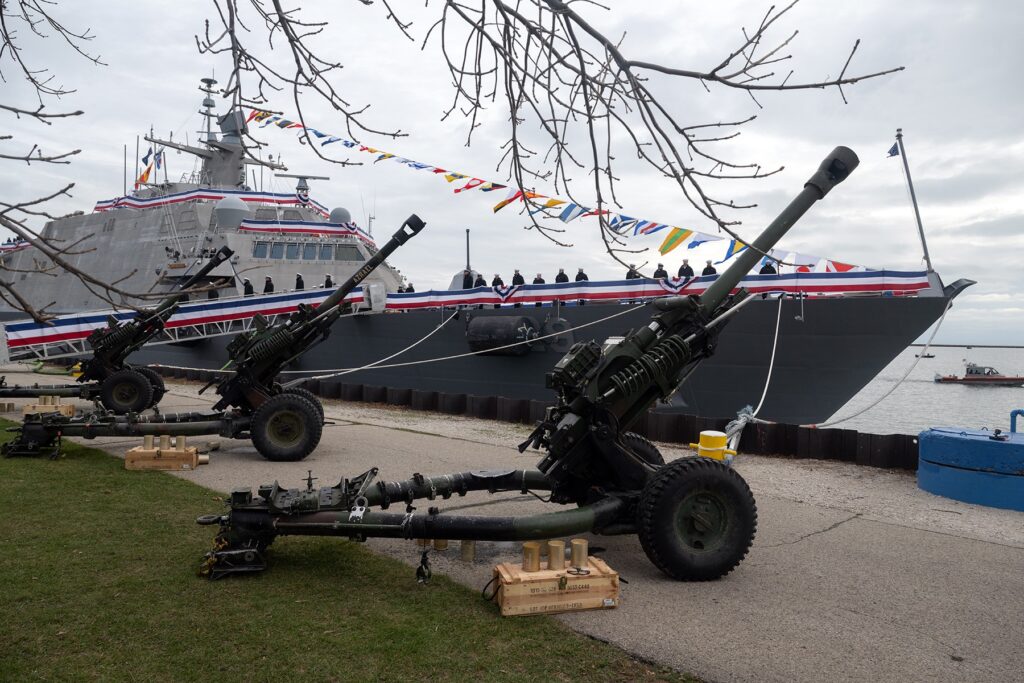
Sailors aboard USS Beloit (LCS 29) man the ship and bring it to life during its commissioning ceremony in Milwaukee. (EJ Hersom) 

From Lt. Ayifa Brooks, Nov. 25, 2024 

MILWAUKEE, Wis. — The U.S. Navy commissioned its newest Freedom-variant littoral combat ship USS Beloit (LCS 29) November 23, 2024, in Milwaukee, Wisconsin. 

“I take great pride in representing Wisconsin’s manufacturing economy and the workers who power it,” said the Honorable Tammy Baldwin, U.S. Senator, State of Wisconsin. “When it comes to our ship building industry our workers have helped sustain America’s security for our national defense for generations. We boast a successful history of building ships and the city of Beloit has long played an essential role in that.” 
 
Guest speakers for the event also included the Honorable Tony Evers, Governor of Wisconsin, who delivered the commissioning ceremony’s principal address. Remarks were also provided by Adm. James Kilby, Vice Chief of Naval Operations; the Honorable Gwen Moore, U.S. Representative, Wisconsin’s Fourth District; Secretary of the Navy, the Honorable Carlos Del Toro; and Mr. Ali Ruwaih, Vice President, Lockheed Martin Rotary and Mission Systems, Small Combatants and Ships. 
 
“Today we commission the Navy’s newest freedom-class littoral combat ship, the first ever to bear the name of the best city in Wisconsin, USS Beloit.” said Kilby. “Beloit will play a key role in implementing the Chief of Naval Operations’ strategy as a platform with a crew ready with the right capabilities, weapons, sustainment, and training deterring our adversaries and ready to fight.” 
 
Beloit completed 19 certifications in just seven weeks after moving onboard and successfully passed each certification the first go round, scoring above the Navy’s standards for the LCS community including completing their Light off Assessment (LOA) in less than a week with flying colors. 
 
“I would like to thank our employees and our industry partners for their resiliency and dedication to Littoral Combat Ship Freedom Class who demonstrated exceptional commitment and delivered outstanding results,” said Ruwaih. “The USS Beloit has been designed to protect and guide the crew as they carry forth the ship’s motto Forward for Freedom. I could not think of a more fitting description of an LCS Sailor who displays the most versatile set of skills to help ensure freedom of the seas.” 
 
The audience was honored with the presence of veterans from World War II, the Korean War, Vietnam, the Iraqi war and many other significant battles. The Sailors, family and friends and community of Beloit were reminded of the profound responsibility that comes with such a legacy that the officers and crew of Beloit will undoubtedly uphold with honor, integrity and valor. 
 
“Today is about the commissioning of a ship. But it’s also a ceremony about a calling, a calling to serve and a calling to sacrifice,” said Moore. “I am proud that this ship is being commissioned in the state where it was built. It will be the first commissioned ship named after Beloit, Wisconsin in honor of that city’s contributions to the US Navy, especially the ship engines built in that city.” 
 
The ship’s sponsor, retired Army Maj. Gen. Marcia M. Anderson, gave the first order to “man our ship and bring her to life.” 
 
“The commissioning of the USS Beloit is not merely a naval event – it is a celebration of American industrial might, a testament to the enduring spirit of the American people, and a tribute to the city of Beloit and the state of Wisconsin,” said Del Toro. “Everywhere you go, you will sail Forward for Freedom – serving as a beacon of our nation’s enduring commitment to independence and security for all and a reminder of the many thousands of Sailors and Marines who have gone before us.” 
 
“We are making history! Our Badger crew and the city of Beloit have worked and waited for this moment.” said Kissinger. “We are incredibly blessed and humbled to celebrate the commissioning of the USS Beloit with the cities of Milwaukee and celebrating Beloit. Forward to Freedom!” 
 
LCS class ships like Beloit will be equipped with Over the Horizon – Weapons System (OTH-WS) Naval Strike Missile (NSM). The OTH NSM provides the U.S. and its allies with long range anti-surface offensive strike capability as well as increased coastline defense, deterrence, and interoperability. This will include the MK 70 Payload Delivery System (PDS) which uses combat proven MK 41 Vertical Launching System (VLS) technology to provide mid-range precision fires capabilities. The MK 70 enables rapid deployment of offensive capability to non-traditional platforms and locations. 
 
The ceremony featured early successes, future developments, milestones, fair winds and following seas while showcasing a weeklong series of events celebrating the ship, its crew, community and namesake city. 
 
Beloit is the 15th Freedom-variant littoral combat ship (LCS) commissioned in the United States Navy and the first to be commissioned in naval service to bear this namesake. 
 
USS Beloit (LCS 29) was built by the Lockheed Martin and Fincantieri Marinette Marine in Marinette, Wisconsin, the named on Feb. 10, 2018, and authorized on Oct. 10, 2018. It was christened May 7, 2022, and completed acceptance trials the following year. The ship was delivered to the U.S. Navy on Sept. 30, 2024. 
 
LCS is a fast, agile, mission-focused platform designed for operation in near-shore environments yet capable of open-ocean operation. It is designed to defeat asymmetric “anti-access” threats such as mines, quiet diesel submarines and fast surface craft. They are capable of supporting forward presence, maritime security, sea control, and deterrence. 
 
USS Beloit will be homeported at Naval Station Mayport, Florida. 
 
The mission of CNSP is to man, train, and equip the Surface Force to provide fleet commanders with credible naval power to control the sea and project power ashore. 
 
For more news from Naval Surface Forces, visit DVIDS – Commander, Naval Surface Force, U.S. Pacific Fleet, and Commander, Naval Surface Force, U.S. Pacific Fleet. 


USS Boxer and 15th Marine Expeditionary Unit Return Home After Indo-Pacific Deployment 

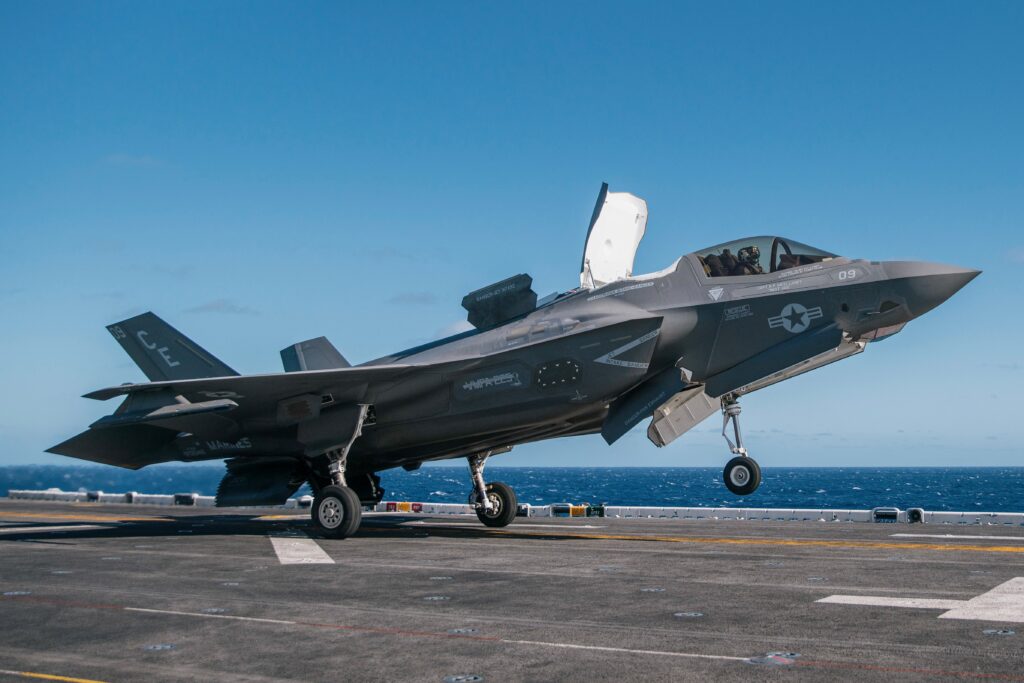
An F-35B Lightning II attached to VMFA-225 taxis before take-off from USS Boxer (LHD 4) in the Pacific Ocean. (Sgt. Amelia Kang) 

From U.S. Third Fleet Public Affairs, Nov. 25 2024 

SAN DIEGO – Sailors assigned to the Wasp-class amphibious assault ship USS Boxer (LHD 4) and embarked elements of the 15th Marine Expeditionary Unit (MEU) returned to homeport in San Diego and Camp Pendleton, this week after a deployment to the U.S. 7th and 3rd Fleet areas of operations. 

As part of the Boxer Amphibious Ready Group and the 15th MEU (ARG-MEU), more than 2,500 Sailors and Marines participated in a wide range of joint and combined exercises and provided foreign disaster support, showcasing the ready and responsive combined-arms team of the Navy and Marine Corps.

“The tactical expertise, professionalism, and stealth of the Sailors and Marines who make up our amphibious force team is unmatched, and that was proven time and time again throughout our deployment to the 7th Fleet area of operations,” said U.S. Navy Capt. Tate Robinson, commodore of Amphibious Squadron (PHIBRON) 5. “From exercising and training alongside our allies and partners to supporting foreign disaster response missions, our Navy and Marine Corps team demonstrated the true flexibility and maneuverability of the ARG-MEU construct, and I could not be more honored to serve alongside each and every member of this team.” 
 
During deployment, Boxer and the 15th MEU participated in exercise Ssang Yong. The exercise strengthened the Republic of Korea-U.S. alliance through bilateral, joint training, contributing toward combined amphibious capability in defense of the Korean Peninsula. 
 
In September, Boxer also sailed alongside and participated in a personnel exchange with the Japan Maritime Self-Defense Force Kongo-class guided-missile destroyer JS Kongo (DDG 173) and conducted three replenishments-at-sea with the Royal New Zealand Navy’s Polar-class sustainment vessel HMNZS Aotearoa (A11) before returning to the Republic of Korea to participate in the Republic of Korea Armed Forces Day celebration. As part of the celebration, Boxer and the 15th MEU welcomed more than 245 visitors to the ship for tours, giving the Sailors and Marines an opportunity to showcase their equipment, expertise, and professionalism while building relationships with the local community. 
 
Later in September, the H-1 Helicopter detachment from Marine Medium Tiltrotor Squadron (VMM) 165, Reinforced temporarily transferred to the expeditionary sea base USS Miguel Keith (ESB 5), marking the first time a full H-1 detachment operated from this class of ship. The detachment, consisting of UH-1Y Venom and AH-1Z Viper helicopters, conducted day and night close-air support training missions with live ordnance, enhancing the capability and capacity of the MEU’s Marine Air Ground Task Force. 
 
After departing the Republic of Korea, Boxer and the 15th MEU rapidly shifted course to head to the Philippines at the direction of U.S. Secretary of Defense Lloyd Austin and U.S. Indo-Pacific Command to support U.S. Agency for International Development’s (USAID) efforts in foreign disaster response operations following Typhoon Krathon (locally know as Julian) at the request of the Philippine government. The Boxer ARG-MEU provided critical logistics support, transporting much-needed foreign disaster response supplies to remote locations in the Philippines alongside USAID, the Armed Forces of the Philippines, and personnel from I Marine Expeditionary Force’s Marine Rotational Force-Southeast Asia (MRF-SEA). The foreign disaster response mission exemplified the benefits of the unique construct of the ARG-MEU, providing commanders the flexibility to respond to crises with air and sea-based connectors, ultimately enhancing maneuverability and ability to respond whenever and wherever called upon. 
 
Following foreign disaster response in the provinces of Cagayan and Batanes, Philippines, the BOX ARG-MEU remained in the region to participate in Exercise KAMANDAG 8, an annual Philippine and U.S. Marine Corps-led exercise aimed at enhancing shared defense and humanitarian capabilities through realistic training scenarios and information exchanges. This year’s iteration included participants from Australia, France, Indonesia, Japan, Republic of Korea, Thailand, and the United Kingdom. 
 
“Together, the entire 15th MEU and the three ships of the Boxer Amphibious Ready Group have demonstrated an exceptional level of versatility, resilience, and operational capability,” said Col. Sean Dynan, commanding officer, 15th MEU. “From crisis response during foreign disaster relief to supporting 10 theater exercises, the accomplishments of our amphibious force reflect the skill, resilience, dedication and professionalism of every Marine and Sailor. I’m incredibly proud of what we’ve achieved together and the lasting impact this deployment will have on future operations in the Indo-Pacific working with our allies and partners.” 
 
Boxer is the flagship of the Boxer Amphibious Ready Group. In addition to Boxer and the 15th MEU Command Element, units assigned to the ARG-MEU during the deployment included the San Antonio-class amphibious transport dock ship USS Somerset (LPD 25), Harpers Ferry-class dock landing ship USS Harpers Ferry (LSD 49), Amphibious Squadron (PHIBRON) 5, Helicopter Sea Combat Squadron (HSC) 23, Tactical Air Control Squadron (TACRON) 11, Fleet Surgical Team (FST) 5, Assault Craft Units (ACU) 1 and 5, Beachmaster Unit (BMU) 1, Battalion Landing Team (BLT) 1/5, Combat Logistics Battalion (CLB) 15, Marine Medium Tiltrotor Squadron (VMM) (reinforced) 165, and Marine Fighter Attack Squadron (VMFA) 225 with embarked F-35B Lightning II aircraft. Harpers Ferry and Somerset returned to San Diego, Aug. 13 and Oct. 18, 2024, respectively. 
 
Throughout the deployment, Boxer executed more than 3,500 launches and recoveries of U.S. Navy and Marine Corps aircraft, completing more than 2,100 flight hours in support of the 15th MEU Air Combat Element, VMM-165 (REIN), VMFA-225, and the HSC-23 detachment. Embarked aircraft on Boxer include MH-60S Nighthawk helicopters, MV-22 Osprey tiltrotor aircraft, AH-1Z Viper helicopters, UH-1Y Venom helicopters, and F-35B Lightning II vertical and/or short take-off and landing aircraft. 
 
Boxer’s air department team received more than 350 pallets of food, stores, and equipment via vertical replenishment (VERTREP) and over 1 million gallons of JP-5 via underway replenishment (UNREP) and in port replenishment. Additionally, the Amphibious Air Traffic Control Center (AATCC) conducted more than 500 instrument approaches, both day and night, while the flight deck and hangar deck conducted more than 2,100 aircraft movement evolutions and 240 aircraft elevator movements in direct support of daily operations. 
 
Boxer completed eight underway replenishments in the Indo-Pacific region with the Henry J. Kaiser-class underway replenishment oilers USNS Pecos (T-AO 197) and USNS Yukon (T-AO 202), the Lewis and Clark-class dry cargo ships USNS Carl Brashear (T-AKE 7), USNS Charles Drew (T-AKE 10) USNS Cesar Chavez (T-AKE 14) and HMNZS Aotearoa, , and USNS Yukon, transferring more than 5 million gallons of fuel over the deployment period. 
 
Boxer and the 15th MEU transited over 3,200 nautical miles in support of deterring aggression, crisis response, presence operations, and promoting a free and open Indo-Pacific. Boxer conducted routine port visits to Guam, Japan, and the Republic of Korea. 
 
The 15th MEU is based at Camp Pendleton and is part of I Marine Expeditionary Force. As a premiere global crisis response force, 15th MEU is trained and ready to operate within the U.S. Indo-Pacific Command area of responsibility with the Navy’s U.S. 3rd Fleet. 
 
Boxer is a Wasp-class amphibious assault ship homeported in San Diego. Commissioned Feb. 11, 1995, Boxer is the sixth ship to bear the name. Boxer’s crew is made up of approximately 1,200 officers and enlisted personnel and can accommodate up to 1,800 Marines. 
 
As an integral part of U.S. Pacific Fleet, Commander, U.S. 3rd Fleet operates naval forces in the Indo-Pacific and provides the realistic and relevant training necessary to execute the U.S. Navy’s timeless role across the full spectrum of military operations—from combat missions to humanitarian assistance and disaster relief. U.S. 3rd Fleet works together with our allies and partners to advance freedom of navigation, the rule of law, and other principles that underpin security for the Indo-Pacific region. 


Keel Laid for Future USS Sam Nunn

By Team Ships Strategic Operations, Nov. 22, 2024 

PASCAGOULA, Miss. – The keel for the future USS Sam Nunn (DDG 133), an Arleigh Burke-class guided-missile destroyer, was laid during a ceremony on Nov. 22 at HII’s Ingalls Shipbuilding division. 

The ship is named in honor of United States Senator Samuel Augustus Nunn Jr, who represented the state of Georigia, served as Chairman of both the United States Senate Committee on Armed Services and the Permanent Subcommittee on Investigations. 

As the living namesake, Sen. Nunn attended the keel laying ceremony alongside his daughter and ship’s sponsor, Michelle Nunn. 

A keel laying ceremony represents the joining together of the ship’s first major modular components at land level. During the ceremony, the keel is authenticated when a welder etches the initials of the ship’s sponsor into the keel plate. In addition to Ms. Nunn’s initials, Sen. Nunn’s initials were also etched into the plate. 

“The future USS Sam Nunn and all who sail aboard her will honor the legacy of Sen. Nunn and his dedication to the men and women serving our country,” said Capt. Seth Miller, DDG 51 class program manager, Program Executive Office, Ships (PEO Ships). “DDG 133 will be yet another player on the field providing the most advanced capability to our Navy and the nation. 

DDG 51 Flight III destroyers feature the AN/SPY-6(V)1 Air and Missile Defense Radar and incorporate upgrades to the electrical power and cooling capacity plus additional associated changes to provide greatly enhanced warfighting capability to the fleet. 

Future destroyers USS Ted Stevens (DDG 128), USS Jeremiah Denton (DDG 129), USS George M. Neal (DDG 131), and USS Thad Cochran (DDG 135) are also under construction at Ingalls. 

PEO Ships, one of the Department of Defense’s largest acquisition organizations, is responsible for executing the development and procurement of all destroyers, amphibious ships and craft, auxiliary ships, special mission ships, sealift ships and support ships. 


Task Group 59.1 Conducts Digital Talon 3.0

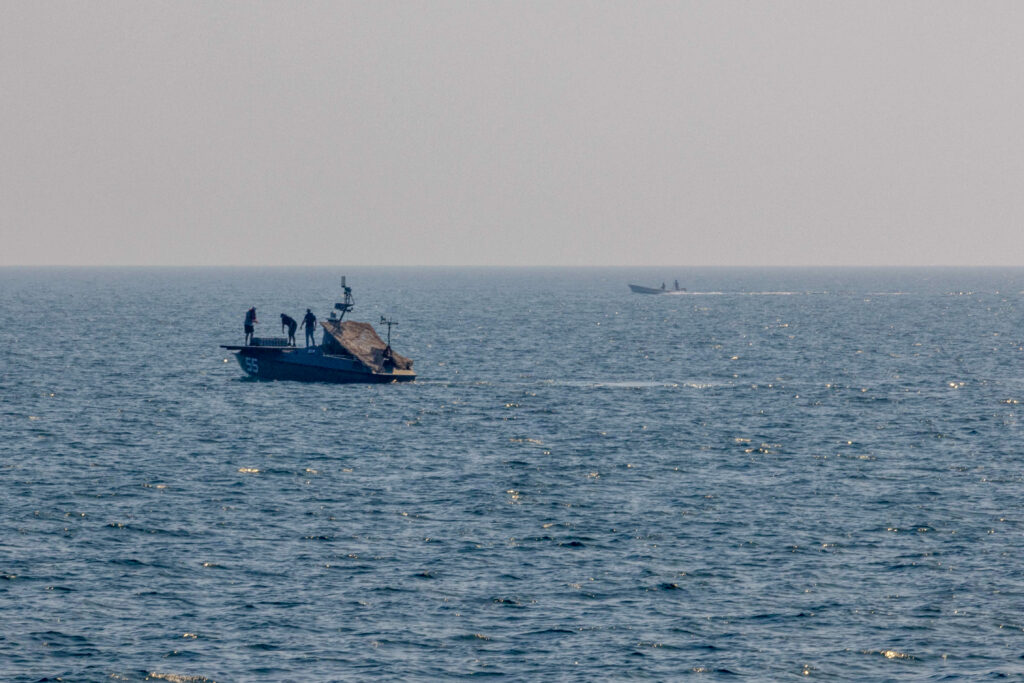
241105-A-BO737-1011 U.S. CENTRAL COMMAND AREA OF RESPONSIBILITY (Nov. 5, 2024) An unmanned aerial vehicle, operated by U.S. Naval Forces Central Command’s Task Force 59, prepares for launch on an unmanned surface vessel during exercise Digital Talon 3.0 in the U.S. Central Command area of responsibility. (Official U.S. Army photo)

By Commander U.S. Naval Forces Central Command Public Affairs | November 24, 2024 

MANAMA, Bahrain –Task Group (TG) 59.1 conducted the third iteration of exercise Digital Talon in the U.S. 5th Fleet area of operations, Nov. 5. 

Known as Digital Talon 3.0, the exercise tested the electronic and mechanical effectiveness of robotics and autonomous systems (RAS), the capabilities of over-the-horizon communications between unmanned systems, and testing aerial autonomous launch and recovery of an unmanned aerial vehicle (UAV) off a unmanned surface vessel (USV). 

Lt. Luis Echeverria, commanding officer of TG 59.1, said Digital Talon 3.0 expanded the over-the-horizon capabilities of these unmanned systems. 

“Under Digital Talon 3.0 we were able to test the remote launch of a loitering munition, and vertical take-off and landing of UAVs from a USV,” said Echeverria. “These evolutions resulted in the successful remote launch of a loitering munition at sea.” 

Commander, Special Operations Forces Central Command, the Avenger-class mine countermeasures ship USS Devastator (MCM 6) and the U.S. Coast Guard Sentinel-class fast response cutter USCGC Emlen Tunnell (WPC 1145) also participated in Digital Talon 3.0. 

The first Digital Talon exercise, held in October 2023, and the second iteration a month later, advanced lethality and kinetic applications for unmanned systems. Digital Talon 3.0 examined more advanced tactics, according to TG 59.1’s executive officer, Royal Navy Lt. Samuel Hendy. 

“As with all pioneering ventures and first-of-its-kind feats, there are plenty of challenges to overcome, lessons to be analyzed, but we are a learning organization and it all combines to further benefit 5th Fleets’ understanding and employment of this state-of-the-art warfare,” Hendy said. “If there is one thing we can take away, Digital Talon 3.0 affirms that the U.S. Navy, as well as her partner nations, remains at the forefront of cutting-edge unmanned system integration and deployment.” 

Established in January 2024, Task Group 59.1, dubbed “The Pioneers,” tests industry solutions and focuses on the operational deployment of unmanned systems teamed with manned operators to bolster maritime security across the Middle East region. TG 59.1 reports directly to Task Force 59, the Navy’s first Unmanned and Artificial Intelligence Task Force. TF 59 integrates unmanned systems and artificial intelligence with maritime operations in the U.S. 5th Fleet area of operations to support maritime security and stability in the Middle East region. It has tested, upgraded, evolved and operated with more than 23 different unmanned systems. 

U.S. Naval Forces Central Command/U.S. 5th Fleet’s area of operations encompasses about 2.5 million square miles of water area and includes the Arabian Gulf, Red Sea, Gulf of Oman, Gulf of Aden, Arabian Sea and parts of the Indian Ocean. This expanse, comprising 21 nations, includes three critical choke points at the Strait of Hormuz, the Suez Canal and the Strait of Bab al Mandeb.