Coast Guard Cutter Valiant Returns Home After 46-Day Patrol in the Windward Passage

U.S. Coast Guard Cutter Valiant (WMEC 621) and French Navy Frigate FS Ventôse (F733) conduct joint exercises at sea, Sept. 29, 2024, while underway in the Windward Passage. The crew of Valiant conducted a 49-day migrant interdiction operations patrol in the region to protect life at sea and enforce U.S. maritime law. (Photo courtesy of FS Ventôse) 

Nov. 22, 2024 

From Coast Guard 7th District, Nov. 22, 2024 

NAVAL STATION MAYPORT, Fla. — The crew of Coast Guard Cutter Valiant (WMEC 621) returned to their home port at Naval Station Mayport, Nov. 7, following a 49-day migrant interdiction operations patrol in the Windward Passage. 

Valiant’s crew deployed in support of Homeland Security Task Force – Southeast (HSTF-SE) and Operation Vigilant Sentry (OVS) while operating in the Seventh Coast Guard District’s area of responsibility. Throughout the patrol, the crew of Valiant conducted maritime safety and security missions to protect life at sea and enforce U.S. maritime law. 

While at sea, Valiant rendezvoused with French Navy Frigate FS Ventôse (F733) during the vessels’ independent patrols off coastal Haiti, where the two crews conducted North Atlantic Treaty Organization (NATO) exercises. Valiant’s crew applied cutter refueling at sea techniques and exercised NATO code signaling with their French counterparts. Valiant’s small boat team received the unique opportunity to perform small-boat operations with a French warship. And Ventôse embarked a team from Valiant for a simulated boarding, where Coast Guard members shared techniques, procedures and best practices with their French counterparts. 

International professional exchanges at sea such as these are vital for strengthening partnerships between nations, clearing the path for joint operations where shared missions, such as search and rescue and maritime drug interdiction, overlap. 

Additionally, the crew of Valiant provided care for 363 Haitian migrants and conducted their safe repatriation home. Valiant’s crew also transferred nearly 1,000 pounds of illegal narcotics and 14 suspected drug traffickers to proper authorities. 

HSTF-SE serves as the Department of Homeland Security lead for operational and tactical planning, command and control, and acts as a standing organization to interdict unlawful maritime migration attempts with federal, state and local partners. HSTF-SE continues to enhance enforcement efforts in support of OVS, which is the 2004 DHS plan to respond to mass maritime migration in the Caribbean Sea and the Florida Straits. 

Valiant is a multi-mission, 210-foot, Reliance-class medium endurance cutter. Its primary missions include search and rescue, maritime law enforcement, marine environmental protection, homeland security and national defense operations. 

For information on how to join the U.S. Coast Guard, visit www.GoCoastGuard.com to learn more about active duty and reserve, officer and enlisted opportunities. Information on how to apply to the U.S. Coast Guard Academy can be found here.  


Last of the Sea Dragons to Qualify on the MH-53E 

by Commander, Naval Air Force Atlantic Public Affairs 

22 November 2024 

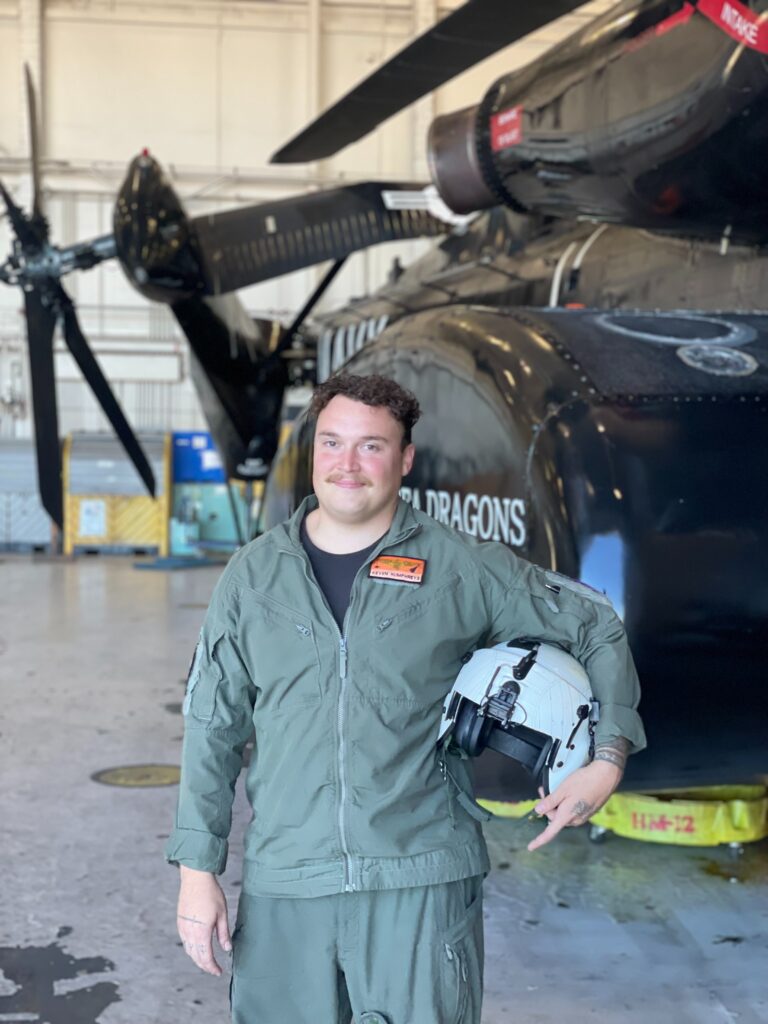
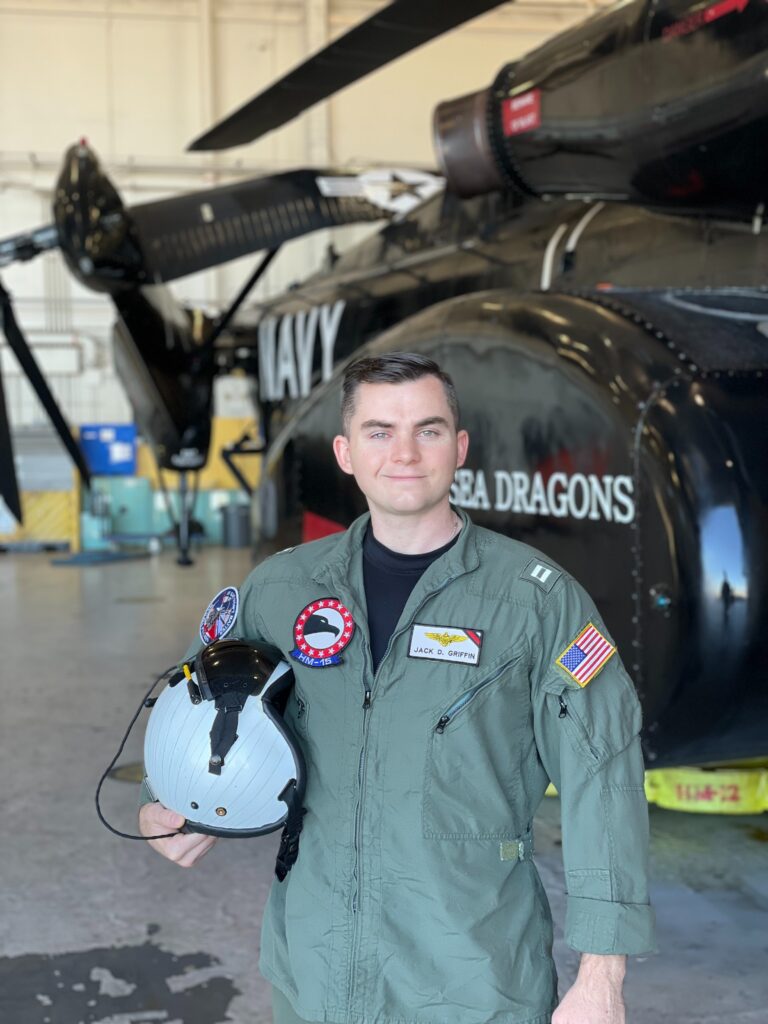
NORFOLK, Va. – The last two naval aviators to qualify to operate the MH-53E Sea Dragon are completing the final phases of their training while assigned to training squadron Helicopter Mine Countermeasures Squadron (HM) 12 in Norfolk.  

Lt. Jack Griffin and Lt. Keven Humphreys are set to close the chapter on the aircraft’s 42-year history of qualifying pilots to operate the storied MH-53E Sea Dragon. 
 
This specialized helicopter, renowned for its Airborne Mine Countermeasures (AMCM) capabilities, is drawing close to the end of its operational life with a sunset ceremony planned for March 2025. The MH-53E, introduced to the U.S. Navy in 1982, has long served as a critical asset in mine hunting, sweeping, and neutralization, as well as a heavy-lift aircraft transporting troops and equipment.   
 
Since 1986, HM-12 has qualified over 580 naval aviators to operate the MH-53E spanning nearly five generations. 
 
As the Navy phases out this iconic aircraft, Griffin and Humphreys will be the last pilots to master its unique skill set while the last two remaining squadrons – HM-12 and HM-15 – prepare for the sundown of this aircraft type model series. Both men originally set their sights on serving as naval officers but did not initially envision becoming naval aviators. 
 
Humphreys credits his inspiration to join the aviation community from experiences a close friend of his brothers shared after joining the U.S. Marine Corps to serve as a fighter pilot. 
 
“Growing up, I looked up to my best friend’s brother,” Humphreys recalled. “I knew I wanted to serve and become a leader in the military, but becoming a pilot wasn’t initially part of my plan. Seeing him as a leader and a pilot was pretty cool, though.” 
Griffin emphasized what he likes best about serving in the MH-53E community. 
 
“The MH-53E community is extremely tight-knit,” Griffin said. “There is a close relationship between pilots and aircrewmen. Everyone is down-to-earth and focused on the mission. I really appreciate how well the crews work together to get the job done.” 
As the MH-53E nears its retirement, Griffin and Humphreys are still preparing for their final missions and upcoming overseas deployment and will continue to enhance their proficiency with the aircraft. 
 
“We are excited to be here,” Griffin said. “We love what we do and where we are right now.” 
 
A special ceremony will be held to honor Griffin and Humphreys as they mark the end of an era and their place in history as preparations are being made to sundown the MH-53E Sea Dragon. This event will celebrate their contributions and the legacy of an aircraft that has played a pivotal role in Naval Aviation history.


Gulfstream Again Selected for C-20, C-37 Fleet Support

Gulfstream Special Missions Awarded Significant Contract to Service U.S. Military Aircraft 

From Gulfstream Aerospace Corp. 

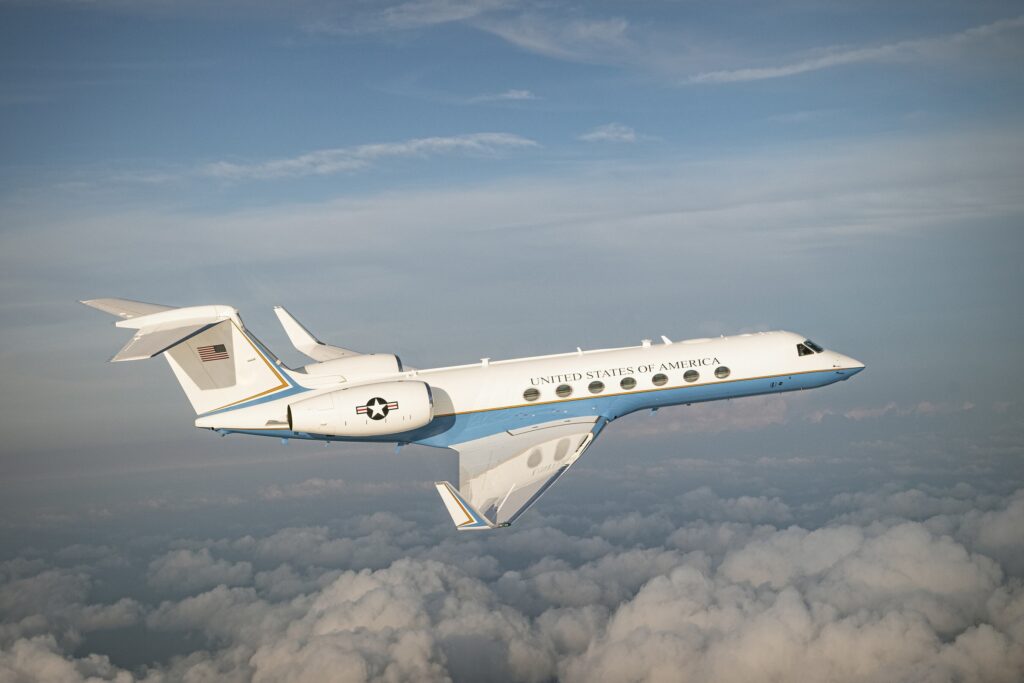
SAVANNAH, Ga., November 22, 2024 — Gulfstream Aerospace Corp., a business unit of General Dynamics (NYSE:GD), has been awarded a contractor logistics support services (CLS) contract from the U.S. Air Force Life Cycle Management Center for C-20 and C-37 fleets. This contract extends over a seven-year period and provides services to the U.S. Air Force, U.S. Navy, U.S. Marine Corps, U.S. Army and U.S. Coast Guard.  

“For nearly 60 years, Gulfstream has been a trusted partner to governments and military organizations worldwide, and we are honored that the U.S. Air Force has once again selected our company to support the U.S. military’s fleet,” said Mark Burns, president, Gulfstream. “This demonstrates the strength of our world-class Customer Support network and its ability to support all of our customers’ missions. Gulfstream’s Special Missions business delivers cutting-edge aircraft expertly engineered for a wide range of critical operations and is currently experiencing unprecedented activity with customers around the world.”  

The latest CLS contract is valued at $991 million and includes a wide variety of support such as global maintenance, component overhaul, repair and modification services. Gulfstream Customer Support will perform the work at Joint Base Andrews, Maryland; Joint Base Pearl Harbor-Hickam, Hawaii; Ramstein Air Base, Germany; Marine Corps Base Hawaii, Kaneohe Bay; and Naval Base Ventura County, California. 

To date, Gulfstream has delivered more than 200 special missions aircraft to over 40 countries, including all branches of the U.S. military and key U.S. government agencies. 


George Washington Returns to Yokosuka

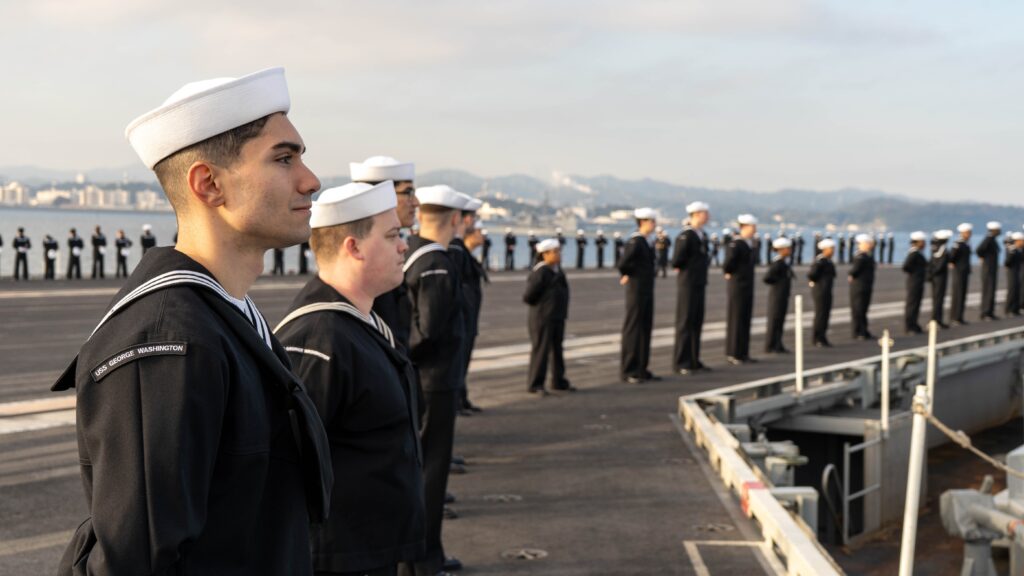
Sailors man the rails as USS George Washington (CVN 73) returns to Fleet Activities Yokosuka, Japan. (MC3 Lucas Hastings)

By Ensign Kenadall Hill, Nov. 22,2024 

YOKOSUKA, Japan - The Nimitz-class aircraft carrier USS George Washington (CVN 73) returned to Commander, Fleet Activities Yokosuka, Japan as the United States’ only forward-deployed aircraft carrier, Nov. 22. 

This marks the second time George Washington has served as the forward-deployed naval forces-Japan (FDNF-J) aircraft carrier. In 2008, it became the first nuclear-powered aircraft carrier to be forward-deployed to Japan before being relieved by USS Ronald Reagan (CVN 76) in 2015. 

“A US carrier represents the most advanced maritime capability we have, and it’s the most advanced investment we can make in the security of Japan and of the Western Pacific,” said Vice Adm. Fred Kacher, Commander, U.S. 7th Fleet. “The George Washington returns with modernized, cutting-edge technology that represents our investment in deterrence and security in this region.” 
 
During George Washington’s transit from Norfolk, Virginia to Japan, the crew completed Exercise Southern Seas in U.S. 4th Fleet and a seven-week transit from San Diego. 
 
“Arriving here in Yokosuka has been a milestone for this crew for many months, and for some the journey started in April when we departed from Virginia,” said Capt. Tim Waits, commanding officer of George Washington. “I could not be more proud of this team. Not only have we arrived safely and on time, but from day one of deployment we have met every goal, exceeded all expectations, and were ready for tasking the day we arrived in the 7th Fleet area of operations.” 
 
George Washington, with embarked Carrier Air Wing (CVW) 5, recently participated in the multi-domain exercise Freedom Edge with the Japan Maritime Self-Defense Force and Republic of Korea Navy in the East China Sea. U.S. participation included Strike Fighter Squadron (VFA) 147, the first F-35C Lightning II squadron to join FDNF-J, adding fifth generation strike fighter jets to the roster of forward-deployed carrier-based aircraft in the Indo-Pacific region. 
 
“We are proud to bring George Washington back to Yokosuka and back to the location of the most meaningful time in the ship’s history,” said Rear Adm. Greg Newkirk, Commander, Task Force 70 and the George Washington Carrier Strike Group. “Her crew is made up of both returning friends and many new to Japan, where they and their families will create lifelong memories and friendships in this magnificent Japanese city. Together, the combined community – back dropped by the JMSDF fleet and America’s only forward-deployed aircraft carrier – represents a shared vision of peace and prosperity across the region. We are truly allies, friends and family.” 
 
George Washington recently hosted distinguished visitors at sea, including U.S. Ambassador to Japan, Rahm Emanuel; Japan’s Vice Minister of Foreign Affairs, Mr. OKANO Masataka; and the mayor of Iwakuni City, Mr. FUKUDA Yoshihiko. 
 
CVW-5 includes VFA 147 “Argonauts,’ VFA-102 “Diamondbacks,” VFA-27 “Royal Maces,” VFA-195 “Dambusters,” Electronic Attack Squadron (VAQ) 141 “Shadowhawks,” Fleet Logistics Support Squadron (VRM) 30 Detachment 5 “Titans,” Airborne Command & Control Squadron (VAW) 125 “Tigertails,” Helicopter Sea Combat Squadron (HSC) 12 “Golden Falcons,” and Helicopter maritime Strike Squadron (HSM) 77 “Saberhawks,” operating F/A-18F Super Hornets, F/A-18E Super Hornets, F-35C Joint Strike Fighters, EA-18G Growlers, CMV-22 Ospreys, E-2D Hawkeyes, MH-60S, and MH-60R Helicopters. 
 
George Washington is 7th Fleet’s premiere forward-deployed aircraft carrier, a long-standing symbol of the United States’ commitment to maintaining a free and open Indo-Pacific region, and operates alongside allies and partners across the U.S. Navy’s largest numbered fleet. 


Coast Guard Establishes First Hawaii-Based JROTC Program 

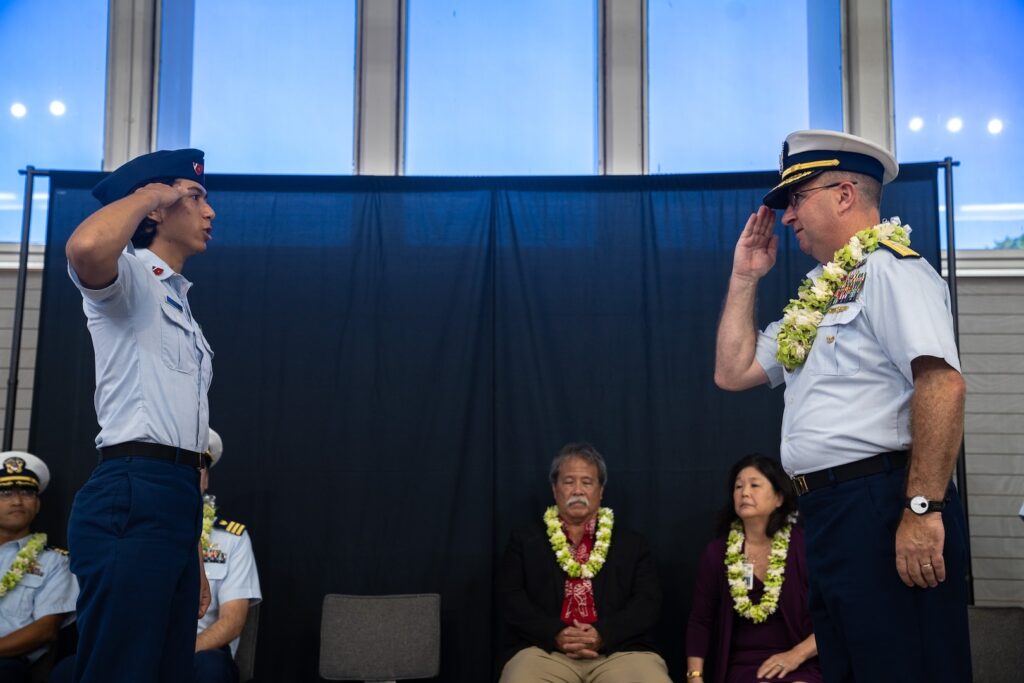
A cadet with Kalani High Schools Coast Guard JROTC program renders a salute to Coast Guard Rear Adm. Sean Regan, commander, Coast Guard District Fourteen at the high school in Honolulu, Hawaii, Nov. 21, 2024. The Coast Guard established its first Hawaii based JROTC at Kalani High School. (U.S. Coast Guard photo by Petty Officer 2nd Class Tyler Robertson)

From Coast Guard District 14, Nov. 21, 2024 

HONOLULU – The Coast Guard established a new Junior Reserve Officers’ Training Corps Program at Kalani High School in Honolulu Thursday. 

Coast Guard Rear Adm. Sean Regan, commander, District Fourteen, served as keynote speaker during the JROTC unit’s commissioning ceremony. 

“I am so proud to be part of such a great event and to see fantastic young men and women seeking new challenges, opportunities and adventures,” said Regan. “Thank you to the cadets’ families for their support, to Congress, the State of Hawaii and the City of Honolulu for bringing this program to fruition, and to Kalani High School’s administrators and teachers for partnering with the Coast Guard.” 

Kalani High School’s Coast Guard JROTC unit is the 14th in the nation and has over 20 cadets enrolled in the inaugural semester. 

“We’re exceedingly grateful to be working with the State of HI Department of Education, Honolulu District, to launch this incredible partnership,” said Cmdr. Clay Cromer, Coast Guard JROTC program manager. “We look forward to seeing cadets learn, grow, and achieve in a supportive and fun learning environment. My hope is they’ll look back on their time in Coast Guard JROTC at Kalani High School with incredible fondness as they go out equipped to make a positive difference wherever they’re called to serve.” 

Coast Guard JROTC instructors are hired and employed by the school district and certified by the service. Instructors must be Coast Guard retired, selected reserve, or qualified veterans with at least eight years of service. Kalani High School’s Coast Guard JROTC instructor is Retired Chief Petty Officer Ash Armstrong. 

The National Defense Authorization Act of 2023 mandated the Coast Guard to establish and maintain JROTC programs in each of the nine Coast Guard districts by Dec. 31, 2025. The Coast Guard established four new JROTC units this fall, making Kalani High School’s unit the 14th with program-wide enrollment of over 1,200 cadets. These new units are at the following host schools:    

  • Barnstable High School in Barnstable, Massachusetts     

  • Innovation High School in Orlando  

  • Veterans Memorial High School in Corpus Christi, Texas    

  • Kalani High School in Honolulu    

Coast Guard JROTC is not a recruiting program. Cadets incur no military service obligation by participation in JROTC, but they may be eligible for advanced enlistment opportunities with two or more years of participation in the program. The program helps equip cadets with the skills necessary to be more prepared for tomorrow’s challenges, no matter what path they take.    

To learn more about the Coast Guard JROTC program, visit their website: U.S. Coast Guard Junior Reserve Officers’ Training Corps (CGJROTC).   


USS Jefferson City Returns Home to Naval Base Guam Following Successful Indo-Pacific Deployment 

Sailors moor USS Jefferson City (SSN 759) as it arrives at Naval Base Guam. (MC1 Justin Wolpert)

From U.S. Pacific Fleet, Nov. 21, 2024 

NAVAL BASE GUAM - The Los Angeles-class fast-attack submarine USS Jefferson City (SSN 759) returned to its homeport of Naval Base Guam after a successful deployment in the Indo-Pacific region, Oct. 27, 2024. 
 

“USS Jefferson City exceeded all expectations on this short deployment,” said Capt. Neil Steinhagen, Commander, Submarine Squadron 15. “The crew’s unwavering dedication to theater security and operational excellence reflects the strength of our forward-deployed forces. Standing true to their motto, ‘When Any Exigence Calls,’ the crew met every challenge with distinction, directly supporting our mission in the Pacific. Job well done team – welcome home!” 
 
During this deployment, Jefferson City undertook critical missions that strengthened national security, elevated operational maritime capabilities, and bolstered deterrence within the Indo-Pacific, underscoring the strategic importance of a forward-deployed submarine force. 
 
“No matter the mission or task, my crew rose to every occasion,” said Cmdr. Alexander (AJ) Franz, commanding officer of USS Jefferson City. “Their focus, determination, and relentless pursuit of excellence shaped an extraordinary deployment. I couldn’t be prouder of their accomplishments, as each Sailor’s dedication and resilience shone brightly in our mission’s success.” 
 
During the deployment, 38 Jefferson City Sailors earned their submarine warfare insignia, the distinguished ‘dolphins’ or ‘fish,’ symbolizing their qualification to operate at the highest standards. This emblem represents their mastery and commitment to the submarine force’s tradition of excellence. 
 
“The strength of our Navy lies in its true source of power—our Sailors,” said Jefferson City Chief of the Boat Master Chief Machinist Mate (Auxiliary) Chris Halamoutis. “The dedication these Sailors have shown to achieve this honor is truly commendable. Their perseverance, hard work, and commitment to our mission reflect the spirit of those who came before them, as they join the ranks of a distinguished community with the privilege of wearing this insignia.” 
 
As part of Jefferson City’s homecoming celebration, the Navy’s cherished “first kiss” and “first hug” traditions took place. The “first kiss” was awarded to Lt. j.g Jonathan Lopez and the “first hug” was awarded to Senior Chief Machinist Mate (Auxiliary) Timothy Murphy. 
 
Commissioned on February 29, 1992, USS Jefferson City is the only U.S. Navy vessel named for Jefferson City, Missouri. Assigned to Commander, Submarine Squadron 15 at Polaris Point, Naval Base Guam, Jefferson City is one of four Los Angeles-class fast-attack submarines forward-deployed in the Pacific. Renowned for their unparalleled speed, endurance, stealth, and mobility, the Los Angeles-class submarine serves as the backbone of the Navy’s submarine force, ensuring readiness and agility in safeguarding maritime interests around the world. 


HII Hosts Marine Corps Commandant Gen. Eric Smith at Ingalls Shipbuilding 

PASCAGOULA, Miss., Nov. 20, 2024 (GLOBE NEWSWIRE) — HII’s (NYSE: HII) Ingalls Shipbuilding division welcomed Gen. Eric Smith, the 39th commandant of the U.S. Marine Corps, for an official visit to the shipyard on Wednesday. During his visit, Smith met with Ingalls leadership and toured the shipyard, including two amphibious warships currently under construction, Bougainville (LHA 8) and Harrisburg (LPD 30). 

“We were honored to highlight the critical work our Ingalls shipbuilders do every day in support of the Navy and Marine Corps team,” Ingalls Shipbuilding Vice President of Quality and Engineering and incoming President Brian Blanchette said. “Every amphibious ship built at Ingalls reflects the dedication, skill, and patriotism of our shipbuilders, as we work together to deliver ships that ensure our nation’s safety and strengthen our commitment to those who serve.” 

This was Smith’s first visit since the Navy announced the amphibious multi-ship procurement contract in September for the construction of three San Antonio-class (LPD 17) amphibious ships (LPD 33-35) and a contract modification for the next America-class (LHA 6) large-deck amphibious ship Helmand Province (LHA 10). 

A photo accompanying this release is available at: https://hii.com/news/hii-hosts-marine-corps-commandant-gen-eric-smith-at-ingalls-shipbuilding/

“The multi-ship contract is a big step in the right direction; it benefits the DOD, American taxpayers, and industry,” Smith said. “The hardworking Americans here are serving our nation through the construction of these amphibious warships.” 

To date, Ingalls has delivered 13 San Antonio-class ships and 15 large-deck amphibious ships to the U.S. Navy. Currently, the LHA production line includes the construction of Bougainville (LHA 8) and Fallujah (LHA 9). In addition, Ingalls has two Flight II LPDs under construction including Harrisburg (LPD 30) and Pittsburgh (LPD 31). Pre-construction activities are currently underway for the construction of Philadelphia (LPD 32), the 16th ship in the San Antonio class. 


Navy Launches Military Sealift Command Workforce Initiative 

From Military Sealift Command Public Affairs, Nov. 21, 2024 

WASHINGTON – Secretary of the Navy Carlos Del Toro approved a plan Oct. 30 to restore the health of the Military Sealift Command (MSC) workforce and generate more logistics support for fleet operations worldwide.   

MSC consists of 5,500 civil service mariners and 1,500 contracted mariners operating 140 logistics supply ships that support the replenishment and transport of military cargo and supplies for U.S. forces and partners. The command’s new workforce initiative addresses civil service mariner recruitment and retention challenges by restoring the health of the MSC workforce for the next several decades.   

The initiative will also include crew reassignments to higher priority vessels and the placement of some MSC logistics support ships into extended maintenance periods.  Rotating crews to higher priority vessels will minimize overdue reliefs and provide a more predictable work environment for civil service mariners. 

“Our civil service mariners play invaluable roles providing continuous logistics support to our deployed naval forces, and they are working overtime to sustain that mission globally,” said Secretary Del Toro. “This initiative will not only address operational logistics challenges we face now, it will ensure that Military Sealift Command has policies, programs and incentives it needs to recruit and retain future generations of civil service mariners.”  

Nationally, the U.S. merchant marine workforce is facing a shortage of personnel to fill positions at sea, as it has become more challenging to attract interested Americans, impacting mariners employed by MSC. MSC has also assumed broader logistics responsibilities and experienced higher mission demand for Navy operations in recent years, increasing the strain on the workforce and contributing to recruiting and retention challenges.  

“Addressing the recruiting and retention challenges in MSC’s civil service mariner workforce will take time,” said Rear Adm. Philip Sobeck, MSC’s commander.  

The types of ships for the workforce initiative include Fleet Replenishment Oilers (T-AO), Dry Cargo/Ammunition Ships (T-AKE), Expeditionary Fast Transports (T-EPF), and Expeditionary Sea Bases (ESB).  

The MSC workforce initiative advances Secretary Del Toro’s vision for a new Maritime Statecraft to revitalize the naval, industrial and commercial aspects of America’s maritime power in an era of strategic competition. These investments will increase MSC’s operational readiness and support its civil service workforce, both of which strengthen maritime dominance 


Mid-Atlantic Regional Maintenance Center Readies Gerald R. Ford CSG for Timely Departure 

The world’s largest aircraft carrier, USS Gerald R. Ford (CVN 78), sails in formation with the Arleigh Burke-class guided missile destroyers USS Winston Churchill (DDG 81), USS Mitscher (DDG 57), USS Mahan (DDG 72), USS Bainbridge (DDG 96), and USS Forrest Sherman (DDG 98) in the Atlantic Ocean, Nov. 12, 2024. The Gerald R. Ford Carrier Strike Group is underway in the Atlantic Ocean completing Group Sail. Group Sail is the first at-sea integrated phase training event during a routine deployment training cycle. (U.S. Navy photo by MC2 Maxwell Orlosky)

By Danielle Lofton, Mid-Atlantic Regional Maintenance Center Public Affairs 

Nov. 20, 2024 

NORFOLK Va. – Mid-Atlantic Regional Maintenance Center showcased its critical role in naval readiness after providing crucial technical support to the Gerald R. Ford Carrier Strike Group. The strike group, which includes USS Gerald R. Ford (CVN 78), USS Mahan (DDG 72), USS Forrest Sherman (DDG 98), USS Bainbridge (DDG 96), USS Mitscher (DDG 57), and USS Winston S. Churchill (DDG 81), received comprehensive maintenance assistance from MARMC, allowing it to depart for training on time from Naval Station Norfolk. 

While supporting the CSG, MARMC simultaneously extended its expertise to several other ships, providing Fleet Technical Assists to USS San Antonio (LPD 17), USS Fort Lauderdale (LPD 28), USS Gunston Hall (LSD 44), and USS Normandy (CG 60). In total, MARMC enabled 10 warships to depart on-schedule, fully mission capable. 

“We are proud to work alongside our Fleet and our industry partners to deliver results and demonstrate MARMC’s commitment to ensuring our warships are ready to project power and uphold the U.S. Navy’s standing as the world’s premier fighting force,” said Capt. Jay Young, MARMC commanding officer. “This success highlights the capabilities of our team and our ability to provide simultaneous, high-priority support to multiple ships, getting them back to sea in record time.” 

Preparing a Carrier Strike Group (CSG) for deployment is no small task. Behind the scenes, Regional Maintenance Centers (RMCs) play a vital role in ensuring that everything from the flight deck of the aircraft carrier to the propulsion systems of the escort ships is in optimal condition to meet the demands of modern naval warfare. 

“The preparation for each group of ships is unique,” said Maintenance Operations Director Riccardo Cutruzzula. “Each ship’s schedule and maintenance need is different, and the maintenance team must be flexible. A continual assessment approach is taken based on the ship’s current material condition. Ultimate success is driven by identifying the potential problems before it becomes critical so there is adequate time to repair and address.” 

While the immediate task of preparing for deployment is critical, RMCs also play a long-term role in shaping the Navy’s future readiness. Maintenance teams use real-time data, lessons learned from previous deployments, and predictive analysis to ensure that each ship remains ready for future missions. 

In her 2024 Navigation Plan, Chief of Naval Operations (CNO) Adm. Lisa Franchetti emphasized the importance of readying our platforms. This strategic guidance highlights CNO’s focus on readiness and long-term advantage with a specific focus on workforce growth and development. Expanding the fleet maintenance workforce provides the opportunity to better address both routine and emergent needs ensuring that the Fleet is always prepared for a rapidly changing global security environment. 

CSGs are among the Navy’s most formidable assets, and it is the dedication, technical capability and expertise of RMCs that ensures ships are mission ready. Comprised of skilled technicians, engineers, and military and civilian professionals, MARMC plays a crucial role in maintaining these ships’ battle-readiness, putting more ready players on the field that are equipped and capable of projecting power across the globe, whenever and wherever they are needed. 


SECNAV Highlights Bipartisanship with Ship Sponsors for USS Congress on Capitol Hill 

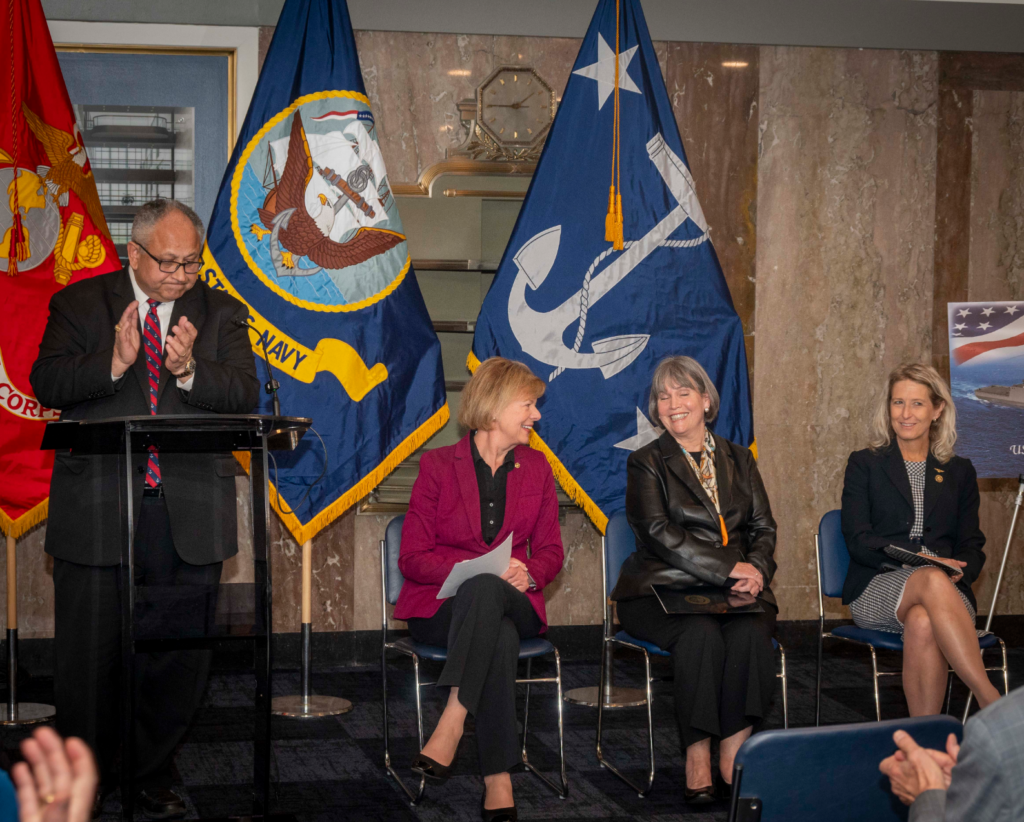
(l to r) Secretary of the Navy Carlos Del Toro; Senator Tammy Baldwin, D- Wisconsin; Representative Betty McCollum, D-Minnesota; and Representative Jen Kiggans, R-Virginia. Not pictured: Senator Joni Ernst, R-Iowa.

From SECNAV Public Affairs, 19 November 2024 

WASHINGTON, D.C. – Secretary of the Navy Carlos Del Toro highlighted the need for bipartisanship by announcing the sponsors of the future Constellation-class multi-mission guided-missile frigate USS Congress (FFG 63) will be four members of Congress: Sens. Tammy Baldwin (D-Wisconsin) and Joni Ernst (R-Iowa) and Reps. Betty McCollum (D-Minnesota) and Jen Kiggans (R-Virginia). 

Del Toro made the announcement during a reception amongst members of Congress and local civic leaders at the Dirksen Senate Office Building, in Washington DC, on Nov. 19. 

“It is in the spirit of bipartisanship that I am honored to announce the sponsors of the future USS Congress (FFG 63) represent both institutions of Congress and both major political parties,” said Del Toro. “There is no one better than Senator Baldwin, Senator Ernst, Representative McCollum, and Representative Kiggans to connect Congress with the highly capable frigate that will bear its name.” 

Sponsors are selected by the Secretary of the Navy and hold a unique role by maintaining a lifelong relationship with the ship and crew. Senator Ernst was previously invited to serve as sponsor by 77th Secretary of the Navy, Kenneth Braithwaite. The additional co-sponsors added by Secretary Del Toro enable the ship to be represented by sponsors from both congressional institutions. 

“We honor the institution that has been at the heart of our Democracy,” said Senator Ernst. “I am humbled by the responsibility of standing as her sponsor, not just for the men and women who will serve on board, but for the country we are sworn to protect.” 

Senator Tammy Baldwin, from Wisconsin, joined Secretary Del Toro for the announcement. 

“I am truly honored to serve as one of the sponsors of the future USS Congress alongside a bipartisan group of my colleagues,” said Senator Baldwin. “I take great pride in representing Wisconsin’s shipbuilding industry in Washington because our workers have helped sustain America’s security for generations, boasting a successful history of building ships for our nation’s defense. The USS Congress will play a critical role in continuing that tradition. Wherever the USS Congress takes our flag, she will be a symbol of America’s strengths – strength of our brave service men and women who will assume command of the ship, but also the hard-working Wisconsinites that will make the USS Congress a reality.” 

Providing remarks after Senator Baldwin, Representative McCollum shared her thoughts on the distinction of being named a sponsor alongside her fellow members of Congress. 

“It is my honor to be asked alongside with three colleagues to serve as ship sponsor for the new USS Congress,” said Representative McCollum. “The USS Congress name is a long and proud lineage including one of the six original frigates of the US Navy.” 

Representative Jen Kiggans, a Navy veteran, also participated in the announcement and highlighted the honor and meaning behind the naming of the ship. 

“It is truly a privilege to be selected as a sponsor of the USS Congress,” said Representative Kiggans. “This ship, named in honor of one of the original six frigates of the U.S. Navy, will ensure our sailors can continue to fulfill their commitments to our citizens, our nation, and freedom around the globe.” 

The U.S. Navy’s second Constellation-class frigate FFG 63, was named USS Congress by the 77th Secretary of the Navy Kenneth Braithwaite. The name honors the first six heavy frigates of the U.S. Navy. 

The ship naming honors the rich history and legacy of the Navy. Congress was among the six original frigates authorized by Congress in the Naval Act of 1794, which established the U.S. Navy as an agile, lethal and ready force and cemented the enduring partnership between the sea service and our nation’s elected legislative officials. 

The Constellation-class guided-missile frigate represents the Navy’s next generation small surface combatant. This ship class will be an agile, multi-mission warship, capable of operations in both blue-water and littoral environments, providing increased combat-credible forward presence that provides a military advantage at sea. 

The Constellation-class will have multi-mission capability to conduct air warfare, anti-submarine warfare, surface warfare, electronic warfare, and information operations.