HII Names Kari Wilkinson to Lead Newport News Shipbuilding 

Jennifer Boykin to Retire; Brian Blanchette to Lead Ingalls Shipbuilding 

From HII, Nov. 6, 2024 

NEWPORT NEWS, Va., Nov. 06, 2024 (GLOBE NEWSWIRE) — HII (NYSE: HII), the nation’s largest military shipbuilder, announced today that its Board of Directors has elected Kari Wilkinson to serve as president of the company’s Newport News Shipbuilding (NNS) division, effective Jan. 1, 2025. She will succeed Jennifer Boykin, who is retiring from her position at year’s end after 37 years with the company. 

The president of NNS, which is HII’s largest division, oversees more than 26,000 shipbuilders who design, build, and maintain the world’s most complex ships: nuclear-powered aircraft carriers and nuclear-powered submarines. 

“I have asked Jennifer to stay on in an advisory capacity through March to support a seamless transition to Kari,” HII CEO and President Chris Kastner said. “You will not find a more loyal advocate than Jennifer for her shipbuilders and the Hampton Roads community. Kari’s leadership has steered Ingalls Shipbuilding into its next phase of growth, having secured serial production contracts for both the destroyer and amphibious ship programs. She is a tremendous leader and now brings her great energy and expertise to Newport News.”  

Wilkinson becomes the 21st president of NNS, which was founded in 1886. She has served as president of HII’s Ingalls Shipbuilding division since 2021, where she has overseen the U.S. Navy’s amphibious assault and surface combatant ship programs, and the division’s 11,000 shipbuilders. The two shipyards make HII the largest industrial employer in both Virginia and Mississippi. 

Photos accompanying this release are available at: https://hii.com/news/hii-names-kari-wilkinson-to-lead-newport-news-shipbuilding/

“Leading shipbuilders in the critical work we do for the nation has been and will continue to be the greatest honor of my life,” Wilkinson said. “I join the Newport News team with deep respect for its nuclear culture, commitment to safety, and an exceptional legacy further strengthened by Jennifer and the NNS team. I am fully committed to advancing our mission in support of our sailors, their families, and for all of us who depend on them for freedom and security.” 

Under Wilkson’s leadership Ingalls Shipbuilding secured the recent $9.6 billion multi-ship procurement contract for construction of three San Antonio-class (LPD 17) amphibious ships, and contract modification for the next America-class (LHA 6) large-deck amphibious ship. 

Elected to succeed Kari as executive vice president of HII and president of Ingalls Shipbuilding, overseeing all programs and operations, is Brian Blanchette, who has served as vice president of quality and engineering at Ingalls since May 2021. Blanchette joined Ingalls in 1996 and has served in a range of roles including in technical and design engineering, program management and business development. 

“I am honored and humbled by the opportunity to lead Ingalls Shipbuilding and its dedicated shipbuilders,” Blanchette said. “Throughout my 28-year career at Ingalls, I’ve had the privilege of working with and learning from remarkable people at every level. My focus will be to build on my predecessors’ success, particularly Kari’s, and to carry forward our strong shipbuilding legacy and honor our commitment to our nation by delivering the quality ships our service members depend on.” 

Jennifer Boykin will retire from HII having steered its largest division through a period of remarkable growth and change. Highlights of Boykin’s legacy include: 

Widely credited for leadership and continuous production through the COVID-19 pandemic. 

Led the transformation from digital design to digital construction first on Enterprise (CVN 80) and for the Columbia-class submarine program. 

Guided the company’s achievement of the first two-ship aircraft carrier procurement in over 30 years for Enterprise (CVN 80) and Doris Miller (CVN 81). 

Secured with our teaming partner the largest shipbuilding contract in U.S. Navy history for Virginia-class submarines. 

Known throughout Hampton Roads for her deep community engagement and commitment to diversity within the workforce and leadership team. 


VAW-123 Sends their Last E-2C Hawkeye to the Boneyard 

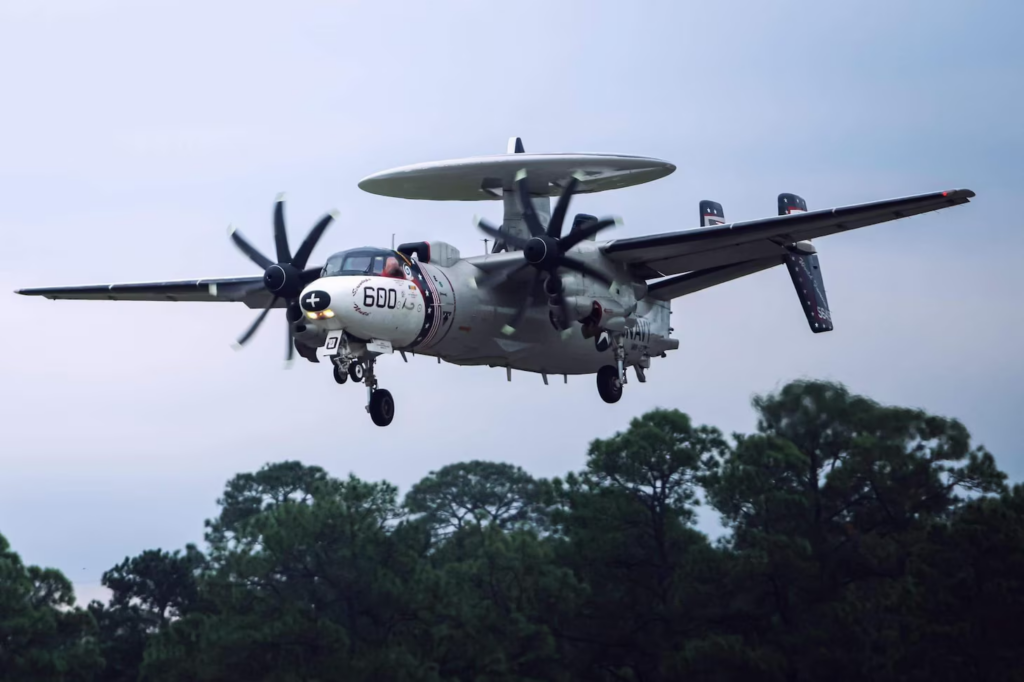
TUCSON, Ariz. – An E-2C Hawkeye aircraft assigned to Airborne Command & Control Squadron (VAW) 123 prepares to land Davis-Monthan Air Force Base, the largest aircraft boneyard in the world in Tucson, in September 2024. VAW-123 transferred two of their four E-2C Hawkeye aircraft to the boneyard. This event was part of the squadron’s transition to the E-2D Advanced Hawkeye to be completed in mid-2025. (Photo courtesy U.S. Navy)

By Commander, Naval Air Force Atlantic Public Affairs, Nov. 4, 2024 

TUCSON, Ariz. – Airborne Command & Control Squadron (VAW) 123 transferred two of their four E-2C Hawkeye aircraft to the Davis-Monthan Air Force Base, the largest aircraft boneyard in the world in Tucson, in September.   

This event was part of the squadron’s transition to the E-2D Advanced Hawkeye to be completed in mid-2025. 
 
VAW-123’s other two E-2C were transferred to VAW-120 Fleet Replacement Squadron to be used for training the next generation of Hawkeye pilots. For more than 50 years, the E-2C has provided the Navy’s command and control capabilities. 
 
Lt. Terrance Lawrence, assigned to VAW-123, was one of the pilots chosen to deliver an E-2C to the boneyard. The squadron first received the E-2C in November 1973. Since then, this platform has been used for sea and land-based military operations, search and rescue missions, drug interdiction, humanitarian efforts and disaster relief. 
 
Lawrence, a naval aviator since 2021, had not experienced delivering an aircraft to its final resting place. 
 
 “It was something that I knew not a lot of other aviators get to do; it is pretty rare that you get to participate in this type of flight,” Lawrence said. “This was a special and unique opportunity that does not come up often. I volunteered immediately.” 
 
Lt. Avesta Shwany, also of VAW-123, flew the second E-2C and reflected on the experience for her and her crew upon departing Norfolk for the boneyard. 
 
“Getting to be a part of the last crew was incredibly bittersweet,” Shwany said. “This aircraft carries a lot of memories to so many aircrew members, especially from this most recent deployment to the Red Sea.” 
 
Shwany added that the aircraft had seen combat and played a vital role in many missions. 
 
“Taking this aircraft to the boneyard signified the end of an era, and the beginning of our delta transition. I think everyone was surprised with how emotional we were dropping her off and saying our goodbyes,” Shwany said. 
 
Lawrence said he was proud to be the last person to fly the E-2C for his squadron. The aircrew that accompanied both aircraft to Tucson took the opportunity to mark their place in history by ceremoniously signing the inside of the aircraft as a final farewell. 
 
“This aircraft meant a lot,” Lawrence said. “I was sentimental about it, especially after spending nine months flying it in the Red Sea.” 
 
The 10 aircrew who participated in the nearly six-hour flight to the boneyard, took time to tap the side of the aircraft, as they said their farewell before transferring it to the staff at Davis-Monthan Air Force Base. 
 
“This plane has all of these stories associated with it especially just after deployment,” Lawrence added. VAW-123 was deployed aboard the USS Dwight D. Eisenhower Carrier Strike Group and returned from a nine-month deployment in July 2024. 
 
The crew also had an opportunity to step back in time and witness aviation history. 
 
“We toured the boneyard, which has over 4,000 aircraft stored,” Lawrence said. “I am proud to be one of the last pilots to be part of that aircraft’s history.” 
 
With VAW-123 marking its transition to the E-2D, west-coast based VAW-116 is the only fleet squadron in the Navy flying the E-2C until its scheduled sundown. 
 
Lawrence said he looks forward to flying the E-2D which features a state-of-the-art radar with upgraded capabilities and aircraft systems that improve supportability and increase readiness. The E-2D enhances operational capabilities by increasing time on station allowing for extended range from the carrier, increased persistence and operational flexibility. 


SECNAV Announces Service Life Extensions for 3 Cruisers

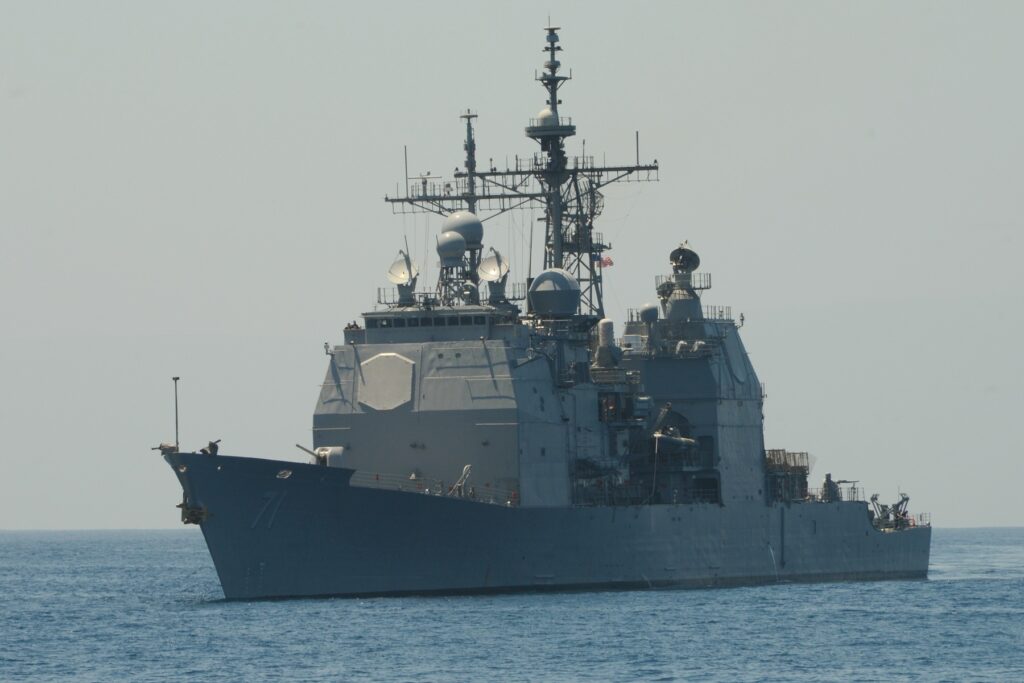
USS Cape St. George (CG 71) (U.S. Navy photo by MC3 Susan C. Damman) 

From SECNAV Public Affairs, Nov. 4, 2024 

WASHINGTON – The Department of the Navy plans to operate three Ticonderoga-class (CG 47) cruisers beyond their expected service life: USS Gettysburg (CG 64), USS Chosin (CG 65), and USS Cape St. George (CG 71).  This decision adds 10 years of cumulative ship service life from fiscal year 2026 to 2029. 

All three cruisers received extensive hull, mechanical and engineering, as well as combat system upgrades as part of an extended modernization program. USS Gettysburg (CG 64) and USS Chosin (CG 65) completed modernization in fiscal year 2023 and fiscal year 2024, respectively. USS Cape St. George (CG 71) is on schedule to complete modernization this fiscal year.   

Like the recently announced service life extension of 12 destroyers, extending these three cruisers will bolster the Fleet as new ships are built.   

“As a former cruiser Sailor, I know the incredible value these highly-capable warships bring to the Fleet and I am proud of their many decades of service,” said Secretary Del Toro. “After learning hard lessons from the cruiser modernization program, we are only extending ships that have completed modernization and have the material readiness needed to continue advancing our Navy’s mission.” 

The decision follows a successful re-arm at sea demonstration aboard USS Chosin (CG 65) on Oct. 11, 2024.  The Transferrable Reload At-sea Mechanism (TRAM) demonstration was the first time the Navy transferred missile canisters from a replenishment ship to a warship while at sea.  This transformational logistics capability enables U.S. Navy ships to rearm without needing to pull into port. 

The service life extensions align with Secretary Del Toro’s priority of Warfighting Excellence and Chief of Naval Operations Adm. Lisa Franchetti’s Navigation Plan, which prioritizes putting more ready players on the field.  


HII Hosts United Kingdom Defense Leaders at Newport News Shipbuilding 

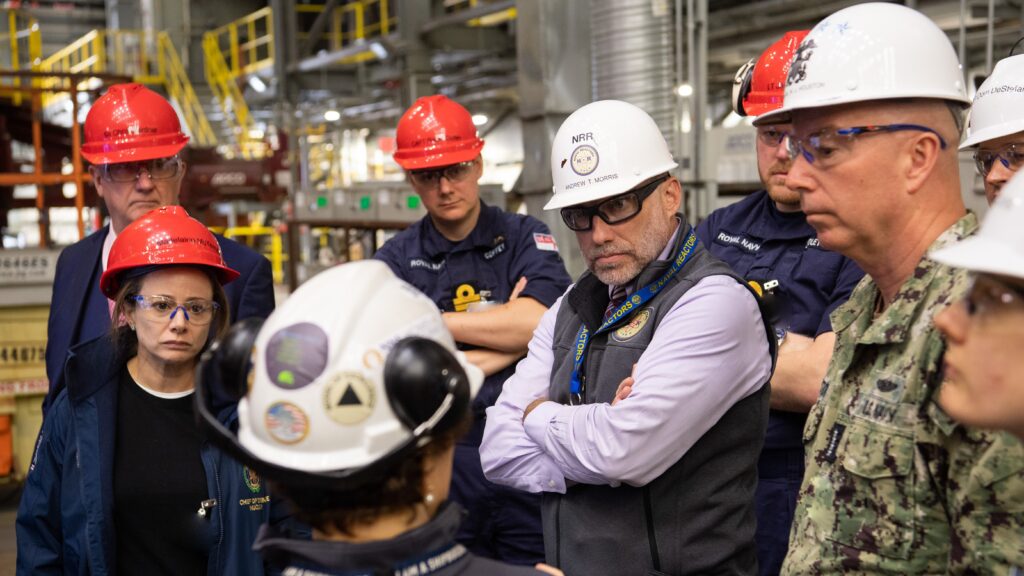
HII hosted United Kingdom defense leaders at the company’s Newport News Shipbuilding division on Tuesday, Oct. 29, 2024. Adm. William Houston, director of the U.S. Naval Nuclear Propulsion Program, accompanied them (Photo by Ashley Cowan/HII). 

NEWPORT NEWS, Va., Nov. 01, 2024 (GLOBE NEWSWIRE) — HII (NYSE: HII) hosted United Kingdom defense leaders at the company’s Newport News Shipbuilding division Tuesday. 

Madelaine McTernan, chief of defence nuclear at the Ministry of Defence, led the U.K. delegation. Adm. William Houston, director of the U.S. Naval Nuclear Propulsion Program, accompanied them. 

“It was an honor to welcome the United Kingdom delegation to the shipyard and share best practices as we strengthen our partnership,” NNS President Jennifer Boykin said. “We appreciate every opportunity to demonstrate the pride and commitment our shipbuilders have for building the nuclear-powered vessels our U.S. Navy needs to protect freedom and prosperity around the world.” 

“I am grateful for this opportunity to visit our partners in the United States and see the expertise on display today,” McTernan said. “This visit comes following the renewal of the 1958 Mutual Defence Agreement which shows our commitment to strengthening our bilateral relationship with our trusted partner, as we look to how we can safeguard our nation’s security in an increasingly challenging world.” 

“The 1958 Mutual Defense Agreement is a cornerstone of our collective security, underscoring the profound trust and collaboration between the United States and the United Kingdom,” Houston said. “Over the past 65 years, our partnership with the UK, our shipbuilders and our suppliers, has not only strengthened our undersea capabilities but has also ensured the safety and stability of our nations in an increasingly complex global environment. Together, we uphold the principles of freedom and security, and our shared commitment to safe and effective naval nuclear propulsion remains a testament to the enduring bond between our navies.” 

NNS is the United States’ sole designer, builder and refueler of nuclear-powered aircraft carriers and one of only two shipyards capable of designing and building nuclear‐powered submarines. 


Navy Awards Honeywell $16M Contract for SEWIP Block 2 Antenna Array Panels 

From Honeywell 

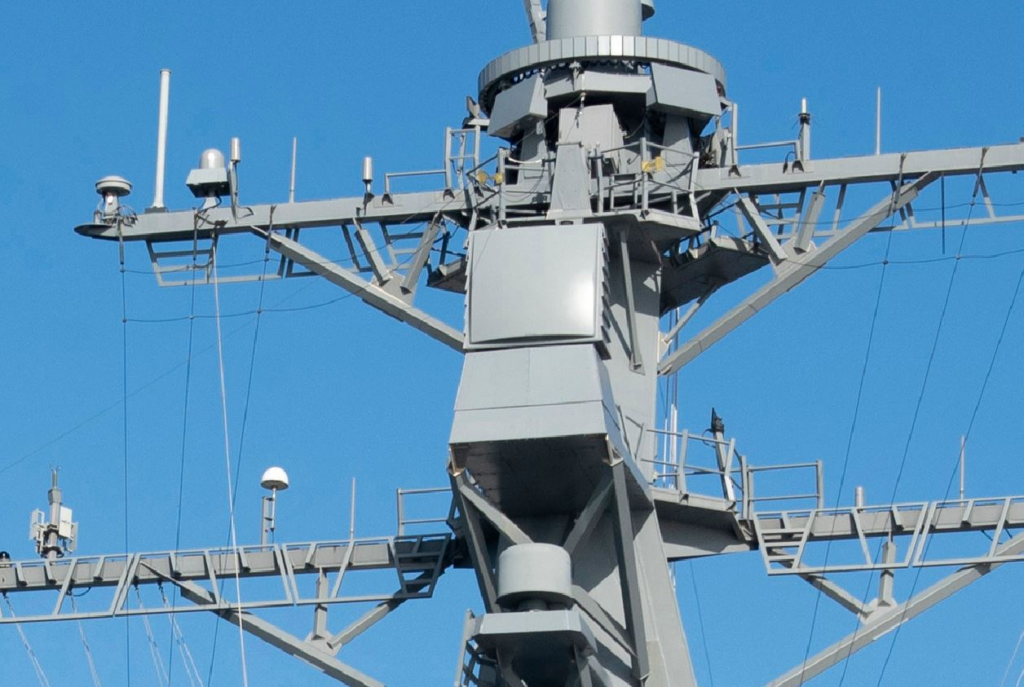
CHARLOTTE, N.C., November 4, 2024 – Honeywell (NASDAQ: HON) has been awarded a $16 million contract from the U.S. Navy for the full build, test, and integration of 25 antenna array panels supporting the Surface Electronic Warfare Improvement Program (SEWIP) Block 2. The contract win comes on the heels of Honeywell’s $1.9 billion acquisition of CAES Systems Holdings, LLC, which was announced in September. 

SEWIP is an integrated shipboard combat system that provides a full suite of next-generation electronic warfare capabilities. Block 2 adds new defensive technologies and functional capabilities that allow the Navy to better detect threats and provide greater situational awareness. The antenna array panels support early detection, analysis, threat warning and protection from anti-ship missiles. 

“CAES has supported SEWIP since its onset and that work will grow as a part of Honeywell. Our engineers have longstanding expertise and history with the program,” said Clayton McClain, Honeywell General Manager, Mission Systems Division. “The SEWIP antenna array panel reflects the culmination of the technologies developed at our Lansdale, Pennsylvania facility over the years, and we are proud to support the Navy as it maintains its critical programs and countermeasure systems.” 

The SEWIP antenna array panels will be built at Honeywell’s Lansdale location with the work expected to be completed by August 2027. The contract is the first Block 2 panel award from the Navy Supply Systems Command to Honeywell. 

Honeywell is a premier supplier of advanced electronic systems that enables customers to fully utilize the electromagnetic spectrum by combining decades of experience with electronic warfare systems and advanced technology. Learn more about Honeywell’s electronic warfare capabilities here.  


USS The Sullivans Deploys

By U.S. Fleet Forces Public Affairs 

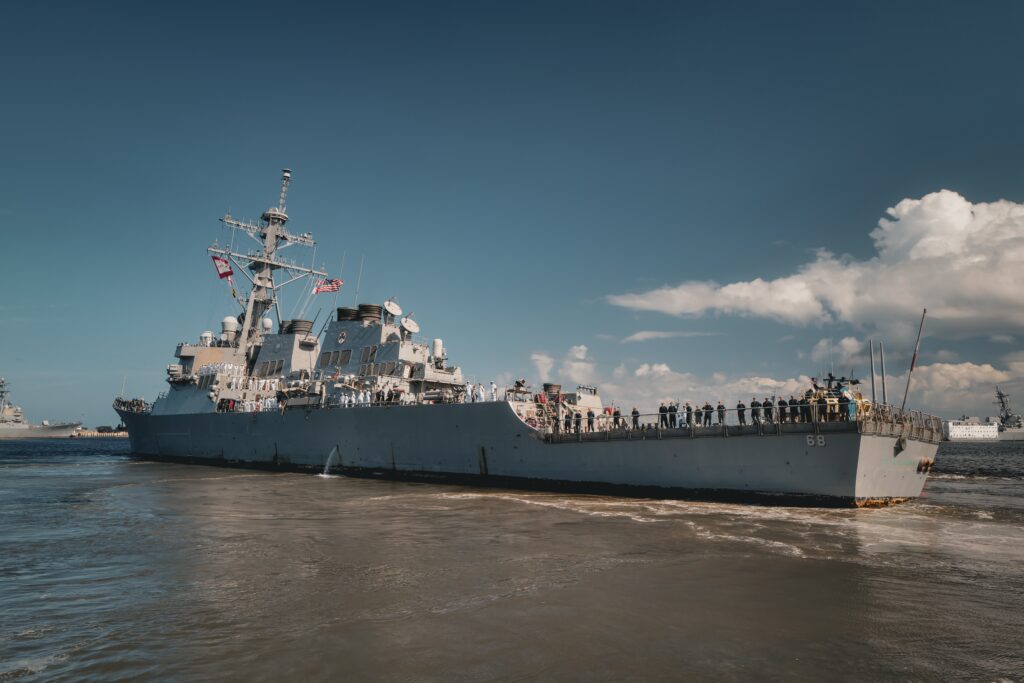
MAYPORT, Florida — The guided-missile destroyer USS The Sullivans (DDG 68) departed Naval Station Mayport for a scheduled deployment, Nov. 2. 

USS The Sullivans is scheduled for an independent deployment to U.S. 5th fleet area of operations where it will conduct maritime security missions to support stability and freedom of navigation in the region. The Sullivans’ crew is trained and ready to engage in a variety of activities, from escorting ships to participating in joint exercises with allied and partner navies in the Middle East. 

This deployment, the ship’s fifth deployment in three years, reflects the Navy’s ongoing commitment to ensuring a strong U.S. presence in critical areas and further bolsters the U.S. deterrence posture in the region, providing increased options to the combatant commander. 

Earlier this year, The Sullivans returned from the Eastern Atlantic and Mediterranean Sea. The ship provided Ballistic Missile Defense (BMD) for Commander, U.S. European Command amidst the Israel-Hamas conflict.  The Sullivans, alongside USS Delbert D. Black (DDG 119), additionally provided on-station relief for USS Thomas Hudner (DDG 116) and USS Mcfaul (DDG 74), allowing both ships to return home after multiple deployment extensions.  The crew provided escort to the USS Gerald R. Ford Carrier Strike Group and USS Bataan Amphibious Readiness Group, and acted as Surface Action Group Commander, along with other U.S. Destroyers, while Gerald R. Ford conducted a port visit to Souda Bay, Crete.  


USS John S. McCain Returns Home from Deployment 

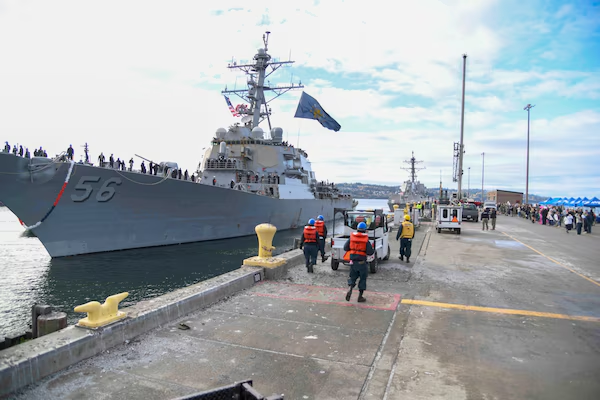
USS John S. McCain (DDG 56) arrives at Naval Station Everett. (MC1 Andrew Gordon)

From Naval Station Everett, Nov. 1, 2024 

EVERETT, Washington – The Arleigh Burke-class guided-missile destroyer USS John S. McCain (DDG 56) returned to Naval Station Everett, Oct. 31, 2024 following an eight-month deployment with the Theodore Roosevelt Carrier Strike Group (TRCSG) to the U.S. 3rd, 5th, and 7th Fleet areas of operation. 

“I am incredibly proud of the dedication, resilience, and professionalism shown by our team throughout this deployment,” said Cmdr. Parina Somnhot, commanding officer of John S. McCain. “Our Sailors always answered the call and helped ensure mission success.” 
 
John S. McCain deployed in March and operated both independently and as part of the TRSCG. The TRCSG deployed to the Indo-Pacific region to support regional security and stability, to keep sea lanes open, and to reassure our allies and partners of the U.S. Navy’s unwavering commitment to the region. The strike group was later ordered to the U.S. Central Command area of responsibility to strengthen U.S. military force posture and capabilities throughout the Middle East in light of escalating regional tensions. 
 
John S. McCain conducted various exercises with foreign navies, strengthening important relationships with allies and partners. These exercises enhanced warfighting readiness, interoperability, and maritime coordination between allies and partners. 
 
The Arleigh Burke-class guided missile destroyers are warships that provide multi-mission offensive and defensive capabilities. Destroyers can operate independently or as part of carrier strike groups, surface action groups, and expeditionary strike groups. 
 
The Theodore Roosevelt Carrier Strike Group is comprised of Carrier Strike Group 9 staff, Destroyer Squadron (DESRON) 23 staff, the flagship Nimitz-class aircraft carrier USS Theodore Roosevelt (CVN 71), with embarked Carrier Air Wing (CVW) 11, and DESRON 23 ships that include guided-missile destroyers USS Daniel Inouye (DDG 118), USS Russell (DDG 59) and John S. McCain. 
 
An integral part of U.S. Pacific Fleet, U.S. 3rd Fleet operates naval forces in the Indo-Pacific and provides the realistic, relevant training necessary to execute the U.S. Navy’s role across the full spectrum of military operations – from combat operations to humanitarian assistance and disaster relief. U.S. 3rd Fleet works together with our allies and partners to advance freedom of navigation, the rule of law, and other principles that underpin security for the Indo-Pacific region. 
 
For more information on John S. McCain, please visit https://www.surfpac.navy.mil/ddg56/. 


Navy Awards Leonardo DRS $235M Production Contract for AN/SPQ-9B Ship Protection Radar 

From Leonardo DRS 

ARLINGTON, Va., October 31, 2024  ̶  Leonardo DRS, Inc. (NASDAQ: DRS) announced today that it was awarded a contract from NAVSEA to produce ship-based air and surface target detection AN/SPQ-9B radars.  The contract includes options, if exercised over five years, would bring the cumulative value to more than $235 million. 

Under the contract, Leonardo DRS will manufacture, inspect, and test AN/SPQ-9B radars and associated spare kits.   

“The SPQ-9B radar is a vital ship protection system used across the fleet, and we are proud that the U.S. Navy continues to entrust us to produce this important defensive technology,” said Cari Ossenfort, senior vice president and general manager of the Leonardo DRS Naval Electronics business unit. “Our experienced team’s ability to execute complex manufacturing and proven engineering processes are the key reasons we remain a trusted partner to NAVSEA and PEO Integrated Warfare Systems.” 

The AN/SPQ-9B is an X-band, pulse Doppler, frequency-agile radar which was designed specifically for the littoral environment with a low false track rate in high clutter situations. It scans out to the horizon and performs simultaneous and automatic air and surface target detection and tracking of low flying anti-ship cruise missiles, surface threats, and low/slow flying aircraft, UAVs, periscopes and helicopters. 

This award builds upon our existing RF and EW systems capabilities and is an expansion of the support that DRS has provided for AN/SPQ-9B over the past six years. This work is an example of DRS’s deep experience as a leader in complex design and manufacturing supporting a wide range of missions. The company’s capabilities extend across all domains to support naval, ground, air, space, and cyber missions in areas of sensing, force protection, computer networking, as well as naval power and propulsion systems. 


Navy to Extend Service Life of DDG 51s

WASHINGTON – Secretary of the Navy Carlos Del Toro announced Oct. 31 that the Department of the Navy plans to operate 12 Arleigh Burke class (DDG 51) Flight I Destroyers beyond their 35-year expected service life.

The decision, based upon a hull-by-hull evaluation of ship material condition, combat capability, technical feasibility and lifecycle maintenance requirements, will result in an additional 48 ship-years of cumulative ship service life in the 2028 to 2035 timeframe. The Navy has proposed DDG service life extension funding in the FY26 budget request and will update the shipbuilding plan accordingly. 

“Extending these highly capable, well-maintained destroyers will further bolster our numbers as new construction warships join the fleet,” Del Toro said.  “It also speaks to their enduring role in projecting power globally, and most recently in the Red Sea, their proven ability to defend themselves, as well as our allies, partners and friends from missile and drone attacks.”

At the secretary’s request, the Navy conducted a thorough evaluation of each DDG-51 Flight I ship (DDG 51-71) over the past ten months, and determined the 12 destroyers could and should remain operational beyond their expected service life. The final determination of each ship’s service life is based on maximizing the service life of each ship before it required another extensive and costly docking availability. 

The service life extensions meet the intent of Chief of Naval Operations Admiral Lisa Franchetti and the CNO’s Navigation Plan, which directs the Navy to “get more ready players on the field.”

“Today’s budget constrained environment requires the Navy to make prioritized investments to keep more ready players on the field,” Franchetti said. “The Navy is actively pulling the right levers to maintain and grow its battle force inventory to support the United States’s global interests in peace and to win decisively in conflict.”

The Arleigh Burke Class Destroyer is critical to the Navy’s mission and has proven itself most capable in contested environments, like the Red Sea.


FRCSW Bids Farewell to Its Last Legacy Aircraft 

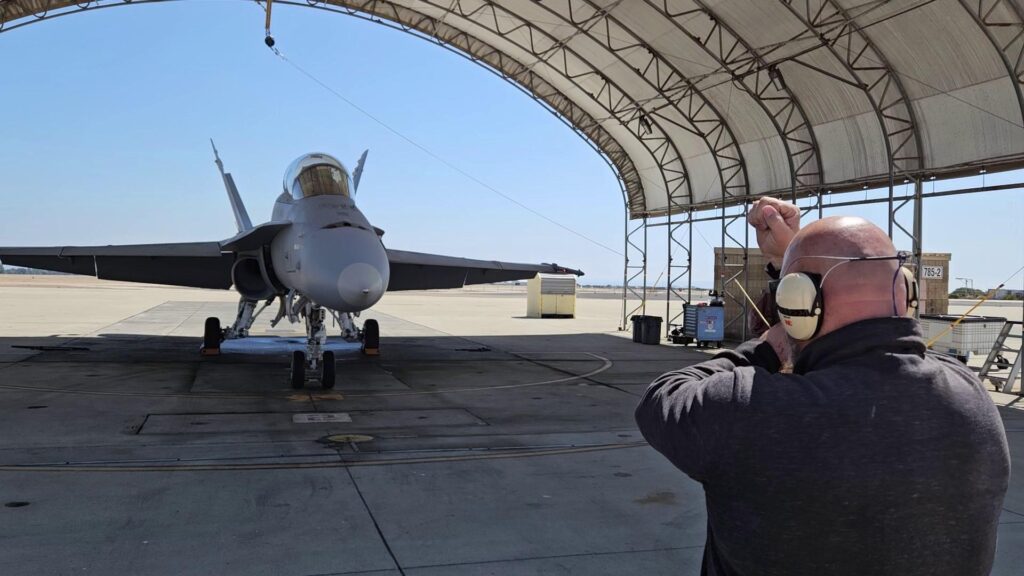
FRCSW completes the final maintenance on its last legacy F/A-18 Hornet, marking the end of an era in naval aviation. This milestone celebrates decades of dedication by artisans who kept these aircraft mission-ready.  

By: Janina Lamoglia, Oct. 31, 2024 

NAVAL AIR STATION NORTH ISLAND, Calif. — Fleet Readiness Center Southwest (FRCSW) has been a pillar of naval aviation maintenance since its establishment in 1919. Over the decades, the facility has supported the U.S. Navy’s mission readiness, ensuring iconic aircraft like the F-14 Tomcat, A-6 Intruder, and S-3 Viking remained airworthy. Now, FRCSW signifies a major shift with the final maintenance of its last legacy aircraft — an F/A-18 Hornet. 
 
Introduced in the 1980s, the F/A-18 Hornet has been a versatile and essential asset in naval aviation, serving in major conflicts such as Operation Desert Storm and the Kosovo War. This particular Hornet, designated AQ-99, carries a rich operational history, symbolizing both the aircraft’s role in naval conflicts and the legacy of FRCSW’s aircraft maintenance program. “This is monumental for the depot,” said Ehren Terbeek, FRCSW Tactical Air Program Manager. “Many artisans here began their careers working on these aircraft, and it’s a milestone for everyone involved.” 
 
The facility’s role in maintaining these legacy aircraft has been extraordinary. Through innovations like the center barrel replacement, FRCSW extended the operational life of the F/A-18 far beyond its original limit of 6000 flight hours, with some Hornets surpassing 9,000 hours. “The aircraft is old so parts were hard to source, and structural repairs were challenging, but our team’s skills and knowledge ensured these aircraft kept flying,” Terbeek emphasized. These efforts have been crucial in keeping naval aviation mission-ready for decades. 
 
FRCSW’s artisans, many of whom are veterans, take immense pride in their work. The departure of the second-to-last Hornet to Fort Worth, Texas and now the final Hornet returning to Miramar, marks a bittersweet moment for those who spent their careers ensuring these aircraft remained battle-ready. For many, working on the F/A-18 has been a career-defining experience. “It was bittersweet knowing we were saying goodbye to an aircraft that defined our work for decades,” Terbeek reflected. 
 
As FRCSW transitions to newer aircraft models like the F-35 and an Unmanned Aerial Vehicle like the MQ-8, the experience and expertise gained from decades of maintaining legacy aircraft will continue to inform its evolving role. The final maintenance effort on this F/A-18 Hornet is both the end of a chapter and a tribute to FRCSW’s historical contributions and the skilled workforce that has upheld the highest standards of aircraft maintenance. The legacy of excellence remains, as the facility prepares to support the next generation of naval aviation. 
 
Fleet Readiness Center Southwest is the Navy’s premier West Coast aircraft repair, maintenance, and overhaul organization specializing in the Navy and Marine Corps aircraft and their related systems.