USCG Strengthens Partnership with Palau to Combat Illicit Maritime Activity
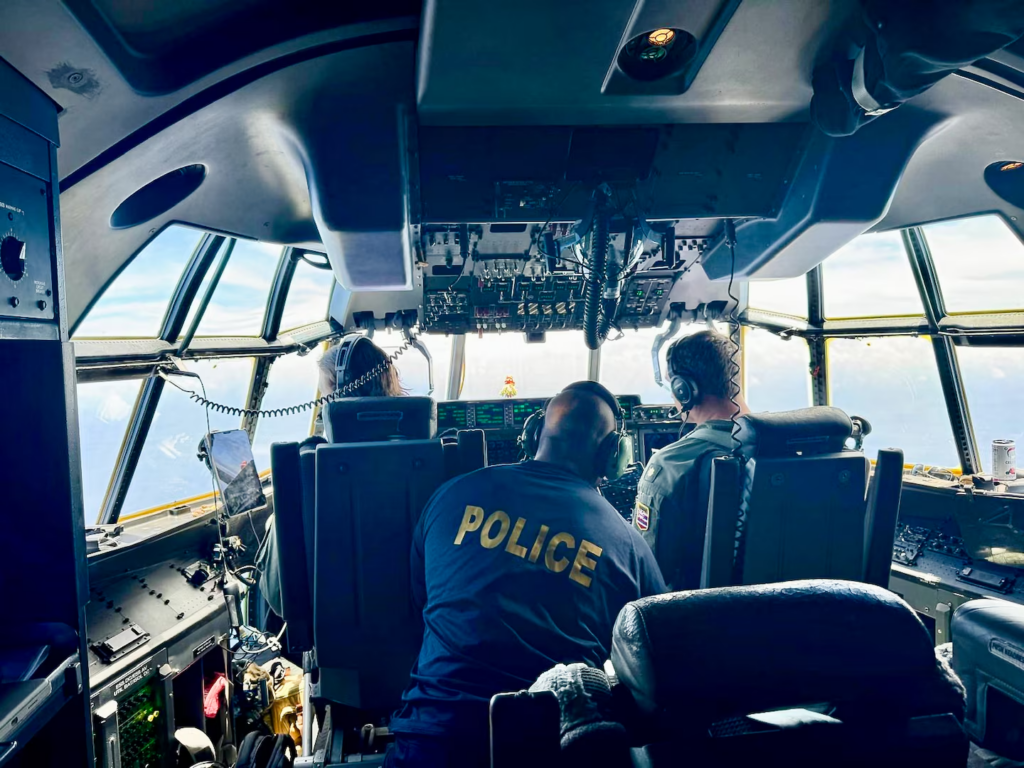
In a recent joint operation, which occurred Sept. 6-8, 2024, a U.S. Coast Guard HC-130 Hercules and aircrew embarked Palauan enforcement officials and Coast Guard specialists to patrol over 6,000 miles, identifying numerous illegal fish aggregation devices (FADs) and sighting vessels in and around Palau’s EEZ. (U.S. Coast Guard photo)

From U.S. Coast Guard Forces Micronesia Sector Guam, Sept. 17, 2024 

KOROR, Republic of Palau — At the request of the Republic of Palau and in response to their concerns of potential illicit maritime activity occurring in Palau’s Exclusive Economic Zone (EEZ), U.S. Coast Guard Forces Micronesia Sector Guam (FMSG) and U.S. Coast Guard Air Station Barbers Point dispatched personnel and equipment to enact the agreement between the U.S. and Palau Concerning Operational Cooperation to Suppress Illicit Transnational Maritime Activity (U.S. – Palau Bilateral Agreement), and in doing so enhanced Palau’s maritime domain awareness.  
 
In the recent joint operation, which occurred Sept. 6-8, 2024, a U.S. Coast Guard HC-130 Hercules and aircrew embarked Palauan enforcement officials and U.S. Coast Guard specialists to patrol over 6,000 miles, identifying numerous illegal fish aggregation devices (FADs) and sighting vessels in and around Palau’s EEZ.  
 
Exercising provisions of the U.S.–Palau bilateral agreement, the operation employed a Palauan air rider, Palau’s Joint Operations Center (JOC), and U.S. Coast Guard liaisons to maximize technologies and maritime domain awareness tools to monitor and patrol Palau’s waters and domestic fishing zones. 
 
“Our collaboration with the Palauan air rider and Palau’s Division of Marine Law Enforcement was instrumental in swiftly identifying illicit activities within Palau’s waters. This mission demonstrates the power of partnership and shared commitment to protecting maritime resources and maintaining sovereignty,” said Lt. Cmdr. Derek Wallin, the U.S. Coast Guard Compact of Free Association maritime advisor. 
 
U.S. Coast Guard liaison officers collaborated with the Division of Marine Law Enforcement and the Joint Operations Center in Koror to enhance maritime domain awareness alongside a U.S. Coast Guard HC-130 Hercules aircrew deployed to Palau by the U.S. Coast Guard 14th District. The U.S. Embassy in Koror coordinated the request from the government of Palau.  
 
“It was fantastic to have members of the Republic of Palau’s maritime law enforcement team aboard the aircraft, who’ve previously sailed with us on our Fast Response Cutters and participated in Operation Irensia in Guam earlier this year,” said Wallin. “The participation underscores the deep and enduring ties between our teams, demonstrating the strength of our partnership and our shared commitment to protecting Palau’s waters and the wider Blue Pacific.” 
 
Operational Highlights  
– U.S. Coast Guard Assets and Personnel Involved:  
– 03 U.S. Coast Guard liaison officers and specialists  
– Aircraft and aircrew from U.S. Coast Guard Hercules from Oahu, Hawai’i  
 
– Enacted Agreement:  
– Exercising the U.S. and Palau agreement to suppress illicit transnational maritime activity in and around Palau’s EEZ and territorial waters. 
 
– Results:  
– Approximately 50 hours of JOC watchstanding to coordinate and analyze maritime domain awareness efforts.  
– Hercules aircrew patrolled approximately 2,000 miles daily.  
– Hercules aircrew patrolled nearby high seas and verified 12 vessels and additional radar signatures of FADs along the Palau EEZ. 
 
One of the Palauan air riders described the operation as an unforgettable experience, praising the smooth flight, the professionalism of the aircrew, and the lasting memories made during the mission. The reports gathered during these operations will guide future efforts by Palauan and U.S. Coast Guard surface asset crews to locate, dismantle, and deter illegal fishing operations. This collaborative mission emphasizes the importance of aerial surveillance and the enduring U.S.-Palau partnership in safeguarding sovereignty and promoting good governance across the Blue Pacific. 
 
“The U.S. Coast Guard is proud to work alongside the Republic of Palau in this vital effort. The value of aerial support cannot be overstated, and together, we are strengthening maritime governance to ensure a secure and prosperous future for the Pacific. Our enduring partnership reflects our mutual dedication to protecting these vital waters from exploitation,”  
said Capt. Robert Kistner, commander of U.S. Coast Guard Forces Micronesia.  
 
The U.S. Coast Guard remains dedicated to supporting Palau’s maritime security through continued aerial, surface, and information-sharing operations, fostering a secure maritime environment for all who rely on the region’s resources. 


RTX’s Collins Aerospace Receives First-Ever FAA Approval to Increase Cockpit Processing Power

Collins’ Display with Mosarc increases cockpit processing power by 75% and decreases certification risk  

From RTX  

CEDAR RAPIDS, Iowa (Sept. 18, 2024) — Collins Aerospace, an RTX (NYSE: RTX) business, received the first-ever FAA Technical Standard Order (TSO) approval for a fully enabled multi-core processor. The Collins Multifunction Display, powered by Mosarc™, will increase the speed, capacity and flexibility of an aircraft’s flight deck, providing 75% more capability than traditional single core processors. 

With this authorization, the Multifunction Display is now the world’s first multi-core processor that’s certified for civil and military aircraft and facilitates simultaneous use of all processing cores across all Design Assurance Level (DAL) standards. This certification paves the way to utilize the processor for future hardware to enable multi-core processing.  

“On a military mission, every second counts and access to information is critical,” said Dave Schreck, vice president and general manager of Military Avionics and Helicopters at Collins Aerospace. “Collins’ display is the only multi-core processor on the market that is certified by the FAA and is being used by the U.S. Army. This translates to being much more efficient in integrating new capabilities while also being able to safely run more applications in parallel than ever before.” 

This enhanced performance comes from the system’s ability to process data 12 times faster than a single core processor, consuming 40% less power. It integrates multiple operating systems, which enables rapid third-party integration and reduces vendor lock. Ultimately, this provides platforms the flexibility to integrate evolving mission-systems capabilities in weeks rather than recertifying flight critical applications every time, which can take months or longer.  

Collins has been a leading provider of civil-certified, high integrity, safety-critical processors for military aircraft for more than two decades. To date, the display has completed more than 6,000 hours of flight tests and is optimized for use in rotary-wing, fighter, bomber and trainer environments. 


Silver Ships Expands to Second Location Increasing Production Capacity                          

Company expansion driven by industry growth 

MOBILE, Ala. (September 17, 2024) – Silver Ships recently expanded to a second location to maximize the efficiency of their boat manufacturing process. Silver Ships, headquartered in Theodore, Alabama specializes in producing high-quality aluminum workboats for military, federal, state and municipal governments as well as commercial applications. 

Today, they are announcing their recent manufacturing warehouse expansion that is strategically located less than one mile from their original 95,000 square-foot facility and headquarters. The new facility adds 16,500 square feet to its extensive manufacturing process and creates an additional 18,500 square feet of additional outfitting space in the original location. 

“Adding a second manufacturing location is a natural progression of our team’s work to support the growing workboat segment,” said Steven Clarke, Silver Ships CEO. “Our team works tirelessly to provide customers with the highest-quality, customized, mission-ready aluminum vessels in the industry. Facility expansion to meet the demands of the market is necessary to achieve the quality and deliver timelines of our customers.” 

Silver Ships is applying Just-In-Time manufacturing principles to reduce unnecessary inventory through continuous improvement, response to customer demand and an increase in throughput to improve efficiency. The new facility serves as the metal warehouse and houses the design and engineering departments. Silver Ships will transport materials to the original facility to begin the build process. To accomplish Silver Ships manufacturing goals, new team members will be added as needed. Watch their updated company video to learn more about Silver Ships and their facilities.  

Silver Ships’ extensive facilities, on-site Naval Architect and engineering staff and production resources keep customers’ needs at the forefront to produce a low-stress and rewarding workboat build experience. 


Navy Accepts Delivery of Future USS Robert E. Simanek

By Team Ships Public Affairs, Sept. 13, 2024

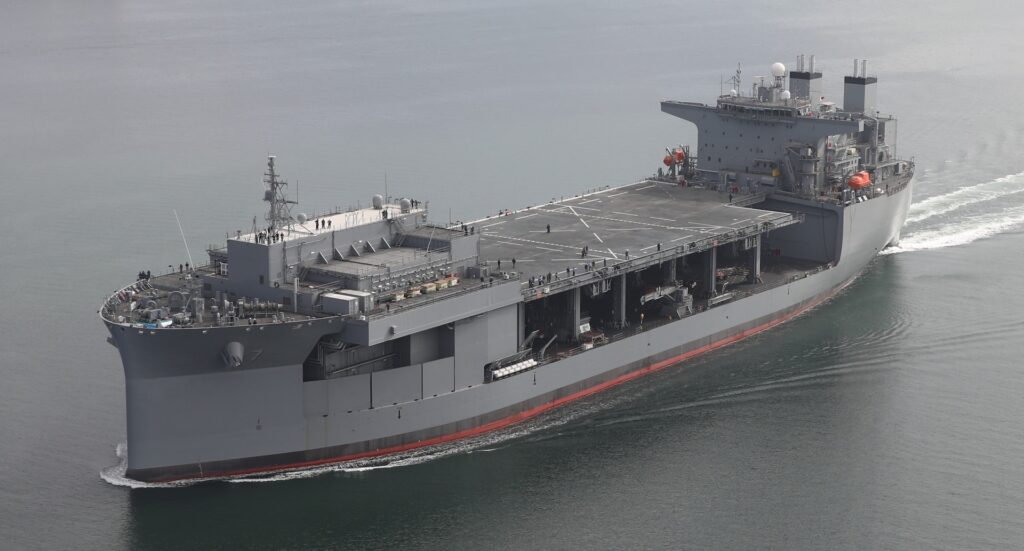
SAN DIEGO – The future USS Robert E. Simanek (ESB 7) was delivered to the U.S. Navy, Sept. 12. 

The ship is named for Private First Class Robert Ernest Simanek, who was awarded the Medal of Honor for shielding fellow Marines from a grenade at the Battle of Bunker Hill during the Korean War. The Medal of Honor was presented to him by President Dwight D. Eisenhower in a White House ceremony in 1953. 

“From christening in May 2024 to delivery, it has been an exciting time for those who spend each day preparing this ship to support our fleet,” said Tim Roberts, Strategic and Theater Sealift program manager, Program Executive Office (PEO) Ships. “The ESB ship class is a highly flexible platform used across various military operations. ESB ships are mobile sea-based assets and are a part of the critical access infrastructure that supports the deployment of forces, equipment, supplies, and warfighting capability.” 

ESBs are optimized to support a variety of maritime based missions, including Special Operations Forces, Airborne Mine Counter Measures, Crisis Response Force Sea Basing, Intelligence, Surveillance, and Reconnaissance and Unmanned Aviation Systems. The ESBs, which include a four spot V-22 sized flight deck, mission deck and hangar, are designed around four core capabilities: aviation facilities, berthing, equipment staging support, and command and control assets.  

Follow-on ship, future USS Hector A. Cafferata Jr. (ESB 8) is under construction at NASSCO. 

PEO Ships, one of the Department of Defense’s largest acquisition organizations, is responsible for executing the development and procurement of all destroyers, amphibious ships and craft, auxiliary ships, special mission ships, sealift ships and support ships. 


Industry Leaders Share Ideas at Maritime Economic Deterrence Executive Council 

Secretary of the Navy Carlos Del Toro’s Chief of Staff Mr. Christopher Diaz delivered remarks at the Center for Naval Analyses (CNA) Maritime Economic Deterrence Executive Council (MEDEC) to discuss the importance of the initiative at Arlington, Virginia, Sept. 17, 2024. (U.S. Navy photo by MC2 William Bennett IV)

From SECNAV Public Affairs, 17 September 2024

WASHINGTON – Secretary of the Navy Carlos Del Toro’s Chief of Staff Mr. Christopher Diaz delivered remarks at the Center for Naval Analyses (CNA) Maritime Economic Deterrence Executive Council (MEDEC) to discuss the importance of the initiative at Arlington, Virginia, Sept. 17, 2024. 
 
MEDEC is the Navy’s acknowledgement of maritime economic risks and represents the department’s commitment to helping researchers identify and address problems early for the safety of Navy personnel, as well as the security of U.S. allies and partners. 
 
The council brought together industry leaders to form breakout groups and discussions throughout the day. The findings and recommendations generated today will directly inform Secretary Del Toro to develop MEDEC’s approach to working with Navy partners throughout the government, in industry, and in the investment community. 
 
For over 80 years, the Department of the Navy has challenged the analysts of CNA with tackling the hardest problems facing our Navy-Marine Corps team, informing national decisionmakers as they chart our nation’s course. 
 
“MEDEC serves as the coordinating body for the organizations throughout the Department of the Navy that are focused on addressing adversarial economic activities that threaten the technologies and capabilities our Sailors and Marines rely on for their competitive advantages in the maritime domain,” said Diaz. 
 
Secretary Del Toro announced the creation of MEDEC in New York City during a panel discussion hosted by the Aspen Institute and the Bloomberg Foundation Feb. 22, 2024. 
 
“We have brought together experts from a wide range of disciplines from across our department, including supply chain management, technology protection and security, foreign investment review, intelligence and law enforcement, among others,” said Diaz. 
 
MEDEC is co-chaired by Principal Military Deputy Assistant Secretary of the Navy (Research, Development and Acquisition), Vice Adm. Scott Pappano. 
 
“Our adversaries are pushing the boundaries and pursuing courses of actions that go beyond leveraging their military might, to include exploitation of the investment, industry, and innovation ecosystems that serve as the engine of the economies of the United States, our allies, and our international partners,” said Pappano. 
 
“It is critical that we get this right, for every compromise of a capability, every loss of intellectual property that is critical to the technologies we rely on, represents a material loss to investors, firms, and their employees,” said Diaz. “More importantly, loss or compromise creates serious risk for our personnel operating around the globe, and that is a risk we are unwilling to accept.” 
 
CNA is an independent, nonprofit research and analysis organization dedicated to the safety and security of the nation. For 80 years, CNA’s scientific rigor and real-world approach to data has been indispensable to leaders facing complex problems. 


U.S. Coast Guard Encounters Russian Naval Vessels Near Point Hope, Alaska

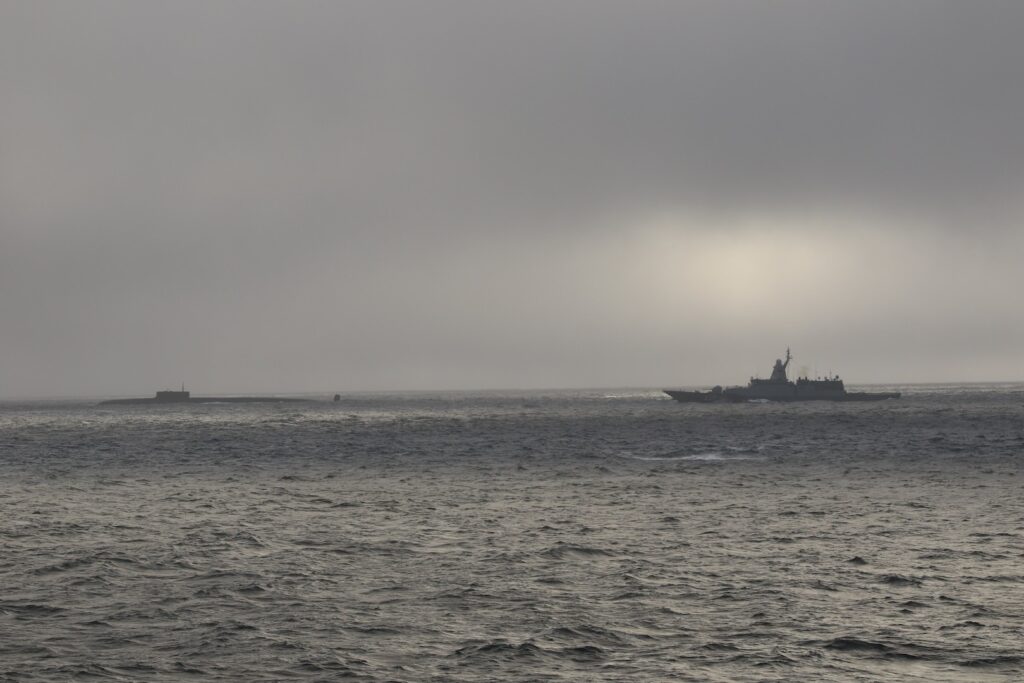
The crew of U.S. Coast Guard Cutter Stratton (WMSL 752) encountered and shadowed four Russian Federation Navy (RFN) vessels 57 miles northwest of Point Hope, Alaska, Sept. 15, 2024. The Russian Surface Action Group consisted of a Severodvinsk-class submarine, a Dolgorukiy-class submarine, a Steregushchiy– class Frigate, and a Seliva-class tug. (U.S. Coast Guard courtesy photo)

U.S. Coast Guard 17th District, Sept. 16, 2024 

JUNEAU, Alaska — The U.S. Coast Guard located four Russian Federation Navy (RFN) vessels Sunday, 57 miles northwest of Point Hope, Alaska.   

While on a routine patrol in the Chukchi Sea, the crew of U.S. Coast Guard Cutter Stratton (WMSL 752) observed the RFN vessels transiting southeast along the Russian side of the Maritime Boundary Line (MBL).  

The crew of the Stratton witnessed the RFN vessels cross the MBL into the U.S. Arctic and moved to observe the vessels. The Russian vessels were assessed to be avoiding sea ice on the Russian side of the MBL and operated in accordance with international rules and customs as they transited approximately 30 miles into the U.S. Exclusive Economic Zone.  

“We are actively patrolling our maritime border in the Bering Sea, Bering Strait, and Chukchi Sea, with our largest and most capable cutters and aircraft, to protect U.S. sovereign interests, U.S. fish stocks, and to promote international maritime norms,” said Rear Adm. Megan Dean, Commander of Coast Guard District Seventeen. “Coast Guard Cutter Stratton ensured there were no disruptions to U.S. interests.”  

The Russian Surface Action Group consisted of a Severodvinsk-class submarine, Dolgorukiy-class submarine, Steregushchiy– class Frigate, and Seliva-class tug.   

The Stratton is patrolling under Operation Frontier Sentinel, an operation designed to meet presence with presence when strategic competitors operate in and around U.S. waters. The Coast Guard’s presence strengthens the international rules-based order and promotes the conduct of operations in a manner that follows international law and norms.    

Coast Guard Cutter Stratton is a 418-foot legend class national security cutter homeported in Alameda, Calif. 


Kongsberg to Establish Missile Factory in the U.S.

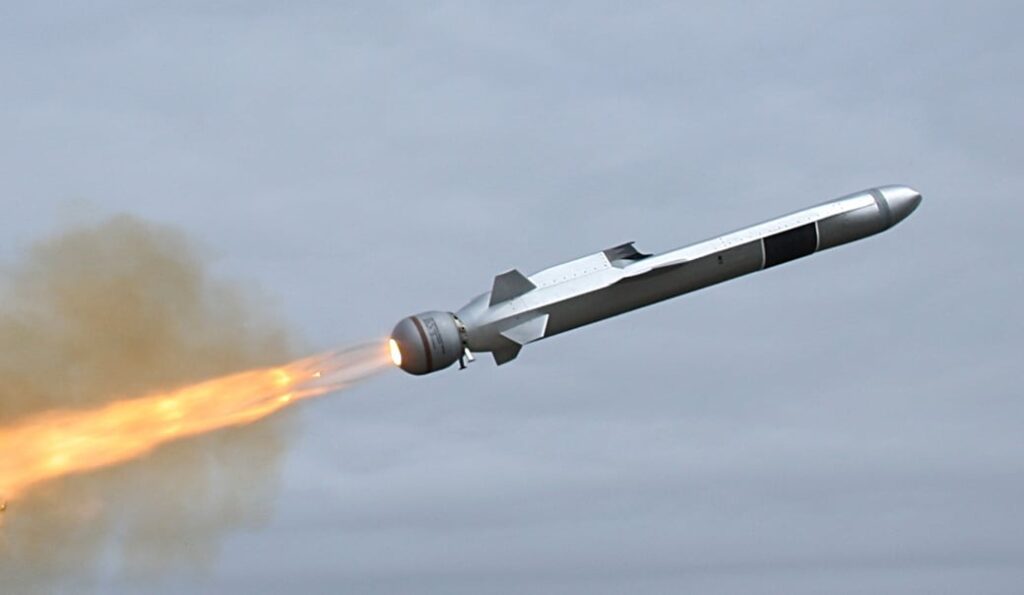
Naval Strike Missile 

KONGSBERG, NORWAY – Sept. 17, 2024 – Kongsberg Defence and Aerospace is building a state-of-the-art missile production facility in the United States to meet global demand, following expansion in Norway and the recently announced missile factory in Australia. Located near key U.S. Navy facilities, the site in James City County, Virginia will provide additional production capacity, sustainment and in-country tech refresh capabilities for Kongsberg Naval Strike Missiles (NSM) and Joint Strike Missiles (JSM).  

“The new missile production facilities in the U.S., Australia and Norway address the strong and long-term demand for our unique technology and the critical need to strengthen collective defense capabilities. Kongsberg has a proud history in the U.S. and we are delighted to continue to invest in the country to support American interests while creating jobs locally,” said Geir Håøy, CEO of Kongsberg. 

This is the second new missile production facility Kongsberg has announced in as many months, and the decision to locate this facility in the U.S. was heavily influenced by the possibility that the Department of Defense could award a multiyear procurement contract to Kongsberg.   

“The U.S. Navy, Marine Corps and Air Force are important customers for Kongsberg’s Naval Strike Missile and Joint Strike Missile. Their demand signals gave us the predictability we needed to make this investment in the United States,” said Eirik Lie, president of Kongsberg Defence and Aerospace. “This will allow us to better serve our allies in the U.S. and continue to expand that supply chain locally, building capacity and redundancy for these critical capabilities.” 

Kongsberg’s investments will increase overall U.S. manufacturing capability and further increase capacity to build these advanced systems, but more importantly, it will bring this capability to the U.S.   

“Kongsberg is investing in a big way in the U.S. market by making Virginia the U.S. home of our new missile factory, which will entail hiring more than 180 people. We will also be investing more than $100 million into the Commonwealth of Virginia over the next few years, in terms of property, plant and equipment,” said Heather Armentrout, president and general manager, Kongsberg Defense and Aerospace, Inc., the U.S. subsidiary of Kongsberg. “This is in addition to expansion at our core U.S. production facility in Johnstown, Pennsylvania.”  

The new facility in James City County will be equipped to assemble, upgrade and repair both NSM and JSM. The NSM is an anti-ship missile with superior operational performance and high survivability against all enemy defense systems. The JSM is an air-launched strike missile designed to fulfill complex missions, such as Anti-surface Warfare (ASuW) and land attack. The JSM is designed to be deployed internal to the weapons bay of the U.S. Air Force’s F-35A, a characteristic that preserves the low observability features of the aircraft throughout any strike mission. KONGSBERG’s JSM is the only long-range precision strike munition that offers that capability.  


USS Manchester Returns to San Diego Homeport

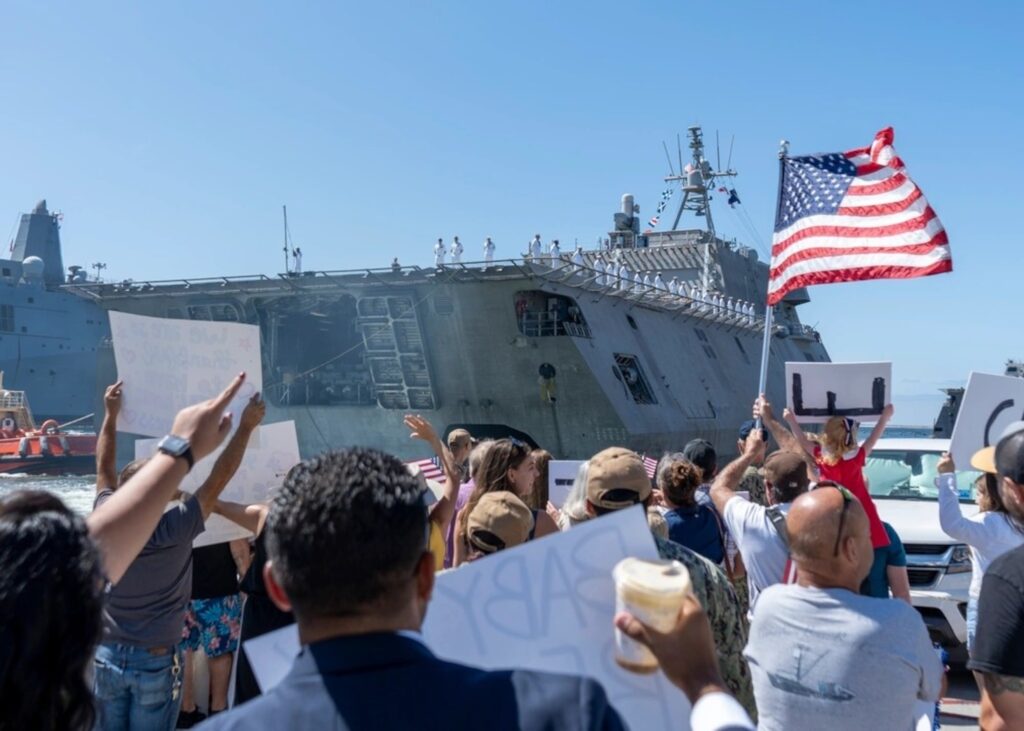
The Independence-variant littoral combat ship USS Manchester (LCS 14) moors pier side at its homeport of Naval Base San Diego, Sept. 11, 2024. Manchester returned to Naval Base San Diego following an 18-month deployment to the U.S. 3rd and 7th Fleets in support of a free and open Indo-Pacific. (U.S. Navy photo by MC2 Isaak Martinez) 

by Lt. Brinn Hefron, 11 September 2024 

SAN DIEGO – The Independence-variant littoral combat ship USS Manchester (LCS 14) arrived at its San Diego homeport Sept. 11, following an 18-month deployment. 
 
“We are extremely proud of the accomplishments made by the USS Manchester crews throughout their 18 months of deployed operations,” said Capt. Douglas Meagher, commodore, Littoral Combat Ship Squadron One. “Littoral combat ships like Manchester have and continue to demonstrate strategic value through relevant presence and unique access in the Indo-Pacific, strengthening relationships with maritime allies and partners.” 
 
While deployed, Manchester participated in several multi-national exercises including Multilateral Naval Exercise Komodo (MNEK) 2023, Oceania Maritime Security Initiative (OMSI) 2023, Pacific Griffin 2023, and Maritime Training Activity (MTA) Malaysia. 
 
“I am excited to see the LCS community involved in all aspects of multinational training and exercises. Ships like Manchester demonstrate the LCS value to Fleet Commanders, made possible by the men and women onboard,” said Cmdr. Matthew Farrell, commanding officer of the Manchester Gold crew. “I am proud to have sailed throughout the Indo-Pacific with this crew of warfighters, and we are excited to return home to San Diego to spend time with family and friends.” 
 
Manchester participated in MNEK off the coast of Indonesia in June 2023. The exercise focused on humanitarian assistance and disaster relief rather than operational warfighting. 
 
In July 2023, Manchester embarked Helicopter Sea Combat Squadron (HSC) 21 and a U.S. Coast Guard tactical law enforcement team to support OMSI 2023. The Coast Guard tactical law enforcement team is a specialized force that carries out maritime interdiction, security, and counter-narcotics operations. OMSI is a Secretary of Defense program that leverages Department of Defense assets transiting the region to improve maritime security and maritime domain awareness, ultimately supporting regional stability and partnerships in Oceania. 
 
Manchester transited the Philippine Sea during Exercise Pacific Griffin 2023, June 2023, alongside Ticonderoga-class guided-missile cruiser USS Shiloh (CG 67) and Lewis and Clark-class dry cargo ship USNS Cesar Chavez (T-AKE 14), as well as Republic of Singapore Navy Formidable-class stealth frigate RSS Tenacious (FFC 71) and Independence-class littoral mission vessel RSS Dauntless (LMV 21). Pacific Griffin is a maritime exercise between the U.S. and Republic of Singapore conducted in waters near Guam. During the two weeks of dynamic training evolutions ashore and at sea, the two navies enhanced combined maritime proficiency and strengthened relationships. 
 
“One of the greatest aspects of deploying to the Indo-Pacific is the opportunity to work alongside our allies and partners. Whether that was with the Royal Malaysian Navy, the Philippine Navy or the Republic of Singapore Navy, it was an honor to work side-by-side with them,” said Farrell. 
 
In August 2023, Navy explosive ordnance disposal (EOD) technicians assigned to EOD Mobile Unit 5 conducted an anti-terrorism force protection inspection training dive underneath Manchester. 
 
As part of MTA Malaysia 2023, Manchester conducted complex at-sea training such as surface warfare, live-fire gunnery exercises, flight operations and advanced ship-handling tactics with the Royal Malaysian Navy. The MTA strengthens bilateral ties between the United States and Malaysia and allows the two countries to work together with a goal of ensuring a free and open Indo-Pacific. 
 
While in port, Manchester Sailors fostered strong relationships with host nations. In Subic Bay, Philippines, Manchester provided ship tours to the Philippine Navy and a damage control demonstration. In Sriracha, Thailand, Sailors volunteered at the Child Protection and Development Center. 
 
During deployment, Manchester conducted port visits to six partner and allied nations: Indonesia, Malaysia, Marshall Islands, the Philippines, Singapore, and Thailand. 
 
Manchester repeatedly demonstrated resilience and LCS sustainability by consistently maintaining extended operations at sea. During deployment, Manchester spent 32 continuous days underway supporting theater priority operations. 
 
Manchester is a fast, optimally manned, mission-tailored surface combatant that operates in near-shore and open-ocean environments, winning against 21st-century coastal threats. LCSs like Manchester integrate with joint, combined, manned and unmanned teams to support forward presence, maritime security, sea control, and deterrence missions around the globe. 


Navy Commissions Submarine USS New Jersey  

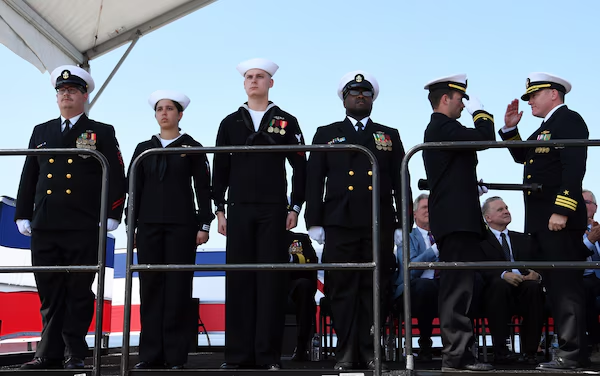
Cmdr. Steven Halle, right, commanding officer of USS New Jersey (SSN 796), returns a salute from the ceremonial first watch during a commissioning ceremony at Naval Weapons Station Earle, N.J. (MCC Joshua Karsten)

16 September 2024 

From U.S. Navy 

MIDDLETOWN, N.J. – The Navy commissioned the fast-attack Virginia-class submarine USS New Jersey (SSN 796) in a traditional ceremony held September 14, at Naval Weapons Station Earle in Middletown, New Jersey. 

The ceremony culminated a years-long process for commissioning the New Jersey, the third U.S. Navy ship named after the state of New Jersey, the most recent being the decorated battleship BB-62 which saw action during WWII, the Korean War, and the Vietnam War. 

New Jersey’s commanding officer Cmdr. Steve Halle called the event “a truly historic moment” during his speech, praising all the distinguished guests, shipbuilders, and supporting organizations before addressing his crew. 
  
“To the crew, the plank owners, this ceremony… is about you” Halle emphasized. “You operate the most complex platform on the planet and you continuously strive for excellence. I’m amazed and humbled at what we have accomplished” he continued. 
 
“Our superior professionalism is enhanced by our crew integration and our diversity,” Halle said of his crew being the first fully integrated fast-attack submarine. “We have exceeded expectations at every turn and overcome every obstacle set before us.” 
 
Halle also spoke to the people of New Jersey stating “I know that the legacy we have inherited from the state of New Jersey and BB-62 will carry forward in our pursuit of greatness.” 
 
“Today, we commissioned our ship, and she is the fastest, most advanced, fully integrated fast-attack to date,” Halle said in closing. 
 
Susan DiMarco, New Jersey’s sponsor and wife of former Secretary of Homeland Security Jeh Johnson, gave the crew the traditional order to “man our ship and bring her to life,” after which New Jersey’s sailors responded “aye aye ma’am” before ceremonially running aboard the submarine.   
 
Other speakers at the commissioning ceremony included New Jersey Governor Philip Murphy, Secretary of the Navy Carlos Del Toro, Ms. Jennifer Boykin, president of Newport News Shipbuilding, and Mr. Larry Runkle, vice president of General Dynamics Electric Boat. Adm. William Houston, director of the Navy’s Nuclear Propulsion program, served as the senior Naval officer and Submarine Force commander Vice Adm. Robert Gaucher as the presiding officer. Lt. Cmdr. Andrew Hutchison, the ship’s executive officer, served as master of ceremonies.   
 
The submarine is 377 feet long, has a 34-foot beam and is able to dive to depths greater than 800 feet and operate at speeds in excess of 25 knots. New Jersey has a crew of nearly 135 Navy personnel. 
 
Fast-attack submarines are multi-mission platforms enabling five of the six Navy maritime strategy core capabilities – sea control, power projection, forward presence, maritime security, and deterrence. They are designed to excel in anti-submarine warfare, anti-ship warfare, strike warfare, special operations, intelligence, surveillance and reconnaissance, irregular warfare, and mine warfare. Fast-attack submarines project power ashore with special operations forces and Tomahawk cruise missiles in the prevention or preparation of regional crises. 


General Dynamics NASSCO Receives Additional Eight-Ship Contract to Build T-AO 10-17 

NASSCO is currently under contract for the first nine ships of the class and has delivered three to date. With this award, the company will build seventeen of the Navy’s twenty-ship program of record. 

From NASSCO Sept. 13, 2024 

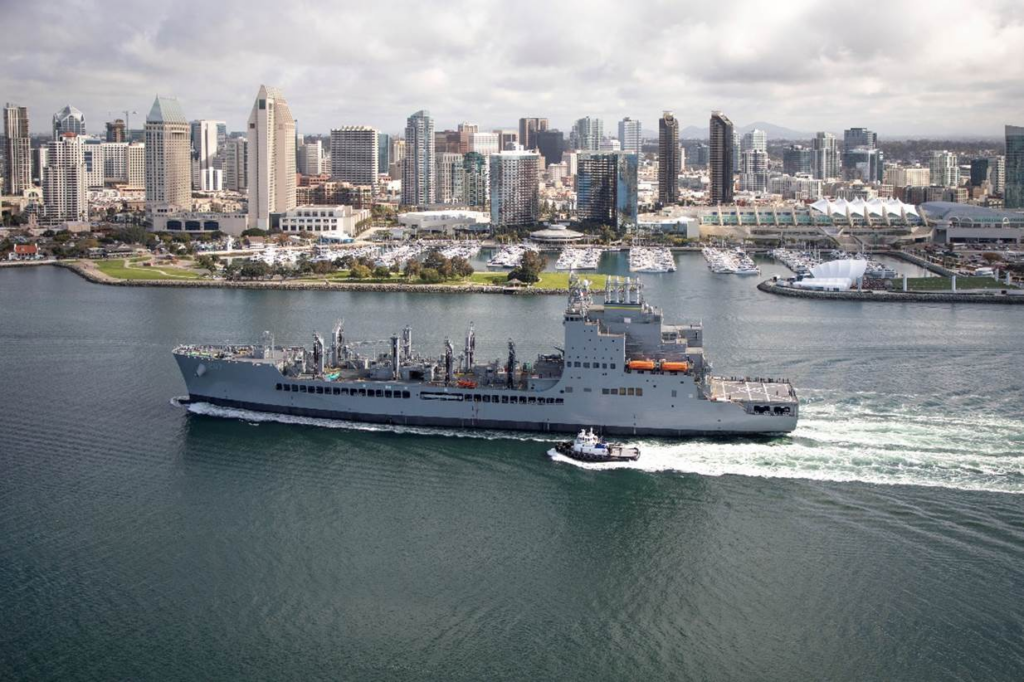
SANDIEGO – General Dynamics NASSCO, a subsidiary of General Dynamics (NYSE: GD), announced today that it has received a block-buy contract from the U.S. Navy for the construction of up to eight additional John Lewis-class fleet replenishment oilers (T-AO 214 through 221) . The tenth ship, and first under the new contract, has been awarded for $780 million. If all eight ships are ultimately exercised, and including incentives and other contract options in support of those ships, the contract value will total over $6.7 billion. 

“We are pleased to continue building these ships, with seventeen of the Navy’s twenty-ship program of record now on contract. This will make the T-AO program the longest Navy production series in NASSCO history,” said Dave Carver, president of General Dynamics NASSCO. “The NASSCO team is honored to continue working with our Navy customer and thankful for their unwavering support.” 

In 2016, the Navy awarded NASSCO with a contract to design and build the first six ships in the next generation of fleet oilers, the John Lewis-class. In 2022, that contract was modified to add an additional three oilers (T-AO 211 – 213). Designed to transfer fuel to U.S. Navy ships operating at sea, the 742-feet vessels have a full load displacement of 49,850 tons, capacity to carry 162,000 barrels of oil and significant amounts of dry cargo, as well as providing aviation capability while traveling at speeds up to 20 knots.  

The first ship, USNS John Lewis (T-AO 205), was delivered to the U.S. Navy in July 2022. The USNS Sojourner Truth (T-AO 210) and the USNS Thurgood Marshall (T-AO 211) are currently under construction, while the USNS Lucy Stone (T-AO 209) will be christened and launched on September 21, 2024. Start of construction for the USNS Ruth Bader Ginsburg (T-AO 212) will be in October 2024. 

General Dynamics NASSCO specializes in the design and construction of Navy and commercial ships and is a major provider of repair services for the U.S. Navy, with capabilities in San Diego, California; Norfolk, Virginia; Mayport, Florida; and Bremerton, Washington. More information about General Dynamics NASSCO is available at www.nassco.com