Navy Announces Commissioning Date for the Future USS Nantucket 

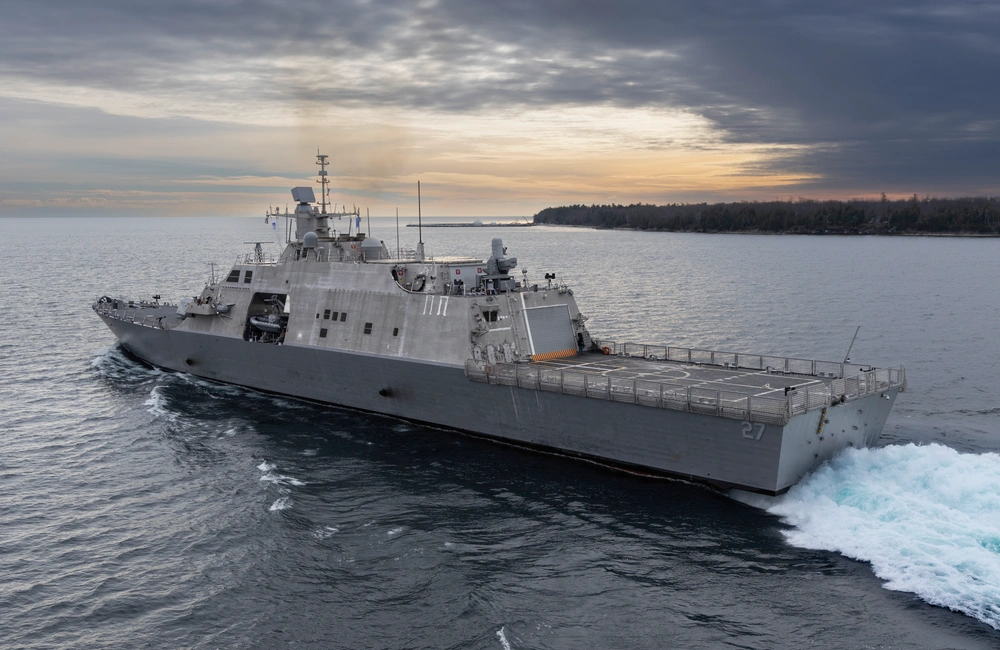
Marinette, Wisconsin – The future USS Nantucket transits the Menominee River in northern Wisconsin, departing for at-sea demonstrations during Acceptance Trials, December 6, 2023. The USS Nantucket is a testament to the enduring partnership between Nantucket, Massachusetts, and the Navy honoring the rich heritage of the people of Nantucket and the maritime legacy that the island represents. Photo By Lockheed Martin

By Karli Yeager, Commander, Naval Surface Force, U.S. Pacific Fleet Public Affairs 

Sept. 11, 2024 

The U.S. Navy will commission the future USS Nantucket (LCS 27), a Freedom-variant littoral combat ship, November 16, 2024, at Charlestown Navy Yard in Boston, Massachusetts. 

 The naming of LCS 27 honors the rich heritage of the people of Nantucket and the maritime legacy that the island represents. 

As the sponsor of LCS 27, Polly Spencer, the wife of the 76th Secretary of the Navy, will lead the time-honored Navy tradition of giving the order during the ceremony to “man our ship and bring her to life!” At that moment, the crew hoists the commissioning pennant, and Nantucket becomes a proud ship of the fleet. 

Nantucket will be the 14th Freedom-variant littoral combat ship and the fourth ship to bear the name. 

Following its commissioning, Nantucket will depart Boston for its homeport assignment of Naval Station Mayport in Jacksonville, Florida. 

 Nantucket is a fast, optimally manned, mission-tailored surface combatant that operates in near-shore and open-ocean environments, winning against 21st-century coastal threats. LCSs like Nantucket will integrate with joint, combined, manned, and unmanned teams to support forward presence, maritime security, sea control, and deterrence missions around the globe. 

The mission of CNSP is to man, train, and equip the Surface Force to provide fleet commanders with credible naval power to control the sea and project power ashore. 


Sept 11-15 U.S. Central Command Update 

From U.S. Central Command 

Sept 15, 2024  
 

TAMPA, Fla. – In the past 24 hours, U.S. Central Command (USCENTCOM) forces successfully destroyed one missile system in a Houthi-controlled area of Yemen.  

It was determined this system presented a clear and imminent threat to U.S. and coalition forces, and merchant vessels in the region. This action was taken to protect freedom of navigation and make international waters safer and more secure for U.S., coalition, and merchant vessels.  

Sept. 13, 2024 
 

TAMPA, Fla. – In the past 24 hours, U.S. Central Command (USCENTCOM) forces successfully destroyed three uncrewed aerial vehicles and one support vehicle in Houthi-controlled area of Yemen. 

It was determined these systems presented an imminent threat to U.S. and coalition forces, and merchant vessels in the region. These actions were taken to protect freedom of navigation and make international waters safer and more secure for U.S., coalition, and merchant vessels. 

Sept. 11, 2024 

TAMPA, Fla. – In the past 24 hours, U.S. Central Command (USCENTCOM) forces successfully destroyed one Iranian-backed Houthi missile system in a Houthi-controlled area of Yemen. 

It was determined this system presented a clear and imminent threat to U.S. and coalition forces, and merchant vessels in the region. This action was taken to protect freedom of navigation and make international waters safer and more secure for U.S., coalition, and merchant vessels. 

Sept. 11, 2024 

TAMPA, Fla. – In the past 24 hours, U.S. Central Command (USCENTCOM) forces successfully destroyed one Iranian-backed Houthi missile system in a Houthi-controlled area of Yemen. 

It was determined these systems presented a clear and imminent threat to U.S. and coalition forces, and merchant vessels in the region. This action was taken to protect freedom of navigation and make international waters safer and more secure for U.S., coalition, and merchant vessels. 


USCGC Oliver Henry Crew Completes Patrol Under Operation Rematau

U.S. Coast Guard Forces Micronesia Sector Guam

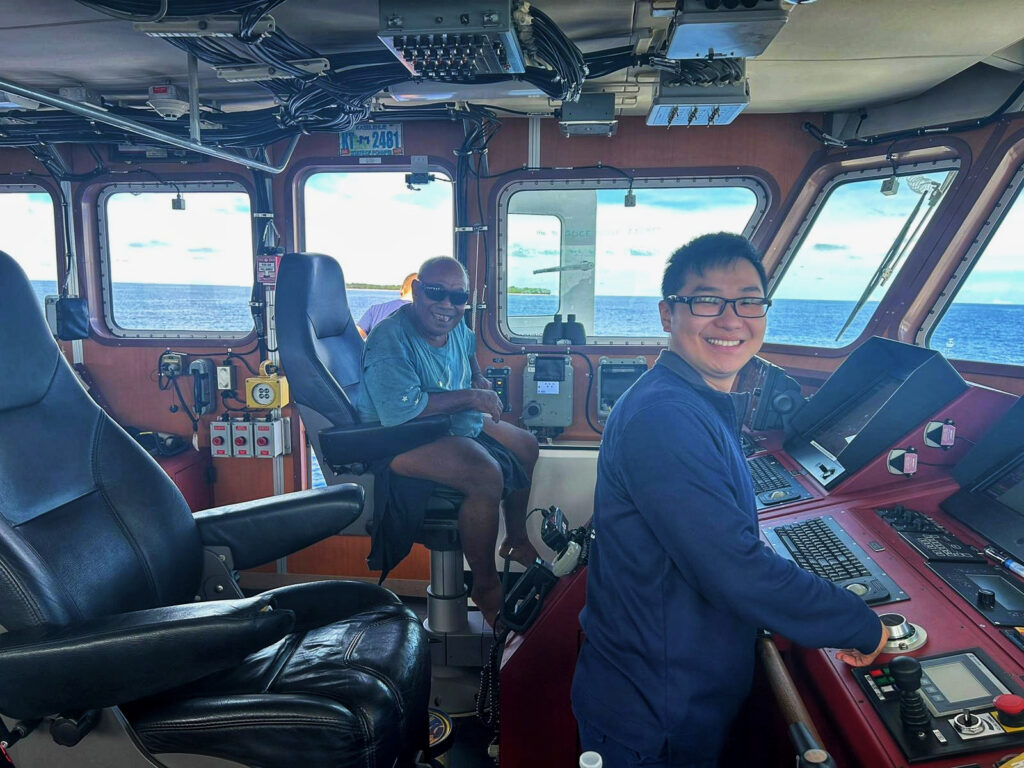
Ensign Matt Go and Chief Robert Etiuweliug, chief of the community on Satawal, take a moment for a photo on the bridge of the USCGC Oliver Henry (WPC 1140), offshore of Satawal, Yap State, Federated States of Micronesia. U.S. Coast Guard | Lt. Ray Cerrato

SANTA RITA, Guam — The USCGC Oliver Henry (WPC 1140) concluded a strategic patrol on Sept. 2, 2024, under Operation Rematau, marking significant achievements in maritime security and regional cooperation in the U.S. and Federated States of Micronesia (FSM) Exclusive Economic Zones. 

The crew successfully executed a series of operations that reinforced their readiness and operational capabilities. At the forefront of the patrol’s accomplishments was the rescue of six fishermen whose vessel became disabled near Satawal, FSM. This operation underscored the crew’s readiness, capability to respond effectively to maritime emergencies, and the value of using personal locator beacons.

“The rescue operation was a testament to the skill and preparedness of our crew,” said Lieutenant Ray Cerrato, commanding officer of the Oliver Henry. “Navigating through challenging conditions to ensure the safety of these individuals highlights our commitment to the core values of the Coast Guard. We encourage mariners to take personal locator beacons and keep an eye out for our white hulls and blue lights as we seek to bring them home safely.”

During the patrol, the crew of the USCGC Oliver Henry collaborated diplomatically and operationally with local maritime authorities and other stakeholders in the Federated States of Micronesia and the Commonwealth of the Northern Mariana Islands. These engagements helped reinforce mutual understanding and coordination capabilities, laying a stronger foundation for future joint operations. The mere presence of the USCGC Oliver Henry in critical maritime zones served as a deterrent to potential illicit activities. Regular patrols signal ongoing commitment and surveillance, discouraging illegal activities through visible enforcement presence.

The crew worked to enhance communication and information-sharing systems with regional partners through relationship strengthening. By improving these channels, Oliver Henry helped ensure that real-time data and insights could be shared more effectively, allowing for quicker responses to potential IUU fishing activities. The patrol also allowed the crew to follow up on previous commitments and relief efforts, such as those conducted in Satawal. These follow-ups help maintain strong community relations and ensure continued cooperation, which is vital for addressing broader maritime issues through a united front.

Throughout the patrol, the crew participated in rigorous training exercises, including gunnery exercise drills, where they expended both .50 caliber and 25mm ammunition to ensure proficiency in using and maintaining the weapons systems. These exercises ensure the crew remains at peak readiness.

“This patrol exemplifies the spirit and dedication of the Oliver Henry crew,” said Captain Robert Kistner, commander of U.S. Coast Guard Forces Micronesia/Sector Guam. “Their ability to adapt and overcome challenges while achieving mission objectives reinforces our role as a steadfast protector in the Pacific.”


New Commander Takes Charge of Pacific Marines

U.S. Marine Corps Lt. Gen. William M. Jurney, U.S. Marine Corps Forces, Pacific, gives his final remarks as commander during the MARFORPAC change of command ceremony on Marine Corps Base Hawaii, Sept. 12, 2024. U.S. Marine Corps | Staff Sgt. Ash McLaughlin

MARINE CORPS BASE HAWAII — Lieutenant General William M. Jurney relinquished command of U.S. Marine Corps Forces, Pacific to Lieutenant General James F. Glynn during a ceremony aboard Marine Corps Base Hawaii, Sept. 12, 2024. Jurney also retired from the Marine Corps during the ceremony.

“You don’t get here by happenstance,” said General Eric M. Smith, commandant of the Marine Corps. “You get here by determination, by hard work, by commitment to your profession. You’re hand selected to come here based on your integrity, your vision, and your warfighting expertise.”

Jurney, a native of Statesville, North Carolina, commanded MARFORPAC since September 2022. After graduating from the University of North Carolina at Charlotte in 1987, he enlisted in the Marine Corps and retired with more than 37 years of service.

“The Marines and Sailors standing in front of you today represent two Marine Expeditionary Forces, both I and III MEF, and our headquarters,” stated Jurney during his last address as commander. “The MEFs and MARFORPAC represent approximately two-thirds of the entire United States Marines Corps’ combat power. Every day, over 80,000 Marines and Sailors make sacrifices for our country, and we do not forget them for their service.”

During Jurney’s tenure, Pacific Marines participated in several significant events, including the first deployment of the Amphibious Combat Vehicle with the 15th Marine Expeditionary Unit, the redesignation of 12th Marine Regiment to 12th Marine Littoral Regiment, Unmanned Aerial Vehicle Squadron 3’s transition from the RQ-21A to the MQ-9A MUX/MALE, and support to more than 120 exercises and engagements throughout the Indo-Pacific theater.

Reflecting on the achievements and progress made while in command, Jurney highlighted the dedication and readiness of Pacific Marines.

“They stand ready to fight — and to fight and win — on behalf of our nation and on behalf of our nation’s commitment to our allies and to our partners,” Jurney said. “Our capabilities of readiness are possible because of strong partnerships and our strong alliances.”

A native of Albany, New York, Glynn graduated from the U.S. Naval Academy and commissioned in 1989. He most recently served as deputy commandant for Manpower and Reserve Affairs, based in Quantico, Virginia.

“You should expect me to be out front ensuring that you have what you need and that you are taken care of so that we can achieve the things in support of our partners and Allies,” Glynn said during his first remarks to Pacific Marines. “So, we can do the things that are required to prevail – that are expected of us as individuals and as a group. So, know those standards and exceed those standards at every occasion.”

The ceremony featured marching units, the MARFORPAC Band, a combined color guard representing MARFORPAC and its subordinate commands, an artillery salute, and the traditional passing of the unit colors from the outgoing to the incoming commander, signifying the transfer of authority and accountability of the command.


Marine Corps Adds AGM-158A Joint Air-to-Surface Standoff Missile to F/A-18 Arsenal

U.S. Marines load an AGM-158A joint air-to-surface standoff missile on an F/A-18 Hornet assigned to VMFA-232 during the AGM-158A validation and verification at Marine Corps Air Station Miramar, California, Aug. 27, 2024. U.S. Marine Corps | Lance Cpl. Jennifer Sanchez

MARINE CORPS AIR STATION MIRAMAR, California — Marines with Marine Aviation Logistics Squadron 11 and Marine Fighter Attack Squadron (VMFA) 232 became the first to conduct ordnance operations with the Marine Corps’ newest F/A-18 Hornet weapon, the AGM-158A joint air-to-surface standoff missile, during validation and verification testing at Marine Corps Air Station Miramar, California, Aug. 27-28, 2024.

The AGM-158A JASSM is a conventional, stealthy, air launched ground attack cruise missile with a range of 230 miles. In 2018, the United States employed the JASSM in combat for the first time, fired from U.S. Air Force B-1B Lancer bombers, destroying a Syrian chemical weapons manufacturer and proving the JASSM’s effectiveness.

“The integration of the AGM-158A joint air-to-surface standoff missile into the F/A-18’s arsenal significantly enhances the Hornet’s capabilities, enabling it to strike targets from well beyond the reach of enemy air defenses,” said Major Bradley Kirby, an aviation ordnance officer with 3rd Marine Aircraft Wing.

Marines conducted validation and verification testing by loading an AGM-158A JASSM onto an F/A-18 assigned to VMFA-232 to evaluate the loading procedures, connecting hardware and software — a required protocol before the JASSM is incorporated in the Marine Corps arsenal.

As the Marine Corps tailors its advanced fighter attack aircraft and ushers in fifth-generation aircraft, it is also integrating new munitions with increased range, speed and lethality.

Marine Corps strike fighter platforms are postured to acquire long-range, maritime strike capabilities with the inclusion of the AGM-158B joint air-to-surface standoff missile extended range and AGM-158C long range anti-ship missile on the F-35B/C weapons integration roadmap.

“The JASSM not only surpasses the capabilities of any other weapon currently in the Hornet’s extensive weapons portfolio, but also the Marine Corps at large,” Kirby said. “This added capability will greatly increase 3rd Marine Aircraft Wing’s ability to support the joint force and enable greater freedom of maneuver across all operational domains.”


Navy to Boost Fleet’s Electronic Attack Capability with Next Generation Jammer Low Band Contract Award 

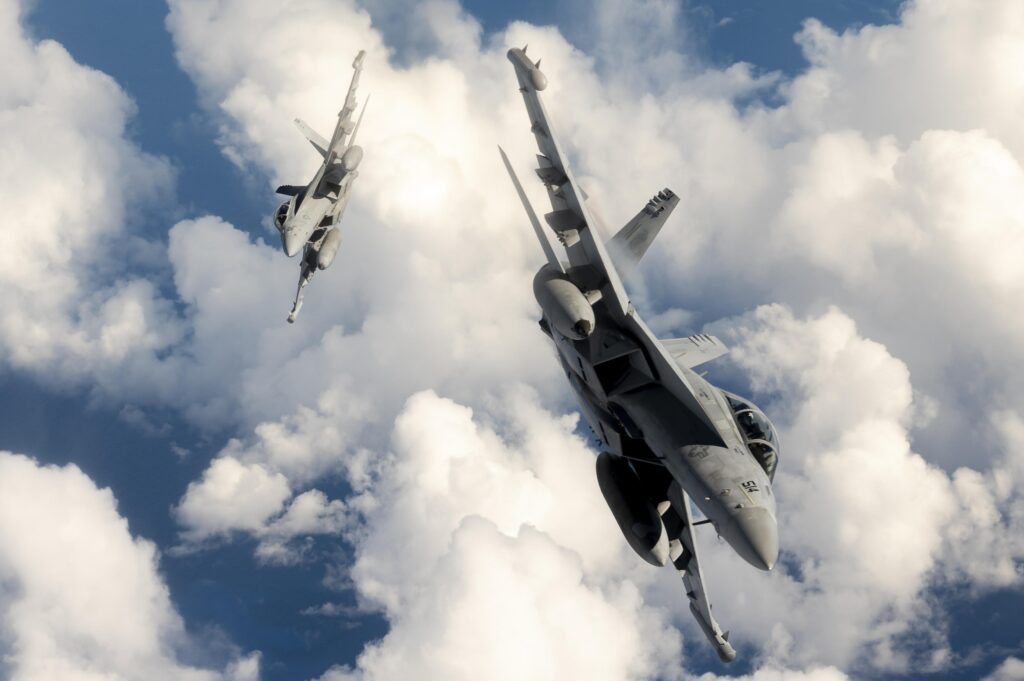
The Navy awarded a contract for the engineering and manufacturing development of the Next Generation Jammer Low Band system, which will deploy on the EA-18G Growler (pictured). It is part of a larger system that will provide enhanced AEA capabilities to disrupt, deny and degrade enemy air defense and ground communication systems. (U.S. Air Force photo by Master Sgt. Nicholas Priest)

From Naval Air Systems Command, Sept. 10, 2024 

PATUXENT RIVER, Md. — The U.S. and Australian fleets are one step closer to getting the next increment of the U.S. Navy’s most advanced airborne electronic attack (AEA) system.The Navy awarded L3 Technologies Inc., Communication Systems-West a $587.4 million contract Aug. 26 for the engineering and manufacturing development of the Next Generation Jammer Low Band (NGJ-LB) system. 

“NGJ-LB will meet current and emerging electronic warfare threats and increase the lethality of 4th and 5th generation platforms and strike weapons,” said Rear Adm. John Lemmon, Program Executive Officer for Tactical Aircraft Programs. “The Navy will partner with L3Harris to get this key capability into the hands of the warfighter.” 

The NGJ-LB is part of a larger NGJ system that will augment and ultimately replace the legacy ALQ-99 Tactical Jamming System on the EA-18G Growler aircraft. Using the latest software and Active Electronically Scanned Array technologies, NGJ will provide enhanced AEA capabilities to disrupt, deny and degrade enemy air defense and ground communication systems. 

This latest increment will counter a larger capacity of adversary systems in the low-frequency electromagnetic spectrum. NGJ-LB is scheduled to reach early operational capability in 2029. 

The Navy originally awarded the contract in 2020. Following multiple protests, the Navy issued an amended request for proposals in 2023. This contract supports the final design efforts and manufacturing of operational prototype pods and system-level prototypes for the U.S. Navy and Royal Australian Air Force (RAAF). NGJ-LB is a joint cooperative program between the U.S. Department of Defense and the Australian Department of Defence. 

“The contract award is a major step for our fleet as well as the RAAF,” said Capt. David Rueter, Airborne Electronic Attack Systems Program Office (PMA-234) Program Manager. “Our partnership with Australia to develop the newest AEA jamming capability exhibits our joint commitment to ensure continued superiority over the electromagnetic spectrum.” 

PMA-234 is responsible for acquiring, delivering and sustaining AEA systems including the NGJ, ALQ-99, and ALQ-231 Intrepid Tiger Pod II. The program office provides combatant commanders with electronic warfare capabilities that enable operational mission success. 


SECNAV Del Toro Visits Philly Shipyard for NSMV II Christening

From SECNAV Public Affairs, 9 September 2024 

PHILADELPHIA (Sept. 9, 2024) – Secretary of the Navy Carlos Del Toro visited Philly Shipyard, Inc. and spoke at the christening for the second National Security Multi-Mission Vessel Patriot State (NSMV II) Sept. 9. 

Shape“It was incredible to see how quickly the NSMV program and Philly Shipyard have come in just a few years,” said Secretary Del Toro.  “Building Patriot State and enabling its mission to train Massachusetts Marine Academy cadets will advance our Maritime Statecraft for decades.” 

Philly Shipyard is a U.S. shipbuilder pursuing a mix of commercial and government work, ranging from shipbuilding to repair and maintenance.  

Secretary Del Toro has made Maritime Statecraft and restoring the comprehensive maritime power of the United States a key component of his tenure as Secretary of the Navy. That component was advanced with Korean Shipbuilder Hanwha’s acquisition announcement of Philly Shipyard in June 2024. 

“I thank all those who answered the nation’s call to service to ensure we remain the most dominant maritime force in the world,” said Del Toro. “Your contributions to our shipbuilding industry and maritime training are vital to our Maritime Statecraft.” 

The christening was attended by U.S. Transportation Secretary Pete Buttigieg, Congresswoman Mary Gay Scanlon (D-PA 5th District), Maritime Administrator Hon. Ann C. Phillips, Massachusetts Maritime Academy President Adm. Fran McDonald, and Philly Shipyard President and CEO Steinar Nerbovik. 

When it is complete, Patriot State will be a key platform to train future leaders of the United States Merchant Marine and United States Navy. 


Coast Guard Offloads More Than $54 million in Illegal Narcotics Interdicted in Caribbean Sea 

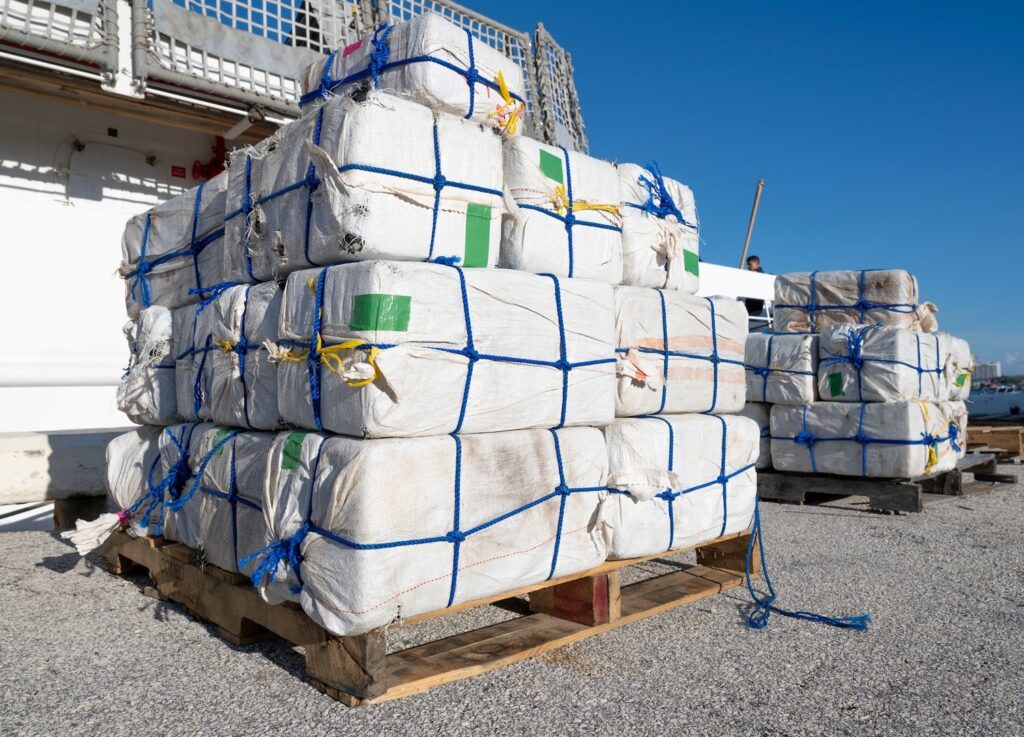
Bales of illegal narcotics, worth an estimated $54 million, are staged for an offload by crew members of U.S. Coast Guard Cutter Diligence (WMEC 616) in Port Everglades, Florida, Sept. 23, 2024. (U.S. Coast Guard photo by Petty Officer 3rd Class Eric Rodriguez) 

Sept. 10, 2024 

Coast Guard offloads more than $54 million in illegal narcotics interdicted in Caribbean Sea 

Coast Guard 7th District, Sept. 10, 2024 

MIAMI – The crew of Coast Guard Cutter Diligence offloaded more than 4,125 pounds of cocaine with an assessed street value of approximately $54 million in Port Everglades, Monday.  

Coast Guard crews, working alongside interagency and international partners, seized the illegal drugs in the international waters of the Caribbean Sea during three separate interdictions.  

The following assets and crews were involved in the interdictions: 

  • Royal Navy ship HMS Trent (P 244) 

  • U.S. Coast Guard Tactical Law Enforcement Team Pacific (PAC-TACLET) 

  • U.S. Coast Guard Cutter Joseph Napier (WPC 1115)    

  • U.S. Customs and Border Protection Air and Marine Operations (CBP-AMO) 

  • Joint Interagency Task Force South (JIATF-South) 

Along with the illicit narcotics, 11 suspected smugglers were apprehended and will face prosecution in federal courts by the U.S. Department of Justice.   

“I am extremely proud of our crew’s tenacity and professionalism, coupled with outstanding coordination with Coast Guard aircrews, during this complex counter-drug mission,” said Lt. Matthew Carmine, Coast Guard Cutter Joseph Napier commanding officer. “Their steadfast efforts, along with those of foreign allies and partner agencies, continue to prove vital to countering drug trafficking organizations and safeguarding the people of Puerto Rico and the U.S. Virgin Islands.”   

Detecting and interdicting illicit drug traffickers on the high seas involves significant interagency and international coordination. The Joint Interagency Task Force South in Key West, Florida conducts the detection and monitoring of aerial and maritime transit of illegal drugs. Once interdiction becomes imminent, the law enforcement phase of the operation begins, and control of the operation shifts to the U.S. Coast Guard throughout the interdiction and apprehension. Interdictions in the Caribbean Sea are performed by members of the U.S. Coast Guard under the authority and control of the Coast Guard’s Seventh District, headquartered in Miami.  

These interdictions relate to Organized Crime Drug Enforcement Task Forces’ (OCDETF) Strike Force Initiatives and designated investigations. OCDETF identifies, disrupts, and dismantles the highest-level criminal organizations that threaten the United States using a prosecutor-led, intelligence-driven, multi-agency approach. Additional information about the OCDETF program can be found at https://www.justice.gov/OCDETF.   

For breaking news, follow us on “X” (formerly Twitter). For additional information, find us on Facebook and Instagram.   

Visit GoCoastGuard.com to learn about active duty and reserve, officer and enlisted opportunities in the U.S. Coast Guard. Information on how to apply to the U.S. Coast Guard Academy can be found here.   


September 6-9 U.S. Central Command Update

From U.S. Central Command 

Sept 9,2024 

TAMPA, Fla. – In the past 24 hours, U.S. Central Command (USCENTCOM) forces successfully destroyed two Iranian-backed Houthi missile systems and one support vehicle in Houthi-controlled areas of Yemen. 

Additionally, USCENTCOM forces successfully destroyed one Houthi unmanned aerial vehicle over the Red Sea. 

It was determined these systems presented a clear and imminent threat to U.S. and coalition forces, and merchant vessels in the region. These actions were taken to protect freedom of navigation and make international waters safer and more secure for U.S., coalition and merchant vessels. 

Sept 8, 2024 

TAMPA, Fla. – In the past 24 hours, U.S. Central Command forces successfully destroyed three Iranian-backed Houthi uncrewed aerial vehicles and two missile systems in a Houthi-controlled area of Yemen. 

It was determined these systems presented a clear and imminent threat to U.S. and coalition forces, and merchant vessels in the region. These actions were taken to protect freedom of navigation and make international waters safer and more secure for U.S., coalition, and merchant vessels. 

Sep. 6, 2024

TAMPA, Fla. – In the past 24 hours, U.S. Central Command (USCENTCOM) forces successfully destroyed one Iranian-backed Houthi uncrewed aerial vehicle and one support vehicle in a Houthi-controlled area of Yemen. 

It was determined these systems presented a clear and imminent threat to U.S. and coalition forces, and merchant vessels in the region. This action was taken to protect freedom of navigation and make international waters safer and more secure for U.S., coalition, and merchant vessels. 


SECNAV, CNO Announce Flag Officer Assignments

From the Department of Defense, Sept. 9, 2024 

The secretary of the Navy and chief of naval operations announced today the following assignments: 

Rear Adm. Nicholas M. Homan is currently serving as commander, Fleet Information Warfare Command Pacific/Information Warfare Task Force (TF-501), Pacific, Pearl Harbor, Hawaii.  Homan has recently served as director, J-2, U.S. Central Command, MacDill Air Force Base, Florida. 

Rear Adm. Thomas S. Wall will be assigned as deputy/reserve deputy commander, Submarine Force, Atlantic, Norfolk, Virginia.  Wall is currently serving as deputy chief of staff, Submarines, Maritime Command Headquarters, Northwood, United Kingdom; and commander, Submarines, NATO, Northwood, United Kingdom. 

Rear Adm. (lower half) Dennis E. Collins, selected for promotion to rear admiral, will be assigned as reserve deputy for Fleet Readiness and Logistics, N4R, Office of the Chief of Naval Operations, Washington, D.C.  Collins is currently serving as commander, Navy Expeditionary Logistics Support Group, Williamsburg, Virginia. 

Rear Adm. (lower half) Michael L. Baker is currently serving as national geospatial director of operations; and military deputy, National Geospatial-Intelligence Agency, Springfield, Virginia.  Baker has recently served as senior defense official/defense attaché – India, New Delhi, India. 

Rear Adm. (lower half) David M. Buzzetti is currently serving as deputy Joint Staff surgeon and director, Reserve Medical Readiness Operations and Affairs, Joint Staff, Washington, D.C.  Buzzetti has recently served as deputy chief of staff, Reserve Component, N093, Office of the Chief of Naval Operations, Falls Church, Virginia.  

Rear Adm. (lower half) Stephen D. Donald will be assigned as mobilization assistant to commander, Cyber National Mission Force, U.S. Cyber Command, Fort Meade, Maryland.  Donald is currently serving as reserve deputy commander, Tenth Fleet, Fort Meade, Maryland. 

Rear Adm. (lower half) Calvin M. Foster will be assigned as deputy commander, Naval Surface Forces Atlantic, Norfolk, Virginia.  Foster is currently serving as director, Maritime Partnership Program, Sixth Fleet; and vice commander, Sixth Fleet, Naples, Italy. 

Rear Adm. (lower half) Mark F. Haigis will be assigned as deputy commander, Military Sealift Command, Norfolk, Virginia.  Haigis is currently serving as deputy commander, Navy Expeditionary Combat Command, Virginia Beach, Virginia. 

Rear Adm. (lower half) Charles Kirol will be assigned as commander, Navy Expeditionary Logistics Support Group, Williamsburg, Virginia.  Kirol is currently serving as deputy director, Logistics, Fleet Supply and Ordnance, N4, U.S. Pacific Fleet, Pearl Harbor, Hawaii.  

Rear Adm. (lower half) Joaquin Martinez de Pinillos will be assigned as reserve director, Maritime Operations, U.S. Pacific Fleet, Pearl Harbor, Hawaii.  Martinez de Pinillos is currently serving as vice commander, Seventh Fleet, Yokosuka, Japan.  

Rear Adm. (lower half) Tuan Nguyen is currently serving as senior defense official/defense attaché-China, Beijing, China.  Nguyen has recently served as a Maritime Cooperation and Competition director, U.S. Seventh Fleet, Yokosuka, Japan. 

Rear Adm. (lower half) Michael S. Richman will be assigned as deputy director for Hypersonics, Strategic Systems Programs, Washington, D.C.  Richman is currently serving as deputy commander for Cyber Engineering, Naval Sea Systems Command, Washington, D.C.  

Rear Adm. (lower half) John D. Saccomando will be assigned as reserve deputy commander, Naval Air Force Atlantic, Norfolk, Virginia.  Saccomando is currently serving as reserve deputy director of Maritime Headquarters, U.S. Pacific Fleet, Pearl Harbor, Hawaii. 

Rear Adm. (lower half) Eric H. Ver Hage is currently serving as deputy to the deputy assistant secretary of defense for international industry engagement, Washington, D.C.  Ver Hage has recently served as special assistant to commander, Naval Sea Systems Command, Washington, D.C. 

Rear Adm. (lower half) Kimberly A. Walz will be assigned as reserve director, Maritime Operations, U.S. Fleet Forces Command, Norfolk, Virginia.  Walz is currently serving as deputy commander, Naval Surface Force, U.S. Atlantic Fleet, Norfolk, Virginia.  

Capt. Benjamin E. Baran, selected for promotion to rear admiral (lower half), will be assigned as deputy commander, Navy Personnel Command, Millington, Tennessee.  Baran is currently serving as commanding officer, Navy Reserve, U.S. Fleet Forces Command (N1), Virginia Beach, Virginia. 

Capt. David N. Barnes, selected for promotion to rear admiral (lower half), will be assigned as deputy commander, Navy Recruiting Command, Millington, Tennessee.  Barnes is currently serving as deputy commander, Navy Reserve Region Readiness and Mobilization Command Fort Worth, Fort Worth, Texas.  

Capt. Shawn G. Denihan, selected for promotion to rear admiral (lower half), will be assigned as reserve deputy commander, Naval Air Systems Command, Patuxent River, Maryland.  Denihan is currently serving as chief engineer, Navy Reserve, Naval Air Systems Command, Patuxent River, Maryland.  

Capt. Michael L. Freidberg, selected for promotion to rear admiral (lower half), will be assigned as Reserve Support, N2/N6, Office of the Chief of Naval Operations, Washington, D.C. Freidberg is currently serving as regional commander, Navy Reserve Naval Information Force Reserve Headquarters, Suffolk, Virginia. 

Capt. Reginald H. Hendrix, selected for promotion to rear admiral (lower half), will be assigned as deputy commander, Navy Expeditionary Combat Command, Virginia Beach, Virginia.  Hendrix is currently serving as deputy commander, Maritime Expeditionary Security Group Two, Virginia Beach, Virginia. 

Capt. Marcus J. Lockard Jr. selected for promotion to rear admiral (lower half), will be assigned as reserve deputy director, Maritime Headquarters, U.S. Pacific Fleet, Pearl Harbor, Hawaii.  Lockard is currently serving as commanding officer, Navy Reserve Pacific Fleet Command, N3N5, Pearl Harbor, Hawaii. 

Capt. Ryan K. Mahelona, selected for promotion to rear admiral (lower half), will be assigned as reserve deputy commander, Tenth Fleet, Fort Meade, Maryland.  Mahelona is currently serving as deputy chief of staff for Warfare Readiness and Integration, Navy Reserve, Naval Information Force Reserve Headquarters, Suffolk, Virginia. 

Capt. Jason M. Naidyhorski, selected for promotion to rear admiral (lower half), will be assigned as director, Maritime Partnership Program, Sixth Fleet; and vice commander, Sixth Fleet, Naples, Italy.  Naidyhorski is currently serving as deputy commander, Navy Reserve Region Readiness and Mobilization Command, Norfolk, Virginia. 

Capt. Troy S. Pugh, selected for promotion to rear admiral (lower half), will be assigned as deputy director, Logistics, Fleet Supply and Ordnance, N4, U.S. Pacific Fleet, Pearl Harbor, Hawaii.  Pugh is currently serving as commanding officer, Navy Reserve, U.S Indo-Pacific Command, J4 KIT, Camp Smith, Hawaii.  

Capt. Katie F. Sheldon, selected for promotion to rear admiral (lower half), will be assigned as vice commander, Seventh Fleet, Yokosuka, Japan.  Sheldon is currently serving as commanding officer, Navy Reserve, U.S. Third Fleet, San Diego, California.