SECNAV Del Toro and Mayor Adams Announce International Naval Review 250

From SECNAV Public Affairs, 29 August 2024 

Secretary of the Navy Carlos Del Toro and New York City Mayor Eric Adams announced on August 29th that the Navy and the City of New York will host International Naval Review 250 (INR 250) from July 3rd through July 8th in 2026.Shape 

Washington, D.C., New York City, NY – Secretary of the Navy Carlos Del Toro and New York City Mayor Eric Adams announced on August 29th that the Navy and the City of New York will host International Naval Review 250 (INR 250) from July 3rd through July 8th in 2026, 
 
“There’s no better place to celebrate 250 years of American history than in New York City’s harbor,” said New York City Mayor Eric Adams. “From the early days of our country to the present day, New York City has been an unmatched international port, welcoming every corner of the globe to our shores and remaining a leading economic hub. In 2026, our city looks forward to hosting the globe to celebrate and commemorate our nation’s past, present, and future.” 
 
As part of the Semiquincentennial (250th) celebration of the United States, INR 250 will showcase America’s unwavering support to maritime security, economic prosperity, and freedom of the seas for all nations. It will connect Americans with the Navy’s longstanding role, as set forth in the U.S. Constitution, to protect American shores from foreign predation and preserve access to international trade. This extraordinary gathering will also pay tribute to countless generations of Americans who have served, sacrificed and continue to serve in defense of our nation and national maritime interests. 
 
“New York City has always been and remains a historic maritime powerhouse,” said NYC Department of Veterans’ Services’ Commissioner James W. Hendon. “From the Brooklyn Navy Yard, where iconic ships like the USS Arizona were built, to its ongoing significance in fostering international naval partnerships, New York City has been and will always remain a gateway to global trade and maritime innovation. Hosting the International Naval Review on the nation’s 250th birthday, yet again proves that New York City is the most Veteran and military friendly city in the world.” 
 
From the early days of exploration and independence to the present era of global maritime commerce and strategic competition, the United States has always recognized its vital connection to the sea. INR 250 will offer a unique opportunity to reflect on the proud heritage, achievements and sacrifices that have shaped our nation’s maritime legacy. 
 
“For 250 years, our Navy and Marine Corps Team — composed of our Sailors, Marines, Navy Civilians, Merchant Mariners, and supported by America’s shipyard workforce — have built, crewed and sailed across the globe, defending liberty, promoting freedom and advancing maritime statecraft on behalf of our nation,” said Secretary Del Toro. “Our naval heritage is intertwined with the earliest days of American independence, and INR 250 speaks to our longstanding connection with New York City and its harbor.” 
 
The U.S. Navy is inviting international navies, maritime forces and coast guards from over 130 Allied and partner nations to join INR250 and celebrations throughout the week from July 3-8. Scores of foreign warships, aircraft, and delegations will join the U.S. Fleet in the Port of New York and New Jersey. Like previous reviews, warships and vessels from federal, state, City of New York, and other partners will anchor as far south as the Verrazano Bridge and as far north as the George Washington Bridge. 
 
An aerial review and flyover for INR250 will include all types of military, historic, and other aircraft and will likely be among the largest gathering of aircraft for a review in decades. The U.S. Navy and the City of New York will showcase one of the largest gatherings of Tall Sailing ships from around the world for the International Parade of Tall Ships coinciding with INR250. 
 
In addition to INR 250, Sail4th 250, working alongside the U.S. Navy, will oversee what promises to be the greatest gathering of international tall ships in celebration of America’s 250th birthday on July 4, 2026 in the Port of New York and New Jersey. The International Parade of Tall Ships will feature 30 international Tall Ships accompanied by hundreds of other historic, leisure, and sailing vessels. The “Parade of Sail” will span from the Verrazzano Bridge to the George Washington Bridge. 
 
“Sail4th 250 is proud to be working with the U.S. Navy, the City of New York, the US Coast Guard, and countless others to continue the long tradition of bringing the international Tall Ships to the world’s most famous harbor for this historic milestone event — America’s Semiquincentennial,” added Sail4th 250 President Chris O’Brien. 
 
The International Parade of Tall Ships started with the 1964 World’s Fair led by Operation Sail. For America’s 250th celebration, Sail4th 250 will build on this maritime spectacle, not seen since July 4, 2000 during the millennium celebration. 
 
Mayor Adams and Secretary Del Toro also announced the shift of the annual Fleet Week New York to coincide with INR 250. It will include events featuring the Navy Flight Demonstration Squadron, the Blue Angels, large-scale outreach events, public engagements for U.S. and international Sailors, static displays, and other engagements throughout the Tri-State area. These events will be open to the public and international visitors. 
 
INR 250 will display the strength and capabilities of the modern U.S. Navy, which continues to play a critical role in ensuring our nation’s security as well as global maritime security alongside Allies and partners. By gathering like-minded navies and maritime forces from around the globe, INR 250 will demonstrate the United States’ commitment to international cooperation and maritime security. 
 
INR 250 will be the 7th international naval review hosted in the United States and the 4th held in the Port of New York and New Jersey, following 1976, 1986, and 2000 reviews. With New York as its centerpiece, INR 250 will commence a series of events with U.S. Navy and international Tall Sailing ship participation, to include Fleet Weeks, and port visits in East Coast and Gulf port cities of New Orleans, Norfolk, Baltimore, and Boston. 
 
Secretary Del Toro and Mayor Adams look forward to collaboration with the federal partners, the States of New York and New Jersey, and City of New York leadership, and the American people as we countdown to America’s Semiquincentennial and the International Naval Review 250. 


USS Cowpens Decommissioned After 33 Years of Service 

NAVAL BASE SAN DIEGO (Aug. 27, 2024) – Retired Vice Adm. Edward Moore delivers remarks at the decommissioning ceremony for the Ticonderoga-class guided-missile cruiser USS Cowpens (CG 63) at Naval Base San Diego Aug. 27, 2024. Cowpens was commissioned in 1991, marking 33 years as a United States Ship. (U.S. Navy photo by Mass Communication Specialist 1st Class Claire M. DuBois)

From Chief Petty Officer Mark Faram, 28 August 2024 

SAN DIEGO – Ticonderoga-class guided-missile cruiser USS Cowpens (CG 63) was recognized for more than 33 years of naval service during the decommissioning ceremony at Naval Base San Diego on August 27. 

Hundreds gathered to celebrate the ship’s distinguished history of naval service. Cowpens’s Commanding Officer, Cmdr. Jac O. Ullman III spoke of the ship’s legacy and its crew. 
 
“A guiding principle in the last chapter onboard, has been to honor the legacy of Cowpens”, said Ullman. “To honor the grit, determination, and creativity of the Continental Army and Militiamen from that cold battlefield. To honor the service of those on the first USS Cowpens – CVL 25 – and to honor the legacy of those who served before us during Mighty Moo’s 33 year career… We have done just that.” 
 
USS Cowpens participated in many operations and exercises, contributing significantly to U.S. naval power projection and security. From enforcing no-fly zones to conducting maritime security operations, the ship demonstrated versatility and capability across a range of mission profiles. 
 
One of the notable milestones in Cowpens’s history was its participation in Operation Enduring Freedom. Tasked with providing air defense and maritime security. The ship played a vital role in the early stages of the global war on terror, showcasing the Navy’s ability to respond swiftly to emerging threats. 
 
The ship’s prowess was further demonstrated during Operation Iraqi Freedom, providing crucial support for coalition forces in the Persian Gulf region. From conducting surveillance to launching precision strikes, USS Cowpens contributed to the success of coalition efforts to stabilize Iraq. 
 
“From 1983 onward, these ships [Cowpens] defended our nation’s interests, supported critical combat operations, and ensured freedom of the seas; more than that, they brought AEGIS and VLS, revolutionary technologies into the hands of our warfighters”, said Rear Adm. Ted LeClair, Deputy Commander of Naval Surface Force, U.S. Pacific Fleet. 
 
“Cowpens, the seventeenth AEGIS ship built, provided the value of these advancements. As AEGIS and VLS have evolved in both the Cruiser and Destroyer variants, Cowpens continuously demonstrated their effectiveness and lethality.” 
 
Also in attendance was Cowpens sponsor, Mrs. Lucy Mustin and the first commanding officer of Cowpens, Vice Adm. Edward Moore (Ret.). 
 
“At the end of this day, no matter when we were crewmembers, we can all agree we served on the best ship, the most formidable warship, in the best Navy, and in the best country in the world”, said Moore. “I know in my heart that long after we leave this pier today, we will, from time to time, continue to reflect on our service to country, ship, and each other.” 
 
Additionally, the ship played a key role in humanitarian assistance and disaster relief operations, providing aid to regions devastated by natural disasters such as the 2004 Indian Ocean tsunami and the 2011 earthquake and tsunami in Japan. These operations underscored the Navy’s commitment to global stability and humanitarian values. 
 
The second ship to bear the name, Cowpens was built in Bath, Maine, and commissioned March 9, 1991, in Charleston, South Carolina. Named after the pivotal Battle of Cowpens during the American Revolutionary War, the ship has faithfully served the nation for more than three decades, embodying the valor and resilience of its namesake. 
 
After the decommissioning and inactivation, the ship will be towed to the Navy’s Inactive Ship facility in Pearl Harbor, Hawaii where it will be in a Logistic Support Asset (LSA) status. 
 
The mission of CNSP is to man, train, and equip the Surface Force to provide fleet commanders with credible naval power to control the sea and project power ashore. 


The U.S. Navy Collaborates with Colleges and Universities to Transition Cutting-Edge Capabilities to the Fleet

New “Investment Horizons” Framework Accelerates Technology Transitions from Academia to Defense 

ARLINGTON, Va., August 27, 2024  – As the world grapples with increasing geopolitical tensions and the race for technological dominance intensifies, the Office of Naval Research (ONR), led by Corey Love, PhD, is partnering with Stanford University’s Technology Transfer for Defense (TT4D) program, led by Jeff Decker, PhD, to take decisive action to ensure the U.S. military remains at the forefront of innovation. The partnership between the two institutions is accelerating the transfer of technologies from dozens of academic labs around the country to military application. The “Investment Horizons” framework, recently developed under the guidance of Acting Chief Technology Officer Justin Fanelli, is a groundbreaking initiative designed to streamline and fastrack the transition of emerging technologies from academic research to military application.  

The new framework used by the ONR-Stanford partnership, is redefining how the U.S. Navy identifies, develops, and integrates innovative solutions, ensuring technological superiority in an increasingly competitive global landscape. Transitioning these cutting-edge technologies addresses national security threats in an era defined by rapid change and strategic competition. The results are already tangible. Technologies developed in university labs are being scaled and deployed across the military, enhancing the operational readiness of U.S. forces and strengthening the defense industrial base. “Investment Horizons” categorizes technologies into four strategic stages: 

  • Horizon 3 (Evaluating): Technologies that offer new capabilities, such as advanced energy storage solutions, are identified and assessed for potential military application. For instance, Nickel-Zinc battery research by Prof. Chris Rhodes and Dr. Debra Rolison at Texas State University, is currently under evaluation for use in Undersea Underwater Vehicles, with funding from ONR. The NiZn technology has already been fully vetted and is commercially scalable and now its military use is under evaluation. 

  • Horizon 2 (Emerging): Promising technologies undergo pilot programs to evaluate their scalability and integration into military operations. An example of Horizon 2 under the ONR NEPTUNE program, is the work of Prof. Steve Leeb at MIT who is testing new methods of energy management and monitoring on shipboard systems. These methods utilize AI-assisted electrical load-balancing technologies, which already exist, but these technologies must be assessed for their potential to be integrated and scaled across the U.S. Navy’s fleet in such a way that maintains the operational effectiveness of U.S. naval vessels. 

  • Horizon 1 (Investing/Extracting): Proven technologies are scaled for widespread deployment across the Navy, ensuring sustained operational effectiveness. Many university labs across the country conduct pilot tests of basic science applications which may or may not yield meaningful solutions to current and anticipated Navy challenges. The U.S. Navy invests in new potential technologies at institutions around the country to ensure the future of the US industrial base. 

  • Horizon 0 (Retiring): Outdated technologies are phased out, allowing resources to be reallocated to more promising innovations aligned with the Navy’s strategic goals. 

“The urgency of what is currently going on in our world in terms of conflict, demands that we accelerate the transition of game-changing technologies into the military, ensuring our forces are equipped with the most advanced tools available,” said Justin Fanelli, acting chief technology officer with the United States Department of the Navy. “Through collaboration with institutions like Stanford University, we’re now able to move from research to deployment faster than ever, which is essential given today’s global challenges.” 

ONR’s NEPTUNE program and Stanford’s Technology Transition for Defense program play a pivotal role in this effort. Dr. Decker emphasizes the strategic importance of aligning academic research with military needs. 

“The collaboration between Stanford University and the U.S. Navy is a powerful example of how academia can drive significant advancements in defense technology,” said Dr. Decker, managing director of the Technology Transfer for Defense program at Stanford University and with the Precourt Institute for Energy and a Social Science research scholar at Stanford. “The Investment Horizons framework is not just about adopting new technologies – it’s about ensuring that these innovations are strategically aligned with the long-term needs of the military at a time when global competition is at its fiercest.” 

With ongoing global conflicts in Africa, Middle East, Europe, and the Indo-Pacific, the need for rapid and effective technology transitions has never been more critical. The Investment Horizons framework, supported by the innovative efforts of ONR programs like NEPTUNE and NURP and academic partnerships, is positioning the U.S. Navy military to maintain its edge in this new era of Great Power Competition. 

To learn more about the ONR Investment Horizons framework, visit onr.navy.mil; for more information on the Technology Transfer for Defense program at Stanford University, visit techtransferfordefense.stanford.edu


National Call to Maritime Service Website launched 

27 August 2024 

WASHINGTON — Assistant Secretary of the Navy (Manpower and Reserve Affairs), the Hon. Franklin R. Parker today announced the launch of the National Call to Maritime Service (NCTMS) and Naval Civilian Careers (NCC) websites in Syracuse, New York. 
 
During a joint Navy Week Proclamation with Onondaga County Executive, Ryan McMahon, and Syracuse Mayor Ben Walsh, the Hon. Parker highlighted the broad range of opportunities to serve in the Department of the Navy, both in and out of uniform, and appealed to the audience to explore how they might answer the call. 
 
“Service to country looks different for everyone—it might be in a uniform or public service or as a volunteer in your local community, but as a life path, it carries profound personal and national significance,” said Hon. Parker. “We need every generation to understand the important role service plays in the fabric of our Nation, and we are encouraging the next generation to take part in building the Nation’s maritime defense and, ultimately, protecting our national security.” 

In May 2024, the Secretary of the Navy, Carlos Del Toro, issued the NCTMS to emphasize the benefits and importance of service to country. NCTMS is a call to our Nation’s youth, educators, veterans and leaders, as well as every citizen who values freedom, to consider how they might contribute. NCTMS encourages everyone to explore the different career paths within the DON at www.secnav.mil/calltomaritimeservice. 

Developed as a portal, the website allows individuals to embrace their curiosity around service and explore areas they may never have considered. It helps determine what best resonates with the individual and directs them to adjoining sites where they can learn more about the wealth of opportunities offered with the Navy and Marine Corps, as well as other jobs in support of maritime service – both military and civilian. 

“We are grateful to have Secretary Parker here to officially kick off Syracuse Navy Week and make such an important announcement about the National Call to Maritime Service,” said Mayor Walsh. “Syracuse, and the hard-working, service-oriented nature of our citizens, is the perfect backdrop for this announcement, and we are standing by to answer the call.” 

The Navy Week program has served as the Navy’s principal outreach effort into areas of the nation without a significant Navy presence, with over 300 Navy Weeks held in 95 different U.S. cities. The program is designed to share with Americans how their Navy is deployed around the world and around the clock, and why a strong Navy is vital to protecting the American way of life. 

To learn more about the NCTMS and the various ways that you can serve your country, please visit https://www.secnav.navy.mil/calltomaritimeservice/Pages/default.aspx. 


Navy Awards Contract For Continued AN/UPX-50 Interrogator Redesign

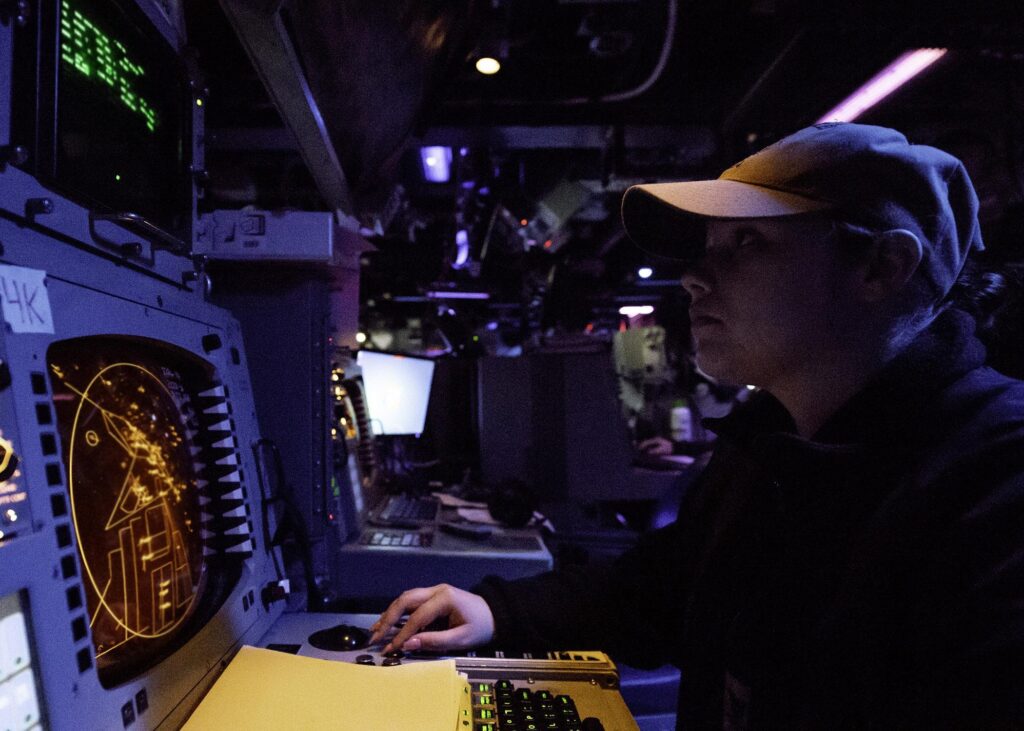
Operations Specialist 3rd Class Rikisha Cormier, assigned to the amphibious assault ship USS Boxer (LHD 4), identifies air contacts from the combat information center during a previous underway in the eastern Pacific Ocean. The new contract enhances the combat information center with the continued redesign of the AN/UPX-50(C) digital interrogator assemblies. 

Aug 28, 2024 

NAVAL AIR SYSTEMS COMMAND, Patuxent River, Md.–The U.S. Navy awarded a $24 million contract to BAE Systems for the continued redesign of the AN/UPX-50(C) digital interrogator assemblies. 

The cost-plus-fixed-fee contract is a modification to a previously issued basic ordering agreement to address parts obsolescence and implement solutions to achieve compliance with the latest specifications, qualification and certification standards for the Navy. Additionally, this order adds tasking for the integration of Target Report Processing capabilities into the Common Core DI, formerly hosted in the Interrogator Set, AN/UPX-24(V). 

The redesigned interrogator features a common modular design and systems architecture that allows for customized configurations and performance optimization. The design of this next generation interrogator allows for faster updates to Identification Friend or Foe technology in air defense, weapon systems, air traffic control and range instrumentation for several decades. 

Work is scheduled to be complete in late 2026. 


RTX’s SeaVue Multi-role Radar Provides Critical Targeting Data at RIMPAC

Radar proves its long-range target detection ability 

HONOLULU, Hawaii (Aug. 28, 2024) – Raytheon, an RTX (NYSE: RTX) business, successfully demonstrated the SeaVue Multi-role Radar’s superior long-range target detection at the U.S. Navy’s Exercise Rim of the Pacific (RIMPAC) – the world’s largest international maritime exercise.  

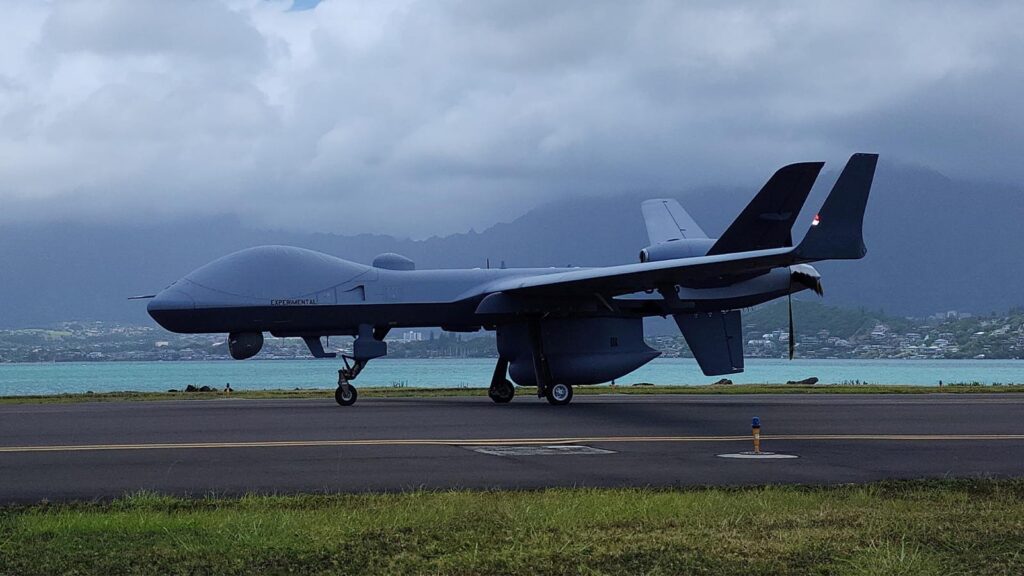
Performing a Sink Exercise, or SINKEX, an MQ-9B SeaGuardian® Unmanned Aircraft System from General Atomics Aeronautical Systems, Inc. used SeaVue Multi-role Radar (SVMR) surveillance and imaging to survey multiple targets and send track data to F/A-18 E/F Super Hornet aircraft. The aircraft were able to use the data provided by the radar to successfully fire a Long-Range Anti-Ship Missile (LRASM) at a decommissioned amphibious assault ship, the USS Tarawa (LHA-1), showcasing SVMR’s net-enabled, long-range weapons employment capabilities. 

“SVMR proved its ability to capture high fidelity targeting data needed for successful weapons engagement in a maritime environment,” said Bryan Rosselli, president of Advanced Products & Solutions at Raytheon. “The live-fire exercise enabled us to test and validate SVMR to ensure it can provide the situational awareness required in an operational environment – allowing faster decision making and more efficient kill chains.”  

SVMR is a modern, software-defined radar that provides all-weather surveillance and superior multi-mission performance for crewed and uncrewed aircraft, including fixed, rotary-wing and aerostat platforms. 

Leveraging over 60 years of surveillance radar innovation, SVMR provides extended range and small target detection from operational altitudes, enabling a more capable and efficient method for monitoring and protecting. It features a modular and scalable architecture that supports affordable upgrades and sustainment and has been developed and extensively flight tested for low and high-altitude surveillance modes. 


Navy Partners with Shield AI to Enhance Autonomy in Naval Aviation 

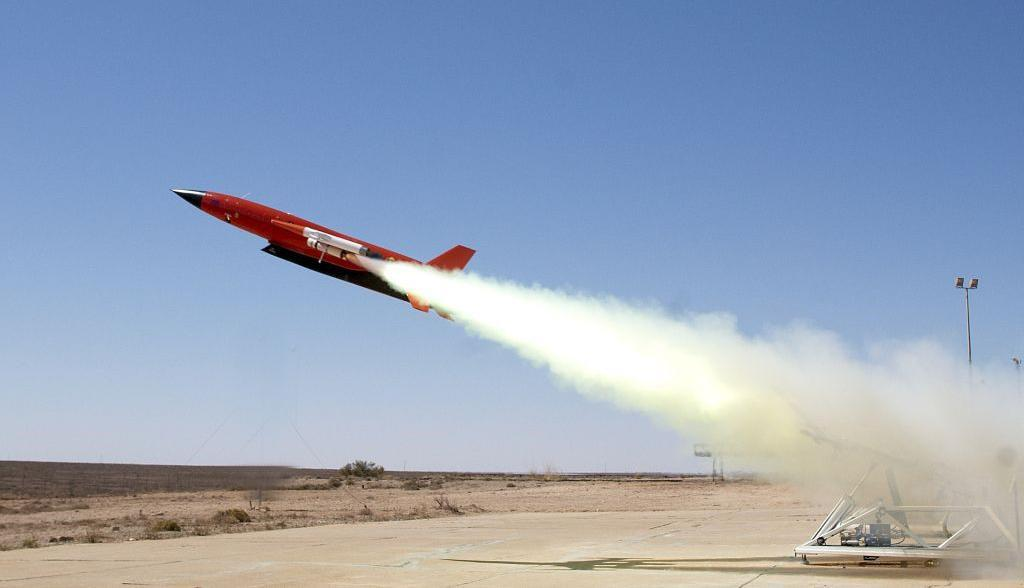
A BQM-177 aerial target conducts test flight from China Lake, Calif. The Navy integrating artificial intelligence software into the BQM-177 to test capability for future autonomous operations. (U.S. Navy photo) 

Aug 27, 2024 

Naval Air Systems Command, Patuxent River, Md. — The Navy’s Strike Planning and Execution program (PMA-281) and Aerial Targets program (PMA-208) recently partnered with Shield AI to integrate autonomy and artificial intelligence software into the BQM-177A sub-sonic aerial target, marking a significant milestone in furthering autonomous systems for real-world applications in naval aviation. 

The Navy competitively awarded this effort to Shield AI, an industry leader in autonomous command and control of aviation platforms, Aug. 16, under an Other Transaction Authority (OTA) agreement facilitated by the Naval Aviation Systems Consortium (NASC). 

 “This collaborative effort between PMA-281, PMA-208, and Shield AI not only expands and improves the existing spectrum of validation but also offers a scalable solution that benefits the entire naval aviation community,” said Capt. Jerick Black, PMA-281 program manager. “By laying the groundwork for future advancements, this initiative ensures that the Navy remains at the forefront of technological innovation and operational excellence in naval aviation.” 

Under the agreement Shield AI will integrate its Hivemind AI pilot software and deliver a robust prototype test bed using the BQM-177. 

“This configuration of the aerial target facilitates rapid iteration by continuously refining and updating AI algorithms through real-world feedback, ensuring that the systems are robust, reliable, and ready for operational deployment,” said Johann Soto, PMA-281 software modernization team lead. 

This test approach creates a seamless connection between simulation-based testing and live testing, allowing for a comprehensive and continuous feedback loop that enhances the effectiveness of the AI systems being developed, Soto said.  A technical demonstration is planned for late 2025. 

“By leveraging the BQM-177A’s lower unit cost and cost per flight hour, this initiative provides a flexible and cost-effective testing environment that drives innovation at an accelerated pace,” said Greg Crewse, PMA-208 program manager. 

The BQM-177A replicates modern subsonic anti-ship cruise missile threats in support of fleet training for both developmental and operational tests. It can support a variety of mission requirement by carrying a wide array of internal and external payloads. 


USCGC Frederick Hatch Wraps up a Successful Patrol in the Blue Pacific 

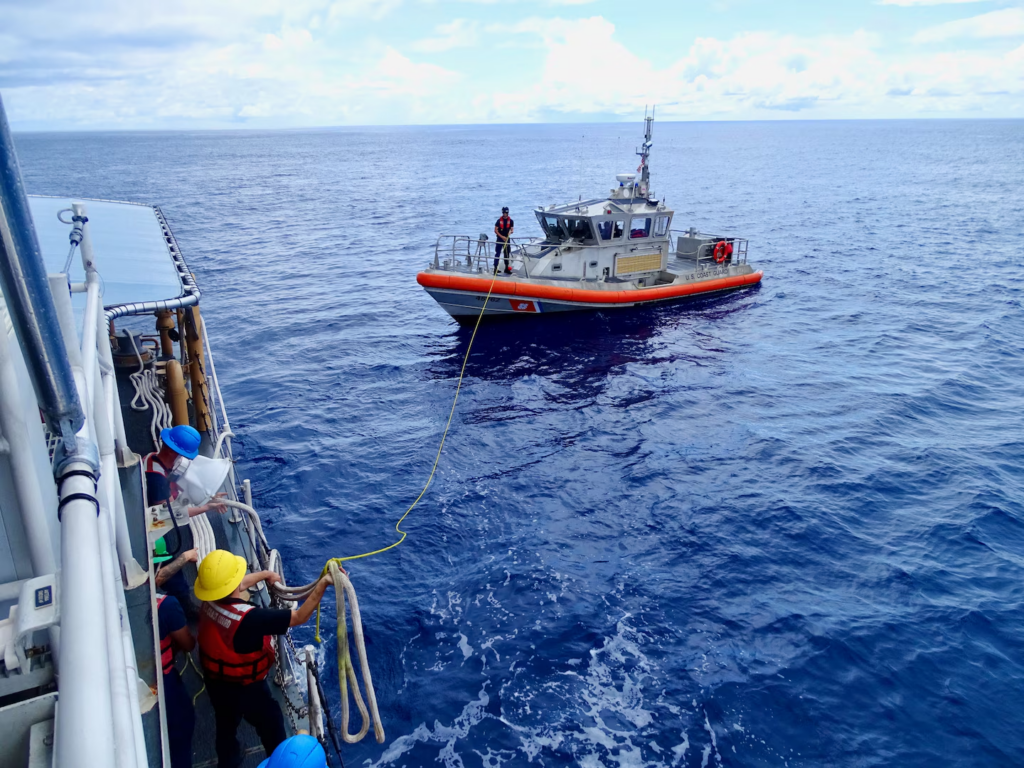
The crew of the USCGC Frederick Hatch (WPC 1143) conduct training with Station Apra Harbor in Apra Harbor on Aug. 8, 2024. The towing exercise with a Station Apra Harbor 45-foot Response Boat-Medium crew enhanced inter-unit coordination and operational proficiency. (U.S. Coast Guard photo) 
 

From U.S. Coast Guard Forces Micronesia/Sector Guam, Aug. 26, 2024 

SANTA RITA, Guam — The crew of the USCGC Frederick Hatch (WPC 1143) successfully concluded a productive patrol period from July 22 to Aug. 12, 2024, under the ongoing Operation Rematau, showcasing the U.S. Coast Guard’s dedication to maritime safety, security, and stewardship in the Blue Pacific.  
 
This patrol saw the crew cover over 1,252 nautical miles and engage in various operations, from maritime law enforcement boardings to community outreach and crucial training. 
 
During this patrol, the Frederick Hatch team boarded two foreign-flagged fishing vessels in the Western and Central Pacific Fisheries Commission (WCPFC) operational area on the high seas, with no violations reported, ensuring the safety and security of the region’s maritime activities.  
 
“Our mission underscores the vital role we play in ensuring safe and lawful maritime activities in the Pacific,” said Lt. Niki Kirchner-Hope, commanding officer of USCGC Frederick Hatch. “The successful execution of these boardings reflects our crew’s high level of professionalism and dedication to the mission.” 
 
The cutter’s crew participated in significant community relations events in Tinian, Northern Mariana Islands, including the March-On for the 80th anniversary of the Battle of Tinian. They also engaged in a local festival and were invited back for more in October, continuing to foster strong relationships with the local community and enhancing regional presence. 
 
The Frederick Hatch crew, which experienced a substantial turnover this transfer season, with over 55 percent of members swapping out, benefited from extensive training during the patrol. They completed multiple training programs, including Marine Emergency Drills, Damage Control Training Team exercises, and small boat training.  
 
“Training and mentoring our new crew members are key to our success and long-term effectiveness,” said Petty Officer 1st Class Joseph Mendiola of the engineering team. “Routinely operating thousands of miles from homeport makes this training even more crucial. It’s what makes sure our team is ready to handle anything that comes our way with confidence and skill, really boosting our mission readiness and impact out here in the Pacific.” 
 
Key accomplishments of the patrol include completing anchor training in Agat Bay, successful law enforcement and tactical training, and vital inter-agency collaborations. The cutter crew participated in a towing exercise with a Station Apra Harbor 45-foot Response Boat-Medium crew, enhancing inter-unit coordination and operational proficiency.  
 
The patrol also saw personnel achievements, including one crewmember advancing to E-5 and several others achieving new qualifications. These underscore the team’s commitment to ongoing professional development and mission readiness. They will now focus on post-patrol debriefings to refine communication and operational procedures, further enhancing their capabilities for future missions.  
 
“On behalf of the entire team aboard Hatch, I want to extend our gratitude to the personnel from USCGC Myrtle Hazard, Station Apra Harbor, the Forces Micronesia Sector Guam Sector Boarding Team, and the Base Guam MAT/WAT. Your support throughout this patrol, from filling critical TDY assignments to assisting with complex training and law enforcement evolutions, has been invaluable in ensuring Hatch’s success and the well-being and readiness of our crew. Thank you for being so dedicated to others and for standing the watch with us in this demanding environment,” said Lt. Kirchner-Hope 


Coast Guard Cutter Harriet Lane Returns Home Following 68-day Operation Blue Pacific Patrol in Oceania

The crew of U.S. Coast Guard Cutter Harriet Lane (WMEC 903), a 270-foot medium endurance cutter homeported in Honolulu, Hawaii, poses for a photo following the Royal Tongan Navy’s International Fleet Review in Nuku’alofa, Tonga, July 4, 2024. The U.S. Coast Guard participated in the review to celebrate King Tupou VI’s 65th birthday and the 50th anniversary of the Tongan Navy. (U.S. Coast Guard photo, courtesy Cutter Harriet Lane)

From Coast Guard District 14 External Affairs, Aug. 26, 2024 

HONOLULU – The crew of Coast Guard Cutter Harriet Lane (WMEC 903) returned to Honolulu Friday following a 68-day patrol in support of Coast Guard District Fourteen’s Operation Blue Pacific in Oceania. 

The Harriet Lane crew departed Joint Base Pearl Harbor-Hickam in June and traveled more than 13,400 nautical miles spanning from the Hawaiian Islands to Tonga. Patrolling in support of Operation Blue Pacific, the cutter’s crew worked alongside Pacific Island Countries to forge and advance relationships with like-minded allies and partners who share a common vision for maritime governance.   

The crew’s efforts included enhancing maritime domain awareness, combatting illegal fishing activities across Oceania, and participating in exercises to bolster partner capacity and interoperability. Leveraging bilateral maritime law enforcement agreements with Tuvalu, Tonga, Samoa and the Cook Islands, the Harriet Lane crew conducted six boardings alongside Pacific Island partners in their respective exclusive economic zones (EEZs). Additionally, Harriet Lane law enforcement teams conducted four fishery boardings on the high seas in concert with the Western and Central Pacific Fisheries Commission.   

During Harriet Lane’s patrol, the crew made port calls in Tonga, American Samoa, Samoa, the Cook Islands and French Polynesia. While offshore Niue, the Harriet Lane crew hosted key leaders for a maritime roundtable discussion, offered local high students a tour of the cutter, and sent personnel ashore to assist with community service endeavors.  

While transiting home, the Harriet Lane crew conducted the medevac of a 53-year-old fishing vessel crewman experiencing stroke-like symptoms approximately 480 miles offshore Oahu.   

“This patrol was another resounding success for the crew of Harriet Lane and reinforces the Coast Guard’s commitment to delivering as a trusted partner across Oceania,” said Cmdr. Nicole Tesoniero, commanding officer, Cutter Harriet Lane. “This patrol took us to the far reaches of the South Pacific that most crew could have never dreamed of seeing and they continue to serve as model ambassadors for our unique mission set. In the final days of our patrol, Harriet Lane answered the call to render aid to a local fisherman in need of medical assistance nearly 500 miles from Oahu. While every aspect of this mission is incredibly rewarding, the knowledge that we were able to assist a member of the local community in a moment of need truly resonated with the crew. I am proud of their tremendous commitment to operational success and look forward to watching Harriet Lane’s impact continue to grow.”  

Commissioned in 1984, Cutter Harriet Lane is a 270-foot medium endurance cutter homeported in Honolulu to support Coast Guard missions in the Pacific region. The service’s medium endurance cutter fleet supports a variety of Coast Guard missions including search and rescue, law enforcement, maritime defense, and protection of the marine environment.  


USS Kingsville Commissioned in Corpus Christi

Corpus Christi, Texas (August 24, 2024) The crew of the Navy’s newest littoral combat ship USS Kingsville (LCS 36) brings the ship to life during its commissioning ceremony in Corpus Christi, Texas. (U.S. Navy photo by MC2 Nicholas V. Huynh)

Release from U.S. Pacific Fleet

By Lt. Brinn Hefron of Commander, Naval Surface Force, U.S. Pacific Fleet 

CORPUS CHRISTI, Texas — The U.S. Navy commissioned Independence-variant littoral combat ship USS Kingsville (LCS 36) at the Solomon P. Ortiz Center, August 24. 
 
In the week preceding the ceremony, the crew built ties with their namesake city and visited the King Ranch for a luncheon at the Henrietta Memorial Museum and a tour of the historic ranch. The crew visited with the mayor of Kingsville, the ship’s sponsor, Ms. Katherine Kline, and her parents Dr. Rich and Mrs. Sue Sugden. The U.S. Navy prides itself on a strong tradition of the relationship between a ship and their namesake community or family. These enduring ties at the beginning of Kingsville’s service will strengthen bonds between the ship and the communities of Kingsville and its commissioning location of Corpus Christi. 
 
Leaders and distinguished guests wished the crew of Kingsville fair winds and following seas as they brought the ship to life and began its commissioned service. 
 
Assistant Secretary of the Navy for Financial Management and Comptroller, the Honorable Russell Rumbaugh, delivered the commissioning ceremony’s principal address. The ceremony also featured remarks from Deputy Chief of Naval Operations for Integration and Capabilities and Resources, Vice Adm. Brad Skillman, United States Representatives, the Honorable Vicente Gonzalez, Jr. and the Honorable Michael Cloud, the Mayor of Kingsville, the Honorable Sam Fugate and the Mayor of Corpus Christi, the Honorable Paulette Guajardo. 
 
“A ship commissioning is one of the ways the U.S. Navy keeps itself tied to the nation it serves. It’s why we name ships after cities and states. And what better moment to celebrate our long and intimate relationship than commissioning a ship named after Kingsville,” said Rumbaugh. “This ship will provide maritime security in each of our fleet operations. We in the Department of the Navy are proud of the Littoral Combat Ships.” 
 
During the ceremony, Kingsville’s commanding officer Cmdr. Ludwig Mann III, reported the ship manned and ready, and ship sponsor, gave the traditional order to “Man our ship and bring her to life!” Helping to welcome the ship to the fleet, T-45C aircraft assigned to VT-21 at Naval Air Station Kingsville flew over the ship as the crew ran aboard the ship – bringing her to life. 
 
“This experience is a unique one and should be cherished. You will create a culture that I am sure will last as the Kingsville way for decades to come,” said Skillman. “To the triad, Cmdr. Mann, Cmdr. Kavanaugh, Command Senior Chief Moran, I also know you and the crew are ready to get out there and do the Navy and the nation’s business around the globe. Tough and confident, go get them.” 
 
The night prior to commissioning, the Kingsville Commissioning Committee held an evening reception onboard the USS Lexington Museum where the committee recognized the crew of Kingsville for their service and dedication that ended with a fireworks display. 
 
Kingsville, the 18th Independence-variant LCS, is the first to bear this name and pays homage to the city of Kingsville and the King Ranch. The ship’s sponsor is a member of the sixth generation of the King Ranch family, descendants of steamboat captain Richard King who founded in the King Ranch in Kingsville in 1853. The King Ranch continues to foster a relationship with Naval Air Station Kingsville which was founded in 1942 and is located three miles from the city’s center. 
 
Independence-variant littoral combat ships are fast, optimally manned, mission-tailored surface combatants that operate in near-shore and open-ocean environments, winning against 21st-century coastal threats. LCS integrate with joint combined, manned and unmanned teams to support forward presence, maritime security, sea control, and deterrence missions around the globe. 
 
The mission of CNSP is to man, train, and equip the Surface Force to provide fleet commanders with credible naval power to control the sea and project power ashore.