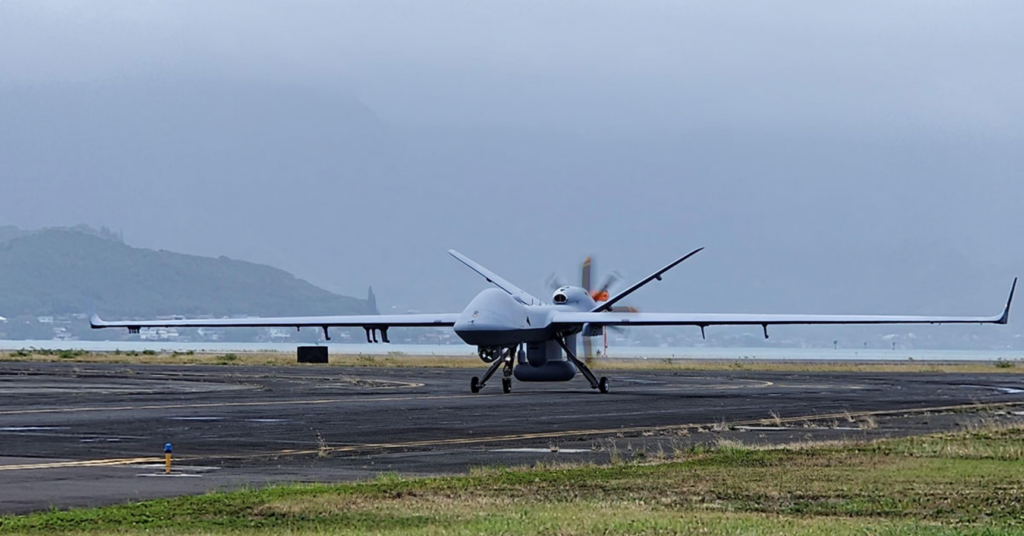
GA-ASI’S MQ-9B SeaGuardian Showcased at RIMPAC 2024
Sonobuoy Dispensing System and LRASM Among the New Capabilities Featured
SAN DIEGO – 14 August 2024 – With the completion of the U.S. Navy’s Rim of the Pacific (RIMPAC) flight operations on July 28, 2024, the MQ-9B SeaGuardianUnmanned Aircraft System (UAS) supplied by General Atomics Aeronautical Systems Inc., self-deployed back to its home base in El Mirage, Calif., but only after introducing an array of new capabilities. The flight home followed close to 100 flight hours supporting RIMPAC 2024 over the four-week exercise in and around the Hawaiian Islands.
RIMPAC is the world’s largest international maritime exercise. RIMPAC 2024 featured 29 nations, 40 surface ships, three submarines, 14 national land forces, more than 150 aircraft, and 25,000 personnel.
SeaGuardian provided real-time Intelligence, Surveillance, and Reconnaissance (ISR) data feeds to the U.S. Pacific Fleet Command Center using Signals Intelligence (SIGINT) parametrics and full-motion video to the watch floor and intelligence centers for real-time dynamic tasking — just as it did for the RIMPAC 2022 exercise. This year, SeaGuardian delivered some new features and capabilities, including Long Range Anti-Ship Missile (LRASM) targeting and a new Sonobuoy Dispensing System (SDS) to support its Anti-Submarine Warfare capability. SeaGuardian was configured with a prototype SDS pod capable of deploying 10 A-size sonobuoys per pod (SeaGuardian can carry up to four SDS pods or up to 40 sonobuoys) and the SeaVue Multi-role radar from Raytheon, an RTX business. Upon dispensing, the sonobuoys were successfully monitored and controlled by the SeaGuardian’s onboard Sonobuoy Monitoring and Control System (SMCS).
SeaGuardian is a maritime derivative of the MQ-9B SkyGuardian and remains the first UAS that offers multi-domain Intelligence, Surveillance, Reconnaissance, and Targeting (ISR&T) as an internal payload that can search the ocean’s surface and depths in support of Fleet Operations. At RIMPAC 2024, SeaGuardian showcased all operational payloads, which includes the SeaVue, SNC’s Electronic Support Measures (ESM) solution, an Automatic Identification System (AIS), and a self-contained Anti-Submarine Warfare (ASW) system.
SeaGuardian’s multi-domain capabilities allow it to flex from mission to mission and pass real-time sensor data directly to the Fleet. For RIMPAC 2024, SeaGuardian added Link 16 Joint Range Extension Application Protocol (JREAP) “C” (internet protocol) and an integrated Minotaur Mission System to provide real-time sensor data for the various Maritime Operations Centers, ships, and aircraft with Minotaur nodes.
“For RIMPAC, the MQ-9B effectively passed ISR&T information to various surface and air units, such as the Nimitz-class carrier USS Carl Vinson, guided-missile destroyers (DDGs), littoral combat ships (LCS), frigates, patrol boats, P-8s, P-3s, and numerous other U.S. and foreign units that took part in the exercise,” said GA-ASI President David R. Alexander.
On July 31, 2024, SeaGuardian self-deployed back to GA-ASI’s Desert Horizon Flight Operations Facility in El Mirage, Calif.
USS Oscar Austin One of Two U.S. Navy DDGs Homeport Shifting to Rota, Spain
From Commander, Naval Surface Force, Atlantic, 14 August 2024
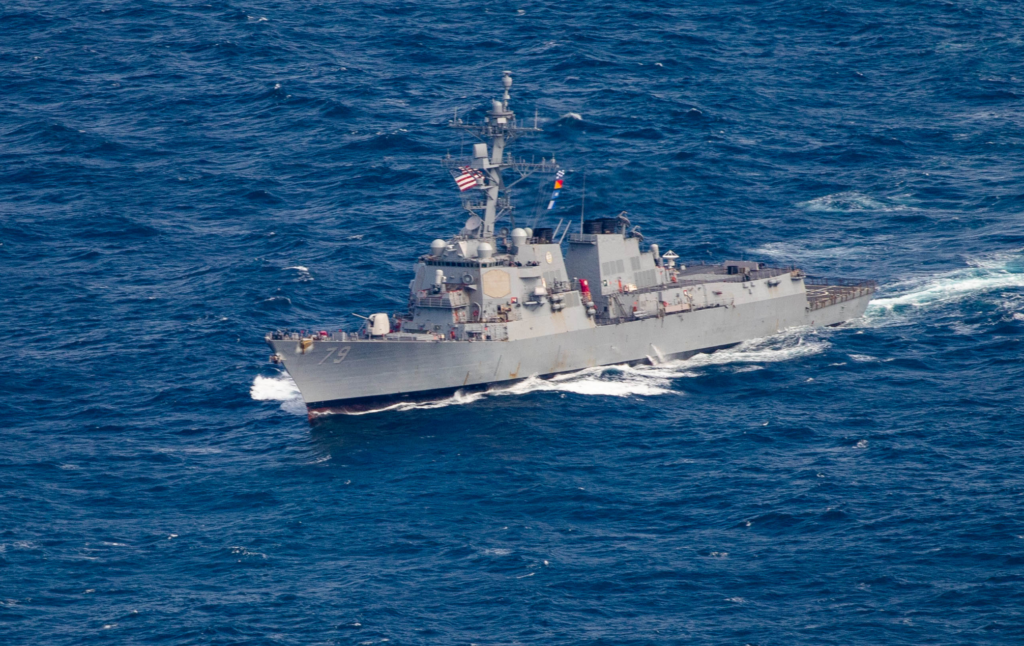
NORFOLK, Va. – USS Oscar Austin (DDG 79) is scheduled to change its homeport from Naval Station Norfolk, Va. to Rota Naval Base, Spain, in the fall of 2024.
Oscar Austin is the first of two additional Arleigh Burke-class guided-missile destroyers to join the current Forward Deployed Naval Force-Europe (FDNF-E) force – adding additional capabilities to the U.S. European Command (EUCOM) and U.S. Africa Command (AFRICOM) areas of responsibility. The addition of these two ships will be phased, with the second arriving in 2026. The second ship will be named closer to its arrival.
“Shifting Oscar Austin’s homeport to Rota is the next step in bolstering U.S. and NATO maritime presence and combat power in Europe as well as increasing the capacity to execute the One Atlantic concept,” said Adm. Daryl Caudle, commander, U.S. Fleet Forces Command. “The One Atlantic concept improves the ability to share, leverage, and fully utilize naval forces in response to threats and strategic competitors while conducting multi-mission operations across the Atlantic by multiple Combatant Commanders.”
The move will increase the U.S. Navy’s forward-deployed operational footprint in EUCOM to five destroyers in Rota. The increased presence reinforces the U.S. Navy’s commitment to its enduring relationship with maritime allies in Spain, and it enhances operations to support maritime security alongside allies and partners in Europe and Africa, strengthening the trans-Atlantic link. The addition will enable additional coordination between U.S. and Spanish navies on ship maintenance and training.
Operating naval forces from Spain maximizes flexibility and ensures access to strategic global crossroads. The addition of Oscar Austin to Rota will allow for more operational flexibility within the European theater. The arrival of the ship will provide a mitigation of operational tempo for other FDNF-E Sailors assigned to ships in Rota, improving quality of life and decreasing operational stressors.
On May 8, 2023, the U.S. Ambassador to Spain, Julissa Reynoso, signed in Madrid on behalf of President Biden the enhancement of the Defense Cooperation Agreement with the Kingdom of Spain to increase the U.S. Navy’s presence at Rota Naval Base, Spain, from four Arleigh Burke-class guided-missile destroyers to six.
The initial decision to base destroyers out of Spain is part of the U.S. European Phased Adaptive Approach announced by President Obama in 2009. Since its announcement, the U.S. has broadened its Ballistic Missile Defense (BMD) capabilities in theater including increasing FDNF-E from four to six and the finalization of the second Aegis Ashore site in Poland.
Oscar Austin is the first Flight IIA Arleigh Burke-class, guided-missile destroyer and proudly bears the name of Pfc. Oscar P. Austin, United States Marine Corps. USS Oscar Austin was commissioned on August 19, 2000, in Norfolk, Va. Oscar Austin is ballistic missile defense, anti-submarine, and anti-surface warfare capable. The ship can embark two MH-60R Seahawk helicopters to assist in anti-submarine and other warfare areas. Destroyers can work with Carrier Strike Groups, Surface Action Groups, Expeditionary Strike Groups or independently.
USS Ronald Reagan Arrives in Bremerton
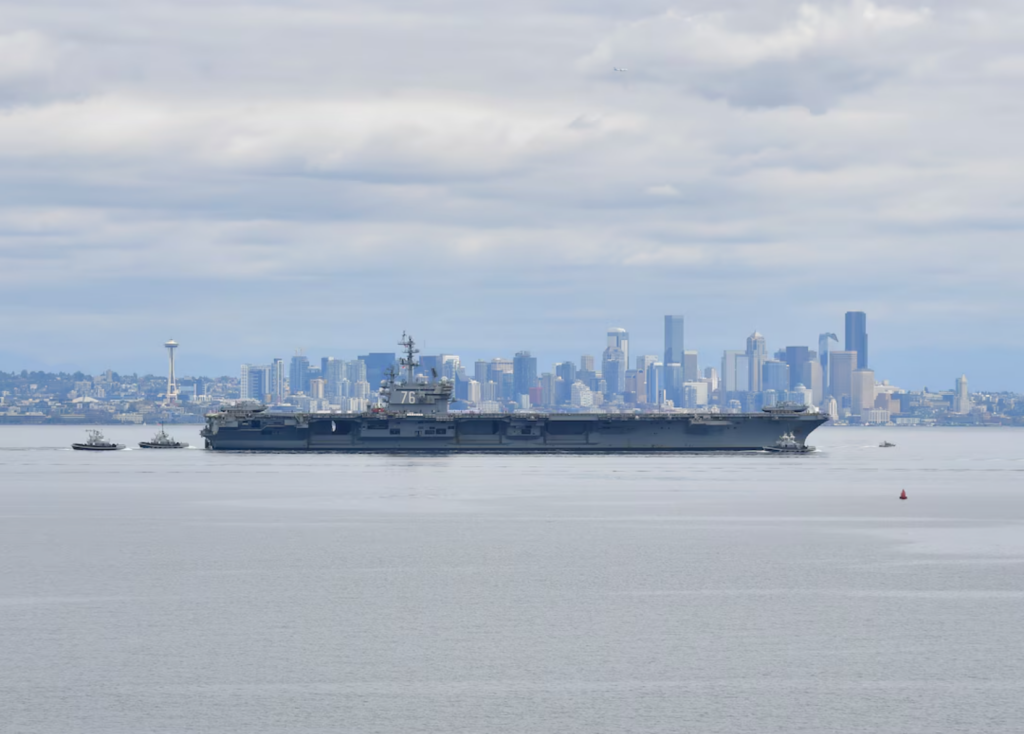
The Nimitz-class aircraft carrier USS Ronald Reagan (CVN 76) transits Puget Sound towards its new homeport at Naval Base Kitsap, Washington, following a three month underway, Aug. 13, 2024. (U.S. Navy photo by MC1 Heather C. Wamsley)
14 August 2024
NAVAL BASE KITSAP, Wash. - Ronald Reagan departed Yokosuka, Japan, May 16, where it’s been forward deployed since 2015, and served as the U.S. Navy’s only forward-deployed aircraft carrier, operating in the 7th Fleet area of responsibility (AOR), maintaining a free and open Indo-Pacific.
As Ronald Reagan returned to the United States, it participated in exercise Valiant Shield 2024, a port visit in Guam, and transitioned to the 3rd Fleet AOR where it conducted a hull swap.
“I am incredibly proud of our crew and the work they’ve accomplished in our time as the Navy’s only forward-deployed aircraft carrier,” said Capt. Daryle Cardone, commanding officer of USS Ronald Reagan. “They were asked to perform at the highest level and exceeded those expectations. Now we are looking forward to making upgrades to the ship, and even more well-deserved time stateside for the crew.”
While the ship pulled in, hundreds of Ronald Reagan Sailors manned the rails in their service dress white uniforms as friends and family members awaited the arrival on the pier.
“I’m so happy to finally see my family after this deployment,” said Operations Specialist 1st Class Hilaire Kouamo, while being surrounded by his wife and kids. “I love them so much and I’m happy to be back.”
During the underway, Ronald Reagan participated in the first-ever multinational exercise Valiant Shield 2024 with U.S. Indo-Pacific Command’s joint forces and Japan Self-Defense Forces. This exercise spanned from June 7 to June 18 and included complex multi-axis and multi-domain operations, further strengthening the relationship and interoperability of the U.S. and its allies. Ronald Reagan also made a scheduled port visit to Guam, where Sailors volunteered with local communities, and explored the island’s sights, history, and culture.
Following the underway, Nimitz-class aircraft carrier George Washington (CVN 73) met Ronald Reagan in San Diego for a hull swap. As part of the transition, the embarked Air Wing and Staffs, including Task Force 70 (CTF 70), Carrier Air Wing 5 (CVW 5), and Destroyer Squadron 15 (DESRON 15) transferred to George Washington along with approximately 350 Sailors; 13 percent of the USS Ronald Reagan crew. These sailors cross decked to George Washington bringing with them their vast operations experience for its time as the new forward-deployed aircraft carrier while Ronald Reagan shifts to a new operational environment.
“Even though Ronald Reagan’s time in 7th fleet is over, we are still in the fight,” said Cardone. “The success of our previous deployments is a testament of the crew’s warfighting capability and displays our adaptability in an ever-changing theater. Everything we accomplished while forward-deployed carries over as we continue to improve the ship and prepare the crew for Ronald Reagan’s next chapter.”
As an integral part of U.S. Pacific Fleet, U.S. 3rd Fleet operates naval forces in the Indo-Pacific in addition to providing realistic and relevant training necessary to flawlessly execute our Navy’s timeless roles of sea control and power projection. U.S. 3rd Fleet works in close coordination with other numbered fleets to provide commanders with capable, ready forces to deploy forward and win in day-to-day competition, in crisis, and in conflict.
Naval Base Kitsap is the Navy’s third largest fleet concentration area in the United States, and arguably the most complex. They are home to more than 70 tenant commands, including Commander, Navy Region Northwest; Commander, Submarine Group 9; Commander, Carrier Strike Group 3; Naval Facilities Engineering Command Northwest; Naval Undersea Warfare Center Keyport; and Puget Sound Naval Shipyard and Intermediate Maintenance Facility. Spanning more than 12,000 acres across the Kitsap Peninsula, they support a diverse range of strategic missions, including all types of submarines, Nimitz-class aircraft carriers, Puget Sound Naval Shipyard and Manchester Fuel Depot. NBK is also the home of several Research, Development, Testing & Evaluation commands that ensure the Navy’s technological advantage. NBK and its supported commands produce substantial economic benefits to our surrounding communities.
U.S. Coast Guard Announces Juneau Homeporting for Future Icebreaker
From U.S. Coast Guard Headquarters, Aug. 14, 2024
WASHINGTON – The U.S. Coast Guard announced Wednesday it will homeport a commercially procured icebreaker in Juneau.
The Coast Guard is acquiring the Aiviq, a U.S. registered ship originally built to serve as an Arctic oil-exploration support vessel, which has an icebreaking capability sufficient to serve as a Coast Guard medium polar icebreaker, following modification.
“The United States is an Arctic nation, and the Coast Guard is vital to providing presence in our sovereign waters and the polar regions,” said Adm. Kevin Lunday, Coast Guard vice commandant. “As we continue to build the Polar Security Cutters, acquiring a commercially available polar icebreaker will enable the Coast Guard to increase our national presence in the Arctic, and homeporting this cutter in Alaska demonstrates the Service’s steadfast commitment to the region.”
The Coast Guard was appropriated $125 million in fiscal year 2024 to purchase a commercially available icebreaker. Currently, the Aiviq is the only U.S. built commercial vessel meeting necessary icebreaking standards. The Service anticipates the vessel will reach initial operational capability in two years.
The Coast Guard has been the sole provider of America’s polar icebreaking capability since 1965 and is seeking to increase its icebreaking fleet with new Polar Security Cutters. The Coast Guard currently operates two polar icebreakers, the Coast Guard Cutter Healy, a medium polar icebreaker, and the Coast Guard Cutter Polar Star, the only U.S. heavy polar icebreaker.
USS Somerset Returns Home After Indo-Pacific Deployment
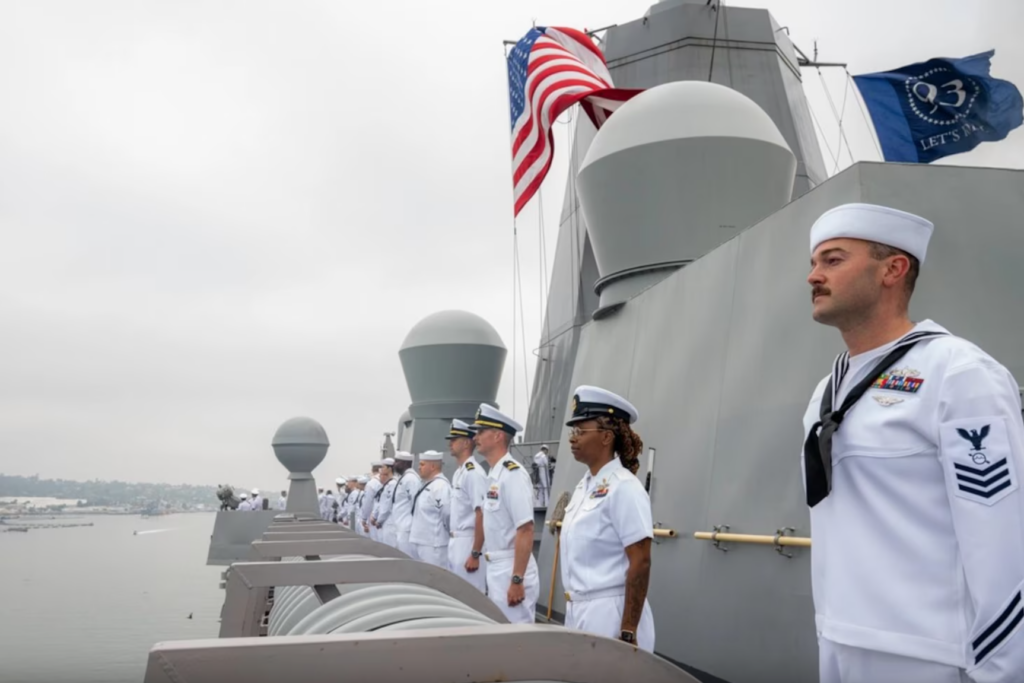
Sailors assigned to the San Antonio-class amphibious transport dock ship USS Somerset (LPD 25) man the rails as the ship transits through San Diego Bay, Aug. 13, 2024. (U.S. Navy photo by MC2 Class Evan Diaz)
From Lt. Zachary Anderson, 13 August 2024
SAN DIEGO – Sailors assigned to San Antonio-class amphibious transport dock USS Somerset (LPD 25) returned home Aug. 13 to San Diego after a seven-month deployment with embarked Marines from the 15th Marine Expeditionary Unit (MEU) in the U.S. 7th and 3rd Fleet areas of operations.
More than 1,400 Sailors and Marines participated in a wide range of joint and combined exercises, showcasing the ready and responsive combined-arms team of the Navy and Marine Corps, capable of responding quickly and decisively to a wide array of military operations.
“Somerset’s motto is ‘courage through adversity,’ and I can think of no crew that better exemplifies that ethos than the combined Navy-Marine Corps team that have called this ship home for the past seven months,” said Capt. Andrew Koy, commanding officer of Somerset. “I have no doubt that the numerous multilateral exercises in which Somerset participated played a key role in strengthening international partnerships and alliances throughout the Western Pacific.”
Exercises such as Cobra Gold, Tiger Triumph, Balikatan, Cooperation Afloat Readiness and Training (CARAT) Indonesia, Tiger Strike, and Rim of the Pacific (RIMPAC) 2024, reinforced America’s commitment to allies and partners throughout the Indo-Pacific region and increased force interoperability.
After setting sail in January, Somerset participated in Exercise Cobra Gold 2024, the 43rd iteration of the largest joint exercise in mainland Asia. Taking place in Thailand, U.S. Marines from the 15th MEU were able to conduct two community relations events, demonstrating their commitment to the region, as well as a unit-level training rotation alongside Republic of Korea and Royal Thai Marines, enhancing interoperability.
“The hard work demonstrated at CALFEX (combined arms live fire exercise) is a tangible demonstration of the collective strength and focus we have when working with our allies and partners,” said U.S. Marine Corps Lt. Col. Lindsay Mathwick, commanding officer of Combat Logistics Battalion 15, 15th Marine Expeditionary Unit, and commander of troops aboard Somerset. “Seeing the synchronization and communication with our combined and joint forces at work throughout these two weeks of training shows how important exercises like Cobra Gold are to our development as a force.”
From Thailand to India, Somerset followed up Cobra Gold by participating in Tiger Triumph 2024, marking the third time U.S. and India came together for the exercise. Forces operated near Visakhapatnam and Kakinada, India, and focused on advancing large-scale joint and combined interoperability for humanitarian assistance and disaster relief operations, as well as work through standard operating procedures between the combined and joint forces.
The exercise included a harbor phase followed by a sea phase where U.S. and Indian forces practiced combined operational maneuvers, command and control, and joint sustainment operations. Somerset was joined by a P-8A Poseidon maritime patrol and reconnaissance aircraft from Patrol Squadron (VP) 4, the Arleigh Burke-class guided missile destroyer USS Halsey (DDG 97), along with U.S. Army and Air Force assets.
Exercise Balikatan 2024, a combined exercise featuring French, Australian, U.S., and Filipino service members, reinforced America’s longstanding, strategic partnership with the Philippines and partner nations. Over a three-week span, partner nations’ forces trained shoulder-to-shoulder at locations throughout the Republic of the Philippines to increase proficiency in maritime security, amphibious operations, combined arms, aviation operations, and information and cyberspace operations.
Emphasizing quality over the quantity, this year’s exercise focused on the planning and execution of complex, combined military operations. Balikatan, which means “sharing the load together” in Tagalog, built upon previous iterations, coalescing partner nation capabilities into the unified force necessary to deter aggression and maintain a free and open Indo-Pacific region.
In addition to the field exercises, forces injected nearly $50 million into the local community, via humanitarian engineering projects, such as building schools and medical centers, and training medical personnel.
Following Balikatan’s concluding ceremony, May 10, Somerset participated in CARAT Indonesia 2024. The bilateral maritime exercise concluded in Bandar Lampung, Indonesia, May 20, following eight days of both ashore and at-sea engagements that enhanced collaboration between the Indonesian and U.S. militaries. This year’s exercise marked the 30th iteration of CARAT, and 75 years of diplomatic relations between Indonesia and the U.S.
“We have come to recognize our similarities after a week of training and living side by side,” said Col. Sean Dynan, commanding officer, 15th MEU. “Words like honor, courage and commitment describe a common ethos that is so obviously shared between our two navies and Marine Corps. We have learned that a language barrier is not as strong as the bond by those who serve in the field, or on a ship. We’ve learned that we have different capabilities, but we are both equally capable.”
Somerset’s penultimate stop was Kuantan, Malaysia, for Exercise Tiger Strike 24. The bilateral exercise, taking place in Kuantan and Kuala Terengganu, Malaysia, occurred between May 29 and June 6. It increased the combined, joint force readiness and amphibious capabilities that can be applied across the range of military operations at sea and shore.
“Strategic engagement with countries, such as Malaysia, reflect the importance of our relationships with Indo-Pacific allies and partners,” said Capt. Tate Robinson, commodore of Amphibious Squadron 5.
“Training opportunities, such as Tiger Strike, allow us to work side-by-side with our Malaysian counterparts to refine our common defense requirements and meet national security objectives.”
With its mission complete in U.S. 7th Fleet area of operations, Somerset and embarked elements of the 15th MEU, sailed to Hawaii for RIMPAC 2024, the world’s largest international maritime exercise, with 29 participating nations.
Aboard Somerset, a team of engineers from the Consortium for Advanced Manufacturing Research and Education demonstrated the benefits of 3D printing by constructing a critical component of a reverse osmosis pump. The advanced manufacturing project was part of Trident Warrior, the experimentation sector of RIMPAC, dedicated to operational testing new military technology for the warfighter. Notably, the 3D printer used was a hybrid metal printer, the first of its kind to combine subtractive and additive manufacturing.
Also aboard were a team of Army surgeons from the 105th Surgical Augmentation Detachment. The detachment’s embarkation marked the first time an Army unit was used in place of a fleet surgical team, testing the interoperability of the U.S. military’s medical assets.
Somerset is part of the Boxer Amphibious Ready Group and 15th MEU team, which is a flexible, self-sustained crisis response force, capable of conducting operations from combat missions to humanitarian aid and disaster relief. This team is the premier crisis-response force in the Indo-Pacific region.
August 13 U.S. Central Command Update
From U.S. Central Command
Aug. 13, 2024
TAMPA, Fla. - In the past 24 hours, U.S. Central Command (USCENTCOM) forces successfully destroyed two Iranian-backed Houthi vessels in the Red Sea.
These vessels presented a clear and imminent threat to U.S. and coalition forces, and merchant vessels in the region. This reckless and dangerous behavior by Iranian-backed Houthis continues to threaten regional stability and security.
U.S. Navy Launches New Attack Submarine
One of the U.S. Navy’s newest attack submarines, the future USS Idaho (SSN 799), launched from General Dynamics Electric Boat’s shipyard into the Thames River, Aug. 6.
By Team Submarines Public Affairs, Aug. 13, 2024
GROTON, Connecticut ── One of the U.S. Navy’s newest attack submarines, the future USS Idaho (SSN 799), launched from General Dynamics Electric Boat’s shipyard into the Thames River Aug. 6.
The launch, also known as “float off,” marks a construction milestone in the life of a ship, when it moves from the shipbuilder’s facilities and into the water for the first time to begin final outfitting, testing, and crew certification.
“Today’s launch is testament to the strong collaboration the Navy has with its shipbuilding partners,” said Captain Mike Hollenbach, Virginia Class Submarine program manager. “Idaho will be a valuable national asset and source of pride for our Sailors, the shipbuilders and all Americans for years to come.”
Submarine sponsor Terry Stackley christened the boat on March 16, 2024 with water she collected from several lakes in Idaho. The submarine began construction in 2017 and will be the 26th Virginia-class fast attack submarine to deliver to the fleet and the fifth U.S. Navy ship named for the state. The last ship named Idaho was battleship BB 42, commissioned in 1919.
Virginia-class fast-attack submarines provide the Navy with the capabilities required to maintain the nation’s undersea supremacy well into the 21st century. Virginia submarines have enhanced stealth, sophisticated surveillance capabilities, and special warfare enhancements that enable them to meet the Navy’s multi-mission requirements. Additionally, through the extensive use of modular construction, open architecture and commercial off-the-shelf components, the Virginia class is designed to remain state-of-the-practice for its entire operational life through the rapid introduction of new systems and payloads.
Saildrone Surveyor to Begin Mapping Cayman Islands EEZ
The mission will provide detailed and precise bathymetric data for the Cayman Islands, supporting safety of navigation, environmental conservation, and marine resource management.
From Saildrone, Aug. 13, 2024
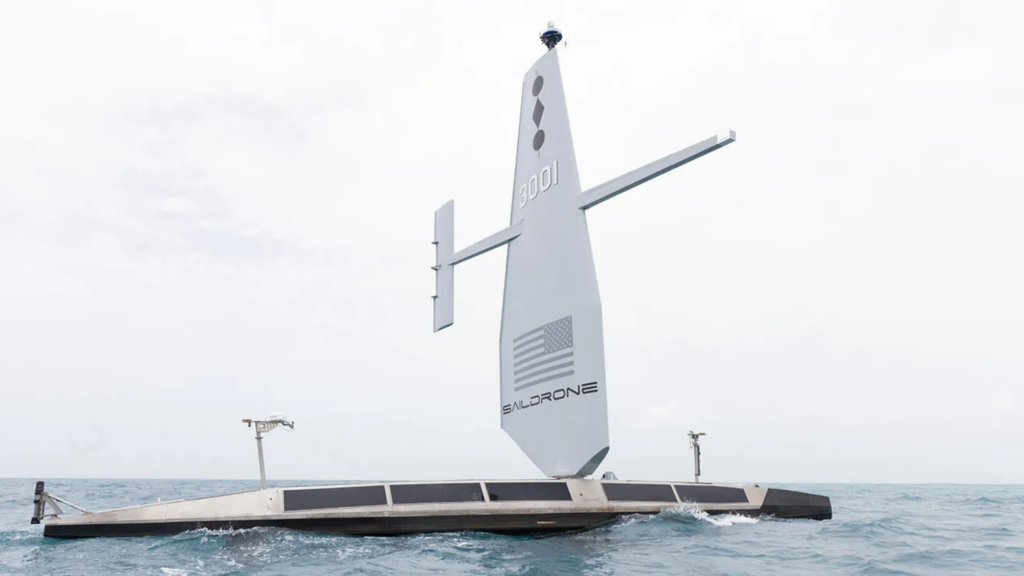
Today, Saildrone, a pioneer in collecting ocean data using autonomous, uncrewed surface vehicles (USVs), announced the start of a first-of-its-kind mission to map the 29,300 square nautical miles (100,530 sq km) of the Cayman Islands’ Exclusive Economic Zone (EEZ). The mission is being conducted using a 20-meter Saildrone Surveyor USV.
This mission represents a major milestone in ocean mapping: surveying 80% of the Cayman Islands’ EEZ using autonomous technology. A high-resolution bathymetric map of a country’s EEZ is a prerequisite for exploring, identifying, characterizing, exploiting, conserving, and managing natural resources in waters extending up to 200 nautical miles from its shores.
The Cayman Islands EEZ encompasses an area that is 357 times larger than the islands themselves, about half the size of the state of Florida. The mission will provide detailed and precise bathymetric data for the Cayman Islands, contributing to a comprehensive understanding of the seafloor topography in the region. The data collected will not only enhance maritime navigation and charting but also support scientific research, environmental conservation efforts, and marine resource management in the Cayman Islands.
Premier and Minister for District Administration & Lands, Hon. Juliana O’Connor-Connolly, expressed the benefits of the Cayman Islands undertaking the marine survey. “Our waters hold such great value to us for a myriad of reasons ranging from recreational to economic. Conducting this assessment will allow our government to make data-driven decisions that will strengthen our policies and legislations as it relates to our maritime infrastructure. I am grateful to all parties who have worked to bring this initiative to this junction and am eager to learn of the survey’s results and outcomes.”
The mission is philanthropically funded by the London & Amsterdam Trust Company Limited, a Cayman-based organization that wants to leave a legacy to the Cayman Islands. Saildrone will collect the raw bathymetry data, which will be provided to the UK Hydrographic Office (UKHO) to process and update the Cayman Islands’ nautical charts. The data will belong to the Cayman Islands government.
The Saildrone Surveyor is equipped with the latest multibeam echo sounders and metocean sensors for ocean mapping and ecosystem monitoring, as well as radar, cameras, and advanced machine learning. Globally, only 26% of the ocean has been mapped, a result of the lack of survey ship capacity. While a survey ship takes years to build, Saildrone can produce one Surveyor in as little as six weeks—at a fraction of the cost of a ship.
“Saildrone’s Surveyor class of USVs provides an available, economical, climate-friendly solution to mapping the world’s oceans,” said Brian Connon, Saildrone VP Ocean Mapping. “The data gathered by this USV will provide valuable insights into the Cayman Islands’ underwater topography, aiding in the mapping and exploration of the country’s marine resources and ecosystems.”
The deployment of the Saildrone Surveyor in the Cayman Islands promises to revolutionize bathymetric data collection. USVs equipped with deep ocean mapping sonars now offer an attractive, and economical, option for data collection in large areas like EEZs. This technology also reduces risk to personnel while significantly lowering carbon emissions.
The mission begins this week and will take approximately six months. Saildrone will provide local mariners with detailed information, via its website, on the location of the Surveyor vehicle when it is scheduled to operate close to shore or near popular fishing and boating areas.
Austin Orders Additional Naval Assets to Middle East Amid Rising Tensions
Aug. 12, 2024 | By Matthew Olay, DOD News
Secretary of Defense Lloyd J. Austin III has ordered additional naval assets to the Middle East to reinforce the United States’ commitment to Israel’s defense amid escalating regional tensions, Pentagon Press Secretary Air Force Brig. Gen. Pat Ryder told the media during a briefing today.
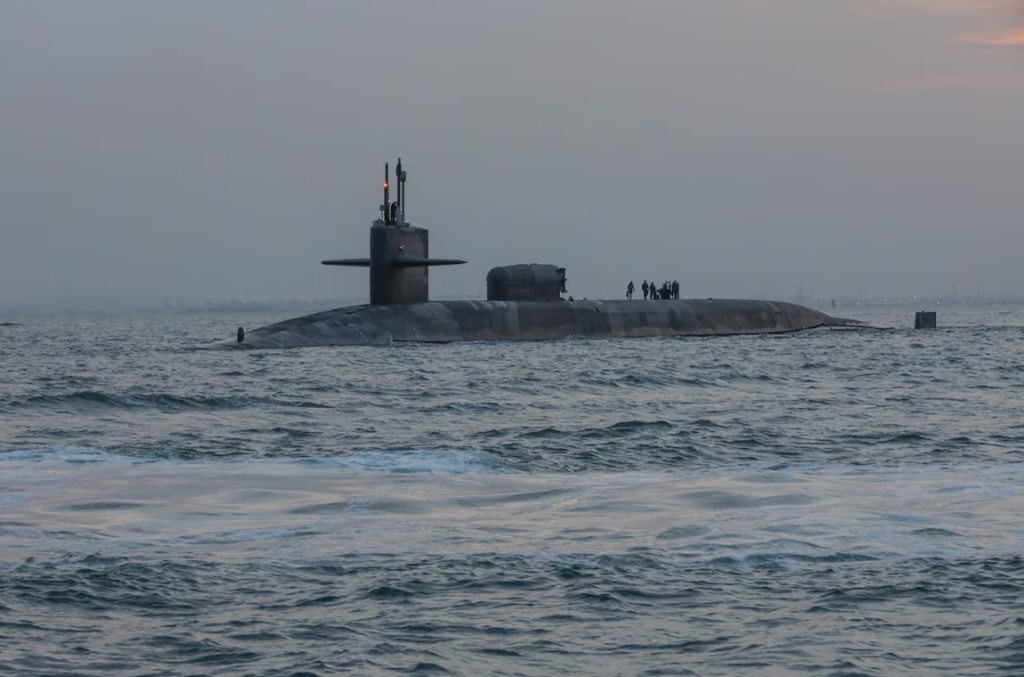
Austin dispatched the USS Abraham Lincoln Carrier Strike Group — which is equipped with stealth F-35C Lightning II combat jets — as well as the ballistic missile submarine USS Georgia to the Central Command region, Ryder said.
The order came following a phone call Sunday between Austin and Israeli Minister of Defense Yoav Gallant.
” reiterated the United States’ commitment to taking every possible step to defend Israel and noted the strengthening of U.S. military force posture and capabilities throughout the Middle East in light of hostile regional tensions,” Ryder said.
Ryder added that the additional naval assets will add to the capabilities being provided by the USS Theodore Roosevelt Carrier Strike Group, which has already been operating in the region.
“These U.S. military posture adjustments are designed to improve U.S. force protection, to increase support for the defense of Israel and to ensure the United States is prepared to respond to various contingencies,” Ryder said.
When asked if the Defense Department had any specific information regarding an imminent attack in the region, Ryder said he wouldn’t speculate on such a topic.
“I think the point here,” Ryder responded, “is that we recognize the tensions in the region. We’re doing everything we can to deter aggression, deter conflict prevent this from becoming a wider war — while at the same time ensuring that we have the capabilities in the region to be able to protect our own forces also defend Israel, should it be attacked.”
During the Sunday phone call, Austin and Gallant also discussed Israel’s operations in Gaza, including the importance of mitigating harm to civilians, progressing toward a ceasefire, securing the release of hostages, and deterring aggression by other countries throughout the region, Ryder said.
Ryder also addressed an attack on U.S. and coalition service members by an uncrewed aerial system in Syria this past Friday.
“Military officials are still assessing the damage, though they credited swift and effective preemptive measures in limiting the drones,” Ryder said, adding that although nobody was seriously hurt in the attack, several U.S. and coalition personnel were treated for minor injuries, including smoke inhalation.
Coast Guard Cutter Waesche Returns Home Following 120-day Indo-Pacific Patrol
Waesche participated in various engagements, exercises, and events throughout their deployment.
The cutter’s leadership and crew met with officials and military personnel during port calls in Japan, Republic of Korea, Singapore, and Vietnam.
Following Waesche’s visit to Maizuru, Japan, Waesche joined crews from the Japan Coast Guard vessel Wakasa (PL 93) and the Republic of Korea Coast Guard patrol vessel Taepyongyang (KCG 3016) for a joint search-and-rescue exercise at sea.
“We are thankful to have traveled safely home to our loved ones and to have completed a successful and meaningful patrol,” said Capt. Tyson Scofield, Waesche’s command officer. “Waesche’s patrol strengthened U.S. relationships with our partner nations to foster a free and open Indo-Pacific. The opportunity to work alongside our allies and partners in the Indo-Pacific through impactful engagements was an honor and a rewarding experience that the crew will remember for the rest of their lives.”
Tyson assumed command of the Waesche during a change of command ceremony held in Honolulu as the cutter transited to the Indo-Pacific.
Waesche deployed with a San Francisco-based MH-65E Dolphin helicopter and an aircrew from Air Station Barbers Point, Hawaii.
Waesche was assigned to Destroyer Squadron (DESRON) 15, the Navy’s largest DESRON and the U.S. 7th Fleet’s principal surface force. DESRON 15 regularly assumes tactical control of surface units operating in the area.
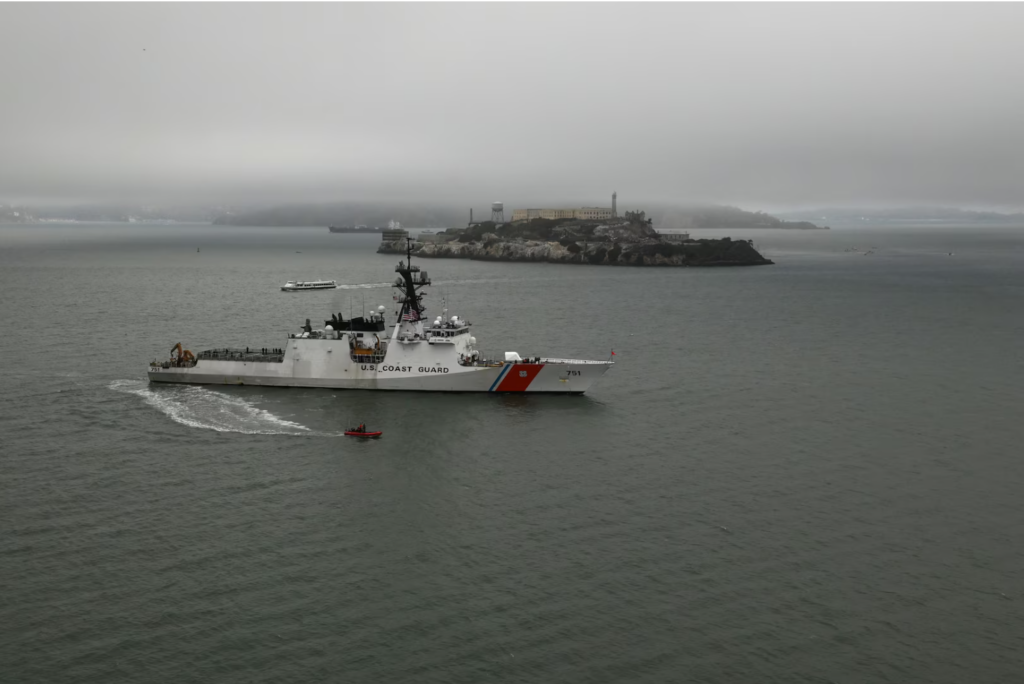
Commissioned in 2010, Waesche is one of four Legend-class national security cutters homeported in Alameda. National security cutters are 418-feet long, 54-feet wide, has a top speed of over 28 knots, a range of 12,000 nautical miles, endurance of up to 90 days, and can hold a crew of up to 170. The advanced technologies of the national security cutter class ships are designed to support the operations and missions in the Indo-Pacific region.