In a warfighting world increasingly focused on swarming, uncoordinated unmanned systems across both air and sea, there’s a need for defense approaches that are effective against all types of electronic threats.
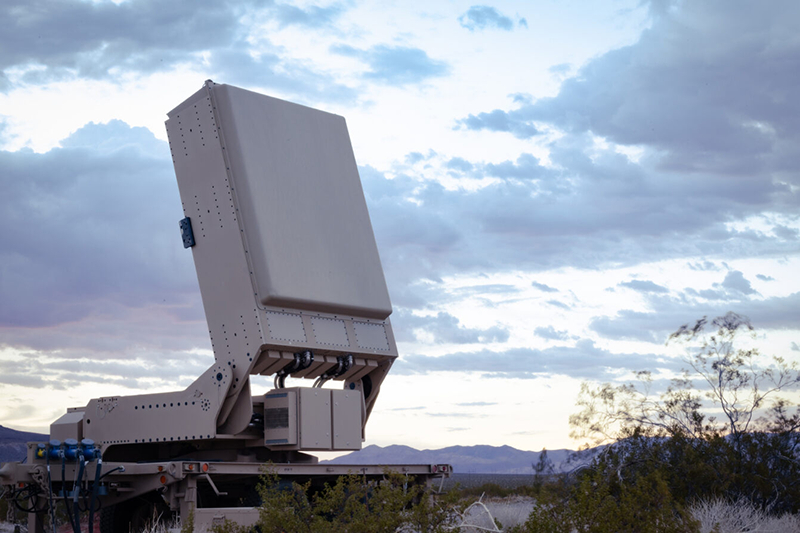
Epirus (Booth 346) is demonstrating its Leonidas Electronic Protection counter-UAS systems, which use a high-power microwave platform that’s built for the Sixth Domain — a battlespace that relies on robotic and autonomous electronic threats that can overwhelm legacy warfighting defenses.
“Leonidas goes beyond drone threats and targets anything with electronics that’s vulnerable to a microwave pulse,” said Andrew Wargofchik, Epirus’ director of marketing and communications.
Leonidas’s scalable systems range in size from inches to feet and can defend borders, fixed installations and critical infrastructure. They offer mobile coverage for convoys and expeditionary forces, and integrate directly into vehicles and aerial systems and across ship classes.
Leonidas’ microwave technology uses line-replicable amplifier modules (LRAM), tailored to fit different mission profiles and range requirements. They operate off a small generator or internal batteries and never need a recharge, and have unlimited magazine depth. In addition, Wargofchik said Leonidas systems need only one or two operators and because innovations can be made through software updates, the hardware doesn’t have to leave the battlefield.
Department of the Navy Releases FY27 Budget Request
From the Department of the Navy, April 21, 2026
WASHINGTON, D.C. – The Department of the Navy released their Fiscal Year (FY) 2027 President’s Budget request today focused on restoring American maritime dominance with a total Navy topline of $377.5B, an increase of more than $70.B compared to last year. This generational investment in our future fleet represents a 23% growth over the previous fiscal year and signals a clear commitment to the Golden Fleet Initiative, modernization and readiness.
The budget request is part of President Trump’s historic $1.5T topline provided for national defense submitted to Congress on April 3, that ensures the United States is able to maintain the world’s most powerful and lethal naval force.
“This is a strategy-driven budget,” said Secretary of the Navy John Phelan. “It’s not about business as usual – it’s about making generational investments in real, usable capability for our warfighters.”
This year’s budget submission was guided by Secretary of the Navy John Phelan’s priorities: strengthening shipbuilding and the maritime industrial base; fostering a more adaptive, accountable, and innovative warfighter culture; and investing in the health, welfare and training of our people. The submission was also guided by Chief of Naval Operations Adm. Daryl Caudle’s Fighting Instructions and the Commandant of the Marine Corps Gen. Eric Smith’s Force Design Strategy.
This budget request will launch a new age of American shipbuilding, bolster munitions supplies, enhance operational strength, sustain the force, and improve the health, welfare and training of our people and their families.
“This is the money that builds the future fleet,” said Deputy Assistant Secretary of the Navy for Budget Rear Adm. Ben Reynolds. “It funds the acquisition of 34 new ships and 123 new aircraft, directly translating dollars into the steel and systems that will guarantee our maritime dominance for decades to come.”
To usher in America’s Golden Fleet Initiative, the Department of the Navy is requesting $65.8 billion in shipbuilding funds to buy 18 battle force ships and 16 auxiliary ships. This funding will allow the Navy to purchase one Columbia-class submarine, two Virginia-class submarines, one FF(X) Frigate, one Arleigh Burke-class Destroyer, one America-class Amphibious Assault ship, one San Antonio-class Amphibious Transport Dock, six Medium Landing Ships, two John Lewis-class Oiler Tankers, two Submarine Tender Replacements, and one Ocean Surveillance Ship. The request also continues incremental funding for the third Ford-class carrier, CVN 80, and fourth Ford-class carrier, CVN 81. This request will also support the design and development of the Navy’s premier large surface combatant, the BB(X) Battleship.
For aircraft procurement, the Department’s request of $34.4B billion supports the purchase of 123 aircraft, including 47 F-35s, 12 P-8As, 6 E-2Ds, 22 CH-53Ks, 3 MQ-25s, 5 MQ-9As, as well as modification, spares, and support equipment. This request doubles F-35 procurement and accelerates aircraft procurement to ensure a robust industrial base.
The weapons procurement request of $22.6 billion includes significant investments in a variety of munitions including Standard Missiles, Tactical Tomahawk Missiles, and Patriot PAC-3s.
The ground procurement request for the Marine Corps for $6.3B supports units across the Fleet Marine Force, investing in key warfighting capabilities including 32 Navy/Marine Expeditionary Ship Interdiction System (NMESIS) Launchers and 103 Naval Strike Missiles (NSM) that enhance precision fires capabilities and contribute meaningfully to the joint kill chain. The request also invests in ground based air defense, supporting 42 Marine Air Defense Integrated Systems (MADIS) and 16 Medium Range Intercept Capability (MRIC) systems along with 410 missiles that enable Marines to maneuver and operate under complex aerial threat conditions.
“This budget significantly enhances our ability to be a globally responsive, resilient, and lethal naval expeditionary force in readiness,” said Gen. Smith. “It delivers much-needed investment in amphibious warships and medium landing ships, strengthens our aviation combat element, increases our magazine depth, and takes care of our strategic advantage, our Marines. Together, these investments ensure we are ready to fight today and modernizing to meet the demands of the future fight.”
Fostering a More Adaptive, Accountable, and Innovative Warfighter Culture
The budget request invests smartly in our capabilities – acquiring the new FF(X) frigate to take-on lower priority missions and freeing up our advanced destroyers for high-end combat. Additionally, we are investing heavily in unmanned platforms to provide a strategic hedge and multiply our force. We are making key investments in the Golden Fleet Initiative that will revitalize America’s maritime industrial base and restore American maritime dominance.
The Department of the Navy includes a $150B request for operations and maintenance, emphasizing our desire to drive platform readiness towards an 80% combat surge ready posture by reducing maintenance delays and applying a disciplined focus across manning, training, modernization and sustainment. This investment supports training, deployment costs and flying hours to ensure our Sailors and Marines remain the most lethal force in the world.
Ensuring the United States maintains the world’s most innovative and capable military, the Department of Navy is investing $36.2B in research and development. The Department will continue to focus on a major modernization effort across the force, from strategic deterrence recapitalization to air and surface warfare posturing to counter emerging threats and maintain our decisive edge
“The FY27 budget request is a definitive order to shift our Navy from a peacetime posture to a warfighting footing,” said Caudle. “Operationalizing the Foundry, Fleet and Fight framework, we are ensuring our Sailors have the lethal platforms and the delegated autonomy they need to win decisively. We are not just observing the security environment; we are actively shaping it with credible tailored forces to ensure peace through strength.”
Investing in the Health, Welfare and Training of our People
Our greatest asset continues to be the extraordinary men and women of our United States Navy, Marine Corps and civilian workforce. This budget request dedicates $70.1B to military personnel, funding an overall military end strength of 621,500 Sailors and Marines, and dedicating $2.5B to enhance the quality of life for our Sailors and Marines so that they can continue providing the expeditionary force necessary to promote and protect America’s interests at home and abroad. The Department of the Navy is taking direct action to improve unaccompanied housing, deliver healthier and more accessible dining, and expand child and youth programs.
Media may direct further queries to the U.S. Navy Office of
FRCSW Produces First Organic Super Hornet to Undergo Block III Modifications
From Fleet Readiness Center Southwest, April 21, 2026
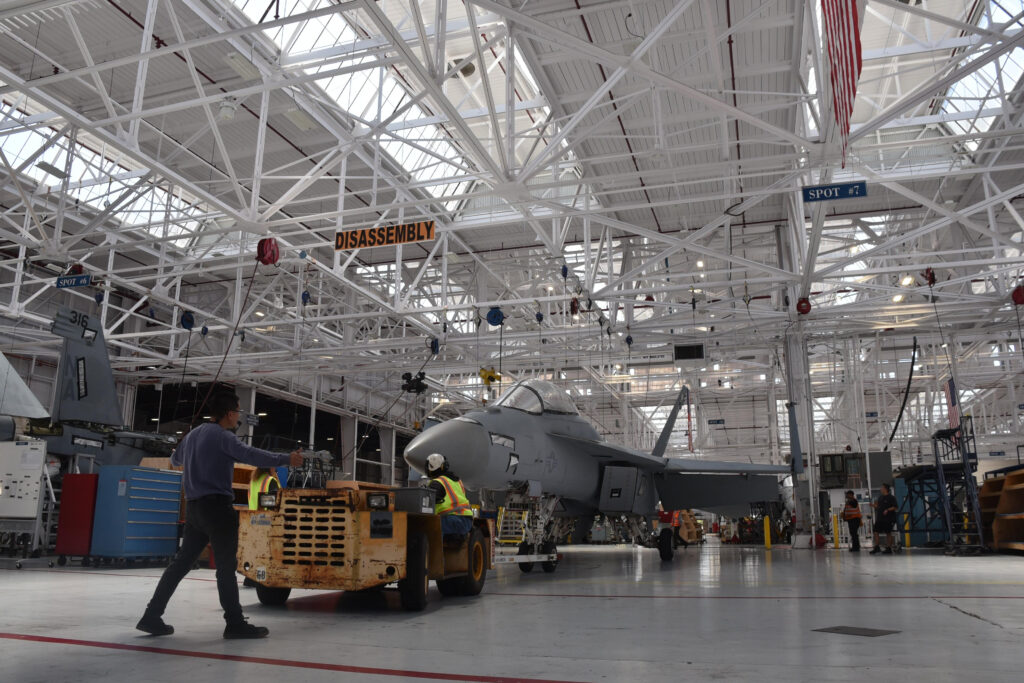
SAN DIEGO — At Fleet Readiness Center Southwest (FRCSW), innovation is not a buzzword, it’s a daily commitment to the warfighter. That commitment reached an historic milestone with the command’s completion of its first fully organic F/A-18 Super Hornet Block III modification. For the first time, U.S. military artisans and engineers executed the complete upgrade in-house, marking a pivotal step forward in naval aviation readiness.
This achievement represents more than technical success. It is the culmination of deliberate planning, disciplined execution, and the relentless professionalism of FRCSW’s workforce and partners.
The Block III modification is the third and most advanced phase of the Service Life Modification (SLM) effort for the Super Hornet fleet. FRCSW and its partners approached this modernization in three phases:
Structural Service Life Extension – Expanding aircraft life from 6,000 to 10,000 flight hours.
Block III upgrades to deliver network and mission enhancements.
Block III Advanced Cockpit System (ACS) and comprehensive avionics modernization.
This phased approach allowed FRCSW artisans and engineers to refine processes, sequence work efficiently, and reduce cost and turnaround time (TAT).
The Block III configuration includes significant upgrades including:
Advanced Cockpit System (ACS) installation
A new large-area cockpit display
Comprehensive avionics suite upgrades
Enhanced aircraft networking capability
Electrical system modernization to support upgraded systems
The ACS fundamentally transforms the cockpit. Aircraft that once relied on older display technology are now equipped with modern, user-friendly large screen interfaces. This upgrade allows pilots to fully leverage the aircraft’s enhanced capabilities, bringing this fourth-generation platform significantly closer to fifth-generation performance at a fraction of the cost.
The modification does not extend the physical life of the aircraft, that is the purpose of the structural SLM, but it ensures the avionics and mission systems remain tactically relevant for the aircraft’s service life. Together, structural SLM and Block III modernization form a comprehensive life-extension and capability-enhancement strategy that ensure the Super Hornet will remain a key component of the Navy’s carrier air wing well into the 2040s.
The Block III modification is one of the most complex avionics upgrades undertaken at FRCSW in over a decade.
The process essentially guts the cockpit:
Removal and replacement of structural components
Extraction and reinstallation of wiring and fiber optics
Installation of new displays and interface systems
Electrical upgrades to support modern avionics
The governing Technical Directive (TD) is more than 350 pages long and provides extremely specific instructions, down to how wiring and fiber optics must be routed and secured. FRCSW artisans and engineers work closely with Boeing engineers to ensure every step meets current safety and quality standards.
As aircraft are disassembled, teams frequently discover unplanned issues, corrosion, worn wiring, or legacy damage that must be corrected before modernization can proceed. This adds layers of complexity to an already intricate effort and highlights the need for, and success of, the command partnerships with Boeing and F/A-18 and EA-18G Program Office (PMA-265).
One hurdle the team had to overcome in this effort was that multiple trades must operate in tight cockpit spaces:
Avionics technicians
Sheet metal mechanics
Ordnance specialists
Engineers and quality assurance personnel
Thus, sequencing becomes a carefully choreographed process. One team’s delay affects all others. Planning is everything.
Any new process at FRCSW must meet the same uncompromising safety and quality standards as legacy programs. The command’s award-winning safety culture underpins every evolution. That culture was recently recognized with the CNO Aviation Safety Award: https://www.dvidshub.net/news/495142/frcsw-wins-cno-aviation-safety-award
For 3 years, FRCSW has successfully executed structural SLM repairs. Now, with full Block III capability added to its portfolio, the command has evolved into a complete modernization hub for the Super Hornet fleet.
With a current turnaround time of approximately 365 days, reduced from an originally projected 15 months, the command has already exceeded expectations and cost performance has been equally impressive coming in well under budget, all while maintaining strict adherence to safety and quality standards.
Looking ahead, all fleet squadrons are transitioning to full Block III configuration thus this workload will continue well into the 2030’s.
While this milestone represents the first fully organic execution of the modification, it is not accomplished in isolation. FRCSW collaborates closely with PMA-265, which oversees F/A-18 programs, and maintains coordination with Boeing during TD validation and engineering alignment.
The true strength of this program lies in integration, engineering, logistics, supply, manufacturing, quality assurance, and production operating as a unified team across the command and the COMFRC enterprise.
This is not simply maintenance. It is modernization. It is capability generation. It is combat readiness built by American hands. FRCSW employees have supported naval aviation for more than a century. From early aviation maintenance efforts to today’s advanced Super Hornet and Growler modernization programs, the workforce has consistently delivered.
Integrating structural life extension with full avionics transformation, FRCSW has ensured that the F/A-18 Super Hornet remains lethal, relevant, and deployable well into the future.
Ship Welding Goes to the Dogs
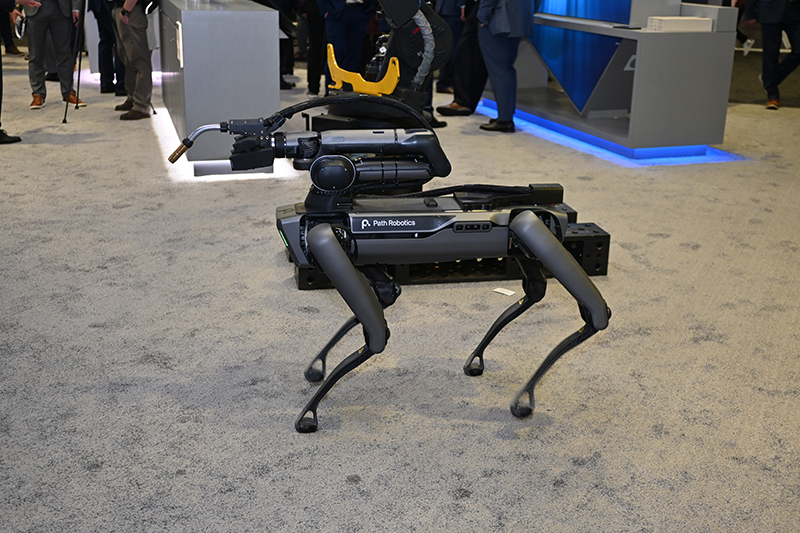
Path Robotics’ Rove robotic welding system, seen here visiting the booth of partner company HII. Credit: Brett Davis
By Vicky Uhland, Seapower Correspondent
Welding is a challenge in shipbuilding. There’s a critical shortage of skilled welders, and massive ship assemblies, inconsistent fit-up stages and large metal pieces that can’t be moved make it difficult to automate welding processes.
Enter Rove, a quadruped robotic welding system the size of a standard poodle.
Rove is produced by Path Robotics, which specializes in artificial intelligence for manufacturing. Path Robotics’ AI program Obsidian delivers autonomous welding inside cells, and Rove takes that one step further, bringing Obsidian into the field. In essence, Rove comes to the ship rather than the ship coming to Rove.
Legged robots aren’t a new concept in welding, but they’ve traditionally been considered too unstable for precision welding. Obsidian gives Rove the ability to maneuver successfully in high-variability environments like shipbuilding.
Rove, which has a welding torch attached to its head, uses cameras and AI to scan a ship and identify where welds are needed. It can evaluate uneven terrain, climb around large ships and reach remote weld points that humans may have difficulty accessing. Path Robotics says Rove can weld with consistent quality, even when metal parts aren’t perfectly aligned.
Saronic Technologies, which manufactures autonomous maritime vessels, is one of the first companies to use Rove.
“Building the next generation of autonomous vessels means rethinking not just how ships operate, but also how they’re made,” John Morgan, Saronic’s head of manufacturing, said in a press release from Path Robotics.
To see a demonstration of Rove, visit the Path Robotics booth, T76 in the Terrace Exhibits area.
Australia, Canada, and U.S. conduct multilateral operations in South China Sea
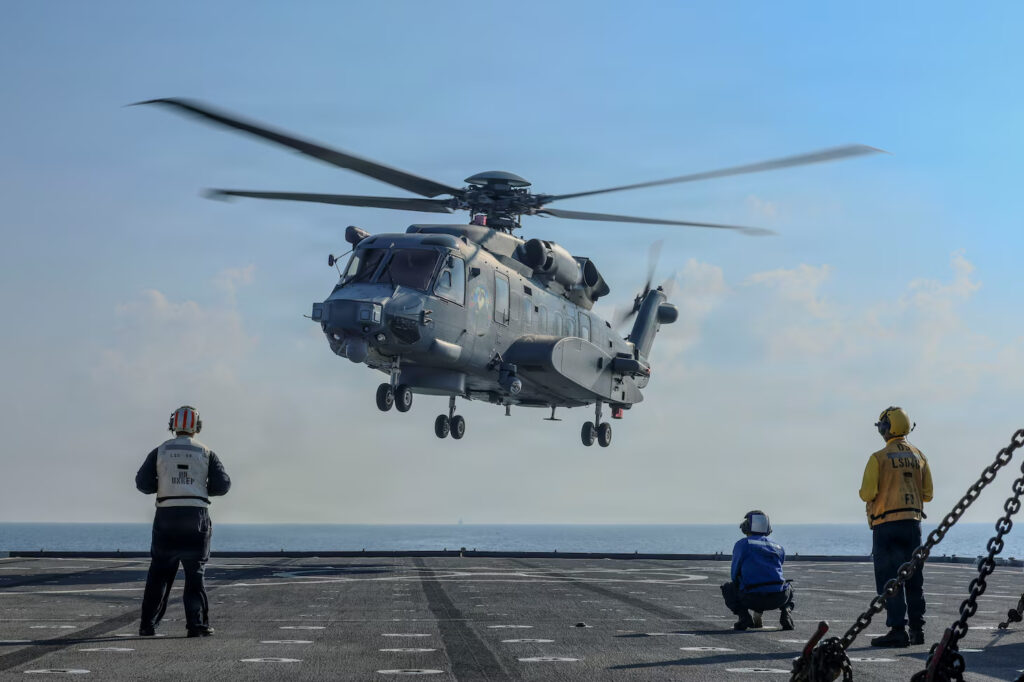
A Royal Canadian Air Force Super Puma assigned to Royal Canadian Navy Halifax-class frigate HMCS Charlottetown (FFH 339) prepares to land on the flight deck of U.S. Navy Whidbey Island-class dock landing ship USS Ashland (LSD 48) during a multilateral exercise with the Royal Australian Navy and Royal Canadian Armed Forces in the South China Sea, April 18, 2026. (U.S. Navy photo by Mass Communication Specialist Seaman Maliq J. Martin)
By CTF-76 Public Affairs, April 20, 2026
SOUTH CHINA SEA – Ships from the Royal Australian Navy, Royal Canadian Armed Forces, and U.S. Navy conducted multilateral operations in support of a free and open Indo-Pacific in the South China Sea, April 12-18.
Participants included Royal Australian Navy Anzac-class frigate HMAS Toowoomba (FFH 156), Royal Canadian Air Force Super Puma helicopter, Royal Canadian Navy Halifax-class frigate HMCS Charlottetown (FFH 339), and U.S. Navy Whidbey Island-class amphibious dock landing ship USS Ashland (LSD 48) with embarked Marines from Task Force Ashland.
During the exercise, ships conducted tactical maneuvers, helicopter cross-decks, and personnel exchange during the combined transit through the South China Sea.
“We embrace any chance to engage with our allies and friends in the region to learn from each other and build upon our strong relationships,” said Cmdr. Adam Peeples, commanding officer of Ashland. “These exercises provide an opportunity to increase interoperability, information-sharing, and access with our allies and partners across the globe. The Sailors and Marines of Task Force Ashland are dedicated to supporting regional security and committed to ensuring a free and open Indo-Pacific.”
This operation builds on numerous other engagements, such as Exercise Rim of the Pacific (RIMPAC) 2024, where the three U.S. allies were part of 29 nations training to foster and sustain cooperative relationships among participants critical to ensuring the safety of sea lanes and security on the world’s oceans.
Multilateral operations such as this provide valuable opportunities to improve combined readiness and promote peace and stability in the Indo-Pacific. The U.S. Navy regularly operates alongside our allies in the Indo-Pacific region as a demonstration of our shared long-term commitment to the region.
Ashland and embarked Marines from Task Force Ashland are a flexible crisis response force, purpose-built to integrate with allies and partners in support of a free and open Indo-Pacific. Their forward deployment to U.S. 7th Fleet demonstrates the unwavering U.S. commitment to regional security and stability.
U.S. 7th Fleet, the U.S. Navy’s largest forward-deployed numbered fleet, routinely interacts and operates with allies and partners in preserving a free and open Indo-Pacific.
Kaine Discusses AUKUS Agreement During SASC Hearing
From the Office of Senator Tim Kaine, D-Virginia, April 21, 2026
WASHINGTON — Today, during a Senate Armed Services Committee (SASC) hearing on U.S. posture in the Indo-Pacific, U.S. Senator Tim Kaine (D-VA) asked Admiral Samuel J. Paparo, Jr., USN, Commander of United States Indo-Pacific Command (INDOPACOM), about the progress of the Australia-U.K.-U.S. (AUKUS) agreement.
“I was in Australia recently … 37 events in seven days in four cities,” said Kaine. “I heard a lot. Answered some tough questions on our end. And I was impressed, but I wonder – are you satisfied with the pace of upgrades to [HMAS] Stirling that could support the increased rotational presence of Virginia-class submarines?”
Admiral Paparo responded, “From a shore power standpoint and for the capability that they have, with a tender and Marine Security Detachment, we could move submarines to Stirling today. That’s been the progress at Stirling. I laid eyes on it multiple times. The commitment is there. The progress is there. The place where we have to make the most progress is in the defense industrial base to deliver the capability, but our partners in Australia [and the] U.K. through Pillar One and Two … has been full throttle. It’s now as much up to industry as anyone else to deliver.”
During the hearing, Kaine also discussed today’s announcement that the Japanese government will allow the sale of more weapons abroad and the benefits to U.S. defense agreements with Japan and security in the Indo-Pacific.
Kaine, who is Ranking Member of the SASC Subcommittee on Seapower and also a member of the Senate Foreign Relations Committee (SFRC), has been a strong champion of AUKUS in Congress. In February, Kaine held a series of bilateral meetings with Australian local, state, and federal lawmakers and defense industrial base partners in Sydney, Adelaide, Perth, and Darwin to discuss the AUKUS partnership. Kaine has helped get signed into law provisions to implement and strengthen the AUKUS agreement. He has played a key role in securing more resources for the submarine industrial base, including additional funding for the Virginia-class submarine program.
Leidos, HavocAI Join Forces to Advance UAV Interoperability Across Domains
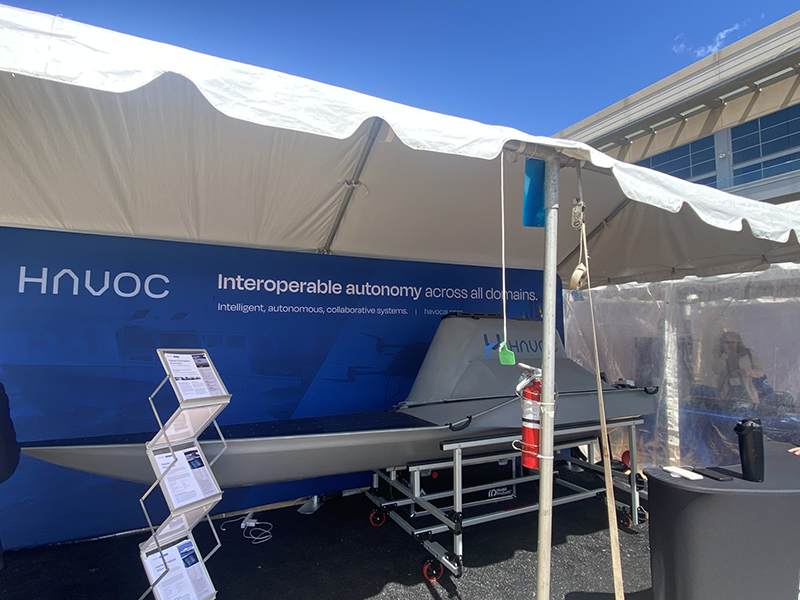
One of HavocAI’s USVs, displayed on the Gaylord Pier. Credit: Erika Fitzpatrick.
By Erika Fitzpatrick, Seapower Correspondent
Leidos (Booth 1125)and HavocAI (D 17) have teamed to test a new fleet of autonomous uncrewed surface vehicles that offer unique capabilities in multidomain environments, company leaders said April 20 at Sea-Air-Space 2026.
“Warfare is changing rapidly,” said Cindy Gruensfelder, president of Leidos Defense, a global defense contractor with 9,000 employees. “It’s really requiring systems to connect together even more than normal and collaborate across all domains.”
She noted that the Navy can best deploy USVs that are integrated within a larger ecosystem that enables real-time collaboration with greater reach. She said the new partnership pairs Leidos’s proven autonomy at scale with HavocAI’s “all-domain collaborative autonomy” to deliver the Navy autonomy at speed and scale.
The defense sector has dived headlong into the USV space in the hopes of securing some of the billions of dollars the military is expected to allocate for small, medium, and large USVs in the coming years.
The Navy’s 2025 shipbuilding plan calls for spending $40 billion per year to create a 381-ship battle force by 2054, about 85 more ships than it has now, and an additional 130 unmanned surface and undersea vessels. This combined fleet would result in a “more lethal and distributed naval force,” the Navy has said.
To expand access to innovation, more traditional defense firms like Leidos are pairing with upstart players such as HavocAI, a Providence, Rhode Island-based aerospace and defense company founded in 2024.
HavocAI specializes in collaborative autonomy, CEO and cofounder Paul Lwins said at the event.
“What that means is making thousands of autonomous systems work together and work with the humans to do very sophisticated things,” Lwin said.
So far, Lwin said, HavocAI’s 100 or so USVs have shown they can work together. The company also acquired an aerial drone company to integrate those types of systems with autonomous surface vessels.
This fall, the Leidos-HavocAI team will conduct an on-the-water operational evaluation of about 10 UAVs at disparate locations. The test aim to prove the hybrid vessels are interoperable at sea, undersea and in the air, across far-flung locations.
CH-53K lifts CH-53K expanding capabilities
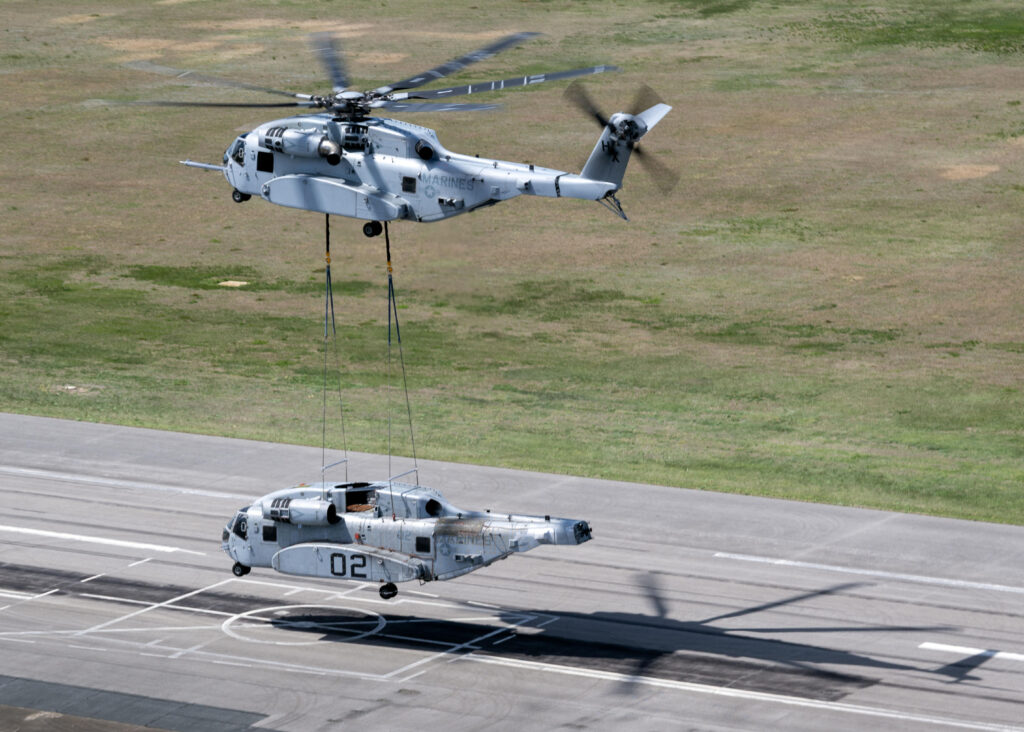
A CH-53K from Air Test and Evaluation Squadron 21 (HX-21) performs a recovery rigging evaluation of a CH-53K Engineering Development Model without engines, most gearboxes and tail pylon. This expansion of the aircraft’s capabilities, including understanding the flight characteristics and load dynamics in such a heavy lift, ensures the Marine Corps can safely execute a Tactical Recovery of Aircraft and Personnel (TRAP) mission in the future. U.S. Navy Photo by Erik Hildebrandt.
From Naval Air Systems Command, Apr 20, 2026
NAS PATUXENT RIVER, Md. — The CH-53K King Stallion helicopter, under the direction of H-53 Heavy Lift Helicopters Program Office (PMA-261), achieved a major milestone by successfully lifting another CH-53K King Stallion. The test, performed by Air Test and Evaluation Squadron 21 (HX-21), is part of the CH-53K aircraft recovery rigging evaluation and a critical step toward developing new operational capabilities and procedures for the CH-53K fleet.
“This is a capability we hope will never be needed in the fleet,” said Col. Kate Fleeger, Program Manager, PMA-261. “However, the continued expansion of the aircraft’s capabilities ensures a faster response to emerging requirements and highlights its ability to perform.”
The primary purpose of the evaluation was to validate the specialized rigging and procedures required to safely recover a downed or disabled CH-53K aircraft, a capability that is not yet standardized in the U.S. Navy’s official salvage manuals. During the test, the team aimed to understand the flight characteristics and load dynamics involved in such a heavy lift, ensuring that the Marine Corps can safely execute a Tactical Recovery of Aircraft and Personnel (TRAP) mission in the future.
“The insights and data gathered from this test will directly inform updates to the Aircraft Salvage Operations manual, providing the fleet with standardized procedures for a dual-point external lift of a CH-53K,” said Fleeger.
The lifted aircraft was an Engineering Development Model (EDM) used in the King Stallion program early years of test. The three engines, most gearboxes and the tail pylon were removed prior to the lift to reduce weight to approximately 28,000 lbs., still well within the CH-53K’s current external lift envelope of 36,000 lbs. The EDM will continue to serve the program as it will be transferred to Marine Heavy Helicopter Training Squadron 302 (HMHT-302), New River, North Carolina, where it will be used as a Ground Operations Aircrew Trainer, helping to educate and train the next generation of King Stallion aircrew and maintainers.
This test underscores the remarkable lift capabilities of the CH-53K and highlights the innovative efforts of the CH-53 Test team at HX-21 to continuously evaluate new fleet capabilities.
PMA-261 manages the cradle to grave procurement, development, support, fielding and disposal of the entire family of H-53 heavy lift helicopters.
L3Harris Develops Torpedo Tube Launch and Recovery System for AUVs
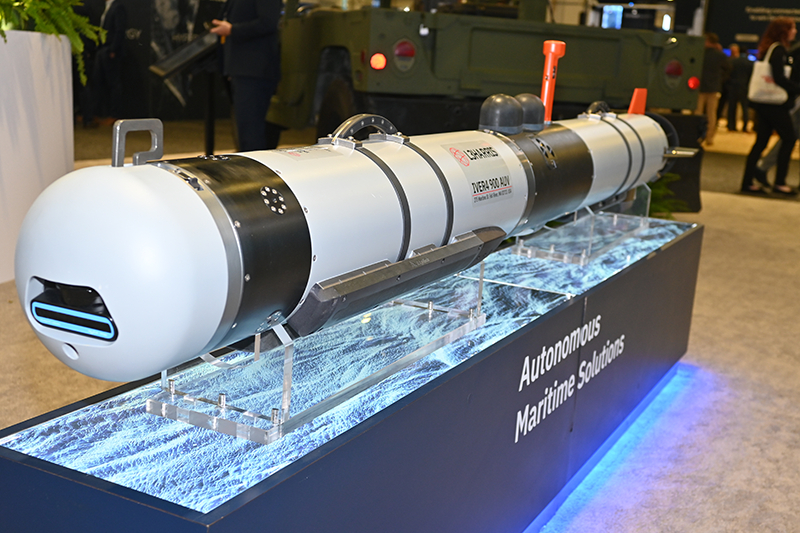
L3Harris’ Torpedo Tube Launch and Recovery system can launch and recover Iver4 900 uncrewed underwater vehicles, like the one shown here in the L3Harris booth, from submarine torpedo tubes. (Credit: Brett Davis)
By Richard R. Burgess, Senior Editor
ARLINGTON, Va. — The Navy’s requirement to develop a method of launching and — more challenging — recovering autonomous underwater vehicles from torpedo tubes of submarines is being met by L3Harris Technologies (Booth 937), which has been awarded an Other Transaction Authority contract from the Department of Defense’s Defense Innovation Unit to deliver the Torpedo Tube Launch and Recovery (TTLR) system.
The TTLR has demonstrated its ability to launch and recover Iver4 900 AUVs through attach submarine torpedo tubes.
“The Torpedo Tube Launch and Recovery system is not a future capability, it’s answering combatant commander needs today,” Nino DiCosmo, president, Maritime, Space & Mission Systems, L3Harris, said in a company release. “Our system is the first to successfully launch and recover AUVs from a submarine, providing commanders flexibility for persistent undersea operations and maintaining essential stealth.”
The Iver4 900 AUV is payload agnostic, said J.R. Gear, vice president and general manager of Integrated Systems and Encryption for L3Harris, in an interview, noting the system would be capable of missions such as seafloor mapping, counter-mine warfare and other intelligence, reconnaissance and surveillance missions.
“We try to build it with some modular interfaces that you could have one type of mission one day from a submarine and then swap out the sensor and swap out the batteries and [gain] maybe a little bit more range and endurance or whatever and tailor the vehicle for today’s mission,” he said. “Very adaptable.”
Gear was not at liberty to describe the details of how the AUV swims back into the torpedo tube, citing proprietary restrictions. But he did say the recovery is “completely autonomous.”
The TTLR includes a sleeve that fits inside the torpedo tube, called a SAFECAP, of Shock and Fire Enclosure, from which the IVER4 900 AUV swims out and is later recovered. Importantly, no structural modifications to the submarine are required.
“Whether it [the AUV] swims out with the nose out or backs out, it’s payload dependent on how it leaves,” Gear said. “It literally swims away, performs its mission, and then when it returns, it’s kind of a push of a button and it will swim back into that SAFECAP of the torpedo enclosure. We’ve tested this on several different types of submarines, and I think we’re the first also that have done this on both the United States Navy and the Royal Navy.”
Gear said the “submarine has to operate in an envelope that’s going to be compatible with the UUV. We can’t discuss that here but it’s very friendly to the mission. You put the SAFECAP in [the torpedo tube], the Iver goes in there with the guides, you lock it up and let it go, and it swims on out and does its thing autonomously. And when it’s finished with its mission, it comes back, and with a command, a single command, it will come back into the sub.”
The SAFECAP sleeve can be removed inside the submarine for the torpedo tube to be used for torpedoes or other payloads.
“The system delivers the first U.S. Navy submarine- and aviation-approved AUV lithium-ion battery technology, enabling longer-duration missions with hot-swap capability for continuous operations,” L3Harris said in a March 26 release. “TTLR’s interoperability across multiple submarine classes and allied platforms advances the Navy’s manned-unmanned teaming vision and demonstrates AUKUS Pillar 2 collaboration.”
Gear was not at liberty to discuss the value of the contract award or the quantity of the order. He did say a TTLR shipset includes two AUVs with a sustainment package that includes some payloads and spare parts. The TTLRs are being built at the company’s Fall River, Massachusetts, facility.
Gear declined to say when deliveries of the TTLR will begin, only, “we’ve been looking forward to this working with the Navy for a little while and ready to go if and when the Navy was ready. And so, they’re ready now. The pump is primed and we’re starting to execute on that contract.”
As Funding Increases, How Can the Navy and Its Partners Work Together?
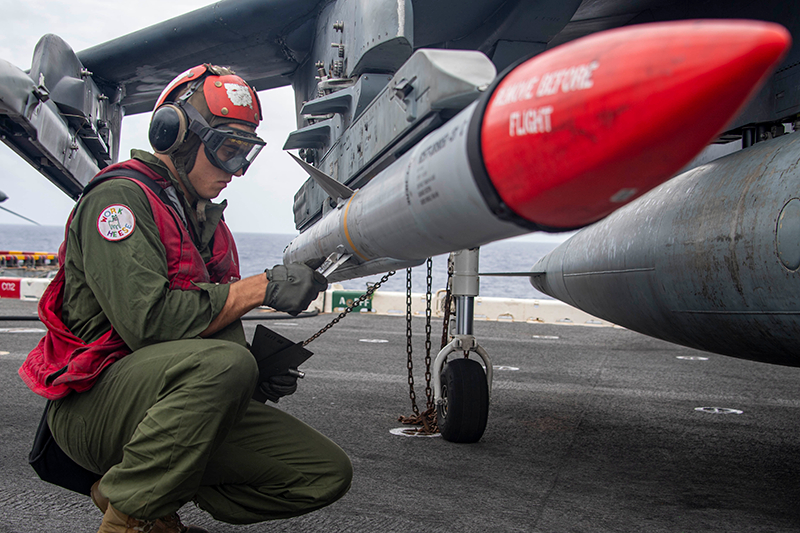
A Marine loads an AMRAAM onto an AV-8B Harrier aboard the amphibious assault ship USS Essex (LHD 2). A Department of Defense initiative to expand AMRAAM and other weapons buys helped stabilize the defense industry. Credit: U.S. Navy | Mass Communication Specialist 3rd Class Isaak Martinez
By Vicky Uhland, Seapower Correspondent
In a new era of acquisition, it’s important to remember the most pressing operational need for the U.S. Navy is readiness. And the good news is that “today’s fleet is more forward than it’s ever been in my career. We are absolutely ready,” said Rear Admiral Thomas Dickinson during the Monday afternoon panel discussion “Speed to the Fleet.”
“Readiness in nonnegotiable. Without it you don’t have capability or capacity,” said Dickinson, USN program executive officer for integrated warfare systems. “It might not be as sexy as new capability, but readiness is the king.”
In a standing-room-only session, Dickinson and panelists from industry and the research community discussed how they can best work together to deliver readiness faster to the fleet, both now and in the future.
“We’re moving from a just-in-time to a just-in-case mentality,” Dickinson said. “That’s the mentality we need. We cannot be ready enough. Urgency and resilience is really the call.”
Dickinson said industry partners can help the Navy achieve readiness through detailed, real-time insights and data. In the current warfare environment, “it’s a gift to be able to see how we’re performing and make improvements. Innovation and learning go hand-in-hand.”
But as the Navy ramps up its readiness, it’s logical there will be more risk, Dickinson said. That’s where data from both the Navy and its partners comes in. “We have to be able to quantify risk, and it has to be based on data,” he said. “We’re getting better at collecting data quickly.”
Industry Viewpoints
Panelist Barbara Borgonovi, president of naval power for Raytheon, said one of the main things helping her company aid the Navy in its readiness initiatives is the landmark agreement with the Department of Defense to expand five critical munitions: The AMRAAM missile; the block IB and block IIA variants of the SM-3 interceptor; the SM-6 missile; and the land attack and maritime strike variants of the Tomahawk cruise missile.
Borgonovi said this multiyear commitment ensures that Raytheon will have consistent demand, which will help the company make investments in suppliers, employees and other sources.
“We’re going to make billions of dollars in investments” in the five critical munitions, she said, noting that some Raytheon programs are increasing capacity by five to 10 times.
From the data standpoint, the Navy’s change in focus from activities to outcomes is altering how it interacts with industry, said Vincent Bauer, research program director, data science integration, CNA.
“The Navy is extremely complex” and its processes can be its biggest bottleneck in working with industry. “Data cuts through that complexity” and helps the Navy become a better customer for industry, he said.
Panelists also answered questions from audience members and session moderator Megan Eckstein, founder of Maeday Communications, including:
What challenges does money solve, and what will it not fix?
The Navy is making generational investments for critical munitions and new entrants, Dickinson said. But “money is unfeeling and unthinking. It doesn’t hire talent; it doesn’t drive outcomes over process. We are on the hook to maximize the use of those taxpayer dollars.”
The key, he said, is to create a culture and conditions to best spend new acquisitions money. “It comes down to leadership at the end of the day.”
Borgonovi said threats are going to continue to evolve for weapons systems, so industry needs to stay flexible, including learning from operational use and making investments in data sets.
“We’ve been given an opportunity that allows us to fill in the lines,” she said “We have a lot of flexibility to get to the outcome we want.”
What’s good for a production line is stability; what’s good for the fleet is innovation. How do you balance this?
Borgonovi said Raytheon has seen “incredible engagement” with the Navy on sharing data from Operation Epic Fury. She said her company’s focus is on having the ability and capacity to meet multiple needs for customers, including design scalability and composable designs.
Dickinson said the Navy wants to be in an environment where software rather than hardware is driving capability. “It puts us in a much better place to be agile and address threats,” he said.
What does the industrial base need to look like to support the modern wartime environment?
Borgonovi believes suppliers and the military need to share data across all companies involved, not just a single contractor.
Bauer noted the defense industry works differently than the consumer industry. “Just-in-time isn’t the kind of production system we need in missions,” he said, as a wartime environment creates the ability for production surges and opens new pathways to invest in the future.