Northrop Grumman, Genohco to Team on Korean Mine Countermeasures
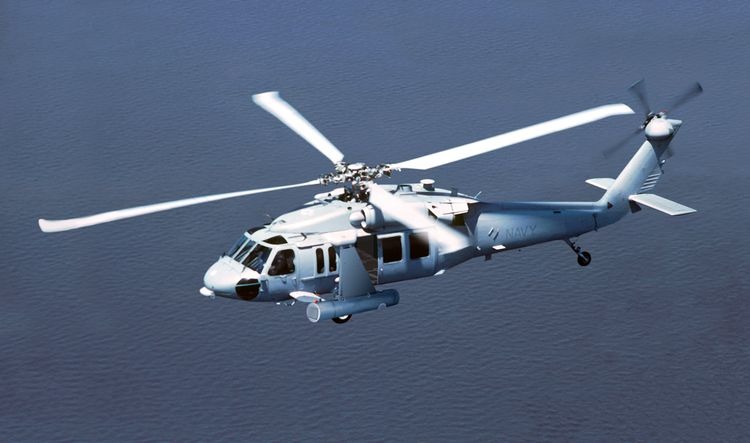
Northrop Grumman’s self-contained design allows ALMDS to be installed on several aircraft types. (Photo Credit: US Navy)
MELBOURNE, Fla. – Aug. 8, 2024 – Northrop Grumman Corporation (NYSE: NOC) and Genohco have signed a Memorandum of Understanding (MOU) in connection with the Republic of Korea’s Mine Countermeasures Helicopter (KMCH) program. The agreement supports Northrop Grumman’s longstanding industrial cooperation with the Republic of Korea’s Defense Acquisition Program Administration and defines the work that Genohco will perform as a supplier.
This MOU follows Korea Aerospace Industries’ (KAI) 2023 contract for Northrop Grumman to provide Airborne Laser Mine Detection System (ALMDS) solutions and technical support for the Engineering, Manufacturing and Design phase of the Republic of Korea’s KMCH program.
Under the agreement, Genohco will support the manufacturing of ALMDS hardware components.
To date, Northrop Grumman has delivered 24 ALMDS units to the U.S. Navy and four units to the Japan Maritime Self-Defense Force (JMSDF).
Northrop Grumman and Genohco sign a Memorandum of Understanding to collaborate on the Republic of Korea’s Mine Countermeasures Program. (Photo Credit: Northrop Grumman)
Experts:
Janice Zilch, vice president, multi-domain command and control programs, Northrop Grumman: “Industry collaborations with companies such as Genohco and KAI are key to Northrop Grumman’s approach to technology development across the globe. Our team is committed to delivering advanced solutions to meet the security needs of the Republic of Korea’s Ministry of National Defense.”
Richard D. Yoo, senior director of business development, Genohco: “We are honored to be working with Northrop Grumman, a world leader in the defense industry. Projects like the KMCH program allow global contractors to collaborate with Korean industry. Being part of Northrop Grumman’s supply chain network, we look forward to providing innovative solutions together in the global market.”
Details:
Northrop Grumman’s AN/AES-1 ALMDS detects, classifies and locates floating and near-surface moored mines. Mounted onto a variety of helicopter platforms, the system is capable of untethered day or night operations, which allow it to attain high area search rates. ALMDS also provides accurate target geo-location to support follow-on neutralization of the detected mines. Northrop Grumman’s support of the KMCH program leverages the company’s extensive systems integration and digital engineering expertise.
NAVCENT Commander: Difficult to Find Houthi Center of Gravity to Hold at Risk
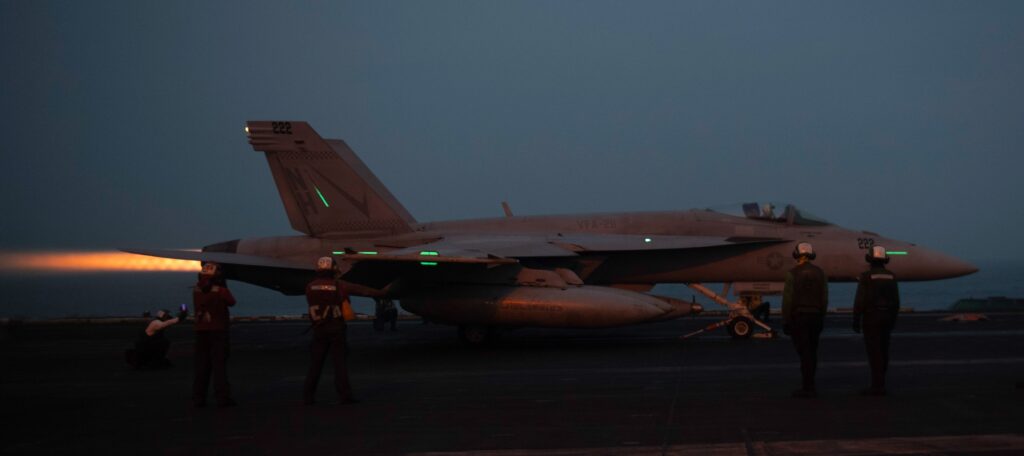
An F/A-18E Super Hornet from Strike Fighter Squadron (VFA) 211 launches from the Nimitz-class aircraft carrier USS Theodore Roosevelt (CVN 71) during flight operations in the U.S. 5th Fleet area of operations, July 31, 2024. (U.S. Navy photo)
By Richard R. Burgess, Senior Editor
ARLINGTON, Va. — The Houthi forces who have been attacking shipping in the Red Sea and Gulf of Aden lack a center of gravity, making for deterrence by U.S and partner forces difficult, the commander of U.S. naval forces in the Middle East said in a webinar.
Since November, a few weeks after the October 7 attack on Israel by Hamas terrorists, the U.S. Navy’s 5th Fleet, with cooperation from the navies of several allies and partners, has been engaged in protecting commercial shipping through the Red Sea and Gulf of Aden from attacks by ballistic missiles, anti-ship cruise missiles, unmanned aerial vehicles, unmanned surface craft, and unmanned underwater vehicles launched by the Houthi rebels in Yemen.
“We have certainly degraded their capability,” said Vice Admiral George Wikoff, commander, U.S. Naval Forces Central Command, commander, U.S. 5th Fleet, and commander, Maritime Forces, speaking in an August 7 webinar sponsored by the Center for Strategic and International Studies and the U.S. Naval Institute and funded by HII.
“However, have we stopped them? No,” Wickoff said, noting Houthi recent attacks on shipping, one of which damaged a commercial ship. “But our mission remains to disrupt their ability and try to preserve some semblance of maritime order while we give an opportunity for policy to be developed against the Houthis.
“The challenge of the deterrence is, obviously, you have to have a center of gravity to hold at risk, and one thing we don’t really know that much about—and we find this through history—is it is very difficult to find a centralized center of gravity that we can hold at risk over time and use that as a potential point of deterrence,” he said. “So, to apply a classic deterrence policy in this particular scenario is a bit challenging.”
Wickoff said the continuing naval operations in the BAM (Bab-el-Mandeb) Strait region will act as a “shock absorber.”
He noted an almost 50% drop in commercial shipping through the BAM region in the September through December time frame, with a large drop until the beginning of February.
“The reflected the maritime industry’s ability to re-calibrate and re-initiate their routes,” he said. “It’s a couple-months process to take transit patterns that go through the Red Sea and re-route them around the Cape of Good Hope, etc.”
Since the beginning of February there has been a stabilization, with approximately 1,000 ships going through the BAM per month, compared with approximately 2,000 ships per month prior to the Israel-Hamas war, Wickoff noted.
“Right now, the idea is to continue to maintain that decision space, try to preserve where we are right now … to allow other levers of government, other levers of the international community to pressurize the Houthis to stop what they’re doing in the maritime,” the admiral said.
U.S. Coast Guard Completes Operation Nasse in Pacific Region
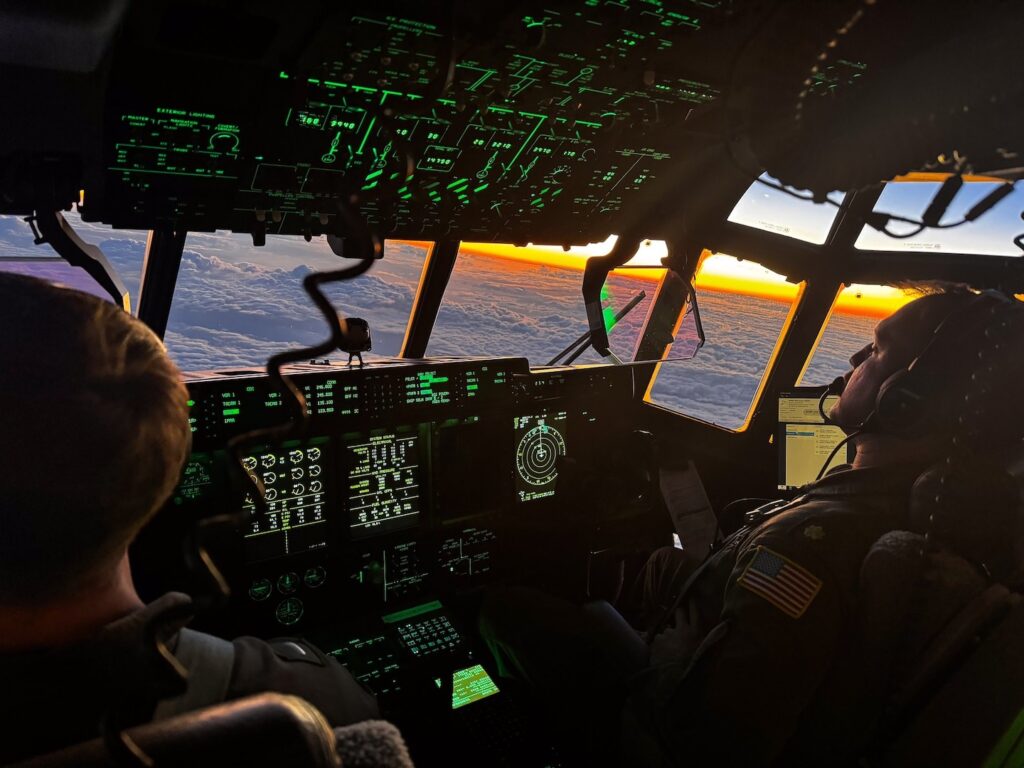
U.S. Coast Guard Lt. Junior Grade Nick Fuist and Lt. Cmdr. Keith Arnold , two pilots at U.S. Coast Guard Air Station Barbers Point, man the controls of a Coast Guard Air Station Barbers Point HC-130 Super Hercules in the skies above Auckland, New Zealand, Jul. 9, 2024. (U.S. Coast Guard photo by Petty Officer 2nd Class Nicholas Martino)
From Coast Guard District 14 External Affairs, Aug. 6, 2024
HONOLULU – The U.S. Coast Guard completed participation in Operation Nasse, a three-month operation conducted by Australia, France, New Zealand, and the U.S. to safeguard the invaluable marine resources of Pacific Island nations and the Western Central Pacific Ocean, July 12.
From July 1-12, an HC-130J Hercules airplane crew from Coast Guard Air Station Barbers Point patrolled the South Pacific High Seas in and around the Exclusive Economic Zones of Australia, New Caledonia, Fiji, New Zealand, Tonga, Niue, and the Cook Islands to detect, investigate and report any illegal, unreported and unregulated (IUU) fishing activity.
During the operation, the Coast Guard collaborated with Pacific Quadrilateral Defense Coordinating Group (Pacific QUAD) partners to enhance their Monitoring, Control and Surveillance (MCS) tools and communications to support regional and national maritime surveillance efforts.
The wide-ranging operations were supported by the Pacific Islands Forum Fisheries Agency’s (FFA) Regional Fisheries Surveillance Center (RFSC) and several FFA members to reinforce the conservation work of the Western and Central Pacific Fisheries Commission (WCPFC) on the high seas. Alongside the P-QUAD partners, Fiji, Vanuatu, and the Cook Islands participated in the operation for the first time.
Coast Guard participation in Operation Nasse is part of Operation Blue Pacific, an overarching multi-mission Coast Guard endeavor promoting security, safety, sovereignty, and economic prosperity in the Pacific while strengthening relationships between partner nations.
“Oceania is vast, and the challenges of illegal fishing require a united front,” said Lt. Cmdr. Keith Arnold, HC-130J aircraft commander for U.S. Coast Guard Air Station Barbers Point. “Collaborating with the Pacific Quad and other regional partners to combine our resources and expertise to enhance monitoring tools is crucial to countering illegal fishing activities in Oceania. Sharing data, strengthening our communication networks, and coordinating patrols allows us to create a more comprehensive picture of what’s happening on the water in the region. This collaborative approach sends a strong message to those engaged in illegal fishing: we will work together to stop these activities and protect these vital resources.”
Joint efforts for Operation Nasse covered over 16,000 square miles, with the U.S. Coast Guard contributing:
Over 58 hours of flight time
37 vessels sighted and analyzed
Four potential Conservation and Management Measures (CMM) violations reported
240 hours of analyst-to-analyst collaboration and training
Located in Honolulu, U.S. Coast Guard District Fourteen covers more than 14 million square miles of land and sea, conducting operations over the Hawaiian Islands, American Samoa, Saipan, Guam, Singapore and Japan.
Revolutionizing Marine Corps Maintenance with AR/VR Technology
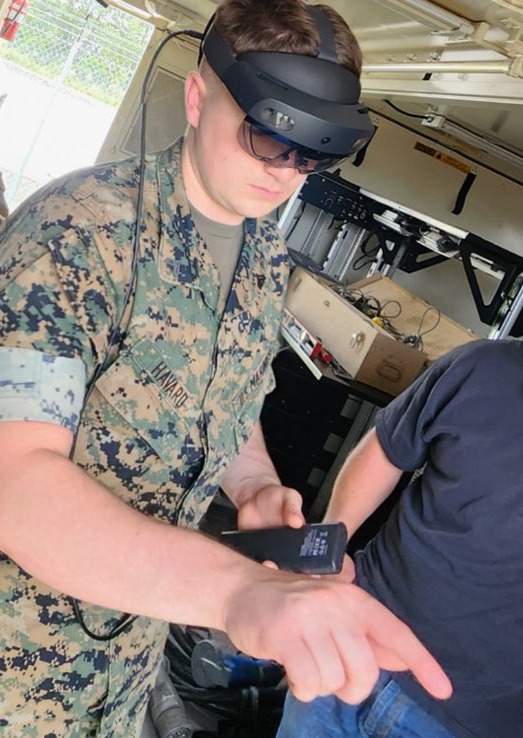
[Courtesy Photo] Cpl. Tyler Havard, S3 Schools Non-Commissioned Officer (NCO), 2D Maintenance Battalion, prepares an Augmented Reality lens for use during tele-maintenance between artisans at Marine Depot Maintenance Command’s Production Plant in Albany, Ga., and the maintenance team at Marine Wing Communications Squadron 28 (MWCS 28), Cherry Point, N.C.
By Jennifer N. Napier
MARINE CORPS LOGISTICS BASE ALBANY, GA –Augmented Reality (AR) and Virtual Reality (VR) are set to play pivotal roles in transforming tele-maintenance operations, ensuring that maintainers are always available to support the Marine on any front at any time.
Bridging the Gap
Tele-maintenance, the remote diagnosis and repair of equipment, has traditionally relied on phone calls and manual instructions. However, the arrival of AR and VR technologies promises to take maintenance capabilities to an entirely new level. By overlaying digital information onto the real world (AR) or creating fully immersive virtual environments (VR), these technologies provide a more intuitive and effective way for technicians to perform maintenance tasks remotely.
AR can significantly enhance the diagnostic process by allowing remote experts to visualize the exact conditions that field technicians are encountering. For instance, a technician wearing AR glasses can receive step-by-step guidance directly in their line of sight, with holographic overlays highlighting parts and tools needed for a specific task. This real-time, hands-free assistance minimizes errors and speeds up the repair process.
The Pursuit
Marine Depot Maintenance Command has been experimenting with AR technologies as part of its effort to modernize its maintenance capabilities from industrial-era practices to technologies suitable and capable of meeting the demands of the Information Age. The implementation of the “Industry 5.0 Framework” includes increasing production planning, control, and execution of capabilities by optimizing and automating business processes and optimization of facilities, business processes, and technology. As part of the effort, the command has actively engaged in experimentation and testing of AR capabilities since September 2022 and is gaining a better understanding of how it can be integrated into the command’s current and future capabilities.
Real-World AR Application: A Case Study
In May 2024, Marine Wing Communications Squadron 28 (MWCS 28) at MCAS Cherry Point, NC, sought Marine Depot Maintenance Command (MDMC) Business Development’s assistance to fix four non-operational electronic maintenance shelters experiencing various electrical problems. Normally, a forward maintenance team would be deployed from one of the command’s two production plants in either Albany, Georgia, or Barstow, California, to support this request. Opportunely, the squadron had another option.
At the beginning of the year, the 2D Maintenance Battalion acquired and trained on the same AR equipment that MDMC had been experimenting with. Cpl. Tyler Havard, S3 Schools Non-Commissioned Officer (NCO), 2D Maintenance Battalion, became proficient in the use of the lens through training earlier this year and was able to link up with MWCS 28 to quickly orient the ground electronic maintenance team on how to use the AR equipment.
Using augmented reality, the MDMC team remotely guided Marines through the shelter maintenance and troubleshooting processes and identified and resolved various electrical problems, proving the effectiveness of AR-enabled tele-maintenance in real-time. Cpl. Vradley Cerna, a digital wideband systems maintainer, and Organics NCO, was one of three Marines working on the shelters who collaborated with the depot.
Cerna said that his team has been trained in electrical maintenance and could have attempted to troubleshoot the issues themselves. However, having somebody already familiar with the electronic components and layout of specific shelter models who could guide them step-by-step was immensely helpful and sped up identifying the issues. It was Cerna’s first-time using AR lenses. He remarked, “It was a little surprising the first time you put them on to see the features through the lens and hear the maintainers on the other end like they are right there next to you. It was a great experience and an option I would want to use in the future.”
Key lessons from this operation highlight the effectiveness of AR for real-time collaboration, significant safety enhancements, and substantial cost savings. Previously, MDMC deployed contact teams on temporary additional duty (TAD), incurring travel costs and disrupting production.
Training and Skill Enhancement
The Marine Corps can also leverage AR and VR for training purposes. New and seasoned technicians alike can benefit from virtual simulations that replicate real-world scenarios. Training modules can include various maintenance tasks, from routine checks to emergency repairs, providing a safe and controlled environment to hone their skills.
By simulating real-world conditions, VR training can prepare Marines for the challenges they might face in the field. This immersive experience ensures that they are well-versed in the intricacies of their equipment and can perform under pressure, ultimately leading to higher efficiency and readiness levels.
Reducing Downtime and Costs
One of the most significant advantages of AR/VR tele-maintenance is the reduction in equipment downtime. Quick and accurate repairs mean that machinery is back in operation sooner, which is crucial in a military context where readiness is paramount. Additionally, by enabling remote experts to assist with repairs, the need to transport specialized personnel to various locations is minimized, resulting in cost savings and faster response times.
Overcoming Challenges
While the potential benefits of AR and VR in tele-maintenance are substantial, there are challenges to be addressed. Ensuring secure and reliable communication channels is critical, as is the need for ruggedized AR/VR hardware that can withstand the harsh environments Marines often operate in. Moreover, integrating these technologies into existing systems and workflows will require careful planning and training.
Future Prospects
As AR and VR continue to evolve, their applications will expand, offering even more sophisticated tools and capabilities across the logistics enterprise. By investing in AR and VR for tele-maintenance, the Marine Corps is not only improving its current operational efficiency but also paving the way for future innovations in military logistics. This forward-thinking approach ensures that Marines remain equipped with the best tools available, ready to tackle any challenge that comes their way.
AR and VR technologies are set to revolutionize the Marine Corps, offering enhanced diagnostics, improved training, reduced downtime, and significant cost savings. As these technologies continue to develop, their integration into military logistics will undoubtedly play a crucial role in maintaining the Marine Corps operational readiness and effectiveness. The successful implementation of AR-enabled tele-maintenance demonstrates advancements in military maintenance operations, showcasing the potential for widespread adoption and efficiency and providing an optimistic outlook for this technology’s future financial and operational benefits.
August 5/ 6 U.S. Central Command Update
From U.S. Central Command
Aug. 6, 2024
TAMPA, Fla. - In the past 24 hours, U.S. Central Command forces successfully destroyed one Iranian-backed Houthi uncrewed aerial vehicle and two Iranian-backed Houthi anti-ship ballistic missiles launched from Houthi-controlled areas of Yemen over the Red Sea.
These weapons presented a clear and imminent threat to U.S. and coalition forces, and merchant vessels in the region. This reckless and dangerous behavior by Iranian-backed Houthis continues to threaten regional stability and security.
Aug. 5, 2024
TAMPA, Fla. - In the past 24 hours, U.S. Central Command (USCENTCOM) forces successfully destroyed three Iranian-backed Houthi uncrewed aerial systems (UAS) launched from Houthi-controlled areas of Yemen over the Gulf of Aden.
Additionally, USCENTCOM forces successfully destroyed one Iranian-backed Houthi UAS in a Houthi-controlled area of Yemen.
Separately, USCENTCOM forces successfully destroyed one Houthi uncrewed surface vessel (USV), one Houthi uncrewed aerial vehicle (UAV) and one Houthi anti-ship ballistic missile (ASBM) in the Red Sea.
These weapons presented a clear and imminent threat to U.S. and coalition forces, and merchant vessels in the region. This reckless and dangerous behavior by Iranian-backed Houthis continues to threaten regional stability and security.
U.S. Army Assault Helicopters Conduct Deck Landings on USNS Sacagawea
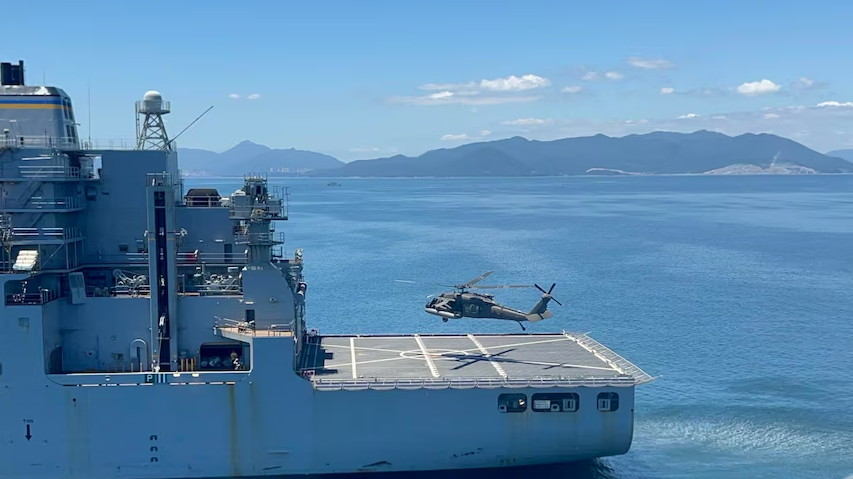
U.S. Army UH-60M Black Hawk helicopter with 2nd Battalion, 2nd Aviation Regiment, 2nd Combat Aviation Brigade lands aboard Lewis and Clark-class dry cargo ship USNS Sacagawea (T-AKE 2), off the coast of Jinhae, South Korea, July 31, 2024. (Courtesy photo)
06 August 2024
From Grady T. Fontana
JINHAE, South Korea — Soldiers with 2nd Battalion, 2nd Aviation Regiment, 2nd Combat Aviation Brigade (2-2 CAB) conducted deck landings with U.S. Army UH-60M Black Hawk helicopters aboard Lewis and Clark-class dry cargo ship USNS Sacagawea (T-AKE 2), July 30-31, 2024.
The aircraft crews from Assault Helicopter Battalion 2-2 CAB practiced single-spot deck landings aboard USNS Sacagawea, off the coast of Jinhae, South Korea, to certify nine crew members and 13 pilots in landing on a ship.
The DLQs were conducted through coordination between Military Sealift Command Office-Korea, USNS Sacagawea, and crews from Assault Helicopter Battalion 2-2 CAB to qualify or reset their crew on single-spot DLQ currency.
The training environment was also an opportunity for Army aircrews to ensure maritime air movement capability and readiness.
“Combining the expertise of professional civilian mariners aboard USNS Sacagawea, and the joint efforts between U.S. Army’s 2-2 CAB and MSCO-Korea personnel, this evolution provided a valuable opportunity to enhance interoperability between all involved,” said Cmdr. Patrick J. Moore, commanding officer, MSCO-Korea. “Overall, there was great collaboration between MSCO-K, USNS Sacagawea, and the soldiers of 2-2 CAB.”
The event was executed safely and without incident.
Commander, Military Sealift Command Far East ensures approximately 50 ships in the Indo-Pacific Region, are manned, trained and equipped to deliver essential supplies, fuel, cargo, and equipment to warfighters, both at sea and on shore.
Celebrating its 75th anniversary in 2024, MSC exists to support the joint warfighter across the full spectrum of military operations, with a workforce that includes approximately 6,000 Civil Service Mariners and 1,100 contract mariners, supported by 1,500 shore staff and 1,400 active duty and Reserve military personnel.
KBR (NYSE: KBR) announced it has been awarded an estimated $153 million cost plus fixed fee recompete contract to support Naval Test Wings Atlantic and Pacific Aircrew Services over a five-year period. The work will be performed primarily at Naval Air Station (NAS) Patuxent River, Maryland, but also at NAS Pt. Mugu, California, and NAS China Lake, California.
Under the terms of the contract, KBR will provide aircrew services, engineering technical services, independent analysis and technical support to the Naval Test Wing air vehicles test mission. This unit includes seven developmental test squadrons, their platform coordination offices and local commands, including the United States Naval Test Pilot School. Services under the contract include application of knowledge and expertise in the fields of test and evaluation, air vehicle operation and ground operations.
“KBR builds upon our more than forty-five years of aircrew services and flight test support to the U.S. Navy,” said Byron Bright, President of Government Solutions U.S. “This strategic win solidifies KBR’s commitment to bring unmatched capability and expertise to naval aviation.”
Undersea Warfare Systems Market – Global Industry Size, Share, Trends, Opportunity, and Forecast, 2019-2029F
By Type (Weapon Systems, Communication and Surveillance Systems, Sensors and Computation Systems, Countermeasure Systems and Payload, Unmanned Underwater Vehicles), By Mode of Operation (Manned Operations, Autonomous Operations, Remotely Operations), By Application (Combat, C4ISR, Others), By Region, Competition, 2019-2029F
KBR operates one of the most extensive independent flight test organizations in the United States, both in scale and capabilities. The company has the unique ability to provide Test Pilot School graduates with developmental test experience to enhance aircrew services and flight test support within the Department of Defense.
General Dynamics Electric Boat Awarded $1.3B for Virginia-Class Sub Material
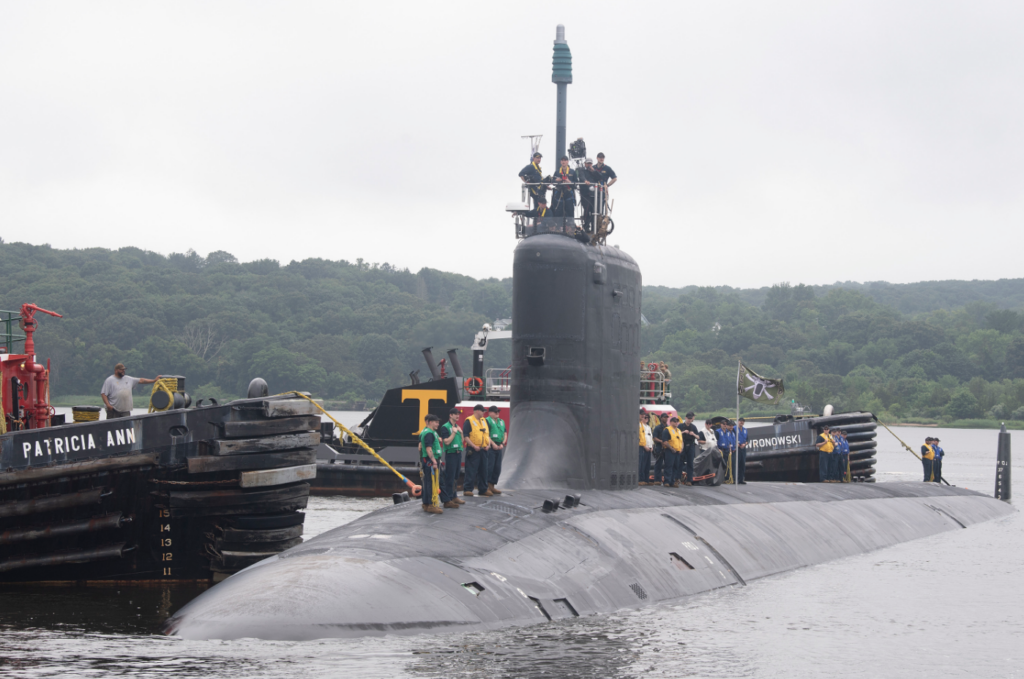
USS California (SSN 781) pulls into Submarine Base New London in Gronton, Conn., July 12, 2024, returning from national tasking. (U.S. Navy photo by John Narewski
From General Dynamics Electric Boat
GROTON, Conn. (Aug. 5, 2024) – General Dynamics Electric Boat, a business unit of General Dynamics (NYSE: GD), announced today it has been awarded a $1.3 billion undefinitized contract modification allowing Electric Boat to purchase long lead time materials for Virginia Class Block VI submarines as detailed in the U.S. Department of Defense contract award.
“This contract modification sends a crucial demand signal, enabling our suppliers to invest in the capacity and materials needed to increase production volume,” said Kevin Graney, president of General Dynamics Electric Boat. “Consistent funding for the supply base is essential to achieve the high-rate production the Navy requires of the entire submarine enterprise.”
Virginia-class submarines are designed from the keel up for the full range of 21st-century mission requirements, including anti-submarine and surface ship warfare and special operations support. General Dynamics Electric Boat is the prime contractor and lead design yard for the Virginia class and constructs them in a teaming arrangement with HII’s Newport News Shipbuilding in Virginia.
General Dynamics Electric Boat designs, builds, repairs and modernizes nuclear submarines for the U.S. Navy. Headquartered in Groton, Connecticut, it employs more than 23,000 people. More information about General Dynamics Electric Boat is available at www.gdeb.com.
Austal USA Launches Its Final LCS, the Future USS Pierre
From Austal USA, Aug. 5, 2024
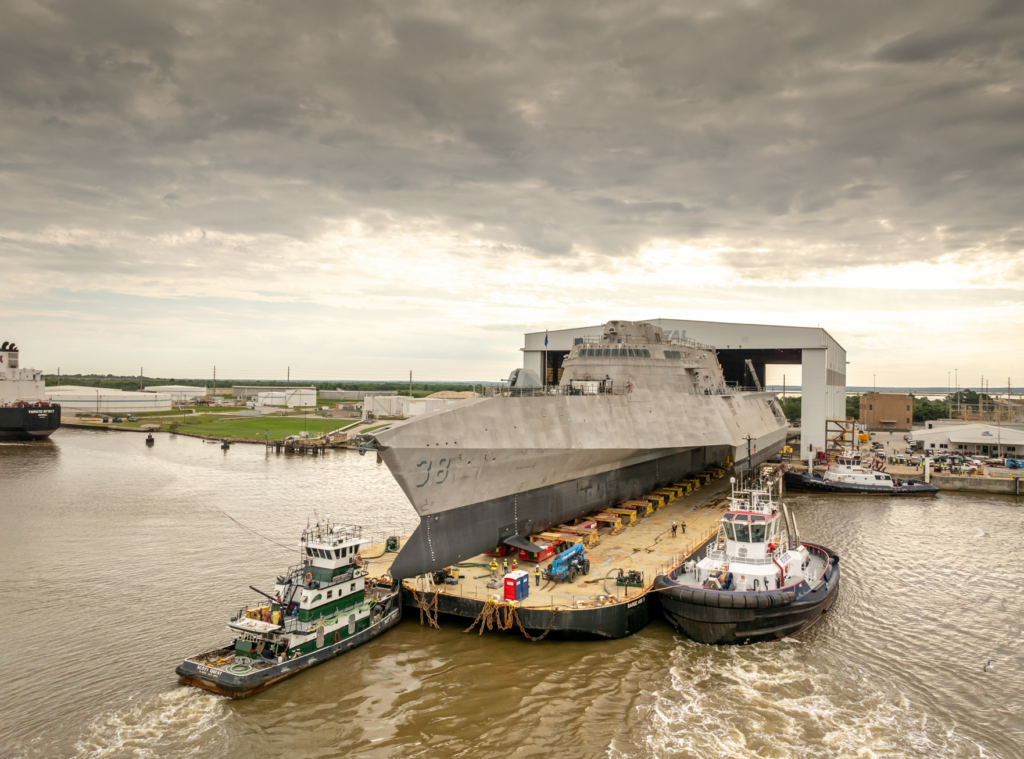
MOBILE, Ala. – Austal USA has successfully launched future USS Pierre (LCS 38), the last ship of the Navy’s Independence-variant Littoral Combat Ship (LCS) program. Following launch, Austal USA’s test and activation team will spend the next several months preparing her for sea trials later this year.
This is the 23rd LCS launched at Austal USA using the modern, safe and efficient multi-step method of rolling the ship onto a moored deck barge and then transferring the ship from the barge to a floating dry dock. The dry dock is submerged enabling the ship to float for the first time and then removed from the dry dock and moored pier side to get ready for engine light-off and trials.
“Meeting this ship milestone in such a safe and timely manner demonstrates how well our Austal USA launch team, transporter operators and tug pilots have learned to work together over the last 13 years, seamlessly executing this technical launch process,” stated Austal USA Vice President of New Construction, Dave Growden. “Our industry teams work methodically alongside our Navy partners to improve this innovative process with each launch evolution, guaranteeing the Navy a quality product delivered on time and on budget.”
Pierre, christened in May, is the Navy’s 19th and final Independence-variant LCS, and will be deployed to the Pacific fleet area of responsibility supporting forward presence, maritime security, sea control, and deterrence. She is the second U.S. Navy ship launched at Austal USA this year.
Aug 3 U.S. Central Command Update
From U.S. Central Command
Aug 3, 2024
TAMPA, Fla. – In the past 24 hours U.S. Central Command (USCENTCOM) forces successfully destroyed one Iranian-backed Houthi land attack cruise missile (LACM) in Houthi-controlled territory in Yemen.
It was determined the LACM presented an imminent threat to U.S. and coalition forces, and merchant vessels in the region. These actions were taken to protect freedom of navigation and make international waters safer and more secure.