U.S. Navy Awards Leonardo DRS $417 Million Contract for Submarine Combat System Hardware
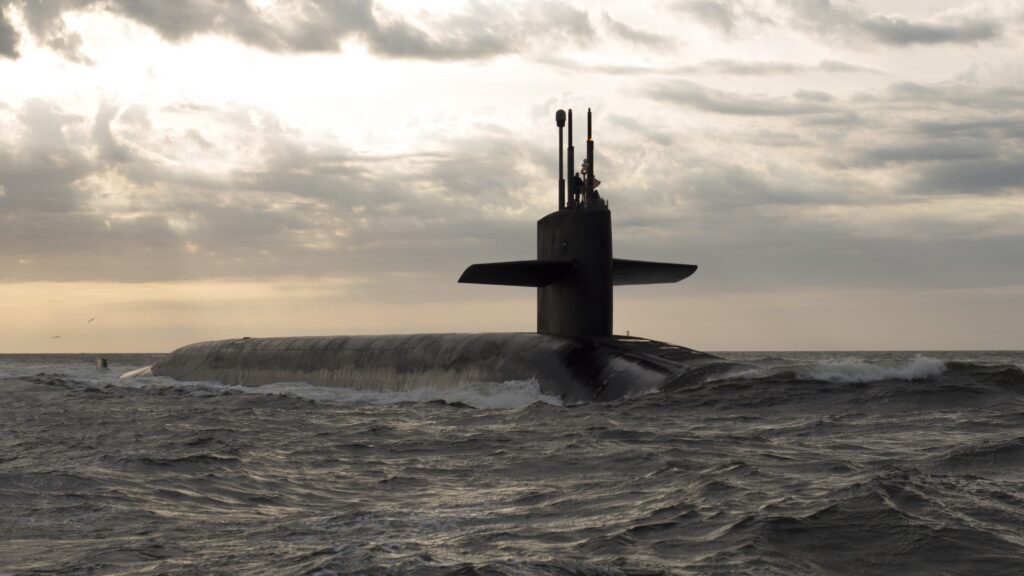
ARLINGTON, Va. July 31, 2024  ̶  Leonardo DRS, Inc. (NASDAQ: DRS) announced today that it was awarded a contract by the U.S. Navy to provide critical electronic combat control and sonar systems equipment for installation across the service’s fleet of submarines and allied fleets.  The contract ceiling is more than $417 million. 

The Technology Insertion Hardware TI-26 indefinite delivery/indefinite quantity contract will provide design, procurement, production, sparing, test, installation, and support of displays, workstations, processors, and network systems; the production of subsequent systems, kits and enclosures; and engineering and technical services. The contract was awarded by the U.S. Navy’s Naval Undersea Warfare Center, Keyport. 

TI-26 is the latest generation of a continuously evolving family of display, processor, and network systems in support of the US Navy’s Submarine Warfare Federated Tactical System family of systems required on U.S. Navy submarines.  This contract combines purchases for the U.S. Navy, the Foreign Military Sales program, and the Royal Australian Navy. 

“We are very proud to again be selected as the design agent on TI-26 and are honored to support this critical submarine combat control and sonar system hardware program for the U.S. Navy and allied partners,” said Cari Ossenfort, senior vice president and general manager of the Leonardo DRS Naval Electronics business unit. “DRS is uniquely qualified for this program because of our agility, proven engineering processes, and experienced team, and that is also the reason we remain a trusted partner to Naval Sea Systems Command and Program Executive Office Submarine.” 

This work is an example of DRS’s deep experience as a leader in complex design and manufacturing supporting a wide range of missions and capabilities. The company’s abilities extend across all domains to support naval, ground, air, space, and cyber missions in areas of sensing, force protection, computer networking, as well as naval power and propulsion systems. 


Navy Reserve Reaches Unprecedented C-130 Readiness

by MCC Chelsea Milburn of Commander, Naval Air Force Reserve Public Affairs 

29 July 2024 

SAN DIEGO – In the less than two years since working toward expanding its capabilities to provide mission-critical logistics support around the globe, the Navy Reserve’s Fleet Logistics Support Wing (FLSW) has delivered record C-130T readiness. 
 
The wing increased mission capable aircraft from an average of six aircraft in January 2022 to a peak output of 16 aircraft in June 2024, an unmatched Type/Model/Series improvement across the Naval Aviation Enterprise.  
 
In recent years, the Navy has called for Navy leadership across the fleet to “Get Real, Get Better” (GRGB). This call to action encourages Navy leaders to improve readiness with a foundation of honest self assessment, embracing problem areas as opportunities and constantly seeking ways to innovate and improve.  

Shortly after beginning his tour as Commander, Naval Air Force Reserve (CNAFR) in 2022, Rear Adm. Brad Dunham recognized a gap between the fleet’s needs for Navy Unique Fleet Essential Airlift (NUFEA) support and what the Navy Reserve’s Fleet Logistics Support Wing (FLSW) was able to provide. He called upon FLSW leadership to evaluate how they could maximize C-130 readiness to close the gap.  

In the less than two years since working toward expanding FLSW’s readiness to provide mission-critical logistics support around the globe, FLSW has delivered record C-130T readiness. The wing increased mission capable aircraft from an average of six aircraft in January 2022 to a peak output of 16 aircraft in June 2024, an unmatched Type/Model/Series improvement across the Naval Aviation Enterprise.  

“We recognized in January of 2022 that the average of six mission-capable C-130Ts was missing the mark, and our phenomenal team of professionals dug in to make a tangible change,” said FLSW Commodore Capt. J.T. Ward. “We joined the Commander, Naval Air Forces Atlantic Maintenance Operation Center (MOC) to streamline maintenance processes. We adopted best practices from civilian counterparts and the United States Air Force to improve sustainment. We established processes to remove administrative barriers up and down the chain of command. Combined, these changes resulted in the highest performance outcomes in the history of the Navy C-130T legacy program, evidenced by today’s mission capable rates.”  

Dunham expressed his pride in FLSW’s hard work that not only resolved the issue but achieved record-breaking success.  

“FLSW leadership approached C-130 readiness with a laser focus on performance improvement to bring ‘Get Real, Get Better’ tenets to the forefront,” said Rear Adm. Brad Dunham. “The unprecedented success of these efforts and their impact to the fleet illustrate the Naval Air Force Reserve’s commitment to current readiness and developing future warfighting advantages.”  

The increased availability of mission-capable C-130T aircraft has greatly enabled increased global NUFEA mission execution. Since January 2022, the wing has provided more than 50,000 mishap-free flight hours and delivered more than 200,000 passengers and 40 million pounds of cargo in support of Navy units operating around the globe.  

FLSW is a Navy Reserve air wing with 11 squadrons flying the K/C-130T Hercules and C-40A Clipper. FLSW and the Navy Reserve’s Naval Aviation Logistics Office work together as the Navy’s sole organic intra-theater airlift capability operating worldwide.  


LSU and Integer Technologies Announce $9.8M ONR Contract, Partnership

Navy funding advances intelligent autonomy for maritime vessels, supporting LSU research priorities in Coast, Defense and Energy 

COLUMBIA, S.C. — July 30, 2024 — LSU and Integer Technologies announce the Office of Naval Research has awarded their team a $9.8 million contract to research and develop new solutions for improving the intelligence, autonomy and decision-making ability of distributed networks of maritime intelligent autonomous systems for naval operators.   

The program, titled Intelligent Data Management for Distributed Naval Platforms, will support the U.S. Navy’s goal of transitioning to uncrewed and autonomous vessels to achieve Distributed Maritime Operations. The LSU-Integer team will research and develop digital engineering and artificial intelligence and machine learning approaches to enable naval autonomous vessels with three essential functions: 1) make sense of limited data to determine its importance to the mission, 2) communicate securely, effectively and efficiently with other assets, and 3) independently determine best actions through global models, particularly in scenarios with high uncertainty. 

In support of the program, Integer Technologies has established a permanent research and development office in the Louisiana Digital Media Center on LSU’s flagship campus in Baton Rouge. The Integer office will be home to scientists, engineers and staff to establish a dedicated Department of Defense capability in Louisiana, supported by a pipeline of qualified LSU graduates. 

“With our proud military legacy and flagship mission, LSU continues to serve and protect Louisiana and the nation,” LSU President William F. Tate IV said. “We have world-class problem solvers in coastal science and engineering, in cybersecurity and energy, and are excited to partner with Integer Technologies to put our research faculty and outstanding students and graduates in a position to support the U.S. Navy in defense of our great nation, in a way that creates jobs right here in Louisiana.” 

“Our work with Integer is an example of a true partnership,” said Greg Trahan, director of economic development at LSU, and university lead on the project. “Our research capabilities and outstanding students are the reasons Integer is opening their Baton Rouge office and, collectively, we’re building a competitive advantage in technology and talent development for the Navy, here in Louisiana.” 

“We’re excited about this partnership as the breadth and depth of the research capacity and the entrepreneurial spirit we’ve found at LSU is outstanding,” said Duke Hartman, CEO of Integer Technologies. “This partnership has absolutely huge potential for the state, and has already led to additional high-impact, multi-million-dollar proposals between Integer and LSU. I couldn’t be more pleased to announce this partnership, hire LSU grads and establish a permanent office in Baton Rouge.” 

The program positions LSU and Integer to build broader capabilities to meet Navy needs, including to secure maritime and cyber-physical critical infrastructure along the Gulf Coast. The research team will develop and test prototypes in waters off Louisiana’s ports and coast in real-world conditions, with an eye toward dual-use technologies with applications in domestic port security, offshore energy, and ocean and coastal remote sensing. 

“My administration is committed to the continued economic growth of our great state of Louisiana,” Governor Jeff Landry said. “Supporting our military, increasing port security and supporting the offshore energy industry through projects like this will bring continued investment and high-earning jobs to the hardworking men and women of Louisiana.” 

“Keeping our country safe in the future is all about how well we can gather and make sense of data and intelligence,” said Senator Bill Cassidy. “This partnership between LSU and Integer Technologies helps our Navy defend our nation better. Louisiana can be proud that LSU is who the Navy is working with.” 


NOAA Breaks Ground on Renovations to Pier Facility in North Charleston, South Carolina, Funded by President Biden’s Investing in America Agenda

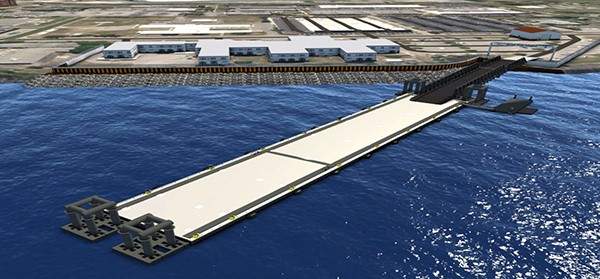
Conceptual rendering of new NOAA ship pier and other improvements at the agency’s pier facility in North Charleston, South Carolina. (Manson Construction Design/Build Team)

By David Hall, July 30, 2024 

Today, NOAA officials were joined by regional partners to break ground on renovations at the agency’s pier facility in North Charleston, South Carolina. The project is expected to be completed in 2026. 

In September 2023, NOAA awarded $59.8 million to Manson Construction Company for the renovations. This important infrastructure project is partially funded by the Inflation Reduction Act, as part of President Biden’s Investing in America agenda. 

“President Biden’s Investing in America agenda – and the historic Inflation Reduction Act – has made it possible for NOAA to renovate this pier facility in North Charleston and make way for more vital climate and ocean research for decades to come,” said U.S. Secretary of Commerce Gina Raimondo. 

 “Many of NOAA’s investments in infrastructure over the next several years are made possible because of funds from the Inflation Reduction Act,” said NOAA Administrator Rick Spinrad, Ph.D. “Investing in our shoreside infrastructure helps NOAA meet essential at-sea data collection requirements that support enhanced economic security, public safety and homeland security for many years to come.”  

The renovations will include demolishing and building a new pier that includes shoreside power for ships, as well as a warehouse, sea wall, living shoreline and other supporting infrastructure. Reconstruction of the pier and other facility upgrades that support EO 14057, Catalyzing Clean Energy Industries and Jobs Through Federal Sustainability. This project will enable NOAA ships Ronald H. Brown and Nancy Foster to have a designated place to dock and better accommodate NOAA research missions in the Atlantic. Both ships are homeported in Charleston. 

“This pier and facility are integral to safe and efficient research ship operations in the area,” said NOAA Corps Vice Adm. (select) Nancy Hann, director of NOAA Marine and Aviation Operations and the NOAA Commissioned Officer Corps. “Our ships cannot efficiently complete their critical work without safe and reliable shoreside infrastructure.” 

NOAA’s fleet of 15 research and survey ships are operated, managed and maintained by NOAA Marine and Aviation Operations. The fleet ranges from large oceanographic research vessels capable of exploring the world’s deepest ocean, to smaller ships responsible for charting the shallow bays and inlets of the U.S. The vessels support a wide range of marine activities, including fisheries surveys, nautical charting and ocean and climate studies. NOAA ships are operated by NOAA Corps officers and civilian professional mariners. 


July 30 U.S. Central Command Update

From U.S. Central Command 

July 30, 2024

TAMPA, Fla.- In the past 24 hours, U.S. Central Command (USCENTCOM) forces successfully destroyed three Iranian-backed Houthi uncrewed surface vessels (USV) in the Red Sea. 

It was determined these weapons presented an imminent threat to U.S., coalition forces, and merchant vessels in the region. These actions were taken to protect freedom of navigation and make international waters safer and more secure. 


USCGC Forward Returns Home Following 60-Day Deployment in the Central Caribbean Sea 

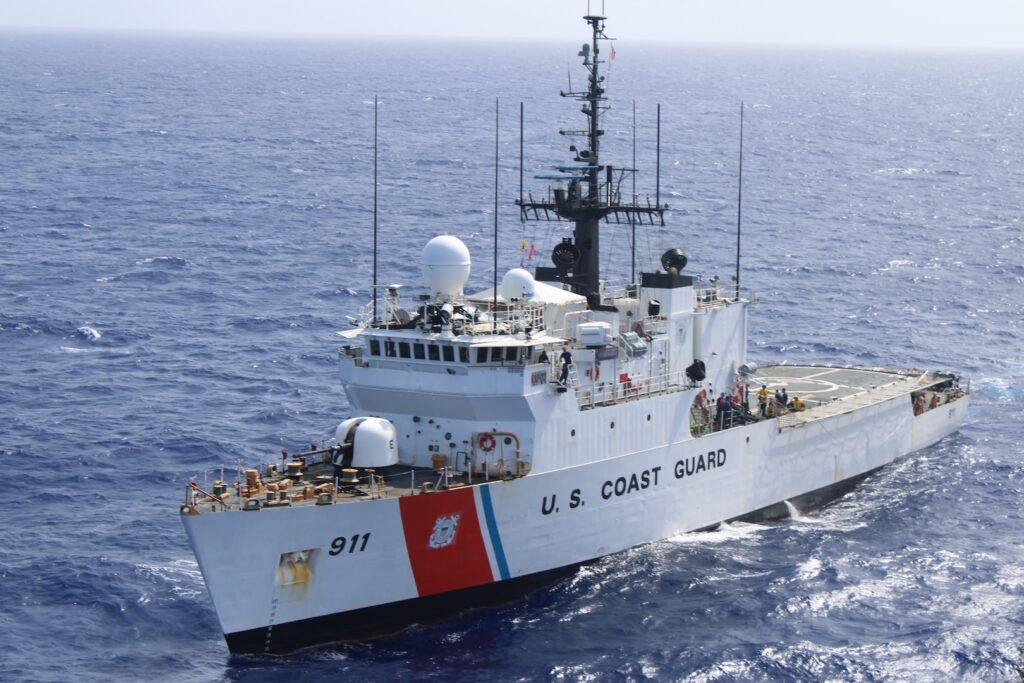
Coast Guard Cutter Forward (WMEC 911) steams, July 19, 2024, while underway in the Caribbean Sea. Forward conducted a 60-day Caribbean Sea patrol to interdict illegal drugs and apprehend suspected smugglers on the high seas in support of Joint Interagency Task Force – South. (U.S. Coast Guard photo)

From U.S. Coast Guard Atlantic Area, 31 July 2024 

PORTSMOUTH, Va. — The crew of Coast Guard Cutter Forward (WMEC 911) returned to their home port in Portsmouth, July 27, following a 60-day patrol in the Caribbean Sea.  

During the deployment, Forward patrolled within the Seventh Coast Guard District’s area of responsibility in support of Joint Interagency Task Force – South. Crew members conducted detection and monitoring operations throughout the joint operating area and executed interdiction and apprehension missions, which directly contributed to the reduction in flow of illegal drugs bound for the United States. These activities also served toward degrading and dismantling transnational criminal organizations (TCO).  

Coordinating with naval forces from Canada, the Netherlands, and the U.S., along with an embarked aviation detachment from the Coast Guard Helicopter Interdiction Tactical Squadron, Forward assisted with the apprehension of five suspected smugglers and the seizure of 8,248 pounds of narcotics.  Information gained from these at-sea interdictions was also used by federal agencies in multiple nations to arrest an alleged high-ranking member of a TCO.   

While underway, Forward’s crew rescued three migrants from a vessel taking on water. After they were provided with medical attention, the migrants were repatriated to their country of origin. The rescue exemplified Coast Guard missions to preserve the safety of life at sea and safeguard the maritime boundaries of the United States.  

After departing the joint operating area, Forward’s crew carried out activities aimed at strengthening partnerships and interoperability. On July 22, crew members conducted a narcotics offload in Port Everglades, Florida, which allowed for professional exchanges and training with both the Panama Express Strike Force, an organized crime drug enforcement task force, and U.S. Customs and Border Protection canine handlers. Forward also served as the platform for ship-helicopter landings with the U.S. Army 160th Special Operations Aviation Regiment.  

“Forward’s operational success came down to two things: the crew’s superior dedication and the strength of the Joint Interagency Task Force – South network,” said Cmdr. Andrew Grantham, commanding officer of Forward. “I am proud of the crew’s tenacity to overcome all challenges to get the job done.”   

Forward is a 270-foot, Famous-class medium endurance cutter. The cutter’s primary missions are counter-drug and migrant interdiction operations, enforcement of federal fishery laws, as well as search and rescue in support of U.S. Coast Guard operations throughout the Western Hemisphere.  


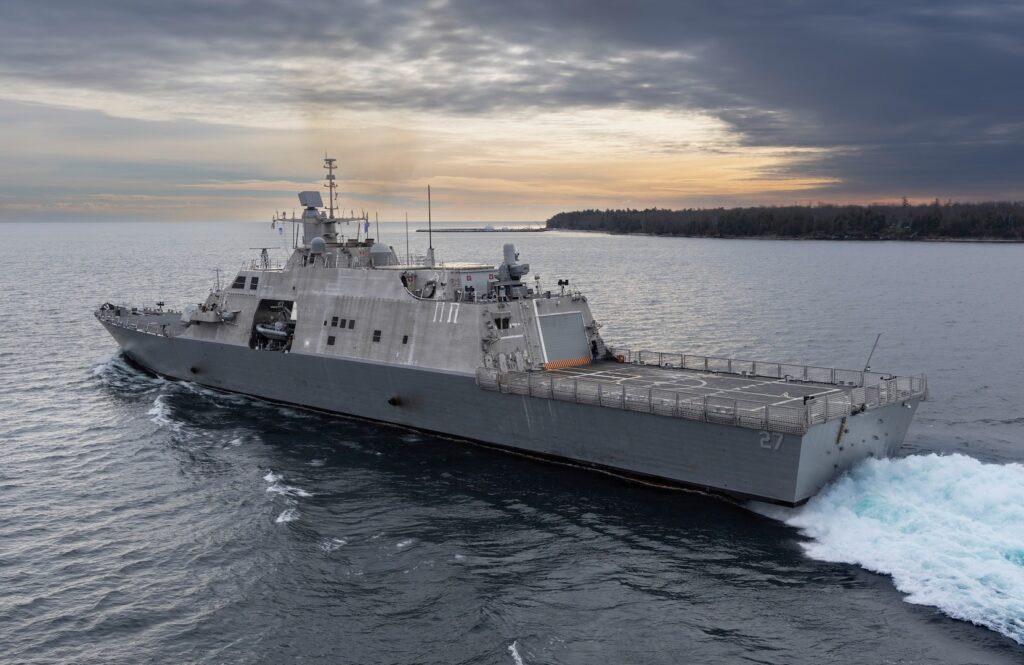
U.S. Navy Accepts Delivery of Future USS Nantucket (LCS 27)

By Program Executive Office Unmanned and Small Combatants (PEO USC) Public Affairs 

July 30, 2024 

MARINETTE — Freedom-variant Littoral Combat Ship (LCS), USS Nantucket (LCS 27), was delivered to the U.S. Navy, July 29. 

Nantucket was accepted from Lockheed Martin at the Fincantieri Marinette Marine shipyard in Marinette, Wisconsin. Delivery follows the successful completion of Acceptance Trials in December 2023. Nantucket will commission later this year, and will be homeported in Mayport, Florida. 

The LCS-class comprises fast, optimally manned, mission-tailored surface combatants that can operate in both near-shore and open-ocean waters to counter 21st-century coastal threats. 

“The future USS Nantucket serves as a shining example of the perseverance of the United States maritime industrial base and shows that the partnership we have with industry is built to last,” said Capt. Matthew Lehmann, program manager of the Littoral Combat Ship program office. 

Nantucket is a testament to the enduring connection between the ship’s namesake city in Massachusetts and the Navy, honoring the rich heritage of the people of Nantucket and the maritime legacy that the island represents. Nantucket is the fourth Navy ship to be named in honor of the island. 

“Together, the Navy and industry will continue our work to prepare her for commissioning and Fleet operations, delivering combat capability across the globe,” Lehmann added. 

Following Nantucket, two more Freedom-variant ships are under construction at the Fincantieri Marinette Marine shipyard. The future USS Beloit (LCS 29) is scheduled for delivery in the summer of 2024. USS Cleveland (LCS 31), the final Freedom-variant LCS, is in its final stages of construction alongside Beloit. 

The LCS-class supports forward presence, maritime security, sea control, and deterrence, and can operate independently or in high-threat environments as part of a networked battle force that includes larger, multi-mission surface combatants. 

The LCS-class consists of two variants, Freedom and Independence, designed and built by two separate industry teams. The trimaran-hulled Independence-variant team is led by Austal USA (for the even-numbered ships). The monohull Freedom variant is built by a team led by Lockheed Martin (for the odd-numbered ships). 

The Navy’s littoral combat ship program is a part of the Program Executive Office, Unmanned and Small Combatants portfolio, which designs, develops, builds, and delivers the Navy’s unmanned maritime systems; mine warfare systems; special warfare systems; expeditionary warfare systems; and small surface combatants. 


USNS City of Bismarck Arrives at the Port of Legazpi for Pacific Partnership 2024-2

LEGAZPI, Philippines – The expeditionary fast transport ship USNS City of Bismarck (T-EPF 9) arrived at the Port of Legazpi in preparation for the start of Pacific Partnership 2024-2 humanitarian mission in the Philippines, July 30, 2024. 

“It’s wonderful to return to the Philippines, where we look forward to training alongside the citizens of Legazpi’s medical and disaster relief personnel,” said Capt. Daniel J. Keeler, Pacific Partnership 24-2 mission commander. “Our nations share a rich history of collaboration, and we look forward to strengthening our enhanced cooperation and interoperability in the days and years ahead.” 

Pacific Partnership visited Puerto Princesa City, Palawan, in 2022, San Fernando City, La Union in 2023 and will be in Legazpi, Albay from July 30 – Aug. 14, 2024. 

“Combining the expertise of professional mariners with the skill of our Pacific Partnership forces makes our multilateral forces ready and versatile to respond to any event in the Indo-Pacific Region,” said Chris Jackson, ship’s master, “The USNS City of Bismarck is an incredibly diverse platform, with a 20,000 square feet mission bay that can be loaded to carry any cargo, making it ideal to bring Pacific Partnership back to the Philippines for the third consecutive year.” 

The shallow-draft catamaran, designed for rapid and agile maneuverability for use at austere or degraded offload points, includes a flight deck to support day and night aircraft launch and 

recovery operations, with airline-style seating for 312 embarked forces and fixed berthing for 104 people. 

Pacific Partnership fosters multilateral cooperation and emphasizes a multinational whole-of-government approach, by planning and executing operations with U.S. and partner nation militaries, interagencies, international organizations, and non-governmental organizations. This subsequently provides a strong foundation of trust and enhances our collective ability to respond in times of crisis. 

The PP24-2 mission also includes stops in Vanuatu, Vietnam and the Federated States of Micronesia. Events are synchronized with the host nation and are organized according to their requests and needs. 

Born out of the devastation brought by the December 2004 tsunami that swept through parts of South and Southeast Asia, Pacific Partnership began as a military-led humanitarian response to one of the world’s most catastrophic natural disasters. Building on the success and goodwill of this operation the U.S. helped spearhead the inaugural Pacific Partnership mission in 2006. This mission leveraged partner nation militaries and Non-Governmental Organizations proficiencies to expand disaster relief capacity in Bangladesh, Indonesia, the Philippines and Timor-Leste. 

Pacific Partnership, now in its 20th iteration, is the largest annual multinational humanitarian assistance and disaster relief preparedness mission conducted in the Indo-Pacific. Each year the mission team works collectively with host and partner nations to enhance regional interoperability capabilities, increase maritime security and stability in the region, and foster new and enduring friendships in the Indo-Pacific. 


First Royal Australian Navy Sailors Graduate From Basic Enlisted Submarine School

30 July 2024 

From Lauren Laughlin 

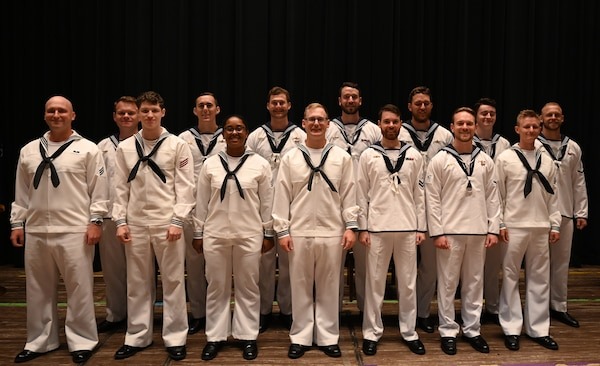
GROTON, Conn. – In a first for the AUKUS trilateral enhanced security partnership, a group of Royal Australian Navy (RAN) enlisted sailors has graduated from the United States Navy’s Basic Enlisted Submarine School (BESS). The sailors all graduated with distinction with one of them being named the Honor Graduate for scoring a 100% in the class. The graduation marks a significant milestone in the development of a conventionally armed, nuclear-powered attack submarine (SSN) fleet for Australia under the AUKUS Pillar 1 Optimal Pathway.

“It’s another exciting step to see our Royal Australian Navy sailors graduate from this unique and challenging training. I am incredibly proud of their exceptional dedication and effort to reach this significant milestone,” said Chief of the Royal Australian Navy Vice Adm. Mark Hammond. “I’d like to thank our long-standing partners and friends in the U.S. Navy for providing the training to assist the Royal Australian Navy to operate, maintain and support Australia’s future nuclear-powered submarine capability.” 
 
Incorporating Royal Australian Navy enlisted personnel into the U.S. Navy’s submarine training pipeline is essential to developing Australian crews ahead of Australia’s acquisition of sovereign Virginia-class submarines that will be sold to Australia by 2030. Enlisted personnel make up the bulk of a Virginia-class submarine crew, which is typically comprised of 15 officers and 117 enlisted sailors. Royal Australian Navy sailors are also enrolled in the UK Royal Navy’s nuclear training pipeline, with the first officers graduating from the UK Royal Navy’s Officers Nuclear Operators Course earlier this month. All work by Australian personnel in the U.S. and UK will remain consistent with Australia’s domestic and international legal obligations, including its non-proliferation obligations and commitments. 
 
“For the last two months, these sailors have trained diligently alongside their American counterparts to acquire the capability to safely operate SSNs,” said Naval Submarine School Commanding Officer Capt. Matthew Fanning. “They will continue to hone their skills in rate-specific training prior to reporting to a Virginia-class submarine as part of the crew to put their training into execution alongside U.S. submariners.” 
 
The BESS graduation comes just months after the first three Royal Australian Navy officers completed their training at the U.S. Navy’s Submarine Officer Basic Course in April 2024 and reported to Virginia-class submarines based in Pearl Harbor, Hawaii. Nearly 100 Royal Australian Navy officers and enlisted personnel will enter the submarine and U.S. Naval Nuclear Propulsion training pipelines this year. 
 
“Our sailors are the backbone of our Navy. Their training success demonstrates the exceptional skillset and knowledge of our people,” said Warrant Officer of the Royal Australian Navy Andrew Bertoncin, the service’s senior non-commissioned representative. “I’m proud of what our sailors have achieved and look forward to seeing them continue to master their craft onboard a Virginia-class submarine.” 
 
At BESS, the Royal Australian Navy sailors joined their American counterparts for a rigorous eight-week course where they developed the skills and competence needed to operate nuclear-powered attack submarines. Sailors studied the construction and operation of nuclear-powered submarines and gained hands-on experience through intensive simulations. 
 
“We are extremely proud of what these sailors have accomplished as the first Royal Australian Navy enlisted sailors to graduate from one of the U.S. Navy’s most demanding training courses,” said Vice Adm. Jonathan Mead, Director General of the Australian Submarine Agency. “Their success in this training is another positive step forward as we work with our U.S. and UK partners to progress along the AUKUS Pillar 1 Optimal Pathway and toward our shared goal of a stable and prosperous Indo-Pacific.” 
 
“These sailors are the foundation of Australia’s future SSN crews,” said the U.S. Navy’s AUKUS Integration and Acquisition Program Manager Rear Adm. Lincoln Reifsteck. “They are trailblazers leading the broader effort to strengthen the interoperability and capabilities of the AUKUS nations. Their graduation is a major step toward realizing the strategic goals of AUKUS as well as deepening the ties among our nations.” 
 
AUKUS is a strategic partnership that will promote a safe, free, and open Indo-Pacific, enhance national security, and uplift the three industrial bases. AUKUS Pillar 1 will deliver a conventionally armed SSN capability to the Royal Australian Navy by the early 2030s. The Department of the Navy’s AUKUS Integration and Acquisition Program Office is the U.S. lead responsible for executing the trilateral partnership to deliver conventionally armed, nuclear-powered attack submarines to the Royal Australian Navy at the earliest possible date while setting the highest nuclear stewardship standards and continuing to maintain the highest standards of non-proliferation. 


July 29 U.S. Central Command Update

From U.S. Central Command 

July 29, 2024

TAMPA, Fla.- In the past 24 hours, U.S. Central Command (USCENTCOM) forces successfully destroyed one Iranian-backed Houthi uncrewed aerial vehicle (UAV) in a Houthi-controlled area of Yemen. 

It was determined this weapon presented an imminent threat to U.S., coalition forces, and merchant vessels in the region. This action was taken to protect freedom of navigation and make international waters safer and more secure.