Draper Team Completes Critical Design eview Phase of Strategic Enhanced Ground Test Facility
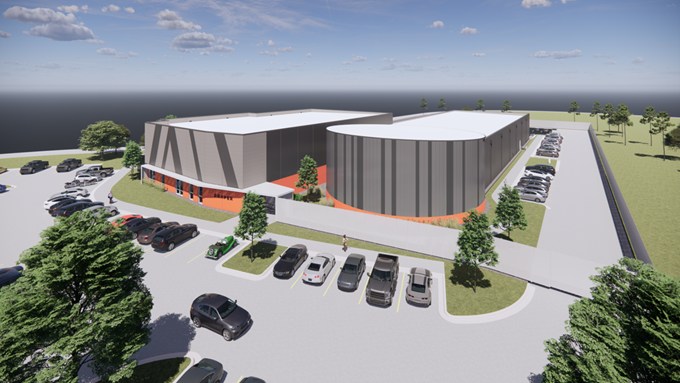
CAMBRIDGE, Mass.—July 30, 2024—Draper announced today that it has completed the critical design review phase of its Strategic Enhanced Ground Test Facility (SEGTF) located in Titusville, Fla. The SEGTF is the future home to dynamic and environmental equipment for supporting development of U.S. strategic systems.
The review culminates a 12-month design phase and resulted in an approved detailed design of a test facility that meets the requirements for supporting the U. S. Navy’s strategic guidance programs and similar efforts at the Department of the Air Force and for various missile defense systems. Site work is expected to commence in July 2024 and be fully operational in 2028.
Draper’s Strategic Enhanced Ground Test Facility will house a world-class centrifuge and associated dynamic and environmental test capabilities needed to design and validate critical guidance, navigation and control technologies. As the U.S. Navy’s strategic guidance prime contractor, Draper has designed and supported the guidance system for every fleet ballistic missile deployed since the program began in 1955.
“The SEGTF will provide critical infrastructure to our strategic systems, missile defense and space customers that would otherwise not exist and complements other modernization efforts on the Space Coast,” said Dr. Jerry M. Wohletz, president and CEO at Draper. “Successful completion of the CDR phase is testimony to our teams’ drive to deliver this essential capability on schedule and on budget for our customer.”
The Draper facility will provide core capabilities in simulation, hardware-in-the-loop and system test to enhance Draper’s existing ‘test-as-you-fly’ approach for exquisite guidance components that require high accuracy, reliability and survivability in the harshest of environments.
“The SEGTF team has worked extremely hard for the past year to present a complete design,” said Marjorie Quant, chief operating officer at Draper. “Draper is excited to make this state-of-the-art investment to enhance our ability to support critical national security technologies in a facility that’s like no other in the nation.”
Approximately 50 Draper employees will be initially located in the SEGTF. The long-term vision expands Draper’s footprint and includes future expansion to support over 150 employees.
The successful completion of the CDR phase represents a system of systems design of infrastructure and subsystems that together form an enduring strategic enhanced ground testing capability. The CDR is the culmination of a collaboration between Draper, North American Properties, Rush Construction, JRC Integrated Systems, Burns and McDonnell and Ideal Aerosmith across multiple disciplines and seven design reviews to produce the holistic SEGT CDR.
CNO Visits Indo-Pacific for Second Time, Strengthens Regional Ties
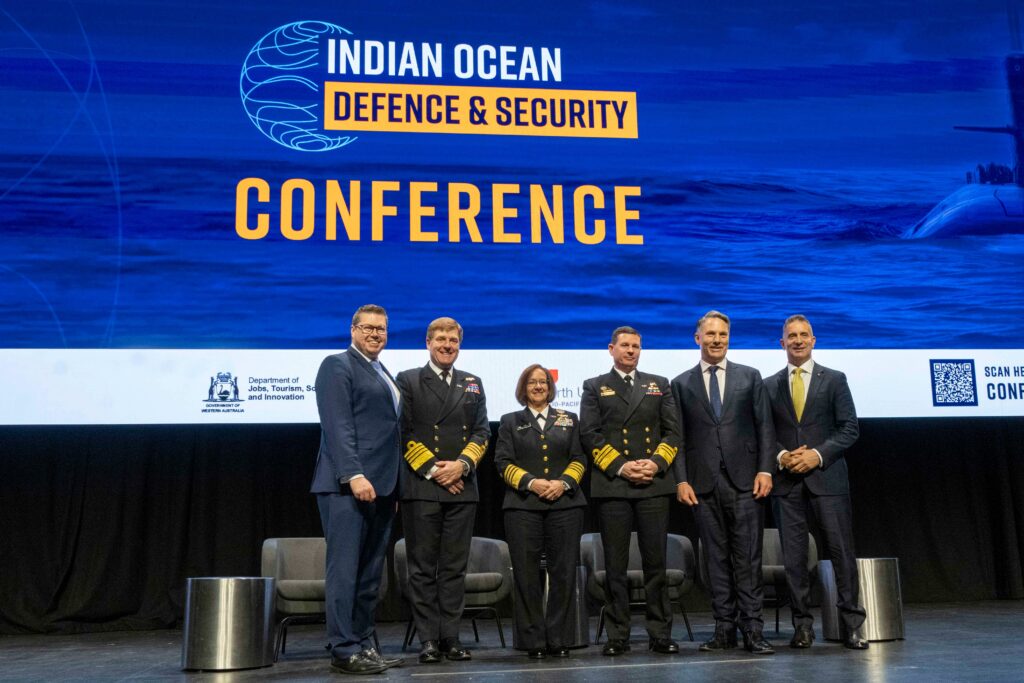
Chief of Naval Operations Adm. Lisa Franchetti, Chief of the Royal Australian Navy Vice Adm. Mark Hammond and Royal Navy Adm. Sir Ben Key, First Sea Lord and Chief of Naval Staff speak on a panel at the Indian Ocean Defense and Security (IODS) Conference, July 24, 2024. During Franchetti’s visit to Australia she met with consulate leadership, held a first-ever trilateral Chief of Navy engagement on AUKUS with Chief of the Royal Australian Navy Vice Adm. Mark Hammond and Royal Navy Adm. Sir Ben Key, First Sea Lord and Chief of Naval Staff, and spoke at the Indian Ocean Defense and Security Conference. (U.S. Navy photo by MC1 William Spears)
From CNO Public Affairs, 26 July 2024
MANILA – Chief of Naval Operations (CNO) Adm. Lisa Franchetti visited Pohnpei, Federated States of Micronesia (FSM); Perth, Australia; and Manila, Philippines, to meet with partner navies, government and military leaders, and attend the 2024 Indian Ocean Defense & Security (IODS) Conference, July 21-26.
The international trip began in Pohnpei, FSM where CNO held an all hands call with Sailors assigned to Naval Mobile Construction Battalion 5 and Marines assigned to Combat Logistics Battalion 13, and thanked them for their hard work and commitment to the region.
“Thank you for serving on the Navy-Marine Corps team in a very strategic location and so far from home. The work that you’re doing here is vitally important to our Nation,” said Franchetti. “We’re never going to do anything alone. We are always going to operate with Allies and partners, and each of you are ambassadors and diplomats for the United States. Your presence and your efforts send a message of deterrence to our adversaries and a message of reassurance to our Allies and partners.”
While in Pohnpei CNO visited the Nan Madol cultural heritage site, held meetings with Amb. Jennifer Johnson, U.S. Ambassador to FSM and Rear Adm. Greg Huffman, commander, Joint Task Force-Micronesia, as well as with FSM Vice President Aren Palik and FSM Secretary of the Department of Foreign Affairs Lorin Robert.
Franchetti then flew with Johnson and Palik to Chuuk, FSM and met with Hon. Mekioshy William, Lt. Gov. of Chuuk. During these engagements, Franchetti emphasized how the U.S. and FSM’s shared commitment to their longstanding defense and security ties, underpinned by the Compact of Free Association, support freedom, stability, and prosperity in the Indo-Pacific.
“It’s an honor to be here at such a historic time in the relationship between the United States and the Federated States of Micronesia,” said Franchetti. “We have a longstanding partnership, and the renewal of the Compact of Free Association provides many opportunities for economic prosperity and security for both our countries. It will help advance our shared vision of a free and open Indo-Pacific.”
Franchetti then traveled to Perth, Australia to visit HMAS Stirling, which will play a role in Australia’s future fleet of conventionally-armed, nuclear-powered submarines as home to Submarine Rotational Force – West, and hold the first-ever trilateral meeting of the AUKUS Chiefs of Navy. Chief of the Royal Australian Navy Vice Adm. Mark Hammond, Royal Navy First Sea Lord and Chief of Naval Staff Adm. Sir Ben Key, and Franchetti communicated their shared commitment to the historic agreement.
“AUKUS is a once-in-a-generation opportunity to bring together the exceptional capabilities of Australia, the United Kingdom and the United States. We will continue to build on our relationship, strengths, and interoperability, while at the same time uplifting the industrial bases of our three countries,” said Franchetti. “We will bring to bear the innovative spirit of our three nations while significantly bolstering our posture in the Indo-Pacific, contributing to security and stability, and maintaining the rules-based international order in this critical region and around the globe.”
“The Indian Ocean is a critical waterway for the free flow of resources, trade, and commerce all around the globe,” Franchetti said. “It’s important that we work together as Allies and partners to promote the rules-based international order that has supported freedom of navigation – in all oceans – and our collective prosperity for the last three quarters of a century.”
Following her engagements in Australia, CNO traveled to Manila, Philippines, where she met with Amb. MaryKay Carlson and her U.S. Embassy Manila country team as well as Philippine Secretary of National Defense Gilberto Teodoro, Chief of Staff of the Armed Forces of the Philippines Gen. Romeo S. Brawner Jr., and Philippine Navy Flag Officer-in-Command Vice Adm. Toribio Adaci Jr. While there Franchetti expressed steadfast U.S. support for the Philippines.
“The U.S. commitment to the Philippines is ironclad and our Maritime Cooperative Activities are a testament to the strength and importance of our relationship,” said Franchetti. “I look forward to building on the success of exercises Balikatan and Sama Sama to increase our interoperability and accelerate our capability to support our shared interests in this critical region.”
This was Franchetti’s first trip to FSM, Australia, and the Philippines as Chief of Naval Operations and her second trip to the Indo-Pacific to communicate the strategic importance of this region to the globe.
RTX’s Raytheon awarded Mentor Protégé agreements to develop operational AI
The collaboration will leverage commercial and defense technologies to enhance decision making
MCKINNEY, Texas (July 29, 2024) — Raytheon, an RTX (NYSE: RTX) business, was awarded two strategic Mentor-Protégé Agreement initiatives from the Department of the Navy Office of Small Business Programs to support the development of operational Artificial Intelligence for Department of Defense platforms and programs.
Through joint sponsorship from NAVAIR and the Office of Naval Research, Raytheon will mentor Anacapa Micro Products, Inc. and Nara Logics, Inc. Under two individual three-year contracts, Raytheon will provide mentorship for operational AI on system design, software architecture, systems integration, IT security constraints and authority-to-operate requirements in a collaborative environment.
“The Mentor Protégé Program is an essential element of our overall supplier diversity small business strategy,” said Colin Whelan, president of Advanced Technology at Raytheon. “Through this partnership, we’ll leverage commercial innovations that can make meaningful contributions to our defense capabilities and ultimately, the success of our servicemen and women.”
This collaboration is part of the DoD’s Mentor-Protégé Program, which was established in 1990 and is the oldest continuously operating federal mentor-protégé program in existence. Raytheon has been an active participant in the program since 1991.
Together, the team of Raytheon, Anacapa, and Nara Logics will work to accelerate the development of next-generation autonomous capabilities to enhance the decision-making effectiveness of our servicemen and women.
“We are privileged to participate in this Mentor Protégé relationship that will enhance our joint technical abilities to deliver critical mission support functionality on emerging defense and intelligence platforms,” said Jana Eggers, CEO of Nara Logics.
“Our organization is very proud to be a partner with Raytheon under this Mentor Protégé Agreement and we’re looking forward to supporting the development, production and testing of next-generation AI to better serve the warfighter,” said Ken Marks, CEO of Anacapa Micro Products.
Upon completion, Raytheon will possess an extremely robust technology roadmap aligned with emerging commercial technologies of industry leading small business capabilities.
Coast Guard Cutter James Honored by White House at United States Interdiction Coordinator Awards Ceremony
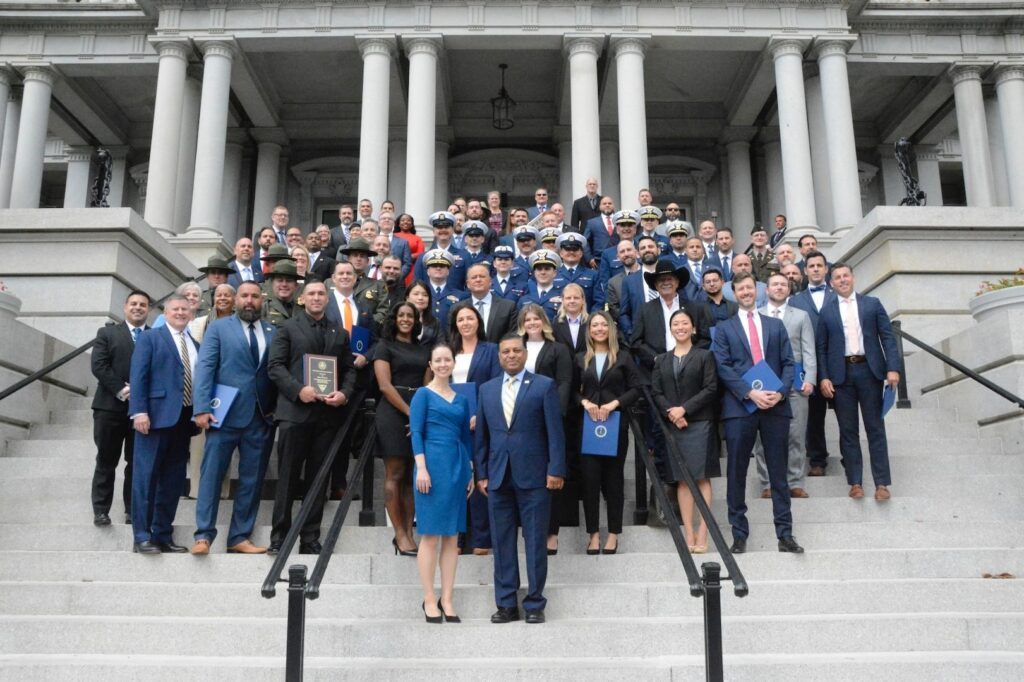
Coast Guard Cutter James (WMSL 754) personnel pose for a photo with other law enforcement agency officials, July 19, at the White House in Washington, D.C. for the annual United States Interdiction Coordinator Awards. James’ crew was recognized with the top maritime interdiction during the awards ceremony. (Photo courtesy of the White House)
WASHINGTON — The crew of the Coast Guard Cutter James (WMSL 754) was honored at the White House during the United States Interdiction Coordinator Awards Ceremony on July 19.
The annual event, held by the Office of National Drug Control Policy (ONDCP), recognized the exceptional contributions and achievements of various law enforcement entities in drug interdiction efforts. James’ crew was recognized for top maritime interdiction.
Amidst heavy seas on the afternoon of Sept. 11, 2023, a junior watchstander noticed what appeared to be the wake of a go-fast vessel approximately 10 nautical miles off James’ bow. The cutter set its go-fast response bill, spurring the entirety of James’ crew in motion to prepare for a counter-drug pursuit. James used an operational procedure agreed upon with Ecuador that allowed law enforcement teams to embark the foreign-flagged vessel, where they found 73 bales of cocaine. Following the successful seizure of 3,863 pounds of cocaine and the detention of three suspected narcotraffickers, James coordinated an at-sea transfer of the detainees and contraband with Ecuador to enable home country prosecution and strengthen a key partnership.
To successfully spot a target of interest on the high seas without positive identification from aerial assets or radar is known as a cold hit. Within the realm of maritime interdiction, cold hits are the equivalent of finding the proverbial needle in a haystack, a complex difficult task made more challenging by the heavy seas and gray skies that limited visibility on that day. In this case, the cold hit detection of the go-fast vessel was made by the lookout, one of James’ most junior crewmembers, who had been in the Coast Guard for only six months. Her initial cold hit spurred the rest of the crew and teams into action.
During the ceremony, ONDCP Director Dr. Rahul Gupta, commended the crew of James for their outstanding service and unwavering commitment to protecting the nation’s borders and safeguarding the lives of countless Americans. The cutter’s achievements are a testament to the Coast Guard’s enduring legacy of excellence in maritime law enforcement and drug interdiction.
“It was an honor to receive this award on behalf of the entire James crew,” said Capt. Donald Terkanian, commanding officer of James. “Our crew’s exceptional efforts disrupted illicit drug trafficking, deprived transnational criminal organizations of millions of dollars in revenue, apprehended suspected traffickers, strengthened a key partnership, and helped save lives by preventing drugs from reaching the streets.”
James is a 418-foot, Legend-class national security cutter, homeported in North Charleston, South Carolina. The cutter’s primary missions are counter-drug operations and defense readiness. James falls under the command of the Coast Guard Atlantic Area in Portsmouth, Virginia. Atlantic Area oversees all Coast Guard operations east of the Rocky Mountains to the Arabian Gulf. In addition to surge operations, Atlantic Area also allocates ships to deploy to the Caribbean Sea, Eastern Pacific Ocean, and South Atlantic Ocean to combat transnational organized crime and illicit maritime activity.
For information on how to join the U.S. Coast Guard, visit GoCoastGuard.com to learn about active duty, reserve, officer, and enlisted opportunities. Information on how to apply to the U.S. Coast Guard Academy can be found here.
July 26 U.S. Central Command Update
From U.S. Central Command, July 26, 2024
In the past 24 hours, U.S. Central Command (USCENTCOM) forces successfully destroyed six Iranian-backed Houthi uncrewed aerial vehicles (UAV) in a Houthi-controlled area of Yemen.
Separately, USCENTCOM forces engaged and destroyed three Houthi uncrewed surface vessels (USV) operating off the coast of Yemen.
It was determined these weapons presented an imminent threat to U.S., coalition forces, and merchant vessels in the region. These actions were taken to protect freedom of navigation and make international waters safer and more secure.
U.S. Intends to Reconstitute U.S. Forces Japan as Joint Forces Headquarters
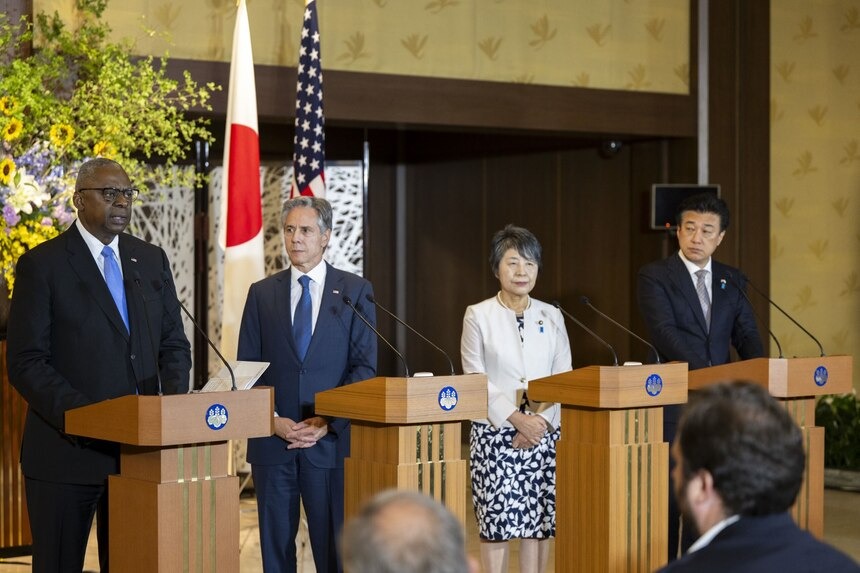
Secretary of Defense Lloyd J. Austin III and Secretary of State Antony J. Blinken conduct a press briefing with Japanese Defense Minister Minoru Kihara and Foreign Minister Yoko Kamikawa after the U.S.-Japan Security Consultative Committee meeting in Tokyo, July 28, 2024. (Photo by: Navy Petty Officer 1st Class Alexander Kubitza)
From C. Todd Lopez, DOD News, 29 July 2024
Through a phased approach, the U.S. plans to convert U.S. Forces Japan into a joint force headquarters which will report to the commander of U.S. Indo-Pacific Command, the U.S. secretary of defense said today following the conclusion of a two-plus-two ministerial meeting in Tokyo.
Included in the meeting were Secretary of Defense Lloyd J. Austin III, Secretary of State Antony Blinken, Japan’s Minister for Foreign Affairs Yoko Kamikawa and Japan’s Minister of Defense Minoru Kihara.
“We welcome an historic decision to modernize our alliance command and control to better meet the challenges of today and tomorrow,” said Austin during a press briefing today that followed the high-level meetings. “The United States will upgrade the U.S. Forces Japan to a joint force headquarters with expanded missions and operational responsibilities.”
The new joint force headquarters will be commanded by a three-star officer and will serve as a counterpart to Japan’s own Japan Self-Defense Forces Joint Operations Command, Austin said.
“This will be the most significant change to U.S. Forces Japan since its creation, and one of the strongest, improvements in our military ties with Japan in 70 years,” he said. “Japan’s new Joint Operations Command will further allow our forces to work together more closely than ever. And these new operational capabilities and responsibilities will advance our collective deterrence.”
Austin said the change is based on a desire to work more closely with Japan and enhance the effectiveness of the existing relationship.
Also part of the discussions, Austin said, were ways to increase bilateral presence in Japan’s Southwest Islands; a reaffirmation of the importance of cooperation on cybersecurity, intelligence, surveillance and reconnaissance, cross-domain operations and bilateral exercises and training; and ideas for new areas for defense industrial cooperation.
According to a joint statement by the Security Consultative Committee, meeting participants discussed co-production opportunities to expand production capacity of both Advanced Medium-Range Air-to-Air Missiles and Patriot Advanced Capability-3 Missile Segment Enhancement missiles.
“Finally, we held a separate two-plus-two ministerial level meeting on extended deterrence, and that has never been done before,” Austin said. “During that meeting, I reaffirmed our ironclad commitment to defend Japan with the full range of our capabilities, including our nuclear capabilities.”
As part of the extended deterrence meeting, participants discussed, among other things, North Korea’s destabilizing activities in the region, including its unlawful nuclear and ballistic missile programs; China’s expansion of its nuclear arsenal; and Russia’s unlawful arms transfers with North Korea.
Austin said he considered both meetings in Tokyo to be a success.
“We are reinforcing our combined ability to deter and respond to coercive behavior in the Indo-Pacific and beyond,” he said. “We’re reinforcing the rules-based international order that keeps us all safe. And the agreements that we’ve advanced today will ensure that the U.S.-Japan alliance remains a cornerstone of security and stability in the Indo-Pacific.”
Strategic Weapons Facility Pacific Celebrates 60 Years of Supporting the Nation’s Nuclear Deterrence Mission
Vice Adm. Johnny Wolfe Jr., left, director of U.S. Navy Strategic Systems Programs, presents the fiscal year 2023 Chief of Naval Operations Shore Safety Award to Capt. Keith Fahlenkamp, Strategic Weapons Facility Pacific commanding officer, at a gala held at Naval Base Kitsap-Bangor Plaza in Silverdale, Washington July 20, 2024. (U.S. Navy photo by MC2 Victoria Galbraith)
25 July 2024
From Mass Communication Specialist 2nd Class Victoria Galbraith
SILVERDALE, Wash. – Strategic Weapons Facility Pacific (SWFPAC) celebrated 60 years of service to its country and people by hosting a gala at Naval Base Kitsap-Bangor Plaza July 20, 2024.
Originally designated Polaris Missile Facility Pacific in 1964—and renamed SWFPAC in 1980—the field site was established to support the nation’s sea-based nuclear deterrence program.
“It’s the people that have really made SWFPAC a success throughout these years,” said Vice Adm. Johnny Wolfe Jr., director of U.S. Navy Strategic Systems Programs (SSP).
“The foundation that they laid back in the 1960s to assemble the facility, this mission and the first generation of trained people who executed the development, oversight, and surety of the nation’s inaugural sea-based strategic weapon system, cultivated a culture that has carried throughout the last 60 years and will stand strong for the next 60 years.”
SWPAC—SSP’s naval shore facility in the Pacific—assembles and deploys Trident II D5 missiles aboard Fleet Ballistic Missile submarines (SSBNs) while safeguarding the nation’s strategic assets. SWFPAC’s strategic deterrence mission has been a vital lynchpin to the nation’s Warfighting Navy in the Pacific—a region where the Navy’s maritime mission is critical to defending against near-peer competitors and adversaries, supporting U.S. strategy and acting as a guarantor for the security of its citizens.
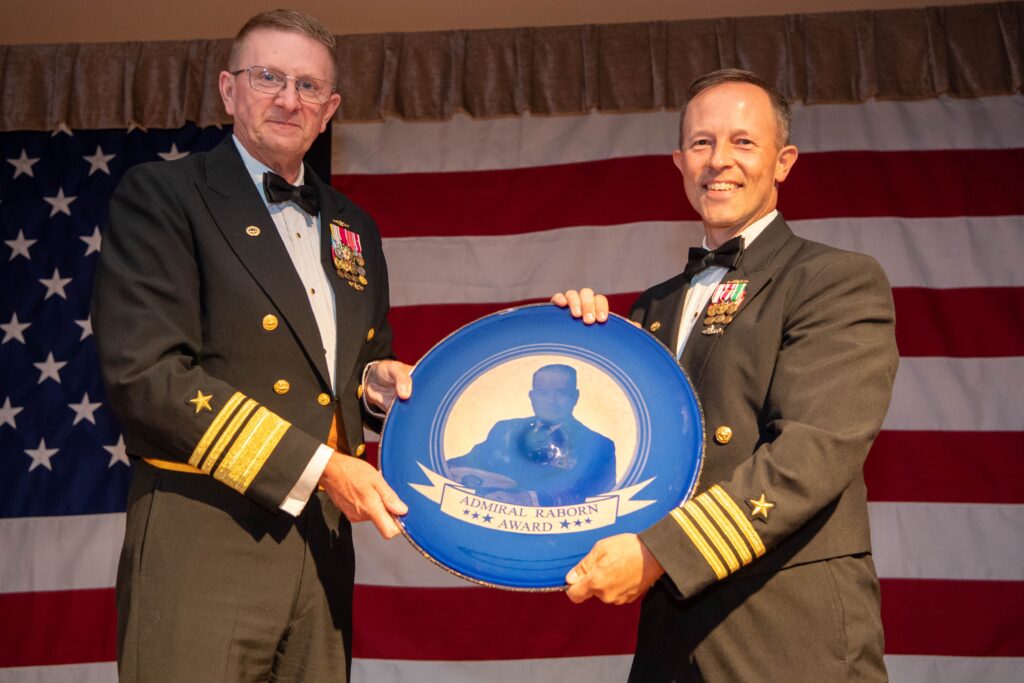
During the gala, Vice Adm. Wolfe presented two awards to Capt. Keith Fahlenkamp, SWFPAC commanding officer, including the fiscal year 2023 Admiral Raborn Award and the fiscal year 2023 Chief of Naval Operations Shore Safety Award—an honor that has now been awarded three times to the command.
“I want to impart a heartfelt congratulations to the incredible team here at SWFPAC that has been directly responsible for the continued security of the Nation for 60 years,” said Capt. Fahlenkamp.
“These awards represent just a fraction of the dedication of this workforce to the mission, our organization and the Nation.”
Against the backdrop of an extremely complex global environment, the Navy must be equipped to operate in challenging conditions, and SWFPAC is at the forefront of ensuring sailors have the right platforms, the right capabilities and weapons, and the right people for the job, today and in the future.
“One example of SWFPAC’s tremendous support to the fleet and the warfighter was the expedited load-out of USS Kentucky (SSBN 737),” Vice Adm. Wolfe recalled during his speech.
“The excellent foresight of the staff enabled Kentucky crucial flexibility to execute a port call in South Korea in July 2023—a reassurance to our Nation’s allies that we are committed to strategic deterrence in the region and for the world.”
The last six decades have paved the way for the next 60 years as SWFPAC focuses forward to supporting SSP’s efforts to sustain and develop weapon systems in support of the Sea-Based Strategic Deterrence mission through the year 2084 (SBSD 2084). Providing the Navy’s warfighters the ability to preserve the peace, respond in crisis, and win decisively in war will be at the forefront of SWFPAC’s responsibilities in the coming years. As the Columbia-class SSBNs begin operational patrols in the next decade, SWFPAC will not only sustain the strategic weapons system (SWS) for the current Ohio-class SSBNs but provide our Navy advanced weapon capabilities with the Trident D5 Life Extension (D5LE) II SWS and the W93/Mk7 warhead and reentry body assembly.
“What you do has broad influence nationally and internationally,” said Vice Adm. Wolfe, who highlighted the critical nature of the Navy’s charge in the Pacific.
“As we move away from the last 60 years and into the next 60, we must think, act, and operate outside of the traditional sources of strength our military has relied on for the last six decades in order to be prepared for tomorrow’s complex battlefield, especially in here in the Pacific.”
U.S. Navy to Christen Future DDG USS Patrick Gallagher
From the U.S. Navy Office of Informaiton, 26 July 2024
The Navy will christen the future USS Patrick Gallagher (DDG 127), during an 11:00 EST ceremony Saturday, July 27, in Bath, Maine.
The Honorable Sean Fleming, Ireland’s Minister of State for the Department of Foreign Affairs (International Development and Diaspora), will deliver the principal address. Remarks will also be provided by the Honorable Susan Collins, U.S. Senator, Maine; Gen. Christopher Mahoney, Assistant Commandant of the Marine Corps; the Honorable Sean Coffey, General Counsel of the Navy; Vice Adm. Darse E. “Del” Crandall, Jr., Judge Advocate General of the Navy; and Charles F. Krugh, President of General Dynamics Bath Iron Works. In a time-honored Navy tradition, the ship’s sponsors and sisters of the ship’s namesake, Teresa Gallagher Keegan, Rosemarie Gallagher, and Pauline Gallagher, will christen the ship by breaking a bottle of sparkling wine across the bow.
The ship’s namesake, Marine Corps Cpl. Patrick Gallagher, immigrated to the United States from Ireland and joined the United States Marine Corps. He received the Navy Cross for heroism during the Vietnam War when he managed to jump on and throw an enemy grenade into a river to save his fellow Marines. He was killed in action just one year later.
“It is my deepest honor to announce that the Fleet’s newest Arleigh Burke-class destroyer will be named after Cpl. Patrick Gallagher. His keen instinct, bravery, and selflessness in the face of danger are testaments to his character and the true character of so many who choose to serve our Nation,” said Secretary of the Navy, Carlos Del Toro. “As part of the world’s most versatile Navy, I’m certain the crew of USS Patrick Gallagher (DDG 127) will uphold their namesake’s legacy as they defend America’s national interests and promote peace around the world.”
This is the first Navy ship to honor Cpl. Gallagher.
Arleigh Burke-class destroyers are the backbone of the U.S. Navy’s surface fleet, providing protection to America around the globe. These highly capable, multi-mission ships conduct various operations, from peacetime presence to national security, providing a wide range of warfighting capabilities in multi-threat air, surface, and subsurface domains. These elements of seapower enable the Navy to defend American prosperity and prevent future conflict abroad.
3D Printer Solves Engineering Challenges Onboard USS Somerset
Hull Technician 3rd Class Mario EnriquezSanchez, a Denver native, cuts the baseplate of a 3D printed component aboard the San Antonio-class amphibious transport dock ship USS Somerset (LPD 25) during Exercise Rim of the Pacific (RIMPAC) 2024 while underway in the Pacific Ocean, July 15. (U.S. Navy photo by MC2 Evan Diaz)
Hull Technician 3rd Class Mario EnriquezSanchez, a Denver native, cuts the baseplate of a 3D printed component aboard the San Antonio-class amphibious transport dock ship USS Somerset (LPD 25) during Exercise Rim of the Pacific (RIMPAC) 2024 while underway in the Pacific Ocean, July 15. (U.S. Navy photo by MC2 Evan Diaz)
When the team of engineers from the Consortium for Advanced Manufacturing Research and Education (CAMRE) loaded their 3D hybrid-metal printer onboard Somerset as part of the experimentation sector of Exercise Rim of the Pacific 2024, they had no idea that they would soon be asked to solve a real-world engineering casualty.
Hours after being loaded on board, a critical component of the reverse osmosis pump, which generates clean water for the crew – an absolute necessity for ships spending long periods at sea – shattered.
“What we didn’t expect was that we would have the opportunity to directly help ship readiness so soon,” said Lt. Charles Wallace, a mechanical engineer from the Naval Postgraduate School, and one of the team members onboard. “Especially for something as mission-essential as a reverse osmosis pump, where if you run out of water you’re going to be coming home pretty quick.”
3D printing, or additive manufacturing (AM), has been a major area of interest for Department of Defense in recent years. In January 2021, the DoD published its first-ever Additive Manufacturing Strategy to “provide a shared set of guiding principles and a framework for AM technology development and transition to support modernization and warfighter readiness,” across the military.
“For Trident Warrior, CAMRE organized the largest distributed advanced manufacturing demonstration the Department of Defense has ever conducted to date,” explains Lt. Col. Michael Radigan with the Marine Innovation Unit, and government lead on the CAMRE team. “This was accomplished by linking advanced manufacturing equipment, joint subject matter experts, and commercial partners to tackle real-life readiness solutions.”
The benefits of successfully implementing additive manufacturing on ships include saving time, money, space, and increasing overall warfighting readiness by allowing for repair and replacement of equipment in a contested environment. In the case of Somerset, had the reverse osmosis pump failed during their 6-month deployment, it would have reduced their ability to produce drinking water for the Sailors and Marines.
“If the crew had to rely on a replacement part without using additive manufacturing, it would have taken weeks or months,” said Staff Sgt. Jordan Blake, a member of the Marine Innovation Unit, and tasked with technical oversight of the project aboard ship. “With this technology, we’ll have the new component printed and ready for installation before the order for a replacement would be completed.”
While 3D printing on Navy ships is still in its infancy, Somerset is not the first ship to utilize AM. In April, 2024, the amphibious transport dock USS San Diego (LPD 22) piloted a liquid metal jetting additive manufacturing process fielded by the CAMRE team, operationally showcasing this novel technology’s capabilities at sea.
What makes the Somerset demonstration unique, is that the machine is a metal hybrid design, combining subtractive and additive manufacturing in one machine. Subtractive manufacturing is an umbrella term for the process by which solid blocks of material are shaped into the desired object via cutting, boring, drilling, and grinding. This is in contrast to additive manufacturing, which builds something by adding material one layer at a time – hence additive. Oftentimes, constructing a replacement part involves both additive and subtractive manufacturing. Before they tested the model on Somerset, this meant alternating between different machines, however by combining the two processes it effectively streamlines the overall workflow.
“The benefit of a system like this is that you’re able to computerize , send the code, then once you’ve printed something, it becomes replicable,” said Wallace when asked how the hybrid machine represents a step forward for the military.
Not only is 3D printing faster and safer than traditional machinery repair, but the replacement parts are often stronger as well. The weld is nearly as strong, or stronger, than the parent metal. AM is essentially building through welding, which means the replacement pump will potentially surpass the strength of the previous version.
The project builds upon a unique cross-sectional effort from the DoD and industry partners to provide hands-on experience for military students. The printer test itself falls under the umbrella of CAMRE, which funded the project and sent four NPS students to study advanced manufacturing capabilities in an operational scenario. Two soldiers on the team operate the printer and three Marines operate the polymer printers which help augment the capabilities of the metal printer.
A project engineer and representative for the industrial printer’s parent company, is also on hand to teach the Somerset crew to operate the printer independe
July 25 U.S. Central Command Update
From U.S. Central Command, July 25, 2024
TAMPA, Fla. – In the past 24 hours, U.S. Central Command (USCENTCOM) forces successfully destroyed one Iranian-backed Houthi uncrewed aerial vehicle (UAV) launcher in a Houthi-controlled area of Yemen.
It was determined this launcher presented an imminent threat to U.S., coalition forces, and merchant vessels in the region. These actions were taken to protect freedom of navigation and make international waters safer and more secure.