IFS Enterprise Software Supports Shipbuilding, Aviation Management and Maintenance
By Richard R. Burgess, Senior Editor
ARLINGTON, Va. — A global Information technology company has expanded its products in recent years to provide tailored digital enterprise software to shipbuilders, ship repair yards, air arms, and airlines.
IFS is a global enterprise software company “working with some of the biggest, advanced shipbuilders in the world, across portfolio products,” said Matt Medley, IFS global industry director for Aerospace and Defense (A&D), during an interview with Seapower.
“We focus on asset-centric and service-centric industries that tend to be highly regulated like aerospace and defense, one of our six core industries,” Medley said. “Shipbuilding here gets a special focus because we actually have two units that work on shipbuilding: the “gray” ships for defense that fall under Aerospace and Defense codes [and] the commercial — the “white ships” — under Engineering and Construction.
“Shipbuilding is always complex, and of course when you add the defense angle onto it, with working with the federal government with all of the contracting rules, [it] becomes incredibly complex,” he said.
IFS, a privately held company based in Sweden, has more than 6,000 employees. Topline revenues topped $1 billion in 2022, and are set to go to $2 billion in 2025, said Medley, a former Air Force C-130 pilot. The company’s North American headquarters is based in Chicago. The company’s products are used by more than 10,000 customer organizations.
The IFS A&D sector is headquartered in Ottawa, Canada. Medley said the company has been growing by a mixture of internal growth and acquisition of other companies, with the A&D sector formed by the 2017 acquisition of a company called MXI, which had developed an asset-management software product called Maintenix used by airlines such as Southwest Airlines. IFS A&D sells its products directly to government, militaries, and defense contractors.
IFS is teamed with Lockheed Martin beginning in 2021 to provide digital transformation of U.S. Navy’s maintenance, repair, and overhaul (MRO) legacy systems into “a single, fully modernized and responsive logistics information system,” according to a company release. IFS software enhances planning and execution of maintenance by using artificial intelligence, digital twins, and predictive analytics.
IFS is now in the limited-deployment phase for introducing its solutions for the U.S. Navy’s aircraft fleet.
“The Navy decided to start with one of IFS’s different applications for its first limited deployment,” Medley said. “The final solution will be an IFS product. They wanted to crawl before you walk before you run, because Maintenix is incredibly complex, and complex for a reason and that’s why it’s the Number One in the world in this market, because it has come very, very sophisticated guardrails to make sure that you don’t do things incorrectly.”
The company’s core ERP (enterprise resource planning) IFS Cloud software is used by the shipbuilding and ship repair industry.
“The prime OEMs [original equipment manufacturers] and the prime contractors are our biggest customers,” Medley said, noting that the list included the three General Dynamics shipbuilders — NASSCO, Bath Iron Works, and Electric Boat — and BAE Ship Repair, Vigor Shipyards, and Austal.
IFS’s solutions for the ship industries include not only the core ERP functions such as accounting and management, but also materials management, subcontracting, project management, product development, engineering, procurement, constructed out-fit, operations, repair, and maintenance.
“We code these solution sets across the breadth of the life cycle of the large asset — everything from design all the way out to sea trials and commissioning, integrating your operations out the entire value chain, forward and backward, and then internally as well with all of your processes all the way down to the shop floor,” Medley said.
Medley said that the sale of a product is the beginning of a relationship, not the end, noting that it’s never “a sale and walk away.”
Like most software companies, IFS uses an “evergreen model” to provide subscription-based ongoing updated software to its customers. The company issues major updates twice per year, in the spring and the fall.
U.S. Navy Conducts Successful Live-Fire Demonstration at RIMPAC 2024
A Common Unmanned Surface Vehicle (CUSV), heads out to sea for the Poniard launching test from ROKS Cheon Ja Bong as part of the Rim of the Pacific Exercise (RIMPAC), 12 July.
By From: Program Executive Office Unmanned and Small Combatants (PEO USC) Public Affairs, July 22, 2024
HONOLULU, Hawaii – The U.S. Navy achieved a significant milestone at the Rim of the Pacific (RIMPAC) 2024 exercise with the successful launching and testing of Poniard rockets from a Common Unmanned Surface Vehicle (CUSV). The 12 July test is part of the Navy’s mission to continually enhance and expand its maritime capabilities and operational flexibility via security cooperation and innovation with allies and partners.
Multiple Poniard rockets, low-cost guided munitions, were fired from the CUSV during a series of exercises conducted off the coast of Hawaii. The live-fire demonstration was the culminating event of an ongoing Foreign Comparative Test (FCT) project under the auspices of the Office of the Under Secretary of Defense for Research and Engineering (OUSD R&E). This innovative capability test demonstrates the Navy’s commitment to integrating mature cutting-edge technology into its operations to maintain maritime superiority and readiness.
“The successful live fire demonstration from the CUSV showcases our ability to rapidly deploy and use low-cost guided munitions from unmanned platforms,” Capt. Matthew Lehmann, program manager of the Littoral Combat Ship (LCS) Mission Modules Office. “This capability enhances our operational reach and effectiveness, ensuring the Navy remains a dominant force in maritime operations.”
This live fire demonstration was part of the RIMPAC exercise, held biennially in and around the Hawaiian Islands, which is the world’s largest international maritime warfare exercise hosted by U.S. Third Fleet. It provides a unique training opportunity for participating nations’ navies to foster and sustain cooperative relationships that are critical to ensuring the safety and security of the world’s oceans. This year’s exercise includes 29 nations, 40 surface ships, three submarines, more than 150 aircraft, and 25,000 personnel.
“The Rim of the Pacific exercise has grown over the years to be the world’s largest and premier joint combined maritime training opportunity,” said Vice Adm. John Wade, commander, U.S. 3rd Fleet and RIMPAC 2024 Combined Task Force (CTF) commander. “The exercise’s purpose is to build relationships, to enhance interoperability and proficiency and, ultimately, contribute to the peace and stability in the vitally-important Indo-Pacific region.”
For more RIMPAC 2024 information and updates, visit https://www.cpf.navy.mil/rimpac/. Any additional questions or queries should be sent to [email protected].
The Navy’s LCS mission modules program is a part of the Program Executive Office, Unmanned and Small Combatants portfolio, which designs, develops, builds, and delivers the Navy’s unmanned maritime systems; mine warfare systems; special warfare systems; expeditionary warfare systems; and small surface combatants.
New DOD Strategy Calls for Enhancements, Engagements, Exercises in Arctic
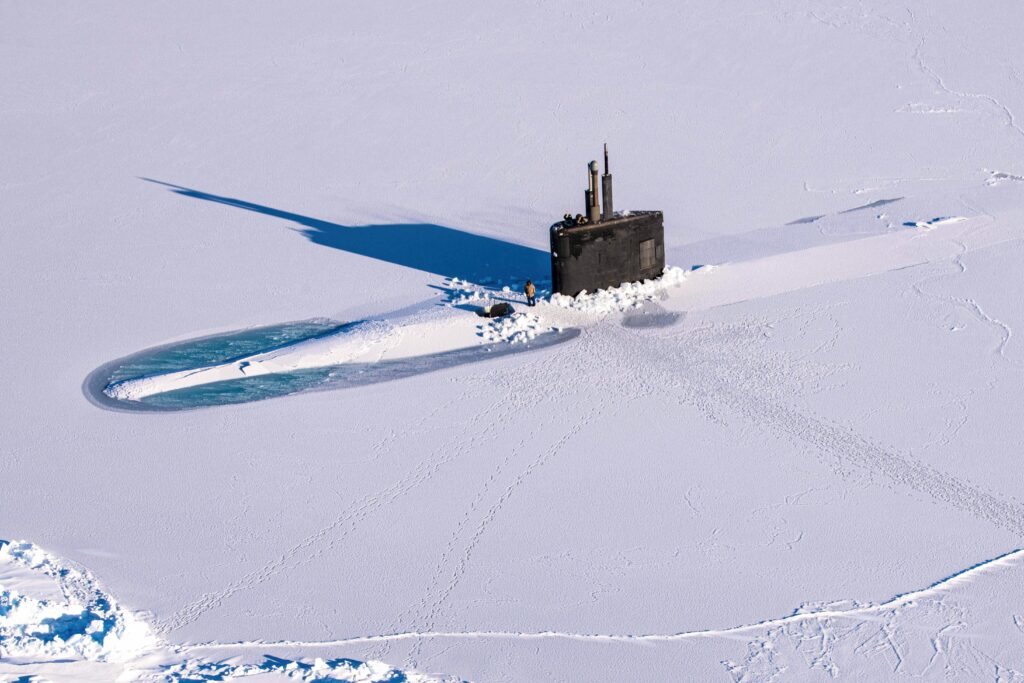
The USS Pasadena breaks through the ice in the Beaufort Sea, March 12, 2022, during Ice Exercise, an exercise that allows the Navy to assess operational readiness in the Arctic. (Photo by: Navy Petty Officer 2nd Class Trey Hutcheson)
July 22, 2024 | By C. Todd Lopez, DoD News
The Defense Department today released its 2024 Arctic Strategy. The strategy acknowledges how environmental changes are affecting the Arctic region, details the implications for U.S. security and spells out how the department plans to be ready to meet new challenges there.
“The Arctic region of the United States is critical to the defense of our homeland, the protection of U.S. national sovereignty and the preservation of our defense treaty commitments,” Deputy Defense Secretary Kathleen Hicks said today during a briefing at the Pentagon. “Our Arctic strategy will guide the department’s efforts to ensure that the Arctic remains a secure and stable region.”
Eight nations have a presence in the Arctic, including Canada, Denmark, Finland, Iceland, Norway, Sweden, the United States and Russia. All have interests there for both commerce and security.
Climate changes have meant the melting of ice in the Arctic and the opening of new sea routes, which means new opportunities for commerce and resource exploitation, but also increased risk to nations whose borders were previously protected by the region’s inaccessibility.
“Climate change is fundamentally altering the Arctic, and with it, geopolitics and U.S. defense missions,” Hicks said. “The readiness of our forces for those missions is always foremost on our minds, and that’s why for decades, across Republican and Democratic administrations, the department has been seeking to ensure our military capabilities can meet the mark, even in the face of a changing climate.”
Climate change and the shifts in the operating environment, Hicks said, mean the U.S. must rethink how to protect warfighters and prevent conflict.
The People’s Republic of China, not an Arctic nation, is increasing its presence in the Arctic. The PRC operates three icebreakers in the Arctic, for instance, and has a military presence there as well. The Chinese military has also demonstrated its ability to operate in the Arctic by conducting operations with the Russian navy, for instance.
“While not an Arctic state, the PRC seeks greater influence in the region, greater access to the region, and a greater say in its governance,” Hicks said. “That’s concerning given that it’s the only strategic competitor with the will and increasingly the wherewithal to remake the international order.”
Russia’s presence in the Arctic, including its military presence — the largest of all Arctic nations — can hold U.S. and allied territories at risk. At the same time, Russia is increasing its presence in the Arctic by reopening Soviet-era military installations.
“Russia continues to pose an acute threat to security and stability in the region,” Hicks said. “Russia has continued to build up its military infrastructure in the Arctic and assert excessive claims over Arctic waters.”
Russia is also partnering with China, Hicks said, and this presents additional concerns for U.S. defense.
“We’ve seen growing cooperation between the PRC and Russia in the Arctic, commercially, with the PRC being a major funder of Russian energy exploitation in the Arctic, and increasingly militarily, with Russia and China conducting joint exercises off the coast of Alaska,” Hicks said. “All of these challenges have been amplified because the effects of climate change are rapidly warming temperatures and thinning ice coverage, and it’s enabling all of this activity.”
The DOD’s 2024 Arctic Strategy addresses these concerns in the Arctic with three lines of effort, including enhancing the capabilities of the joint force, greater engagement with allies and partners and exercising U.S. presence in the Arctic.
“Our Arctic strategy adopts a ‘monitor and respond,’ approach in the region,” Hicks said. “It is underpinned by robust domain awareness and intelligence, surveillance and reconnaissance capabilities, cooperation with our allies and partners and deterrent power enabled by the agility of the joint force. The strategy focuses on enhancing our domain awareness and Arctic capabilities, engaging with our allies and partners and exercising calibrated presence in the region.”
Iris Ferguson, the deputy assistant secretary of defense for arctic and global resilience, said mission enhancement includes, among other things, a focus on domain awareness in the Arctic.
“We must improve our domain awareness and enhance our ability to detect and respond with our Canadian allies to threats to the homeland,” Ferguson said. “A key focus for my office is championing investments that will enhance our awareness of threats in the region. We want to make sure that we have the right sensing architecture and the right communications architecture for command and control.”
Also, a target for operational enhancements in the Arctic are enhancements to communications and data architecture; intelligence, surveillance and reconnaissance capabilities; infrastructure; and cold weather equipment and mobility.
With seven of the eight Arctic nations also members of NATO, the U.S. has great partnership opportunities in the region. The strategy directs the U.S. to take advantage of those partnerships and others, as a way to strengthen U.S. security.
“Our strong network of partners, including Arctic allies, federal, state, local and tribal partners, are key stakeholders in securing the Arctic and our homeland,” Ferguson said. “From the communities that host our bases and troops in Alaska, to our colleagues in the U.S. Coast Guard and the Department of Homeland Security, we all have a role to play to maintain the stability of the Arctic Region.”
Finally, the 2024 Arctic Strategy directs the department to enhance U.S. security through increased presence in the Arctic, including increased operations and military exercises.
“Exercising tactics and equipment is a prerequisite not only for success but for survival in the unique Arctic environment,” Ferguson said. “To this end, one of my office’s key implementation priorities will be ensuring that the joint force is equipped and prepared to operate there.”
The strategy calls for continued service-specific, joint, interagency and combined exercises as well as war games, simulations and tabletop exercises that focus on the Arctic. The strategy also calls for military services to conduct training in the Arctic to build experience operating there.
GA-ASI SeaGuardian Featured Again at RIMPAC Exercise
U.S. Navy Rim of Pacific Exercise Is World’s Largest Maritime Exercise
From General Atomics Aeronautical Systems, Inc.
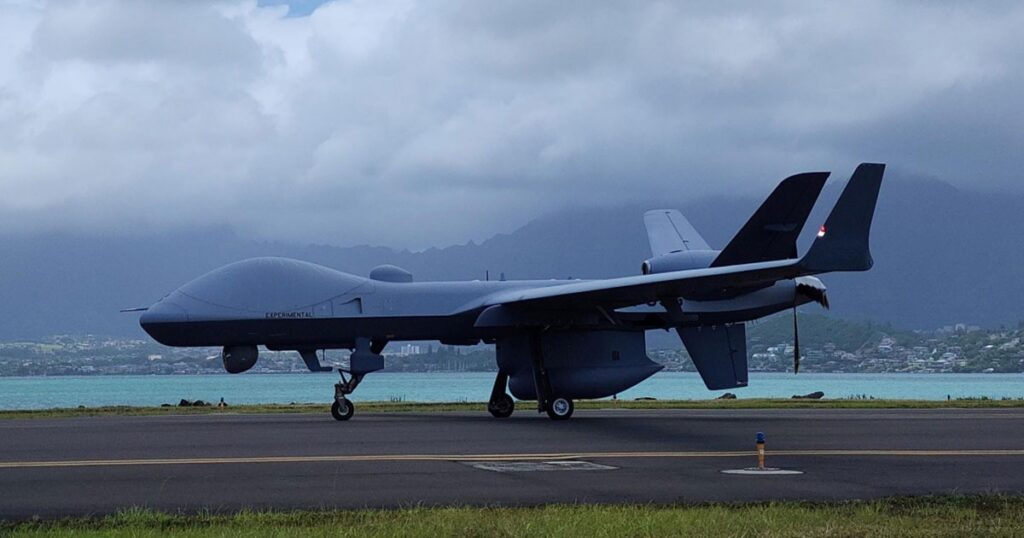
SAN DIEGO – 23 July 2024 – An MQ-9B SeaGuardian Unmanned Aircraft System from General Atomics Aeronautical Systems, Inc. (GA-ASI) is once again supporting the U.S. Navy during its Rim of the Pacific (RIMPAC) exercise, this time for RIMPAC 2024. RIMPAC 2024, the world’s largest international maritime exercise, started on July 8, 2024, and continues operations through the month in areas throughout Hawaii.
GA-ASI’s SeaGuardian is a maritime derivative of the MQ-9B SkyGuardian and remains the first UAS that offers multi-domain Intelligence, Surveillance, Reconnaissance, and Targeting (ISR&T) as an internal payload that can search the ocean’s surface and depths in support of Fleet Operations. SeaGuardian is also providing real-time ISR data feeds to the U.S. Pacific Fleet Command Center using advanced long-range targeting capabilities, Signals Intelligence (SIGINT) parametrics, Anti-Submarine Warfare (ASW) acoustic and tracking data, and full-motion video to the watch floor and intelligence centers as well as to surface, air, and subsurface exercise participants for real-time dynamic tasking and targeting in support of cooperative kill-chain execution.
SeaGuardian arrived at RIMPAC 2024 with more than 8,000 hours flown showcasing all operational payloads, which includes the SeaVue Multi-role radar from Raytheon, an RTX business, SNC’s Electronic Support Measures (EMS) solution, as well as an Automatic Identification System (AIS), and a self-contained ASW. This year, GA-ASI is introducing its Sonobuoy Dispensing System, demonstrating the deployment of A-size sonobuoys from a UAS for monitor and control. Additional SeaGuardian capabilities include a GA-ASI-developed Lynx Multi-mode Maritime Radar, a high-definition Electro-Optical/Infrared (EO/IR) imaging system, and Link 16.
SeaGuardian’s multi-domain capabilities allows it to flex from mission to mission and pass real-time sensor data directly to the Fleet through Link 16 and satellite feeds to the shore-based command and intelligence centers. During RIMPAC, the MQ-9B is effectively passing ISR&T information to various surface and air units, such as the Nimitz-class carrier USS CARL VINSON, Guided Missile Destroyers (DDG), Littoral Combat Ships (LCS), frigates, patrol boats, P-8s, P-3s, and numerous other U.S. and foreign units taking part in the exercise.
Worldwide C-130J Super Hercules Fleet Soars Past 3 Million Flight Hours
From Lockheed Martin, July 22, 2024
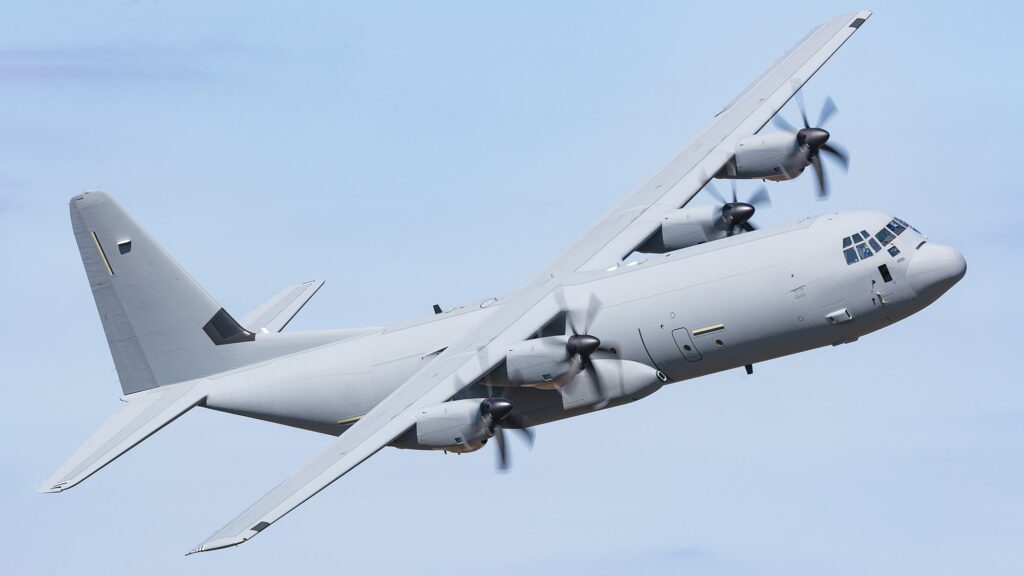
FARNBOROUGH, England, July 22, 2024 /PRNewswire/ — Lockheed Martin (NYSE: LMT) announced today at the Farnborough International Airshow that the worldwide C-130J Super Hercules fleet recently surpassed 3 million flight hours. With 545+ Super Hercules delivered worldwide, this achievement reflects the C-130J’s unmatched global reach, multi-mission versatility and proven tactical performance capabilities.
Lockheed Martin announced that the global C-130J Super Hercules fleet has surpassed 3 million flight hours.
Operators and crews from 21 nations contributed to this achievement, logging hours through 18 different mission requirements including combat, transport, aerial refueling, Special Operations, medevac, humanitarian relief, search and rescue, weather reconnaissance, firefighting and commercial freight delivery.
“From the highest landing strip in the world to the snow-packed runways of Antarctica and all the many mission locations in between, these 3 million hours represent the proven power and wide-reaching presence of the C-130J’s global fleet,” said Rod McLean, vice president and general manager of Lockheed Martin’s Air Mobility & Maritime Missions line of business. “In celebrating this achievement, we also honor the many crew members, maintainers and airlift partners who truly keep the global Super Hercules fleet ready for any and every mission requirement.”
3 million hours by the numbers
These hours were logged beginning with the C-130J’s first flight on April 5, 1996, through the beginning of July 2024.
Countries with C-130Js contributing to these flight hours include (in order of delivery) the United Kingdom, United States (the U.S. Air Force, Marine Corps and Coast Guard; Pallas Aviation), Australia, Italy, Denmark, Norway, Canada, India, Qatar, Iraq, Oman, Tunisia, Israel, Kuwait, South Korea, Kingdom of Saudi Arabia, France, Bahrain, Bangladesh, Indonesia and Germany.
Also contributing to these flight hours is the Lockheed Martin Flight Operations team, whose crews are the first to fly every C-130J produced, and the U.S. Air Force Defense Contract Management Agency crews that support C-130J test flights at Lockheed Martin’s Aeronautics site in Marietta, Georgia, home of Super Hercules production line.
Super Hercules variants used to log these hours include: C-130J and C-130J-30 (tactical airlifter), KC-130J (tanker), WC-130J (weather reconnaissance), EC-130J (information operations), MC-130J (Special Operations), HC-130J (search and rescue, U.S. Air Force and U.S. Coast Guard variants), AC-130J (gunship) and LM-100J (commercial freighter).
Hours flown include test, training and operational missions on all seven continents.
Always evolving, continually innovating and ready for what’s next, the Super Hercules leads the charge by setting standards and shaping the future of tactical airlift missions, offering a multitude of advantages found in no other medium-sized tactical airlifter in production or operation today.
These discriminators include proven operational readiness with the greatest ease of transition, increased reliability, superior tactical airlift and combat airdrop capabilities, certification by more than 20 airworthiness authorities, and engine-out performance with extended range. The C-130J also delivers unmatched interoperability with NATO and global air forces, robust industrial partnerships and verified low life-cycle costs with significant fuel savings resulting in a reduced carbon footprint compared to other medium-sized jet airlifters.
See how and why the C-130J continues to be the worldwide choice in tactical airlift through the newest episode of “Into the Cockpit” on Lockheed Martin’s YouTube channel, which offers exclusive behind-the-scenes access to the Super Hercules.
ONR Awards Benedict College and Integer Technologies Partnership $7.9M Contract for Research and Workforce Development
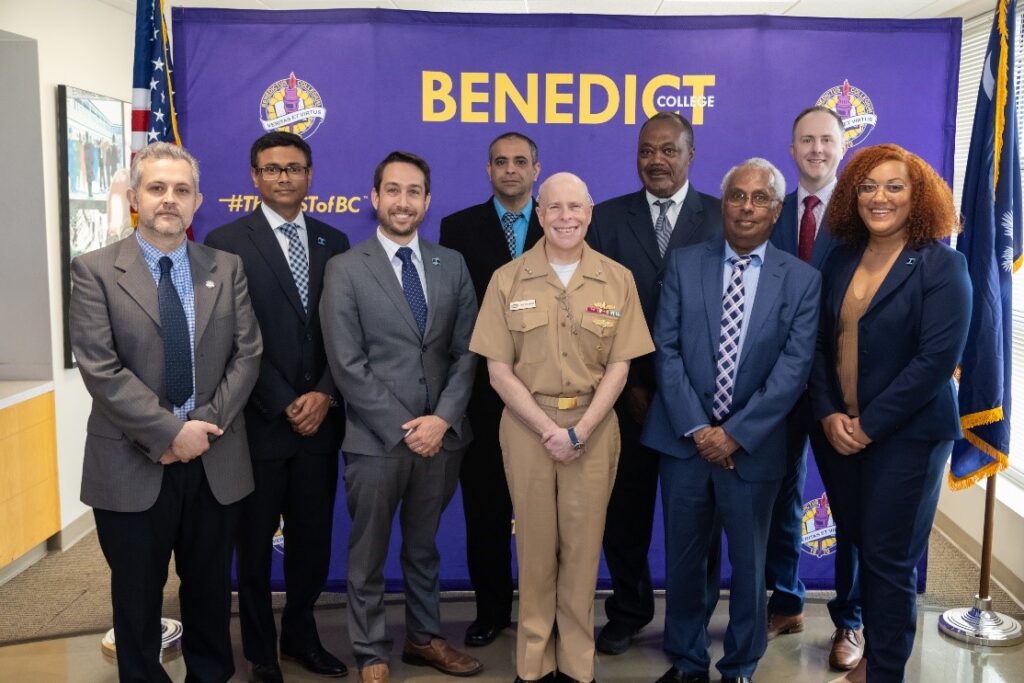
Benedict College and Integer Technologies were pleased to host Rear Admiral Kurt J. Rothenhaus, Chief of Naval Research, to discuss how this partnership will augment cybersecurity research and STEM workforce diversity for the military. Pictured from left to right: Gurcan Comert, Ph.D., associate professor at Benedict College; Aravind Prakash, Ph.D., lead cyber physical systems scientist at Integer; Dylan Temple, Ph.D., director of technology development at Integer; Abdulmajid Mrebit, Ph.D., assistant professor at Benedict College; Rear Adm. Kurt J. Rothenhaus; Godwin E. Mbamalu, Ph.D., associate vice president for research and distinguished professor at Benedict College; Negash Begashaw, Ph.D., associate professor at Benedict College; Josh Knight, Ph.D., COO at Integer; Crystal Pee, Ph.D., STEM Workforce Development Research Scientist at Integer. Not pictured: Benedict College President and CEO, Roslyn Clark Artis, J.D., Ed.D., and Duke Hartman, CEO of Integer. Photo credit: Terrell Maxwell.
Funding for Tech and Talent to Secure Autonomous Systems Against Cyberattack
COLUMBIA, S.C. — July 23, 2024 —Benedict College and Integer Technologies announce that the Office of Naval Research (ONR) has awarded a $7.9 million contract to increase the cyber resilience of autonomous systems and enhance the workforce supporting the defense research enterprise.
The two main components of the program, titled Resilient Autonomous Systems and Workforce Diversity, include: 1) research into automated cyber-physical security to improve the resilience of intelligent autonomous systems (IAS) against cyberattacks, and 2) enhancing the defense research capacity and STEM curriculum (science, technology, engineering, and math) at Benedict College to support the development of a highly skilled, technical workforce trained to meet the specialized technology needs of the U.S. Department of Defense (DoD).
Recruiting, educating, and retaining a world-class workforce is one of the strategic goals in the Navy’s IAS Science and Technology Strategy. Historically black colleges and universities (HBCUs) represent a critical resource for STEM graduates, especially as they have a high percentage of students who are U.S. citizens, a key requirement for DoD projects. Both the industry and academic portions of the work will be performed in Columbia, SC.
Funding from this contract will support the development of a master’s degree program in computer science and engineering at Benedict College, which would be the first graduate engineering degree of its kind at an HBCU in South Carolina.
“ONR is proud to sponsor research on a unique opportunity like this that both enhances our cyber resilience and the diversity of our defense workforce,” said Dr. Thomas C. Fu, head of ONR’s Sea Warfare and Weapons Department. “Investing in research and workforce development at HBCUs is a priority for us to advance our national security objectives with a broad pipeline of highly trained, highly skilled men and women.”
“Benedict College has been strategically investing in STEM and our research capacity for years, and this award is a result of that effort. As we will demonstrate in this work, HBCUs have an important contribution to make to America’s national security and workforce,” said Benedict College President and CEO, Roslyn Clark Artis, J.D., Ed.D. “Integer has been an incredible partner to help us navigate doing business with the Department of Defense, strengthening our STEM infrastructure, and connecting our students to the defense industry, and we’re looking forward to working with them on this exciting program.”
“This program will enable Benedict College to increase our research capacity by recruiting highly skilled faculty for research and teaching in contemporary engineering disciplines, such as simulating cyberattacks against autonomous vehicles, cybersecurity engineering, machine learning, etc., and will provide our students with real-world experience to help launch them into great careers in the defense industry and other STEM fields,” said Godwin E. Mbamalu Ph.D., FAIC, Associate Vice President for Research at Benedict College, and Distinguished Professor.
“Autonomous vehicles are no longer science fiction. They are on the road, in the air, and in the sea, impacting our lives today. While they have the potential to benefit society greatly, hackers are increasingly targeting them, and we need to invest in ensuring they are safe and secure against cyberattacks,” said Duke Hartman, CEO of Integer Technologies. “The research Benedict College has done in securing automotive vehicles against cyberattacks was excellent and applying that expertise to the maritime domain was a natural progression. This project will improve South Carolina’s competitiveness in this emerging industry, both in terms of academic research and workforce development at Benedict College, and in terms of technology development and commercialization at Integer Technologies.”
“Providing South Carolinians with opportunities to thrive and succeed, especially those in rural and underserved communities, has always been my priority,” said Congressman James E. Clyburn (SC-06). “Academic-industry partnerships like this help grow South Carolina’s STEM workforce and build our technology infrastructure. This project will equip our aspiring STEM workers with valuable experience and put them at the forefront of technological research and innovation.”
Tethered Drone Extends Line-of-Sight Communications for Surface Platforms
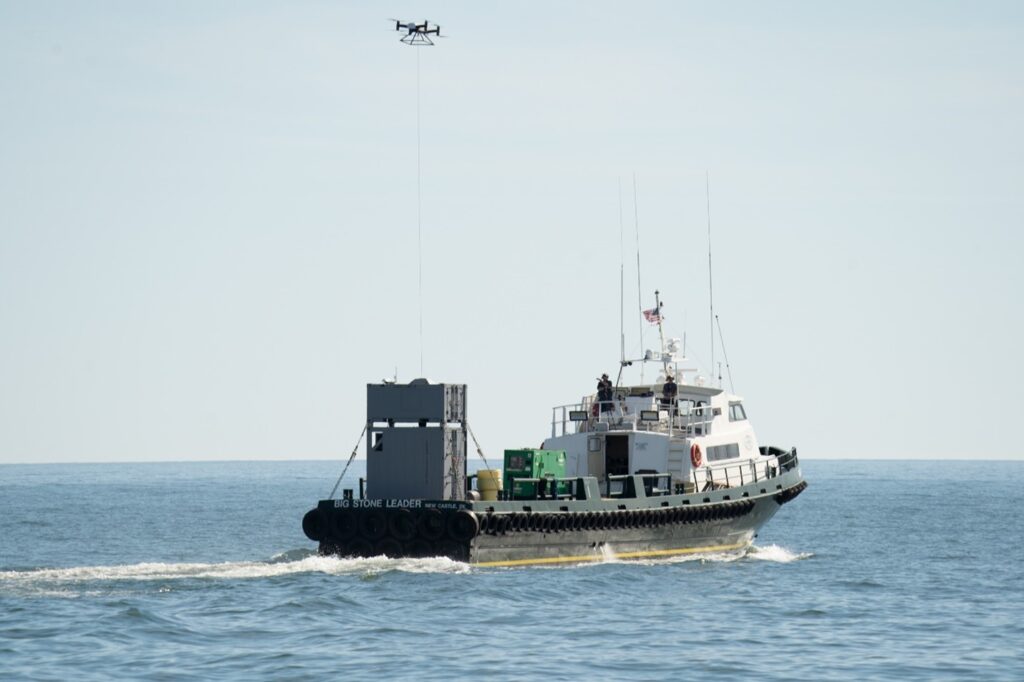
C-TEM provides extended sensor, network, and communications capabilities to meet the operational needs of the hybrid fleet. The containerized system is self-contained, takes up minimal space, and requires little human intervention. General Dynamics Mission Systems
General Dynamics Mission Systems’ Containerized Tethered Elevated Mast (C-TEM) shipboard tethered unmanned aerial system solution will extend line-of-sight communication for U.S. Navy ships and unmanned surface vessels.
General Dynamics Mission Systems is a mission integrator for the Navy’s hybrid fleet of manned and unmanned platforms. The company is partnering with Dragonfly Pictures Inc. (DPI), a small business based in Essington, Pennsylvania, for the C-TEM program.
According to Scott Beauchemin, vice president for Surface Systems at General Dynamics Mission Systems, there are many advantages of a tethered drone to elevate a sensor, especially in contested environments.
“C-TEM use cases are only limited by the warfighter’s imagination,” Beauchemin said.
“C-TEM extends sensor, network and communications capabilities on an as-needed basis. With all-weather, long-endurance mission support, automated flight control and a low visual signature in-flight, C-TEM is ideal for both manned surface platforms and unmanned surface vessels, which will become more and more prevalent in the U.S. Navy’s fleet,” Beauchemin said. “In addition to its encrypted high-bandwidth data exchange capability, C-TEM can also be outfitted with numerous capability packages, ranging from radar, electronic warfare, counter UAS, ISR [Intelligence, surveillance, and reconnaissance], and other missions.”
Beauchemin said C-TEM can be quickly deployed and retrieved for continuous sustained operations in all weather conditions. The containerized system is easy to install and requires minimal integration to existing systems.
“Terrestrial communications remain a critical tool for digital connectivity for manned and unmanned vehicles. Elevating antennas from moving platforms is no easy task as it requires a well-coordinated dance between air-sea platforms,” said Mike Piasecki, DPI’s president. “We believe C-TEM systems can have meaningful impact on future naval unmanned maritime missions around the globe.”
The aircraft weighs 55 pounds with a 15-pound payload installed and can fly as high as 500 feet above the launch platform. The system requires very little operator intervention. Station keeping and sensor direction is managed autonomously, and safe recovery protocols are automatic.
The C-TEM contract was awarded to General Dynamic Mission Systems in June 2022 via the Unmanned Surface Vehicle Family of Systems multiple award contract by the Naval Sea Systems Command in Washington, D.C. The contract, including options if exercised, has a cumulative value of $39.4 million.
Undeterred: Baltimore Coast Guard Yard Work Continues Despite Bridge Collapse
U.S. Coast Guard Cutter Diligence (WMEC 616) is hoisted on blocks while in dry dock, March 21, 2024, at the Coast Guard Yard in Baltimore, Maryland. Diligence conducted a two-month living marine resources patrol in the Gulf of Mexico and received a maintenance availability. U.S. Coast Guard | Lt. Cmdr. Brian Waller
On March 26, a container ship struck the Francis Scott Key Bridge, causing it to collapse. The catastrophe halted marine traffic to and from the Port of Baltimore, one of the busiest ports in the United States, for nearly two months.
However, the U.S. Coast Guard’s ongoing efforts to complete midlife maintenance on its fleet of seagoing buoy tenders at the Coast Guard Yard were undeterred.
The U.S. Coast Guard Yard: A Baltimore Harbor Fixture
The U.S. Coast Guard Yard has built, repaired and maintained vessels in Curtis Bay, just south of Baltimore Harbor, since 1899. Because it is the USCG’s primary facility for major repairs, vessels from around the globe journey to the yard when it’s time for service.
Strategic preventative maintenance helps improve the reliability of Coast Guard vessels, control maintenance costs and reduce downtime. The Coast Guard’s In-Service Vessel Sustainment (ISVS) evaluates and schedules the major maintenance and upgrades necessary for its vessels to reach or extend their service lives. According to ISVS, each Juniper-class cutter must head to the yard in Baltimore harbor about halfway through its expected lifetime for major maintenance.
Next Generation of Buoy Tenders
The Juniper-class cutters, which took to the seas in the late 1990s and early 2000s, are the second generation of purpose-built Coast Guard seagoing buoy tenders. The 16 225-foot cutters replaced a fleet of 180-foot class cutters, built from 1942 to 1944, which served for more than 50 years. The last of the 180s, the Acacia, was decommissioned in June 2006.
Juniper-class buoy tenders are multi-mission platforms that help protect American shipping interests worldwide. They have better speed, communications, navigation and maneuverability than their predecessors. Dynamic Positioning allows them to maintain position within a 33-foot circle in winds of up to 30 knots (35 mph) and waves of up to eight feet.
These nimble, adaptable craft handle law enforcement, oil spill recovery, search and rescue, homeland security, ice-breaking operations and other marine missions. They are also instrumental in the U.S. Coast Guard’s participation in the Western and Central Pacific Fisheries Commission, which oversees the conservation and management of migratory fish stocks.
The cutters also enable missions like Operation Blue Pacific, the latest wave of bilateral Shiprider agreements that partner the Coast Guard with myriad nations in Oceania to combat illegal fishing, human trafficking and other international problems.
Service to the Fleet
The standard midlife maintenance package includes upgrading technology, replacing worn decking, making safety upgrades and updating the sewage system to reduce environmental impact. Maintenance professionals at the yard remove obsolete, unsupportable or maintenance-intensive equipment, making updates to the buoy crane, controllable pitch propellers, boat davits and HVAC systems. They also perform comprehensive system-wide checks and fix any issues they uncover.
The first of the Juniper-class cutters began its midlife maintenance in 2017; the last, the Hollyhock, should finish this year. The yard professionals have streamlined the process, which usually takes about a year. Once a vessel is finished, it is relaunched and tested in the harbor. Upon passing inspections, it’s ready to return home, fully prepared for another two decades or more of service.
Around the World in 80 Days
Taking a vessel to the Coast Guard Yard isn’t like dropping your car off at the local dealership — most of the Juniper-class cutters are based many thousands of miles from Baltimore. The voyage itself can take weeks. However, because the mission is primarily to transport the vessel, there are usually some unexpected perks along the way.
As the old saying goes, Sailors go to sea to see the world. Voyages to the yard allow Coast Guardsmen to sail outside their base areas and experience the world beyond their shores. A maintenance trip can include crossing the equator, the tropic of Cancer or Capricorn or the international date line; many include a journey through the Panama Canal.
It can also allow the crew to enjoy some well-deserved liberty time ashore at desirable vacation destinations. For example, the voyage from Hawaii to the Coast Guard Yard takes at least six weeks. Port calls along the way can include stops in Puerto Vallarta, Cozumel and Key West.
Sometimes, these stops include Coast Guard business, such as picking up ammunition or dropping off cargo. Other port calls simply involve restocking supplies and refueling. Either way, they offer a respite from Coast Guardsmen’s usual day-to-day operations and a chance to see some of the world’s most beautiful coastal towns.
Overcoming Obstacles, Responding to Challenges
Trips to the yard are often delayed for a myriad of reasons, like all long sea voyages. Storms, fog and other weather issues can necessitate altering a vessel’s course or port call. Lack of pier space is a recurring theme because ports usually prioritize Coast Guard vessels below profitable cruise liners and other commercial ships.
A vessel may divert to a nearby port if it has enough food and fuel to change its course. Otherwise, it can wait at anchor for hours or even days to obtain pier space. Fortunately, the Coast Guard excels at changing tack and responding to unexpected delays. Sometimes, thinking outside the hull leads to clever solutions.
Finding himself lacking pier space outside of Puerto Vallarta, Mexico, one enterprising captain used the local tourist amenities to make the best of the delay. After dropping anchor, she called a water taxi to pick up the crew. They spent a day ashore enjoying the town’s historic beauty and culinary delights rather than impatiently waiting for the traffic to clear.
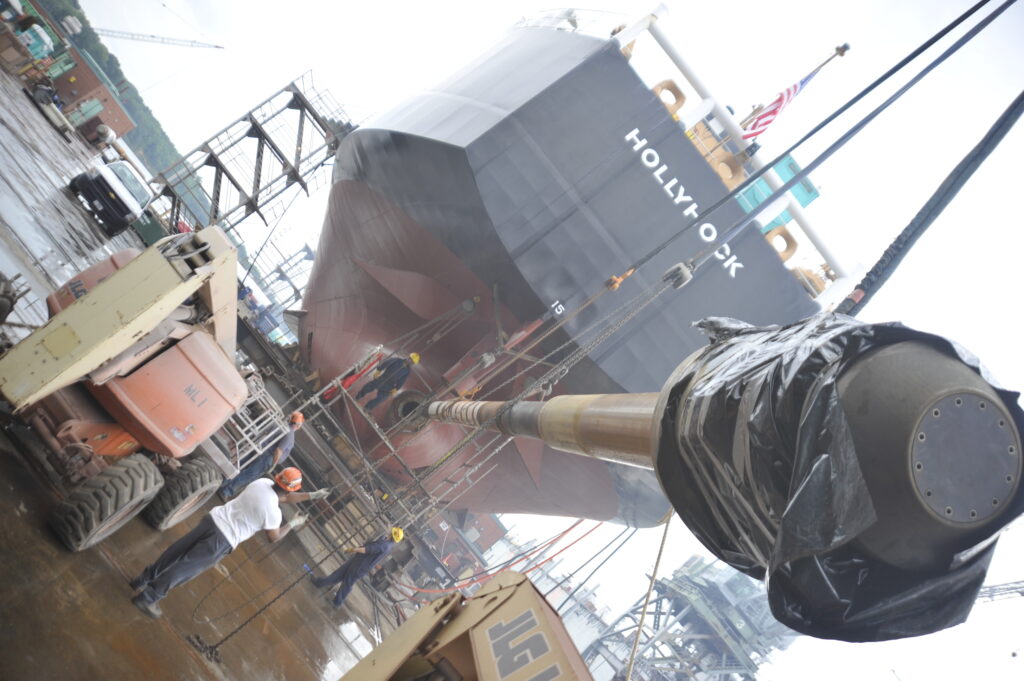
Coast Guard civilian employees remove the shaft of the Coast Guard Cutter Hollyhock, a 225-foot seagoing buoy tender home-ported in Port Huron, Mich., during a dry dock at the Coast Guard Yard in Baltimore, Aug. 1, 2013. The Yard is the service’s sole shipbuilding and major repair facility, and an essential part of the Coast Guard’s core industrial base and fleet support operations. U.S. Coast Guard | Petty Officer 2nd Class David R. Marin
Reached the Yard, Now What?
Once the vessel arrives at the yard, its crew has a new mission: preparing it for dry dock maintenance. Everything onboard must be removed, inventoried and transferred to Conex shipping containers or sent to the dumpster. Some items remain in storage at the yard while the hull is serviced in dry dock, while others are sent back home with the crew.
Lieutenant Commander Jessica McCollum, who has shepherded several cutters to the yard for their midlife service, summarized the goal of this process: “Pretend like it’s a toy ship. Take it in your hands, turn it upside down and shake it. If nothing falls out, it’s ready for the yard.” When she took the USCGC Walnut up for service in 2020, it took about three weeks to finish this offloading process.
Once the commanding officer signs over the hull, the crew generally transfers to the vessel finishing its maintenance. If it’s not ready, or there are other delays, they may have to cool their heels in the harbor. Many things can delay the process of completing midlife maintenance, most of which are far more mundane than the bridge disaster.
The seasoned professionals at the Coast Guard Yard don’t release a vessel until they’re satisfied it is shipshape and Bristol fashion. Often, their scrupulous inspection uncovers other issues; a ship doesn’t sail until these are fixed, tested and cleared. Such was the case with the USCGC Hickory, which was scheduled to leave the harbor at the time of the Key Bridge collapse but wound up delayed due to additional maintenance needs.
Flexibility, Versatility and Readiness
During a delay, the crew may spend weeks or months in Baltimore performing other duties, take personal leave or return to their home post, depending on their job. After the bridge collapsed, some Coast Guardsmen were assigned temporary duty cleaning up the mess, ensuring safety and enforcing security in the harbor. Coasties are often tasked with search and rescue operations and responding to maritime disasters, as they are often the first responders on the scene.
Surprisingly, the extended closure of Baltimore Harbor didn’t hamstring the Coast Guard cutters like it did commercial shippers or larger military vessels. This is partly because these vessels and their crews are incredibly adaptable. The port opened an auxiliary channel quickly and the Coast Guard quickly pivoted, enabling their mission to continue.
As McCollum prepares to collect the Hollyhock, the last cutter to complete midlife service, she will set sail with an entirely new crew. Just like after a new vessel is commissioned, these Coast Guardsmen must quickly learn to work well together as a team and respond to adversity during the weeks-long voyage home. Fortunately, as advertised, the U.S. Coast Guard is Semper Paratus: Always Ready. .
From the July/August issue of Seapower magazine.Jamie L. Pfeiffer practiced in Illinois, Oregon and Washington states before retiring from active law practice. She is currently based in Chicago.
SECNAV Names Navy’s Newest Expeditionary Fast Transport Ship Lansing
From SECNAV Public Affairs, 22 July 2024
Secretary of the Navy Carlos Del Toro announced that a future Expeditionary Fast Transport, EPF 16, will be named USNS Lansing, July 22.
LANSING, Michigan (July 22, 2024) – Secretary of the Navy Carlos Del Toro announced that a future Expeditionary Fast Transport, EPF 16, will be named USNS Lansing on July 22.
Secretary Del Toro made the announcement during a press conference at the Michigan State Capitol.
The future USNS Lansing is the first ship named in honor of Michigan’s capital city, Lansing. A previous USS Lansing (DE 388) was named for Aviation Machinist Mate First Class William Henry Lansing and decommissioned in 1965.
“This city is a testament and monument to American ingenuity and our democratic ideals,” said Secretary Del Toro. “It is my deepest honor to announce that the next expeditionary fast transport, EPF 16, will be named USNS Lansing.”
Secretary Del Toro made the announcement alongside Governor Gretchen Whitmer and Mayor Andy Schor of Lansing, Michigan. Both spoke about the honor and meaning behind the naming of the Navy’s newest EPF.
“On behalf of the City of Lansing and our residents, I am truly grateful that the Navy has decided to name this new vessel in honor of our city. Lansing, in addition to being Michigan’s capital, is a manufacturing hub that has proudly supplied and supported those serving this country in every conflict since the Civil War,” said Mayor Schor. “Knowing that this great tradition lives on in this new vessel is a testament to the work our residents have done to support our military throughout the years.”
Along with the ship’s name, Secretary Del Toro also announced that Governor Whitmer will serve as sponsor of the future USNS Lansing. In her role as sponsor, she will represent a lifelong relationship with the ship and crew.
“Lansing has something for everyone and everyone has a place in Lansing,” said Governor Whitmer. “This is a diverse, inclusive city where people from around the world have come to build better lives for themselves and their loved ones.”
Lansing, the capital of Michigan, is located primarily in Ingham County in central Michigan’s Lower Peninsula on the Grand River at its confluence with the Red Cedar River. With a population of more than 112,000, Lansing is the sixth-largest city in Michigan.
A provision of the Michigan constitution moved the state capital from Detroit to Ingham County’s unsettled Lansing Township in 1847. Initially called the Village of Michigan, the new capital took the name of the township it had been in in 1849.
In the late 1850s, the state legislature began financing the construction of roads running from Lansing to larger cities like Detroit. This was a significant step towards the city’s future development. In the 1870s, railroads connected the capital to out-of-state destinations, further enhancing its connectivity. At the end of the nineteenth and beginning of the twentieth centuries, Lansing experienced an industrial boom with the establishment of several automobile manufacturers, a period that shaped the city’s identity and economic landscape.
Over the next several decades, the city became a central American hub producing motor vehicles.
However, the decline of the automotive industry in the late 2000s was a turning point for Lansing. Instead of succumbing to the crisis, the city diversified its economy, engaging in a broader range of industries including healthcare, education, government service, insurance, banking, and information technology. This resilience and adaptability are a testament to Lansing’s strength and potential.
The Expeditionary Fast Transport (EPF) is a shallow draft, all aluminum, commercial-based catamaran capable of intra-theater personnel and cargo lift, providing combatant commanders high-speed sealift mobility with inherent cargo handling capability and agility to achieve positional advantage over operational distances. Bridging the gap between low-speed sealift and high-speed airlift, EPFs transport personnel, equipment and supplies over operational distances with access to littoral offload points including austere, minor and degraded ports in support of the Global War on Terrorism/Theater Security Cooperation Program, Intra-theater Operational/Littoral Maneuver and Sustainment and Seabasing. EPFs enable the rapid projection, agile maneuver and sustainment of modular, tailored forces in response to a wide range of military and civilian contingencies such as Non-Combatant Evacuation Operations, Humanitarian Assistance and Disaster Relief.
More information on our expeditionary fast transport ship programs can be found here.
Coast Guard holds commissioning ceremony for Marine Safety Unit Lake Worth
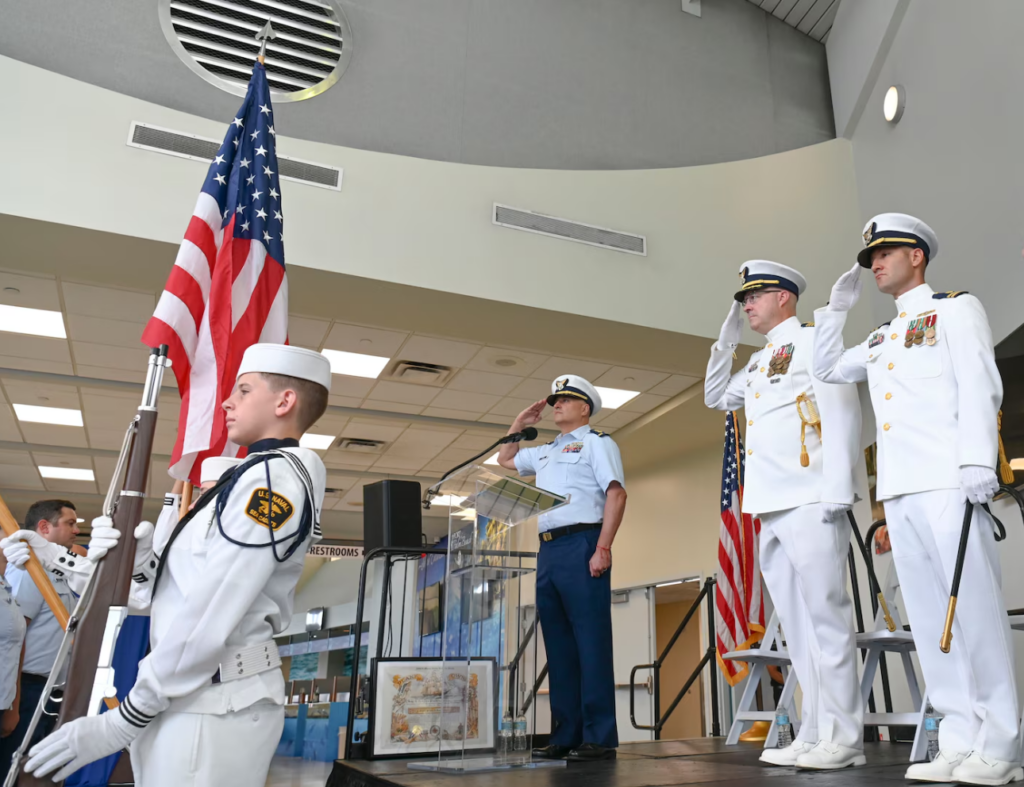
Caption: Lt. Giacomo Terrizzi III assumed command of the newly established Coast Guard Marine Safety Unit Lake Worth as the unit’s first commanding officer during an assumption of command ceremony held at Port of Palm Beach, Florida, July 19, 2024 (U.S. Coast Guard photo by Petty Officer 3rd class Eric Rodriguez)
From U.S. Coast Guard 7th District, July 20, 2024
Miami 𑁋 Lt. Giacomo Terrizzi III assumed command of the newly established Coast Guard Marine Safety Unit Lake Worth, Friday, as the unit’s first commanding officer during an assumption of command ceremony held at the Port of Palm Beach.
Capt. Chris Cederholm, Coast Guard Sector Miami commander, presided over the ceremony.
“The change from a marine safety detachment to an MSU in Lake Worth will bring more Coast Guard resources to the area,” said Terrizzi. “The expansion in authority demonstrates our service’s dedication to the surrounding maritime community as the area continues to expand and evolve.”
In October 2023, the Commandant of the Coast Guard approved a request to convert 18 detached units to junior command units. The selected units were identified by the Junior Command Opportunities Work Group and selected based on a variety of factors such as mission complexity, distance from other Coast Guard units, and the personnel allowance list. The request, drafted by the Coast Guard Deputy Commandant for Operations, was in response to a research and development study that identified a need for junior command opportunities in marine safety to develop future leaders within the ranks.