TAMPA, Fla. – In the past 24 hours, U.S. Central Command (USCENTCOM) forces successfully destroyed five Iranian-backed Houthi uncrewed surface vessels (USV) in the Red Sea.
USCENTCOM forces also successfully destroyed two Houthi uncrewed aerial systems (UAS) over the Red Sea and one Houthi UAS in a Houthi controlled area of Yemen.
It was determined these systems presented an imminent threat to U.S., coalition forces, and merchant vessels in the region. These actions were taken to protect freedom of navigation and make international waters more safe and secure.
Progeny Systems to Develop Weapon Launch Modernization Upgrade for Virginia Class Submarines
From General Mission Systems, July 11, 2024
FAIRFAX, Va. – General Dynamics Mission Systems Progeny Systems announced today that it was awarded an $11,996,038 cost-plus, fixed-fee modification to a previously awarded contract to exercise options to provide engineering and technical support for modernizing Virginia Class Block I/II submarines with the Common Weapon Launcher (CWL) system, along with the continuance of other ongoing projects. Work will be performed in Manassas, Va., and is expected to be completed by July 2026.
“Progeny Systems has many years of experience supporting the U.S. Navy’s submarine programs, especially in combat systems. We are pleased that the Navy has contracted with us to modernize older Virginia Class submarines with the capable and flexible CWL system. The Progeny Systems team also offers software and hardware platforms for payload control, tactical control, torpedoes, acoustics, cybersecurity, electronic warfare and mission readiness. We look forward to delivering this modern weapon launch capability to our Navy customers,” said Laura Hooks, vice president and general manager of Maritime and Strategic Systems at General Dynamics Mission Systems.
Progeny Systems was acquired by General Dynamics Mission Systems in 2022. Headquartered in Manassas, Va., Progeny Systems provides a wide spectrum of capabilities and lifecycle support services for U.S. submarines and surface ships.
Arnold Magnetic Technologies Highlights Custom Electromagnetic Capabilities for Aerospace & Defense Applications
ROCHESTER, N.Y. — Arnold Magnetic Technologies Corporation (Arnold), a subsidiary of Compass Diversified (NYSE: CODI) and leading global manufacturer of high-performance magnets and precision thin metals, highlights its custom electromagnetics used in aerospace and defense applications. Through exploring the deepest parts of space in search of near-Earth objects, Arnold’s electromagnets (also known as solenoids) provide the flexibility needed in generating magnetic fields so necessary for critical waveguide applications.
As one of NASA’s founding partners, Arnold’s electromagnetics have been an integral part of nearly every government-sponsored satellite, including Doppler weather and radar systems and the US Air Force (USAF) Airborne Warning and Control System (AWACS). Arnold is also bringing its deep expertise to the development of the next generation quadrupoles and dipoles being used in electromagnetics for large fusion and pulsed power projects.
Arnold manufactures a wide variety of custom electromagnets that generate uniform or proportioned magnetic field shapes and with a wide range of magnetic field intensities. These electromagnets are either made up of tape wound foil wafers or built up from coils of wire.
All Arnold tape wound electromagnets feature coils that are electrically controlled to the precise field strength desired. Depending upon specific requirements, magnetic field distribution may be uniform, or it may have peaks, plateaus, and valleys along the axial length of the electromagnet, Shaped field electromagnets can be custom-designed to specific configurations with great precision. Coils may be of various widths within the electromagnet and they can be made interchangeable.
Customers can select nominal ID and OD to meet application size requirements. Also available are special designs that use chilled oil or liquid nitrogen to allow higher than normal current, generating up to 200 percent greater field intensity than an uncooled design.
USS George Washington Arrives in San Diego for Japan Carrier Swap
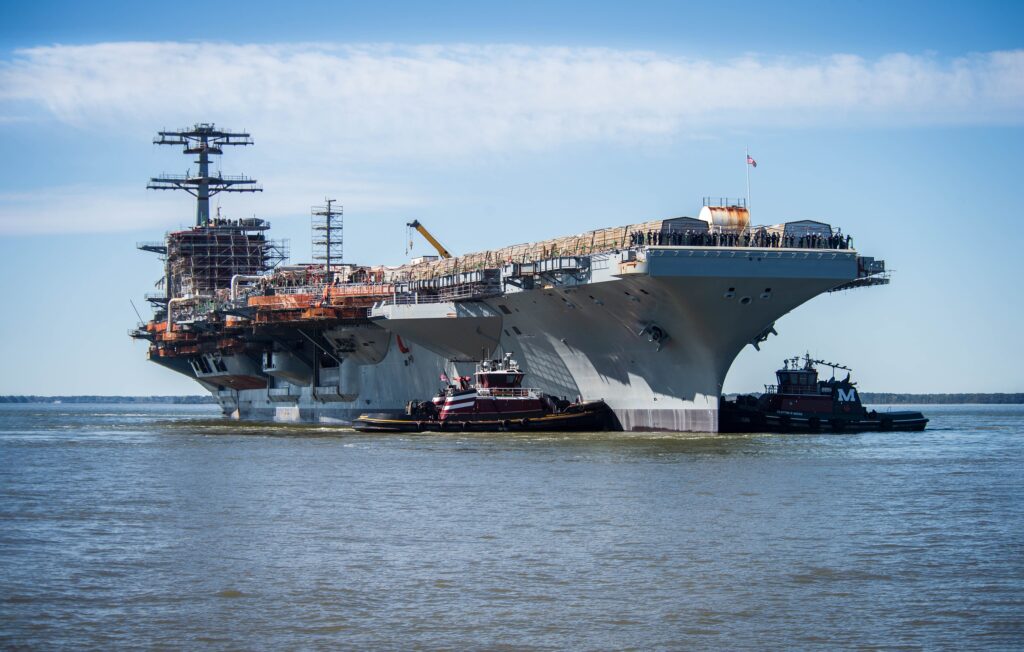
NAVAL AIR STATION NORTH ISLAND (July 10, 2024) – Nimitz-class aircraft carrier USS George Washington (CVN 73) arrives at Naval Air Station North Island, California, July 10, 2024. (U.S. Navy photo by MC1 Class Aron Montano)
By Richard R. Burgess, Senior Editor
ARLINGTON, Va. — The Nimitz-class aircraft carrier USS George Washington (CVN 73) arrived at Naval Air Station North Island, California, July 10, 2024, after its “round-the horn” voyage from Norfolk, Virginia, around Cape Horn to the Pacific Ocean. The carrier soon will succeed USS Ronald Reagan (CVN 76) as the forward-deployed U.S. Naval Forces Japan aircraft carrier at Fleet Activities Yokosuka, Japan.
The George Washington departed Norfolk on April 25, 2024, and completed a series of U.S. Southern Command exercises with Argentina, Brazil, Chile, Colombia, Ecuador, Peru, and Uruguay, and conducted port visits planned for Brazil, Chile, and Peru. Embarked in the George Washington were the Carrier Strike Group 10 staff and aircraft and personnel of Carrier Air Wing Seven (CVW-7).
At North Island, the George Washington will embark Carrier Air Wing Five (CVW-5) from USS Ronald Reagan and replace that carrier as the one forward-deployed to the U.S. Seventh Fleet.
The George Washington was the forward-deployed carrier based in Japan from 2008 until 2015, when it was replaced in Japan by the Ronald Reagan. In 2017, the George Washington entered a Refueling and Complex Overhaul at the Huntington Ingalls Industries’ Newport News Shipbuilding yard in Virginia, an evolution that took six years, including the duration of the COVID-19 pandemic. The George Washington’s nuclear propulsion plant is fueled to run another 25 years.
Bollinger to Play Critical Role in NEW POLAR PARTNERSHIP (“ICE Pact”)
As the only U.S. builder of heavy polar icebreakers, Bollinger to provide expertise and capacity to NATO allies
LOCKPORT, La., – July 11, 2024 – Bollinger Shipyards (“Bollinger”) today praised the White House’s announcement of the Icebreaker Collaboration Effort (“ICE Pact”), a trilateral agreement between the United States, Canada and Finland to contribute capacity and know-how for building polar icebreakers for the United States and its allies, and to counter the expanding presence of our nation’s adversaries and strategic competitors in the Arctic region.
The first and only shipbuilder in the United States to engineer and construct a heavy polar icebreaker in over 50 years, Bollinger will play a critical role in ICE Pact and its efforts to strengthen the polar capabilities of the United States and its allies through the creation of a fleet of polar icebreakers. Bollinger is currently under contract to build the Polar Security Cutter (PSC) heavy polar icebreaker for the United States Coast Guard.
“As the premiere builder of American-made polar icebreakers, Bollinger Shipyards is proud to support the United States and our NATO allies with our deep expertise and capacity,” said Ben Bordelon, Bollinger Shipyards President and CEO. “We have made, and will continue to make, significant, long-term investments in our facilities, infrastructure and workforce. Our goal is to create a world-class American-owned shipyard capable of producing the first fleet of American-made polar icebreakers in over half a century, and we’re honored that responsibility lies with Bollinger.”
Earlier this year, Bollinger’s Pascagoula workforce exceeded 1,000 employees – a substantial reversal of a decade-long trend of declining employment under the Pascagoula facility’s previous owner and reflects Bollinger’s commitment to growth, innovation, and investment along Mississippi’s Gulf Coast.
Bordelon continued, “Our success in reaching this milestone is a testament to the hard work and dedication of our employees, as well as the strategic initiatives we’ve implemented to expand and grow our workforce and operations. We are incredibly proud that Bollinger Shipyards is a critical part of the industrial base for our military and are honored to play a part in ensuring the national security of our nation.”
Since acquiring the Pascagoula facility in 2022, Bollinger has invested more than $40 million in upgrades to the facility’s infrastructure, technology, and personnel to establish a Center of Excellence in building world-class icebreakers. Bollinger has also launched innovative workforce development initiatives, such as its Shipfitter Bootcamp, a comprehensive 14-week workforce development program in partnership with Mississippi Gulf Coast Community College designed to equip current and future Bollinger employees with the essential skills and knowledge required to take their careers as shipfitters to the next level.
ABOUT THE POLAR SECURITY CUTTER (PSC) PROGRAM
The U.S. Coast Guard requires polar icebreaking capability to support the country’s economic, commercial, maritime and national security needs in the Polar Regions. The new Polar Security Cutters (PSCs) will be national assets that will ensure access to both polar regions and be capable of executing key Coast Guard missions, including defense readiness; marine environmental protection; ports, waterways and coastal security; and search and rescue. The ships will operate worldwide and face the range of extreme environmental conditions found in the polar, tropical and temperate regions.
U.S. Coast Guard encounters People’s Republic of China military naval presence in Bering Sea
U.S. Coast Guard 17th District, July 10, 2024
JUNEAU, AK –The U.S. Coast Guard encountered multiple People’s Republic of China military ships in the Bering Sea, Saturday and Sunday.
The crew of U.S. Coast Guard Cutter Kimball (WMSL 756) detected three vessels approximately 124 miles north of the Amchitka Pass in the Aleutian Islands, and an HC-130J aircrew from U.S. Coast Guard Air Station Kodiak detected an additional vessel approximately 84 miles north of the Amukta Pass.
All four of the People’s Republic of China vessels were transiting in international waters but still inside the U.S. Exclusive Economic Zone, which extends 200 nautical miles from the U.S. shoreline.
“The Chinese naval presence operated in accordance with international rules and norms,” said Rear Adm. Megan Dean, Seventeenth Coast Guard District commander. “We met presence with presence to ensure there were no disruptions to U.S. interests in the maritime environment around Alaska.”
The Chinese vessels responded to U.S. Coast Guard radio communication and their stated purpose was “freedom of navigation operations.” Coast Guard cutter Kimball continued to monitor all ships until they transited south of the Aleutian Islands into the North Pacific Ocean. The Kimball continues to monitor activities in the U.S. Exclusive Economic Zone to ensure the safety of U.S. vessels and international commerce in the area.
The Coast Guard, in coordination with U.S. Northern Command, was fully aware of and tracked the Chinese naval presence. In September of 2021 and 2022, Coast Guard cutters deployed in the Bering Sea also encountered Chinese surface action groups.
The Kimball patrolled under Operation Frontier Sentinel, a Coast Guard operation designed to meet presence with presence when strategic competitors operate in and around U.S. waters. The U.S Coast Guard’s presence strengthens the international rules-based order and promotes the conduct of operations in a manner that follows international norms.
Coast Guard Cutter Kimball is a 418-foot Legend-class national security cutter homeported in Honolulu, Hawaii.
U.S. Navy Purchases Persistent Systems Networking Devices to Support Littoral Operations
July 9, 2024
MPU5 networking devices on unmanned surface vehicles (USVs) enable real-time sensor data streaming for expeditionary warfare.
Persistent Systems, LLC (“Persistent”), a leader in mobile ad hoc network (MANET) technology, announced today that the U.S. Naval Information Warfare Center (NIWC) Pacific awarded the company a $1.3 million contract to supply the U.S. Navy with MPU5 networking devices and Integrated Sector Antennas in support of expeditionary/littoral warfare operations.
The sector antennas and MPU5s will establish a secure network among unmanned surface vehicles (USVs), individual operators, ships, and ground control stations (GCSs). This network will consolidate data to enhance situational awareness and expedite operations in littoral domains through a unified communications and command center.
“By integrating unmanned systems with our wireless Wave Relay® MANET technology, the U.S. Navy obtains real-time data, including radar, sonar, Chemical Biological Radiological Nuclear and Explosive (CBRNe) information, in any littoral theater to get their users to shore safely and maintain shipboard situational awareness in an area of operations (AO),” said Ed Leopold, Director of Business Development, U.S. Navy, for Persistent Systems.
Leopold noted, “wireless real-time data collection via the MPU5s is a dramatic improvement over current procedures, which require operators to manually recover a USV containing critical Area of Responsibility (AoR) data on an SD card, which they must then remove and insert into a designated computer to analyze the data.”
According to company officials, the U.S. Navy has been testing Persistent’s MANET technology in support of expeditionary warfare and other CONOPS for almost five years. However, this recent contract is the service’s largest USV-centric MANET purchase to date.
“Our Wave Relay® MANET technology is currently employed on Navy USVs, rigid inflatable boats (RIBs), patrol boats, and other ships. Moving forward, testing will scale up with a larger number of MANET nodes within Line of Sight (LOS) and Beyond LOS (BLOS),” said Leopold.
This is the second contract with NIWC Pacific, Persistent Systems has been awarded. Earlier this year, the company announced it had been awarded a $3.6 million contract to integrate MPU5s with Navy sensors.
July 10 U.S. Central Command Update
From U.S. Central Command
July 10, 2024
TAMPA, Fla. – In the past 24 hours, U.S. Central Command forces successfully destroyed two Iranian-backed Houthi uncrewed aerial vehicles (UAV) over the Red Sea and one Iranian-backed Houthi uncrewed surface vessel (USV) in the Red Sea.
It was determined the UAVs and USV presented an imminent threat to U.S., coalition forces, and merchant vessels in the region. These actions were taken to protect freedom of navigation and make international waters safer and more secure.
USS John C. Stennis Leaves Dry Dock, Begins Second Phase of Refueling and Complex Overhaul
From Program Executive Office Aircraft Carriers Public Affairs, 10 July 2024
WASHINGTON NAVY YARD – USS John C. Stennis (CVN 74) undocked from drydock April 8, completing a significant milestone during its multi-year Refueling and Complex Overhaul (RCOH) at HII-Newport News Shipbuilding (NNS) in Newport News, Virginia.
Commissioned in December 1995, the nation’s seventh Nimitz-class nuclear-powered aircraft carrier entered RCOH in May 2021, under a $3 billion contract with NNS. The overhaul is now more than 65 percent complete and tracking for redelivery in October 2026.
Aircraft carriers enter refueling complex overhauls at the mid-point of their 50-plus-year lifespan, incorporating upgrades to propulsion equipment, infrastructure and electronic systems. After NNS flooded the dry dock with more than 100 million gallons of water, the ship moved to the shipyard’s outfitting berth, where shipyard workers and crew will complete the installation and testing of major components and combat support systems.
Rear Adm. Casey J. Moton, Commander, Program Executive Office Aircraft Carriers, recognized the important milestone, adding that the next phase of the ship’s overhaul will deliver impressive new technologies to support the Navy’s warfighters, enabling John C. Stennis to meet operational taskings during another 25-plus years of service.
“When John C. Stennis redelivers, she’ll be the most technologically advanced Nimitz-class aircraft carrier in the Navy,” Moton said. “She’ll bring to the fleet the highest level of capability across all mission sets.”
Moton also acknowledged that the shipyard and Navy team have been navigating several challenges and working under an extended redelivery schedule due both to mandatory growth work following ship condition assessments, as well as industrial base challenges.
“The Navy-Industry team is dealing with the lingering effects of a post-COVID industrial base—one that includes a reduced or unstable capability and capacity along with challenges in workforce recruitment, retention and proficiency. However, the bottom line is that fleet operators need us to deliver these capital assets to our warfighters ready for tasking, so we are working on a daily basis with our industry partners and within the Navy to accelerate problem solving and to speed production on the deck plates—all focused on delivering readiness. I am proud of our entire team for achieving this important production milestone towards redelivering USS John C. Stennis to the fleet.”
Capt. Mark Johnson, manager of the PEO Aircraft Carriers In-Service Aircraft Carrier Program Office, said that the Navy-Industry team is leveraging lessons learned from the Navy’s previous RCOHs, especially on USS George Washington (CVN 73), which was redelivered in May 2023.
“Recognizing the changing workforce demographics coming out of the COVID pandemic, the combined Navy/Shipbuilder team has taken measurable steps to improve the level of support to the mechanic or sailor actually performing work on the ship by leveraging new digital management tools and processes,” said Johnson.
More than 25 million total man-hours of work will go into John C. Stennis’ RCOH, with crews refitting and installing a new square and tapered mast, accommodating state-of-the-art defense and communications systems, updates to the ship’s shafts, refurbished propellers, and modernized aircraft launch and recovery equipment.
“RCOH construction enhances nearly every space and system on the carrier, beyond the most critical requirement to defuel and refuel the ship’s two nuclear reactors and to repair and upgrade the propulsion plant,” Johnson said. “We work on every part of the ship, from the hull, screws and rudders to more than 600 tanks; thousands of valves, pumps and piping components; electrical cables and ventilation; as well as combat and aviation support systems. It’s demanding, complex work that challenges every member of the planning team, shipyard crews and ship’s force.”
During the upcoming outfitting and testing phase, shipbuilders will complete the overhaul and installation of the ship’s major components and test its electronics, combat and propulsion systems. This period will also focus on improving the ship’s living areas and the general quality of life for the sailors, including crew living spaces, galleys and mess decks.
U.S.- Australian Interchangeability: VMFA-214 leaders fly RAAF F-35A
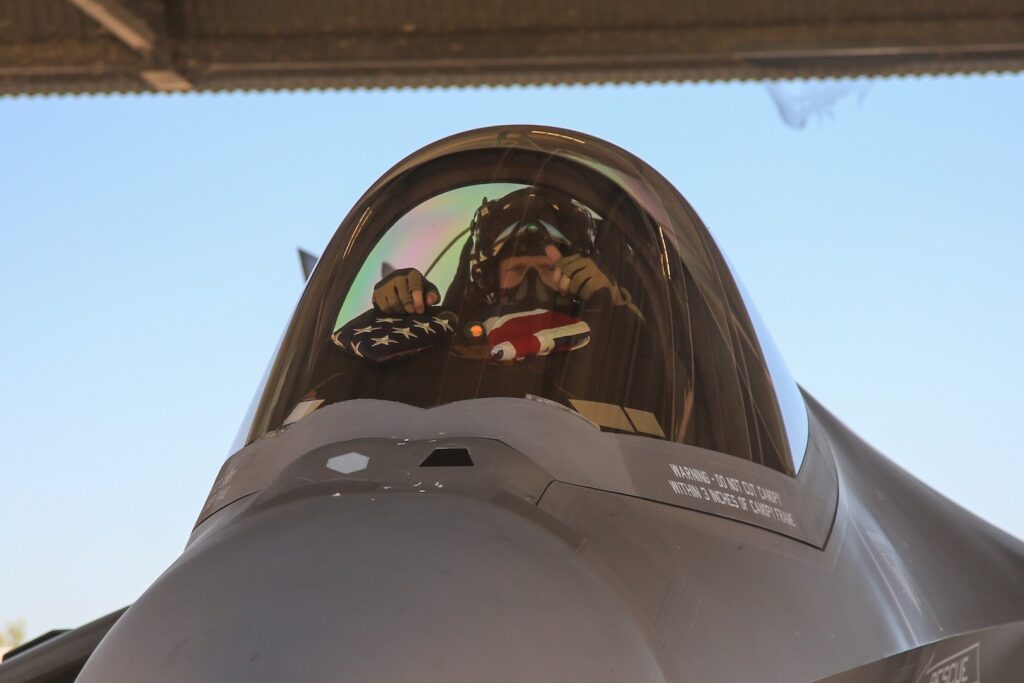
U.S. Marine Corps Lt. Col. Robert Guyette, an F-35B Lightning II pilot and commanding officer of Marine Fighter Attack Squadron (VMFA) 214, Marine Aircraft Group 13, 3rd Marine Aircraft Wing, places an American flag and an Australian flag in the cockpit of a Royal Australian Air Force F-35A Lightning II aircraft assigned to RAAF No. 75 Squadron before a bilateral training flight at RAAF Base Tindal, Northern Territory, Australia, June 20, 2024.(U.S. Marine Corps photo by Cpl. Nicholas Johnson)
By Cpl. Nicholas Johnson, 3rd Marine Aircraft Wing, July 8, 2024
TINDAL, NORTHERN TERRITORY, Australia – Northern Territory — In a demonstration of the ever-increasing interchangeability between U.S. Marine Corps and Royal Australian Air Force aviation, two F-35B Lightning II pilots with Marine Fighter Attack Squadron (VMFA) 214, Marine Aircraft Group 13, 3rd Marine Aircraft Wing, flew RAAF F-35A Lightning II aircraft, June 13, 2024.
“Interoperability is two different organizations figuring out ways to work together; interchangeability means the entire allied F-35 force can pool parts, maintainers, weapons, tactics — and now pilots and aircraft — to accomplish any mission,” said U.S. Marine Corps Lt. Col. Robert Guyette, commanding officer of VMFA-214.
In May 2024, VMFA-214 deployed more than 200 Marines and eight F-35Bs from Marine Corps Air Station Yuma, Arizona, to RAAF Base Tindal, to conduct bilateral training with RAAF No. 3 Squadron and No. 75 Squadron and participate in the RAAF led exercise Diamond Storm. This training iteration enhanced each air wings’ “fight together” mindset.
Guyette and Maj. John Rose, executive officer of VMFA-214, took part in the bilateral training. The pilots flew RAAF F-35A jets alongside RAAF and USMC pilots in their respective platforms.
“Our formations are completely blended, and our pilots pull the same lessons learned from this incredibly realistic training,” Guyette said. “When the XO and I flew in the RAAF F-35As, we spent zero time briefing procedural differences in execution, because we have been adhering to the same standards as the RAAF from day one.”
Guyette flew alongside his counterpart, Wing Commander Andrew Nilson, commanding officer of No. 75 Squadron.
“The most impressive aspect of the exercise has been the depth of interoperability and interchangeability between our two nations,” Nilson said. “It was a further demonstration of our cooperation that Marine Corps pilots were able to fly RAAF F-35A aircraft during the exercise, allowing the RAAF to share and learn tactics, techniques and procedures at a level of complexity that has truly tested the F-35’s capability.”
Incorporating two aircraft variants, pilots and maintainers from both teams introduced additional planning complexities at every organizational level.
“The mission planning factors for each event are very challenging, realistic, and relevant for high end conflict against the peer adversary,” Rose said.
Such integration was made possible through previous training exercises between VMFA-214 and RAAF F-35 squadrons. VMFA-214 has trained directly with all three RAAF F-35 squadrons over the past year, building on the tactical, technical and personal coordination between the two aviation forces.
“This ‘fight together’ mindset has also been enhanced by the personal relationships established between the Marine Corps and the RAAF,” Rose said. “VMFA-214 and RAAF No. 75 squadron were on the same tactical page from day one.”
VMFA-214’s transpacific deployment was preceded by a similar one executed by Marine Fighter Attack Squadron (VMFA) 314, Marine Aircraft Group 11, 3rd MAW, in the summer of 2023. VMFA-314, an F-35C Lightning II squadron from MCAS Miramar, deployed four F-35C aircraft across the Pacific to RAAF Base Williamtown, New South Wales, and trained alongside RAAF No. 3 Squadron.
“VMFA-314’s detachment to Australia last year provided a winning template and really did an excellent job of setting the proper conditions for VMFA-214 to be successful this year,” Rose said. “They passed on lessons learned, which VMFA-214 leveraged to efficiently deploy the squadron from MCAS Yuma across the Pacific to RAAF Base Tindal, Australia.”
After reviewing VMFA-314’s deployment, VMFA-214 was prepared to deploy an additional four jets this year, expanding the latitude of training options for both Marines and the RAAF. Beyond professional growth, the Marines of VMFA-214 forged personal connections and friendships with RAAF aviators during the deployment.
“I have some long-time friendships within the RAAF that go back to my first Marine Corps fleet tour,” Rose said. “It has been such a cool experience to see my old Australian friends and get the opportunity to fly in such high-level events with them.”
VMFA-214’s deployment honed combat readiness and strengthened enduring friendships that underscore the U.S.-Australia military alliance. Marine Corps and RAAF aviators will continue to “train together, fight together,” preparing for any challenge to the Indo-Pacific region.