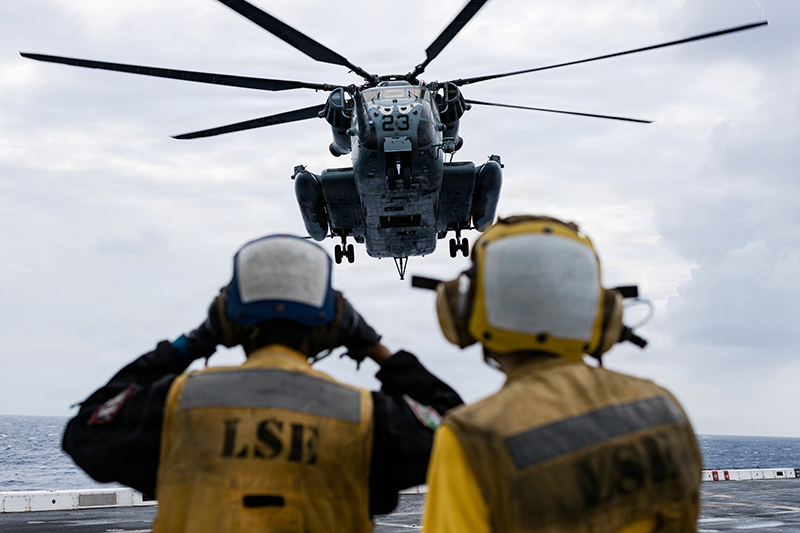
A CH-53E Super Stallion assigned to Marine Medium Tiltrotor Squadron (VMM) 163 (Reinforced), 11th Marine Expeditionary Unit, hovers over the flight deck of San Antonio-class amphibious transport dock ship USS Portland (LPD 27), during flight operations in the Pacific Ocean, April 10, 2026. CREDIT: U.S. Marine Corps | Lance Cpl. Luke Rodriguez
The Amphibious Warfare Industrial Base Coalition (AWIBC) is a trade coalition of suppliers of systems, components, parts, and services toward the construction and sustainment of the U.S. Navy’s amphibious warfare ships. Recently, Paul Roden, chair of the AWIBC, responded to questions below from Senior Editor Richard R. Burgess.
Has AWIBC membership increased or decreased over the last year?
RODEN: The Amphibious Warship Industrial Base Coalition is a robust and growing organization. We continue to see strong interest from suppliers who recognize the importance of a unified voice in advocating for the stability of our nation’s defense industrial base that supports the men and women of our Navy and Marine Corps.
Is the amphibious warship industrial base in better or worse shape than last year?
RODEN: We are incredibly grateful for recent funding in support of amphibious warships, including the multi-ship buy for LPD 33, LPD 34 and LPD 35 as well as LHA 10. However, our most recent survey data shows that less than 10% of our suppliers are operating at full capacity due to inconsistent demand signals. As this new funding is placed on contract, it will help rejuvenate production lines and inject much-needed stability into the industrial base.
With all of the efforts to shore up the shipbuilding workforce, how healthy is the workforce of the suppliers?
RODEN: The most critical factor in the health of the industrial base workforce is stable and predictable funding. Our survey data shows a direct link between inconsistent demand and the challenge of maintaining a skilled workforce. With a clear and consistent demand signal from the government, we can unlock the full capacity of a domestic industrial base that is 100% committed to delivering the ships our warfighters need.
How did the well-funded reconciliation law affect the amphibious warfare ship suppliers?
RODEN: The funding for the bundle buy was a significant and welcome investment. That funding is helping to rejuvenate idle production lines and inject much-needed stability across the amphibious warship industrial base. More than 50% of suppliers agree that the multi-ship buy has added predictability, helping plan for on-time deliveries. It was a crucial investment for the suppliers in our coalition and we are grateful for that support.
Are you seeing any improvements in amphibious warfare ship construction schedule stability?
RODEN: While the recent funding was a significant and welcome commitment, true schedule stability can only come from consistent and predictable funding through multi-year appropriations. To the extent that many of our suppliers support new construction across both amphibious ships and other critical naval assets, stable funding benefits the entire shipbuilding industrial base committed to delivering America’s maritime dominance.
New U.S.-Korean ASV on Track to Be On Water This Fall
An image of a Korean shipbuilder Anduril released upon announcing its teaming with HD Hyundai. Credit: Anduril Industries.
By Vicky Uhland, Seapower Correspondent
In October, Anduril Industries (Booth 130) is set to debut its first ship in a new class of autonomous surface vessels in collaboration with HD Hyundai and Edison Chouest Offshore.
Anduril’s 60-meter, 500-plus-ton ASV is aimed the U.S. Navy’s medium unmanned surface vessel (MUSV) program, which focuses on building a distributed, autonomous surface fleet that can nimbly coordinate operations in order to deter threats.
MUSV is in response to the growing expense of using manned platforms to defend commercial shipping and maintain sea control, said Cory Emmons, Anduril’s general manager of surface dominance.
Emmons said because of lead-ship building difficulties from legacy production models in the U.S., Anduril chose to partner with Hyundai to cut production time. Anduril is also partnering with Edison Chouest Offshore for U.S. ship production, while Hyundai will mostly build ships for Anduril’s global clients.
“The U.S. Navy has been clear: Scale is what matters. A single autonomous ship doesn’t move the needle,” according to an Anduril blog. “Commercial shipbuilders are essential to this effort because they already operate at scale, producing large numbers of reliable vessels efficiently, on time and on a disciplined budget.”
Production on Anduril’s first ASV began in November, and Anduril has been conducting daily at-sea testing of vehicle autonomy, mission autonomy and container payloads on a surrogate vessel using the company’s high-assurance software. “We’re analyzing all potential hazards on the [sea] surface,” Emmons said.
Along with potential naval applications, Emmons said Anduril’s ASV fleet could be used commercially for sea bed and continental shelf exploration for oil and gas companies. “It’s an emerging market,” he said.
Changing Polar Region Presents New Challenges and Opportunities for Navy, Coast Guard, Industry
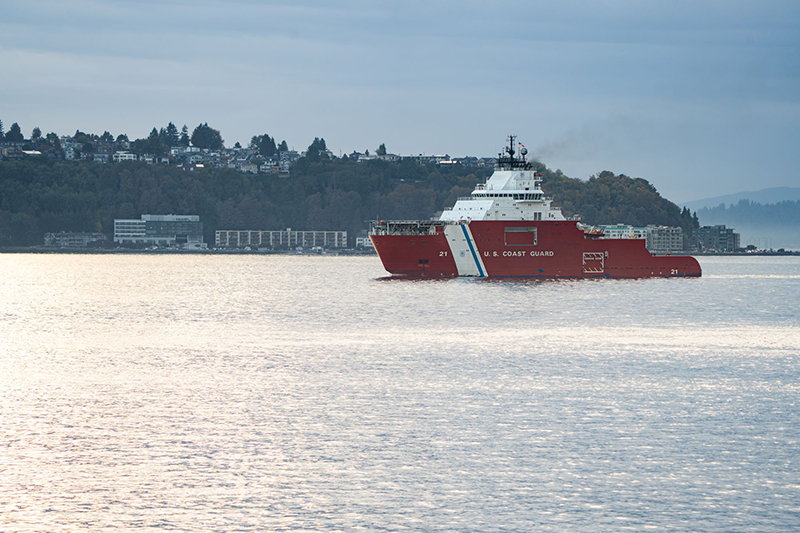
Coast Guard Cutter Storis (WAGB-21) transits past West Seattle on its way to its temporary homeport at Coast Guard Base Seattle, Oct. 3, 2025, after its August 2025 commissioning in Alaska. The cutter is the Coast Guard’s first polar icebreaker acquired in over 25 years, but more icebreakers are on the way. Credit: U.S. Coast Guard | Petty Officer 3rd Class Daylan M. Garlic-Jackson
By Erika Fitzpatrick, Seapower Correspondent
The U.S. military and allied nations are ramping up their strategic offensive and defensive capabilities in the Arctic to confront an expanding presence from adversaries such as China, Russia, Iran and North Korea, said Vice Admiral Doug Perry, U.S. Navy Commander of Joint Force Command Norfolk, at Sea-Air-Space on Monday, April 20.
“We have to acknowledge that is not a situation we want to allow to continue, to the detriment of free nations and certainly [of] the United States,” Perry said during a polar issues panel moderated by Dr. Abbie Tingstad, professor of Arctic Research at the Center for Arctic Study and Policy at the U.S. Coast Guard Academy.
The Arctic polar region is primarily ocean, surrounded on its edges by the eight member states of the Arctic Council: Canada; the Kingdom of Denmark, which includes Greenland and the Faroe Islands; Finland; Iceland; Norway; the Russian Federation; Sweden; and the United States, where Alaska includes a 1.5-million-square-mile exclusive economic zone in its surrounding waters.
Council decisions are achieved in agreement with six “permanent participants” that represent Aleut, Arctic Athabaskan, Gwich’in, Inuit, Saami, and Russian Indigenous people, who have inhabited the Arctic for millennia and are about 10% of the 4 million Arctic residents.
The Arctic in the last four decades has warmed three times faster than the worldwide average, according to a 2024 Arctic Council report, by its Arctic Monitoring and Assessment Programme. The has led to new concerns, collaborations, and potential conflicts among Arctic nations, all touched on by the Sea-Air-Space panelists.
For instance, Russia is revitalizing assets throughout the high north, including air bases; granting oil and gas rights to China; and refilling liquid natural gas tankers that are now built for the Arctic’s northern sea route. Although some of the Russian Federation’s long-range aviation is focused elsewhere, Perry said its northern fleet is “large unimpacted by the Ukrainian fight.”
A More Arctic NATO
Those are emerging threats, Perry said, but on the plus side: “Also what has changed in the last couple years is that Finland and Sweden joined NATO.”
With the exception of Russia, Perry works directly with these and other Arctic nations in his other role as the director of the U.S. 2nd Fleet Combined Joint Operations from the Sea Centre of Excellence (CJOS COE), established in May 2006. Representing 13 nations, CJOS is the only such center based in the United States and one of 27 NATO-accredited COEs worldwide to collaborate on maritime-based joint operations.
Perry said Arctic allies and partners in his geography under NATO are shoring up defenses against new Russian capabilities; increasing domain awareness and readiness through synchronized, scheduled exercises; and providing deterrence through an enhanced presence in the region.
Cooperation is key because it’s an “ugly endeavor” to operate ships, icebreakers and submarines in the harsh Arctic climate “all the time,” Perry said, adding that it’s not feasible to operate foot patrols across Greenland and Canada. “It’s not achievable and it would be really expensive.”
But allies must be a regular show of force in the region. “That’s where the missiles are going to fly — they’re going to fly over the polar region,” Perry said, “whether they’re coming from North Korea or China or Russia, and so we need to understand how to defend against that.”
Icebreakers on the Way
And “the icebreakers are coming,” said an excited Vice Admiral Nathan Moore, deputy commandant of Operations at the U.S. Coast Guard. “For us in the Coast Guard, that is something that we have not been able to say — well, ever.” Two of three planned heavy icebreakers, being built at “world record speed,” should be operational in fiscal 2028.
This bigger fleet — including 11 Arctic Security Cutters — expands USCG patrol capabilities amid a 37% rise in U.S. Arctic maritime traffic, including of foreign military vessels traversing the area. “There’s a lot of icebreaker capacity coming,” Moore said. He added that allies have broadened their focus beyond search and rescue and pollution response to safety and sovereignty.
USCG still has to designate Arctic-trained personnel to command the new vessels and figure out how to supply, maintain and sustain the fleet in the remote region. For instance, Dutch Harbor, on Alaska’s Amaknak Island in Unalaska, is seven or eight days away by sea from the deep waters of the high north.
That’s why it’s essential to maintain relationships with allies, who operate deep water ports and bases the United States needs to use, Perry said.
Although there are challenges, the United States and partner nations still have immense knowledge that positions them well to compete in the region, said retired Navy Vice Admiral Bill Merz, a former submarine commander who is now senior vice president of Aerospace and Defense Technologies at Oceaneering.
“It’s a fascinating place to operate,” Merz said of the Arctic, teaming with life and spectacular visuals above and below the ice. But the operational environment is ever-changing and dangerous, he said, describing a cacophonous riot of crashing and shifting floes of varying thicknesses in areas that are almost impossible to map.
Leverage the Magic
Allied Arctic nations can partner with industry to gain even more intelligence of the region. The U.S. oil and gas industry, he said, has unparalleled experience operating on the ocean floor for long stretches, including with uncrewed vehicles that can function without human intervention for months. “So, there’s a lot of magic there,” he said.
He conceded that China’s Navy is disciplined and will be a regional player eventually. “But I tell you, they got a lot to learn,” Merz said. “There’s a difference between showing up at the Arctic and living and sustaining yourself in an environment where … communications are horrible, navigation’s tough” and there’s very little, if any, infrastructure.
“That understanding is a tremendous advantage that we have and that we need to take advantage of,” he said. “And as we bring industries and the navies together, that’s a powerful partnership.”
Launched From Submarines, Trusted by 30 Navies: REMUS Marks 25 Years Beneath the Surface
From HII
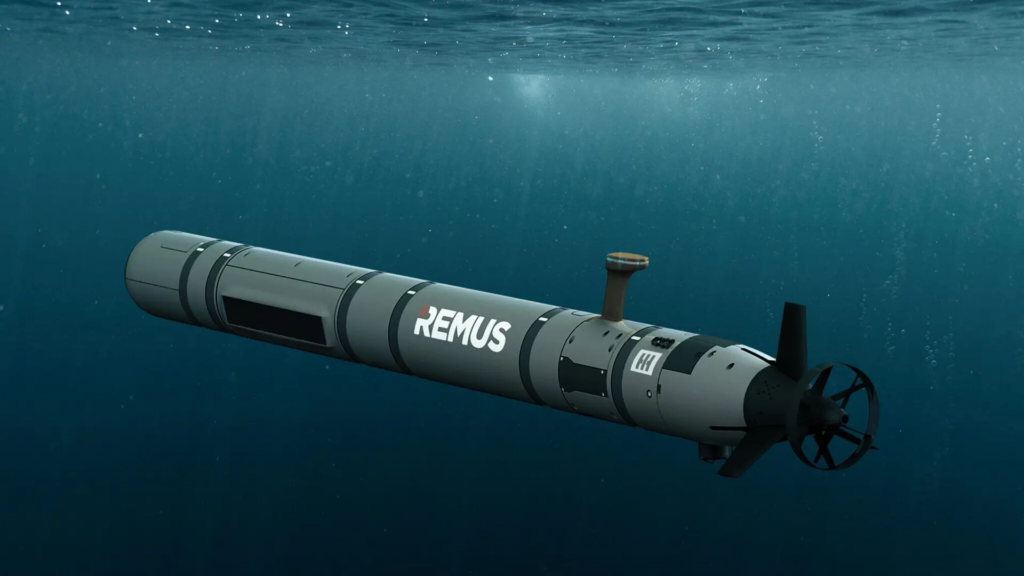
NATIONAL HARBOR, Md., April 20, 2026 (GLOBE NEWSWIRE) — HII (NYSE: HII) today celebrated the 25th anniversary of the REMUS unmanned underwater vehicle (UUV) family during the 2026 Navy League Sea-Air-Space Exposition, marking a quarter century of innovation, reliability and mission versatility that has made REMUS the world’s leading autonomous underwater vehicle platform.
Originally funded by the Office of Naval Research (ONR) and developed by the Woods Hole Oceanographic Institution (WHOI) in Woods Hole, Massachusetts, REMUS began as a research vehicle designed to advance ocean science and undersea exploration. Over the past 25 years, HII has expanded that pioneering technology into the most widely produced and adopted autonomous unmanned underwater systems in the world, supporting defense, commercial and scientific missions.
“REMUS has endured for 25 years because it was designed to evolve,” said Duane Fotheringham, president of the Unmanned Systems group in HII’s Mission Technologies division. “Its reliability, modularity, and open architecture allow operators to quickly adapt the platform to new missions while maintaining the performance and trust customers rely on.”
Today, more than 750 REMUS vehicles have been delivered to over 30 nations. They are currently used by 14 NATO navies, including the U.S., United Kingdom, Norway and Germany, as well as allied partners across the Indo-Pacific. REMUS vehicles support mine countermeasures, intelligence, surveillance and reconnaissance (ISR), and seabed mapping missions. More than 90% of all REMUS systems deployed in the past 25 years remain in active service, a testament to their durability, reliability and lifecycle value.
Among REMUS’s notable capabilities and recognition:
The REMUS family supports modern naval operations with unmatched reliability. Its autonomous systems enable independent and teamed operations. In a recent breakthrough, REMUS 600 vehicles were successfully launched and recovered from the torpedo tubes of an HII-built U.S. Navy Virginia-class submarine, extending mission reach while reducing exposure risk and enhancing stealth for submarine forces.
REMUS’ open-architecture design enables rapid integration of new payloads as missions evolve, maximizing platform modularity while controlling lifecycle costs. The REMUS product line includes multiple variants designed for specific mission profiles and operating depths. Vehicle designations reflect operational depth capability and generational improvements, from the compact REMUS 130 optimized for shallow-water operations, to the REMUS 6000 designed for deep-sea exploration and recovery operations. REMUS 620, a medium unmanned underwater vehicle (MUUV), features modernized electronics, modular upgrades, and endurance of up to 110 hours with a range of approximately 275 nautical miles.
REMUS vehicles have played critical roles in high-profile global search operations, including the deep-ocean search for Air France Flight 447, post-tsunami maritime surveys in Japan, and the historic discovery of the USS Indianapolis (CA 35) in the Philippine Sea.
Research institutions and environmental organizations continue to rely on REMUS vehicles for oceanographic research, marine archaeology, and ecosystem monitoring. The National Oceanic and Atmospheric Administration (NOAA) is currently deploying REMUS 620 vehicles to map seafloor habitats impacted by the Deepwater Horizon oil spill, while universities and marine laboratories use the systems to conduct long-duration environmental surveys.
The U.S. Navy’s Lionfish Program
The U.S. Navy’s current Lionfish UUV is based on HII’s REMUS 300 platform, a modular, open-architecture small unmanned underwater vehicle (SUUV) engineered for multi-mission adaptability. The program was developed in collaboration with the U.S. Navy and the Defense Innovation Unit (DIU) to accelerate the adoption of dual-use commercial technologies in U.S. Department of Defense programs.
Lionfish has been recognized as the U.S. Navy’s first successful transition from an Other Transaction Authority (OTA) prototype to full-rate production. It is also the first — and currently only — cyber-compliant UUV.
Strategic Partnerships and Future Capabilities
HII continues to invest in next-generation capabilities and strategic partnerships that expand how unmanned systems operate across the maritime domain. In a recent initiative, HII and Babcock International Group signed a strategic agreement to integrate REMUS UUVs with Babcock’s submarine weapon handling and launch systems, enabling autonomous launch and recovery of UUVs through submarine torpedo tubes and unlocking new deployment options for allied submarine forces.
In the U.S. Navy’s future fleet, and together with HII’s ROMULUS unmanned surface vehicle (USV), REMUS systems enable integration of manned and unmanned platforms.
Nacelle Improvement Elevates Bell Boeing V-22 Readiness
From Bell Textron
Bell announces results of Nacelle Improvement Program showing dramatic reduction in maintenance hours and maintainer time to improve readiness
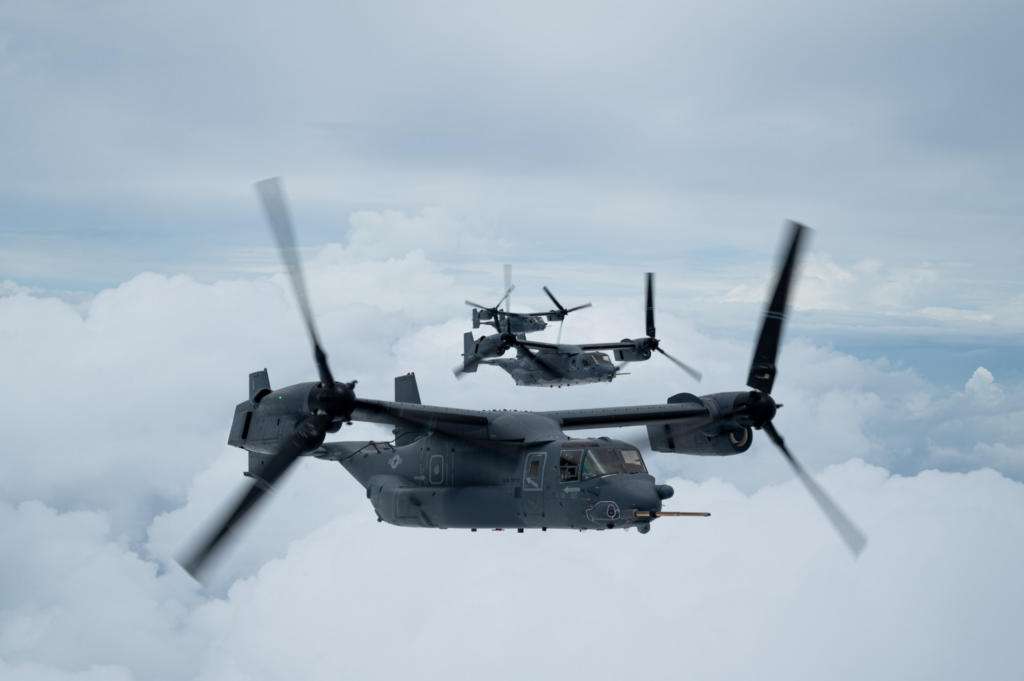
AMARILLO, Texas (April 20, 2026) – Bell Textron Inc., a Textron Inc. (NYSE: TXT) company, announced initial results and benefits from more than 10,000 flight hours of Air Force Special Operations Command (AFSOC) CV-22 Ospreys with the Nacelle Improvement (NI) Program. The first of nine CV-22s with the 20th Special Operations Squadron at Cannon Air Force Base received the NI upgrade in 2021, and the program has produced a 75 percent reduction in maintenance hours resulting in a significant boost in operational readiness and maintainability.
The V-22 Osprey nacelle houses critical power components to the V-22’s vertical take-off and landing capabilities and transition to forward flight. The NI program is a targeted upgrade designed to modernize the V-22’s nacelles. By simplifying wiring, enhancing structural components, and integrating fleet maintainer-informed feedback, NI improves the Osprey’s reliability, readiness, and sustainability for any mission for the next 30 years.
“Since the initial rollout, the CV-22 Nacelle Improvement has saved AFSOC more than 24,000 maintenance hours, equating to a savings of more than 1,000 days of maintainer time that can be used toward other high-priority needs,” said V-22 Joint Program Office Principal Military Deputy Program Manager and CV-22 Senior Materiel Leader. “CV-22 readiness saw more than a 10 percent increase; meaning more mission capable CV-22s on the flightline, which allows for further training and improved safety.”
Bell completes the NI modification at its Amarillo Assembly Center (AAC), which actively produces V-22s for the U.S. Department of War. The AAC assembles all variants of the Bell Boeing V-22 model – MV, CMV, and CV.
“The Nacelle Improvement Program enhances the V-22s reliability, flexibility, and global reach for combat and humanitarian missions alike,” said Kurt Fuller, senior vice president, Military Fielded Programs, Bell. “We are pleased to see these remarkable results from the NI program and look forward to continued collaboration to enhance focus on V-22 safety, sustainability, and readiness.”
RTX’s Raytheon delivers first Next Generation Jammer shipsets to the Royal Australian Air Force
Technology will enhance country’s electronic warfare capabilities
From RTX
ARLINGTON, V.A. (April 20, 2026) — Raytheon, an RTX (NYSE: RTX) business, has delivered its first Next Generation Jammer (NGJ) pods to the Royal Australian Air Force.
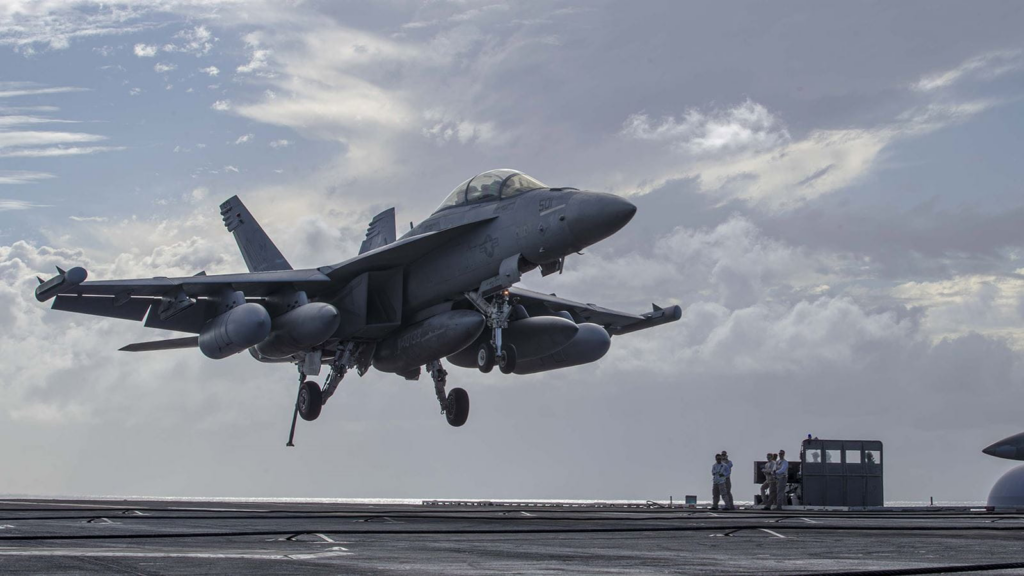
NGJ is a cooperative development and production program with the Royal Australian Air Force (RAAF). It is an airborne electronic attack system containing active electronically scanned arrays that radiate in the mid-band frequency range. By disrupting enemy radars and communication systems, NGJ enables aircrew to remain undetected while airborne, allowing them to execute their missions with greater safety and effectiveness.
“This delivery marks a significant milestone in our collaborative efforts with the U.S. Navy and RAAF on NGJ,” said Barbara Borgonovi, president of Naval Power at Raytheon. “This advanced technology will greatly enhance RAAF’s electronic warfare capabilities, safeguarding vital assets on its aircraft and more effectively neutralizing adversary technologies across a wide range of missions.”
Raytheon has been partnering with the U.S. Navy and RAAF since the inception of the NGJ program. This first delivery of shipsets occurred ahead of schedule in September 2025, with future deliveries continuing through 2026. Raytheon is also providing on-site deployment and maintenance support in Australia to help support operational and mission readiness.
New long-range smart weapon flies hundreds of miles in first test
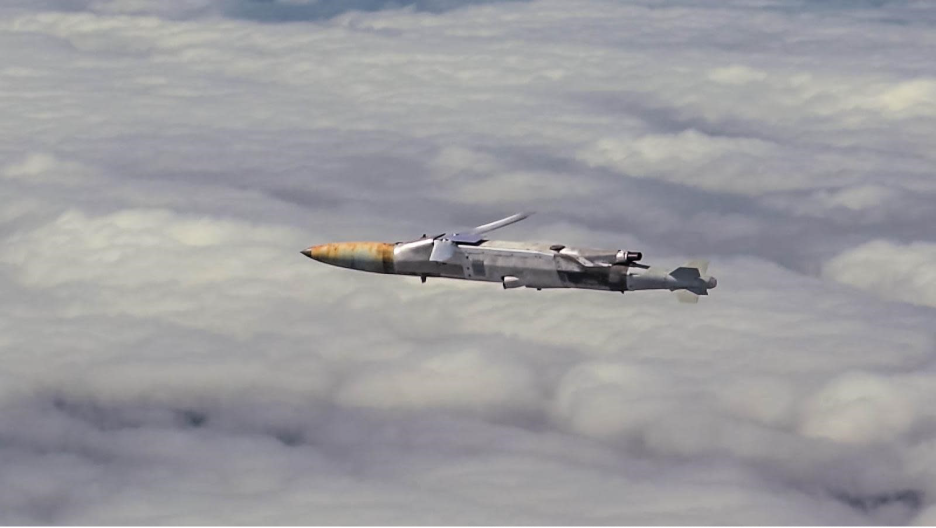
The first JDAM LR cruises above the U.S. Navy’s Point Mugu Sea Range, California, on April 1, 2026. (U.S. Navy photo)
From Chris Bishop at Boeing, April 20, 2026
Boeing, U.S. Navy complete initial flight tests of the JDAM LR, validating powered flight and long-range capability.
Boeing and U.S. Navy teammates completed a series of flight tests last week for the GBU-75 Joint Direct Attack Munition Long Range (JDAM LR) at the Navy’s Point Mugu Sea Range, California.
JDAM is a low-cost guidance kit that converts existing free-fall bombs into accurately guided smart weapons. JDAM LR adds long-range capability and is the newest in the JDAM family of systems.
Why it matters: The tests validated the weapon’s ability to operate from an F/A-18 Super Hornet fighter and sustain powered flight of a 500-pound (230-kilogram) JDAM.
Military Code GPS navigation systems on JDAM LR tracked satellites for the entire test, improving the weapon’s resilience and accuracy against GPS jamming and spoofing.
How they did it: An F/A-18E Super Hornet from China Lake Naval Weapons Station flew to Point Mugu and released an inert JDAM LR.
The first test, on April 1, demonstrated safe separation, engine start, cruise and guidance through terminal flight and impact in water after a 34-minute flight. The weapon sustained powered flight for nearly 200 nautical miles and landed within meters of its planned target.
For the next test, on April 3, teams flew a second planned flight profile, successfully incorporating altitude changes and weapon maneuvering during an otherwise similar flight.
U.S. Forces Disable Vessel Attempting to Enter Iranian Port, Violate Blockade
From U.S. Central Command, April 19, 2026
TAMPA, Fla. – U.S. forces operating in the Arabian Sea enforced naval blockade measures against an Iranian-flagged cargo vessel attempting to sail toward an Iranian port, April 19.
Guided-missile destroyer USS Spruance (DDG 111) intercepted M/V Touska as it transited the north Arabian Sea at 17 knots enroute to Bandar Abbas, Iran. American forces issued multiple warnings and informed the Iranian-flagged vessel it was in violation of the U.S. blockade.
After Touska’s crew failed to comply with repeated warnings over a six-hour period, Spruance directed the vessel to evacuate its engine room. Spruance disabled Touska’s propulsion by firing several rounds from the destroyer’s 5-inch MK 45 Gun into Touska’s engine room. U.S. Marines from the 31st Marine Expeditionary Unit later boarded the non-compliant vessel, which remains in U.S. custody.
American forces acted in a deliberate, professional, and proportional manner to ensure compliance. Since the blockade’s commencement, U.S. forces have directed 25 commercial vessels to turn around or return to an Iranian port.
Maritime Industrial Base in Crisis, New CMS Report Finds
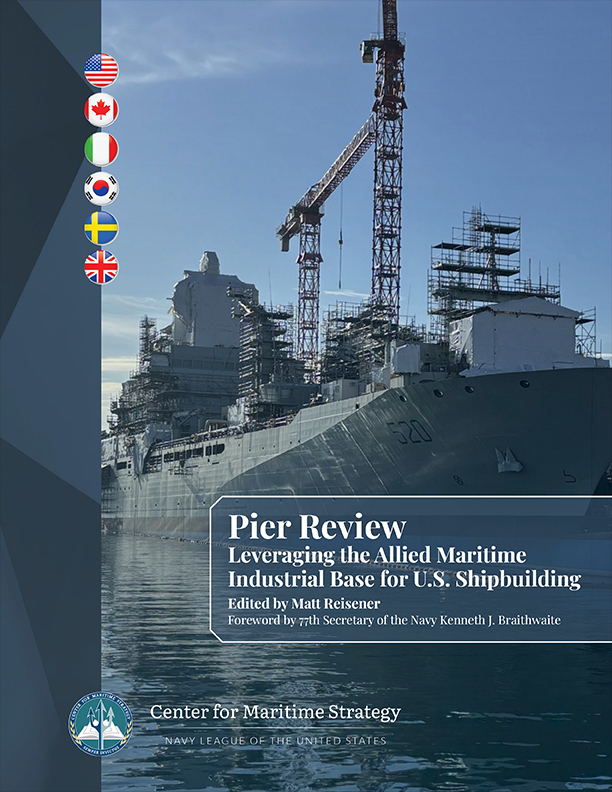
By Matt Reisener
America’s maritime industrial base (MIB) is in crisis. Decades of deindustrialization, inconsistent policy support, labor attrition and increasingly globalized supply chains have left the United States struggling to produce ships on time and on budget, all while strategic competition at sea intensifies. America’s MIB is unable to support the needs of its Navy, compete with rising naval and shipbuilding powers such as China, or reliably contribute to the protection of America’s most vital national interests in the decades to come.
However, many of the United States’ maritime allies are experiencing similar challenges to their domestic shipbuilding industries and have adopted creative approaches to solving them. The United States must utilize the experience, knowledge and resources of its allies to develop the best strategy possible for building a stronger, more resilient MIB.
Accordingly, the Center for Maritime Strategy conducted a study of America’s allied maritime industrial base to examine how five American allies (South Korea, Italy, Canada, Sweden and the United Kingdom) build commercial and naval ships, how they support their shipbuilding industries and what lessons America can learn from its allies about how to revitalize its MIB.
Each country faces similar shipbuilding challenges to America but has taken a different approach to addressing them. Although South Korea and Italy have successfully maintained strong commercial and naval shipbuilding sectors, Canada and the United Kingdom have largely allowed their commercial sectors to atrophy while primarily focusing on warship construction, while Sweden has seen both sectors significantly diminish and maintains only marginal naval shipbuilding capabilities. Many of America’s allies have successfully maintained strong MIBs by streamlining the process for designing and building ships. Among the countries studied, the most successful nations at sustaining strong commercial and naval shipbuilding industries have found ways to minimize late-stage design changes, build a greater variety of ships based on a common design and establish a shipbuilding culture which emphasizes delivering ships on time and under budget.
Similarly, the study illustrates how government investments in their MIBs can set their shipbuilding industries up for success, including by training the next generation of skilled tradespeople and supporting greater supply chain resilience. America’s most successful shipbuilding allies have also heavily invested in integrating new technology into their shipyards, fully embracing automation, digitization and artificial intelligence to support their work — often with strong government support for these efforts.
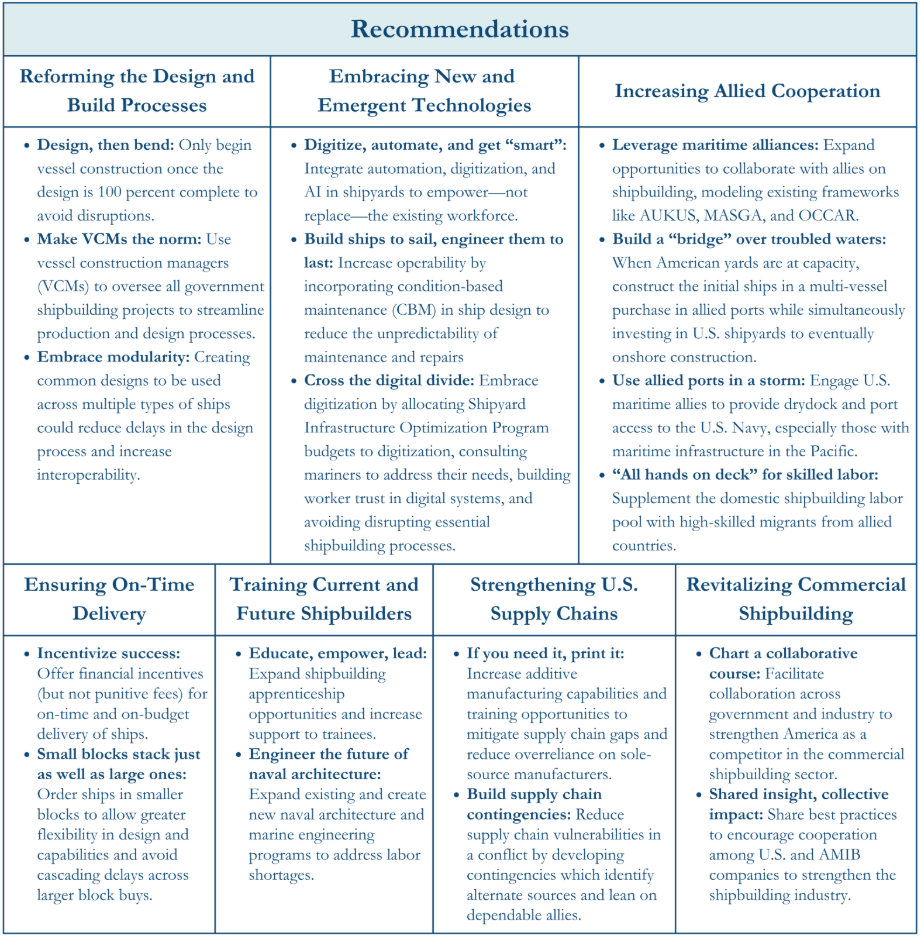
America can build a stronger, more capable MIB by partnering with and learning from its allies. Accordingly, this study provides recommendations for how America can apply these insights to support its MIB while embracing greater multilateral maritime cooperation.
CMS and speakers from the allied nations in the report will host a panel discussion on the new report on Tuesday, April 21 from 3:30-4:30 p.m. in the Cherry Blossom Ballroom.
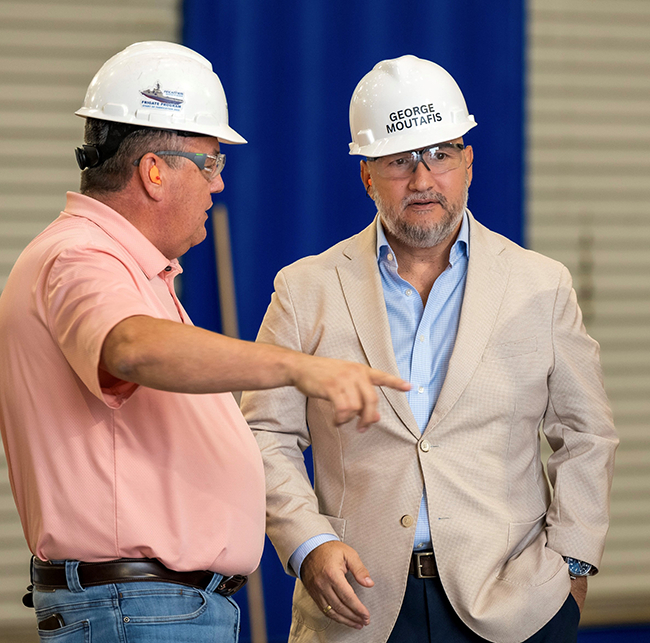
Fincantieri Marine Group CEO George Moutafis, right, tours company facilities. (CREDIT: Fincantieri Marine Group)
In February 2026, Fincantieri Marine Group (Booth 1223) issued the following release:
“As you may have seen in NAVSEA’s press release, the U.S. Navy tapped Fincantieri to build four of the first wave of Medium Landing Ships (LSMs) for the Marine Corps. Our $1B investment over the last 18 years to create concurrent production lines across our Wisconsin system of shipyards has positioned us to be a prime player in the American shipbuilding renaissance. This announcement represents a good start of follow-on workload, part of the framework agreed with the Navy to ensure stability following the announcement in November. Details are still being worked out between us and the Navy, and we will communicate any developments, as soon as they solidify. Our intent is to quickly build as many vessels as the Navy will trust us with, in the LSM class and other classes that our armed forces require, to contribute to our nation’s needs.”
Fincantieri Marine Group CEO George Moutafis later discussed the LSM program’s vessel construction management (VCM) concept with Senior Editor Richard R. Burgess.
The Vessel Construction Management concept proved successful with Philly Shipyards and its National Security Multi-Mission Vessel (NSMV) program. What advantages and disadvantages do you see with the VCM concept?
MOUTAFIS: Advantages: I trust our Navy wants to see whether this mechanism can deliver quality vessels fast, by streamlining oversight and creating unity of effort. Such benefits can be achieved if the concept is applied in its intended form:
A key aspect is to empower the VCM to make decisions on construction, favoring schedule, without compromising quality and without seeking constant guidance or approval from the Navy. When combined with a complete and final design and a commercial-type relationship between the VCM and shipbuilders, this can be truly powerful and harness efficiency in decision-making and speed.
So, overall, this concept is aimed at simplifying things. From that vantage point, this approach aligns perfectly with our goal of fast serial production of naval vessels, and we are ready to continue our partnership with the Navy and help them test this concept.
Disadvantages: More than disadvantages, it will be key for all parties involved (the Navy, the VCM, the shipbuilder(s) to embrace the concept, draw the relevant lines and collectively ensure we do not fall into mishaps of the past that might jeopardize what this concept is trying to achieve.
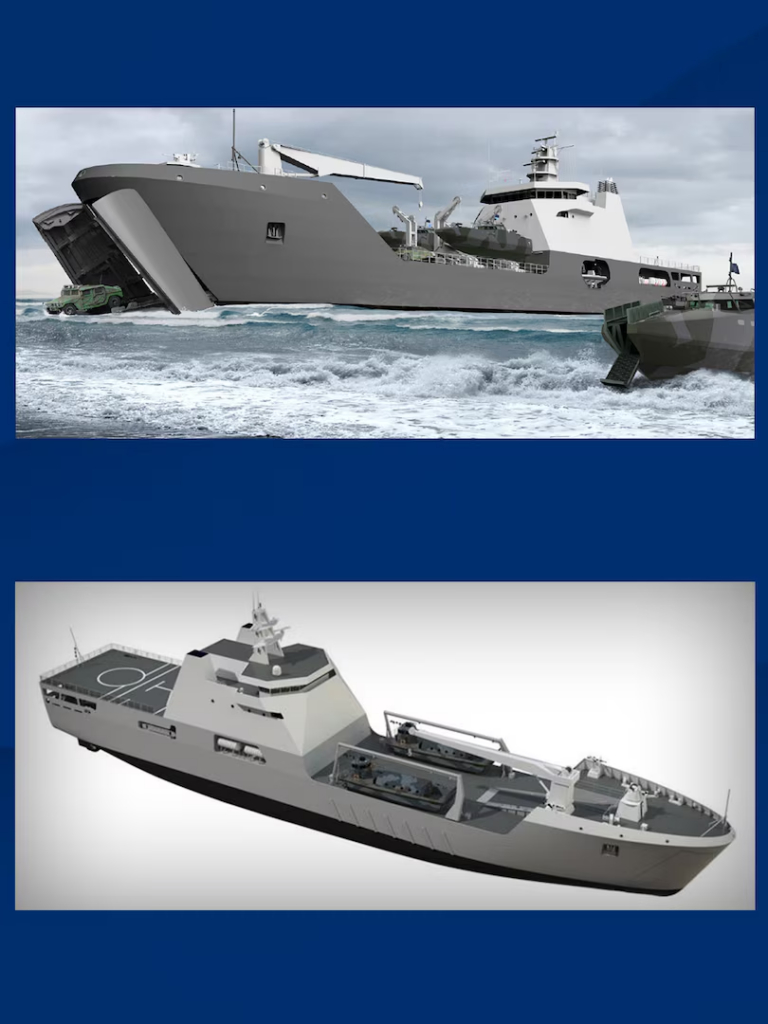
The U.S. Navy has issued a request for proposal for a vessel construction manager to oversee the acquisition of the new Medium Landing Ship. This strategy is designed to maximize commercial practices to accelerate delivery, improve cost discipline, and expand the U.S. shipbuilding industrial base, with a contract award anticipated for mid-2026. (CREDIT: Naval Sea Systems Command)
With the VCM chosen as the LSM program management concept, what changes will Marinette have to institute to accommodate the concept?
MOUTAFIS: We are ready. In Wisconsin we have a system of yards where we have executed successfully programs for our Navy, for our Coast Guard, but also for commercial customers, under a variety of contractual setups.
We will wait to see the details of how the Navy will position itself towards the program and how the VCM will seek to exercise oversight and work with us. We are ready to adjust to whatever those requirements are.
At first glance, an oversight and collaboration similar to the one witnessed during the NSMV program and a “build-to-print” design, for now, appear to alleviate some demands in terms of administration and engineering, allowing us to swiftly get into what we do best: swift serial construction … but it all remains to be seen.
What adjustments, if any, will be needed for your workforce as you shift from LCS production to the LSM?
MOUTAFIS: Using a “build-to-print” approach allows construction to happen quicker. Plus, it minimizes change and prevents extensive and time-consuming design iterations.
We will need to review all the technical details, but we do not foresee major adjustments to workforce. Our system-of-yards configuration ensures agility in the workforce, rendering them able to jump from Navy standards to commercial or ABS standards.
And with the right level of sustained demand signal, we will be able to improve efficiency and speed, which will be a win for all parties. Our system of yards can accommodate multiple parallel lines, almost concurrently.
How is Marinette fairing with the nationwide shortage of skilled shipyard workers?
MOUTAFIS: No doubt, shipbuilders and the related trades remain in high demand. We have expanded our recruiting efforts over the previous few years, and we are blessed to say that our efforts worked. Last year alone we hired nearly 800 employees and improved our retention by 50%.
Our Wisconsin operations saw positive feedback on several new initiatives over the previous 18 months, aimed at stabilizing the workforce. Efforts like cash bonuses to incentivize employee retention and tax-free subsidized childcare had a positive effect on our employees and our operations.
In years past Marinette had difficulty in retention of shipyard workers because of housing shortages in the region. Has that situation been alleviated to any degree?
MOUTAFIS: Yes, there has been a concerted effort by the local communities and developers to expand the number of local housing options that closely align to our growing workforce and their families. We believe this is less of an issue given the development and community support over the last couple of years in Northeast Wisconsin.
Is Marinette continuing with cooperative relationships with community colleges for workforce development? What is your assessment of the cooperation?
MOUTAFIS: Yes, we are continuing and seeking to expand our network of such collaborations. We have a continuously growing relationship with Northeast Wisconsin Technical College to not only reinforce the need to up-skill current employees, but also to introduce new technologies and digital tools to attract the shipbuilders of the next generation.
Imagine a not-so-distant future replete with examples of shipyard welders leveraging cobots (collaborative robots) to weld in places where it’s difficult for humans to easily work. That is the future of shipbuilding and why we’re equipping our employees with digital tools like exoskeletons for demanding and repetitive tasks and augmented and virtual reality that allows workers on the deckplates to communicate challenges directly to the engineering team using a wearable digital device.