DoD Announces Modernization Plan for Tactical Aircraft Based in Japan

From the U.S. Department of Defense, July 3, 2024
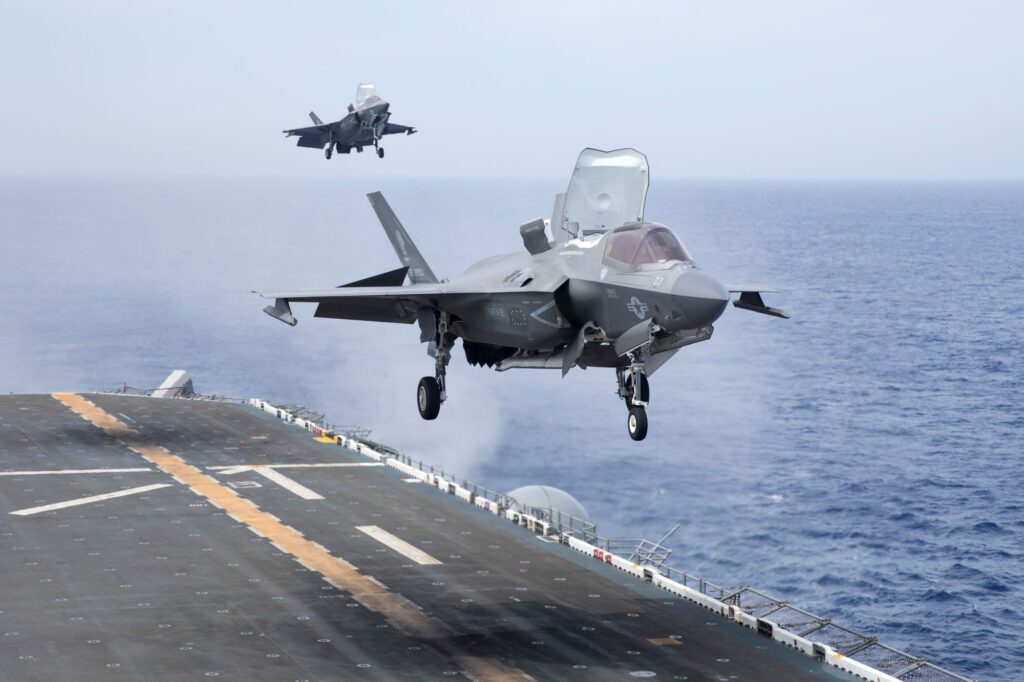
U.S. Marine Corps F-35B Lightning II aircraft with Marine Fighter Attack Squadron (VMFA) 121 approach the amphibious assault carrier USS Tripoli while underway, June 11, 2022. U.S. Marine Corps | Sgt. Jackson Ricker

The Department of Defense (DoD), in close coordination with the government of Japan, today announced a plan to upgrade U.S. tactical aircraft laydown across multiple military installations in Japan. 

The modernization plan, which will be implemented over the next several years, reflects more than $10 billion of capability investments to enhance the U.S.-Japan Alliance, bolster regional deterrence and strengthen peace and stability in the Indo-Pacific region. 

The U.S. Air Force will upgrade its presence at Kadena Air Base by deploying 36 F-15EX aircraft to replace 48 F-15C/D aircraft as part of a planned divestment and modernization. The Joint Force will continue to maintain a rotational presence of 4th and 5th generation tactical aircraft at Kadena Air Base throughout this transition.

The U.S. Air Force will also upgrade its presence at Misawa Air Base from 36 F-16 aircraft to 48 F-35A aircraft, leading to greater tactical aircraft capacity and capability.

At Marine Corps Air Station (MCAS) Iwakuni, the U.S. Marine Corps will modify the number of F-35B aircraft to support the service’s force design modernization implementation. The U.S. Marine Corps will continue to maintain an enduring and rotational aircraft presence at MCAS Iwakuni to ensure the necessary capabilities to support the defense of Japan.

The department’s plan to station the Joint Force’s most advanced tactical aircraft in Japan demonstrates the ironclad U.S. commitment to the defense of Japan and both countries’ shared vision of a free and open Indo-Pacific region.


II Marine Expeditionary Force: Ready for a New Challenge as a Joint Task Force Headquarters

From II Marine Expeditionary Force, 2 July 2024

U.S. Marines with 2nd Air-Naval Gunfire Liaison Company, II MEF Information Group, II Marine Expeditionary pull coordinates for the Swedish mechanized 120mm mortars to target during BALTOPS 24 on Gotland, Sweden, June 16, 2024. U.S. Marine Corps | Captain Mark Andries

MARINE CORPS BASE CAMP LEJEUNE, North Carolina — A key transformational step in the Marine Corps’ journey of Force Design occurred in early July at the II Marine Expeditionary Force (II MEF) headquarters in Camp Lejeune.

During a visit by the Commandant of the Marine Corps, Gen. Eric M. Smith, II MEF was officially validated as a Joint Task Force – Capable (JTF-C) headquarters on June 10, 2024. This milestone means II MEF is now ready to lead and coordinate complex operations involving different branches of the U.S. military and allied forces.

Transitioning to a JTF-C headquarters involves integrating and coordinating forces across land, sea, air, space and cyber domains, preparing for any situation, from peacekeeping missions to full-scale military operations. To prepare for this new role, II MEF participated in several key exercises that tested their ability to plan, execute and sustain complex operations.

From Feb. 10-17, 2023, around 1,200 Marines and Sailors with II MEF and its four major subordinate commands—2nd Marine Division, 2nd Marine Logistics Group, 2nd Marine Air Wing, and 2nd Marine Expeditionary Brigade — conducted Marine Expeditionary Force Exercise (MEFEX) 23 at Camp Lejeune, North Carolina. This exercise showcased II MEF’s ability to command and control forces during a simulated peacekeeping operation in a challenging environment. It was a crucial step toward their JTF-C validation.

II MEF came together again in Camp Lejeune from Sept. 9-15, 2023, to exercise command and control capabilities with the subordinate commands as well as joint enablers during Joint Task Force Exercise (JTFEX) 23. JTFEX 23 simulated II MEF’s ability to operate as a task force during large-scale all-domain operations. Various tools were employed to test the command-and-control capabilities of II MEF during JTFEX 23 including a simulated information environment that tested the real-time response capabilities of the MEF.

In March 2024, II MEF participated in Nordic Response 24 in Norway, assuming authority as the Land Component Command headquarters for a multinational force. This exercise involved 20,000 participants from NATO allies and Nordic partner nations, focusing on crisis response in northern Europe. II MEF worked closely with Norwegian, Swedish and Finnish forces, demonstrating their ability to lead in cold weather conditions.

The validation process involved rigorous assessments by higher headquarters and independent evaluators, who verified II MEF’s capabilities in command and control, intelligence integration, logistics and cyber defense. Colonel Matthew T. McSorley, II MEF G-37 Director of Training, praised II MEF’s achievement.

“The validation of II MEF as a Joint Task Force – Capable headquarters is a significant milestone for the Marine Corps and our joint force capabilities. This transformation establishes II MEF as the service-retained JTF-C headquarters for assignment and tasking as an Immediate Response Force (IRF); enhancing our ability to respond to crises and underscores our commitment to maintaining a robust, adaptable, and ready force,” McSorley said.

As a JTF-C headquarters, II MEF will continue to evolve, embracing new technologies and doctrines. This new role places them at the forefront of the Marine Corps’ efforts to adapt to a complex global security environment. II MEF will play a crucial role in ensuring that the United States and its allies can face future conflicts with unity and strength.


Training Air Wing 2 Completes 1 Million Hours in T-45 Goshawk

By Chief of Naval Air Training Public Affairs, July 2, 2024 

Captain Aaron Rybar, commander, Training Air Wing – 2, addresses the crowd during a commemorative ceremony onboard Naval Air Station Kingsville, July 2.  U.S. Navy | Ensign Alan Wang

KINGSVILLE, Texas – Representatives from Boeing, Chief of Naval Air Training (CNATRA), Training Air Wing (TAW) 2, the city of Kingsville and more met onboard Naval Air Station Kingsville to commemorate one million hours cumulatively flown by the fleet of T-45 Goshawks assigned to TAW-2, July 2.

Three commemorative plaques were presented by Boeing to CNATRA, TAW-2 and the city of Kingsville during a short ceremony on the flightline. Capt. Aaron Rybar, Commander, Training Air Wing – 2, received one of the commemorative plaques on behalf of the local training wing. Notably, the one-million-hour milestone does not include flight time for T-45 Goshawks assigned to TAW-1, located in Meridian, Mississippi.

“On May 1st, 1992, the first class of flight instructors from VT-21 assigned to fly [train] the next generation of Naval Aviators in the new T-45A Goshawk began their training in the T-45.” said Rybar. “On 26 February, 2024, 30 years and one month after the Navy went full operational capability [with the] T-45 aircraft, Lt. Cmdr. Thomas ‘Sock’ Cruz, from VT-22, operating aircraft 267, BuNo 165067, on a basic fighter maneuver [training] event, crossed over the one-millionth flight hour in the T-45 here at NAS Kingsville Texas.”

Rear Admiral Rich Brophy, Chief of Naval Air Training, commands all five naval air training wings and has led the Naval Air Training Command (NATRACOM) since July 2022. Brophy addressed the crowd after Rybar, discussing the importance of the T-45 in training Naval Aviators over the last three decades, said, “A strong national defense starts with how we project our power. From the United States Navy standpoint, we project power with carrier air wings. And our carrier air wings are trained right here in Kingsville. This is the heart, the heart of the United States Navy. And the number-one battering ram of the United States Navy is a carrier air wing,” Brophy said. “So, when you reflect on the million-hour mark, think about that for a second, that’s 114 years of continuous flying.”

The ceremony tied together a community of men and women that have supported T-45 operations in South Texas for over three decades. Mayor Sam Fugate was present to receive recognition for the one millionth hour on behalf of the city of Kingsville, which has supported generations of Naval Aviators since the base was founded in 1942 as an auxiliary air station.

“There’s nothing like feeling apart of the community, and this community does it to the Nth degree,” said Brophy. “So, thank you mayor, thank you Dick [Dick Messbarger, Executive Director at Kingsville], and thank you all that have leaned in to keep Kingsville operating and to support our Navy family.”

CNATRA’s mission is to train, mentor and deliver the highest quality Naval Aviators who prevail in competition, crisis, and conflict. Headquartered at NAS Corpus Christi, CNATRA comprises five training air wings in Florida, Mississippi and Texas, which are home to 17 training squadrons. In addition, CNATRA oversees the Navy Flight Demonstration Squadron the Blue Angels and the training curriculum for all fleet replacement squadrons.


Marine Corps Commandant Sheds Light on Reaper UAV Capabilities 

By Richard R. Burgess, Senior Editor 

ARLINGTON, Va. — The Marine Corps’ MQ-9A ER [extended-range] Reaper unmanned aerial vehicles (UAVs) are capable of carrying an electronic warfare pod that renders the UAVs “mostly undetectable” to enemy radars, a senior Marine Corps official said.  

General Eric M. Smith, commandant of the Marine Corps, speaking July 2 at the Brookings Institution, a Washington think tank, discussing the capabilities of a Marine littoral regiment and the forces supporting them — including the Reaper UAVs — pointed out the sensing mission of the regiments in the first island chain in the Pacific. 

“What they bring with them is a sensing and making sense capability;” Smith said. “Some of the programs are classified. Some of the pods that go on our MQ-9s are classified. It’s called a T-SOAR pod, and what it does is it can mimic things that are sent to it that it detects, turn it around, and send it back so that it becomes a black hole. It becomes mostly undetectable.” 

“Without crossing classification levels, it has the ability to somewhat disappear off of an enemy radar,” he said later in the webinar, in response to a reporter’s question. “I’ll just leave it at that.” 

Although not clear, the commandant may have been referring to the Scalable Open Architecture Reconnaissance (SOAR) pod, which L3Harris describes as a “groundbreaking, intelligence, surveillance, and reconnaissance (ISR) solution from L3Harris Technologies and General Atomics Aeronautical Systems, Inc. (GA-ASI). SOAR integrates L3Harris’ industry leading full-band signals intelligence (SIGINT) capability with a medium altitude long-endurance GA-ASI Predator B wing-mounted pod to offer unparalleled options for warfighters in the ISR domain. SOAR provides significant mission expansion for Predator B operations against modern threats in new operating domains and a new dimension for remotely piloted aircraft systems.” 

The builder of the SOAR pod and the MQ-9, GA-ASI, says on its website that the SOAR pod “provides long-range detection, identification, and location of radar and communication signals of interest. SOAR enables MQ-9 or other aircraft operators to provide standoff surveillance — seeing threats before threats can see the aircraft — and communicate actionable intelligence. The system leverages significant U.S. government technology investments in strategic intelligence, surveillance, and reconnaissance systems to provide a low-cost, widely deployable capability for a variety of National Security Council and Combatant Command signals intelligence collection objectives.” 

GA-ASI lists key benefits of the 634-pound SOAR pod as: 
 

  • Enables long-range persistent surveillance of enemy communications and radar emitters 

  • Enables cooperative collection and target exploitation capabilities 

  • Features real time collection and onboard storage for post-mission analysis 

  • Allows for true multi-intelligence target identification and tracking in real time 


HMLA-269 Reactivates After 18-Month Hiatus 

U.S. Marine Corps Col. David Fitzsimmons, from Pennsylvania and commanding officer of Marine Aircraft Group (MAG) 29, addresses the audience during the reactivation ceremony of Marine Light Attack Helicopter Squadron (HMLA) 269 at Marine Corps Air Station New River, North Carolina, July 1, 2024. (U.S. Marine Corps photo by Staff Sgt. Theodore Bergan)

MARINE CORPS AIR STATION CHERRY POINT, N.C. – Marine Light Attack Helicopter Squadron (HMLA) 269, 2nd Marine Aircraft Wing (MAW), reactivated during a ceremony this morning aboard Marine Corps Air Station (MCAS) New River, North Carolina.  

HMLA-269, known as “The Gunrunners,” previously deactivated on Dec. 9, 2022, in accordance with Force Design initiatives. Throughout the course of the squadron’s brief deactivation, the Marine Corps conducted analysis on force management in order to ensure that no operational commitments were left unfulfilled. This analysis identified the need for an additional HMLA squadron on the East Coast to provide sustained operational support to II Marine Expeditionary Force (MEF). This change within 2nd MAW represents incremental change to Force Design to meet the conditions described in recent national security and defense strategies.   

The reactivation ceremony featured remarks from Col. David Fitzsimmons, commanding officer, Marine Aircraft Group 29, who thanked the various advocates at 2nd MAW, II MEF, and Headquarters, U.S. Marine Corps, that made HMLA-269’s reactivation possible.   

“It was a decidedly somber day when HMLA-269 deactivated,” said Fitzsimmons. “That was certainly reversed today.”  

Also present was Lt. Col. Jens Gilbertson, commanding officer, HMLA-269, who highlighted Marine Attack Helicopter Squadron (HMA) 269’s legacy as the Marine Corps’ first attack helicopter squadron and recounted the multiple pilots and aircrew within HMA and HMLA-269’s history who received the Distinguished Flying Cross. He noted that HMA and HMLA-269 was recognized eight times by the Marine Corps Aviation Association as the Marine Corps’ Light Attack Helicopter Squadron of the Year, more so than any other Marine Corps light attack helicopter squadron in history. Gilbertson also recognized the Marines of HMLA-269 who enabled the squadron’s reactivation.   

“Ultimately, it was up to these Marines to get it done,” said Gilbertson. “They have discipline, and they have precision, and that’s the same discipline and precision they’re going to bring when they maintain and fly our aircraft.”   

The squadron will resume operating the AH-1Z “Viper” attack helicopter and the UH-1Y “Venom” utility helicopter. Both aircraft are manned, trained, and equipped to fight from the sea into austere environments and confined littoral spaces, and support the Marine Air-Ground Task Force by providing offensive air support, utility support, armed escort, and airborne supporting arms coordination.   


Shield AI’s V-BAT Tapped for $198M Coast Guard Contract

WASHINGTON (July 1, 2024) – Shield AI, the defense technology company building the world’s best AI pilot, announced today that the U.S. Coast Guard has awarded the company a $198,106,876 indefinite-delivery, indefinite-quantity firm fixed-price contract to provide Contractor Owned Contractor Operated (COCO) Intelligence, Surveillance, and Reconnaissance (ISR) services. This service will be implemented using the V-BAT unmanned aircraft system (UAS).  

“We’re excited to support the U.S. Coast Guard with their ISR operations. All maritime vessels will become drone carriers as maritime forces move to deploy distributed, affordable, intelligent drones. V-BAT’s selection by the U.S. Coast Guard is indicative of a broader market movement where increasingly customers are recognizing they can accomplish the vast majority of their mission sets with affordable drones rather than exquisite, expensive crewed or uncrewed aircraft,” said Brandon Tseng, Shield AI’s President, Co-founder, and former Navy SEAL.  

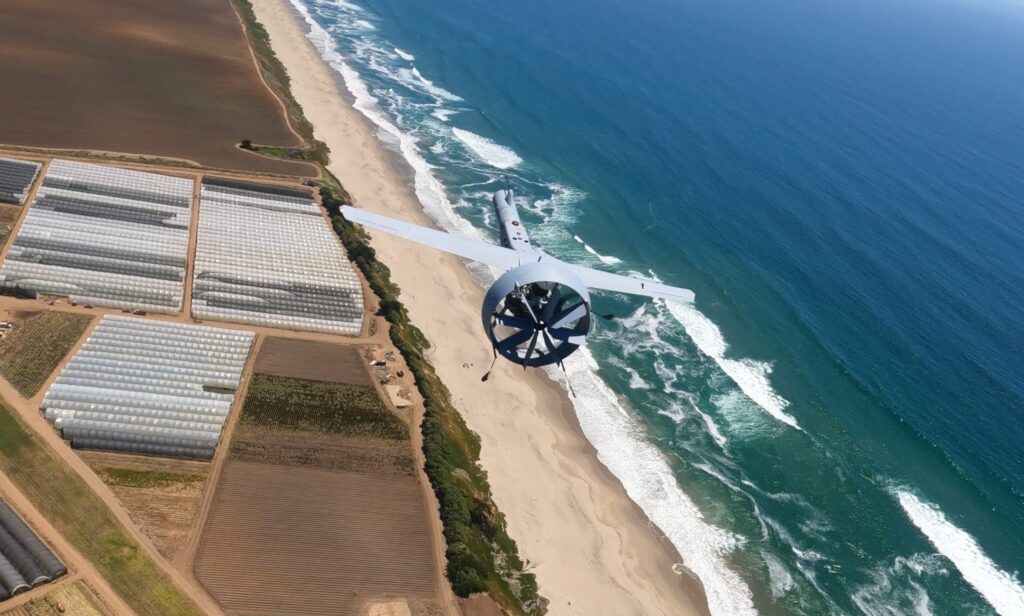
The V-BAT series aircraft is the only operationally deployed single-engine ducted fan vertical takeoff and land (VTOL) UAS that can launch and recover from a hover and fly on wing in horizontal flight. With more than five years of persistent operational experience at sea, U.S. and international customers view the V-BAT as a flexible platform capable of performing Group 2 to Group 5 UAS missions and beyond.  


USS Mason Returns to Mayport From Combat Deployment 

USS Mason Returns to Mayport from Combat Deloyment 

By ENS Emily Moore, USS Mason Public Affairs, July 2, 2024 

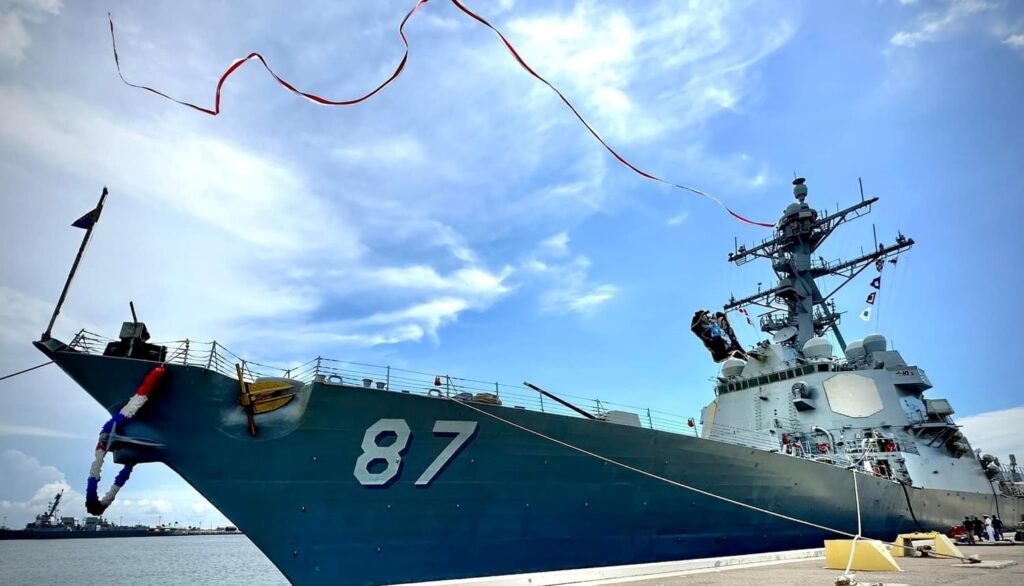
NAVAL STATION MAYPORT, Fla. — Arleigh Burke-class guided-missile destroyer USS Mason (DDG 87) returned to Naval Station Mayport, July 2, 2024, after being deployed for more than eight months in the U.S. Naval Forces Central Command area of operations. 

Mason was deployed for 263 days in the Red Sea, Gulf of Aden, and Mediterranean Sea, supporting freedom of navigation and the free flow of commerce. 

While deployed, Mason faced unprecedented attacks from the Houthi terrorist group based out of Yemen. 

“I am extremely proud of this battle tested and battle proven crew who achieved unparalleled accomplishments while deployed,” said Cmdr. Justin B. Smith, Mason’s commanding officer. “No matter the threat or challenge, they demonstrated an innate ability to sustain a high level of readiness for eight months by thinking on their feet and quickly reacting. As result of their abilities, they protected Mason’s crew and exceeded all mission tasking throughout deployment.” 

While deployed, Mason intercepted multiple unmanned aerial vessels and anti-ship ballistic missiles targeting merchant vessels and coalition warships. In support of the freedom of navigation and worldwide commerce, Mason escorted and saved 26 merchant vessels as they transited through the Bab Al-Mandeb Strait. 

On Nov. 26, 2023, Mason responded to a distress call in the Gulf of Aden where five suspected pirates overtook M/V Central Park. Once Mason arrived, the suspected pirates fled, and Mason’s Visit, Board, Search, and Seizure team took custody of the suspected pirates and freed the crew stuck in the ship’s citadel.  

Continuing the global support of the free flow of commerce, the crew displayed proficient interoperability between coalition partners through Liaison Naval Officers, helicopter cross deck operations, ship maneuvering exercises, and coordinated engagements. 

Mason was deployed as part of the Dwight D. Eisenhower (IKE) Carrier Strike Group (CSG). IKECSG operated in the U.S. 5th and 6th Fleet areas of operations to deepen strategic relationships with allies and partners, and to support maritime security and stability. 

The strike group is commanded by CSG-2 and comprised of flagship Dwight D. Eisenhower, Carrier Air Wing (CVW) 3 with its nine squadrons, USS Philippine Sea (CG 58), and Destroyer Squadron (DESRON) 22 with its guided missile destroyers. 


July 1 CENTCOM Update

From U.S. Central Command 

July 1, 2024

TAMPA, Fla. – In the past 24 hours, U.S. Central Command forces successfully destroyed one Iranian-backed Houthi radar site in a Houthi controlled area of Yemen. 

It was determined the radar site presented an imminent threat to U.S., coalition forces, and merchant vessels in the region. This action was taken to protect freedom of navigation and make international waters safer and more secure. 


RIMPAC 2024 Kicks Off in Hawaii 

Caption: Vice Adm. John Wade, Commander, U.S. 3rd Fleet and Exercise Rim of the Pacific (RIMPAC) 2024 Combined Task Force (CTF) Commander, center, and task force leadership take questions during the opening press conference for RIMPAC 2024 held at Joint Base Pearl Harbor-Hickam, Hawaii, June 27. (U.S. Navy Photo by MC2 Courtney Strahan) 

28 June 2024 

From Lt.Cmdr. Robert Reinheimer 

HONOLULU, Hawaii - The opening ceremony and press conference kicked off the 29th edition of the biennial Rim of the Pacific (RIMPAC) exercise, the world’s largest international maritime exercise, today. 

Approximately 29 nations, 40 surface ships, three submarines, 14 national land forces, over 150 aircraft and more than 25,000 personnel will train and operate in and around the Hawaiian Islands during the exercise, which runs until Aug. 1. RIMPAC provides a unique training opportunity while fostering and sustaining cooperative relationships among participants critical to ensuring the safety of sea lanes and security on the world’s oceans. 

“The Rim of the Pacific exercise has grown over the years to be the world’s largest and premier joint combined maritime training opportunity,” said Vice Adm. John Wade, commander, U.S. 3rd Fleet and RIMPAC 2024 Combined Task Force (CTF) commander. “The exercise’s purpose is to build relationships, to enhance interoperability and proficiency and, ultimately, contribute to the peace and stability in the vitally-important Indo-Pacific region.” 

The theme of RIMPAC 2024 is “Partners: Integrated and Prepared.” 

For the first time in RIMPAC history, a member of the Chilean Navy, Commodore Alberto Guerrero, will serve as deputy commander of the CTF. Japan Maritime Self-Defense Force Rear Adm. Kazushi Yokota will serve as the vice commander. Other key leaders of the multinational force will include Commodore Kristjan Monaghan of the Royal Canadian Navy, who will command the maritime component, and Air Commodore Louise DesJardins of the Royal Australian Air Force, who will command the air component. 

This year’s RIMPAC will host its largest humanitarian aid and disaster relief exercise with eight countries, five ships, five landing craft, five aircraft, multiple land forces, and over 2,500 total participants including the statewide Hawaii Healthcare Emergency Management exercise. 

During RIMPAC, participating forces integrate and exercise a wide range of capabilities, from disaster relief to maritime security operations, and from sea control to complex warfighting. The relevant, realistic preparation and training syllabus includes amphibious operations, gunnery, missile, anti-submarine, and air defense exercises, as well as military medicine, humanitarian assistance, disaster relief, counter-piracy, mine clearance operations, explosive ordnance disposal, and diving and salvage operations. 

With inclusivity at its core, RIMPAC fosters multinational cooperation and trust, leverages interoperability, and achieves respective national objectives to strengthen integrated, prepared, coalition partners. 

For more RIMPAC 2024 information and updates, visit https://www.cpf.navy.mil/rimpac/. Any additional questions or queries should be sent to [email protected]


Naval Sea Systems Command Celebrates 50 Years 

By Naval Sea Systems Command Office of Corporate Communications 

July 1, 2024 

WASHINGTON – Naval Sea Systems Command (NAVSEA), responsible for the acquisition, construction, maintenance, and inactivation of ships, submarines, and combat systems for the U.S. Navy, celebrated its 50th anniversary July 1. 

As the largest of the Navy’s six system commands, NAVSEA’s origins date back to 1794, when Commodore John Barry was charged with oversight of the construction of six 44-gun frigates and the responsibility to ensure that all business “harmonized and conformed” with the public’s interest. To build and maintain the fleet, the newly formed Navy Department established shipyards across the eastern seaboard, including the Washington Navy Yard, where NAVSEA headquarters sits today. 

Since then, various organizations were established to oversee design, construction and repair of ships and ordnance. Ultimately, in 1974 with the merger of the Naval Ship Systems Command (NAVSHIPS) and the Naval Ordnance Systems Command (NAVORD), NAVSEA was formed with then-Vice Adm. Robert C. Gooding as the first NAVSEA commander. 

The impetus for merging NAVSHIPS with NAVORD came after the U.S. Navy became a key part of America’s nuclear deterrence following the first ballistic missile launch from a submerged submarine. Using the skipjack-class as the base design, naval engineers lengthened the hull to accommodate the Polaris missile system, demonstrating a need for a holistic approach to ship and ordnance design. 

Vice Adm. Jim Downey, commander, Naval Sea Systems Command, attributes NAVSEA’s success – past and present – to a team of talented personnel who are committed to ensuring the U.S. Navy has the reliable combat capability needed to meet its mission sets. 

“Today our team spans 42 locations worldwide, working together to continue the critical work of those who served before us to generate readiness and warfighting capability for our Sailors and Marines,” said Downey. “Working together our team has delivered incredible technological advances – from Nimitz to Ford and Spruance to Arleigh Burke – enabling our Navy to meet its mission to defend freedom, preserve economic prosperity, and keep the seas open and free.” 

Through the span of 50 years, NAVSEA has maintained its commitment to the public and the fleet, continually translating warfighting requirements into combat capability to enable our nation and its partners to project presence in peace, power in war, and assured access at all times.   With the delivery of over 20 new ship classes of battle force ships over the past five decades, NAVSEA has been the powerful “Force Behind the Fleet.” 

Today NAVSEA has a workforce of nearly 90,000 civilian and military personnel spanning multiple directorates, field activities, and program executive offices. A diverse command, NAVSEA hosts careers in acquisition and contracts, administration and program management, business and finance, engineering, IT and cybersecurity, science, mathematics, trades, and more.   

To read more about NAVSEA’s accomplishments and its mission, visit: https://www.navsea.navy.mil/. To join our team, visit: https://www.navsea.navy.mil/Careers/.