BlueHalo Selected for U.S. Army Next Generation C-UAS Missile
From BlueHalo, June 27, 2024
The U.S. Army Combat Capabilities Development Command Aviation & Missile Center (CCDC AvMC) Aviation & Missile Technology Consortium® (AMTC) has down-selected BlueHalo as one of two vendors to move forward for the development of the Next-Generation Counter-Uncrewed Aerial System (C-UAS) Missile (NGCM). BlueHalo is leveraging a long corporate heritage in proven C-UAS technologies to expand its layered defense solutions with a long-range missile–entering the kinetic interceptor market space and providing an agile and alternate prime within the industrial base to counter the rapidly evolving threats.
“As we’ve seen in Ukraine, Jordan, Israel, and the Red Sea, drone attacks are increasing in number, sophistication, speed, and size–representing the fastest evolving threat vector of the modern era,” said Jonathan Moneymaker, BlueHalo Chief Executive Officer. “Adding the increased range, reduced time-to-target, and rapid launch capabilities of our technically superior NGCM to BlueHalo’s operational, industry-defining RF and directed energy C-UAS solutions gives unmatched, layered protection to our warfighters, allies, and assets. We are honored to work alongside AMTC to expand our nation’s kinetic C-UAS capabilities and continue BlueHalo’s legacy of delivering next-generation defense technology into the hands of the warfighter.”
Last fall, BlueHalo revealed its NGCM in response to the U.S. Government request for a more advanced C-UAS missile technology to meet the pacing threat. NGCM goes beyond current capabilities to increase lethality and range against Group 3 UAS and other larger air threats while –enabling a rapid delivery timeline to get the technology to the frontlines quicker and more cost-effectively than alternatives.
“BlueHalo’s NGCM provides an agile, disruptive, technically superior interceptor to the munition industrial base, delivering unmatched protection to our warfighters and transforming our nation’s air defense systems at mission speed,” said Jimmy Jenkins, General Manager, Defense Sector, and a former air defender in the US Army.
BlueHalo is the leading provider of innovative, effective C-UAS solutions for national defense customers providing critical products to essential Programs of Record with the Department of Defense. The company’s SkyView system offers autonomous radio-frequency (RF) detection and precision tracking of small UAS. Titan, another RF-based C-UAS solution from BlueHalo, can detect, track, and force drones to safely land without disrupting nearby communications or electronics. BlueHalo’s LOCUST Directed Energy Laser Weapon System combines precision optical and laser hardware with advanced software, artificial intelligence, and processing. It has been successfully delivered and operationally deployed to identify, track, and engage a wide variety of targets with its hard-kill High Energy Laser. NGCM expands BlueHalo’s portfolio of layered C-UAS air defense technologies to deliver best-in-class solutions to warfighters.
Kratos’ Erinyes Hypersonic Test Bed Makes First Flight
From Kratos Defense & Security Solutions, June 27, 2024
SAN DIEGO, June 27, 2024 (GLOBE NEWSWIRE) – Kratos Defense & Security Solutions, Inc. (Nasdaq: KTOS), a technology company in the defense, national security and global markets, announced today that its Space & Missile Defense Systems Business Unit, a part of Kratos’ Defense & Rocket Support Systems (DRSS) Division, supported the Missile Defense Agency (MDA) and the Naval Surface Warfare Center (NSWC), in the successful launch and flight of the Kratos Erinyes™ Hypersonic Test Bed, on June 12, 2024, from the NASA Wallops Flight Facility (WFF) in Virginia. This successful first flight of the Erinyes vehicle demonstrates a new and novel platform capability for rapid hypersonic experimentation for the U.S. Department of Defense.
The exercise, designated Hypersonic Test Bed-1 (HTB-1), demonstrated hypersonic flight that enabled the collection of data for multiple experiments to be provided to test teams for design validation and evaluation of new technologies.
“Hypersonic experimenters now have a robust and affordable path across the TRL [Technology Readiness Level]. The ability to demonstrate experimental technologies on a real hypersonic flight testbed, without adding risk to programs of record, is game-changing,” stated Dave Carter, president of Kratos’ DRSS Division. “Following this success, we will turn to preparing for our next test, incorporating a new set of experiments. I couldn’t be prouder of our team.”
Eric DeMarco, president and CEO of Kratos, said, “The 100% successful flight of the Kratos Erinyes hypersonic vehicle with our MDA and Navy partners is representative of the power of Kratos’ approach to be first to market with leading technology systems and products, which accelerates development and delivery schedules, while significantly reducing cost. Kratos’ Rocket and Hypersonic systems development programs are positioned to disrupt the market with affordable, relevant systems, and we expect Kratos’ hypersonic franchise, including Erinyes, Zeus, Oriole and other systems to be a key contributor to our expected future organic growth trajectory. Kratos is laser focused on expanding the U.S. National Security Industrial Base, increasing competition, reducing cost and delivering significant value to all Kratos stakeholders, including the MDA, U.S. Navy and other Government customers. Kratos has served the U.S. hypersonic community for decades through novel system and vehicle flight testing.”
Strategic Systems Programs Promotes Workforce Modernization At Nuclear Triad Symposium
By Shelby Thompson, 26 June 2024
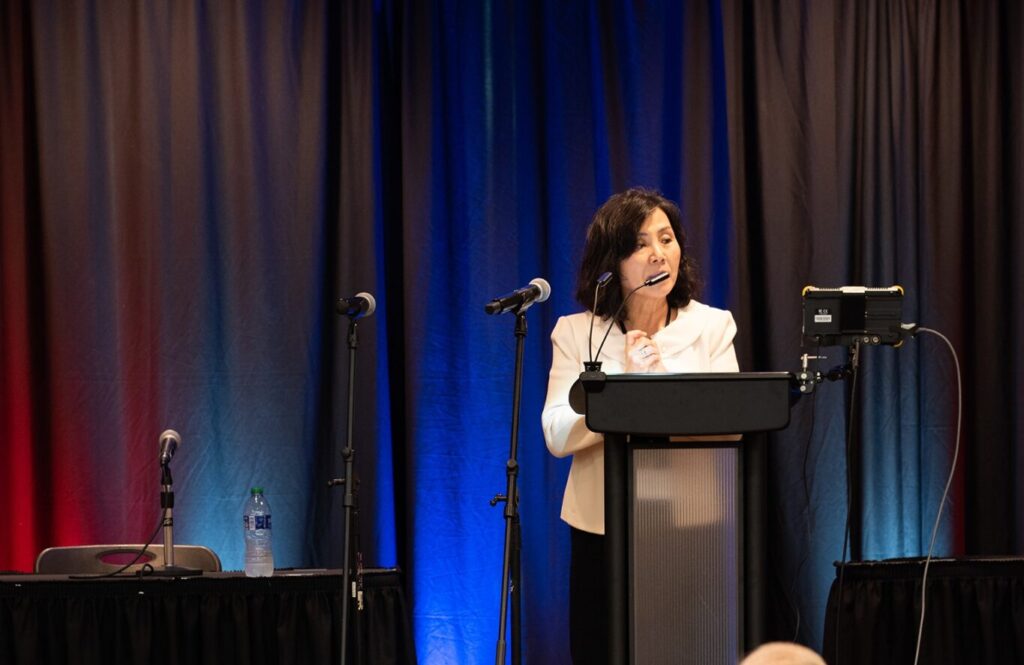
SHREVEPORT, La. – SHREVEPORT, La. – Strategic Systems Programs (SSP) represented the Navy’s leg of the nuclear triad during the 25th Annual Nuclear Triad Symposium held on the Louisiana State University (LSU) Shreveport campus June 20th.
Representatives from across the nuclear triad, including Air Force Global Strike Command (AFGSC) and industry partners, advocated for increased focus on workforce needs, small business collaboration, and mentorship programs throughout the nuclear enterprise.
SSP’s Director of Plans and Programs Kelly Lee—also a member of the Senior Executive Service—addressed areas SSP is modernizing in order to maintain the reliability, accuracy, and safety of the current sea-based strategic weapon system – known as Trident II D5 Life Extension (D5LE), while concurrently developing the future strategic weapon system.
“In order to achieve Sea-Based Strategic Deterrence 2084, SSP has developed a strategic plan that outlines our program priorities and the key enablers to support the modernization of the strategic weapons system to counter emerging and future threats,” said Ms. Lee, who oversees the development and execution of the program plans and budget for the strategic weapons system.
Modernization touches every inch of the nuclear enterprise; however, Ms. Lee narrowed that scope into three discreet themes: modernizing SSP’s workforce, modernizing industry and infrastructure, and modernizing the nuclear triad through collaboration across the services.
Aligning with the 2022 Nuclear Posture Review’s call to action to develop a “capable, motivate [nuclear enterprise] workforce,” Ms. Lee zeroed in on people as the real strategic assets for both the Navy and Air Force.
“We need a good talent pipeline to support sustainment and modernization,” she said.
“Without people, there are no weapons systems.”
“We are at an inflection point for industry and government as we modernize,” added Jeffrey Duncan, Vice President of Systems Engineering at JRC Integrated Systems, Inc., advocating for industry to invest in bringing in employees new to the nuclear enterprise.
“We need to introduce new people into the ecosystem.”
LSU Shreveport’s selection for these annual gatherings is not a coincidence. Barksdale Air Force Base, home of AFGSC, is located right next door and maintains close ties with the Shreveport-Bossier City community. This close proximity is a daily reminder that strategic deterrence is a local, as well as a national, endeavor.
Shreveport Mayor Tom Arceneaux, kicked off the symposium by reminding attendees how important the nuclear triad is to the nation and the close-knit local community.
“You are here to make sure we keep peace in the world,” he said.
AFGSC’s responsibility for two of the three legs of the nuclear triad – the strategic bomber force and Intercontinental Ballistic Missiles - makes it a crucial pillar of the nation’s national security strategy. SSP, the Navy command that provides cradle-to-grave lifecycle support for the sea-based leg of the nation’s nuclear triad, collaborates closely with the Air Force to manage the increased demands of modernization and development that both services face.
“Strategic deterrence is a team sport, and all three legs are needed to win,” said Ms. Lee.
“The entire team must work together to leverage each other’s strengths and apply lessons learns.”
Hosted by LSU’s Strategy Alternatives Consortium (SAC), the Nuclear Triad Symposium’s mission is “to advance national policies, plans, strategies, resources, and professionals” in the realm of strategic deterrence, specifically through exploring the role of the U.S. Air Forces’ strategic deterrent history and present-day mission.
A credible, effective nuclear deterrent is essential to our national security and the security of U.S. allies. Deterrence remains a cornerstone of national security policy in the 21st century.
SLBMs are one leg of the nation’s strategic nuclear deterrent Triad that also includes the U.S. Air Force’s intercontinental ballistic missiles (ICBM) and nuclear-capable bombers. Each part of the Triad provides unique capabilities and advantages.
SLBMs make up the majority – approximately 70 percent – of the U.S.’s deployed strategic nuclear deterrent Triad. The SLBM is the most survivable, provides persistent presence, and allows flexible concept of operations.
Boeing Completes F/A-18 Super Hornet Upgrade Ahead of Schedule
– Boeing delivers first two Service Life Modification (SLM) Block III fighters from two locations – St. Louis and San Antonio
– Public-Private Partnership agreement with Navy opens third Block III SLM production line
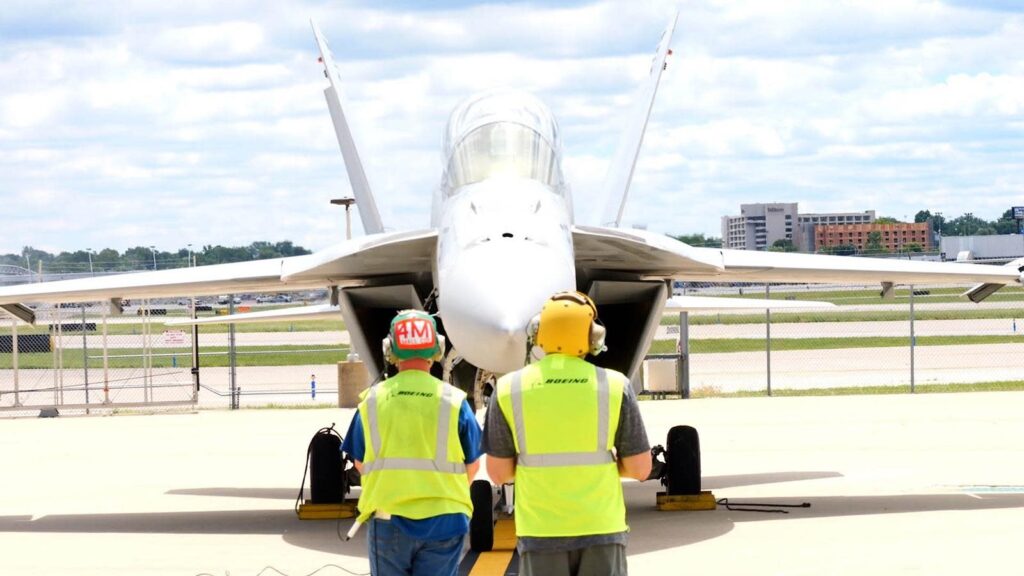
ST. LOUIS, June 27, 2024 — Boeing [NYSE: BA] has completed the upgrade and life extension of the first two service life modification (SLM) F/A-18 Block III Super Hornets, delivering them to the U.S. Navy one month ahead of schedule from St. Louis and two months ahead of schedule from San Antonio. The upgraded jets have the same capabilities as Super Hornets being delivered from Boeing’s new-build production line.
“Our success in meeting the accelerated timeline is proof our service life modification game plan is working,” said Faye Dixon, Boeing SLM director. “Thanks to our years of learning on the program and our partnership with the Navy, the F/A-18 Super Hornet remains at the forefront of defense technology with renewed years of service to support the fleet.”
In partnership with the Navy, Boeing has improved productivity and is completing Block III upgrades ahead of the 15-month contract requirement. This was made possible by:
Establishing a baseline for the condition of Block II F/A-18s received at Boeing, and the Navy’s work to prepare the jets in advance.
Sharing information and best practices across multiple SLM sites to improve efficiency, manage workload distribution and optimize resource allocations.
“Great measures were taken by the Boeing and Navy teams to ensure these are the safest and most capable Block III F/A-18s we can give our warfighters,” said Mark Sears, Boeing Fighters vice president. “These are just the first of many deliveries, with around 15 years of SLM deliveries to go. Our warfighters are counting on us to get this right every time.”
Block III upgrades include a large area display and more powerful computing through Tactical Targeting Network Technology and a Distributed Targeting Processor-Networked open mission systems processor. The work is being done at Boeing sites in St. Louis and San Antonio, and at the Navy’s Fleet Readiness Center Southwest in San Diego.
Boeing and the Fleet Readiness Center Southwest signed a Public-Private Partnership agreement in March to expand the work scope at the command, paving the way for the readiness center to now perform the same Block III SLM work done in St. Louis and San Antonio.
“These first deliveries of Block III SLM jets are a major milestone in our continued efforts to ensure capability, reliability, availability and maintainability of the Super Hornet aircraft,” said Capt. Michael Burks, program manager for the F/A-18 and EA-18G Program Office. “We look forward to our continued partnership with Boeing to deliver this critical warfighting capability to the fleet.”
USS Wasp Transits Through the Strait of Gibraltar
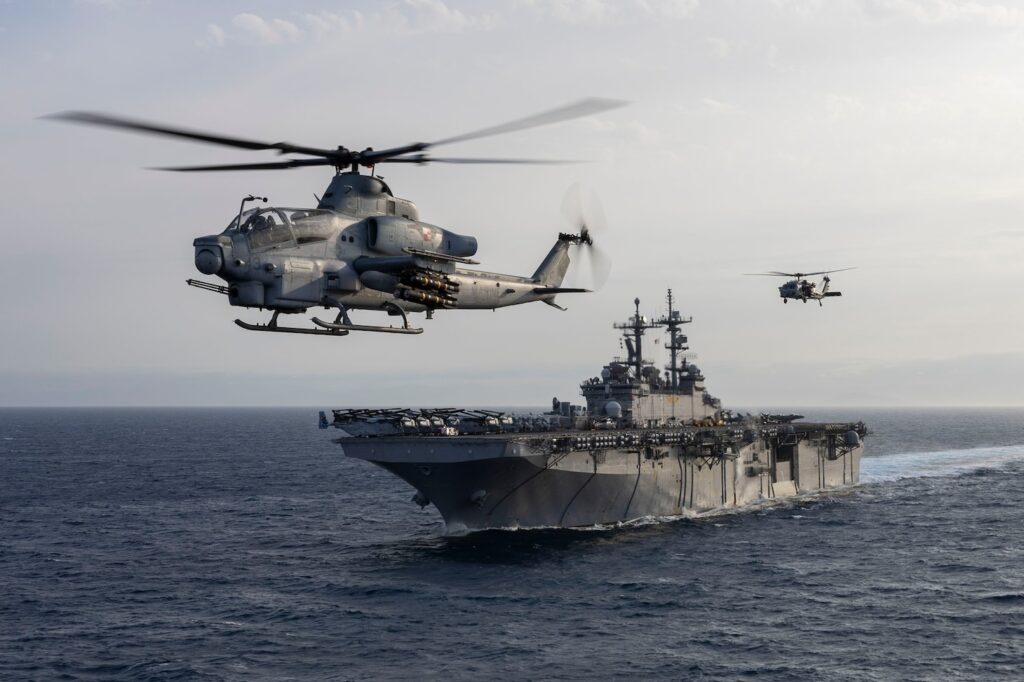
STRAIT OF GIBRALTAR (June, 26, 2024) An AH-1Z Viper, left, assigned to the “Blue Knights” of Marine Medium Tiltrotor Squadron (VMM) 365 (Reinforced), and an MH-60S Sea Hawk, assigned to the “Dragon Whales” of Helicopter Sea Combat Squadron (HSC) 28, flies patrol as the amphibious assault ship USS Wasp (LHD 1) transits the Strait of Gibraltar, June 26, 2024. (U.S. Navy photo by MC2 Sydney Milligan)
By Lt. Mckensey Cobb, June 27, 2024
STRAIT OF GIBRALTAR – The amphibious assault ship USS Wasp (LHD 1), flagship of the Wasp Amphibious Ready Group (WSP ARG) and embarked 24th Marine Expeditionary Unit (MEU) Special Operations Capable (SOC) transited the Strait of Gibraltar and entered the Mediterranean Sea, June 26.
Upon arrival in the Mediterranean Sea, Wasp will reunite with the Harpers Ferry-class amphibious landing dock ship USS Oak Hill (LSD 51), one of two other ships in the WSP ARG. Oak Hill conducted a Strait of Gibraltar transit, June 18, after participating in D-Day 80 commemoration celebrations in Cherbourg, France.
“There is an inherent flexibility to the type of missions an ARG-MEU can support,” said Capt. Nakia Cooper, commodore of Amphibious Squadron 4, embarked aboard Wasp. “Our ability to operate effectively as distributed force gives the ARG-MEU that flexibility. Each of our ships is capable of conducting amphibious operations, crisis response, and limited contingency operations on their own, but there is no substitute for the type of combat power we bring to the fight when we constitute as an Amphibious Ready Group.”
While in the NAVEUR-NAVAF area of operations, Wasp will work alongside allied and partner maritime forces, focusing on theater security cooperation efforts to further regional stability and demonstrate the strong maritime partnership between the U.S. and allies and partners.
This marks the first time that Wasp has operated in the Mediterranean region since its homeport shift from Sasebo, Japan to Norfolk, Virginia in 2019, after which the crew completed an extensive maintenance availability followed by a robust pre-deployment training program culminating in Composite Training Unit Exercise, which certified the ship, and all embarked commands, to deploy.
“Wasp is truly the number one ship in the fleet,” said Capt. Chris “Chewie” Purcell, Wasp’s commanding officer. “We’ve all worked tirelessly to reach this point. I am grateful for the energy our Sailors and Marines bring to the fight each day and confident they will meet every challenge head on over the coming months.”
Wasp has been underway conducting operations in the Atlantic Ocean since early April and recently departed the Baltic Sea after participating in Baltic Operations 2024 (BALTOPS 24).
The Wasp Amphibious Readiness Group consists of the amphibious assault ship USS Wasp (LHD 1), San Antonio-class amphibious transport dock ship USS New York (LPD 21), Harpers Ferry class dock landing ship USS Oak Hill (LSD 51), and embarked 24th Marine Expeditionary Unit (MEU).
The 24th MEU (SOC) is a Marine Air-Ground Task Force (MAGTF) providing strategic speed and agility, ensuring our Marines are prepared to respond and protect U.S. national security interests around the globe. The MEU can respond rapidly from longer ranges with greater capabilities across the spectrum of military conflict.
You can follow USS Wasp’s adventures on Facebook and Instagram (@usswasp_lhd1).
To learn more about WSP ARG and 24th MEU (SOC) “Team of Teams,” visit their DVIDS feature page at https://www.dvidshub.net/feature/wasparg24thmeu.
GA-ASI and Lockheed Martin Developing Net-Enabled Weapons Capability for MQ-9B SeaGuardian
SAN DIEGO – 27 June 2024 – General Atomics Aeronautical Systems, Inc. (GA-ASI) and Lockheed Martin (NYSE: LMT) are collaborating to provide Net-Enabled Weapons (NEW) capability for GA-ASI’s MQ-9B SeaGuardian Unmanned Aircraft System (UAS). The addition of NEW capability for SeaGuardian will bolster the Intelligence, Surveillance, Reconnaissance and Targeting (ISR&T) capability for the aircraft.
The NEW technology provides expanded sensor targeting applications for the precision targeting of long-range weapons. SeaGuardian’s demonstrated persistence coupled with its vast array of precision targeting sensors enables more efficient kill chains, especially in contested environments. GA-ASI’s MQ-9B SeaGuardian UAS, and SeaVue multi-role radar from Raytheon, an RTX business, will effectively leverage Lockheed Martin’s extensive NEW expertise to further refine targeting capabilities for future theater deployments. Initial testing was completed on June 5, 2024, with F/A-18s on the U.S. Navy’s W-289 test range in Southern California.
GA-ASI and Lockheed Martin have been developing Link 16 messages to communicate with weapons inflight using the SeaGuardian Systems Integration Lab (SIL) in preparation for overwater range test flight.
“This is a very important system attribute for SeaGuardian to enable naval long-range targeting CONOPS against high-end threats at much less risk to manned platforms,” said GA-ASI President David R. Alexander. “We appreciate Lockheed Martin’s support in helping us prove out the NEW technology, which is an important component of our ISR&T capability.”
MQ-9B SeaGuardian is a medium-altitude, long-endurance UAS. Its multi-domain capabilities allow it to flex from mission to mission. SeaGuardian has been used by the U.S. in several recent demonstrations, including Northern Edge, Integrated Battle Problem, and Group Sail.
June 26 U.S. Central Command Update
From U.S. Central Command
TAMPA, Fla. – In the past 24 hours, U.S. Central Command forces successfully destroyed one Houthi radar site in a Houthi controlled area of Yemen.
It was determined the radar site presented an imminent threat to U.S., coalition forces, and merchant vessels in the region. This action was taken to protect freedom of navigation and make international water safer and more secure for U.S., coalition, and merchant vessels.
Desig Of World’s First Hydrogen-hybrid Research Vessel Approved
Scripps Oceanography research vessel will use liquid hydrogen fuel cells to enable zero-emissions operation
From Scripps Institution of Oceanography, June 25, 2024
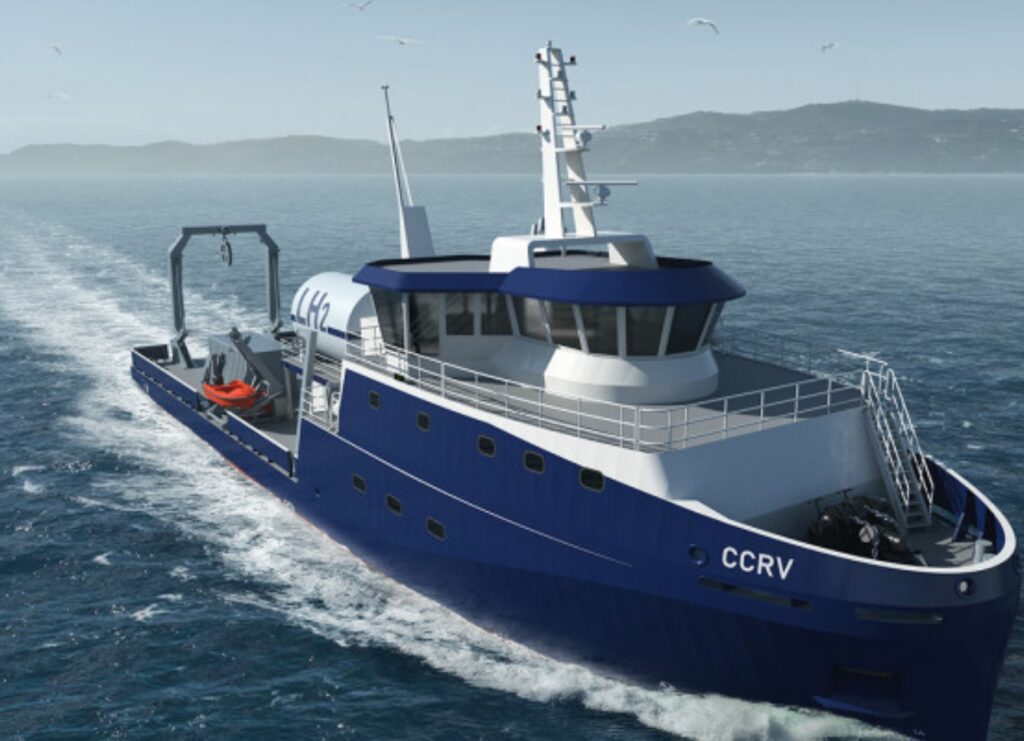
The American Bureau of Shipping (ABS) approved the preliminary design of a first-of-its-kind hydrogen-hybrid research vessel that will join the fleet at UC San Diego’s Scripps Institution of Oceanography when completed.
The vessel’s design was developed by naval architecture and marine engineering firm Glosten. Approval of the preliminary design shows that it meets technical requirements and safety standards, and lays the groundwork for the expanded use of zero-emission hydrogen-powered propulsion at sea.
The ship will feature an innovative hydrogen fuel cell propulsion system that will allow it to operate with no greenhouse gas or other emissions for 75% of its missions – and for all of its time operating in state waters. For longer missions farther offshore, extra power will be provided by clean-running modern diesel generators. The zero-emissions-capable vessel represents a major step toward advancing California’s pledge to reduce global climate risk while transitioning to a carbon-neutral economy and making progress towards the University of California’s climate action goals.
The ship, now known as the California Coastal Research Vessel (CCRV), will be dedicated to California research missions to observe and measure biological, chemical, geological and physical processes including research to better understand fisheries, harmful algal blooms, severe El Niño storms, atmospheric rivers, sea-level rise, ocean acidification, and oxygen depletion zones. The vessel’s findings will help protect California’s coastal environment from climate change impacts while demonstrating hydrogen’s critical role in California’s carbon-free future.
“Our goal is to produce a fully-capable ocean-going research vessel that meets the needs of our scientists and students, and demonstrate that this can be done in a way that absolutely minimizes its impact on our environment,” said Bruce Appelgate, associate director of Scripps and head of ship operations and marine technical support. “This will be a world-class oceanographic research vessel that aligns with our institutional values for protecting the planet.”
The California Coastal Research Vessel will also serve as a vital platform for hands-on learning. As a student-centered, research-focused public university, UC San Diego considers seagoing experiences a cornerstone of educational programs. The vessel will be integral to training the next generation of scientists, leaders and policymakers.
The new 125-foot vessel will replace Research Vessel Robert Gordon Sproul, which has served thousands of University of California students in its 43 years of service but is nearing completion of its service life. The California Coastal Research Vessel will be equipped with the latest instruments and sensing systems, including acoustic Doppler current profilers, seafloor mapping systems, midwater fishery imaging systems, biological and geological sampling systems, and support for airborne drone operations.
As the first liquid hydrogen-powered ship in the United States, the California Coastal Research Vessel required the development of an entirely new regulatory framework, setting important precedents for the technical standards governing the construction and operation of hydrogen-powered ships.
“ABS is proud to use our industry-leading insight into hydrogen as a marine fuel to support this project,” said Gareth Burton, ABS senior vice president of global engineering. “The CCRV has the potential to make a significant contribution to the wider adoption of hydrogen, a promising alternative fuel for the maritime industry.”
During the vessel’s preliminary design, Glosten worked closely with the American Bureau of Shipping as well as the U.S. Coast Guard to inform regulations and ensure the new liquid hydrogen-powered research vessel complied with them.
“Our challenge was to harmonize the requirements of a modern research vessel with evolving regulations and novel technologies for liquid hydrogen fuel. Ensuring the hydrogen systems were safely arranged without compromising the utility of the vessel was like putting together an intricate puzzle,” said Glosten’s Robin Madsen, the lead marine engineer on the project.
In 2021, under Senate President pro Tempore Emeritus Toni Atkins’ leadership, California state legislators allocated $35 million towards the development of the vessel. In March 2023, California Governor Gavin Newsom visited Scripps’ Nimitz Marine Facility to learn more about the vessel’s innovation. Of the CCRV, he said “California continues to lead the way in clean energy innovation, and this vessel is another step in transitioning to a carbon-neutral economy. It’s great to see UC San Diego and Scripps Oceanography lead the hands-on education, training, and scientific research we need to tackle the climate crisis.”
Additionally, last fall the Department of Energy (DOE) chose California as one of seven hydrogen hubs, or regions where the agency will fund coordinated networks of hydrogen fuel producers, purveyors and consumers. A University of California-backed consortium called the Alliance for Renewable Clean Hydrogen Energy Systems, or ARCHES, led the state’s application to DOE, and will steer up to $1.2 billion in federal funding toward 39 hydrogen infrastructure projects up and down the state. The California Coastal Research Vessel is considered a Tier 1 marquee project for the hub, eligible to receive additional funding towards the project.
In 2018, Glosten, Sandia National Laboratories, and DNV completed a feasibility study funded by the U.S. Department of Transportation Maritime Administration that became the genesis of CCRV. The study evaluated the technical, regulatory, and economic feasibility of the Zero-V concept, a vessel powered by fuel cells and liquid hydrogen designed to meet performance and environmental criteria established by Scripps. The study confirmed that a hydrogen-powered research vessel was possible, and in 2022 the Office of Naval Research supported the preliminary design effort under Award N00014-22-1-2765 (any opinions, findings, and conclusions or recommendations here are those of the authors and do not necessarily reflect the views of the Office of Naval Research).
The team at Glosten is currently progressing the California Coastal Research Vessel to the next phase of its design process and will assist Scripps as it begins its search for a contractor to complete the vessel’s construction.
HII Hosts Congressional Delegation at Newport News Shipbuilding
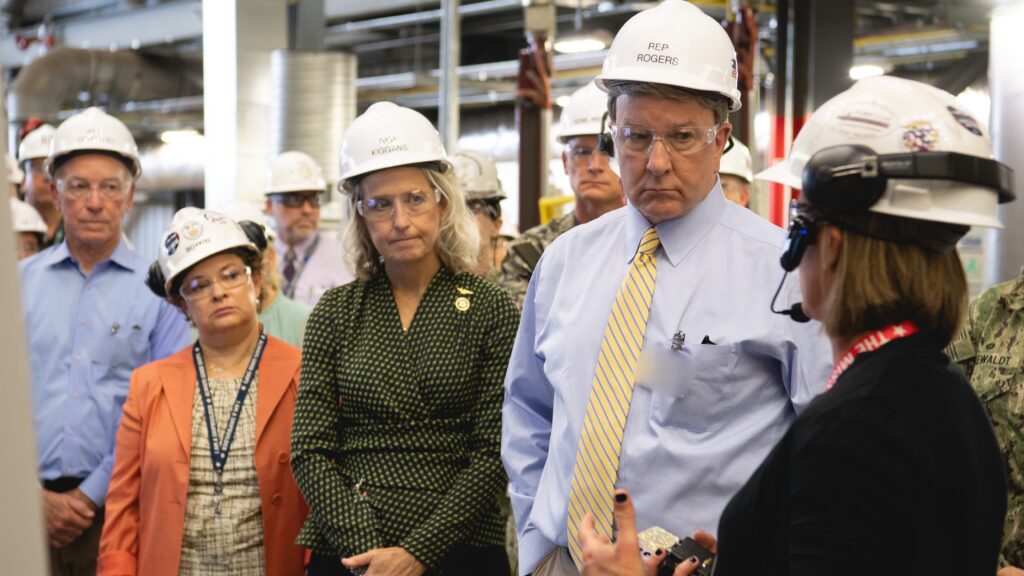
NEWPORT NEWS, Va., June 25, 2024 (GLOBE NEWSWIRE) — HII (NYSE: HII) today hosted a congressional delegation from the House Armed Services Committee at its Newport News Shipbuilding division to meet with shipyard leadership and a tour of the company’s facilities.
Led by Chairman Rep. Mike Rogers, R-Ala., the delegation also included committee members Rep. Joe Courtney, D-Conn.; Rep. Rob Wittman, R-Va.; and Rep. Jen Kiggans, R-Va.
“Hosting visits like this provides an opportunity to showcase the complexity of our operations, the quality of our work, and the dedication of our incredible shipbuilders who bring their best each day,” NNS President Jennifer Boykin said. “We understand the critical impact aircraft carriers and submarines have to our national security mission, and this visit further underscores our responsibility to the Navy and to our nation.”
During Tuesday’s tour, the congressional members saw construction progress on Columbia- and Virginia-class submarines, as well as on Gerald R. Ford-class aircraft carriers. They also witnessed how NNS is innovating with technology, including fixture-based manufacturing, to increase efficiencies across the shipyard. Briefings from shipyard leadership included updates on workforce development efforts and initiatives to enhance the work experience for shipbuilders and sailors, including a recently announced new parking garage.
“Strengthening our naval fleet is critical for maintaining our overall military readiness,” Rogers said. “Over the past year, threats in the Red Sea and Indo-Pacific have demonstrated the need for a strong and capable naval fleet. Providing our shipbuilders with stable demand signals is critical if we want to sustain a healthy shipbuilding industrial base. On the House Armed Services Committee, we have made supporting our shipbuilding industrial base a priority as we boost our naval capabilities.”
With a workforce of more than 25,000 shipbuilders, NNS is the largest industrial employer in Virginia. The shipyard is the nation’s sole designer, builder and refueler of nuclear-powered aircraft carriers and one of only two shipyards capable of designing and building nuclear- powered submarines for the U.S. Navy.
Amphibious Combat Vehicles Conduct Egress Training, Mark First Time Ashore Overseas in Okinawa
From the 15th Marine Expeditionary Unit
OKINAWA, Japan(June 24, 2024) – The 15th Marine Expeditionary Unit conducted the first overseas ship-to-shore operations with Amphibious Combat Vehicles June 24, 2024, at White Beach Naval Facility, Okinawa, Japan.
Elements of the 15th MEU, embarked aboard the amphibious dock landing ship USS Harpers Ferry (LSD 49), arrived at White Beach June 18 for a port visit and to conduct sustainment training.
During the training June 24, the Marines and Sailors of Alpha Company, Battalion Landing Team 1/5, 15th MEU, embarked the ACVs as they splashed from the well deck of Harpers Ferry. Safety boats assigned to 3rd Expeditionary Operations Training Group then pulled alongside the ACVs to transfer personnel to their boats and back to the pier, simulating a situation that required personnel to execute safety egress procedures.
Following the transfer of all embarked personnel, the ACV Platoon then transited through the nearby boat basin to come ashore at the White Beach area to conduct maintenance.
“This was fairly standard training for us, but I’m proud it also represented the first overseas ship-to-shore employment of ACVs,” said U.S. Marine Corps Lt. Col. Nick Freeman, commanding officer of BLT 1/5, 15th MEU. “We’ll continue to train at other locations in the months ahead, using a deliberate approach, capturing useful data and lessons learned, and ultimately sharpening our understanding of how to best employ the ACV in its intended environment — embarked with our forward-deployed ARG/MEUs.”
In the days prior to the ACV amphibious operations, commanders from III Marine Expeditionary Force, 3rd Marine Division, 3rd Marine Expeditionary Brigade, Task Force 76, and Amphibious Rapid Deployment Brigade of the Japanese Self Defense Force and other commands visited 15th MEU aboard Harpers Ferry on June 20. This visit included a tour of the amphibious combat vehicles staged aboard Harpers Ferry, the ship’s well deck, the ACV simulator, and a demonstration of an unmanned hydrographic sensor. See imagery of this visit on DVIDS here. Some of the VIPs also returned to observe the ACV egress training.
Marines and Sailors of Alpha Company, BLT 1/5, are scheduled to host Marines of Battalion Landing Team 1/4, their counterpart unit assigned to the 31st MEU, at White Beach for a subject matter expert exchange about expeditionary ACV operations. The hands-on exchange will include topics such as well deck operations, vehicle handling, maintenance, embarked troops and amphibious operations.
The 15th MEU’s Reconnaissance Company is also scheduled to pair with other U.S. military units in the area in the coming days to conduct integrated maritime interdiction operations. The teams will plan, rehearse and execute a simulated visit, board, search and seizure mission using small boats to climb aboard Harpers Ferry and clear key objective areas together to improve their ability to conduct these types of specialized missions.
“Although this was a routinely-scheduled port visit, both Harpers Ferry and the 15th MEU took advantage of the time to conduct sustainment training to enhance their readiness and cross-train with other Navy and Marine Corps units to strengthen our force,” said U.S. Navy Rear Adm. Chris Stone, commander, Task Force 76 and Expeditionary Strike Group 7. “It was incredible to see the ACVs in operation, as they truly are a force multiplier in this area of operations.”
The 15th MEU is under the command and control of Commander, Task Force 76, which the U.S. 7th Fleet employs to cooperate with allies and partners to preserve a free and open Indo-Pacific.
As the U.S. 7th Fleet’s primary Navy advisor on amphibious matters in the 7th Fleet area of operations, CTF 76 is responsible for conducting expeditionary warfare operations to support a full range of theater contingencies, ranging from humanitarian assistance and disaster relief operations to full combat operations.