HII & US Navy Announce New Parking Garage at Newport News Shipbuilding
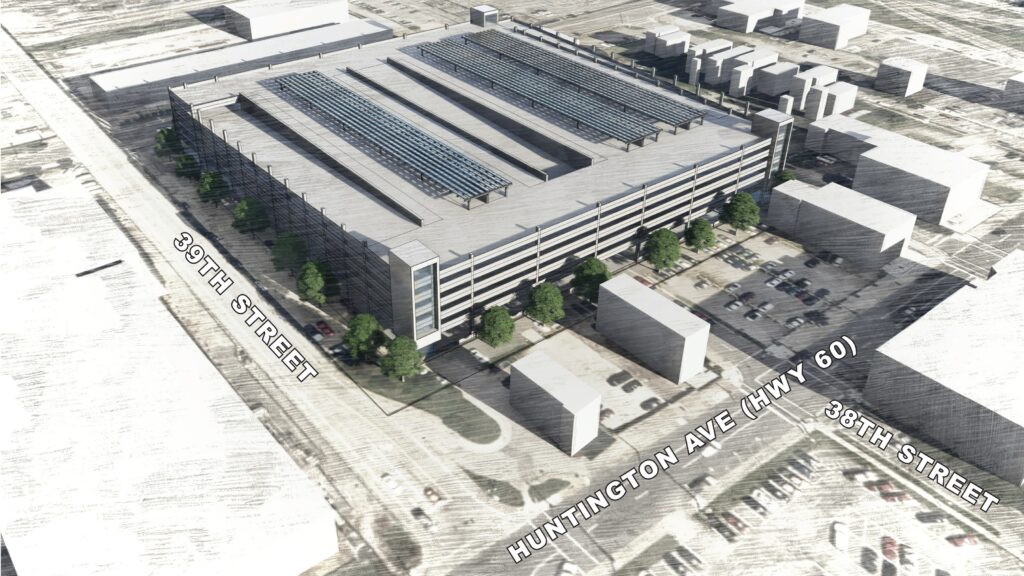
NEWPORT NEWS, Va., June 17, 2024 (GLOBE NEWSWIRE) — HII’s (NYSE: HII) Newport News Shipbuilding division, alongside U.S. Navy, city of Newport News and commonwealth of Virginia partners, announced today construction of a new parking garage that will enhance the working experience for NNS shipbuilders and sailors assigned to the shipyard. 

Once complete, the new parking structure will create more than 2,000 new parking spaces at NNS, significantly improving access to parking at Virginia’s largest industrial employer. Contractor W.M. Jordan will build the garage, with some pre-construction fabrication occurring offsite — an innovative design-build strategy that will reduce the time it takes to complete this project. This increase in parking availability will support future Navy and NNS commitments to deliver ships vital to the Navy’s needs. 

“For over a century, Newport News Shipbuilding and the City of Newport News have grown up together, alongside the U.S. Navy,” NNS President Jennifer Boykin said. “We are intertwined, always supporting each other, and always succeeding together. This new parking garage is exciting news that will contribute to the ongoing transformation of Newport News Shipbuilding and downtown Newport News and the experience our shipbuilders and the sailors assigned to our shipyard have when they come here every day.” 

Images accompanying this release are available at: https://hii.com/news/hii-us-navy-announce-new-parking-garage-at-newport-news-shipbuilding/

“Today’s announcement demonstrates that leadership is listening to its sailors and we’re taking action,” said Rear Adm. Casey Moton, commander, Program Executive Office Aircraft Carriers. “While this is one action of many, it is important to recognize we’re not doing this alone. The partnership shown here today reflects the commitment of the wider community and that sailors assigned here can expect to have the resources they need to be successful.” 

“Our sailors and shipbuilders are a part of the backbone of our nation and our community,” Virginia State Sen. Mamie Locke said. “They deserve a community that supports their dedication and hard work. This entire initiative will not only alleviate parking challenges but also contribute to the vibrancy of our community and to the positive experience that our military personnel and shipbuilders have when they live and work here.” 

“It is essential that we continue to cement the city’s partnership with the Navy and Newport News Shipbuilding to amplify our investment in downtown,” city of Newport News Mayor Phillip Jones said. “Today’s announcement of additional funding furthers the commitment by HII and the Navy with an even bigger boost to the current improvements occurring downtown.” 

The new garage will be constructed on two current NNS parking lots, situated between 37th and 39th Streets, between Huntington Avenue and Warwick Boulevard. HII is working closely with the Navy and city on the design, and will communicate additional details as the plan is finalized. 

NNS is the nation’s sole designer, builder and refueler of nuclear-powered aircraft carriers and one of only two shipyards capable of designing and building nuclear‐powered submarines. 


U.S. Navy Rescues Crew from Vessel Struck by Houthis 

By Carrier Strike Group Two Public Affairs | June 16, 2024 

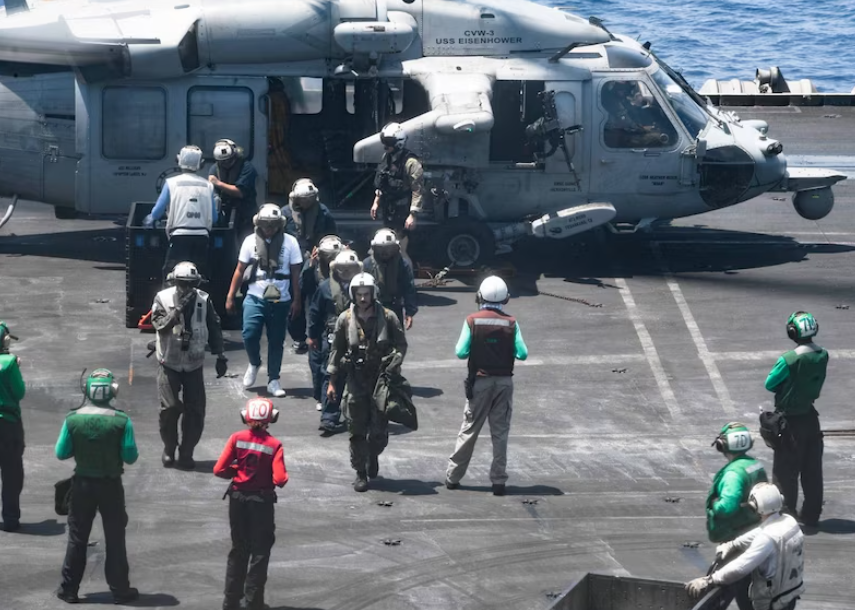
RED SEA –Sailors assigned to the Dwight D. Eisenhower Carrier Strike Group (IKECSG) airlifted the crew of a merchant vessel attacked by Iranian-backed Houthis in the Red Sea, June 15. 

The Liberian-flagged, Greek-owned bulk cargo carrier M/V Tutor was struck by an Iranian-back Houthi uncrewed surface vessel (USV) while sailing in the international waters of the Southern Red Sea, June 12. The attack caused severe flooding and damage to the engine room. One civilian mariner remains missing. 

A helicopter from Helicopter Maritime Strike Squadron (HSM) 74 airlifted 24 civilian mariners from Tutor to Ticonderoga-class guided-missile cruiser USS Philippine Sea (CG 58). From there, helicopters from Helicopter Sea Combat Squadron (HSC) 7 transported the group to USS Dwight D. Eisenhower (CVN 69). After being medically checked on IKE, the mariners were flown ashore for follow-on care. 

“It’s humbling to watch the Strike Group provide assistance and rescue the crew of M/V Tutor,” said Rear Adm. Marc Miguez, commander, IKECSG, Carrier Strike Group 2. “We are always prepared to help; it is the right thing to do.” 

“Despite these senseless attacks on innocent mariners just doing their job, the Philippine Sea crew stand ready to help preserve safety of life at sea, always,” said Capt. Steven Liberty, Philippine Sea’s commanding officer. 

On June 13, HSM-74 aircraft from Philippine Sea medically evacuated a severely injured civilian mariner from M/V Verbena to a nearby partner force ship for medical attention. Palau-flagged, Ukrainian-owned Verbena was sailing in the Gulf of Aden when it was struck by two anti-ship cruise missiles fired from Houthi-controlled territory in Yemen. 

IKECSG is operating in the U.S. 5th Fleet area of operations to support maritime stability and security in the Middle East region. 


US Navy showcases Sea Hunter Unmanned Surface Vehicle at LA Fleet Week 

By Program Executive Office Unmanned and Small Combatants (PEO USC) Public Affairs 

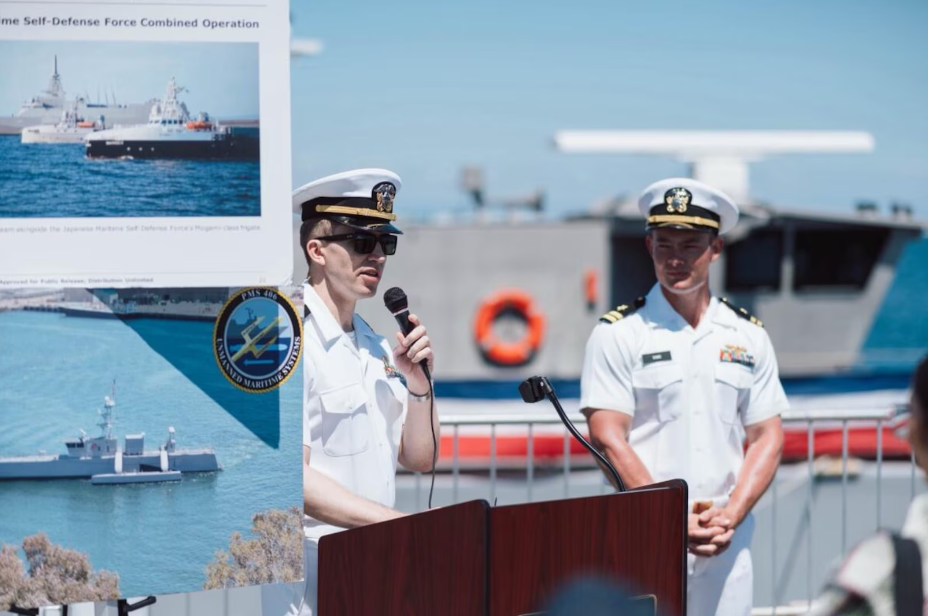
LOS ANGELES — The U.S. Navy showcased Sea Hunter, part of the U.S. Navy’s unmanned surface vehicles (USV) prototype fleet, during Los Angeles Fleet Week, May 22-27. 

Sea Hunter hosted tours from May 24th through the 27th, which attracted more than 1,600 visitors to the USV, including Christopher Diaz, Chief of Staff to the Secretary of the Navy. The tours included an overview of the USV, its deployment history, and the mission of Unmanned Surface Vessel Squadron One. 

“We welcomed the opportunity to showcase Sea Hunter at this year’s LA Fleet Week and to highlight our work in unmanned technology,” said Capt. Matthew Lewis, program manager of the Unmanned Maritime Systems program office. “USVs are vital to our mission of advancing autonomous operations and growing the Navy’s future manned-unmanned Hybrid Fleet. Sea Hunter represents advanced naval technology, and we’re thrilled the public had the chance to glimpse the future of maritime warfare.” 

The Navy continues to make significant advancements in the development of autonomous systems. Last August, Sea Hunter was one of four USV prototypes to operate in Integrated Battle Program 23.2, the Navy’s third multi-domain unmanned capabilities exercise. During the exercise, Sea Hunter and three additional USVs transited to Japan and Australia for testing, operations with manned warships and experiments with advanced payloads. 

An annual event held over Memorial Day weekend to celebrate America’s sea services, LA Fleet Week featured public ship tours, equipment displays, and live demonstrations of cutting-edge military technology. Sea Hunter’s participation in events like LA Fleet Week helps educate the public on the latest naval technology and demonstrates the Navy’s commitment to integrating advanced technology into its operations. 

Sea Hunter is a USV in the Program Executive Office, Unmanned and Small Combatants portfolio, which designs, develops, builds, maintains and modernizes the Navy’s unmanned maritime systems; mine warfare systems; special warfare systems; expeditionary warfare systems; and small surface combatants. 


Anduril to Open Large Scale Production Facility for Autonomous Underwater Vehicles 

The Rhode Island production facility will enable Anduril to increase production to 200 AUVs per year and create more than 100 jobs over the next five years. The factory announcement comes amid growing demand for Anduril’s AUVs, including an $18.6 million contract with the U.S. Navy.  
 
Anduril Industries is announcing a new manufacturing facility to support large-scale production of its Dive-LD family of autonomous underwater vehicles (AUVs) at Quonset Point, Rhode Island. By investing in a scaled production facility ahead of need, Anduril will be able to stay ahead of customer demand and deliver on orders with unprecedented speed.  
 
AUVs are transforming maritime deterrence by providing an affordable, distributed, and adaptable undersea capability that complements the U.S. and allied submarine fleet. Developing, manufacturing, and fielding these systems at scale on an operationally-relevant timeline will be critical. The 100,000-150,000 square foot production facility will enable Anduril to immediately increase production capacity for its Dive-LD family of AUVs to more than 200 hulls per year. Anduril plans to create more than 100 jobs within five years of the facility opening in 2025. 
 
“We are thrilled to build a state-of-the-art production manufacturing facility for our LD family of vehicles in Quonset Point. Affordable, distributed mass is a central tenet of undersea deterrence and we look forward to supporting large-scale, cost-effective AUV deployments with our new facility,” said Shane Arnott, Senior Vice President at Anduril Industries. “Our Maritime Division continues to develop advanced undersea capabilities and, with large contract awards both in the United States and Australia, we are committed to the mass manufacturing of those proven capabilities at speed and at scales that matter.” 
 
Anduril AUVs are designed from the ground-up for production at scale, with a heavy emphasis on commercial-off-the-shelf components with robust supply chains, a modular design, and advanced, scalable manufacturing techniques that enable rapid iterations based on customer needs. The facility is strategically located in close proximity to Anduril’s maritime engineering center in Quincy, Massachusetts, ensuring that products can be rapidly updated based on customer feedback, even in the midst of full-rate production. The production facility will be able to accommodate the complete lifecycle of the hull — from R&D through sustainment — with dedicated onsite testing facilities, service bays, and more. This manufacturing facility will enable Anduril to produce AUVs at scale and create a paradigm shift in maritime deterrence that places a greater emphasis on unmanned and autonomous systems. 
 
The factory announcement comes amid growing demand from defense and commercial customers. The U.S. Navy, for example, recently awarded Anduril an $18.6 million contract to cover an initial buy of Dive AUVs through the Defense Innovation Unit’s (DIU) Large Displacement Unmanned Underwater Vehicles (LDUUV) prototyping effort, following a “swim-off” competition late last year.  
 
“Over the last 6 months, the U.S. Navy, in partnership with DIU and Congress, has driven an aggressive program timeline to put vendors on contract, acquire capabilities, and rapidly demonstrate those capabilities with warfighters,” said Nick Stoner, Director at Anduril Industries. “This contract is a fantastic example of how the U.S. Navy can incentivize industry to make capital investments and produce the kinds of undersea asymmetric advantages our Fleet Commanders need, on the timelines they need them.” 
 
Driven by Anduril’s investment in long-range, autonomous undersea capabilities, the Dive family of AUVs has emerged as the leading solution for a variety of missions, including operational preparation of the environment, surveillance and reconnaissance, mine warfare, subsea and seabed warfare, seafloor mapping, and more. Now, with a larger manufacturing facility under construction, Anduril will be able to rapidly scale production and accelerate delivery to customers.  
 
This announcement comes as Anduril continues to advance critical, distributed maritime missions around the world through large and extra-large autonomous subsurface capabilities. Earlier this year, Anduril unveiled the first prototype Ghost Shark extra-large autonomous undersea vehicle, developed and delivered ahead of schedule and on-budget at its Sydney, Australia location in partnership with the Royal Australian Navy, the Advanced Strategic Capabilities Accelerator, and the Defence Science and Technology Group (DSTG).  
 
Anduril is a defense technology company on a mission to transform U.S. and allied militaries with advanced technology. Anduril is committed to delivering innovative maritime capabilities that will transform deterrence in an increasingly complex global security environment for the U.S. and its allies. 

“Anduril joins an esteemed list of the nation’s leading defense contractors with operations in Rhode Island, like General Dynamics Electric Boat, Raytheon, and Textron, among others,” said Governor Dan McKee. “Their addition further demonstrates Quonset as a hub of good-paying, quality jobs for Rhode Islanders that will help our state in raising incomes for all.” 

“We welcome Anduril to the Ocean State,” said Secretary of Commerce Liz Tanner. “Their presence will not only create high-paying jobs but also drive innovation in ocean technology, helping to establish Rhode Island’s position as a leader in the blue economy.” 


U.S. Central Command Update  

From U.S. Central Command 

June 15, 2024 

TAMPA, Fla.-On June 13, Iranian-backed Houthis struck M/V Verbena, a Palauan-flagged, Ukrainian-owned, Polish-operated bulk cargo carrier in two separate missile attacks. Today, at approximately 1:45 p.m. (Sanna time), the crew issued a distress call indicating they were abandoning the ship. M/V Anna Meta responded to render assistance. Anna Meta has recovered the mariners and is transporting them to safety. The crew abandoned ship due to continued fires and an inability to control them.  

The Iranian frigate IRIN Jamaran was eight nautical miles from M/V Verbena and did not respond to the distress call.  

This continued malign and reckless behavior by the Iranian-backed Houthis threatens regional stability and endangers the lives of mariners across the Red Sea and Gulf of Aden. CENTCOM will continue to act with partners to hold the Houthis accountable and degrade their military capabilities.  

June 14, 2024 
 

TAMPA, Fla. –In the past 24 hours, U.S. Central Command (USCENTCOM) forces successfully destroyed two Houthi uncrewed surface vessels (USV) in the Red Sea. 

Additionally, USCENTCOM forces successfully destroyed one uncrewed aerial system (UAS) launched from a Houthi controlled area of Yemen over the Red Sea. 

Separately, USCENTCOM forces successfully destroyed seven Iranian-backed Houthi radars in a Houthi controlled area in Yemen. These radars allow the Houthis to target maritime vessels and endanger commercial shipping. 

It was determined these systems presented an imminent threat to U.S., coalition forces, and merchant vessels in the region. This action was taken to protect freedom of navigation and make international waters safer and more secure for U.S., coalition, and merchant vessels. 

Update on M/V Tutor and M/V Verbena 

June 14, 2024 
 

TAMPA, Fla. –On June 12, Iranian-backed Houthis struck M/V Tutor, a Liberian flagged, Greek owned and operated bulk cargo carrier, with an uncrewed surface vessel (USV) resulting in severe flooding and damage to the engine room. One civilian mariner remains missing following the attack. The crew abandoned ship and were rescued by USS Philippine Sea (CG 58) and partner forces. M/V Tutor remains in the Red Sea and is slowly taking on water. 

Yesterday, Iranian-backed Houthis struck M/V Verbena, a Palauan flagged, Ukrainian owned, Polish operated bulk cargo carrier, in two separate missile attacks resulting in fires on board. One civilian mariner was medically evacuated due to severe injuries. The crew of M/V Verbena extinguished the fire and have resumed their transit in the Gulf of Aden. 

This continued malign and reckless behavior by the Iranian-backed Houthis threatens regional stability and endangers the lives of mariners across the Red Sea and Gulf of Aden. The Houthis claim to be acting on behalf of Palestinians in Gaza and yet they are targeting and threatening the lives of third country nationals who have nothing to do with the conflict in Gaza. The ongoing threat to international commerce caused by the Houthis in fact makes it harder to deliver badly needed assistance to the people of Yemen as well as Gaza. The United States will continue to act with partners to hold the Houthis accountable and degrade their military capabilities. CENTCOM will continue to act with partners to hold the Houthis accountable and degrade their military capabilities. 


U.S. Coast Guard Cutter Healy Departs Seattle for Arctic Deployment

The Coast Guard Cutter Healy (WAGB 20) begins its departure from Coast Guard Base Seattle for their annual Arctic deployment, June 12, 2024. The Healy will conduct high latitude science and research missions in the Arctic. (U.S. Coast Guard photo by Petty Officer 3rd Class Annika Hirschler)

From U.S. Coast Guard Pacific Area, June 13, 2024 

SEATTLE — U.S. Coast Guard Cutter Healy (WAGB 20) departed Seattle Wednesday, beginning their months-long Arctic deployment. 
 
The crew will support scientists conducting three distinct science missions during Healy’s 2024 Arctic deployment. 
 
The first mission is supporting the Arctic Observing Network, funded by the U.S. National Science Foundation (NSF). During this mission, the cutter will service subsurface moorings in the Beaufort Sea, north of Alaska, and conduct a broad-scale survey of the boundary current system from the Bering Strait to the western Canadian Arctic. This program has been ongoing for more than two decades to improve understanding of the Pacific Arctic ecosystem in a changing climate. Ancillary programs include measurements of harmful algae blooms and a variety of biogeochemical parameters. 
 
For the second mission, Healy will embark 20 early career polar scientists and their mentors on a Polar Chief Scientist Training Cruise sponsored by the NSF and University-National Oceanographic Laboratory System to conduct multidisciplinary research. During a transit of the Northwest Passage, these early career scientists will conduct mapping to fill critical bathymetric gaps and scientific sampling across various disciplines, in addition to developing skills in shipboard leadership, coordination, and execution. 
 
The final mission of the deployment will support the Global Ocean Ship-Based Hydrographic Investigations Program (GO-SHIP), where they aim to make the first ever single ship, single season, high-resolution transect of hydrographic observations across the Arctic basin. This global effort builds on data from as far back as the 1990s to collect repeat oceanographic data from a series of ocean basin transects around the world. The high-resolution surface-to-bottom multidisciplinary observations the team collects during this mission will be compared to earlier partial datasets to better understand the Arctic environment. 
 
“We are excited to support three significant missions in the northern high latitudes,” said Healy’s Commanding Officer Capt. Michele Schallip. “Two of these missions are part of long-standing data collection projects, aimed at enhancing our understanding of a changing Arctic. The third mission is dedicated to inspiring future principal investigators who will continue this important work. At a time when scientific interest in the Arctic Ocean Basin is intensifying, Healy substantially enhances the American Arctic research capability. Healy’s crew have been unwavering in their efforts during our in-port maintenance period, ensuring the cutter is ready to meet the demands of these missions.” 
 
Healy is the United States’ largest and most technologically advanced polar icebreaker and the Coast Guard’s only icebreaker designed and equipped with scientific instrumentation by the NSF to support Arctic research. The platform is ideally specialized for scientific missions, providing access to the most remote reaches of the Arctic Ocean. Healy is designed to break 4.5 feet of ice continuously at three knots and can operate in temperatures as low as -50 degrees Fahrenheit. 


June 13 U.S. Central Command Update

From U.S. Central Command, June 13, 2024 

TAMPA, Fla. –In the past 24 hours, U.S. Central Command (USCENTCOM) forces successfully destroyed one air defense sensor in a Houthi controlled area of Yemen. 

Then, USCENTCOM forces successfully destroyed one Iranian-backed Houthi uncrewed surface vessel (USV) and two Houthi patrol boats in the Red Sea. 

Separately, USCENTCOM forces successfully destroyed one uncrewed aerial system (UAS) launched from a Houthi controlled area of Yemen over the Red Sea. 

It was determined these systems presented an imminent threat to U.S., coalition forces, and merchant vessels in the region. This action was taken to protect freedom of navigation and make international waters safer and more secure for U.S., coalition, and merchant vessels. 

Additionally, Iranian-backed Houthis launched two anti-ship ballistic missiles (ASBM) from a Houthi controlled area of Yemen into the Red Sea. There were no injuries or significant damage reported by U.S., coalition, or merchant vessels. 

Later, M/V Verbena, a Palauan flagged, Ukrainian owned, Polish operated bulk cargo carrier, was struck for a second time in 24 hours, by one ASBM launched from Houthi controlled area of Yemen into the Gulf of Aden. 

This continued malign and reckless behavior by the Iranian-backed Houthis threatens regional stability and endangers the lives of mariners across the Red Sea and Gulf of Aden. The Houthis claim to be acting on behalf of Palestinians in Gaza and yet they are targeting and threatening the lives of third country nationals who have nothing to do with the conflict in Gaza. CENTCOM will continue to act with partners to hold the Houthis accountable and degrade their military capabilities. 

Houthis Strike M/V Verbena in Gulf of Aden, USS Philippine Sea Medically Evacuates Injured Mariner 

TAMPA, Fla. –Today the Iranian-backed Houthis launched two anti-ship cruise missiles (ASCM) into the Gulf of Aden. Both missiles struck M/V Verbena, a Palauan-flagged, Ukrainian-owned, Polish-operated bulk cargo carrier. M/V Verbena most recently docked in Malaysia and was enroute to Italy carrying wood construction material. 

M/V Verbena reported damage and subsequent fires on board. The crew continues to fight the fire. One civilian mariner was severely injured during the attack. 

Aircraft from USS Philippine Sea (CG 58) medically evacuated the injured mariner to a partner force ship nearby for medical attention. 

This continued reckless behavior by the Iranian-backed Houthis threatens regional stability and endangers the lives of mariners across the Red Sea and Gulf of Aden. The Houthis claim to be acting on behalf of Palestinians in Gaza and yet they are targeting and threatening the lives of third country nationals who have nothing to do with the conflict in Gaza. The ongoing threat to the ability to safely transit the region caused by the Houthis makes it harder to deliver critical assistance to the people of Yemen as well as to Gaza. U.S. CENTCOM will continue to act with partners to hold the Houthis accountable and degrade their military capabilities.  


USS Arleigh Burke Completes Fourth FDNF-E Patrol

NAVAL STATION ROTA, Spain (May 29, 2024) Sailors man the rail as the Arleigh Burke-class guided-missile destroyer USS Arleigh Burke (DDG 51) returns to Naval Station Rota, May 29, 2024. (U.S. Navy photo by Courtney Pollock) 

By Ensign Susanna Gaither, June 14, 2024 

NAVAL STATION ROTA, Spain  –  Arleigh Burke-class guided-missile destroyer USS Arleigh Burke (DDG 51) returned to Naval Station Rota, Spain from its fourth Forward Deployed Naval Forces-Europe (FDNF-E) patrol, May 29, 2024. 

The ship departed Rota for its fourth patrol in November 2023. after completing a comprehensive Surface Incremental Availability (SIA). During the SIA, $17.5 million worth of repairs, alterations, and installations were performed to the ship’s engineering, weapons and combat systems. 

Arleigh Burke kicked off Patrol Four by completing her Mobility-Engineering (MOB-E) certification in the Bay of Cadiz. During MOB-E, the ship was a key participant in 2023 European Air-Missile Defense Exercise (EAMDEX), a joint Ballistic Missile Defense (BMD) exercise incorporating the United States Air Force, Army, and Space Force together with Aegis Ashore Poland and Romania and NATO allies. 

After EAMDEX, in late November, the ship transited east through the Strait of Gibraltar from the Atlantic Ocean to the Mediterranean Sea. Arleigh Burke joined the Gerald R. Ford Carrier Strike Group (CSG), which consisted of USS Gerald R. Ford (CVN 78), Carrier Air Wing (CVW) 8, Destroyer Squadron (DESRON) 2, Ticonderoga-class guided-missile cruiser USS Normandy (CG 60), and Arleigh Burke-class guided-missile destroyers USS Ramage (DDG 61), USS McFaul (DDG 74), and USS Thomas Hudner (DDG 116). While part of the Gerald R. Ford Carrier Strike Group (GRFCSG), Arleigh Burke served as horizon reference unit and air defense picket, participated in flight operations, and conducted fleet level tactical exercises. 

After completing its integration with the GRFCSG, Arleigh Burke arrived back in Rota Dec. 21, 2023 for an inter-patrol Training and Maintenance Availability (TRAV). Once complete with the TRAV work, the ship’s crew departed Rota, Spain a final time, Jan. 5, 2024, operating in the eastern Mediterranean Sea for the remainder of the patrol. 

On arrival to the eastern Mediterranean Sea, Arleigh Burke joined the Bataan Amphibious Readiness Group (BATARG). BATARG consisted of the Wasp-class amphibious assault ship USS Bataan (LHD 5), the San Antonio-class amphibious transport dock ship USS Mesa Verde (LPD 19), and the Harpers Ferry-class dock landing ship USS Carter Hall (LSD 50). Embarked commands include the Marines of 26th Marine Expeditionary Unit (MEU), Amphibious Squadron 8, Fleet Surgical Team 8, Tactical Air Control Squadron 21, Helicopter Sea Combat Squadron 26, Assault Craft Unit 4, and Beach Master Unit 2. 

While attached to the BATARG, Arleigh Burke hosted reporters from major media outlets including ABC, CBS, and BBC, Jan. 19, 2024, demonstrating the capability and flexibility of the U.S. Navy and the FDNF-E force. 

Following her duties with the ARG, Arleigh Burke participated in NATO exercise Dynamic Manta. Dynamic Manta is an annual anti-submarine and anti-surface warfare exercise designed 

to enhance interoperability and proficiency between Allied nations. Ships, submarines, and aircraft from Canada, France, Greece, Italy, Spain, Turkey, and the U.K. joined forces over two weeks to enhance partnerships while in an ASW environment. 

Following Dynamic Manta, Arleigh Burke again bolstered U.S., Allied and partner interests in the Mediterranean Sea. In the early morning hours of April 14, Arleigh Burke and USS Carney (DDG 64) supported U.S. Central Command in destroying multiple one-way attack UAVs and ballistic missiles launched toward Israel from Iran and Iranian proxy groups. 

Following operations in defense of Israel, the ship conducted multiple escort operations in support of humanitarian efforts in Gaza. 

Throughout their fourth patrol, the ship’s crew made six port visits to Souda Bay, Greece. The ship also made one port call each to the Cypriot ports of Limassol and Larnaca. In Larnaca, the ship hosted U.S. Ambassador to Cyprus Julie Fisher and Vice Adm. Thomas Ishee, Commander, U.S. Sixth Fleet, in addition to local dignitaries and senior military officials. 

After extending on patrol to support mission requirements, Arleigh Burke returned to port May 29, 2024. Throughout the patrol, Arleigh Burke Sailors earned 30 Enlisted Warfare Specialist pins, 11 Surface Warfare Officer pins, and one Surface Warfare Supply Corps pin. 

Arleigh Burke is one of four Forward-Deployed Naval Forces-Europe (FDNF-E) destroyers assigned to Commander Task Force 65 as part of the U.S. Navy’s support to NATO’s Integrated Air Missile Defense (IAMD) architecture. These FDNF-E ships demonstrates the U.S. Navy’s flexibility to operate throughout Europe and Africa, from the Cape of Good Hope to the Arctic Circle, supporting security and stability in the maritime domain. 

For over 80 years, U.S. Naval Forces Europe-U.S. Naval Forces Africa (NAVEUR-NAVAF) has forged strategic relationships with allies and partners, leveraging a foundation of shared values to preserve security and stability. 

Headquartered in Naples, Italy, NAVEUR-NAVAF operates U.S. naval forces in the U.S. European Command (USEUCOM) and U.S. Africa Command (USAFRICOM) areas of responsibility. U.S. Sixth Fleet is permanently assigned to NAVEUR-NAVAF, and employs maritime forces through the full spectrum of joint and naval operations. 


First Royal Australian Navy Enlisted Sailors Begin Training at U.S. Submarine School

By Lauren Laughlin, Naval Submarine School, June 13, 2024 

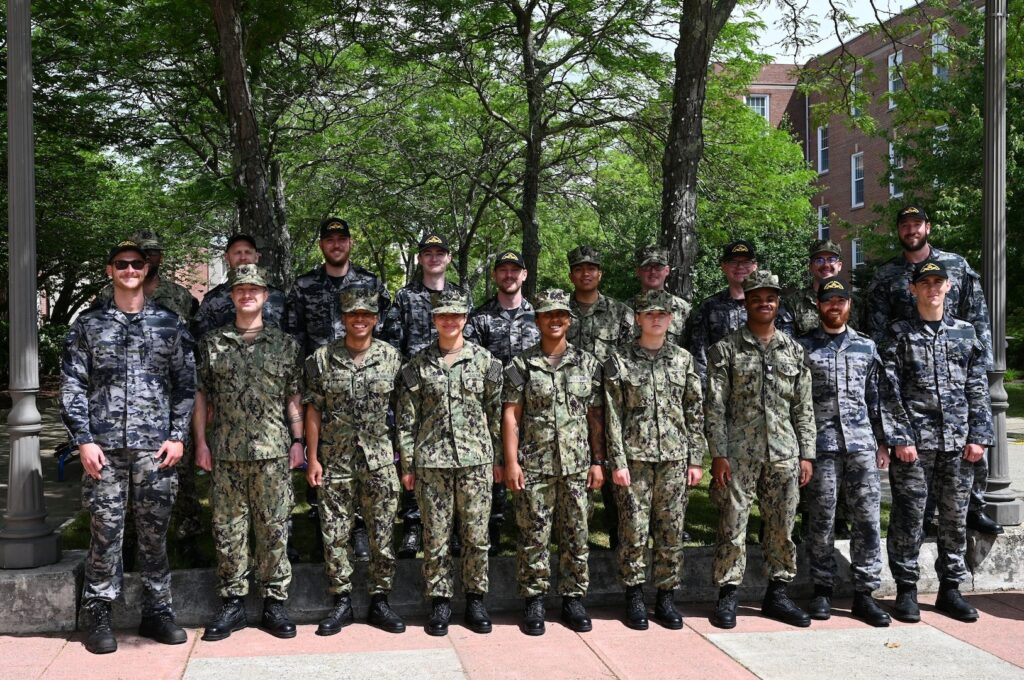
GROTON, Conn.–The U.S. Naval Submarine School in Groton welcomed its first cadre of nine enlisted sailors and the second cadre of three officers from the Royal Australian Navy on June 3rd and 10th respectively. These 12 Australians will train alongside their American counterparts to operate conventionally armed, nuclear-powered attack submarines (SSNs). 
 
The enrollment of Royal Australian Navy sailors at the Submarine School marks a significant step in the AUKUS (Australia, United Kingdom, United States) Pillar 1 Optimal Pathway, aimed at helping Australia acquire a conventionally armed, nuclear-powered submarine fleet. 
 
“We’re excited to welcome these sailors and officers to Groton and build on the momentum of the first cohort of Australian officers to graduate from Submarine Officer Basic Course (SOBC) in April,” said Capt. Matthew Fanning, commanding officer, Naval Submarine School. “It is an honor to be part of the team that is delivering game-changing capabilities to one of our country’s closest and staunchest allies.” 
 
The Submarine School trains officers and enlisted personnel through two distinct but interrelated tracks: Submarine Officer Basic Course (SOBC) and Basic Enlisted Submarine School (BESS). 
 
SOBC is the last step in the U.S. Navy’s submarine officer training pipeline, graduating over a thousand officers annually. BESS introduces enlisted sailors to the fundamentals of the construction and operation of today’s nuclear-powered submarines. The course covers everything from shipboard organization to submarine safety and escape procedures. Following BESS, enlisted sailors will complete their pipeline training with classroom and skills training specific to their intended technical rating. 
 
Upon graduation from pipeline schools, the Royal Australian Navy officers and sailors will be assigned to U.S. SSNs for their first sea tour to further their knowledge and training. 
 
“The Royal Australian Navy officers and sailors commencing their training at the U.S. Naval Submarine School represent the leading edge of Australia’s future submarine fleet,” said the Chief of the Royal Australian Navy, Vice Adm. Mark Hammond. 
 
“Three Australian officers have already completed 14 months of intensive shore-based training, including Nuclear-Power School, nuclear propulsion training, and the Submarine Officer Basic Course before being assigned to U.S. Virginia class submarines. Our people are receiving world class training through our U.S and U.K partners, and will play a crucial role for Australia’s future SSN capability. I’m incredibly proud of their achievements representing the Royal Australian Navy.” 
 
“Australians are exceptional submariners,” said Rear Adm. Lincoln Reifsteck, the U.S. Navy’s AUKUS Integration and Acquisition program manager. “The training they receive at Submarine School will set them up for a successful tour aboard an American SSN, moving the Royal Australian Navy that much closer to operating sovereign, conventionally armed, nuclear-powered submarines.” 
 
The number of Royal Australian Navy personnel training across the U.S. will increase to over 100 people in the next 12 months. Training Royal Australian Navy sailors alongside their American counterparts will enhance interoperability across the submarine forces, which is a cornerstone of establishing Australia’s sovereign nuclear-powered attack submarine capability. 
 
The AUKUS partnership is a strategic endeavor that aims to strengthen the industrial bases of the three partners and promote a safe, free, and open Indo-Pacific, ensuring the international, rules-based order is upheld in the region. Australia will acquire conventionally armed SSNs for the Royal Australian Navy under AUKUS Pillar 1. The AUKUS I&A program office is responsible for executing the trilateral partnership to deliver conventionally armed, nuclear-powered attack submarines to the Royal Australian Navy at the earliest possible date while setting the highest nuclear stewardship standards and continuing to maintain the highest nuclear nonproliferation standard. 


MSC’s Sobeck Nominated for Rear Admiral

U.S. Department of Defense, June 14, 2024 

Secretary of Defense Lloyd J. Austin III announced today that the president has made the following nomination: 

Navy Rear Adm. (lower half) Philip E. Sobeck for appointment to the grade of rear admiral. Sobeck is currently serving as commander, Military Sealift Command, Norfolk, Virginia. 

Below is Sobeck’s official biography: 

Rear Adm. Phillip E. Sobeck is a native of Boyertown, Pennsylvania, and enlisted in the U.S. Navy in 1985 as a Machinist Mate (Nuclear). He is a 1991 graduate of the U.S. Naval Academy and earned a master’s degree in organizational management from the George Washington University. He has also served as a fellow for MIT’s Seminar XXI Strategic Studies Program. 

He is a surface warfare officer whose operational assignments include USS Hawes (FFG 53), USS Gonzalez (DDG 66), USS McFaul (DDG 74), Destroyer Squadron FIFTY (CDS 50), and the First Combined United States and United Kingdom Destroyer Squadron (1 CDS) embarked on USS Harry S. Truman CVN 75). He commanded USS Avenger (MCM 1), USS Ardent (MCM 12), USS Farragut (DDG 99), and Destroyer Squadron (DESRON) 50/Task Force (TF) 55. During these tours, he was forward deployed nine times and participated in a multitude of Joint and Combined operations. 

Assignments ashore include PERS 410B, Bureau of Naval Personnel, executive assistant (EA) to the Commandant of Midshipman; deputy director for Maritime Security (Political Military International Security Office, U.S. State Department); EA to CNO’s Executive Learning Officer; assistant deputy director Flag Officer Management and Detailing (PERS N00F); senior military assistant to USD (Personnel and Readiness); deputy EA to Commander, U.S. Fleet Forces; director, Future Fleet Design and Architecture OPNAV (N3/N5); military assistant to the 76th Secretary of the Navy; special assistant to the Digital Warfare Office (N2/N6). 

His previous flag assignments include director, 21st Century Sailor Office (OPNAV N17); commander, Expeditionary Strike Group THREE (ESG 3) / CTF 36; and commander, Logistics Group Western Pacific / CTF 73; director of Strategic Plans, Policy, and Logistics at U.S. Transportation Command, Scott Air Force Base, Illinois. 

Sobeck is currently serving as Commander, U.S. Navy’s Military Sealift Command, leading provider of ocean transportation for the Navy and the Department of Defense, operating approximately 130 ships daily around the world. 

His awards are based on being surrounded by incredible shipmates and they include the Defense Superior Service Medal, Legion of Merit, Meritorious Service Medal, and various unit and campaign awards.