USCGC Calhoun Returns Home Following First Deployment
From U.S. Coast Guard Atlantic Area, June 6, 2024
NORTH CHARLESTON, S.C. — The crew of the U.S. Coast Guard Cutter Calhoun (WMSL 759) returned to their homeport in North Charleston, Monday, after completing the cutter’s first deployment.
Calhoun’s crew steamed over 3,500 nautical miles during a five-week deployment within the Coast Guard’s First and Fifth districts area of responsibility. Calhoun’s crew worked to enforce living marine resources regulations and maritime safety missions along the Eastern Seaboard. In support of operations Atlantic Venture and Ocean Hunter, Calhoun conducted 10 commercial vessel safety boardings, issued four violations, and patrolled the nation’s maritime boundary line to support the sustainability of the marine ecosystem and safety of life at sea.
“The crew was brilliant at the basics with the landing, launching helicopters, gathering intelligence, and sending out our boats with boarding teams to protect, defend, and save,” said Capt. Timothy Sommella, Calhoun’s commanding officer. “Our mission excellence at home leads to our credibility abroad as we support a rules-based, international order to combat illegal, unreported, and unregulated fishing.”
During this deployment, Calhoun participated in this year’s Fleet Week in New York alongside U.S. and German naval vessels. Fleet Week is a time-honored tradition which allows the Coast Guard to demonstrate the nation’s sea power and interoperability with allies and partners. The crew of Calhoun participated in a variety of external events, hosted over 4,000 tours, showcased the Coast Guard missions, and supported on-going recruitment efforts.
“There is not a better feeling than returning to homeport after a highly successful patrol,” said Senior Chief Petty Officer Aaron DeLuca, Calhoun’s command senior enlisted leader. “We accomplished so much in such a short deployment period. This crew was able to test and operate all our installed systems and equipment, complete certifications for our flight deck operations, and had the opportunity to partake in dozens of community outreach and public relations events. These opportunities to make lasting memories and sea stories with shipmates help entice our members to continue to serve onboard Coast Guard cutters.”
This was Calhoun’s first operational deployment and maiden voyage following its commissioning ceremony in North Charleston on April 20. Calhoun now joins other Charleston-based national security cutters in the fleet, including, Hamilton, James and Stone, securing the Western Hemisphere against emerging threats to the environment and food sources while safeguarding the maritime transportation system and global supply chain.
Calhoun, manned by 130 men and women, is the newest 418-foot, Legend-class cutter to join active service in the Coast Guard. The Legend-class cutter program leads the Coast Guard’s ongoing surface fleet recapitalization, and when combined with the future offshore patrol cutters, will comprise the Coast Guard’s offshore response capability for decades to come. The cutter’s primary missions are counter drug operations, migrant interdiction, living marine resources, defense readiness, and command and control in support of U.S. Coast Guard operations throughout the world and at home.
Calhoun’s namesake comes from the first Master Chief Petty Officer of the Coast Guard, Charles L. Calhoun. Calhoun led a distinguished career, serving in the U.S. Navy during World War II prior to enlisting in the Coast Guard in 1946. Calhoun’s Coast Guard career was marked by over 170 months of sea service, including service in Vietnam during the Vietnam War. Calhoun became the first Master Chief Petty Officer of the Coast Guard on Aug. 27, 1969, and was a champion for the service’s enlisted personnel and is responsible for bridging the gap between the command and enlisted workforce.
For information on how to join the U.S. Coast Guard, visit GoCoastGuard.com to learn about active duty, reserve, officer, and enlisted opportunities. Information on how to apply to the U.S. Coast Guard Academy can be found here.
Aeronautics Introduces New Operating Concept for Latest Loitering Munition System
Addressing Evolving Operational Challenges of the modern battlefield, the Orbiter 2LM and Orbiter 2ISR systems collaboratively enable an advanced sensor-to-shooter capability for diverse missions
June 06, 2024, Aeronautics Ltd. – a world leader in design, development, and manufacturing of Unmanned Aerial Systems (UAS) for the global defense and HLS markets, introduces the Orbiter 2 LM (Loitering Munition), the latest addition to Aeronautics’ portfolio of combat proven loitering munitions systems. It offers enhanced capabilities including long endurance, persistent surveillance, optimal precision with low collateral damage making it ideal for a diverse number of missions.
The Orbiter 2 LM offers an optimal solution, combining both the functionality of the loitering munition together with ISR capabilities. With an extended endurance of two hours, the system provides high mission flexibility for success in uncertain operational scenarios, particularly those characterized by targets with short time windows.
The system is fully operational in GPS-denied areas and uses advanced communication – immune to interference and encrypted for secure data transmission. The system supports full connectivity to external C4I systems.
The Orbiter 2 STS (Sensor-to-Shooter) Mission system is based on two combat-proven, fixed-wing, electric UAVs – the Orbiter 2 ISR and the Orbiter 2 LM. Both systems share a common platform, communication data link, control station and operational software.
The Sensor-to-Shooter Mission system enables enhanced mission versatility by facilitating intelligence gathering, precise target pinpointing, and BDA (Battle Damage Assessment) via the Orbiter 2 ISR, while enabling rapid target engagement with the Orbiter 2 LM.
The STS mission system offers superior performance, fast sensor-shooter mission cycle, and operational flexibility, all within a small logistics footprint. Moreover, the system enables efficient flight training capabilities by leveraging the Orbiter 2 ISR for diverse operational scenarios. Both Orbiter 2 LM and Orbiter ISR have high resolution day and IR electro optical payloads, onboard Automatic Target Recognition (ATR) and Video Motion Detection (VMD), for increased operational capabilities.
The Orbiter 2 LM and the Orbiter ISR are electric-powered and characterized by low acoustic, optic and RCS signatures. The system’s simplicity enables operation by a team of two personnel after only a few weeks of training.
Dan Slasky, President & CEO of Aeronautics, highlights, ” Aeronautics has established a strong global reputation in the tactical UA domain, enabling to meet the increased demand for autonomous capabilities in the modern battlefield. The integration of the Orbiter 2 LM into our Sensor-to-Shooter system, empowers field forces with accurate intelligence and attack capabilities, ensuring seamless execution of multiple tasks. Customers who already deploy the Orbiter 2 system, can now expand their capabilities by integrating a loitering munition system that easily interfaces with the current command, control, and communication systems. The Orbiter 2 LM represents a significant advancement in tactical unmanned aerial systems, meeting the evolving needs of modern warfare.”
U.S. Marine Economy Continues Upward Trend
$476 billion contribution helps build a ‘greater, more Climate-Ready Nation’
From NOAA, June 7, 2024
The American marine economy continued to bolster the nation in 2022 as demonstrated by increased sales and jobs, according to the most recent statistics from the annual Marine Economy Satellite Account (MESA) released by two Department of Commerce agencies — NOAA and the Bureau of Economic Analysis (BEA).
The marine economy contributed a total of $476 billion in economic impact in 2022, making up nearly 2% of the nation’s gross domestic product (GDP). It generated $777 billion in sales, and supported 2.4 million jobs in 2022. MESA provides valuable insights on how the marine sector contributes to the nation’s economy.
“A strong, sustainable marine economy helps build a greater, more Climate-Ready Nation,” U.S. Secretary of Commerce Gina Raimondo said. “The Biden-Harris Administration and the Department of Commerce are committed to enhancing the marine economy, and helping communities and ecosystems grow and thrive.”
“These figures show how essential the Blue Economy is to American prosperity,” said NOAA Administrator Rick Spinrad, Ph.D. “The ocean and the Great Lakes are integral to the overall health of America’s economy, and they impact our lives in numerous ways.”
The largest contributors to GDP are tourism and recreation, with $163 billion; national defense and public administration, with $149 billion; and offshore minerals, with $62 billion.
The sales sectors that showed the most growth for 2022 include: • Ship and boat building, up 14.6%; • Coastal tourism and recreation, up 8.1%; and • Marine transportation and warehousing, up 7%.
For the first time, MESA includes information on wind energy and alternative power generation, allowing for a greater understanding of the offshore wind industry’s importance to the nation’s economy. Wind farm construction totaled $161 million in sales, and alternative power generation totaled $10 million in sales.
MESA is in its seventh year, as NOAA and the BEA produce statistics that improve national estimates for ocean, coastal and major water bodies’ economic activity by major industry, accounting for inflation. The data comprises 10 sectors that represent businesses dependent on America’s ocean, coasts and the Great Lakes.
“This report underscores the critical need to do whatever we can to support and bolster the marine sector,” said NOAA’s National Ocean Service Assistant Administrator, Nicole LeBoeuf. “Our nation’s marine economy influences many aspects of our economic landscape and our daily lives, affecting regions far beyond our coasts.”
These data reflect a period from 2017 to 2022 and is the most comprehensive and accurate produced to date. The marine economic statistics validate previous estimates of the marine economy’s value.
The 10 sectors, ranked by sales, adjusted for inflation, and percentage change compared to the previous year: • Tourism and recreation, $220 billion, up 8.1%. • National defense and public administration, $194 billion, down 2.5%. • Offshore minerals, $66 billion, down 1.3%. • Transportation and warehousing, $56 billion, up 7%. • Living resources, $31 billion, down 6.7%. • Ship and boat building, $20 billion, up 14.6%. • Coastal utilities, $15 billion, down 3.2%. • Research and education, $12 billion, up 4%. • Professional and technical services, $8 billion, down 5.5%. • Marine construction, $7 billion, up 3.1%.
“We can continue building a thriving marine economy for America by investing in restoration, sustainability and working closely with stakeholders,” said NOAA Chief Economist Monica Grasso, Ph.D. “A thriving, resilient marine economy uplifts our communities and drives our nation forward.”
The report, data and other information are available at NOAA’s Digital Coast website and on the BEA Marine Economy website. MESA’s statistics reflect 2022 data, given data availability and the analysis process.
USCGC Munro Returns from Eastern Pacific Patrol; $500M Worth of Narcotics Seized
From U.S. Coast Guard Pacific Area, 5 June 2024
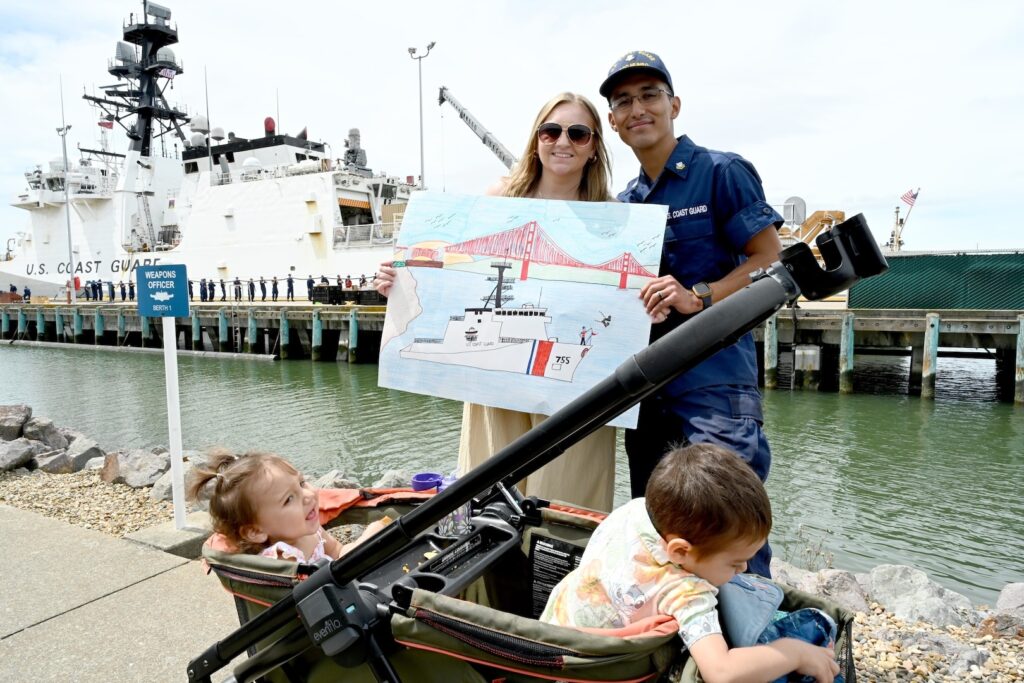
ALAMEDA, Calif. – The crew aboard U.S. Coast Guard Cutter Munro (WMSL 755) returned to their home port in Alameda on Monday, following a four-month patrol off the coasts of Central and South America in the Eastern Pacific Ocean.
During their multi-mission deployment, Munro’s crew conducted counter-narcotic and illegal, unreported, and unregulated (IUU) fishing patrols.
The 150-member crew deployed to the Eastern Pacific Ocean, where they interdicted seven “panga” style vessels, three low-profile vessels, and one fishing vessel suspected of trafficking narcotics.
The interdictions resulted in the seizure of nearly 35,000 pounds of cocaine, more than 3,000 pounds of marijuana, and more than 140 pounds of the ketamine-based hallucinogenic party drug “tuci.” Combined, the seized narcotics are worth an estimated $500 million in wholesale value and $2 billion in street value. Munro conducted a bulk offload of the illicit narcotics in San Diego, where the narcotics were turned over to federal agents from the Drug Enforcement Administration for destruction.
Munro’s crew conducted 200 flight evolutions with an embarked helicopter and aircrew from the Jacksonville, Florida-based Coast Guard Helicopter Interdiction Tactical Squadron (HITRON). The HITRON helicopter crew was a force multiplier capable of providing airborne use of force in maritime drug interdiction efforts. Munro utilized the helicopter crew for warning shots toward eight non-compliant suspect vessels and disabling fire used on four non-compliant suspect vessels, stopping the vessels by shooting out their engines and allowing surface assets to gain positive control.
Following the counter-narcotics patrol, Munro transited further south to conduct IUU fisheries interdictions in international waters off the coast of Peru and Ecuador under Operation Southern Shield. Under the authority of the South Pacific Regional Fisheries Management Organization (SPRFMO) conservation management measures, Munro conducted 16 high-seas boardings and inspections of a multi-national distant water fishing fleet of more than 300 fishing and transshipment vessels, resulting in nine violations reported to SPRFMO member countries.
While conducting Operation Southern Shield, Munro hosted ship observers from the Peruvian Coast Guard, the National Aeronaval Service of Panama, and the Ecuadorian Navy, emphasizing the multi-national effort to combat IUU fishing. Working alongside the Ecuadorian Navy shiprider, Munro conducted four inspections aboard Ecuadorian-flagged fishing vessels on the high seas, carrying out the first enactment of the recently signed United States-Ecuador Bilateral Agreement.
Additionally, Munro’s crew responded to a search and rescue case 25 miles off the coast of Peru, saving the life of a 37-year-old patient who had been critically injured.
“Our crew is dedicated and working hard to show the commitment of the U.S. Coast Guard in combating both narcotics and Illegal, Unreported, and Unregulated fishing on the high seas,” said Capt. Rula Deisher, Munro’s former commanding officer.
Near the end of the patrol, Munro hosted a change of command ceremony in San Diego Thursday. During the ceremony, Capt. James O’Mara IV relieved Deisher as Munro’s commanding officer.
“I am thankful to family and friends who supported Munro throughout the four-month deployment,” said O’Mara, who assumed command of Munro on May 30. “You won’t find a crew more excited than this one, ready to be home and reconnect with families. Munro showcased all the capabilities and versatility of this platform while making tangible impacts to several national security objectives. The crew has everything to be proud of, and I am honored to join this team.”
Munro is one of four national security cutters homeported on Coast Guard Base Alameda. National security cutters feature advanced command, control, communications, computers, cyber, intelligence, surveillance and reconnaissance equipment; aviation support facilities; stern cutter boat launch; and long-endurance station keeping. The 418-foot cutters have an endurance of 60 to 90 days and can serve as operational-level headquarters for complex law enforcement, defense, and national security missions involving the Coast Guard and multiple partner agencies.
CNO Franchetti Meets with Top Officials from Bahrain
Chief of Naval Operations Spokesperson Cmdr. Desiree Frame provided the following readout:
Chief of Naval Operations Adm. Lisa Franchetti met with the Kingdom of Bahrain’s Crown Prince and Prime Minister, His Royal Highness Salman bin Hamad Al Khalifa, June 4.
Franchetti thanked the Crown Prince for the inviolable U.S. – Bahrain defense relationship and expressed her gratitude for the continuous hospitality Bahrain shows in hosting the U.S. Navy.
The CNO also highlighted Bahrain’s leadership in the security and stability of the region and expressed her gratitude to the Crown Prince for being one of the United States’ longest and closest partners in the Middle East, a major non-NATO Ally, and their participation in Operation Prosperity Guardian.
During their discussion, Franchetti applauded the Comprehensive Security Integration and Prosperity Agreement (C-SIPA) signed last year to formalize U.S – Bahrain cooperation to deter conflict in the region, enhance regional stability, and de-escalate tensions. Franchetti added that C-SIPA is as a significant upgrade in our strategic bi-lateral relationship with Bahrain. Right now, C-SIPA is a bilateral agreement between the United States and Bahrain, however both leaders said they welcome other friendly countries to join because the more integrated and coordinated we are, the more secure, stable, and prosperous the region will be.
This is the first time Franchetti has met the Crown Prince.
Q&A: Ashley Johnson, Technical Director, Naval Surface Warfare Center, Indian Head Division
Ashley Johnson, technical director of Naval Surface Warfare Center Indian Head Division, briefs the center’s modernization plan to members of the southern Maryland industrial community. U.S. Navy | Matthew Poynor
The Naval Surface Warfare Center Indian Head Division (NSWC IHD) is a working capital organization that develops and manufactures energetics for the Navy, Marine Corps and other services. The IHD in going through a $1.9 billion upgrade called the Energetics Comprehensive Modernization Plan (ECMP) to improve its capabilities and infrastructure to meet the requirements of the future.
Ashley Johnson, a Senior Executive Service civilian, became the technical director of Naval Surface Warfare Center, Indian Head Division in 2014. He discussed the role of the Navy’s own manufacturer of energetics with Senior Editor Richard R. Burgess. Excerpts follow.
What is the mission of the Indian Head Division?
JOHNSON: The short answer is full-spectrum energetic materials, from cradle to grave. We do basic research, applied research, advanced technology demonstrations, manufacturing, logistics, engineering and fleet support. In the sense of energetic material systems, most people would immediately equate those two things like warheads, rocket motors, and bombs and so forth but it’s really much more expansive than that because it can involve fuzes and handling equipment associated with the systems — such as the packaging, handling, shipping and transportation.
Now that the wars in Iraq and Afghanistan are over for the United States, and with the growing tensions of Russia and China, how is your work shifting?
JOHNSON: My previous job was the director of Marine Corps Science & Technology and deputy chief of Naval Research, Office of Naval Research for expeditionary warfare and combating terrorism. Our investment in the GWOT [the Global War on Terrorism] writ large was really about finding the enemy: It was a C4ISR, big data, intel, logistics kind of thing, because the assumption, deservingly so, was that we could defeat our enemy without any issue once we found them.
As a result, for that period of time, not a lot was done in the United States in the development of state-of-the-art and attention to detail on the munitions industrial base, commercial or organic. I say that not accusingly, just saying that as a matter of fact. Unfortunately for us, all of our potential adversaries or adversaries — Russia, China, Iran, and North Korea — did not take that vacation. We had a large comparative advantage in that ammunitions space — range, speed, terminal effects, signatures management, safety to some extent. They recognized they were behind, and they continued to invest in those areas, so, we have lost a fairly large comparative advantage as we focused on the necessities of GWOT.
We’re approaching something that looks an awful lot like the Cold War as it looked in the ‘70s and ‘80s with the Soviet Union, which had a large capability. The question is clearly not can we find them; the question is, can we defeat them because they have systems that can rival ours. The situation is driving us toward really looking at ourselves in the mirror and saying, what is our state-of-the-art? Is it representative of what we are really capable of or is it representative of what we’re willing to continue to keep using? What is our industrial base and are we capable of manufacturing and providing at the point of use all of the things that we think we need in the context of something like we’re seeing in Ukraine where Russia is coming to grips with that. You can use a tremendous amount of ordnance in these kinds of sustained conflicts. Do you have the industrial base with which to sustain that operation?
I was surprised to learn that Indian Head is not just an RDT&E activity but also a major manufacturing facility.
JOHNSON: Indian Head has been in energetics since 1890. Indian Head was established initially as a proving ground for Navy guns, and it literally was cut out of the woods in southern Maryland for that purpose. After its victory in the Battle of Manilla Bay, the Navy recognized that the only vulnerability in its crushing defeat of the Spanish Navy was the fact that the Spanish Navy used smokeless powder. Although it didn’t really factor much into the outcome, it was recognized as a significant liability.
And so, the Navy wanted to pursue the manufacture or acquisition of [smokeless] powder. A commercial vendor was busy manufacturing propellant for European markets and did not have the capacity to produce it for the U.S. Navy. Very shortly after that, a bill was put through Congress and Indian Head was established as a naval powder factory. The Navy started to make its own propellant at Indian Head over a hundred years ago. Indian Head continues to be the source for a lot of unique munitions.
Of course, that’s changed over the years. For example, a plant was built at Indian Head solely for manufacture of every pound of the propellant for the Polaris Missile System. It did the same thing for [the] Poseidon missile.
Interesting. Is there anything you’re supplying to Ukraine with its war with Russia?
JOHNSON: I really cannot comment. I would just say we’re relevant to that theater also and I’ll leave it at that.
Indian Head has been involved at the ground floor of supplying munitions for the Navy for over a hundred years and that’s kind of what we’re just being asked to do again.
Specifically, what are we concerned about right now? Solid rocket motors. The Standard Missile figures prominently in this conversation, as do things like Tomahawk. There used to be 12 manufacturers in the United States for tactical rocket motors and now there are only two commercial vendors: Aerojet Rocketdyne in Arkansas and Northrop Grumman, which is using a Navy facility in Rocket Center, West Virginia. That’s it. The largest capacity left in the United States to produce cast composite rocket motors is Indian Head. We have a very large latent capacity that isn’t really being used yet which is why those partnerships are so exciting. Aerojet has partnered with the Navy, and we are going to make rocket motors here for our Standard missile to augment the commercial supply which is exactly where our mission is. We go into areas where we are needed, or we go into areas where no one can go.
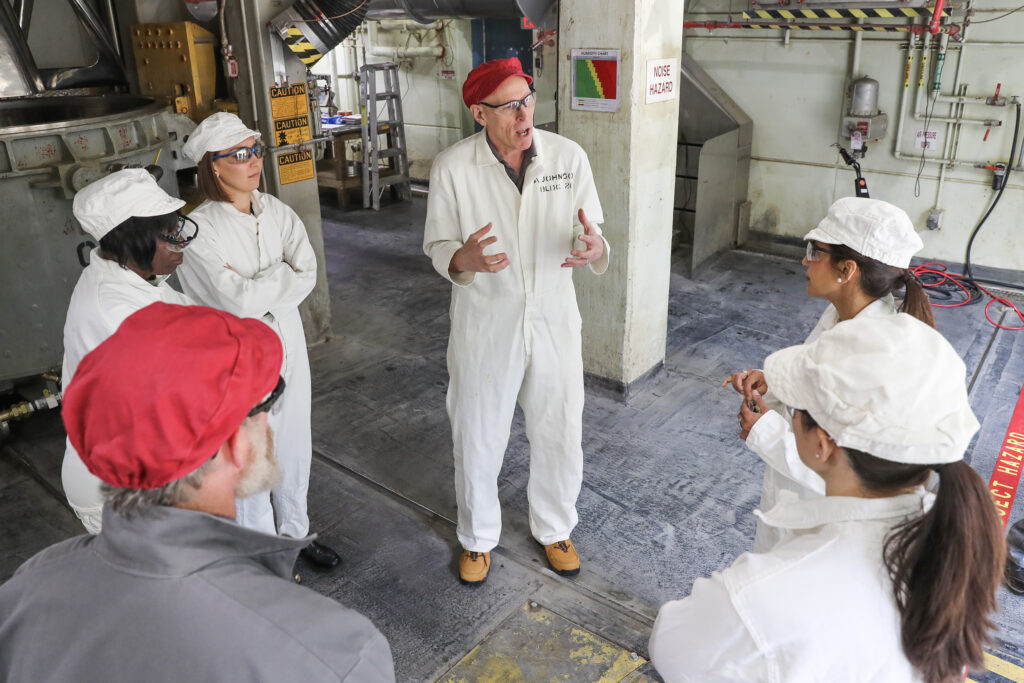
Ashley Johnson speaks with scientists and engineers in one of the Mix, Cast, Cure plants, in front of a 420-gallon vertical mixer at NSWC IHD. U.S. Army | Staff Sergeant Arthur Jones
Indian Head is viewed as part of the organic — government-owned — industrial base. There is no competition with commercial vendors going on right now. All of us in the munitions industrial base recognize it’s an all-hands-on-deck situation. This is the only way that we’re going to meet this need. It’s kind of the way we’ve been doing business for over a hundred years anyway. It’s just for the last 10 or 15, we sort of forgot about it.
Why is the Energetics Comprehensive Modernization Plan (EMCP) needed?
JOHNSON: We are a very expensive facility. The net replacement value for Indian Head is between $5 [billion] and $6 billion. You’d be hard-pressed to recoup that or duplicate it if I gave you that much money just because of how difficult it is to build facilities like Indian Head. If you have a facility with that kind of unique capacity and capabilities, it takes a lot of money to take care of it.
If you go through a period of time — 10, 15, 20 years — when you use munitions essentially as a bill payer for other requirements, you don’t generate the resources you need to take care of facilities like Indian Head. When you have to exercise it again, you’ve got a “big principal” that you’ve got to pay down. ECMP involves the restoration and sustainment of weight and capacity that the Navy owns. We can do things, but we’re a little out of shape, and so, it’s a readiness issue.
The other part of ECMP is about modernization and increasing capacity. Our commercial partners — Aerojet Rocketdyne and Northrop Grumman — are well over 90% and probably closer to 95% in the utilization rate of whatever capacities they have. There is a need for the industrial base of the United States, commercial as well as organic, to grow to meet the demand signal that we’re seeing for munitions and so forth. Ultimately, we’re getting to 11 times our current capacity to meet the demand signals that we see from all of our customers as well as our commercial partners. That second piece of ECMP really helps build out the capacity to meet the demand.
The third and probably the most interesting, at least for me, element of ECMP is about hybridizing our business and investment model. In the past, we had to operate like a business since we’re a working capital fund activity as opposed to a general funded activity. That creates problems in periods of a bear market because, if I’m asked to recoup all my cost from just my customers, when people aren’t buying things, it becomes hard to amortize the costs. That’s when things don’t get done. That’s when maintenance becomes an issue because you have to start making choices. And so, what we’re doing with ECMP is trying to establish more of an ownership and responsibility at the Navy level off the top so that those things get paid for first and then we enter into more of a time and materials conversation with our customers.
So, it’s the hybridization of the business and investment model of Indian Head so that there is an appropriated line of accounting that gets put into this equation in addition to a working capital.
What are some of the major projects or improvements that are involved?
JOHNSON: Some of the initial stuff is really quite simple: fixing loading docks that have cracks in them; fixing secondary roads that have large potholes that I’d rather not drive nitroglycerine over; general improvements to the roads, lighting or other utilities. We may need a half a million dollars to unlock the latent capacity that’s there. I just can’t get at it because I’ve got these secondary and tertiary issues which are preventing me from using it.
With modernization, we’re talking about very specific improvements like casting and curing [of rocket propellant and warheads]. A major part of being able to make rocket motors is being able to mix the composite propellant. It needs very specialized vertical mixers. We have them in all sizes, but we need more of them. A major project improvement would be a second cast composite plant where we would increase the capacity of a lot of those unit operations, but also, do it in sort of a state-of-the-art. Indian Head’s cast composite plant was built 35 to 40 years ago. You wouldn’t do that now the same way, so we’re going to take advantage of efficiencies in industrial engineering and state-of-the-art equipment to basically double down or triple down on the capacities that we currently have.
So, really, the focus that is most meaningful is our cast composite manufacturing and that addresses modern rocket motors as well as warheads.
By cast composite, you mean mixing the chemicals and then molding them for a rocket motor?
JOHNSON: Yes. The process is very similar to making a cake batter. The very first thing that we do is get all the ingredients, then we put them in a mixer that looks an awful lot like a KitchenAid mixer. It’s obviously a little more involved than that but effectively does the same thing. We blend the ingredients, then once we get them out, we cure the mixture and it hardens in the places we want it [rocket motor or warhead body]. And then it gets assembled into an all-up round. That entire process involves mixing, casting and curing and the transportation of those assets.
What categories of engineers do you need?
JOHNSON: Engineers of just about every flavor, right now primarily mechanical and chemical. Actually, mechanical dominates but we need both. But I need industrial engineers, I need electrical engineers, so just about every type and flavor. I also need the hard scientists, too: physicists and chemists.
We have another mission that has to do with chem/bio which I won’t get into right now, but it’s a big part of what we do, so we have biologists. We have life scientists here as well. We’ve got maybe about a thousand technical people all the way through Ph.D., close to a hundred Ph.D.s here in the hard sciences. But I have a need for program managers, comptrollers and business folks. Now with this huge modernization effort I need guys who actually need to be able to do construction and construction management whether it be contracting or building management.
What is Indian Head’s place in the local economy?
JOHNSON: We’ve got about 2,500 government civilians and about 500 contractors. I might have to add 500 to 700 individuals just in our manufacturing operations alone to meet the demand signal. They’re going to government civilians, contractors, and partners like Aerojet people who are going to be working here side-by-side with our guys. It’s a big shot in the arm or opportunity for the state and for the local communities because we’re just going to get bigger. Indian Head is already, on any given day, the largest employer in the county.
How do you plan to attract extra employees?
JOHNSON: That’s the easy part. It’s not hard to get people excited about being a patriot. It’s not hard to get people excited about coming to do what we at Indian Head. Energetics work is pretty exciting. You make things that go boom and whoosh, and it’s also exciting science. So, attracting talent is easy; it’s the retention of the talent that’s harder. Can you compete for people’s attention in terms of how the environment looks around? Is it a nice place to live? Are there things to do? We’re working with the state and the county on that because where we are located it’s kind of out of the way and that might be for obvious reasons, but it’s still an issue with regard to being able to retain people. We’ve got to try to make that ecosystem around us as inviting as possible.
The other piece is really about people who are drawn to this work like to do stuff and, like over the last 10 or 15 years, you can’t retain talent when people aren’t doing anything. And so, a lot of people have left the market or, if they’ve got into it, they got bored because we really weren’t buying a lot in the area of munitions and/or similar systems, and so, they’ve left. I think the demand signal will take care of that. But it’s important to commit to this, because, after these surges are over, we need to maintain our focus on this area.
Q&A: Kelly Robertson-Slagle, Director of Development, Charles County, Maryland
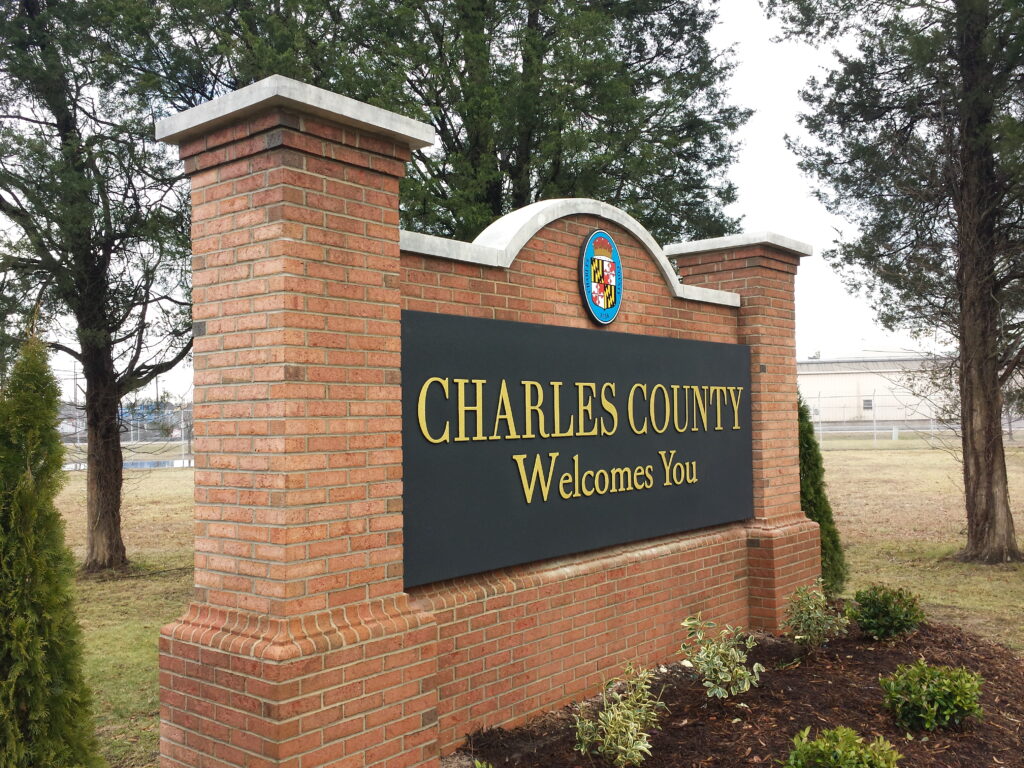
The $1.1 billion build-up of the Naval Surface Warfare Center Indian Head Division (NSWC IHD) will affect not just the facility but also the surrounding community. Kelly Robertson-Slagle is the Director of Economic Development for Charles County, Maryland, home of NSWC IHD. She works closely with the NSWC IHD to coordinate county development and support its infrastructure improvements and personnel growth.
How will the Navy’s planned investment at Indian Head affect Charles County’s economy?
ROBERTSON-SLAGLE: First and foremost, there will be new business opportunities for our existing county businesses. By that, I mean the Navy’s $1.1 billion investment will be spread across 500 infrastructure projects over the next 10 years. This investment will open up opportunities for our local businesses to potentially bid on these projects. Having that type of investment here in Charles County will be extremely impactful.
Second, new commercial development and redevelopment opportunities translate into additional commercial tax revenue. Right now, there are about 2,700 people located behind the gate of the base, and manufacturing is on a nine-to-five schedule. Within the next five years, manufacturing on the base will occur 24/7, which means more foot traffic. We expect an increase in commercial enterprises setting up on the western side of Indian Head, attracted by the growing population. We hope to welcome various businesses, from retail stores and restaurants to service providers, to address the current scarcity in these sectors.
Equally important are the new job opportunities and workforce training opportunities that will be created. As the base’s manufacturing facilities upgrade to meet modern “smart arsenal” standards, there will be a substantial need for a knowledgeable, 21st-century “smart workforce.” We are collaborating with NSWC-IHD and various strategic partners, including the Charles County Public School System, the College of Southern Maryland, the Energetics Technology Center and other private energetics industry partners, to develop advanced workforce programs.
These initiatives will train individuals in the specialized skills necessary for operating energetics manufacturing effectively, and we want to ensure that we’re developing the appropriate level of apprenticeships. Our aim is to provide residents with experience at NSWC IHD with full-time employment opportunities locally. We are actively seeking these opportunities and are also focused on sparking interest in younger generations to sustain local workforce engagement. We must be able to expand our workforce pipeline in Charles County.
We’re also engaging with our K-12 system to provide students with opportunities to interact with the base, experience the technology and gain an understanding of the energetics fields. Our goal is that whether they pursue vocational training, higher education or construction-related courses, their experiences will encourage them to return to Indian Head. We hope they know they will have a job to return to with excellent pay, a good quality of life, and a place where they will want to set up shop and raise their families.
What is the estimate of Indian Head’s annual contribution to the county’s economy in terms of dollars?
ROBERTSON-SLAGLE: In FY 2022, the total payroll for Indian Head in Maryland was $346 million, with an additional $44.6 million generated through Maryland-based contracts. Of those dollars (between payroll and Maryland contracts), 68% went to employees or businesses in Charles County.
Beyond their annual tax contributions, the county benefits from NSWC IHD’s presence. Charles County Public Schools and the College of Southern Maryland gain in-kind mentorship opportunities, such as sponsoring science fairs, providing internships, and funding robotics programs and research initiatives. They’ve been fantastic community partners to us for many years, and we don’t see that slowing down at all. If anything, we see that ramping up a bit.
What type of infrastructure do you have to consider with the expansion?
ROBERTSON-SLAGLE: The base borders the town of Indian Head, which is its own municipality (one of three in Charles County). From a county perspective, we continue to work hand-in-hand with the Town of Indian Head to help address infrastructure improvements that must occur with the increase of employees and traffic. One of our monitoring priorities is Maryland Highway 210, from the county line all the way to the base gate. In collaboration with the Town of Indian Head, we are addressing traffic flow, safety, and walkability within the town.
Additionally, broadband infrastructure is always a top priority, not just for the western side and the base but across the entire county. We are particularly proud of a recent project, completed in partnership with the state and the town, which extended high-end fiber optics to the base. This project, which was one of the 500, has enabled the base to implement a closed-loop fiber infrastructure behind the gate.
The base recently signed an MOU [memorandum of understanding] with our local electric co-op, Southern Maryland Electric Cooperative, to take over management and upgrades of the electrical infrastructure behind the gate. The county is certainly committed to supporting those efforts as well.
Kelly Robertson-Slagle, left, speaking during the Charles County Economic Development Department’s 2023 fall meeting. Charles County government
Does Charles County have the workforce it needs, or do you expect a large influx of new residents?
ROBERTSON-SLAGLE: It’s a combination. Historically, Southern Maryland has largely been a bedroom community for federal government employees. Currently, we have slightly more than 5,000 Department of Defense [DoD] civilian employees residing in Charles County. To us, that’s a serious selling point! We already have a very strong DoD civilian workforce here. Regionally, up to 500,000 professionals could potentially be part of this hiring pool. We are robust in this regard. Valid DoD or contractor opportunities at the base could attract federal employees who currently commute outside of Charles County to consider employment closer to home so that they can work and live within the same community.
The base has also been working on what they call “CITE” agreements — public-private partnership agreements where private defense businesses specializing in the development of energetics can partner with the base, bringing a portion of their workforce to enhance the manufacturing capabilities on site.
With these CITE agreements, we also expect to attract an additional workforce. There’s potential for individuals to move to Charles County or the broader Southern Maryland area in pursuit of these job opportunities.
That reminds me of when Naval Air Systems Command (NAVAIR) moved from Arlington, Virginia, to Patuxent River, Maryland, and defense contractors sprang up like mushrooms along Highway 235.
ROBERTSON-SLAGLE: Yes, NAVAIR transformed that whole corridor; they’re still doing fantastic things down there. We expect a similar turnout along [Highway] 210, in what we call our “Western Charles County Technology Corridor.” We are already receiving phone calls from contractors and interested parties who are aware of the business opportunities at the site. They are exploring real estate and potential redevelopment opportunities, preparing for when those contracts are awarded. It’s an extremely exciting time for us.
Why is Charles County such a prime location for defense installations?
ROBERTSON-SLAGLE: Charles County is within a 40-minute drive of several key federal labs and military installations. We also offer easy access to major cities like Baltimore, Richmond, and Washington D.C., which includes proximity to government agencies, customers, and suppliers, and keeps defense and federal contracting firms on the cutting edge. We’re sitting in what I call a “sweet spot.” We developed a map that shows Charles County’s proximity to Joint Base Andrews, Naval Air Systems Command in Pax River, Navy Support Facility Dahlgren [Virginia], and Indian Head, as well as Washington, D.C. Charles County also maintains one of the highest percentages of engineers and doctoral scientists in Maryland and one of the highest percentages of engineers and doctoral scientists in the country.
Upskilling is essential for local companies to stay ahead of the marketplace. Our partnership with the College of Southern Maryland and its cutting-edge upskilling capabilities is invaluable. If a company needs to upskill its workforce to implement new technologies, it can tap into a resource pool like never before to develop custom curricula focused on skill enhancement. Every industry faces challenges with an aging workforce, and upskilling is crucial. With the pace of technology, we can’t be competitive without it.
The College of Southern Maryland, a two-year community college, was formed almost 20 years ago by three individual colleges in Charles, Calvert and St. Mary’s counties. This merger, aided by the three boards of county commissioners in Southern Maryland, was an extremely smart move, creating cutting-edge opportunities, better use of budget and opportunities to grow.
The college’s Velocity Center, located just outside the base gate, partners with NSWC IHD. It provides a space where base officials can conduct training and host various events outside the gate, including machine shops, training classes, STEM events and diverse community activities in collaboration with the base. This setup allows personnel from Indian Head access to share industry best practices without jumping through a thousand hoops [the security protocols] to enter the base. That facility has turned out to be a fantastic asset for us, not just in Charles County but definitely for the base itself.
We also have great partnerships with the University of Maryland College Park, The Higher Education Center and many more. When it comes to the College of Southern Maryland, however, located right here in Charles County, you can’t beat the flexibility and the caliber of programs we can implement together.
On average, lease rates in Charles County offer companies about a 34% savings compared to other areas in the D.C. Metro area. We have affordable utilities, clean energy options and incentives to provide to industries considering Charles County. When we are approached by businesses interested in our county, our team can show them turnkey properties, although they must still navigate the regulatory review process for new construction. We are committed to keeping this inventory active and available for commercial businesses and industries looking to establish themselves here.
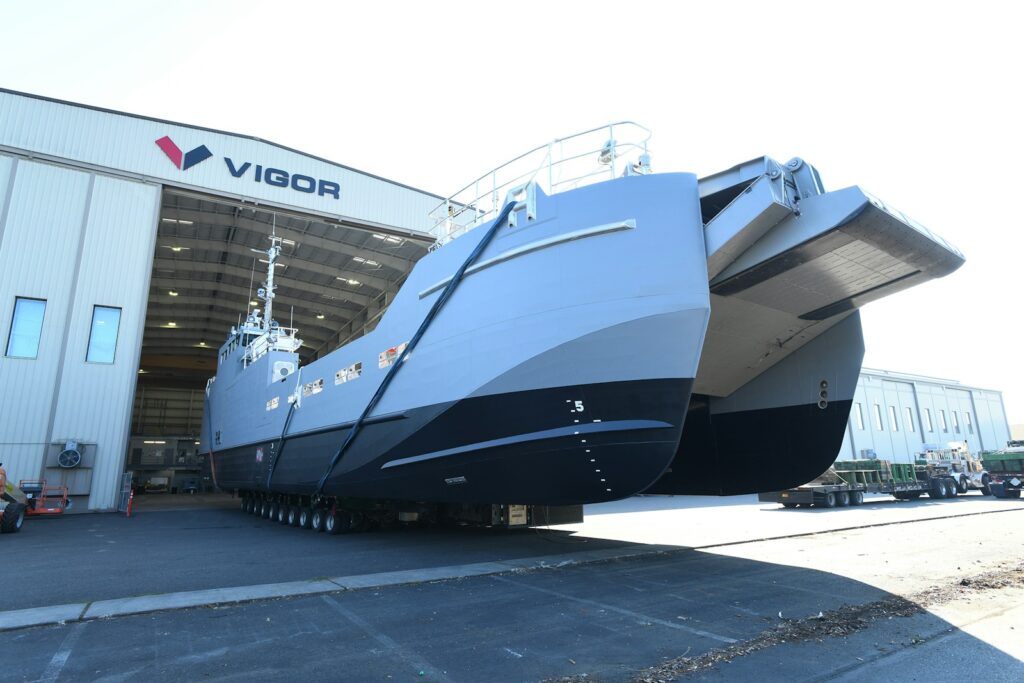
Vigor begins low-rate initial production work on U.S. Army landing craft
VANCOUVER, Washington (June 4, 2024) – Vigor, a Titan Company, has begun low rate initial production (LRIP) on the Maneuver Support Vehicle (Light) (MSV(L)) vessel at its facility in Vancouver, Washington. The new generation U.S. Army landing craft replaces the Vietnam-era Landing Craft Mechanized 8 (LCM-8). Vigor completed and launched the prototype vessel, SSG Elroy F. Wells, in 2022 and now commences work on the next phase of the new $1 billion contract. More than 180 skilled workers are expected to support the project over the next five years.
“Beginning this work represents a milestone for the Army, for Vigor and for our employees,” said Jayson Robinson, Vigor’s Vice President of Fabrication. “It is a credit to the great work of our team over the last several years and the partnership with the Army to have the opportunity to take what we have learned from the prototype and build the next generation of landing craft. Our employees are incredibly proud to support our national defense and our customer’s critical mission.”
Vigor was originally awarded the contract in 2017 and secured the Vancouver, WA facility to complete the prototype, multiple vessels under low rate production, and several more over ten years. The vessel is designed to support Army Mariners and their payload in even the most difficult environments due to its state-of-the-art maneuverability and stability.
After undergoing sea trials throughout 2023, Vigor and the Army completed the DD 250 handoff of the prototype vessel in February and began planning for production of future vessels. The next phase of fabrication began this week and will continue for the next five years
“This project will not only improve the Army’s capabilities, it provides more than 180 family wage jobs here in Vancouver,” Robinson said. “We are honored to have been selected for this work and committed to providing a quality, reliable vessel to our customer.”
BAE Systems electronic warfare pods to protect U.S. Navy P-8A Poseidon aircraft
NASHUA, N.H. — June 5, 2024 — BAE Systems received a $95 million contract from the U.S. Navy for advanced countermeasure pods to protect the P-8A Poseidon Multi-Mission Maritime Aircraft from missiles and other threats. The electronic warfare (EW) pod detects and counters inbound threats, protecting the Poseidon and its crews, and expanding the aircraft’s operating range in contested environments.
“We’re working closely with the U.S. Navy to deliver innovative solutions to protect this critical, high-value aircraft,” said Don Davidson, director of Advanced Compact Electronic Warfare Solutions at BAE Systems. “We quickly prototyped a very capable system using proven technology to defend against air-to-air and surface-to-air guided threats.”
BAE Systems’ survivability pod provides early threat detection and effective countermeasures to protect U.S. and international high-value airborne assets. The system’s flexible, open architecture design allows rapid and affordable modernization, is compatible with future threat-detection and decoy countermeasure capabilities, and can host third-party EW techniques.
The engineering and manufacturing development (EMD) contract follows a rapid-response contract from the U.S. Navy to demonstrate the system in 2021. The BAE Systems team designed, built, and tested a demonstration pod, exhibiting strong military-industry collaboration and rapid prototyping. The EMD contract follows successful airworthiness and effectiveness testing.
The P-8A self-protection pod is part of BAE Systems’ Intrepid ShieldTM layered approach to aircraft and ground platform survivability that uses the full electromagnetic spectrum to detect, exploit, and counter advanced threats. The pod can be rapidly adapted for other high-value airborne assets, enabling them to operate in contested environments.
Work on the P-8A pod and its components is conducted at BAE Systems’ state-of-the-art facilities in Nashua, New Hampshire and Austin, Texas.
June 4 Red Sea Update
From U.S. Central Command, June 4, 2024
TAMPA, Fla. – In the past 24 hours, Iranian-backed Houthis launched two anti-ship ballistic missiles (ASBM) from Houthi-controlled areas of Yemen into the Red Sea. There were no injuries or damage reported by U.S., coalition, or commercial ships.
This continued malign and reckless behavior by the Iranian backed Houthis threatens regional stability and endangers the lives of mariners across the Red Sea and Gulf of Aden.